Results by title
31 books match the query 'Social Issues'
A Catechism for Business
Tough Ethical Questions & Insights from Catholic Teaching, Third EditionAndrew V. Abela
Catholic University of America Press, 2021
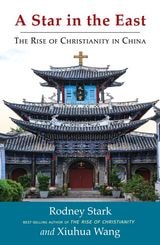
A Star in the East
The Rise of Christianity in ChinaRodney Stark
Templeton Press, 2015
What is the state of Christianity in China? Some scholars say that China is invulnerable to religion. In contrast, others say that past efforts of missionaries have failed, writing off those converted as nothing more than “rice Christians” or cynical souls who had frequented the missions for the benefits they provided. Some wonder if the Cultural Revolution extinguished any chances of Christianity in China.
Rodney Stark and Xiuhua Wang offer a different perspective, arguing that Christianity is alive, well, and on the rise. Stark approaches the topic from an extensive research background in Christianity and Chinese history, and Wang provides an inside look at Christianity and its place in her home country of China. Both authors cover the history of religion in China, disproving older theories concerning the number of Christians and the kinds of Christians that have emerged in the past 155 years. Stark and Wang claim that when just considering the visible Christians—those not part of underground churches—thousands of Chinese are still converted to Christianity daily, and forty new churches are opening each week.
A Star in the East draws on two major national surveys to sketch a close-up of religion in China. A reliable estimate is that by 2007 there were approximately 60 million Christians in China. If the current growth rate were to hold until 2030, there would be more Christians in China—about 295 million—than in any other nation. This trend has significant implications, not just for China but for the greater world order. It is probable that Chinese Christianity will splinter into denominations, likely leading to the same political, social, and economic ramifications seen in the West today.
Whether you’re new to studying Christianity in China or whether this has been your area of interest for years, A Star in the East provides a reliable, thought-provoking, and engaging account of the resilience of the Christian faith in China and the implications it has for the future.
Abortion and Unborn Human Life, Second Edition
Patrick Lee
Catholic University of America Press, 2010
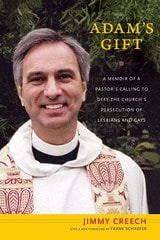
Adam's Gift
A Memoir of a Pastor's Calling to Defy the Church's Persecution of Lesbians and GaysJimmy Creech
Duke University Press, 2011
Adam’s visit prompted Creech to re-evaluate his belief that homosexuality was a sin, and to research the scriptural basis for the church’s position. He determined that the church was mistaken, that scriptural translations and interpretations had been botched and dangerously distorted. As a Christian, Creech came to believe that discriminating against lesbian, gay, bisexual, and transgender people was morally wrong. This understanding compelled him to perform same-gender commitment ceremonies, which conflicted with church directives. Creech was tried twice by The United Methodist Church, and, after the second trial, his ordination credentials were revoked. Adam’s Gift is a moving story and an important chapter in the unfinished struggle for lesbian, gay, bisexual, and transgender civil and human rights.
Counsels of Imperfection
Thinking Through Catholic Social TeachingEdward Hadas
Catholic University of America Press, 2021
Disenchanted Lives
Apostasy and Ex-Mormonism among the Latter-day SaintsBrooks, E. Marshall
Rutgers University Press, 2018
Evangelical News
Politics, Gender, and Bioethics in Conservative Christian Magazines of the 1970s and 1980sAnja-Maria Bassimir
University of Alabama Press, 2022
A comprehensive study of evangelical magazine discourse during the 1970s and 1980s and how it navigated and sustained religious convictions in a time of dramatic social change
The 1970s and 1980s were a tumultuous period in US history. In tandem with a dramatic political shift to the right, evangelicalism also entered the public discourse as a distinct religious movement and was immediately besieged by cultural appropriations and internal fragmentations. Americans in general and evangelicals in particular grappled with issues and ideas such as feminism, abortion, birth control, and restructuring traditional roles for women and the family. During this time, there was a surge in readership for evangelical periodicals such as Christianity Today, Moody Monthly, Eternity, and Post-Americans/Sojourners as well as the feminist newsletter Daughters of Sarah.
While each of these magazines—and other publications and media—contributed to and participated in the overall dissemination of evangelical ideology, they also had their own outlooks and political leanings concerning hot-button issues. In Evangelical News: Politics, Gender, and Bioethics in Conservative Christian Magazines of the 1970s and 1980s, Anja-Maria Bassimir presents a nuanced view of evangelicalism in the late twentieth century through the lens of the movement’s own media.
Bassimir argues that community can be produced in discourse, especially when shared rhetoric, concepts, and perspectives signal belonging. To accomplish this, Evangelical News traces the emergence of evangelical social and political awareness in the 1970s to the height of its power as a political program. The chapters investigate such topics as how evangelicals reenvisioned gender norms and relations in light of the feminist movement, the use of childhood as a symbol of unspoiled innocence, and the place of evangelicals as political actors.
Faithful Deliberation
Rhetorical Invention, Evangelicalism, and #MeToo ReckoningsT J Geiger II
University of Alabama Press, 2022
Investigates the rhetorical practices used by contemporary evangelical Christian women to confront theological and cultural issues that stymie deliberation within their communities
While often perceived as an insular enclave with a high level of in-group agreement about political and social issues, predominantly white evangelicalism includes prominent voices urging deliberation about appropriate responses to sexual abuse, domestic violence, and the discourses surrounding these traumas. In Faithful Deliberation: Rhetorical Invention, Evangelicalism, and #MeToo Reckonings, T J Geiger II examines theologically reflective rhetorical invention that reconfigures trauma-minimizing commonplaces in order to facilitate community-internal deliberation.
Resting at the intersection of feminist rhetorical studies and religious rhetorics, this book contains four related theological-rhetorical case studies that consider how figures such as Beth Moore, Jen Hatmaker, Rachael Denhollander, Karen Swallow Prior, and others engaged in rhetorical invention. Each juxtaposes differing approaches to contending with rape, domestic violence, sexual abuse, and other traumas. Each case contrasts an approach based on appeals to highly circumscribed understandings of grace, purity, and other denomination-specific traditions and values with approaches rooted in those same traditions and values, but with an eye toward community transformation, healing through justice, and reinvigorated forms of forgiveness. Geiger skillfully argues that this faithful deliberation involves practices of thinking, reflecting, storytelling, and acting within a tightly bounded community that can foster change through a recommitment to core values.
These rhetorical practices exemplify the kind of inventive listening deliberative discourse requires, point to the sort of healing they may promote in response to trauma and trauma discourses, and occur within a range of genres including social media posts, blog entries, published interviews, victim impact statements, and petitions. This study of invention for evangelical-to-other-evangelical deliberative discourse contributes to rhetorical studies by demonstrating the civic and social possibilities of rhetoric within religious enclaves. By locating the case studies as recent moments in longer US public and evangelical histories of activism, deliberative practice, and politics, Faithful Deliberation brings into focus how enclaves and the dominant public sphere interact.
Filled with the Spirit
Sexuality, Gender, and Radical Inclusivity in a Black Pentecostal Church CoalitionEllen Lewin
University of Chicago Press, 2018
In Filled with the Spirit, Ellen Lewin gives us a deeply empathetic ethnography of the worship and community central to TFAM, telling the story of how the doctrine of radical inclusivity has expanded beyond those it originally sought to serve to encompass people of all races, genders, sexualities, and religious backgrounds. Lewin examines the seemingly paradoxical relationship between TFAM and traditional black churches, focusing on how congregations and individual members reclaim the worship practices of these churches and simultaneously challenge their authority. The book looks closely at how TFAM worship is legitimated and enhanced by its use of gospel music and considers the images of food and African American culture that are central to liturgical imagery, as well as how understandings of personal authenticity tie into the desire to be filled with the Holy Spirit. Throughout, Lewin takes up what has been mostly missing from our discussions of race, gender, and sexuality—close attention to spirituality and faith.
Follow Your Conscience
The Catholic Church and the Spirit of the SixtiesPeter Cajka
University of Chicago Press, 2021
Peter Cajka’s erudite book shows how even staunch Catholics were transformed by the maelstrom of the American Sixties, turning away from powerful and corrupt institutions and toward the inner moral compass provided by their own consciences.
What is your conscience? Is it, as Peter Cajka asks in this provocative book, “A small, still voice? A cricket perched on your shoulder? An angel and devil who compete for your attention?” Going back at least to the thirteenth century, Catholics viewed their personal conscience as a powerful and meaningful guide to align their conduct with worldly laws. But, as Cajka shows in Follow Your Conscience, during the national cultural tumult of the 1960s, the divide between the demands of conscience and the demands of the law, society, and even the church itself grew increasingly perilous. As growing numbers of Catholics started to consider formerly stout institutions to be morally hollow—especially in light of the Vietnam War and the church’s refusal to sanction birth control—they increasingly turned to their own consciences as guides for action and belief. This abandonment of higher authority had radical effects on American society, influencing not only the broader world of Christianity, but also such disparate arenas as government, law, health care, and the very vocabulary of American culture. As this book astutely reveals, today’s debates over political power, religious freedom, gay rights, and more are all deeply infused by the language and concepts outlined by these pioneers of personal conscience.

Goodbye, My Tribe
An Evangelical ExodusVic Sizemore
University of Alabama Press, 2020
Sizemore began writing these essays with the aim of exploring and understanding what happened when the mythology of his “tribe” crumbled from beneath his feet. He draws heavily on his upbringing and his family history as a framework for how his “tribe” of white evangelicals have found ways to reconcile Christianity with what the author finds to be troubling stances on many social issues, among them race, gender, sexuality, materialism, anti-intellectualism, and white supremacy.
In a clear-eyed and eloquent voice, Sizemore grapples movingly with his own bewilderment and chagrin as he struggles to reconcile the essential philosophical and moral decay that he believes many evangelicals have come to embrace. His insights, arranged topically and thematically and told through graceful and accessible prose, toggle between memoir and literary journalism, along a spectrum that touches on history, philosophy, theology, and personal reflections.
.
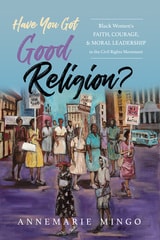
Have You Got Good Religion?
Black Women's Faith, Courage, and Moral Leadership in the Civil Rights MovementAnneMarie Mingo
University of Illinois Press, 2024
A depiction of moral imagination that resonates today, Have You Got Good Religion? reveals how Black Churchwomen’s understanding of God became action and transformed a nation.
Hunted
Predation and Pentecostalism in GuatemalaKevin Lewis O'Neill
University of Chicago Press, 2019
Hunted is based on more than ten years of fieldwork among these centers and the drug users that populate them. Over time, as Kevin Lewis O’Neill engaged both those in treatment and those who surveilled them, he grew increasingly concerned that he, too, had become a hunter, albeit one snatching up information. This thoughtful, intense book will reframe the arc of redemption we so often associate with drug rehabilitation, painting instead a seemingly endless cycle of hunt, capture, and release.
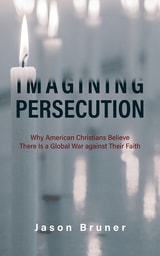
Imagining Persecution
Why American Christians Believe There Is a Global War against Their FaithJason Bruner
Rutgers University Press, 2021

Kingdom at Any Cost
Right-Wing Visions of Apocalypse in AmericaJohnnie Chamberlin
Parkhurst Brothers, Inc., 2009
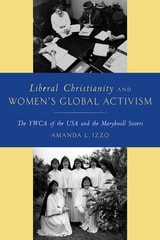
Liberal Christianity and Women's Global Activism
The YWCA of the USA and the Maryknoll SistersAmanda L. Izzo
Rutgers University Press, 2018
Focusing on the histories of two highly influential groups, the Young Women’s Christian Association of the USA, an interdenominational Protestant organization, and the Maryknoll Sisters, a Roman Catholic religious order, Izzo offers new perspectives on the contributions of these women to transnational social movements, women’s history, and religious studies, as she traces the connections between turn-of-the-century Christian women’s reform culture and liberal and left-wing religious social movements of the 1960s and 1970s. Izzo suggests that shared ethical, theological, and institutional underpinnings can transcend denominational divides, and that strategies for social change often associated with secular feminism have ties to spiritually inspired social movements.
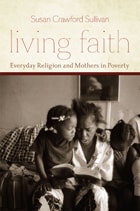
Living Faith
Everyday Religion and Mothers in PovertySusan Crawford Sullivan
University of Chicago Press, 2012
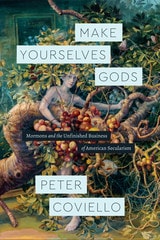
Make Yourselves Gods
Mormons and the Unfinished Business of American SecularismPeter Coviello
University of Chicago Press, 2019
Over these turbulent decades, Mormons would appear by turns as heretics, sex-radicals, refugees, anti-imperialists, colonizers, and, eventually, reluctant monogamists and enfranchised citizens. Reading Mormonism through a synthesis of religious history, political theology, native studies, and queer theory, Peter Coviello deftly crafts a new framework for imagining orthodoxy, citizenship, and the fate of the flesh in nineteenth-century America. What emerges is a story about the violence, wild beauty, and extravagant imaginative power of this era of Mormonism—an impassioned book with a keen interest in the racial history of sexuality and the unfinished business of American secularism.
Make Yourselves Gods
Mormons and the Unfinished Business of American SecularismPeter Coviello
University of Chicago Press, 2019
From the perspective of Protestant America, nineteenth-century Mormons were the victims of a peculiar zealotry, a population deranged––socially, sexually, even racially––by the extravagances of belief they called “religion.” Make Yourselves Gods offers a counter-history of early Mormon theology and practice, tracking the Saints from their emergence as a dissident sect to their renunciation of polygamy at century’s end.
Over these turbulent decades, Mormons would appear by turns as heretics, sex-radicals, refugees, anti-imperialists, colonizers, and, eventually, reluctant monogamists and enfranchised citizens. Reading Mormonism through a synthesis of religious history, political theology, native studies, and queer theory, Peter Coviello deftly crafts a new framework for imagining orthodoxy, citizenship, and the fate of the flesh in nineteenth-century America. What emerges is a story about the violence, wild beauty, and extravagant imaginative power of this era of Mormonism—an impassioned book with a keen interest in the racial history of sexuality and the unfinished business of American secularism.
Maurice Blondel, Social Catholicism, and Action Française
The Clash over the Church's Role in Society during the Modernist EraPeter J. Bernardi
Catholic University of America Press, 2009
Religion and Social Justice For Immigrants
Hondagneu-Sotelo, Pierrette
Rutgers University Press, 2006
Religion has jumped into the sphere of global and domestic politics in ways that few would have imagined a century ago. Some expected that religion would die as modernity flourished. Instead, it now stares at us almost daily from the front pages of newspapers and television broadcasts. Although it is usually stories about the Christian Right or conservative Islam that grab headlines, there are many religious activists of other political persuasions that are working quietly for social justice. This book examines how religious immigrants and religious activists are working for equitable treatment for immigrants in the United States.
The essays in this book analyze the different ways in which organized religion provides immigrants with an arena for mobilization, civic participation, and solidarity. Contributors explore topics including how non-Western religious groups such as the Vietnamese Caodai are striving for community recognition and addressing problems such as racism, economic issues, and the politics of diaspora; how interfaith groups organize religious people into immigrant civil rights activists at the U.S.–Mexican border; and how Catholic groups advocate governmental legislation and policies on behalf of refugees.
Shades of White Flight
Evangelical Congregations and Urban DepartureMark T. Mulder
Rutgers University Press, 2015
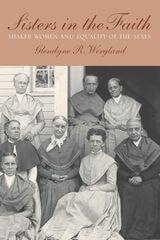
Sisters in the Faith
Shaker Women and Equality of the SexesGlendyne R. Wergland
University of Massachusetts Press, 2011
In 1788, following the death of charismatic founder Mother Ann Lee, the celibate religious group known as the Shakers set out to institutionalize equality of the sexes in their theology, government, and daily practice. In this book, Glendyne Wergland evaluates how well they succeeded in that mission by examining the experiences of women within Shaker communities over more than a century.
Drawing on an extensive archive of primary documents, Wergland discusses topics ranging from girlhood, health, and dress to why women joined the Shakers and how they were viewed by those outside their community. She analyzes the division of labor between men and women, showing that there was considerable cooperation and reciprocity in carrying out most tasks—from food production to laundering to gathering firewood—even as gendered conflicts remained.
In her conclusion, Wergland draws together all of these threads to show that Shaker communities achieved a remarkable degree of gender equality at a time when women elsewhere still suffered under the legal and social strictures of the traditional patriarchal order. In so doing, she argues, the experience of Shaker women served as a model for promoting women's rights in American political culture.
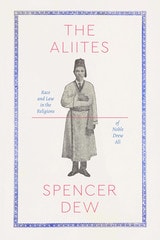
The Aliites
Race and Law in the Religions of Noble Drew AliSpencer Dew
University of Chicago Press, 2019
In The Aliites, Spencer Dew traces the history and impact of Ali’s radical fusion of law and faith. Dew uncovers the influence of Ali’s teachings, including the many movements they inspired. As Dew shows, Ali’s teachings demonstrate an implicit yet critical component of the American approach to law: that it should express our highest ideals for society, even if it is rarely perfect in practice. Examining this robustly creative yet largely overlooked lineage of African American religious thought, Dew provides a window onto religion, race, citizenship, and law in America.
The Divine Institution
White Evangelicalism's Politics of the FamilySophie Bjork-James
Rutgers University Press, 2021
Winner of the Anne Bolin & Gil Herdt Book Prize from the Human Sexuality and Anthropology Interest Group (HSAIG)
The Divine Institution provides an account of how a theology of the family came to dominate a white evangelical tradition in the post-civil rights movement United States, providing a theological corollary to Religious Right politics.
This tradition inherently enforces racial inequality in that it draws moral, religious, and political attention away from problems of racial and economic structural oppression, explaining all social problems as a failure of the individual to achieve the strong gender and sexual identities that ground the nuclear family. The consequences of this theology are both personal suffering for individuals who cannot measure up to prescribed gender and sexual roles, and political support for conservative government policies. Exposure to experiences that undermine the idea that an emphasis on the family is the solution to all social problems is causing a younger generation of white evangelicals to shift away from this narrow theological emphasis and toward a more social justice-oriented theology. The material and political effects of this shift remain to be seen.
The Family as Basic Social Unit
Living Out Catholic Social TeachingKevin Schemenauer
Catholic University of America Press, 2024
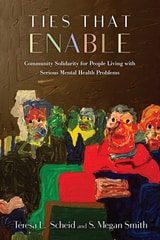
Ties That Enable
Community Solidarity for People Living with Serious Mental Health ProblemsTeresa L. Scheid
Rutgers University Press, 2021
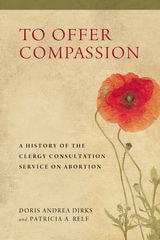
To Offer Compassion
A History of the Clergy Consultation Service on AbortionDoris Andrea Dirks and Patricia A. Relf
University of Wisconsin Press, 2019
As religious leaders spoke out on issues of civil rights, peace, or poverty, CCS members were also called to action by the suffering of women who had approached them for help. Overwhelmingly male, white, affluent, and middle-aged, these mainline Protestant and Jewish clergy were nonetheless outspoken advocates for the rights of women, particularly poor women. To Offer Compassion is a detailed history of this unique and largely forgotten movement, drawing on extensive interviews with original participants and on primary documents from the CCS's operations.
Trade-Offs
An Introduction to Economic Reasoning and Social IssuesHarold Winter
University of Chicago Press, 2005
Harold Winter provides readers with the analytical tools needed to identify and understand the trade-offs associated with these topics. By considering both the costs and benefits of potential policy solutions, Winter stresses that real-world policy decision making is best served by an explicit recognition of as many trade-offs as possible.
Intellectually stimulating yet accessible and entertaining, Trade-Offs will be appreciated by students of economics, public policy, health administration, political science, and law, as well as by anyone who follows current social policy debates.

Trade-Offs
An Introduction to Economic Reasoning and Social Issues, Second EditionHarold Winter
University of Chicago Press, 2013

Www.Here I Am
Russell Stannard
Templeton Press, 2002
•Does belief in God play a part in that?
•Do you believe in evolution—that you came from animals?
•Do you think there is life on other planets?
•If so, does that make human beings less important?
•Do the world religions contradict each other, or are they simply talking about the same God in somewhat different ways?
•How should belief in an afterlife affect the way you live this life?