Results by title
1861 books match the query 'Social life and customs' and 173 start with a
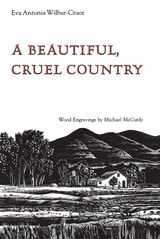
A Beautiful, Cruel Country
Eva Antonia Wilbur-Cruce
University of Arizona Press, 1987
Eva Antonia Wilbur inherited a unique affinity for the land. Granddaughter of a Harvard-educated physician who came to the Territory in the 1860s, she was the firstborn child of a Mexican mother and Anglo father who instilled in her an appreciation for both cultures. Little Toña learned firsthand the responsibilities of ranching—an education usually reserved for boys—and also experienced the racial hostility that occurred during those final years before the Tohono O'odham were confined to a reservation.
Begun as a reminiscence to tell younger family members about their "rawhide tough and lonely" life at the turn of the century, Mrs. Wilbur-Cruce's book is rich with imagery and dialogue that brings the Arivaca area to life. Her story is built around the annual cycle of ranch life—its spring and fall round-ups, planting and harvesting—and features a cavalcade of border characters, anecdotes about folk medicine, and recollections of events that were most meaningful in a young girl's life. Her account constitutes a valuable primary source from a region about which nothing similar has been previously published, while the richness of her story creates a work of literature that will appeal to readers of all ages.
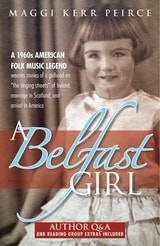
A Belfast Girl
A 1960s American folk music legend weaves stories of a girlhood on “the singing streets” of Ireland, marriage in Scotland, and arrival in AmericaMaggi Kerr Peirce
Parkhurst Brothers, Inc., 2013
A 1960s American folk music legend weaves stories of a girlhood on “the singing streets” of Ireland, marriage in Scotland, and arrival in America

A Biscuit for Your Shoe
Beatrice Upshaw
University of North Texas Press, 2020

A Bountiful Harvest
The Midwestern Farm Photographs of Pete Wettach, 1925-1965Leslie A. Loveless
University of Iowa Press, 2002
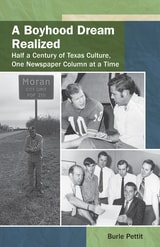
A Boyhood Dream Realized
Half a Century of Texas Culture, One Newspaper Column at a TimeBurle Pettit
University of North Texas Press, 2019

A Castle in the Backyard
The Dream of a House in FranceBetsy Draine and Michael Hinden
University of Wisconsin Press, 2006
Like any romance, this one has had its ups and downs, and Betsy and Michael chart its course in this delightful memoir. They offer an intimate glimpse of a region little known to Americans—the Dordogne valley, its castles and prehistoric art, its walking trails and earthy cuisine—and describe the charms and mishaps of setting up housekeeping thousands of miles from home.
Along with the region’s terrain and culture, A Castle in the Backyard introduces us to the people of Périgord—the castle’s proprietor, the village children, the gossipy real-estate agent, the rascally mason, and the ninety-year-old widow with a tale of heartbreak. A celebration of a place and its people, the book also reflects on the future of historic Périgord as tourism and development pose a challenge to its graceful way of life.

A Colonial Lexicon
Of Birth Ritual, Medicalization, and Mobility in the CongoNancy Rose Hunt
Duke University Press, 1999
Relying on archival research in England and Belgium, as well as fieldwork in the Congo, Hunt reconstructs an ethnographic history of a remote British Baptist mission struggling to survive under the successive regimes of King Leopold II’s Congo Free State, the hyper-hygienic, pronatalist Belgian Congo, and Mobutu’s Zaire. After exploring the roots of social reproduction in rituals of manhood, she shows how the arrival of the fast and modern ushered in novel productions of gender, seen equally in the forced labor of road construction and the medicalization of childbirth. Hunt focuses on a specifically interwar modernity, where the speed of airplanes and bicycles correlated with a new, mobile medicine aimed at curbing epidemics and enumerating colonial subjects. Fascinating stories about imperial masculinities, Christmas rituals, evangelical humor, colonial terror, and European cannibalism demonstrate that everyday life in the mission, on plantations, and under a strongly Catholic colonial state was never quite what it seemed. In a world where everyone was living in translation, privileged access to new objects and technologies allowed a class of “colonial middle figures”—particularly teachers, nurses, and midwives—to mediate the evolving hybridity of Congolese society. Successfully blurring conventional distinctions between precolonial, colonial, and postcolonial situations, Hunt moves on to discuss the unexpected presence of colonial fragments in the vibrant world of today’s postcolonial Africa.
With its close attention to semiotics as well as sociology, A Colonial Lexicon will interest specialists in anthropology, African history, obstetrics and gynecology, medical history, religion, and women’s and cultural studies.
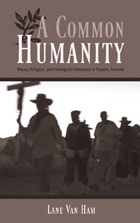
A Common Humanity
Ritual, Religion, and Immigrant Advocacy in Tucson, ArizonaLane Van Ham
University of Arizona Press, 2011
This is the first book to examine immigrant aid groups from the inside. Author Lane Van Ham spent more than three years observing the groups and many hours in discussions and interviews. He is particularly interested in how immigrant advocates both uphold the legitimacy of the United States and maintain a broader view of its social responsibilities. By advocating for immigrants regardless of their documentation status, he suggests, advocates navigate the conflicting pulls of their own nation-state citizenship and broader obligations to their neighbors in a globalizing world. And although the advocacy organizations are not overtly religious, Van Ham finds that they do employ religious symbolism as part of their public rhetoric, arguing that immigrants are entitled to humane treatment based on universal human values.
Beautifully written and immensely engaging, A Common Humanity adds a valuable human dimension to the immigration debate.
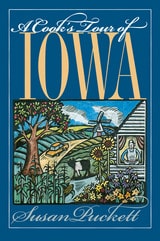
A Cook's Tour of Iowa
Susan Puckett
University of Iowa Press, 1990
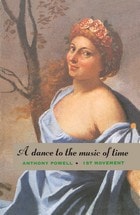
A Dance to the Music of Time
First MovementAnthony Powell
University of Chicago Press, 1995
A Dance to the Music of Time is a landmark work of fiction, praised by readers and critics and other novelists throughout the 75 years since the first volume was published. Equal parts funny and heartbreaking, clever and moving, Anthony Powell's universally acclaimed epic encompasses a four-volume panorama of twentieth century London.
Hailed by Time as "brilliant literary comedy as well as a brilliant sketch of the times," A Dance to the Music of Time opens just after World War I and carries through the 1950s, with all the changes of society, characters, and relationships that those shifting eras bring.
Four very different young men on the threshold of manhood dominate this opening volume of A Dance to the Music of Time. The narrator, Jenkins—a budding writer—shares a room with Templer, already a passionate womanizer, and Stringham, aristocratic and reckless. Widmerpool, as hopelessly awkward as he is intensely ambitious, lurks on the periphery of their world. Amid the fever of the 1920s and the first chill of the 1930s, these four gain their initiations into sex, society, business, and art. A masterpiece of modern fiction, Powell's epic creates a rich portrait of life in England between the wars.
"Reading Powell," says the New York Times, "is like living someone else's life, inextricably entangled with your own." Give this first volume a try, and you'll find characters and scenes and insights that will stay with you for the rest of your life.
Includes these novels:
A Question of Upbringing
A Buyer's Market
The Acceptance World
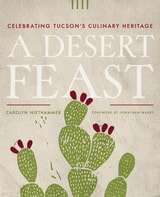
A Desert Feast
Celebrating Tucson's Culinary HeritageCarolyn Niethammer, Foreword by Johnathan Mabry
University of Arizona Press, 2020
Southwest Book of the Year Award Winner
Pubwest Book Design Award Winner
Drawing on thousands of years of foodways, Tucson cuisine blends the influences of Indigenous, Mexican, mission-era Mediterranean, and ranch-style cowboy food traditions. This book offers a food pilgrimage, where stories and recipes demonstrate why the desert city of Tucson became American’s first UNESCO City of Gastronomy.
Both family supper tables and the city’s trendiest restaurants feature native desert plants and innovative dishes incorporating ancient agricultural staples. Award-winning writer Carolyn Niethammer deliciously shows how the Sonoran Desert’s first farmers grew tasty crops that continue to influence Tucson menus and how the arrival of Roman Catholic missionaries, Spanish soldiers, and Chinese farmers influenced what Tucsonans ate.
White Sonora wheat, tepary beans, and criollo cattle steaks make Tucson’s cuisine unique. In A Desert Feast, you’ll see pictures of kids learning to grow food at school, and you’ll meet the farmers, small-scale food entrepreneurs, and chefs who are dedicated to growing and using heritage foods. It’s fair to say, “Tucson tastes like nowhere else.”
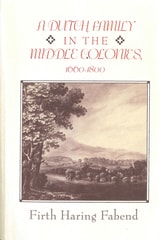
A Dutch Family in the Middle Colonies
1660-1880Firth Haring Fabend
Rutgers University Press, 1991
As she traces the lives of the Harings and their neighbors, Fabend focuses on their marriage and childbearing patterns, living conditions, agricultural methods, and relative economic position. She investigates inheritance patterns, concluding that the position of women deteriorated under English law. She is equally interested in the political and religious life of the family. The Harings formed a church fitting their Pietist beliefs, and this church became central to community life. Their theology encouraged them to question religious authority, which in turn fostered the questioning of political authority. Their community became a seedbed for revolutionary activity. Fabend examines the family's position in the Revolution--primarily patriot--and the losses they suffered in that conflict.
The Harings of colonial America were ideal yeoman farmers, a class that stood well in the social hierarchy of the day. They were industrious, they prospered, and they participated in the civic life of colonial America. But once the new republic formed, they were not very visible. Fabend argues that they maintained their "Dutchness" more consciously than ever after the Revolution, which hindered their full participation in public affairs. In some ways, the fifth and sixth generations were more Dutch than the early generations.
A Feast for the Eyes
Art, Performance, and the Late Medieval BanquetChristina Normore
University of Chicago Press, 2015
A Feast for the Eyes is the first book-length study of the court banquets of northwestern Europe in the fourteenth and fifteenth centuries. Christina Normore draws on an array of artworks, archival documents, chroniclers’ accounts, and cookbooks to re-create these events and reassess the late medieval visual culture in which banquets were staged. Feast participants, she shows, developed sophisticated ways of appreciating artistic skill and attending to their own processes of perception, thereby forging a court culture that delighted in the exercise of fine aesthetic judgment.
Challenging modern assumptions about the nature of artistic production and reception, A Feast for the Eyes yields fresh insight into the long history of multimedia work and the complex relationships between spectacle and spectators.

A Frieze of Girls
Memoirs as FictionAllan Seager
University of Michigan Press, 2004
A Frieze of Girls speaks with a fresh voice from an American era long past. This is more than Allan Seager's story of what happened; it is also about how "the feel of truth is very like the feel of fiction, especially when either is at all strange."
Seager gives us his coming-of-age story, from a high-school summer as a sometime cowboy in the Big Horn mountains to a first job at seventeen managing an antiquated factory in Memphis to a hard-drinking scholarship year in Oxford, cut short by tuberculosis. At once funny with an undercurrent of pain, the stories in A Frieze of Girls remind us of the realities we create to face the world and the past, and in turn of the realities of the world we must inevitably also confront. "Time makes fiction out of our memories," writes Seager. "We all have to have a self we can live with and the operation of memory is artistic---selecting, suppressing, bending, touching up, turning our actions inside out so that we can have not necessarily a likable, merely a plausible identity." A Frieze of Girls is Allan Seager at the top of his form, and a reminder that great writing always transcends mere fashion.
Allan Seager was Professor of English at the University of Michigan and author of many highly praised short stories and novels, including Amos Berry. He died in Tecumseh, Michigan, in 1968. Novelist Charles Baxter is the author of Saul and Patsy.
A Great Basin Mosaic
The Cultures of Rural NevadaJames W. Hulse
University of Nevada Press, 2017
The Nevada of lesser-known cities, towns, and outposts deserve their separate chronicles, and here Hulse fills a wide gap. He contributes in a text rich with memories tramping through rural Nevada as a child, then as a journalist seeking news and gossip, then later as an academic historian and a parent trying to share the wonders of the high desert with his family. Nobody is more qualified to write about the cultural nuances of rural Nevada than Hulse, who retired after 35 years as a professor of history at University of Nevada, Reno.
Robert Laxalt wrote an article in National Geographic in 1974 entitled “The Other Nevada” in which he referred to “the Nevada that has been eclipsed by the tinsel trimmings of Las Vegas, the round-the-clock casinos, the ski slopes of the Sierra. It is a Nevada that few tourists see.” With this book Hulse reflects on Laxalt’s insights and shows changes—often slow-moving and incremental—that have occurred since then. Much of the terrain of rural Nevada has not changed at all, while others have adapted to technological revolutions of recent times. Hulse states that there is no single “other” Nevada, but several subcultures with distinct features. He offers a tour of sorts to what John Muir called the “bewildering abundance” of the Nevada landscape.
A History of the Ozarks, Volume 1
The Old OzarksBrooks Blevins
University of Illinois Press, 2020
Winner of the Arkansiana Award, from the Arkansas Library Association
Geologic forces raised the Ozarks. Myth enshrouds these hills. Human beings shaped them and were shaped by them. The Ozarks reflect the epic tableau of the American people—the native Osage and would-be colonial conquerors, the determined settlers and on-the-make speculators, the endless labors of hardscrabble farmers and capitalism of visionary entrepreneurs. The Old Ozarks is the first volume of a monumental three-part history of the region and its inhabitants. Brooks Blevins begins in deep prehistory, charting how these highlands of granite, dolomite, and limestone came to exist. From there he turns to the political and economic motivations behind the eagerness of many peoples to possess the Ozarks. Blevins places these early proto-Ozarkers within the context of larger American history and the economic, social, and political forces that drove it forward. But he also tells the varied and colorful human stories that fill the region's storied past—and contribute to the powerful myths and misunderstandings that even today distort our views of the Ozarks' places and people. A sweeping history in the grand tradition, A History of the Ozarks, Volume 1: The Old Ozarks is essential reading for anyone who cares about the highland heart of America.

A History of the Ozarks, Volume 2
The Conflicted OzarksBrooks Blevins
University of Illinois Press, 2019
A History of the Ozarks, Volume 3
The OzarkersBrooks Blevins
University of Illinois Press, 2021
Brooks Blevins tells the cultural history of the Ozarks as a regional variation of an American story. As he shows, the experiences of the Ozarkers have not diverged from the currents of mainstream life as sharply or consistently as the mythmakers would have it. If much of the region seemed to trail behind by a generation, the time lag was rooted more in poverty and geographic barriers than a conscious rejection of the modern world and its progressive spirit. In fact, the minority who clung to the old days seemed exotic largely because their anachronistic ways clashed against the backdrop of the evolving region around them. Blevins explores how these people’s disproportionate influence affected the creation of the idea of the Ozarks, and reveals the truer idea that exists at the intersection of myth and reality.
The conclusion to the acclaimed trilogy, The History of the Ozarks, Volume 3: The Ozarkers offers an authoritative appraisal of the modern Ozarks and its people.
A Journal of Travels into the Arkansas Territory During the Year 1819
Thomas Nuttall
University of Arkansas Press, 1999
This is the famous naturalist Thomas Nuttall's only surviving complete journal of his American scientific explorations. Covering his travels in Arkansas and what is now Oklahoma, it is pivotal to an understanding of the Old Southwest in the early nineteenth century, when the United States was taking inventory of its acquisitions from the Louisiana Purchase.
The account follows Nuttall's route from Philadelphia to Pittsburg, down the Ohio River to its mouth, then down the Mississippi River to the Arkansas Post, and up the Arkansas River with a side trip to the Red River. It is filled with valuable details on the plants, animals, and geology of the region, as well as penetrating observations of the resident native tribes, the military establishment at Fort Smith, the arrival of the first governor of Arkansas Territory, and the beginnings of white settlement.
Originally published in 1980 by the University of Oklahoma Press, this fine edited version of Nuttall's work boasts a valuable introduction, notes, maps, and bibliography by Savoie Lottinville. The editor provided common names for those given in scientific classification and substituted modern genus and species names for the ones used originally by Nuttall. The resulting journal is a delight to read for anyone—historian, researcher, visitor, resident, or enthusiast.
A Journey Around Our America
A Memoir on Cycling, Immigration, and the Latinoization of the U.S.By Louis G. Mendoza
University of Texas Press, 2012
Immigration and the growing Latino population of the United States have become such contentious issues that it can be hard to have a civil conversation about how Latinoization is changing the face of America. So in the summer of 2007, Louis Mendoza set out to do just that. Starting from Santa Cruz, California, he bicycled 8,500 miles around the entire perimeter of the country, talking to people in large cities and small towns about their experiences either as immigrants or as residents who have welcomed—or not—Latino immigrants into their communities. He presented their enlightening, sometimes surprising, firsthand accounts in Conversations Across Our America: Talking About Immigration and the Latinoization of the United States.
Now, in A Journey Around Our America, Mendoza offers his own account of the visceral, emotional, intellectual, and spiritual dimensions of traveling the country in search of a deeper, broader understanding of what it means to be Latino in the United States in the twenty-first century. With a blend of first- and second-person narratives, blog entries, poetry, and excerpts from conversations he had along the way, Mendoza presents his own aspirations for and critique of social relations, political ruminations, personal experiences, and emotional vulnerability alongside the stories of people from all walks of life, including students, activists, manual laborers, and intellectuals. His conversations and his experiences as a Latino on the road reveal the multilayered complexity of Latino life today as no academic study or newspaper report ever could.
A Journey through Texas; or, a Saddle-Trip on the Southwestern Frontier
By Frederick Law Olmsted
University of Texas Press, 1978
Early in the year 1854 Frederick Law Olmsted, a young New England journalist, crossed the Louisiana border and set off on horseback into the teeth of the Texas winter. In A Journey through Texas he recounts his travels along the Old San Antonio Road through East Texas' piney woods, the dry prairies further west, the chaparral of South Texas, the coastal prairies, and the rich bottomlands around Houston and Galveston.
Olmsted does not romanticize the discomforts of his trip—the monotonous food, crude housing, wet and dry northers, rough companions—yet his book reflects a sense of limitless possibility for this new and open country. The cultured Easterner remembers in relentless detail the squalor and brutality met with in parts of East Texas, but he writes fondly of the civility and cleanliness of the German settlements around New Braunfels.
In his introductory "A Letter to a Southern Friend," omitted in earlier reprints, Olmsted sets forth his views opposing the extension of slavery into the West and promoting free-soil agriculture for frontier states.
The remarkably versatile Olmsted is best known as the founder of landscape architecture in America and for works including Central Park and Stanford University.
In his Foreword, Larry McMurtry calls A Journey through Texas an "intelligent, lively, readable book, packed with keen observation and lightened by a delicate strain of humor."

A Kiss across the Ocean
Transatlantic Intimacies of British Post-Punk and US LatinidadRichard T. Rodríguez
Duke University Press, 2022

A Kosher Christmas
'Tis the Season to be JewishJoshua Eli Plaut
Rutgers University Press, 2012
Christmas is not everybody’s favorite holiday. Historically, Jews in America, whether participating in or refraining from recognizing Christmas, have devised a multitude of unique strategies to respond to the holiday season. Their response is a mixed one: do we participate, try to ignore the holiday entirely, or create our own traditions and make the season an enjoyable time? This book, the first on the subject of Jews and Christmas in the United States, portrays how Jews are shaping the public and private character of Christmas by transforming December into a joyous holiday season belonging to all Americans.
Creative and innovative in approaching the holiday season, these responses range from composing America’s most beloved Christmas songs, transforming Hanukkah into the Jewish Christmas, creating a national Jewish tradition of patronizing Chinese restaurants and comedy shows on Christmas Eve, volunteering at shelters and soup kitchens on Christmas Day, dressing up as Santa Claus to spread good cheer, campaigning to institute Hanukkah postal stamps, and blending holiday traditions into an interfaith hybrid celebration called “Chrismukkah” or creating a secularized holiday such as Festivus.
Through these venerated traditions and alternative Christmastime rituals, Jews publicly assert and proudly proclaim their Jewish and American identities to fashion a universally shared message of joy and hope for the holiday season.
See also: http://www.akosherchristmas.org
A Lean Year and Other Stories
Robert Laxalt
University of Nevada Press, 1994
In the lead story, Cowboy Clint Hamilton laments that the town is “getting more like a big city every day” as the traditional gambling joints of earlier times give way to the gaudy casinos that will soon become modern glitz.
Sobering experiences from his days as a reporter give Laxalt an insight into murderers and prison life and lethal gas chambers. In a chilling short story, “The Snake Pen,” we find the seed of Robert Laxalt’s celebrated novel, A Man In the Wheatfield.
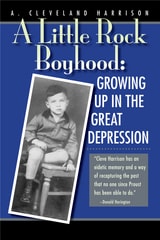
A Little Rock Boyhood
Growing Up in the Great DepressionA. Cleveland Harrison
Butler Center for Arkansas Studies, 2010

A Love Letter to Texas Women
By Sarah Bird
University of Texas Press, 2016
"Sarah Bird is a true eccentric, but one with a straightforward gift for explaining the human heart. . . . A Lone Star girl-legend." —Boston Globe
What is it that distinguishes Texas women—the famous Yellow Rose and her descendants? Is it that combination of graciousness and grit that we revere in First Ladies Laura Bush and Lady Bird Johnson? The rapier-sharp wit that Ann Richards and Molly Ivins used to skewer the good ole boy establishment? The moral righteousness with which Barbara Jordan defended the US constitution? An unnatural fondness for Dr Pepper and queso?
In her inimitable style, Sarah Bird pays tribute to the Texas Woman in all her glory and all her contradictions. She humorously recalls her own early bewildered attempts to understand Lone Star gals, from the big-haired, perfectly made-up ladies at the Hyde Park Beauty Salon to her intellectual, quinoa-eating roommates at Seneca House Co-op for Graduate Women. After decades of observing Texas women, Bird knows the species as few others do. A Love Letter to Texas Women is a must-have guide for newcomers to the state and the ideal gift to tell any Yellow Rose how special she is.
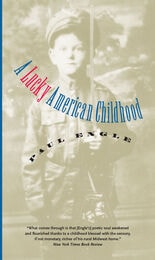
A Lucky American Childhood
Paul Engle
University of Iowa Press, 1996
A Lucky American Childhood will appeal to people with memories of the small-town America that Paul Engle describes with such affectionate realism and to all those interested in the roots of this renowned man of letters.

A Matter of Life and Death
Hunting in Contemporary VermontMarc Boglioli
University of Massachusetts Press, 2009
In A Matter of Life and Death, anthropologist Marc Boglioli puts a human face on a group widely regarded as morally suspect, one that currently stands in the crossfire of America's so-called culture wars. Drawing on extensive ethnographic fieldwork in Addison County, Vermont, which took him from hunting camps and sporting goods stores to local bars and kitchen tables, Boglioli focuses on how contemporary hunters, women as well as men, understand their relationship to their prey. He shows how hunters' attitudes toward animals flow directly from the rural lifeways they have continued to maintain in the face of encroaching urban sensibilities. The result is a rare glimpse into a culture that experiences wild animals in a way that is at once violent, consumptive, and respectful, and that regards hunting as an enduring link to a vanishing past. It is a book that will challenge readers—hunters, non-hunters, and anti-hunters alike—to reconsider what constitutes a morally appropriate relationship with the non-human residents of this planet.

A Nation of Family and Friends?
Sport and the Leisure Cultures of British Asian Girls and WomenAarti Ratna
Rutgers University Press, 2024
Ratna also examines two key cultural objects - the popular films "Bend it Like Beckham" and “Dhan Dhana Dhan Goal” - to examine in detail the gendered representation of South Asian soccer players’ engagement in amateur and elite levels of the sport. She critiques studies of women’s football fandom and sport that fail to acknowledge social differences relating to race, class, age, disability, and sexuality. By linking the social forces (across time and space) that differentially affect their sporting choices and leisure lifestyles, Ratna portrays the women of the South Asian diaspora as active agents in the shaping of their life courses and as skilled navigators of the complexities affecting their own identities. Ultimately Ratna examines the intersections of class, caste, age, generation, gender, and sexuality, to provide a rich and critical exploration of British Asian women's sport and leisure choices, pleasures, and lived realities.

A Natural State
Essays on TexasBy Stephen Harrigan
University of Texas Press, 1994
In this remarkable collection of essays, Stephen Harrigan explores, with an unfailing depth of feeling, the human longing to feel at home in the world of nature. In vivid and convincing prose, he evokes the landscape of his home territory, Texas, and his own reactions, sometimes droll, sometimes haunted, to the extraordinary power of place that Texas projects.
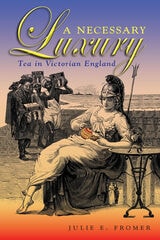
A Necessary Luxury
Tea in Victorian EnglandJulie E. Fromer
Ohio University Press, 2008
In A Necessary Luxury: Tea in Victorian England, Julie E. Fromer analyzes tea histories, advertisements, and nine Victorian novels, including Alice’s Adventures in Wonderland, Wuthering Heights, and Portrait of a Lady. Fromer demonstrates how tea functions within the literature as an arbiter of taste and middle-class respectability, aiding in the determination of class status and moral position. She reveals the way in which social identity and character are inextricably connected in Victorian ideology as seen through the ritual of tea.
Drawing from the fields of literary studies, cultural studies, history, and anthropology, A Necessary Luxury offers in-depth analysis of both visual and textual representations of the commodity and the ritual that was tea in nineteenth-century England.
A Nest Of Hooks
Lon Otto
University of Iowa Press, 1978
A Network of Converso Families in Early Modern Toledo
Assimilating a MinorityLinda Martz
University of Michigan Press, 2003
Linda M. Martz focuses on families that were immersed in the worlds of business and finance. They formed the backbone of the trade industry and, during the economic expansion of the sixteenth century, enjoyed a high degree of affluence. The seventeenth century, however, brought harder times. How these families rose to positions of commercial eminence and then adapted to this economic downturn is one of the questions addressed in this insightful book.
A Network of Converso Families in Early Modern Toledo relies heavily on archival evidence--notarial, parish, and city records--that offers new insights into the families' histories. Business endeavors, marriage alliances, involvement in local politics, and the pursuit of improved social status are all subjected to Martz's keen analysis.
These families appear to have been well integrated into their contemporary society; aside from their business and financial activities, many were members of the city's governing council. But how well did they integrate with the lower classes? Assimilating minorities in the majority culture is a task that confronts most modern societies, so the experience of Spain and this particular minority may serve as an example of how earlier societies viewed and confronted this challenge.
This book will appeal to historians of medieval and Renaissance Spain and those interested in the Inquisition's effect on Renaissance Spain. It will also prove to be indispensable for those interested in the history of the Jewish race, as well as for those pursuing the question of marginalization.
Linda M. Martz is an independent historian as well as a freelance editor and writer.
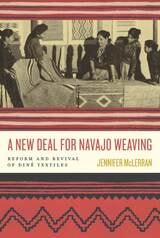
A New Deal for Navajo Weaving
Reform and Revival of Diné TextilesJennifer McLerran
University of Arizona Press, 2022
By the 1920s the durability and market value of Diné weavings had declined dramatically. Indian welfare advocates established projects aimed at improving the materials and techniques. Private efforts served as models for federal programs instituted by New Deal administrators. Historian Jennifer McLerran details how federal officials developed programs such as the Southwest Range and Sheep Breeding Laboratory at Fort Wingate in New Mexico and the Navajo Arts and Crafts Guild. Other federal efforts included the publication of Native natural dye recipes; the publication of portfolios of weaving designs to guide artisans; and the education of consumers through the exhibition of weavings, aiding them in their purchases and cultivating an upscale market. McLerran details how government officials sought to use these programs to bring the Diné into the national economy; instead, these federal tactics were ineffective because they marginalized Navajo women and ignored the important role weaving plays in the resilience and endurance of wider Diné culture.
A Nickel's Worth of Skim Milk
A Boy's View of the Great DepressionRobert J. Hastings
Southern Illinois University Press, 1986
Told from the point of view of a young boy, this account shows how a family “faced the 1930s head on and lived to tell the story.” It is the story of growing up in southern Illinois, specifically the Marion, area during the Great Depression. But when it was first published in 1972 the book proved to be more than one writer’s memories of depression-era southern Illinois.
“People started writing me from all over the country,” Hastings notes. “And all said much the same: ‘You were writing about my family, as much as your own. That’s how I remember the 1930s, too.’”
As he proves time and again in this book, Hastings is a natural storyteller who can touch upon the detail that makes the tale both poignant and universal. He brings to life a period that marked every man, woman, and child who lived through it even as that national experience fades into the past.
A Penny's Worth of Minced Ham
Another Look at the Great DepressionRobert J. Hastings
Southern Illinois University Press, 1986
Hastings experienced the rural and small town side of an event that touched all who weathered it—the economic crash of 1929 and its 10-year aftermath.
The author grew up in Marion, Illinois, entering the first grade in 1930, the start of the Great Depression. This book, which recalls memorable episodes in the life of that boy, is a sequel to the popular ANickel’s Worth of Skim Milk.
What Hastings experienced as a child was typical of depression-era life. Those who were young then can relive lost youth in Hastings’ books. And there were moments worth reliving: Hastings tells of “laughter and love and tears in the midst of hunger and cold and deprivation.” Those too young to have experienced the economic devastation can see those hard days through the eyes of a trained storyteller reporting from the point of view of a child.
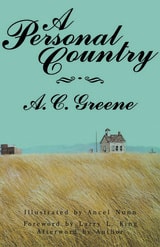
A Personal Country
A. C. Greene
University of North Texas Press, 1998
It is a harsh, remote country, where the weather is always very close and the horizon far away. The Brazos country of long-ago Fourth of July fishing expeditions; the grass-grown remains of a way station of the Butterfield Stage Line; the streets of Abilene; the sparse grazing lands under infinite skies-all are made resonant by a native son’s affection and understanding. It is a way of life-resilient and persnickety-that is almost gone.
Above all, it is people: the author’s grandmother, who had a mortal fear of bridges and whose premonitions of unnamed calamities (that as often as not happened), both alarmed and pleased the young boy; Uncle Aubrey, “who married late”; the blacksmith they awakened in the dead of night; the familiar neighbors; the rare and deliciously mysterious strangers.
With humor and strong, unsentimental feeling, A. C. Greene conserves for us the priceless eccentricities of place and person that are being flattened out-almost literally bulldozed away-by the impatient, insatiable onrush of the twentieth century. His West Texas is a very personal country, but what he seeks to share will be familiar to all who take pleasure in the memories that tie them to their own special region of America.
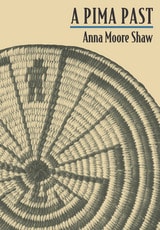
A Pima Past
Anna Moore Shaw
University of Arizona Press, 1974
"A most interesting book. . . . [Shaw's] account of how the Pima Indians lived, their family structure, how they reared their children, courtship and marriage, how they treated their elders, their religious practices before the coming of a Christian missionary in 1870, and their accommodation with death are related in language that can be easily understood by the layman and, yet, provide information which can be used by the sociologist and anthropologist."—Journal of the West
"The current trend in books written by American Indians is to idealize the Indian past while condemning white culture. This volume is a notable exception because its author is old enough to remember the past and because she has been successful in adapting those elements of white culture which she found useful without sacrificing this essential heritage. . . . The style is simple and straightforward, that of a good storyteller which reaches all adult levels."—Choice
"Simple and charming reminiscences of the old Pima ways at the turn of the century when they still prevailed and of the changes which recent decades have brought about in the lives of the desert people."—Books of the Southwest
"Throughout [Shaw's] account a special kind of humor, sensitivity, and pride is revealed when discussing her peoples and her own personal experiences."—The Masterkey
A Place Of Sense
Essays In Search Of MidwestMichael Martone
University of Iowa Press, 1988
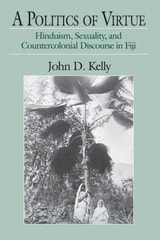
A Politics of Virtue
Hinduism, Sexuality, and Countercolonial Discourse in FijiJohn D. Kelly
University of Chicago Press, 1991
changing conditions of political possibility by examining the
connection between politics and sexual morality in the British
colony of Fiji from 1929 to 1932.
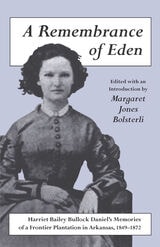
A Remembrance of Eden
Harriet Bailey Bullock Daniel's Memories of a Frontier Plantation in Arkansas, 1849–1872Margaret Jones Bolsterli
University of Arkansas Press, 1993
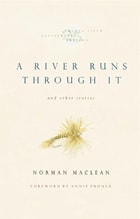
A River Runs Through It and Other Stories, Twenty-fifth Anniversary Edition
Norman Maclean
University of Chicago Press, 2001
Maclean grew up in the western Rocky Mountains in the first decades of the twentieth century. As a young man he worked many summers in logging camps and for the United States Forest Service. The two novellas and short story in this collection are based on his own experiences—the experiences of a young man who found that life was only a step from art in its structures and beauty. The beauty he found was in reality, and so he leaves a careful record of what it was like to work in the woods when it was still a world of horse and hand and foot, without power saws, "cats," or four-wheel drives. Populated with drunks, loggers, card sharks, and whores, and set in the small towns and surrounding trout streams and mountains of western Montana, the stories concern themselves with the complexities of fly fishing, logging, fighting forest fires, playing cribbage, and being a husband, a son, and a father.
By turns raunchy, poignant, caustic, and elegiac, these are superb tales which express, in Maclean's own words, "a little of the love I have for the earth as it goes by." A first offering from a 70-year-old writer, the basis of a top-grossing movie, and the first original fiction published by the University of Chicago Press, A River Runs through It and Other Stories has sold more than a million copies. As Proulx writes in her foreword to this new edition, "In 1990 Norman Maclean died in body, but for hundreds of thousands of readers he will live as long as fish swim and books are made."

A Scrap of Time and Other Stories
Ida Fink
Northwestern University Press, 1995
Winner of the PEN/Book-of-the-Month Club Translation Prize
Winner of the Anne Frank Prize
These shattering stories describe the lives of ordinary people as they are compelled to do the unimaginable: a couple who must decide what to do with their five-year-old daughter as the Gestapo come to march them out of town; a wife whose safety depends on her acquiescence in her husband's love affair; a girl who must pay a grim price for an Aryan identity card.
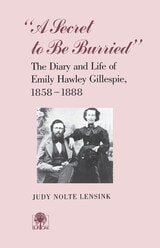
A Secret To Be Burried
Diary Emily Hawley GillespieJudy Nolte Lensink
University of Iowa Press, 1989
The sound of nineteenth-century women, once thought lost to us, is alive because ordinary women like Emily Hawley Gillespie gave voice to their thoughts in diaries. This condensed version of the 2,500-page journals of Emily Gillespie, faithfully written from 1858 to 1888, is a detailed account of rural Iowa life. More than this, it contains the reflections of a woman who dreamed of being a painter and writer and instead became a wife and a mother, a woman whose radical convictions were recorded in her diary, while publicly she conformed to the prescribed life of a Victorian pioneer woman. Through Emily's journals, readers are offered immediate and unmodified contact with settlers in Iowa one hundred years ago. A wealth of facts are included—what produce she harvested and preserved from her garden, how her husband tended his fields and what he raised, the challenges and rewards of family life.
Judy Lensink's skillful analysis shows the larger patterns in Emily Gillespie's life and provides keys that unlock the diary's secrets. Emily's life is revealed as a youth full of promise fading into middle and declining years of lost dreams and eventual tragedy, which caused her to write, "I have written many things in my journal, but the worst is a secret to be burried when I shall cease to be."
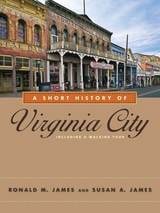
A Short History of Virginia City
Ronald M. James
University of Nevada Press, 2014
The city’s story did not end when the Comstock Lode played out. Beginning in the 1930s, bohemian artists, literati, and tourists were intrigued by this remnant of the Old West. The leader of Manhattan’s café society, Lucius Beebe, moved here and relaunched the Territorial Enterprise in 1950. Television’s most popular western from 1959 to 1973, Bonanza, located its fictional Ponderosa Ranch nearby. In the summer of 1965, a handful of Bay Area musicians, including Big Brother and the Holding Company, performed at the Red Dog Saloon and launched psychedelic rock, part of the inspiration for a defining decade of youth culture. Today it is both a National Historic Landmark District and a living community. Visitors come to enjoy its saloons and restaurants, admire its architecture, and learn from its museums and exhibits. A Short History of Virginia City will enhance their experience and will also be enjoyed by anyone interested in the history of Nevada, mining, and the Old West.
• Includes an illustrated walking tour describing more than thirty buildings and sites
A Song for the Horses
Musical Heritage for More-than-Human Futures in MongoliaK. G. Hutchins
University of Arizona Press, 2025
Hutchins’s ethnographic research, spanning more than a decade, provides a vivid and intimate portrayal of Mongolian life. Musicians use the morin khuur, or ‘horse fiddle,’ to engage with the subjectivities and agencies of nonhuman animals and other beings. This work is a significant contribution to the posthuman turn in social sciences, engaging with theories from prominent scholars such as Donna Haraway and Anna Tsing .
As climate change continues to impact communities worldwide, this book offers a unique perspective on how cultural heritage can be mobilized to address environmental challenges, providing valuable lessons for global efforts to build sustainable and resilient futures. At the intersection of music, environment, and posthumanism, A Song for the Horses shows how Mongolian musicians use cultural traditions to imagine and build toward alternative futures beyond climate change and neoliberalism.
A Song of Longing
AN ETHIOPIAN JOURNEYKay Kaufman Shelemay
University of Illinois Press, 1992
-- Library Journal
"Highly recommended to generalists in music as well as to specialists interested in Ethiopia. . . . Also makes an excellent case study text for university-level courses examining fieldwork issues and conditions."
-- Notes
"Highly recommended for both undergraduate and graduate collections in ethnomusicology, anthropology, African, and Judaic studies."
-- Choice
A Stitch in Time
The Needlework of Aging Women in Antebellum AmericaAimee E. Newell
Ohio University Press, 2014
Drawing from 167 examples of decorative needlework—primarily samplers and quilts from 114 collections across the United States—made by individual women aged forty years and over between 1820 and 1860, this exquisitely illustrated book explores how women experienced social and cultural change in antebellum America.
The book is filled with individual examples, stories, and over eighty fine color photographs that illuminate the role that samplers and needlework played in the culture of the time. For example, in October 1852, Amy Fiske (1785–1859) of Sturbridge, Massachusetts, stitched a sampler. But she was not a schoolgirl making a sampler to learn her letters. Instead, as she explained, “The above is what I have taken from my sampler that I wrought when I was nine years old. It was w[rough]t on fine cloth [and] it tattered to pieces. My age at this time is 66 years.”
Situated at the intersection of women’s history, material culture study, and the history of aging, this book brings together objects, diaries, letters, portraits, and prescriptive literature to consider how middle-class American women experienced the aging process. Chapters explore the physical and mental effects of “old age” on antebellum women and their needlework, technological developments related to needlework during the antebellum period and the tensions that arose from the increased mechanization of textile production, and how gift needlework functioned among friends and family members. Far from being solely decorative ornaments or functional household textiles, these samplers and quilts served their own ends. They offered aging women a means of coping, of sharing and of expressing themselves. These “threads of time” provide a valuable and revealing source for the lives of mature antebellum women.
Publication of this book was made possible in part through generous funding from the Coby Foundation, Ltd and from the Quilters Guild of Dallas, Helena Hibbs Endowment Fund.

A Thousand and One Afternoons in Chicago
Ben Hecht
University of Chicago Press, 1992
“The hardboiled audacity and wit that became Hecht’s signature as Hollywood’s most celebrated screen-writer are conspicuous in these vignettes. Most of them are comic and sardonic, some strike muted tragic or somber atmospheric notes. . . . The best are timeless character sketches that have taken on an added interest as shards of social history.”—L. S. Klepp, Voice Literary Supplement

A Thousand and One Afternoons in Chicago
Ben Hecht
University of Chicago Press, 2009
“The hardboiled audacity and wit that became Hecht’s signature as Hollywood’s most celebrated screen-writer are conspicuous in these vignettes. Most of them are comic and sardonic, some strike muted tragic or somber atmospheric notes. . . . The best are timeless character sketches that have taken on an added interest as shards of social history.”—L. S. Klepp, Voice Literary Supplement