Results by title
26 books match the query 'Social stratification'

Brown Saviors and Their Others
Race, Caste, Labor, and the Global Politics of Help in IndiaArjun Shankar
Duke University Press, 2023

Carceral Liberalism
Feminist Voices against State ViolenceEdited by Shreerekha Pillai. Foreword by Demita Frazier
University of Illinois Press, 2023
One of Ms. Magazine's Most Anticipated Books of 2023
Carceral liberalism emerges from the confluence of neoliberalism, carcerality, and patriarchy to construct a powerful ruse disguised as freedom. It waves the feminist flag while keeping most women still at the margins. It speaks of a post-race society while one in three Black men remain incarcerated. It sings the praises of capital while the dispossessed remain mired in debt.
Shreerekha Pillai edits essays on carceral liberalism that continue the trajectory of the Combahee River Collective and the many people inspired by its vision of feminist solidarity and radical liberation. Academics, activists, writers, and a formerly incarcerated social worker look at feminist resurgence and resistance within, at the threshold of, and outside state violence; observe and record direct and indirect forms of carcerality sponsored by the state and shaped by state structures, traditions, and actors; and critique carcerality. Acclaimed poets like Honorée Fanonne Jeffers and Solmaz Sharif amplify the volume’s themes in works that bookend each section.
Cutting-edge yet historically grounded, Carceral Liberalism examines an American ideological creation that advances imperialism, anti-blackness, capitalism, and patriarchy.
Contributors: Maria F. Curtis, Joanna Eleftheriou, Autumn Elizabeth and Zarinah Agnew and D Coulombe, Jeremy Eugene, Demita Frazier, Honorée Fanonne Jeffers, Alka Kurian, Cassandra D. Little, Beth Matusoff Merfish, Francisco Argüelles Paz y Puente, Shreerekha Pillai, Marta Romero-Delgado, Ravi Shankar, Solmaz Sharif, Shailza Sharma, Tria Blu Wakpa and Jennifer Musial, Javier Zamora
Categorically Unequal
The American Stratification SystemDouglas S. Massey
Russell Sage Foundation, 2007
Century of Difference
How America Changed in the Last One Hundred YearsClaude S. Fischer
Russell Sage Foundation, 1976
Children as Social Butterflies
Navigating Belonging in a Diverse Swiss KindergartenUrsina Jaeger
Rutgers University Press, 2025
This book is also freely available online as an open-access digital edition, published with the support of the Swiss National Science Foundation.
Class Politics and the Creation of the American State
James Parisot
University of Michigan Press, 2026
Why does the American federal government seem to prioritize elite capitalist interests over those of other groups? Class Politics and the Creation of the American State draws on a wide range of sources—personal letters, official government documents, private notes, and newspaper articles—to reveal that the federal government was built to give the emerging capitalist elite a way to consolidate and institutionalize their power. Challenging both liberal and conservative interpretations about what the US Constitution means, this book tells a new story about how the American state took shape.
The framers of the Constitution constructed an image of the state, enshrined in the Constitution, that presented their power as universal: a system meant to serve all Americans equally. This image helped legitimize the new order, even if the rising capitalist class stood to benefit most of all. Since the United States of the late 1780s was not yet a fully capitalist society, the state that was built opened space for less capitalistically incorporated social classes, including some artisans and yeoman farmers, to have limited representation. Class Politics and the Creation of the American State shows how the structure of the early American state worked primarily to advance capitalist interests, while incorporating other groups enough to maintain a sense of broad representation and inclusion.
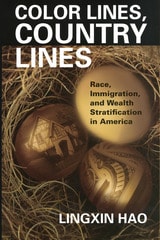
Color Lines, Country Lines
Race, Immigration, and Wealth Stratification in AmericaLingxin Hao
Russell Sage Foundation, 2007
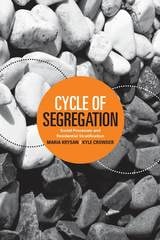
Cycle of Segregation
Social Processes and Residential StratificationMaria Krysan
Russell Sage Foundation, 2017
Through original analyses of national-level surveys and in-depth interviews with residents of Chicago, Krysan and Crowder find that residential stratification is reinforced through the biases and blind spots that individuals exhibit in their searches for housing. People rely heavily on information from friends, family, and coworkers when choosing where to live. Because these social networks tend to be racially homogenous, people are likely to receive information primarily from members of their own racial group and move to neighborhoods that are also dominated by their group. Similarly, home-seekers who report wanting to stay close to family members can end up in segregated destinations because their relatives live in those neighborhoods. The authors suggest that even absent of family ties, people gravitate toward neighborhoods that are familiar to them through their past experiences, including where they have previously lived, and where they work, shop, and spend time. Because historical segregation has shaped so many of these experiences, even these seemingly race-neutral decisions help reinforce the cycle of residential stratification. As a result, segregation has declined much more slowly than many social scientists have expected.
To overcome this cycle, Krysan and Crowder advocate multi-level policy solutions that pair inclusionary zoning and affordable housing with education and public relations campaigns that emphasize neighborhood diversity and high-opportunity areas. They argue that together, such programs can expand the number of destinations available to low-income residents and help offset the negative images many people hold about certain neighborhoods or help introduce them to places they had never considered. Cycle of Segregation demonstrates why a nuanced understanding of everyday social processes is critical for interrupting entrenched patterns of residential segregation.

Dynamics of Class and Stratification in Poland
1945–2015Irina Tomescu-Dubrow
Central European University Press, 2018

Hijacking the Agenda
Economic Power and Political InfluenceChristopher Witko
Russell Sage Foundation, 2021
The authors analyze over 20 years of floor speeches by several hundred members of Congress to examine the influence of campaign contributions on how the national economic agenda is set in Congress. They find that legislators who received more money from business and professional associations were more likely to discuss the deficit and other upper-class priorities, while those who received more money from unions were more likely to discuss issues important to lower- and middle-class constituents, such as economic inequality and wages. This attention imbalance matters because issues discussed in Congress receive more direct legislative action, such as bill introductions and committee hearings. While unions use campaign contributions to push back against wealthy interests, spending by the wealthy dwarfs that of unions.
The authors use case studies analyzing financial regulation and the minimum wage to demonstrate how the financial influence of the wealthy enables them to advance their economic agenda. In each case, the authors examine the balance of structural power, or the power that comes from a person or company’s position in the economy, and kinetic power, the power that comes from the ability to mobilize organizational and financial resources in the policy process. The authors show how big business uses its structural power and resources to effect policy change in Congress, as when the financial industry sought deregulation in the late 1990s, resulting in the passage of a bill eviscerating New Deal financial regulations. Likewise, when business interests want to preserve the policy status quo, it uses its power to keep issues off of the agenda, as when inflation eats into the minimum wage and its declining purchasing power leaves low-wage workers in poverty. Although groups representing lower- and middle-class interests, particularly unions, can use their resources to shape policy responses if conditions are right, they lack structural power and suffer significant resource disadvantages. As a result, wealthy interests have the upper hand in shaping the policy process, simply due to their pivotal position in the economy and the resulting perception that policies beneficial to business are beneficial for everyone.
Hijacking the Agenda is an illuminating account of the way economic power operates through the congressional agenda and policy process to privilege the interests of the wealthy and marks a major step forward in our understanding of the politics of inequality.

Hinterland
America's New Landscape of Class and ConflictPhil A. Neel
Reaktion Books, 2018
Urgent and unsparing, this book opens our eyes to America’s new heart of darkness. Driven by an ever-expanding socioeconomic crisis, America’s class structure is recomposing itself in new geographies of race, poverty, and production. The center has fallen. Riots ricochet from city to city led by no one in particular. Anarchists smash financial centers as a resurgent far right builds power in the countryside. Drawing on his direct experience of recent popular unrest, from the Occupy movement to the wave of riots and blockades that began in Ferguson, Missouri, Phil A. Neel provides a close-up view of this landscape in all its grim but captivating detail. Inaugurating the new Field Notes series, published in association with the Brooklyn Rail, Neel’s book tells the intimate story of a life lived within America’s hinterland.

Living Class in Urban India
Dickey, Sara
Rutgers University Press, 2016
Many Americans still envision India as rigidly caste-bound, locked in traditions that inhibit social mobility. In reality, class mobility has long been an ideal, and today globalization is radically transforming how India’s citizens perceive class. Living Class in Urban India examines a nation in flux, bombarded with media images of middle-class consumers, while navigating the currents of late capitalism and the surges of inequality they can produce.
This book is also freely available online as an open-access digital edition, published with the support of the National Endowment for the Humanities.
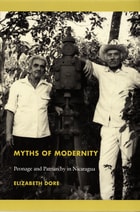
Myths of Modernity
Peonage and Patriarchy in NicaraguaElizabeth Dore
Duke University Press, 2006
Dore seamlessly combines archival research, oral history, and an innovative theoretical approach that unites political economy with social history. She recovers the bygone voices of peons, planters, and local officials within documents such as labor contracts, court records, and official correspondence. She juxtaposes these historical perspectives with those of contemporary peasants, landowners, activists, and politicians who share memories passed down to the present. The reconceptualization of the coffee economy that Dore elaborates has far-reaching implications. The Sandinistas mistakenly believed, she contends, that Nicaraguan capitalism was mature and ripe for socialist revolution, and after their victory in 1979 that belief led them to alienate many peasants by ignoring their demands for land. Thus, the Sandinistas’ myths of modernity contributed to their downfall.
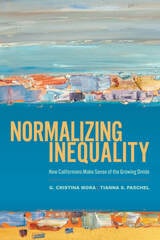
Normalizing Inequality
How Californians Make Sense of the Growing DivideG. Cristina Mora
Russell Sage Foundation, 2026
California has long been mythologized as the quintessential land of opportunity and reinvention—a place where anyone, regardless of origin, can forge a new life and realize their aspirations. Yet beneath this gilded narrative lies a starker reality: California ranks among the most unequal states in one of the world's most unequal countries, where the middle class finds itself increasingly squeezed. Economic inequality is not an anomaly but part of a broader global phenomenon, as disparities deepen across the world. While we know a lot about its contours, its evolution over time and its intersections with race and immigration, we understand far less about how ordinary people interpret and internalize it. In Normalizing Inequality, sociologists G. Cristina Mora and Tianna S. Paschel illuminate how middle-class Californians perceive and come to accept the inequalities that surround them.
Drawing on extensive interviews and surveys, Mora and Paschel uncover a profound paradox at the heart of middle-class consciousness. They find that Californians are keenly aware of the systemic causes of inequality—they recognize policies engineered to benefit the wealthy, they acknowledge how structural racism makes it hard for some groups to get ahead—yet they consistently minimize these forces. Instead, they gravitate toward explanations rooted in individualism, moral character, and the idea that things are worse in other places. Racism and racial inequality in California become palatable when framed as "not as bad as the South." Immigrant exploitation, however severe, transforms into evidence of the American Dream fulfilled simply upon arrival. Economic pressures that displace others become surmountable through personal industriousness and forbearance.
These beliefs about inequality grow more troubling still. Middle-class Californians sometimes blame disempowered people for their circumstances—acknowledging structural barriers facing homeless and undocumented populations while simultaneously faulting them for insufficient drive or criminal behavior that compounds their difficulties. When contemplating California's future, interviewees envision economic prosperity propelled by technological innovation, yet remain curiously unconcerned with how present inequalities might shape that tomorrow. Their imagined future is one where White and Asian American populations thrive, while Black, Latino, and economically marginalized Californians either vanish through displacement or fade into irrelevance. As respondents use these interpretive frameworks to make sense of inequality, they lean heavily on California's foundational narratives of opportunity, sanctuary and multiracial promise.
Normalizing Inequality offers an incisive examination of how ordinary citizens make sense of inequality and, through that very process of sense-making, how they tolerate and passively reproduce the conditions they often claim to deplore.

Not Quite White
White Trash and the Boundaries of WhitenessMatt Wray
Duke University Press, 2006
Of crucial importance are the ideas about poor whites that circulated through early-twentieth-century public health campaigns, such as hookworm eradication and eugenic reforms. In these crusades, impoverished whites, particularly but not exclusively in the American South, were targeted for interventions by sanitarians who viewed them as “filthy, lazy crackers” in need of racial uplift and by eugenicists who viewed them as a “feebleminded menace” to the white race, threats that needed to be confined and involuntarily sterilized.
Part historical inquiry and part sociological investigation, Not Quite White demonstrates the power of social categories and boundaries to shape social relationships and institutions, to invent groups where none exist, and to influence policies and legislation that end up harming the very people they aim to help. It illuminates not only the cultural significance and consequences of poor white stereotypes but also how dominant whites exploited and expanded these stereotypes to bolster and defend their own fragile claims to whiteness.
On the Verge of Convergence
Social Stratification in Eastern EuropeHenryk Domanski
Central European University Press, 2000
Problem of the Century
Racial Stratification in the United StatesElijah Anderson
Russell Sage Foundation, 2001

Producing Success
The Culture of Personal Advancement in an American High SchoolPeter Demerath
University of Chicago Press, 2009
Middle- and upper-middle-class students continue to outpace those from less privileged backgrounds. Most attempts to redress this inequality focus on the issue of access to financial resources, but as Producing Success makes clear, the problem goes beyond mere economics. In this eye-opening study, Peter Demerath examines a typical suburban American high school to explain how some students get ahead.
Demerath undertook four years of research at a Midwestern high school to examine the mercilessly competitive culture that drives students to advance. Producing Success reveals the many ways the community’s ideology of achievement plays out: students hone their work ethics and employ various strategies to succeed, from negotiating with teachers to cheating; parents relentlessly push their children while manipulating school policies to help them get ahead; and administrators aid high performers in myriad ways, even naming over forty students “valedictorians.” Yet, as Demerath shows, this unswerving commitment to individual advancement takes its toll, leading to student stress and fatigue, incivility and vandalism, and the alienation of the less successful. Insightful and candid, Producing Success is an often troubling account of the educationally and morally questionable results of the American culture of success.
Social Justice in Diverse Suburbs
History, Politics, and ProspectsChristopher Niedt
Temple University Press, 2013
Editor Christopher Niedt and his contributors shed light on organizing and conflict in the suburbs with historical and contemporary case studies. Chapters address topical issues ranging from how suburbanites actively fought school segregation to industrial pollution and displacement along the suburban-rural fringe. Social Justice in Diverse Suburbs also considers struggles for integration and environmental justice as well as efforts to preserve suburban history and organize immigrant communities.
Contributors include: Douglas R. Appler, Aaron Cavin, Nancy A. Denton, Lisa Feldstein, Casey Gallagher, Anne Galletta, Joseph Gibbons, Robert Gioielli, Lucas Owen Kirkpatrick, JoAnna Mitchell-Brown, Manuel Pastor, john a. powell, Jason Reece, Alex Schafran, June Williamson, and the editor.
Social Stratification and Mobility in Central Veracruz
By Hugo G. Nutini
University of Texas Press, 2005
Since the Revolution of 1910, Mexican society has undergone a profound transformation, characterized by the disempowerment of the landed aristocracy and the rise of a new ruling class of plutocrats and politicians; the development of a middle class of white-collar professionals; and the upward mobility of formerly disenfranchised Indians who have become urban, working-class Mestizos. Indeed, Mexico's class system today increasingly resembles that of Western industrialized nations, proving that, while further democratic reforms are needed, the Revolution initiated an ongoing process of change that has created a more egalitarian society in Mexico with greater opportunities for social advancement.
This authoritative ethnography examines the transformation of social classes in the Córdoba-Orizaba region during the latter half of the twentieth century to create a model of provincial social stratification in Mexico. Hugo Nutini focuses on the increased social mobility that has affected all classes of society, especially the rural Indians who have taken advantage of education, job opportunities, and contact with the wider world to achieve Mestizo status. He also traces the transfer of power that followed the demise of the hacienda system, as well as the growing importance of the middle class. This description and analysis of the provincial social stratification system complements the work Nutini has done on the national class system, centered in Mexico City, to offer a comprehensive picture of social stratification and mobility in Mexico today.
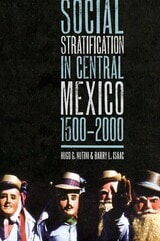
Social Stratification in Central Mexico, 1500-2000
By Hugo G. Nutini and Barry L. Isaac
University of Texas Press, 2009
In Aztec and colonial Central Mexico, every individual was destined for lifelong placement in a legally defined social stratum or estate. Social mobility became possible after independence from Spain in 1821 and increased after the 1910–1920 Revolution. By 2000, the landed aristocracy that was for long Mexico's ruling class had been replaced by a plutocracy whose wealth derives from manufacturing, commerce, and finance—but rapid growth of the urban lower classes reveals the failure of the Mexican Revolution and subsequent agrarian reform to produce a middle-class majority. These evolutionary changes in Mexico's class system form the subject of Social Stratification in Central Mexico, 1500–2000, the first long-term, comprehensive overview of social stratification from the eve of the Spanish Conquest to the end of the twentieth century.
The book is divided into two parts. Part One concerns the period from the Spanish Conquest of 1521 to the Revolution of 1910. The authors depict the main features of the estate system that existed both before and after the Spanish Conquest, the nature of stratification on the haciendas that dominated the countryside for roughly four centuries, and the importance of race and ethnicity in both the estate system and the class structures that accompanied and followed it. Part Two portrays the class structure of the post-revolutionary period (1920 onward), emphasizing the demise of the landed aristocracy, the formation of new upper and middle classes, the explosive growth of the urban lower classes, and the final phase of the Indian-mestizo transition in the countryside.

Status
Why Is It Everywhere? Why Does It Matter?Cecilia L. Ridgeway
Russell Sage Foundation, 2019
Ridgeway’s research on status has important implications for our understanding of social inequality. Distinct from power or wealth, status is prized because it provides affirmation from others and affords access to valuable resources. Ridgeway demonstrates how the conferral of status inevitably contributes to differing life outcomes for individuals, with impacts on pay, wealth creation, and health and wellbeing. Status beliefs are widely held views about who is better in society than others in terms of esteem, wealth, or competence. These beliefs confer advantages which can exacerbate social inequality. Ridgeway notes that status advantages based on race, gender, and class—such as the belief that white men are more competent than others—are the most likely to increase inequality by facilitating greater social and economic opportunities.
Ridgeway argues that status beliefs greatly enhance higher status groups’ ability to maintain their advantages in resources and access to positions of power and make lower status groups less likely to challenge the status quo. Many lower status people will accept their lower status when given a baseline level of dignity and respect—being seen, for example, as poor but hardworking. She also shows that people remain willfully blind to status beliefs and their effects because recognizing them can lead to emotional discomfort. Acknowledging the insidious role of status in our lives would require many higher-status individuals to accept that they may not have succeeded based on their own merit; many lower-status individuals would have to acknowledge that they may have been discriminated against.
Ridgeway suggests that inequality need not be an inevitable consequence of our status beliefs. She shows how status beliefs can be subverted—as when we reject the idea that all racial and gender traits are fixed at birth, thus refuting the idea that women and people of color are less competent than their male and white counterparts. This important new book demonstrates the pervasive influence of status on social inequality and suggests ways to ensure that it has a less detrimental impact on our lives.
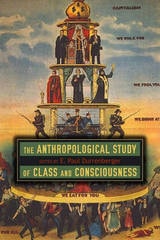
The Anthropological Study of Class and Consciousness
E. Paul Durrenberger
University Press of Colorado, 2012
Five central ideas unify the collection: the objective basis for class in different social orders; people's understanding of class in relation to race and gender; the relation of ideologies of class to realities of class; the U.S. managerial middle-class denial of class and emphasis on meritocracy in relation to increasing economic insecurity; and personal responses to economic insecurity and their political implications.
Anthropologists who want to understand the nature and dynamics of culture must also understand the nature and dynamics of class. The Anthropological Study of Class and Consciousness addresses the role of the concept of class as an analytical construct in anthropology and how it relates to culture. Although issues of social hierarchy have been studied in anthropology, class has not often been considered as a central element. Yet a better understanding of its role in shaping culture, consciousness, and people's awareness of their social and natural world would in turn lead to better understanding of major trends in social evolution as well as contemporary society. This book will be of great interest to students and scholars of anthropology, labor studies, ethnohistory, and sociology.

The Body Impolitic
Artisans and Artifice in the Global Hierarchy of ValueMichael Herzfeld
University of Chicago Press, 2003
Michael Herzfeld takes us inside a rich variety of small-town Cretan artisans' workshops to show how apprentices are systematically thwarted into learning by stealth and guile. This harsh training reinforces a stereotype of artisans as rude and uncultured. Moreover, the same stereotypes that marginalize artisans locally also operate to marginalize Cretans within the Greek nation and Greece itself within the international community. What Herzfeld identifies as "the global hierarchy of value" thus frames the nation's ancient monuments and traditional handicrafts as evidence of incurable "backwardness."
Herzfeld's sensitive observations offer an intimately grounded way of understanding the effects of globalization and of one of its most visible offshoots, the heritage industry, on the lives of ordinary people in many parts of the world today.

The Women of Katrina
How Gender, Race, and Class Matter in an American DisasterEmmanuel David
Vanderbilt University Press, 2012
Unequal City
Race, Schools, and Perceptions of InjusticeCarla Shedd is assistant professor of sociology and African American studies at Columbia University.
Russell Sage Foundation, 2015
Shedd draws from an array of data and in-depth interviews with Chicago youth to offer new insight into this understudied group. Focusing on four public high schools with differing student bodies, Shedd reveals how the predominantly low-income African American students at one school encounter obstacles their more affluent, white counterparts on the other side of the city do not face. Teens often travel long distances to attend school which, due to Chicago’s segregated and highly unequal neighborhoods, can involve crossing class, race, and gang lines. As Shedd explains, the disadvantaged teens who traverse these boundaries daily develop a keen “perception of injustice,” or the recognition that their economic and educational opportunities are restricted by their place in the social hierarchy.
Adolescents’ worldviews are also influenced by encounters with law enforcement while traveling to school and during school hours. Shedd tracks the rise of metal detectors, surveillance cameras, and pat-downs at certain Chicago schools. Along with police procedures like stop-and-frisk, these prison-like practices lead to distrust of authority and feelings of powerlessness among the adolescents who experience mistreatment either firsthand or vicariously. Shedd finds that the racial composition of the student body profoundly shapes students’ perceptions of injustice. The more diverse a school is, the more likely its students of color will recognize whether they are subject to discriminatory treatment. By contrast, African American and Hispanic youth whose schools and neighborhoods are both highly segregated and highly policed are less likely to understand their individual and group disadvantage due to their lack of exposure to youth of differing backgrounds.