Results by title
23 books match the query 'Sonora (State)'
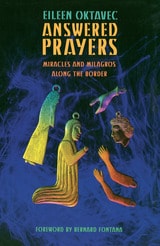
Answered Prayers
Miracles and Milagros along the BorderEileen Oktavec
University of Arizona Press, 1995
In Answered Prayers, the Mexicans, Mexican Americans, Tohono O'odham, and Yaquis who practice this tradition share their stories of unwavering faith and divine intervention. Anthropologist and photographer Eileen Oktavec has spent more than two decades documenting this fascinating tradition in the Arizona-Mexico borderlands. Quoting extensive interviews, she explains the beliefs of the people who perform this ancient folk ritual and the many rules guiding this practice. She also describes the many places where milagros are offered—from the elaborate Mexican baroque Mission San Xavier near Tucson, Arizona, to tiny household shrines and hospitals on both sides of the border. Oktavec also explains how milagros are made, where they are bought, and how they are used in jewelry, sculpture, and art.
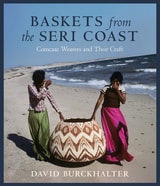
Baskets from the Seri Coast
Comcaac Weavers and Their CraftDavid Burckhalter
University of Arizona Press, 2026
Blending striking photography with reflections from years as a trader and observer of Seri culture, Burckhalter traces the evolution of Seri basketry from a utilitarian craft to a celebrated art form. The book examines how Seri weavers have navigated the influences of the craft economy, outside forces like anthropologists, and changing traditions, while preserving their unique oral history and spiritual connections. With detailed insights into the artistry, labor, and legends surrounding Seri baskets, this work is a tribute to the resilience and creativity of Seri women, whose weaving continues to be passed on to future generations.
Featuring more than two hundred color photographs and historic images, Baskets from the Seri Coast: Comcaac Weavers and Their Craft offers readers a visual feast that celebrates the intricate craftsmanship and cultural significance of a timeless art and the people who make it.
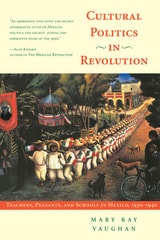
Cultural Politics in Revolution
Teachers, Peasants, and Schools in Mexico, 1930-1940Mary Kay Vaughan
University of Arizona Press, 1997
To show the significance of this facet of the Revolution, Mary Kay Vaughan analyzes the educational effort of the state during the 1930s, locating it within the broader sweep of Mexican history to illustrate how the government sought to nationalize and modernize rural society. Vaughan focuses on activities in rural schools, where central state policy makers, teachers, and people of the countryside came together to forge a national culture. She examines the cultural politics of schooling in four rural societies in the states of Sonora and Puebla that are representative of the peasant societies in revolutionary Mexico, and she shows how the state's program of socialist education became an arena for intense negotiations over power, culture, knowledge, rights, and gender practices. The real cultural revolution, Vaughan observes, lay not in the state's efforts at socialist education but in the dialogue between state and society that took place around this program. In the 1930s, rural communities carved out a space to preserve their local identities while the state succeeded in nurturing a multi-ethnic nationalism based on its promise of social justice and development.
Vaughan brings to her analysis a comparative understanding of peasant politics and educational history, extensive interviews, and a detailed examination of national, regional, and local archives to create an evocative and informative study of Mexican politics and society during modern Mexico's formative years. Cultural Politics in Revolution clearly shows that only by expanding the social arena in which culture was constructed and contested can we understand the Mexican Revolution's real achievements.
Flora of the Gran Desierto and Río Colorado Delta
Richard Stephen Felger
University of Arizona Press, 2001
Common names of plants are given in English, Spanish, and O'odham. While emphasizing scientific accuracy, the book is written in an accessible style. Felger's observations and knowledge of plant ecology, geographic distribution, evolution, ethnobotany, plant variation and special adaptations, and the history of the region provides botanists, naturalists, ecologists, conservationists, and anyone else celebrating the desert with readable, interesting, and important information. With two of Mexico's newest biosphere reserves—the Pinacate and the Upper Gulf of California—this region is a keystone for desert conservation efforts. Its location linking vast preserves to the north makes this book especially useful for anyone interested in borderland studies and the Sonoran Desert. Flora of the Gran Desierto represents a most creative, definitive, and enthusiastic treatment of Sonoran Desert plant life and is highly relevant to ecological restoration in deserts and wetlands in arid places worldwide.
Landscapes of Power and Identity
Comparative Histories in the Sonoran Desert and the Forests of Amazonia from Colony to RepublicCynthia Radding
Duke University Press, 2005
Radding’s comparative approach illuminates what happened when similar institutions of imperial governance, commerce, and religion were planted in different physical and cultural environments. She draws on archival documents, published reports by missionaries and travelers, and previous histories as well as ecological studies and ethnographies. She also considers cultural artifacts, including archaeological remains, architecture, liturgical music, and religious dances. Radding demonstrates how colonial encounters were conditioned by both the local landscape and cultural expectations; how the colonizers and colonized understood notions of territory and property; how religion formed the cultural practices and historical memories of the Sonoran and Chiquitano peoples; and how the conflict between the indigenous communities and the surrounding creole societies developed in new directions well into the nineteenth century.
Life and Labor on the Border
Working People of Northeastern Sonora, Mexico, 1886–1986Josiah McC. Heyman
University of Arizona Press, 1991
Life and Labor on the Border traces the development of the urban working class in northern Sonora over the period of a century. Drawing on an extensive collection of life histories, Heyman describes what has happened to families over several generations as people have left the countryside to work for American-owned companies in northern Sonora or to cross the border to find other employment.
Heyman searches for the origins of "working classness" in these family histories, revealing aspects of life that strengthen people' s involvement with a consumer economy, including the role of everyday objects like sewing machines, cars, and stoves. He considers the consequences of changing political and economic tides, and also the effects on family life of the new role of women in the labor force. Within the broad sweep of family chronicles, key junctures in individual lives—both personal and historical crises—offer additional insights into social class dynamics.
Heyman's work dispels the notion that border inhabitants are uniformly impoverished or corrupted by proximity to the United States. These life stories instead convey the positive sense of people's goals in life and reveal the origins of a distinctive way of life in the Borderlands.
Los Primeros Mexicanos
Late Pleistocene and Early Holocene People of SonoraGuadalupe Sánchez
University of Arizona Press, 2016
Los Primeros Mexicanos explores the Clovis occupation of Mexico’s northwest region of Sonora. Using extensive primary data concerning specific artifacts, assemblages, and Paleoindian archaeology, Mexican archaeologist Guadalupe Sánchez presents a synopsis and critical review of current data and a unique summary of information about the First People of México that is difficult to find in Spanish and until now not available in English.
Sánchez’s essential framework for early Sonora prehistory includes the Sonoran landscape, the biotic communities, a history of investigations, the regional cultural-historical chronology of Sonora, and the Clovis record in the surrounding area. The Sonoran settlement pattern, she asserts, indicates that Clovis groups were hunter-gatherers who exploited a wide range of environments, locating their settlements near lithic sources for tool-making, water sources, large-prey animals, and a variety of edible plants and small animals.
In 1592, a Jesuit priest, José de Acosta, chronicled his puzzlement over when man first arrived in the New World. Four hundred years later, the peopling of the American continent is still intensely interesting to scientists and researchers. Los Primeros Mexicanos offers an exhaustive synthesis of available archaeological evidence to shed light on Clovis occupation in Sonora, Mexico.
Migrant Deaths in the Arizona Desert
La vida no vale nadaEdited by Raquel Rubio-Goldsmith, Celestino Fernández, Jessie K. Finch, and Araceli Masterson-Algar
University of Arizona Press, 2016
Migrant Deaths in the Arizona Desert addresses the tragic results of government policies on immigration. The contributors consist of a multidisciplinary group who are dedicated to the thousands of men, women, and children who have lost their lives while crossing the desert in search of a better life. Each chapter in this important new volume seeks answers to migrant deaths, speaking to the complexity of this tragedy via a range of community and scholarly approaches.
The activists, artists, and scholars included in this volume confront migrant deaths and disappearances in the U.S.-Mexico borderlands as they reflect on the startling realities of death, migration, and public policy. Chapters touch on immigration and how it is studied, community responses to crisis, government policy, definitions of citizenship, and the role of the arts and human expression in response to state violence. Collectively the contributions throw a spotlight on the multivocal, transdisciplinary efforts to address the historical silence surrounding this human tragedy.
Despite numerous changes in the migration processes and growing attention to the problem, many people who attempt border crossings continue to disappear and die. This book offers a timely exploration of the ways that residents, scholars, activists, and artists are responding to this humanitarian crisis on their doorstep.
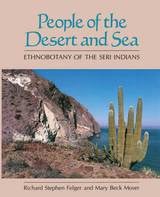
People of the Desert and Sea
Ethnobotany of the Seri IndiansRichard Stephen Felger, Mary Beck Moser
University of Arizona Press, 1985
"To read and gaze through this elegantly illustrated book is to be exposed, as if through a work of science fiction, to an astonishing and unknown cultural world."—North Dakota Quarterly
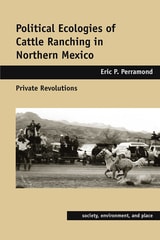
Political Ecologies of Cattle Ranching in Northern Mexico
Private RevolutionsEric P. Perramond
University of Arizona Press, 2010
In this study of the Río Sonora region of northern Mexico, where ranchers own anywhere from several hundred to tens of thousands of acres, Eric Perramond evaluates management techniques, labor expenditures, gender roles, and decision-making on private ranches of varying size. By examining the economic and ecological dimensions of daily decisions made on and off the ranch he shows that, contrary to prevailing notions, ranchers rarely collude as a class unless land titles are at issue, and that their decision-making is as varied as the landscapes they oversee.
Through first-hand observation, field measurements, and intimate ethnographies, Perramond sheds light on a complex set of decisions made, avoided, and confronted by these land managers and their families. He particularly shows that ranching has endured because of its extended kinship network, its reliance on all household members, and its close ties to local politics.
Perramond follows ranchers caught between debt, drought, and declining returns to demonstrate the novel approaches they have developed to adapt to changing economies and ecologies alike—such as strategically marketing the ranches for wild-game hunting or establishing small businesses that subsidize their lifestyles and livelihoods. Even more importantly, he reveals the false dichotomy between private and communal ranching. Political Ecologies of Cattle Ranching in Northern Mexico is essential reading for anyone interested in the future of ranching in western North America.
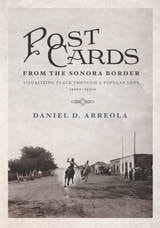
Postcards from the Sonora Border
Visualizing Place Through a Popular Lens, 1900s–1950sDaniel D. Arreola
University of Arizona Press, 2017
Young men ride horses on a dusty main road through town. Cars and gas stations gradually intrude on the land, and, years later, curiosity shops and cantinas change the face of Mexican border towns south of Arizona. Between 1900 and the late 1950s, Mexican border towns came of age both as centers of commerce and as tourist destinations. Postcards from the Sonora Border reveals how images—in this case the iconic postcard—shape the way we experience and think about place.
Making use of his personal collection of historic images, Daniel D. Arreola captures the evolution of Sonoran border towns, creating a sense of visual “time travel” for the reader. Supported by maps and visual imagery, the author shares the geographical and historical story of five unique border towns—Agua Prieta, Naco, Nogales, Sonoyta, and San Luis Río Colorado.
Postcards from the Sonora Border introduces us to these important towns and provides individual stories about each, using the postcards as markers. No one postcard view tells the complete story—rather, the sense of place emerges image by image as the author pulls readers through the collection as an assembled view. Arreola reveals how often the same locations and landmarks of a town were photographed as postcard images generation after generation, giving a long and dynamic view of the inhabitants through time. Arranged chronologically, Arreola’s postcards allow us to discover the changing perceptions of place in the borderlands of Sonora, Mexico.
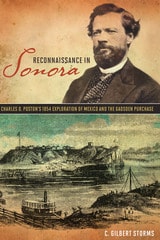
Reconnaissance in Sonora
Charles D. Poston’s 1854 Exploration of Mexico and the Gadsden PurchaseC. Gilbert Storms
University of Arizona Press, 2015
Poston led his party through Sonora and the territory of the 1854 Gadsden Purchase, which today encompasses southern Arizona and a portion of southern New Mexico. The syndicate’s charge to the young adventurer was to acquire land in Mexico in anticipation of the Gadsden Purchase and the building of the transcontinental railroad. Reconnaissance in Sonora details Poston’s expedition, including the founding of the town of Colorado City at the site of present-day Yuma, Arizona.
C. Gilbert Storms explores the American ideas of territorial expansion and Manifest Destiny, the national debate over a route for a transcontinental railroad, the legends of rich gold and silver mines in northern Mexico, and the French and American filibusters that plagued northern Mexico in the early 1850s.
Rudo Ensayo
A Description of Sonora and Arizona in 1764Juan Nentvig; Translated, Clarified, and Annotated by Alberto Francisco Pradeau and Robert R. Rasmussen
University of Arizona Press, 1980

Saints, Statues, and Stories
A Folklorist Looks at the Religious Art of SonoraJames S. Griffith
University of Arizona Press, 2019
So describes well-known and beloved folklorist James S. Griffith as he takes us back through the decades to a town in northern Sonora where a statue is saved—and in so doing, a community is saved as well.
In Saints, Statues, and Stories Griffith shares stories of nearly sixty years of traveling through Sonora. As we have come to expect through these journeys, “Big Jim”—as he is affectionately known by many—offers nothing less than the living traditions of Catholic communities. Themes of saints as agents of protection or community action are common throughout Sonora: a saint coming out of the church to protect the village, a statue having a say in where it resides and paying social calls to other communities, or a beloved image rescued from destruction and then revered on a private altar. A patron saint saves a village from outside attackers in one story—a story that has at least ten parallels in Sonora’s former mission communities. Details may vary, but the general narrative remains the same: when hostile nonbelievers attack the village, the patron saint of the church foils them.
Griffith uncovers the meanings behind the devotional uses of religious art from a variety of perspectives—from artist to audience, preservationist to community member. The religious artworks transcend art objects, Griffith believes, and function as ways of communicating between this world and the next. Setting the stage with a brief geography, Griffith introduces us to roadside shrines, artists, fiestas, saints, and miracles. Full-color images add to the pleasure of this delightful journey through the churches and towns of Sonora.
Seri Prehistory
The Archaeology of the Central Coast of Sonora, MexicoThomas Bowen
University of Arizona Press, 1976
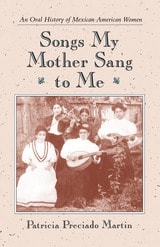
Songs My Mother Sang to Me
An Oral History of Mexican American WomenPatricia Preciado Martin
University of Arizona Press, 1992
Martin's quest took her to ranches, mining towns, and cities throughout southern Arizona, for she sought to document as varied an experience of the contributions of Mexican American women as possible. The interviews covered family history and genealogy, childhood memories, secular and religious traditions, education, work and leisure, environment and living conditions, rites of passage, and personal values. Each of the ten oral histories reflects not only the spontaneity of the interview and personality of each individual, but also the friendship that grew between Martin and her subjects.
Songs My Mother Sang to Me collects voices not often heard and brings to print accounts of social change never previously recorded. These women document more than the details of their own lives; in relating the histories of their ancestors and communities, they add to our knowledge of the culture and contributions of Mexican American people in the Southwest.

Sonora
A Description of the ProvinceIgnaz Pfefferkorn; Foreword by Bernard L. Fontana; Translated and Annotated by Theodore E. Treutlein
University of Arizona Press, 1989
"To be read for enjoyment; nevertheless, the historian will find in it a wealth of information that has been shrewdly appraised, carefully sifted, and creditably related."—Catholic Historical Review
"Of interest not only to the historian but to the geographer and anthropologist."—Pacific Historical Review
Surveying The Archaeology Of Northwest Mexico
Gilliam E Newell
University of Utah Press, 2003
Archaeology in the Southwest is increasingly directing its attention south of the international border as it becomes clear that a picture of the pre-hispanic Southwest is incomplete without taking the Mexican Northwest into account.
Surveying the Archaeology of Northwest Mexico presents an overview of recent work in Sonora and Chihuahua, comprising a sort of professional tour of the area. The chapters offer fresh insights into the formation of centers such as Paquimé, Cerro de Trincheras, and the Rio Sonora cabaceras. Contributors explore relations between these centers, individual internal organization of the various identifiable polities, and the relation of the whole northwest Mexican region to better-known adjacent ones. The volume underscores that northwest Mexico was not a dependent hinterland but was inhabited by many independent groups throughout prehistory.
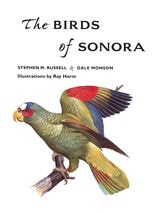
The Birds of Sonora
Stephen M. Russell
University of Arizona Press, 1998
The Birds of Sonora describes all the species known from that state and includes information on distribution, seasonal patterns of occurrence, abundance, and habitats. The first book of its kind in more than half a century to treat birds of this Mexican state immediately south of Arizona, it also contains details of nesting activity for breeding species, provides insight into factors influencing distribution, and notes historical changes in status. Each account is accompanied by a range map depicting the bird's range in Sonora—valuable information not available from any other source and useful to anyone interested in the distribution and ecology of North American birds. Drawings by internationally known wildlife artist Ray Harm enhance many of the entries.
Because other books on Mexican birds don't treat Sonora in detail, The Birds of Sonora is an indispensable resource for birders, and its background descriptions of Sonoran geography, climate, and habitats also make it a key reference for conservation and land use planning. A useful companion to field guides, it is a narrative account that puts readers in touch with birds of this important biogeographic area.

The Intimate Frontier
Friendship and Civil Society in Northern New SpainIgnacio Martínez
University of Arizona Press, 2019
Spaniards living in the isolated borderlands region of colonial Sonora were keen to develop an ideologically relevant and socially acceptable form of friendship with Indigenous people that could act as a functional substitute for civil law and governance, thereby regulating Native behavior. But as frontier society grew in complexity and sophistication, Indigenous and mixed-raced people also used the language of friendship and the performance of emotion for their respective purposes, in the process becoming skilled negotiators to meet their own best interests.
In northern New Spain, friendships were sincere and authentic when they had to be and cunningly malleable when the circumstances demanded it. The tenuous origins of civil society thus developed within this highly contentious social laboratory in which friendships (authentic and feigned) set the social and ideological parameters for conflict and cooperation. Far from the coffee houses of Restoration London or the lecture halls of the Republic of Letters, the civil society illuminated by Martínez stumbled forward amid the ambiguities and contradictions of colonialism and the obstacles posed by the isolation and violence of the Sonoran Desert.
The People of Sonora and Yankee Capitalists
Ramón Eduardo Ruiz
University of Arizona Press, 1988
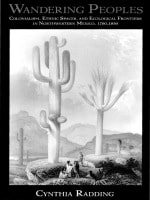
Wandering Peoples
Colonialism, Ethnic Spaces, and Ecological Frontiers in Northwestern Mexico, 1700–1850Cynthia Radding
Duke University Press, 1997
Radding describes this colonial mission not merely as an instance of Iberian expansion but as a site of cultural and political confrontation. This alternative vision of colonialism emphasizes the economic links between mission communities and Spanish mercantilist policies, the biological consequences of the Spanish policy of forced congregación, and the cultural and ecological displacements set in motion by the practices of discipline and surveillance established by the religious orders. Addressing wider issues pertaining to ethnic identities and to ecological and cultural borders, Radding’s analysis also underscores the parallel production of colonial and subaltern texts during the course of a 150-year struggle for power and survival.
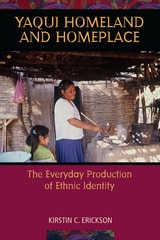
Yaqui Homeland and Homeplace
The Everyday Production of Ethnic IdentityKirstin C. Erickson
University of Arizona Press, 2008
Yaquis live in a portion of their ancestral homeland in Sonora, about 250 miles south of the Arizona border. A long history of displacement and ethnic struggle continues to shape the Yaqui sense of self, as Erickson discovered during the sixteen months that she lived in Potam, one of the eight historic Yaqui pueblos. She found that themes of identity frequently arise in the stories that Yaquis tell and that geography and location—space and place—figure prominently in their narratives.
Revisiting Edward Spicer’s groundbreaking anthropological study of the Yaquis of Potam pueblo undertaken more than sixty years ago, Erickson pays particular attention to the “cultural work” performed by Yaqui women today. She shows that by reaffirming their gendered identities and creating and occupying female-gendered spaces such as kitchens, household altars, and domestic ceremonial spaces, women constitute Yaqui ethnicity in ways that are as significant as actions taken by males in tribal leadership and public ceremony.
This absorbing study contributes new empirical knowledge about a Native American community as it adds to the growing anthropology of space/place and gender. By inviting readers into the homes and patios where Yaqui women discuss their lives, it offers a highly personalized account of how they construct—and reconstruct—their identity.