Results by title
323 books match the query 'Southeast Asia' and 22 start with a
A History of Modern Singapore, 1819-2005
Constance Turnbull
National University of Singapore Press, 2020
A Nation on the Line
Call Centers as Postcolonial Predicaments in the PhilippinesJan M. Padios
Duke University Press, 2018
A New Sun Rises Over the Old Land
A Novel of Sihanouk’s CambodiaSuon Sorin
National University of Singapore Press, 2020
First published in 1961, eight years after Cambodia gained independence from French colonial rule, A New Sun Rises Over the Old Land is an iconic work of modern Khmer literature, a singularly illuminating document of the new nation. This is one of the first English translations of a modern Khmer novel, and the text is accompanied by an extended introduction that situates the author in his historical and artistic context and examines the novel’s literary value.
A Reckoning
Philippine Trials of Japanese War CriminalsSharon W. Chamberlain
University of Wisconsin Press, 2019
Chamberlain highlights the differing views of Filipinos and Japanese about the trials. The Philippine government aimed to show its commitment to impartial proceedings with just outcomes. In Japan, it appeared that defendants were selected arbitrarily, judges and prosecutors were biased, and lower-ranking soldiers were punished for crimes ordered by their superior officers. She analyzes the broader implications of this divergence as bilateral relations between the two nations evolved and contends that these competing narratives were reimagined in a way that, paradoxically, aided a path toward postwar reconciliation.
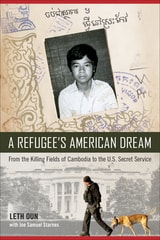
A Refugee's American Dream
From the Killing Fields of Cambodia to the U.S. Secret ServiceLeth Oun with Joe Samuel Starnes
Temple University Press, 2023
“I saw many killed. I almost starved. But I escaped to refugee camps in Thailand and eventually made it to the U.S.” Thus begins Leth Oun’s poignant and vivid memoir. A survivor of the Cambodian Killing Fields—having spent a torturous three years, eight months, and ten days imprisoned by the Khmer Rouge—Oun thrived in America, learning English, becoming a citizen, and working as an officer in the United States Secret Service Uniformed Division.
In A Refugee’s American Dream, Oun shares hard memories of Cambodia, where his father was executed, and his family enslaved in labor camps.
Following the fall of the Khmer Rouge, Oun survived a year of homelessness then nearly four years in refugee camps. Arriving in America, 17 and penniless, Oun struggled, washing dishes at a Chinese restaurant for $3.15 an hour. Still, he persevered, graduating from Widener University and completing thousands of hours of training to pursue a career in the Secret Service.
While on President Obama’s protection team, he returns to Cambodia after 32 years, reunites with family, and bonds with Reik, the Secret Service dog he handles. Through his most difficult moments, Oun displays truly inspiring resilience that ultimately leads to great achievements.
The authors’ proceeds will go to help Cambodians in need
A Thousand Cuts
Digital Repression and Pro-Democracy Movements in ThailandJanjira Sombatpoonsiri
University of Wisconsin Press, 2027
In response to the 2020–21 youth-led protests throughout Thailand, which were largely fueled by discourse on digital platforms, the government launched a sweeping program of technological suppression. Smear campaigns were orchestrated to discredit young activists, laws were weaponized to criminalize their activities, and surveillance technologies were deployed to keep tabs on them.
In A Thousand Cuts, Janjira Sombatpoonsiri traces the historical development of repression in Thailand, detailing how “traditional” methods of repression have been merged with digital tools to maintain the status quo since 2005, when mass mobilization started to move online. By examining the adverse effects of digital repression on individual activists—their mental health, private lives, and socioeconomic resources—Sombatpoonsiri also offers one of the first systematic analyses of the “reception” side of repression, shedding light on its detrimental consequences for activists and mass movements as a whole.
A Thousand Steps to Parliament
Constructing Electable Women in MongoliaManduhai Buyandelger
University of Chicago Press, 2022
Mongolia has often been deemed an “island of democracy,” commended for its rapid adoption of free democratic elections in the wake of totalitarian socialism. The democratizing era, however, brought alongside it a phenomenon that Manduhai Buyandelger terms “electionization”—a restructuring of elections from time-grounded events into a continuous neoliberal force that governs everyday life beyond the electoral period. In this way, electoral campaigns have come to substitute for the functions of governing, from social welfare to the private sector, requiring an accumulation of wealth and power beyond the reach of most women candidates. In A Thousand Steps to Parliament, Buyandelger shows how successful women candidates instead use strategies of self-polishing to cultivate charisma and a reputation for being oyunlag, or intellectful. This carefully crafted identity can be called the “electable self”: treating their bodies and minds as pliable and renewable, women candidates draw from the same practices of neoliberalism that have unsustainably commercialized elections. By tracing the complicated, contradictory paths to representation that women in Mongolia must walk, A Thousand Steps to Parliament holds a mirror up to democracies the world over, revealing an urgent need to grapple with the encroaching effects of neoliberalism in our global political systems.
A Time Far Past
A Novel of Viet NamLe Luu
University of Massachusetts Press, 1997
In its intricate sketching of complicated alliances, personal debts, and human interactions, A Time Far Past explores the complex layering of family and village history and Party and feudal authority. It also paints a vivid picture of the vast dislocations in Vietnamese culture caused by the political and military turmoil of the Indochina wars.
A Time Far Past was enormously popular in Vietnam, where it was first published in 1986, selling more than 120,000 copies and winning that country's national prize for fiction.
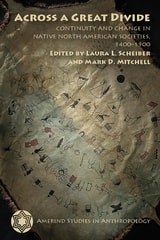
Across a Great Divide
Continuity and Change in Native North American Societies, 1400–1900Edited by Laura L. Scheiber and Mark D. Mitchell
University of Arizona Press, 2010
The contributors address a series of interlocking themes. Several consider the role of indigenous agency in the processes of colonial interaction, paying particular attention to gender and status. Others examine the ways long-standing native political economies affected, and were in turn affected by, colonial interaction. A third group explores colonial-period ethnogenesis, emphasizing the emergence of new native social identities and relations after 1500. The book also highlights tensions between the detailed study of local cases and the search for global processes, a recurrent theme in postcolonial research.
If archaeologists are to bridge the artificial divide separating history from prehistory, they must overturn a whole range of colonial ideas about American Indians and their history. This book shows that empirical archaeological research can help replace long-standing models of indigenous culture change rooted in colonialist narratives with more nuanced, multilinear models of change—and play a major role in decolonizing knowledge about native peoples.
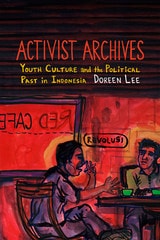
Activist Archives
Youth Culture and the Political Past in IndonesiaDoreen Lee
Duke University Press, 2016
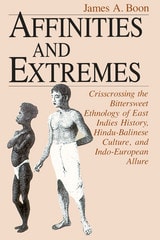
Affinities and Extremes
Crisscrossing the Bittersweet Ethnology of East Indies History, Hindu-Balinese Culture, and Indo-European AllureJames A. Boon
University of Chicago Press, 1990
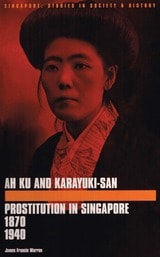
Ah Ku and Karayuki-san
Prostitution in Singapore, 1870—1940James F. Warren
National University of Singapore Press, 2009
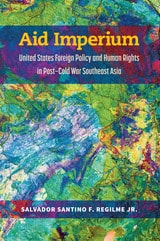
Aid Imperium
United States Foreign Policy and Human Rights in Post-Cold War Southeast AsiaSalvador Santino F. Regilme Jr.
University of Michigan Press, 2021
Does foreign aid promote human rights? As the world’s largest aid donor, the United States has provided foreign assistance to more than 200 countries. Deploying global numerical data on US foreign aid and comparative historical analysis of America’s post–Cold War foreign policies in Southeast Asia, Aid Imperium provides the most comprehensive explanation that links US strategic assistance to physical integrity rights outcomes in recipient countries, particularly in ways that previous quantitative studies have systematically ignored. The book innovatively highlights the active political agency of Global South states and actors as they negotiate and chart their political trajectories with the United States as the core state of the international system. Drawing from theoretical insights in the humanities and the social sciences as well as a wide range of empirical documents, Aid Imperium is the first multidisciplinary study to explain how US foreign policy affects state repression and physical integrity rights outcomes in Southeast Asia and the rest of the Global South.

Amazons of the Huk Rebellion
Gender, Sex, and Revolution in the PhilippinesVina A. Lanzona
University of Wisconsin Press, 2009
Drawing on interviews with over one hundred veterans of the movement, Vina A. Lanzona explores the Huk rebellion from the intimate and collective experiences of its female participants, demonstrating how their presence, and the complex questions of gender, family, and sexuality they provoked, ultimately shaped the nature of the revolutionary struggle.
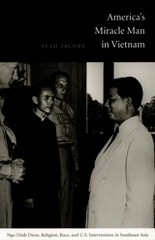
America's Miracle Man in Vietnam
Ngo Dinh Diem, Religion, Race, and U.S. Intervention in Southeast AsiaSeth Jacobs
Duke University Press, 2004
A diplomatic and cultural history, America’s Miracle Man in Vietnam draws on government archives, presidential libraries, private papers, novels, newspapers, magazines, movies, and television and radio broadcasts. Jacobs shows in detail how, in the 1950s, U.S. policymakers conceived of Cold War anticommunism as a crusade in which Americans needed to combine with fellow Judeo-Christians against an adversary dangerous as much for its atheism as for its military might. He describes how racist assumptions that Asians were culturally unready for democratic self-government predisposed Americans to excuse Diem’s dictatorship as necessary in “the Orient.” By focusing attention on the role of American religious and racial ideologies, Jacobs makes a crucial contribution to our understanding of the disastrous commitment of the United States to “sink or swim with Ngo Dinh Diem.”
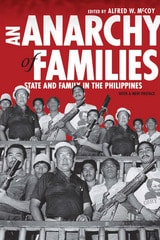
An Anarchy of Families
State and Family in the PhilippinesAlfred W. McCoy
University of Wisconsin Press, 2009
Edited by Alfred W. McCoy, An Anarchy of Families explores the pervasive influence of the modern dynasties that have led the Philippines during the past century. Exemplified by the Osmeñas and Lopezes, elite Filipino families have formed a powerful oligarchy—controlling capital, dominating national politics, and often owning the media. Beyond Manila, strong men such as Ramon Durano, Ali Dimaporo, and Justiniano Montano have used “guns, goons, and gold” to accumulate wealth and power in far-flung islands and provinces. In a new preface for this revised edition, the editor shows how this pattern of oligarchic control has continued into the twenty-first century, despite dramatic socio-economic change that has supplanted the classic “three g’s” of Philippine politics with the contemporary “four c’s”—continuity, Chinese, criminality, and celebrity.
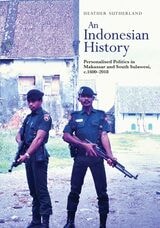
An Indonesian History
Personalized Politics in Makassar and South Sulawesi, c.1600-2018Heather Sutherland
National University of Singapore Press, 2024
Indonesia, the world’s fourth most populous country, is a vast archipelago with a relatively short history of unified rule. The devolution of power to the provinces after 1998 has meant that regional social traditions and historical legacies are powerful forces in contemporary politics. South Sulawesi (Southwest Celebes), a crucial and understudied region of Indonesia, is no exception.
Starting in 1669, tensions between the Dutch East India Company’s cosmopolitan port town of Makassar and the aggressive, competitive dynasties of the interior began to shape peninsula politics. A strong ethnic Chinese community embodied the town’s wide horizons, while in the countryside, the nobility’s engagement with Islam ranged from symbiotic co-optation to hostility. Religion, rather than politics, framed the main challenges to authority. Finally integrated in 1965, the city and province remain among the most clientelist in the country, their politics personalized and transactional. Nevertheless, the large city of Makassar is booming. Dutch indirect rule and neocolonial strategies entrenched the power of local elites, who resisted changes imposed by Batavia or, after 1950, by Jakarta.
In this history, Heather Sutherland’s long-term perspective avoids dichotomies like continuity and change or autonomy and dependence, recognizing that trade-offs have always been fundamental to interaction within and between town and country and between the province and distant capitals.
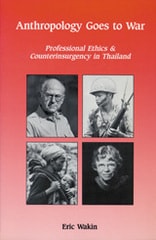
Anthropology Goes to War
Professional Ethics and Counterinsurgency in ThailandEric Wakin
University of Wisconsin Press, 1998
Now back in print, Eric Wakin's Anthropology Goes to War is the first comprehensive study of what became known as the Thailand Controversy—and a timely reminder of a debate whose echoes may be heard in our own time.
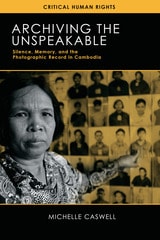
Archiving the Unspeakable
Silence, Memory, and the Photographic Record in CambodiaMichelle Caswell
University of Wisconsin Press, 2014
Winner, Waldo Gifford Leland Award, Society of American Archivists
Longlist, ICAS Book Prize, International Convention of Asia Scholars
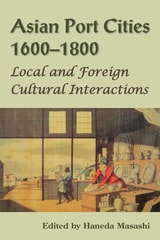
Asian Port Cities, 1600-1800
Local and Foreign Cultural InteractionsHaneda Masashi
National University of Singapore Press, 2009
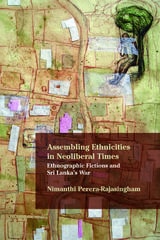
Assembling Ethnicities in Neoliberal Times
Ethnographic Fictions and Sri Lanka’s WarNimanthi Perera-Rajasingham
Northwestern University Press, 2019
Assembling Ethnicities in Neoliberal Times: Ethnographic Fictions and Sri Lanka’s War argues that the bloody war fought between the Sri Lankan state and the separatist Tamil Tigers from 1983 to 2009 should be understood as structured and animated by the forces of global capitalism. Using Aihwa Ong’s theorization of neoliberalism as a mobile technology and assemblage, this book explores how contemporary globalization has exacerbated forces of nationalism and racism.
Nimanthi Perera-Rajasingham finds that ethnographic fictions have both internalized certain colonial Orientalist impulses and critically engaged with categories of objective gazing, empiricism, and temporal distancing. She demonstrates that such fictions take seriously the task of bearing witness and documenting the complex productions of ethnic identities and the devastations wrought by warfare. To this end, Assembling Ethnicities
explores colonial-era travel writing by Robert Knox (1681) and Leonard Woolf (1913); contemporary works by Michael Ondaatje, Romesh Gunesekera, Shobasakthi, Dharmasiri Bandaranayake, and Thamotharampillai Shanaathanan; and cultural festivals and theater, including vernacular performances of Euripides’s The Trojan Women and women workers’ theater.
The book interprets contemporary fictions to unpack neoliberalism’s entanglements with nationalism and racism, engaging current issues such as human rights, the pastoral, Tamil militancy, immigrant lives, feminism and nationalism, and postwar developmentalism.
At the Pivot of East and West
Ethnographic, Literary, and Filmic ArtsMichael M. J. Fischer
Duke University Press, 2023