Results by title
24 books match the query 'Space and time'

Action at a Distance
John Durham Peters
University of Minnesota Press, 2020
How are human actions shaped by the materiality of media?
Contemporary media leads us more than ever to an ‘acting at a distance,’ an acting entangled with the materiality of communication and the mediality of transmission. This book explores this crucial phenomenon thereby introducing urgent questions of human interaction, the binding and breaking of time and space, and the entanglement of the material and the immaterial.
Three vivid inquiries deal with histories and theories of mediality and materiality: John Durham Peters looks at episodes of simultaneity and synchronization. Christina Vagt discusses the agency of computer models against the backdrop of aesthetic theories by Henri Bergson and Hans Blumenberg, and Florian Sprenger discusses early electrical transmissions through copper wire and the temporality of instantaneity.
Doing
Jean-Luc Nancy
Seagull Books, 2020

Great Dialogue Nature Space
Yves R. Simon
St. Augustine's Press, 2000
In this work, Yves R. Simon discusses the basic insights of the creators of modern thought: Descartes, Newton, Galileo, Comte, Mach, Meyerson, Bergson, Planck, and the issues at stake in the development of modern science and in the rejection of the Aristotelian physics.
Simon distinguishes between a philosophy of nature and a science of nature - and grants a real value to both. A discussion of this vexing problem and its applications to the modern controversy over determinism and chance raised by modern physics rounds out this philosophical and historical highlighting of man's most important theories of nature.
Henri Lefebvre on Space
Architecture, Urban Research, and the Production of TheoryLukasz Stanek
University of Minnesota Press, 2010
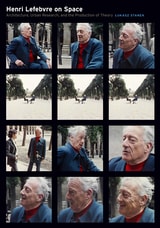
Countering the prevailing view, which reduces Lefebvre’s theory of space to a projection of his philosophical positions, Stanek argues that Lefebvre’s work grew out of his concrete, empirical engagement with everyday practices of dwelling in postwar France and his exchanges with architects and planners. Stanek focuses on the interaction between architecture, urbanism, sociology, and philosophy that occurred in France in the 1960s and 1970s, which was marked by a shift in the processes of urbanization at all scales, from the neighborhood to the global level. Lefebvre’s thinking was central to this encounter, which informed both his theory of space and the concept of urbanization becoming global.
Stanek offers a deeper and clearer understanding of Lefebvre’s thought and its implications for the present day. At a time when cities are increasingly important to our political, spatial, and architectural world, this reassessment proposes a new empirical, and practical, interpretation of Lefebvre’s ideas on urbanism.
Hollow and Home
A History of Self and PlaceE. Fred Carlisle
West Virginia University Press, 2017
Carlisle incorporates perspectives from writers like Edward S. Casey, Christian Norberg-Schulz, Yi-Fu Tuan, and Witold Rybczynski, but he applies theory with a light touch. Placing this literature in dialog with personal experience, he concentrates on two places that profoundly influenced him and enabled him to overcome a lifelong sense of always leaving his pasts behind. The first is Clover Hollow in Appalachian Virginia, where the author lived for ten years among fifth-, sixth-, and seventh-generation residents. The people and places there enabled him to value his own past and primary places in a new way. The story then turns to Carlisle’s life growing up in Delaware, Ohio. He describes in rich detail the ways the town shaped him in both enabling and disabling ways. In the end, after years of moving from place to place, Carlisle’s experience in Appalachia helped him rediscover his hometown—both the Old Delaware, where he grew up, and the New Delaware, a larger, thriving small city—as his true home.
The themes of the book transcend specific localities and speak to the relationship of self and place everywhere.
In Space We Read Time
On the History of Civilization and GeopoliticsKarl Schlögel
Bard Graduate Center, 2016
Here is both a model for thinking about history within physical space and a stimulating history of thought about space, as Schlögel reads historical periods and events within the context of their geographical location. Discussions range from the history of geography in France to what a town directory from 1930s Berlin can say about professional trades that have since disappeared. He takes a special interest in maps, which can serve many purposes—one poignant example being the German Jewish community’s 1938 atlas of emigration, which showed the few remaining possibilities for escape. Other topics include Thomas Jefferson’s map of the United States; the British survey of India; and the multiple cartographers with Woodrow Wilson at the Paris Peace Conference, where the aim was to redraw Europe’s boundaries on the basis of ethnicity. Moving deftly from the Austro-Hungarian Empire to 9/11 and from Vermeer’s paintings to the fall of the Berlin Wall, this intriguing book presents history from a completely new perspective.

Investigations In Philosophy Of Space
Continental Thought Series V. 11Elisabeth Ströker
Ohio University Press, 1987
The central contribution of Ströker’s investigations is a careful and strict analysis of the relationship between experienced space, Euclidean space, and non-Euclidean spaces. Her study begins with the question of experienced space, inclusive of mood space, space of action and perception, of practical activities and bodily orientations, and ends with the controversies of the proponents of geometric and mathematical understanding of space. Within the context of experienced space, Ströker includes historical discussions of place, topology, depth, perspectivity, homogeneity, orientation, and the questions of empty and full spaces. Her investigation concludes that any strict analysis of space must be founded upon an unavoidable ontology.
Philosophical Investigations of Space addresses a number of methodological controversies. It tests the limitations of a variety of scientific, phenomenological, geometric, and logical methods in order to demonstrate limitations of both methodology and underlying assumption. In addition to the richness of her historical and systematic discussion, Ströker’s work is a model of thoroughly documented philosophical scholarship and conceptual precision.

Locating Filipino Americans
Rick Bonus
Temple University Press, 2000
Locating Filipino Americans, an ethnographic study of Filipino American communities in Los Angeles and San Diego, present a multi-disciplinary cultural analysis of the relationship between ethnic identity and social space. Author Rick Bonus argues that alternative community spaces enable Filipino Americans to respond to and resist the ways in which the larger society has historically and institutionally rendered them invisible, silenced, and racialized. Bonus focuses on the "Oriental" stores, the social halls and community centers, and the community newspapers to demonstrate how ethnic identities are publicly constituted and communities are transformed. Delineating the spaces formed by diasporic consciousness, Bonus shows how community members appropriate elements from their former homeland and from their new settlements in ways defined by their critical stances against racism, homogenization, complete assimilation, and exclusionary citizenship. Locating Filipino Americans is one of the few books that offers a grounded approach to theoretical analyses of ethnicity and contemporary culture in the U.S.
Margins of Philosophy
Jacques Derrida
University of Chicago Press, 1982
Medieval Practices Of Space
Barbara A. Hanawalt
University of Minnesota Press, 2000
Interprets space and place in the medieval era.
Interprets space and place in the medieval era.
A glance at medieval maps tells us that cartographers of the Middle Ages divided space differently than we do today. In the great mappae mundi, for instance, Jerusalem takes center stage, with an image of the crucified Christ separating one place from another. The architects of medieval cathedrals manipulated space to clarify the roles and status of all who entered. Even in the most everyday context, space was allotted according to gender and class and was freighted with infinitely subtle meanings. The contributors to this volume cross disciplinary and theoretical boundaries to read the words, metaphors, images, signs, poetic illusions, and identities with which medieval men and women used space and place to add meaning to the world.Contributors: Kathleen Biddick, U of Notre Dame; Charles Burroughs, SUNY, Binghamton; Michael Camille, U of Chicago; Tom Conley, Harvard U; Donnalee Dox, U of Arizona; Jody Enders, U of California, Santa Barbara; Valerie K. J. Flint, U of Hull, UK; Andrzej Piotrowski, U of Minnesota; Daniel Lord Smail, Fordham U.Barbara A. Hanawalt is King George III Professor of British History at Ohio State University. Michal Kobialka is associate professor of theatre at University of Minnesota.
On Time and Being
Martin Heidegger
University of Chicago Press, 2002
"This collection may well vie with Vom Wesen des Grundes and Identität and Differenz as definitive statements of Heidegger's ontology."—Library Journal
"The title of the English translation is that of the lead essay, the highly celebrated lecture which Heidegger gave in 1962 and which bears the same title as the never published 'third division' of the 'first half' of Being and Time. This lecture is perhaps the most significant document to be added to the Heideggerian corpus since the Letter of Humanism. . . . Stambaugh's translation is superb."—Stanley O. Hoerr and staff, The Review of Metaphysics
Performances of Spiral Time
Leda Maria Martins. Translated by Bruna Barros and Jess Oliveira
Duke University Press, 2025
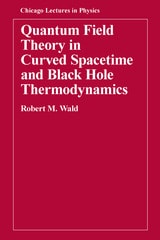
Quantum Field Theory in Curved Spacetime and Black Hole Thermodynamics
Robert M. Wald
University of Chicago Press, 1994
In this book, Robert Wald provides a coherent, pedagogical introduction to the formulation of quantum field theory in curved spacetime. He begins with a treatment of the ordinary one-dimensional quantum harmonic oscillator, progresses through the construction of quantum field theory in flat spacetime to possible constructions of quantum field theory in curved spacetime, and, ultimately, to an algebraic formulation of the theory. In his presentation, Wald disentangles essential features of the theory from inessential ones (such as a particle interpretation) and clarifies relationships between various approaches to the formulation of the theory. He also provides a comprehensive, up-to-date account of the Unruh effect, the Hawking effect, and some of its ramifications. In particular, the subject of black hole thermodynamics, which remains an active area of research, is treated in depth.
This book will be accessible to students and researchers who have had introductory courses in general relativity and quantum field theory, and will be of interest to scientists in general relativity and related fields.

Remapping Memory
The Politics of TimeSpaceJonathan Boyarin, EditorAfterword by Charles Tilly
University of Minnesota Press, 1994
Remapping Memory was first published in 1994. Minnesota Archive Editions uses digital technology to make long-unavailable books once again accessible, and are published unaltered from the original University of Minnesota Press editions.
The essays in this book focus on contested memories in relation to time and space. Within the context of several profound cultural and political conflicts in the contemporary world, the contributors analyze historical self-configurations of human groups, and the construction by these groups of the spaces they shape and that shape them. What emerges is a view of the state as a highly contingent artifact of groups vying for legitimacy-whether through their own sense of "insiderhood," their control of positions within hierarchies, or their control of geographical territories.
Boyarin's lead essay shows how the supposedly "objective" categories of space and time are, in fact, specific products of European modernity. Each case study, in turn, addresses the (re)constitution of space, time, and memory in relation to an event either of historical significance, like the dropping of the atomic bomb on Hiroshima, or of cultural importance, like the Indian preoccupation with reincarnation. These ethnographic studies explore fundamental questions about the nature of memory, the limits of politics, and the complex links between them.
By focusing on personal and collective identity as the site where constructions of memory and dimensionality are tested, shaped, and effected, the authors offer a new way of understanding how the politics of space, time and memory are negotiated to bring people to terms with their history.
Contributors: Akhil Gupta, Stanford University;
Charles R. Hale, University of California, Davis; Carina Perelli, PEITHO, Montevideo, Uruguay; Jennifer Schirmer, Center for European Studies, Harvard; Daniel A. Segal, Pitzer College, Claremont, California; Lisa Yoneyama, University of California, San Diego.
Selected Papers, Volume 6
The Mathematical Theory of Black Holes and of Colliding Plane WavesS. Chandrasekhar
University of Chicago Press, 1991
Chandrasekhar has selected papers that trace the development of his ideas and that present aspects of his work not fully covered in the books he has periodically published to summarize his research in each area.
Space, Place, and Gender
Doreen Massey
University of Minnesota Press, 1994
Space, Time, and Gravity
The Theory of the Big Bang and Black HolesRobert M. Wald
University of Chicago Press, 1992
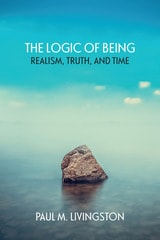
The Logic of Being
Realism, Truth, and TimePaul M. Livingston
Northwestern University Press, 2017
Livingston's formal and phenomenological analysis articulates and defends a realist position about being, time, and their relationship that understands that all of these are structured and constituted in a way that does not depend on the human mind, consciousness, or subjectivity. This approach provides a basis for new logically and phenomenologically based accounts of the structure of linguistic truth in relation to the appearance of objects and of the formal structure of time as given.
Livingston draws on philosophers from Plato and Aristotle to Davidson and Heidegger in this exploration. In it, readers and scholars will discover innovative connections between continental and analytic philosophy.
The Nature of Space
Milton Santos
Duke University Press, 2021
Time Travel and Warp Drives
A Scientific Guide to Shortcuts through Time and SpaceAllen Everett and Thomas Roman
University of Chicago Press, 2011
To see video demonstrations of key concepts from the book, please visit this website: http://www.press.uchicago.edu/sites/timewarp/
Sci-fi makes it look so easy. Receive a distress call from Alpha Centauri? No problem: punch the warp drive and you're there in minutes. Facing a catastrophe that can't be averted? Just pop back in the timestream and stop it before it starts. But for those of us not lucky enough to live in a science-fictional universe, are these ideas merely flights of fancy—or could it really be possible to travel through time or take shortcuts between stars?
Cutting-edge physics may not be able to answer those questions yet, but it does offer up some tantalizing possibilities. In Time Travel and Warp Drives, Allen Everett and Thomas A. Roman take readers on a clear, concise tour of our current understanding of the nature of time and space—and whether or not we might be able to bend them to our will. Using no math beyond high school algebra, the authors lay out an approachable explanation of Einstein's special relativity, then move through the fundamental differences between traveling forward and backward in time and the surprising theoretical connection between going back in time and traveling faster than the speed of light. They survey a variety of possible time machines and warp drives, including wormholes and warp bubbles, and, in a dizzyingly creative chapter, imagine the paradoxes that could plague a world where time travel was possible—killing your own grandfather is only one of them!
Written with a light touch and an irrepressible love of the fun of sci-fi scenarios—but firmly rooted in the most up-to-date science, Time Travel and Warp Drives will be a delightful discovery for any science buff or armchair chrononaut.
Time and the Digital
Connecting Technology, Aesthetics, and a Process Philosophy of TimeTimothy Scott Barker
Dartmouth College Press, 2012
Uncommon Sense
Understanding Nature's Truths Across Time and CultureAnthony Aveni
University Press of Colorado, 2006
In ten fascinating essays, Aveni examines topics that have absorbed scientists, religious figures, and ordinary citizens over the centuries. He traces the tug of war between astronomy and astrology, reveals the underpinnings of our notions of cartography and the representation of space and time, and much more.
Readers interested in science, history, and world cultures will revel in this celebration of different cultures’ common and uncommon questions and conclusions about the natural world.

Violence and Splendor
Alphonso Lingis
Northwestern University Press, 2011
“The Sacred” studies the ways death—the death of others and our own death—fascinates and energizes us. It exhibits the glory in violence and sacrilege. The book culminates in “Splendor,” a study of collective performances that create splendor. Concerning itself most immediately with philosophy, psychology, aesthetics, anthropology, and the theory of religion, Violence and Splendor bridges the discourses of continental philosophy and cross-cultural studies. Further drawing insights from both Western and non-Western traditions, it brings such diverse fields as psychology, art and aesthetics, botany, politics, history, zoology, and religious theory into a new and significant dialogue about the nature of humanity.
Waiting for the Sky to Fall
The Age of Verticality in American NarrativeRuth Mackay
The Ohio State University Press, 2016
With this study, Mackay asks: In what oblique ways has verticality leaked into American narrative? Why do metaphors of up and down recur across the twentieth century? With close readings of Jonathan Safran Foer’s Extremely Loud and Incredibly Close, Winsor McCay’s comic strip Little Nemo in Slumberland, Upton Sinclair’s Oil! and its film rendering There Will Be Blood, Allen Ginsberg’s poetic dissections of the nuclear bomb, and Leslie Marmon Silko’s imagining of flight in Almanac of the Dead, this interdisciplinary study culminates with a discussion of Philippe Petit’s tightrope walk between the Twin Towers. Waiting for the Sky to Fall examines how vertical representation cleaves to, and often transforms the associations of, specific events that are physically and visually disorienting, disquieting, or even traumatic.