Results by title
29 books match the query 'Stereotypes (Social psychology)'
Alien Capital
Asian Racialization and the Logic of Settler Colonial CapitalismIyko Day
Duke University Press, 2016
Black-Brown Relations and Stereotypes
By Tatcho Mindiola, Jr., Yolanda Flores Niemann, and Nestor Rodriguez
University of Texas Press, 2002
Race relations in twenty-first-century America will not be just a black-and-white issue. The 2000 census revealed that Hispanics already slightly outnumber African Americans as the largest ethnic group, while together Blacks and Hispanics constitute the majority population in the five largest U.S. cities. Given these facts, black-brown relations could be a more significant racial issue in the decades to come than relations between minority groups and Whites.
Offering some of the first in-depth analyses of how African Americans and Hispanics perceive and interact with each other, this pathfinding study looks at black-brown relations in Houston, Texas, one of the largest U.S. cities with a majority ethnic population and one in which Hispanics outnumber African Americans. Drawing on the results of several sociological studies, the authors focus on four key issues: how each group forms and maintains stereotypes of the other, areas in which the two groups conflict and disagree, the crucial role of women in shaping their communities' racial attitudes, and areas in which Hispanics and African Americans agree and can cooperate to achieve greater political power and social justice.
Boys and Girls
Superheroes in the Doll CornerVivian Gussin Paley
University of Chicago Press, 1984
"I will admit my biases up front: having a three-year old daughter of my own made it impossible for this book to be anything but fun to read. I dare anyone who enjoys children not to enjoy this story about stories, this narrative about narratives."—Jerry Powell, Winterthur Portfolio
Boys and Girls
Superheroes in the Doll CornerVivian Gussin Paley
University of Chicago Press, 2014
For more than forty years, Boys and Girls has a classic account of the little-known world that young children create together when they play. Vivian Gussin Paley takes readers inside a kindergarten classroom to show them in detail how boys and girls play—and how, by playing and fantasizing in different ways, they work through complicated notions of gender roles and identity. The children’s own conversations, stories, playacting, and scuffles are interwoven with Paley’s observations and accounts of her vain attempts to alter their stereotyped play. In the decades since the book's original publication, play in kindergarten and early years of school has lost ground to structured teaching and even testing, which makes Paley's book, updated for a new era, more important than ever. To teach kids successfully, we must make space for play.
Contesting Stereotypes and Creating Identities
Social Categories, Social Identities, and Educational ParticipationAndrew J. Fuligni
Russell Sage Foundation, 2007
From Bananas to Buttocks
The Latina Body in Popular Film and CultureEdited by Myra Mendible
University of Texas Press, 2007
From the exuberant excesses of Carmen Miranda in the "tutti frutti hat" to the curvaceous posterior of Jennifer Lopez, the Latina body has long been a signifier of Latina/o identity in U.S. popular culture. But how does this stereotype of the exotic, erotic Latina "bombshell" relate, if at all, to real Latina women who represent a wide spectrum of ethnicities, national origins, cultures, and physical appearances? How are ideas about "Latinidad" imagined, challenged, and inscribed on Latina bodies? What racial, class, and other markers of identity do representations of the Latina body signal or reject?
In this broadly interdisciplinary book, experts from the fields of Latina/o studies, media studies, communication, comparative literature, women's studies, and sociology come together to offer the first wide-ranging look at the construction and representation of Latina identity in U.S. popular culture. The authors consider such popular figures as actresses Lupe Vélez, Salma Hayek, and Jennifer Lopez; singers Shakira and Celia Cruz; and even the Hispanic Barbie doll in her many guises. They investigate the media discourses surrounding controversial Latinas such as Lorena Bobbitt and Marisleysis González. And they discuss Latina representations in Lupe Solano's series of mystery books and in the popular TV shows El Show de Cristina and Laura en América. This extensive treatment of Latina representation in popular culture not only sheds new light on how meaning is produced through images of the Latina body, but also on how these representations of Latinas are received, revised, and challenged.
Gambling on Authenticity
Gaming, the Noble Savage, and the Not-So-New IndianBecca Gercken
Michigan State University Press, 2017

Gangs on Trial
Challenging Stereotypes and Demonization in the CourtsJohn M. Hagedorn
Temple University Press, 2022
John Hagedorn, who has long been an expert witness in gang-related court cases, claims that what transpires in the trials of gang members is a far cry from what we would consider justice. In Gangs on Trial, he recounts his decades of experience to show how stereotypes are used against gang members on trial and why that is harmful. Hagedorn uses real-life stories to explain how implicit bias often replaces evidence and how the demonization of gang members undermines fairness. Moreover, a “them and us” mentality leads to snap judgments that ignore the complexity of gang life in America.
Gangs on Trial dispels myths about gangs and recommends tactics for lawyers, mitigation specialists, and expert witnesses as well as offering insights for jurors. Hagedorn describes how minds are subconsciously “primed” when a defendant is identified as a gang member, and discusses the “backfire effect,” which occurs when jurors hear arguments that run counter to their beliefs. He also reveals how attributional errors, prejudice, and racism impact sentences of nonwhite defendants.
Hagedorn argues that dehumanization is the psychological foundation of mass incarceration. Gangs on Trial advocates for practical sentencing reforms and humanizing justice.
Gender Nonconformity, Race, and Sexuality
Charting the ConnectionsToni Lester
University of Wisconsin Press, 2002
How are culturally constructed stereotypes about appropriate sex-based behavior formed? If a person who is biologically female behaves in a stereotypically masculine manner, what are the social, political, and cultural forces that may police her behavior? And how will she manage her gendered image in response to that policing? Finally, how do race, ethnicity, or sexuality inform the way that sex-based roles are constructed, policed, or managed?
The chapters in this book address such questions from social science perspectives and then examine personal stories of reinvention and transformation, including discussions of the lives of dancers Isadora Duncan and Bill T. Jones, playwright Lorraine Hansberry, and surrealist artist Claude Cahun.Writers from fields as diverse as history, art, psychology, law, literature, sociology, and the activist community look at gender nonconformity from conceptual, theoretical, and empirical perspectives. They emphasize that gender nonconformists can be gay, lesbian, bisexual, transgender, or anyone else who does not fit a model of Caucasian heterosexual behavior characterized by binary masculine and feminine roles.

Ghost of the Ozarks
Murder and Memory in the Upland SouthBrooks Blevins
University of Illinois Press, 2012

I Will Mix Your Blood with Coal
Snapshots from the East of UkraineOleksandr Mykhed, Tanya Savchynska, and David Mossop
Northwestern University Press, 2025
In 2014, the Russian army, with support from local militants, occupied parts of Ukraine’s two easternmost regions—once the beating industrial heart of the Soviet Union—where coal extraction has since exhausted both the human population and the natural resources. In late 2016, Oleksandr Mykhed set out on a research trip to explore the deep history and contested present of the area from the perspective of a fellow countryman who’d never been there.
Mykhed brings us on a painful yet hopeful journey across the Ukrainian east, sharing conversations with locals, snippets from archival documents, and the complicated perspectives of prominent cultural figures, such as writer Serhiy Zhadan, historian Olena Stiazhkina, and philosopher Ihor Kozlovsky, who was imprisoned and tortured for nearly two years.
I Will Mix Your Blood with Coal invites us to meet generations of coal miners. To learn about the Belgian and British investors who founded the east’s industrial cities. To remember the harrowing events of the First and Second World Wars and the incalculable brutality of Soviet history. To see the activists who are even now working to improve the country. To hear sweet memories of a lost utopia that never existed. Mykhed provides a unique portrait of life in the east during the war, before the full-scale invasion that would change everything.
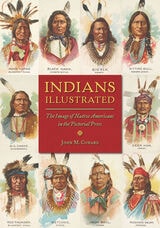
Indians Illustrated
The Image of Native Americans in the Pictorial PressJohn M Coward
University of Illinois Press, 2016

Inscrutable Eating
Asian Appetites and the Rhetorics of Racial ConsumptionJennifer Lin LeMesurier
The Ohio State University Press, 2023
“You are what you eat,” but what if you’re seen as a rat eater, bat lover, or MSG user? In Inscrutable Eating, Jennifer Lin LeMesurier considers how everyday assumptions about Asian food influence the perception of Asian and Asian American identity within the US racial landscape, demonstrating that beliefs about how certain people eat are inseparable from attitudes that support hierarchies around race, gender, and sexuality. Drawing on rhetorical theory, affect theory, and Asian American studies, LeMesurier analyzes messages in US popular culture about Asian eating to develop the concept of gut orientations: rhetorically dominant ways of interacting with food that scale upward to feelings of desire and disgust toward social groups. Looking at examples from fears around MSG to uproar over wet markets as the source of COVID-19, she argues that these “gut” reactions establish certain racial views as common-sense truths rather than cultural biases, reinforcing dominant norms about what belongs on whose plate, or who belongs at what table. In demystifying marginalizing discourse around food and eating, LeMesurier shows how exposing the tacit, felt ideas of consumption is necessary to contest broader forms of discrimination.

Inside the Antisemitic Mind
The Language of Jew-Hatred in Contemporary GermanyMonika Schwarz-Friesel and Jehuda Reinharz
Brandeis University Press, 2017
Living in the Stone Age
Reflections on the Origins of a Colonial FantasyDanilyn Rutherford
University of Chicago Press, 2018
Living in the Stone Age answers this question by following the adventures of officials sent to the New Guinea highlands in the 1930s to establish a foothold for Dutch colonialism. These officials became deeply dependent on the good graces of their would-be Papuan subjects, who were their hosts, guides, and, in some cases, friends. Danilyn Rutherford shows how, to preserve their sense of racial superiority, these officials imagined that they were traveling in the Stone Age—a parallel reality where their own impotence was a reasonable response to otherworldly conditions rather than a sign of ignorance or weakness. Thus, Rutherford shows, was born a colonialist ideology.
Living in the Stone Age is a call to write the history of colonialism differently, as a tale of weakness not strength. It will change the way readers think about cultural contact, colonial fantasies of domination, and the role of anthropology in the postcolonial world.

Model Machines
A History of the Asian as AutomatonLong T. Bui
Temple University Press, 2022
In the contemporary Western imagination, Asian people are frequently described as automatons, which disavows their humanity. In Model Machines, Long Bui investigates what he calls Asian roboticism or the ways Asians embody the machine and are given robotic characteristics.
Bui offers the first historical overview of the overlapping racialization of Asians and Asian Americans through their conflation with the robot-machine nexus. He puts forth the concept of the “model machine myth,” which holds specific queries about personhood, citizenship, labor, and rights in the transnational making of Asian/America.
The case studies in Model Machines chart the representation of Chinese laborers, Japanese soldiers, Asian sex workers, and other examples to show how Asians are reimagined to be model machines as a product of globalization, racism, and colonialism. Moreover, it offers examples of how artists and everyday people resisted that stereotype to consider different ways of being human. Starting from the early nineteenth century, the book ends in the present with the new millennium, where the resurgence of China presages the “rise of the machines” and all the doomsday scenarios this might spell for global humanity at large.
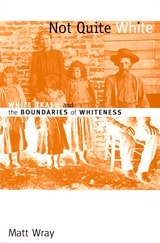
Not Quite White
White Trash and the Boundaries of WhitenessMatt Wray
Duke University Press, 2006
Of crucial importance are the ideas about poor whites that circulated through early-twentieth-century public health campaigns, such as hookworm eradication and eugenic reforms. In these crusades, impoverished whites, particularly but not exclusively in the American South, were targeted for interventions by sanitarians who viewed them as “filthy, lazy crackers” in need of racial uplift and by eugenicists who viewed them as a “feebleminded menace” to the white race, threats that needed to be confined and involuntarily sterilized.
Part historical inquiry and part sociological investigation, Not Quite White demonstrates the power of social categories and boundaries to shape social relationships and institutions, to invent groups where none exist, and to influence policies and legislation that end up harming the very people they aim to help. It illuminates not only the cultural significance and consequences of poor white stereotypes but also how dominant whites exploited and expanded these stereotypes to bolster and defend their own fragile claims to whiteness.
Picture a Professor
Interrupting Biases about Faculty and Increasing Student LearningJessamyn Neuhaus
West Virginia University Press, 2022
“Does a service to all who would prefer a different path, offering realistic strategies to engage students in undermining scholarly stereotypes.”—Science
Picture a Professor is a collection of evidence-based insights and intersectional teaching strategies crafted by and for college instructors. It aims to inspire transformative student learning while challenging stereotypes about what a professor looks like.
Representing a variety of scholarly disciplines, the volume’s contributing authors offer practical advice for effectively navigating student preconceptions about embodied identity and academic expertise. Each contributor recognizes the pervasiveness of racialized, gendered, and other biases about professors and recommends specific ways to respond to and interrupt such preconceptions—helping students, teachers, and others reenvision what we think of when we picture a professor.
Educators at every stage of their career will find affirming acknowledgment of the ways systemic inequities affect college teaching conditions, as well as actionable advice about facilitating student learning with innovative course design, classroom activities, assessment techniques, and more.
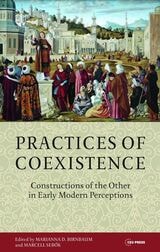
Practices of Coexistence
Constructions of the Other in Early Modern PerceptionsMarianna D. Birnbaum
Central European University Press, 2017
Race to the Bottom
How Racial Appeals Work in American PoliticsLaFleur Stephens-Dougan
University of Chicago Press, 2020
Challenging what we think we know about race and politics, LaFleur Stephens-Dougan argues that candidates across the racial and political spectrum engage in “racial distancing,” or using negative racial appeals to communicate to racially moderate and conservative whites—the overwhelming majority of whites—that they will not disrupt the racial status quo. Race to the Bottom closely examines empirical data on racialized partisan stereotypes to show that engaging in racial distancing through political platforms that do not address the needs of nonwhite communities and charged rhetoric that targets African Americans, immigrants, and others can be politically advantageous. Racialized communication persists as a well-worn campaign strategy because it has real electoral value for both white and black politicians seeking to broaden their coalitions. Stephens-Dougan reveals that claims of racial progress have been overstated as our politicians are incentivized to employ racial prejudices at the expense of the most marginalized in our society.
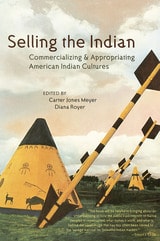
Selling the Indian
Commercializing and Appropriating American Indian CulturesCarter Jones Meyer
University of Arizona Press, 2001
For more than a hundred years, outsiders enamored of the perceived strengths of American Indian cultures have appropriated and distorted elements of them for their own purposes—more often than not ignoring the impact of the process on the Indians themselves. This book contains eight original contributions that consider the selling of American Indian culture and how it affects the Native community. It goes beyond studies of “white shamanism” to focus on commercial ventures, challenging readers to reconsider how Indian cultures have been commercialized in the twentieth century.
Some selections examine how Indians have been displayed to the public, beginning with a “living exhibit” of Cocopa Indians at the 1904 Louisiana Purchase Exposition and extending to contemporary stagings of Indian culture for tourists at Tillicum Village near Seattle. Other chapters range from the Cherokees to Puebloan peoples to Indians of Chiapas, Mexico, in an examination of the roles of both Indians and non-Indian reformers in marketing Native arts and crafts.
These articles show that the commercialization and appropriation of American Indian cultures have been persistent practices of American society over the last century and constitute a form of cultural imperialism that could contribute to the destruction of American Indian culture and identity. They offer a means toward understanding this complex process and provide a new window on Indian-white interactions.
CONTENTS
Part I: Staging the Indian
1. The “Shy” Cocopa Go to the Fair, Nancy J. Parezo and John W. Troutman
2. Command Performances: Staging Native Americans at Tillicum Village, Katie N. Johnson and Tamara Underiner
3. Savage Desires: The Gendered Construction of the American Indian in Popular Media, S. Elizabeth Bird
4. “Beyond Feathers and Beads”: Interlocking Narratives in the Music and Dance of Tokeya Inajin (Kevin Locke), Pauline Tuttle
Part II: Marketing the Indian
5. “The Idea of Help”: White Women Reformers and the Commercialization of Native American Women’s Arts, Erik Trump
6. Saving the Pueblos: Commercialism and Indian Reform in the 1920s, Carter Jones Meyer
7. Marketing Traditions: Cherokee Basketry and Tourist Economies, Sarah H. Hill
8. Crafts, Tourism, and Traditional Life in Chiapas, Mexico: A Tale Related by a Pillowcase, Chris Goertzen

Soundtracks of Asian America
Navigating Race through Musical PerformanceGrace Wang
Duke University Press, 2015

The Black Model Minority Student
African Immigrants and the Contradictions of Race in AmericaMercy Agyepong
University of Chicago Press, 2027
Explores the contradictory perceptions of African immigrant students in New York City and reveals how anti-Blackness persists even within predominantly Black and Brown schools.
African immigrant students are often celebrated in the United States as academically successful and culturally disciplined. But what happens when praise itself becomes part of a racial hierarchy? In The Black Model Minority Student, sociologist of education Mercy Agyepong traces the complex experiences of West African immigrant students attending public high schools in New York City.
Using ethnographic and interview data from predominantly Black and Brown schools in the Bronx, Agyepong shows that African immigrant students are often viewed through two competing yet coexisting narratives: as intellectually capable and hardworking, yet also as uncivilized or socially inferior. These perceptions are not incidental, but central to how anti-Blackness operates and how racial hierarchies are sustained in the United States. While the model minority stereotype shaped their experiences in Black and Brown high schools, West African immigrant students found that this seemingly favorable stereotype mattered less once they graduated and entered the white spaces of higher education and other social settings. At every step, African students—regardless of their national origins—were disadvantaged by racial stereotypes.
Theoretically grounded yet deeply human, The Black Model Minority Student offers an important new perspective on race, immigration, and education in contemporary America.

The Eternal Paddy
Irish Identity and the British Press, 1798–1882Michael de Nie
University of Wisconsin Press, 2004
In The Eternal Paddy, Michael de Nie examines anti-Irish prejudice, Anglo-Irish relations, and the construction of Irish and British identities in nineteenth-century Britain. This book provides a new, more inclusive approach to the study of Irish identity as perceived by Britons and demonstrates that ideas of race were inextricably connected with class concerns and religious prejudice in popular views of both peoples. De Nie suggests that while traditional anti-Irish stereotypes were fundamental to British views of Ireland, equally important were a collection of sympathetic discourses and a self-awareness of British prejudice. In the pages of the British newspaper press, this dialogue created a deep ambivalence about the Irish people, an ambivalence that allowed most Britons to assume that the root of Ireland’s difficulties lay in its Irishness.
Drawing on more than ninety newspapers published in England, Scotland, and Wales, The Eternal Paddy offers the first major detailed analysis of British press coverage of Ireland over the course of the nineteenth century. This book traces the evolution of popular understandings and proposed solutions to the "Irish question," focusing particularly on the interrelationship between the press, the public, and the politicians. The work also engages with ongoing studies of imperialism and British identity, exploring the role of Catholic Ireland in British perceptions of their own identity and their empire.

The Innocent Midwest
Culture, Region, and Identity, 1793–1930Marcia Noe
Ohio University Press, 0
The Innocent Midwest delves into one of the most enduring stereotypes in American cultural history: the image of the Midwest as a bastion of innocence. Despite its share of social, political, and economic complexities, the region has long been portrayed as wholesome, virtuous, and peace loving—a perception that has persisted from its pastoral beginnings through industrialization and into the digital age.
This book traces the roots and evolution of that myth, arguing that the Midwest’s innocent image has been carefully cultivated through American popular and high culture. From literature and film to music and visual art, the trope of the innocent Midwesterner has shaped national perceptions of the region for over a century. Focusing on literature from 1793 to the 1920s, the book explores how this character type emerged, evolved, and eventually confronted the disillusionment of the machine age.
Organized thematically, the book examines early frontier narratives, stories of Midwesterners abroad, Progressive Era ideals of neighborliness, immigrant and migrant experiences, and the eventual unraveling of the pastoral dream. It reveals how the myth of innocence was underpinned by a constellation of values—agrarianism, Christian morality, and a belief in education—that supported the Jeffersonian vision of a democratic, virtuous citizenry.
Rather than offering a sweeping theory of regional identity, The Innocent Midwest focuses on the recurring literary figure of the innocent Midwesterner—an individual shaped by the land and striving for self-actualization. The book draws both on canonical authors like Mark Twain, William Dean Howells, Booth Tarkington, Sinclair Lewis, Theodore Dreiser, and Willa Cather and on lesser-known voices such as Maria Susanna Cummins, David Graham Phillips, Elia W. Peattie, William Webb, Chief Luther Standing Bear, and Oscar Micheaux, whose works contributed to the cultural construction of the Midwest.
Through its nuanced exploration of literature and culture, this book offers a compelling account of how the Midwest came to symbolize innocence—and why that image continues to resonate in the American imagination.
The Turk in America
The Creation of an Enduring PrejudiceJustin McCarthy
University of Utah Press, 2010
Utah Series in Middle East Studies
In The Turk in America, historian Justin McCarthy seeks to explain the historical basis for American prejudice towards Turks in the nineteenth and early twentieth centuries. The volume focuses on fraudulent characterizations of Turks, mostly stemming from an antipathy in Europe and America toward non-Christians, and especially Muslims. Spanning one hundred and fifty years, this history explores the misinformation largely responsible for the negative stereotypes of Turks during this period.
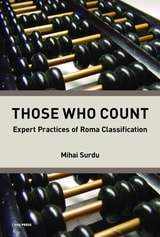
Those Who Count
Expert Practicies of Roma ClassificationMihai Surdu
Central European University Press, 2016
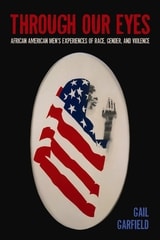
Through Our Eyes
African American Men's Experiences of Race, Gender, and ViolenceGarfield, Gail
Rutgers University Press, 2010
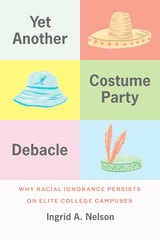
Yet Another Costume Party Debacle
Why Racial Ignorance Persists on Elite College CampusesIngrid A. Nelson
University of Chicago Press, 2024
On a cold February evening, a group of students at Bowdoin College, an elite and historically white liberal arts college in Maine, gathered to drink tequila at a party referred to as “not not a fiesta.” By noon the next day, Instagram videos of students sporting miniature sombreros had spread like wildfire through campus. Over the next few weeks, national media outlets would broadcast the embarrassing fallout. But the frequency with which similar parties recur on campuses across the United States begs the question: what, if anything, do undergraduates learn about race and racism from these encounters?
Drawing on interviews and archival research, Yet Another Costume Party Debacle shows us how colleges both contest and reproduce racialized systems of power. Sociologist Ingrid A. Nelson juxtaposes how students and administrators discuss race with how they behave in the aftermath of racially charged campus controversies. Nelson spoke in-depth with students and other key players in several controversial parties—“Cracksgiving,” a “gangster party,” and the “not not a fiesta” tequila party—at Bowdoin. The college’s administrative response failed to encourage productive dialogue or address larger questions about race on campus. Nelson shows how the underlying campus structures at elite liberal arts colleges foster an environment that is ripe for racially charged incidents; we shouldn’t be surprised when we read about yet another costume party debacle. Nelson advises how we can take charge of diversity on our campuses by changing the systems that bring students together and drive them apart.