Results by title
1214 books match the query 'Subjects & Themes' and 90 start with a
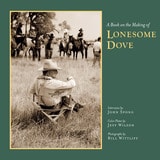
A Book on the Making of Lonesome Dove
By John Spong
University of Texas Press, 2012
Widely acclaimed as the greatest Western ever made, Lonesome Dove has become a true American epic. Larry McMurtry’s Pulitzer Prize–winning novel was a New York Times best seller, with more than 2.5 million copies currently in print. The Lonesome Dove miniseries has drawn millions of viewers and won numerous awards, including seven Emmys.
A Book on the Making of Lonesome Dove takes you on a fascinating behind-the-scenes journey into the creation of the book, the miniseries, and the world of Lonesome Dove. Writer John Spong talks to forty of the key people involved, including author Larry McMurtry; actors Robert Duvall, Tommy Lee Jones, Anjelica Huston, Diane Lane, Danny Glover, Ricky Schroder, D. B. Sweeney, Frederic Forrest, and Chris Cooper; executive producer and screenwriter Bill Wittliff; executive producer Suzanne de Passe; and director Simon Wincer. They and a host of others tell lively stories about McMurtry’s writing of the epic novel and the process of turning it into the miniseries Lonesome Dove. Accompanying their recollections are photographs of iconic props, costumes, set designs, and shooting scripts. Rounding out the book are continuity Polaroids used during filming and photographs taken on the set by Bill Wittliff, which place you behind the scenes in the middle of the action.
Designed as a companion for A Book of Photographs from Lonesome Dove, Wittliff’s magnificent fine art volume, A Book on the Making of Lonesome Dove is a must-have for every fan of this American epic.
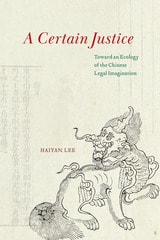
A Certain Justice
Toward an Ecology of the Chinese Legal ImaginationHaiyan Lee
University of Chicago Press, 2023
To many outsiders, China has an image as a realm of Oriental despotism where law is at best window dressing and at worst an instrument of coercion and tyranny. In this highly original contribution to the interdisciplinary field of law and humanities, Haiyan Lee contends that this image arises from a skewed understanding of China’s political-legal culture, particularly the failure to distinguish what she calls high justice and low justice.
In the Chinese legal imagination, Lee shows, justice is a vertical concept, with low justice between individuals firmly subordinated to the high justice of the state. China’s political-legal culture is marked by a mistrust of law’s powers, and as a result, it privileges substantive over procedural justice. Calling on a wide array of narratives—stories of crime and punishment, subterfuge and exposé, guilt and redemption—A Certain Justice helps us recognize the fight for justice outside the familiar arenas of liberal democracy and the rule of law.
A Death of One's Own
Literature, Law, and the Right to DieJared Stark
Northwestern University Press, 2018
More than a survey or work of advocacy, A Death of One’s Own examines the consequences and limits of the three reasons most often cited for supporting a person’s right to die: that it is justified as an expression of personal autonomy or self-ownership; that it constitutes an act of self-authorship, of “choosing a final chapter” in one’s life; and that it enables what has come to be called “death with dignity.” Probing the intersections of law and literature, Stark interweaves close discussion of major legal, political, and philosophical arguments with revealing readings of literary and testimonial texts by writers including Balzac, Melville, Benjamin, and Améry.
A thought-provoking work that will be of interest to those concerned with law and humanities, biomedical ethics, cultural history, and human rights, A Death of One’s Own opens new and suggestive paths for thinking about the history of modern death as well as the unsettled future of the right to die.
A Fine Yellow Dust
Laura Apol
Michigan State University Press, 2021
A Gathering of Ways
John Matthias
Ohio University Press, 1991
A Genealogy of the Gentleman
Women Writers and Masculinity in the Eighteenth CenturyMary Beth Harris
University of Delaware Press, 2024

A God in the House
Poets Talk About FaithEdited by Ilya Kaminsky and Katherine Towler
Tupelo Press, 2012
A Grain of Sand in Lambeth
PoemsGeoffrey Babbitt
University of Nevada Press, 2025
Each poem in this collection inhabits a moment of Blake’s life, offering a vivid glimpse into his unique perspective—a perspective that rejected the normative for the transformative power of imagination. From his visionary watercolors to his provocative views on oil painting, these poems draw readers into Blake’s world, where reality and the unseen converge in prismatic intensity.
A Grain of Sand in Lambeth is an invitation to experience the world through Blake’s eyes—a world where imagination reigns supreme and art is a living force.
A Light in the Dark
Joseph Wright of DerbyJulia Siemon
J. Paul Getty Trust, The, 0
A timely reexamination of Joseph Wright’s captivating “candlelight” paintings, featuring the recently rediscovered Two Boys with a Bladder.
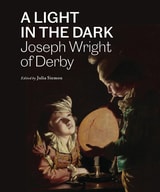
The dramatic “candlelight” paintings of Joseph Wright of Derby (1734–1797) cast a spell, enthralling viewers with striking scenes that portray human curiosity, the quiet intensity of domestic life, and the excitement of scientific discovery. With a variety of brushstrokes—dabbed here, whiskered there, and dragged elsewhere—Wright pushed boundaries with the transformative power of light. In 2020, the Getty Museum acquired the newly rediscovered Two Boys with a Bladder (1767), a luminous study of innovation, intimacy, and artistic brilliance that challenged established assumptions about Wright and sparked renewed interest in his experiments with light.
A Light in the Dark presents new research to uncover the origins of Two Boys and expand our understanding of Wright's early candlelights, tracing the invention and initial development of his distinctive style. Whereas recent scholarship has maintained an outward approach that ties the artist’s oeuvre to places that he visited, this volume returns the focus to Wright himself—his biography, technique, and hometown of Derby—in a much-needed reexamination. Complete with fresh historical and technical evidence, this is a fascinating look into the inspirations, aspirations, and experiments behind some of the most remarkable paintings in the history of British art.
This volume is published to accompany an exhibition on view at the J. Paul Getty Museum at the Getty Center from November 24, 2026, to March 14, 2027.
A Magnificent Loneliness
Allison Benis White
Four Way Books, 2025
“I remember // once, turning to leave, a black purse over her shoulder. . .” Oneiric and surreal as always, Allison Benis White attempts to mediate, if not make sense of, inconceivable bereavement in her fifth collection of poetry. “A black purse, / over her living shoulder, Love said nothing to me.”
Ethereal, airy, and spare at once, A Magnificent Loneliness is a dialogue with ghosts. White, whose previous work won the Rilke Prize and the Four Way Books Levis Prize judged by Claudia Rankine, assembles these pages as an ekphrastic and epistolary record of her solitary journey through loss. These poems relate to artwork, the history of artistic practice, and inherited lore to broker an oblique and piecewise conversation concerning pain too vast to articulate all at once. “I don’t know how to love the world but to love / her leaving.” These lyrical iterations represent White’s attempts to comprehend the individual suffering of being alive, and to metabolize the grief of women’s epidemic disappearance, literal and spiritual, through sickness and despair. Through those efforts, she illuminates a magnificent loneliness—the privilege of being alive to our anguish, of missing someone dearly because someone dear existed—and a reason for not yet departing that struggle. “How to leave / the world but to turn to leave her— / but to turn my head back / to see her.”
A Photographer’s Guide to Ohio
Ian Adams
Ohio University Press, 2011
A Photographer’s Guide to Ohio, Volume 2
Volume 2Ian Adams
Ohio University Press, 2015
A Planet in Hospice
Environmental Justice in Existential EcofictionLauren S. Cardon
The Ohio State University Press, 2026
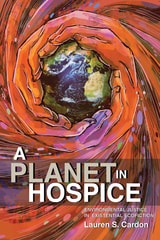
How do we continue to love and care for a planet it’s too late to save? In A Planet in Hospice, Lauren S. Cardon analyzes works of “existential ecofiction” that invite us to reflect on our mortality and the many ways that people are already affected by disaster, while also encouraging hope and connection. These texts from authors such as N. K. Jemisin, Paolo Bacigalupi, Darcie Little Badger, Rivers Solomon, Richard Powers, and Margaret Atwood are characterized by themes of ecological crisis, planetary demise, and human extinction, and they center environmental justice and human oppression. Cardon argues that, by invoking the end of the world, these writers directly engage with death anxiety and consequently intervene in current theories of existential psychology and intersectional ecocriticism. They highlight the inextricability of environmental care and social justice and offer visions of a path forward through the global climate crisis humans now face.
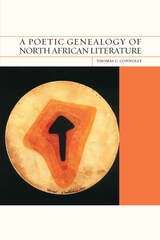
A Poetic Genealogy of North African Literature
Thomas C. Connolly
Northwestern University Press, 2025
Engaging the poetic to expand our imagination of Maghrebi literature in French
Poetry, as the Moroccan writer Abdelkébir Khatibi describes it, is a form of dissymmetry that exposes readers to the unexpected, and to the possibility of a transformative encounter with the text. Drawing on literary, philosophical, theoretical, and theological texts in multiple languages and scripts, as well as on the visual arts, Thomas C. Connolly delves into the poetic works of Khatibi and six other major Maghrebi authors—Jean Amrouche, Tahar Djaout, Nabile Farès, Mohammed Khaïr-Eddine, Abdelwahab Meddeb, and Jean Sénac—as well as the French poet Arthur Rimbaud, to think anew about the origins and legacy of Francophone poetry in the Maghreb. Instead of turning away from the poetic when it becomes indecipherable, A Poetic Genealogy of North African Literature engages poetic texts on their own terms, allowing them to dictate the search for meaning, thereby expanding our understanding of what Maghrebi literature in French was, is, and might become.

A Psalm for Cottondale
PoemsSharony A. Green
University of Alabama Press, 2026
A lyrical journey through memory, place, and resilience in the heart of Alabama
A Psalm for Cottondale is a lyrical meditation on memory, place, and survival in the American South. Through a sequence of interconnected free-verse poems, Sharony Green reflects on life in Cottondale, Alabama, where change unfolds in ways that can be both poignant and unexpected. Rooted in the histories, landscapes, and cultural currents of an Alabama college town, the collection explores how one place can evoke the memory of many others, inviting readers to consider broader questions of identity, belonging, and endurance.
Written in a clear, steady voice, these poems balance intimacy with historical awareness, allowing inherited stories, silences, and everyday moments to emerge with quiet power. Green’s careful craftsmanship and emotional restraint lend authority to the collection, while a subtle psalmic undercurrent adds spiritual depth without sacrificing nuance. As the poems move through themes of joy, grief, witness, and renewal, Cottondale becomes both a physical community and a symbolic terrain shaped by race, land, memory, and hope.
Inspired by writings that engage history, geography, and culture, A Psalm for Cottondale offers an elegant and deeply attentive reflection on Southern and American life, illuminating the ways people endure, adapt, and find meaning in a changing world. Ideal for readers of contemporary poetry, Southern literature, African American studies, place-based writing, and works that explore history, memory, faith, and community through a lyrical lens.
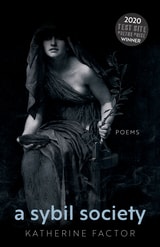
A Sybil Society
PoemsKatherine Factor
University of Nevada Press, 2022
In a time when only a select few are prosperous, A Sybil Society paints a portrait of the present moment and unveils a restless truth. The collection is fearless in the face of convention and gives readers a sense of devastating sorrow in a world gone mad.
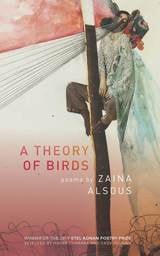
A Theory of Birds
PoemsZaina Alsous
University of Arkansas Press, 2019
Winner of the 2019 Etel Adnan Poetry Prize
Inside the dodo bird is a forest, Inside the forest
a peach analog, Inside the peach analog a woman, Inside
the woman a lake of funerals
This layering of bird, woman, place, technology, and ceremony, which begins this first full-length collection by Zaina Alsous, mirrors the layering of insights that marks the collection as a whole. The poems in A Theory of Birds draw on inherited memory, historical record, critical theory, alternative geographies, and sharp observation. In them, birds—particularly extinct species—become metaphor for the violences perpetrated on othered bodies under the colonial gaze.
Putting ecological preservation in conversation with Arab racial formation, state vernacular with the chatter of birds, Alsous explores how categorization can be a tool for detachment, domination, and erasure. Stretching their wings toward de-erasure, these poems—their subjects and their logics—refuse to stay put within a single category. This is poetry in support of a decolonized mind.
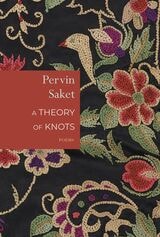
A Theory of Knots
Pervin Saket
Seagull Books, 2026
These lyric, unsparing poems stitch together a story of identity, belonging, and dissolution.
A Theory of Knots explores the loops of how identity and belonging are constructed, broken, resurrected, and dissolved. In sections, knots weave DNA and cords, memory and mythology, home and tongue; they draw on desire, Zoroastrian rituals, tradition and transgression, and the legacies of womanhood, asking what connects us, and at what cost.
As layers of identity are examined, Pervin Saket's poems return to language: heirloom, hazard, half-truth. Soon enough, language is both subject and suspect; having exposed the artificial nature of our truths, the poems confront the artificial nature of language itself. At the end, poetry reaches the wilderness of earth, collapses upon itself, dissolving on the page—untangling the final knot.
A Voice
Selected PoemsAnzhelina Polonskaya
Northwestern University Press, 2004
Drawn from her most recent Russian collections, A Voice: Selected Poems explores the poet's ongoing fascinations—desolate places, long journeys, a synesthesia of sensory stimulation, and the presence of death. Also on display is her Chekhovian gift for unexpected closure. This is a promising English-language debut from a poet already gaining international attention.
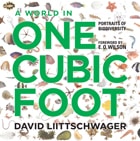
A World in One Cubic Foot
Portraits of BiodiversityDavid Liittschwager
University of Chicago Press, 2012
For A World in One Cubic Foot, esteemed nature photographer David Liittschwager took a bright green metal cube—measuring precisely one cubic foot—and set it in various ecosystems around the world, from Costa Rica to Central Park. Working with local scientists, he measured what moved through that small space in a period of twenty-four hours. He then photographed the cube’s setting and the plant, animal, and insect life inside it—anything visible to the naked eye. The result is a stunning portrait of the amazing diversity that can be found in ecosystems around the globe. Many organisms captured in Liittschwager’s photographs have rarely, if ever, been presented in their full splendor to the general reader, and the singular beauty of these images evocatively conveys the richness of life around us and the essential need for its conservation. The breathtaking images are accompanied by equally engaging essays that speak to both the landscapes and the worlds contained within them, from distinguished contributors such as Elizabeth Kolbert and Alan Huffman, in addition to an introduction by E. O. Wilson. After encountering this book, you will never look at the tiniest sliver of your own backyard or neighborhood park the same way; instead, you will be stunned by the unexpected variety of species found in an area so small.
A World in One Cubic Foot puts the world accessibly in our hands and allows us to behold the magic of an ecosystem in miniature. Liittschwager’s awe-inspiring photographs take us to places both familiar and exotic and instill new awareness of the life that abounds all around.
A Year of Iowa Nature
Discovering Where We LiveCarl Kurtz
University of Iowa Press, 2014
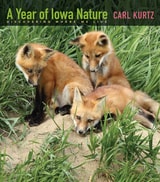
Concentrating on Iowa’s tallgrass prairie, Kurtz also points his viewfinder toward the great variety of natural habitats in the eastern United States. Arranged chronologically throughout the year, the fifty-five color photos and their accompanying narratives rotate through the seasons like a nature film. The winter months showcase a frost-covered white-tailed deer, cedar waxwings feeding on winter apples, a muskrat on the surface of an icy pond, and dune-like snowdrifts. Kurtz’s palette warms up in springtime with stunning photos of Virginia bluebells, fox cubs, juvenile chipmunks, and ruddy ducks. Summer brings a host of butterflies, frogs, and goldfinches as well as blooming prairie plants. The colors become more subdued in fall with the change in light, revealing the rich hues of Indian grass and big bluestem and the subtle plumage of migrating warblers.
Just as Kurtz’s Practical Guide to Prairie Reconstruction offers an indispensable manual for individuals and land managers working to create a diverse prairie community, so does A Year of Iowa Nature point the way toward a sincere, month-by-month appreciation of the natural world around us.
A more perfect Union
Teri Ellen Cross Davis
The Ohio State University Press, 2021
In the tender, sensual, and bracing poems of a more perfect Union, Teri Ellen Cross Davis reclaims the experience of living and mothering while Black in contemporary America, centering Black women’s pleasure by wresting it away from the relentless commodification of the White gaze. Cross Davis deploys stunning emotional range to uplift the mundane, interrogate the status quo, and ultimately create her own goddesses. Parenting, lust, household chores—all are fair game for Cross Davis’s gimlet eye. Whether honoring her grief for Prince’s passing while examining his role in midwifing her sexual awakening or contemplating travel and the gamble of being Black across this wide world, these poems tirelessly seek a path out of the labyrinth to hope.
Abolition Time
Grammars of Law, Poetics of JusticeJess A. Goldberg
University of Minnesota Press, 2024
How Black Atlantic literature can challenge conventions and redefine literary scholarship
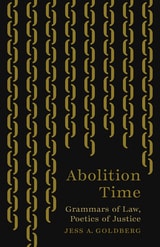
Abolition Time is an invitation to reenvision abolitionist justice through literary studies. Placing critical race theory, queer theory, critical prison studies, and antiprison activism in conversation with an archive of Black Atlantic literatures of slavery, Jess A. Goldberg reveals how literary studies can help undo carceral epistemologies embedded in language and poetics.
Goldberg examines poetry, drama, and novels from the nineteenth century through the twenty-first—such as William Wells Brown’s The Escape, Angelina Weld Grimké’s Rachel, Toni Morrison’s A Mercy, and Claudia Rankine’s Citizen—to consider literature and literary scholarship’s roles in shaping societal paradigms. Focusing on how Black Atlantic literature disrupts the grammar of law and order, they show how these texts propose nonlinear theories of time that imagine a queer relationality characterized by care rather than inheritance, property, or biology.
Abolition Time offers a framework for thinking critically about what is meant by the term justice in the broadest and deepest sense, using close reading to inform the question of abolishing prisons or the police and to think seriously about the most fundamental questions at the heart of the abolitionist movement.
Abusing Religion
Literary Persecution, Sex Scandals, and American Minority ReligionsMegan Goodwin
Rutgers University Press, 2020
Achilles and the Tortoise
Mark Twain's FictionsClark Griffith
University of Alabama Press, 2000
A fresh exploration of the humor, irony, and hidden depths of Mark Twain's literary imagination.
Through a close reading of the fictions–short and long, early and late–Griffith contends that Mark Twain's strength lay not in comedy or in satire or (as the 19th century understood the term) even in the practice of humor. Rather his genius lay in the joke, specifically the "sick joke." For all his finesse and seeming variety, Twain tells the same joke, with its single cast of doomed and damned characters, its single dead-end conclusion, over and over endlessly.
As he attempted to attain the comic resolution and comically transfigured characters he yearned for, Twain forever played, for Griffith, the role of the Achilles of Zeno's Paradox. Like the tortoise that Achilles cannot overtake in Zeno's tale, the richness of comic life forever remained outside Twain's grasp.
The last third of Griffith's study draws parallels between Mark Twain and Herman Melville. Although the two authors never met and seem not to have read each other's works, they labored under the sense of what, in Moby-Dick, Ishmael calls "a vast practical joke . . . at nobody's expense but [one's] own." The laughter occasioned by this cosmic conspiracy shapes the career of Huckleberry Finn fully as much as it does Ishmael's voyage. Out of the laughter are generated the respective obsessions of Captain Ahab and Bartleby, of Pudd'nhead Wilson and Hadleyburg. Reduced at last to a dry mock, the laughter is the prevailing tone of both Billy Budd and The Mysterious Stranger Manuscripts.
Acoustic Properties
Radio, Narrative, and the New Neighborhood of the AmericasTom McEnaney
Northwestern University Press, 2017
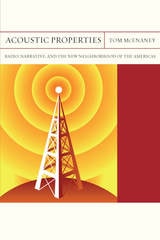
Based on original archival research in Buenos Aires, Havana, Paris, and the United States, the book develops a literary media theory that understands sound as a transmedial phenomenon and radio as a transnational medium. Analyzing the construction of new social and political relations in the wake of the United States’ 1930s Good Neighbor Policy, Acoustic Properties challenges standard narratives of hemispheric influence through new readings of Richard Wright’s cinematic work in Argentina, Severo Sarduy’s radio plays in France, and novels by John Dos Passos, Manuel Puig, Raymond Chandler, and Carson McCullers. Alongside these writers, the book also explores Che Guevara and Fidel Castro’s Radio Rebelde, FDR’s fireside chats, Félix Caignet’s invention of the radionovela in Cuba, Evita Perón’s populist melodramas in Argentina, Orson Welles’s experimental New Deal radio, Cuban and U.S. “radio wars,” and the 1960s African American activist Robert F. Williams’s proto–black power Radio Free Dixie.
From the doldrums of the Great Depression to the tumult of the Cuban Revolution, Acoustic Properties illuminates how novelists in the radio age converted writing into a practice of listening, transforming realism as they struggled to channel and shape popular power.
Across the West and Toward the North
Norwegian and American Landscape PhotographyEdited by Shannon Egan and Marthe Tolnes Fjellestad
University of Utah Press, 2021
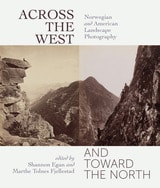
In this edited volume, Norwegian and American scholars offer the first study of the striking parallels in the production, distribution, and reception of these modern expressions of landscape and nationhood. In recognizing how landscape photographs were made meaningful to international audiences—such as tourists, visitors to world’s fairs, scientists, politicians, and immigrants—the authors challenge notions of American exceptionalism and singularly nationalistic histories.
The book includes stunning photographs of mountainous landscapes, glaciers, and forests, punctuated by signs of human development and engineering, with more than one hundred rarely seen plates by photographers Knud Knudsen, Anders Beer Wilse, Timothy O’Sullivan, Charles R. Savage, and others.
Acts of Faith and Imagination
Theological Patterns in Catholic FictionBrent Little
Catholic University of America Press, 2023
Adulterous Nations
Family Politics and National Anxiety in the European NovelTatiana Kuzmic
Northwestern University Press, 2016
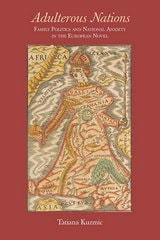
In Adulterous Nations, Tatiana Kuzmic enlarges our perspective on the nineteenth-century novel of adultery, showing how it often served as a metaphor for relationships between the imperialistic and the colonized. In the context of the long-standing practice of gendering nations as female, the novels under discussion here—George Eliot’s Middlemarch, Theodor Fontane’s Effi Briest, and Leo Tolstoy’s Anna Karenina, along with August Šenoa’s The Goldsmith’s Gold and Henryk Sienkiewicz’s Quo Vadis—can be understood as depicting international crises on the scale of the nuclear family. In each example, an outsider figure is responsible for the disruption experienced by the family. Kuzmic deftly argues that the hopes, anxieties, and interests of European nations during this period can be discerned in the destabilizing force of adultery. Reading the work of Šenoa and Sienkiewicz, from Croatia and Poland, respectively, Kuzmic illuminates the relationship between the literature of dominant nations and that of the semicolonized territories that posed a threat to them. Ultimately, Kuzmic’s study enhances our understanding of not only these five novels but nineteenth-century European literature more generally.
Affrilachia
PoemsFrank X Walker
Ohio University Press, 2000
After the Operation
Elizabeth T. Gray
Four Way Books, 2025
Afterlight
Caleb Nolen
University of Utah Press, 2026
Winner of the Agha Shahid Ali Prize in Poetry
“When I wake I’m in ninth grade again,” begins “Reunion,” the first poem in Caleb Nolen’s debut collection Afterlight. These haunting, tender poems revisit the fraught adolescence of a group of boys growing up in the late 1990s and early 2000s.
Told through the voice of one of the boys who left and is later looking back, Afterlight navigates the silences left by absent fathers, early deaths, and a God who doesn't speak. Interwoven throughout are letters to saints and biblical figures: pleas for intercession and understanding that echo the speaker’s search for grace amid violence and loss. By the book’s end, the lost boys and the saints share the same hallowed space, their stories entwined. Written in plain, unsparing language, these poems reveal the tenderness within troubled masculinity and the ache of trying to love what has already vanished.
Against Heidegger
LM Rivera
Omnidawn, 2019
Against!
Rebellious Daughters in Black Immigrant Fiction in the United StatesAsha Jeffers
The Ohio State University Press, 2025
Against! is the first book-length study of Afro-Caribbean and African immigrant and second-generation writing in the United States. In it, Asha Jeffers evaluates the relationship between Blackness and immigranthood in the US as depicted through the recurring theme of rebellious Black immigrant daughters. Considering the work of Paule Marshall, Edwidge Danticat, Chimamanda Ngozi Adichie, and Taiye Selasi, Jeffers untangles how rebellion is informed by race, gender, ethnicity, and migration status.
Immigrant and second-generation writers mobilize often complicated familial relationships to comment on a variety of political, social, and psychic contexts. Jeffers argues that rather than categorizing Black migrants as either immediately fully integrated into an African American experience or seeing them as another category altogether that is unbound by race, Marshall, Danticat, Adichie, and Selasi identify the unstable position of Black migrants within the American racial landscape. By highlighting the diverse ways Black migrants and their children negotiate this position amid the dual demands of the respectability politics imposed on African Americans and the model-minority myth imposed on immigrants, Jeffers reveals the unsteady nature of US racial categories.
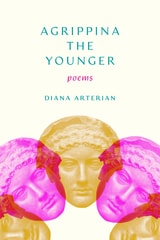
Agrippina the Younger
PoemsDiana Arterian
Northwestern University Press, 2025
A poetic journey through the past of the Roman Empress Agrippina looks toward the future
Agrippina the Younger follows one woman’s study of another, separated by thousands of miles and two millennia but bound by a shared sense of powerlessness. Agrippina was a daughter in a golden political family, destined for greatness—but she hungered for more power than women were allowed. Exhausted by the misogyny of the present, Diana Arterian reaches into the past to try to understand the patriarchal systems of today. In lyric verse and prose poems, she traces Agrippina’s rise, interrogating a life studded with intrigue, sex, murder, and manipulation. Arterian eagerly pursues Agrippina through texts, ruins, and films, exhuming the hidden details of the ancient noblewoman’s life. These poems consider the valences of patriarchy, power, and the archive to try to answer the question: How do we recover a woman erased by history?
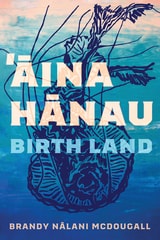
Aina Hanau / Birth Land
Brandy Nalani McDougall
University of Arizona Press, 2023
‘Āina Hānau / Birth Land is a powerful collection of new poems by Kanaka ʻŌiwi (Native Hawaiian) poet Brandy Nālani McDougall. ‘Āina hānau—or the land of one’s birth—signifies identity through intimate and familial connections to place and creates a profound bond between the people in a community. McDougall’s poems flow seamlessly between ‘Ōlelo Hawai‘i and English, forming rhythms and patterns that impress on the reader a deep understanding of the land. Tracing flows from the mountains to the ocean, from the sky to the earth, and from ancestor to mother to child, these poems are rooted in the rich ancestral and contemporary literature of Hawaiʻi —moʻolelo, moʻokūʻauhau, and mele —honoring Hawaiian ʻāina, culture, language, histories, aesthetics, and futures.
The poems in Āina Hānau / Birth Land cycle through sacred and personal narratives while exposing and fighting ongoing American imperialism, settler colonialism, militarism, and social and environmental injustice to protect the ʻāina and its people. The ongoing environmental crisis in Hawaiʻi, inextricably linked to colonialism and tourism, is captured with stark intensity as McDougall writes, Violence is what we settle for / because we’ve been led to believe / green paper can feed us / more than green land. The experiences of birth, motherhood, miscarriage, and the power of Native Hawaiian traditions and self-advocacy in an often dismissive medical system is powerfully narrated by the speaker of the titular poem, written for McDougall’s daughters.
‘Āina Hānau reflects on what it means to be from and belong to an ʻāina hānau, as well as what it means to be an ‘āina hānau, as all mothers serve as the first birth lands for their children.
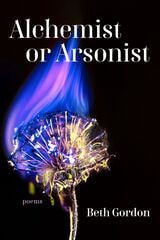
Alchemist or Arsonist
PoemsBeth Gordon
Acre Books, 2027
A feminist poetry collection re-examining the figure of the crone and upending the patriarchal expectations she embodies.
In Alchemist or Arsonist, her second full-length collection, Beth Gordon supercharges the term crone, demonstrating in image-rich poems the magical strength of older women. The Crone is frank about the realities of aging—including plucking chin hairs—yet she also surprises, warning the reader: “The tiger has always been there. . . . She is right in front of you.” Taking afternoon shots of mescal and waiting in line for Mexican street corn, she contemplates Captcha pictures, AI, and tattoos.
The book expands its concerns in several long poems and sequences, encompassing the full range of human experience. “The Secret Fate of All Life,” a series of golden shovels based on quotes from the HBO show True Detective, moves into the surreal to represent language’s failure to describe the death of an infant, and how time can be displaced by grief. Other works explore the transformation that can come from tragedy, the perils of marriage and other relationships, and the complicated conversation older and younger versions of the self would have with each other.
Gordon’s candid, wry, uncompromising voice is both refreshing and bracing, and the poems perform alchemy as they set fire to traditional expectations. With an undercurrent of violence and murder, the book reveals the ultimate consequences of patriarchy. “Alchemist or arsonist: the end is the same,” The Crone tells us. “Something becomes something else.”
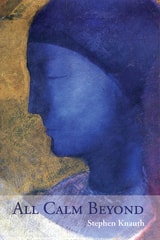
All Calm Beyond
Stephen Knauth
Four Way Books, 2025
All Great Art is Praise
Aidan Nichols
Catholic University of America Press, 2016
All There Is to Lose
Aiden Heung
Four Way Books, 2026
Marking Aiden Heung’s debut collection, All There Is to Lose is the 2024 winner of the Four Way Books Levis Prize in Poetry. The selecting judge, National Book Award Finalist Ilya Kaminsky, praises the resonant particularities and depth of feeling found in these poems, which convert “elegy [into] its driving force.” Poet and Critic Felicity Plunkett observes, “Dreams and memory move through these porous, venturesome poems. The spectral jostles with the sensual to tell ‘a story in which I could be found.’ Achily tender, they open to light, love and the jab of a joke.” Poet David Tait notes, “Unsettling and luminous, the poems preserve the memory of Village 915: its volatile seasons and hard-worn inhabitants, its headstones, spirits, and myriad forms of water. Here you’ll find not only poems of lyrical beauty, but of grim exactness.” The result is a stunning achievement of a first book, what Kaminsky identifies as an exemplar of “that ages-old mode of poetry wherein the poet uses language to break bread with the dead, to bring them back to life, if only for the moment, for a portion of the moment, an instant, before the line breaks.” Channeling the poet as medium, “I am the tension on the bow that draws the arrow,” Heung writes in “Epilogue.” “To lose myself — that is my destiny.”

All-American Dad
Conor Bracken
Bridwell Press, 2026
If the list, as Umberto Eco once claimed, is the basis of culture, then the poems in this collection are a soil sample of all the rotted fauna and toxic waste that make up the loam contemporary white fatherhood plants its monoculture in—girldad fighterjets, midwestern vanity license plates, Clark Griswold prodding a caged ape, Fabio bleeding in the bathroom as reckless gender reveals incinerate a blasted landscape. In a world that is more poison than paradise, that is as much microplastic as it is polycrisis, a world that has been hacked into nations and stitched back together by oily supply chains and fuzzy diasporic memory, these poems wonder what a father is, can be, and should teach to their offspring when all they’ve been taught has been how to blend into a country intent on transforming difference and dissent into knickknacks. Knuckled like a crayfish and sieving the trash-clogged streams of our era, Conor Bracken’s poetry is bent—in self-defense? in prayer? supplication?—on bringing the contradictions of creating life in a necrophagous era into the kind of tension necessary to strike a chord or fire an arrow.

Allah Forgive Us
Maryam Ghafoor
University of Arkansas Press, 2027
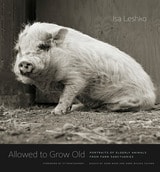
Allowed to Grow Old
Portraits of Elderly Animals from Farm SanctuariesIsa Leshko
University of Chicago Press, 2019
Isa Leshko shows us, brilliantly, with this collection of portraits. To create these portraits, she spent hours with her subjects, gaining their trust and putting them at ease. The resulting images reveal the unique personality of each animal. It’s impossible to look away from the animals in these images as they unforgettably meet our gaze, simultaneously calm and challenging. In these photographs we see the cumulative effects of the hardships of industrialized farm life, but also the healing that time can bring, and the dignity that can emerge when farm animals are allowed to age on their own terms.
Each portrait is accompanied by a brief biographical note about its subject, and the book is rounded out with essays that explore the history of animal photography, the place of beauty in activist art, and much more. Open this book to any page. Meet Teresa, a thirteen-year-old Yorkshire Pig, or Melvin, an eleven-year-old Angora Goat, or Tom, a seven-year-old Broad Breasted White Turkey. You’ll never forget them.
Alone in the House of My Heart
PoemsKari Gunter-Seymour
Ohio University Press, 2022
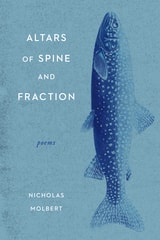
Altars of Spine and Fraction
PoemsNicholas Molbert
Northwestern University Press, 2024
A debut poetry collection set in and around Louisiana’s fishing village of Cocodrie
Altars of Spine and Fraction follows its protagonist through the joys and dangers of childhood on the rural Gulf Coast, through familial loss, and into adulthood. Refusing to romanticize what has been lost, Molbert instead interrogates how nostalgia is most often enjoyed by those with the privilege to reject or indulge it.
Violent hurricanes sweep across the landscapes of the poems, and Molbert probes the class inequalities that these climate crises lay bare. Moving from outdoor rural spaces in its first half to indoor domestic spaces in its second half, the collection explores family history, generational trauma, and the toxic masculinity that is shouldered by boys raised in the Deep South.
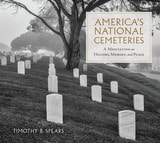
America's National Cemeteries
A Meditation on History, Memory, and PlaceTimothy B. Spears, Foreword by Roderick Gainer
University of Alabama Press, 2025
A poignant photographic tour of honor, sacrifice, and memory within America's national cemeteries
In America’s National Cemeteries, Timothy B. Spears takes the reader on a grand tour of these singular places of commemoration, the final resting place for more than four million American military personnel who died either in wartime, during their time of service, or after their honorable discharge. His absorbing account—part historical narrative and part travelogue—is enhanced by 180 of his remarkable photographs, which capture the spirit, beauty, and solemn remembrance to be found in each of the 156 national cemeteries across America.
Spears details the history of the cemeteries since their establishment during the American Civil War and explores their ongoing evolution and importance to American society and the commitment America has made to honoring its military dead. With headstones neatly arrayed in rows and each soldier typically buried in an identical fashion, the cemeteries symbolize an enduring connection between human mortality and national identity. They also reflect the nation’s persistent challenges with inequalities and injustice, violence and racism, lingering questions about “good” versus “bad” wars, and the vexed legacies of America’s military forays.
In this unique meditation on American history, memory, and place, Spears embraces the impact of the past on the present, offering an original perspective on the meaning of military service, mortality, and remembrance and how these national cemeteries have evolved into truly iconic and emblematic American spaces. The book also features a foreword by Roderick Gainer, Chief Curator of Arlington National Cemetery since 2013.
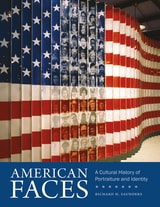
American Faces
A Cultural History of Portraiture and IdentityRichard H. Saunders
University Press of New England, 2016
American Indian Literature, Environmental Justice, and Ecocriticism
The Middle PlaceJoni Adamson
University of Arizona Press, 2001
This powerful book is one of the first to examine the intersections between literature and the environment from the perspective of the oppressions of race, class, gender, and nature, and the first to review American Indian literature from the standpoint of environmental justice and ecocriticism. By examining such texts as Sherman Alexie's short stories and Leslie Marmon Silko's novel Almanac of the Dead, Adamson contends that these works, in addition to being literary, are examples of ecological criticism that expand Euro-American concepts of nature and place.
Adamson shows that when we begin exploring the differences that shape diverse cultural and literary representations of nature, we discover the challenge they present to mainstream American culture, environmentalism, and literature. By comparing the work of Native authors such as Simon Ortiz with that of environmental writers such as Edward Abbey, she reveals opportunities for more multicultural conceptions of nature and the environment.
More than a work of literary criticism, this is a book about the search to find ways to understand our cultural and historical differences and similarities in order to arrive at a better agreement of what the human role in nature is and should be. It exposes the blind spots in early ecocriticism and shows the possibilities for building common ground— a middle place— where writers, scholars, teachers, and environmentalists might come together to work for social and environmental change.
American Sage
The Spiritual Teachings of Ralph Waldo EmersonBarry M. Andrews
University of Massachusetts Press, 2021
Unitarian minister Barry M. Andrews has spent years studying Emerson, finding wisdom and guidance in his teachings and practices, and witnessing how the spiritual lives of others are enriched when they grasp the many meanings in his work. In American Sage, Andrews explores Emerson's writings, including his journals and letters, and makes them accessible to today's spiritual seekers. Written in everyday language and based on scholarship grounded in historical detail, this enlightening book considers the nineteenth-century religious and intellectual crosscurrents that shaped Emerson's worldview to reveal how his spiritual teachings remain timeless and modern, universal and uniquely American.
American Studies as Transnational Practice
Turning toward the TranspacificEdited by Yuan Shu and Donald E. Pease
Dartmouth College Press, 2016