Results by title
45 books match the query 'Symbolic aspects'
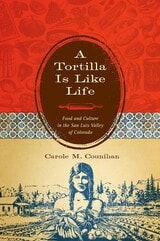
A Tortilla Is Like Life
Food and Culture in the San Luis Valley of ColoradoBy Carole M. Counihan
University of Texas Press, 2009
Located in the southern San Luis Valley of Colorado, the remote and relatively unknown town of Antonito is home to an overwhelmingly Hispanic population struggling not only to exist in an economically depressed and politically marginalized area, but also to preserve their culture and their lifeways. Between 1996 and 2006, anthropologist Carole Counihan collected food-centered life histories from nineteen Mexicanas—Hispanic American women—who had long-standing roots in the Upper Rio Grande region. The interviews in this groundbreaking study focused on southern Colorado Hispanic foodways—beliefs and behaviors surrounding food production, distribution, preparation, and consumption.
In this book, Counihan features extensive excerpts from these interviews to give voice to the women of Antonito and highlight their perspectives. Three lines of inquiry are framed: feminist ethnography, Latino cultural citizenship, and Chicano environmentalism. Counihan documents how Antonito's Mexicanas establish a sense of place and belonging through their knowledge of land and water and use this knowledge to sustain their families and communities. Women play an important role by gardening, canning, and drying vegetables; earning money to buy food; cooking; and feeding family, friends, and neighbors on ordinary and festive occasions. They use food to solder or break relationships and to express contrasting feelings of harmony and generosity, or enmity and envy. The interviews in this book reveal that these Mexicanas are resourceful providers whose food work contributes to cultural survival.
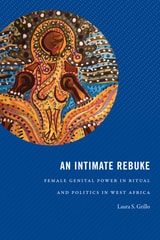
An Intimate Rebuke
Female Genital Power in Ritual and Politics in West AfricaLaura S. Grillo
Duke University Press, 2018
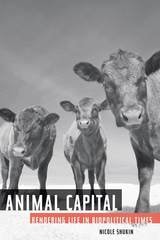
Animal Capital
Rendering Life in Biopolitical TimesNicole Shukin
University of Minnesota Press, 2009
Illuminates the profound contingency of market life on animal figures and flesh
The juxtaposition of biopolitical critique and animal studies—two subjects seldom theorized together—signals the double-edged intervention of Animal Capital. Nicole Shukin pursues a resolutely materialist engagement with the “question of the animal,” challenging the philosophical idealism that has dogged the question by tracing how the politics of capital and of animal life impinge on one another in market cultures of the twentieth and early twenty-first centuries.
Shukin argues that an analysis of capital’s incarnations in animal figures and flesh is pivotal to extending the examination of biopower beyond its effects on humans. “Rendering” refers simultaneously to cultural technologies and economies of mimesis and to the carnal business of boiling down and recycling animal remains. Rendering’s accommodation of these discrepant logics, she contends, suggests a rubric for the critical task of tracking the biopolitical conditions and contradictions of animal capital across the spaces of culture and economy.From the animal capital of abattoirs and automobiles, films and mobile phones, to pandemic fear of species-leaping diseases such as avian influenza and mad cow, Shukin makes startling linkages between visceral and virtual currencies in animal life, illuminating entanglements of species, race, and labor in the conditions of capitalism. In reckoning with the violent histories and intensifying contradictions of animal rendering, Animal Capital raises provocative and pressing questions about the cultural politics of nature.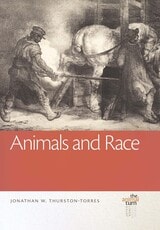
Animals and Race
Jonathan W. Thurston-Torres
Michigan State University Press, 2023
Apocalyptic Sheep and Goats in Matthew and 1 Enoch
Elekosi F. Lafitaga
SBL Press, 2022
An alternative understanding of apocalyptic eschatology in the Gospel of Matthew
Matthew’s eschatological imageries of judgment are often identified as apocalyptic and referred to as Matthew’s apocalyptic discourses. In this volume Elekosi F. Lafitaga reexamines Matthew’s vision of the sheep and goats in the judgment of the nations, which are often interpreted as metaphors for the saved and the condemned. Lafitaga views these images in the wider context of the rhetoric of apocalyptic communication stretching back to Matthew 3. This broader context reveals that the vision of Matthew 25 serves to exhort Israel in the here and now according to the torah, with salvation for Israel involving an indispensable responsibility to love and serve humanity. Central to Lafitaga’s analysis is the highly probable scenario that the material in Matthew is dependent on the Book of Dreams (1 Enoch 83–90).
Birds and Beasts of Ancient Mesoamerica
Animal Symbolism in the Postclassic PeriodSusan Milbrath
University Press of Colorado, 2025
Representations of animal deities in Mesoamerica can be traced back at least to Middle Preclassic Olmec murals, stone carvings, and portable art such as lapidary work and ceramics. Throughout the history of Mesoamerica real animals were merged with fantastical creatures, creating zoological oddities not unlike medieval European bestiaries. According to Spanish chroniclers, the Aztec emperor was known to keep exotic animals in royal aviaries and zoos. The Postclassic period was characterized by an iconography that was shared from central Mexico to the Yucatan peninsula and south to Belize. In addition to highlighting the symbolic importance of nonhuman creatures in general, this volume focuses on the importance of the calendrical and astronomical symbolism associated with animals and birds.
Inspired by and dedicated to the work of Mesoamerican scholar Cecelia Klein and featuring imagery from painted books, monumental sculpture, portable arts, and archaeological evidence from the field of zooarchaeology, Birds and Beasts of Ancient Mesoamerica highlights the significance of the animal world in Postclassic and early colonial Mesoamerica. It will be important to students and scholars studying Mesoamerican art history, archaeology, ethnohistory, and zoology.

Blood Work
Life and Laboratories in PenangJanet Carsten
Duke University Press, 2019
Bodies in Contact
Rethinking Colonial Encounters in World HistoryTony Ballantyne and Antoinette Burton, eds.
Duke University Press, 2005
Bodies in Contact brings together important scholarship on colonial gender studies gathered from journals around the world. Breaking with approaches to world history as the history of “the West and the rest,” the contributors offer a panoramic perspective. They examine aspects of imperial regimes including the Ottoman, Mughal, Soviet, British, Han, and Spanish, over a span of six hundred years—from the fifteenth century through the mid-twentieth. Discussing subjects as diverse as slavery and travel, ecclesiastical colonialism and military occupation, marriage and property, nationalism and football, immigration and temperance, Bodies in Contact puts women, gender, and sexuality at the center of the “master narratives” of imperialism and world history.
Contributors. Joseph S. Alter, Tony Ballantyne, Antoinette Burton, Elisa Camiscioli, Mary Ann Fay, Carter Vaughn Findley, Heidi Gengenbach, Shoshana Keller, Hyun Sook Kim, Mire Koikari, Siobhan Lambert-Hurley, Melani McAlister, Patrick McDevitt, Jennifer L. Morgan, Lucy Eldersveld Murphy, Rosalind O’Hanlon, Rebecca Overmyer-Velázquez, Fiona Paisley, Adele Perry, Sean Quinlan, Mrinalini Sinha, Emma Jinhua Teng, Julia C. Wells
Botanical Revolutions
How Plants Changed the Course of ArtGiovanni Aloi
J. Paul Getty Trust, The, 2025
Desired for their aesthetic beauty, sought after for their medicinal properties, harvested for their scents and flavors, or grown as essential material resources, plants are indissolubly entwined with our existence. In art it is no different: plants have played a critical role. Yet despite their significant material and conceptual contributions, plants have been sidelined in the commentary of art historians and critics.
Botanical Revolutions presents a global history of plants in art, focusing on the crucial moments that signaled the formation of new movements and styles, as well as the creation of media that could not have occurred without the involvement of and interaction with the vegetal world. In this fascinating and beautifully illustrated book, author Giovanni Aloi delves deeply into the history and representation of plants in art, advocates for a change in our relationship with the botanical world, and presents an alternative history of art that foregrounds the truly indispensable contributions of plants.

Burek
A Culinary MetaphorJernej Mlekuz
Central European University Press, 2015
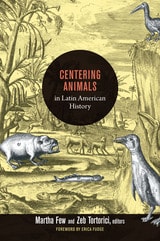
Centering Animals in Latin American History
Martha Few and Zeb Tortorici, eds.
Duke University Press, 2013
Contributors. Neel Ahuja, Lauren Derby, Regina Horta Duarte, Martha Few, Erica Fudge, León García Garagarza, Reinaldo Funes Monzote, Heather L. McCrea, John Soluri, Zeb Tortorici, Adam Warren, Neil L. Whitehead

Clothing Matters
Dress and Identity in IndiaEmma Tarlo
University of Chicago Press, 1996
Clothes have been used to assert power, challenge authority, and instigate social change throughout Indian society. During the struggle for independence, members of the Indian elite incorporated elements of Western style into their clothes, while Gandhi's adoption of the loincloth symbolized the rejection of European power and the contrast between Indian poverty and British wealth. Similar tensions are played out today, with urban Indians adopting "ethnic" dress as villagers seek modern fashions.
Illustrated with photographs, satirical drawings, and magazine advertisements, this book shows how individuals and groups play with history and culture as they decide what to wear.
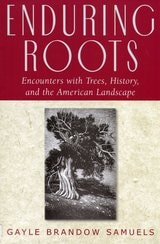
Enduring Roots
Encounters with Trees, History, and the American LandscapeGayle Brandow Samuels
Rutgers University Press, 2005
Trees are the grandest and most beautiful plant creations on earth. From their shade-giving, arching branches and strikingly diverse bark to their complex root systems, trees represent shelter, stability, place, and community as few other living objects can.
Enduring Roots tells the stories of historic American trees, including the oak, the apple, the cherry, and the oldest of the world’s trees, the bristlecone pine. These stories speak of our attachment to the land, of our universal and eternal need to leave a legacy, and demonstrate that the landscape is a gift, to be both received and, sometimes, tragically, to be destroyed.
Each chapter of this book focuses on a specific tree or group of trees and its relationship to both natural and human history, while exploring themes of community, memory, time, and place. Readers learn that colonial farmers planted marker trees near their homes to commemorate auspicious events like the birth of a child, a marriage, or the building of a house. They discover that Benjamin Franklin’s Newtown Pippin apples were made into a pie aboard Captain Cook’s Endeavour while the ship was sailing between Tahiti and New Zealand. They are told the little-known story of how the Japanese flowering cherry became the official tree of our nation’s capital—a tale spanning many decades and involving an international cast of characters. Taken together, these and many other stories provide us with a new ways to interpret the American landscape.
“It is my hope,” the author writes, “that this collection will be seen for what it is, a few trees selected from a great forest, and that readers will explore both—the trees and the forest—and find pieces of their own stories in each.”
Feminism and the Biological Body
Birke, Lynda
Rutgers University Press, 2000
What is a body? What are our perceptions of our inner bodies? How are these perceptions influenced?
In recent years, thinking about the body has become highly fashionable. However, the renewed focus, while certainly welcome, seems to always end at the corporeal surface. While recent sociological and feminist theory has made important claims about the process of cultural inscription on the body, and about the cultural representation of the body, what actually appears in this new theory seems to be, ironically, disembodied. If this newly theorized form has interiority, it is one that is explained predominantly through psychoanalysis. The physiological processes remain a mystery to be explained, if at all, only in the esoteric language of biomedicine.
As a trained biologist, Lynda Birke was frustrated by the gap between feminist cultural analysis and her own scientific background. In this book, she seeks to bridge this gap using ideas in anatomy and physiology to develop the feminist view that the biological body is socially and culturally constructed. Birke rejects the assumption that bodily function is somehow fixed and unchanging, claiming that biology offers more than just a deterministic narrative of how nature works. Feminism and the Biological Body brings natural science and feminist theory together and suggests that we need a new politics that includes, rather than denies, our flesh.
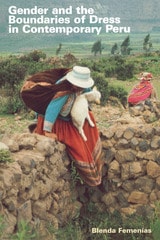
Gender and the Boundaries of Dress in Contemporary Peru
By Blenda Femenías
University of Texas Press, 2005
Set in Arequipa during Peru's recent years of crisis, this ethnography reveals how dress creates gendered bodies. It explores why people wear clothes, why people make art, and why those things matter in a war-torn land. Blenda Femenías argues that women's clothes are key symbols of gender identity and resistance to racism.
Moving between metropolitan Arequipa and rural Caylloma Province, the central characters are the Quechua- and Spanish-speaking maize farmers and alpaca herders of the Colca Valley. Their identification as Indians, whites, and mestizos emerges through locally produced garments called bordados. Because the artists who create these beautiful objects are also producers who carve an economic foothold, family workshops are vital in a nation where jobs are as scarce as peace. But ambiguity permeates all practices shaping bordados' significance. Femenías traces contemporary political and ritual applications, not only Caylloma's long-standing and violent ethnic conflicts, to the historical importance of cloth since Inca times.
This is the only book about expressive culture in an Andean nation that centers on gender. In this feminist contribution to ethnography, based on twenty years' experience with Peru, including two years of intensive fieldwork, Femenías reflects on the ways gender shapes relationships among subjects, research, and representation.
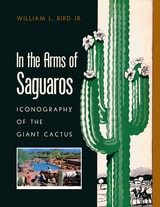
In the Arms of Saguaros
Iconography of the Giant CactusWilliam L. Bird Jr.
University of Arizona Press, 2023
In the Arms of the Saguaros shows how, from the botanical explorers of the nineteenth century to the tourism boosters in our own time, saguaros and their images have fulfilled attention-getting needs and expectations. Through text and lavish images, this work explores the saguaro’s growth into a western icon from the early days of the American railroad to the years bracketing World War II, when Sun Belt boosterism hit its zenith and proponents of tourism succeed in moving the saguaro to the center of the promotional frame.
This book explores how the growth of tourism brought the saguaro to ever-larger audiences through the proliferation of western-themed imagery on the American roadside. The history of the saguaro’s popular and highly imaginative range points to the current moment in which the saguaro touches us as a global icon in art, fashion, and entertainment.
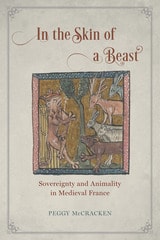
In the Skin of a Beast
Sovereignty and Animality in Medieval FrancePeggy McCracken
University of Chicago Press, 2017
Peggy McCracken discusses a range of literary texts and images from medieval France, including romances in which animal skins appear in symbolic displays of power, fictional explorations of the wolf’s desire for human domestication, and tales of women and snakes converging in a representation of territorial claims and noble status. These works reveal that the qualities traditionally used to define sovereignty—lineage and gender among them—are in fact mobile and contingent. In medieval literary texts, as McCracken demonstrates, human dominion over animals is a disputed model for sovereign relations among people: it justifies exploitation even as it mandates protection and care, and it depends on reiterations of human-animal difference that paradoxically expose the tenuous nature of human exceptionalism.
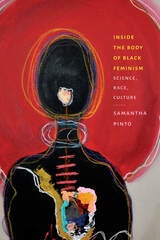
Inside the Body of Black Feminism
Science, Race, CultureSamantha Pinto
Duke University Press, 2026
Inside the Body of Black Feminism charts a cultural genealogy of antiracist and feminist engagement with some of the most objectified internal “parts” of racist medical and scientific inquiry: bones and blood, brains and hearts, guts and wombs. In a move counterintuitive to Black feminism’s emphasis on externalized representations of the body, Samantha Pinto reinterprets the relationship between embodiment, health, and race through cultural archives that reimagine the inside of the Black body. Working through materials such as medical textbooks, memoirs, data visualizations, museum displays, speculative fiction, and horror films, Pinto explores how a visually inaccessible corporeal interior becomes discernible and racialized in the public sphere. Inside the Body of Black Feminism engages expressive cultural work to ask how we might know the inside of the Black body differently through Black feminist theory and how scientific and medical inquiry might enable us to understand political subjectivity anew.
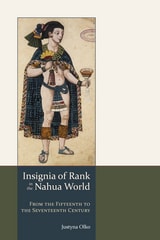
Insignia of Rank in the Nahua World
From the Fifteenth to the Seventeenth CenturyJustyna Olko
University Press of Colorado, 2014
This significant work reconstructs the repertory of insignia of rank and the contexts and symbolic meanings of their use, along with their original terminology, among the Nahuatl-speaking communities of Mesoamerica from the fifteenth through the seventeenth centuries. Attributes of rank carried profound symbolic meaning, encoding subtle messages about political and social status, ethnic and gender identity, regional origin, individual and community history, and claims to privilege.
Olko engages with and builds upon extensive worldwide scholarship and skillfully illuminates this complex topic, creating a vital contribution to the fields of pre-Columbian and colonial Mexican studies. It is the first book to integrate pre- and post-contact perspectives, uniting concepts and epochs usually studied separately. A wealth of illustrations accompanies the contextual analysis and provides essential depth to this critical work. Insignia of Rank in the Nahua World substantially expands and elaborates on the themes of Olko's Turquoise Diadems and Staffs of Office, originally published in Poland and never released in North America.
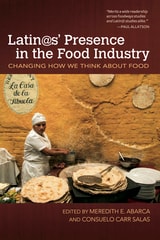
Latin@s' Presence in the Food Industry
Changing How We Think about FoodMeredith E. Abarca
University of Arkansas Press, 2016
The networks Latin@s create, the types of identities they fashion through food, and their relationship to the US food industry are analyzed to understand Latin@s as active creators of food-based communities, as distinctive cultural representations, and as professionals. This vibrant new collection acknowledges issues of labor conditions, economic politics, and immigration laws—structural vulnerabilities that certainly cannot be ignored—and strives to understand more fully the active and conscious ways that Latina@s create spaces to maneuver global and local food systems.
Medieval Identity Machines
Jeffrey J. Cohen
University of Minnesota Press, 2003
A provocative new approach to medieval culture
In Medieval Identity Machines, Jeffrey J. Cohen examines the messiness, permeability, and perversity of medieval bodies, arguing that human identity always exceeds the limits of the flesh. Combining critical theory with a rigorous reading of medieval texts, Cohen asks if the category “human” isn’t too small to contain the multiplicity of identities. As such, this book is the first to argue for a “posthuman” Middle Ages and to make extensive use of the philosophical writings of Gilles Deleuze to rethink the medieval.
Among the topics that Cohen covers are the passionate bond between men and horses in chivalric training; the interrelation of demons, celibacy, and colonialism in an Anglo-Saxon saint’s life; Lancelot’s masochism as envisioned by Chrétien de Troyes; the voice of thunder echoing from Margery Kempe; and the fantasies that sustained some dominant conceptions of race. This tour of identity—in all its fragility and diffusion—illustrates the centrality of the Middle Ages to theory as it enhances our understanding of self, embodiment, and temporality in the medieval world.
Molded in the Image of Changing Woman
Navajo Views on the Human Body and PersonhoodMaureen Trudelle Schwarz
University of Arizona Press, 1997
This book focuses on the complex interweaving of the cosmological, social, and bodily realms that Navajo people navigate in an effort alternately to control, contain, or harness the power manifested in various effects. Following the Navajo life-course from conception to puberty, Maureen Trudelle Schwarz explores the complex rules defining who or what can affect what or whom in specific circumstances as a means of determining what these effects tell us about the cultural construction of the human body and personhood for the Navajo.
Schwarz shows how oral history informs Navajo conceptions of the body and personhood, showing how these conceptions are central to an ongoing Navajo identity. She treats the vivid narratives of emergence life-origins as compressed metaphorical accounts, rather than as myth, and is thus able to derive from what individual Navajos say about the past their understandings of personhood in a worldview that is actually a viable philosophical system. Working with Navajo religious practitioners, elders, and professional scholars. Schwarz has gained from her informants an unusually firm grasp of the Navajo highlighted by the foregrounding of Navajo voices through excerpts of interviews. These passages enliven the book and present Schwarz and her Navajo consultants as real, multifaceted human beings within the ethnographic context.
Monstrous Youth
Transgressing the Boundaries of Childhood in the United StatesSara Austin
The Ohio State University Press, 2022
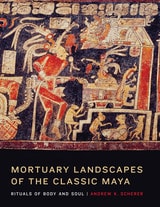
Mortuary Landscapes of the Classic Maya
Rituals of Body and SoulBy Andrew K. Scherer
University of Texas Press, 2015
From the tombs of the elite to the graves of commoners, mortuary remains offer rich insights into Classic Maya society. In Mortuary Landscapes of the Classic Maya: Rituals of Body and Soul, the anthropological archaeologist and bioarchaeologist Andrew K. Scherer explores the broad range of burial practices among the Maya of the Classic period (AD 250–900), integrating information gleaned from his own fieldwork with insights from the fields of iconography, epigraphy, and ethnography to illuminate this society’s rich funerary traditions.
Scherer’s study of burials along the Usumacinta River at the Mexican-Guatemalan border and in the Central Petén region of Guatemala—areas that include Piedras Negras, El Kinel, Tecolote, El Zotz, and Yaxha—reveals commonalities and differences among royal, elite, and commoner mortuary practices. By analyzing skeletons containing dental and cranial modifications, as well as the adornments of interred bodies, Scherer probes Classic Maya conceptions of body, wellness, and the afterlife.
Scherer also moves beyond the body to look at the spatial orientation of the burials and their integration into the architecture of Maya communities. Taking a unique interdisciplinary approach, the author examines how Classic Maya deathways can expand our understanding of this society’s beliefs and traditions, making Mortuary Landscapes of the Classic Maya an important step forward in Mesoamerican archeology.
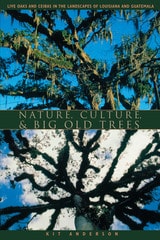
Nature, Culture, and Big Old Trees
Live Oaks and Ceibas in the Landscapes of Louisiana and GuatemalaBy Kit Anderson
University of Texas Press, 2004
Big old trees inspire our respect and even affection. The poet Walt Whitman celebrated a Louisiana live oak that was solitary "in a wide flat space, / Uttering joyous leaves all its life without a friend a lover near." Groves and alleys of live oaks remain as distinctive landscape features on Louisiana's antebellum plantations, while massive individuals still cast their shade over churches, graveyards, parks, and roads. Cajuns have adopted the "Evangeline Oak" as one of their symbols. And the attachment that Louisianians feel for live oaks is equaled by that of Guatemalans for ceibas, the national tree of Guatemala. Long before Europeans came to the Americas, the ceiba, tallest of all native species, was the Mayan world tree, the center of the universe. Today, many ceibas remain as centers of Guatemalan towns, spreading their branches over the central plaza and marketplace.
In this compelling book, Kit Anderson creates a vibrant portrait of the relationship between people and trees in Louisiana and Guatemala. Traveling in both regions, she examined and photographed many old live oaks and ceibas and collected the stories and symbolism that have grown up around them. She describes who planted the trees and why, how the trees have survived through many human generations, and the rich meanings they hold for people today. Anderson also recounts the natural history of live oaks and ceibas to show what human use of the landscape has meant for the trees. This broad perspective, blending cultural geography and natural history, adds a new dimension to our understanding of how big old trees and the places they help create become deeply meaningful, even sacred, for human beings.
Paris Concealed
Masks in the City of LightJames H. Johnson
University of Chicago Press, 2025
A comprehensive history of masks in France from the seventeenth to the nineteenth century.
Masks can conceal, disguise, or protect. They can guard status, inspire delight, or spread fear. They can also betray trust through insincerity, deceit, and hypocrisy. In Paris Concealed, historian James H. Johnson offers a sweeping history of masks both visible and unseen from the time of Louis XIV to the late nineteenth century, exploring the complex roles that masking and unmasking have played in the fashioning of our social selves.
Drawing from memoirs, novels, plays, and paintings, Paris Concealed explores the many domains in which masks have been decisive. Beginning in the court of Versailles, Johnson charts the genesis of courtly politesse and its widespread condemnation by Enlightenment philosophers and political thinkers. He describes strategies deployed in the era of the French Revolution for unmasking traitors and later efforts to penetrate criminal disguises through telltale marks on the body. He portrays the disruptive power of masks in public balls and carnivals and, with the coming of modernity, evokes their unsettling presence within the unconscious.
Compellingly written and beautifully illustrated, Paris Concealed lays bare the mask’s transformations, from marking one’s position in a static society to inspiring imagined identities in meritocracies to impeding the elusive search for one’s true self. To tell the history of masks, Johnson shows, is to tell the history of modern selfhood.
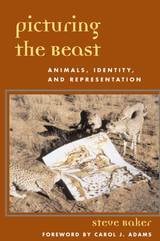
Picturing the Beast
Animals, Identity, and RepresentationSteve Baker
University of Illinois Press, 1993
Baker provides an animated discussion of how animals enter into the iconography of power through wartime depictions of the enemy, political cartoons, and sports symbolism. He examines a phenomenon he calls the "disnification" of animals, meaning a reduction of the animal to the trivial and stupid, and shows how books featuring talking animals underscore human superiority. He also discusses how his findings might inform the strategies of animal rights advocates seeking to call public attention to animal suffering and abuse. Until animals are extricated from the baggage of imposed images, Baker maintains, neither they nor their predicaments can be clearly seen.
For this edition, Baker provides a new introduction, specifically addressing an American audience, that touches on such topics as the Cow Parade, animal imagery in the presidential race, and animatronic animals in recent films.
Poetics of the Hive
Insect Metaphor in LiteratureCristopher Hollingsworth
University of Iowa Press, 2001
Precolumbian Water Management
Ideology, Ritual, and PowerEdited by Lisa J. Lucero and Barbara W. Fash
University of Arizona Press, 2006
Precolumbian Water Management examines water management from both economic and symbolic perspectives. Water management facilities, settlement patterns, shrines, and water-related imagery associated with civic-ceremonial and residential architecture provide evidence that water systems pervade all aspects of ancient society. Through analysis of such data, the contributors seek to combine an understanding of imagery and the religious aspects of water with its functional components, thereby presenting a unified perspective of how water was conceived, used, and represented in ancient greater Mesoamerica. The collection boasts broad chronological and geographical coverage—from the irrigation networks of Teotihuacan to the use of ritual water technology at Casas Grandes—that shows how procurement and storage systems were adapted to local conditions.
The articles consider the mechanisms that were used to build upon the sacredness of water to enhance political authority through time and space and show that water was not merely an essential natural resource but an important spiritual one as well, and that its manipulation was socially far more complex than might appear at first glance. As these papers reveal, an understanding of materials associated with water can contribute much to the ways that archaeologists study ancient cultural systems. Precolumbian Water Management underscores the importance of water management research and the need to include it in archaeological projects of all types.
Ready-Made Democracy
A History of Men's Dress in the American Republic, 1760-1860Michael Zakim
University of Chicago Press, 2003
By the early nineteenth century, homespun began to disappear from the American material landscape. Exhortations of industry and modesty, however, remained a common fixture of public life. In fact, they found expression in the form of the business suit. Here, Zakim traces the evolution of homespun clothing into its ostensible opposite—the woolen coats, vests, and pantaloons that were "ready-made" for sale and wear across the country. In doing so, he demonstrates how traditional notions of work and property actually helped give birth to the modern industrial order. For Zakim, the history of men's dress in America mirrored this transformation of the nation's social and material landscape: profit-seeking in newly expanded markets, organizing a waged labor system in the city, shopping at "single-prices," and standardizing a business persona.
In illuminating the critical links between politics, economics, and fashion in antebellum America, Ready-Made Democracy will prove essential to anyone interested in the history of the United States and in the creation of modern culture in general.
Sustainability and Water Management in the Maya World and Beyond
Jean T. Larmon
University Press of Colorado, 2021
The volume focuses primarily on the Precolumbian Maya but offers several analogous case studies outside the ancient Maya world that illustrate the pervasiveness of water’s role in sustainability, including an ethnographic study of the sustainability of small-scale, farmer-managed irrigation systems in contemporary New Mexico and the environmental consequences of Angkor’s growth into the world’s most extensive preindustrial settlement. The archaeological record offers rich data on past politics of climate change, while epigraphic and ethnographic data show how integrated the ideological, political, and environmental worlds of the Maya were.
While Sustainability and Water Management in the Maya World and Beyond stresses how lessons from the past offer invaluable insight into current approaches of adaptation, it also advances our understanding of those adaptations by making the inevitable discrepancies between past and present climate change less daunting and emphasizing the sustainable negotiations between humans and their surroundings that have been mediated by the changing climate for millennia. It will appeal to students and scholars interested in climate change, sustainability, and water management in the archaeological record.
Contributors: Mary Jane Acuña, Wendy Ashmore, Timothy Beach, Jeffrey Brewer, Christopher Carr, Adrian S. Z. Chase, Arlen F. Chase, Diane Z. Chase, Carlos R. Chiriboga, Jennifer Chmilar, Nicholas Dunning, Maurits W. Ertsen, Roland Fletcher, David Friedel, Robert Griffin, Joel D. Gunn, Armando Anaya Hernández, Christian Isendahl, David Lentz, Sheryl Luzzadder-Beach, Dan Penny, Kathryn Reese-Taylor, Michelle Rich, Cynthia Robin, Sylvia Rodríguez, William Saturno, Vernon Scarborough, Payson Sheets, Liwy Grazioso Sierra, Michael Smyth, Sander van der Leeuw, Andrew Wyatt
Tapping Out
PoemsNandi Comer
Northwestern University Press, 2020
The harsh realities of being migrant and immigrant, being birthright and oppressed, are as hard-pressed as the plancha move to the body. Each poem in Tapping Out is a “freestyle movement” of language and complexity put on full display, under the bright lights and roars of survival. Comer’s splendid and barbed, Detroit style of language melts the masks with searing words.

Tattoo
Bodies, Art, and Exchange in the Pacific and the WestNicholas Thomas, Anna Cole, and Bronwen Douglas, eds.
Duke University Press, 2005
The contributors examine the contexts in which Pacific tattoos were “discovered” by Europeans, track the history of the tattooing of Europeans visiting the region, and look at how Pacific tattooing was absorbed, revalued, and often suppressed by agents of European colonization. They consider how European art has incorporated tattooing, and they explore contemporary manifestations of Pacific tattoo art, paying particular attention to the different trajectories of Samoan, Tahitian, and Maori tattooing and to the meaning of present-day appropriations of tribal tattoos. New research has uncovered a fascinating visual archive of centuries-old tattoo images, and this richly illustrated volume includes a number of those—many published here for the first time—alongside images of contemporary tattooing in Polynesia and Europe. Tattoo offers a tantalizing glimpse into the plethora of stories and cross-cultural encounters that lie between the blood on a sailor’s backside in the eighteenth century and the hammering of a Samoan tattoo tool in the twenty-first.
Contributors. Peter Brunt, Anna Cole, Anne D’Alleva, Bronwen Douglas, Elena Govor, Makiko Kuwahara, Sean Mallon, Linda Waimarie Nikora, Mohi Rua, Cyril Siorat, Ngahuia Te Awekotuku, Nicholas Thomas, Joanna White
The Body Aesthetic
From Fine Art to Body ModificationTobin Siebers, Editor
University of Michigan Press, 2000
Generously and variously illustrated, this volume gathers together the work of literary critics and artists, classicists, art historians, and specialists on the history of the body, who survey the strangeness and variety with which the body has given human beings form. Richard Leppert traces how the representation of little girls responds directly to the cultural anxieties of modernity. René Girard plots how starvation becomes an art form, while Eric Gans surveys the contemporary phenomenon of body modification. Sander Gilman explores aesthetic surgery as a response to human unhappiness. Simon Goldhill discovers in the Roman empire the initial stirrings of institutions that focus on the spectacle of the body, and Cynthia S. Greig provides a glimpse of what the history of photography would look like if male nudes replaced female ones. Marion Jackson details how the different physical existence of the Inuit guides the way they make art. Joseph Grigely transforms aesthetics as usual by focusing on the disabled body, while Tobin Siebers describes the traumatic appeal in both fine art and the media of wounded flesh, whether human or animal.
The Body Aesthetic is a broad exercise in cultural studies and will address a variety of readers, from those interested in detailed, theoretical accounts of the body, to those interested in belles lettres, to those interested in fine art.
Tobin Siebers is Professor of English, University of Michigan.
The Human Animal in Western Art and Science
Martin Kemp
University of Chicago Press, 2007
From the lazy, fiddling grasshopper to the sneaky Big Bad Wolf, children’s stories and fables enchant us with their portrayals of animals who act like people. But the comparisons run both ways, as metaphors, stories, and images—as well as scientific theories—throughout history remind us that humans often act like animals, and that the line separating them is not as clear as we’d like to pretend.
Here Martin Kemp explores a stunning range of images and ideas to demonstrate just how deeply these underappreciated links between humans and other fauna are embedded in our culture. Tracing those interconnections among art, science, and literature, Kemp leads us on a dazzling tour of Western thought, from Aristotelian physiognomy and its influence on phrenology to the Great Chain of Being and Darwinian evolution. We learn about the racist anthropology underlying a familiar Degas sculpture, see paintings of a remarkably simian Judas, and watch Mowgli, the man-child from Kipling’s The Jungle Book, exhibit the behaviors of the beasts who raised him. Like a kaleidoscope, Kemp uses these stories to refract, reconfigure, and echo the essential truth that the way we think about animals inevitably inflects how we think about people, and vice versa.
Loaded with vivid illustrations and drawing on sources from Hesiod to La Fontaine, Leonardo to P. T. Barnum, The Human Animal in Western Art and Science is a fascinating, eye-opening reminder of our deep affinities with our fellow members of the animal kingdom.
The Human Body in the Age of Catastrophe
Brittleness, Integration, Science, and the Great WarStefanos Geroulanos and Todd Meyers
University of Chicago Press, 2018
In The Human Body in the Age of Catastrophe, Stefanos Geroulanos and Todd Meyers uncover a fascinating story of how medical scientists came to conceptualize the body as an integrated yet brittle whole. Responding to the harrowing experience of the Great War, the medical community sought conceptual frameworks to understand bodily shock, brain injury, and the vast differences in patient responses they occasioned. Geroulanos and Meyers carefully trace how this emerging constellation of ideas became essential for thinking about integration, individuality, fragility, and collapse far beyond medicine: in fields as diverse as anthropology, political economy, psychoanalysis, and cybernetics.
Moving effortlessly between the history of medicine and intellectual history, The Human Body in the Age of Catastrophe is an intriguing look into the conceptual underpinnings of the world the Great War ushered in.
The Memory of Bones
Body, Being, and Experience among the Classic MayaBy Stephen Houston, David Stuart, and Karl Taube
University of Texas Press, 2006
All of human experience flows from bodies that feel, express emotion, and think about what such experiences mean. But is it possible for us, embodied as we are in a particular time and place, to know how people of long ago thought about the body and its experiences? In this groundbreaking book, three leading experts on the Classic Maya (ca. AD 250 to 850) marshal a vast array of evidence from Maya iconography and hieroglyphic writing, as well as archaeological findings, to argue that the Classic Maya developed a coherent approach to the human body that we can recover and understand today.
The authors open with a cartography of the Maya body, its parts and their meanings, as depicted in imagery and texts. They go on to explore such issues as how the body was replicated in portraiture; how it experienced the world through ingestion, the senses, and the emotions; how the body experienced war and sacrifice and the pain and sexuality that were intimately bound up in these domains; how words, often heaven-sent, could be embodied; and how bodies could be blurred through spirit possession.
From these investigations, the authors convincingly demonstrate that the Maya conceptualized the body in varying roles, as a metaphor of time, as a gendered, sexualized being, in distinct stages of life, as an instrument of honor and dishonor, as a vehicle for communication and consumption, as an exemplification of beauty and ugliness, and as a dancer and song-maker. Their findings open a new avenue for empathetically understanding the ancient Maya as living human beings who experienced the world as we do, through the body.
The World of Roman Costume
Edited by Judith Lynn Sebesta and Larissa Bonfante
University of Wisconsin Press, 1994
This Ecstatic Nation
The American Landscape and the Aesthetics of PatriotismTerre Ryan
University of Massachusetts Press, 2011
Terre Ryan examines this phenomenon by exploring the overlapping trails of national mythology, landscape aesthetics, patriotic discourse, and public policy. Tracing her journeys around bombing grounds in Nevada, logging sites in Oregon, and energy fields in Wyoming, she argues that business and government agencies often frame commercial projects and national myths according to nineteenth-century beliefs about landscape and bounty. Advertisements and political promotional materials following this aesthetic framework perpetuate frontier-era ideas about the environment as commodity, scenery, and cultural trashlands. Transmitted through all types of media, nineteenth-century perspectives on landscape continue to inform mainstream perceptions of the environment, environmental policies, and representations of American patriotism.
Combining personal narrative with factual reportage, political and cultural critique, and historical analysis, Ryan reframes the images we see every day and places them into a larger national narrative.
Uncanny Creatures
Doll Thinking in Modern German CultureChristophe Koné
University of Michigan Press, 2024
Uncanny Creatures then explores how this unusual interest in human-like figures continues a long tradition of thought devoted to conceptualizing “things,” from Immanuel Kant’s theory of the thing-in-itself to Martin Heidegger’s lecture on the thing, and Eduard Mörike or Rainer Maria Rilke’s thing-poems. Because dolls occupy a liminal space—not quite things and more than mere objects—they appear as uncanny creatures which have held a fascination for writers, thinkers, and artists alike. Uncanny Creatures moves past the Freudian discourse of fetishism to propose a new reading of doll artifacts in German culture centered on their ability to evoke a feeling of uncertainty and unsettlement in the viewer.
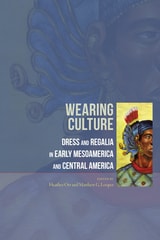
Wearing Culture
Dress and Regalia in Early Mesoamerica and Central AmericaHeather Orr
University Press of Colorado, 2014
Documenting the elaborate practices of costume, adornment, and body modification in Panama, Costa Rica, Nicaragua, Honduras, Oaxaca, the Soconusco region of southern Mesoamerica, the Gulf Coast Olmec region (Olman), and the Maya lowlands, this book demonstrates that adornment was used as a tool for communicating status, social relationships, power, gender, sexuality, behavior, and political, ritual, and religious identities. Despite considerable formal and technological variation in clothing and ornamentation, the early indigenous cultures of these regions shared numerous practices, attitudes, and aesthetic interests. Contributors address technological development, manufacturing materials and methods, nonfabric ornamentation, symbolic dimensions, representational strategies, and clothing as evidence of interregional sociopolitical exchange.
Focusing on an important period of cultural and artistic development through the lens of costuming and adornment, Wearing Culture will be of interest to scholars of pre-Hispanic and pre-Columbian studies.
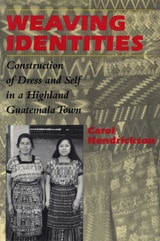
Weaving Identities
Construction of Dress and Self in a Highland Guatemala TownBy Carol Hendrickson
University of Texas Press, 1995
Traje, the brightly colored traditional dress of the highland Maya, is the principal visual expression of indigenous identity in Guatemala today. Whether worn in beauty pageants, made for religious celebrations, or sold in tourist markets, traje is more than "mere cloth"—it plays an active role in the construction and expression of ethnicity, gender, education, politics, wealth, and nationality for Maya and non-Maya alike.
Carol Hendrickson presents an ethnography of clothing focused on the traje—particularly women's traje—of Tecpán, Guatemala, a bi-ethnic community in the central highlands. She covers the period from 1980, when the recent round of violence began, to the early 1990s, when Maya revitalization efforts emerged.
Using a symbolic analysis informed by political concerns, Hendrickson seeks to increase the value accorded to a subject like weaving, which is sometimes disparaged as "craft" or "women's work." She examines traje in three dimensions—as part of the enduring images of the "Indian," as an indicator of change in the human life cycle and cloth production, and as a medium for innovation and creative expression.
From this study emerges a picture of highland life in which traje and the people who wear it are bound to tradition and place, yet are also actively changing and reflecting the wider world. The book will be important reading for all those interested in the contemporary Maya, the cultural analysis of material culture, and the role of women in culture preservation and change.
Where the Sky Touched the Earth
The Cosmological Landscapes of the SouthwestDon Lago
University of Nevada Press, 2017
Nowhere else in the world is the link between earth and sky so powerful. Lago witnesses a solar eclipse over the Grand Canyon, climbs primeval volcanos, and sees the universe in tree rings. Through ageless Native American ceremonies, modern telescopes, and even dreams of flying saucers, Lago, who is not only a poet but a true philosopher of science, strives to find order and meaning in the world and brings out the Southwest’s beauty and mystery.
While Rome Burned
Fire, Leadership, and Urban Disaster in the Roman Cultural ImaginationVirginia M. Closs
University of Michigan Press, 2020
Working in the increasingly repressive environment of the early principate, Roman authors frequently employed “figured” speech and mythopoetic narratives to address politically risky topics. In response to shifting political and social realities, the literature of the early imperial period reimagines and reanimates not just historical fires, but also archetypal and mythic representations of conflagration. Throughout, the author engages critically with the growing subfield of disaster studies, as well as with theoretical approaches to language, allusion, and cultural memory.
World Below
Body and Cosmos in Otomí Indian RitualJacques Galinier
University Press of Colorado, 2004
Drawing upon both Freud and theories of the carnivalesque, Galinier argues that the "world below" (the lower half of the body) provides the foundation for an indigenous metapsychology that is at once very close to and very far away from the Freudian conceptual apparatus.