Results by title
33 books match the query 'U . S'

A Journey Around Our America
A Memoir on Cycling, Immigration, and the Latinoization of the U.S.By Louis G. Mendoza
University of Texas Press, 2012
Immigration and the growing Latino population of the United States have become such contentious issues that it can be hard to have a civil conversation about how Latinoization is changing the face of America. So in the summer of 2007, Louis Mendoza set out to do just that. Starting from Santa Cruz, California, he bicycled 8,500 miles around the entire perimeter of the country, talking to people in large cities and small towns about their experiences either as immigrants or as residents who have welcomed—or not—Latino immigrants into their communities. He presented their enlightening, sometimes surprising, firsthand accounts in Conversations Across Our America: Talking About Immigration and the Latinoization of the United States.
Now, in A Journey Around Our America, Mendoza offers his own account of the visceral, emotional, intellectual, and spiritual dimensions of traveling the country in search of a deeper, broader understanding of what it means to be Latino in the United States in the twenty-first century. With a blend of first- and second-person narratives, blog entries, poetry, and excerpts from conversations he had along the way, Mendoza presents his own aspirations for and critique of social relations, political ruminations, personal experiences, and emotional vulnerability alongside the stories of people from all walks of life, including students, activists, manual laborers, and intellectuals. His conversations and his experiences as a Latino on the road reveal the multilayered complexity of Latino life today as no academic study or newspaper report ever could.

Accent On Privilege
English Identities & Anglophilia In The U.S.Katharine Jones
Temple University Press, 2001
The political and cultural ties between England and the US act as a backdrop for the identity negotiations of these English people, many of whom do not even consider themselves to be immigrants. This unique exploration of the workings of white privilege offers an important new understanding of the paradoxes of how class, gender, and race are formed in the US and, by implication, in the UK.

Biomedicalization
Technoscience, Health, and Illness in the U.S.Adele E. Clarke, Laura Mamo, Jennifer Ruth Fosket, Jennifer R. Fishman, and Janet K. Shim, eds.
Duke University Press, 2010
Contributors. Natalie Boero, Adele E. Clarke, Jennifer R. Fishman, Jennifer Ruth Fosket, Kelly Joyce, Jonathan Kahn, Laura Mamo, Jackie Orr, Elianne Riska, Janet K. Shim, Sara Shostak
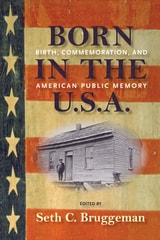
Born in the U.S.A.
Birth, Commemoration, and American Public MemorySeth C. Bruggeman
University of Massachusetts Press, 2012
Beyond asking why it is that Americans care about birthplaces and how they choose which ones to commemorate, Born in the U.S.A. offers insights from historians, curators, interpretive specialists, and others whose experience speaks directly to the challenges of managing historical sites. Each essay points to new ways of telling old stories at these mainstays of American memory. The case of the modern house museum receives special attention in a provocative concluding essay by Patricia West.
In addition to West and the editor, contributors include Christine Arato, Dan Currie, Keith A. Erekson, David Glassberg, Anna Thompson Hajdik, Zachary J. Lechner, Paul Lewis, Hilary Iris Lowe, Cynthia Miller, Laura Lawfer Orr, Robert Paynter, Angela Phelps, and Paul Reber.

Born in the U.S.A.
Bruce Springsteen in American Life, 3rd edition, Revised and ExpandedJim Cullen
Rutgers University Press, 2024
This third edition of Born in the U.S.A. is fully revised and updated, incorporating discussion of Springsteen’s wide output in the 21st century. While addressing Springsteen’s responses to events like 9/11, it also considers the evolution of his attitudes towards religion, masculinity, and his relationship with his audience. Whether a serious Springsteen fan or simply an observer of American popular culture, Born in the U.S.A. will give you a new appreciation for The Boss.

Competitiveness Matters
Industry and Economic Performance in the U.S.Candace Howes and Ajit Singh, Editors
University of Michigan Press, 2000
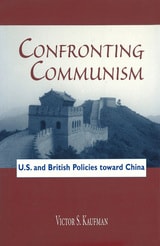
Confronting Communism
U.S. and British Policies toward ChinaVictor S. Kaufman
University of Missouri Press, 2001
In Confronting Communism, Victor S. Kaufman examines how the United States and Great Britain were able to overcome serious disagreements over their respective approaches toward Communist China. Providing new insight into the workings of alliance politics, specifically the politics of the Anglo- American alliance, the book covers the period from 1948—a year before China became an area of contention between London and Washington—through twenty years of division to the gradual resolution of Anglo-American divergences over the People's Republic of China beginning in the mid-1960s. It ends in 1972, the year of President Richard Nixon's historic visit to the People's Republic, and also the year that Kaufman sees as bringing an end to the Anglo-American differences over China.
Kaufman traces the intricate and subtle pressures each ally faced in determining how to approach Beijing. The British aspect is of particular interest because Britain viewed itself as being within "three circles": Western Europe, the Atlantic alliance, and the Commonwealth. Important as well to British policy with respect to China was the concern about being dragged into another Korean-style conflict. The impact of decisions on these "circles," as well as the fear of another war, appeared time and again in Britain's decision making.
Kaufman shows how the alliance avoided division over China largely because Britain did the majority of the compromising. Reliant upon the United States militarily and financially, most U.K. officials made concessions to their Washington counterparts. Readers of Confronting Communism will come away with a better understanding of alliance politics. They will learn that such decision making, for both Great Britain and the United States, was a highly complex process, one that posed serious challenges to the Anglo-American alliance. Despite those challenges, accord between London and Washington prevailed.

Céline, U.S.A., Volume 93
Alice Kaplan and Philippe Roussin, editors
Duke University Press, 0
From Identity To Politics
Lesbian & Gay Movements In The U.S.Craig Rimmerman
Temple University Press, 2001
Enriched by eight years of interviews in Washington, D.C. and New York City, and by the author's experience as a Capitol Hill staffer, From Identity to Politics will provoke discussion in classrooms and caucus rooms across the United States.
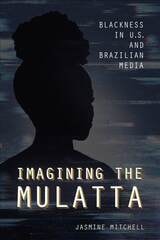
Imagining the Mulatta
Blackness in U.S. and Brazilian MediaJasmine Mitchell
University of Illinois Press, 2020
Jasmine Mitchell investigates the development and exploitation of the mulatta figure in Brazilian and U.S. popular culture. Drawing on a wide range of case studies, she analyzes policy debates and reveals the use of mixed-Black female celebrities as subjects of racial and gendered discussions. Mitchell also unveils the ways the media moralizes about the mulatta figure and uses her as an example of an ”acceptable” version of blackness that at once dreams of erasing undesirable blackness while maintaining the qualities that serve as outlets for interracial desire.
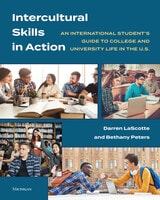
Intercultural Skills in Action
An International Student's Guide to College and University Life in the U.S.Darren LaScotte and Bethany Peters
University of Michigan Press, 2021
Although traditional ESL/EFL textbooks have primarily introduced cultural topics at a knowledge level only, this textbook is designed to create meaningful opportunities for students to reflect on and practice intercultural skills in ways that are relatable in their daily lives and that can lead to a more satisfying U.S. academic experience.
Each unit opens with a discovery activity that serves as a springboard for the unit and introduces the topic in an engaging way. Chapters feature academic content that builds expands knowledge of intercultural skills, plus opportunities for students to pause and reflect on how to apply what they are learning to their own intercultural experiences. The activities ask students to respond with short written reflections and practice oral skills through discussion in pairs and small groups. Each unit closes with an activity that requires students to use higher-order thinking skills to create, evaluate, and/or analyze cultural information gathered from college and university settings in the form of surveys, interviews, observations, or internet research and then report on what they have learned.
The intended audiences for this book are international students studying in Intensive English Programs, in university bridge or pathway programs, or at colleges and universities in the United States. It may also be used by new-student orientation programs or by student services offices that provide intercultural training for students, staff, and faculty who work with international students.

It's Our Military Too
Women and the U.S Militaryedited by Judith Hicks Stiehm
Temple University Press, 1996
In the last twenty-five years the U.S. military has seen the abolition of women's separate corps, the appointment of women generals, and an unprecedented increase in the ratio of women to men. Also, women are now permitted to serve on combat planes and ships. Despite these developments, most civilians know very little about women in the military.
This collection includes unusual accounts by women on active duty, retired officers, women who have worked for the armed forces in a civilian capacity, and civilian academics. The book offers insights on a variety of pressing issues including minority women, lesbians, combat, the role of gender in weapons design, and the changing mission of the military.
Through personal accounts and commentaries, this book dispels many of the myths about women and the military and explores the reasons for the persistence of misconceptions in the face of increased female participation. This comprehensive effort will be of interest to anyone who wants to know the truth about women in the armed forces and will be a wake-up call to women who feel that the military is irrelevant to them.
Contributors: Rhonda Cornum, Virginia Solms, Billie Mitchell, Connie L. Reeves, Brenda L. Moore, Nina Richman-Loo, Rachel Weber, Lucinda Joy Peach, M. C. Devilbiss, Carol Burke, Susan Jeffords, Miriam Cooke.

Jim Crow Guide to the U.S.A.
The Laws, Customs and Etiquette Governing the Conduct of Nonwhites and Other Minorities as Second-Class CitizensStetson Kennedy
University of Alabama Press, 2011
“A history of the United States that is almost incredible.” —Jean-Paul Sartre, Les Temps Modernes
Jim Crow Guide to the U.S.A. by Stetson Kennedy is a bold exposé of America’s institutionalized racism, originally published in 1959 and hailed as a landmark in civil rights literature. With unflinching clarity, Kennedy documents the laws, customs, and social codes that relegated nonwhite citizens to second-class status under the Jim Crow system. From the mistreatment of Native Americans to the exclusionary immigration policies targeting Asians and Africans, the book maps the presence of race-based politics across every facet of American life—housing, education, employment, and even burial.
What makes this work especially influential is its international resonance. The famed French existentialist Jean-Paul Sartre championed the book’s publication in Europe, recognizing its power to illuminate the contradictions between American democratic ideals and racial realities. Sartre’s endorsement helped position the book as a global indictment of racial injustice, aligning it with anti-colonial and human rights movements worldwide. Provocative, meticulously researched, and deeply human, Jim Crow Guide to the U.S.A. remains a vital historical document and a call to conscience. It is not merely a guide—it is a mirror held up to a nation, reflecting truths that later generations were called on to address.
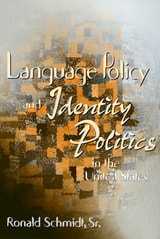
Language Policy & Identity In The U.S.
Ronald Schmidt, Sr.
Temple University Press, 2000
This book lays out the two approaches to language policy -- linguistic assimilation and linguistic pluralism -- in clear and accessible terms. Filled with examples and narratives, it provides a readable overview of the U.S. "culture wars" and explains why the conflict has just now emerged as a major issue in the United States.
Professor Schmidt examines bilingual education in the public schools, "linguistic access" rights to public services, and the designation of English as the United States' "official" language. He illuminates the conflict by describing the comparative, theoretical, and social contexts for the debate. The source of the disagreement, he maintains, is not a disagreement over language per se but over identity and the consequences of identity for individuals, ethnic groups, and the country as a whole. Who are "the American people"? Are we one national group into which newcomers must assimilate? Or are we composed of many cultural communities, each of which is a unique but integral part of the national fabric? This fundamental point is what underlies the specific disputes over language policy. This way of looking at identity politics, as Professor Schmidt shows, calls into question the dichotomy between "material interest" politics and "symbolic" politics in relation to group identities.
Not limited to describing the nature and context of the language debate, Language Policy and Identity Politics in the United States reaches the conclusion that a policy of linguistic pluralism, coupled with an immigrant settlement policy and egalitarian economic reforms, will best meet the aims of justice and the common good. Only by attacking both the symbolic and material effects of racialization will the United States be able to attain the goals of social equality and national harmony.
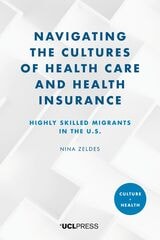
Navigating the Cultures of Health Care and Health Insurance
Highly Skilled Migrants in the U.S.Nina Zeldes
University College London, 2023
What are the barriers preventing migrants from accessing and successfully using health care in their new home country? Do these barriers vary based on the migrants’ country of origin? And are they a problem for highly skilled migrants, who often have well-paid jobs and health insurance provided by their employers? Based on field research conducted in the Washington DC area, Navigating the Cultures of Health Care and Health Insurance brings together mixed methods, qualitative, and quantitative approaches to the study of foreign patients’ utilization and assessment of health care in the United States. Through interviews with both health care providers and patients, attitudes toward health insurance and medical treatment are compared for migrants from three countries with very different cultural backgrounds and health insurance systems: Germany, India, and Japan.
Party in the U.S.A.
A Song by Miley CyrusMike Barthel
Duke University Press, 2027

Pluralist Universalism
An Asian Americanist Critique of U.S. and Chinese MulticulturalismsWen Jin
The Ohio State University Press, 2012
Pluralist Universalism: An Asian Americanist Critique of U.S. and Chinese Multiculturalisms by Wen Jin is an extended comparison of U.S. and Chinese multiculturalisms during the post–Cold War era. Her book situates itself at the intersection of Asian American literary critique and the growing field of comparative multiculturalism. Through readings of fictional narratives that address the issue of racial and ethnic difference in both national contexts simultaneously, the author models a “double critique” framework for U.S.–Chinese comparative literary studies.

Preventing Child Maltreatment in the U.S.
American Indian and Alaska Native PerspectivesRoyleen J Ross
Rutgers University Press, 2022
This book is part of a concentrated series of books that examines child maltreatment across minoritized, cultural groups.Specifically, this volume addresses American Indian and Alaska Native populations. However, in an effort to contextualize the experiences of 574 federally recognized tribes and 50+ state recognized tribes, as well as villages, the authors focus on populations within rural and remote regions and discuss the experiences of some tribal communities throughout US history. It should be noted that established research has primarily drawn attention to the pervasive problems impacting Indigenous individuals, families, and communities. Aligned with an attempt to adhere to a decolonizing praxis, the authors share information in a strength-based framework for the Indigenous communities discussed within the text. The authors review federally funded programs (prevention, intervention, and treatment) that have been adapted for tribal communities (e.g., Safecare) and include cultural teachings that address child maltreatment. The intention of this book is to inform researchers, practitioners, policy makers, and advocates about the current state of child maltreatment from an Indigenous perspective.
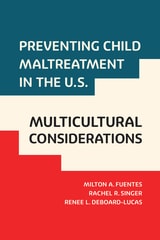
Preventing Child Maltreatment in the U.S.
Multicultural ConsiderationsMilton A Fuentes
Rutgers University Press, 2022
Preventing Child Maltreatment in the U.S.
The Black Community PerspectiveMelissa Phillips
Rutgers University Press, 2022
Preventing Child Maltreatment in the U.S.
The Latinx Community PerspectiveEsther J. Calzada
Rutgers University Press, 2022

Regionalism and Rivalry
Japan and the U.S. in Pacific AsiaEdited by Jeffrey A. Frankel and Miles Kahler
University of Chicago Press, 1993
The authors contend that although intraregional trade in East Asia is growing rapidly, a trade bloc is not necessarily forming. They show that the trade increase can be explained entirely by factors independent of discriminatory trading arrangements, such as the rapid growth of East Asian economies. Other chapters look in detail at cases of Japanese direct investment in Southeast Asia and find little evidence of attempts by Japan to use the power of its multinational corporations for political purposes. A third group of papers attempt to gauge Japan's leadership characteristics. They focus on Japan's "technology ideology," its contributions to international public goods, international monetary cooperation, and economic liberalization in East Asia.
Revolution Around the Corner
Voices from the Puerto Rican Socialist Party in the U.S.Edited by José E. Velázquez, Carmen V. Rivera, and Andrés Torres
Temple University Press, 2021
Active from the late 1960s until the mid-1990s, the U.S. branch of the Puerto Rican Socialist Party (PSP) worked simultaneously to build support for Puerto Rican independence and to engage in radical social change within the United States.
Revolution Around the Corner chronicles this unique social movement, describing various mass campaigns and the inner workings of the organization. The editors and contributors—all former members, leaders, and supporters of the PSP—offer a range of views and interpretations of their experience.
Combining historical accounts, personal stories, interviews, and retrospective analysis, Revolution Around the Corner examines specific actions such as the National Day of Solidarity (El Acto Nacional), the Bicentennial without Colonies, the Save Hostos struggle, and the Vieques campaign. Testimonies recount the pros and cons of membership diversity, as well as issues of loyalty and compañerismo. In addition, essays describe the PSP’s participation in coalitions and alliances with Left and progressive movements. The book concludes with the editors’ reflections on the PSP’s achievements, mistakes, and contributions.

Second Wounds
Victims’ Rights and the Media in the U.S.Carrie A. Rentschler
Duke University Press, 2011
Shaping Language Policy in the U.S.
The Role of Composition StudiesScott Wible
Southern Illinois University Press, 2013
In Shaping Language Policy in the U.S.: The Role of Composition Studies, author Scott Wible explores the significance and application of two of the Conference on College Composition and Communication’s key language policy statements: the 1974 Students’ Right to Their Own Language resolution and the 1988 National Language Policy. Wible draws from a wealth of previously unavailable archived material and professional literature to offer for the first time a comprehensive examination of these policies and their legacies that continue to shape the worlds of rhetoric, politics, and composition.
Wible demonstrates the continued relevance of the CCCC’s policies, particularly their role in influencing the recent, post-9/11 emergence of a national security language policy. He discusses in depth the role the CCCC’s language policy statements can play in shaping the U.S. government’s growing awareness of the importance of foreign language education, and he offers practical discussions of the policies’ pedagogical, professional, and political implications for rhetoric and composition scholars who engage contemporary debates about the politics of linguistic diversity and language arts education in the United States. Shaping Language Policy in the U.S. reveals the numerous ways in which the CCCC language policies have usefully informed educators’ professional practices and public service and investigates how these policies can continue to guide scholars and teachers in the future.

Sins Of The Parents
Politics Of National Apologies In The U.S.Brian A. Weiner
Temple University Press, 2005
Speaking in Social Contexts
Communication for Life and Study in the U.S.Robyn Brinks Lockwood
University of Michigan Press, 2018
The text provides language to use for a variety of functions as they might related to life on a university campus: offering greetings and goodbyes, making introductions, giving opinions, agreeing and disagreeing, using the phone, offering assistance, asking for advice, accepting and declining invitations, giving and receiving compliments, complaining, giving congratulations, expressing condolences, and making small talk. Users are also taught to think beyond the words and to interpret intonation and stress (how things sound).
Each of the 10 units includes discussion prompts, language lessons, practice activities, get acquainted tasks (interacting with native speakers), and analysis opportunities (what did they discover and what can they apply?).
The Borders Within
Encounters Between Mexico and the U.S.Douglas Monroy
University of Arizona Press, 2008
Douglas Monroy, a noted Mexican American historian, has for many years pondered the historical and cultural intertwinings of the two nations. Here, in beautifully crafted essays, he reflects on some of the many ways in which the citizens of the two countries have misunderstood each other.
Putting himself— and his own quest for understanding—directly into his work, he contemplates the missions of California; the differences between “liberal” and “traditional” societies; the meanings of words like Mexican, Chicano, and Latino; and even the significance of avocados and bathing suits. In thought-provoking chapters, he considers why Native Americans didn’t embrace Catholicism, why NAFTA isn’t working the way it was supposed to, and why Mexicans and their neighbors to the north tell themselves different versions of the same historical events.
In his own thoughtful way, Monroy is an explorer. Rather than trying to conquer new lands, however, his goal is to gain new insights. He wants to comprehend two cultures that are bound to each other without fully recognizing their bonds. Along with Monroy, readers will discover that borders, when we stop and really think about it, are drawn more deeply in our minds than on any maps.
The Fundamentals of Campaign Finance in the U.S.
Why We Have the System We HaveDiana Dwyre and Robin Kolodny
University of Michigan Press, 2024
The Fundamentals of Campaign Finance in the U.S. takes care to situate the campaign finance system in the context of the broader U.S. political and economic system. Dwyre and Kolodny offer readers a brief tour through the development of the campaign finance regulatory structure, highlighting the Supreme Court’s commitment to free speech over political equality from Buckley v. Valeo (1976) through the passage of the Bipartisan Campaign Reform Act (BCRA, 2002). They also examine the driving force behind campaign finance reform—corruption—through historical, transactional, and institutional perspectives. While diving into the insufficiency of the disclosure and enforcement of campaign finance laws and calling attention to multiple federal agencies, including the Securities and Exchange Commission, the Federal Communications Commission, the Internal Revenue Service, and (principally) the Federal Election Commission, the authors show how a narrow view on campaign finance makes change difficult and why reforms often have limited success. By examining the fundamentals, Dwyre and Kolodny show the difficulties of changing a political system whose candidates have always relied on private funding of campaigns to one that guarantees free speech rights while minimizing concerns of corruption.
Transnational Radicals
Italian Anarchists in Canada and the U.S., 1915-1940Travis Tomchuk
University of Manitoba Press, 2015
Western Ceramic Traditions
Prehistoric and Historic Native American Ceramics of the Western U.S.Edited by Suzanne Griset
University of Utah Press, 2021
This volume is dedicated to studies of plainwares—the undecorated ceramics that make up the majority of prehistoric ceramic assemblages worldwide. Early analyses of ceramics focused on changes in decorative design elements to establish chronologies and cultural associations. With the development of archaeometric techniques that allow direct dating of potsherds and identification of their elemental composition and residues, plainwares now provide a new source of information about the timing, manufacture, distribution, and use of ceramics.
This book investigates plainwares from the far west, stretching into the Great Basin and the northwestern and southwestern edges of Arizona. Contributors use and explain recent analytical methods, including neutron activation, electron microprobe analysis, and thin-section optical mineralogy. They examine native ceramic traditions and how they were influenced by the Spanish mission system, and they consider the pros and cons of past approaches to ware typology, presenting a vision of how plainware analysis can be improved by ignoring the traditional “typological” approach of early ceramicists working with decorated wares.
This work provides a much-needed update to plainware studies, with new hypotheses and data that will help set the stage for future research.
When States Kill
Latin America, the U.S., and Technologies of TerrorEdited by Cecilia Menjívar and Néstor Rodríguez
University of Texas Press, 2005
Since the early twentieth century, technological transfers from the United States to Latin American countries have involved technologies of violence for social control. As the chapters in this book illustrate, these technological transfers have taken various forms, including the training of Latin American military personnel in surveillance and torture and the provision of political and logistic support for campaigns of state terror. The human cost for Latin America has been enormous—thousands of Latin Americans have been murdered, disappeared, or tortured, and whole communities have been terrorized into silence.
Organized by region, the essays in this book address the topic of state-sponsored terrorism in a variety of ways. Most take the perspective that state-directed political violence is a modern development of a regional political structure in which U.S. political interests weigh heavily. Others acknowledge that Latin American states enthusiastically received U.S. support for their campaigns of terror. A few see local culture and history as key factors in the implementation of state campaigns of political violence. Together, all the essays exemplify how technologies of terror have been transferred among various Latin American countries, with particular attention to the role that the United States, as a "strong" state, has played in such transfers.
Youth Who Trade Sex in the U.S.
Intersectionality, Agency, and VulnerabilityCarisa R. Showden and Samantha Majic
Temple University Press, 2018
When cases of domestic minor sex trafficking (DMST) by predatory men are reported in the media, it is often presented that a young, innocent girl has been abused by bad men with their demand for sex and profit. This narrative has shaped popular understandings of young people in the commercialized sex trades, sparking new policy responses. However, the authors of Youth Who Trade Sex in the U.S. challenge this dominant narrative as incomplete. Carisa Showden and Samantha Majic investigate young people’s engagement in the sex trades through an intersectional lens.
The authors examine the dominant policy narrative’s history and the political circumstances generating its emergence and current form. With this background, Showden and Majic review and analyze research published since 2000 about young people who trade sex since 2000 to develop an intersectional “matrix of agency and vulnerability” designed to improve research, policy, and community interventions that center the needs of these young people. Ultimately, they derive an understanding of the complex reality for most young people who sell or trade sex, and are committed to ending such exploitation.