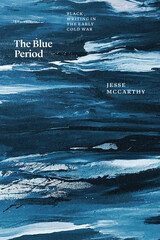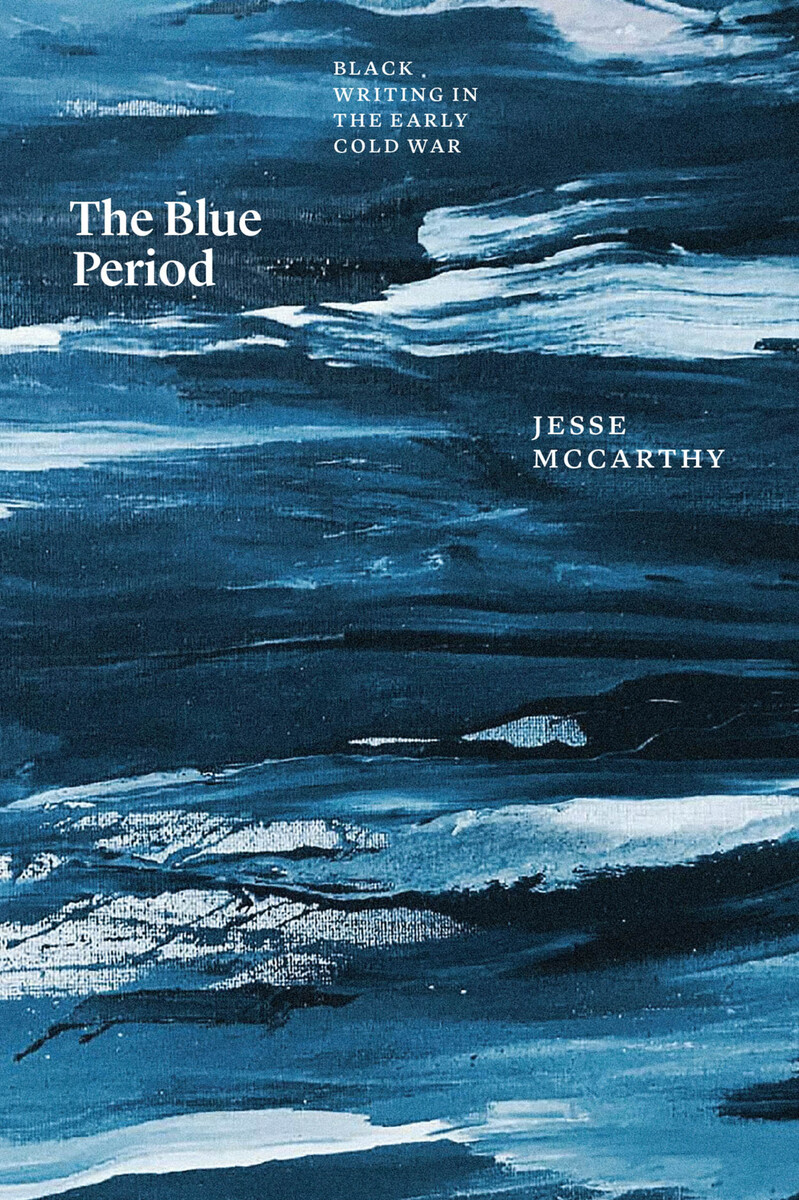
The Blue Period: Black Writing in the Early Cold War
University of Chicago Press, 2024
Cloth: 978-0-226-83037-7 | Paper: 978-0-226-83217-3 | eISBN: 978-0-226-83218-0 (all)
Library of Congress Classification PS153.B53M33 2024
Dewey Decimal Classification 810.98960730904
Cloth: 978-0-226-83037-7 | Paper: 978-0-226-83217-3 | eISBN: 978-0-226-83218-0 (all)
Library of Congress Classification PS153.B53M33 2024
Dewey Decimal Classification 810.98960730904
ABOUT THIS BOOK | AUTHOR BIOGRAPHY | REVIEWS | TOC | REQUEST ACCESSIBLE FILE
ABOUT THIS BOOK
Addresses the political and aesthetic evolution of African American literature and its authors during the Cold War, an era McCarthy calls “the Blue Period.”
In the years after World War II, to be a black writer was to face a stark predicament. The contest between the Soviet Union and the United States was a global one—an ideological battle that dominated almost every aspect of the cultural agenda. On the one hand was the Soviet Union, espousing revolutionary communism that promised egalitarianism while being hostile to conceptions of personal freedom. On the other hand was the United States, a country steeped in racial prejudice and the policies of Jim Crow.
Black writers of this time were equally alienated from the left and the right, Jesse McCarthy argues, and they channeled that alienation into remarkable experiments in literary form. Embracing racial affect and interiority, they forged an aesthetic resistance premised on fierce dissent from both US racial liberalism and Soviet communism. From the end of World War II to the rise of the Black Power movement in the 1960s, authors such as Richard Wright, James Baldwin, Gwendolyn Brooks, and Paule Marshall defined a distinctive moment in American literary culture that McCarthy terms the Blue Period.
In McCarthy’s hands, this notion of the Blue Period provides a fresh critical framework that challenges long-held disciplinary and archival assumptions. Black writers in the early Cold War went underground, McCarthy argues, not to depoliticize or liberalize their work, but to make it more radical—keeping alive affective commitments for a future time.
See other books on: African American authors | American literature | Black Writing | Cold War in literature | Early Cold War
See other titles from University of Chicago Press