
 A SCHOLARLY BOOK REPOSITORY
236 start with A start with A







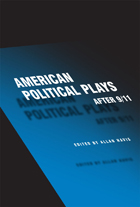
American Political Plays after 9/11 is a diverse collection of bold, urgent, and provocative plays that respond to the highly charged, post 9/11 political landscape. Sparked by the terrorist attacks of September 11, 2001, and subsequently fueled by a series of controversial events—the Iraq war, the passing and enforcement of the U.S.A. Patriot Act, and the revelation of torture and other scandals at the Abu Ghraib prison—American political theater is currently experiencing a surge in activity. The plays in this collection include The Guys by Anne Nelson, At the Vanishing Point by Naomi Iizuka, The Venus de Milo Is Armed by Kia Corthron, Back of the Throat by Yusseff El Guindi, Three Nights in Prague by Allan Havis, and Question 27, Question 28 by Chay Yew.
The characters range from a New York City fire captain trying to respectfully memorialize eight of his lost comrades, to the citizens of a hog-killing Louisville neighborhood who poignantly exemplify the underside of the economic crisis, to an Arab American citizen being harshly (and possibly unfairly) interrogated by two officers as a “person of interest.” Though not all of the plays deal explicitly with the Al Qaeda attacks, they collectively reveal themes of sorrow and anxiety, moral indignation, alarmist self-preservation, and economic and social insecurity stemming from the United States’ fairly sudden shift from cold war superpower to vulnerable target.
The lively introduction by Allan Havis includes a brief history of political theater in the United States, an extensive discussion about how theater communities responded to 9/11, and an informative analysis of the six plays in the book. A collection of dramatic material framed by this significant historical event, AmericanPolitical Plays after 9/11 will be indispensable for theater and cultural studies scholars and students.

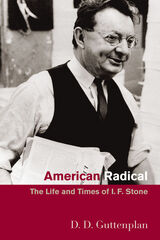
In an era when the old radical questions—about war, the economy, health care, and the right to dissent—are suddenly new again, Guttenplan’s lively, provocative book makes clear why so many of Stone’s pronouncements have acquired the force of prophecy.
Synthesizes archaeological and environmental evidence to reinterpret how early human populations adapted to dynamic climatic changes during the Late Pleistocene, reshaping our understanding of Paleoindian lifeways and migration in the Southeastern United States.
The 1996 benchmark volume The Paleoindian and Early Archaic Southeast, edited by David G. Anderson and Kenneth E. Sassaman, was the first study to summarize what was known of the peoples who lived in the Southeast when ice sheets covered the northern part of the continent and mammals such as mammoths, saber-toothed cats, and ground sloths roamed the landscape.
The American Southeast at the End of the Ice Age provides an updated, definitive synthesis of current archaeological research gleaned from an array of experts in the region. It is organized in three parts: state records, the regional perspective, and reflections and future directions. Chapters survey a diversity of topics including the distribution of the earliest archaeological sites in the region, chipped-stone tool technology, the expanding role of submerged archaeology, hunter-gatherer lifeways, past climate changes and the extinction of megafauna on the transitional landscape, and evidence of demographic changes at the end of the Ice Age. Discussion of the ethical responsibilities regarding the use of private collections and the relationship of archaeologists and the avocational community, insight from outside the Southeast, and considerations for future research round out the volume.
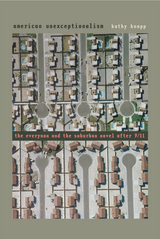
The novels in question all take place in the sprawling terrain that stretches out beyond the Twin Towers—the postwar suburbs that since the end of World War II have served, like the Twin Towers themselves, as a powerful advertisement of dominance to people around the globe, by projecting an image of prosperity and family values. These suburban tales and their everyman protagonists grapple, however indirectly, with the implications of the apparent decline of the economic, geopolitical, and moral authority of the United States. In the context of perceived decay and diminishing influence, these novels actively counteract the narrative of American exceptionalism frequently peddled in the wake of 9/11.
If suburban fiction has historically been faulted for its limited vision, this newest iteration has developed a depth of field that self-consciously folds the personal into the political, encompasses the have-nots along with the haves, and takes in the past when it imagines the future, all in order to forge a community of readers who are now accountable to the larger world. American Unexceptionalism traces the trajectory by which recent suburban fiction overturns the values of individualism, private property ownership, and competition that originally provided its foundation. In doing so, the novels examined here offer readers new and flexible ways to imagine being and belonging in a setting no longer characterized by stasis, but by flux.
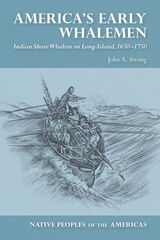
America’s Early Whalemen examines this early chapter of an iconic American historical experience. John A. Strong’s research draws on exhaustive sources, domestic and international, including little-known documents such as the whaling contracts of 340 Native American whalers, personal accounting books of whaling company owners, London customs records, estate inventories, and court records. Strong addresses labor relations, the role of alcohol and debt, the patterns of cultural accommodations by Native Americans, and the emergence of corporate capitalism in colonial America.
When Strong began teaching at Long Island University in 1964, he found little mention of the local Indigenous people in history books. The Shinnecocks and the neighboring tribes of Unkechaugs and Montauketts were treated as background figures for the celebratory narrative of the “heroic” English settlers. America’s Early Whalemen highlights the important contributions of Native peoples to colonial America.
Honorable Mention, 2016 Lyman Awards, presented by the North American Society for Oceanic History
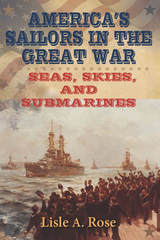
This book is a thrillingly-written story of naval planes, boats, and submarines during World War I.
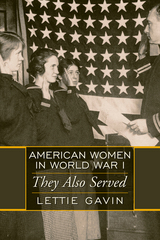
When the U.S. entered World War I in April 1917, America’s sailors were immediately forced to engage in the utterly new realm of anti-submarine warfare waged on, below and above the seas by a variety of small ships and the new technology of airpower. The U.S. Navy substantially contributed to the safe trans-Atlantic passage of a two million man Army that decisively turned the tide of battle on the Western Front even as its battleship division helped the Royal Navy dominate the North Sea. Thoroughly professionalized, the Navy of 1917–18 laid the foundations for victory at sea twenty-five years later.
2014 Choice Outstanding Academic Title
Amigas y Amantes (Friends and Lovers) explores the experiences of sexually nonconforming Latinas in the creation and maintenance of families. It is based on forty-two in-depth ethnographic interviews with women who identify as lesbian, bisexual, or queer (LBQ). Additionally, it draws from fourteen months of participant observation at LBQ Latina events that Katie L. Acosta conducted in 2007 and 2008 in a major northeast city. With this data, Acosta examines how LBQ Latinas manage loving relationships with the families who raised them, and with their partners, their children, and their friends.
Acosta investigates how sexually nonconforming Latinas negotiate cultural expectations, combat compulsory heterosexuality, and reconcile tensions with their families. She offers a new way of thinking about the emotion work involved in everyday lives, which highlights the informal, sometimes invisible, labor required in preserving family ties. Acosta contends that the work LBQ Latinas take on to preserve connections with biological families, lovers, and children results in a unique way of doing family.
Paying particular attention to the negotiations that LBQ Latinas undertake in an effort to maintain familial order, Amigas y Amantes explores how they understand femininity, how they negotiate their religious faiths, how they face the unique challenges of being in interracial/interethnic relationships, and how they raise their children while integrating their families of origin.

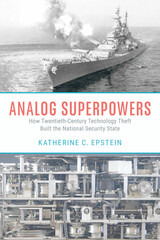
At the beginning of the twentieth century, two British inventors, Arthur Pollen and Harold Isherwood, became fascinated by a major military question: how to aim the big guns of battleships. These warships—of enormous geopolitical import before the advent of intercontinental missiles or drones—had to shoot in poor light and choppy seas at distant moving targets, conditions that impeded accurate gunfire. Seeing the need to account for a plethora of variables, Pollen and Isherwood built an integrated system for gathering data, calculating predictions, and transmitting the results to the gunners. At the heart of their invention was the most advanced analog computer of the day, a technological breakthrough that anticipated the famous Norden bombsight of World War II, the inertial guidance systems of nuclear missiles, and the networked “smart” systems that dominate combat today. Recognizing the value of Pollen and Isherwood’s invention, the British Royal Navy and the United States Navy pirated it, one after the other. When the inventors sued, both the British and US governments invoked secrecy, citing national security concerns.
Drawing on a wealth of archival evidence, Analog Superpowers analyzes these and related legal battles over naval technology, exploring how national defense tested the two countries’ commitment to individual rights and the free market. Katherine C. Epstein deftly sets out Pollen’s and Isherwood’s pioneering achievements, the patent questions raised, the geopolitical rivalry between Britain and the United States, and the legal precedents each country developed to control military tools built by private contractors.
Epstein’s account reveals that long before the US national security state sought to restrict information about atomic energy, it was already embroiled in another contest between innovation and secrecy. The America portrayed in this sweeping and accessible history isn’t yet a global hegemon but a rising superpower ready to acquire foreign technology by fair means or foul—much as it accuses China of doing today.


In the context of a long history of mutilating and altering reliefs for political purposes, Breasted discusses the insertion into a relief of the figure of Ramesses II in order to reinforce his claim to the throne. This volume also includes the treaty of alliance that sealed peace with the Hittites under Ramesses II; a series of documents that record the invasion of Libyans and Mediterranean Sea people during the reign of Merneptah; and the Great Temple of Abu Simbel, the most remarkable of the rock-cut temples of Egypt.
This first complete paperback edition of Breasted's five-volume Ancient Records of Egypt makes available to a new audience a milestone in Egyptology and in the compilation of documentary histories. Clearly annotated for the lay reader, the documents provide copious evidence of trade relations, construction activities, diplomatic envoys, foreign expeditions, and other aspects of a vigorous, highly organized, and centrally controlled society. Breasted's commentary is both rigorously documented and accessible, suffused with a contagious fascination for the events, the personalities, the cultural practices, and the sophistication these records indicate
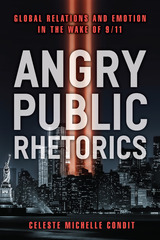
These voices show that anger is more effective for producing some collective actions, such as rallying supporters, reifying existing worldviews, motivating attack, enforcing shared norms, or threatening from positions of power; and less effective for others, like broadening thought, attracting new allies, adjudicating justice across cultural norms, or threatening from positions of weakness. Because social anger requires shared norms, collectivized anger cannot serve social justice. In order for anger to be a force for global justice, the world’s peoples must develop shared norms to direct discussion of international relations. Angry Public Rhetorics provides guidance for such public forums.

Chen's book is the first to bring the concept of animacy together with queer of color scholarship, critical animal studies, and disability theory. Through analyses of dehumanizing insults, the meanings of queerness, animal protagonists in recent Asian/American art and film, the lead in toys panic in 2007, and the social lives of environmental illness, Animacies illuminates a hierarchical politics infused by race, sexuality, and ability. In this groundbreaking book, Chen rethinks the criteria governing agency and receptivity, health and toxicity, productivity and stillness—and demonstrates how attention to the affective charge of matter challenges commonsense orderings of the world.

A moving, personal exploration of what we looked for, and found, in the gaming sensation Animal Crossing during and after the pandemi
Animal Crossing: New Horizons was released on March 20, 2020—just as a pandemic kept many from family, work, restaurants, and the rest of their regularly scheduled lives. At its height, the game averaged one million copies sold per day, as players sought comfort, escape, and a virtual means of connection. In this book, game scholar Noah Wardrip-Fruin, isolated with his family by both lockdown and disability, explores the power of this game and the mixed emotions of a player and a parent trying to make it from one day to the next—while his kids’ obsession with Animal Crossing creates conflicts between them and pushback against family rules.
Wardrip-Fruin helps both Animal Crossing fans and newcomers understand the unexpected beneath the game’s surface: like the story of the first Animal Crossing, codesigned by an absent father seeking connection; like the hallmarks of video game manipulation, from “streak” bonuses to game-determined playtimes; like the appeal of endless shopping, in a kind of “safe” capitalism; and, of course, like the character quirks of a raccoon dog, Tom Nook, who provides a world of both safety and strange paternalism.
For many, this blockbuster game offered a comforting world compared to a reality of danger. In this first entry in the Replay series, Wardrip-Fruin offers an absorbing investigation of a game’s role in contemporary social life and a book that belongs on the shelf of anyone who loves or is puzzled by this Nintendo sensation.

In Animal Purpose, Michelle Y. Burke explores the lives of men and women as they stand poised between the desire to love and the compulsion to harm. In one poem, a woman teaches a farmhand the proper way to slaughter a truckload of chickens. In another, a couple confronts the recent loss of a loved one when a stranger makes an unexpected confession in a crowded restaurant. Set in both rural and urban spaces, these poems challenge received ideas about work, gender, and place. Danger blurs into beauty and back again. Burke scours the hard edges of the world to find “fleeting softness,” which she wishes “into the world like pollen that covers everything.”
Showing that the two disciplines have much to offer each other, this book bridges the demography/anthropology divide. The editors begin the volume with an in-depth historical account of the relations between the fields. Eminent contributors from both disciplines then examine the major issues and controversies in anthropological demography, including the demographic implications of differing family and kinship systems; the influence of new developments in cultural, gender, and identity theory on population study; the limits of quantitative approaches in demographic study; and demographers' views of the limits of anthropological methods.
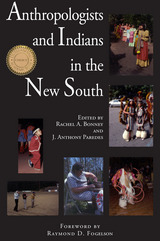
A clear assessment of the growing mutual respect and strengthening bond between modern Native Americans and the researchers who explore their past
Southern Indians have experienced much change in the last half of the 20th century. In rapid succession since World War II, they have passed through the testing field of land claims litigation begun in the 1950s, played upon or retreated from the civil rights movement of the 1960s, seen the proliferation of “wannabe” Indian groups in the 1970s, and created innovative tribal enterprises—such as high-stakes bingo and gambling casinos—in the 1980s. The Native American Graves Protection and Repatriation Act of 1990 stimulated a cultural renewal resulting in tribal museums and heritage programs and a rapprochement with their western kinsmen removed in “Old South” days.
Anthropology in the South has changed too, moving forward at the cutting edge of academic theory. This collection of essays reflects both that which has endured and that which has changed in the anthropological embrace of Indians from the New South. Beginning as an invited session at the 30th-anniversary meeting of the Southern Anthropological Society held in 1996, the collection includes papers by linguists, archaeologists, and physical anthropologists, as well as comments from Native Americans.
This broad scope of inquiry—ranging in subject from the Maya of Florida, presumed biology, and alcohol-related problems to pow-wow dancing, Mobilian linguistics, and the “lost Indian ancestor” myth—results in a volume valuable to students, professionals, and libraries. Anthropologists and Indians in the New South is a clear assessment of the growing mutual respect and strengthening bond between modern Native Americans and the researchers who explore their past.
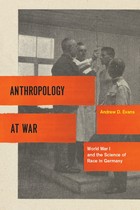
Between 1914 and 1918, German anthropologists conducted their work in the midst of full-scale war. The discipline was relatively new in German academia when World War I broke out, and, as Andrew D. Evans reveals in this illuminating book, its development was profoundly altered by the conflict. As the war shaped the institutional, ideological, and physical environment for anthropological work, the discipline turned its back on its liberal roots and became a nationalist endeavor primarily concerned with scientific studies of race.
Combining intellectual and cultural history with the history of science, Anthropology at War examines both the origins and consequences of this shift. Evans locates its roots in the decision to allow scientists access to prisoner-of-war camps, which prompted them to focus their research on racial studies of the captives. Caught up in wartime nationalism, a new generation of anthropologists began to portray the country’s political enemies as racially different. After the war ended, the importance placed on racial conceptions and categories persisted, paving the way for the politicization of scientific inquiry in the years of the ascendancy of National Socialism.

Miriam Cooke, Professor, Duke University
"An impassioned and deeply compelling look at the origins, evolution, manifestations and implications of anti-Arab racism today. ... A tour-de-force."
Lisa Suhair Majaj, co-editor, Etel Adnan: Critical Reflections on the Arab-American Writer and Artist and Intersections: Gender, Nation, and Community in Arab Women¹s Novels
"Salaita dives head-first into the heart of racism in America and uses his personal experiences to help readers understand the mechanics of racism as it applies to Arabs, Muslims and people who look Middle Eastern in the post-Sept. 11 world."
Ray Hanania, journalist and filmmaker, author of I¹m Glad I Look Like a Terrorist: Growing up Arab in America and Arabs of Chicagoland
"A highly recommended read, not only for students of Middle East history, but for the average American who wants to know how we have become so intimately and yet so bitterly entwined with the people of the Middle East. ... Salaita has thoughtfully articulated a very regretful era of unabashed racism in American history."
Ramzy Baroud, editor, Palestine Chronicle and author of Searching Jenin
Today is a difficult time to be both Arab and American. Since 9/11 there has been a lot of criticism of America¹s involvement in the middle east. Yet there has been little analysis of how America treats citizens of Arab or middle eastern origin within its own borders.
Steven Salaita explores the reality of Anti-Arab racism in America. He blends personal narrative, theory and polemics to show how this deep-rooted racism affects everything from legislation to cultural life, shining a light on the consequences of Anti-Arab racism both at home and abroad.
Uniquely, the book shows how ingrained racist attitudes can be found within the progressive movements on the political left, as well as the right. Salaita argues that, under the guise of patriotism, Anti-Arab racism fuels support for policies such as the Patriot Act.
Salaita breaks down the façade of Anti-Arab racism with an insightful analysis, arguing for the urgency of a commitment to openness and inclusion in today¹s political climate.
Steven Salaita is Assistant Professor of English at the University of Wisconsin -Whitewater. He writes frequently about Arab America and the Arab World.
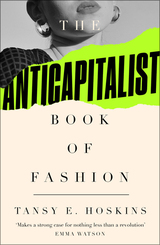
The award-winning classic on why we must revolutionise the fashion industry
*Selected by Emma Watson for her Ultimate Book List*
Fashion is political. From the red carpets of the Met Gala to online fast fashion, clothes tell a story of inequality, racism, and climate crisis. In The Anti-Capitalist Book of Fashion, Tansy E. Hoskins unpicks the threads of capitalist industry to reveal the truth about our clothes.
Fashion brands entice us to consume more by manipulating us to feel ugly, poor and worthless, sentiments that line the pockets of billionaires exploiting colonial supply chains. Garment workers on poverty pay risk their lives in dangerous factories, animals are tortured, fossil fuels extracted and toxic chemicals spread just to keep this season's collections fresh.
We can do better than this. Moving between Karl Lagerfeld and Karl Marx, The Anti-Capitalist Book of Fashion goes beyond ethical fashion and consumer responsibility showing that if we want to feel comfortable in our clothes, we need to reshape the system and ensure this is not our last season.


This book provides a lively overview of apocalypse cinema, including alien invasions, nuclear annihilation, asteroid collisions, climate change, and terrifying plagues. Covering pivotal films from the silent era to the present day, including Metropolis, Invasion of the Body Snatchers, Dr. Strangelove, Contagion, and Avengers: Endgame, Stephen Prince explores how these dark visions are rooted in religious and prophetic traditions, and he considers how our love for apocalypse cinema is tied to fundamental existential questions and anxieties that never go out of fashion.

Apocalypse Never maintains that the abolition of nuclear weapons is both essential and achievable, and reveals in fine detail what we need to do--both governments and movements--to make it a reality. Daley insists that while global climate change poses the single greatest long-term peril to the human race, the nuclear challenge in its many incarnation--nuclear terror, nuclear accident, a nuclear crisis spinning out of control--poses the single most immediate peril. Daley launches a wholesale assault on the nuclear double standard--the notion that the United States permits itself thousands of these weapons but forbids others from aspiring to even one--insisting that it is militarily unnecessary, morally indefensible, and politically unsustainable. He conclusively repudiates the most frequent objection to nuclear disarmament, "the breakout scenario"--the possibility that after abolition someone might whip back the curtain, reveal a dozen nuclear warheads, and proceed to "rule the world."
On the wings of a brand new era in American history, Apocalypse Never makes the case that a comprehensive nuclear policy agenda from President Obama, one that fully integrates nonproliferation with disarmament, can both eliminate immediate nuclear dangers and set us irreversibly on the road to abolition. In jargon-free language, Daley explores the possible verification measures, enforcement mechanisms, and governance structures of a nuclear weapon-free world. Most importantly, he decisively argues that universal nuclear disarmament is something we can transform from a utopian fantasy into a concrete political goal.
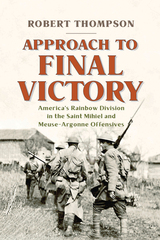
Approach to Final Victory: America's Rainbow Division in the Saint Mihiel and Meuse-Argonne Offensives by historian Robert Thompson, chronicles the efforts of the Rainbow Division during these final two Allied offensives that were key to the ultimate Allied victory. Based on letters, journals, action reports, and unit histories, the challenges, set-backs, and accomplishments of the division stand as a fitting symbol of American valor and sacrifice during the “war to end all wars.”

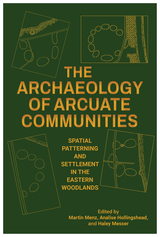
A comparative archaeological synthesis examining the spatial, social, and ceremonial logics underpinning circular community formations across the Eastern Woodlands from 10,000 BC to the sixteenth century.
The Archaeology of Arcuate Communities is an edited collection of ten essays that illuminate how Indigenous communities of the Eastern Woodlands, from 10,000 BC to the 1550s, are analyzed and interpreted by archaeologists today. Volume editors Martin Menz, Analise Hollingshead, and Haley Messer define the persistent circular or “arcuate” pattern of Native settlements in this region as a spatial manifestation of community activities that reinforced group identity alongside plazas, mounds, and other architectural features.
The varied case studies in this volume focus on specific communities, how they evolved, and the types of archaeological data that have been used to assess them. Part I, “Defining the Domestic Unit in Arcuate Communities,” reveals social distinctions between households and household clusters in arcuate communities, how they differ in terms of stylistic patterns and exchange, and how they combined to form distinct social groups at different scales within a broader community. Part II, “Organizing Principles of Arcuate Communities,” broadens the scope to identify the organizing principles of entire arcuate communities, such as the central role of plazas in structuring their development, how the distribution of households and central features within communities was contested and reorganized, and the importance of mounds in both delineating arcuate communities and marking their position on the landscape. Part III, “Comparison and Change in Arcuate Communities,” comprises case studies that examine changes in the organization of arcuate communities over time. Rounding out the volume is a concluding chapter that assesses how and why communities around the world formed in circular patterns.
A valuable resource for archaeologists, this collection will also be of interest to those seeking to learn about Native North American settlement, ceremony, and community organization.
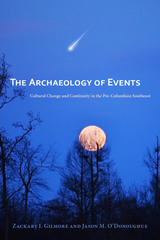
Across the social sciences, gradualist evolutionary models of historical dynamics are giving way to explanations focused on the punctuated and contingent “events” through which history is actually experienced. The Archaeology of Events is the first book-length work that systematically applies this new eventful approach to major developments in the pre-Columbian Southeast.
Traditional accounts of pre-Columbian societies often portray them as “cold” and unchanging for centuries or millennia. Events-based analyses have opened up archaeological discourse to the more nuanced and flexible idea of context-specific, rapidly transpiring, and broadly consequential historical “events” as catalysts of cultural change.
The Archaeology of Events, edited by Zackary I. Gilmore and Jason M. O’Donoughue, considers a variety of perspectives on the nature and scale of events and their role in historical change. These perspectives are applied to a broad range of archeological contexts stretching across the Southeast and spanning more than 7,000 years of the region’s pre-Columbian history. New data suggest that several of this region’s most pivotal historical developments, such as the founding of Cahokia, the transformation of Moundville from urban center to vacated necropolis, and the construction of Poverty Point’s Mound A, were not protracted incremental processes, but rather watershed moments that significantly altered the long-term trajectories of indigenous Southeastern societies.
In addition to exceptional occurrences that impacted entire communities or peoples, southeastern archaeologists are increasingly recognizing the historical importance of localized, everyday events, such as building a house, crafting a pot, or depositing shell. The essays collected by Gilmore and O’Donoughue show that small-scale events can make significant contributions to the unfolding of broad, regional-scale historical processes and to the reproduction or transformation of social structures.
The Archaeology of Events is the first volume to explore the archaeological record of events in the Southeastern United States, the methodologies that archaeologists bring to bear on this kind of research, and considerations of the event as an important theoretical concept.
A 17th-century trading post and Indian town in central Georgia reveal evidence of culture contact and change
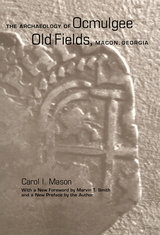
Ocmulgee Old Fields near Macon, Georgia, is the site of a Lower Creek village and associated English trading house dating from the late 17th and early 18th centuries. It was excavated in the early 1930s as part of a WPA project directed by A. R. Kelly, which focused primarily on the major Mississippian temple mounds of Macon Plateau. The specific data for the Old Fields was not analyzed until nearly 30 years after the excavation.
Part of the significance of this site lies in its secure identification with a known group of people and the linkage of those people with recognizable archaeological remains. The Old Fields site was among the very first for which this kind of identification was possible and stands at the head of a continuing tradition of historic sites archaeology in the Southeast.
Carol I. Mason's classic study of the Ocmulgee Old Fields site has been a model for contact-period Indian archaeology since the 1960s. The report includes a discussion of the historic setting and an analysis of the archaeological materials with an identification of the Lower Creek town and possibly of the English trader who lived there. Now, for the first time, the original report is widely available in book form. With a new foreword by the author and a new introduction from Southeastern archaeology expert Marvin T. Smith, readers have the benefit of a contemporary view of this very fine piece of careful scholarship.
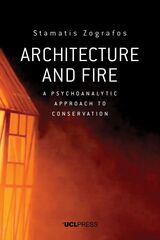
Founded in inventive interdisciplinary research that ranges across architecture and conservation, archival theory, classical mythology, evolutionary theory, philosophy, and psychoanalysis, Architecture and Fire draws on the insights of psychoanalysis to offer such a reassessment. Among the topics discussed are the ambivalent nature of fire, seen through the conflicting philosophies of Gaston Bachelard and Henri Bergson; the ways in which architecture evolves by absorbing and accommodating fire; and the destruction of buildings by fire as a critical moment of architectural evolution, with a focus on the tragic disaster at London’s Grenfell Tower in 2017. Stamatis Zografos concludes with thoughts on Freud’s drive theory. He argues that the practice of architectural conservation is an expression of the life drive and a simultaneous repression of the death drive, which suggests controlled destruction should be an integral part of the conservation agenda.

Vanderbilt staffers discovered a treasure trove of photos and diagrams from the HABS survey that did not make the original edition in the Press archives. This new, expanded edition contains all of the original text and images from the first volume, plus many of the forgotten archived materials collected by HABS in the 1970s.
In her new introduction to this reissue, Aja Bain discusses why these buildings were saved and wonders about what lessons preservationists can learn now about how to preserve a wider swath of our shared history.
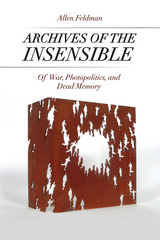
Excavating a scenography of trials—formal or covert, orchestrated or improvised, criminalizing or criminal—Feldman shows how the will to truth disappears into the very violence it interrogates. He maps the sensory inscriptions and erasures of war, highlighting war as a media that severs factuality from actuality to render violence just. He proposes that war promotes an anesthesiology that interdicts the witness of a sensory and affective commons that has the capacity to speak truth to war. Feldman uses layered deconstructive description to decelerate the ballistical tempo of war to salvage the embodied actualities and material histories that war reduces to the ashes of collateral damage, the automatism of drones, and the opacities of black sites. The result is a penetrating work that marries critical visual theory, political philosophy, anthropology, and media archeology into a trenchant dissection of emerging forms of sovereignty and state power that war now makes possible.
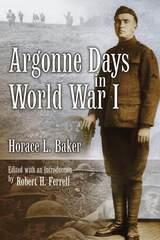
This poignant memoir recalls the great battle of the Meuse-Argonne, an epic conflict waged by well over a million men that saw casualties of 26,277 killed and 95,786 wounded. Many books have been written about General Pershing’s planning of the offensive; this one tells what happened to the soldiers who had to carry out his orders.
The Thirty-second was a shock division made up largely of National Guard units—farm boys from the Upper Midwest. But as casualties mounted, replacements were rushed into battle with little training—and devastating results. Baker knew friends and tent mates who were alive one day, dead the next, and he kept track of the battle in diary entries tucked into his Bible—and made evasively short in case of capture.
He shares his and his comrades’ thoughts about fighting in a harsh climate and terrain, relates their ongoing problems with short supplies, and tells how they managed to overcome their fears. It is a straightforward narrative that doesn’t glorify battle or appeal to patriotism yet conveys the horrors of warfare with striking accuracy. Historian Robert Ferrell’s new introduction puts Baker’s recollections in the context of the larger theater of war.
Baker fleshed out his diary in a book that saw limited publication in 1927 but has remained essentially unknown. Argonne Days in World War I is a masterpiece brimming with insight about the ordinary doughboys who fought in the European trenches. It conveys the spirit of a man who did his duty in a time of trouble—and is a testament to the spirit shared by thousands like him.
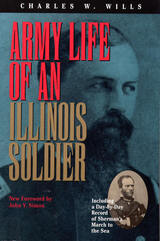
A high-spirited idealist who craved excitement when he enlisted in the Eighth Illinois Volunteers for three months and reenlisted for three years, Charles W. Wills of Canton, Illinois, wrote frequently to his sister Mary Emily Wills and kept a diary of General William T. Sherman’s campaigns during the last year of the war. In the beginning of his service, Wills could boast that his company refused to enlist "roughs." He reported that he and his comrades "drink no liquors and keep ourselves as cleanly as possible.... Almost all are reading or writing, and I defy anyone to find 75 men without any restraint, paying more attention to the Sabbath. . . . Health generally excellent in our company, because we are all careful."
A student and store clerk before enlisting, Wills found that army life "beats clerking." He enlisted as a private at the age of twenty-one and by twenty-four was a major. He had thought he might receive an infantry commission eventually, but when the opportunity arose for promotion to first lieutenant in the Seventh Illinois Cavalry, "cupidity and ambition" caused him to abandon the Eighth, enabling him to hold rank "without so much walking." For a while, though, he seriously rued his lack of action. "Haven’t I a brilliant record," he wrote. "Thirty-three months in service and not a battle." As Simon points out, however, "in the year ahead, Wills would have more than his fill of battles." Battle starved once, his enthusiasm for carnage waned as he marched with Sherman to the sea. Yet Major Wills was impressed by his troops’ "endurance, spirit and recklessness."
Wills matured in the army. He joined solely to preserve the Union, and his early comments on slaves "lacked sympathy, even decency," according to Simon. Later he came to the point where he would arm blacks—in part, with an eye toward gaining rank by leading the new regiments. Yet he was not blind to the anomalies of a slave society.
Wills died in 1883. To preserve his memory, his sister (now Mary Kellogg) printed his diary in 1904. Two years later, Kellogg combined the diary with the letters Wills had written to her earlier in the war. Simon renders this assessment: "Wills had a sparkling, witty style that contrasted sharply with that of both his contemporaries in the field and the seven regimental veterans who compiled their diaries. In assembling this book, Mary E. Kellogg wisely allowed her brother to speak for himself; rarely intruding a comment of her own, excising from his letters home inevitable expressions of concern for his sister and her welfare but leaving intact the sparkling flow of camp gossip and military speculation."

One of Norway’s most celebrated literary figures of the nineteenth century, Henrik Wergeland worked tirelessly for the civil rights of Jews in Norway. He used the words and structure of his poetry to enliven the ideals of truth, freedom, and equality. This translated volume, containing several of Wergeland’s most prominent poems, beautifully encapsulates the compelling force of his message, allowing its enduring influence to benefit a wider contemporary audience.
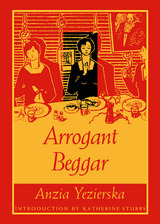
The second half of the novel takes Adele back to her ghetto origins as she explores an alternative model of philanthropy by opening a restaurant that combines the communitarian ideals of Old World shtetl tradition with the contingencies of New World capitalism. Within the context of this radical message, Yezierska revisits the themes that have made her work famous, confronting complex questions of ethnic identity, assimilation, and female self-realization.
Katherine Stubbs’s introduction provides a comprehensive and compelling historical, social, and literary context for this extraordinary novel and discusses the critical reaction to its publication in light of Yezierska’s biography and the once much-publicized and mythologized version of her life story. Unavailable for over sixty years, Arrogant Beggar will be enjoyed by general readers of fiction and be of crucial importance for feminist critics, students of ethnic literature. It will also prove an exciting and richly rewarding text for students and scholars of Jewish studies, immigrant literature, women’s writing, American history, and working-class fiction.

Fitzpatrick captures the emotions of artists and riders alike, as she explores paintings, photographs, performance art, graffiti, and public art by artists such as Walker Evans, Bruce Davidson, DONDI, Keith Haring, Yayoi Kusama, Jacob Lawrence, Reginald Marsh, Elizabeth Murray, and many others. She also considers representations of the subway in film, on song sheet covers, and in illustration. By examining the cultural, technological, and social contexts for these creative interpretations, Fitzpatrick illuminates in fresh ways the contradictions and harmonies between public and private space.
Featuring 17 color plates and 80 black-and-white images, Art and the Subway takes readers on a fascinating ride through the visual history of one of the twentieth century's greatest urban planning endeavors as it grew, changed form, and reinvented itself with passion and vitality.
Now that art is getting its due. Art in Chicago is a magisterial account of the long history of Chicago art, from the rupture of the Great Fire in 1871 to the present, Manierre Dawson, László Moholy-Nagy, and Ivan Albright to Chris Ware, Anne Wilson, and Theaster Gates. The first single-volume history of art and artists in Chicago, the book—in recognition of the complexity of the story it tells—doesn’t follow a single continuous trajectory. Rather, it presents an overlapping sequence of interrelated narratives that together tell a full and nuanced, yet wholly accessible history of visual art in the city. From the temptingly blank canvas left by the Fire, we loop back to the 1830s and on up through the 1860s, tracing the beginnings of the city’s institutional and professional art world and community. From there, we travel in chronological order through the decades to the present. Familiar developments—such as the founding of the Art Institute, the Armory Show, and the arrival of the Bauhaus—are given a fresh look, while less well-known aspects of the story, like the contributions of African American artists dating back to the 1860s or the long history of activist art, finally get suitable recognition. The six chapters, each written by an expert in the period, brilliantly mix narrative and image, weaving in oral histories from artists and critics reflecting on their work in the city, and setting new movements and key works in historical context. The final chapter, comprised of interviews and conversations with contemporary artists, brings the story up to the present, offering a look at the vibrant art being created in the city now and addressing ongoing debates about what it means to identify as—or resist identifying as—a Chicago artist today. The result is an unprecedentedly inclusive and rich tapestry, one that reveals Chicago art in all its variety and vigor—and one that will surprise and enlighten even the most dedicated fan of the city’s artistic heritage.
Part of the Terra Foundation for American Art’s year-long Art Design Chicago initiative, which will bring major arts events to venues throughout Chicago in 2018, Art in Chicago is a landmark publication, a book that will be the standard account of Chicago art for decades to come. No art fan—regardless of their city—will want to miss it.
After a brief look at the development of a tradition in museum architecture, this study examines Kahn’s three art museums: the Yale University Art Gallery, the Kimbell Art Museum, and the Yale Center for British Art. It traces the development of each museum through museum through its various stages: the background of the institutions and the commissions, the programs for the buildings, their designs and evolutions, their constructions, and the evaluations of the completed buildings. Material on Kahn’s plans for a museum for the De Menil collection, begun shortly before his death, is also included.
Accompanying the text are illustrations of the buildings, including Kahn’s personal sketches, architectural plans and sections, and presentation perspective drawings. Photographs of the finished buildings present the transformed vision of the architect in tangible form, showing that the museums, while related, are individualized accomplishments. This is the first comprehensive study of Kahn’s museums.
"[This] books should be read by all those interested in Chinese poetry."—Achilles Fang, Poetry
"[This is] a significant contribution to the understanding and appreciation of Chinese poetry, lucidly presented in a way that will attract a wide audience, and offering an original synthesis of Chinese and Western views that will stimulate and inspire students of poetry everywhere."—Hans H. Frankel, Harvard Journal of Asiatic Studies
"This is a book which can be recommended without reservation to anyone who wants to explore the world of Chinese poetry in translation."—James R. Hightower, Journal of Asian Studies
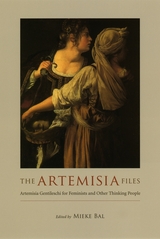
In The Artemisia Files, Mieke Bal and her coauthors look squarely at this early icon of feminist art history and the question of her status as an artist. Considering the events that shaped her life and reputation—her relationship to her father and her role as the victim in a highly publicized rape case during which she was tortured into giving evidence—the authors make the case that Artemisia's importance is due to more than her role as a poster child in the feminist attack on traditional art history; here, Artemisia emerges more fully as a highly original artist whose work is greater than the sum of the events that have traditionally defined her.
The fresh, engaging discourse in The Artemisia Files will help to both renew the reputation of this artist on the merit of her work and establish her rightful place in the history of art.
READERS
Browse our collection.
PUBLISHERS
See BiblioVault's publisher services.
STUDENT SERVICES
Files for college accessibility offices.
RECENTLY PUBLISHED



UChicago Accessibility Resources
home | accessibility | search | about | contact us
BiblioVault ® 2001 - 2026
The University of Chicago Press