
 A SCHOLARLY BOOK REPOSITORY
34 start with A start with A
"A first-rate book...Brock's lucid and illuminating analysis offers much of value to both intellectual historians and theologians, as well as philosophers."—Theological Studies"Brock's treatment of Aquinas's account of action exhibits a rare combination of rigor and learning. It is, no doubt, the best we have."—The Thomist
In Addressing Postmodernity, Barbara Biesecker examines the relationship between rhetoric and social change and the ways human beings transform social relations through the purposeful use of symbols. In discerning the conditions of possibility for social transformation and the role of human beings and rhetoric in it, Biesecker turns to the seminal work of Kenneth Burke.
Through a close reading of Burke's major works, A Grammar of Motives, A Rhetoric of Motives, and The Rhetoric of Religion: Studies in Logology, the author addresses the critical topic of the
fragmentation of the contemporary lifeworld revealing postmodernity will have a major impact on Burkeian scholarship and on the rhetorical critique of social relations in general.
Directly confronting the challenges posed by postmodernity to social theorists and critics alike and juxtaposing the work of Burke and Jurgen Habermas, Biesecker argues that a radicalized rereading of Burke's theory of the negative opens the way toward a resolutely rhetorical theory of social change and human agency.

Adventures in Kate Bush and Theory presents Kate Bush as you have never seen her before. Encounter the polymorphously perverse Kate, the witchy Kate, the queer Kate; the Kate who moves beyond the mime.
Through in-depth readings of the often critically neglected works of Bush’s career (The Kick Inside, Lionheart, The Dreaming, The Red Shoes and her film The Line, the Cross and the Curve), Withers guides the reader through the complexity of Bush’s art and how it transformed popular culture.
Not just another book about Kate Bush.
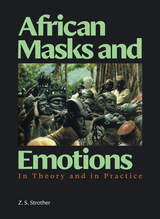
In this groundbreaking book, Z. S. Strother, inspired by dialogues with African masquerade patrons and performers, disputes assumptions that masks universally hide, reveal, or transform.
In Western European languages, the word mask exerts a powerful presence as a figure of speech. To masquerade is to pretend to be someone or something one is not. By extension, unmasking is a heroic metaphor for exposing a hidden truth. In this volume, art historian Z. S. Strother counters that narrative, using African case studies to offer an alternative vision of masquerading. She explores the aesthetic emotions aroused by masks, or more precisely, by “dances of masks”: joy, wonder, awe, fear, and the release of laughing out loud. She also investigates the uncanny—a sensation of “delicious shiveriness” triggered when familiar spaces and individuals become strange and changeable. Inspired by Strother’s studies in DR Congo, African Masks and Emotions takes a comparative perspective and moves emotion from the periphery to the center of analysis.
Reflecting Getty's commitment to open content, African Masks and Emotions is available for free download in ePub and PDF formats at: https://www.getty.edu/publications-reports/item/2F27A4. This paperback edition is available for sale for readers who wish to have a bound reference copy.
In this collection of essays by seven outstanding American scholars, interests as diverse as feminism, Marxism, deconstruction, and cultural poetics are brought together around a central question: how does the choice of a particular theory alter the practice of reading and do altered practices of reading in turn call forth more theory?
A powerful deconstruction of humanity’s most influential invention, from the acclaimed economists J. W. Mason and Arjun Jayadev.
Money is everywhere in our daily lives. It lurks in the swipe of a card at the grocery store, in looming student-loan debts, in the prices of things we want, and in our subconscious navigation of the modern world. Money is an invisible convenience that saves us, as a society, the hassle of bartering for goods and services—a reflection, in our pockets and on our phones, of the hard facts of scarcity and desire. Or is it something more?
In this revelatory book, economists J. W. Mason and Arjun Jayadev explain how and why money is so deeply misunderstood by the world it dominates—as well as the dangerous social implications of this misunderstanding. Against Money tackles the most dearly held “truths” of economics, arguing that the world of money has never been an impartial representation of the world of things. Instead, its existence in different forms—debt, capital, liquidity, and interest—increasingly shapes events in the real world rather than just reflecting them. Sometimes money enables new forms of cooperation; more oftenit facilitates domination. Human existence is not just facilitated by money but also governed by it.
In the tradition of works by Thomas Piketty and David Graeber, Against Money is an erudite, disruptive exposé of the illusions and tyrannies of money. Mason and Jayadev present a radically different way of thinking about money—imagining a hopeful future in which it no longer dictates the possibilities of our collective existence.

A powerful deconstruction of humanity’s most influential invention, from the acclaimed economists J. W. Mason and Arjun Jayadev.
Money is everywhere in our daily lives. It lurks in the swipe of a card at the grocery store, in looming student-loan debts, in the prices of things we want, and in our subconscious navigation of the modern world. Money is an invisible convenience that saves us, as a society, the hassle of bartering for goods and services—a reflection, in our pockets and on our phones, of the hard facts of scarcity and desire. Or is it something more?
In this revelatory book, economists J. W. Mason and Arjun Jayadev explain how and why money is so deeply misunderstood by the world it dominates—as well as the dangerous social implications of this misunderstanding. Against Money tackles the most dearly held “truths” of economics, arguing that the world of money has never been an impartial representation of the world of things. Instead, its existence in different forms—debt, capital, liquidity, and interest—increasingly shapes events in the real world rather than just reflecting them. Sometimes money enables new forms of cooperation; more oftenit facilitates domination. Human existence is not just facilitated by money but also governed by it.
In the tradition of works by Thomas Piketty and David Graeber, Against Money is an erudite, disruptive exposé of the illusions and tyrannies of money. Mason and Jayadev present a radically different way of thinking about money—imagining a hopeful future in which it no longer dictates the possibilities of our collective existence.
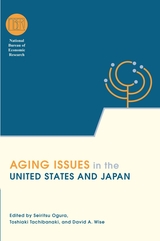
Given the undeniable global importance of the Japanese and U.S. economies, these innovative essays shed welcome new light on the complex correlations between aging and economic behavior. This insightful work not only deepens our understanding of the Japanese and American economic landscapes but, through careful examination of the comparative social and economic data, clarifies the complex relation between aging societies, public policies, and economic outcomes.
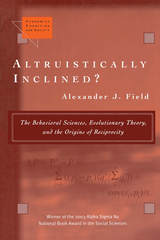
Altruistically Inclined? examines the implications of recent research in the natural sciences for two important social scientific approaches to individual behavior: the economic/rational choice approach and the sociological/anthropological. It considers jointly two controversial and related ideas: the operation of group selection within early human evolutionary processes and the likelihood of modularity—domain-specific adaptations in our cognitive mechanisms and behavioral predispositions.
Experimental research shows that people will often cooperate in one-shot prisoner's dilemma (PD) games and reject positive offers in ultimatum games, contradicting commonly accepted notions of rationality. Upon first appearance, predispositions to behave in this fashion could not have been favored by natural selection operating only at the level of the individual organism.
Emphasizing universal and variable features of human culture, developing research on how the brain functions, and refinements of thinking about levels of selection in evolutionary processes, Alexander J. Field argues that humans are born with the rudiments of a PD solution module—and differentially prepared to learn norms supportive of it. His emphasis on failure to harm, as opposed to the provision of affirmative assistance, as the empirically dominant form of altruistic behavior is also novel.
The point of departure and principal point of reference is economics. But Altruistically Inclined? will interest a broad range of scholars in the social and behavioral sciences, natural scientists concerned with the implications of research and debates within their fields for the conduct of work elsewhere, and educated lay readers curious about essential features of human nature.

The theoretical constants Narmour uses are context-free and, therefore, applicable to all styles of melody. He places considerable emphasis on the listener's cognitive performance (that is, fundamental melodic perception as opposed to acquired musical competence). He concentrates almost exclusively on low-level, note-to-note relations. The result is a highly generalized theory useful in researching all manner of psychological and music-theoretic problems concerned with the analysis and cognition of melody.
"In this innovative, landmark book, a distinguished music theorist draws extensively from a variety of disciplines, in particular from cognitive psychology and music theory, to develop an elegant and persuasive framework for the understanding of melody. This book should be read by all scholars with a serious interest in music."—Diana Deutsch, Editor, Music Perception
Faced with severe technological constraints on system memory, composers of the Nintendo Entertainment System (NES) sought ways to disguise repetition in music that repeats extensively. Their efforts gave rise to a set of compositional techniques for creating the illusion of variety.
This book distills these techniques into a theory of harmony and form for the analysis of NES music. It then uses this theory to analyze five landmark scores of the NES era: Super Mario Bros., Dragon Warrior, Metroid, Mega Man 2, and Silver Surfer. The book also includes a detailed description of the NES hardware and its attendant constraints, highlighting the ever-evolving dialogue between technology, commercial demand, and artistic sensibility that characterizes video game music of the 1980s and 1990s.
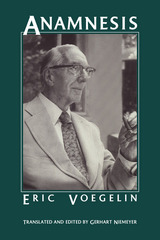
Anamnesis pulls together those materials that focus most sharply upon the development of Eric Voegelin's philosophy of consciousness. Voegelin is considered one of the most influential and profound philosophers of our time and has had an enormous impact on contemporary intellectual life.

Anarchist politics are at the heart of today’s most vibrant and radical social movements. From squatted social centres and community gardens to acts of sabotage and raucous summit blockades, anarchist groups and networks are spreading an ethos of direct action, non-hierarchical organizing and self-liberation that has redefined revolutionary struggle for the 21st century.
Anarchy Alive! is a fascinating, in-depth look at the practice and theory of contemporary anarchism. Uri Gordon draws on his activist experience and on interviews, discussions and a vast selection of recent literature to explore the activities, cultures and agendas shaping today’s explosive anti-authoritarian revival. Anarchy Alive! also addresses some of the most tense debates in the contemporary movement, using a theory based on practice to provocatively reshape anarchist discussions of leadership, violence, technology and nationalism.
This is the ideal book for anyone looking for a fresh, informed and critical engagement with anarchism, as a mature and dynamic political force in the age of globalisation.
Applications of Research in Music Behavior stresses the practical applications and implications of investigating music behavior in a systematic, objective manner. Specifically, the book focuses on factors influencing the teaching of children; efficient methods for instructing future teachers; elements affecting musical perception, likes, and dislikes; and innovative efforts to investigate new areas of study. Recent studies by twenty-six nationally known educators that use objective strategies associated with experimental and behavioral research are presented to illustrate how people learn about music and how people are taught to make music.
The research studies are introduced by an article emphasizing the usefulness of research literature in devising a teaching strategy and are grouped into four sections: Teaching Music to Children, Teaching Future Teachers, Preference and Perception, and New Horizons. The concluding article is an allegorical proposal for balance and perspective in the consideration of music education.
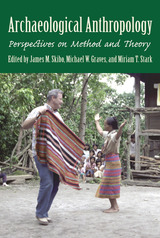
In this collection of twelve new chapters, four generations of Longacre protégés show how they are building upon and developing but also modifying the theoretical paradigm that remains at the core of Americanist archaeology. The contributions focus on six themes prominent in Longacre’s career: the intellectual history of the field in the late twentieth century, archaeological methodology, analogical inference, ethnoarchaeology, cultural evolution, and reconstructing ancient society.
More than a comprehensive overview of the ideas developed by one of the most influential scholars in the field, however, Archaeological Anthropology makes stimulating contributions to contemporary research. The contributors do not unequivocally endorse Longacre’s ideas; they challenge them and expand beyond them, making this volume a fitting tribute to a man whose robust research and teaching career continues to resonate.
The Archaeology of Kinship supports Ensor’s objectives: to demonstrate the relevance of kinship to major archaeological questions, to describe archaeological methods for kinship analysis independent of ethnological interpretation, to illustrate the use of those techniques with a case study, and to provide specific examples of how diachronic analyses address broader theory. As Ensor shows, archaeological diachronic analyses of kinship are independently possible, necessary, and capable of providing new insights into past cultures and broader anthropological theory. Although it is an old subject in anthropology, The Archaeology of Kinship can offer new and exciting frontiers for inquiry.
Kinship research in general—and prehistoric kinship in particular—is rapidly reemerging as a topical subject in anthropology. This book is a timely archaeological contribution to that growing literature otherwise dominated by ethnology.
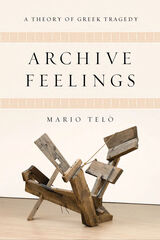
With bold readings of thirteen plays by Aeschylus, Sophocles, and Euripides, including the Oedipus cycle, the Oresteia,Medea, and Bacchae; an eclectic synthesis of Freud, Lacan, Derrida, Žižek, Deleuze, and other critical theorists; and an engagement with art, architecture, and film, Mario Telò’s Archive Feelings: A Theory of Greek Tragedy locates Greek tragedy’s aesthetic allure beyond catharsis in a vertiginous sense of giddy suspension, in a spiral of life and death that resists equilibrium, stabilization, and all forms of normativity. In so doing, Telò forges a new model of tragic aesthetics.
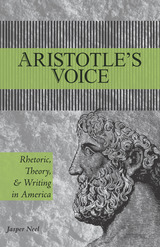
In this book, Jasper Neel’s sure-to-be-controversial resituating of Aristotle centers around three questions that have been constants in his twenty-two years of teaching experience: What does itmean to teach writing? What should one know before teaching writing? And, if there is such a thing as "research in the teaching of writing," what is it?
Believing that all composition teachers are situated politically and socially, both as part of the institution in which they teach and as beings with lived histories, Neel examines his own life and the life of composition studies as a discipline in the context of Aristotle. Neel first situates the Rhetoric as a political document; he then situates the Rhetoric in the Aristotelian system and describes how professional discourse came to know itself through Aristotle’s way of studying the world; finally, he examines the operation of the Rhetoric inside itself before arguing the need to turn to Aristotle’s notion of sophistry as a way of negating his system.
By pointing out the connections among Aristotelian rhetoric, the contemporary university, and the contemporary writing teacher, Neel shows that Aristotle’s frightening social theories are as alive today as are Aristotelian notions of discourse.
Neel explains that by their very nature teachers must speak with a professional voice. It is through showing how to "hear" one’s professional voice that Neel explores the notion of professional discourse that originates with Aristotle. In maintaining that one must pay a high price in order to speak through Aristotle’s theory or to assume the role of "professional," he argues that no neutral ground exists either for pedagogy or for the analysis of pedagogy. Neel concludes this discussion by proposing that Aristotelian sophistry is both an antidote to Aristotelian racism, sexism, and bigotry and a way of allowing Aristotelian categories of discourse to remain useful.
Finally, as an Aristotelian, a teacher, and a writer, Neel responds both to Aristotle and to professionalism by rethinking the influence of the past and reviving the voice of Aristotelian sophistry.
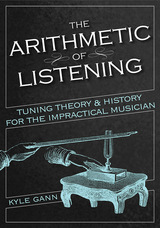
A classroom essential and an invaluable reference, The Arithmetic of Listening offers beginners the grounding in music theory necessary to find their own way into microtonality and the places it may take them. Moving from ancient Greece to the present, Kyle Gann delves into the infinite tunings available to any musician who feels straitjacketed by obedience to standardized Western European tuning. He introduces the concept of the harmonic series and demonstrates its relationship to equal-tempered and well-tempered tuning. He also explores recent experimental tuning models that exploit smaller intervals between pitches to create new sounds and harmonies.
Systematic and accessible, The Arithmetic of Listening provides a much-needed primer for the wide range of tuning systems that have informed Western music.
Audio examples demonstrating the musical ideas in The Arithmetic of Listening can be found at: https://www.kylegann.com/Arithmetic.html
What does a life with art offer that a life without art does not? Art and Freedom asserts that the fundamental point of the enterprise of art is the creation and delivery of values that are not singularly available in the nonart world.
E. E. Sleinis discusses visual art, literature, music, theater, and other art forms, arguing that as art both liberates and provides new points of focus and awareness, the art enterprise depends on a positive freeing from the nonart world, rather than on mere addition to it.
Art and Freedom introduces a novel classificatory system for representation, expression, and formalist theories of art. Sleinis argues that a characteristic defect of contemporary theories of art is their neglect of the issue of value. Challenging these reductive, formalist notions of art, he emphasizes the potential, and the need, for art to evolve and make progress in ways comparable to the sciences, albeit on a very different model.
A smart blend of incisive commentary and illuminating philosophy, Art and Freedom provides a useful context for transforming a sometimes baffling medium into a means of fostering personal growth and creating and sharing values.
The editors have provided what James himself emphasized in his literary criticism—the text's context. Each selection is framed by an editorial commentary and notes which give its biographical, bibliographical, and critical background and cite other references in James' work to the topic discussed. This framework, along with the editors' introduction, gives the reader a sense of the place of these pieces in the history of criticism.
The essays are loosely connected through their bearing on one or more of three themes: the role of orality in the transmission of chant circa 700-1400; varying degrees of stability or instability in the transmission of chant; and the role of the formula in the construction of chant. Throughout, Karp uses 202 musical examples.
The first essay evaluates forms of evidence that may shed light on the nature of orality that led to the surviving notational records of Gregorian chant and assembles evidence that supports the conclusion that fidelity of transmission represented an important goal of the Franks. The second essay treats formulas that cross the boundaries of individual liturgical genres and modes. The third essay defines the varying kinds of musical formulas in chant and proposes a chronological ordering of the genre of second-mode tracts.
The fourth essay treats the transmission of a stable melody and explores the ways in which one basic melody may be adapted to texts of widely differing structures and lengths. The fifth essay deals with a group of unstable melodies that furnished difficulties in modal classification. The sixth essay explores the problems faced by scribes seeking to represent in diastematic notation melodies employing tones not normally admitted into the medieval gamut. The seventh essay takes up the role of the formula in introits, a neumatic genre intended forchoral performance.
The two final essays look at second-mode tracts and at the interrelationship between Roman and Gregorian chant.
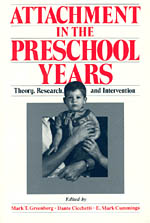
"There is a wealth of information and thought in this book; it does not have a weak or uninteresting chapter, starting with the Preface by Emde, and as a whole, it forms a sort of seminar."—John E. Bates, Contemporary Psychology

Tom Gunning is the author of multiple books and nearly two hundred essays that have defined the field of cinema and media studies. His works have transformed our understanding of early cinema and the American avant-garde and reset the terms of many central debates in film and media history and theory. His 1986 essay “The Cinema of Attractions” is among the most cited essays on film ever published. Gunning’s writings articulate a distinctive and powerful model for thinking about cinema’s history and likely future, addressing the full range of moving-image media, from film to still photography to digital media. His discussions draw on stage melodrama and magic lantern shows, as well as criminology, world’s fairs, and Spiritualism, surveying the medium as a cultural phenomenon informed by the industrial and information ages, psychiatry, urban experience, discourses on art and aesthetics, and more.
This collection brings together twenty-six essays that showcase the depth and range of Gunning’s scholarship, including four that have never before been published. Together, they solidify Gunning’s place as a scholar who has transformed the way generations of scholars, archivists, critics, and artists think about cinema.
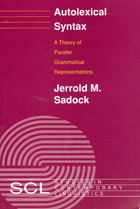
Sadock's principal innovation is the postulation of a uniform set of interface conditions that require the several orthogonal representations of a single natural language expression to match up in certain ways. Through a detailed application of his theory to the twin morphosyntactic problems of cliticization and incorporation, Sadock shows that very straightforward accounts are made possible by the nonderivational model. He demonstrates the empirical success of these accounts by examining more than two dozen morphosyntactic problems in almost as many languages.
Autolexical Syntax will be of interest to those in the fields of theoretical grammar, particularly concerned with the problems of morphology and syntax, as well as philosophers of language, logicians, lexicographers, psychologists of language, and computer scientists.
READERS
Browse our collection.
PUBLISHERS
See BiblioVault's publisher services.
STUDENT SERVICES
Files for college accessibility offices.
RECENTLY PUBLISHED


UChicago Accessibility Resources
home | accessibility | search | about | contact us
BiblioVault ® 2001 - 2026
The University of Chicago Press