
 A SCHOLARLY BOOK REPOSITORY
141 start with B start with B

Throughout his life, James Boswell struggled to fashion a clear account of himself, but try as he might, he could not reconcile the truths of his era with those of his religious upbringing. Boswell’s Enlightenment examines the conflicting credos of reason and faith, progress and tradition that pulled Boswell, like so many eighteenth-century Europeans, in opposing directions. In the end, the life of the man best known for writing Samuel Johnson’s biography was something of a patchwork affair. As Johnson himself understood: “That creature was its own tormentor, and I believe its name was BOSWELL.”
Few periods in Boswell’s life better crystallize this internal turmoil than 1763–1765, the years of his Grand Tour and the focus of Robert Zaretsky’s thrilling intellectual adventure. From the moment Boswell sailed for Holland from the port of Harwich, leaving behind on the beach his newly made friend Dr. Johnson, to his return to Dover from Calais a year and a half later, the young Scot was intent on not just touring historic and religious sites but also canvassing the views of the greatest thinkers of the age. In his relentless quizzing of Voltaire and Rousseau, Hume and Johnson, Paoli and Wilkes on topics concerning faith, the soul, and death, he was not merely a celebrity-seeker but—for want of a better term—a truth-seeker. Zaretsky reveals a life more complex and compelling than suggested by the label “Johnson’s biographer,” and one that 250 years later registers our own variations of mind.

This book brings together an international body of scholars working on eighteenth-century botany within the context of imperial expansion. The eighteenth century saw widespread exploration, a tremendous increase in the traffic in botanical specimens, taxonomic breakthroughs, and horticultural experimentation. The contributors to this volume compare the impact of new developments and discoveries across several regions, broadening the geographical scope of their inquiries to encompass imperial powers that did not have overseas colonial possessions—such as the Russian, Ottoman, and Qing empires and the Tokugawa shogunate—as well as politically borderline regions such as South Africa, Yemen, and New Zealand.
The essays in this volume examine the botanical ambitions of eighteenth-century empires; the figure of the botanical explorer; the links between imperial ambition and the impulse to survey, map, and collect botanical specimens in “new” territories; and the relationships among botanical knowledge, self-representation, and material culture.

The Germans claimed that Theresienstadt was "the town the Führer gave the Jews," and they temporarily transformed it into a Potemkin village for an International Red Cross visit in June 1944, the only Nazi camp opened to outsiders. But the Germans lied. Theresienstadt was a holding pen for Jews to be shipped east to annihilation camps.
While famous and infamous figures and historical events flit across the pages, they form the background for Pavel's life. Assigned to the now-famous Czech boys' home, L417, Pavel served as editor of the magazine Ne?ar. Relationships, sports, the quest for food, and a determination to continue their education dominate the boys' lives. Pavel's father and brother were deported in September 1944; he turned thirteen (the age for his bar mitzvah) in November of that year, and he grew in his ability to express his observations and reflect on them. A Boy in Terezín registers the young boy's insights, hopes, and fears and recounts a passage into maturity during the most horrifying of times.
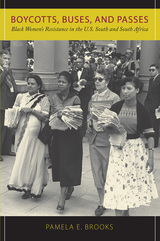
In the mid-1950s, as many developing nations sought independence from colonial rule, black women in the American South and in South Africa launched parallel campaigns to end racial injustice within their respective communities. Just as the dignified obstinacy of Mrs. Rosa Parks sparked the Montgomery bus boycott in 1955, the 20,000 South African women who marched in Pretoria a year later to protest the pass laws signaled a new wave of resistance to the system of apartheid. In both places women who had previously been consigned to subordinate roles brought fresh leadership to the struggle for political freedom and social equality.
In this book, Pamela E. Brooks tells their story, documenting the extraordinary achievements of otherwise ordinary women. In comparing the experiences of black women activists in two different parts of the African diaspora, Brooks draws heavily on oral histories that provide clear, and often painful, insight into their backgrounds, their motives, their hopes, and their fears. We learn how black women from all walks of life—domestic and factory workers, householders, teachers, union organizers, churchwomen, clubwomen, rural and urban dwellers alike—had to overcome their class differences and work through the often difficult gender relations within their families and communities. Yet eventually they came together to forge their own political organizations, such as the Women's Political Council and the Federation of South African Women, or joined orga-nizations of women and men, such as the Montgomery Improvement Association and the African National Congress, to advance the common agenda of black liberation.By tracing the dual rise of political consciousness and activism among the black women of the U.S. South and South Africa, Brooks not only illuminates patterns that have long been overlooked but places that shared history within the context of a larger global struggle to bring an end to the vestiges of European colonialism.
Winner of the 2011 New York Society of Colonial Wars Distinguished Book Award
“The strength of this book lies in Crocker’s presentation of the battle and the complicated logistics involved.”—Times Literary Supplement “Braddock’s March is arguably the first truly comprehensive history devoted exclusively to the calamitous march that remade North America. . . . Braddock’s story is superb history.”—Weekly Standard “Drawing on original sources, Crocker grittily reconstructs the advance of Edward Braddock’s army on Fort Duquesne. . . . Attentive to detail, Crocker will engage colonial-history readers in this well illustrated book.”—Booklist
“Both Braddock’s epic march and subsequent destruction are brought to life by Thomas E. Crocker in Braddock’s March, his impeccably researched account of an important but largely forgotten chapter in American history. . . . It all adds up to a stirring tale.”—Washington Times
“Before we parted, the General told me he should never see me more; for he was going with a handful of men to conquer whole nations; and to do this they must cut their way through unknown woods. He produced a map of the country, saying at the same time, ‘Dear Pop, we are sent like sacrifices to the altar.’” - George Anne Bellamy on General Edward Braddock’s departure
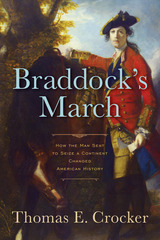
In January 1755, Major General Edward Braddock was sent by Great Britain on a mission to drive France once and for all from the New World. Accompanied by the largest armed expeditionary force ever sent to North America, Braddock’s primary target was the Forks of the Ohio, where he planned to seize Fort Duquesne (at present-day Pittsburgh, Pennsylvania), and then march north into Canada. After landing in Alexandria, Virginia, and organizing his troops and supply chain, Braddock and his expedition began its nearly 250-mile trek, heroically cutting through uncharted wilderness, fording rivers, and scaling the Appalachian mountains, all while hauling baggage and heavy artillery. Braddock was joined on this epic mission by a young Virginia colonel, George Washington, and others who would later play major roles in the American Revolution, including Horatio Gates, Thomas Gage, and Charles Lee; among those driving the expedition’s wagons were Daniel Boone and Daniel Morgan. Having withstood the harsh frontier and finally marching upon Fort Duquesne on a hot July morning, Braddock’s exhausted column was ambushed by a combined French and Indian force. Over two-thirds of Braddock’s British and colonial troops were killed or wounded, including Braddock himself, struck by a bullet in the chest while attempting to rally his disoriented troops. George Washington miraculously escaped harm despite four bullet holes through his clothing. With this battle, North America became the greatest stake in the global war between France and Great Britain.
In Braddock’s March: How the Man Sent to Seize a Continent Changed American History, Thomas E. Crocker tells the riveting story of one of the most important events in colonial America. Not only did Braddock’s expedition have a profound impact on American political and military developments, this fateful march laid the foundation for the “National Pike,” the major road for westward expansion, launched the career of George Washington, and sowed the seeds of dissent between England and its colonies that would ultimately lead to the American Revolution.



"Lucid and elegant...a tour de force."
—A. O. Scott, Nation
Three lectures on the fraught process of poetic development from a titan of contemporary criticism.
Style is the material body of lyric poetry. To cast off an earlier style is to commit an act of violence against the creative self. Why do poets so often make these dramatic breaks? In her 1994 Richard Ellman Lectures, Helen Vendler investigates poets’ motives for inventing a new voice, along with their means of doing so. Exploring three archetypal ruptures, she yields a new view of the interplay of moral, emotional, and intellectual forces in each poet’s work.
Gerard Manley Hopkins’s invention of sprung rhythm marks a radical break with his early style. Rhythm, Vendler shows us, is at the heart of Hopkins’s aesthetic, and sprung rhythm is his symbol for danger, difference, and the shock of the beautiful. In Seamus Heaney’s work, she identifies clear shifts in grammatical “atmosphere” from one poem to the next—from “nounness” to the “betweenness” of an adverbial style—shifts whose moral and political implications come under scrutiny here. And finally, Vendler looks at Jorie Graham’s departure from short lines to numbered lines to squared long lines of sentences, marking a move from “deliberation” to cinematic “freeze-framing” to “coverage,” each with its own meaning in this poet’s career.
Throughout, Vendler reminds us that what distinguishes successful poetry is a mastery of language at all levels—including the rhythmic, the grammatical, and the graphic. A lucid reading of three poets and a superb exposition of the craft of poetry, The Breaking of Style revives our lapsed sense of what style means.


This book presents an overview of the development and operational use of the Buffalo with many photos including a number not published before.
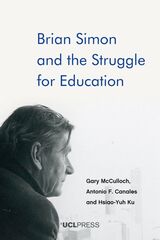
Using documentary sources that have only recently become publicly available, this book reveals the remarkably broad range of Brian Simon’s life as a student, soldier, schoolteacher, Communist Party activist, educational academic, campaigner, and reformer. In a sympathetic biography that retains critical distance, the authors analyze Simon’s contribution to Marxism and the Communist Party, explore the influence of both on his work as a historian of education, and trace the significance of his Marxist beliefs, political associations, and historical approaches to the cause of educational reform.
In so doing, they consider the full nature and limitations of Simon’s achievements in his struggle for education. Unlike many Marxist scholars, he remained loyal to the Communist Party in the 1950s, which damaged his reputation as a public intellectual. Nevertheless, his support for comprehensive education helped to promote egalitarian educational reforms in Britain, although he was later unable to provide sufficient resistance to the 1988 Education Reform Act and to a decline in the position of comprehensive schools.
In all this, the significance of Simon’s family, and especially his relationship with his wife Joan, is brought to the fore. Joan and Brian forged a formidable sixty-year partnership in politics and the Communist Party as well as in life, a partnership that lasted until Brian’s death in January 2002.
Co-published with the DuSable Museum of African American History
Recipient of 2007 The Hyde Park Historical Society Paul Cornell Award
A collection of interviews with African Americans who came to Chicago from the South. In their first great migration to Chicago that began during World War I, African Americans came from the South seeking a better life--and fleeing a Jim Crow system of racial prejudice, discrimination, and segregation. What they found was much less than what they'd hoped for, but it was much better than what they'd come from--and in the process they set in motion vast changes not only in Chicago but also in the whole fabric of American society. This book, the first of three volumes, revisits this momentous chapter in American history with those who lived it.
Oral history of the first order, Bridges of Memory lets us hear the voices of those who left social, political, and economic oppression for political freedom and opportunity such as they'd never known--and for new forms of prejudice and segregation. These children and grandchildren of ex-slaves found work in the stockyards and steel mills of Chicago, settled and started small businesses in the "Black Belt" on the South Side, and brought forth the jazz, blues, and gospel music that the city is now known for. Historian Timuel D. Black, Jr., himself the son of first-generation migrants to Chicago, interviews a wide cross-section of African Americans whose remarks and reflections touch on issues ranging from fascism to Jim Crow segregation to the origin of the blues. Their recollections comprise a vivid record of a neighborhood, a city, a society, and a people undergoing dramatic and unprecedented changes.
In the second volume of Bridges of Memory, historian Timuel D. Black Jr. continues his conversations with African-Americans who migrated to Chicago from the South in search of economic, social, and cultural opportunities. With his trademark gift for interviewing, Black-himself the son of first-generation migrants to Chicago-guides these individual discussions with ease, resulting in first-person narratives that are informative and entertaining.
Picking up where the first book left off, volume 2 introduces the reader to more members of the first wave of migration and also members of the second generation, the children of those who came in the first wave. In telling their stories, the interviewees paint a vivid picture of the thriving and tight-knit Chicago community formerly known as the Black Belt—today's historic Bronzeville neighborhood. They bring to life the role of family, religion, business, music, and, most of all, the hopes, dreams, and perseverance that enabled a group of people to establish a successful community within a larger society that seemed determined to keep them from success. The experiences of these diverse and vivid personalities often illustrate the role that racial prejudice has played in shaping the specific arcs of their lives. But personal histories such as these are not just chronicles of frustration and despair; more important these narratives reveal an unwavering dedication to breaking the color line and a tireless pursuit of their right to the promise of America.
Enlightenment-era writers had not yet come to take technology for granted, but nonetheless were—as we are today—both attracted to and repelled by its potential. This volume registers the deep history of such ambivalence, examining technology’s influence on Enlightenment British literature, as well as the impact of literature on conceptions of, attitudes toward, and implementations of technology. Offering a counterbalance to the abundance of studies on literature and science in seventeenth- and eighteenth-century Britain, this volume’s focus encompasses approaches to literary history that help us understand technologies like the steam engine and the telegraph along with representations of technology in literature such as the “political machine.” Contributors ultimately show how literature across genres provided important sites for Enlightenment readers to recognize themselves as “chimeras”—“hybrids of machine and organism”—and to explore the modern self as “a creature of social reality as well as a creature of fiction.”

In the theater of war, how important is costume? And in peacetime, what purpose does military spectacle serve? This book takes us behind the scenes of the British military at the height of its brilliance to show us how dress and discipline helped to mold the military man and attempted to seduce the hearts and minds of a nation while serving to intimidate civil rioters in peacetime.
Often ridiculed for their constrictive splendor, British army uniforms of the early nineteenth century nonetheless played a powerful role in the troops' performance on campaign, in battle, and as dramatic entertainment in peacetime. Plumbing a wide variety of military sources, most tellingly the memoirs and letters of soldiers and civilians, Scott Hughes Myerly reveals how these ornate sartorial creations, combining symbols of solidarity and inspiration, vivid color, and physical restraint, enhanced the managerial effects of rigid discipline, drill, and torturous punishments, but also helped foster regimental esprit de corps.
Encouraging recruitment, enforcing discipline within the military, and boosting morale were essential but not the only functions of martial dress. Myerly also explores the role of the resplendent uniform and its associated gaudy trappings and customs during civil peace and disorder--whether employed as public relations through spectacular free entertainment, or imitated by rioters and rebels opposing the status quo. Dress, drills, parades, inspections, pomp, and order: as this richly illustrated book conducts us through the details of the creation, design, functions, and meaning of these aspects of the martial image, it exposes the underpinnings of a mentality--and vision--that extends far beyond the military subculture into the civic and social order that we call modernity.
In eighteenth-century Britain, criminals were routinely whipped, branded, hanged, or transported to America. Only in the last quarter of the century—with the War of American Independence and legal and sociopolitical challenges to capital punishment—did the criminal justice system change, resulting in the reformed prison, or penitentiary, meant to educate, rehabilitate, and spiritualize even hardened felons. This volume is the first to explore the relationship between historical penal reform and Romantic-era literary texts by luminaries such as Godwin, Keats, Byron, and Austen. The works examined here treat incarceration as ambiguous: prison walls oppress and reinforce the arbitrary power of legal structures but can also heighten meditation, intensify the imagination, and awaken the conscience. Jonas Cope skillfully traces the important ideological work these texts attempt: to reconcile a culture devoted to freedom with the birth of the modern prison system that presents punishment as a form of rehabilitation.
Published by Bucknell University Press. Distributed worldwide by Rutgers University Press.
Broken Masculinities portrays the post-dictatorial novel of the 1970s in all its complexity, and introduces the reader to a 1968-era Turkey, a period which challenges Turkey’s now reinforced Islamic image by portraying the quest for sexual liberation and critical student uprisings. Günay-Erkol argues that the literature written after the 1971 coup in Turkey constitutes a coherent sub-genre and needs to be considered together. These novels share a common ground which is rich in images of men and women craving for power: general isolation, sexual-emotional frustration, and a traumatic sense of solitude and alienation.
This book is an original and significant contribution to two major fields of study: (1) gender and sexuality with respect to formation of subjectivity through literature, and (2) modern literature and history through the study of Turkish literature. The chief concern in this book is not only literature’s response to a particular period in Turkey, but also the role of literature in bearing witness to trauma and drastic political acts of violence—and coming to terms with them.B
Oliver Goldsmith arrived in England in 1756 a penniless Irishman. He toiled for years in the anonymity of Grub Street—already a synonym for impoverished hack writers—before he became one of literary London’s most celebrated authors. Norma Clarke tells the extraordinary story of this destitute scribbler turned gentleman of letters as it unfolds in the early days of commercial publishing, when writers’ livelihoods came to depend on the reading public, not aristocratic patrons. Clarke examines a network of writers radiating outward from Goldsmith: the famous and celebrated authors of Dr. Johnson’s “Club” and those far less fortunate “brothers of the quill” trapped in Grub Street.
Clarke emphasizes Goldsmith’s sense of himself as an Irishman, showing that many of his early literary acquaintances were Irish émigrés: Samuel Derrick, John Pilkington, Paul Hiffernan, and Edward Purdon. These writers tutored Goldsmith in the ways of Grub Street, and their influence on his development has not previously been explored. Also Irish was the patron he acquired after 1764, Robert Nugent, Lord Clare. Clarke places Goldsmith in the tradition of Anglo-Irish satirists beginning with Jonathan Swift. He transmuted troubling truths about the British Empire into forms of fable and nostalgia whose undertow of Irish indignation remains perceptible, if just barely, beneath an equanimous English surface.
To read Brothers of the Quill is to be taken by the hand into the darker corners of eighteenth-century Grub Street, and to laugh and cry at the absurdities of the writing life.

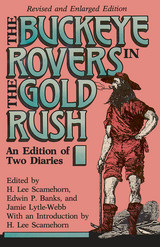
When “California Fever” raced through southeastern Ohio in the spring of 1849, a number of residents of Athens County organized a cooperative venture for traveling overland to the mines. Known as the “Buckeye Rovers,” the company began its trip westward in early April. The Buckeye Rovers, along with thousands who traveled the overland route to California, endured numerous hardships and the seemingly constant threat of attacks from hostile Indians. On reaching their destination, the Ohioans discovered that rich deposits of gold were extremely rare, and that except for a few lucky fortune–seekers, mining required hard physical labor and yielded small rewards. They persisted nonetheless and most of the company returned to Athens in late 1851 or early 1852 with modest fortunes.
The arduous experiences of the overland trek were recorded by two Buckeye Rover diarists. The more compete account was compiled by John Banks. He wrote effusively while on the trail and throughout his stay of more than two years in the gold regions. J. Elza Armstrong, by contrast, was brief, even laconic, and his journal ended upon reaching California. The contrast between the two brings into focus the divergent personalities who were drawn to California by the lure of gold.
A nine–month segment of Bank’s diary, from February to November, 1851, had been missing at the time the story of the Buckeye Rovers was first published in 1965. This revised and enlarged edition contains the complete diaries. They offer valuable record of the Buckeyes’ adventures from the time they left home until the time they departed California for the return trip to Ohio.

Mádi’s family donated the entire collection of her diaries to the US Holocaust Memorial Museum. This edition transcribes a selection of Mádi’s writings focusing on the period of March 1944 to November 1945, from the Nazi invasion and occupation of Hungary, through the Battle of Budapest, to the ensuing Soviet occupation. While bearing witness to the catastrophe in Hungary, Mádi hid a Jewish family in her small flat from October 1944 to February 1945. She received a posthumous Righteous among Nations Medal from Yad Vashem, the World Holocaust Remembrance Center.
Editorial commentary by James W. Oberly situates Mádi’s observations, and a critical introduction by the Holocaust scholar András Lénárt outlines the wider sociopolitical context in which her diaries gain meaning.

In the late 1800s, as Japanese leaders mulled over the usefulness of religion in modernizing their country, they chose to invite Unitarian missionaries to Japan. This book spotlights one facet of debates sparked by the subsequent encounter between Unitarianism and Buddhism—an intersection that has been largely neglected in the scholarly literature. Focusing on the cascade of events triggered by the missionary presence of the American Unitarian Association on Japanese soil between 1887 and 1922, Michel Mohr’s study sheds new light on this formative time in Japanese religious and intellectual history.
Drawing on the wealth of information contained in correspondence sent and received by Unitarian missionaries in Japan, as well as periodicals, archival materials, and Japanese sources, Mohr shows how this missionary presence elicited unprecedented debates on “universality” and how the ambiguous idea of “universal truth” was utilized by missionaries to promote their own cultural and ethnocentric agendas. At the turn of the twentieth century this notion was appropriated and reformulated by Japanese intellectuals and religious leaders, often to suit new political and nationalistic ambitions.

Nineteenth-century Europe saw an unprecedented rise in the number of synagogues. Building a Public Judaism considers what their architecture and the circumstances surrounding their construction reveal about the social progress of modern European Jews. Looking at synagogues in four important centers of Jewish life—London, Amsterdam, Paris, and Berlin—Saskia Coenen Snyder argues that the process of claiming a Jewish space in European cities was a marker of acculturation but not of full acceptance. Whether modest or spectacular, these new edifices most often revealed the limits of European Jewish integration.
Debates over building initiatives provide Coenen Snyder with a vehicle for gauging how Jews approached questions of self-representation in predominantly Christian societies and how public manifestations of their identity were received. Synagogues fused the fundamentals of religion with the prevailing cultural codes in particular locales and served as aesthetic barometers for European Jewry’s degree of modernization. Coenen Snyder finds that the dialogues surrounding synagogue construction varied significantly according to city. While the larger story is one of increasing self-agency in the public life of European Jews, it also highlights this agency’s limitations, precisely in those places where Jews were thought to be most acculturated, namely in France and Germany.
Building a Public Judaism grants the peculiarities of place greater authority than they have been given in shaping the European Jewish experience. At the same time, its place-specific description of tensions over religious tolerance continues to echo in debates about the public presence of religious minorities in contemporary Europe.
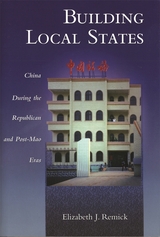
This book examines two eras of Chinese history that have commonly been viewed as periods of state disintegration or retreat. And they were—at the central level. When re-examined at the local level, however, both are revealed as periods of state building. In both the Nanjing decade of Guomindang rule (1927-1937) and the early post-Mao reform era (1980-1992), both national and local factors shaped local state building and created variations in local state structures and practices. This book focuses on one key area of the state, taxation and public finance, to trace the processes of local state building in these two eras. Using the records of local tax and finance offices in the Tianjin area and in Guangdong province, the author maps the process by which these county-level offices grew.
This book highlights variation in local state structures and practices between localities and between the central and local governments. As the author shows, this variation is important because it results in regional differences in state-society relations and affects central state capacity in terms of the local state's ability to implement central state policies as well as its own.
Through the prism of the lives of Leon Blum, Albert Camus, and Raymond Aron, Judt examines pivotal issues in the history of contemporary French society—antisemitism and the dilemma of Jewish identity, political and moral idealism in public life, the Marxist moment in French thought, the traumas of decolonization, the disaffection of the intelligentsia, and the insidious quarrels rending Right and Left. Judt focuses particularly on Blum's leadership of the Popular Front and his stern defiance of the Vichy governments, on Camus's part in the Resistance and Algerian War, and on Aron's cultural commentary and opposition to the facile acceptance by many French intellectuals of communism's utopian promise. Severely maligned by powerful critics and rivals, each of these exemplary figures stood fast in their principles and eventually won some measure of personal and public redemption.
Judt constructs a compelling portrait of modern French intellectual life and politics. He challenges the conventional account of the role of intellectuals precisely because they mattered in France, because they could shape public opinion and influence policy. In Blum, Camus, and Aron, Judt finds three very different men who did not simply play the role, but evinced a courage and a responsibility in public life that far outshone their contemporaries.
"An eloquent and instructive study of intellectual courage in the face of what the author persuasively describes as intellectual irresponsibility."—Richard Bernstein, New York Times
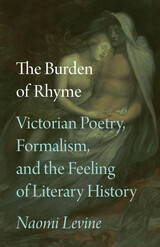
The Burden of Rhyme shows how the nineteenth-century search for the origin of rhyme shaped the theory and practice of poetry. For Victorians, rhyme was not (as it was for the New Critics, and as it still is for us) a mere technique or ahistorical form. Instead, it carried vivid historical fantasies derived from early studies of world literature. Naomi Levine argues that rhyme’s association with the advent of literary modernity and with a repertoire of medievalist, Italophilic, and orientalist myths about love, loss, and poetic longing made it a sensitive historiographic instrument. Victorian poets used rhyme to theorize both literary history and the most elusive effects of aesthetic form. This Victorian formalism, which insisted on the significance of origins, was a precursor to and a challenge for twentieth-century methods. In uncovering the rich relationship between Victorian poetic forms and a forgotten style of literary-historical thought, The Burden of Rhyme reveals the unacknowledged influence of Victorian poetics—and its repudiation—on the development of modern literary criticism.

Winner of the J. Russell Major Prize, American Historical Association
Winner of the David H. Pinkney Prize, Society for French Historical Studies
Winner of the JDC–Herbert Katzki Award, National Jewish Book AwardsWinner of the American Library in Paris Book Award
A Choice Outstanding Academic Title of the Year
Headlines from France suggest that Muslims have renewed an age-old struggle against Jews and that the two groups are once more inevitably at odds. But the past tells a different story. The Burdens of Brotherhood is a sweeping history of Jews and Muslims in France from World War I to the present.
“Katz has uncovered fascinating stories of interactions between Muslims and Jews in France and French colonial North Africa over the past 100 years that defy our expectations…His insights are absolutely relevant for understanding such recent trends as rising anti-Semitism among French Muslims, rising Islamophobia among French Jews and, to a lesser degree, rising rates of aliyah from France.”
—Lisa M. Leff, Haaretz
“Katz has written a compelling, important, and timely history of Jewish/Muslim relations in France since 1914 that investigates the ways and venues in which Muslims and Jews interacted in metropolitan France…This insightful, well-researched, and elegantly written book is mandatory reading for scholars of the subject and for those approaching it for the first time.”
—J. Haus, Choice

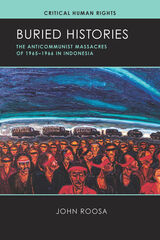
Drawing upon years of research and interviews with survivors, Buried Histories is an impressive contribution to the literature on genocide and mass atrocity, crucially addressing the topics of media, military organization, economic interests, and resistance.
Soon after overthrowing the Tokugawa government in 1868, the new Meiji leaders devised ambitious plans to build a modern nation-state. Among the earliest and most radical of the Meiji reforms was a plan for a centralized, compulsory educational system modeled after those in Europe and America. Meiji leaders hoped that schools would curb mounting social disorder and mobilize the Japanese people against the threat of Western imperialism.
The sweeping tone of this revolutionary plan obscured the fact that the Japanese were already quite literate and had clear ideas about what a school should be. In the century preceding the Meiji restoration, commoners throughout Japan had established 50,000 schools with almost no guidance or support from the government. Consequently, the Ministry of Education's new code of 1872 met with resistance, as local officials, teachers, and citizens sought compromises and pursued alternative educational visions. Their efforts ultimately led to the growth and consolidation of a new educational system, one with the imprint of local demands and expectations. This book traces the unfolding of this process in Nagano prefecture and explores how local people negotiated the formation of the new order in their own communities.

Burning Country explores the complicated reality of life in present-day Syria with unprecedented detail and sophistication, drawing on new firsthand testimonies from opposition fighters, exiles lost in an archipelago of refugee camps, and courageous human rights activists. Robin Yassin-Kassab and Leila Al-Shami expertly interweave these stories with an incisive analysis of the militarization of the uprising, the rise of the Islamists and sectarian warfare, and the role of Syria’s government in exacerbating the brutalization of the conflict. Through these accounts and a broad range of secondary source material, the authors persuasively argue that the international community has failed in its stated commitments to support the Syrian opposition movements.
This new edition brings the story up to the present, with a new chapter that covers the internationalization of the conflict, including interventions by the United States, Russia, and Iran; the rollback of ISIS; the fall of Daraya and Aleppo; the crushing of local democracy; sectarian cleansing; and the forced exile of millions of Syrians.
During the 1920s, the "black decade" of British steel, nearly everyone agreed that the industry's revival depended on replacing obsolete equipment and instituting modern technologies that would increase production and decrease costs. Despite consensus, these goals were not reached and, even after wartime and postwar reconstruction needs were met, the industry continued its steady decline. Steven Tolliday advances three hypotheses for this stagnation.
First, the problems of British steel, Tolliday suggests, were embedded in the structures of individual firms and of the industry as a whole—both unchanged since the prosperous years of the nineteenth century—and after World War I fractured by conflicting interests (share holders, managers, family members, bankers, creditors). Second, the two external institutions that might have enforced reorganization and modernization—the banking system and the government—were overcautious, had complex and contradictory goals, and lacked the management skills to exploit their potential financial leverage. Third, the many attempts at reform by banks and government collapsed because these establishments, like the industry itself, were constrained by traditions and antiquated structural rigidities.
This excellent example of a new direction in business history—analysis of a given industry by conveying the interaction of technology, markets, companies, financial institutions, and government—brings many important theoretical questions into focus and also contributes substantially to the scrutiny of specific problems, such as why the British economy appears to be in irrevocable decline.

These scenarios could be part of a future Hollywood movie. Sadly, they are representative of previous terror attacks against industry and government interests worldwide. Moreover, they are harbingers of global terror threats.
Industry constitutes a prime target of contemporary terrorism. This timely book analyzes the threats companies face due to terrorism, industry responses to these dangers, and terrorism’s effects on conducting business in the post-9/11 environment. Dean C. Alexander details the conventional and unconventional terror capabilities facing industry. He describes the activities of terrorists in the economic system and the ways they finance their operations.
Alexander discusses how companies can reduce terrorist threats and that corporate security can minimize political violence. He outlines the dynamics of the public-private partnership against terrorism: government aiding industry, business supporting government, and tensions between the two. He also delineates terrorism’s effects—financial, physical, and emotional—on workers and employers. He highlights the negative financial and economic consequences of terrorism. He discusses the impact of terrorism on traditional business practices and concludes with an assessment of future trends.
”A major achievement of American scholarship and in the first rank of those which have been transforming our view of French history during the last twenty years.“ —New York Review of Books
A great book about an even greater book is a rare event in publishing. Robert Darnton’s history of the Encyclopédie is such an occasion. The author explores some fascinating territory in the French genre of histoire du livre, and at the same time he tracks the diffusion of Enlightenment ideas. He is concerned with the form of the thought of the great philosophes as it materialized into books and with the way books were made and distributed in the business of publishing. This is cultural history on a broad scale, a history of the process of civilization.
In tracing the publishing story of Diderot’s Encyclopédie, Darnton uses new sources—the papers of eighteenth-century publishers—that allow him to respond firmly to a set of problems long vexing historians. He shows how the material basis of literature and the technology of its production affected the substance and diffusion of ideas. He fully explores the workings of the literary market place, including the roles of publishers, book dealers, traveling salesmen, and other intermediaries in cultural communication. How publishing functioned as a business, and how it fit into the political as well as the economic systems of prerevolutionary Europe are set forth. The making of books touched on this vast range of activities because books were products of artisanal labor, objects of economic exchange, vehicles of ideas, and elements in political and religious conflict.
The ways ideas traveled in early modern Europe, the level of penetration of Enlightenment ideas in the society of the Old Regime, and the connections between the Enlightenment and the French Revolution are brilliantly treated by Darnton. In doing so he unearths a double paradox. It was the upper orders in society rather than the industrial bourgeoisie or the lower classes that first shook off archaic beliefs and took up Enlightenment ideas. And the state, which initially had suppressed those ideas, ultimately came to favor them. Yet at this high point in the diffusion and legitimation of the Enlightenment, the French Revolution erupted, destroying the social and political order in which the Enlightenment had flourished.
Never again will the contours of the Enlightenment be drawn without reference to this work. Darnton has written an indispensable book for historians of modern Europe.
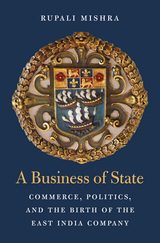
At the height of its power around 1800, the English East India Company controlled half of the world’s trade and deployed a vast network of political influencers at home and abroad. Yet the story of the Company’s beginnings in the early seventeenth century has remained largely untold. Rupali Mishra’s account of the East India Company’s formative years sheds new light on one of the most powerful corporations in the history of the world.
From its birth in 1600, the East India Company lay at the heart of English political and economic life. The Company’s fortunes were determined by the leading figures of the Stuart era, from the monarch and his privy counselors to an extended cast of eminent courtiers and powerful merchants. Drawing on a host of overlooked and underutilized sources, Mishra reconstructs the inner life of the Company, laying bare the era’s fierce struggles to define the difference between public and private interests and the use and abuse of power. Unlike traditional accounts, which portray the Company as a private entity that came to assume the powers of a state, Mishra’s history makes clear that, from its inception, the East India Company was embedded within—and inseparable from—the state.
A Business of State illuminates how the East India Company quickly came to inhabit such a unique role in England’s commercial and political ambitions. It also offers critical insights into the rise of the early modern English state and the expansion and development of its nascent empire.
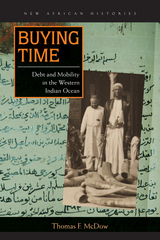
In Buying Time, Thomas F. McDow synthesizes Indian Ocean, Middle Eastern, and East African studies as well as economic and social history to explain how, in the nineteenth century, credit, mobility, and kinship knit together a vast interconnected Indian Ocean region. That vibrant and enormously influential swath extended from the desert fringes of Arabia to Zanzibar and the Swahili coast and on to the Congo River watershed.
In the half century before European colonization, Africans and Arabs from coasts and hinterlands used newfound sources of credit to seek out opportunities, establish new outposts in distant places, and maintain families in a rapidly changing economy. They used temporizing strategies to escape drought in Oman, join ivory caravans in the African interior, and build new settlements.
The key to McDow’s analysis is a previously unstudied trove of Arabic business deeds that show complex variations on the financial transactions that underwrote the trade economy across the region. The documents list names, genealogies, statuses, and clan names of a wide variety of people—Africans, Indians, and Arabs; men and women; free and slave—who bought, sold, and mortgaged property. Through unprecedented use of these sources, McDow moves the historical analysis of the Indian Ocean beyond connected port cities to reveal the roles of previously invisible people.

READERS
Browse our collection.
PUBLISHERS
See BiblioVault's publisher services.
STUDENT SERVICES
Files for college accessibility offices.
RECENTLY PUBLISHED





UChicago Accessibility Resources
home | accessibility | search | about | contact us
BiblioVault ® 2001 - 2026
The University of Chicago Press