
 A SCHOLARLY BOOK REPOSITORY
242 start with B start with B

Each time a child was born in bondage, the system of slavery began anew. Although raised by their parents or by surrogates in the slave community, children were ultimately subject to the rule of their owners. Following the life cycle of a child from birth through youth to young adulthood, Marie Jenkins Schwartz explores the daunting world of slave children, a world governed by the dual authority of parent and owner, each with conflicting agendas.
Despite the constant threats of separation and the necessity of submission to the slaveowner, slave families managed to pass on essential lessons about enduring bondage with human dignity. Schwartz counters the commonly held vision of the paternalistic slaveholder who determines the life and welfare of his passive chattel, showing instead how slaves struggled to give their children a sense of self and belonging that denied the owner complete control.
Born in Bondage gives us an unsurpassed look at what it meant to grow up as a slave in the antebellum South. Schwartz recreates the experiences of these bound but resilient young people as they learned to negotiate between acts of submission and selfhood, between the worlds of commodity and community.
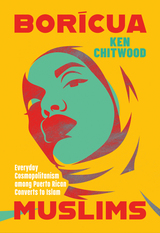
The stories and struggles of Puerto Rican Muslims in modern day America.
Among Puerto Rican converts to Islam, marginalization is a fact of daily life. Their “authenticity” is questioned by other Muslims and by fellow Borícua on the island and in the United States. At the same time, they exist under the shadow of US colonization and as Muslims in the context of American empire. To be a Puerto Rican Muslim, then, is to negotiate identity at numerous intersections of diversity and difference.
Drawing on years of ethnographic research and more than a hundred interviews conducted in Puerto Rico, New York, Florida, Texas, New Jersey, and online, Ken Chitwood tells the story of Puerto Rican Muslims as they construct a shared sense of peoplehood through everyday practices. Borícua Muslims thus provides a study of cosmopolitanism not as a political ideal but as a mundane social reality—a reality that complicates scholarly and public conversations about race, ethnicity, and religion in the Americas. Expanding the geography of global Islam and recasting the relationship between religion and Puerto Rican culture, Borícua Muslims is an insightful reckoning with the manifold entanglements of identity amid late-modern globalization.

In the late twentieth century the American and global economy shifted from manufacturing toward a knowledge industry. Following an economic low point several decades earlier, the city of Boston took advantage of the new era of globalization, fueled by dramatic advances in telecommunications, computer power, and air and sea travel, as well as its own impressive intellectual capital.
Boston and the Making of a Global City pulls together scholarship, media stories, personal interviews, and city planning documents to tell the story of Boston’s historical trajectory, as it quickly became a competitive global hub. Starting with its role as a colonial port and nineteenth-century maritime power, but moving quickly forward, the book describes how Boston capitalized on its strengths in higher education and such innovation sectors as life sciences, healthcare, information technology, and finance. Author James O’Connell traces the historical sweep of global flows—trade and supply chains, innovation and the dissemination of knowledge, investment, transportation, tourism, telecommunications, and immigration—that have shaped the city and region’s development. This volume also addresses the economic, social, and environmental challenges that Boston currently faces and how it is strategically positioned to confront them going forward.

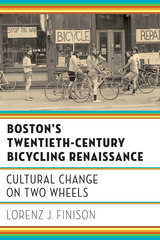
Finison traces the city's cycling history, chronicling the activities of environmental and social justice activists, stories of women breaking into male-dominated professions by becoming bike messengers and mechanics, and challenges faced by African American cyclists. Making use of newspaper archives, newly discovered records of local biking organizations, and interviews with Boston-area bicyclists and bike builders, Boston's Twentieth-Century Bicycling Renaissance brings these voices and battles back to life.
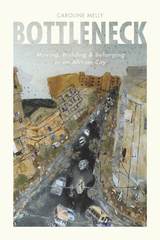
Melly opens with an account of the generation of urban men who came of age on the heels of the era of structural adjustment, a diverse cohort with great dreams of building, moving, and belonging, but frustratingly few opportunities to do so. From there, she moves to a close study of taxi drivers and state workers, and shows how bottlenecks—physical and institutional—affect both. The third section of the book covers a seemingly stalled state effort to solve housing problems by building large numbers of concrete houses, while the fourth takes up the thousands of migrants who attempt, sometimes with tragic results, to cross the Mediterranean on rickety boats in search of new opportunities. The resulting book offers a remarkable portrait of contemporary Senegal and a means of theorizing mobility and its impossibilities far beyond the African continent.

Tracing patterns of marriage and childbearing among both whites and blacks during the first decades of this century, Stewart Tolnay pursues questions about how black southern farm families were formed and dissolved, how they educated their children or put them to work in the fields, and how they migrated in search of opportunity. Further, he considers the possible legacy of these experiences for family life in contemporary urban environments.
Making revealing and innovative use of public records from the early part of the twentieth century, Tolnay challenges the widely held idea that southern migrants to northern cities carried with them a dysfunctional family culture. He demonstrates the powerful impact of economic conditions on family life and views patterns of marriage and childbearing as responsive to prevailing social, economic, and political conditions. In a provocative extension of this perspective, Tolnay argues that current high levels of single-parenthood among urban African American families likewise reflect rational responses to the socio-economic environment and government policies.
By placing post-World War II demographic developments in a wider historical perspective, The Bottom Rung sheds new light on recent discussions of the difficulties faced by the modern black urban family. The text is enhanced by Dorothea Lange's and Russell Lee's poignant photographs.
Winner of the Stone Book Award, Museum of African American History
Winner of the Joan Kelly Memorial Prize
Winner of the Littleton-Griswold Prize
Winner of the Mary Nickliss Prize
Winner of the Willie Lee Rose Prize
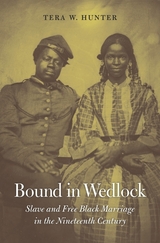
Americans have long viewed marriage between a white man and a white woman as a sacred union. But marriages between African Americans have seldom been treated with the same reverence. This discriminatory legacy traces back to centuries of slavery, when the overwhelming majority of black married couples were bound in servitude as well as wedlock, but it does not end there. Bound in Wedlock is the first comprehensive history of African American marriage in the nineteenth century. Drawing from plantation records, legal documents, and personal family papers, it reveals the many creative ways enslaved couples found to upend white Christian ideas of marriage.
“A remarkable book… Hunter has harvested stories of human resilience from the cruelest of soils… An impeccably crafted testament to the African-Americans whose ingenuity, steadfast love and hard-nosed determination protected black family life under the most trying of circumstances.”
—Wall Street Journal
“In this brilliantly researched book, Hunter examines the experiences of slave marriages as well as the marriages of free blacks.”
—Vibe
“A groundbreaking history… Illuminates the complex and flexible character of black intimacy and kinship and the precariousness of marriage in the context of racial and economic inequality. It is a brilliant book.”
—Saidiya Hartman, author of Lose Your Mother
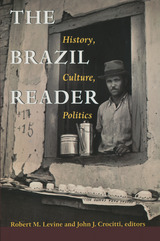
Complementing traditional views with fresh ones, The Brazil Reader’s historical selections range from early colonization to the present day, with sections on imperial and republican Brazil, the days of slavery, the Vargas years, and the more recent return to democracy. They include letters, photographs, interviews, legal documents, visual art, music, poetry, fiction, reminiscences, and scholarly analyses. They also include observations by ordinary residents, both urban and rural, as well as foreign visitors and experts on Brazil. Probing beneath the surface of Brazilian reality—past and present—The Reader looks at social behavior, women’s lives, architecture, literature, sexuality, popular culture, and strategies for coping with the travails of life in a country where the affluent live in walled compounds to separate themselves from the millions of Brazilians hard-pressed to find food and shelter. Contributing to a full geographic account—from the Amazon to the Northeast and the Central-South—of this country’s singular multiplicity, many pieces have been written expressly for this volume or were translated for it, having never previously been published in English.
This second book in The Latin America Readers series will interest students, specialists, travelers for both business and leisure, and those desiring an in-depth introduction to Brazilian life and culture.
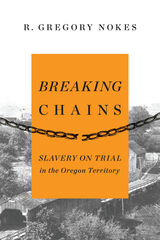
In Breaking Chains, R. Gregory Nokes tells the story of the only slavery case adjudicated in Oregon’s pre-Civil War courts—Holmes v. Ford. Through the lens of this landmark case, Nokes explores the historical context of racism in Oregon and the West, reminding readers that there actually were slaves in Oregon, though relatively few in number.
Drawing on the court record, Nokes offers an intimate account of the relationship between a slave and his master from the slave’s point of view. He also explores the experiences of other slaves in early Oregon, examining attitudes toward race and revealing contradictions in the state’s history. Oregon was the only free state admitted to the union with a voter-approved constitutional clause banning African Americans and, despite the prohibition of slavery in the state, many in Oregon tolerated it and supported politicians who advocated for slavery, including Oregon’s first territorial governor.
Breaking Chains sheds light on a somber part of Oregon’s history, bringing the story of slavery in Oregon to a broader audience. The book will appeal to readers interested in Pacific Northwest history and in the history of slavery in the United States.
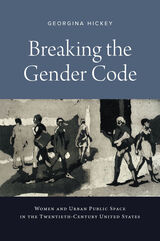
A history of the activism that made public spaces in American cities more accessible to women.
From the closing years of the nineteenth century, women received subtle—and not so subtle—messages that they shouldn’t be in public. Or, if they were, that they were not safe. Breaking the Gender Code tells the story of both this danger narrative and the resistance to it.
Historian Georgina Hickey investigates challenges to the code of urban gender segregation in the twentieth century, focusing on organized advocacy to make the public spaces of American cities accessible to women. She traces waves of activism from the Progressive Era, with its calls for public restrooms, safe and accessible transportation, and public accommodations, through and beyond second-wave feminism, and its focus on the creation of alternative, women-only spaces and extensive anti-violence efforts. In doing so, Hickey explores how gender segregation intertwined with other systems of social control, as well as how class, race, and sexuality shaped activists' agendas and women's experiences of urban space. Drawing connections between the vulnerability of women in public spaces, real and presumed, and contemporary debates surrounding rape culture, bathroom bills, and domestic violence, Hickey unveils both the strikingly successful and the incomplete initiatives of activists who worked to open up public space to women.
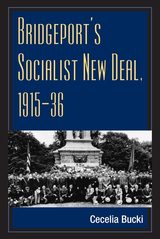
In November 1933, the Socialist Party of Bridgeport, Connecticut put slate roofer Jasper McLevy in the mayor's seat and nearly won control of the city council. Cecelia Bucki explores how labor gained first a foothold and then a stronghold in local politics as broad debates pitted previously unengaged working-class citizens against local business leaders and traditional party elites.
In the heat of the Great Depression, the skilled union craftsmen who made up the bulk of the city's Socialist Party filled a political void created by the crumbling of mainstream parties, the disintegration of traditional modes of ethnic politics, and the city's acute fiscal crisis. In time, however, legislative measures and compromise politics blunted the progressive agenda. The local party split from the Socialist Party of America and became narrowly focused and reformist while still serving as the voice of the working class.
A portrait of a stunning moment in American politics, Bridgeport's Socialist New Deal, 1915-36 offers a fascinating look at the volatility of politics in the early years of the Great Depression.
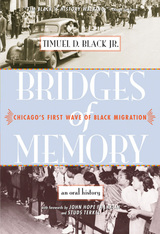
Co-published with the DuSable Museum of African American History
Recipient of 2007 The Hyde Park Historical Society Paul Cornell Award
A collection of interviews with African Americans who came to Chicago from the South. In their first great migration to Chicago that began during World War I, African Americans came from the South seeking a better life--and fleeing a Jim Crow system of racial prejudice, discrimination, and segregation. What they found was much less than what they'd hoped for, but it was much better than what they'd come from--and in the process they set in motion vast changes not only in Chicago but also in the whole fabric of American society. This book, the first of three volumes, revisits this momentous chapter in American history with those who lived it.
Oral history of the first order, Bridges of Memory lets us hear the voices of those who left social, political, and economic oppression for political freedom and opportunity such as they'd never known--and for new forms of prejudice and segregation. These children and grandchildren of ex-slaves found work in the stockyards and steel mills of Chicago, settled and started small businesses in the "Black Belt" on the South Side, and brought forth the jazz, blues, and gospel music that the city is now known for. Historian Timuel D. Black, Jr., himself the son of first-generation migrants to Chicago, interviews a wide cross-section of African Americans whose remarks and reflections touch on issues ranging from fascism to Jim Crow segregation to the origin of the blues. Their recollections comprise a vivid record of a neighborhood, a city, a society, and a people undergoing dramatic and unprecedented changes.
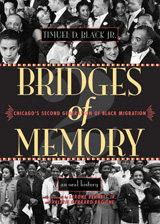
In the second volume of Bridges of Memory, historian Timuel D. Black Jr. continues his conversations with African-Americans who migrated to Chicago from the South in search of economic, social, and cultural opportunities. With his trademark gift for interviewing, Black-himself the son of first-generation migrants to Chicago-guides these individual discussions with ease, resulting in first-person narratives that are informative and entertaining.
Picking up where the first book left off, volume 2 introduces the reader to more members of the first wave of migration and also members of the second generation, the children of those who came in the first wave. In telling their stories, the interviewees paint a vivid picture of the thriving and tight-knit Chicago community formerly known as the Black Belt—today's historic Bronzeville neighborhood. They bring to life the role of family, religion, business, music, and, most of all, the hopes, dreams, and perseverance that enabled a group of people to establish a successful community within a larger society that seemed determined to keep them from success. The experiences of these diverse and vivid personalities often illustrate the role that racial prejudice has played in shaping the specific arcs of their lives. But personal histories such as these are not just chronicles of frustration and despair; more important these narratives reveal an unwavering dedication to breaking the color line and a tireless pursuit of their right to the promise of America.
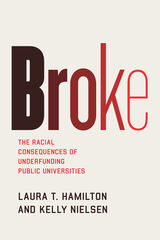
In Broke, Laura T. Hamilton and Kelly Nielsen examine virtually all aspects of campus life to show how the new economic order in public universities, particularly at two campuses in the renowned University of California system, affects students. For most of the twentieth century, they show, less affluent families of color paid with their taxes for wealthy white students to attend universities where their own offspring were not welcome. That changed as a subset of public research universities, some quite old, opted for a “new” approach, making racially and economically marginalized youth the lifeblood of the university. These new universities, however, have been particularly hard hit by austerity. To survive, they’ve had to adapt, finding new ways to secure funding and trim costs—but ultimately it’s their students who pay the price, in decreased services and inadequate infrastructure.
The rise of new universities is a reminder that a world-class education for all is possible. Broke shows us how far we are from that ideal and sets out a path for how we could get there.
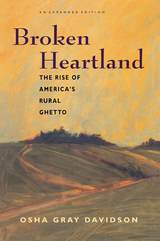
Between 1940 and the mid 1980s, farm production expenses in America's Heartland tripled, capital purchases quadrupled, interest payments jumped tenfold, profits fell by 10 percent, the number of farmers decreased by two-thirds, and nearly every farming community lost population, businesses, and economic stability. Growth for these desperate communities has come to mean low-paying part-time jobs, expensive tax concessions, waste dumps, and industrial hog farming, all of which come with environmental and psychological price tags. In Broken Heartland, Osha Gray Davidson chronicles the decline of the Heartland and its transformation into a bitterly divided and isolated regional ghetto. Through interviews with more than two hundred farmers, social workers, government officials, and scholars, he puts a human face on the farm crisis of the 1980s.
In this expanded edition Davidson emphasizes the tenacious power of far-right-wing groups; his chapter on these burgeoning rural organizations in the original edition of Broken Heartland was the first in-depth look—six years before of the Oklahoma City bombing—at the politics of hate they nurture. He also spotlights NAFTA, hog lots, sustainable agriculture, and the other battles and changes over the past six years in rural America.
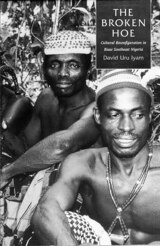
The Biase today face social and economic pressures that seriously strain their ability to cope with the realities of modern Nigeria. Iyam, an anthropologist and a Biase, examines the relationship between culture and development as played out in projects in local communities.
Western technologies and beliefs alone cannot ensure economic growth and modernization, Iyam shows, and should not necessarily be imposed on poor rural groups who may not be prepared to incorporate them; neither, however, is it possible to recover indigenous coping strategies given the complexities of the postcolonial world. A successful development strategy, Iyam argues, needs to strengthen local managerial capacity, and he offers suggestions as to how this can be done in a range of cultural and social settings.
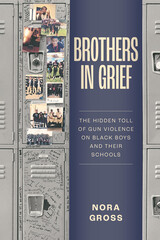
JahSun, a dependable, much-loved senior at Boys’ Prep was just hitting his stride in the fall of 2017. He had finally earned a starting position on the varsity football team and was already weighing two college acceptances. Then, over Thanksgiving, tragedy struck. An altercation at his older sister’s home escalated into violence, killing the unarmed teenager in a hail of bullets. JahSun’s untimely death overwhelmed his entire community, sending his family, friends, and school into seemingly insurmountable grief. Worse yet, that spring two additional Boys’ Prep students would be shot to death in their neighborhood. JahSun and his peers are not alone in suffering the toll of gun violence, as every year in the United States teenagers die by gunfire in epidemic numbers, with Black boys most deeply affected.
Brothers in Grief closely attends to the neglected victims of youth gun violence: the suffering friends and classmates who must cope, mostly out of public view, with lasting grief and hidden anguish. Set at an ambitious urban high school for boys during the heartbreaking year following the death of JahSun, the book chronicles the consequences of untimely death on Black teen boys and on a school community struggling to recover. Sociologist Nora Gross tells the story of students attempting to grapple with unthinkable loss, inviting readers in to observe how they move through their days at school and on social media in the aftermath of their friends’ and classmates’ deaths. Gross highlights the discrepancy between their school’s educational mission and teachers’ and administrators’ fraught attempts to care for students’ emotional wellbeing. In the end, the school did not provide adequate space for grief, making it more difficult for students to heal, reengage with school, and imagine hopeful futures. Even so, supportive relationships deepened among students and formed across generations, offering promising examples of productive efforts to channel student grief into positive community change.
A searing testimony of our collective failure to understand the inner lives of our children in crisis, Brothers in Grief invites us all to wrestle with the hidden costs of gun violence on racial and educational inequity.
The story of these two different, but in many ways similar, Brownsvilles is compellingly told in this probing new work. Focusing on the interaction of Brownsville residents with New York's political and institutional elites, Wendell Pritchett shows how the profound economic and social changes of post-World War II America affected the area. He covers a number of pivotal episodes in Brownsville's history as well: the rise and fall of interracial organizations, the struggles to deal with deteriorating housing, and the battles over local schools that culminated in the famous 1968 Teachers Strike. Far from just a cautionary tale of failed policies and institutional neglect, the story of Brownsville's transformation, he finds, is one of mutual struggle and frustrated cooperation among whites, blacks, and Latinos.
Ultimately, Brownsville, Brooklyn reminds us how working-class neighborhoods have played, and continue to play, a central role in American history. It is a story that needs to be read by all those concerned with the many challenges facing America's cities today.
By the last two decades of the twentieth century, Ohio women had held positions as university presidents, chief executive officers, judges, superintendents of schools, and lieutenant governor. They had won Pulitzer Prizes and, in one case, the Nobel Prize for Literature.
But these women stood on the shoulders of those who came before: the pioneering women who helped tame the Ohio frontier, who filled the breach, who worked for reform, and who struggled for their own rights as citizens of one of the most prosperous states in the Union.
Buckeye Women is an accessible and comprehensive account of the role Ohio women have assumed in the history of the state and a narrative of their hardships and of the victories that have been won in the past two hundred years.
In this timely contribution to the Ohio Bicentennial Series, Professor Stephane Booth has written a rich and well-researched volume, providing for the first time a record of the vast and pivotal accomplishments shared by the women of Ohio over the last two centuries and documenting their contribution to the state’s remarkable heritage.

In the late 1800s, as Japanese leaders mulled over the usefulness of religion in modernizing their country, they chose to invite Unitarian missionaries to Japan. This book spotlights one facet of debates sparked by the subsequent encounter between Unitarianism and Buddhism—an intersection that has been largely neglected in the scholarly literature. Focusing on the cascade of events triggered by the missionary presence of the American Unitarian Association on Japanese soil between 1887 and 1922, Michel Mohr’s study sheds new light on this formative time in Japanese religious and intellectual history.
Drawing on the wealth of information contained in correspondence sent and received by Unitarian missionaries in Japan, as well as periodicals, archival materials, and Japanese sources, Mohr shows how this missionary presence elicited unprecedented debates on “universality” and how the ambiguous idea of “universal truth” was utilized by missionaries to promote their own cultural and ethnocentric agendas. At the turn of the twentieth century this notion was appropriated and reformulated by Japanese intellectuals and religious leaders, often to suit new political and nationalistic ambitions.
The Chickasaw Nation, an American Indian nation headquartered in southeastern Oklahoma, entered into a period of substantial growth in the late 1980s. Following its successful reorganization and expansion, which was enabled by federal policies for tribal self-determination, the Nation pursued gaming and other industries to affect economic growth. From 1987 to 2009 the Nation’s budget increased exponentially as tribal investments produced increasingly large revenues for a growing Chickasaw population. Coincident to this growth, the Chickasaw Nation began acquiring and creating museums and heritage properties to interpret their own history, heritage, and culture through diverse exhibitionary representations. By 2009, the Chickasaw Nation directed representation of itself at five museum and heritage properties throughout its historic boundaries.
Josh Gorman examines the history of these sites and argues that the Chickasaw Nation is using museums and heritage sites as places to define itself as a coherent and legitimate contemporary Indian nation. In doing so, they are necessarily engaging with the shifting historiographical paradigms as well as changing articulations of how museums function and what they represent. The roles of the Chickasaw Nation’s museums and heritage sites in defining and creating discursive representations of sovereignty are examined within their historicized local contexts. The work describes the museum exhibitions’ dialogue with the historiography of the Chickasaw Nation, the literature of new museum studies, and the indigenous exhibitionary grammars emerging from indigenous museums throughout the United States and the world.
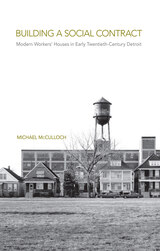
Through oral histories, letters, photographs, and period fiction, McCulloch traces wage earners’ agency in negotiating a new implicit social contract, one that rewarded hard work with upward mobility in modern houses. This promise reflected workers’ increased bargaining power but, at the same time, left them increasingly vulnerable to layoffs.
Building a Social Contract focuses on Detroit, the quintessential city of the era, where migrant workers came and were Americanized, and real estate agents and the speculative housebuilding industry thrived. The Motor City epitomized the struggle of Black workers in this period, who sought better lives through industrial labor but struggled to translate their wages into housing security amid racist segregation and violence. When Depression-era unemployment created an eviction crisis, the social contract unraveled, and workers rose up—at the polls and in the streets—to create a labor movement that reshaped American capitalism for decades.
Today, the lessons McCulloch provides from early twentieth-century Detroit are a necessary reminder that wages are not enough, and only working-class political power can secure affordable housing.
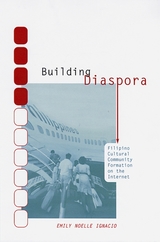
In Building Diaspora, Emily Noelle Ignacio explores how Filipinos have used these subtle, cyber, but very real social connections to construct and reinforce a sense of national, ethnic, and racial identity with distant others. Through an extensive analysis of newsgroup debates, listserves, and website postings, she illustrates the significant ways that computer-mediated communication has contributed to solidifying what can credibly be called a Filipino diaspora. Lively cyber-discussions on topics including Eurocentrism, Orientalism, patriarchy, gender issues, language, and "mail-order-brides" have helped Filipinos better understand and articulate their postcolonial situation as well as their relationship with other national and ethnic communities around the world. Significant attention is given to the complicated history of Philippine-American relations, including the ways Filipinos are racialized as a result of their political and economic subjugation to U.S. interests.
As Filipinos and many other ethnic groups continue to migrate globally, Building Diaspora makes an important contribution to our changing understanding of "homeland." The author makes the powerful argument that while home is being further removed from geographic place, it is being increasingly territorialized in space.
In particular, Labrador speaks to the processes of identity making and the politics of representation among immigrant communities striving to resist marginalization in a globalized, transnational era. Critiquing the popular image of Hawai'i as a postracial paradise, he reveals how Filipino immigrants talk about their relationships to the place(s) they left and the place(s) where they've settled, and how these discourses shape their identities. He also shows how the struggle for community empowerment, identity territorialization, and the process of placing and boundary making continue to affect how minority groups construct the stories they tell about themselves, to themselves and others.
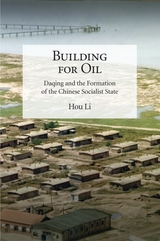
Building for Oil is a historical account of the development of the oil town of Daqing in northeastern China during the formative years of the People’s Republic, describing Daqing’s rise and fall as a national model city. Daqing oil field was the most profitable state-owned enterprise and the single largest source of state revenue for almost three decades, from the 1950s through the early 1980s. The book traces the roots and maturation of the Chinese socialist state and its early industrialization and modernization policies during a time of unprecedented economic growth.
The metamorphosis of Daqing’s physical landscape in many ways exemplified the major challenges and changes taking place in Chinese state and society. Through detailed, often personal descriptions of the process of planning and building Daqing, the book illuminates the politics between party leaders and elite ministerial cadres and examines the diverse interests, conflicts, tensions, functions, and dysfunctions of state institutions and individuals. Building for Oil records the rise of the “Petroleum Group” in the central government while simultaneously revealing the everyday stories and struggles of the working men and women who inhabited China’s industrializing landscape—their beliefs, frustrations, and pursuit of a decent life.
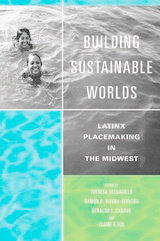
A rare and crucial perspective on Latina/o/x people in the Midwest, Building Sustainable Worlds reveals how expressive culture contributes to, and sustains, a sense of place in an uncertain era.
Contributors: Jason P. Chambers, Marcia Chatelain, Will Cooley, Robert Howard, Christopher Robert Reed, Myiti Sengstacke Rice, Clovis E. Semmes, Juliet E. K. Walker, and Robert E. Weems Jr.
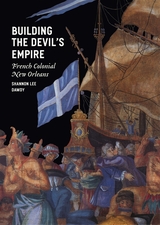
Building the Devil’s Empire is the first comprehensive history of New Orleans’s early years, tracing the town’s development from its origins in 1718 to its revolt against Spanish rule in 1768. Shannon Lee Dawdy’s picaresque account of New Orleans’s wild youth features a cast of strong-willed captives, thin-skinned nobles, sharp-tongued women, and carousing travelers. But she also widens her lens to reveal the port city’s global significance, examining its role in the French Empire and the Caribbean, and she concludes that by exemplifying a kind of rogue colonialism—where governments, outlaws, and capitalism become entwined—New Orleans should prompt us to reconsider our notions of how colonialism works.
"[A] penetrating study of the colony's founding."—Nation
“A brilliant and spirited reinterpretation of the emergence of French New Orleans. Dawdy leads us deep into the daily life of the city, and along the many paths that connected it to France, the North American interior, and the Greater Caribbean. A major contribution to our understanding of the history of the Americas and of the French Atlantic, the work is also a model of interdisciplinary research and analysis, skillfully bringing together archival research, archaeology, and literary analysis.”—Laurent Dubois, Duke University
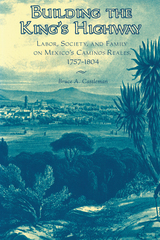
Focusing on the camino real linking Mexico City and the port of Veracruz, Bruce Castleman has written a social history of road construction laborers in late Bourbon Mexico. He has drawn on employment and census records to study a major shift in methods used by the Spanish colonial regime to mobilize the supply of unskilled labor—and concomitant changes in the identities those laborers asserted for themselves.
Through a close analysis of wages actually paid to named individuals from one week to the next, Castleman opens a new window on Mexican history. In the 1760s, a free-wage labor regime replaced a draft-labor system, and by examining records of road construction he traces both this transformation and its implications. During this time, free-wage artisans saw their earnings reduced, and they were pushed into the labor pool, and Castleman reveals how a shift occurred in the way that laborers identified themselves as the Spanish casta system of racial classification became increasingly fluid.
In his study, Castleman introduces some of the principle players of eighteenth-century Mexico, from viceroys to tobacco planters to military engineers. He then fleshes out the lives of working persons, drawing on a complete set of construction records from the construction of the Puente de Escamela at Orizaba to forge a collective biography that considers their existences apart from the workplace. By linking census and employment records, he uncovers a host of social indicators such as marriage preference, family structure, and differences over time in how the caste system was used to classify people according to ancestry.
As Castleman shows, roads did not so much link Mexico to the global economy as forge regional markets within New Spain, and his work provides an astute analysis of struggles between the Bourbon colonial state, the important consulados of Mexico City and Veracruz, and more localized interests over road policy. More important, Building the King’s Highway provides a valuable new perspective on people’s lives as it advances our understanding of labor in late colonial Latin America.


Winner of the J. Russell Major Prize, American Historical Association
Winner of the David H. Pinkney Prize, Society for French Historical Studies
Winner of the JDC–Herbert Katzki Award, National Jewish Book AwardsWinner of the American Library in Paris Book Award
A Choice Outstanding Academic Title of the Year
Headlines from France suggest that Muslims have renewed an age-old struggle against Jews and that the two groups are once more inevitably at odds. But the past tells a different story. The Burdens of Brotherhood is a sweeping history of Jews and Muslims in France from World War I to the present.
“Katz has uncovered fascinating stories of interactions between Muslims and Jews in France and French colonial North Africa over the past 100 years that defy our expectations…His insights are absolutely relevant for understanding such recent trends as rising anti-Semitism among French Muslims, rising Islamophobia among French Jews and, to a lesser degree, rising rates of aliyah from France.”
—Lisa M. Leff, Haaretz
“Katz has written a compelling, important, and timely history of Jewish/Muslim relations in France since 1914 that investigates the ways and venues in which Muslims and Jews interacted in metropolitan France…This insightful, well-researched, and elegantly written book is mandatory reading for scholars of the subject and for those approaching it for the first time.”
—J. Haus, Choice
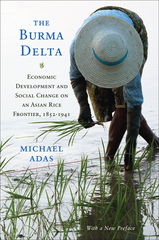
In the decades following its annexation to the Indian Empire in 1852, Lower Burma (the Irrawaddy-Sittang delta region) was transformed from an underdeveloped and sparsely populated backwater of the Konbaung Empire into the world’s largest exporter of rice. This seminal and far-reaching work focuses on two major aspects of that transformation: the growth of the agrarian sector of the rice industry of Lower Burma and the history of the plural society that evolved largely in response to rapid economic expansion.
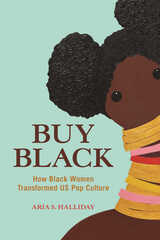
Far-ranging and bold, Buy Black reveals what attitudes inform a contemporary Black sensibility based in representation and consumerism. It also traces the parameters of Black symbolic power, mapping the sites where intraracial ideals of blackness, womanhood, beauty, play, and sexuality meet and mix in consumer and popular culture.

With deft individual portraits, Fels reveals the social dynamics of the group and explores the ongoing difficulties faced by a commune that was founded in idealism and sought to operate on the model of a leaderless democracy. He draws on a large body of farm-family and 1960s-related writing and the notes of community members to present a variety of points of view. The result is an absorbing narrative that chronicles the positive aspects of Montague Farm while documenting the many challenges and disruptions that marked its history.


Slavery may no longer exist as a legal institution, but we still find many forms of non-freedom in contemporary societies. It is a troubling paradox, and one this book addresses by considering a period in which the definition of slavery and freedom proved considerably flexible. Between more familiar forms of slavery—those of antiquity and of the Americas—the institution as it was practiced and theorized in the Byzantine Mediterranean was of a different nature.
Looking at the Byzantine concept of slavery within the context of law, the labor market, medieval politics, and religion, Youval Rotman illustrates how these contexts both reshaped and sustained the slave market. By focusing on a period of great change, his historical analysis brings a new perspective to concepts of slavery and freedom. In this period, when Byzantium had to come to terms with the rising power of the Islamic state, and to fight numerous wars over territory and economic interests, Rotman traces a shift in the cultural perception of slaves as individuals: they began to be seen as human beings instead of private property. His book analyzes slavery as a historical process against the background of the political, social, and religious transformation of the Mediterranean world, and demonstrates the flexible and adaptable character of this institution.
Arguing against the use of the term “slavery” for any extreme form of social dependency, Rotman shows instead that slavery and freedom are unrelated concepts. His work offers a radical new understanding of the geopolitical and religious dynamics that have defined and redefined slavery and freedom, in the past and in our own time.
READERS
Browse our collection.
PUBLISHERS
See BiblioVault's publisher services.
STUDENT SERVICES
Files for college accessibility offices.
RECENTLY PUBLISHED




UChicago Accessibility Resources
home | accessibility | search | about | contact us
BiblioVault ® 2001 - 2026
The University of Chicago Press