
 A SCHOLARLY BOOK REPOSITORY
171 start with B start with B
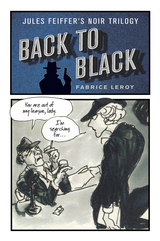
Back to Black provides the first full-length critical analysis of this trilogy, exploring how it pays homage to the iconography and themes of film noir through constant graphic experimentation and a striking reinvention of Feiffer’s distinctive style. Fabrice Leroy shows how Feiffer deftly alternates between dramatic and satirical tones as he plays with the conventions of noir to provide a caustic yet moving commentary on mid-twentieth-century American life. Through close readings of each novel in the trilogy, he examines Feiffer’s singular depiction of the central political issues in the United States from the Great Depression to the 1950s, which still resonate today: unionization struggles, cinematic propaganda, McCarthyism, the American Dream, immigration, antisemitism, civil rights, and gender discrimination. Placing the noir trilogy into the context of Feiffer’s long career, Back to Black demonstrates how he offers a loving pastiche of the genre without losing his unique voice or critical edge.
Chinese American Librarians Association Best Book Award (Honorary Mention, Adult Non-fiction category)
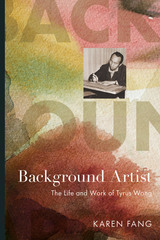
You might not know the name Tyrus Wong, but you probably know some of the images he created, including scenes from the beloved Disney classic Bambi. Yet when he came to this country as a child, Tyrus was an illegal immigrant locked up in an offshore detention center. How did he go on to a long and prosperous career drawing animation cels, storyboards, and greeting cards that shaped the American imagination?
Background Artist shares the inspiring story of Tyrus Wong’s remarkable 106-year life and showcases his wide array of creative work, from the paintings and fine art prints he made working for Roosevelt’s Works Progress Administration to the unique handmade kites he designed and flew on the Santa Monica beach. It tells how he came to the United States as a ten-year-old boy in 1920, at a time when the Chinese Exclusion Act barred him from legal citizenship. Yet it also shows how Wong found American communities that welcomed him and nurtured his artistic talent. Covering everything from his work as a studio sketch artist for Warner Bros. to the best-selling Christmas cards he designed for Hallmark and other greeting card companies, this book celebrates a multitalented Asian American artist and pioneer.
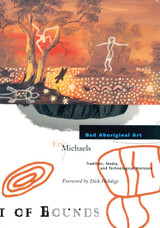
Bad Aboriginal Art is the extraordinary account of Eric Michaels’ period of residence and work with the Warlpiri Aborigines of western Central Australia, where he studied the impact of television on remote Aboriginal communities.
Sharp, exact, and unrelentingly honest, Michaels records with an extraordinary combination of distance and immersion the intervention of technology into a remote Aboriginal community and that community’s forays into the technology of broadcasting. Michaels’s analyses in Bad Aboriginal Art will disrupt and redirect current debates surrounding the theory and practice of anthropology, ethnography, film and video making, communications policy, and media studies - no less than his work has already disrupted and redirected the cultural technologies of both the Warlpiri and Australian technocrats.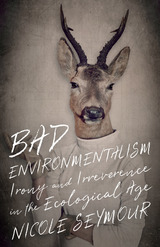
Traces a tradition of ironic and irreverent environmentalism, asking us to rethink the movement’s reputation for gloom and doom
Activists today strive to educate the public about climate change, but sociologists have found that the more we know about alarming issues, the less likely we are to act. Meanwhile, environmentalists have acquired a reputation as gloom-and-doom killjoys. Bad Environmentalism identifies contemporary texts that respond to these absurdities and ironies through absurdity and irony—as well as camp, frivolity, irreverence, perversity, and playfulness.
Nicole Seymour develops the concept of “bad environmentalism”: cultural thought that employs dissident affects and sensibilities to reflect critically on our current moment and on mainstream environmental activism. From the television show Wildboyz to the short film series Green Porno, Seymour shows that this tradition of thought is widespread—spanning animation, documentary, fiction film, performance art, poetry, prose fiction, social media, and stand-up comedy since at least 1975. Seymour argues that these texts reject self-righteousness and sentimentality, undercutting public negativity toward activism and questioning basic environmentalist assumptions: that love and reverence are required for ethical relationships with the nonhuman and that knowledge is key to addressing problems like climate change.
Funny and original, Bad Environmentalism champions the practice of alternative green politics. From drag performance to Indigenous comedy, Seymour expands our understanding of how environmental art and activism can be pleasurable, even in a time of undeniable crisis.
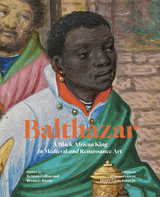
According to the Gospel of Matthew, magi from the East, following a star, traveled to Jerusalem bearing precious gifts for the infant Jesus. The magi were revered as wise men and later as kings. Over time, one of the three came to be known as Balthazar and to be depicted as a Black man.
Balthazar was familiar to medieval Europeans, appearing in paintings, manuscript illuminations, mosaics, carved ivories, and jewelry. But the origin story of this fascinating character uncovers intricate ties between Europe and Africa, including trade and diplomacy as well as colonization and enslavement.
In this book, experts in the fields of Ethiopian, West African, Nubian, and Western European art explore the representation of Balthazar as a Black African king. They examine exceptional art that portrays the European fantasy of the Black magus while offering clues about the very real Africans who may have inspired these images. Along the way, the authors chronicle the Black presence in premodern Europe, where free and enslaved Black people moved through public spaces and courtly circles. The volume’s lavish illustrations include selected works by contemporary artists who creatively challenge traditional depictions of Black history.

The story of the American Quilt Trail, featuring the colorful patterns of quilt squares painted large on barns throughout North America, is the story of one of the fastest-growing grassroots public arts movements in the United States and Canada. In Barn Quilts and the American Quilt Trail Movement Suzi Parron takes us to twenty-five states as well as Canada to visit the people and places that have put this movement on America’s tourist and folk art map.
Through dozens of interviews with barn quilt artists, committee members, and barn owners, Parron documents a journey that began in 2001 with the founder of the movement, Donna Sue Groves. Groves’s desire to honor her mother with a quilt square painted on their barn became a group effort that eventually grew into a county-wide project. Today, quilt squares form a long imaginary clothesline, appearing on more than three thousand barns scattered along one hundred and twenty driving trails.
With more than eighty full-color photographs, Parron documents here a movement that combines rural economic development with an American folk art phenomenon.
"David Castillo takes us on a tour of some horrific materials that have rarely been considered together. He sheds a fantastical new light on the baroque."
---Anthony J. Cascardi, University of California Berkeley
"Baroque Horrors is a textual archeologist's dream, scavenged from obscure chronicles, manuals, minor histories, and lesser-known works of major artists. Castillo finds tales of mutilation, mutation, monstrosity, murder, and mayhem, and delivers them to us with an inimitable flair for the sensational that nonetheless rejects sensationalism because it remains so grounded in historical fact."
---William Egginton, Johns Hopkins University
"Baroque Horrors is a major contribution to baroque ideology, as well as an exploration of the grotesque, the horrible, the fantastic. Castillo organizes his monograph around the motif of curiosity, refuting the belief that Spain is a country incapable of organized scientific inquiry."
---David Foster, Arizona State University
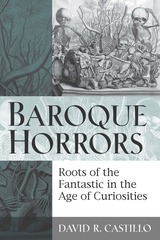
Baroque Horrors turns the current cultural and political conversation from the familiar narrative patterns and self-justifying allegories of abjection to a dialogue on the history of our modern fears and their monstrous offspring. When life and death are severed from nature and history, "reality" and "authenticity" may be experienced as spectator sports and staged attractions, as in the "real lives" captured by reality TV and the "authentic cadavers" displayed around the world in the Body Worlds exhibitions. Rather than thinking of virtual reality and staged authenticity as recent developments of the postmodern age, Castillo looks back to the Spanish baroque period in search for the roots of the commodification of nature and the horror vacui that accompanies it. Aimed at specialists, students, and readers of early modern literature and culture in the Spanish and Anglophone traditions as well as anyone interested in horror fantasy, Baroque Horrors offers new ways to rethink broad questions of intellectual and political history and relate them to the modern age.
David Castillo is Associate Professor and Director of Graduate Studies in the Department of Romance Languages and Literatures at the University at Buffalo, SUNY.
Jacket art: Frederick Ruysch's anatomical diorama. Engraving reproduction "drawn from life" by Cornelius Huyberts. Image from the Zymoglyphic Museum.
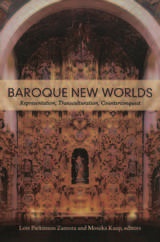
Since Neobaroque reconstitutions necessarily reference the European Baroque, this volume begins with the reevaluation of the Baroque that evolved in Europe during the late nineteenth century and the early twentieth. Foundational essays by Friedrich Nietzsche, Heinrich Wölfflin, Walter Benjamin, Eugenio d’Ors, René Wellek, and Mario Praz recuperate and redefine the historical Baroque. Their essays lay the groundwork for the revisionist Latin American essays, many of which have not been translated into English until now. Authors including Alejo Carpentier, José Lezama Lima, Severo Sarduy, Édouard Glissant, Haroldo de Campos, and Carlos Fuentes understand the New World Baroque and Neobaroque as decolonizing strategies in Latin America and other postcolonial contexts. This collection moves between art history and literary criticism to provide a rich interdisciplinary discussion of the transcultural forms and functions of the Baroque.
Contributors. Dorothy Z. Baker, Walter Benjamin, Christine Buci-Glucksmann, José Pascual Buxó, Leo Cabranes-Grant, Haroldo de Campos, Alejo Carpentier, Irlemar Chiampi, William Childers, Gonzalo Celorio, Eugenio d’Ors, Jorge Ruedas de la Serna, Carlos Fuentes, Édouard Glissant, Roberto González Echevarría, Ángel Guido, Monika Kaup, José Lezama Lima, Friedrich Nietzsche, Mario Praz, Timothy J. Reiss, Alfonso Reyes, Severo Sarduy, Pedro Henríquez Ureña, Maarten van Delden, René Wellek, Christopher Winks, Heinrich Wölfflin, Lois Parkinson Zamora
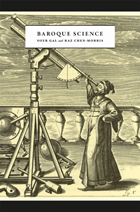
Gal and Chen-Morris show how the protagonists of the new mathematical natural philosophy grasped at the very far and very small by entrusting observation to the mediation of artificial instruments, and how they justified this mediation by naturalizing and denigrating the human senses. They show how the physical-mathematical ordering of heavens and earth demanded obscure and spurious mathematical procedures, replacing the divine harmonies of the late Renaissance with an assemblage of isolated, contingent laws and approximated constants. Finally, they show how the new savants, forced to contend that reason is hopelessly estranged from its surrounding world and that nature is irreducibly complex, turned to the passions to provide an alternative, naturalized foundation for their epistemology and ethics.
Enforcing order in the face of threatening chaos, blurring the boundaries of the natural and the artificial, and mobilizing the passions in the service of objective knowledge, the New Science, Gal and Chen-Morris reveal, is a Baroque phenomenon: deeply entrenched in and crucially formative of the culture of its time.

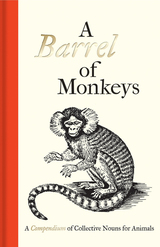
A Barrel of Monkeys brings together more than one hundred collective nouns for animals, from a bloat of hippopotamuses to a caravan of camels, a tower of giraffes, and a leap of leopards. The rivalry between male rhinoceroses becomes especially apt when the rowdy ungulates are characterized as a crash of rhinos. An ambush of tigers is an apt characterization of the skillful hunters that silently stalk their prey. A blend of wordplay, puns, and alliteration, some of the terms collected here are now commonplace, like a pride of lions. Others aren’t heard much these days, but many—like a dazzle of zebras or a prickle of porcupines—richly deserve a comeback.
With charming illustrations by the eighteenth-century artist and naturalist Thomas Bewick, A Barrel of Monkeys is the perfect follow-up to A Conspiracy of Ravens, the Bodleian Library’s book of bird words. Not even a crash of rhinos can stop readers from smiling at this second collection.

Of the conceptual artists who began their careers in the 1960s and 1970s—Bruce Nauman, Chris Burden, Vito Acconci, and Mel Bochner among them—Barry Le Va may be the most elusive. As this first study of his work reveals, his rigorously planned art was instigated to mask its creator’s intentions and methods, presenting itself as an “aftermath” of modernism’s claim to permanency and civil society’s preferred mode of monumentalism.
For Michael Maizels, Le Va’s work constitutes a particularly productive subject of inquiry because it clearly articulates the interconnection between the avant-garde’s distrust of autonomous art objects, two decades of social unrest, the emergence of information theory, and lingering notions of scientific objectivity. Barry Le Va: The Aesthetic Aftermath explores how Le Va used such materials as shattered glass, spent bullets, sound recordings, scattered flour, and meat cleavers embedded in a floor to challenge the interlocking assumptions behind blind faith in lasting beauty, just government, and perfectible knowledge. Taking inspiration from popular crime novels as well as contemporary art theory, Le Va charged his viewers to attempt, like detectives at a crime scene, to decipher an order underlying the apparent chaos.
Le Va’s installations were designed to erode not simply the presumed autonomy of the art object but also the economic and political authority of the art establishment. In his concluding chapter, Maizels looks at the more fixed work of the past two decades in which Le Va turned to architectural themes and cast concrete to probe the limits of dynamism and the idea of permanence.



Marvin Cohodas now explores the various forces that influenced Elizabeth Hickox, analyzing her relationship with the curio trade, and specifically with dealer Grace Nicholson, to show how those associations affected the development and marketing of baskets. He explains the techniques and patterns that Hickox created to meet the challenge of weaving design into changig three-dimensional forms. In addition to explicating the Hickoxes' basketry, Cohodas interprets its uniqueness as a form of intersocietal art, showing how Elizabeth first designed her distinctive trinket basket to convey a particular view of the curio trade and its effect on status within her community.
Through its close examination of these superb practitioners of basketry, Basket Weavers for the California Curio Trade addresses many of today's most pressing questions in Native American art studies concerning individuality, patronage, and issues of authenticity. Graced with historic photographs and full-color plates, it reveals the challenges faced by early-twentieth-century Native weavers.
Published with the assistance of The Southwest Museum, Los Angeles.
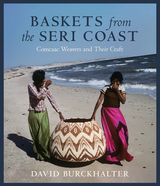
Blending striking photography with reflections from years as a trader and observer of Seri culture, Burckhalter traces the evolution of Seri basketry from a utilitarian craft to a celebrated art form. The book examines how Seri weavers have navigated the influences of the craft economy, outside forces like anthropologists, and changing traditions, while preserving their unique oral history and spiritual connections. With detailed insights into the artistry, labor, and legends surrounding Seri baskets, this work is a tribute to the resilience and creativity of Seri women, whose weaving continues to be passed on to future generations.
Featuring more than two hundred color photographs and historic images, Baskets from the Seri Coast: Comcaac Weavers and Their Craft offers readers a visual feast that celebrates the intricate craftsmanship and cultural significance of a timeless art and the people who make it.
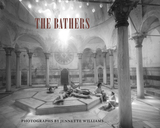
To create the images in The Bathers, Williams drew on gestures and poses found in iconic paintings of nude women, including tableaux of bathers by Paul Cézanne and Auguste Renoir, renderings of Venus by Giorgione and Titian, Dominique Ingres’s Odalisque and Slave, and Pablo Picasso’s Les Demoiselles d’Avignon. By alluding to these images and others, Williams sought to reflect the religious and mythological associations of water with birth and rebirth, comfort and healing, purification and blessing. She also used copies of the paintings to communicate with her Hungarian- and Turkish-speaking subjects—homemakers, factory workers, saleswomen, secretaries, managers, teachers, and students. Working in steam-filled environments, Williams created quiet, dignified images that evoke not only canonical representations of female nudes but also early pictorial photography. At the same time, they raise contemporary questions about the gaze, the definition of documentary photography, and the representation and perception of beauty and femininity, particularly as they relate to the aging body. Above all else, her photos are sensuously evocative. They invite the viewer to feel the steam, hear the murmur of conversation, and reflect on the allure of the female form.
A CDS Book
Published by Duke University Press and the Center for Documentary Photography
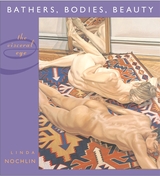
A leading feminist art historian on the nude body, from impressionism to postmodernism.
To some viewers, Renoir’s Great Bathers is the very picture of female sensuality and beauty. To others, the sentimentalized, sexualized prettiness of the image embodies a whole tradition of masculine mastery and feminine display. Still others find in the bathers a feminine fantasy of bodily liberation. Juxtaposing these opposing points of view, Linda Nochlin deftly uncovers the dissonances surrounding artistic representation of the female form from the nineteenth century to the present.
Nochlin begins by focusing on the painterly preoccupation with bathing, whether at the beach, in lakes and rivers, in public swimming pools, or in bathtubs. Why, she asks, did the nude figure, posed in or near water, become such a dominant trope in the history of Western art? Covering artists from Manet, Cezanne, Bonnard, and Picasso to late-twentieth-century and contemporary figures such as Philip Pearlstein, Anselm Kiefer, Alice Neel, and Jenny Saville, Nochlin develops a rich interpretative collage of the layered meanings ascribed to bodies in intimate settings. She concludes with a powerful essay on aging, infirmity, and death.
A deeply personal book—Nochlin herself is depicted in more than one of the paintings she discusses, and her discussion of old age is inspired by her own looming mortality—Bathers, Bodies, Beauty draws on a lifetime of loving, hating, and wrestling with art to reveal both the visceral disappointments and supreme joys of seeing it from a feminist perspective.
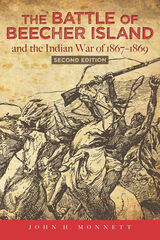
Monnett’s compelling study, a finalist for the Western Writers of America’s Spur Award in 1993, was the first to examine the Beecher Island battle and its relationship to the overall conflict between American Indians and Euroamericans on the central plains of Colorado and Kansas during the late 1860s. Focusing on the struggle of the Cheyenne Dog Men warrior society to defend the lands between the Republican River valley and the Smoky Hill River valley from Euroamerican encroachment, Monnett presents original reminiscences of American Indian and Euroamerican participants.
Since its original release several developments and an important original source document have come to light and offer new information. The second edition presents and examines these new discoveries and developments that moderate the original interpretive causes and more modern effects of this historical episode. Scholars and general readers alike interested in this important episode in the post–Civil War conflicts on the Great Plains and western history will find this new edition of The Battle of Beecher Island and the Indian War of 1867–1869 illuminating, surprising, and perhaps even controversial.
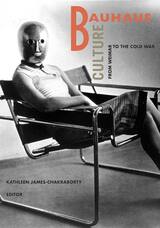
In this book, editor Kathleen James-Chakraborty and seven other scholars analyze the accomplishments and dispel the myths of the Bauhaus, placing it firmly in a historical context from before the formation of the Weimar Republic through Nazi ascendancy and World War II into the cold war. Together, they investigate its professors’ and students’ interactions with mass culture; establish the complexity of its relationship with Wilhelmine, Nazi, and postwar German politics; and challenge the claim that its architects greatly influenced American architecture in the 1930s.
Their most explosive conclusions address the degree to which some aspects of Bauhaus design continued to flourish during the Third Reich before becoming one of the cold war’s most enduring emblems of artistic freedom. In doing so, Bauhaus Culture calls into question the degree to which this influential school should continue to symbolize an uncomplicated relationship between art, modern technology, and progressive politics.
Contributors: Greg Castillo, Juliet Koss, Rose-Carol Washton Long, John V. Maciuika, Wallis Miller, Winifried Nerdinger, Frederic J. Schwartz.
Kathleen James-Chakraborty is associate professor of architecture at the University of California, Berkeley, and author of German Architecture for a Mass Audience and Erich Mendelsohn and the Architecture of German Modernism.

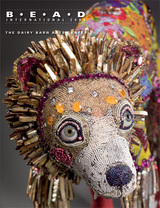
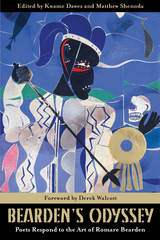
Borrowing from Romare Bearden’s aesthetic palette and inspired by his Odysseus series, Bearden’s Odyssey gathers, for the first time, poems from thirty-five of the most revered African diaspora poets in the United States. Poetic echoes come forth in themes of inspiration with historical intersections of one of the greatest visual artists of the twentieth century.
The award-winning editors, Kwame Dawes and Matthew Shenoda, assemble an esteemed literary congregation, with original poems by Chris Abani, Rita Dove, Lyrae Van Clief-Stefanon, Ed Roberson, Aracelis Girmay, Yusef Komunyakaa, and more. With a powerful foreword by Nobel laureate Derek Walcott and stunning visual reproductions of select Bearden masterpieces, this anthology fuses art and literature, standing as a testament to Romare Bearden’s power and influence in the contemporary artistic world.
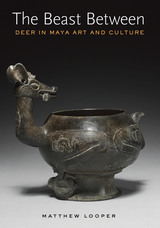
The first book to focus on the multifaceted images of deer and hunting in ancient Maya art, from the award-winning author of To Be Like Gods: Dance in Ancient Maya Civilization.
Winner, CHOICE Outstanding Academic Title, 2019
The white-tailed deer had a prominent status in Maya civilization: it was the most important wild-animal food source at many inland Maya sites and also functioned as a major ceremonial symbol. Offering an in-depth semantic analysis of this imagery, The Beast Between considers iconography, hieroglyphic texts, mythological discourses, and ritual narratives to translate the significance and meaning of the vibrant metaphors expressed in a variety of artifacts depicting deer and hunting.
Charting the importance of deer as a key component of the Maya diet, especially for elites, and analyzing the coupling of deer and maize in the Maya worldview, The Beast Between reveals a close and long-term interdependence between the Maya and these animals. Not only are deer depicted naturalistically in hunting and ritual scenes, but also they are assigned human attributes. This rich imagery reflects the many ways in which deer hunting was linked to status, sexuality, and war as part of a deeper process to ensure the regeneration of both agriculture and ancestry. Drawing on methodologies of art history, archaeology, and ethnology, this illuminating work is poised to become a key resource for multiple fields.

In Beautiful Fighting Girl, Saito Tamaki offers a far more sophisticated and convincing interpretation of this alluring and capable figure. For Saito, the beautiful fighting girl is a complex sexual fantasy that paradoxically lends reality to the fictional spaces she inhabits. As an object of desire for male otaku (obsessive fans of anime and manga), she saturates these worlds with meaning even as her fictional status demands her ceaseless proliferation and reproduction. Rejecting simplistic moralizing, Saito understands the otaku’s ability to eroticize and even fall in love with the beautiful fighting girl not as a sign of immaturity or maladaptation but as a result of a heightened sensitivity to the multiple layers of mediation and fictional context that constitute life in our hypermediated world—a logical outcome of the media they consume.
Featuring extensive interviews with Japanese and American otaku, a comprehensive genealogy of the beautiful fighting girl, and an analysis of the American outsider artist Henry Darger, whose baroque imagination Saito sees as an important antecedent of otaku culture, Beautiful Fighting Girl was hugely influential when first published in Japan, and it remains a key text in the study of manga, anime, and otaku culture. Now available in English for the first time, this book will spark new debates about the role played by desire in the production and consumption of popular culture.

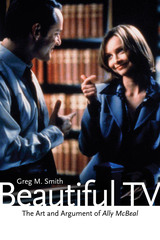
During its five-year run from 1997 to 2002, the popular TV show Ally McBeal engaged viewers in debates over what it means to be a woman or a man in the modern workplace; how romance factors into the therapeutic understanding of relationships; what value eccentricity has and how much oddity society should tolerate; and what utility fantasy has in the pragmatic world. In addition to these social concerns, however, Ally McBeal stood out for being well-constructed, narratively complex, and stylistically rich—in short, beautiful TV.
Starting from the premise that much of television today is "drop-dead gorgeous" and that TV should be studied for its formal qualities as well as its social impact, Greg M. Smith analyzes Ally McBeal in terms of its aesthetic principles and narrative construction. He explores how Ally's innovative use of music, special effects, fantasy sequences, voiceovers, and flashbacks structures a distinctive fictional universe, while it also opens up new possibilities for televisual expression. Smith also discusses the complex narrative strategies that Ally's creator David E. Kelley used to develop a long-running storyline and shows how these serial narrative practices can help us understand a wide range of prime-time TV serials.
By taking seriously the art and argument of Ally McBeal, Beautiful TV conclusively demonstrates that aesthetic and narrative analysis is an indispensable key for unlocking the richness of contemporary television.
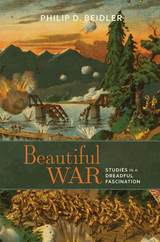
Beautiful War: Studies in a Dreadful Fascination is a wide-ranging exploration of armed conflict as depicted in art that illustrates the constant presence of war in our everyday lives. Philip D. Beidler investigates the unending assimilation and pervasive presence of the idea of war in popular culture, the impulses behind the making of art out of war, and the unending and debatably aimless trajectories of war itself.
Beidler’s critical scope spans from Shakespeare’s plays, through the Victorian battle paintings of Lady Butler, into the post-World War I writings of F. Scott Fitzgerald and Virginia Woolf, and up to twenty-first-century films such as The Hurt Locker and Extremely Loud and Incredibly Close. As these works of art have become ubiquitous in contemporary culture, the many faces of war clearly spill over into our art and media, and Beidler argues that these portrayals in turn shift the perception of war from a savage truth to a concept.
Beautiful War argues that the representation of war in the arts has always been, and continues to be, an incredibly powerful force. Incorporating painting, music, photography, literature, and film, Beidler traces a disturbing but fundamental truth: that war has always provided an aesthetic inspiration while serving ends as various and complex as ideological or geopolitical history, public memory, and mass entertainment.
Beautiful War is a bold and vivid account of the role of war and military conflict as a subject of art that offers much of value to literary and cultural critics, historians, veterans, students of art history and communication studies, and those interested in expanding their understanding of art and media’s influence on contemporary values and memories of the past.
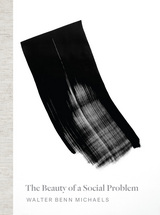
Although he discusses well-known figures like Walker Evans and Jeff Wall, Michaels’s focus is on a group of younger artists, including Viktoria Binschtok, Phil Chang, Liz Deschenes, and Arthur Ou. All born after 1965, they have always lived in a world where, on the one hand, artistic ambition has been synonymous with the critique of autonomous form and intentional meaning, while, on the other, the struggle between capital and labor has essentially been won by capital. Contending that the aesthetic and political conditions are connected, Michaels argues that these artists’ new commitment to form and meaning is a way for them to depict the conditions that have taken US economic inequality from its lowest level, in 1968, to its highest level today. As Michaels demonstrates, these works of art, unimaginable without the postmodern critique of autonomy and intentionality, end up departing and dissenting from that critique in continually interesting and innovative ways.
La reconnaissance des beautés arbitraires se heurte à l’absolu d’un modèle antique qu’il est temps de contredire. Car il n’est rien de fixe, ni d’immuable dans l’arbitraire de la beauté, tout entier laissé à l’imagination du peintre, du poète, de l’architecte ou du musicien… Beauté chimérique opposée à la beauté véritable, elle revêt soudain valeur de rareté et de distinction et se transforme en beauté nécessaire, liée à l’invention de formes nouvelles qui peuvent plaire et toucher universellement. Entre caprice et convention, non-sens et vraisemblance, raison et sentiment, beautés essentielles et arbitraires échangent leurs rôles pour représenter différemment le monde et ses figures.
Professional practice is increasingly becoming more complex, demanding, dynamic, and diverse, and the fluctuating nature of professional practice necessitates the pursuit of discernment and clarity through ongoing reflective practice. Ideal for visual arts practitioners of all levels, this book presents a self-study model grounded in compelling research that highlights arts-based methods for examining four areas of professional practice: professional identities, work cultures, change and transitions, and new pathways.
Each chapter focuses on a component of the self-study model and an area of professional practice. Additional chapters are devoted to artistic materials and research methods for interpreting self-study artifacts with the aim of goal setting. Throughout the text, charts and end-of-chapter prompts summarize key points, and images by visual arts practitioners represent a wide range of artistic media, methods, and approaches appropriate for self-study. The appendices provide additional resources for enhanced understanding of chapter concepts and key terms, guidelines, and rubrics for writing reflections, creating visual responses, and using a visual journal in the self-study process.
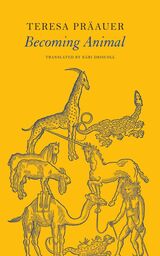
In this gripping philosophical and cultural exploration, Teresa Präauer sets out to investigate figures of transformation, transmission, and translation—across languages, cultures, genres, media, species, and spaces. Hybrids, chimeras, monsters, and liminal creatures of all sorts inhabit these pages, as indeed they do the pages of the cultural archive from Antiquity and the Middle Ages to the present day: everything from the harpies, ape-men, and cynocephali that inhabit the edges of medieval maps and taxonomies to the Krampuses and Furries that roam through Alpine villages and convention centers today. Yet these chimeras are not aberrations; rather, they reveal an essential truth about culture and artistic expression.
What emerges in Becoming Animal is a kaleidoscopic image of culture as the constant probing of the limits of the sayable, as an unending process of attempting to capture in words and symbols that which cannot be pinned down.
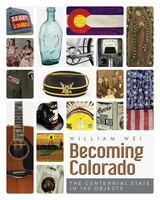
In Becoming Colorado, historian William Wei paints a vivid portrait of Colorado history using 100 of the most compelling artifacts from Colorado’s history. These objects reveal how Colorado has evolved over time, allowing readers to draw multiple connections among periods, places, and people. Collectively, the essays offer a treasure trove of historical insight and unforgettable detail.
Beginning with Indigenous people and ending in the early years of the twenty-first century, Wei traces Colorado’s story by taking a close look at unique artifacts that bring to life the cultures and experiences of its people. For each object, a short essay accompanies a full-color photograph. These accessible accounts tell the human stories behind the artifacts, illuminating each object’s importance to the people who used it and its role in forming Colorado’s culture. Together, they show how Colorado was shaped and how Coloradans became the people they are. Theirs is a story of survival, perseverance, enterprise, and luck.
Providing a fresh lens through which to view Colorado’s past, Becoming Colorado tells an inclusive story of the Indigenous and the immigrant, the famous and the unknown, the vocal and the voiceless—for they are all Coloradans.
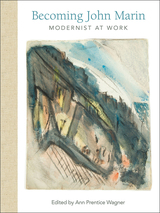
John Marin was a major figure among the cutting-edge circle of American modernist artists who showed his work in Alfred Stieglitz’s New York galleries from 1909 until 1950. A new collection of the artist’s work at the Arkansas Arts Center, given by Marin’s daughter-in-law, forms the basis of this first book of essays and images to concentrate on Marin’s drawings in the context of Marin’s life, his watercolors, and his etchings.
We follow Marin to his most famous subject matter: New York City and the coast of Maine. Foundational drawings and an unfinished watercolor of the towering Woolworth Building, still under construction when they were made in 1912, begin the story of a renowned group of watercolors first exhibited in 1913 at Alfred Stieglitz’s 291 Gallery and then at the ground-breaking 1913 Armory Show. Other images take us to lesser-known locales, such as the Ramapo Mountains in New York and New Jersey where Marin often painted when he couldn’t get to Maine. More obscure aspects of the artist’s career explored in this collection include portraits of friends and family, charming drawings of animals, and circus scenes.
Becoming John Marin invites readers to look over this important artist’s shoulder as he created and honed the sketches he would interpret into completed watercolors and etchings, illustrating the evolution of his style and methods as he transformed from intuitive draftsman to innovative modernist watercolorist and etcher.
Martin Geck opens the book with an enthralling series of cultural, political, and musical motifs that run throughout the symphonies. A leading theme is Beethoven’s intense intellectual and emotional engagement with the figure of Napoleon, an engagement that survived even Beethoven’s disappointment with Napoleon’s decision to be crowned emperor in 1804. Geck also delves into the unique ways in which Beethoven approached beginnings and finales in his symphonies, as well as his innovative use of particular instruments. He then turns to the individual symphonies, tracing elements—a pitch, a chord, a musical theme—that offer a new way of thinking about each work and will make even the most devoted fans of Beethoven admire the symphonies anew.
Offering refreshingly inventive readings of the work of one of history’s greatest composers, this book shapes a fascinating picture of the symphonies as a cohesive oeuvre and of Beethoven as a master symphonist.

Before Pictures tells the story of Crimp’s life as a young gay man and art critic in New York City during the late 1960s through the turbulent 1970s. Crimp participated in all of what made the city so stimulating in that vibrant decade. The details of his professional and personal life are interwoven with this the particularly rich history of New York City at that time, producing a vivid portrait of both the critic and his adopted city. The book begins with his escape from his hometown in Idaho, and we quickly find Crimp writing criticism for ArtNews while working at the Guggenheim—where, as a young curatorial assistant, he was one of the few to see Daniel Buren’s Peinture-Sculpture before it was removed amid cries of institutional censorship. We also travel to the Chelsea Hotel (where Crimp helped the down-on-his-luck couturier Charles James organize his papers) through to his days as a cinephile and balletomane to the founding of the art journal October, where he remained a central figure for many years. As he was developing his reputation as a critic, he was also partaking of the New York night life, from drugs and late nights alongside the Warhol crowd at the Max’s Kansas City to discos, roller-skating, and casual sex with famous (and not-so-famous) men. As AIDS began to ravage the closely linked art and gay communities, Crimp eventually turned his attention to activism dedicated to rethinking AIDS.
Part biography and part cultural history, Before Pictures is a courageous account of an exceptional period in both Crimp’s life and the life of New York City. At the same time, it offers a deeply personal and engaging point of entry into important issues in contemporary art.

During the struggle for decolonization, Frantz Fanon argued that artists who mimicked European aestheticism were “beginning at the end,” skipping the inventive phase of youth for a decadence thought more typical of Europe’s declining empires. Robert Stilling takes up Fanon’s assertion to argue that decadence became a key idea in postcolonial thought, describing both the failures of revolutionary nationalism and the assertion of new cosmopolitan ideas about poetry and art.
In Stilling’s account, anglophone postcolonial artists have reshaped modernist forms associated with the idea of art for art’s sake and often condemned as decadent. By reading decadent works by J. K. Huysmans, Walter Pater, Henry James, and Oscar Wilde alongside Chinua Achebe, Derek Walcott, Agha Shahid Ali, Derek Mahon, Yinka Shonibare, Wole Soyinka, and Bernardine Evaristo, Stilling shows how postcolonial artists reimagined the politics of aestheticism in the service of anticolonial critique. He also shows how fin de siècle figures such as Wilde questioned the imperial ideologies of their own era.
Like their European counterparts, postcolonial artists have had to negotiate between the imaginative demands of art and the pressure to conform to a revolutionary politics seemingly inseparable from realism. Beginning at the End argues that both groups—European decadents and postcolonial artists—maintained commitments to artifice while fostering oppositional politics. It asks that we recognize what aestheticism has contributed to politically engaged postcolonial literature. At the same time, Stilling breaks down the boundaries around decadent literature, taking it outside of Europe and emphasizing the global reach of its imaginative transgressions.
From the New Yorker’s inimitable first pop music critic comes this pioneering collection of essays by a conscientious writer whose political realm is both radical and rational, and whose prime preoccupations are with rock ’n’ roll, sexuality, and above all, freedom. Here Ellen Willis assuredly captures the thrill of music, the disdain of authoritarian culture, and the rebellious spirit of the ’60s and ’70s.
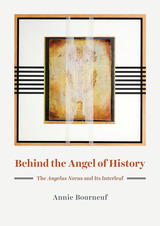
This book begins with artist R. H. Quaytman uncovering something startling about a picture by Paul Klee. Pasted beneath Klee’s 1920 Angelus Novus—famous for its role in the writings of its first owner, Walter Benjamin—Quaytman found that Klee had interleaved a nineteenth-century engraving of Martin Luther, leaving just enough visible to provoke questions.
Behind the Angel of History reveals why this hidden face matters, delving into the intertwined artistic, political, and theological issues consuming Germany in the wake of the Great War. With the Angelus Novus, Klee responded to a growing call for a new religious art. For Benjamin, Klee’s Angelus became bound up with the prospect of meaningful dialogue among religions in Germany.
Reflecting on Klee’s, Benjamin’s, and Quaytman’s strategies of superimposing conflicting images, Annie Bourneuf reveals new dimensions of complexity in this iconic work and the writing it inspired.
The annual Beijing Film Academy Yearbook continues to showcase the best academic debates, discussions, and research published in the prestigious Journal of Beijing Film Academy from the previous year. This volume brings together specially selected articles, covering the most up-to-date topics in Chinese cinema studies appearing for the first time in English, in order to bridge the gap in cross-cultural research in cinema and media studies, as well as to encourage new conversations.
This book is the latest offering in Intellect China Library series, which publishes work by Chinese scholars that have not previously been available to English-language academia. Covering the subjects of film studies, visual arts, performing arts, media, and cultural studies, the series aims to foster intellectual debate and to promote closer cross-cultural intellectual exchanges by introducing important works of Chinese scholarship to readers.
The annual Beijing Film Academy Yearbook highlights the best academic debates, discussions, and research from the previous year, as previously published in the highly prestigious Journal of Beijing Film Academy. This volume brings together specially selected articles, appearing for the first time in English, to bridge the gap in cross-cultural research in cinema and media studies.
The book is the latest in the Intellect China Library series to produce work by Chinese scholars that have not previously been available to English-language academia. Covering the subjects of film studies, visual arts, performing arts, and media and cultural studies, the series aims to foster intellectual debate and to promote closer cross-cultural intellectual exchanges by introducing important works of Chinese scholarship to readers.
Beijing Film Academy 2022 offers an essential collection of the most thought-provoking debates, discussions, and research from China’s leading institution for film and media studies. For the first time in English, this volume presents carefully selected articles from the prestigious Journal of Beijing Film Academy, providing scholars and students with unparalleled access to a significant body of work from Chinese academics.
This book covers a wide range of topics–from film studies and visual arts to performing arts and media culture and provides critical insights into contemporary cinematic and media discourse in China. As part of the Intellect China Library series, it fosters cross-cultural intellectual exchange and bridges the gap between Chinese scholarship and global academia.
An indispensable resource for film and media scholars, this yearbook serves as a vital tool for understanding the evolving landscape of Chinese cinema and its global impact.
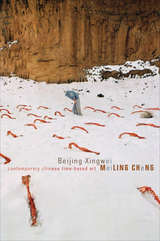
From cannibalism to light-calligraphy, from self-harming to animal sacrifice, from meat entwined with sex toys to a commodity-embedded ice wall, the idiosyncratic output of Chinese time-based art over the past twenty-five years has invigorated contemporary global art movements and conversation. In Beijing Xingwei, Meiling Cheng engages with such artworks created to mark China's rapid social, economical, cultural, intellectual, and environmental transformations in its post-Deng era.
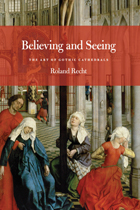
In addition to the great cathedrals of France, Recht explores key religious buildings throughout Europe to reveal how their grand designs supported this profusion of images that made visible the signs of scripture. Metalworkers, for example, fashioned intricate monstrances and reliquaries for the presentation of sacred articles, and technical advances in stained glass production allowed for more expressive renderings of holy objects. Sculptors, meanwhile, created increasingly naturalistic works and painters used multihued palettes to enhance their subjects’ lifelike qualities. Reimagining these works as a link between devotional practices in the late Middle Ages and contemporaneous theories that deemed vision the basis of empirical truth, Recht provides students and scholars with a new and powerful lens through which to view Gothic art and architecture.
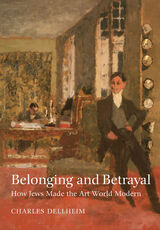
The story of dealers of Old Masters, champions of modern art, and victims of Nazi plunder.
Since the late 1990s, the fate of Nazi-stolen art has become a cause célèbre. In Belonging and Betrayal, Charles Dellheim turns this story on its head by revealing how certain Jewish outsiders came to acquire so many old and modern masterpieces in the first place—and what this reveals about Jews, art, and modernity. This book tells the epic story of the fortunes and misfortunes of a small number of eminent art dealers and collectors who, against the odds, played a pivotal role in the migration of works of art from Europe to the United States and in the triumph of modern art.
Beautifully written and compellingly told, this story spans both sides of the Atlantic from the late nineteenth century to the present. It is set against the backdrop of critical transformations, among them the gradual opening of European high culture, the ambiguities of Jewish acculturation, the massive sell-off of aristocratic family art collections, the emergence of different schools of modern art, the cultural impact of World War I, and the Nazi war against the Jews.
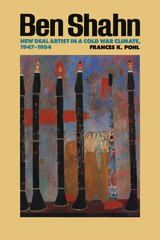
In the first, most intense years of the Cold War (1947–1954), New Deal liberals often found themselves in great disfavor. Ben Shahn's experience presents something of a paradox, however, since his paintings appealed in different ways to both liberals and conservatives. Blacklisted by CBS during the McCarthy era and yet, ironically, incorporated into presidential "campaigns of truth" aimed at improving the U.S. image abroad, Ben Shahn is a pivotal figure, revealing the complexities and contradictions inherent in this highly polarized moment in American history.
In this pathbreaking study, Frances Pohl traces the political and artistic struggles Ben Shahn became embroiled in as he tried to remain a socially concerned artist during the early Cold War period. She shows how he rejected the argument, voiced by many Abstract Expressionists, that art and politics should not mix, yet at the same time searched for a way to depict, in universal and allegorical terms, the broad human condition rather than simply specific instances of injustice. Perhaps most important, she makes critical connections between U.S. social and political history and the art it provoked, thus illuminating both the later career of Ben Shahn and the Cold War era in American cultural history.
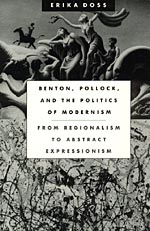
"A welcome addition to the growing body of literature that deals with the art and culture of the depression and cold war eras. It is a pioneering work that makes a valuable contribution to our understanding of a puzzling conundrum of American art—the shift from regionalism to abstract expressionism."—M. Sue Kendall, Winterthur Portfolio
"An important scholarly contribution. . . . This book will stand as a step along the way to a better understanding of the most amazing transition in the art of our tumultuous century."—James G. Rogers, Jr., Art Journal
"A valuable and interesting book that restores continuity and political context to the decades of depression and war."—Marlene Park, American Historical Review
Humans have always marked time, whether by tracing the earth’s natural rhythms or looking at a clock. Unlike pre-industrial people, living in an age of social acceleration is dominated by clock time and network time, presenting many more options than can be achieved in a human lifespan.
This book explores the possibility of an alternative experience of time, one closer to the concept of pure duration described by philosopher Henri Bergson. Connecting Bergson’s thought with key ideas from psychology and anthropology, the discussions in this book contribute to contemporary performance analysis, philosophy, and Bergson studies and explore aspects of immersive and participatory performance, walking practices, and ritual and online performance. Using durational performances as case studies, James Layton offers new insights into Bergson’s philosophy alongside the work of key theorists in psychology and anthropology. Through a series of performance analyses, Bergson’s philosophy of duration is coupled with ideas from Abraham Maslow, Mihaly Csikszentmihalyi, and Victor Turner to speculate on the potential of durational performance to challenge living in a world in which time is short, but the possibility of experience is abundant.

Bernard Berenson (1865–1959) put the connoisseurship of Renaissance art on a firm footing in the late nineteenth and early twentieth centuries. His monument is the library and collection of Italian painting, Islamic miniatures, and Asian art at Villa I Tatti in Florence. The authors in this collection of essays explore the intellectual world in which Berenson was formed and to which he contributed. Some essays consider his friendship with William James and the background of perceptual psychology that underlay his concept of “tactile values.” Others examine Berenson’s relationships with a variety of cultural figures, ranging from the German-born connoisseur Jean Paul Richter, the German art historian Aby Warburg, the Boston collector Isabella Stewart Gardner, and the American medievalist Arthur Kingsley Porter to the African-American dance icon Katherine Dunham, as well as with Kenneth Clark, Otto Gutekunst, Archer Huntington, Paul Sachs, and Umberto Morra.
Bernard Berenson: Formation and Heritage makes an important contribution to the rising interest in the historiography of the discipline of art history in the United States and Europe during its formative years.
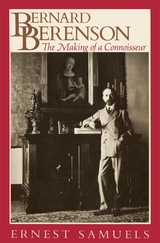
Critic, arbiter of taste, renowned authority on Renaissance painting, and oracle to millionaire art collectors, Bernard Berenson was the most formidable presence in the Anglo-American art world for more than thirty years. His Villa I Tatti near Florence was a magnet for European and American intellectuals; he was able to say, late in life, that most of the Italian paintings that had come to the United States had “my visa on their passport.” Twenty years after his death he remains a paradoxical figure—fit challenge for a Pulitzer Prize–winning biographer.
The story of the making of the connoisseur spans four decades, from Berenson’s childhood in Lithuania and in an immigrant enclave in Boston to the triumphant tour of the United States that confirmed his international reputation. Ernest Samuels interweaves with great skill the many threads of the narrative. No less fascinating than Berenson’s own development, and the accidents that shaped his career, are his relations with an extraordinary cast of characters whose lives impinged on his—among them George Santayana, William James, Bertrand Russell, Logan Pearsall Smith, Norman and Hutchins Hapgood, Oscar Wilde, Vernon Lee, the Michael Fields, Gertrude Stein, Edith Wharton, Roger Fry, and, most notably, the fabled Mrs. Jack Gardner. His relationship with Mary Smith Costelloe, who left her husband and children for him and eventually became his wife, was so close that the book is almost as much her story as his.
Drawing on the thousands of letters B.B. and Mary wrote and the diaries she kept, Samuels is able to convey Berenson’s thoughts and impressions as well as the outward events of these crucial years of his life. He blends sympathy and irony in his many-faceted portrayal of a complex man and a remarkable career. It is a compelling book.
Controversy swirls around Bernard Berenson today as it did in his middle years, before and between two world wars. Who was this man, this supreme connoisseur of Italian Renaissance painting? How did he support his elegant estate near Florence, his Villa I Tatti? What exactly were his relations with the art dealer Joseph Duveen? What part did his wife, Mary, play in his scholarly work and professional career? The answers are to be found in the day-to-day record of his life as he lived it—as reported at first hand in his and Mary’s letters and diaries and reflected in the countless personal and business letters they received. His is one of the most fully documented lives of this century. Ernest Samuels, having spent twenty years studying the thousands of letters and other manuscripts, presents his story in absorbing detail.
Berenson helped Isabella Stewart Gardner build her great collection and performed similar though lesser services for other wealthy Americans. It was merely an avocation and a useful source of income; his vocation was scholarship. But after 1904, when the book opens, his expertise was in ever-greater demand: a purchaser’s only assurance of the authorship of an Italian painting was the opinion of an expert, and in this field Berenson was preeminent. Increasingly he was drawn into the lucrative world of the art dealers; inevitably Joseph Duveen found it essential to enlist his services, at first ad hoc, then by contractual agreement. Samuels charts the course of Berenson’s long association with Duveen Brothers, detailing the financial arrangements, the humdrum chores and major contested attributions, the periodic clashes between the stubborn scholar and the arrogant entrepreneur.
The portrayal of Berenson’s relationship with Mary is especially intriguing: a union of opposites in all but brains and wit, bonded—despite love affairs, jealousies, recriminations—no longer by passion but by shared concerns. Impinging on their lives are those of a huge circle of friends and acquaintances in America and the beau monde of Europe. Both as biography and as a chapter of social and cultural history, it is a compelling book.

Contributors. Stephen Barker, Ed Cohen, Tom Cohen, Claire Colebrook, Arne De Boever, Benoît Dillet, Alexander R. Galloway, Mark B. N. Hansen, Jason R. LaRivière, Gerald Moore, Daniel Ross, Bernard Stiegler
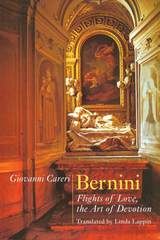
In the Fonseca Chapel, the Albertoni Chapel, and the church of Sant' Andrea al Quirinale, all in Rome, Careri identifies three types of ensemble and links each to a particular spiritual journey. Using contemporary theories in anthropology, film, and reception aesthetics, he shows how Bernini's formal mechanisms established an emotional dynamic between the beholder and a specific arrangement of forms. As an inquiry into the ways art in a certain historical context transformed and was transformed by its audience, Bernini: Flights of Love, the Art of Devotion is also a penetrating investigation into the aesthetic principles of multimedia composition.
Sculptor, architect, painter, playwright, and scenographer, Gian Lorenzo Bernini (1598–1680) was the last of the great universal artistic geniuses of early modern Italy, placed by both contemporaries and posterity in the same exalted company as Leonardo, Raphael, and Michelangelo. And his artistic vision remains palpably present today, through the countless statues, fountains, and buildings that transformed Rome into the Baroque theater that continues to enthrall tourists today.

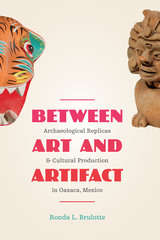
Oaxaca is internationally renowned for its marketplaces and archaeological sites where tourists can buy inexpensive folk art, including replicas of archaeological treasures. Archaeologists, art historians, and museum professionals sometimes discredit this trade in “fakes” that occasionally make their way to the auction block as antiquities. Others argue that these souvenirs represent a long cultural tradition of woodcarving or clay sculpting and are “genuine” artifacts of artisanal practices that have been passed from generation to generation, allowing community members to preserve their cultural practices and make a living. Exploring the intriguing question of authenticity and its relationship to cultural forms in Oaxaca and throughout southern Mexico, Between Art and Artifact confronts an important issue that has implications well beyond the commercial realm.
Demonstrating that identity politics lies at the heart of the controversy, Ronda Brulotte provides a nuanced inquiry into what it means to present “authentic” cultural production in a state where indigenous ethnicity is part of an awkward social and racial classification system. Emphasizing the world-famous woodcarvers of Arrazola and the replica purveyors who come from the same community, Brulotte presents the ironies of an ideology that extols regional identity but shuns its artifacts as “forgeries.” Her work makes us question the authority of archaeological discourse in the face of local communities who may often see things differently. A departure from the dialogue that seeks to prove or disprove “authenticity,” Between Art and Artifact reveals itself as a commentary on the arguments themselves, and what the controversy can teach us about our shifting definitions of authority and authorship.
Published by Bucknell University Press. Distributed worldwide by Rutgers University Press.
Although largely unknown today, during his lifetime Mutio Oddi of Urbino (1569–1639) was a highly esteemed scholar, teacher, and practitioner of a wide range of disciplines related to mathematics. A prime example of the artisan-scholar so prevalent in the late Renaissance, Oddi was also accomplished in the fields of civil and military architecture and the design and retail of mathematical instruments, as well as writing and publishing.
In Between Raphael and Galileo, Alexander Marr resurrects the career and achievements of Oddi in order to examine the ways in which mathematics, material culture, and the book shaped knowledge, society, and the visual arts in late Renaissance Italy. Marr scrutinizes the extensive archive of Oddi papers, documenting Oddi’s collaboration with prominent intellectuals and officials and shedding new light on the practice of science and art during his day. What becomes clear is that Oddi, precisely because he was not spectacularly innovative and did not attain the status of a hero in modern science, is characteristic of the majority of scientific practitioners and educators active in this formative age, particularly those whose energetic popularization of mathematics laid the foundations for the Scientific Revolution. Marr also demonstrates that scientific change in this era was multivalent and contested, governed as much by friendship as by principle and determined as much by places as by purpose.
Plunging the reader into Oddi’s world, Between Raphael and Galileo is a finely wrought and meticulously researched tale of science, art, commerce, and society in the late sixteenth and early seventeenth century. It will become required reading for any scholar interested in the history of science, visual art, and print culture of the Early Modern period.
Explaining that the postwar expanded cinema was a response to both developments, Andrew V. Uroskie argues that, rather than a formal or technological innovation, the key change for artists involved a displacement of the moving image from the familiarity of the cinematic theater to original spaces and contexts. He shows how newly available, inexpensive film and video technology enabled artists such as Nam June Paik, Robert Whitman, Stan VanDerBeek, Robert Breer, and especially Andy Warhol to become filmmakers. Through their efforts to explore a fresh way of experiencing the moving image, these artists sought to reimagine the nature and possibilities of art in a post-cinematic age and helped to develop a novel space between the “black box” of the movie theater and the “white cube” of the art gallery. Packed with over one hundred illustrations, Between the Black Box and the White Cube is a compelling look at a seminal moment in the cultural life of the moving image and its emergence in contemporary art.
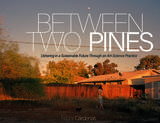
“I am truly thankful that Dr. Edgar Cardenas’s thoughtful research is now available in this beautiful book. I have recommended his work to more people, both in my personal and professional spheres of my life, than I can count, and I’m glad to have this provocative and elegant publication to put into people’s hands. Cardenas shows us how each of us really can make a difference.”
“Between Two Pines anticipates and leads the discussion of scholarship around questions of land and landscape. This work brilliantly and ethically refocuses our vision, from distanced scrutiny to connection and proximity, rooted in daily care-taking and ecological efforts. Thoughtfully imaged, the photographs offer an aesthetic that is based in balanced, enduring reflection, rather than on the grand view. These beautiful images reveal discoveries that bridge the arts, ecology, and sociology, and will serve to reconnect every reader with the world in their backyard and beyond.”
“Drawing from a long photographic tradition of examining the relationship between humans and their environment, Edgar Cardenas has found a voice that is as compassionate as it is poignant. Yet he is not content for his photographs to be mere observations, recording the relationship. Between Two Pines is a call to action – a platform by which we might imagine together, with all of the tools in our tool kit, a sustainable future.”
Focusing on the period from 1948 to 1963, Butt draws on the accusations and denials of homosexuality that appeared in the popular press, on early homophile publications such as One and the Mattachine Review, and on biographies, autobiographies, and interviews. In a stunning exposition of Larry Rivers’s work, he shows how Rivers incorporated gossip into his paintings, just as his friend and lover Frank O’Hara worked it into his poetry. He describes how the stories about Andy Warhol being too “swish” to be taken seriously as an artist changed following his breakthrough success, reconstructing him as an asexual dandy. Butt also speculates on the meanings surrounding a MoMA curator’s refusal in 1958 to buy Jasper Johns’s Target with Plaster Casts on the grounds that it was too scandalous for the museum to acquire. Between You and Me sheds new light on a pivotal moment in American cultural production as it signals new directions for art history.

Why do people wear jewelry? What meaning does it hold for the wearer? And what does the wearer hope it will convey to those they encounter—or to someone viewing their image decades, even centuries, later?
Artistic renderings of the human figure—in portraiture, sculpture, and other media—in a range of allegorical, historical, and religious images often showcase jewelry. The ornaments depicted in such designs offer an abundance of information that not only heightens our understanding of the subject but also provides insights into the imagination of the artist. Jewelry enhances our enjoyment of works of art because it is visually compelling, sensuous, and laden with an array of associations and symbolic meanings.
Bringing together spectacular and significant art objects depicting figures wearing sumptuous personal adornments that define who they are within the specific milieus in which they lived, this richly illustrated and accessible volume represents a novel, interdisciplinary approach to the ways in which jewelry can be studied and understood.
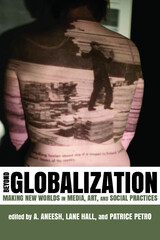
Does living in a globally networked society mean that we are moving toward a single, homogenous world culture? Or, are we headed for clashes between center and periphery, imperial and subaltern, Western and non-Western, First and Third World? The interdisciplinary essays in Beyond Globalization present us with another possibility—that new media will lead to new kinds of “worldmaking.”
This provocative volume brings together the best new work of scholars within such diverse fields as history, sociology, anthropology, film, media studies, and art. Whether examining the inauguration of a virtual community on the website Second Life or investigating the appropriation of biotechnology for transgenic art, this collection highlights how mediated practices have become integral to global culture; how social practices have emerged out of computer-related industries; how contemporary apocalyptic narratives reflect the anxieties of a U.S. culture facing global challenges; and how design, play, and technology help us understand the histories and ideals
behind the digital architectures that mediate our everyday actions.
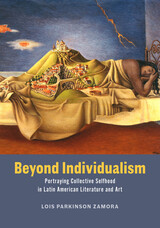
Beyond Individualism examines the portrayal of collective identities over two centuries in Latin American literature and visual art. Lois Parkinson Zamora shows that many authors and artists are less concerned with singular selves than with selves-in-relation: less with individual autonomy than with communal affiliation. Their works—sometimes situated under the labels Neobaroque, magical realism, Surrealism, Expressionism, and idealism—resist the kind of psychological realism typical of European and North American novels, moving instead toward a wholly new kind of fiction.
Zamora calls this new Latin American form “archetypal realism” because its characters represent entities larger than themselves. They may embody entire communities, cultures, families, religious orders, or ideal planets. Through deft readings of collective characters in fiction by Gabriel García Márquez, Isabel Allende, Jorge Luis Borges, and more alongside the art of Diego Rivera, Remedios Varo, and Xul Solar, Zamora reveals a modernity based not on Enlightenment conceptions of selfhood but on community, collectivity, and kinship.

Photography possesses a powerful ability to bear witness, aid remembrance, shape, and even alter recollection. In Beyond Memory: Soviet Nonconformist Photography and Photo-Related Works of Art, the general editor, Diane Neumaier, and twenty-three contributors offer a rigorous examination of the medium's role in late Soviet unofficial art. Focusing on the period between the mid-1950s and the late 1980s, they explore artists' unusually inventive and resourceful uses of photography within a highly developed Soviet dissident culture.
During this time, lack of high-quality photographic materials, complimented by tremendous creative impulses, prompted artists to explore experimental photo-processes such as camera and darkroom manipulations, photomontage, and hand-coloring. Photography also took on a provocative array of forms including photo installation, artist-made samizdat (self-published) books, photo-realist painting, and many other surprising applications of the flexible medium.
Beyond Memory shows how innovative conceptual moves and approaches to form and content-echoes of Soviet society's coded communication and a Russian sense of absurdity-were common in the Soviet cultural underground. Collectively, the works in this anthology demonstrate how late-Soviet artists employed irony and invention to make positive use of difficult circumstances. In the process, the volume illuminates the multiple characters of photography itself and highlights the leading role that the medium has come to play in the international art world today.
Beyond Memory stands on its own as a rigorous examination of photography's place in late Soviet unofficial art, while also serving as a supplement to the traveling exhibition of the same title.
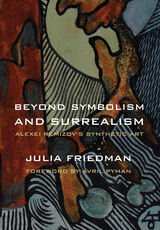
The great modernist eccentric Alexei Remizov was a “writers’ writer” whose innovative poetic prose has long since entered the Russian literary canon. Gradually expanding his working methods to make drawing an integral part of the writing process, during the 1930s and 1940s, Remizov created hundreds of albums that combined texts with collages and india ink and watercolor illustrations. In Beyond Symbolism and Surrealism, Julia Friedman provides the first extensive examination of the dynamic interplay between text and image in Remizov’s albums, revealing their coequal roles in his oneiric and synaesthetic brand of storytelling. A participant in the Russian symbolist movement, an intellectual ally of many futurists, and during his émigré years, a collaborator of the surrealists, Remizov had unique insight into artistic cultures of the European avant-garde. His reinterpretation of the medieval illuminated manuscripts carries forward the traditions of symbolist mysticism and
This long-overdue examination of Remizov’s visual art addresses modernism’s key theoretical questions surrounding the relationships between image and text. Beyond Symbolism and Surrealism introduces a generous sampling of Remizov’s graphic work, much of which is currently held in private collections.
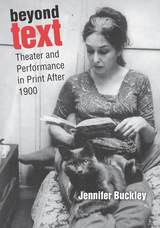
Taking up the work of prominent theater and performance artists, Beyond Text reveals the audacity and beauty of avant-garde performance in print. With extended analyses of the works of Edward Gordon Craig, German expressionist Lothar Schreyer, the Living Theatre, Carolee Schneemann, and Guillermo Gómez-Peña, the book shows how live performance and print aesthetically revived one another during a period in which both were supposed to be in a state of terminal cultural decline. While the European and American avant-gardes did indeed dismiss the dramatic author, they also adopted print as a theatrical medium, altering the status, form, and function of text and image in ways that continue to impact both the performing arts and the book arts.
Beyond Text participates in the ongoing critical effort to unsettle conventional historical and theoretical accounts of text-performance relations, which have too often been figured in binary, chronological (“from page to stage”), or hierarchical terms. Across five case studies spanning twelve decades, Beyond Text demonstrates that print—as noun and verb—has been integral to the practices of modern and contemporary theater and performance artists.
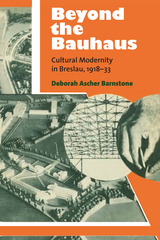
This richly illustrated volume is the first book in English to address this history, constituting an invaluable addition to the literature on the Weimar period. Its readership includes scholars of German history, art, architecture, urban design, planning, collecting, and exhibition history; of the avant-garde, and of the development of arts academies and arts pedagogy.
Exploring cultural resistance by creating and archiving Latinx performance art
Performance is often seen as ephemeral, a condition that seemingly reduces its activist possibilities. After all, not everyone can take part or bear witness. Beyond the Moment shows how Latinx artists have responded with a theater of dissent that endures—performance art that also documents and can itself be archived, creating opportunities for sustained solidarity and resistance.
Through close readings of works such as Coco Fusco’s multi-genre performance A Field Guide for Female Interrogators, Irene Mata theorizes what she calls “textual mentoring.” This method involves tracing previous moments of resistance, archiving the creative process itself, and transforming the performance into a pedagogical tool. By means of textual mentoring, a work like The Panza Monologues becomes a lesson in confronting systemic oppression through collaborative storytelling. Mata also shows how the 2012 No Papers, No Fear Ride for Justice, a multistate immigrant-rights action, relies on a vocabulary of refusal of movements of the past—like the Freedom Rides of the Civil Rights era—and continues its activism beyond its immediate performance context by digitally archiving its process. With an emphasis on intersectional critique, Beyond the Moment positions performance as a radical form of resistance that educates and inspires across generations and movements.
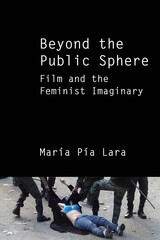
In Beyond the Public Sphere: Film and the Feminist Imaginary, the renowned philosopher and critical theorist María Pía Lara challenges the notion that the bourgeois public sphere is the most important informal institution between social and political actors and the state.
Drawing on a wide range of films—including The Milk of Sorrow, Ixcanul, Wadja, The Stone of Patience, Marnie, A Streetcar Named Desire, and Talk to Her—Lara dissects cinematic images of women’s struggles and their oppression. She builds on this analysis, developing a concept of the feminist social imaginary as a broader and more complex space that provides a way of thinking through the possibilities for emancipatory social transformation in response to forms of domination perpetuated by patriarchal capitalism.
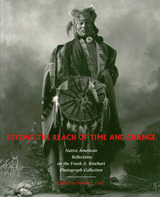
This book provides an unusual perspective on the Rinehart collection. It features one hundred outstanding images printed from the original negatives made by Rinehart and Muhr at the Congress and over the course of the next two years. It also includes 14 essays by modern Native American writers, artists, and educators—some of them descendants of the individuals photographed—reflecting on the place of these images in their heritage.
Beyond the Reach of Time and Change is not another coffee-table book of historical Indian photographs but rather a conversation between Indian people of a century ago and today. Just as the Rinehart collection offers today's Native Americans a unique connection to the past, this book offers all readers a positive understanding of continuity and endurance within the American Indian community.

In what ways can visual art be enjoyed beyond sight? Bringing together leading international scholars and artists in the emerging field of “blindness arts”—including blind and partially blind artists, curators, advocates for inclusive practices and models of audio description, cognitive psychologists, and theorists of installation, performance, and sound art—Beyond the Visual seeks to broaden the discussion of multisensory ways of beholding contemporary art, with a particular emphasis on modes that transcend a dependency upon sight. Through diverse examples of multisensory engagement, it contributes to ongoing conversations around accessibility and blindness in art while also challenging and expanding our understanding of how art is experienced.

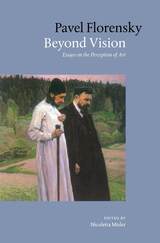
Pavel Florensky was a true polymath: trained in mathematics and philosophy at Moscow University, he rejected a scholarship in advanced mathematics in order to study theology at the Moscow Theological Academy. He was also an expert linguist, scientist and art historian. A victim of the Soviet government’s animosity towards religion, he was condemned to a Siberian labor camp in 1933 where he continued his work under increasingly difficult circumstances. He was executed in 1937.


Big Culture asks a simple question: why do big things give us big feelings? Skyscrapers, disasters, and other large phenomena can elicit fear, attraction, and awe. David Wittenberg argues that these feelings cannot be explained through objects’ size alone. Instead, he contends that an encounter with bigness is a primal, even violent sensation like little else that we experience in our well-proportioned adult lives.
Drawing on examples as commonplace and as singular as atomic bombs, cinematic effects, pornographic “macrophilia,” monstrous creatures, and more, Wittenberg demonstrates how big things tap into our earliest experiences of the world, reigniting our most fundamental feelings about reality. In doing so, Wittenberg offers a new aesthetics of magnitude and of the special role that bigness plays in our everyday perception of objects and images.
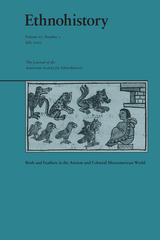
Contributors: Allison Caplan, Martha Few, León García Garagarza, James Maley, John McCormack, Iris Montero Sobrevilla, Lisa Sousa
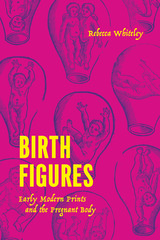
Birth figures are printed images of the pregnant womb, always shown in series, that depict the variety of ways in which a fetus can present for birth. Historian Rebecca Whiteley coined the term and here offers the first systematic analysis of the images’ creation, use, and impact. Whiteley reveals their origins in ancient medicine and explores their inclusion in many medieval gynecological manuscripts, focusing on their explosion in printed midwifery and surgical books in Western Europe from the mid-sixteenth to the mid-eighteenth century. During this period, birth figures formed a key part of the visual culture of medicine and midwifery and were widely produced. They reflected and shaped how the pregnant body was known and treated. And by providing crucial bodily knowledge to midwives and surgeons, birth figures were also deeply entangled with wider cultural preoccupations with generation and creativity, female power and agency, knowledge and its dissemination, and even the condition of the human in the universe.
Birth Figures studies how different kinds of people understood childbirth and engaged with midwifery manuals, from learned physicians to midwives to illiterate listeners. Rich and detailed, this vital history reveals the importance of birth figures in how midwifery was practiced and in how people, both medical professionals and lay readers, envisioned and understood the mysterious state of pregnancy.
Personal recollections punctuate Mavor's dazzling interpretations of these and many other works of art and criticism. Childhood memories become Proust's "small-scale contrivances," tiny sensations that open onto panoramas. Mavor's mother lost her memory to Alzheimer's, and Black and Blue is framed by the author's memories of her mother and effort to understand what it means to not be recognized by one to whom you were once so known.
In Black and Blur—the first volume in his sublime and compelling trilogy consent not to be a single being—Fred Moten engages in a capacious consideration of the place and force of blackness in African diaspora arts, politics, and life. In these interrelated essays, Moten attends to entanglement, the blurring of borders, and other practices that trouble notions of self-determination and sovereignty within political and aesthetic realms. Black and Blur is marked by unlikely juxtapositions: Althusser informs analyses of rappers Pras and Ol' Dirty Bastard; Shakespeare encounters Stokely Carmichael; thinkers like Kant, Adorno, and José Esteban Muñoz and artists and musicians including Thornton Dial and Cecil Taylor play off each other. Moten holds that blackness encompasses a range of social, aesthetic, and theoretical insurgencies that respond to a shared modernity founded upon the sociological catastrophe of the transatlantic slave trade and settler colonialism. In so doing, he unsettles normative ways of reading, hearing, and seeing, thereby reordering the senses to create new means of knowing.
Black and White Cinema is the first study to consider the use of black-and-white as an art form in its own right, providing a comprehensive and global overview of the era when it flourished, from the 1900s to the 1960s. Acclaimed film scholar Wheeler Winston Dixon introduces us to the masters of this art, discussing the signature styles and technical innovations of award-winning cinematographers like James Wong Howe, Gregg Toland, Freddie Francis, and Sven Nykvist. Giving us a unique glimpse behind the scenes, Dixon also reveals the creative teams—from lighting technicians to matte painters—whose work profoundly shaped the look of black-and-white cinema.
More than just a study of film history, this book is a rallying cry, meant to inspire a love for the artistry of black-and-white film, so that we might work to preserve this important part of our cinematic heritage. Lavishly illustrated with more than forty on-the-set stills, Black and White Cinema provides a vivid and illuminating look at a creatively vital era.
Black and White in Colour: African History on Screen considers how the African past has been represented in a wide range of historical films. Written by a team of eminent international scholars, the volume provides extensive coverage of both place and time and deals with major issues in the written history of Africa. Themes include the slave trade, imperialism and colonialism, racism, and anticolonial resistance. Many of the films will be familiar to readers: they include Out of Africa, Hotel Rwanda, Breaker Morant, Cry Freedom, The Battle of Algiers, and Chocolat.
This collection of essays is a highly original and useful contribution to African historiography, as well as a significant addition to the growing body of work within the emerging subdiscipline of “film and history.” It will appeal to those interested in African history and the ways in which films use the past to raise questions about the present.
Contributors: Mahir Saul, Ralph A. Austen, Robert Baum, Robert Harms, Nigel Worden, Carolyn Hamilton and Litheko Modisane, Richard Mendelsohn, Shamil Jeppie, Bill Nasson, Nigel Penn, Ruth Watson, Patrick Harries, David Moore, Teresa Barnes, Vivian Bickford-Smith, Mohamed Adhikari, and David Philips.
The eight pieces in this deeply engaging volume reflect author Amit Majmudar’s comprehensive studies of American, European, and Indian traditions, as well as his experiences in both suburban Ohio and the western Indian state of Gujarat. The volume begins with the title piece, a fifteen-part examination of “How Colorism Came to India.” Tracing the evolution of India’s bias in favor of light skin, Majmudar reflects on the effects of colonialism, drawing upon sources ranging from early Sanskrit texts to contemporary film and television.
Other essays illuminate subjects both timely and timeless. “The Ramayana and the Birth of Poetry” discusses how suffering is portrayed in art and literature (“The spectrum of suffering: slapstick on one end, scripture on the other, with fiction and poetry . . . in the vastness between them”), while in “Five Famous Asian War Photographs”—a 2018 Best American Essays selection—Majmudar analyzes why these iconic images of atrocity have such emotional resonance. In “Nature/Worship,” another multi-part piece, the author turns his attention to climate change, linking notions of environmentalism to his ancestral tradition of finding divinity within the natural world, connections that form the basis of religious belief.
Perhaps the greatest achievement of these wide-ranging essays is the prose itself—learned yet lively, erudite yet accessible—nimbly revealing the workings of a wonderfully original mind.
This collection's fascinating spectrum of topics begins with the literary and cinematic representations of slavery from the 1970s to the present. Other authors delve into visual culture from Blaxploitation to the art of Betye Saar to stage works like A Movie Star Has to Star in Black and White as well as groundbreaking literary works like Corregidora and Captain Blackman. A pair of concluding essays concentrate on institutional change by looking at the Seventies surge of black publishing and by analyzing Ntozake Shange's for colored girls. . . in the context of current controversies surrounding sexual violence. Throughout, the writers reveal how Seventies black cultural production anchors important contemporary debates in black feminism and other issues while spurring the black imagination to thrive amidst abject social and political conditions.
Contributors: Courtney R. Baker, Soyica Diggs Colbert, Madhu Dubey, Nadine Knight, Monica White Ndounou, Kinohi Nishikawa, Samantha Pinto, Jermaine Singleton, Terrion L. Williamson, and Lisa Woolfork
The relationship between Black Americans and U.S. art museums has historically been fraught and hard-won. In the late 1960s, the Black Emergency Cultural Coalition and other groups organized protests at major art museums, calling for the inclusion of Black artists and curators. Such advocacy led to acquisitions and exhibitions by Black artists at important institutions and spurred the establishment of museums and cultural organizations promoting Black art and culture. Today, Black curators hold significant positions at institutions nationwide. Black Curators Matter illuminates this critical history by spotlighting figures who have transformed the art world since the 1970s.
This book presents illuminating conversations between six pioneering curators—Lowery Stokes Sims, Deborah Willis, Richard J. Powell, Kellie Jones, Thelma Golden, and Franklin Sirmans—and a new generation of professionals, including Ashley James, Kalia Brooks, Aaron Bryant, Thomas Jean Lax, Rujeko Hockley, and LeRonn P. Brooks. Capturing the voices and experiences of Black curators, these discussions highlight their achievements and provide guidance for future generations aiming to diversify and enrich the cultural landscape. This volume reexamines the curatorial field to reveal the transformative strategies, critical interventions, and boundary-breaking exhibitions that reshaped American art museums toward greater inclusivity and experimentation.
In twentieth-century Chicago, generations of Black artisans, craftspeople, art educators, clothing makers, commercial illustrators, sign painters, furniture makers, beauticians, graphic designers, art directors, and screen printers made and remade the city into an energetic center for modern design. Ambitious, enterprising, and resolutely modern, these Black designers were workers and intellectuals, activists and entrepreneurs. They created works for commercial and everyday use and helped to build community institutions such as the South Side Community Art Center and businesses like the Johnson Publishing Company. Their works ranged from branding and housewares for major corporations to pamphlets and posters made in the name of civil rights and Black Power. Together, they made Black Chicago into a dynamic design scene, working against racism in their professions while embracing the possibilities of design as a medium of social change.
This book is the first to chronicle their collective history while also celebrating their influence on design as well as African American culture more broadly. Based on extensive archival research and building on a major 2018 exhibition, Black Designers in Chicago presents essays by experts in African American history and design. The book features illustrations of a stunning variety of works—from graphic design to screenprints to textiles and household wares—placing African Americans at the center of modern design history, while highlighting the role of design in the cultural history of Black Chicago.
READERS
Browse our collection.
PUBLISHERS
See BiblioVault's publisher services.
STUDENT SERVICES
Files for college accessibility offices.
RECENTLY PUBLISHED

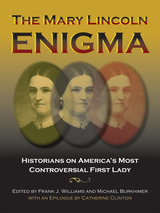
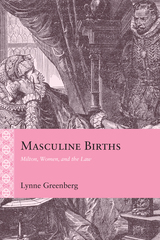
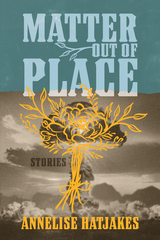


UChicago Accessibility Resources
home | accessibility | search | about | contact us
BiblioVault ® 2001 - 2026
The University of Chicago Press