
 A SCHOLARLY BOOK REPOSITORY
2150 start with C start with C
How to remake the world with neurodivergence at its heart
What if we embraced neurodivergent ways of being not as deviations to be corrected but as vital ways of inhabiting the world? What new realities might emerge? Bringing a much-needed humanistic perspective to the study of autism and other forms of neurodivergence, Counter-cartographies offers a bold reimagining of neurological difference, moving beyond rigid diagnostic frameworks to uncover more expansive, generative modes of existence.
Engaging the work of Fernand Deligny to trace how modern taxonomies of neurodivergence have hardened over time, Leon J. Hilton questions how these categories might instead serve as tools for remapping the world with neurodivergence at its center. At the heart of Counter-cartographies is an exploration of performance and performativity that reveals how the norm of neurotypical reality is continually reinforced through acts of doing, redoing, and undoing.
Charting the historical shift away from “mind” and toward “brain” and moving fluidly across disciplines—from digital art and documentary cinema to cybernetics and radical mental health movements—Hilton illuminates the deep interconnections between performance, perception, and the historical construction of the “neurotypical.” Through close readings of works by William Pope.L, Mel Baggs, Wu Tsang, and others, Hilton also examines how neurodivergence has been represented, embodied, and materialized in contemporary art and media. Restless, engrossing, and persistently attuned to moments of rupture when the neurotypical order falters, Counter-cartographies charts a path toward a more capacious, imaginative world.
Retail e-book files for this title are screen-reader friendly with images accompanied by short alt text and/or extended descriptions.

He looks at how radical critiques of mainstream criminology by critical feminist and postmodernist thinkers contribute to an understanding of the relationship between colonial experience and criminology. But he also shows that even critical feminist and postmodernist assessments of conventional criminology do not go far enough as they remain virtually silent on colonial issues.
Biko Agozino considers African and other postcolonial literature and contributions to counter colonial criminology, their originality, relevance and limitations. Finally he advocates a “committed objectivity” approach to race-class-gender criminology investigations in order to come to terms with imperialistic and neo-colonialist criminology.

This book focuses on the return of the diasporic Greek second generation to Greece, primarily in the first decade of the twenty-first century, and their evolving, often ambivalent, senses of belonging and conceptualizations of “home.” Drawing from a large-scale research project employing a multi-sited and multi-method comparative approach, Counter-Diaspora is a narrative ethnographic account of the lives and identities of second-generation Greek-Americans and Greek-Germans. Through an interdisciplinary gender and generational lens, the study examines lived migration experiences at three diasporic moments: growing up within the Greek diasporic setting in the United States and Germany; motivations for the counter-diasporic return; and experiences in the “homeland” of Greece. Research documents and analyzes a range of feelings and experiences associated with this “counter-diasporic” return to the ancestral homeland.
Images and imaginations of the “homeland” are discussed and deconstructed, along with notions of “Greekness” mediated through diasporic encounters. Using extensive extracts from interviews, the authors explore the roles of, among other things, family solidarity, kinship, food, language, and religion, as well as the impact of “home-coming” visits on the decision to return to the ancestral “homeland.” The book also contributes to a reconceptualization of diaspora and a problematization of the notion of “second generation.”
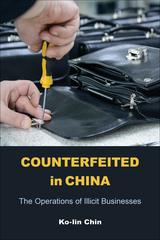
In his illuminating study, Counterfeited in China, Ko-lin Chin investigates this lucrative industry and its emergence in China. His face-to-face interviews with counterfeiters — business owners, workers, facilitators, and key informants — in the hub of Guangzhou, China reveal how businesses that design, produce, and distribute fake and unauthorized luxury goods manage the risks inherent in their business.
Counterfeited in China examines the individual and group characteristics of counterfeiters and their relationships with organized crime; analyzes the economic aspects of counterfeiting; assesses the relationships among counterfeiting, violence, and corruption; and seeks to understand the demand for counterfeit goods. Chin also discusses the role of Chinese authorities and other parties in the war against counterfeiting.
Assessing the state of the industry and its future, Chin provides fascinating new insights into the modus operandi of counterfeiters.
Through ethnographic fieldwork conducted annually in Cauca from 1995 through 2002, Gow compares the development plans of the three communities, looking at both the planning processes and the plans themselves. In so doing, he demonstrates that there is no single indigenous approach to development and modernity. He describes differences in how each community defined and employed the concept of culture, how they connected a concern with culture to economic and political reconstruction, and how they sought to assert their own priorities while engaging with the existing development resources at their disposal. Ultimately, Gow argues that the moral vision advanced by the indigenous movement, combined with the growing importance attached to human rights, offers a fruitful way to think about development: less as a process of integration into a rigidly defined modernity than as a critical modernity based on a radical politics of inclusive citizenship.
Investigates the interdisciplinary dimensions of countermemory through a rhetorical lens
Countermemory: A Rhetoric of Resistance by April L. O’Brien and James Chase Sanchez is a groundbreaking monograph that explores the concept of countermemory from an interdisciplinary and rhetorical perspective. The authors define “countermemory” as remembrance that resituates often overlooked or erased narratives of marginalized groups by positioning these memories as equally significant to dominant historical narratives. This work investigates how countermemories emerge in response to public memories, highlighting the tensions and resistance that arise when marginalized voices challenge mainstream historical accounts.
Through a mixed-methodological approach—incorporating site-based analysis, participant observation, textual analysis, and historiography—O’Brien and Sanchez examine countermemory in both physical and digital spaces. From memorial sites and museums to music videos, TV shows, and digital maps, they reveal the various ways countermemory operates and persists. The authors focus particularly on countermemory in the American South, centering on the experiences and histories of Black, Latinx, and Indigenous communities.
Countermemory is essential reading for scholars and students of rhetoric and public memory. The book also offers rich insights to readers who are passionate about addressing issues of racial inequality, people interested in examining their own experiences and the role they can play in promoting social change, and those interested in exploring the ways in which history is constructed and presented, and how marginalized perspectives are often excluded or distorted.
Practicing what Derrick Bell has termed “creative truth telling,” these writers are not concerned with individual white women in writing centres but with the social, political, and cultural capital that is the historical birthright of white, straight, cis-gendered women, particularly in writing centre studies. The essays collected in this volume test, defy, and overflow the bounds of traditional academic discourse in the service of powerful testimony, witness, and counterstory.
CounterStories from the Writing Center is a must-read for writing centre directors, scholars, and tutors who are committed to antiracist pedagogy and offers a robust intersectional analysis to those who seek to understand the relationship between the work of writing centres and the problem of racism. Accessible and usable for both graduate and undergraduate students of writing centre theory and practice, this work troubles the field’s commonplaces and offers a rich envisioning of what writing centres materially committed to inclusion and equity might be and do.
Contributors: Dianna Baldwin, Nicole Caswell, Mitzi Ceballos, Romeo Garcia, Neisha-Anne Green, Doug Kern, T. Haltiwanger Morrison, Bernice Olivas, Moira Ozias, Trixie Smith, Willow Trevino

Weaving together nearly 100 stories of non-migrants, returnees, and repeat migrants from Ethiopia, Girma advances a theory of migra-emotions, emotions specific to migration, to understand decisions and experiences, such as the imaginary of home and the lived reality of alienation, disaffection abroad, and feelings of duty to one’s homeland.
Looking beyond the meanings of migration or processes of integration, Girma explores the emotional subtext of migration aspirations. In doing so, Counterstreams of Migration complicates conventional understandings of migration and provides a more complete picture of migrant stories.

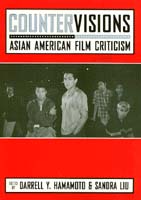
One of the anthology's key contributions is to trace the evolution of Asian American independent film practice over thirty years. Essays on the Japanese American internment and historical memory, essays on films by women and queer artists, and the reflections of individual film makers discuss independent productions as subverting or opposing the conventions of commercial cinema. But Countervisions also resists simplistic readings of "mainstream" film representations of Asian Americans and enumerations of negative images. Writing about Hollywood stars Anna May Wong and Nancy Kwan, director Wayne Wang, and erotic films, several contributors probe into the complex and ambivalent responses of Asian American audiences to stereotypical roles and commercial success. Taken together, the spirited, illuminating essays in this collection offer an unprecedented examination of a flourishing cultural production.

Eeny, meeny, figgledy, fig.
Delia, dolia, dominig,
Ozy, pozy doma-nozy,
Tee, tau, tut,
Uggeldy, buggedy, boo!
Out goes you. (no. 129)
You can stand,
And you can sit,
But, if you play,
You must be it. (no. 577)
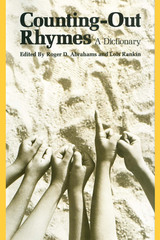
Counting-out rhymes are used by children between the ages of six and eleven as a special way of choosing it and beginning play. They may be short and simple ("O-U-T spells out/And out goes you") or relatively long and complicated; they may be composed of ordinary words, arrant nonsense, or a mixture of the two.
Roger D. Abrahams and Lois Rankin have gathered together a definitive compendium of counting-out rhymes in English reported to 1980. These they discovered in over two hundred sources from the nineteenth and twentieth centuries, including rhymes from England, Scotland, Ireland, Australia, New Zealand, and the United States. Representative texts are given for 582 separate rhymes, with a comprehensive listing of sources and variants for each one, as well as information on each rhyme's provenience, date, and use. Cross-references are provided for variants whose first lines differ from those of the representative texts. Abrahams's introduction discusses the significance of counting-out rhymes in children's play.
Children's folklore and speech play have attracted increasing attention in recent years. Counting-Out Rhymes will be a valuable resource for researchers in this field.
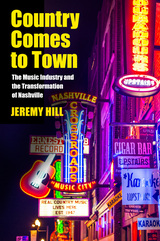
Country music evokes a simple, agrarian past, with images of open land and pickup trucks. While some might think of the genre as a repository of nostalgia, popular because it preserves and reveres traditional values, Jeremy Hill argues that country music has found such expansive success because its songs and its people have forcefully addressed social and cultural issues as well as geographic change. Hill demonstrates how the genre and its fans developed a flexible idea of “country,” beyond their rural roots, and how this flexibility allowed fans and music to “come to town,” to move into and within urban spaces, while retaining a country “character.”
To understand how the genre has become the far-reaching commercial phenomenon that it is today, Hill explores how various players within the country music fold have grappled with the notion of place. He shows both how the industry has transformed the city of Nashville and how country music—through song lyrics, imagery associated with the music, and branding—has reshaped ideas about the American landscape and character. As the genre underwent significant change in the last decades of the twentieth century, those who sought to explain its new styles and new locations relied on a traditional theme: “You can take the boy out of the country, but you can't take the country out of the boy.” Hill demonstrates how this idea—that you can still be “country” while no longer living in a rural place—has been used to expand country's commercial appeal and establish a permanent home in the urban space of Nashville.
A County of Culture demonstrates how changes in educational policies have exerted considerable influence on social life in Zouping, from the macro level of nation building and state formation to the micro level of individual careers. It also shows that the rural population has been far from being a passive object of reform, and that it has been extremely difficult for educational reformers to achieve their goals as a result of the social, economic, and mental realities of China's villages. The fate of educational reforms has thus been decided in the tension between two poles: the visions of educational planners and reformers on the one hand, and the expectations of the rural population on the other.
Not only pertinent to specialists of Chinese education, this book will also be useful to anyone interested in state-society relations in modern China and to students of comparative education and rural development.
Stig Thøgersen is Associate Professor of Chinese Language and Society, University of Aarhus.
Ciudad Juárez has recently become infamous for its murder rate, which topped 3,000 in 2010 as competing drug cartels grew increasingly violent and the military responded with violence as well. Despite the atmosphere of intimidation by troops, police, and organized criminals, women have led the way in civil society activism, spurring the Juárez Resistance and forging powerful alliances with anti-militarization activists.
An in-depth examination of la Resistencia Juarense, Courage, Resistance, and Women in Ciudad Juárez draws on ethnographic research to analyze the resistance’s focus on violence against women, as well as its clash with the war against drugs championed by Mexican President Felipe Calderón with the support of the United States. Through grounded insights, the authors trace the transformation of hidden discourses into public discourses that openly challenge the militarized border regimes. The authors also explore the advocacy carried on by social media, faith-based organizations, and peace-and-justice activist Javier Sicilia while Calderón faced U.S. political schisms over the role of border trade in this global manufacturing site.
Bringing to light on-the-ground strategies as well as current theories from the fields of sociology, political anthropology, and human rights, this illuminating study is particularly significant because of its emphasis on the role of women in local and transnational attempts to extinguish a hot zone. As they overcome intimidation to become game-changing activists, the figures featured in Courage, Resistance, and Women in Ciudad Juárez offer the possibility of peace and justice in the wake of seemingly irreconcilable conflict.
Mallon recounts the land usurpation Nicolás Ailío endured in the first decades of the twentieth century and the community’s ongoing struggle for restitution. Facing extreme poverty and inspired by the agrarian mobilizations of the 1960s, some community members participated in the agrarian reform under the government of socialist president Salvador Allende. With the military coup of 1973, they suffered repression and desperate impoverishment. Out of this turbulent period the Mapuche revitalization movement was born. What began as an effort to protest the privatization of community lands under the military dictatorship evolved into a broad movement for cultural and political recognition that continues to the present day. By providing the historical and local context for the emergence of the Mapuche revitalization movement, Courage Tastes of Blood offers a distinctive perspective on the evolution of Chilean democracy and its rupture with the military coup of 1973.
Based on over six years of fieldwork, Sandra L. Faiman-Silva's The Courage to Connect traces the transformation of the Cape Cod community of Provincetown from its nineteenth-century origins as a fishing town where Portuguese immigrants settled to its present status as a welcoming, sexually diverse tourist enclave. Faiman-Silva examines the community’s history and economy as well as how gay and straight cultures intersect in areas such as public education, local government, and law enforcement. Using queer and critical culture theory to deconstruct day-to-day local encounters, Faiman-Silva describes the causes of social conflicts and how these conflicts can be resolved. Capturing the pathos and joy of a community that has struggled to accommodate radical social changes, The Courage to Connect yields understanding of the ways in which communities can construct themselves to overcome differences.
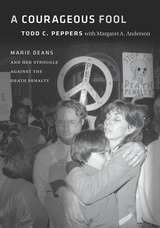
Marie found herself fighting to bring justice to the legal process and to bring humanity not only to prisoners on death row but to the guards and wardens as well. During Marie's time as a death penalty opponent in South Carolina and Virginia, she experienced the highs of helping exonerate the innocent and the lows of standing death watch in the death house with thirty-four condemned men.
Drawing on their own work with gays, lesbians, and bisexuals as well as other pertinent studies, psychoanalysts Bertram J. Cohler and Robert Galatzer-Levy have written a groundbreaking work that examines how psychological development and clinical intervention as well as social and historical change across generations contribute to how we think about sexuality. The authors argue that there is little support for assuming that homosexuality has a biological basis. Recognizing the many pathways that lead to same-gender sexual orientation, the authors conclude that the cause is much less important than understanding the meaning of being homosexual. They consider the destructive nature of an intolerant society that fosters so-called conversion psychotherapy and stress the importance of helping to rebuild a sense of coherence and personal integrity among homosexuals.
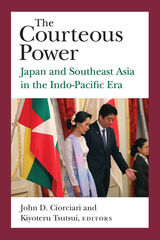
The Courteous Power seeks to provide a nuanced view of the current relationship between Japan and Southeast Asia. Much of the current scholarship on East–Southeast Asian engagement has focused on the multidimensional chess game playing out between China and Japan, as the dominant post-imperialist powers. Alternatively, there has been renewed attention on ASEAN and other Southeast Asian–centered initiatives, explicitly minimizing the influence of East Asia in the region. Given the urgency of understanding the careful balance in the Indo-Pacific region, this volume brings together scholars to examine the history and current engagement from a variety of perspectives, ranging from economic and political, to the cultural and technological, while also focusing more clearly on the specific relationship between the region and Japan.

This book traces changing gender relations in China from the tenth to fourteenth centuries by examining three critical categories of women: courtesans, concubines, and faithful wives. It shows how the intersection and mutual influence of these groups—and of male discourses about them—transformed ideas about family relations and the proper roles of men and women.
Courtesan culture had a profound effect on Song social and family life, as entertainment skills became a defining feature of a new model of concubinage, and as entertainer-concubines increasingly became mothers of literati sons. Neo-Confucianism, the new moral learning of the Song, was significantly shaped by this entertainment culture and by the new markets—in women—that it created. Responding to a broad social consensus, Neo-Confucians called for enhanced recognition of concubine mothers in ritual and expressed increasing concern about wifely jealousy. The book also details the surprising origins of the Late Imperial cult of fidelity, showing that from inception, the drive to celebrate female loyalty was rooted in a complex amalgam of political, social, and moral agendas. By taking women—and men’s relationships with women—seriously, this book makes a case for the centrality of gender relations in the social, political, and intellectual life of the Song and Yuan dynasties.

This study profoundly remaps the textbook narratives of gender bias, challenges modern prejudices prevalent in the literary history of Chinese drama, and reveals how theatrical conditions and writing styles shifted to accommodate courtesan performances. Utilizing a wide range of sources such as scripts, city guides, biographies, diaries, letters, wood-block illustrations, and paintings, this study distinguishes itself from earlier studies of Chinese courtesans by not thematizing courtesans for their allegorical values, but rather pinpointing their agency in shaping the features of Chinese theater and recognizing courtesans as a source of creativity and development in the medium. Xu’s focus on courtesan performance culture allows for fresh readings of canonical Chinese plays, opening up new ways of understanding the history of Chinese drama written by women, thus deviating from standard historiography based solely on the writings of men.

With its dignified courthouse set among shade trees and lawns dotted with monuments to prominent citizens and fallen veterans, the courthouse square remains the civic center in a majority of the county seats of Texas. Yet the squares themselves vary in form and layout, reflecting the different town-planning traditions that settlers brought from Europe, Mexico, and the United States. In fact, one way to trace settlement patterns and ethnic dispersion in Texas is by mapping the different types of courthouse squares.
This book offers the first complete inventory of Texas courthouse squares, drawn from extensive archival research and site visits to 139 of the 254 county seats. Robert Veselka classifies every existing plan by type and origin, including patterns and variants not previously identified. He also explores the social and symbolic functions of these plans as he discusses the historical and modern uses of the squares. He draws interesting new conclusions about why the courthouse square remains the hub of commercial and civic activity in the smaller county seats, when it has lost its prominence in others.
Community Courts are designed to handle a city’s low-level offenses and quality-of-life crimes, such as littering, loitering, or public drunkenness. Court advocates maintain that these largely victimless crimes jeopardize the well-being of residents, businesses, and visitors. Whereas traditional courts might dismiss such cases or administer a small fine, community courts aim to meaningfully punish offenders to avoid disorder escalating to apocalyptic decline.
Courting the Community is a fascinating ethnography that goes behind the scenes to explore how quality-of-life discourses are translated into court practices that marry therapeutic and rehabilitative ideas. Christine Zozula shows how residents and businesses participate in meting out justice—such as through community service, treatment, or other sanctions—making it more emotional, less detached, and more legitimate in the eyes of stakeholders. She also examines both “impact panels,” in which offenders, residents, and business owners meet to discuss how quality-of-life crimes negatively impact the neighborhood, as well as strategic neighborhood outreach efforts to update residents on cases and gauge their concerns.
Zozula’s nuanced investigation of community courts can lead us to a deeper understanding of punishment and rehabilitation and, by extension, the current state of the American court system.
At a time when most gay and lesbian politics focuses only on the issue of gay marriage, Courts, Liberalism, and Rights guides readers through a nuanced discussion of liberalism, court rulings on sodomy laws and same-sex marriage, and the comparative progress gays and lesbians have made via the courts in Canada.
As debates continue about the ability of courts to affect social change, Jason Pierceson argues that this is possible. He claims that the greatest opportunity for reform via the judiciary exists when a judiciary with broad interpretive powers encounters a political culture that endorses a form of liberalism based on broadly conceived individual rights; not a negative set of rights to be held against the state, but a set of rights that recognizes the inherent dignity and worth of every individual.


This book explores a movement that emerged over the past fifteen years, which aims to do just that. Guided by certain politicians and religious leaders who herald marriage as a solution to a range of longstanding social problems, a handful of state governments enacted "covenant marriage" laws, which require couples to choose between a conventional and a covenant marriage. While the familiar type of union requires little effort to enter and can be terminated by either party unilaterally, covenant marriage requires premarital counseling, an agreement bound by fault-based rules or lengthy waiting periods to exit, and a legal stipulation that divorce can be granted only after the couple has received counseling.
Drawing on interviews with over 700 couples-half of whom have chosen covenant unions-this book not only evaluates the viability of public policy in the intimate affairs of marriage, it also explores how growing public discourse is causing men and women to rethink the meaning of marriage.

Over the past century, tort law and insurance have developed deeply intertwined legal and economic roots. Insurance usually determines whether tort cases are brought to trial, whom plaintiffs sue, how much they claim, who provides the defense, how the case gets litigated, the dynamics of the settlement, and how much plaintiffs ultimately recover. But to what extent should liability rules be influenced by insurance? In this study, Mark Rahdert identifies the leading arguments both in favor of and against what he terms the "insurance rationale"—the idea that tort law should be structured to facilitate victim access to assured compensation.
The insurance rationale has been a leading force in the development of product liability law and, as a component of accident compensation, has significantly influenced pro-plaintiff advances in principal areas of tort law. However, the insurance rationale is also the source of great controversy. Critics charge that liability rules deliberately set to maximize plaintiffs' access to insurance funds have corrupted the system, causing insurance costs to spiral upward uncontrollably. Considering the strengths and weaknesses of both sides of the current debate, Rahdert develops a modified version of the insurance rationale that can become a tool for evaluating future tort reform proposals.
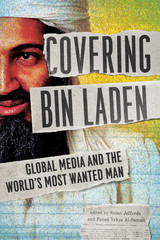
In Covering Bin Laden, editors Susan Jeffords and Fahed Yahya Al-Sumait collect perspectives from global scholars exploring a startling premise: that media depictions of Bin Laden not only diverge but often contradict each other, depending on the media provider and format, the place in which the depiction is presented, and the viewer's political and cultural background. The contributors analyze the representations of the many Bin Ladens, ranging from Al Jazeera broadcasts to video games. They examine the media's dominant role in shaping our understanding of terrorists and why/how they should be feared, and they engage with the ways the mosaic of Bin Laden images and narratives have influenced policies and actions around the world.
Contributors include Fahed Al-Sumait, Saranaz Barforoush, Aditi Bhatia, Purnima Bose, Ryan Croken, Simon Ferrari, Andrew Hill, Richard Jackson, Susan Jeffords, Joanna Margueritte-Giecewicz, Noha Mellor, Susan Moeller, Brigitte Nacos, Courtney C. Radsch, and Alexander Spencer.
As the coronavirus ravages the globe, its aftermaths have brought gender inequalities to the forefront of many conversations. Countries in the Middle East and North Africa have been slow to prepare for, adapt to, and mitigate the COVID-19 health crisis and its impacts on governance, economics, security, and rights. Women’s physical well-being, social safety nets, and economic participation have been disproportionately affected, and with widespread shutdowns and capricious social welfare programs, women are exiting the workplace and the classroom, carrying the caregiving burden.
With feminist foregrounding, Rita Stephan's collection COVID and Gender in the Middle East gathers an impressive group of local scholars, activists, and policy experts. The book examines a range of national and localized responses to gender-specific issues around COVID’s health impact and the economic fallout and resulting social vulnerabilities, including the magnified marginalization of Syrian refugees; the inequitable treatment of migrant workers in Bahrain; and the inadequate implementation of gender-based violence legislation in Morocco. An essential global resource, this book is the first to provide empirical evidence of COVID’s gendered effects.
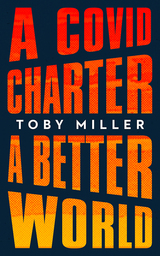
A COVID Charter, A Better World outlines the steps needed to reform public policies and fix the structural vulnerabilities that the current pandemic has made so painfully clear. Leading scholar Toby Miller argues that we must resist neoliberalism’s tendency to view health in terms of individual choices and market-driven solutions, because that fails to preserve human rights. He addresses the imbalance of geopolitical power to explain how we arrived at this point and shows that the pandemic is more than just a virus—it’s a social disease. By examining how the U.S., Britain, Mexico, and Colombia have responded to the COVID-19 crisis, Miller investigates corporate, scientific, and governmental decision-making and the effects those decisions have had on disadvantaged local communities. Drawing from human rights charters ratified by various international organizations, he then proposes a COVID charter, calling for a new world that places human lives above corporate profits.

The American criminal justice system was in flux in 2020, a clash of possibilities for reform, retrenchment, and radical change—nowhere more so than in Massachusetts, which had just passed major criminal justice reform. The COVID-19 pandemic interrupted the moment with life-threatening force, ravaging people held in prisons and jails across the country. However, it did not so much create new deprivations and suffering as it exposed prisons as sites of physical, institutional, and psychological violence that do not make communities safer. At the same time, advocates for people in prisons—including many incarcerated and formerly incarcerated people—seized on the pandemic’s disruptions to demand change. Detailing the first year of the pandemic inside the Massachusetts state prison system, this book argues that the history of the pandemic inside prisons exposed both the cruelties of incarceration and the power of change when it is led by directly affected people.
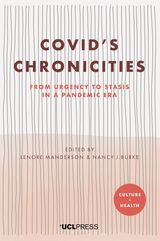
While the initial urgency of the COVID-19 pandemic fades, its long-term disruptions continue to reshape societies and individual lives. Covid’s Chronicities captures the global experience of a crisis that has evolved into a persistent state of uncertainty. Based on research from Europe, the Americas, Asia, and Africa, this volume examines how governments and communities have navigated everything from shifting policies to the social and economic aftershocks of the pandemic.
This volume reveals how COVID-19 has exacerbated existing inequalities and exposed deep structural neglect while also highlighting the resilience of communities, such as Indigenous knowledge systems and grassroots mutual aid networks. Tracing the pandemic’s transition from emergency to enduring crisis, the authors offer a sobering yet hopeful analysis of how people continue to remake their worlds in the face of ongoing instability.


Using the history of the cowboy story from 1820 to 1970 as an extended example, Alf H. Walle combines popular culture scholarship with marketing theory to provide a hybrid analysis. Wall examines major authors and genres of Western American literature and film; he also explores why certain respected authors were unable to significantly impact the cowboy story even though their innovations were embraced by later generations. Finally Wall provides a hybrid analysis combining business and popular culture theory in an overarching analysis.

Centered around six areas of focus, from historical background to biographical profiles to creative process, Cowboy Poets and Cowboy Poetry approaches the tradition of occupational folk poetry from a variety of perspectives. Contributors trace its history as an extension of the Homeric tradition of storytelling in verse and discuss such topics as the way a text evolves in retelling, how it becomes linked to a tune, and how poetic content fuses with form to generate narrative tension and humor.
Personal and telling portraits of cowboy poets and reciters--including D. J. O'Malley, Henry Herbert Knibbs, and a number of contemporary cowboy poets--illuminate the creative process through which individual poets work within a long community tradition, while comparative studies examine poetry by women, Mexican-American vaqueros, loggers, Argentine gauchos, and Australian bush poets.
Cowboy Poets and Cowboy Poetry offers the first in-depth examination of a distinctive and community-based tradition rich with larger-than-life heroes, vivid occupational language, humor, and unblinking encounters with birth, death, nature, and animals. Throughout, the collection shows that cowboy poetry interweaves two thematic strands: a fierce defense of an endangered way of life and a dynamic celebration of organic wholeness, camaraderie, and individualism.

Films discussed include: My Darling Clementine, Red River, Duel in the Sun, Pursued, Fort Apache, Broken Arrow, The Gunfighter, High Noon, Shane, The Searchers, Gunfight at the OK Corral, The Magnificent Seven, The Alamo, Lonely Are the Brave, Ride the High Country, and The Man Who Shot Liberty Valance.

A moose frustrates commuters by wandering onto the highway; a cougar stalks his prey through suburban backyards; an alligator suns himself in a strip mall parking lot. Such stories, which regularly make headline news, highlight the blurred divide that now exists between civilization and wilderness.
In Coyote at the Kitchen Door, Stephen DeStefano draws on decades of experience as a biologist and conservationist to examine the interplay between urban sprawl and wayward wildlife. As he explores what our insatiable appetite for real estate means for the health and well-being of animals and ourselves, he highlights growing concerns, such as the loss of darkness at night because of light pollution. DeStefano writes movingly about the contrasts between constructed and natural environments and about the sometimes cherished, sometimes feared place that nature holds in our modern lives, as we cluster into cities yet show an increasing interest in the natural world.
Woven throughout the book is the story of one of the most successful species in North America: the coyote. Once restricted to the prairies of the West, this adaptable animal now inhabits most of North America—urban and wild alike. DeStefano traces a female coyote’s movements along a winding path between landscapes in which her species learned to survive and flourish. Coyote at the Kitchen Door asks us to rethink the meaning of progress and create a new suburban wildlife ethic.

In Crack Mothers, Drew Humphries asserts that medicine and criminal justice have always been at odds on the subject of drug use. The one treats drug users as patients, the other as criminals. However, beginning in the late 1980s, the “crack mother” scare led to an unprecedented alliance between doctors and prosecutors in some states, where doctors turned addicted pregnant women over to the police for arrest, trial, and incarceration.
Humphries analyzes the public reaction to crack cocaine and the policies instituted to combat it. She shows us that, more often than not, policies were generated by the fears that crack mothers were harbingers of even more serious social problems. The media’s construction of the crack mother as a model of depravity, she argues, reflects mainstream desires and fears, rather than portraying the truth. Humphries offers a more balanced view of the women who use crack and the policies that have been adopted to stop them.
Humphries does not dwell on the transgressions of crack mothers, nor does she endorse the punitive measures of the drug war policy makers. After ten years of studying a wide range of state policies, she finds that zero tolerance, mandatory sentences, and interdiction have not only failed to reduce drug use but increased the sense of persecution among the urban poor and contributed to the crisis of overcrowding in courts and prisons. Moreover, she states, before crack mothers became a media spectacle, no one had considered the special needs of women in designing drug treatment programs. Crack Mothers is a timely and important contribution to our growing understanding of maternal health, drug use, and treatment.
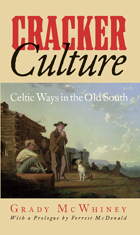
Cracker Culture is a provocative study of social life in the Old South that probes the origin of cultural differences between the South and the North throughout American history. Among Scotch-Irish settlers the term “Cracker” initially designated a person who boasted, but in American usage the word has come to designate poor whites. McWhiney uses the term to define culture rather than to signify an economic condition. Although all poor whites were Crackers, not all Crackers were poor whites; both, however, were Southerners.
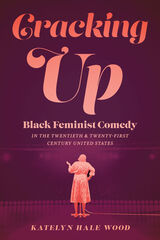
Katelyn Hale Wood interprets these artists not as tokens in a white, male-dominated field, but as part of a continuous history of Black feminist performance and presence. Broadly, Cracking Up frames stand-up comedy as an important platform from which to examine citizenship in the United States, articulate Black feminist political thought, and subvert structures of power. Wood also champions comedic performance and theatre history as imperative contexts for advancing historical studies of race, gender, and sexuality. From the comedy routines popular on Black vaudeville circuits to stand-up on contemporary social media platforms, Cracking Up excavates an overlooked history of Black women who have made the art of joke-telling a key part of radical performance and political engagement.
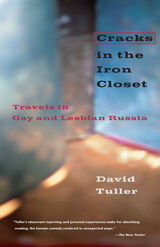
"Tuller's observant reporting and personal experiences make for absorbing reading: the human comedy rendered in unexpected ways."—New Yorker
"Anyone who thinks San Francisco is the world capital of sexual polymorphism should read this book."—Adam Goodheart, Washington Post
"[This book is] is profoundly moving."—Jim Van Buskirk, San Francisco Chronicle
But while the situation on the ground is bleak, Ben White argues that there are widening cracks in Israel's traditional pillars of support. Opposition to Israeli policies and even critiques of Zionism are growing in Jewish communities, as well as amongst Western progressives. The election of Donald Trump has served as a catalyst for these processes, including the transformation of Israel from a partisan issue into one that divides the US establishment. Meanwhile, the Palestinian-led boycott campaign is gathering momentum, prompting a desperate backlash by Israel and its allies.
With sharp analysis, Ben White says now is the time to plot a course that avoids the mistakes of the past - a way forward beyond apartheid in Palestine. The solution is not partition and ethnic separation, but equality and self-determination - for all.
Cradle of Freedom puts a human face on the story of the black American struggle for equality in Alabama during the 1960s. While exceptional leaders such as Martin Luther King Jr., Rosa Parks, Fred Shuttlesworth, Ralph Abernathy, John Lewis, and others rose up from the ranks and carved their places in history, the burden of the movement was not carried by them alone. It was fueled by the commitment and hard work of thousands of everyday people who decided that the time had come to take a stand.
Cradle of Freedom is tied to the chronology of pivotal events occurring in Alabama the Montgomery bus boycott, the Freedom Rides, the Letter from the Birmingham Jail, the bombing of the 16th Street Baptist Church, Bloody Sunday, and the Black Power movement in the Black Belt. Gaillard artfully interweaves fresh stories of ordinary people with the familiar ones of the civil rights icons. We learn about the ministers and lawyers, both black and white, who aided the movement in distinct ways at key points. We meet Vernon Johns, King's predecessor at the Dexter Avenue Baptist Church in Montgomery, who first suggested boycotting the buses and who wrote later, "It is a heart strangely un-Christian that cannot thrill with joy when the least of men begin to pull in the direction of the stars." We hear from John Hulett who tells how terror of lynching forced him down into ditches whenever headlights appeared on a night road. We see the Edmund Pettus Bridge beatings from the perspective of marcher JoAnne Bland, who was only a child at the time. We learn of E. D. Nixon, a Pullman porter who helped organize the bus boycott and who later choked with emotion when, for the first time in his life, a white man extended his hand in greeting to him on a public street.
How these ordinary people rose to the challenges of an unfair system with a will and determination that changed their times forever is a fascinating and extraordinary story that Gaillard tells with his hallmark talent. Cradle of Freedom unfolds with the dramatic flow of a novel, yet it is based on meticulous research. With authority and grace, Gaillard explains how the southern state deemed the Cradle of the Confederacy became with great struggle, some loss, and much hope the Cradle of Freedom.
Reading texts by John Adams, Thomas Paine, Harriet Beecher Stowe, Augusta J. Evans, Mark Twain, Pauline Hopkins, William James, José Martí, W. E. B. Du Bois, and others, Levander traces the child as it figures in writing about several defining events for the United States. Among these are the Revolutionary War, the U.S.-Mexican War, the Civil War, and the U.S. expulsion of Spain from the Caribbean and Cuba. She charts how the child crystallized the concept of self—a self who could affiliate with the nation—in the early national period, and then follows the child through the rise of a school of American psychology and the period of imperialism. Demonstrating that textual representations of the child have been a potent force in shaping public opinion about race, slavery, exceptionalism, and imperialism, Cradle of Liberty shows how a powerful racial logic pervades structures of liberal democracy in the United States.
The U.S. government invests less in children under the age of five than do most other developed nations. Most working families must seek private child care, but high-quality child care options are expensive relative to the means of most families. This means that children from lower-income households, who would benefit most from high-quality early education, are the least likely to attend them. Existing policies, such as pre-kindergarten in some states, are only partial solutions, and what exists varies tremendously in terms of access and quality.
To address these deficiencies, the authors propose to overhaul the early care and education system, beginning with a federal paid parental leave policy that provides both mothers and fathers with time and financial support after the birth of a child. They also advance an expansion of the child care tax credit, and a new child care assurance program that provides grant assistance towards the cost of high-quality early care for low- and moderate-income families. Their plan establishes universal, high-quality early education in the states starting by age three, and a reform of the Head Start program that would include more intensive services for families living in areas of concentrated poverty and experiencing multiple adversities from the earliest point in these most disadvantaged children’s lives. They conclude with an implementation plan and contend that these reforms are attainable well within a ten-year timeline.
Reducing educational and economic inequalities requires that all children have robust opportunities to learn and fully develop their capacities and have a fair shot at success. Cradle to Kindergarten presents a blueprint for fulfilling this promise by expanding access to educational and financial resources at a critical stage of child development.
The U.S. government invests less in children under the age of five than do most other developed nations. Most working families must seek private childcare, which means that children from low-income households, who would benefit most from high-quality early education, are the least likely to attend them. Existing policies, such as pre-kindergarten in some states are only partial solutions. To address these deficiencies, the authors propose to overhaul the early care system, beginning with a federal paid parental leave policy that provides both mothers and fathers with time and financial support after the birth of a child. They also advocate increased public benefits, including an expansion of the child care tax credit, and a new child care assurance program that subsidizes the cost of early care for low- and moderate-income families. They also propose that universal, high-quality early education in the states should start by age three, and a reform of the Head Start program that would include more intensive services for families living in areas of concentrated poverty and experiencing multiple adversities from the earliest point in these most disadvantaged children’s lives. They conclude with an implementation plan and contend that these reforms are attainable within a ten-year timeline.
Reducing educational and economic inequalities requires that all children have robust opportunities to learn, fully develop their capacities, and have a fair shot at success. Cradle to Kindergarten presents a blueprint for fulfilling this promise by expanding access to educational and financial resources at a critical stage of child development.
In ancient Mediterranean cultures, diamonds were thought to endow their owners with invincibility. In contemporary United States culture, a foreign-made luxury car is believed to give its owner status and prestige. Where do these beliefs come from?
In this study of craft production and long-distance trade in traditional, nonindustrial societies, Mary W. Helms explores the power attributed to objects that either are produced by skilled artisans and/or come from "afar." She argues that fine artisanship and long-distance trade, both of which are more available to powerful elites than to ordinary people, are means of creating or acquiring tangible objects that embody intangible powers and energies from the cosmological realms of gods, ancestors, or heroes. Through the objects, these qualities become available to human society and confer honor and power on their possessors.
Helms’ novel approach equates trade with artistry and emphasizes acquisition rather than distribution. She rejects the classic Western separation between economics and aesthetics and offers a new paradigm for understanding traditional societies that will be of interest to all anthropologists and archaeologists.
Many crafts are treated as separate, but are actually practiced concurrently and in close proximity to each other, facilitating crucial interaction. There is a need for a balanced evaluation of the roles of producer and consumer in craft production, and the importance of properly contextualized workshop excavations and the definition of the entire sequence of operation in documenting craft production both as a social and material process.
Craft Production in Complex Societies redresses the skewed conception and approach to craft production that have been shaped by studies focused on separate, single medium crafts, finished products, and the consumer. It presents case studies and regional syntheses from diverse geographical areas, time periods, and sociopolitical complexities that break important new ground in the anthropological study of the creative role and social identity of the producer and multi-craft production. It is expected to serve as a key reference in craft studies for many years to come.
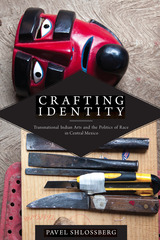
The first ethnographic study of its kind, the book examines how indigenous and mestizo mask makers, both popular and elite, view and contest relations of power and inequality through their craft. Using data from his interviews with mask makers, collectors, museum curators, editors, and others, Pavel Shlossberg places the artisans within the larger context of their relationships with the nation-state and Mexican elites, as well as with the production cultures that inform international arts and crafts markets. In exploring the connection of mask making to capitalism, the book examines the symbolic and material pressures brought to bear on Mexican artisans to embody and enact self-racializing stereotypes and the performance of stigmatized indigenous identities.
Shlossberg’s weaving of ethnographic data and cultural theory demystifies the way mask makers ascribe meaning to their practices and illuminates how these practices are influenced by state and cultural institutions. Demonstrating how the practice of mask making negotiates ethnoracial identity with regard to the Mexican state and the United States, Shlossberg shows how it derives meaning, value, and economic worth in the eyes of the state and cultural institutions that mediate between the mask maker and the market.
By contextualizing classes and their kinship behavior within the overall political economy, Crafting Prehispanic Maya Kinship provides an example of how archaeology can help to explain the formation of disparate classes and kinship patterns within an ancient state-level society.
"Kondo's work is significant because she goes beyond disharmony, insisting on complexity. Kondo shows that inequalities are not simply oppressive-they are meaningful ways to establish identities."—Nancy Rosenberger, Journal of Asian Studies
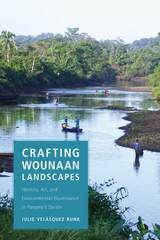
Panama’s Darién is a name many conservationists know. Renowned for its lowland tropical forests, its fame is more pronounced because a road that should be there is not: environmentalists have repeatedly, and remarkably, blocked all attempts to connect the Americas via the Pan American Highway. That lacuna, that absence of a road, also serves to occlude history in the region as its old-growth forests give the erroneous impression of a peopleless nature.
In Crafting Wounaan Landscapes, Julie Velásquez Runk upends long-standing assumptions about the people that call Darién home, and she demonstrates the agency of the Wounaan people to make their living and preserve and transform their way of life in the face of continuous and tremendous change. Velásquez Runk focuses on Wounaan crafting—how their ability to subtly effect change has granted them resilience in a dynamic and globalized era. She theorizes that unpredictable landscapes, political decisions, and cultural beliefs are responsible for environmental conservation problems, and she unpacks environmental governance efforts that illustrate what happens when conservation is confronted with people in a purportedly peopleless place.
The everyday dangers of environmental governance without local crafting include logging, land grabbing, and loss of carbon in a new era of carbon governance in the face of climate change. Crafting Wounaan Landscapes provides recognition of local ways of knowing and being in the world that may be key to the future of conservation practice.
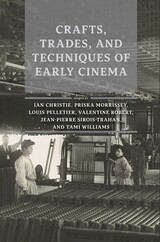
The intermedial approaches deployed in this collection bring into focus the influence of multiple professional worlds and cultural practices on the nascent film medium, as well as the necessary adaptations and transformations required by the latter. This circulatory dynamic concerns people and practices, studied in a non-diffusionist approach taking into account transcultural interactions. Chapters examine the mechanisms of professionalization and identity-building as they relate to professions such as filmmaker or colorist, as well as to more unexpected occupations such as accountant, censor, or chemical engineer.
The notion of technique is broadly defined. Several of the volume’s chapters deal with cameras or special effects, as well as with new historical investigation into mysterious technical devices such as shutters, cue systems or working samples. Going beyond this preoccupation with materiality, the collected studies also approach technique as a human and cultural activity, and thus as a set of gestures, crafts, and expertise. The book more specifically opens up a reflection on the skills of screen performers and on the training that brought the institutionalization of body techniques and film acting. The book further illustrates to an unprecedented extent that the first film workers were frequently women.
Several chapters are dedicated to the unconventional careers of specific film workers, with particular attention being given to the diversity and complexity of professional trajectories. Indeed, this book demonstrates that the invention of cinema was deeply enmeshed with the rise of international networks, which resulted in the standardization of technical practices within corporate and national contexts being ultimately shaped by globalization.
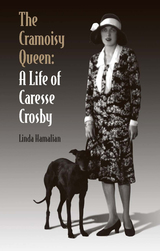
Caresse Crosby rejected the culturally prescribed roles for women of her era and background in search of an independent, creative, and socially responsible life. Poet, memoirist, advocate of women’s rights and the peace movement, Crosby published and promoted modern writers and artists such as Hart Crane, Dorothy Parker, Salvador Dalí, and Romare Bearden. She also earned a place in the world of fashion by patenting one of the earliest versions of the brassiere.
Behind her public success was a chaotic life: three marriages, two divorces, the suicide of her husband Harry Crosby, strained relationships with her children, and legal confrontations over efforts to establish a center for world peace. As the first biographer to consider both the literary and social contexts of Crosby’s life, Linda Hamalian details Crosby’s professional accomplishments and her personal struggles. The Cramoisy Queen: A Life of Caresse Crosby also measures the impact of small presses on modernist literature and draws connections between key writers and artists of the era.
In addition to securing a place for Crosby in modern literary and cultural history, The Cramoisy Queen: A Life of Caresse Crosby contributes to the field of textual studies, specifically the complexities of integrating autobiography and correspondence into biography. Enhanced by thirty-two illustrations, the volume appeals to a wide range of readers, including literary critics, cultural historians, biographers, and gender studies specialists.
Cranial and Postcranial Skeletal Remains from Easter Island was first published in 1968. Minnesota Archive Editions uses digital technology to make long-unavailable books once again accessible, and are published unaltered from the original University of Minnesota Press editions.
An archaeological expedition to Easter Island and the East Pacific was organized and financed by Thor Heyerdahl, the Norwegian anthropologist of Kon-Tiki fame, in 1955 -1956. Although Professor Murrill was not a member of the expedition, he was asked to study and analyze, from the standpoint of physical anthropology, the human skeletal material which was found by the expedition in excavations on Easter Island. Professor Murrill conducted a detailed examination of the remains, using such methods as metrical measurements, morphological observations, and analyses of blood group gene frequencies.
In this book he presents the factual data resulting from his study, much of it in the form of comprehensive tables, and his conclusions. The findings throw significant light on the question of where the prehistoric Easter Islanders came from. Contrary to theories favored by Mr. Heyerdahl and others that these people and their culture derived from prehistoric settlements on the west coast of South America, Professor Murrill concludes that the Easter Island people were Polynesian in origin and that they may have come from the Marquesas Islands. He finds it unlikely that a Negroid migration (possibly from Melanesia) antedated a Polynesian one to Easter Island and, on the basis of his evaluation of blood group systems, he suggests that the Polynesian and the American Indian types may be derived from the same gene pool in East Asia.
The book is illustrated with photographs, drawings, and maps, and there is a substantial bibliography.
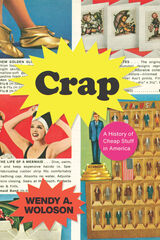
In Crap: A History of Cheap Stuff in America, Wendy A. Woloson takes seriously the history of objects that are often cynically-made and easy to dismiss: things not made to last; things we don't really need; things we often don't even really want. Woloson does not mock these ordinary, everyday possessions but seeks to understand them as a way to understand aspects of ourselves, socially, culturally, and economically: Why do we—as individuals and as a culture—possess these things? Where do they come from? Why do we want them? And what is the true cost of owning them?
Woloson tells the history of crap from the late eighteenth century up through today, exploring its many categories: gadgets, knickknacks, novelty goods, mass-produced collectibles, giftware, variety store merchandise. As Woloson shows, not all crap is crappy in the same way—bric-a-brac is crappy in a different way from, say, advertising giveaways, which are differently crappy from commemorative plates. Taking on the full brilliant and depressing array of crappy material goods, the book explores the overlooked corners of the American market and mindset, revealing the complexity of our relationship with commodity culture over time.
By studying crap rather than finely made material objects, Woloson shows us a new way to truly understand ourselves, our national character, and our collective psyche. For all its problems, and despite its disposability, our crap is us.
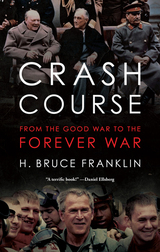
Now, after fifty years as a renowned cultural historian, Franklin offers a set of hard-learned lessons about modern American history. Crash Course is essential reading for anyone who wonders how America ended up where it is today: with a deeply divided and disillusioned populace, led by a dysfunctional government, and mired in unwinnable wars. It also finds startling parallels between America’s foreign military exploits and the equally brutal tactics used on the home front to crush organized labor, antiwar, and civil rights movements.
More than just a memoir or a history book, Crash Course gives readers a unique firsthand look at the building of the American empire and the damage it has wrought. Shocking and gripping as any thriller, it exposes the endless deception of the American public, and reveals from inside how and why many millions of Americans have been struggling for decades against our own government in a fight for peace and justice.

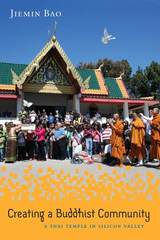
In Creating a Buddhist Community, Jiemin Bao shows how the Wat Thai participants practice Buddhism and rework gender relationships in the course of organizing temple space, teaching meditation, schooling children in Thai language and culture, merit making, fundraising, and celebrating festivals.
Bao’s detailed account of the process of creating an inclusive temple community with Thai immigrants as the majority helps to deconstruct the exoticized view of Buddhism in American culture. Creating a Buddhist Community also explores Wat Thai’s identification with both the United States and Thailand and how this transnational perspective reimagines and reterritorializes what is called American Buddhism.
Carrere elucidates the paradoxical spiritual truth that salvation lies not in an escape from humanity, but in embracing it. An interdisciplinary tour de force, this book will appeal to anyone interested in philosophy, psychology, religion, or cultural anthropology.
The United States is a nation of joiners. Ever since Alexis de Tocqueville published his observations in Democracy in America, Americans have recognized the distinctiveness of their voluntary tradition. In a work of political, legal, social, and intellectual history, focusing on the grassroots actions of ordinary people, Neem traces the origins of this venerable tradition to the vexed beginnings of American democracy in Massachusetts.
Neem explores the multiple conflicts that produced a vibrant pluralistic civil society following the American Revolution. The result was an astounding release of civic energy as ordinary people, long denied a voice in public debates, organized to advocate temperance, to protect the Sabbath, and to abolish slavery; elite Americans formed private institutions to promote education and their stewardship of culture and knowledge. But skeptics remained. Followers of Jefferson and Jackson worried that the new civil society would allow the organized few to trump the will of the unorganized majority. When Tocqueville returned to France, the relationship between American democracy and its new civil society was far from settled.
The story Neem tells is more pertinent than ever—for Americans concerned about their own civil society, and for those seeking to build civil societies in emerging democracies around the world.
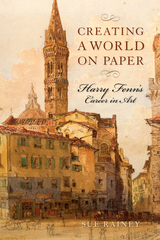
Arriving in New York from London in 1857 as a young wood engraver, Fenn soon forged a career in illustration. His tiny black-and-white wood engravings for Whittier's Snow-Bound (1868) surprised critics with their power, and his bold, innovative compositions for Picturesque America (1872–74) were enormously popular and expanded the field for illustrators and publishers. In the 1880s and '90s, his illustrations appeared in many of the finest magazines and newspapers, depicting the places and events that interested the public—from post–Civil War national reconciliation to the World's Columbian Exposition in 1893 to the beginnings of imperialism in the Spanish-American War.
This handsomely designed volume documents Fenn's prolific career from the 1860s until his death in 1911. Sue Rainey also recounts his adventurous sketching trips in the western United States, Europe, and the Middle East, which enhanced his reputation for depicting far-flung places at a time when the nation was taking a more prominent role on the world stage.
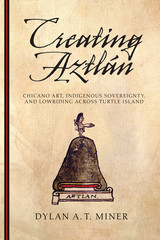
Using the idea that lowriding is an Indigenous way of being in the world, artist and historian Dylan A. T. Miner discusses the multiple roles that Aztlán has played at various moments in time, from the pre-Cuauhtemoc codices through both Spanish and American colonial regimes, past the Chicano Movement and into the present day. Across this “migration story,” Miner challenges notions of mestizaje and asserts Aztlán, as visualized by Xicano artists, as a form of Indigenous sovereignty.
Throughout this book, Miner employs Indigenous and Native American methodologies to show that Chicano art needs to be understood in the context of Indigenous history, anticolonial struggle, and Native American studies. Miner pays particular attention to art outside the U.S. Southwest and includes discussions of work by Nora Chapa Mendoza, Gilbert “Magú” Luján, Santa Barraza, Malaquías Montoya, Carlos Cortéz Koyokuikatl, Favianna Rodríguez, and Dignidad Rebelde, which includes Melanie Cervantes and Jesús Barraza.
With sixteen pages of color images, this book will be crucial to those interested in art history, anthropology, philosophy, and Chicano and Native American studies. Creating Aztlán interrogates the historic and important role that Aztlán plays in Chicano and Indigenous art and culture.
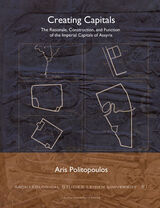
The Assyrian Empire moved and rebuilt its capital city three times—at Kar-Tukulti-Ninurta, Kalhu, Dur-Šarruken, and Nineveh. Creating Capitals explores why and how Assyria constructed these capitals as well as how they functioned within the empire. Drawing on extensive research, Aris Politopoulos offers a sweeping comparative analysis of these four ancient cities and proposes a new framework for understanding the construction of capitals in human history.

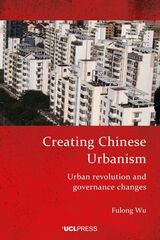
While the imperial and socialist periods of Chinese history were marked by a union of society and state, the rapid urbanization of China has dismantled the territorial foundation of an “earth-bound” or rural society. Through this urban revolution, the Chinese state has become a visible factor in the construction of urban life, with State-led rebuilding of residential communities hastening the demise of traditionalism and giving birth to a new China with greater urbanism and state-centered governance. In Creating Chinese Urbanism, Fulong Wu describes the landscape of urbanization in China, revealing the profound impacts of marketization on Chinese society and the consequential governance changes at the grassroots level. Taking the vantage point of concrete residential neighborhoods, this book offers a cutting-edge analysis of how China is becoming urban and conceptualizes the changes in state governance through the process of urbanization.
Parallel to these research and policy interests, academic institutions and professional organizations have begun to develop training programs for future professionals in the creative and cultural industries. In this book, more than fifty scholars from across the globe shed light on this phenomenon of cultural entrepreneurship. Readers will find conceptual frameworks for building new programs for the creative industries, examples of pedagogical approaches and skills-based training, and concrete examples of program and course implementation.
Creating Dialogues discusses contemporary forms of leadership in a variety of Amazonian indigenous groups. Examining the creation of indigenous leaders as political subjects in the context of contemporary state policies of democratization and exploitation of natural resources, the book addresses issues of resilience and adaptation at the level of local community politics in lowland South America.
Contributors investigate how indigenous peoples perceive themselves as incorporated into the structures of states and how they tend to see the states as accomplices of the private companies and non-indigenous settlers who colonize or devastate indigenous lands. Adapting to the impacts of changing political and economic environments, leaders adopt new organizational forms, participate in electoral processes, become adept in the use of social media, experiment with cultural revitalization and new forms of performance designed to reach non-indigenous publics, and find allies in support of indigenous and human rights claims to secure indigenous territories and conditions for survival. Through these multiple transformations, the new styles and manners of leadership are embedded in indigenous notions of power and authority whose shifting trajectories predate contemporary political conjunctures.
Despite the democratization of many Latin American countries and international attention to human rights efforts, indigenous participation in political arenas is still peripheral. Creating Dialogues sheds light on dramatic, ongoing social and political changes within Amazonian indigenous groups. The volume will be of interest to students and scholars of anthropology, ethnology, Latin American studies, and indigenous studies, as well as governmental and nongovernmental organizations working with Amazonian groups.
Contributors: Jean-Pierre Chaumeil, Gérard Collomb, Luiz Costa, Oscar Espinosa, Esther López, Valéria Macedo, José Pimenta, Juan Pablo Sarmiento Barletti, Terence Turner, Hanne Veber, Pirjo Kristiina Virtanen
Hsu’s ethnographic research, conducted in the city of Harbin in northwestern China, included participant observation at twenty workplaces and interviews with working adults from a range of professions. By analyzing the shared stories about status and class, jobs and careers, and aspirations and hopes that circulate among Harbiners from all walks of life, Hsu reveals the logic underlying the emerging stratification system. In the post-socialist era, Harbiners must confront a fast-changing and bewildering institutional landscape. Their collective narratives serve to create meaning and order in the midst of this confusion. Harbiners collectively agree that “intellectuals” (scientists, educators, and professionals) are the most respected within the new social order, because they contribute the most to Chinese society, whether that contribution is understood in terms of traditional morality, socialist service, or technological and economic progress. Harbiners understand human capital as an accurate measure of a person’s status. Their collective narratives about suzhi shape their career choices, judgments, and child-rearing practices, and therefore the new practices and institutions developing in post-socialist China.
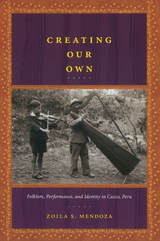
Mendoza draws on early-twentieth-century newspapers and other archival documents as well as interviews with key artistic and intellectual figures and their descendants. She offers vivid descriptions of the Peruvian Mission of Incaic Art, a tour undertaken by a group of artists from Cuzco, at their own expense, to represent Peru to Bolivia, Argentina, and Uruguay in 1923–24, as well as of the origins in the 1920s of the Qosqo Center of Native Art, the first cultural institution dedicated to regional and national folkloric art. She highlights other landmarks, including both The Charango Hour, a radio show that contributed to the broad acceptance of rural Andean music from its debut in 1937, and the rise in that same year of another major cultural institution, the American Art Institute of Cuzco. Throughout, she emphasizes the intricate local, regional, national, and international pressures that combined to produce folkloric art, especially the growing importance of national and international tourism in Cuzco.
Please visit the Web site http://nas.ucdavis.edu/creatingbook for samples of the images and music discussed in this book.
Young adults with intellectual disability tell the story of their own experience of higher education
How do students with intellectual disability experience higher education? Creating Our Own Lives addresses this question through the eyes of participants themselves. In relating their experiences and aspirations, these student perspectives mount a powerful challenge to assumptions that intellectual disability is best met with protection or segregation.
Taken together, the essays expose and contradict the inherently ableist claim that individuals with intellectual disability cannot be reliable storytellers. Instead, their deeply informative stories serve as a corrective narrative. The first of the four sections, “Laying the Foundation: Why Everyone Belongs in College,” focuses on belonging and inclusion; the second, “Opening Up Possibilities: Overcoming Doubt and Uncertainty,” conveys the optimism of this generation of advocates through stories of personal hardship, hopeful perseverance, and triumph over adversity; the third, “Inclusion as Action: Diversifying Student Experiences,” supports the understanding of diverse student experiences in inclusive higher education; and the fourth, “Supporting Growth: Peer Mentoring and Advice,” offers guidance to those reimagining and creating educational spaces.
Students with disabilities belong in higher education. Not only does this book serve as an important record of students enrolled in inclusive higher education programs, it is also an unprecedented resource, packed with information and inspiration both for parents seeking opportunities for their children and for individuals with intellectual disability who aspire to attend college.
Contributors: Makayla Adkins, Olivia Baist, Brandon Baldwin, George Barham, Marquavious Barnes, Katie Bartlett, Steven Brief, De'Onte Brown, Meghan Brozaitis, Mary Bryant, Gracie Carrol, Taylor Cathey, Maia Chamberlain, Antonio E. Contreras, Kim Dean, Elizabeth Droessler, Katie Ducett, Keiron Dyck, Rachel Gomez, Deriq Graves, Micah Gray, Maggie Guillaume, Cleo Hamilton, Nathan Heald, Joshua R. Hourigan, Hannah Lenae Humes, Courtney Jorgensen, Eilish Kelderman, Kailin Kelderman, Kenneth Kelty, Kaelan Knowles, Karlee Lambert, Kate Lisotta, Rachel Mast, Elise McDaniel, Emma Miller, Jake Miller, Lydia Newnum, Brenna Mantz Nielsen, Carly O’Connell, Nadia Osbey, Stirling Peebles, Breyan Pettaway, Amanda Pilkenton, True Rafferty, Taylor Ruppe, Lawrence Sapp, Tyler Shore, Brianna Silva, Alex Smith, Elliott Smith, Phillandra Smith, Payton Storms, Allen Thomas, Kylie Walter, Stephen Wanser, Sayid Webb, Breana Whittlesey, Luke Wilcox, Adam Wolfond.
Corresponding to a particular form of popular culture, each section features two essays, one by an African American scholar and one by a Latino/a scholar, as well as a short response by each scholar to the other’s essay. The essays and responses are lively, varied, and often personal. One contributor puts forth a “brown” theology of hip hop that celebrates hybridity, contradiction, and cultural miscegenation. Another analyzes the content of the message transmitted by African American evangelical preachers who have become popular sensations through television broadcasts, video distribution, and Internet promotions. The other essays include a theological reading of the Latina body, a consideration of the “authenticity” of representations of Jesus as white, a theological account of the popularity of telenovelas, and a reading of African American ideas of paradise in one of Toni Morrison’s novels. Creating Ourselves helps to make popular culture available as a resource for theology and religious studies and for facilitating meaningful discussions across racial and ethnic boundaries.
Contributors. Teresa Delgado, James H. Evans Jr., Joseph De León, Cheryl Kirk-Duggan, Angel F. Méndez Montoya, Alexander Nava, Anthony B. Pinn, Mayra Rivera, Suzanne E. Hoeferkamp Segovia, Benjamín Valentín, Jonathan L. Walton, Traci C. West, Nancy Lynne Westfield, Sheila F. Winborne

In Creating the College Man Daniel A. Clark argues that the dominant mass media of the era—popular magazines such as Cosmopolitan and the Saturday Evening Post—played an integral role in shaping the immediate and long-term goals of this select group of men. In editorials, articles, fiction, and advertising, magazines depicted the college man as simultaneously cultured and scientific, genteel and athletic, polished and tough. Such depictions underscored the college experience in powerful and attractive ways that neatly united the incongruous strains of American manhood and linked a college education to corporate success.
Combining archival research with an engaging literary style, Vaughan juxtaposes extensive analysis of court records with examinations of the logs of slave ships and of colonial correspondence and travel accounts. The result is a close reading of life on the island, power relations, colonialism, and the process of cultural creolization. Vaughan brings to light complexities of language, sexuality, and reproduction as well as the impact of the French Revolution. Illuminating a crucial period in the history of Mauritius, Creating the Creole Island is a major contribution to the historiography of slavery, colonialism, and creolization across the Indian Ocean.
The 4-mile-long, 550-acre Hudson River Park is nearing completion and is the largest park built in Manhattan since Central Park opened more than 150 years ago. It has transformed a derelict waterfront, protected the Hudson River estuary, preserved commercial maritime activities, created new recreational opportunities for millions of New Yorkers, enhanced tourism, stimulated redevelopment in adjacent neighborhoods, and set a precedent for waterfront redevelopment. The Park attracts seventeen million visitors annually. Creating the Hudson River Park is a first-person story of how this park came to be. Working together over three decades, community groups, civic and environmental organizations, labor, the real estate and business community, government agencies, and elected officials won a historic victory for environmental preservation, the use and enjoyment of the Hudson River, and urban redevelopment. However, the park is also the embodiment of a troubling trend toward the commercialization of America’s public parks.
After the defeat of the $2.4 billion Westway plan to fill 234 acres of the Hudson in 1985, the stage was set for the revitalization of Manhattan’s West Side waterfront. Between 1986 and 1998 the process focused on the basics like designing an appropriate roadway, removing noncompliant municipal and commercial activities from the waterfront, implementing temporary improvements, developing the Park’s first revenue-producing commercial area at Chelsea Piers, completing the public planning and environmental review processes, and negotiating the 1998 Hudson River Park Act that officially created the Park. From 1999 to 2009 planning and construction were funded with public money and focused on creating active and passive recreation opportunities on the Tribeca, Greenwich Village, Chelsea, and Hell’s Kitchen waterfronts.
However, initial recommendations to secure long term financial support for the Park from the increase in adjacent real estate values that resulted from the Park’s creation were ignored. City and state politicians had other priorities and public funding for the Park dwindled. The recent phase of the project, from 2010 to 2021, focused on “development” both in and adjacent to the Park. Changes in leadership, and new challenges provide an opportunity to return to a transparent public planning process and complete the redevelopment of the waterfront for the remainder of the 21st-century. Fox’s first-person perspective helps to document the history of the Hudson River Park, recognizes those who made it happen and those who made it difficult, and provides lessons that may help private citizens and public servants expand and protect the public parks and natural systems that are so critical to urban well-being.
In the late nineteenth century, general-interest magazines began to reach an unprecedented number of readers and conveyed to those readers diverse messages about the meaning of masculinity in America. Over the next fifty years, these messages narrated a shift from Victorian masculinity, which valued character, integrity, hard work, and duty, to modern masculinity, which valued personality, self-realization, and image. In Creating the Modern Man, Tom Pendergast studies the multifaceted ways that masculinity is represented in magazines published during this transitional period.
Pendergast focuses on the rise of mass consumer culture, demonstrating that consumerism was a key factor in reshaping American notions of masculinity as presented in popular magazines. Whereas much scholarship has decried the effects of consumerism, Pendergast treats consumer culture as an energizing force in the American magazine market. He suggests that such magazines offered men new and meaningful visions of masculine identity and argues that men actively participated in restructuring the masculine ideal. Engaging a wide range of magazines from American Magazine to Esquire to True, Pendergast demonstrates how these publications presented masculinity in ways that reflected the magazines' relationship to advertisers, contributors, and readers.
This fascinating study includes such African American magazines as the Colored American, Crisis, Opportunity, and Ebony. Pendergast reasons that the rise of modern masculinity opened the way for African American men to identify with normative masculine values. As white men reinvented the idea of the "self-made man" for a new era, black men struggled to negotiate a meaningful place for black masculinity in a culture intent on denying them access.
The first complete investigation of the representation of men in American magazines, Creating the Modern Man makes an important contribution to our understanding of these publications, both as elements of mass culture and as interesting institutions in their own right. Pendergast takes readers inside the complex world of magazine publishing, demonstrating how magazines slowly yet surely help create the cultural images that shape societal gender roles.
READERS
Browse our collection.
PUBLISHERS
See BiblioVault's publisher services.
STUDENT SERVICES
Files for college accessibility offices.
RECENTLY PUBLISHED



UChicago Accessibility Resources
home | accessibility | search | about | contact us
BiblioVault ® 2001 - 2025
The University of Chicago Press