
 A SCHOLARLY BOOK REPOSITORY
2150 start with C start with C
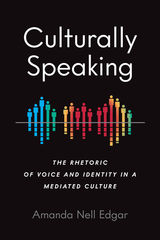
Recent pieces by NPR, the BBC, and Forbes have called attention to the power of voice—positing that “your voice is the secret to getting hired” and that “voice can accelerate or hold back a career.” While it has become clearer that such things as pitch and intonation can be tied to assumptions about one’s gender, race/ethnicity, and class, studying voice as a socially constructed artifact carries with it unique challenges. In response, Culturally Speaking: The Rhetoric of Voice and Identity in a Mediated Culture presents an innovative approach to studying the spoken voice in media, showing how racial and gendered oppression bubble beneath the surface of American culture’s most recognized speaking voices, spreading invisible messages about which kinds of vocal identities are privileged and which kinds should be silenced.
Through her analysis of prominent voices in American culture—including Morgan Freeman, Tina Fey, Barack Obama, Adele, Dave Chappelle, Richard Pryor, and George Lopez—Amanda Nell Edgar argues that voices carry a residue of the particular cultural environments in which they are formed, and that these environments can be traced and analyzed to add a sonic dimension to our understanding of race and gender as rhetorically situated identities—pushing back against the often-unnoticed systems of sound-based discrimination.
French historian Alexis de Tocqueville observed that the conflict between the ideals of individualism and community defines American culture. In this groundbreaking new work, anthropologist Charles Nuckolls discovers that every culture consists of such paradoxes, thus making culture a problem that cannot be solved. He does, however, find much creative tension in these unresolvable opposites.
Nuckolls presents three fascinating case studies that demonstrate how values often are expressed in the organization of social roles. First he treats the Micronesian Ifaluks’ opposition between cooperation and self-gratification by examining the nature versus nurture debate. Nuckolls then shifts to the values of community and individual adventure by looking at the conflicts in the identities of public figures in Oklahoma. Finally, he investigates the cultural significance in the diagnostic system and practices of psychiatry in the United States. Nuckolls asserts that psychiatry treats genders differently, assigning dependence to women and independence to men and, in some cases, diagnoses the extreme forms of these values as disorders.
Nuckolls elaborates on the theory of culture that he introduced in his previous book, The Cultural Dialectics of Knowledge and Desire, which proposed that the desire to resolve conflicts is central to cultural knowledge. In Culture: A Problem that Cannot Be Solved, Nuckolls restores the neglected social science concept of values, which addresses both knowledge and motivation. As a result, he brings together cognition and psychoanalysis, as well as sociology and psychology, in his study of cultural processes.
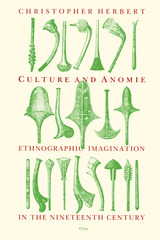
Making wide reference to twentieth-century anthropologists from Malinowski and Benedict to Evans-Pritchard, Geertz, and Lévi-Strauss as well as to nineteenth-century social theorists like Tylor, Spencer, Mill, and Arnold, Herbert stresses the philosophically dubious, unstable character that has clung to the "culture" idea and embarrassed its exponents even as it was developing into a central principle of interpretation.
In a series of detailed studies ranging from political economy to missionary ethnography, Mayhew, and Trollope's fiction, Herbert then focuses on the intellectual and historical circumstances that gave to "culture" the appearance of a secure category of scientific analysis despite its apparent logical incoherence. What he describes is an intimate relationship between the idea of culture and its antithesis, the myth or fantasy of a state of boundless human desire—a conception that binds into a single tradition of thought such seemingly incompatible writers as John Wesley, who called this state original sin, and Durkheim, who gave it its technical name in sociology: anomie.
Methodologically provocative and rich in unorthodox conclusions, Culture and Anomie will be of interest not only to specialists in nineteenth-century literature and intellectual history, but also to readers across the wide range of fields in which the concept of culture plays a determining role.
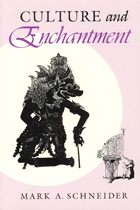
For interpretive disciplines, Schneider suggests, meaning often behaves behaves as mysteriously as the apparitions pursued by centuries ago by natural philosophers. He demonstrates this using two case studies from anthropology: Clifford Geertz's description of Balinese cockfights and Yoruba statuary, and Claude Levi-Strauss's analyses of myths. These provide a basis for actively engaging disputes over the meaning and interpretation of culture.
Culture and Enchantment will appeal to an interdisciplinary audience in anthropology, sociology, history, history and sociology of science, culture studies, and literary theory. Schneider's provocative arguments will make this book a fulcrum in the continuing debate over the nature and prospects of cultural inquiry.
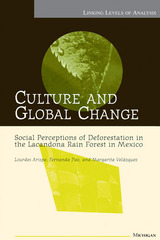
The authors of this compelling book argue that before suitable solutions can be found to pressing environmental problems, we need a way to gather information on the human dimensions of global changes. How do small and everyday individual actions add up to the intricate networks of global interactions? What are our rights and responsibilities as humans toward the planet and its natural resources?
The Lacandon rain forest in Mexico provides a vivid example of an environmental challenge that will demand the concerted efforts of many different groups, and not only technical solutions, to resolve successfully. Using data taken largely from in-depth interviews with landowners, farm workers, cattle raisers, housewives, professionals, and civil servants, the authors draw a rich portrait of the varied perceptions and positions these groups and individuals hold. At issue are the social, rather than psychological, bases of their perspectives.
Culture and Global Change offers a model for how the social sciences, and anthropology in particular, can lead the way in developing comprehensive understandings of the interrelationships between groups at the local, regional, and international levels that affect perceptions of the environment and thus the viability of solutions. It is required reading for anthropologists and environmental activists alike.
Lourdes Arizpe is Assistant Director-General for Culture, UNESCO. Fernanda Paz and Margarita Vel´zquez work for the Centro Regional de Investigaciones Multidisciplinarias, Universidad Nacional Autonoma de México.

This volume of Spiro's major theoretical writings concentrates on theories of culture and human nature, functional analysis, and religion. Spiro argues that important dimensions of the human family are the same everywhere and that a theory of human nature is both possible and necessary. He discusses religious beliefs, analyzing not only their structures but also the ways such beliefs are held and the meanings attributed to them. This analysis, Spiro shows, can be done most successfully by means of a theory of the human family, of infant and child development and socialization, of panhuman unconscious processes, and of universal psychodynamic constellations such as the Oedipus complex.

David Swartz focuses on a central theme in Bourdieu's work—the complex relationship between culture and power—and explains that sociology for Bourdieu is a mode of political intervention. Swartz clarifies Bourdieu's difficult concepts, noting where they have been misinterpreted by critics and where they have fallen short in resolving important analytical issues. The book also shows how Bourdieu has synthesized his theory of practices and symbolic power from Durkheim, Marx, and Weber, and how his work was influenced by Sartre, Levi-Strauss, and Althusser.
Culture and Power is the first book to offer both a sympathetic and critical examination of Bourdieu's work and it will be invaluable to social scientists as well as to a broader audience in the humanities.
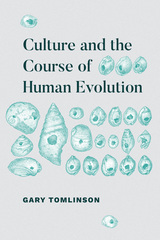
Tomlinson offers a new model for understanding this period in our emergence, one based on analysis of advancing human cultures in an evolution that was simultaneously cultural and biological—a biocultural evolution. He places front and center the emergence of culture and the human capacities to create it, in a fashion that expands the conceptual framework of recent evolutionary theory. His wide-ranging vision encompasses arguments on the development of music, modern technology, and metaphysics. At the heart of these developments, he shows, are transformations in our species’ particular knack for signmaking. With its innovative synthesis of humanistic and scientific ideas, this book will be an essential text.
Investigating the late sixteenth through the nineteenth century, this work looks at the shifting boundaries between the Choson state and the adherents of Confucianism, Buddhism, Christianity, and popular religions. Seeking to define the meaning and constitutive elements of the hegemonic group and a particular marginalized community in this Confucian state, the contributors argue that the power of each group and the space it occupied were determined by a dynamic interaction of ideology, governmental policies, and the group's self-perceptions.
Collectively, the volume counters the static view of the Korean Confucian state, elucidates its relationship to the wider Confucian community and religious groups, and suggests new views of the complex way in which each negotiated and adjusted its ideology and practices in response to the state's activities.

This book takes a critical look at the notion of well-being by examining what well-being means, or could mean, to people living in a number of different regions including Sudan, Nepal, Papua New Guinea, India, Sierra Leone, and the UK.
The contributors take issue with some of the assumptions behind Western concepts of well-being. They explore what characterizes a "good life" and how this idea has been affected by globalization and neoliberalism.
The book makes a major contribution to social theory by presenting new analytical models that make sense of the changing shapes of people's life and ethical values.
Culture as Judicial Evidence in Latin America summarizes the current state of this work in six countries: Mexico, Costa Rica, Peru, Chile, Colombia, and Uruguay, and lays out the challenges and dilemmas involved in the creation and use of cultural expert testimony. Organized into three sections, the book advances a framework for the use of cultural evidence, and presents readers with nine case studies based on trials in six individual countries. These countries have implemented legal reform, constitutional amendments and the adoption of international legislation to create the legal frameworks that enable this new form of legal evidence to be admissible in Latin American courts. The contributing authors are cultural anthropologists with vast experience researching the impact of cultural expert witness testimony. A forward-looking final section examines the dilemmas and challenges of this work that remain to be solved.
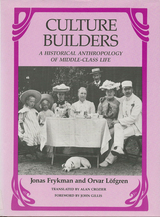
Culture Builders deals primarily with the ways in which ideas about the good and proper life are anchored in the trivialities and routines of everyday life: in the sharing of a meal, in holiday-making, and in the upbringing of children. The authors describe how the attitudes of the bourgeoisie toward. Time and time-keeping set them apart from the peasantry. Uses and perceptions of naturals increasingly divided the classes. For peasants, nature consisted of natural resources to be used. Fr the bourgeoisie, nature had only non-productive connotations. Another change was the growing importance of home over the community. Life became a romantic ideal, not an economic necessity. For the first time, parents became self-conscious about how to raise their children.
Frykman and Lögnen also show how the middle-class developed new perceptions of dirt, pollution, orderliness, health, sexuality, and bodily functions, and how they disdained the filth of peasant households. By stressing refinement, rationality, morality, and discipline, the middle classes were able to differentiate themselves not only from the peasants, but also from the degenerate aristocracy and the disordered and uncontolled emerging working class. The bourgeoisie viewed their own form of culture as the highest on the evolutionary ladder, and turned it into a national culture against which all other groups would be measured.
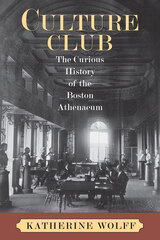
Yet from the outset, Katherine Wolff shows, the Boston Athenaeum was more than a library; it was also a breeding ground for evolving notions of cultural authority and American identity. Though governed by the Boston elite, who promoted it as a way of strengthening their own clout in the city, the early Athenaeum reflected conflicting and at times contradictory aims and motives on the part of its membership. On the one hand, by drawing on European aesthetic models to reinforce an exalted sense of mission, Athenaeum leaders sought to establish themselves as guardians of a nascent American culture. On the other, they struggled to balance their goals with their concerns about an increasingly democratic urban populace. As the Boston Athenaeum opened its doors to women as well as men outside its inner circle, it eventually began to define itself against a more accessible literary institution, the Boston Public Library.
Told through a series of provocative episodes and generously illustrated, Culture Club offers a more complete picture than previously available of the cultural politics behind the making of a quintessentially American institution.
Examines the prehistory of the American struggle to address cultural difference.
"Culture" is a term we commonly use to explain the differences in our ways of living. In this book Michael A. Elliott returns to the moment this usage was first articulated, tracing the concept of culture to the writings-folktales, dialect literature, local color sketches, and ethnographies-that provided its intellectual underpinnings in turn-of-the-century America.
The Culture Concept explains how this now-familiar definition of "culture" emerged during the late nineteenth century through the intersection of two separate endeavors that shared a commitment to recording group-based difference-American literary realism and scientific ethnography. Elliott looks at early works of cultural studies as diverse as the conjure tales of Charles Chesnutt, the Ghost Dance ethnography of James Mooney, and the prose narrative of the Omaha anthropologist-turned-author Francis La Flesche. His reading of these works-which struggle to find appropriate theoretical and textual tools for articulating a less chauvinistic understanding of human difference-is at once a recovery of a lost connection between American literary realism and ethnography and a productive inquiry into the usefulness of the culture concept as a critical tool in our time and times to come.
An important anthology putting the leading topics in Southern anthropology in the context of the 1960s
Proceedings of the Southern Anthropological Society:
No. 1, Essays on Medical Anthropology (1968), edited by Thomas Weaver, with contributions by Frank J. Essene, Thomas Weaver, Charles Hudson, Helen Phillips, Hazel Hitson Weidman, Dorothea C. Leighton, Nora F. Cline, Peter Goethals, Berton H. Kaplan, Alice H. Murphree, John G. Peck, and Gianna Hochstein
No. 2, Urban Anthropology: Research Perspectives and Strategies (1968, edited by Elizabeth M. Eddy, with contributions by Charles Hudson, Elizabeth M. Eddy, Conrad M. Arensberg, Charles H. Fairbanks, H. W. Hutchinson, Anthony Leeds, Hans C. Buechler, Brian M. de Toit, Emilio Willems, Michael D. Olien, and John Gulick
No. 3, Concepts and Assumptions in Contemporary Anthropology (1969), edited by Stephen A. Tyler, with contributions by Charles Hudson, Stephen A. Tyler, Eric R. Wolf, Ann Fischer, E. Pendleton Banks, Munro S. Edmonson, Francis E. Johnston, William G. Haag, Arden R. King, and Jan Brukman
No. 4, The Not So Solid South: Anthropological Studies in a Regional Subculture (1971), edited by J. Kenneth Morland, with contributions by Charles Hudson, J. Kenneth Morland, Helen Phillips Keber, Jared Harper, Edward E. Knipe, Helen M. Lewis, Milton B. Newton Jr., Ronald J. Duncan, John Gordon, H. Eugene Hodges, William L. Partridge, Max E. Stanton, Robert Sayers, James L. Peacock, and Christopher Crocker
No. 5, Red, White, and Black: Symposium on Indians in the Old South (1971), edited by Charles M. Hudson, with contributions by Charles Hudson, Louis De Vorsey Jr., William S. Pollitzer, Mary R. Haas, David J. Hally, Charles H. Fairbanks, F. N. Boney, Joseph L. Brent III, William S. Willis Jr., John H. Peterson Jr., and Charles Crowe.
Originally distributed by the University of Georgia Press, are all combined herein with a historical overview in the new introduction by Miles Richardson and with a new index to the complete anthology.

A foundational work in the study of the globalization of culture.
First published in 1991, Culture, Globalization and the World-System is one of the inaugural books discussing the increasing tendency of cultural practices to cross national boundaries. Now widely available in the United States for the first time and updated with a new preface, these influential essays by a distinguished group of scholars and cultural critics lay the groundwork for a vital and exciting new field of inquiry.
Culture, Globalization and the World-System views culture through different prisms and categories—including race, gender, ethnicity, class, and nation. The contributors consider how socially organized systems of meaning are produced and represented. Drawing from sociology, art history, film studies, and anthropology, these essays—many of them representing their authors’ only treatment of globalization—provide paradigms for understanding cultures and the representation of identity in “the world as a single place.” Contributors: Barbara Abou-El-Haj, SUNY, Binghamton; Janet Abu-Lughod, New School for Social Research; Stuart Hall, Open U, UK; Ulf Hannerz, U of Stockholm, Sweden; Roland Robertson, U of Pittsburgh; John Tagg, SUNY, Binghamton; Maureen Turim, U of Florida, Gainesville; Immanuel Wallerstein, SUNY, Binghamton; Janet Wolff, U of Rochester.
Lubkemann focuses on how Ndau social networks were fragmented by wartime displacement and the profound effect this had on gender relations. Demonstrating how wartime migration and post-conflict return were shaped by social struggles and interests that had little to do with the larger political reasons for the war, Lubkemann contests the assumption that wartime migration is always involuntary. His critical reexamination of displacement and his engagement with broader theories of agency and social change will be of interest to anthropologists, political scientists, historians, and demographers, and to anyone who works in a war zone or with refugees and migrants.
Drawing on fiction, memoirs, journalistic accounts, and extensive interviews with artists, collectors, and dealers, Mullin shows how anthropological notions of culture were used to valorize Indian art and create a Southwest Indian art market. By turning their attention to Indian affairs and art in Santa Fe, New Mexico, she argues, these women escaped the gender restrictions of their eastern communities and found ways of bridging public and private spheres of influence. Tourism, in turn, became a means of furthering this cultural colonization. Mullin traces the development of aesthetic worth as it was influenced not only by politics and profit but also by gender, class, and regional identities, revealing how notions of “culture” and “authenticity” are fundamentally social ones. She also shows how many of the institutions that the early patrons helped to establish continue to play an important role in the contemporary market for American Indian art.
This book will appeal to audiences in cultural anthropology, art history, American studies, women’s studies, and cultural history.

Heather Jacobson examines these adoptions by focusing on a relatively new social phenomenon, the practice by international adoptive parents, mothers in particular, of incorporating aspects of their children's cultures of origin into their families' lives. "Culture keeping" is now standard in the adoption world, though few adoptive parents, the majority of whom are white and native-born, have experience with the ethnic practices of their children's homelands prior to adopting.
Jacobson follows white adoptive mothers as they navigate culture keeping: from their motivations, to the pressures and constraints they face, to the content of their actual practices concerning names, food, toys, travel, cultural events, and communities of belonging. Through her interviews, she explores how women think about their children, their families, and themselves as mothers as they labor to construct or resist ethnic identities for their children, who may be perceived as birth children (because they are white) or who may be perceived as adopted (because of racial difference).
The choices these women make about culture, Jacobson argues, offer a window into dominant ideas of race and the "American Family," and into how social differences are conceived and negotiated in the United States.
In this wide-ranging and informative work, Patrick Colm Hogan draws on cognitive science, psychoanalysis, and social psychology to explore the cultural and psychological components of social consent. Focusing in particular on Americans’ acquiescence to a system that underpays and underrepresents the vast majority of the population, Hogan moves beyond typical studies of this phenomenon by stressing more than its political and economic dimensions.
With new insights into particularly insideous forms of consent such as those manifest in racism, sexism, and homophobia, The Culture of Conformism considers the role of emotion as it works in conjunction with belief and with the formation of group identity. Arguing that coercion is far more pervasive in democratic societies than is commonly recognized, Hogan discusses the subtle ways in which economic and social pressures operate to complement the more obviously violent forces of the police and military. Addressing issues of narcissism, self-esteem, and empathy, he also explains the concept of “rational” conformity—that is, the degree to which our social consent is based on self-interest—and explores the cognitive factors that produce and sustain social ideology.
Social activists, economic theorists, social psychologists, and political scientists will be intrigued and informed by this book.

Garland explains how the new policies of crime and punishment, welfare and security—and the changing class, race, and gender relations that underpin them—are linked to the fundamental problems of governing contemporary societies, as states, corporations, and private citizens grapple with a volatile economy and a culture that combines expanded personal freedom with relaxed social controls. It is the risky, unfixed character of modern life that underlies our accelerating concern with control and crime control in particular. It is not just crime that has changed; society has changed as well, and this transformation has reshaped criminological thought, public policy, and the cultural meaning of crime and criminals. David Garland's The Culture of Control offers a brilliant guide to this process and its still-reverberating consequences.

Valis finds evidence in literature, cultural objects, and popular customs to
argue that cursilería has its roots in a sense of cultural inadequacy felt by the lower middle classes in nineteenth- and early-twentieth-century Spain. The Spain of this era, popularly viewed as the European power most resistant to economic and social modernization, is characterized by Valis as suffering from nostalgia for a bygone, romanticized society that structured itself on strict class delineations. With the development of an economic middle class during the latter half of the nineteenth century, these designations began to break down, and individuals across all levels of the middle class exaggerated their own social status in an attempt to protect their cultural capital. While the resulting manifestations of cursilería were often provincial, indeed backward, the concept was—and still is—closely associated with a sense of home. Ultimately, Valis shows how cursilería embodied the disparity between old ways and new, and how in its awkward manners, airs of pretension, and graceless anxieties it represents Spain's uneasy surrender to the forces of modernity.
The Culture of Cursilería will interest students and scholars of Latin America, cultural studies, Spanish literature, and modernity.
The Culture of Feedback digs deep into a dazzling variety of left-of-center experiences and attitudes from this misunderstood period, bringing us a new look at the wild side of the 1970s. Belgrad shows us how ideas from systems theory were taken up by the counterculture and the environmental movement, eventually influencing a wide range of beliefs and behaviors, particularly related to the question of what is and is not intelligence. He tells the story of a generation of Americans who were struck by a newfound interest in—and respect for—plants, animals, indigenous populations, and the very sounds around them, threading his tapestry with cogent insights on environmentalism, feminism, systems theory, and psychedelics. The Culture of Feedback repaints the familiar image of the ’70s as a time of Me Generation malaise to reveal an era of revolutionary and hopeful social currents, driven by desires to radically improve—and feed back into—the systems that had come before.

Through a series of poignant tales—from the struggle by a group of friends against daily corruption to the contest over a saint's identity, from nostalgia for the departed Jews to Salman Rushdie's vision of doubt in a world of religious certainty—Rosen shows how a dazzling array of potential changes are occurring alongside deeply embedded continuity, a process he compares to a game of chess in which infinite variations of moves can be achieved while fundamental aspects of "the game" have had a remarkably enduring quality. Whether it is the potential fabrication of new forms of Islam by migrants to Europe (creating a new "Euro-Islam," as Rosen calls it), the emphasis put on individuals rather than institutions, or the heartrending problems Muslims may face when their marriages cross national boundaries, each story and each interpretation offers a window into a world of contending concepts and challenged coherence.
The Culture of Islam is both an antidote to simplified versions of Islam circulating today and a consistent story of the continuities that account for much of ordinary Muslim life. It offers, in its human stories and its insights, its own contribution, as the author says, "to the mutual understanding and forgiveness that alone will make true peace possible."


At the onset of modernity in the sixteenth century, literature and history were wrenched apart. Wlad Godzich, one of the animators of the turn toward literary theory, seeks to restore historical consciousness to criticism after a period of painful depression. In this sweeping study, he considers the emergence of the modern state, the institutions and disciplines of culture and learning, as well as the history of philosophy, the history of historiography, and literary history itself. He offers a powerful account of semiotics; an important critical perspective on narratology; a profound discussion of deconstruction; and many brief, practical demonstrations of why Kant, Hegel, and Heidegger remain essential resources for contemporary critical thought.
The culture of literacy is on the wane, Godzich argues. Throughout the modern period, language has been the institution that provided the condition of possibility for all other institutions, from university to church to state. But the pervasive crisis of meaning we now experience is the result of a shift in the modes of production of knowledge. The culture of literacy has been faced with transformations it cannot accommodate, and the existing organization of knowledge has been challenged. By wedding literature to a reflective practice of history, Godzich leads us toward a critique of political reason, and a profound sense of how postmodernity can overcome by deftly sidestepping the modern. This book will bring to a wider audience the work of a writer who is recognized as one of the most commanding figures of his generation for range, learning, and capacity for innovation.

The Culture of Love interprets the sweeping change in loving that spanned a period when scientific discoveries reduced the terrors and dangers of sex, when new laws gave married women control over their earnings and their bodies, when bold novelists and artists shook off the prudishness and hypocrisy that so paralyzed the Victorians. As public opinion, family pressure, and religious conviction loosened, men and women took charge of their love. Stephen Kern argues that, in contrast to modern sex, Victorian sex was anatomically constricted, spatially confined, morally suspect, deadly serious, and abruptly over.
Kern divides love into its elements and traces profound changes in each: from waiting for love to ending it. Most revealing are the daring ways moderns began to talk about their current lovemaking as well as past lovers. While Victorians viewed jealousy as a "foreign devil," moderns began to acknowledge responsibility for it. Desire lost its close tie with mortal sin and became the engine of artistic creation; women's response to the marriage proposal shifted from mere consent to active choice. There were even new possibilities of kissing, beyond the sudden, blind, disembodied, and censored Victorian meeting of lips.
Kern's evidence is mainly literature and art, including classic novels by the Brontës, Flaubert, Hugo, Eliot, Hardy, Forster, Colette, Proust, Mann, Joyce, Woolf, Lawrence, Hemingway, Fitzgerald, and Musil as well as the paintings and sculptures of Millais, Courbet, Gérôme, Rodin, Munch, Klimt, Schiele, Valadon, Chagall, Kandinsky, Kokoschka, Picasso, Matisse, and Brancusi. The book's conceptual foundation comes from Heidegger's existential philosophy, in particular his authentic-inauthentic distinction, which Kern adapts to make his overall interpretation and concluding affirmation of the value of authenticity: "The moderns may have lost some of the Victorians' delicacy and poignancy, perhaps even some of their heroism, but in exchange became more reflective of what it means to be a human being in love and hence better able to make that loving more their very own."
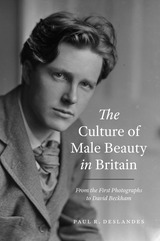
Spanning the decades from the rise of photography to the age of the selfie, this book traces the complex visual and consumer cultures that shaped masculine beauty in Britain, examining the realms of advertising, health, pornography, psychology, sport, and celebrity culture. Paul R. Deslandes chronicles the shifting standards of male beauty in British culture—from the rising cult of the athlete to changing views on hairlessness—while connecting discussions of youth, fitness, and beauty to growing concerns about race, empire, and degeneracy. From earlier beauty show contestants and youth-obsessed artists, the book moves through the decades into considerations of disfigured soldiers, physique models, body-conscious gay men, and celebrities such as David Beckham and David Gandy who populate the worlds of television and social media.
Deslandes calls on historians to take beauty and gendered aesthetics seriously while recasting how we think about the place of physical appearance in historical study, the intersection of different forms of high and popular culture, and what has been at stake for men in “looking good.”
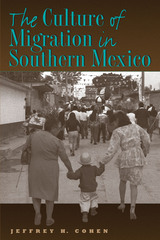
Migration is a way of life for many individuals and even families in the Mexican state of Oaxaca. Some who leave their rural communities go only as far as the state capital, while others migrate to other parts of Mexico and to the United States. Most send money back to their communities, and many return to their homes after a few years. Migration offers Oaxacans economic opportunities that are not always available locally—but it also creates burdens for those who stay behind.
This book explores the complex constellation of factors that cause rural Oaxacans to migrate, the historical and contemporary patterns of their migration, the effects of migration on families and communities, and the economic, cultural, and social reasons why many Oaxacans choose not to migrate. Jeffrey Cohen draws on fieldwork and survey data from twelve communities in the central valleys of Oaxaca to give an encompassing view of the factors that drive migration and determine its outcomes. He demonstrates conclusively that, while migration is an effective way to make a living, no single model can explain the patterns of migration in southern Mexico.
"A sophisticated and thoughtful critic. . . . Gusfield argues that the 'myth of the killer drunk' is a creation of the 'public culture of law.' . . . Through its dramatic development and condemnation of the anti-social character of the drinking-driver, the public law strengthens the illusion of moral consensus in American society and celebrates the virtues of a sober and orderly world."—James D. Orcutt, Sociology and Social Research
"Joseph Gusfield denies neither the role of alcohol in highway accidents nor the need to do something about it. His point is that the research we conduct on drinking-driving and the laws we make to inhibit it tells us more about our moral order than about the effects of drinking-driving itself. Many will object to this conclusion, but none can ignore it. Indeed, the book will put many scientific and legal experts on the defensive as they face Gusfield's massive erudition, pointed analysis and criticism, and powerful argumentation. In The Culture of Public Problems, Gusfield presents the experts, and us, with a masterpiece of sociological reasoning."—Barry Schwartz, American Journal of Sociology
This book is truly an outstanding achievement. . . . It is sociology of science, sociology of law, sociology of deviance, and sociology of knowledge. Sociologists generally should find the book of great theoretical interest, and it should stimulate personal reflection on their assumptions about science and the kind of consciousness it creates. They will also find that the book is a delight to read."—William B. Bankston, Social Forces



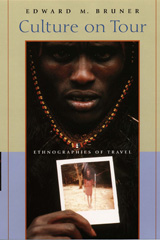
Synthesizing more than twenty years of research in cultural tourism, Culture on Tour analyzes a remarkable variety of tourist productions, ranging from safari excursions in Kenya and dance dramas in Bali to an Abraham Lincoln heritage site in Illinois. Bruner examines each site in all its particularity, taking account of global and local factors, as well as the multiple perspectives of the various actors—the tourists, the producers, the locals, and even the anthropologist himself. The collection will be essential to those in the field as well as to readers interested in globalization and travel.
This collection of both new and well-known essays begins by critically exploring the concepts of locality and community; first, as they have had an impact on contemporary global understandings of displacement and mobility, and, second, as they have had a part in defining identity and subjectivity itself. With sites of discussion ranging from a democratic Spain to a Puerto Rican barrio in North Philadelphia, from Burundian Hutu refugees in Tanzania to Asian landscapes in rural California, from the silk factories of Hangzhou to the long-sought-after home of the Palestinians, these essays examine the interplay between changing schemes of categorization and the discourses of difference on which these concepts are based. The effect of the placeless mass media on our understanding of place—and the forces that make certain identities viable in the world and others not—are also discussed, as are the intertwining of place-making, identity, and resistance as they interact with the meaning and consumption of signs. Finally, this volume offers a self-reflective look at the social and political location of anthropologists in relation to the questions of culture, power, and place—the effect of their participation in what was once seen as their descriptions of these constructions. Contesting the classical idea of culture as the shared, the agreed upon, and the orderly, Culture, Power, Place is an important intervention in the disciplines of anthropology and cultural studies.
Contributors. George E. Bisharat, John Borneman, Rosemary J. Coombe, Mary M. Crain, James Ferguson, Akhil Gupta, Kristin Koptiuch, Karen Leonard, Richard Maddox, Lisa H. Malkki, John Durham Peters, Lisa Rofel

Suddenly culture seems to explain everything, from civil wars to financial crises and divorce rates. But when we speak of culture, what, precisely, do we mean?
Adam Kuper pursues the concept of culture from the early twentieth century debates to its adoption by American social science under the tutelage of Talcott Parsons. What follows is the story of how the idea fared within American anthropology, the discipline that took on culture as its special subject. Here we see the influence of such prominent thinkers as Clifford Geertz, David Schneider, Marshall Sahlins, and their successors, who represent the mainstream of American cultural anthropology in the second half of the twentieth century--the leading tradition in world anthropology in our day. These anthropologists put the idea of culture to the ultimate test--in detailed, empirical ethnographic studies--and Kuper's account shows how the results raise more questions than they answer about the possibilities and validity of cultural analysis.
Written with passion and wit, Culture clarifies a crucial chapter in recent intellectual history. Adam Kuper makes the case against cultural determinism and argues that political and economic forces, social institutions, and biological processes must take their place in any complete explanation of why people think and behave as they do.
Culture Troubles is a systematic reevaluation of the role of culture in political analysis. Here, Patrick Chabal and Jean-Pascal Daloz contend that it is unwise to compare different societies without taking into account culture, which in their interpretation is not a system of values, but rather a system of inherited meanings and symbols. This cultural approach, they argue, can attribute meaning to political comparison, and they outline the shape of that approach, one that draws from an eclectic range of sources. Illustrating the sharpness and acuity of their methods, they proceed with a comparative study of the state and political representation in three very different nations—France, Nigeria, and Sweden—to untangle the many ways that culture informs our understanding of political events. As a result, Culture Troubles offers a rational starting point from which we may begin to understand foreign politics.

Employing a detailed and critically reflective argument covering social media, television, political campaigns, advertising, and “artivism,” Camilla Møhring Reestorff refuses the traditional distinction between the world of visual culture and the political domain, and she provides multiple tools for understanding the dynamics of contemporary affective cultural politics in a highly mediatized environment.

"Irene Taviss Thomson gives us a nuanced portrait of American social politics that helps explain both why we are drawn to the idea of a 'culture war' and why that misrepresents what is actually going on."
---Rhys H. Williams, Professor and Chair, Department of Sociology, Loyola University Chicago
"An important work showing---beneath surface conflict---a deep consensus on a number of ideals by social elites."
---John H. Evans, Department of Sociology, University of California, San Diego
The idea of a culture war, or wars, has existed in America since the 1960s---an underlying ideological schism in our country that is responsible for the polarizing debates on everything from the separation of church and state, to abortion, to gay marriage, to affirmative action. Irene Taviss Thomson explores this notion by analyzing hundreds of articles addressing hot-button issues over two decades from four magazines: National Review, Time, The New Republic, and The Nation, as well as a wide array of other writings and statements from a substantial number of public intellectuals.
What Thomson finds might surprise you: based on her research, there is no single cultural divide or cultural source that can account for the positions that have been adopted. While issues such as religion, homosexuality, sexual conduct, and abortion have figured prominently in public discussion, in fact there is no single thread that unifies responses to each of these cultural dilemmas for any of the writers.
Irene Taviss Thomson is Professor Emeritus of Sociology, having taught in the Department of Social Sciences and History at Fairleigh Dickinson University for more than 30 years. Previously, she taught in the Department of Sociology at Harvard University.
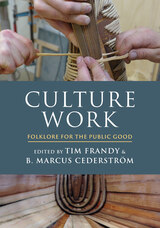
Thematically arranged chapters embody the interconnected aspects of culture work, from amplifying local voices to galvanizing community from within, from preservation of cultural knowledge to its creative repurposing for a desired future. These inventive projects provide concrete examples and accessible theory grounded in practice, encourage readers to embark on their own public culture work, and create new forward-looking inspiration for community leaders and scholars in the field.
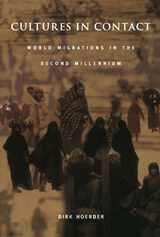
Signaling a major paradigm shift, Cultures in Contact creates an English-language map of human movement that is not Atlantic Ocean-based. Hoerder describes the origins, causes, and extent of migrations around the globe and analyzes the cultural interactions they have triggered. He pays particular attention to the consequences of immigration within the receiving countries. His work sweeps from the eleventh century forward through the end of the twentieth, when migration patterns shifted to include transpacific migration, return migrations from former colonies, refugee migrations, and distinct regional labor migrations in the developing world. Hoerder demonstrates that as we enter the third millennium, regional and intercontinental migration patterns no longer resemble those of previous centuries. They have been transformed by new communications systems and other forces of globalization and transnationalism.

Roaming across the disciplines of media studies, geography, and science and technology studies, Parks examines uses of satellites by broadcasters, military officials, archaeologists, and astronomers. She looks at Our World, a live intercontinental television program that reached five hundred million viewers in 1967, and Imparja tv, an Aboriginal satellite tv network in Australia. Turning to satellites’ remote-sensing capabilities, she explores the U.S. military’s production of satellite images of the war in Bosnia as well as archaeologists’ use of satellites in the excavation of Cleopatra’s palace in Alexandria, Egypt. Parks’s reflections on how Western fantasies of control are implicated in the Hubble telescope’s views of outer space point to a broader concern: that while satellite uses promise a “global village,” they also cut and divide the planet in ways that extend the hegemony of the post-industrial West. In focusing on such contradictions, Parks highlights how satellites cross paths with cultural politics and social struggles.

Topics include: feminine processions and masculine parades; political activism and quietism in Shi’a rituals; civic socializing in Puritan New England; the circus and American culture; the Wild West shows; beauty pageants; theme parks; Bourbon Street, New Orleans; and Stonehenge.
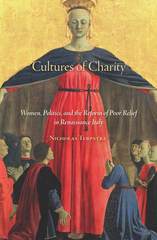
Renaissance Italians pioneered radical changes in ways of helping the poor, including orphanages, workhouses, pawnshops, and women’s shelters. Nicholas Terpstra shows that gender was the key factor driving innovation. Most of the recipients of charity were women. The most creative new plans focused on features of women’s poverty like illegitimate births, hunger, unemployment, and domestic violence. Signal features of the reforms, from forced labor to new instruments of saving and lending, were devised specifically to help young women get a start in life.
Cultures of Charity is the first book to see women’s poverty as the key factor driving changes to poor relief. These changes generated intense political debates as proponents of republican democracy challenged more elitist and authoritarian forms of government emerging at the time. Should taxes fund poor relief? Could forced labor help build local industry? Focusing on Bologna, Terpstra looks at how these fights around politics and gender generated pioneering forms of poor relief, including early examples of maternity benefits, unemployment insurance, food stamps, and credit union savings plans.
Cultures of Doing Good: Anthropologists and NGOs serves as a foundational text to advance a growing subfield of social science inquiry: the anthropology of nongovernmental organizations (NGOs). Thorough introductory chapters provide a short history of NGO anthropology, address how the study of NGOs contributes to anthropology more broadly, and examine ways that anthropological studies of NGOs expand research agendas spawned by other disciplines. In addition, the theoretical concepts and debates that have anchored the analysis of NGOs since they entered scholarly discourse after World War II are explained.
The wide-ranging volume is organized into thematic parts: “Changing Landscapes of Power,” “Doing Good Work,” and “Methodological Challenges of NGO Anthropology.” Each part is introduced by an original, reflective essay that contextualizes and links the themes of each chapter to broader bodies of research and to theoretical and methodological debates. A concluding chapter synthesizes how current lines of inquiry consolidate and advance the first generation of anthropological NGO studies, highlighting new and promising directions in this field.
In contrast to studies about surveys of NGOs that cover a single issue or region, this book offers a survey of NGO dynamics in varied cultural and political settings. The chapters herein cover NGO life in Tanzania, Serbia, the Czech Republic, Egypt, Peru, the United States, and India. The diverse institutional worlds and networks include feminist activism, international aid donors, USAID democracy experts, Romani housing activism, academic gender studies, volunteer tourism, Jewish philanthropy, Islamic faith-based development, child welfare, women’s legal arbitration, and environmental conservation.
The collection explores issues such as normative democratic civic engagement, elitism and professionalization, the governance of feminist advocacy, disciplining religion, the politics of philanthropic neutrality, NGO tourism and consumption, blurred boundaries between anthropologists as researchers and activists, and barriers to producing critical NGO ethnographies.

This transatlantic and truly interdisciplinary collection, with an afterword by distinguished literary scholar Rita Felski, is also notable for its mix of established and emerging scholars. The contributors address diverse aspects of women’s engagement with fashion in modernity, through such topics as Sapphic architecture, tea gowns, secondhand clothing, transnational identity, the coquette, nursing uniforms, and Harlem Renaissance photographs. Cultures of Femininity in Modern Fashion traces a unique and often surprising history of modernity and its entwinement with the gendered phenomenon of fashion.

Discussing overlapping themes of transnational consequence, the contributors to this volume describe how the global character of technology, communication networks, consumer culture, intellectual discourse, the arts, and mass entertainment have all been affected by recent worldwide trends. Appropriate to such diversity of material, the authors approach their topics from a variety of theoretical perspectives, including those of linguistics, sociology, economics, anthropology, and the law. Essays examine such topics as free trade, capitalism, the North and South, Eurocentrism, language migration, art and cinema, social fragmentation, sovereignty and nationhood, higher education, environmental justice, wealth and poverty, transnational corporations, and global culture. Bridging the spheres of economic, political, and cultural inquiry, The Cultures of Globalization offers crucial insights into many of the most significant changes occurring in today’s world.
Contributors. Noam Chomsky, Ioan Davies, Manthia Diawara, Enrique Dussel, David Harvey, Sherif Hetata, Fredric Jameson, Geeta Kapur, Liu Kang, Joan Martinez-Alier, Masao Miyoshi, Walter D. Mignolo, Alberto Moreiras, Paik Nak-chung, Leslie Sklair, Subramani, Barbara Trent
Around the globe, people leave their homes to better themselves, to satisfy needs, and to care for their families. They also migrate to escape undesirable conditions, ranging from a lack of economic opportunities to violent conflicts at home or in the community. Most studies of migration have analyzed the topic at either the macro level of national and global economic and political forces, or the micro level of the psychology of individual migrants. Few studies have examined the "culture of migration"—that is, the cultural beliefs and social patterns that influence people to move.
Cultures of Migration combines anthropological and geographical sensibilities, as well as sociological and economic models, to explore the household-level decision-making process that prompts migration. The authors draw their examples not only from their previous studies of Mexican Oaxacans and Turkish Kurds but also from migrants from Europe, sub-Saharan Africa, the Pacific, and many parts of Asia. They examine social, economic, and political factors that can induce a household to decide to send members abroad, along with the cultural beliefs and traditions that can limit migration. The authors look at both transnational and internal migrations, and at shorter- and longer-term stays in the receiving location. They also consider the effect that migration has on those who remain behind. The authors' "culture of migration" model adds an important new dimension to our understanding of the cultural beliefs and social patterns associated with migration and will help specialists better respond to increasing human mobility.
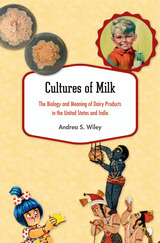
Milk is the only food mammals produce naturally to feed their offspring. The human species is the only one that takes milk from other animals and consumes it beyond weaning age. Cultures of Milk contrasts the practices of the world’s two leading milk producers, India and the United States. In both countries, milk is considered to have special qualities. Drawing on ethnographic and scientific studies, popular media, and government reports, Andrea Wiley reveals that the cultural significance of milk goes well beyond its nutritive value.
Shifting socioeconomic and political factors influence how people perceive the importance of milk and how much they consume. In India, where milk is out of reach for many, consumption is rising rapidly among the urban middle class. But milk drinking is declining in America, despite the strength of the dairy industry. Milk is bound up in discussions of food scarcity in India and food abundance in the United States. Promotion of milk as a means to enhance child growth boosted consumption in twentieth-century America and is currently doing the same in India, where average height is low. Wiley considers how variation among populations in the ability to digest lactose and ideas about how milk affects digestion influence the type of milk and milk products consumed. In India, most milk comes from buffalo, but cows have sacred status for Hindus. In the United States, cow’s milk has long been a privileged food, but is now facing competition from plant-based milk.
David D. Hall examines the interchange between popular and learned cultures and the practices of reading and writing. His writings deal with change and continuity, exploring the possibility of a reading revolution and arguing for the long duration of a Protestant vernacular tradition. A newly written essay on book culture in the early Chesapeake describes a system of scribal publication. The pieces reflect Hall's belief that the better we understand the production and consumption of books, the closer we come to a social history of culture.
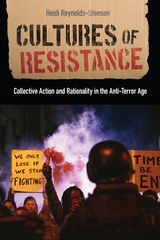
Cultures of Resistance provides new insight on a long-standing question: whether government efforts to repress social movements produce a chilling effect on dissent, or backfire and spur greater mobilization. In recent decades, the U.S. government’s repressive capacity has expanded dramatically, as the legal, technological, and bureaucratic tools wielded by agents of the state have become increasingly powerful. Today, more than ever, it is critical to understand how repression impacts the freedom to dissent and collectively express political grievances. Through analysis of activists’ rich and often deeply moving experiences of repression and resistance, the book uncovers key group processes that shape how individuals understand, experience, and weigh these risks of participating in collective action. Qualitative and quantitative analyses demonstrate that, following experiences of state repression, the achievement or breakdown of these group processes, not the type or severity of repression experienced, best explain why some individuals persist while others disengage. In doing so, the book bridges prevailing theoretical divides in social movement research by illuminating how individual rationality is collectively constructed, mediated, and obscured by protest group culture.

Drawing on a broad range of interpretive practices, these essays range across American history, from European representations of the New World to the mass media spectacle of the Persian Gulf War. The volume breaks down the boundary between the study of foreign relations and American culture to examine imperialism as an internal process of cultural appropriation and as an external struggle over international power. The contributors explore how the politics of continental and international expansion, conquest, and resistance have shaped the history of American culture just as much as the cultures of those it has dominated. By uncovering the dialectical relationship between American cultures and international relations, this collection demonstrates the necessity of analyzing imperialism as a political or economic process inseparable from the social relations and cultural representations of gender, race, ethnicity, and class at home.
Contributors. Lynda Boose, Mary Yoko Brannen, Bill Brown, William Cain, Eric Cheyfitz, Vicente Diaz, Frederick Errington, Kevin Gaines, Deborah Gewertz, Donna Haraway, Susan Jeffords, Myra Jehlen, Amy Kaplan, Eric Lott, Walter Benn Michaels, Donald E. Pease, Vicente Rafael, Michael Rogin, José David Saldívar, Richard Slotkin, Doris Sommer, Gauri Viswanathan, Priscilla Wald, Kenneth Warren, Christopher P. Wilson
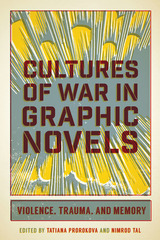
Cultures of War in Graphic Novels examines the representation of small-scale and often less acknowledged conflicts from around the world and throughout history. The contributors look at an array of graphic novels about conflicts such as the Boxer Rebellion (1899-1901), the Irish struggle for national independence (1916-1998), the Falkland War (1982), the Bosnian War (1992-1995), the Rwandan genocide (1994), the Israel-Lebanon War (2006), and the War on Terror (2001-). The book explores the multi-layered relation between the graphic novel as a popular medium and war as a pivotal recurring experience in human history. The focus on largely overlooked small-scale conflicts contributes not only to advance our understanding of graphic novels about war and the cultural aspects of war as reflected in graphic novels, but also our sense of the early twenty-first century, in which popular media and limited conflicts have become closely interrelated.

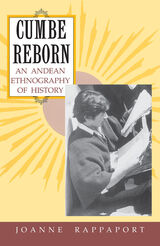
Joanne Rappaport examines the Cumbales' reappropriation of history and the resulting reinvention of tradition. She explores the ways in which personal memories are interpreted in nonverbal expression, such as ritual and material culture, as well as in oral and written communication. This novel approach to historical consciousness is grounded on a unique combination of historical and ethnographical analysis.
Cumbe Reborn makes a significant contribution both to our understanding of ethnic militancy in the Americas and to the broader methodological discussion of non-western historical consciousness under colonial domination. It will attract a wide audience of anthropologists, historians, specialists in Andean ethnohistory and Latin American studies and literature, and folklore specialists interested in subaltern discourse.
This richly orchestrated novel, which won a national literary prize in the author's native land, Venezuela, also earned international recognition when the William Faulkner Foundation gave it an award as the most notable novel published in Ibero America between 1945 and 1962.
Cumboto's disturbing story unfolds during the early decades of the twentieth century on a Venezuelan coconut plantation, in a turbulent Faulknerian double world of black and white. It records the lives of Don Federico, the effete survivor of a once vigorous family of landowners, and his Black servant Natividad, who since the days of their mutual childhood has been his only friend.
Young Federico, psychologically impotent and lost to human contact, lives on as a lonely recluse in the century-old main house of "Cumboto," surrounded by descendants of African slaves who still manage, despite his apathy, to keep the plantation on its feet. Natividad's heroic and selfless struggle to redeem his friend by awakening him to the stirrings of the earth and life about him sets in motion a series of events that are to shatter Federico's childlike world: a headlong love affair with a voluptuous black girl, her terrified flight in the face of the bitter condemnation of her own people, and the unexpected appearance, twenty years later, of their extraordinary son.
Throughout the novel runs a recurring theme: neither race can survive without the other. Black and white, Díaz Sánchez suggests, embody contrasting aspects of human nature, which are not inimical but complementary: the languid intellectualism of European culture must be tempered with the indestructible vitality and intuition of the African soul if humanity is ever fully to comprehend the living essence of the world.
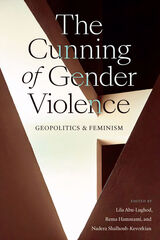
Contributors. Lila Abu-Lughod, Nina Berman, Inderpal Grewal, Rema Hammami, Janet R. Jakobsen, Shenila Khoja-Moolji, Vasuki Nesiah, Samira Shackle, Sima Shakhsari, Nadera Shalhoub-Kevorkian, Dina M Siddiqi, Shahla Talebi, Leti Volpp, Rafia Zakaria
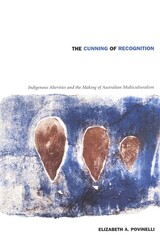
Povinelli draws on seventeen years of ethnographic research among northwest coast indigenous people and her own experience participating in land claims, as well as on public records, legal debates, and anthropological archives to examine how multicultural forms of recognition work to reinforce liberal regimes rather than to open them up to a true cultural democracy. The Cunning of Recognition argues that the inequity of liberal forms of multiculturalism arises not from its weak ethical commitment to difference but from its strongest vision of a new national cohesion. In the end, Australia is revealed as an exemplary site for studying the social effects of the liberal multicultural imaginary: much earlier than the United States and in response to very different geopolitical conditions, Australian nationalism renounced the ideal of a unitary European tradition and embraced cultural and social diversity.
While addressing larger theoretical debates in critical anthropology, political theory, cultural studies, and liberal theory, The Cunning of Recognition demonstrates that the impact of the globalization of liberal forms of government can only be truly understood by examining its concrete—and not just philosophical—effects on the world.

Hastie pays particular attention to the actresses Colleen Moore and Louise Brooks and Hollywood’s first female director, Alice Guy-Blaché. From the beginning of her career, Moore worked intently to preserve a lasting place for herself as a Hollywood star, amassing collections of photos, souvenirs, and clippings as well as a dollhouse so elaborate that it drew extensive public attention. Brooks’s short essays reveal how she participated in the creation of her image as Lulu and later emerged as a critic of film stardom. The recovery of Blaché’s role in film history by feminist critics in the 1970s and 1980s was made possible by the existence of the director’s own autobiographical history. Broadening her analytical framework to include contemporary celebrities, Hastie turns to how-to manuals authored by female stars, from Zasu Pitts’s cookbook Candy Hits to Christy Turlington’s Living Yoga. She discusses how these assertions of celebrity expertise in realms seemingly unrelated to film and visual culture allow fans to prolong their experience of stardom.

Elana Levine brings together writings from feminist critics that chart the current terrain of feminized pop cultural production. Analyzing everything from Fifty Shades of Grey to Pinterest to pregnancy apps, contributors examine the economic, technological, representational, and experiential dimensions of products and phenomena that speak to, and about, the feminine. As these essays show, the imperative of productivity currently permeating feminized pop culture has created a generation of texts that speak as much to women's roles as public and private workers as to an impulse for fantasy or escape.
Incisive and compelling, Cupcakes, Pinterest, and Ladyporn sheds new light on contemporary women's engagement with an array of media forms in the context of postfeminist culture and neoliberalism.
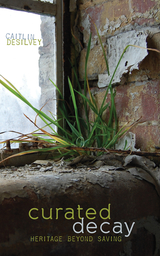
Transporting readers from derelict homesteads to imperiled harbors, postindustrial ruins to Cold War test sites, Curated Decay presents an unparalleled provocation to conventional thinking on the conservation of cultural heritage. Caitlin DeSilvey proposes rethinking the care of certain vulnerable sites in terms of ecology and entropy, and explains how we must adopt an ethical stance that allows us to collaborate with—rather than defend against—natural processes.
Curated Decay chronicles DeSilvey’s travels to places where experiments in curated ruination and creative collapse are under way, or under consideration. It uses case studies from the United States, Europe, and elsewhere to explore how objects and structures produce meaning not only in their preservation and persistence, but also in their decay and disintegration. Through accessible and engaging discussion of specific places and their stories, it traces how cultural memory is generated in encounters with ephemeral artifacts and architectures.
An interdisciplinary reframing of the concept of the ruin that combines historical and philosophical depth with attentive storytelling, Curated Decay represents the first attempt to apply new theories of materiality and ecology to the concerns of critical heritage studies.

A new ethics for the global practice of curating
Today, everyone is a curator. What was once considered a hallowed expertise is now a commonplace and global activity. Can this new worldwide activity be ethical and, if yes, how? This book argues that curating can be more than just selecting, organizing, and presenting information in galleries or online. Curating can also constitute an ethics, one of acquiring, arranging, and distributing an always conjectural knowledge about the world.
Curating as Ethics is primarily philosophical in scope, evading normative approaches to ethics in favor of an intuitive ethics that operates at the threshold of thought and action. It explores the work of authors as diverse as Heidegger, Spinoza, Meillassoux, Mudimbe, Chalier, and Kofman. Jean-Paul Martinon begins with the fabric of these ethics: how it stems from matter, how it addresses death, how it apprehends interhuman relationships. In the second part he establishes the ground on which the ethics is based, the things that make up the curatorial—for example, the textual and visual evidence or the digital medium. The final part focuses on the activity of curating as such—sharing, caring, preparing, dispensing, and so on.
With its invigorating new approach to curatorial studies, Curating as Ethics moves beyond the field of museum and exhibition studies to provide an ethics for anyone engaged in this highly visible activity, including those using social media as a curatorial endeavor, and shows how philosophy and curating can work together to articulate the world today.
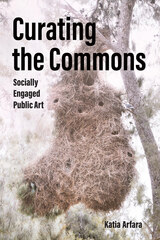
By sharing critical insights, Arfara immerses the reader in the working processes of artists and collectives, showing how public art can address ecosocial concerns in aesthetic forms. Curating the Commons offers a grounded perspective on the making of cutting-edge, socially engaged public artworks and contributes to the larger effort to craft more-than-human narratives in response to global events.

Tracing the birth of American museums and the curators who shaped a nation’s cultural identity.
As they formed their pioneer museums, these men were guided not so much by European examples, but rather by the imperatives of the American democratic culture, including the Enlightenment, the simultaneous decline of the respectability and rise of the middle classes, the Age of Egalitarianism, and the advent of professionalism in the sciences. Thus the pre-1870 American museum was neither the frivolous sideshow some critics have imagined, nor the enclave for elitists that others have charged. Instead, the proprietors displayed serious motives and egalitarian aspirations.
The conflicting demands for popular education on the one hand and professionalism on the other were a continuing source of tension in American museums after about 1835, but by 1870 the two claims had synthesized into a rough parity. This synthesis, the "American Compromise," has remained the basic model of museums in America down to the present. Thus, by 1870, the form of the modern American museum as an institution which simultaneously provides popular education and promotes scholarly research was completely developed.
A trailblazing exploration of the political stakes of curiosity
Curiosity is political. Who is curious, when, and how reflects the social values and power structures of a given society. In Curiosity and Power, Perry Zurn explores the political philosophy of curiosity, staking the groundbreaking claim that it is a social force—the heartbeat of political resistance and a critical factor in social justice. He argues that the very scaffolding of curiosity is the product of political architectures, and exploring these values and architectures is crucial if we are to better understand, and more ethically navigate, the struggle over inquiry in an unequal world.
Curiosity and Power explores curiosity through the lens of political philosophy—weaving in Nietzsche, Foucault, and Derrida in doing so—and the experience of political marginalization, demonstrating that curiosity is implicated equally in the maintenance of societies and in their transformation. Curiosity plays as central a role in establishing social institutions and fields of inquiry as it does in their deconstruction and in building new forms of political community. Understanding curiosity is critical to understanding politics, and understanding politics is critical to understanding curiosity.
Drawing not only on philosophy and political theory but also on feminist theory, race theory, disability studies, and trans studies, Curiosity and Power tracks curiosity in the structures of political marginalization and resistance—from the Civil Rights Movement to building better social relationships. Curiosity and Power insists that the power of curiosity be recognized and engaged responsibly.
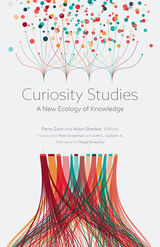
The first English-language collection to establish curiosity studies as a unique field
From science and technology to business and education, curiosity is often taken for granted as an unquestioned good. And yet, few people can define curiosity. Curiosity Studies marshals scholars from more than a dozen fields not only to define curiosity but also to grapple with its ethics as well as its role in technological advancement and global citizenship. While intriguing research on curiosity has occurred in numerous disciplines for decades, no rigorously cross-disciplinary study has existed—until now.
Curiosity Studies stages an interdisciplinary conversation about what curiosity is and what resources it holds for human and ecological flourishing. These engaging essays are integrated into four clusters: scientific inquiry, educational practice, social relations, and transformative power. By exploring curiosity through the practice of scientific inquiry, the contours of human learning, the stakes of social difference, and the potential of radical imagination, these clusters focus and reinvigorate the study of this universal but slippery phenomenon: the desire to know.
Against the assumption that curiosity is neutral, this volume insists that curiosity has a history and a political import and requires precision to define and operationalize. As various fields deepen its analysis, a new ecosystem for knowledge production can flourish, driven by real-world problems and a commitment to solve them in collaboration. By paying particular attention to pedagogy throughout, Curiosity Studies equips us to live critically and creatively in what might be called our new Age of Curiosity.
Contributors: Danielle S. Bassett, U of Pennsylvania; Barbara M. Benedict, Trinity College; Susan Engel, Williams College; Ellen K. Feder, American U; Kristina T. Johnson, Massachusetts Institute of Technology; Narendra Keval; Christina León, Princeton U; Tyson Lewis, U of North Texas; Amy Marvin, U of Oregon; Hilary M. Schor, U of Southern California; Seeta Sistla, Hampshire College; Heather Anne Swanson, Aarhus U.

Robert Provine boldly goes where other scientists seldom tread—in search of hiccups, coughs, yawns, sneezes, and other lowly, undignified human behaviors. Upon investigation, these instinctive acts bear the imprint of our evolutionary origins and can be uniquely valuable tools for understanding how the human brain works and what makes us different from other species.
Many activities showcased in Curious Behavior are contagious, but none surpasses yawning in this regard—just reading the word can make one succumb. Though we often take it as a sign of sleepiness or boredom, yawning holds clues to the development of our sociality and ability to empathize with others. Its inescapable transmission reminds us that we are sometimes unaware, neurologically programmed beasts of the herd. Other neglected behaviors yield similar revelations. Tickling, we learn, may be the key to programming personhood into robots. Coughing comes in musical, medical, and social varieties. Farting and belching have import for the evolution of human speech. And prenatal behavior is offered as the strangest exhibit of all, defying postnatal logic in every way. Our earthiest acts define Homo sapiens as much as language, bipedalism, tool use, and other more studied characteristics.
As Provine guides us through peculiarities right under our noses, he beckons us to follow with self-experiments: tickling our own feet, keeping a log of when we laugh, and attempting to suppress yawns and sneezes. Such humble investigations provide fodder for grade school science projects as well as doctoral dissertations. Small Science can yield big rewards.
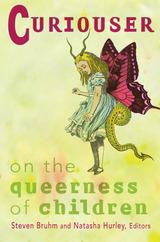
Classic essays and new work on the issue of childhood sexuality and its “queer resonances”
Our culture has a dominant narrative about children: they are (and should stay) innocent of sexual desires and intentions. At the same time, children are officially, tacitly, assumed to be heterosexual. Curiouser is a book about this narrative and what happens when it takes an unexpected, or queer, turn—when the stories of childhood must confront a child whose play does not conform to the ideal of child (a)sexuality.
The contributors to Curiouser examine the ostensibly simple representations of children that circulate through visual images, life narrative, children’s literature, film, and novels. At issue in these essays are the stories we tell to children, the stories we tell about children, and the stories we tell ourselves as children—stories that ultimately frame what is normative and what is queer. From the fiction of Horatio Alger, Henry James, Djuna Barnes, and Guy Davenport to the spectacles of Michael Jackson, Calvin Klein, and The Exorcist; from the narrative structure of pedophilia to evangelical Christianity; from punk tomboyism to queer girl-scouting: these scholars of childhood and sexuality scrutinize queer childhood energies in an impressive range of cultural forms. Contributors: Lauren Berlant, U of Chicago; Andre Furlani, Concordia U; Judith Halberstam, U of California, San Diego; Ellis Hanson, Cornell U; Paul Kelleher; Kathryn R. Kent, Williams College; James R. Kincaid, U of Southern California; Richard D. Mohr, U of Illinois, Urbana; Michael Moon, Johns Hopkins U; Kevin Ohi, Boston College; Eric Savoy, U of Montreal; Eve Kosofsky Sedgwick, CUNY Graduate Center; Kathryn Bond Stockton, U of Utah; Michael Warner, Rutgers U.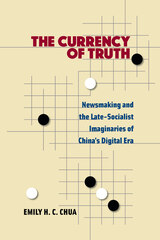
In The Currency of Truth, Emily H. C. Chua argues that news in China works less as a medium of mass communication than as a kind of currency as industry players make and use news articles to create agreements, build connections, and protect and advance their positions against one another. Looking at the ethical and professional principles that well-intentioned and civically minded journalists strive to uphold, and the challenges and doubts that they grapple with in the process, Chua brings her findings into conversation around “post-truth” news and the “crisis” of professional journalism in the West. The book encourages readers to rethink contemporary news, arguing that rather than setting out from the assumption that news works either to inform or deceive its publics, we should explore the “post-public” social and political imaginaries emerging among today’s newsmakers and remaking the terms of their practice.

READERS
Browse our collection.
PUBLISHERS
See BiblioVault's publisher services.
STUDENT SERVICES
Files for college accessibility offices.
RECENTLY PUBLISHED


UChicago Accessibility Resources
home | accessibility | search | about | contact us
BiblioVault ® 2001 - 2025
The University of Chicago Press