
 A SCHOLARLY BOOK REPOSITORY
2150 start with C start with C
A powerful, data-driven investigation into how race, geography, and community shape the reporting and response to child abuse in Alabama.
Child Abuse in the Deep South is a groundbreaking examination of how child maltreatment is reported, confirmed, and understood in Alabama—a state shaped by deep historical, racial, and geographic divides. Drawing on over 7,000 case reports, this study reveals how factors such as race, community size, and regional culture influence the identification and handling of abuse cases. With a focus on both rural and urban settings, the book uncovers patterns of systemic bias, underreporting, and institutional response that have long gone unaddressed.
Through rigorous data analysis and a compassionate lens, this work challenges assumptions about child welfare in the American South and offers critical insights for policymakers, social workers, legal professionals, and scholars. Child Abuse in the Deep South is both a call to action and a vital resource for understanding the intersection of social justice, public policy, and child protection in one of the nation’s most complex regions.
Child Abuse in the Deep South provides a quantitative benchmark that investigators and policy-makers will find invaluable on the path to defining at-risk populations, effective interventions, and treatments.
A study that challenges our notions about citizenship and judgment by considering the place of children in historical and contemporary legal discourse.
Many of the most controversial political issues of our time focus on the actions and well-being of children such as Greta Thunberg’s climate movement; youth activists standing up for racial justice, safe schools, and an equitable economy; and the furor over separating migrant children from their families. When do we treat children as competent citizens, when do we treat them as dependents in need of protection, and why?
The Child before the Court: Judgment, Citizenship, and the Constitution provides answers to these foundational questions. It analyzes landmark US Supreme Court cases involving children’s free speech and due process rights and argues that our ideas about civic and legal judgment are deeply contested concepts instead of simple character traits. These cases serve as analytic touchstones for these problems, and the Court’s opinions seemingly articulate clear rules through a pragmatic balancing of interests.
Timothy Barouch shows how these cases continually reshape constitutional thought, breaking from a vocabulary of wardship and recasting the child as a liberal individual. He analyzes these legal opinions as judicial novelizations and focuses on their rhetorical markers: the range of tropes, idioms, figures, and arguments that emerge across nearly two centuries of jurisprudence in this important but oft-neglected area. The careful and subtle readings of these cases demonstrate how judicial representations of the child provide key resources for thinking about the child as citizen and, more broadly, citizenship itself. It serves as a bold call to think through the relationship between the liberal individual and the problem of civic judgment as it manifests in public culture in a wide array of contexts at a time when liberal democracy is under siege.

Drawing on research from peer countries in the Organization for Economic Cooperation and Development as well as the United States, Waldfogel shows that a child benefit would prevent poverty and hardship and protect children from deep poverty and income instability. The research is clear that families would spend the money from a child benefit on food, clothing, and other items for their children and that a child benefit would not have large negative impacts on parental employment or family decisions about fertility. It also shows that a child benefit would promote short- and longer-term child and family wellbeing. Child benefits have been shown to enhance opportunity and benefit society through healthier and better-educated young adults and stronger and more stable families. And rigorous benefit-cost analyses indicate that a child benefit, while costly, would more than pay for itself, yielding a large return on investment.
Waldfogel evaluates four current, major proposals for a child benefit and provides recommendations for a policy that would deliver the best outcomes for children and families and the best return on investment. She argues that such a policy would be more generous, not tied to parental employment or earnings, available to all parents but phased out for higher-income families, delivered in monthly payments through the tax system, and provided in addition to existing social programs.
Child Benefits provides fascinating insights on the history and impacts of child benefits and makes a clear and definitive argument for the establishment of a child benefit in the United States.

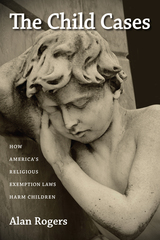
When a four-year-old California girl died on March 9, 1984, the state charged her mother with involuntary manslaughter because she failed to provide her daughter with medical care, choosing instead to rely on spiritual healing. During the next few years, a half dozen other children of Christian Science parents died under similar circumstances. The children's deaths and the parents' trials drew national attention, highlighting a deeply rooted, legal/political struggle to define religious freedom.
Through close analysis of these seven cases, legal historian Alan Rogers explores the conflict between religious principles and secular laws that seek to protect children from abuse and neglect. Christian Scientists argued—often with the support of mainline religious groups—that the First Amendment's “free exercise” clause protected religious belief and behavior. Insisting that their spiritual care was at least as effective as medical treatment, they thus maintained that parents of seriously ill children had a constitutional right to reject medical care.
Congress and state legislatures confirmed this interpretation by inserting religious exemption provisos into child abuse laws. Yet when parental prayer failed and a child died, prosecutors were able to win manslaughter convictions by arguing—as the U.S. Supreme Court had held for more than a century—that religious belief could not trump a neutral, generally applicable law. Children's advocates then carried this message to state legislatures, eventually winning repeal of religious exemption provisions in a handful of states.

Futurity, innocence, and childish subversion—as concepts, as frameworks—have yet to catch up to where the child has moved in the present century. The contributors to this issue explore topics that are both vital and challenging for current queer studies, including paradoxical exportations of the U.S. "innocent" child abroad, the queer child under same-sex marriage law, child revolutionaries' actions in Egypt, and the colonial afterlife of the boarding school for indigenous children. Following the twists and turns of children now, contributors confront how race, gender, and sexuality are made to live and grow in children’s bodies.
Contributors
Paul Amar, Julian Gill-Peterson, Clifford J. Rosky, Rebekah Sheldon, Kathryn Bond Stockton, Mary Zaborskis
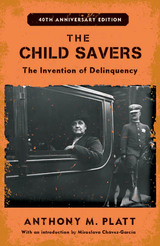
Focusing on social reformers of the late nineteenth and early twentieth centuries, Platt's principal argument is that the "child savers" movement was not an effort to liberate and dignify youth but, instead, a punitive and intrusive attempt to control the lives of working-class urban adolescents. This expanded edition provides a renewed and distinguished contribution by placing it in historical context through insightful commentaries from cross-disciplinary academics, along with an essay by Miroslava Chávez-García examining how Platt's influential study has impacted many of the central arguments social scientists and historians face today.
In this second, enlarged edition of The Child Savers, the author has added a new introduction and postscript in which he critically reflects upon his original analysis, suggests new ways of thinking about the child-saving movement, and summarizes recent developments in the juvenile justice system.
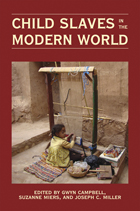
Child Slaves in the Modern World is the second of two volumes that examine the distinctive uses and experiences of children in slavery in the nineteenth and twentieth centuries. This collection of previously unpublished essays exposes the global victimization of child slaves from the period of abolition of legal slavery in the nineteenth century to the human rights era of the twentieth century. It contributes to the growing recognitionthat the stereotypical bonded male slave was in fact a rarity.
Nine of the studies are historical, with five located in Africa and three covering Latin America from the British Caribbean to Chile. One study follows the children liberated in the famousAmistad incident (1843). The remaining essays cover contemporary forms of child slavery, from prostitution to labor to forced soldiering.
Child Slaves in the Modern World adds historical depth to the current literature on contemporary slavery, emphasizing the distinctive vulnerabilities of children, or effective equivalents,that made them particularly valuable to those who could acquire and control them. The studies also make clear the complexities of attempting to legislate or decree regulations limiting practices that appear to have been—and continue to be —ubiquitous around the world.
Contributors: Benjamin N. Lawrance, Gwyn Campbell, Cecily Jones, Sue Taylor, Nara Milanich, Martin Klein, Bernard Moitt, Trevor R. Getz, William G. Clarence-Smith, Jonathan Blagbrough, Philip Whalen, Malika Id’ Salah, Zosa de Sas Kropiwnicki, Sarah Maguire, and Mike Dottridge.
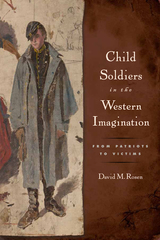
In this daring new study, anthropologist David M. Rosen investigates why our cultural perception of the child soldier has changed so radically over the past two centuries. Child Soldiers in the Western Imagination reveals how Western conceptions of childhood as a uniquely vulnerable and innocent state are a relatively recent invention. Furthermore, Rosen offers an illuminating history of how human rights organizations drew upon these sentiments to create the very term “child soldier,” which they presented as the embodiment of war’s human cost.
Filled with shocking historical accounts and facts—and revealing the reasons why one cannot spell “infantry” without “infant”—Child Soldiers in the Western Imagination seeks to shake us out of our pervasive historical amnesia. It challenges us to stop looking at child soldiers through a biased set of idealized assumptions about childhood, so that we can better address the realities of adolescents and pre-adolescents in combat. Presenting informative facts while examining fictional representations of the child soldier in popular culture, this book is both eye-opening and thought-provoking.

Reforms have moved the child support system from one of minimal effort, based on the assumption that children in single parent households would be supported by their custodial parents or by government welfare, to a formula-based system for calculating child support and an aggressive enforcement program to collect that support from the noncustodial parent.
The essays range from a review of child support history, with a focus on the changing mores of parental responsibility, to empirical studies of whether increased establishment of paternity and child support enforcement results in more father-child contacts, to how child support affects fathers and whether the support obligation impoverishes noncustodial fathers. The essays explore the failure of the current child support reforms to reduce child poverty, consider the need to study how to determine what is a "fair amount" of child support, and debate proposals to follow the example of a number of other industrialized nations and provide more generous public benefits for poor children.
This book will be of interest to public policy makers and professionals--lawyers, legal scholars, social workers, and administrators--who work in and study the child support system.
Contributors are June R. Carbone, John Eekelaar, Martha A. Fineman, Irwin Garfinkel, Marsha Garrison, Paul K. Legler, Mavis Maclean, Marygold S. Melli, Daniel R. Meyer, J. Thomas Oldham, Allen M. Parkman, Judith A. Seltzer, and Andrea Warman.
J. Thomas Oldham is John H. Freeman Professor Law, University of Houston Law School. Marygold S. Melli is Voss-Bascom Professor of Law Emerita, University of Wisconsin-Madison Law School.
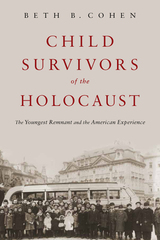
The majority of European Jewish children alive in 1939 were murdered during the Holocaust. Of 1.5 million children, only an estimated 150,000 survived. In the aftermath of the Shoah, efforts by American Jews brought several thousand of these child survivors to the United States. In Child Survivors of the Holocaust, historian Beth B. Cohen weaves together survivor testimonies and archival documents to bring their story to light. She reveals that even as child survivors were resettled and “saved,” they struggled to adapt to new lives as members of adoptive families, previously unknown American Jewish kin networks, or their own survivor relatives. Nonetheless, the youngsters moved ahead. As Cohen demonstrates, the experiences both during and after the war shadowed their lives and relationships through adulthood, yet an identity as “survivors” eluded them for decades. Now, as the last living link to the Holocaust, the voices of Child Survivors are finally being heard.

Generation Anthropocene. Storms of My Grandchildren. Our Children’s Trust. Why do these and other attempts to imagine the planet’s uncertain future return us—again and again—to the image of the child? In The Child to Come, Rebekah Sheldon demonstrates the pervasive conjunction of the imperiled child and the threatened Earth and blisteringly critiques the logic of catastrophe that serves as its motive and its method.
Sheldon explores representations of this perilous future and the new figurations of the child that have arisen in response to it. Analyzing catastrophe discourse from the 1960s to the present—books by Joanna Russ, Margaret Atwood, and Cormac McCarthy; films and television series including Southland Tales, Battlestar Galactica, and Children of Men; and popular environmentalism—Sheldon finds the child standing in the place of the human species, coordinating its safe passage into the future through the promise of one more generation. Yet, she contends, the child figure emerges bound to the very forces of nonhuman vitality he was forged to contain.
Bringing together queer theory, ecocriticism, and science studies, The Child to Come draws on and extends arguments in childhood studies about the interweaving of the child with the life sciences. Sheldon reveals that neither life nor the child are what they used to be. Under pressure from ecological change, artificial reproductive technology, genetic engineering, and the neoliberalization of the economy, the queerly human child signals something new: the biopolitics of reproduction. By promising the pliability of the body’s vitality, the pregnant woman and the sacred child have become the paradigmatic figures for twenty-first century biopolitics.
Why are there proportionally more African American children in foster care than white children? Why are white children often readily adoptable, while African American children are difficult to place? Are these imbalances an indication of institutional racism or merely a coincidence?
In this revised and expanded edition of the classic volume, Child Welfare, twenty-one educators call attention to racial disparities in the child welfare system by demonstrating how practices that are successful for white children are often not similarly successful for African American children. Moreover, contributors insist that policymakers and care providers look at African American family life and child-development from a culturally-based Africentric perspective. Such a perspective, the book argues, can serve as a catalyst for creativity and innovation in the formulation of policies and practices aimed at improving the welfare of African American children.
Child Welfare Revisited offers new chapters on the role of institutional racism and economics on child welfare; the effects of substance abuse, homelessness, HIV/AIDS, and domestic violence; and the internal strengths and challenges that are typical of African American families. Bringing together timely new developments and information, this book will continue to be essential reading for all child welfare policymakers and practitioners.
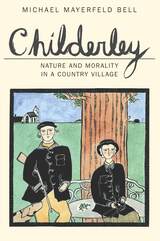
Why do these villagers find country living so compelling? Why, despite our urban lives, do so many of us strive for a home in the country, closer to nature? Michael Bell suggests that we are looking for a natural conscience: an unshakeable source of identity and moral value that is free from social interests—comfort and solace and a grounding of self in a world of conflict and change.
During his interviews with over a hundred of Childerley's 475 residents—both working-class and professional—Bell heard time and again of their desire to be "country people" and of their anxiety over their class identities. Even though they often knowingly participate in class discrimination themselves—and see their neighbors doing the same—most Childerleyans feel a deep moral ambivalence over class. Bell argues they find in class and its conflicts the restraints and workings of social interests and feel that by living "close to nature" they have an alternative: the identity of a "country person," a "villager that the natural consicence gives."
Yet there are clear parallels between the ways in which the villagers conceive of nature and of social life, and Bell traces these parallels across Childerleyans' perspectives on class, gender, and politics. Where conventional theories would suggest that what the villagers see as nature is a reflection of how they see society, and that the natural conscience must be a product of social interests, Bell argues that ideological processes are more complex. Childerleyans' understandings of society and of the natural conscience shape each other, says Bell, through a largely intuitive process he calls resonance.
For anyone who has ever lived in the countryside or considered doing so, this book is not to be missed. It will also be of particular interest to scholars of British studies and the sociology of knowledge and culture, and to those who work on problems of environment, community, class, and rural life.
"[An] exemplary piece of fieldwork. . . . These gentle conclusions . . . reminds us (when we most need reminding) of the skillful ethnographer's enduring capacity to make the everyday seem truly extraordinary."—Laurie Taylor, New Statesman & Society
"Bell's achievement, and his perceptions, are impressive."—J.W.M. Thompson, London Times
"Races along with all the gossipy compulsion of a blockbuster."—Frances Hardy, Daily Mill
"I believe this view of how people relate to the different domains of their experience is absolutely right. . . . The reader, this ready anyway, finishes Childerley with the feeling that she has just returned from visiting a remote Hampshire village and has learned something, not just about that place, but about human social life lived in other places and lived through place itself."—Wendy Griswold, American Journal of Sociology
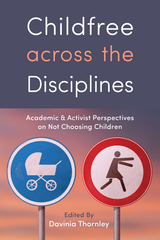
Recently, childfree people have been foregrounded in mainstream media. More than seven percent of Western women choose to remain childfree and this figure is increasing. Being childfree challenges the ‘procreation imperative’ residing at the center of our hetero-normative understandings, occupying an uneasy position in relation to—simultaneously—traditional academic ideologies and prevalent social norms. After all, as Adi Avivi recognizes, "if a woman is not a mother, the patriarchal social order is in danger." This collection engages with these (mis)perceptions about childfree people: in media representations, demographics, historical documents, and both psychological and philosophical models. Foundational pieces from established experts on the childfree choice--Rhonny Dam, Laurie Lisle, Christopher Clausen, and Berenice Fisher--appear alongside both activist manifestos and original scholarly work, comprehensively brought together. Academics and activists in various disciplines and movements also riff on the childfree life: its implications, its challenges, its conversations, and its agency—all in relation to its inevitability in the 21st century. Childfree across the Disciplines unequivocally takes a stance supporting the subversive potential of the childfree choice, allowing readers to understand childfreedom as a sense of continuing potential in who—or what—a person can become.
Through interviews with thirty-four childfree women and analysis of childfree rhetorics circulating in historical and contemporary texts and events, this book demonstrates how childfree women individually and collectively try to speak back to common beliefs about their reproductive experiences, even as they struggle to make their identities legible in a sociocultural context that centers motherhood. Childfree and Happy theorizes how affect and rhetoric work together to circulate reproductive doxa by using Sara Ahmed’s theories of gendered happiness scripts to analyze what reproductive doxa is embedded in those scripts and how they influence rhetoric by, about, and around childfree women.
Delving into how childfree women position their decision not to have children and the different types of interactions they have with others about this choice, including family members, friends, colleagues, and medical professionals, Childfree and Happy also explores how communities that make space for alternative happiness scripts form between childfree women and those who support them. It will be of interest to scholars in the fields of the rhetoric of motherhood/mothering, as well as feminist rhetorical studies.
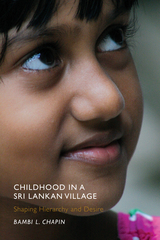
Over ten years ago, anthropologist Bambi Chapin traveled to a rural Sri Lankan village to begin answering this question, getting to know the toddlers in the village, then returning to track their development over the course of the following decade. Childhood in a Sri Lankan Village offers an intimate look at how these children, raised on the tenets of Buddhism, are trained to set aside selfish desires for the good of their families and the community. Chapin reveals how this cultural conditioning is carried out through small everyday practices, including eating and sleeping arrangements, yet she also explores how the village’s attitudes and customs continue to evolve with each new generation.
Combining penetrating psychological insights with a rigorous observation of larger social structures, Chapin enables us to see the world through the eyes of Sri Lankan children searching for a place within their families and communities. Childhood in a Sri Lankan Village offers a fresh, global perspective on child development and the transmission of culture.
- How the Catholic Church confronts the tension between its teachings about children and actual practic
- The Oglala Lakota's struggle to preserve their spiritual tradition
- The impact of modernity on Hinduism
Only by discussing the unique challenges faced by all religions, and their followers, can we take the first step toward a greater understanding for all of us.

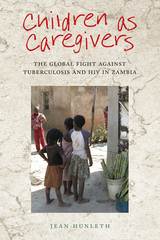
In Zambia, due to the rise of tuberculosis and the closely connected HIV epidemic, a large number of children have experienced the illness or death of at least one parent. Children as Caregivers examines how well intentioned practitioners fail to realize that children take on active caregiving roles when their guardians become seriously ill and demonstrates why understanding children’s care is crucial for global health policy.
Using ethnographic methods, and listening to the voices of the young as well as adults, Jean Hunleth makes the caregiving work of children visible. She shows how children actively seek to “get closer” to ill guardians by providing good care. Both children and ill adults define good care as attentiveness of the young to adults’ physical needs, the ability to carry out treatment and medication programs in the home, and above all, the need to maintain physical closeness and proximity. Children understand that losing their guardians will not only be emotionally devastating, but that such loss is likely to set them adrift in Zambian society, where education and advancement depend on maintaining familial, reciprocal relationships.
View a gallery of images from the book (https://www.flickr.com/photos/childrenascaregivers)
Download the open access ebook.
This book is also freely available online as an open-access digital edition, published with the support of the Swiss National Science Foundation.

Mark Jones examines the making of a new child’s world in Japan between 1890 and 1930 and focuses on the institutions, groups, and individuals that reshaped both the idea of childhood and the daily life of children. Family reformers, scientific child experts, magazine editors, well-educated mothers, and other prewar urban elites constructed a model of childhood—having one’s own room, devoting time to homework, reading children’s literature, playing with toys—that ultimately became the norm for young Japanese in subsequent decades.
This book also places the story of modern childhood within a broader social context—the emergence of a middle class in early twentieth century Japan. The ideal of making the child into a “superior student” (yutosei) appealed to the family seeking upward mobility and to the nation-state that needed disciplined, educated workers able to further Japan’s capitalist and imperialist growth. This view of the middle class as a child-centered, educationally obsessed, socially aspiring stratum survived World War II and prospered into the years beyond.

Unified in their common interest in the well-being of children, the contributors bring an unrivaled breadth of experience and research to offer a transnational, multidimensional, and multilayered look at migrant childhoods in Latin America. Organized around three main themes—educational experiences; literature, art and culture, and media depictions; and the principle of the “best interest of the child”—this work offers both theoretical and practical approaches to the complexity of migrant childhood. The essays discuss family and school lives, children’s experience as wage laborers, and the legislation and policies that affect migrants.
This volume draws much-needed attention to the plight of migrant children and their families, illuminating the human and emotional toll that children experience as they crisscross the Americas. Exploring the connections between education, policy, cultural studies, and anthropology, the essays in this volume navigate a space of transnational children’s rights central to Latin American life in the twentieth and twenty-first centuries.
Contributors
Marissa Bejarano-Fernbaugh
Nancie Bouchard
Lina M. Caswell
Irasema Coronado
Valentina Glockner
Alejandra J. Josiowicz
Patrícia Nabuco Martuscelli
María Inés Pacecca
Martha Rodríguez-Cruz
Emily Ruehs-Navarro
Kathleen Tacelosky
Élisabeth Vallet
In the unique context of indigenous Māori and migrant Pacific children in postcolonial New Zealand, Julie Spray explores the intertwining issues of epidemic disease, malnutrition, stress, violence, self-harm, and death to address the problem of how scholars and policy-makers alike can recognize and respond to children as social actors in their health. The Children in Child Health innovatively combines perspectives from childhood studies, medical anthropology, and public health and policy together with evocative ethnography to show how a deep understanding of children’s worlds can change our approach to their care.
Is there evidence of children in the archaeological record? Some would answer no, that "subadults" can only be distinguished when there is osteological confirmation. Others might suggest that the reason children don’t exist in prehistory is because no one has looked for them, much as no one had looked for women in the same context until recently.
Focusing on the Southwest, contributors to this volume attempt to find some of those children, or at least show how they might be found. They address two issues: what was the cultural construction of childhood? What were childrens' lives like?
Determining how cultures with written records have constructed childhood in the past is hard enough, but the difficulty is magnified in the case of ancient Puebloan societies. The contributors here offer approaches from careful analysis of artifacts and skeletal remains to ethnographic evidence in rock art. Topics include ceramics and evidence of child manufacture and painting, cradleboards, evidence of child labor, and osteological evidence of health conditions.
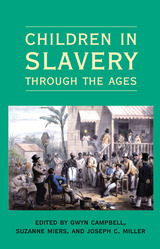
Significant numbers of the people enslaved throughout world history have been children. The vast literature on slavery has grown to include most of the history of this ubiquitous practice, but nearly all of it concentrates on the adult males whose strong bodies and laboring capacities preoccupied the masters of the modern Americas. Children in Slavery through the Ages examines the children among the enslaved across a significant range of earlier times and other places; its companion volume will examine the children enslaved in recent American contexts and in the contemporary/modern world.
This is the first collection to focus on children in slavery. These leading scholars bring our thinking about slaving and slavery to new levels of comprehensiveness and complexity. They further provide substantial historical depth to the abuse of children for sexual and labor purposes that has become a significant humanitarian concern of governments and private organizations around the world in recent decades.
The collected essays in Children in Slavery through the Ages fundamentally reconstruct our understanding of enslavement by exploring the often-ignored role of children in slavery and rejecting the tendency to narrowly equate slavery with the forced labor of adult males. The volume’s historical angle highlights many implications of child slavery by examining the variety of children’s roles—as manual laborers and domestic servants to court entertainers and eunuchs—and the worldwide regions in which the child slave trade existed.
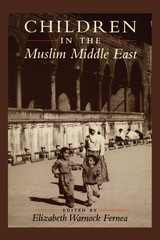
Today nearly half of all people in the Middle East are under the age of fifteen. Yet little is known about the new generation of boys and girls who are growing up in a world vastly different from that of their parents, a generation who will be the leaders of tomorrow. This groundbreaking anthology is an attempt to look at the current situation of children by presenting materials by both Middle Eastern and Western scholars. Many of the works have been translated from Arabic, Persian, and French.
The forty-one pieces are organized into sections on the history of childhood, growing up, health, work, education, politics and war, and play and the arts. They are presented in many forms: essays in history and social science, poems, proverbs, lullabies, games, and short stories. Countries represented are Egypt, Jordan, Morocco, Tunisia, Israel/West Bank, Kuwait, Saudi Arabia, Iran, Iraq, Syria, Sudan, Lebanon, Turkey, Yemen, and Afghanistan.
This book complements Elizabeth Fernea's earlier works, Women and the Family in the Middle East and Middle Eastern Muslim Women Speak (coedited with Basima Bezirgan). Like them, it will be important reading for everyone interested in the Middle East and in women's and children's issues.
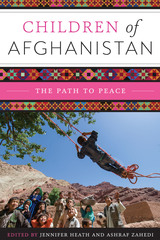
The first comprehensive look at youth living in a country attempting to rebuild itself after three decades of civil conflict, Children of Afghanistan relies on the research and fieldwork of twenty-one experts to cover an incredible range of topics. Focusing on the full scope of childhood, from birth through young adulthood, this edited volume examines a myriad of issues: early childhood socialization in war and peace; education, literacy, vocational training, and apprenticeship; refugee life; mental and physical health, including disabilities and nutrition; children’s songs, folktales, and art; sports and play; orphans; life on the streets; child labor and children as family breadwinners; child soldiers and militarization; sexual exploitation; growing up in prison; marriage; family violence; and other issues vital to understanding, empowerment, and transformation.
Children of Afghanistan is the first volume that not only attempts to analyze the range of challenges facing Afghan children across class, gender, and region but also offers solutions to the problems they face. With nearly half of the population under the age of fifteen, the future of the country no doubt lies with its children. Those who seek peace for the region must find solutions to the host of crises that have led the United Nations to call Afghanistan “the worst place on earth to be born.” The authors of Children of Afghanistan provide child-centered solutions to rebuilding the country’s cultural, social, and economic institutions.
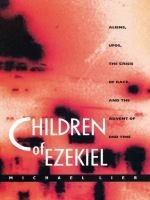
Beginning with the merkabah chariot literature of Hebrew and Gnostic mysticism, Lieb shows how religiously inspired people concerned with annihilating their heretical enemies seized on Ezekiel’s vision as revealing the technologically superior instrument of God’s righteous anger. He describes how many who seek to know the unknowable that is the power of God conceive it in technological terms—and how that power is associated with political aims and a heralding of the end of time. For Milton, Ezekiel’s chariot becomes the vehicle in which the Son of God does battle with the rebellious angels. In the modern age, it may take the form of a locomotive, tank, airplane, missile, or UFO. Technology itself is seen as a divine gift and an embodiment of God in the temporal world. As Lieb demonstrates, the impetus to produce modern technology arises not merely from the desire for profit or military might but also from religious-spiritual motives.
Including discussions of conservative evangelical Christian movements, Reagan’s ballistic shooting gallery in the sky, and the Nation of Islam’s vision of the “mother plane” as the vehicle of retribution in the war against racial oppression, Children of Ezekiel will enthrall readers who have been captivated, either through religious belief or intellectual interests, by a common thread uniting millennial religious beliefs, racial conflict, and political and militaristic aspirations.
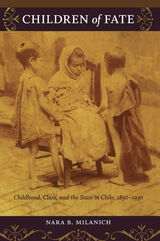
Milanich pays particular attention to family law, arguing that liberal legal reforms wrought in the 1850s, which left the paternity of illegitimate children purposely unrecorded, reinforced not only patriarchal power but also hierarchies of class. Through vivid stories culled from judicial and notarial sources and from a cache of documents found in the closet of a Santiago orphanage, she reveals how law and bureaucracy helped create an anonymous underclass bereft of kin entitlements, dependent on the charity of others, and marginalized from public bureaucracies. Milanich also challenges the recent scholarly emphasis on state formation by highlighting the enduring importance of private, informal, and extralegal relations of power within and across households. Children of Fate demonstrates how the study of children can illuminate the social organization of gender and class, liberalism, law, and state power in modern Latin America.
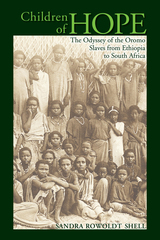
In Children of Hope, Sandra Rowoldt Shell traces the lives of sixty-four Oromo children who were enslaved in Ethiopia in the late-nineteenth century, liberated by the British navy, and ultimately sent to Lovedale Institution, a Free Church of Scotland mission in the Eastern Cape, South Africa, for their safety. Because Scottish missionaries in Yemen interviewed each of the Oromo children shortly after their liberation, we have sixty-four structured life histories told by the children themselves.
In the historiography of slavery and the slave trade, first passage narratives are rare, groups of such narratives even more so. In this analytical group biography (or prosopography), Shell renders the experiences of the captives in detail and context that are all the more affecting for their dispassionate presentation. Comparing the children by gender, age, place of origin, method of capture, identity, and other characteristics, Shell enables new insights unlike anything in the existing literature for this region and period.
Children of Hope is supplemented by graphs, maps, and illustrations that carefully detail the demographic and geographic layers of the children’s origins and lives after capture. In this way, Shell honors the individual stories of each child while also placing them into invaluable and multifaceted contexts.
Now in the midst of the largest wave of immigration in history, America, mythical land of immigrants, is once again contemplating a future in which new arrivals will play a crucial role in reworking the fabric of the nation. At the center of this prospect are the children of immigrants, who make up one fifth of America's youth. This book, written by the codirectors of the largest ongoing longitudinal study of immigrant children and their families, offers a clear, broad, interdisciplinary view of who these children are and what their future might hold.
For immigrant children, the authors write, it is the best of times and the worst. These children are more likely than any previous generation of immigrants to end up in Ivy League universities--or unschooled, on parole, or in prison. Most arrive as motivated students, respectful of authority and quick to learn English. Yet, at the same time, many face huge obstacles to success, such as poverty, prejudice, the trauma of immigration itself, and exposure to the materialistic, hedonistic world of their native-born peers.
The authors vividly describe how forces within and outside the family shape these children's developing sense of identity and their ambivalent relationship with their adopted country. Their book demonstrates how "Americanization," long an immigrant ideal, has, in a nation so diverse and full of contradictions, become ever harder to define, let alone achieve.
Winner, Betty and Alfred McClung Lee Book Award, Association for Humanist Sociology, 2016
Outstanding Scholarly Contribution Award of the Section on Children and Youth, American Sociological Association, 2016
Honorable Mention, Leo Goodman Award, Methodology Section, American Sociological Association, 2016
When children experience upheaval and trauma, adults often view them as either vulnerable and helpless or as resilient and able to easily “bounce back.” But the reality is far more complex for the children and youth whose lives are suddenly upended by disaster. How are children actually affected by catastrophic events and how do they cope with the damage and disruption?
Children of Katrina offers one of the only long-term, multiyear studies of young people following disaster. Sociologists Alice Fothergill and Lori Peek spent seven years after Hurricane Katrina interviewing and observing several hundred children and their family members, friends, neighbors, teachers, and other caregivers. In this book, they focus intimately on seven children between the ages of three and eighteen, selected because they exemplify the varied experiences of the larger group. They find that children followed three different post-disaster trajectories—declining, finding equilibrium, and fluctuating—as they tried to regain stability. The children’s moving stories illuminate how a devastating disaster affects individual health and well-being, family situations, housing and neighborhood contexts, schooling, peer relationships, and extracurricular activities. This work also demonstrates how outcomes were often worse for children who were vulnerable and living in crisis before the storm. Fothergill and Peek clarify what kinds of assistance children need during emergency response and recovery periods, as well as the individual, familial, social, and structural factors that aid or hinder children in getting that support.

Native American children have long been subject to removal from their homes for placement in residential schools and, more recently, in foster or adoptive homes. The governments of both the United States and Canada, having reduced Native nations to the legal status of dependent children, historically have asserted a surrogate parentalism over Native children themselves.
Children of the Dragonfly is the first anthology to document this struggle for cultural survival on both sides of the U.S.-Canadian border. Through autobiography and interviews, fiction and traditional tales, official transcripts and poetry, these voices— Seneca, Cherokee, Mohawk, Navajo, and many others— weave powerful accounts of struggle and loss into a moving testimony to perseverance and survival. Invoking the dragonfly spirit of Zuni legend who helps children restore a way of life that has been taken from them, the anthology explores the breadth of the conflict about Native childhood.
Included are works of contemporary authors Sherman Alexie, Joy Harjo, Luci Tapahonso, and others; classic writers Zitkala-Sa and E. Pauline Johnson; and contributions from twenty important new writers as well. They take readers from the boarding school movement of the 1870s to the Sixties Scoop in Canada and the Indian Child Welfare Act of 1978 in the United States. They also spotlight the tragic consequences of racist practices such as the suppression of Indian identity in government schools and the campaign against Indian childbearing through involuntary sterilization.
CONTENTS
Part 1. Traditional Stories and Lives
Severt Young Bear (Lakota) and R. D. Theisz, To Say "Child"
Zitkala-Sa (Yankton Sioux), The Toad and the Boy
Delia Oshogay (Chippewa), Oshkikwe's Baby
Michele Dean Stock (Seneca), The Seven Dancers
Mary Ulmer Chiltoskey (Cherokee), Goldilocks Thereafter
Marietta Brady (Navajo), Two Stories
Part 2. Boarding and Residential Schools
Embe (Marianna Burgess), from Stiya: or, a Carlisle Indian Girl at Home
Black Bear (Blackfeet), Who Am I?
E. Pauline Johnson (Mohawk), As It Was in the Beginning
Lee Maracle (Stoh:lo), Black Robes
Gordon D. Henry, Jr. (White Earth Chippewa), The Prisoner of Haiku
Luci Tapahonso (Navajo), The Snakeman
Joy Harjo (Muskogee), The Woman Who Fell from the Sky
Part 3. Child Welfare and Health Services
Problems That American Indian Families Face in Raising Their Children, United States Senate, April 8 and 9, 1974
Mary TallMountain (Athabaskan), Five Poems
Virginia Woolfclan, Missing Sister
Lela Northcross Wakely (Potawatomi/Kickapoo), Indian Health
Sherman Alexie (Spokane/Coeur d'Alene), from Indian Killer
Milton Lee (Cheyenne River Sioux) and Jamie Lee, The Search for Indian
Part 4. Children of the Dragonfly
Peter Cuch (Ute), I Wonder What the Car Looked Like
S. L. Wilde (Anishnaabe), A Letter to My Grandmother
Eric Gansworth (Onondaga), It Goes Something Like This
Kimberly Roppolo (Cherokee/Choctaw/Creek), Breeds and Outlaws
Phil Young (Cherokee) and Robert Bensen, Wetumka
Lawrence Sampson (Delaware/Eastern Band Cherokee), The Long Road Home
Beverley McKiver (Ojibway), When the Heron Speaks
Joyce carlEtta Mandrake (White Earth Chippewa), Memory Lane Is the Next Street Over
Alan Michelson (Mohawk), Lost Tribe
Patricia Aqiimuk Paul (Inupiaq), The Connection
Terry Trevor (Cherokee/Delaware/Seneca), Pushing up the Sky
Annalee Lucia Bensen (Mohegan/Cherokee), Two Dragonfly Dream Songs
Several contributors examine the recession’s impact on the economic well-being of families, including changes to income, poverty levels, and economic insecurity. Irwin Garfinkel and Natasha Pilkauskas find that in cities with high unemployment rates during the recession, incomes for families with a college-educated mother fell by only about 5 percent, whereas families without college degrees experienced income losses three to four times greater. Garfinkel and Pilkauskas also show that the number of non-college-educated families enrolled in federal safety net programs—including Medicaid, the Earned Income Tax Credit, and the Supplemental Nutrition Assistance Program (or food stamps)—grew rapidly in response to the Great Recession.
Other researchers examine how parents’ physical and emotional health, relationship stability, and parenting behavior changed over the course of the recession. Janet Currie and Valentina Duque find that while mothers and fathers across all education groups experienced more health problems as a result of the downturn, health disparities by education widened. Daniel Schneider, Sara McLanahan and Kristin Harknett find decreases in marriage and cohabitation rates among less-educated families, and Ronald Mincy and Elia de la Cruz-Toledo show that as unemployment rates increased, nonresident fathers’ child support payments decreased. William Schneider, Jeanne Brooks-Gunn, and Jane Waldfogel show that fluctuations in unemployment rates negatively affected parenting quality and child well-being, particularly for families where the mother did not have a four-year college degree.
Although the recession affected most Americans, Children of the Great Recession reveals how vulnerable parents and children paid a higher price. The research in this volume suggests that policies that boost college access and reinforce the safety net could help protect disadvantaged families in times of economic crisis.
Marshalling archival records, oral histories, and ethnographic fieldwork, the authors analyze the evacuation process, the political conflict surrounding it, the children’s upbringing, and their fates as adults cut off from their parents and their homeland. They also give voice to seven refugee children who poignantly recount their childhood experiences and heroic efforts to construct new lives in diaspora communities throughout the world. A much-needed corrective to previous historical accounts, Children of the Greek Civil War is also a searching examination of the enduring effects of displacement on the lives of refugee children.
In Children of the Land, the authors ask whether traditional observations about farm families—strong intergenerational ties, productive roles for youth in work and social leadership, dedicated parents and a network of positive engagement in church, school, and community life—apply to three hundred Iowa children who have grown up with some tie to the land. The answer, as this study shows, is a resounding yes. In spite of the hardships they faced during the agricultural crisis of the 1980s, these children, whose lives we follow from the seventh grade to after high school graduation, proved to be remarkably successful, both academically and socially.
A moving testament to the distinctly positive lifestyle of Iowa families with connections to the land, this uplifting book also suggests important routes to success for youths in other high risk settings.
Based on interviews with or research on 150 konketsuji—a now-taboo word for "mixed-blood" Japanese—journalist Walter Hamilton presents vivid first-person accounts of these adults as they remember their experiences of childhood loss. Using archival material from organizations dedicated to assisting the children, he combines moving personal tales with historical and political analyses of international race relations and immigration policy, particularly in North America and Australia.
Not only were attitudes and behaviors of the Japanese biased against the mixed-race children, but so were the restrictive and prejudicial immigration policies of the fathers’ native countries. Japan’s racial intolerance was fully matched in the nations it fought against. Hamilton examines how attitudes about race relations have evolved and traces the impact of racial ideology on national policy and cultural identity in Australia, Japan, and the United States.
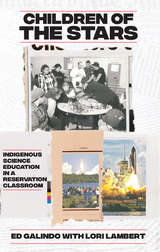
In Children of the Stars, Galindo relates his experience with this first team and with successive student teams, who continued to participate in NASA programs over the course of a decade. He discusses the challenges of teaching American Indian students, from the practical limits of a rural reservation school to the importance of respecting and incorporating Indigenous knowledge systems. In describing how he had to earn the trust of his students to truly be successful as their teacher, Galindo also touches on the complexities of community belonging and understanding; although Indigenous himself, Galindo is not a member of the Shoshone-Bannock tribes and was still an outsider who had as much to learn as the students.
Children of the Stars is the story of students and a teacher, courage and hope. Written in a conversational style, it’s an accessible story about students who were supported and educated in culturally relevant ways and so overcame the limitations of an underfunded reservation school to reach great heights.
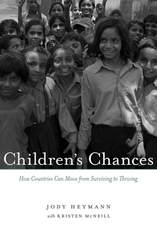
Most parents care deeply about their children. If that were enough, we would not see the inequalities we currently do in children’s opportunities and healthy development—children out of school, children laboring, children living in poverty. While the scale of the problems can seem overwhelming, history has shown that massive progress is possible on problems that once seemed unsolvable. Within the span of less than twenty-five years, the proportion of people living in extreme poverty has been cut in half, the number of children under age five that die each day has dropped by over 12,000, and the percentage of girls attending school has climbed from just three in four to over 90 percent.
National action, laws, and public policies fundamentally shape children’s opportunities. Children’s Chances urges a transformational shift from focusing solely on survival to targeting children’s full and healthy development. Drawing on never-before-available comparative data on laws and public policies in 190 countries, Jody Heymann and Kristen McNeill tell the story of what works and what countries around the world are doing to ensure equal opportunities for all children. Covering poverty, discrimination, education, health, child labor, child marriage, and parental care, Children’s Chances identifies the leaders and the laggards, highlights successes and setbacks, and provides a guide for what needs to be done to make equal chances for all children a reality.
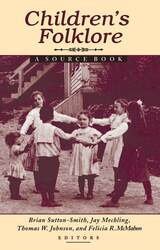
A collection of orginal essays by scholars from a variety of fields-- includng American studies, folklore, anthropology, pyschology, sociology, and education---Children's Folklore: A Source Book moves beyond traditional social-science views of child development. It reveals the complexity and artistry of interactions among children, challenging stereotypes of simple childhood innocence and conventional explanations of development that privilege sober and sensible adult outcomes. Instead, the play and lore of children is shown to be often disruptive, wayward, and irrational.
This book explores the ways in which contemporary authors respond to and rework key aspects of Old Norse history and viking culture for young twenty-first-century audiences. Why are contemporary authors and audiences so manifestly attracted to the viking past? In what ways do writers respond to Norse sources? How do the narratives they tell reflect our beliefs about and desires for the past, our constructions of childhood and adolescence, our anxieties around gender, sexuality, and ethnicity? How do these texts engage with a future occluded by apocalyptic ecological threat? David Clark explores these questions through readings of a rich body of diverse material which retells, updates, and transforms Norse culture. The volume contextualizes Norse medievalism and explores how thematic foci on gender, sexuality, disability, and ethnicity relate to contemporary concerns around these topics, and the construction of childhood.
Megacities such as Santiago are becoming a worldwide phenomenon. In six of eleven South American countries, over 25 percent of the population lives in a single city. What policies should national governments adopt with regard to dominant metropolises? Is it appropriate to restrict the flow of population to big cities? Or should governments take a laissez-faire attitude and permit city growth?
Focusing on Chile, this book argues that appropriate government action lies between these extremes. The authors espouse spatial policies that mitigate the social costs of congestion and pollution but also ensure that migrants pay the social costs of moving to big cities.
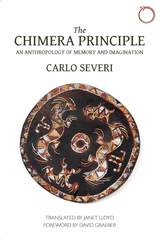
Available in English for the first time, anthropologist Carlo Severi’s The Chimera Principle breaks new theoretical ground for the study of ritual, iconographic technologies, and oral traditions among non-literate peoples. Setting himself against a tradition that has long seen the memory of people “without writing”—which relies on such ephemeral records as ornaments, body painting, and masks—as fundamentally disordered or doomed to failure, he argues strenuously that ritual actions in these societies pragmatically produce religious meaning and that they demonstrate what he calls a “chimeric” imagination.
Deploying philosophical and ethnographic theory, Severi unfolds new approaches to research in the anthropology of ritual and memory, ultimately building a new theory of imagination and an original anthropology of thought. This English-language edition, beautifully translated by Janet Lloyd and complete with a foreword by David Graeber, will spark widespread debate and be heralded as an instant classic for anthropologists, historians, and philosophers.

Knowledge of chimpanzees in the wild has expanded dramatically in recent years. This comprehensive volume, edited by Martin Muller, Richard Wrangham, and David Pilbeam, brings together scientists who are leading a revolution to discover and explain what is unique about humans, by studying their closest living relatives. Their observations and conclusions have the potential to transform our understanding of human evolution.
Chimpanzees offer scientists an unmatched view of what distinguishes humanity from its apelike ancestors. Based on evidence from the hominin fossil record and extensive morphological, developmental, and genetic data, Chimpanzees and Human Evolution makes the case that the last common ancestor of chimpanzees and humans was chimpanzee-like. It most likely lived in African rainforests around eight million years ago, eating fruit and walking on its knuckles. Readers will learn why chimpanzees are a better model for the last common ancestor than bonobos, gorillas, or orangutans. A thorough chapter-by-chapter analysis reveals which key traits we share with chimpanzees and which appear to be distinctive to Homo sapiens, and shows how understanding chimpanzees helps us account for the evolution of human uniqueness. Traits surveyed include social behaviors and structures, mating systems, diet, hunting practices, tool use, culture, cognition, and communication.
Edited by three of primatology’s most renowned experts, with contributions from 32 scholars drawing on decades of field research, Chimpanzees and Human Evolution provides readers with detailed up-to-date information on what we can infer about our chimpanzee-like ancestors and points the way forward for the next generation of discoveries.

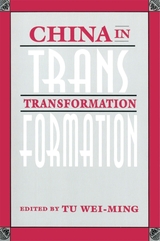
What will China look like in 2000? Tectonic forces are at work and its seeming stability has been largely lost after Tiananmen Square. Changing political, social, economic, intellectual, and cultural conditions are transforming China and its neighbors with a majority Chinese population. The authors in this book, taking full advantage of the new freedom of inquiry, shed light on the Chinese experience, elaborating not only on the vast changes sweeping all sectors of Chinese society, but also on the tradition that has persisted. As communism did not erase the past, so new experiences build on the past and tease out newness with great resemblances. Modernity takes many forms, memory repressed for a time may reassert itself; myth, the invention of individuals and collectivities, may be more powerful than prosaic fact. Cultural factors as agents of change appear more important than ever.
This book demonstrates that today Confucian societies have salient features on a restless landscape. The authors confine themselves to enduring questions about today’s Sinic societies so that educated readers and scholars of modern China and the Chinese will better understand the more populous half of the world. Contributing authors include William P. Alford, David E. Apter, Myron L. Cohen, Edward Friedman, Tongqi Lin, Perry Link, Andrew J. Nathan, Benjamin I. Schwartz, Tianjian Shi, Helen F. Siu, Wang Gungwu, and Ying-shih Yü.

The authors of this text believe that “areas” as assemblages of social processes requiring distinct, culture-bound explanations cannot be replaced with global theories, but that the meaning of “the area” can be different depending on the question one studies. The study of China and Chinese, in particular, is a good arena to challenge the disciplinary and geographic boundaries of conventional area studies for several reasons. First, because of the wealth of simultaneous processes of rapid political, social, and discursive change in contemporary Chinese society; second, because of the problematic relationship between state, territory, nation, and ethnicity in China; third, because China studies, perhaps more than any other area studies at the moment, is a highly competitive political and academic industry whose internal working must be critically examined. In addition, the subject of China has become one of the primary loci of contesting the meanings of globalization and the universality versus relativity of “values” and modernity.



In China Pop! Sheng-mei Ma analyzes the propaganda-laced millennial Chinese pop culture—particularly TV dramas, films, and web novels—that streams online for over one billion Sinophone consumers in China and in diaspora. In part 1, Ma lays bare the “seductive art of propaganda” by reviewing TV series aired during the Chinese Communist Party Centennial in 2021 and the ways pop culture and propaganda are spliced. In part 2, he zeroes in on how the shared traumatic shock of the Cultural Revolution continues to echo. Parts 3 and 4 cross the Pacific to incorporate analysis of media originating outside of China, such as white depictions of revolutionary zeal and Asian American portrayals of immigrant characters that fetishize Asianness and reanimate stereotypes. With methodological daring, Ma challenges existing scholarship by blending the professional and the personal through a lively and accessible autotheoretical approach. China Pop! walks the East-West cultural tightrope to critique a wide range of pop culture from both sides of the Pacific and sheds new light on the workings of propaganda on its intended audiences and its wider, more subtle reaches in both political and cultural spheres.

“A timely book...An impressive roster of authors collectively provides a broad overview of the many aspects of the relationship, going well beyond diplomacy and politics. The essays also work beautifully by themselves.” —Odd Arne Westad, author of Empire and Righteous Nation
“Offers a wide range of accessible essays on topics from international relations to culture, in a tone that is lively and argumentative but always balanced. Overall, the book has a powerful message: the United States needs informed and clear-eyed engagement with China.” —Rana Mitter, author of China’s Good War
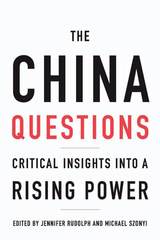
For decades, Americans have described China as a rising power. But China has already risen. What does this mean for the United States, for the global economy, and for international security? Tackling key issues, providing historical perspective, and demystifying stereotypes, Maria Adele Carrai, Jennifer Rudolph, Michael Szonyi, and an all-star group of China experts offer essential insights into the many dimensions of the world’s most important bilateral relationship.
Ranging across questions of security, economics, military development, climate change, public health, science and technology, education, and the worrying flashpoints of Hong Kong, Taiwan, and Xinjiang, the concise essays that compose this book are ideal vantage points on the tensions as well as the potential collaborations between China and the United States. The China Questions 2 makes clear that we are faced not with another Cold War but with something more complex that must be understood on its own terms.
“Cuts through the cacophony of information, misinformation, and nonsense on China that circulates in our modern world to give us reliable answers to crucial questions… Should be on the shelf of anyone seeking to understand this fast-rising superpower.”
—Ian Johnson, author of The Souls of China
After years of isolation, China is now center stage as an economic and global power, but its rise has triggered wildly divergent views. Is it a model of business efficiency or a threat to American prosperity and security? Thirty-six of the world’s leading China experts from Harvard University’s renowned Fairbank Center for Chinese Studies answer key questions about this new superpower, distilling a lifetime of scholarship into short and accessible essays about Chinese politics, culture, history, economy, approach to the environment, and foreign policy. Their contributions provide essential insight into the challenges China faces, the aspirations of its people and leaders, its business climate, and the consequences of its meteoric ascent. Many books offer information about China, but few make sense of what is truly at stake.
“Impressive… A highly informative, readable collection for scholars and nonscholars alike.”
—Publishers Weekly
“Provides a more nuanced and accessible perspective on the issues China is facing.”
—South China Morning Post
“Erudite yet accessible… The topical reach is impressive.”
—Jeffrey Wasserstrom, author of China in the 21st Century
Public discussion of our China policy in recent months has emphasized the need for a historical view of the ancient "Middle Kingdom" (the Chinese name for China) and its modern revolution. Fairbank has been a leading witness before Congressional groups such as Senator Fulbright's Committee on Foreign Relations, where his testimony received worldwide attention. This volume presents the major themes of his testimony more fully by bringing together essays first published in various national journals, mainly in 1966.
The three parts of this book--"China's Revolution in the Light of Her Past," "The Taiwan Problem," and "Communist China and American Policy"--all bring a knowledge of China's long tradition to bear upon her present crisis. China's past still provides the main repertory of themes and styles, assumptions and methods, upon which her leaders draw in trying to meet their problems. Mao and his party are both circumscribed and inspired by the history of their Middle Kingdom. Although this history is by no means the sole determinant of their actions, it is the specific factor least well known, and therefore most illuminating, to Americans.
The importance and timeliness of these essays, the urgency of their subject matter, are plain enough. As Fairbank says, "We have to face the fact that the Chinese quarter of mankind live on the other side of a cultural gap, and our effort to bridge this gap in the next decade may make us or break us."
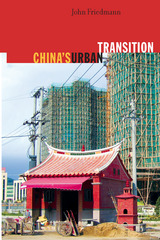
Through close attention to everyday lives and narratives and with a particular focus on gender, market, and spatial practices, this collection stresses that, in the case of China, rural life and the impact of socialism must be considered in order to fully comprehend the urban. Individual essays note the impact of legal barriers to geographic mobility in China, the proliferation of different urban centers, the different distribution of resources among various regions, and the pervasive appeal of the urban, both in terms of living in cities and in acquiring products and conventions signaling urbanity. Others focus on the direct sales industry, the Chinese rock music market, the discursive production of femininity and motherhood in urban hospitals, and the transformations in access to healthcare.
China Urban will interest anthropologists, sociologists, political scientists, and those studying urban planning, China, East Asia, and globalization.
Contributors. Tad Ballew, Susan Brownell, Nancy N. Chen, Constance D. Clark, Robert Efird, Suzanne Z. Gottschang, Ellen Hertz, Lisa Hoffman, Sandra Hyde, Lyn Jeffery, Lida Junghans, Louisa Schein, Li Zhang
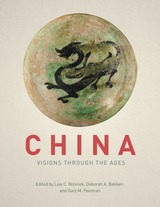
China’s long history is one of the richest and most complex in the known world, and the Cyrus Tang Hall of China offers visitors a wonderful, comprehensive survey of it through some 350 artifacts on display, spanning from the Paleolithic period to present day. Now, with China: Visions through the Ages, anyone can experience the marvels of this exhibition through the book’s beautifully designed and detailed pages. Readers will gain deeper insight into The Field Museum’s important East Asian collections, the exhibition development process, and research on key aspects of China’s fascinating history. This companion book, edited by the exhibition’s own curatorial team, takes readers even deeper into the wonders of the Cyrus Tang Hall of China and enables them to study more closely the objects and themes featured in the show. Mirroring the exhibition’s layout of five galleries, the volume is divided into five sections. The first section focuses on the Paleolithic and Neolithic periods; the second, the Bronze Age, the first dynasties, and early writing; the third, the imperial system and power; the fourth, religion and performance; and the fifth, interregional trade and the Silk Routes. Each section also includes highlights containing brief stories on objects or themes in the hall, such as the famous Lanting Xu rubbing.
With chapters from a diverse set of international authors providing greater context and historical background, China: Visions through the Ages is a richly illustrated volume that allows visitors, curious readers, and China scholars alike a chance to have an enduring exchange with the objects featured in the exhibition and with their multifaceted histories.
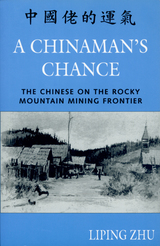
Thus, the Chinese portrayed all the stereotypical frontier roles-victors, victims, and villains. Their basic material needs were guaranteed, and many individuals were able to climb up the economic ladder. Frontier justice was used to settle disputes; Chinese-Americans frequently challenged white opponents in the various courts as well as in gun battles.
Interesting and provocative, A Chinaman's Chance not only offers general readers a narrative account of the Rocky Mountain mining frontier, but also introduces a fresh interpretation of the Chinese experience in nineteenth-century America to scholars interested in Asian American studies, immigration history, and ethnicity in the American West.

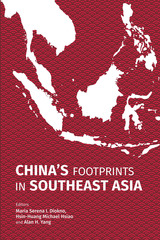
This is the first book to survey China’s growing role in Southeast Asia along multiple dimensions. It looks closely and skeptically at the multitude of ways that China has built connections in the region, including through trade, foreign aid, and cultural diplomacy. It incorporates examples such as the operation of Confucius Institutes in Indonesia or the promotion of the concept of guangxi.China’s Footprints in Southeast Asia raises the question of whether the Chinese efforts are helpful or disruptive and explores who it is that really stands to benefit from these relationships. The answers differ from country to country, but, as this volume suggests, the footprint of hard and soft power always leaves a lasting mark on other countries’ institutions.
The problem of melding diverse ethnic groups into a single political entity is as old as human history. Marx's predictions to the contrary, modern socialist states have not escaped the tension of nationality: contentment or rebellion, pluralism or assimilation. June Teufel Dreyer, in what will be the basic study in its field, delineates China's determination to deal intelligently with its minorities.
The “forty millions” (Mongols, Tibetans, Koreans, Manchus, and some fifty other groups) are only 6 percent of China's total population, but the national government pays them special attention. First of all, these groups occupy almost two thirds of China's land area, in strategic frontier positions. Second, they occupy terrain rich in unworked minerals, undeveloped forests, and prolific supplies of domestic animals. The People's Republic attaches considerable importance to obtaining loyalty and maintaining political jurisdiction.
Dreyer examines the steps taken to achieve integration. In the process she also considers how the Communist Party's minority policy differs from that of previous Chinese governments and the Soviet Union; who the executors of this policy have been; what mechanisms have been used to carry it out; how minorities have reacted to the communist system; and how policy toward minorities differs from policy toward the Han majority. This deeply researched book is informed by considerations that transcend the Chinese setting. Many nations share the problem of race relations, and one nation's effort can lead to another nation's solution.
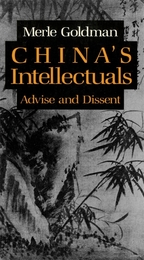
Today’s intellectuals in China inherit a mixed tradition in terms of their relationship to the state. Some follow the Confucian literati watchdog role of criticizing abuses of political power. Marxist intellectuals judge the state’s practices on the basis of Communist ideals. Others prefer the May Fourth spirit, dedicated to the principles of free scholarly and artistic expression. The Chinese government, for its part, has undulated in its treatment of intellectuals, applying restraints when free expression threatened to get “out of control,” relaxing controls when state policies required the cooperation, good will, and expertise of intellectuals.
In this stimulating work, twelve China scholars examine that troubled and changing relationship. They focus primarily on the post-Mao years when bitter memories of the Cultural Revolution and China’s renewed quest for modernization have at times allowed intellectuals increased leeway in expression and more influence in policy-making. Specialists examine the situation with respect to economists, lawyers, scientists and technocrats, writers, and humanist scholars in the climate of Deng Xiaoping’s policies, and speculate about future developments. This book will be a valuable source of information for anyone interested in the changing scene in contemporary China and in its relations with the outside world.
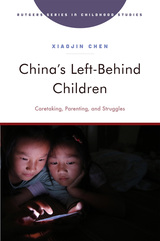
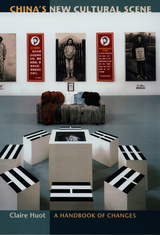
Western observers who were impressed by the bravery of the demonstrators in Tiananmen Square—and stunned at the harshness of their suppression—will learn from this book how that political movement led to changes in cultural conditions and production. Attending to all the major elements of this vast nation’s high and low culture at the end of a landmark decade, Huot’s discussion ranges from the cinematic works of Zhang Yimou, Chen Kaige, and others to emerging musical forms such as rock, punk, and rap. Other topics include television, theater, and avant-garde art, the new electronic media, and subversive trends in both literature and the visual arts.
With a comprehensive index of artists and works, as well as a glossary of Chinese words, China’s New Cultural Scene will enlighten students of Chinese culture and general readers interested in contemporary Asia.
In February 1967, at the height of the Cultural Revolution, the American Society of International Law organized a study panel of legal scholars, social scientists, lawyers, and government officials to consider problems relating to “China and International Order.” The panel was founded in the belief that the turmoil in China would not endure and that the People's Republic might soon wish to participate fully in the world community. To prepare for this day, the panel commissioned and reviewed a number of studies of China's interpretation and application of international law.
The ten essays in this volume—written by twelve scholars including Jerome Alan Cohen, who has also written a substantial introduction—are the fruit of this effort. Four of the essays deal with basic problems relating to Peking's international conduct: recognition and the establishment of diplomatic relations, the regulation of foreign diplomats serving in China, manipulation of the concept of “unequal treaties,” and the PRC's conditions for participation in international organizations. The other six essays focus on legal problems that have arisen in China's relations with a given country or international organization.
Unlike other histories' brief generalizations of the incident, this study traces the war from the initial January 28th Japanese marine raid on Chinese Shanghai. It also studies the roles played by the prevailing Japanese leaders, including the last prewar civilian Prime Minister, Emperor Hirohito, and Admiral Nomura, who was later assigned to pre-Pearl Harbor negotiations.
Not least, the work bridges scholarly boundaries by highlighting the economics of China's leading trade metropolis, Shanghai; the desperate attempts of Chinese politicians and press to manipulate anti-imperialist and anti-Japanese propaganda; and the ways in which the failure of positional trench warfare against Japanese mechanized mobility provided lessons to German observers and the Communists.
Donald Jordan has drawn from as complete a range of primary sources as are available. Both the Nanking and Taipei archives, as well as resources from Tokyo, Settlement Shanghai's police records, Washington, the League of Nations, and London were researched.
Knowing how greatly the Nationalist defense in 1932 influenced the Chinese Communists expands the relevance for scholars of this illustrated study. Others, especially those curious about the U. S. entanglement leading to Pearl Harbor, will find much more than the story of a regional skirmish.
Donald Jordan is Professor of East Asian History, Ohio University.
READERS
Browse our collection.
PUBLISHERS
See BiblioVault's publisher services.
STUDENT SERVICES
Files for college accessibility offices.
RECENTLY PUBLISHED



UChicago Accessibility Resources
home | accessibility | search | about | contact us
BiblioVault ® 2001 - 2025
The University of Chicago Press