
 A SCHOLARLY BOOK REPOSITORY
35 start with D start with D

Finding the cyborg in early twentieth-century German art
In an era when technology, biology, and culture are becoming ever more closely connected, The Dada Cyborg explains how the cyborg as we know it today actually developed between 1918 and 1933 when German artists gave visual form to their utopian hopes and fantasies in a fearful response to World War I.
In what could be termed a prehistory of the posthuman, Matthew Biro shows the ways in which new forms of human existence were imagined in Germany between the two world wars through depictions of cyborgs. Examining the work of Hannah Höch, Raoul Hausmann, George Grosz, John Heartfield, Otto Dix, and Rudolf Schlichter, he reveals an innovative interpretation of the cyborg as a representative of hybrid identity, as well as a locus of new modes of awareness created by the impact of technology on human perception. Tracing the prevalence of cyborgs in German avant-garde art, Biro demonstrates how vision, hearing, touch, and embodiment were beginning to be reconceived during the Weimar Republic. Biro’s unique and interdisciplinary analysis offers a substantially new account of the Berlin Dada movement, one that integrates the group’s poetic, theoretical, and performative practices with its famous visual strategies of photomontage, assemblage, and mixed-media painting to reveal radical images of a “new human.”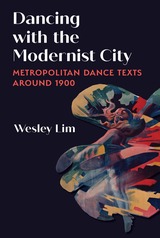
Drawing on cultural, literary, dance, performance, and queer studies, Dancing with the Modernist City analyzes an array of material from 1896 to 1914—essays, novels, short stories, poetry, newspaper articles, photographs, posters, drawings, and early film. It argues that these writers and artists created a genre called the metropolitan dance text, which depicts dancing figures not on a traditional stage, but with the streets, advertising pillars, theaters, cafes, squares, and even hospitals of an urban setting. Breaking away from the historically male, heteronormative view, this posthumanist mode of writing highlights the visual and episodic unexpectedness of urban encounters. These literary depictions question traditional conceptualizations of space and performance by making the protagonist and the reader feel like they embody the dancer and the movement. In doing so, they upset the conventional depictions of performance and urban spaces in ways paralleling modern dance.

Both film noir and the Weimar street film hold a continuing fascination for film spectators and film theorists alike. The female characters, especially the alluring femmes fatales, remain a focus for critical and popular attention. In the tradition of such attention, Dangerous Dames focuses on the femme fatale and her antithesis, the femme attrapée.
Unlike most theorists, Jans Wager examines these archetypes from the perspective of the female spectator and rejects the persistence of vision that allows a reading of these female characters only as representations of unstable postwar masculinity. Professor Wager suggests that the woman in the audience has always seen and understood these characters as representations of a complex aspect of her existence.
Dangerous Dames looks at the Weimar street films The Street, Variety, Asphalt, and M and the film noir movies The Maltese Falcon, Gun Crazy, and The Big Heat. This book opens the doors to spectators and theorists alike, suggesting cinematic pleasures outside the bounds of accepted readings and beyond the narrow categorization of film noir and the Weimar street film as masculine forms.

One of the Most Important Histories of the Greatest Battle on the Western Front in World War II
“Dark December occupies a distinguished place among war books. Every paragraph is based upon evidence, not flimsy wartime rumors. Technical enough for the professional, accurate enough for the historian (in fact, it is history of the best), it is lucid and understandable for the general reader.”—New York Herald Tribune
“If other veterans of the Army’s historical division can maintain Mr. Merriam’s high standard of stimulating, critical and painstaking work, we will be fortunate. Dark December can be heartily recommended to anyone faintly interested in the war.”—New York Times
“The book explodes a number of myths which have been winning their improper way into general belief.” —Arthur Schlesinger, Jr., Booklist
The massive German counteroffensive through Belgium’s Ardennes forest in December 1944 took the American and British armies by surprise and changed the outcome of the war. With whole divisions destroyed and decimated, the American army scrambled to contain the German threat, while also trying to determine how such an attack had gone undetected. The Americans succeeded in winning the month-long battle, commonly known as the Battle of the Bulge, through the tenacity of several pockets of troops, notably those in the Belgian town of Bastogne, and the remarkable rapid movement of Patton’s Third Army to seal the breech in the American lines. The battle stalled the British and American advances and lengthened the war with the result that the Soviet Union was able to make greater gains in Europe than previously anticipated. Dark December is a thorough and engrossing examination of the Battle of the Bulge by a historian who had the opportunity to prepare notes as the battle was occurring and consult classified American as well as German records. Notably, the book contains unique and critical information, including details gleaned from interviews conducted by the author with commanding officers on both sides, some of which are the only reports gathered from these sources. Originally published in 1947, this the first paperback edition with the complete original text and maps.
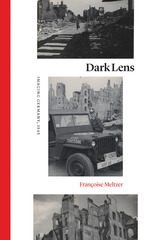
The ruins of war have long held the power to stupefy and appall. Can such ruins ever be persuasively depicted and comprehended? Can images of ruins force us to identify with the suffering of the enemy and raise uncomfortable questions about forgiveness and revenge?
Françoise Meltzer explores these questions in Dark Lens, which uses the images of war ruins in Nazi Germany to investigate problems of aestheticization and the representation of catastrophe. Through texts that give accounts of bombed-out towns in Germany in the last years of the war, painters’ attempts to depict the destruction, and her own mother’s photographs taken in 1945, Meltzer asks if any medium offers a direct experience of war ruins for the viewer. Refreshingly accessible and deeply personal, Dark Lens is a compelling look at the role images play in constructing memory.
Written in the last years of his life, Days of Twilight, Nights of Frenzy sees Schroeter looking back at his life with the help of film critic and friend Claudia Lenssen. Born in 1945, Schroeter grew up near Heidelberg and spent just a few weeks in film school before leaving to create his earliest works. Over the years, he would work with acclaimed artists, including Marianne Hopps, Isabelle Huppert, Candy Darling, and Christine Kaufmann. In the 1970s, Schroeter also embarked on prolific parallel careers in theater and opera, where he worked in close collaboration with the legendary diva Maria Callas. His childhood; his travels in Italy, France, and Latin America; his coming out and subsequent life as an gay man in Europe; and his run-ins with Hollywood are but a few of the subjects Schroeter recalls with insights and characteristic understated humor.
A sharp, lively, even funny memoir, Days of Twilight, Nights of Frenzy captures Schroeter’s extravagant life vividly over a vast prolific career, including many stories that might have been lost were it not for this book. It is sure to fascinate cinephiles and anyone interested in the culture around film and the arts.
Inspired by the conference “Deaf People in Hitler’s Europe, 1933–1945,” hosted jointly by Gallaudet University and the United States Holocaust Memorial Museum in 1998, this extraordinary collection, organized into three parts, integrates key presentations and important postconference research.
Henry Friedlander begins “Part I: Racial Hygiene” by analyzing the assault on deaf people and people with disabilities as an integral element in the Nazi attempt to implement their theories of racial hygiene. Robert Proctor documents the role of medical professionals in deciding who should be sterilized or forbidden to marry, and whom the Nazi authorities would murder. In an essay written especially for this volume, Patricia Heberer details how Nazi manipulation of eugenics theory and practice facilitated the justification for the murder of those considered socially undesirable.
“Part II: The German Experience” commences with Jochen Muhs’s interviews of deaf Berliners who lived under Nazi rule, both those who suffered abuse and those who, as members of the Nazi Party, persecuted others, especially deaf Jews. John S. Schuchman describes the remarkable 1932 film Misjudged People, which so successfully portrayed the German deaf community as a vibrant contributor to society that the Nazis banned its showing when they came to power. Horst Biesold’s contribution confirms the complicity of teachers who denounced their own students, labeling them hereditarily deaf and thus exposing them to compulsory sterilization. The section also includes the reprint of a chilling 1934 article entitled “The Place of the School for the Deaf in the New Reich,” in which author Kurt Lietz rued the expense of educating deaf students, who could not become soldiers or bear “healthy children.”
In “Part III: The Jewish Deaf Experience,” John S. Schuchman discusses the plight of deaf Jews in Hungary. His historical analysis is complemented by a chapter containing excerpts from the testimony of six deaf Jewish survivors who describe their personal ordeals. Peter Black’s reflections on the need for more research conclude this vital study of a little-known chapter of the Holocaust.

Offering much more than a detached historical account of the "German miracle"—a ruined, war-torn nation evolving within a decade into the most flourishing country in Europe—Eugene Davidson delves into this intriguing story as a "participant observer." Drawing on countless interviews with Germans and Americans of various backgrounds and perspectives, from High Commissioner's office personnel to occupation troop GIs, storekeepers to housewives, Davidson insightfully conveys the atmosphere of postwar Germany and the role of the American occupation in achieving the nation's economic miracle.
The Death and Life of Germany examines the transformation of Germany, focusing on such key episodes as the unprecedented war-crimes tribunal at Nuremberg, the almost unceasing attempts of the Western Allies to cooperate with the Russians, the startling effects of the currency reform and Marshall Plan aid, the break between East and West Germany that culminated in the Berlin airlift, the heroic East German uprising of June 17, 1953, and the eventual formation of the Federal Republic of Germany and the German Democratic Republic.
Davidson traces the progress of thought among Germans and Americans alike as their conceptions of postwar Germany gradually evolved and the leaders of a new, democratic West Germany emerged from the ashes of defeat.
The strength of Davidson's research and analysis and the continuing relevance of this important volume make The Death and Life of Germany an invaluable addition to the collections of scholars and general readers interested in the evolution of postwar Germany.
Rogenhofer shows how his theoretical approach allows us to reinterpret a range of crisis situations beyond the irregular migration context, including democracies’ initial responses to Covid-19, the European Sovereign Debt Crisis, and United States climate politics. These additional case studies help position concerns with decisiveness amid the challenges that populism and technocracy increasingly pose to representative democracies.
Decolonizing German and European History at the Museum examines efforts by European museums to investigate colonialism as part of an unprocessed past, confront its presence, and urge repair. A flurry of exhibitions and the overhaul of numerous large museums in the last decade signal that an emergent colonial memory culture is now reaching broader publics. Exhibitions pose the question of what Europeans owe to those they colonized.
Decolonizing German and European History at the Museum shows how museums can help visitors mourn historic violence and identify the contemporary agents, beneficiaries, victims, survivors, and resisters of colonial presence. At the same time, the book treats the museum as part of the racialized power relations that activists, academics, and artists have long protested against. This book asks whether museums have made the dream of activists, academics, and artists to build equitable futures more acceptable and more durable—or whether in packaging that dream for general audiences they curtail it. Confronting colonial violence, this book argues, pushes Europeans to face the histories of racism and urges them to envision antiracism at the global scale.
". . . Williams has done an exemplary job of analyzing the intersection of the discourses of magic (as related to women and witchcraft), discovery, and religious diversity/dissidence to explain how the confluence of these discourses eventually 'determined who occupied society's center and who was forced to move to, or remain at, its margins.' . . . Gerhild Scholz Williams is no dilettante grazing in the greener pastures of other disciplines. She has been laboring assiduously in these neighboring fields for years now, and it is breathtaking to see how all of her disparate projects have come together so elegantly articulated in this one volume." --Susan L. Cocalis, German Studies Review
Gerhild Scholz Williams is Professor of German and Comparative Literature, Washington University, St. Louis.

Contributors. David P. Conradt, Russell J. Dalton, Kenneth Dyson, Klaus H. Goetz, Simon Green, Adrian Hyde-Price, Charlie Jeffery, Stephen Padgett, William E. Paterson, Wolfgang Rüdig, Martin Seeleib-Kaiser, Gordon Smith, Roland Sturm
Contributors. David P. Conradt, Russell J. Dalton, Kenneth Dyson, Klaus H. Goetz, Simon Green, Adrian Hyde-Price, Charlie Jeffery, Stephen Padgett, William E. Paterson, Wolfgang Rüdig, Martin Seeleib-Kaiser, Gordon Smith, Roland Sturm

The life of Rudolf Diesel, a man who achieved a power plant with the potential for revolutionizing industry and transportation. Diesel demonstrated that he possessed both the scientific insight and technical skill needed to create the diesel engine.

From bleak expressionist works to the edgy political works of the New German Cinema to the feel-good Heimat films of the postwar era, Directory of World Cinema: Germany aims to offer a wider film and cultural context for the films that have emerged from Germany—including some of the East German films recently made available to Western audiences for the first time. With contributions by leading academics and emerging scholars in the field, this volume explores the key directors, themes, and periods in German film history, and demonstrates how genres have been adapted over time to fit historical circumstances. Rounding out this addition to the Directory of World Cinema series are fifty full-color stills, numerous reviews and recommendations, and a comprehensive filmography.
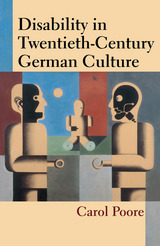
"Comprehensively researched, abundantly illustrated and written in accessible and engaging prose . . . With great skill, Poore weaves diverse types of evidence, including historical sources, art, literature, journalism, film, philosophy, and personal narratives into a tapestry which illuminates the cultural, political, and economic processes responsible for the marginalization, stigmatization, even elimination, of disabled people---as well as their recent emancipation."
---Disability Studies Quarterly
"A major, long-awaited book. The chapter on Nazi images is brilliant---certainly the best that has been written in this arena by any scholar."
---Sander L. Gilman, Emory University
"An important and pathbreaking book . . . immensely interesting, it will appeal not only to students of twentieth-century Germany but to all those interested in the growing field of disability studies."
---Robert C. Holub, University of Tennessee
Disability in Twentieth-Century German Culture covers the entire scope of Germany's most tragic and tumultuous century---from the Weimar Republic to the current administration---revealing how central the notion of disability is to modern German cultural history. By examining a wide range of literary and visual depictions of disability, Carol Poore explores the contradictions of a nation renowned for its social services programs yet notorious for its history of compulsory sterilization and eugenic dogma. This comprehensive volume focuses particular attention on the horrors of the Nazi era, when those with disabilities were considered "unworthy of life," but also investigates other previously overlooked topics including the exile community's response to disability, socialism and disability in East Germany, current bioethical debates, and the rise and gains of Germany's disability rights movement.
Richly illustrated, wide-ranging, and accessible, Disability in Twentieth-Century German Culture gives all those interested in disability studies, German studies, visual culture, Nazi history, and bioethics the opportunity to explore controversial questions of individuality, normalcy, citizenship, and morality. The book concludes with a memoir of the author's experiences in Germany as a person with a disability.
Carol Poore is Professor of German Studies at Brown University.
Illustration: "Monument to the Unknown Prostheses" by Heinrich Hoerle © 2007 Artists Rights Society (ARS), New York / VG Bild-Kunst, Bonn
A volume in the series Corporealities: Discourses of Disability
"Insightful and meticulously researched . . . Using disability as a concept, symbol, and lived experience, the author offers valuable new insights into Germany's political, economic, social, and cultural character . . . Demonstrating the significant ‘cultural phenomena' of disability prior to and long after Hitler's reign achieves several important theoretical and practical aims . . . Highly recommended."
---Choice
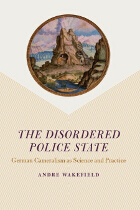
Probing the relationship between German political economy and everyday fiscal administration, The Disordered Police State focuses on the cameral sciences—a peculiarly German body of knowledge designed to train state officials—and in so doing offers a new vision of science and practice during the seventeenth and eighteenth-centuries. Andre Wakefield shows that the cameral sciences were at once natural, technological, and economic disciplines, but, more important, they also were strategic sciences, designed to procure patronage for their authors and good publicity for the German principalities in which they lived and worked. Cameralism, then, was the public face of the prince's most secret affairs; as such, it was an essentially dishonest enterprise.
In an entertaining series of case studies on mining, textiles, forestry, and universities, Wakefield portrays cameralists in their own gritty terms. The result is a revolutionary new understanding about how the sciences created and maintained an image of the well-ordered police state in early modern Germany. In raising doubts about the status of these German sciences of the state, Wakefield ultimately questions many of our accepted narratives about science, culture, and society in early modern Europe.

In this epic tale, Fatma Aydemir explores the lives of characters who could not be more different from one another—except in their insatiable desires to be understood. Rather than a seamless narrative, the novel circles around suppressed memories, unspoken trauma, and buried pasts. Turning expectations and stereotypes of the immigrant experience on their side, Aydemir shows how we all grapple with power and beauty, the holes in our lives, and the demons that hover just out of sight.
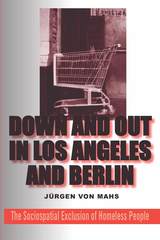
Drawing on fascinating ethnographic insights, von Mahs shows how homeless people in both cities face sociospatial exclusion-legal displacement for criminal activities, poor shelters in impoverished neighborhoods, as well as market barriers that restrict reintegration. Providing a necessary wake-up call, Down and Out in Los Angeles and Berlin addresses the critical public policy issues that can produce effective services to improve homeless people's chances for a lasting exit.

At the turn of the nineteenth century, publishing houses in London, New York, Paris, Stuttgart, and Berlin produced books in ever greater numbers. But it was not just the advent of mass printing that created the era’s “bookish” culture. According to Andrew Piper, romantic writing and romantic writers played a crucial role in adjusting readers to this increasingly international and overflowing literary environment. Learning how to use and to want books occurred through more than the technological, commercial, or legal conditions that made the growing proliferation of books possible; the making of such bibliographic fantasies was importantly a product of the symbolic operations contained within books as well.
Examining novels, critical editions, gift books, translations, and illustrated books, as well as the communities who made them, Dreaming in Books tells a wide-ranging story of the book’s identity at the turn of the nineteenth century. In so doing, it shows how many of the most pressing modern communicative concerns are not unique to the digital age but emerged with a particular sense of urgency during the bookish upheavals of the romantic era. In revisiting the book’s rise through the prism of romantic literature, Piper aims to revise our assumptions about romanticism, the medium of the printed book, and, ultimately, the future of the book in our so-called digital age.
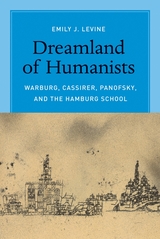
In Dreamland of Humanists, Emily J. Levine considers not just these men, but the historical significance of the time and place where their ideas took form. Shedding light on the origins of their work on the Renaissance and the Enlightenment, Levine clarifies the social, political, and economic pressures faced by German-Jewish scholars on the periphery of Germany’s intellectual world. By examining the role that context plays in our analysis of ideas, Levine confirms that great ideas—like great intellectuals—must come from somewhere.
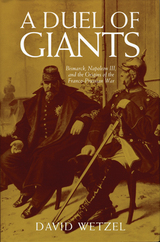
Combining impeccable scholarship and literary elegance, David Wetzel depicts the drama of machinations and passions that exploded in a war that forever changed the face of European history.
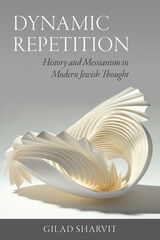
Dynamic Repetition proposes a new understanding of modern Jewish theories of messianism across the disciplines of history, theology, and philosophy. The book explores how ideals of repetition, return, and the cyclical occasioned a new messianic impulse across an important swath of late nineteenth- and early twentieth-century German Jewish thought. To grasp the complexities of Jewish messianism in modernity, the book focuses on diverse notions of “dynamic repetition” in the works of Franz Rosenzweig, Walter Benjamin, Franz Kafka, and Sigmund Freud, and their interrelations with basic trajectories of twentieth-century philosophy and critical thought.
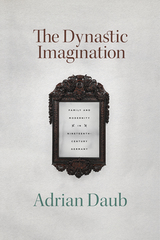
Daub builds this conception of dynasty in a syncretic study of literature, sciences, and the history of ideas, engaging with remnants of dynastic ideology in the work of Richard Wagner, Émile Zola, and Stefan George, and in the work of early feminists and pioneering psychoanalysts. At every stage of cultural progression, Daub reveals how the relation of dynastic to nuclear families inflected modern intellectual history.
READERS
Browse our collection.
PUBLISHERS
See BiblioVault's publisher services.
STUDENT SERVICES
Files for college accessibility offices.
RECENTLY PUBLISHED



UChicago Accessibility Resources
home | accessibility | search | about | contact us
BiblioVault ® 2001 - 2026
The University of Chicago Press