
 A SCHOLARLY BOOK REPOSITORY
14 start with E start with E


Entertaining Comics Group (EC Comics) is perhaps best-known today for lurid horror comics like Tales from the Crypt and for a publication that long outlived the company’s other titles, Mad magazine. But during its heyday in the early 1950s, EC was also an early innovator in another genre of comics: the so-called “preachies,” socially conscious stories that boldly challenged the conservatism and conformity of Eisenhower-era America.
EC Comics examines a selection of these works—sensationally-titled comics such as “Hate!,” “The Guilty!,” and “Judgment Day!”—and explores how they grappled with the civil rights struggle, antisemitism, and other forms of prejudice in America. Putting these socially aware stories into conversation with EC’s better-known horror stories, Qiana Whitted discovers surprising similarities between their narrative, aesthetic, and marketing strategies. She also recounts the controversy that these stories inspired and the central role they played in congressional hearings about offensive content in comics.
The first serious critical study of EC’s social issues comics, this book will give readers a greater appreciation of their legacy. They not only served to inspire future comics creators, but also introduced a generation of young readers to provocative ideas and progressive ideals that pointed the way to a better America.
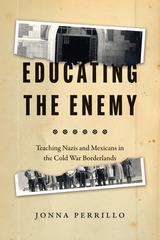
Educating the Enemy begins with the 144 children of Nazi scientists who moved to El Paso, Texas, in 1946 as part of the military program called Operation Paperclip. These German children were bused daily from a military outpost to four El Paso public schools. Though born into a fascist enemy nation, the German children were quickly integrated into the schools and, by proxy, American society. Their rapid assimilation offered evidence that American public schools played a vital role in ensuring the victory of democracy over fascism.
Jonna Perrillo not only tells this fascinating story of Cold War educational policy, but she draws an important contrast with another, much more numerous population of children in the El Paso public schools: Mexican Americans. Like everywhere else in the Southwest, Mexican American children in El Paso were segregated into “Mexican” schools, where the children received a vastly different educational experience. Not only were they penalized for speaking Spanish—the only language all but a few spoke due to segregation—they were tracked for low-wage and low-prestige careers, with limited opportunities for economic success. Educating the Enemy charts what two groups of children—one that might have been considered the enemy, the other that was treated as such—reveal about the ways political assimilation has been treated by schools as an easier, more viable project than racial or ethnic assimilation.
Listen to an interview with the author here and read an interview in Time and a piece based on the book in the Boston Review.
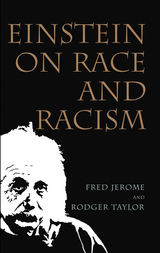
Nearly fifty years after his death, Albert Einstein remains one of America's foremost cultural icons. A thicket of materials, ranging from scholarly to popular, have been written, compiled, produced, and published about his life and his teachings. Among the ocean of Einsteinia-scientific monographs, biographies, anthologies, bibliographies, calendars, postcards, posters, and Hollywood films-however, there is a peculiar void when it comes to the connection that the brilliant scientist had with the African American community. Nowhere is there any mention of his close relationship with Paul Robeson, despite Einstein's close friendship with him, or W.E.B. Du Bois, despite Einstein's support for him.
This unique volume is the first to bring together a wealth of writings by the scientist on the topic of race. Although his activism in this area is less well known than his efforts on behalf of international peace and scientific cooperation, Einstein spoke out vigorously against racism both in the United States and around the world. Fred Jerome and Rodger Taylor suggest that one explanation for this historical amnesia is that Einstein's biographers avoided "controversial" topics, such as his friendships with African Americans and his political activities, including his involvement as co-chair of an antilynching campaign, fearing that mention of these details may tarnish the feel-good impression his image lends topics of science, history, and America.
Combining the scientist's letters, speeches, and articles with engaging narrative and historical discussions that place his public statements in the context of his life and times, this important collection not only brings attention to Einstein's antiracist public activities, but also provides insight into the complexities of antiracist culture in America. The volume also features a selection of candid interviews with African Americans who knew Einstein as children.
For a man whose words and reflections have influenced so many, it is long overdue that Einstein's thoughts on this vital topic are made easily accessible to the general public.
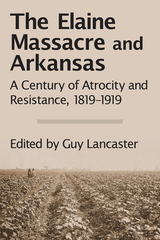
We cannot fully understand what happened at Elaine without examining the one hundred years leading up to the massacre. An analysis of the years from 1819, when Arkansas officially became an American territory, to 1919 provides the historical foundation for understanding one of the bloodiest manifestations of racial violence in U.S. history.
During the antebellum years, slaveholders grew paranoid about possible “insurrections,” and after the Civil War and Emancipation, these fears lingered and led to numerous atrocities long before Elaine. At the same time, African Americans—particularly fieldworkers—worked to organize themselves to resist oppression, setting the stage for the farmers’ union that was the target for mob and military wrath during the Elaine Massacre.
These essays provide the larger history necessary for understanding what happened at Elaine in 1919—and thus provide a window into the current state of Arkansas and the nation at large. Contributors include Richard Buckelew, Nancy Snell Griffith, Matthew Hild, Adrienne Jones, Kelly Houston Jones, Cherisse Jones-Branch, Brian K. Mitchell, William H. Pruden III, and Steven Teske.
The End of White World Supremacy explores a complex issue— integration of Blacks into White America—from multiple perspectives: within the United States, globally, and in the context of movements for social justice. Roderick Bush locates himself within a tradition of African American activism that goes back at least to W.E.B. Du Bois. In so doing, he communicates between two literatures—worldsystems analysis and radical Black social movement history—and sustains the dialogue throughout the book.
Bush explains how racial troubles in the U.S. are symptomatic of the troubled relationship between the white and dark worlds globally. Beginning with an account of white European dominance leading to capitalist dominance by White America, The End of White World Supremacy ultimately wonders whether, as Myrdal argued in the 1940s, the American creed can provide a pathway to break this historical conundrum and give birth to international social justice.
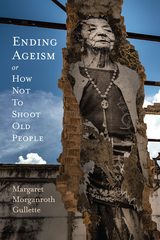
When the term “ageism” was coined in 1969, many problems of exclusion seemed resolved by government programs like Social Security and Medicare. As people live longer lives, today’s great demotions of older people cut deeper into their self-worth and human relations, beyond the reach of law or public policy. In Ending Ageism, or How Not to Shoot Old People, award-winning writer and cultural critic Margaret Morganroth Gullette confronts the offenders: the ways people aging past midlife are portrayed in the media, by adult offspring; the esthetics and politics of representation in photography, film, and theater; and the incitement to commit suicide for those with early signs of “dementia.”
In this original and important book, Gullette presents evidence of pervasive age-related assaults in contemporary societies and their chronic affects. The sudden onset of age-related shaming can occur anywhere—the shove in the street, the cold shoulder at the party, the deaf ear at the meeting, the shut-out by the personnel office or the obtuseness of a government. Turning intimate suffering into public grievances, Ending Ageism, Or How Not to Shoot Old People effectively and beautifully argues that overcoming ageism is the next imperative social movement of our time.
About the cover image:
This elegant, dignified figure--Leda Machado, a Cuban old enough to have seen the Revolution--once the center of a vast photo mural, is now a fragment on a ruined wall. Ageism tears down the structures that all humans need to age well; to end it, a symbol of resilience offers us all brisk blue-sky energy.
“Leda Antonia Machado” from “Wrinkles of the City, 2012.”
Piotr Trybalski / Trybalski.com. Courtesy of the artist.
A Declaration of Grievances
"A Declaration of Grievances" was written by Margaret Morganroth Gullette and is excerpted from her book Ending Ageism, or How Not to Shoot Old People (2017, Rutgers University Press). The poster was designed by Carolyn Kerchof.
- A Declaration of Grievances (in English): https://d3tto5i5w9ogdd.cloudfront.net/wp-content/uploads/2023/01/15175130/A-Declaration-of-Grievances_Eng.pdf
- A Declaration of Grievances (in Spanish): https://d3tto5i5w9ogdd.cloudfront.net/wp-content/uploads/2023/01/15175131/A-Declaration-of-Grievances_Spanish.pdf
- A Declaration of Grievances (in French): https://d3tto5i5w9ogdd.cloudfront.net/wp-content/uploads/2023/01/15175130/A-Declaration-of-Grievances_French.pdf
- A Declaration of Grievances (in German): https://d3tto5i5w9ogdd.cloudfront.net/wp-content/uploads/2023/01/15175131/A-Declaration-of-Grievances_German.pdf
Print the PDF (make sure to click "fit to page") and hang the Declaration up in your home or place of work. Please share this link with other people you know who care about the rights of older persons. Share on social media with the hashtags #ADeclarationOfGrievances and #EndingAgeismGullette.
For more information, an excerpt, links to reviews, and special offers on this book, go to: https://www.rutgersuniversitypress.org/ending-ageism
Related website: (https://www.brandeis.edu/wsrc/scholars/profiles/gullette.html)
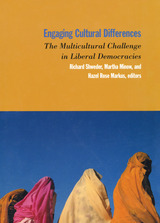

An intensely personal, and philosophical, account of why white America’s racial unconscious is not so unconscious
An Essay for Ezra is a critique of terror that begins but by no means ends with the presidency of Donald J. Trump. A father addresses his son and a boy shares his observations in a dynamic dialogistic exchange that is a commentary of and for its time, taking the measure of racial terror and of white supremacy both in our moment and as a historical phenomenon.
Framed through the experiences of the author’s biracial son, An Essay for Ezra is intensely personal while also powerfully universal. Drawing on the social and political thought of James Baldwin and Martin Luther King, Grant Farred examines the temptation and the perils of essentialism and the need to discriminate—to engage the black mind as much as the black body. With that dialectic as his starting point, Farred engages the ideas of Jameson, Barthes, Derrida, Adorno, Kant, and other thinkers to derive an ethics of being in our time of social peril. His antiessentialist racial analysis is salient, especially when he deploys Dave Chappelle as a counterpoint to Baldwin—and Chappelle’s brilliant comic philosophic voice jabs at both racial and gender identity.
Standing apart for its willingness to explore terror in all its ambivalence, this theoretical reflection on racism, knowledge, ethics, and being in our neofascist present brings to bear the full weight of philosophical inquiry and popular cultural critique on black life in the United States.
Challenging the dominant view of Hawai’i as a “melting pot paradise”—a place of ethnic tolerance and equality—Jonathan Okamura examines how ethnic inequality is structured and maintained in island society. He finds that ethnicity, not race or class, signifies difference for Hawaii’s people and therefore structures their social relations. In Hawai’i, residents attribute greater social significance to the presumed cultural differences between ethnicities than to more obvious physical differences, such as skin color.
According to Okamura, ethnicity regulates disparities in access to resources, rewards, and privileges among ethnic groups, as he demonstrates in his analysis of socioeconomic and educational inequalities in the state. He shows that socially and economically dominant ethnic groups—Chinese Americans, Japanese Americans, and Whites—have stigmatized and subjugated the islands’ other ethnic groups—especially Native Hawaiians, Filipino Americans, and Samoans. He demonstrates how ethnic stereotypes have been deployed against ethnic minorities and how these groups have contested their subordinate political and economic status by articulating new identities for themselves.

European Others offers an interrogation into the position of racialized communities in the European Union, arguing that the tension between a growing nonwhite, non-Christian population and insistent essentialist definitions of Europeanness produces new forms of identity and activism. Moving beyond disciplinary and national limits, Fatima El-Tayeb explores structures of resistance, tracing a Europeanization from below in which migrant and minority communities challenge the ideology of racelessness that places them firmly outside the community of citizens.
Using a notable variety of sources, from drag performances to feminist Muslim activism and Euro hip-hop, El-Tayeb draws on the largely ignored archive of vernacular culture central to resistance by minority youths to the exclusionary nationalism that casts them as threatening outcasts. At the same time, she reveals the continued effect of Europe’s suppressed colonial history on the representation of Muslim minorities as the illiberal Other of progressive Europe.
Presenting a sharp analysis of the challenges facing a united Europe seen by many as a model for twenty-first-century postnational societies, El-Tayeb combines theoretical influences from both sides of the Atlantic to lay bare how Europeans of color are integral to the continent’s past, present, and, inevitably, its future.
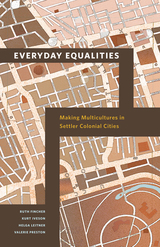
A timely new look at coexisting without assimilating in multicultural cities
If city life is a “being together of strangers,” what forms of being together should we strive for in cities with ethnic and racial diversity? Everyday Equalities seeks evidence of progressive political alternatives to racialized inequality that are emerging from everyday encounters in Los Angeles, Melbourne, Sydney, and Toronto—settler colonial cities that, established through efforts to dispossess and eliminate indigenous societies, have been destinations for waves of immigrants from across the globe ever since.
Everyday Equalities finds such alternatives being developed as people encounter one another in the process of making a home, earning a living, moving around the city, and forming collective actions or communities. Here four leading scholars in critical urban geography come together to deliver a powerful and cohesive message about the meaning of equality in contemporary cities. Drawing on both theoretical reflection and urban ethnographic research, they offer the formulation “being together in difference as equals” as a normative frame to reimagine the meaning and pursuit of equality in today’s urban multicultures.
As the examples in Everyday Equalities indicate, much emotional labor, combined with a willingness to learn from each other, negotiate across differences, and agitate for change goes into constructing environments that foster being together in difference as equals. Importantly, the authors argue, a commitment to equality is not only a hope for a future city but also a way of being together in the present.
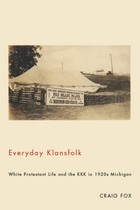
In 1920s Middle America, the Ku Klux Klan gained popularity not by appealing to the fanatical fringes of society, but by attracting the interest of “average” citizens. During this period, the Klan recruited members through the same unexceptional channels as any other organization or club, becoming for many a respectable public presence, a vehicle for civic activism, or the source of varied social interaction. Its diverse membership included men and women of all ages, occupations, and socio-economic standings. Although surviving membership records of this clandestine organization have proved incredibly rare, Everyday Klansfolk uses newly available documents to reconstruct the life and social context of a single grassroots unit in Newaygo County, Michigan. A fascinating glimpse behind the mask of America’s most notorious secret order, this absorbing study sheds light on KKK activity and membership in Newaygo County, and in Michigan at large, during the brief and remarkable peak years of its mass popular appeal.

How explosions across history reveal the violence embedded in San Francisco’s landscape
Offering a novel approach to contemporary landscape studies, Explosivity unearths the hidden legacies of violence that have shaped the physical and cultural environment of the San Francisco Bay area. As he sifts through the historical debris of previous centuries, Javier Arbona-Homar analyzes a series of explosions that took place between 1866 and 2011 to call attention to the scattered remnants of militarism and racialized capitalism embedded in the region’s geography.
From incidents involving nineteenth-century explosives manufacturing and World War II munitions loading to radical activism and contemporary television productions, Arbona-Homar locates a pattern of historical violence that refocuses the broader racial and colonial context. Citing the material, social, and political conditions that gave rise to these disparate episodes, he reviews the historic erasure of those driving forces and puts forth alternative possibilities for how such disasters might be memorialized.
Synthesizing a diverse set of field research methods, including oral histories and site visits, and supplemented by specially commissioned landscape photographs by Andrea Gaffney, Explosivity presents a radical exercise in the exposition of public memory.
Retail e-book files for this title are screen-reader friendly with images accompanied by short alt text and/or extended descriptions.
READERS
Browse our collection.
PUBLISHERS
See BiblioVault's publisher services.
STUDENT SERVICES
Files for college accessibility offices.
RECENTLY PUBLISHED


UChicago Accessibility Resources
home | accessibility | search | about | contact us
BiblioVault ® 2001 - 2026
The University of Chicago Press