
 A SCHOLARLY BOOK REPOSITORY
69 start with F start with F
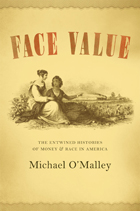
From colonial history to the present, Americans have passionately, even violently, debated the nature and the character of money. They have painted it and sung songs about it, organized political parties around it, and imprinted it with the name of God—all the while wondering: is money a symbol of the value of human work and creativity, or a symbol of some natural, intrinsic value?
In Face Value, Michael O’Malley provides a deep history and a penetrating analysis of American thinking about money and the ways that this ambivalence unexpectedly intertwines with race. Like race, money is bound up in questions of identity and worth, each a kind of shorthand for the different values of two similar things. O’Malley illuminates how these two socially constructed hierarchies are deeply rooted in American anxieties about authenticity and difference.
In this compelling work of cultural history, O’Malley interprets a stunning array of historical sources to evaluate the comingling of ideas about monetary value and social distinctions. More than just a history, Face Value offers us a new way of thinking about the present culture of coded racism, gold fetishism, and economic uncertainty.
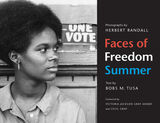
Witness the faces that defined a movement for freedom and equality
The old adage “One picture is worth ten thousand words” is definitely true for Faces of Freedom Summer. There are simply not enough words to describe the period in our history that is recorded by the pictures in this book.
As this book afirms, the resurgence of overt activities by hate groups—both the old traditional ones (e.g., the Ku Klux Klan) and the new ones (e.g., the Skin Heads)—however much the hard work and sacrifices of the modern civil rights movement humanized American society, much still remains to be done. The modern civil rights movement associated with the 1960s was not in vain, yet it did not eradicate from our society the evils of racism and sexism. While we activists made the United States more of an open society than it has ever been in its history, our vision and desire for the beloved community did not reach into all sectors of American society. “Freedom,” it has been said, “is a constant struggle, a work of eternal vigilance.”
Faces of Freedom Summer brings to life that there was such a time and there were such people and, if such a people were once, then they are still among us. Yet, they may only become aware of themselves when they are confronted with visible evidence, such as the evidence contained in the pictures of Herbert Randall.

A microcosm of the history of American slavery in a collection of the most important primary and secondary readings on slavery at Georgetown University and among the Maryland Jesuits
Georgetown University’s early history, closely tied to that of the Society of Jesus in Maryland, is a microcosm of the history of American slavery: the entrenchment of chattel slavery in the tobacco economy of the Chesapeake in the seventeenth and eighteenth centuries; the contradictions of liberty and slavery at the founding of the United States; the rise of the domestic slave trade to the cotton and sugar kingdoms of the Deep South in the nineteenth century; the political conflict over slavery and its overthrow amid civil war; and slavery’s persistent legacies of racism and inequality. It is also emblematic of the complex entanglement of American higher education and religious institutions with slavery.
Important primary sources drawn from the university's and the Maryland Jesuits' archives document Georgetown’s tangled history with slavery, down to the sizes of shoes distributed to enslaved people on the Jesuit plantations that subsidized the school. The volume also includes scholarship on Jesuit slaveholding in Maryland and at Georgetown, news coverage of the university’s relationship with slavery, and reflections from descendants of the people owned and sold by the Maryland Jesuits.
These essays, articles, and documents introduce readers to the history of Georgetown's involvement in slavery and recent efforts to confront this troubling past. Current efforts at recovery, repair, and reconciliation are part of a broader contemporary moment of reckoning with American history and its legacies. This reader traces Georgetown’s “Slavery, Memory, and Reconciliation Initiative” and the role of universities, which are uniquely situated to conduct that reckoning in a constructive way through research, teaching, and modeling thoughtful, informed discussion.
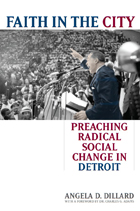
“The dynamics of Black Theology were at the center of the ‘Long New Negro Renaissance,’ triggered by mass migrations to industrial hubs like Detroit. Finally, this crucial subject has found its match in the brilliant scholarship of Angela Dillard. No one has done a better job of tracing those religious roots through the civil rights–black power era than Professor Dillard.”
—Komozi Woodard, Professor of History, Public Policy & Africana Studies at Sarah Lawrence College and author of A Nation within a Nation: Amiri Baraka (LeRoi Jones) and Black Power Politics
“Angela Dillard recovers the long-submerged links between the black religious and political lefts in postwar Detroit. . . . Faith in the City is an essential contribution to the growing literature on the struggle for racial equality in the North.”
—Thomas J. Sugrue, University of Pennsylvania, author of The Origins of the Urban Crisis: Race and Inequality in Postwar Detroit
Spanning more than three decades and organized around the biographies of Reverends Charles A. Hill and Albert B. Cleage Jr., Faith in the City is a major new exploration of how the worlds of politics and faith merged for many of Detroit’s African Americans—a convergence that provided the community with a powerful new voice and identity. While other religions have mixed politics and creed, Faith in the City shows how this fusion was and continues to be particularly vital to African American clergy and the Black freedom struggle.
Activists in cities such as Detroit sustained a record of progressive politics over the course of three decades. Angela Dillard reveals this generational link and describes what the activism of the 1960s owed to that of the 1930s. The labor movement, for example, provided Detroit’s Black activists, both inside and outside the unions, with organizational power and experience virtually unmatched by any other African American urban community.
Angela D. Dillard is Associate Professor of Afroamerican and African Studies at the University of Michigan. She specializes in American and African American intellectual history, religious studies, critical race theory, and the history of political ideologies and social movements in the United States.
Black civil rights leaders have long supported ethnic identity politics and prioritized the integration of political institutions, and seldom has that strategy been questioned. In False Black Power?, Jason L. Riley takes an honest, factual look at why increased black political power has not paid off in the ways that civil rights leadership has promised.
Recent decades have witnessed a proliferation of black elected officials, culminating in the historic presidency of Barack Obama. However, racial gaps in employment, income, homeownership, academic achievement, and other measures not only continue but in some cases have even widened. While other racial and ethnic groups in America have made economic advancement a priority, the focus on political capital for blacks has been a disadvantage, blocking them from the fiscal capital that helped power upward mobility among other groups.
Riley explains why the political strategy of civil rights leaders has left so many blacks behind. The key to black economic advancement today is overcoming cultural handicaps, not attaining more political power. The book closes with thoughtful responses from key thought leaders Glenn Loury and John McWhorter.

Brings to life the struggle for Black suffrage in nineteenth-century Ohio
In False Promises, the fight for Black voting rights in Ohio comes alive through narratives of men of color who defied the state’s nineteenth-century restrictions on suffrage. Though ratification of the Fifteenth Amendment ostensibly extended the franchise, state election laws still forced men of color into a perilous struggle for full citizenship. Ric S. Sheffield depicts their courage and determination, revealing their humanity through stories of sacrifice, resistance, and hope.
Drawing on Saidiya Hartman’s concept of critical fabulation, Sheffield weaves together historical records with imaginative reconstructions of dialogue, setting, and descriptive elements beyond the dusty courthouse pages. Grounded in archival evidence yet reimagined to fill in the silences, these stories recount the lived experiences of those who risked everything to exercise their right to vote.
False Promises also connects these historical battles to the present, illustrating how voter-suppression tactics in today’s Ohio have roots in the racial exclusions of the nineteenth century. By exposing the enduring legacy of white supremacist policies, the book challenges the widespread misconception that racial disenfranchisement was solely a southern problem. Ohio’s complex racial history—noted for its role in the Underground Railroad but also for its repressive Black Laws—also includes a fierce and ongoing struggle over the right to vote. Through compelling storytelling, historical analysis, and a reclamation of voices lost to history, False Promises urges readers to reconsider their understanding of democracy and the right to vote.
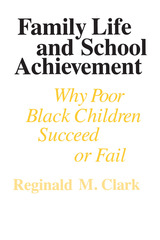
To support his contentions, Clark offers ten intimate portraits of Black families in Chicago. Visiting the homes of poor one- and two-parent families of high and low achievers, Clark made detailed observations on the quality of home life, noting how family habits and interactions affect school success and what characteristics of family life provide children with "school survival skills," a complex of behaviors, attitudes, and knowledge that are the essential elements in academic success.
Clark's conclusions lead to exciting implications for educational policy. If school achievement is not dependent on family structure or income, parents can learn to inculcate school survival skills in their children. Clark offers specific suggestions and strategies for use by teachers, parents, school administrators, and social service policy makers, but his work will also find an audience in urban anthropology, family studies, and Black studies.
In this penetrating critical analysis of Louis Farrakhan's ascent to national influence, Robert Singh argues that the minister's rise to prominence is a function of race and reaction in contemporary America. Singh probes the origins and significance of Farrakhan in American politics.
Drawing on published and unpublished records, personal interviews, and Farrakhan's writings and speeches, Singh places Farrakhan expressly within the "paranoid style" of such reactionaries as Jesse Helms and Joseph McCarthy. Examining Farrakhan's biographical details, religious beliefs, political strategies, and relative influence, Singh argues that Farrakhan is an extreme conservative who exploits both black-white divisions and conflicts within the black community for personal advancement.
Singh proposes that Farrakhan's complex appeal to African-Americans is based on his ability to orchestrate the diffuse forces of African-American protest against the status quo. Paradoxically, says Singh, Farrakhan has achieved his position in part by positioning himself against most African-American political leaders, a tactic made possible by the extent to which black American politics now displays the same basic features as American politics in general. By stoking the fires of fear and hatred yet effecting no real changes, Farrakhan poses a greater threat to black Americans than to whites.
The Farrakhan Phenomenon is written in a clear, accessible style that will appeal to general readers concerned about race relations as well as to scholars of American history and politics. It reveals a shrewd opportunist who has capitalized on America's continuing failure to deal with its serious and abiding race problems.
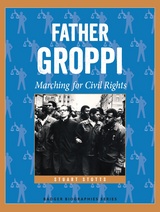
Father Groppi Marched to Change Milwaukee
"Father Groppi: Marching for Civil Rights" tells the story of Father James Groppi, a Catholic priest from Milwaukee, Wis., who stood up for civil rights in the 1960s and 1970s.
This important new addition to the Badger Biographies series for young readers also tells about a turbulent time in Wisconsin history and sheds light on the civil rights movement and its place in the North.
Growing up on the south side of Milwaukee as the son of Italian immigrants, young James Groppi learned early on what it felt like to be made fun of just because of who you are, and he learned to respect people from other races and ethnic groups. Later, while studying to become a priest, he saw the discrimination African Americans faced. It made him angry, and he vowed to do whatever he could to fight racism.
Father Groppi marched with Dr. Martin Luther King Jr. and other leaders of the civil rights movement. But he knew there was work to be done in his own city. In Milwaukee, he teamed up with the NAACP and other organizations, protesting discrimination and segregation wherever they saw it. It wasn't always easy, and Father Groppi and the other civil rights workers faced great challenges.
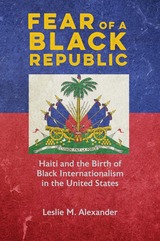
A bold exploration of Black internationalism’s origins, Fear of a Black Republic links the Haitian revolution to the global Black pursuit of liberation, justice, and social equality.

practice. Stewart Tolnay and E. M. Beck empirically test competing explanations of the causes of lynching, using U.S. Census and historical voting data and a newly constructed inventory of southern lynch victims. Among their surprising findings: lynching responded to fluctuations in the price of cotton, decreasing in frequency when prices rose and increasing when they fell.

The familiar story of Delta blues musician Robert Johnson, who sold his soul to the devil at a Mississippi crossroads in exchange for guitar virtuosity, and the violent stereotypes evoked by legendary blues “bad men” like Stagger Lee undergird the persistent racial myths surrounding “authentic” blues expression. Fictional Blues unpacks the figure of the American blues performer, moving from early singers such as Ma Rainey and Big Mama Thornton to contemporary musicians such as Amy Winehouse, Rhiannon Giddens, and Jack White to reveal that blues makers have long used their songs, performances, interviews, and writings to invent personas that resist racial, social, economic, and gendered oppression.
Using examples of fictional and real-life blues artists culled from popular music and literary works from writers such as Walter Mosley, Alice Walker, and Sherman Alexie, Kimberly Mack demonstrates that the stories blues musicians construct about their lives (however factually slippery) are inextricably linked to the “primary story” of the narrative blues tradition, in which autobiography fuels musicians' reclamation of power and agency.
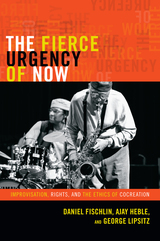
Improvisation is the creation and development of new, unexpected, and productive cocreative relations among people. It cultivates the capacity to discern elements of possibility, potential, hope, and promise where none are readily apparent. Improvisers work with the tools they have in the arenas that are open to them. Proceeding without a written score or script, they collaborate to envision and enact something new, to enrich their experience in the world by acting on it and changing it. By analyzing the dynamics of particular artistic improvisations, mostly by contemporary American jazz musicians, the authors reveal improvisation as a viable and urgently needed model for social change. In the process, they rethink politics, music, and the connections between them.
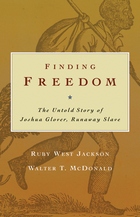
"Shall a man be dragged back to Slavery from our Free Soil, without an open trial of his right to Liberty?" —Handbill circulated in Milwaukee on March 11, 1854
In Finding Freedom, Ruby West Jackson and Walter T. McDonald provide readers with the first narrative account of the life of Joshua Glover, the runaway slave who was famously broken out of jail by thousands of Wisconsin abolitionists in 1854. Employing original research, the authors chronicle Glover's days as a slave in St. Louis, his violent capture and thrilling escape in Milwaukee, his journey on the Underground Railroad, and his 33 years of freedom in rural Canada.
While Jackson and McDonald demonstrate how the catalytic "Glover incident" captured national attention—pitting the proud state of Wisconsin against the Supreme Court and adding fuel to the pre-Civil War fire—their primary focus is on the ordinary citizens, both black and white, with whom Joshua Glover interacted. A bittersweet story of bravery and compassion, Finding Freedom provides the first full picture of the man for whom so many fought, and around whom so much history was made.
https://manifold.ecds.emory.edu/projects/finding-god-in-all-the-black-places
(https://dhjhkxawhe8q4.cloudfront.net/rup-wp-v2/wp-content/uploads/2025/01/28132142/9781978839809.pdf)
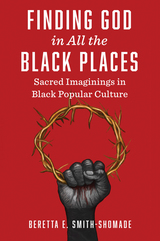
In Finding God in All the Black Places, Beretta E. Smith-Shomade contends that Black spirituality and Black church religiosity are the critical crux of Black popular culture. She argues that cultural, community, and social support live within the Black church and that spirit, art, and progress are deeply entwined and seal this connection. Including the work of artists such as Mary J. Blige, D’Angelo, Erykah Badu, Prince, Spike Lee, and Oprah Winfrey, the book examines contemporary Black television, film, music and digital culture to demonstrate the role, impact, and dominance of spirituality and religion in Black popular culture. Smith-Shomade believes that acknowledging and comprehending the foundations of Black spirituality and Black church religiosity within Black popular culture provide a way for viewers, listeners, and users not only to endure but also to revitalize.
Much has been written about the Little Rock School Crisis of 1957, but very little has been devoted to the following year—the Lost Year, 1958–59—when Little Rock schools were closed to all students, both black and white. Finding the Lost Year is the first book to look at the unresolved elements of the school desegregation crisis and how it turned into a community crisis, when policymakers thwarted desegregation and challenged the creation of a racially integrated community and when competing groups staked out agendas that set Arkansas’s capital on a path that has played out for the past fifty years.
In Little Rock in 1958, 3,665 students were locked out of a free public education. Teachers’ lives were disrupted, but students’ lives were even more confused. Some were able to attend schools outside the city, some left the state, some joined the military, some took correspondence courses, but fully 50 percent of the black students went without any schooling. Drawing on personal interviews with over sixty former teachers and students, black and white, Gordy details the long-term consequences for students affected by events and circumstances over which they had little control.
“Fifty years ago segregationists trying to keep black students out of Little Rock Central High inadvertently broke up one of the country’s greatest football dynasties. . . . Wait a minute. . . . Who said you can’t have a high school football team just because you don’t have a high school? Canceling football, Faubus decreed, would be ‘a cruel and unnecessary blow to the children.’ O.K. then, everyone agreed. Play ball!”
—“Blinded by History,” Sports Illustrated
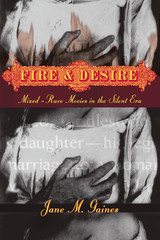
Fire and Desire offers a penetrating look at the black independent film movement during the silent period. Gaines traces the profound influence that D. W. Griffith's racist epic The Birth of a Nation exerted on black filmmakers such as Oscar Micheaux, the director of the newly recovered Within Our Gates. Beginning with What Happened in the Tunnel, a movie that played with race and sex taboos by featuring the first interracial kiss in film, Gaines also explores the cinematic constitution of self and other through surprise encounters: James Baldwin sees himself in the face of Bette Davis, family resemblance is read in Richard S. Robert's portrait of an interracial family, and black film pioneer George P. Johnson looks back on Micheaux.
Given the impossibility of purity and the co-implication of white and black, Fire and Desire ultimately questions the category of "race movies" itself.
WINNER, LILLIAN SMITH AWARD
WINNER, JAMES F. SULZBY, JR. AWARD
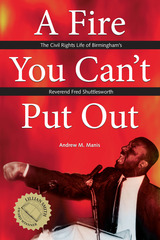
The fire of freedom that changed Birmingham—and America.
When Fred Shuttlesworth suffered only a bump on the head in the 1956 bombing of his home, members of his church called it a miracle. Shuttlesworth took it as a sign that God would protect him on the mission that had made him a target that night. Standing in front of his demolished home, Shuttlesworth vigorously renewed his commitment to integrate Birmingham's buses, lunch counters, police force, and parks. The incident transformed him, in the eyes of Birmingham's blacks, from an up-and-coming young minister to a virtual folk hero and, in the view of white Birmingham, from obscurity to rabble-rouser extraordinaire.
From his 1956 founding of the Alabama Christian Movement for Human Rights through the historic demonstrations of 1963, driven by a sense of divine mission, Shuttlesworth pressured Jim Crow restrictions in Birmingham with radically confrontational acts of courage. His intensive campaign pitted him against the staunchly segregationist police commissioner Eugene "Bull" Connor and ultimately brought him to the side of Martin Luther King Jr. and to the inner chambers of the Kennedy White House.
First published in 1999, Andrew Manis's award-winning biography of "one of the nation's most courageous freedom fighters" demonstrates compellingly that Shuttleworth's brand of fiery, outspoken confrontation derived from his prophetic understanding of the pastoral role. Civil rights activism was tantamount to salvation in his understanding of the role of Christian minister.
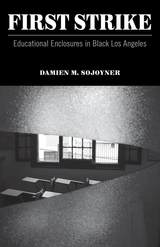
California is a state of immense contradictions. Home to colossal wealth and long portrayed as a bastion of opportunity, it also has one of the largest prison populations in the United States and consistently ranks on the bottom of education indexes. Taking a unique, multifaceted insider’s perspective, First Strike delves into the root causes of its ever-expansive prison system and disastrous educational policy.
Recentering analysis of Black masculinity beyond public rhetoric, First Strike critiques the trope of the “school-to-prison pipeline” and instead explores the realm of public school as a form of “enclosure” that has influenced the schooling (and denial of schooling) and imprisonment of Black people in California. Through a fascinating ethnography of a public school in Los Angeles County, and a “day in the life tour” of the effect of prisons on the education of Black youth, Damien M. Sojoyner looks at the contestation over education in the Black community from Reconstruction to the civil rights and Black liberation movements of the past three decades.
Policy makers, school districts, and local governments have long known that there is a relationship between high incarceration rates and school failure. First Strike is the first book that demonstrates why that connection exists and shows how school districts, cities and states have been complicit and can reverse a disturbing and needless trend. Rather than rely upon state-sponsored ideological or policy-driven models that do nothing more than to maintain structures of hierarchal domination, it allows us to resituate our framework of understanding and begin looking for solutions in spaces that are readily available and are immersed in radically democratic social visions of the future.
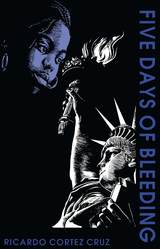
Taunted by the violent character "Chops," Zu-Zu sings to keep her spirit alive in New York City's Central Park. Zu-Zu and the novel's narrator have a relationship which is transformed into a stormy, dreamlike urban affair. Their oppressive situation is depicted through multiple collages of sound and image, a funky mix of original and sampled cuts, both literary and musical.
The social chaos around them is remixed in a text consisting of street beats, classic breaks, and fresh-cool cadences. Bleeding proves that the loudest noises of moral panic can be gunshots, to be sure, but they can also be the very human sound of the music of hope and despair.
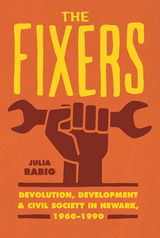
Rabig argues that fixers play dual roles. They support resistance, but also mediation; they fight for reform, but also more radical and far-reaching alternatives; they rally others to a collective cause, but sometimes they broker factions. Fixers reflect longer traditions of organizing while responding to the demands of their times. In so doing, they end up fixing (like a fixative) a new and enduring pattern of activist strategies, reforms, and institutional expectations—a pattern we continue to see today.
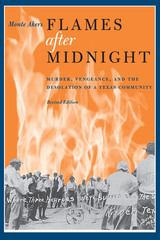
What happened in Kirven, Texas, in May 1922, has been forgotten by the outside world. It was a coworker's whispered words, "Kirven is where they burned the [Negroes]," that set Monte Akers to work at discovering the true story behind a young white woman's brutal murder and the burning alive of three black men who were almost certainly innocent of it. This was followed by a month-long reign of terror as white men killed blacks while local authorities concealed the real identity of the white probable murderers and allowed them to go free.
Writing nonfiction with the skill of a novelist, Akers paints a vivid portrait of a community desolated by race hatred and its own refusal to face hard truths. He sets this tragedy within the story of a region prospering from an oil boom but plagued by lawlessness, and traces the lynching's repercussions down the decades to the present day. In the new epilogue, Akers adds details that have come to light as a result of the book's publication, including an eyewitness account of the burnings from an elderly man who claimed to have castrated two of the men before they were lynched.
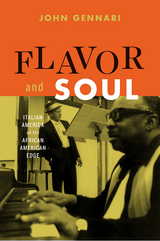
In Flavor and Soul, John Gennari spotlights this affinity, calling it “the edge”—now smooth, sometimes serrated—between Italian American and African American culture. He argues that the edge is a space of mutual emulation and suspicion, a joyous cultural meeting sometimes darkened by violent collision. Through studies of music and sound, film and media, sports and foodways, Gennari shows how an Afro-Italian sensibility has nourished and vitalized American culture writ large, even as Italian Americans and African Americans have fought each other for urban space, recognition of overlapping histories of suffering and exclusion, and political and personal rispetto.
Thus, Flavor and Soul is a cultural contact zone—a piazza where people express deep feelings of joy and pleasure, wariness and distrust, amity and enmity. And it is only at such cultural edges, Gennari argues, that America can come to truly understand its racial and ethnic dynamics.

The youngest of twenty children of sharecroppers in rural Mississippi, Fannie Lou Hamer witnessed throughout her childhood the white cruelty, political exclusion, and relentless economic exploitation that defined African American existence in the Delta.
In this intimate biography, Chana Kai Lee documents Hamer's lifelong crusade to empower the poor through collective action, her rise to national prominence as a civil rights activist, and the personal costs of her ongoing struggle to win a political voice and economic self-sufficiency for blacks in the segregated South. Lee looks at Hamer's early work as a field secretary for the Student Nonviolent Coordinating Committee in Mississippi, her dramatic appearance at the 1964 Democratic National Convention, and her ongoing work as a militant grassroots leader in her own community.
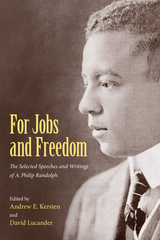
This volume documents Randolph's life and work through his own writings. The editors have combed through the files of libraries, manuscript collections, and newspapers, selecting more than seventy published and unpublished pieces that shed light on Randolph's most significant activities. The book is organized thematically around his major interests—dismantling workplace inequality, expanding civil rights, confronting racial segregation, and building international coalitions. The editors provide a detailed biographical essay that helps to situate the speeches and writings collected in the book. In the absence of an autobiography, this volume offers the best available presentation of Randolph's ideas and arguments in his own words.
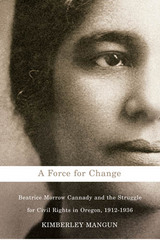
A Force for Change is the first full-length study of the life and work of one of Oregon’s most dynamic civil rights activists, African American journalist Beatrice Morrow Cannady. Between 1912 and 1936, Cannady tirelessly promoted interracial goodwill and fought segregation and discrimination.
She gave hundreds of lectures to high school and college students and shared her message with radio listeners across the Pacific Northwest. She was assistant editor, and later publisher, of The Advocate, Oregon’s largest African American newspaper. Cannady was the first black woman to graduate from law school in Oregon, and the first to run for state representative. She held interracial teas in her home in Northeast Portland and protested repeated showings of the racist film The Birth of a Nation. And when the Ku Klux Klan swept into Oregon, she urged the governor to act quickly to protect black Oregonians’ right to live and work without fear. Despite these accomplishments—and many more during her twenty-five-year career—Beatrice Cannady fell into obscurity when she left Oregon in about 1938.
A Force for Change illuminates Cannady’s important role in advocating for better race relations in Oregon in the early decades of the twentieth century. It describes her encounters with the period’s leading black artists, editors, politicians, and intellectuals, including W.E.B. Du Bois, Langston Hughes, A. Philip Randolph, Oscar De Priest, Roland Hayes, and James Weldon Johnson. It dispels the myth that African Americans played little part in Oregon’s history and enriches our understanding of the black experience in Oregon.
A Force for Change is an invaluable resource for students and scholars of women’s history, gender studies, African American history, journalism history, and Pacific Northwest history. It belongs on the shelf of any reader interested in a richer understanding of the civil rights movement in Oregon and across the country.
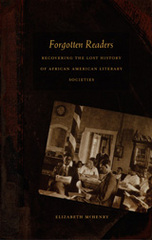
Forgotten Readers expands our definition of literacy and urges us to think of literature as broadly as it was conceived of in the nineteenth century. Elizabeth McHenry delves into archival sources, including the records of past literary societies and the unpublished writings of their members. She examines particular literary associations, including the Saturday Nighters of Washington, D.C., whose members included Jean Toomer and Georgia Douglas Johnson. She shows how black literary societies developed, their relationship to the black press, and the ways that African American women’s clubs—which flourished during the 1890s—encouraged literary activity. In an epilogue, McHenry connects this rich tradition of African American interest in books, reading, and literary conversation to contemporary literary phenomena such as Oprah Winfrey’s book club.
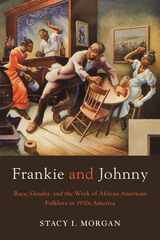
Winner, Wayland D. Hand Prize, American Folklore Society, 2018
Originating in a homicide in St. Louis in 1899, the ballad of “Frankie and Johnny” became one of America’s most familiar songs during the first half of the twentieth century. It crossed lines of race, class, and artistic genres, taking form in such varied expressions as a folk song performed by Huddie Ledbetter (Lead Belly); a ballet choreographed by Ruth Page and Bentley Stone under New Deal sponsorship; a mural in the Missouri State Capitol by Thomas Hart Benton; a play by John Huston; a motion picture, She Done Him Wrong, that made Mae West a national celebrity; and an anti-lynching poem by Sterling Brown.
In this innovative book, Stacy I. Morgan explores why African American folklore—and “Frankie and Johnny” in particular—became prized source material for artists of diverse political and aesthetic sensibilities. He looks at a confluence of factors, including the Harlem Renaissance, the Great Depression, and resurgent nationalism, that led those creators to engage with this ubiquitous song. Morgan’s research uncovers the wide range of work that artists called upon African American folklore to perform in the 1930s, as it alternately reinforced and challenged norms of race, gender, and appropriate subjects for artistic expression. He demonstrates that the folklorists and creative artists of that generation forged a new national culture in which African American folk songs featured centrally not only in folk and popular culture but in the fine arts as well.
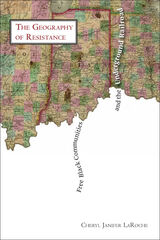
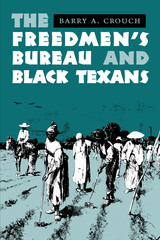

Friends of the Dallas Public Library Award, 2006
Best Book on East Texas, East Texas Historical Association, 2007
In the decades following the Civil War, nearly a quarter of African Americans achieved a remarkable victory—they got their own land. While other ex-slaves and many poor whites became trapped in the exploitative sharecropping system, these independence-seeking individuals settled on pockets of unclaimed land that had been deemed too poor for farming and turned them into successful family farms. In these self-sufficient rural communities, often known as "freedom colonies," African Americans created a refuge from the discrimination and violence that routinely limited the opportunities of blacks in the Jim Crow South.
Freedom Colonies is the first book to tell the story of these independent African American settlements. Thad Sitton and James Conrad focus on communities in Texas, where blacks achieved a higher percentage of land ownership than in any other state of the Deep South. The authors draw on a vast reservoir of ex-slave narratives, oral histories, written memoirs, and public records to describe how the freedom colonies formed and to recreate the lifeways of African Americans who made their living by farming or in skilled trades such as milling and blacksmithing. They also uncover the forces that led to the decline of the communities from the 1930s onward, including economic hard times and the greed of whites who found legal and illegal means of taking black-owned land. And they visit some of the remaining communities to discover how their independent way of life endures into the twenty-first century.
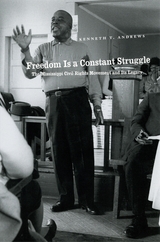
Freedom Is a Constant Struggle is also the first book of its kind to detail the activities of white supremacists in Mississippi, revealing how white repression and intimidation sparked black activism and simultaneously undermined the movement's ability to achieve far-reaching goals. Andrews shows that the federal government's role was important but reactive as federal actors responded to the sustained struggles between local movements and their opponents. He tracks the mobilization of black activists by the NAACP, the creation of Freedom Summer, efforts to galvanize black voters, the momentous desegregation of public schools and the rise of all-white private academies, and struggles over the economic development of black communities. From this complex history, Andrews shows how the civil rights movement built innovative organizations and campaigns that empowered local leadership and had a lasting legacy in Mississippi and beyond.
Based on an original and creative research design that combines extensive archival research, interviews with activists, and quantitative historical data, Freedom Is a Constant Struggle provides many new insights into the civil rights struggle, and it presents a much broader theory to explain whether and how movements have enduring impacts on politics and society. What results is a work that will be invaluable to students of social movements, democratic politics, and the struggle for racial freedom in the U.S.

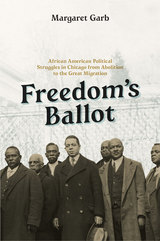
Freedom’s Ballot is the history of three generations of African American activists—the ministers, professionals, labor leaders, clubwomen, and entrepreneurs—who transformed twentieth-century urban politics. This is a complex and important story of how black political power was institutionalized in Chicago in the half-century following the Civil War. Margaret Garb explores the social and political fabric of Chicago, revealing how the physical makeup of the city was shaped by both political corruption and racial empowerment—in ways that can still be seen and felt today.
He shows how it grew from a transient aggregate of individuals, many fresh from slavery, to a strong, overwhelmingly free community less wracked by class and intraracial divisions than were other cities. Almost from the start, Phillips states, Baltimore's African Americans forged their own freedom and actively defended it--in a state that maintained slavery and whose white leadership came to resent the liberties the city's black people had achieved.
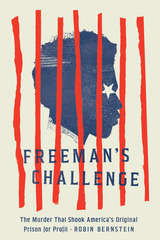
An award-winning historian tells a gripping, morally complicated story of murder, greed, race, and the true origins of prison for profit.
In the early nineteenth century, as slavery gradually ended in the North, a village in New York State invented a new form of unfreedom: the profit-driven prison. Uniting incarceration and capitalism, the village of Auburn built a prison that enclosed industrial factories. There, “slaves of the state” were leased to private companies. The prisoners earned no wages, yet they manufactured furniture, animal harnesses, carpets, and combs, which consumers bought throughout the North. Then one young man challenged the system.
In Freeman’s Challenge, Robin Bernstein tells the story of an Afro-Native teenager named William Freeman who was convicted of a horse theft he insisted he did not commit and sentenced to five years of hard labor in Auburn’s prison. Incensed at being forced to work without pay, Freeman demanded wages. His challenge triggered violence: first against him, then by him. Freeman committed a murder that terrified and bewildered white America. And white America struck back—with aftereffects that reverberate into our lives today in the persistent myth of inherent Black criminality. William Freeman’s unforgettable story reveals how the North invented prison for profit half a century before the Thirteenth Amendment outlawed slavery “except as a punishment for crime”—and how Frederick Douglass, Harriet Tubman, and other African Americans invented strategies of resilience and resistance in a city dominated by a citadel of unfreedom.
Through one Black man, his family, and his city, Bernstein tells an explosive, moving story about the entangled origins of prison for profit and anti-Black racism.

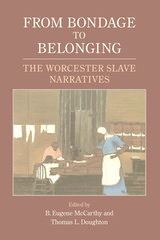
First published between 1842 and 1895, the autobiographical narratives gathered in this volume document the experiences of eight former slaves who eventually took up residence in Worcester, Massachusetts. Each narrative tells a gripping individual story, its author clearly visible in the dress of his or her own words. Together they illuminate not only the inhumanity of slavery but also the dreams and dilemmas of emancipation, tracing the personal journeys of seven men and one woman from bondage to freedom.
In their well-researched introduction, B. Eugene McCarthy and Thomas L. Doughton situate the Worcester slave narratives within a broader historical framework and analyze their meaning and significance. Drawing on a wide range of sources, they reconstruct the black community of Worcester and compare it with other New England black communities of the time, describing how the town evolved from a society with slaves in the colonial era to a hub for free blacks by the eve of the Civil War. They explain why these writings must be understood as part of a long-established tradition of African American self-representation, and show how the four narratives published before 1865 focus on the experience of slavery, while the four written after the war offer the fresh perspective of living in freedom. Headnotes describe the distinctive literary features of each narrative and provide additional information about the lives of the authors. The editors discuss why these ex-slaves came to Worcester, the circumstances in which each wrote his or her narrative, and the audiences they had in mind. No other collection of slave narratives offers such a diverse range of testimony within a specific historical and literary context, or a more compelling account of the transition from bondage to belonging.
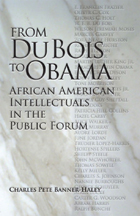
In his groundbreaking new book Charles Pete Banner-Haley explores the history of African American intellectualism and reveals the efforts of black intellectuals in the ongoing struggle against racism, showing how they have responded to Jim Crow segregation, violence against black Americans, and the more subtle racism of the postintegration age. Banner-Haley asserts that African American intellectuals—including academicians, social critics, activists, and writers—serve to generate debate, policy, and change, acting as a moral force to persuade Americans to acknowledge their history of slavery and racism, become more inclusive and accepting of humanity, and take responsibility for social justice.
Other topics addressed in this insightful study include the disconnection over time between black intellectuals and the masses for which they speak; the ways African American intellectuals identify themselves in relation to the larger black community, America as a whole, and the rest of the world; how black intellectuals have gained legitimacy in American society and have accrued moral capital, especially in the area of civil rights; and how that moral capital has been expended. Among the influential figures covered in the book are W. E. B. Du Bois, Ralph Ellison, Richard Wright, James Weldon Johnson, E. Franklin Frazier, Ralph Bunche, Oliver C. Cox, George S. Schuyler, Zora Neale Hurston, Martin Luther King, Jr., Jesse Jackson, Cornel West, Toni Morrison, bell hooks, Charles Johnson, and Barack Obama.
African American intellectuals, as Banner-Haley makes clear, run the political gamut from liberal to conservative. He discusses the emergence of black conservatism, with its accompanying questions about affirmative action, government intervention on behalf of African Americans, and the notion of a color-blind society. He also looks at how popular music—particularly rap and hip-hop—television, movies, cartoons, and other media have functioned as arenas for investigating questions of identity, exploring whether African American intellectuals can also be authentically black.
A concluding discussion of the so-called browning of America, and the subsequent rise in visibility and influence of black intellectuals culminates with the historic election of President Barack Obama, an African American intellectual who has made significant contributions to American society through his books, articles, and speeches. Banner-Haley ponders what Obama’s election will mean for the future of race relations and black intellectualism in America.
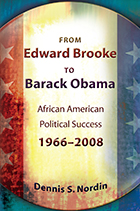
In From Edward Brooke to Barack Obama, Dennis S. Nordin navigates the history of biracial elections by examining the experiences of a variety of African American politicians from across the country, revealing how voters, both black and white, respond to the issue of race in an election.
From Edward Brooke to Barack Obama investigates the implications of race in politics, a highly relevant topic in today’s American society. It offers readers a chronological overview of the progress made over the last several decades as well as shows where there is room for growth in the political arena. By taking a pertinent topic for the era and placing it in the context of history, Nordin successfully chronicles the roles of race and race relations in American politics.
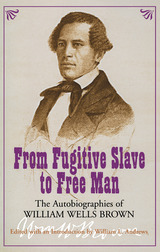
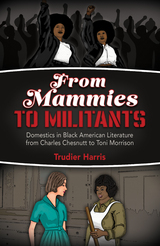
From Charles Chesnutt’s The Marrow of Tradition to Toni Morrison’s The Bluest Eye, Black writers, some of whom worked as maids themselves, have manipulated the stereotype in a strategic way as a figure to comment on Black-white relations or to dramatize the conflicts of the Black protagonists. In fact, the characters themselves, like real-life maids, often use the stereotype to their advantage or to trick their oppressors.
Harris combines folkloristic, sociological, historical, and psychological analyses with literary ones, drawing on her own interviews with Black women who worked as domestics. She explores the differences between Northern and Southern maids and between “mammy” and “militant.” Her invaluable book provides a sweeping exploration of Black American writers of the twentieth century, with extended discussion of works by Charles Chesnutt, Kristin Hunter, Toni Morrison, Richard Wright, Ann Petry, William Melvin Kelley, Alice Childress, John A. Williams, Douglas Turner Ward, Barbara Woods, Ted Shine, and Ed Bullins. Often privileging political statements over realistic characterization in the design of their texts, the authors in Harris’s study urged Black Americans to take action to change their powerless conditions, politely if possible, violently if necessary. Through their commitment to improving the conditions of Black people in America, these writers demonstrate the connectedness of art and politics.
In her new afterword, “From Militants to Movie Stars,” Harris looks at domestic workers in African American literature after the original publication of her book in 1982. Exploring five subsequent literary treatments of Black domestic workers from Ernest J. Gaines’s A Lesson Before Dying to Lynn Nottage’s By the Way, Meet Vera Stark, Harris tracks how the landscape of representation of domestic workers has broken with tradition and continues to transform into something entirely new.

Unmasking stereotypes and reclaiming identity of Black Womanhood in American Culture.
Welfare queen, hot momma, unwed mother: these stereotypes of Black women share their historical conception in the image of the Black woman as domestic. Focusing on the issue of stereotypes, the new edition of Trudier Harris’s classic 1982 study From Mammies to Militants examines the position of the domestic in Black American literature with a new afterword bringing her analysis into the present.
From Charles Chesnutt’s The Marrow of Tradition to Toni Morrison’s The Bluest Eye, Black writers, some of whom worked as maids themselves, have manipulated the stereotype in a strategic way as a figure to comment on Black-white relations or to dramatize the conflicts of the Black protagonists. In fact, the characters themselves, like real-life maids, often use the stereotype to their advantage or to trick their oppressors.
Harris combines folkloristic, sociological, historical, and psychological analyses with literary ones, drawing on her own interviews with Black women who worked as domestics. She explores the differences between Northern and Southern maids and between “mammy” and “militant.” Her invaluable book provides a sweeping exploration of Black American writers of the twentieth century, with extended discussion of works by Charles Chesnutt, Kristin Hunter, Toni Morrison, Richard Wright, Ann Petry, William Melvin Kelley, Alice Childress, John A. Williams, Douglas Turner Ward, Barbara Woods, Ted Shine, and Ed Bullins. Often privileging political statements over realistic characterization in the design of their texts, the authors in Harris’s study urged Black Americans to take action to change their powerless conditions, politely if possible, violently if necessary. Through their commitment to improving the conditions of Black people in America, these writers demonstrate the connectedness of art and politics.
In her new afterword, “From Militants to Movie Stars,” Harris looks at domestic workers in African American literature after the original publication of her book in 1982. Exploring five subsequent literary treatments of Black domestic workers from Ernest J. Gaines’s A Lesson Before Dying to Lynn Nottage’s By the Way, Meet Vera Stark, Harris tracks how the landscape of representation of domestic workers has broken with tradition and continues to transform into something entirely new.
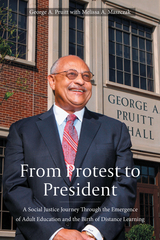
From barbershop encounters with Malcolm X to death threats at Illinois State University and gunfire at Towson State, Pruitt provides a powerful narrative poised at the intersection of social justice, higher education and politics. He recounts leadership experiences at HBCUs and public universities across the country, as he advocated for autonomy at Morgan State and fought to preserve Tennessee State University.
His steadfast activism, integrity and courage led to groundbreaking work in providing access to higher education for working adults and the military.
From his days as a student protester in high school and college to his appearances on Capitol Hill, Pruitt has earned the reputation as a candid and influential leader in higher education.

From Rights to Lives critically engages the dynamic relationship between these two moments of liberatory possibility on the Black Freedom Struggle timeline. The book’s contributors explore what we can learn when we place these moments of struggle in dialogue with each other. They grapple with how our understanding of the postwar moment shapes our analysis of #BLM and wherein lie the discontinuities, in order to glean lessons for future moments of insurgency.
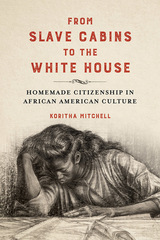
Koritha Mitchell analyzes canonical texts by and about African American women to lay bare the hostility these women face as they invest in traditional domesticity. Instead of the respectability and safety granted white homemakers, black women endure pejorative labels, racist governmental policies, attacks on their citizenship, and aggression meant to keep them in "their place."
Tracing how African Americans define and redefine success in a nation determined to deprive them of it, Mitchell plumbs the works of Frances Harper, Zora Neale Hurston, Lorraine Hansberry, Toni Morrison, Michelle Obama, and others. These artists honor black homes from slavery and post-emancipation through the Civil Rights era to "post-racial" America. Mitchell follows black families asserting their citizenship in domestic settings while the larger society and culture marginalize and attack them, not because they are deviants or failures but because they meet American standards.
Powerful and provocative, From Slave Cabins to the White House illuminates the links between African American women's homemaking and citizenship in history and across literature.

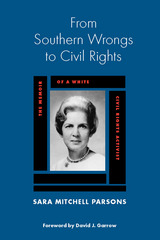
This first-hand account tells the story of turbulent civil rights era Atlanta through the eyes of a white upper-class woman who became an outspoken advocate for integration and racial equality
As a privileged white woman who grew up in segregated Atlanta, Sara Mitchell Parsons was an unlikely candidate to become a civil rights agitator. After all, her only contacts with blacks were with those who helped raise her and those who later helped raise her children. As a young woman, she followed the conventional path expected of her, becoming the dutiful wife of a conservative husband, going to the country club, and playing bridge. But unlike many of her peers, Parsons harbored an increasing uneasiness about racial segregation.In a memoir that includes candid diary excerpts, Parsons chronicles her moral awakening. With little support from her husband, she runs for the Atlanta Board of Education on a quietly integrationist platform and, once elected, becomes increasingly outspoken about inequitable school conditions and the slow pace of integration. Her activities bring her into contact with such civil rights leaders as Martin Luther King, Jr., and his wife, Coretta Scott King. For a time, she leads a dual existence, sometimes traveling the great psychic distance from an NAACP meeting on Auburn Avenue to an all-white party in upscale Buckhead. She eventually drops her ladies' clubs, and her deepening involvement in the civil rights movement costs Parsons many friends as well as her first marriage.
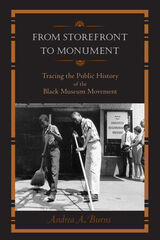
Winner of the 2015 National Council on Public History Book Award
Today well over two hundred museums focusing on African American history and culture can be found throughout the United States and Canada. Many of these institutions trace their roots to the 1960s and 1970s, when the struggle for racial equality inspired a movement within the black community to make the history and culture of African America more “public.”
This book tells the story of four of these groundbreaking museums: the DuSable Museum of African American History in Chicago (founded in 1961); the International Afro-American Museum in Detroit (1965); the Anacostia Neighborhood Museum in Washington, D.C. (1967); and the African American Museum of Philadelphia (1976). Andrea A. Burns shows how the founders of these institutions, many of whom had ties to the Black Power movement, sought to provide African Americans with a meaningful alternative to the misrepresentation or utter neglect of black history found in standard textbooks and most public history sites. Through the recovery and interpretation of artifacts, documents, and stories drawn from African American experience, they encouraged the embrace of a distinctly black identity and promoted new methods of interaction between the museum and the local community.
Over time, the black museum movement induced mainstream institutions to integrate African American history and culture into their own exhibits and educational programs. This often controversial process has culminated in the creation of a National Museum of African American History and Culture, now scheduled to open in the nation's capital in 2015.
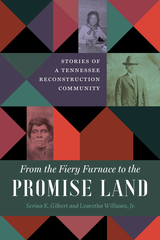
In time the community encompassed approximately 1,000 acres with more than 50 homes, several stores, three churches, and an elementary school. But by the mid‑twentieth century, the community had dwindled to just a handful of families. Now all that remains physically is a church and the old school building. But in the hearts of the descendants of those families, Promise Land remains a vital and thriving community of friends, family, and, albeit virtual, neighbors who continue to support each other.
This is the story of this town told through the memories of the people who lived there. Serina Gilbert grew up in the community and is now one of the revered storytellers and story‑keepers of Promise Land. Along with historian Learotha Williams, she is sharing the history of a community that thrived and continues to thrive in the face of almost insurmountable obstacles.
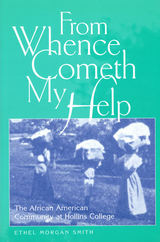
In 1842 Charles Lewis Cocke arrived in Roanoke, Virginia, with sixteen slaves; there, he founded Hollins College, an elite woman's school. Many of the early students also brought their slaves to the college with them. Upon Emancipation some of the African Americans of the community "mostly women" stayed on as servants, forming what is now called the Hollins Community. Although the servants played an integral part in the college's success, students were strongly discouraged from acknowledging them as people. Rules forbidding any "familiarity" with the servants perpetuated a prejudicial attitude toward the African American community that would persist well into the 1940s.
Determined to give voice to the African American community that served as the silent workforce for Hollins College, Ethel Morgan Smith succeeded in finding individuals to step forward and tell their stories. From Whence Cometh My Help examines the dynamics of an institution built on the foundations of slavery and so steeped in tradition that it managed to perpetuate servitude for generations. Interviewing senior community members, Smith gives recognition to the invisible population that provided and continues to provide the labor support for Hollins College for more than 150 years.
Although African American students have been admitted to the college for roughly thirty years, to date only one person from the Hollins Community has graduated from the college. From Whence Cometh My Help explores the subtle and complex relationship between the affluent white world of Hollins College and the proud African American community that has served it since its inception. Interweaving personal observations, historical documents, and poetry throughout a revealing oral history, Smith shares her fascinating discoveries and the challenges involved in telling a story silenced for so long.
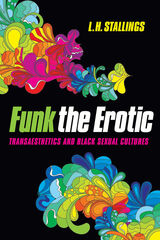
Stallings uses funk to highlight the importance of the erotic and eroticism in Black cultural and political movements, debunking "the truth of sex" and its histories. Brandishing funk as a theoretical tool, Stallings argues that Western theories of the erotic fail as universally applicable terms or philosophies, and thus lack utility in discussions of black bodies, subjects, and culture. In considering the Victorian concept of freak in black funk, Stallings proposes that black artists across all media have fashioned a tradition that embraces the superfreak, sexual guerrilla, sexual magic, mama's porn, black trans narratives, and sex work in a post-human subject position. Their goal: to ensure survival and evolution in a world that exploits black bodies in capitalist endeavors, imperialism, and colonization.
Revitalizing and wide-ranging, Funk the Erotic offers a needed examination of black sexual cultures, a discursive evolution of black ideas about eroticism, a critique of work society, a reexamination of love, and an articulation of the body in black movements.
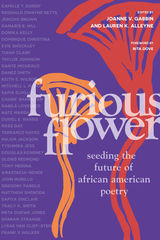

'A timely, future-oriented and necessary contribution which provides clarity to the multivalent tendencies in this field' - Carole Boyce Davies
The marginalization of Black voices from the academy is a problem in the Western world. But Black Studies, where it exists, is a powerful, boundary-pushing discipline, grown out of struggle and community action. Here, Abdul Alkalimat, one of the founders of Black Studies in the US, presents a reimagining of the future trends in the study of the Black experience.
Taking Marxism and Black Experientialism, Afro-Futurist and Diaspora frameworks, he projects a radical future for the discipline at this time of social crisis. Choosing cornerstones of culture, such as the music of Sun Ra, the movie Black Panther and the writer Octavia Butler, he looks at the trajectory of Black liberation thought since slavery, including new research on the rise in the comparative study of Black people all over the world.
Turning to look at how digital tools enhance the study of the discipline, this book is a powerful read that will inform and inspire students and activists.

At a turning point for the growing field of Black Studies, one of its founders looks to its future
'A timely, future-oriented and necessary contribution which provides clarity to the multivalent tendencies in this field' - Carole Boyce Davies
The marginalization of Black voices from the academy is a problem in the Western world. But Black Studies, where it exists, is a powerful, boundary-pushing discipline, grown out of struggle and community action. Here, Abdul Alkalimat, one of the founders of Black Studies in the US, presents a reimagining of the future trends in the study of the Black experience.
Taking Marxism and Black Experientialism, Afro-Futurist and Diaspora frameworks, he projects a radical future for the discipline at this time of social crisis. Choosing cornerstones of culture, such as the music of Sun Ra, the movie Black Panther and the writer Octavia Butler, he looks at the trajectory of Black liberation thought since slavery, including new research on the rise in the comparative study of Black people all over the world.
Turning to look at how digital tools enhance the study of the discipline, this book is a powerful read that will inform and inspire students and activists.
READERS
Browse our collection.
PUBLISHERS
See BiblioVault's publisher services.
STUDENT SERVICES
Files for college accessibility offices.
RECENTLY PUBLISHED





UChicago Accessibility Resources
home | accessibility | search | about | contact us
BiblioVault ® 2001 - 2026
The University of Chicago Press