
 A SCHOLARLY BOOK REPOSITORY
29 start with F start with F

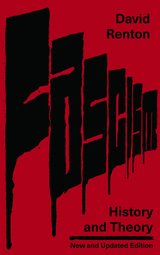
To explain this disturbing trend, David Renton surveys the history of fascism in Europe from its pre-war origins to the present day, examining Marxist responses to fascism in the age of Hitler and Mussolini, the writings of Trotsky and Gramsci and contemporary theorists. Renton theorizes that fascism was driven by the chaotic and unstable balance between reactionary ambitions and the mass character of its support. This approach will arm a new generation of anti-fascists to resist those who seek to re-enact fascism.
Rewritten and revised for the twentieth anniversary of its first publication, Renton's classic book synthesizes the Marxist theory of fascism and updates it for our own times.

Combining rigorous scholarship with personal, accessible writing, Fat Activism: A Radical Social Movement is not only an invaluable contribution to the burgeoning field of fat studies, but also a vehicle for much-needed social change.
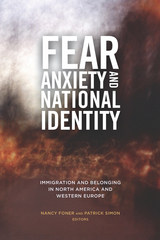
Fifty years of large-scale immigration has brought significant ethnic, racial, and religious diversity to North America and Western Europe, but has also prompted hostile backlashes. In Fear, Anxiety, and National Identity, a distinguished multidisciplinary group of scholars examine whether and how immigrants and their offspring have been included in the prevailing national identity in the societies where they now live and to what extent they remain perpetual foreigners in the eyes of the long-established native-born. What specific social forces in each country account for the barriers immigrants and their children face, and how do anxieties about immigrant integration and national identity differ on the two sides of the Atlantic?
Western European countries such as Germany, the Netherlands, and the United Kingdom have witnessed a significant increase in Muslim immigrants, which has given rise to nativist groups that question their belonging. Contributors Thomas Faist and Christian Ulbricht discuss how German politicians have implicitly compared the purported “backward” values of Muslim immigrants with the German idea of Leitkultur, or a society that values civil liberties and human rights, reinforcing the symbolic exclusion of Muslim immigrants. Similarly, Marieke Slootman and Jan Willem Duyvendak find that in the Netherlands, the conception of citizenship has shifted to focus less on political rights and duties and more on cultural norms and values. In this context, Turkish and Moroccan Muslim immigrants face increasing pressure to adopt “Dutch” culture, yet are simultaneously portrayed as having regressive views on gender and sexuality that make them unable to assimilate.
Religion is less of a barrier to immigrants’ inclusion in the United States, where instead undocumented status drives much of the political and social marginalization of immigrants. As Mary C. Waters and Philip Kasinitz note, undocumented immigrants in the United States. are ineligible for the services and freedoms that citizens take for granted and often live in fear of detention and deportation. Yet, as Irene Bloemraad points out, Americans’ conception of national identity expanded to be more inclusive of immigrants and their children with political mobilization and changes in law, institutions, and culture in the wake of the Civil Rights Movement. Canadians’ views also dramatically expanded in recent decades, with multiculturalism now an important part of their national identity, in contrast to Europeans’ fear that diversity undermines national solidarity.
With immigration to North America and Western Europe a continuing reality, each region will have to confront anti-immigrant sentiments that create barriers for and threaten the inclusion of newcomers. Fear, Anxiety, and National Identity investigates the multifaceted connections among immigration, belonging, and citizenship, and provides new ways of thinking about national identity.
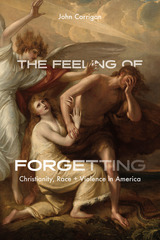
The dual traumas of colonialism and slavery are still felt by Native Americans and African Americans as victims of ongoing violence toward people of color today. In The Feeling of Forgetting, John Corrigan calls attention to the trauma experienced by white Americans as perpetrators of this violence. By tracing memory’s role in American Christianity, Corrigan shows how contemporary white Christian nationalism is motivated by a widespread effort to forget the role race plays in American society. White trauma, Corrigan argues, courses through American culture like an underground river that sometimes bursts forth into brutality, terrorism, and insurrection. Tracing the river to its source is a necessary first step toward healing.
A provocative examination of how religious practices of forgetting drive white Christian nationalism.
The dual traumas of colonialism and slavery are still felt by Native Americans and African Americans as victims of ongoing violence toward people of color today. In The Feeling of Forgetting, John Corrigan calls attention to the trauma experienced by white Americans as perpetrators of this violence. By tracing memory’s role in American Christianity, Corrigan shows how contemporary white Christian nationalism is motivated by a widespread effort to forget the role race plays in American society. White trauma, Corrigan argues, courses through American culture like an underground river that sometimes bursts forth into brutality, terrorism, and insurrection. Tracing the river to its source is a necessary first step toward healing.

Winner, Tullis Prize, Texas State Historical Association, 2004
Private First Class Felix Longoria earned a Bronze Service Star, a Purple Heart, a Good Conduct Medal, and a Combat Infantryman's badge for service in the Philippines during World War II. Yet the only funeral parlor in his hometown of Three Rivers, Texas, refused to hold a wake for the slain soldier because "the whites would not like it." Almost overnight, this act of discrimination became a defining moment in the rise of Mexican American activism. It launched Dr. Héctor P. García and his newly formed American G.I. Forum into the vanguard of the Mexican civil rights movement, while simultaneously endangering and advancing the career of Senator Lyndon B. Johnson, who arranged for Longoria's burial with full military honors in Arlington National Cemetery.
In this book, Patrick Carroll provides the first fully researched account of the Longoria controversy and its far-reaching consequences. Drawing on extensive documentary evidence and interviews with many key figures, including Dr. García and Mrs. Longoria, Carroll convincingly explains why the Longoria incident, though less severe than other acts of discrimination against Mexican Americans, ignited the activism of a whole range of interest groups from Argentina to Minneapolis. By putting Longoria's wake in a national and international context, he also clarifies why it became such a flash point for conflicting understandings of bereavement, nationalism, reason, and emotion between two powerful cultures—Mexicanidad and Americanism.
***Winner of an English PEN Award 2022***
The mainstream conversation surrounding gender equality is a repertoire of violence: harassment, rape, abuse, femicide. These words suggest a cruel reality. But they also hide another reality: that of gendered violence committed with the complicity of the State.
In this book, Françoise Vergès denounces the carceral turn in the fight against sexism. By focusing on 'violent men', we fail to question the sources of their violence. There is no doubt as to the underlying causes: racial capitalism, ultra-conservative populism, the crushing of the Global South by wars and imperialist looting, the exile of millions and the proliferation of prisons - these all put masculinity in the service of a policy of death.
Against the spirit of the times, Françoise Vergès refuses the punitive obsession of the State in favour of restorative justice.
However, change is in the air. Fight the Tower is a continuation of the Fight the Tower movement, which supports women standing up for their rights to claim their earned place in academia and to work for positive change for all within academic institutions. The essays provide powerful portraits, reflections, and analyses of a population often rendered invisible by the lies that sustain intersectional injustices in order to operate an oppressive system.
Drawing from in-depth interviews, census data, and cultural productions from Asian Americans in Ohio, Wisconsin, Nebraska, Minnesota, Illinois, Iowa, Indiana, and Michigan, this interdisciplinary research examines how post-1950s Midwest Asian Americans navigate identity and belonging, racism, educational settings, resources within co-ethnic communities, and pan-ethnic cultural community. Their experiences and life narratives are heavily framed by three pervasive themes of spatially defined isolation, invisibility, and racialized visibility.
Fighting Invisibility makes an important contribution to racialization literature, while also highlighting the necessity to further expand the scope of Asian American history-telling and knowledge production.
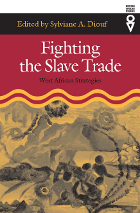
While most studies of the slave trade focus on the volume of captives and on their ethnic origins, the question of how the Africans organized their familial and communal lives to resist and assail it has not received adequate attention. But our picture of the slave trade is incomplete without an examination of the ways in which men and women responded to the threat and reality of enslavement and deportation.
Fighting the Slave Trade is the first book to explore in a systematic manner the strategies Africans used to protect and defend themselves and their communities from the onslaught of the Atlantic slave trade and how they assaulted it.
It challenges widely held myths of African passivity and general complicity in the trade and shows that resistance to enslavement and to involvement in the slave trade was much more pervasive than has been acknowledged by the orthodox interpretation of historical literature.
Focused on West Africa, the essays collected here examine in detail the defensive, protective, and offensive strategies of individuals, families, communities, and states. In chapters discussing the manipulation of the environment, resettlement, the redemption of captives, the transformation of social relations, political centralization, marronage, violent assaults on ships and entrepôts, shipboard revolts, and controlled participation in the slave trade as a way to procure the means to attack it, Fighting the Slave Trade presents a much more complete picture of the West African slave trade than has previously been available.
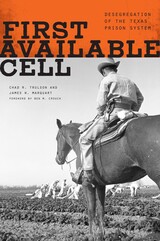
Decades after the U.S. Supreme Court and certain governmental actions struck down racial segregation in the larger society, American prison administrators still boldly adhered to discriminatory practices. Not until 1975 did legislation prohibit racial segregation and discrimination in Texas prisons. However, vestiges of this practice endured behind prison walls. Charting the transformation from segregation to desegregation in Texas prisons—which resulted in Texas prisons becoming one of the most desegregated places in America—First Available Cell chronicles the pivotal steps in the process, including prison director George J. Beto's 1965 decision to allow inmates of different races to co-exist in the same prison setting, defying Southern norms.
The authors also clarify the significant impetus for change that emerged in 1972, when a Texas inmate filed a lawsuit alleging racial segregation and discrimination in the Texas Department of Corrections. Perhaps surprisingly, a multiracial group of prisoners sided with the TDC, fearing that desegregated housing would unleash racial violence. Members of the security staff also feared and predicted severe racial violence. Nearly two decades after the 1972 lawsuit, one vestige of segregation remained in place: the double cell. Revealing the aftermath of racial desegregation within that 9 x 5 foot space, First Available Cell tells the story of one of the greatest social experiments with racial desegregation in American history.
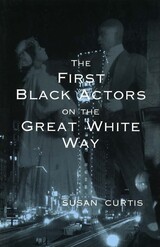
On April 5, 1917, Three Plays for a Negro Theater by Ridgely Torrence opened at the Garden Theatre in New York City. This performance was a monumental event in American stage history. Not only was this the first dramatic production to portray African American life beyond the cliché, it was also the first production on Broadway to feature an all-black cast. The morning after the three plays were performed, newspapers were filled with praise for the cast, crew, and playwright. Audience member W. E. B. Du Bois declared the show "epoch making." Despite such early critical acclaim, Three Plays for a Negro Theater closed before the end of the month and received little attention thereafter.
Why was a nation, so fascinated with firsts, able to forget these black actors and this production so quickly? It is this question that Susan Curtis addresses in The First Black Actors on the Great White Way.
Set against the backdrop of transforming theater conventions in the early 1900s and the war in 1917, this important study relates the stories of the actors, stage artists, critics, and many others—black and white—involved in this groundbreaking production. Curtis explores in great depth both the progress in race relations that led to this production and the multifaceted reasons for its quick demise.
Three Plays for a Negro Theater opened on the eve of the United States' entrance into World War I. Curtis attributes the early closure of the three plays to this coincidence, but she does not settle for so simple an explanation. Rather, she investigates the heightened national self-consciousness that followed the United States' entry into the war. America was ready to "make the world safe for democracy," but it was not fully ready to accept democracy and equality in its own culture.
The First Black Actors on the Great White Way is not simply a study of African American theater and its entrance into American culture. By focusing on a single event at a critical moment in history, Curtis offers a unique glimpse into race relations in early-twentieth-century American society. The experience of these pioneering artists reveals an unexplored aspect of the painfully slow evolution of racial equality.
A remarkable story about people who waged an extraordinary campaign against racism, The First Black Actors on the Great White Way will be of special interest to scholars of American studies, race relations, and cultural history, as well as the general reader.
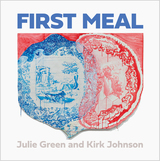
Wrongful convictions haunt the American criminal justice system, as revealed in recent years by DNA and other investigative tools. And every wrongfully convicted person who walks free, exonerated after years or decades, carries part of that story. From those facts, artist Julie Green posed a seemingly simple question: When you have been denied all choice, what do you choose to eat on the first day of freedom?
In the small details of life at such pivotal moments, a vast new landscape of the world can emerge, and that is the core concept of First Meal. Partnering with the Center on Wrongful Convictions at Northwestern University’s Pritzker School of Law, Green and her coauthor, award-winning journalist Kirk Johnson, have created a unique melding of art and narration in the portraits and stories of twenty-five people on the day of their release.
Food and punishment have long been intertwined. The tradition of offering a condemned person a final meal before execution, for example, has been explored by psychologists, filmmakers, and others—including Green herself in an earlier series of criminal-justice themed paintings, The Last Supper. First Meal takes on that issue from the other side: food as a symbol of autonomy in a life restored. Set against the backdrop of a flawed American legal system, First Meal describes beauty, pain, hope and redemption, all anchored around the idea—explored by writers from Marcel Proust to Michael Pollan—that food touches us deeply in memory and emotion.
In Green’s art, state birds and surreal lobsters soar over places where wrongful convictions unfolded, mistaken witnesses shout their errors, glow-in-the-dark skylines evoke homecoming. Johnson’s essays take us inside those moments—from the courtrooms where things went wrong to the pathways of faith and resilience that kept people sane through their years of injustice. First Meal seeks to inform and spread awareness, but also celebrate the humanity that unites us, and the idea that gratitude and euphoria—even as it mixes with grief and the awareness of loss—can emerge in places we least expect.
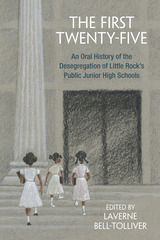
“It was one of those periods that you got through, as opposed to enjoyed. It wasn’t an environment that . . . was nurturing, so you shut it out. You just got through it. You just took it a day at a time. You excelled if you could. You did your best. You felt as though the eyes of the community were on you.”—Glenda Wilson, East Side Junior High
Much has been written about the historical desegregation of Little Rock Central High School by nine African American students in 1957. History has been silent, however, about the students who desegregated Little Rock’s five public junior high schools—East Side, Forest Heights, Pulaski Heights, Southwest, and West Side—in 1961 and 1962.
The First Twenty-Five gathers the personal stories of these students some fifty years later. They recall what it was like to break down long-standing racial barriers while in their early teens—a developmental stage that often brings emotional vulnerability. In their own words, these individuals share what they saw, heard, and felt as children on the front lines of the civil rights movement, providing insight about this important time in Little Rock, and how these often painful events from their childhoods affected the rest of their lives.
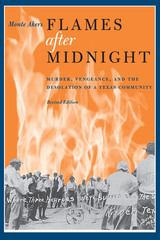
What happened in Kirven, Texas, in May 1922, has been forgotten by the outside world. It was a coworker's whispered words, "Kirven is where they burned the [Negroes]," that set Monte Akers to work at discovering the true story behind a young white woman's brutal murder and the burning alive of three black men who were almost certainly innocent of it. This was followed by a month-long reign of terror as white men killed blacks while local authorities concealed the real identity of the white probable murderers and allowed them to go free.
Writing nonfiction with the skill of a novelist, Akers paints a vivid portrait of a community desolated by race hatred and its own refusal to face hard truths. He sets this tragedy within the story of a region prospering from an oil boom but plagued by lawlessness, and traces the lynching's repercussions down the decades to the present day. In the new epilogue, Akers adds details that have come to light as a result of the book's publication, including an eyewitness account of the burnings from an elderly man who claimed to have castrated two of the men before they were lynched.
Can humanity escape segregating behavior or master the tendency to exclusion? Where does the force of prejudice come from? How might one conceive the philosophical foundations of an effective antiracism? Pursuing these questions, Pierre-André Taguieff puts forward a powerful thesis: that racism has evolved from an argument about races, naturalizing inequality between "biologically" defined groups on the basis of fear of the other, to an argument about cultures, naturalizing historical differences and justifying exclusion. Correspondingly, he shows how antiracism must adopt the strategy that fits the variety of racism it opposes.
Looking at racial and racist theories one by one and then at their antiracist counterparts, Taguieff traces an intellectual genealogy of differentialist and inegalitarian ways of thinking. Already viewed as an essential work of reference in France, The Force of Prejudice is an invaluable tool for identifying and understanding both racism and its antidote in our day.
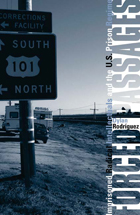
In Forced Passages, Dylan Rodríguez argues that the cultural production of such imprisoned intellectuals as Mumia Abu-Jamal, Angela Davis, Leonard Peltier, George Jackson, José Solis Jordan, Ramsey Muniz, Viet Mike Ngo, and Marilyn Buck should be understood as a social and intellectual movement in and of itself, unique in context and substance. Rodríguez engages with a wide range of texts, including correspondence, memoirs, essays, poetry, communiqués, visual art, and legal writing, drawing on published works by widely recognized figures and by individuals outside the public’s field of political vision or concern. Throughout, Rodríguez focuses on the conditions under which imprisoned intellectuals live and work, and he explores how incarceration shapes the ways in which insurgent knowledge is created, disseminated, and received.
More than a series of close readings of prison literature, Forced Passages identifies and traces the discrete lineage of radical prison thought since the 1970s, one formed by the logic of state violence and by the endemic racism of the criminal justice system.
Dylan Rodríguez is assistant professor of ethnic studies at the University of California, Riverside.
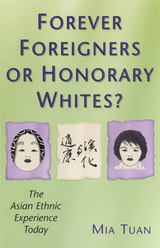
What does it mean to be an Asian-American in the United States today? Are Asian-Americans considered "honorary whites" or forever thought of as "foreigners?"
Mia Tuan examines the salience and meaning of ethnicity for later generation Chinese- and Japanese-Americans, and asks how their concepts of ethnicity differ from that of white ethnic Americans. She interviewed 95 middle-class Chinese and Japanese Californians and analyzes the importance of ethnic identities and the concept of becoming a "real" American for both Asian and white ethnics. She asks her subjects about their early memories and experiences with Chinese/Japanese culture; current lifestyle and emerging cultural practices; experiences with racism and discrimination; and attitudes toward current Asian immigration.
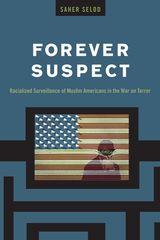

A revelatory study of how Black churches turn the financial system back against predatory lenders.
When American churches face financial difficulties, a disproportionately high number of Black churches reorganize under Chapter 11 bankruptcy. There are no easy explanations for this distinction: not location, denomination, leadership structure, or the reasons for the loans. In Forgive Us Our Debts, legal scholar Pamela Foohey asks why, then, Black churches account for two-thirds of all congregations that file for chapter 11 bankruptcy every year.
Drawing on case studies of six Black churches and one white church, and one hundred and fifty interviews with church leaders, members, and attorneys, Foohey finds answers in a long history of predatory lending. Unable to negotiate with recalcitrant loan officers, Black churches turn to the legal system to force reasonable concessions from lenders to prevent the stripping of their wealth and the destruction of their communities. While the structural discrimination does not go away, these churches have found in the bankruptcy system a refuge and some power to fight back.
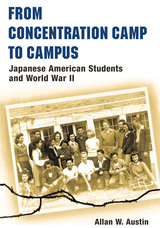
Austin argues that the resettled students transformed the attempts at assimilation to create their own meanings and suit their own purposes, and succeeded in reintegrating themselves into the wider American society without sacrificing their connections to community and their Japanese cultural heritage.
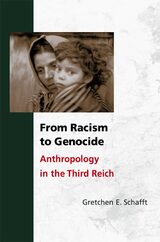
In paperback for the first time, From Racism to Genocide is an explosive, richly detailed account of how Nazi anthropologists justified racism, developed practical applications of racist theory, and eventually participated in every phase of the Holocaust.
Using original sources and previously unpublished documentation, Gretchen E. Schafft shows the total range of anti-human activity from within the confines of a particular discipline. Based on seven years of archival research in the United States and abroad, the work includes many original photos and documents, most of which have never before been published. It uses primary data and original texts whenever possible, including correspondence written by perpetrators. The book also reveals that the United States was not merely a bystander in this research, but instead contributed professional and financial support to early racial research that continued through the first five years of Hitler’s regime.

Winner, 2020 Booker Worthen Literary Prize
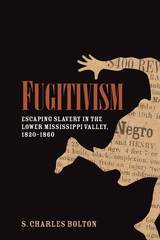
During the antebellum years, over 750,000 enslaved people were taken to the Lower Mississippi Valley, where two-thirds of them were sold in the slave markets of New Orleans, Natchez, and Memphis. Those who ended up in Louisiana found themselves in an environment of swamplands, sugar plantations, French-speaking creoles, and the exotic metropolis of New Orleans. Those sold to planters in the newly-opened Mississippi Delta cleared land and cultivated cotton for owners who had moved west to get rich as quickly as possible, driving this labor force to harsh extremes.
Like enslaved people all over the South, those in the Lower Mississippi Valley left home at night for clandestine parties or religious meetings, sometimes “laying out” nearby for a few days or weeks. Some of them fled to New Orleans and other southern cities where they could find refuge in the subculture of slaves and free blacks living there, and a few attempted to live permanently free in the swamps and forests of the surrounding area. Fugitives also tried to returnto eastern slave states to rejoin families from whom they had been separated. Some sought freedom on the northern side of the Ohio River; othersfled to Mexico for the same purpose.
Fugitivism provides a wealth of new information taken from advertisements, newspaper accounts, and court records. It explains how escapees made use of steamboat transportation, how urban runaways differed from their rural counterparts, how enslaved people were victimized by slave stealers, how conflicts between black fugitives and the white people who tried to capture them encouraged a culture of violence in the South, and how runaway slaves from the Lower Mississippi Valley influenced the abolitionist movement in the North.
Readers will discover that along with an end to oppression, freedom-seeking slaves wanted the same opportunities afforded to most Americans.
READERS
Browse our collection.
PUBLISHERS
See BiblioVault's publisher services.
STUDENT SERVICES
Files for college accessibility offices.
RECENTLY PUBLISHED



UChicago Accessibility Resources
home | accessibility | search | about | contact us
BiblioVault ® 2001 - 2026
The University of Chicago Press