
 A SCHOLARLY BOOK REPOSITORY
24 start with H start with H

Here is how Neil Boothby, Director of the Program on Forced Migration and Health at the Mailman School of Public Health, Columbia University, describes the book:
"Mollica provides a wealth of ethnographic and clinical evidence that suggests the human capacity to heal is innate--that the 'survival instinct' extends beyond the physical to include the psychological as well. He enables us to see how recovery from 'traumatic life events' needs to be viewed primarily as a 'mystery' to be listened to and explored, rather than solely as a 'problem' to be identified and solved. Healing involves a quest for meaning--with all of its emotional, cultural, religious, spiritual and existential attendants--even when bio-chemical reactions are also operative."
Healing Invisible Wounds reveals how trauma survivors, through the telling of their stories, teach all of us how to deal with the tragic events of everyday life. Mollica's important discovery that humiliation--an instrument of violence that also leads to anger and despair--can be transformed through his therapeutic project into solace and redemption is a remarkable new contribution to survivors and clinicians.
This book reveals how in every society we have to move away from viewing trauma survivors as "broken people" and "outcasts" to seeing them as courageous people actively contributing to larger social goals. When violence occurs, there is damage not only to individuals but to entire societies, and to the world. Through the journey of self-healing that survivors make, they enable the rest of us not only as individuals but as entire communities to recover from injury in a violent world.
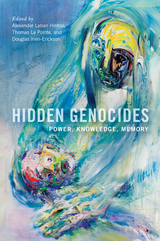
Why are some genocides prominently remembered while others are ignored, hidden, or denied? Consider the Turkish campaign denying the Armenian genocide, followed by the Armenian movement to recognize the violence. Similar movements are building to acknowledge other genocides that have long remained out of sight in the media, such as those against the Circassians, Greeks, Assyrians, the indigenous peoples in the Americas and Australia, and the violence that was the precursor to and the aftermath of the Holocaust.
The contributors to this collection look at these cases and others from a variety of perspectives. These essays cover the extent to which our biases, our ways of knowing, our patterns of definition, our assumptions about truth, and our processes of remembering and forgetting as well as the characteristics of generational transmission, the structures of power and state ideology, and diaspora have played a role in hiding some events and not others. Noteworthy among the collection’s coverage is whether the trade in African slaves was a form of genocide and a discussion not only of Hutus brutalizing Tutsi victims in Rwanda, but of the execution of moderate Hutus as well.
Hidden Genocides is a significant contribution in terms of both descriptive narratives and interpretations to the emerging subfield of critical genocide studies.
Contributors: Daniel Feierstein, Donna-Lee Frieze, Krista Hegburg, Alexander Laban Hinton, Adam Jones, A. Dirk Moses, Chris M. Nunpa, Walter Richmond, Hannibal Travis, and Elisa von Joeden-Forgey
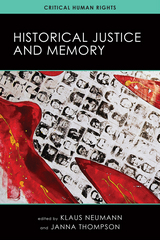
The historical justice movement has inspired the spread of truth and reconciliation processes around the world and has pushed governments to make reparations and apologies for past wrongs. It has changed the public understanding of justice and the role of memory. In this book, leading scholars in philosophy, history, political science, and semiotics offer new essays that discuss and assess these momentous global developments. They evaluate the strength and weaknesses of the movement, its accomplishments and failings, its philosophical assumptions and social preconditions, and its prospects for the future.
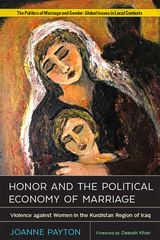
Honor and the Political Economy of Marriage provides a description of ‘honor’-based violence that focuses upon the structure of the family rather than the perpetrator’s culture. The author, Joanne Payton, argues that within societies primarily organized by familial and marital connections, women’s ‘honor’ is a form of symbolic capital within a ‘political economy’ in which marriage organizes intergroup connections.
Drawing on statistical analysis of original data contextualized with historical and anthropological readings, Payton explores forms of marriage and their relationship to ‘honor’, sketching changing norms around the familial control of women from agrarian/pastoral roots to the contemporary era.
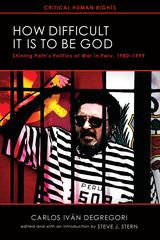
In How Difficult It Is to Be God, Carlos Iván Degregori—the world’s leading expert on Shining Path and the intellectual architect for Peru’s highly regarded Truth and Reconciliation Commission—elucidates the movement’s dynamics. An anthropologist who witnessed Shining Path’s recruitment of militants in the 1970s, Degregori grounds his findings in deep research and fieldwork. He explains not only the ideology and culture of revolution among the insurgents, but also their capacity to extend their influence to university youths, Indian communities, and competing social and political movements.
Making Degregori’s most important work available to English-language readers for the first time, this translation includes a new introduction by historian Steve J. Stern, who analyzes the author’s achievement, why it matters, and the debates it sparked. For anyone interested in Peru and Latin America’s age of “dirty war,” or in the comparative study of revolutions, Maoism, and human rights, this book will provide arresting new insights.

With attention to the distinct cultural, political, and historical contexts across Latin America, the essays reveal how military figures and institutions appropriate mechanisms of truth-telling and accountability to reframe the past, blur the lines between perpetrator and victim, and weaponize memory itself.
Contributors: Mariana Achugar, Gabriela Fried Amilivia, Rebecca Atencio, Jo-Marie Burt, Rachel Hatcher, Nicolás Rodríguez Idárraga, Michael J. Lazzara, Cynthia E. Milton, Carla Granados Moya, María Emma Wills Obregón, Leith Passmore, Valentina Salvi, Gladys Vásquez Zevallos

How to Look Good in A War examines the methods used to depict, defend and justify the use of state violence. Many books have shown how 'truth is the first casualty of war' but this is the first to analyse exactly how pro-war narratives are constructed and normalised.
Brian Rappert details the 'upside-down' world of war in which revelation conceals, knowledge fosters uncertainty, and transparency obscures. He looks at government spin during recent wars in Iraq, Afghanistan and Libya where officials manoeuvre between circulating and withholding information.
Examining how organised violence is justified, How to Look Good in A War draws on experiences from recent controversy to consider how ignorance about the operation of war is produced and how concerned individuals and groups can intervene to make a difference.
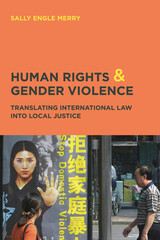
As an observer of UN diplomatic negotiations as well as the workings of grassroots feminist organizations in several countries, Sally Engle Merry offers an insider's perspective on how human rights law holds authorities accountable for the protection of citizens even while reinforcing and expanding state power. Providing legal and anthropological perspectives, Merry contends that human rights law must be framed in local terms to be accepted and effective in altering existing social hierarchies. Gender violence in particular, she argues, is rooted in deep cultural and religious beliefs, so change is often vehemently resisted by the communities perpetrating the acts of aggression.
A much-needed exploration of how local cultures appropriate and enact international human rights law, this book will be of enormous value to students of gender studies and anthropology alike.
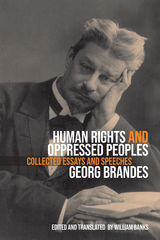
Human Rights and Oppressed Peoples includes thirty-five essays and published speeches from the early twenty-first century on subjects as diverse as the Boxer Rebellion, displaced peoples from World War I, Finland's Jewish population, and imperialism. This collection will interest interdisciplinary scholars of human rights as well as those who study Scandinavian intellectual and literary history.
This book champions social movements as one of the most influential agents that shape our conceptions of human rights.
Stammers argues that human rights cannot be properly understood outside of the context of social movement struggles. He explains how much of the literature on human rights has systematically obscured this link, consequently distorting our understandings of human rights.
Stammers identifies the contours of a new framework through which human rights can be understood. He suggests that what he calls the 'paradox of institutionalisation' can only be addressed through a recognition of the importance of human rights arising out of grassroots activism, and through processes of institutional democratisation.

Edited by Jessica Stites Mor, this book offers fine-grained case studies that show how Latin America’s re-emerging Left transformed the struggles against dictatorship and repression of the Cold War into the language of anti-colonialism, socioeconomic rights, and identity.
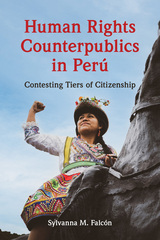
Engaging and intimate, Human Rights Counterpublics in Perú illuminates the power of human rights and memory work.
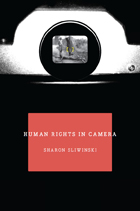
From the fundamental rights proclaimed in the American and French declarations of independence to the 1948 Universal Declaration of Human Rights and Hannah Arendt’s furious critiques, the definition of what it means to be human has been hotly debated. But the history of human rights—and their abuses—is also a richly illustrated one. Following this picture trail, Human Rights In Camera takes an innovative approach by examining the visual images that have accompanied human rights struggles and the passionate responses people have had to them.
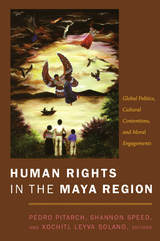
The collection includes a reflection on the effects of truth-finding and documenting particular human rights abuses, a look at how Catholic social teaching validates the human rights claims advanced by indigenous members of a diocese in Chiapas, and several analyses of the limitations of human rights frameworks. A Mayan intellectual seeks to bring Mayan culture into dialogue with western feminist notions of women’s rights, while another contributor critiques the translation of the United Nations Declaration of Human Rights into Tzeltal, an indigenous language in Chiapas. Taken together, the essays reveal a broad array of rights-related practices and interpretations among the Mayan population, demonstrating that global-local-state interactions are complex and diverse even within a geographically limited area. So too are the goals of indigenous groups, which vary from social reconstruction and healing following years of violence to the creation of an indigenous autonomy that challenges the tenets of neoliberalism.
Contributors: Robert M. Carmack, Stener Ekern, Christine Kovic, Xochitl Leyva Solano, Julián López García, Irma Otzoy, Pedro Pitarch, Álvaro Reyes, Victoria Sanford, Rachel Sieder, Shannon Speed, Rodolfo Stavenhagen, David Stoll, Richard Ashby Wilson
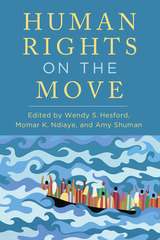
Contributing artists, activists, and scholars expose the fundamental paradox of human rights (namely that nation-states are violators and guarantors of rights) while also showing how people facing violence and persecution move with the hope of more livable and equitable futures. The assembled scholarly essays, interviews, and creative pieces demonstrate the importance of a more relational and contextual understanding of human rights—one that can destabilize current definitions and open space for new formulations.
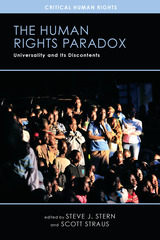
The Human Rights Paradox is the first book to fully embrace this contradiction and reframe human rights as history, contemporary social advocacy, and future prospect. In case studies that span Africa, Latin America, South and Southeast Asia, and the United States, contributors carefully illuminate how social actors create the imperative of human rights through relationships whose entanglements of the global and the local are so profound that one cannot exist apart from the other. These chapters provocatively analyze emerging twenty-first-century horizons of human rights—on one hand, the simultaneous promise and peril of global rights activism through social media, and on the other, the force of intergenerational rights linked to environmental concerns that are both local and global. Taken together, they demonstrate how local struggles and realities transform classic human rights concepts, including “victim,” “truth,” and “justice.”
Edited by Steve J. Stern and Scott Straus, The Human Rights Paradox enables us to consider the consequences—for history, social analysis, politics, and advocacy—of understanding that human rights belong both to “humanity” as abstraction as well as to specific people rooted in particular locales.

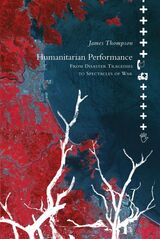
A groundbreaking lens on humanitarianism, which reframes global humanitarian responses to war and disaster through performance studies, revealing how aid, media, and public attention transform crisis into spectacle on a world stage.
As the world is challenged by a state of constant conflict and by disasters, both natural and manmade, support communities endeavour through humanitarianism to overcome human suffering and help to build more peaceful and safe futures. Humanitarian Performance argues that the humanitarian project—from its history and rationale to its contemporary practice—can be productively explored through the critical lens of performance studies. Using the outpouring of international support for projects to benefit survivors of the Asian tsunami, the War in Kosovo, and the crisis in Darfur as case studies, this timely volume explores humanitarian attention to these narratives and the stories of tragedy and survival that emerge. With the peculiar focus and international audiences that the media brings to local tragedies, these contemporary disasters—and the humanitarianism that they elicit—become a performance on the world stage.
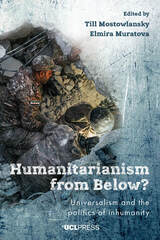
The first global comparative analysis of the role of humanitarianism from below in political and social change.
Drawing on original ethnographic and historical research, Humanitarianism from Below? addresses a wide audience of scholars and students in humanitarian and development studies, anthropology, and political science. Drawing from timely case studies on the war in Ukraine, the Ebola pandemic in West Africa, the 2023 Turkey-Syria earthquakes, and the global flows of aid from Arab states to the Persian Gulf, the book considers humanitarianism’s multiple histories and offers a profound reassessment of humanitarian pluralism today. It critically discusses humanitarianism as a historically, politically, and culturally contingent phenomenon that entails unequal relations of power and multiple forms of universalism, as well as issues of dehumanization and inhumanity.
READERS
Browse our collection.
PUBLISHERS
See BiblioVault's publisher services.
STUDENT SERVICES
Files for college accessibility offices.
RECENTLY PUBLISHED


UChicago Accessibility Resources
home | accessibility | search | about | contact us
BiblioVault ® 2001 - 2026
The University of Chicago Press