
 A SCHOLARLY BOOK REPOSITORY
186 start with I start with I
First published in Germany in 1993 and hailed as an instant classic, “I” is a black comedy about state power and the seductions of surveillance. Its penetrating vision seems especially relevant today in our world of cameras on every train, bus, and corner. This is an engrossing read, available now for the first time in English.
“[Hilbig writes as] Edgar Allan Poe could have written if he had been born in Communist East Germany.”—Los Angeles Review of Books

Far more than a mere remembrance book about September 11, ‘I am an American’ offers precisely the kind of ground-level empathy needed to reignite a meaningful national debate about who we are and who we might become as a people and a nation.

Fueled by interviews with key players from the folk music scene, I Believe I'll Go Back Home traces a direct line from Yankee revolutionaries, up-country dancers, and nineteenth-century pacifists to the emergence of blues and rock 'n' roll, ultimately landing at the period of the folk revival. Thomas S. Curren presents the richness and diversity of the New England folk tradition, which continues to provide perspective, inspiration, and healing in the present day.

How neoliberal capitalism and pedagogical deideologization constrain the radical possibilities of youth activism
In I Guess This Is Activism? Kevin L. Clay presents an eye-opening account of his experience with Youth Participatory Action Research (YPAR) as an Upward Bound educator. Grounded in Paulo Freire’s tradition of critical pedagogy, YPAR has been championed by community-based educators and scholars in the United States as an approach for supporting critical consciousness development and social change with working-class Black and Latino youth. Clay, however, questions whether YPAR can effectively prepare youths to subvert the systems reproducing their material conditions under neoliberal capitalism. Exposing the political and pedagogical limits of YPAR’s progressive education model, he reveals how omnipresent neoliberalism undermines youths’ radical potential when political education is not prioritized in youth activism.
I Guess This Is Activism? engages Black radical thinkers, including Ella Baker and Fred Hampton, to reveal the faulty assumptions implicit in YPAR’s program. Looking deeply into how he and his students navigated questions of community problems and social change at the twilight of the Obama presidency, Clay demonstrates how, in the absence of political education on the structures of race, class, and capitalism, youth activism is always eclipsed by the common sense of the free market.
As working-class Black and Latino youth inherit a society deeply shaped by neoliberal dogma, I Guess This Is Activism? delivers a much-needed reexamination of YPAR and visions for the future of youth activist education.
Retail e-book files for this title are screen-reader friendly with images accompanied by short alt text and/or extended descriptions.
I Have Spoken is a collection of American Indian oratory from the 17th to the 20th century, concentrating on speeches focusing around Indian-white relationships, especially treaty-making negotiations. A few letters and other writings are also included.
Here, in their own words, is the Indian’s story told with integrity, with drama, with caustic wit, with statesmanship, with poetic impact; a story of proffered friendship, of broken promises, of hope, of disillusionment, of pride, of a whole land and life gone sour.




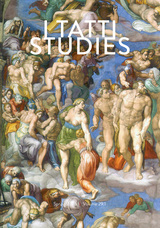

Originally published in 1929, I Thought of Daisy is the first of three novels by Edmund Wilson. Written while he was still balancing his ambitions as a novelist against a successful career in literary criticism, I Thought of Daisy marries Wilson's two vocations to create an unusual and revealing work of fiction.
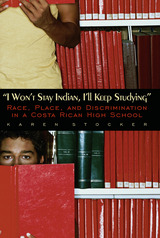
Stocker reveals how overt and hidden curricula taught ethnic, racial, and gendered identities and how the dominant ideology of the town, present in school, conveyed racist messages to students.
"I Won't Stay Indian, I'll Keep Studying" documents how students from the reservation reacted to, coped with, and resisted discrimination. Considering the students' experiences in the context of the Costa Rican educational system as a whole, Stocker discusses policy shifts that might reduce institutionalized discrimination. Her interpretation of the experiences of these students makes a significant contribution to anthropology, Latin American studies, critical race theory, and educational theory.
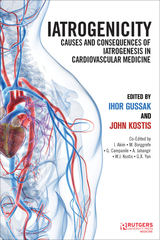
Edited by two renowned cardiology experts, Iatrogenicity: Causes and Consequences of Iatrogenesis in Cardiovascular Medicine addresses both the iatrogenicity that arises with cardiovascular interventions, as well as non-cardiovascular interventions that result in adverse consequences on the cardiovascular system. The book aims to achieve three things: to summarize the available information on this topic in a single high-yield volume; to highlight the human and financial cost of iatrogenesis; and to describe and propose potential interventions to ameliorate the effects of iatrogenesis. This accessible book is a practical reference for any practicing physician who sees patients with cardiovascular issues. .

These provocative accounts of birds, insects, rodents, predators, trees, and flowers are sure to stir the reader’s curiosity. Who wouldn’t be intrigued by a rattlesnake’s ability to hunt in total darkness by detecting the infrared radiation emitted by a mouse? Or how white-tailed ptarmigan thrive in their high, treeless alpine environments -- even through the winter? The narratives, often brought home with a counterintuitive twist, invite readers to make new connections and broaden perspectives of a favorite outdoor place.
In The Iconoclastic Imagination, Ned O’Gorman approaches each of these moments as an image of icon-destruction that give us distinct ways to imagine social existence in American life. He argues that the Cold War gave rise to crises in political, aesthetic, and political-aesthetic representations. Locating all of these crises within a “neoliberal imaginary,” O’Gorman explains that since the Kennedy assassination, the most powerful way to see “America” has been in the destruction of representative American symbols or icons. This, in turn, has profound implications for a neoliberal economy, social philosophy, and public policy. Richly interwoven with philosophical, theological, and rhetorical traditions, the book offers a new foundation for a complex and innovative approach to studying Cold War America, political theory, and visual culture.

How the Star Wars trilogies and their fandoms have engaged with and mirrored American beliefs about race and gender.
The Star Wars saga takes place in a galaxy far, far away, but its social structures—in particular its racial realities—are thoroughly American. So argues Greg Carter in this thought-provoking analysis, which blends historical and theoretical treatments of science fiction cinema and Star Wars fandom to explore the subtle mirroring between fantasy and the communities that create and consume it.
I’d Just as Soon Kiss a Wookiee draws on insights from prominent scholars to examine fictional relationships between groups perceived to be biologically different. Three areas of commonality between the United States and Star Wars arise: stiff regulation of racial mixture; racialized servitude, with nonhumans placed in positions of bondage; and the presumption of white male supremacy. None of these are functions of the of the Star Wars story; rather, they index the expectations of US society. But expectations have also shifted since Star Wars launched in 1977, and the franchise with it. Carter gauges minority and mainstream fan reactions, finding that, while science fiction enthusiasts have a reputation for progressiveness, the truth turns out to be as complicated as US racism itself.
The rise of a free press was, in many ways, a legacy of the Reformation and Enlightenment. Copeland describes a discourse centered on questions of religion--a discussion that the government, with all its religious authority, could not suppress because of the belief that the ability to reason for oneself was God-given. In this account we see how the debate moved from religion to the purely political sphere, and how, through the increased use of the printing press, it was opened to a multiplicity of voices and opinions. Spanning nearly four centuries in Britain and America, Copeland's book reveals how the tension between government control and the right to debate public affairs openly ultimately led to the idea of a free press; in doing so, it documents an intellectual development of unparalleled relevance and importance to the history of journalism.
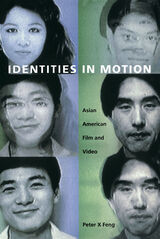
Peter X Feng considers a wide range of works—from genres such as detective films to romantic comedies to ethnographic films, documentaries, avant-garde videos, newsreels, travelogues, and even home movies. Feng begins by examining movies about three crucial moments that defined the American nation and the roles of Asian Americans within it: the arrival of Chinese and Japanese women in the American West and Hawai’i; the incorporation of the Philippines into the U.S. empire; and the internment of Japanese Americans during World War II. In subsequent chapters Feng discusses cinematic depictions of ideological conflicts among Asian Americans and of the complex forces that compel migration, extending his nuanced analysis of the intersections of sexuality, ethnicity, and nationalist movements.
Identities in Motion illuminates the fluidity of Asian American identities, expressing the diversity and complexity of Asian Americans—including Filipinos, Indonesians, Chinese, Japanese, Vietnamese, Laotians, Indians, and Koreans—from the nineteenth to the twenty-first century.

Constructing a new vocabulary with which to understand contemporary society, Curtis examines 'idiotism' across the spheres of economics, politics and culture, drawing on the philosophy and political theories of Martin Heidegger, Louis Althusser, Franco Berardi, Jacques Rancière and Cornelius Castoriadis.
Idiotism recasts our conception of the new neoliberal 'common sense', presenting it as not simply a case of false consciousness, but an ontological problem related to our being-in-the-world.

Kate Milliken knows the ties that bind and how tautly we will pull them. These are stories about desire, betrayal, love, regret, and family. Like all great fiction, If I’d Known You Were Coming possesses that uncanny ability to reveal us to ourselves.


From his adventures flying for the Allies in World War II to his work as head pilot trainer for Ariana Afghan Airlines, Race has logged more than six decades in the air. I’ll Fly Away tracks his travels around the globe, encompassing his post-war job as crop duster and bush pilot, his thirty-four years as a commercial airline pilot for Pan American World Airways, his consultancy to King Hussein for Royal Jordanian Airlines, and the eight years in which he served as lead pilot for Orbis, an eye hospital on wings that served thirty-one countries. In 1989 Race notably retraced Charles Lindbergh’s 1927 20,000-mile goodwill tour, flying his Spirit of Orbis biplane to all forty-eight of the continental U.S. states.
A remarkable and wholly readable biography of an American original, I’ll Fly Away will be essential for the bookshelf of every aviation enthusiast.

I'll Take You There is written by and with the people who most intimately know Nashville, foregrounding the struggles and achievements of people's movements toward social justice. The colloquial use of "I'll take you there" has long been a response to the call of a stranger: for recommendations of safe passage through unfamiliar territory, a decent meal and place to lay one's head, or perhaps a watering hole or juke joint.
In this book, more than one hundred Nashvillians "take us there," guiding us to places we might not otherwise encounter. Their collective entries bear witness to the ways that power has been used by social, political, and economic elites to tell or omit certain stories, while celebrating the power of counternarratives as a tool to resist injustice. Indeed, each entry is simultaneously a story about place, power, and the historic and ongoing struggle toward a more just city for all. The result is akin to the experience of asking for directions in an unfamiliar place and receiving a warm offer from a local to lead you on, accompanied by a tale or two.
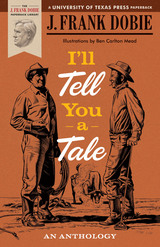
I'll Tell You a Tale is a garland of some of Frank Dobie's best writing, put together by Isabel Gaddis, one of his former students at the University of Texas. The tales included are those the author himself liked best, and he even rewrote some of them especially for this anthology. Ben Carlton Mead has contributed 32 original line drawings to illustrate the stories.
These tales spring from the soil and folklore of our land; but more than this, they make the readers contemporary with the times, filling us with the wonder of something past and yet still with us. They are arranged topically into sections whose titles speak for them: "The Longhorn Breed," "Mustangs and Mustangers," "The Saga of the Saddle," "Characters and Happenings of Long Ago," "Animals of the Wild," "In Realms of Gold," and "Ironies."
I’ll Tell You Mine is an extraordinary anthology, a book rooted in Iowa’s successful program that goes beyond mere celebration to present some of the best nonfiction writing of the past thirty years. Eighteen pieces produced by Iowa graduates exemplify the development of both the program and the field of nonfiction writing. Each is accompanied by commentary from the author on a challenging issue presented by the story and the writing process, including drafting, workshopping, revising, and listening to (or sometimes ignoring) advice. The essays are put into broader context by a prologue from Robert Atwan, founding editor of the Best American Essays series, who details the rise of nonfiction as a literary genre since the New Journalism of the 1960s.
Creative nonfiction is the fastest-growing writing concentration in the country, with more than one hundred and fifty programs in the United States. I’ll Tell You Mine shows why Iowa’s leads the way. Its insider’s view of the Iowa program experience and its wealth of groundbreaking nonfiction writing will entertain readers and inspire writers of all kinds.

Aimed at alumni and prospective students interested in the university's ongoing mission, as well as current faculty and students wishing to stay up to date on the work being done around them, An Illinois Sampler showcases the best, the most ambitious, and the most effective teaching practices developed and nurtured at one of the world's premier research universities.
Contributors are Nancy Abelmann, Flavia C. D. Andrade, Jayadev Athreya, Betty Jo Barrett, Thomas J. Bassett, Hugh Bishop, Antoinette Burton, Lauren A. Denofrio-Corrales, Lizanne DeStefano, Karen Flynn, Bruce W. Fouke, Rebecca Ginsburg, Julie Jordan Gunn, Geoffrey Herman, Laurie Johnson, Kyle T. Mays, Rebecca Nettl-Fiol, Audrey Petty, Anke Pinkert, Raymond Price, Luisa-Maria Rosu, D. Fairchild Ruggles, Carol Spindel, Mark D. Steinberg, William Sullivan, Richard I. Tapping, Bradley Tober, Agniezska Tuszynska, Bryan Wilcox, Kate Williams, Mary-Ann Winkelmes, and Yi Lu.
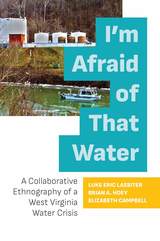
On January 9, 2014, residents across Charleston, West Virginia, awoke to an unusual licorice smell in the air and a similar taste in the public drinking water. That evening residents were informed the tap water in tens of thousands of homes, hundreds of businesses, and dozens of schools and hospitals—the water made available to as many as 300,000 citizens in a nine-county region—had been contaminated with a chemical used for cleaning crushed coal.
This book tells a particular set of stories about that chemical spill and its aftermath, an unfolding water crisis that would lead to months, even years, of fear and distrust. It is both oral history and collaborative ethnography, jointly conceptualized, researched, and written by people—more than fifty in all—across various positions in academia and local communities. I’m Afraid of That Water foregrounds the ongoing concerns of West Virginians (and people in comparable situations in places like Flint, Michigan) confronted by the problem of contamination, where thresholds for official safety may be crossed, but a genuine return to normality is elusive.

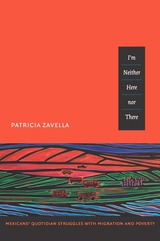
Drawing on close interactions with Mexicans on both sides of the border, Zavella examines migrant journeys to and within the United States, gendered racialization, and exploitation at workplaces, and the challenges that migrants face in forming and maintaining families. As she demonstrates, the desires of migrants to express their identities publicly and to establish a sense of cultural memory are realized partly through Latin American and Chicano protest music, and Mexican and indigenous folks songs played by musicians and cultural activists.
Arrested and imprisoned in a small Swiss town, a prisoner begins this book with an exclamation: “I'm not Stiller!” He claims that his name is Jim White, and that he has been jailed under false charges and under the wrong identity. To prove he is who he claims to be, he confesses to three unsolved murders and recalls in great detail an adventuresome life in America and Mexico among cowboys and peasants, in back alleys and docks. He is consumed by “the morbid impulse to convince,” but no one believes him.
This is a harrowing account—part Kafka, part Camus—of the power of self-deception and the freedom that ultimately lies in self-acceptance. Simultaneously haunting and humorous, I'm Not Stiller has come to be recognized as one of the major post-war works of fiction and a masterpiece of German literature.

An examination of director Todd Haynes and his Bob Dylan biopic.
As the first and only Bob Dylan “biopic,” I’m Not There caused a stir when released in 2007. Offering a surreal retelling of moments from Dylan’s life and career, the film is perhaps best known for its distinctive approach to casting, including Cate Blanchett and Marcus Carl Franklin, a Black child actor, as versions of Dylan though none of the characters bear his name. Greenlit by Bob Dylan himself, the film uses Dylan’s music as a score, a triumph for famed queer filmmaker Todd Haynes after encountering issues with copyright in previous projects.
Noah Tsika eloquently characterizes all the ways that Dylan and Haynes harmonize in their methods and sensibilities, interpreting the rule-breaking film as a biography that refuses chronology, disdains factual accuracy, flirts with libel, and cannibalizes Western cinema. Fitting the film’s inspiration, creation, and reception alongside its continuing afterlife, Tsika examines Dylan’s music in the film through the context of intellectual property, raising questions about who owns artistic material and artistic identities and how such material can be reused and repurposed. Tsika’s adventurous analysis touches on gender, race, queerness, celebrity, popular culture, and the law, while offering much to Haynes and Dylan fans alike.
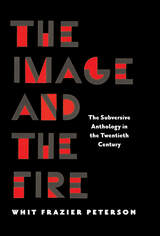
Racial identity and literary form in the modernist anthology
The Image and the Fire examines the coterie anthology—a small, outsider literary collection—as a key, yet understudied, instrument of literary intervention within American modernism. Whit Frazier Peterson argues that these anthologies, produced outside of institutional or canonical frameworks, served as deliberate challenges to dominant literary paradigms. Distinct from academic anthologies that helped codify the American literary canon, coterie anthologies were used by both white and Black avant-garde movements to disrupt prevailing cultural narratives and assert alternative literary visions.
Through close analysis of three seminal case studies—Des Imagistes, edited by Ezra Pound; Fire!!, a short-lived but groundbreaking magazine from the Harlem Renaissance, co-edited by Wallace Thurman; and Black Fire, compiled by Amiri Baraka and Larry Neal during the Black Arts Movement—Peterson traces a genealogy of the coterie anthology as a politically charged genre. He reveals how Black American writers and editors, particularly during the Harlem Renaissance and the Black Arts Movement, reappropriated and reconfigured this type of anthology format from white modernists.
Ultimately, The Image and the Fire positions the coterie anthology as a site of aesthetic and ideological contestation, one through which marginalized literary communities engaged in acts of cultural self-definition, canon revision, and formal innovation. By foregrounding the coterie anthology’s role in shaping a hybrid American modernism, Peterson contributes to ongoing conversations in literary studies around race, authorship, and the politics of literary form.
"Images of a Free Press is the natural sequel to Lee Bollinger's first book, The Tolerant Society, and is destined to become a standard in first amendment scholarship."—Rodney A. Smolla, Constitutional Commentary
"Revisiting themes he first explored some fifteen years ago, Bollinger now adds further to our understanding of the complex relationship among the First Amendment, the Supreme Court, the public, the press and the democratic process. This is a work of insight, sensitivity, and power. Bollinger has a profound knowledge of and a deep affection for his subject, and it shows."—Geoffrey R. Stone, Michigan Law Review
"This thoughtful, understated book remains a call to come join the town meeting and hammer out some new rules of order. Scholars and citizens alike could do well to read Bollinger's book and accept his challenge."—Yale Law Review
"For a number of years, Lee Bollinger has argued that the First Amendment has been applied differently to the print media than it has been to the broadcast media. In his new book, Images of a Free Press, Bollinger provides a concise, persuasive account of why this is so—and why it ought to be so."—Columbia Law Review
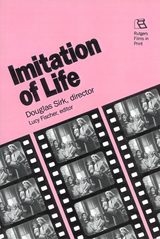
Because of the special stamp he put on his melodramas, Sirk's best works transcend the constraints of their genre. In them, he both exemplified and critiqued postwar, conservative, materialistic life and its false value systems. There is much in Sirk, particularly in Imitation of Life, that is of interest to us today. The time seems to be right for a new look at the film, its reception amidst scandal over the affairs of its star—Lana Turner—the relationships between its mothers and daughters, the tensions between its men and its women, the friendships between its black and white women, and the ambiguous, controversial approach of Sirk to his material.
This volume includes the complete continuity script of the film, critical commentary and published reviews, interviews with the director, and a filmography and bibliography. It also includes an excellent introduction by Lucy Fischer.

Nearly half the 2.3 million residents of Queens, New York are foreign-born. Immigrants in Queens hail from more than 120 countries and speak more than 135 languages. As an epicenter of immigrant diversity, Queens is an urban gateway that exemplifies opportunities and challenges in shaping a multi-racial democracy.
The editors and contributors to Immigrant Crossroads examine the social, spatial, economic, and political dynamics that stem from this fast-growing urbanization. The interdisciplinary chapters examine residential patterns and neighborhood identities, immigrant incorporation and mobilizations, and community building and activism.
Essays combine qualitative and quantitative research methods to address globalization and the unprecedented racial and ethnic diversity as a result of international migration. Chapters on incorporation focus on immigrant participation and representation in electoral politics, and advocacy for immigrant inclusion in urban governance and service provision. A section of Immigrant Crossroads concerns placemaking, focusing on the production of neighborhood spaces and identities as well as immigrant activism and community development and control.
Based on engaged and robust analysis, Immigrant Crossroads highlights the dynamics of this urban gateway.

Examining race and ethnic relations through an intersectional lens, Shirley Yee's An Immigrant Neighborhoodinvestigates the ways that race, class, and gender together shaped concepts of integration and assimilation as well as whiteness and citizenship in lower Manhattan during the late nineteenth and early twentieth-centuries.
In contrast to accounts of insulated neighborhoods and ethnic enclaves, Yee unearths the story of working class urban dwellers of various ethnic groups—Chinese, Jews, Italians, and Irish—routinely interacting in social and economic settings.
Yee's numerous, fascinating anecdotes—such as one about an Irishman who served as the only funeral director for Chinese for many years—recount the lived experiences of these neighborhoods, detailing friendships, business relationships, and sexual relationships that vividly counter the prevailing idea that different ethnic groups did not mix except in ways marked by violence and hostility.

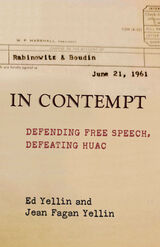
So began a decade of hardship for Ed and Jean Yellin and their three young children as the repressive weight of the U.S. government, caught up in the throes of McCarthyism, crashed down upon their careers, their daily household budget, and their relationships to colleagues, neighbors, and their country. In Contempt is a faithful, factual testament to the enduring quality of patriotic dissent in our evolving democracy—and a loving reconstruction of what it meant to be labeled “unAmerican” for defending the Constitution.
In this book, Amy Lai examines the current free speech crisis in Western universities. She studies the origin, history, and importance of freedom of speech in the university setting, and addresses the relevance and pitfalls of political correctness and microaggressions on campuses, where laws on harassment, discrimination, and hate speech are already in place, along with other concepts that have gained currency in the free speech debate, including deplatforming, trigger warning, and safe space. Looking at numerous free speech disputes in the United Kingdom, the United States, and Canada, the book argues for the equal application of the free speech principle to all expressions to facilitate respectful debates. All in all, it affirms that the right to free expression is a natural right essential to the pursuit of truth, democratic governance, and self-development, and this right is nowhere more important than in the university.

There is a familiar narrative about American suburbs: after 1945, white residents left cities for leafy, affluent subdivisions and the prosperity they seemed to embody. In Levittown’s Shadow tells us there’s more to this story, offering an eye-opening account of diverse, poor residents living and working in those same neighborhoods. Tim Keogh shows how public policies produced both suburban plenty and deprivation—and why ignoring suburban poverty doomed efforts to reduce inequality.
Keogh focuses on the suburbs of Long Island, home to Levittown, often considered the archetypal suburb. Here military contracts subsidized well-paid employment welding airplanes or filing paperwork, while weak labor laws impoverished suburbanites who mowed lawns, built houses, scrubbed kitchen floors, and stocked supermarket shelves. Federal mortgage programs helped some families buy orderly single-family homes and enter the middle class but also underwrote landlord efforts to cram poor families into suburban attics, basements, and sheds. Keogh explores how policymakers ignored suburban inequality, addressing housing segregation between cities and suburbs rather than suburbanites’ demands for decent jobs, housing, and schools.
By turning our attention to the suburban poor, Keogh reveals poverty wasn’t just an urban problem but a suburban one, too. In Levittown’s Shadow deepens our understanding of suburbia’s history—and points us toward more effective ways to combat poverty today.
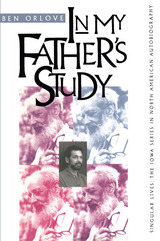
In 1921 Solomon Orlovski, a Russian Jew born in 1904, emigrated to America and transformed himself into Robert Orlove, a pattern maker in two senses of the term: during the day, he worked in the fur trade in New York and Chicago, making patterns for toys and hats; in his private life he became a self-taught artist who created prints, sketches, and collages in his study. More than sixty years later his son Ben—an anthropologist educated at Harvard and Berkeley—walked through the doorway of the deceased Robert's study and began to explore more than a half century of his father's experiences, thoughts, and emotions as well as his own very different life. His wry, sensitive combination of biography, memoir, and autobiography taps a remarkably rich vein of individual and collective experience in our diverse society.
Ben Orlove's dual narrative constitutes a family history of notable breadth and immediacy. By turns passionate and cool, dramatic and analytic, he excavates his father Robert's lifetime accumulation of diaries, letters, clippings, photographs, and artworks to create a convincing, deeply satisfying portrait that link both father and son.

“A deep and howling portrait of longing and loneliness.” —Boston Globe
“A distinctive debut from a promising author.” —Kirkus Reviews
“A stunner from the very first page.” —Deesha Philyaw, author of The Secret Lives of Church Ladies, in the Millions
And praise from Ann Patchett, Alice McDermott, Danielle Evans, Elisa Albert, and Aimee Bender
Populated with lovers who leave and return, with ghosts of the Holocaust and messages from the dead, Courtney Sender’s debut collection speaks in a singular new voice about the longings and loneliness of contemporary love. The world of these fourteen interlocking stories is fiercely real but suffused with magic and myth, dark wit, and distinct humor. Here, ancient loss works its way deep into the psyche of modern characters, stirring their unrelenting lust for life.
In “To Do With the Body,” the Museum of Period Clothes becomes the perfect setting for a bloody crime. In “Lilith in God’s Hands,” Adam’s first wife has an affair in the Garden of Eden. And in the title story, a woman spends her life waiting for any of the men who have left her to come back, only to find them all at her doorstep at once.
For readers of Elena Ferrante, Nicole Krauss, and Carmen Maria Machado, and for anyone who has known love and loneliness, In Other Lifetimes All I’ve Lost Comes Back to Me is a wise and sensual collection of old hauntings, new longings, and unexpected returns, with a finale that is a rousing call to the strength we each have, together or alone.
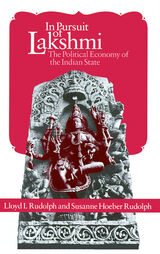
India occupies a paradoxical plane among nation states: it is both developed and underdeveloped, rich and poor, strong and weak. These contrasts locate India in the international order. The Rudolphs' theory of demand and command polities provides a general framework for explaining the special circumstances of the Indian experience.
Contrary to what one might expect in a country with great disparities of wealth, no national party, right or left, pursues the politics of class. Instead, the Rudolphs argue, private capital and organized labor in India face a "third actor"—the state. Because of the dominance of the state makes class politics marginal, the state is itself an element in the creation of the centrist-oriented social pluralism that has characterized Indian politics since independence.
In analyzing the relationship between India's politics and its economy, the Rudolphs maintain that India's economic performance has been only marginally affected by the type of regime in power—authoritarian or democratic. More important, they show that rising levels of social mobilization and personalistic rule have contributed to declining state capacity and autonomy. At the same time, social mobilization has led to a more equitable distribution of economic benefits and political power, which has enhanced the state's legitimacy among its citizens.
The scope and explanatory power of In Pursuit of Lakshmi will make it essential for all those interested in political economy, comparative politics, Asian studies and India.
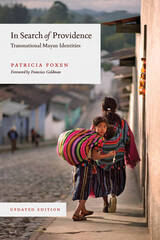
In the mid-1990s, Patricia Foxen traveled back and forth between the Guatemalan highlands and Providence, Rhode Island, to understand the migration paths of K'iche' Mayan Indians who had fled the Guatemalan civil war to work in the factories and fisheries of New England. More than two decades later, many Mayans are still migrating to the US. As Foxen argues, the recent surge in Mayan border crossings must be contextualized within both the longer history of violence, marginality, and exclusion that has long led Guatemala's Indigenous populations to be "survivors on the move," as well as contemporary push factors such as climate change and growing inequality that have forced people from their communities.
And yet one of the most significant drivers of continued emigration today, ironically, is the very culture of migration (described in the book) that has accelerated social change within many Indigenous communities, setting in motion a complex series of economic and cultural shifts that have compelled a continuous movement of people and generations to the US. Reading this story in 2020—at a time of massive growth in flows of irregular migrations around the world—can help us better understand the highly complex set of factors that propel long-term migrations and that shape transnational communities on both sides of the border.
In Search of Providence offers a layered, historically grounded perspective that speaks to the local specificity behind the migration experience in order to point to the universal themes and contradictions of contemporary global displacements.
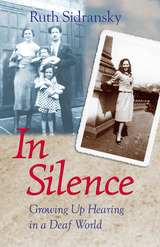
Inside her family’s apartment, Sidransky knew a warm, secure place. She recalls her earliest memories of seeing words fall from her parents’ hands. She remembers her father entertaining the family endlessly with his stories, and her mother’s story of tying a red ribbon to herself and her infant daughter to know when she needed anything in the night.
Outside the apartment, the cacophonous hearing world greeted Sidransky’s family with stark stares of curiosity as though they were “freaks.” Always upbeat, her proud father still found it hard to earn a living. When Sidransky started school, she was placed in a class for special needs children until the principal realized that she could hear and speak.
Sidransky portrays her family with deep affection and honesty, and her frank account provides a living narrative of the Deaf experience in pre- and post-World War II America. In Silence has become an invaluable chronicle of a special time and place that will affect all who read it for years to come.
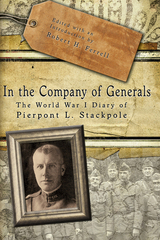
Pierpont Stackpole was a Boston lawyer who in January 1918 became aide to Lieutenant General Hunter Liggett, soon to be commander of the first American corps in France. Stackpole’s diary, published here for the first time, is a major eyewitness account of the American Expeditionary Forces’ experience on the Western Front, offering an insider’s view into the workings of Liggett’s commands, his day-to-day business, and how he orchestrated his commands in trying and confusing situations.
Hunter Liggett did not fit John J. Pershing’s concept of the trim and energetic officer, but Pershing entrusted to him a corps and then an army command. Liggett assumed leadership of the U.S. First Army in mid-October of 1918, and after reorganizing, reinforcing, and resting, the battle-weary troops broke through the German lines in a fourth attack at the Meuse-Argonne—accomplishing what Pershing had failed to do in three previous attempts. The victory paved the way to armistice on November 11.
Liggett has long been a shadowy figure in the development of the American high command. He was “Old Army,” a veteran of Indian wars who nevertheless kept abreast of changes in warfare and more than other American officers was ready for the novelties of 1914–1918. Because few of his papers have survived, the diary of his aide—who rode in the general’s staff car as Liggett unburdened himself about fellow generals and their sometimes abysmal tactical notions—provides especially valuable insights into command within the AEF.
Stackpole’s diary also sheds light on other figures of the war, presenting a different view of the controversial Major General Clarence Edwards than has recently been recorded and relating the general staff’s attitudes about the flamboyant aviation figure Billy Mitchell. General Liggett built the American army in France, and the best measure of his achievement is this diary of his aide. That record stands here as a fascinating and authentic look at the Great War.

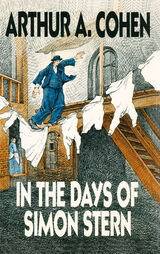
"A majestic work of fiction that should stand world literature's test of time, to be read and reread. A masterpiece."—Commonweal
"This book ensnares one of the most extraordinarily daring ideas to inhabit an American novel in a number of years. For one thing, it is that risky devising, dreamed of only by the Thomas Manns of the world, a serious and vastly conceived fiction bled out of the theological imagination. For another, it is clearly an 'American' novel—altogether American, despite its Jewish particularity: it is not so much about the history of the Jews as it is about the idea of the New World as haven. . . . In its teeming particularity every vein of this book runs with a brilliance of Jewish insight and erudition to be found in no other novelist. Arthur Cohen is the first writer of any American generation to compose a profoundly Jewish fiction on a profoundly Western theme."—Cynthia Ozick, New York Times Book Review
"This stately, ambitious amalgam of Jewish myth, history, theology, and speculations on the Jewish soul is like an enormous Judaic archeological ruin—often hard for the uninitiated to interpret, but impressive. . . . Intelligent, inventive, fascinating."—New Yorker
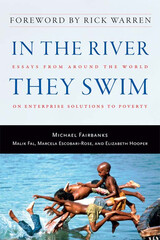
The sociologist Thomas Sowell writes, "We need to confront the most blatant fact that has persisted across centuries of social history—vast ddifferences in productivity among peoples, and the economic and other consequences of such differences." Poverty demeans dignity, shrinks the soul, wastes potential, and inflicts suffering on three billion people on our planet. We must also acknowledge that, during the past fifty yyears, the record in international assistance to the least developed countries has been disappointing; the economics-based abstractions developed in the think tanks of Europe and North America are insufficient.
In the River They Swim is the antithesis to that search for solutions the next big theory of global poverty. From the fresh perspective of advisors on the frontlines of development to the insight of leaders like President Paul Kagame of Rwanda and Pastor Rick Warren, it tells the story of change in the microcosms of emerging businesses, industries, and governments. These essays display a personal nature to their work that rigorous analysis alone cannot explain.
We learn that a Sufi master can teach us about the different levels of knowledge, the "different ways to know a river." These practitioners could have written about its length, its source, its depth, its width, the power of its current, and the life it contains. They could have invested time and money to travel to that river so that they could sit on its shores and look at it, feel the sand that borders it, and watch the birds at play over it. Instead, they dove in to swim in the river, felt its current along their bodies, and tasted something of it. They wondered, briefly, if they had the strength to swim its length, and now they share the answer.
If human development is a river, the authors in this volume, and perhaps some readers, will no longer be satisfied to stand along its banks.
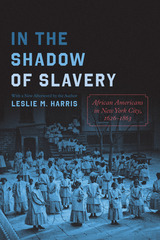
The popular understanding of the history of slavery in America almost entirely ignores the institution’s extensive reach in the North. But the cities of the North were built by—and became the home of—tens of thousands of enslaved African Americans, many of whom would continue to live there as free people after Emancipation.
In the Shadow of Slavery reveals the history of African Americans in the nation’s largest metropolis, New York City. Leslie M. Harris draws on travel accounts, autobiographies, newspapers, literature, and organizational records to extend prior studies of racial discrimination. She traces the undeniable impact of African Americans on class distinctions, politics, and community formation by offering vivid portraits of the lives and aspirations of countless black New Yorkers. This new edition includes an afterword by the author addressing subsequent research and the ongoing arguments over how slavery and its legacy should be taught, memorialized, and acknowledged by governments.
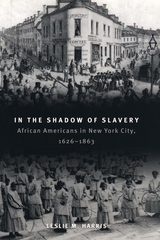
In 1991 in lower Manhattan, a team of construction workers made an astonishing discovery. Just two blocks from City Hall, under twenty feet of asphalt, concrete, and rubble, lay the remains of an eighteenth-century "Negro Burial Ground." Closed in 1790 and covered over by roads and buildings throughout the nineteenth and twentieth centuries, the site turned out to be the largest such find in North America, containing the remains of as many as 20,000 African Americans. The graves revealed to New Yorkers and the nation an aspect of American history long hidden: the vast number of enslaved blacks who labored to create our nation's largest city.
In the Shadow of Slavery lays bare this history of African Americans in New York City, starting with the arrival of the first slaves in 1626, moving through the turbulent years before emancipation in 1827, and culminating in one of the most terrifying displays of racism in U.S. history, the New York City Draft Riots of 1863. Drawing on extensive travel accounts, autobiographies, newspapers, literature, and organizational records, Leslie M. Harris extends beyond prior studies of racial discrimination by tracing the undeniable impact of African Americans on class, politics, and community formation and by offering vivid portraits of the lives and aspirations of countless black New Yorkers.
Written with clarity and grace, In the Shadow of Slavery is an ambitious new work that will prove indispensable to historians of the African American experience, as well as anyone interested in the history of New York City.
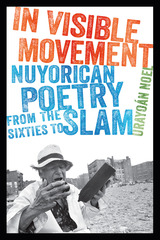
The first book-length study specifically devoted to Nuyorican poetry, In Visible Movement is unique in its historical and formal breadth, ranging from the foundational poets of the 1960s and 1970s to a variety of contemporary poets emerging in and around the Nuyorican Poets Cafe “slam” scene of the 1990s and early 2000s. It also unearths a largely unknown corpus of poetry performances, reading over forty years of Nuyorican poetry at the intersection of the printed and performed word, underscoring the poetry’s links to vernacular and Afro-Puerto Rican performance cultures, from the island’s oral poets to the New York sounds and rhythms of Latin boogaloo, salsa, and hip-hop. With depth and insight, Urayoán Noel analyzes various canonical Nuyorican poems by poets such as Pedro Pietri, Victor Hernández Cruz, Miguel Algarín, Miguel Piñero, Sandra María Esteves, and Tato Laviera. He discusses historically overlooked poets such as Lorraine Sutton, innovative poets typically read outside the Nuyorican tradition such as Frank Lima and Edwin Torres, and a younger generation of Nuyorican-identified poets including Willie Perdomo, María Teresa Mariposa Fernández, and Emanuel Xavier, whose work has received only limited critical consideration. The result is a stunning reflection of how New York Puerto Rican poets have addressed the complexity of identity amid diaspora for over forty years.
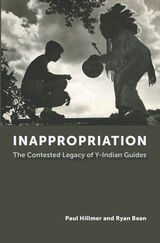
The Y-Indian Guides was a father-son (and later parent-child) program that encouraged real and enduring bonds through play and an authentic appreciation of family. While “playing Indian” seemed harmless to most participants during the program’s heyday, Paul Hillmer and Ryan Bean demonstrate the problematic nature of its methods. In the process of seeking to admire and emulate Indigenous Peoples, Y-Indian Guide participants often misrepresented American Indians and reinforced harmful stereotypes. Ultimately, this history demonstrates many ways in which American culture undermines and harms its Indigenous communities.
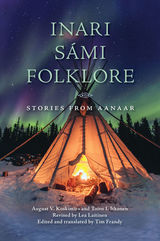
First published in 1918 only in the Aanaar Sámi language and in Finnish, this anthology is now available in a centennial English-language edition for a global readership. Translator Tim Frandy has added biographies of the storytellers, maps and period photos, annotations, and a glossary. In headnotes that contextualize the stories, he explains such underlying themes as Aanaar conflicts with neighboring Sámi and Finnish communities, the collapse of the wild reindeer populations less than a century before, and the pre-Christian past in Aanaar. He introduces us to the bawdy humor of Antti Kitti, the didacticism of Iisakki Mannermaa, and the feminist leanings of Juho Petteri Lusmaniemi, emphasizing that folktales and proverbs are rooted in the experiences of individuals who are links in a living tradition.

The concept of ‘the commons’ has been used as a framework to understand resources shared by a community rather than a private entity, and it has also inspired social movements working against the enclosure of public goods and resources. One such resource is free (libre) and open source software (FLOSS). FLOSS emerged as an alternative to proprietary software in the 1980s. However, both the products and production processes of FLOSS have become incorporated into capitalist production. For example, Red Hat, Inc. is a large publicly traded company whose business model relies entirely on free software, and IBM, Intel, Cisco, Samsung, Google are some of the largest contributors to Linux, the open-source operating system. This book explores the ways in which FLOSS has been incorporated into digital capitalism. Just as the commons have been used as a motivational frame for radical social movements, it has also served the interests of free-marketeers, corporate libertarians, and states to expand their reach by dragging the shared resources of social life onto digital platforms so they can be integrated into the global capitalist system.
The book concludes by asserting the need for a critical political economic understanding of the commons that foregrounds (digital) labour, class struggle, and uneven power distribution within the digital commons as well as between FLOSS communities and their corporate sponsors.

Schiwy argues that instead of solely creating entertainment through their work indigenous media activists are building communication networks that encourage interaction between diverse cultures. As a result, mainstream images are retooled, permitting communities to strengthen their cultures and express their own visions of development and modernization. Indianizing Film encourages readers to consider how indigenous media contributes to a wider understanding of decolonization and anticolonial study against the universal backdrop of the twenty-first century.
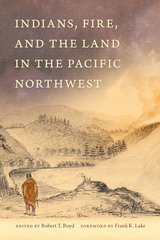
Instead of discovering a land blanketed by dense forests, early explorers of the Pacific Northwest encountered a varied landscape including open woods, meadows, and prairies. Far from a pristine wilderness, much of the Northwest was actively managed and shaped by the hands of its Native American inhabitants. Their primary tool was fire.
This volume takes an interdisciplinary approach to one of the most important issues concerning Native Americans and their relationship to the land. Over more than 10,000 years, Native Americans in the Northwest learned the intricacies of their local environments and how to use fire to create desired effects, mostly in the quest for food.
Drawing on historical journals, Native American informants, and ethnobotanical and forestry studies, this book’s contributors describe local patterns of fire use in eight ecoregions, representing all parts of the Native Northwest, from southwest Oregon to British Columbia and from Puget Sound to the Northern Rockies. Their essays provide glimpses into a unique understanding of the environment, one that draws on traditional ecological knowledge. Together, these writings also offer historical perspective on the contemporary debate over “prescribed burning” and management of public lands.
This updated edition includes a foreword by Frank K. Lake and a new epilogue by editor Robert T. Boyd. Contributors include Stephen Arno, Stephen Barrett, Theresa Ferguson, David French, Eugene Hunn, Leslie Johnson, Jeff LaLande, Estella Leopold, Henry Lewis, Helen H. Norton, Reg Pullen, William Robbins, John Ross, Nancy Turner, and Richard White.

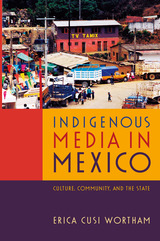
Drawing on her in-depth ethnographic research among indigenous mediamakers in Mexico, Wortham traces their shifting relationship with Mexican cultural agencies; situates their work within a broader, hemispheric network of indigenous media producers; and complicates the notion of a unified, homogeneous indigenous identity. Her analysis of projects from community-based media initiatives in Oaxaca to the transnational Chiapas Media Project highlights variations in cultural identity and autonomy based on specific histories of marginalization, accommodation, and resistance.

Published by Bucknell University Press. Distributed worldwide by Rutgers University Press.
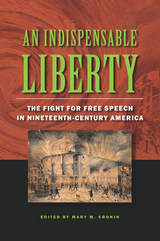
The eleven essays that make up this collection show how, despite judicial, political, and public proclamations of support for freedom of expression, factors like tradition, gender stereotypes, religion, and fear of social unrest often led to narrow judicial and political protection for freedom of expression by people whose views upset the status quo. These views, expressed by abolitionists, suffragists, and labor leaders, challenged rigid cultural mores of the day, and many political and cultural leaders feared that extending freedom of expression to agitators would undermine society. The Civil War intensified questions about the duties and privileges of citizenship. After the war, key conflicts over freedom of expression were triggered by Reconstruction, suffrage, the Comstock Act, and questions about libel.
The volume’s contributors blend social, cultural, and intellectual history to untangle the complicated strands of nineteenth-century legal thought. By chronicling the development of modern-day notions of free speech, this timely collection offers both a valuable exploration of the First Amendment in nineteenth-century America and a useful perspective on the challenges we face today.
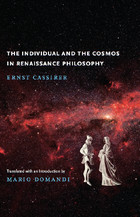
This provocative volume, one of the most important interpretive works on the philosophical thought of the Renaissance, has long been regarded as a classic in its field. Ernst Cassirer here examines the changes brewing in the early stages of the Renaissance, tracing the interdependence of philosophy, language, art, and science; the newfound recognition of individual consciousness; and the great thinkers of the period—from da Vinci and Galileo to Pico della Mirandola and Giordano Bruno. The Individual and the Cosmos in Renaissance Philosophy discusses the importance of fifteenth-century philosopher Nicholas Cusanus, the concepts of freedom and necessity, and the subject-object problem in Renaissance thought.
“This fluent translation of a scholarly and penetrating original leaves little impression of an attempt to show that a ‘spirit of the age’ or ‘spiritual essence of the time’ unifies and expresses itself in all aspects of society or culture.”—Philosophy

READERS
Browse our collection.
PUBLISHERS
See BiblioVault's publisher services.
STUDENT SERVICES
Files for college accessibility offices.
RECENTLY PUBLISHED


UChicago Accessibility Resources
home | accessibility | search | about | contact us
BiblioVault ® 2001 - 2026
The University of Chicago Press