
 A SCHOLARLY BOOK REPOSITORY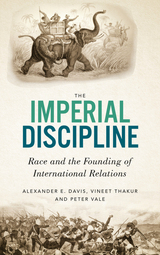
This book questions the accepted origins of the field of International Relations (IR). Commonly understood to have emerged from the horrors of WW1 with the goal of bringing about world peace, the authors argue that on the contrary, IR came from a somewhat less noble tradition – that of the Round Table.
The Round Table were a network of imperialists emerging in the late 1800s across five key British imperial societies: Australia, Canada, New Zealand, South Africa and India. Their aim was to improve imperial governance, placing the empire into a position to control world affairs. Although they ultimately failed to rearrange world order according to their vision, they did help to build what we now call the discipline of IR.
The Round Table's 'scientific method' for the study of world affairs was rapidly subsumed into each geopolitical context. Through telling this story, the authors recover it, and interrogate its meanings for the discipline of IR today. They show the importance of the Global South to IR's foundations, and argue that IR scholarship in this period was intertwined with imperial racial thought in ways that it should not and cannot forget.
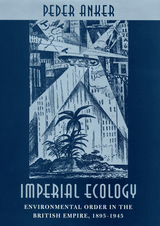
From 1895 to the founding of the United Nations in 1945, the promising new science of ecology flourished in the British Empire. Peder Anker asks why ecology expanded so rapidly and how a handful of influential scientists and politicians established a tripartite ecology of nature, knowledge, and society.
Patrons in the northern and southern extremes of the Empire, he argues, urgently needed tools for understanding environmental history as well as human relations to nature and society in order to set policies for the management of natural resources and to effect social control of natives and white settlement. Holists such as Jan Christian Smuts and mechanists such as Arthur George Tansley vied for the right to control and carry out ecological research throughout the British Empire and to lay a foundation of economic and social policy that extended from Spitsbergen to Cape Town.
The enlargement of the field from botany to human ecology required a broader methodological base, and ecologists drew especially on psychology and economy. They incorporated those methodologies and created a new ecological order for environmental, economic, and social management of the Empire.
Offers a fresh perspective on power relationships in global politics.
“Developed/underdeveloped,” “first world/third world,” “modern/traditional”-although there is nothing inevitable, natural, or arguably even useful about such divisions, they are widely accepted as legitimate ways to categorize regions and peoples of the world. In Imperial Encounters, Roxanne Lynn Doty looks at the way these kinds of labels influence North-South relations, reflecting a history of colonialism and shaping the way national identity is constructed today.
Employing a critical, poststructuralist perspective, Doty examines two “imperial encounters” over time: between the United States and the Philippines and between Great Britain and Kenya. The history of these two relationships demonstrates that not only is the more powerful member allowed to construct “reality,” but this construction of reality bears an important relationship to actual practice. Doty is particularly interested in the way in which the South has been represented by policymakers, scholars, and journalists, and how these representations have influenced specific encounters. Doty also uses the insights of Edward Said to argue that the power dynamic that allows the North to define the global identity of nations in the South ultimately tells us more about northern powers than about their southern neighbors. Doty then considers the persistence of representational practices, particularly with regard to Northern views of human rights in the South and contemporary social science discourses on North-South relations. She ends with the argument that the discipline of international relations needs to be reformed by broadening the repertoire of theoretical and analytical tools available to scholars studying global politics. Important and timely, Imperial Encounters brings a fresh perspective to the debate over the past-and the future-of global politics.
Once the grain basket for South Africa, much of Lesotho has become a scarred and degraded landscape. The nation’s spectacular erosion and gullying have concerned environmentalists and conservationists for more than half a century. In Imperial Gullies: Soil Erosion and Conservation in Lesotho, Kate B. Showers documents the truth behind this devastation.
Showers reconstructs the history of the landscape, beginning with a history of the soil. She concludes that Lesotho’s distinctive erosion chasms, called dongas—often cited as an example of destructive land-use practices by African farmers—actually were caused by colonial and postcolonial interventions. The residents of Lesotho emerge as victims of a failed technology. Their efforts to mitigate or resist implementation of destructive soil conservation engineering works were thwarted, and they were blamed for the consequences of policies promoted by international soil conservationists since the 1930s.
Imperial Gullies calls for an observational, experimental, and, most important, a fully consultative and participatory approach to address Lesotho’s serious contemporary problems of soil erosion. The first book to bring to center stage the historical practice of colonial soil science—and a cautionary tale of western science in unfamiliar terrain—it will interest a broad, interdisciplinary audience in African and environmental studies, social sciences, and history.


Masalha argues that the heart of the conflict between Zionist immigrants/settlers and the native Palestinians has always been about land, territory, demography and water. He documents how Israeli policy has made it a priority to expel the Palestinians, either by war or peaceful measures. But these imperialist tendencies are not restricted to extremist zealots. The author uncovers the expansionist policies found in Labour Zionism and Kookist ideology.
Chapters cover the Whole Land of Israel Movement, Zionist Revisionism and the Likud Party, Gush Emunim and the religious fundamentalists, parties and movements of the far right and the evolution of Israeli Jewish public attitudes since 1967.
Critically reflecting on elements of mapping and imperialism from the late seventeenth century to the early twentieth century, the essays discuss the nature of the imperial map through a series of case studies of empires, from the Qing dynasty of China, to the Portuguese empire in South America, to American imperial pretensions in the Pacific Ocean, among others. Collectively, the essays reveal that the relationship between mapping and imperialism, as well as the practice of political and economic domination of weak polities by stronger ones, is a rich and complex historical theme that continues to resonate in our modern day.

In Imperial Material, Alvita Akiboh reveals how US national identity has been created, challenged, and transformed through embodiments of empire found in US territories, from the US dollar bill to the fifty-star flag. These symbolic objects encode the relationships between territories—including the Philippines, the Hawaiian Islands, Puerto Rico, and Guam—and the empire with which they have been entangled. Akiboh shows how such items became objects of local power, their original intent transmogrified. For even if imperial territories were not always front and center for federal lawmakers and administrators, their inhabitants remained continuously aware of the imperial United States, whose presence announced itself on every bit of currency, every stamp, and the local flag.

Imperial Media: Colonial Networks and Information Technologies in the British Literary Imagination, 1857–1918 brings together two of the most dynamic and productive approaches to the study of nineteenth-century literature in recent years—media studies and colonial studies—to illuminate the rich and enduring symbiosis that developed between information technologies and Empire. Over a century before Facebook and the iPhone, Britons relied on the electric media of their day for information about their global empire—but those media, which during Victoria’s reign stretched out its tentacles to form a true “world wide web,” not only delivered information but provided conceptual frames as well, helping to shape the way their users thought.
Ranging in space from the telegraph offices of Kipling’s India to the wireless transmitter on H.G. Wells’s Africanized moon, and in time from the Sepoy Rebellion to the Great War, Imperial Media reveals the extent to which British conceptions of imperial power were inflected by the new media of the nineteenth century: the telegraph, telephone, phonograph, radio, and cinema.
While focusing on the fiction of Kipling, Wells, Marie Corelli, H. Rider Haggard, and John Buchan (“the last Victorian,” in Gertrude Himmelfarb’s phrase), Aaron Worth also argues that the “imperial media” of the Victorians retain much of their imaginative life and power today, informing such popular entertainments of the twenty-first century as Bollywood cinema and the BBC’s science-fiction franchise Torchwood. This is a vital, engaging study that will shape future discussions of both colonial and information systems, as well as the relationship between the two, in Victorian studies and elsewhere.
In a provocative study on comparative empire, noted historians identify periods of transition across history that reveal how and why empires emerge. Loren J. Samons on Athens and Arthur Eckstein on Rome examine classical Western empires. Nicholas Canny discusses the British experience, Paul Bushkovitch analyzes the case of imperial Russia, and Pamela Kyle Crossley studies Qing China’s beginnings. Frank Ninkovich tackles the actions of the United States at the turn of the twentieth century, which many view as imperial behavior.
What were the critical characteristics that distinguished the imperial period of the state from its pre-imperial period? When did the state develop those characteristics sufficiently to be called an empire? The authors indicate the domestic political, social, economic, or military institutions that made empire formation possible and address how intentional the transition to empire was. They investigate the actions that drove imperial consolidation and consider the international environment in which the empire formed. Kimberly Kagan provides a concluding essay that probes the historical cases for insights into policymaking and the nature of imperial power.
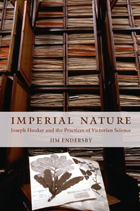
By analyzing Hooker’s career, Endersby offers vivid insights into the everyday activities of nineteenth-century naturalists, considering matters as diverse as botanical illustration and microscopy, classification, and specimen transportation and storage, to reveal what they actually did, how they earned a living, and what drove their scientific theories. What emerges is a rare glimpse of Victorian scientific practices in action. By focusing on science’s material practices and one of its foremost practitioners, Endersby ably links concerns about empire, professionalism, and philosophical practices to the forging of a nineteenth-century scientific identity.

An Imperial Path to Modernity examines the role of liberal intellectuals in reshaping transnational ideas and internationalist aspirations into national values and imperial ambitions in early twentieth-century Japan. Perceiving the relationship between liberalism and the international world order, a cohort of Japanese thinkers conformed to liberal ideas and institutions to direct Japan’s transformation into a liberal empire in Asia. To sustain and rationalize the imperial enterprise, these Japanese liberals sought to make the domestic political stage less hostile to liberalism. Facilitating the creation of print-mediated public opinion, liberal intellectuals attempted to enlist the new middle class as a social ally in circulating liberal ideas and practices within Japan and throughout the empire.
In tracing the interconnections between liberalism and the imperial project, Jung-Sun N. Han focuses on the ideas and activities of Yoshino Sakuzo (1878–1933), who was and is remembered as a champion of prewar Japanese liberalism and Taisho democracy. Drawing insights from intellectual history, cultural studies, and international relations, this study argues that prewar Japanese liberalism grew out of the efforts of intellectuals such as Yoshino who worked to devise a transnational institution to govern the Japanese empire.

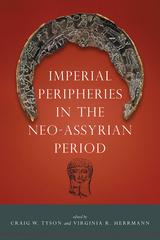
An international team of archaeologists and historians draws upon both new and existing evidence from excavations, surveys, texts, and material culture to highlight the strategies that the Neo-Assyrian Empire applied to manage its diverse and widespread empire as well as the mixed reception of those strategies by subjects close to and far from the center. Case studies from around the ancient Near East illustrate a remarkable variety of responses to Assyrian aggression, economic policies, and cultural influences. As a whole, the volume demonstrates both the destructive and constructive roles of empire, including unintended effects of imperialism on socioeconomic and cultural change.
Imperial Peripheries in the Neo-Assyrian Period aligns with the recent movement in imperial studies to replace global, top-down materialist models with theories of contingency, local agency, and bottom-up processes. Such approaches bring to the foreground the reality that the development and lifecycles of empires in general, and the Neo-Assyrian Empire in particular, cannot be completely explained by the activities of the core. The book will be welcomed by archaeologists of the Ancient Near East, Assyriologists, and scholars concerned with empires and imperial power in history.
Contributors: Stephanie H. Brown, Anna Cannavò, Megan Cifarelli, Erin Darby, Bleda S. Düring, Avraham Faust, Guido Guarducci, Bradley J. Parker
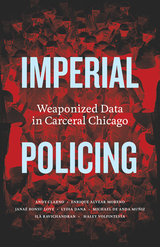
Exposing the carceral webs and weaponized data that shape Chicago’s police wars
Chicago is a city with extreme concentrations of racialized poverty and inequity, one that relies on an extensive network of repressive agencies to police the poor and suppress struggles for social justice. Imperial Policing examines the role of local law enforcement, federal immigration authorities, and national security agencies in upholding the city’s highly unequal social order.
Collaboratively authored by the Policing in Chicago Research Group, Imperial Policing was developed in dialogue with movements on the front lines of struggles against racist policing in Black, Latinx, and Arab/Muslim communities. It analyzes the connections between three police “wars”—on crime, terror, and immigrants—focusing on the weaponization of data and the coordination between local and national agencies to suppress communities of color and undermine social movements. Topics include high-tech, data-based tools of policing; the racialized archetypes that ground the police wars; the manufacturing of criminals and terrorists; the subversion of sanctuary city protections; and abolitionist responses to policing, such as the Erase the Database campaign.
Police networks and infrastructure are notoriously impenetrable to community members and scholars, making Imperial Policing a rare, vital example of scholars working directly with community organizations to map police networks and intervene in policing practices. Engaging in a methodology designed to provide support for transformative justice organizations, the Policing in Chicago Research Group offers a critical perspective on the abolition of imperial policing, both in Chicago and around the globe.

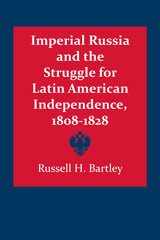
This study, the first of its kind in English, examines Russian responses to the independence movement in Latin America during the early nineteenth century. From a strictly presentist perspective, the investigation of this subject contributes to the historiography of colonialism and of Latin America's relations with the major world powers. In addition, it rounds out the story of foreign interests in the emancipation of Spanish and Portuguese America, while at the same time shedding new light on the history of Russian overseas expansion.
The study probes the major determinants of Russian responses to the struggle for independence of colonial Latin America and evaluates, from a European perspective, the actual impact of tsarist policy on the course of those historic events. Drawing on a wide range of printed materials and on hitherto unused manuscript sources from the archives and libraries of Spain, Portugal, Brazil, and the USSR, it isolates Russian New World objectives during the first decades of the nineteenth century and relates those objectives to the formulation of tsarist policy toward the insurgent Iberian colonies.
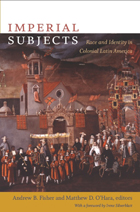
Whether analyzing cases in which the Inquisition found that the individuals before it were “legally” Indians and thus exempt from prosecution, or considering late-eighteenth- and early-nineteenth-century petitions for declarations of whiteness that entitled the mixed-race recipients to the legal and social benefits enjoyed by whites, the book’s contributors approach the question of identity by examining interactions between imperial subjects and colonial institutions. Colonial mandates, rulings, and legislation worked in conjunction with the exercise and negotiation of power between individual officials and an array of social actors engaged in countless brief interactions. Identities emerged out of the interplay between internalized understandings of self and group association and externalized social norms and categories.
Contributors. Karen D. Caplan, R. Douglas Cope, Mariana L. R. Dantas, María Elena Díaz, Andrew B. Fisher, Jane Mangan, Jeremy Ravi Mumford, Matthew D. O’Hara, Cynthia Radding, Sergio Serulnikov, Irene Silverblatt, David Tavárez, Ann Twinam
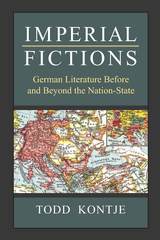
Imperial Texas examines the development of Texas as a human region, from the simple outline of the Spanish colony to the complex patterns of the modern state. In this study in cultural geography set into a historical framework, D. W. Meinig discusses the "various peoples of Texas, who they are, where they came from, where they settled, and how they are proportioned one to another from place to place." After examining the historical framework, he then presents detailed analyses of the major regions of modem Texas and an over-all characterization of the state and its people. He concludes that, although Texas has never been the empire that it has sometimes been called, "nevertheless... Texas is something more than just one-fourteenth of the American area, one-twentieth of the American people, and one-fiftieth of the American union."

Radhika Mohanram shows not just how British imperial culture shaped the colonies, but how the imperial rule of colonies shifted—and gave new meanings to—what it meant to be British.
Imperial White looks at literary, social, and cultural texts on the racialization of the British body and investigates British whiteness in the colonies to address such questions as: How was the whiteness in Britishness constructed by the presence of Empire? How was whiteness incorporated into the idea of masculinity? Does heterosexuality have a color? And does domestic race differ from colonial race? In addition to these inquiries on the issues of race, class, and sexuality, Mohanram effectively applies the methods of whiteness studies to British imperial material culture to critically racialize the relationship between the metropole and the peripheral colonies.
Considering whether whiteness, like theory, can travel, Mohanram also provides a new perspective on white diaspora, a phenomenon of the nineteenth century that has been largely absent in diaspora studies, ultimately rereading—and rethinking—British imperial whiteness.
Radhika Mohanram teaches postcolonial cultural studies in the School of English, Communication and Philosophy at Cardiff University, Wales. She is the author of Black Body: Women, Colonialism, Space (Minnesota, 1999) and edits the journal Social Semiotics.
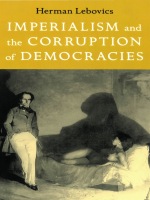
Some essays explore why modern Western democratic societies needed colonialism. Among these is an examination of the seventeenth-century philosopher John Locke’s prescient conclusion that liberalism could only control democratic forces with the promise of greater wealth enabled by empire. In other essays Lebovics considers the relation between overseas rule and domestic life. Discussing George Orwell’s tale “Shooting an Elephant” and the careers of two colonial officers (one British and one French), he contemplates the ruinous authoritarianism that develops among the administrators of empire. Lebovics considers Pierre Bourdieu’s thinking about how colonialism affected metropolitan French life, and he reflects on the split between sociology and ethnology, which was partly based on a desire among intellectuals to think one way about metropolitan populations and another about colonial subjects. Turning to the arts, Lebovics traces how modernists used the colonial “exotic” to escape the politicized and contested modernity of the urban West. Imperialism and the Corruption of Democracies is a compelling case for cultural history as a key tool for understanding the injurious effects of imperialism and its present-day manifestations within globalization.
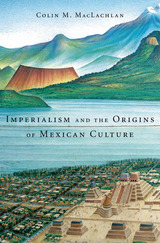
With an empire stretching across central Mexico, unmatched in military and cultural might, the Aztecs seemed poised on the brink of a golden age in the early sixteenth century. But the arrival of the Spanish changed everything. Imperialism and the Origins of Mexican Culture chronicles this violent clash of two empires and shows how modern Mestizo culture evolved over the centuries as a synthesis of Old and New World civilizations.
Colin MacLachlan begins by tracing Spain and Mesoamerica’s parallel trajectories from tribal enclaves to complex feudal societies. When the Spanish laid siege to Tenochtitlán and destroyed it in 1521, the Aztecs could only interpret this catastrophe in cosmic terms. With their gods discredited and their population ravaged by epidemics, they succumbed quickly to Spanish control—which meant submitting to Christianity. Spain had just emerged from its centuries-long struggle against the Moors, and zealous Christianity was central to its imperial vision. But Spain’s conquistadors far outnumbered its missionaries, and the Church’s decision to exclude Indian converts from priesthood proved shortsighted. Native religious practices persisted, and a richly blended culture—part Indian, part Christian—began to emerge.
The religious void left in the wake of Spain’s conquests had enduring consequences. MacLachlan’s careful analysis explains why Mexico is culturally a Mestizo country while ethnically Indian, and why modern Mexicans remain largely orphaned from their indigenous heritage—the adopted children of European history.
Imperialism in the Twentieth Century was first published in 1978. Minnesota Archive Editions uses digital technology to make long-unavailable books once again accessible, and are published unaltered from the original University of Minnesota Press editions.
"Nothing is filed under the heading 'imperialism' in the archives of any nation-state that owned an empire. Foreign affairs, or external relations, are catalogued there, and a place is found for imperial administration and colonial trade; but 'imperialism' is always a listing in someone else's index, never one's own. It is not the name a government uses to classify the policies it sets in motion. It is the name given them by those who adopt a particular attitude... In our time the attitude toward this control is hostile."
With these words A.P. Thornton takes on a complex and elusive term, imperialism,and pursues its meaning and implications in the years of imperial decline. The disappearance of territorial empire, according to Thornton, did not bring imperial impulses to an end, nor did it destroy the power relationships set up in the heyday of empire. Casting a cool eye on the claims of both imperialism and nationalism—the principal countervailing force—Thornton brings imagination, wide learning, and clarifying wit to bear upon a subject that remains significant in the last quarter of the twentieth century.
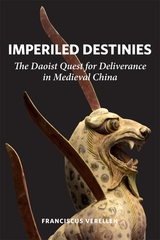
Imperiled Destinies examines the evolution of Daoist beliefs about human liability and redemption over eight centuries and outlines ritual procedures for rescuing an ill‐starred destiny. From the second through the tenth century CE, Daoism emerged as a liturgical organization that engaged vigorously with Buddhism and transformed Chinese thinking about suffering, the nature of evil, and the aims of liberation. In the fifth century, elements of classical Daoism combined with Indian yogic practices to interiorize the quest for deliverance.
The medieval record portrays a world engulfed by evil, where human existence was mortgaged from birth and burdened by increasing debts and obligations in this world and the next. Against this gloomy outlook, Daoism offered ritual and sacramental instruments capable of acting on the unseen world, providing therapeutic relief and ecstatic release from apprehensions of death, disease, war, spoilt harvests, and loss. Drawing on prayer texts, liturgical sermons, and experiential narratives, Franciscus Verellen focuses on the Daoist vocabulary of bondage and redemption, the changing meanings of sacrifice, and metaphoric conceptualizations bridging the visible and invisible realms. The language of medieval supplicants envisaged the redemption of an imperiled destiny as debt forgiveness, and deliverance as healing, purification, release, or emergence from darkness into light.
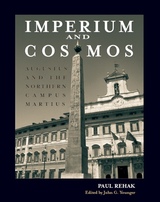
Rehak closely examines the artistic imagery on these monuments, providing numerous illustrations, tables, and charts. In an analysis firmly contextualized by a thorough discussion of the earlier models and motifs that inspired these Augustan monuments, Rehak shows how the princeps used these on such an unprecedented scale as to truly elevate himself above the common citizen.
A new critical edition of Sutton Griggs’s turn-of-the-twentieth-century novel, which continues to shed light on understandings of Black politics.
Sutton E. Griggs’s first novel, originally published in 1899, paints a searing picture of the violent enforcement of disfranchisement and Jim Crow racial segregation. Based on events of the time, including US imperial policies, revolutionary movements, and racial protests, Imperium in Imperio introduces the fictional Belton Piedmont and Bernard Belgrave as “future leaders of their race” and uses these characters to make sense of the violence that marked the dawn of the twentieth century. Taking on contemporary battles over separatism and integration, Griggs’s novel continues to play a crucial role in understandings of Black politics.
Edited and introduced by Tess Chakkalakal and Kenneth W. Warren, this new critical edition offers not only an incisive biographical and historical introduction to the novel and its author but also a wealth of references that make the events and characters of Griggs’s Imperium in Imperio, and its aftermath, accessible to readers today.

Edited and introduced by Tess Chakkalakal and Kenneth W. Warren, this new critical edition offers not only an incisive biographical and historical introduction to the novel and its author but also a wealth of references that make the events and characters of Griggs’s Imperium in Imperio, and its aftermath, accessible to readers today.
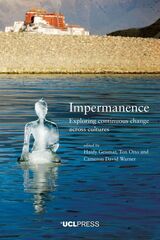
Nothing lasts forever. This common experience can be the source of much anxiety, but also of hope. The concept of impermanence or continuous change opens up a range of timely questions and discussions that speak to globally shared experiences of transformation and concerns for the future. Impermanence engages with an emergent body of social theory that emphasizes flux and transformation and brings it into a dialogue with other traditions of thought and practice, such as Buddhism, that have sustained a long-lasting and sophisticated meditation on impermanence.
In cases drawn from all over the world, this volume investigates the significance of impermanence in such diverse contexts as social death, atheism, alcoholism, migration, ritual, fashion, oncology, museums, cultural heritage, and art. The authors draw on a wide range of disciplines, including anthropology, archaeology, art history, Buddhist studies, cultural geography, and museology. This volume also includes numerous photographs, artworks, and poems that evocatively communicate notions and experiences of impermanence.
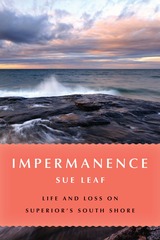
A personal journey through the ever-changing natural and cultural history of Lake Superior’s South Shore
Lake Superior’s South Shore is as malleable as it is enduring, its red sandstone cliffs, clay bluffs, and golden sand beaches reshaped by winds and water from season to season—and sometimes from one hour to the next. Generations of people have inhabited the South Shore, harvesting the forests and fish, mining copper, altering the land for pleasure and profit, for better or worse. In Impermanence, author Sue Leaf explores the natural and human histories that make the South Shore what it is, from the gritty port city of Superior, Wisconsin, to the shipping locks at Sault Ste. Marie, Michigan.
For Leaf, what began as a bicycling adventure on the coast of Lake Superior in 1977 turned into a lifelong connection with the area, and her experience, not least as owner of a rustic cabin on a rapidly eroding lakeside cliff, imbues these essays with a passionate sense of place and an abiding curiosity about its past and precarious future. As waves slowly consume the shoreline where her family has spent countless summers, Leaf is forced to confront the complexity of loving a place that all too quickly is being reclaimed by the great lake.
Impermanence is a journey through the South Shore’s story, from the early days of the Anishinaabe and fur traders through the heyday of commercial fishing, lumber camps, and copper mining on the Keweenaw Peninsula to the awakening of the Northland to the perils and consequences of plundering its natural splendor. Noting the geological, ecological, and cultural features of each stop on her tour along the South Shore, Leaf writes about the restoration of the heavily touristed Apostle Islands National Lakeshore to its pristine conditions, even as Lake Superior maintains its allure for ice fishers, kayakers, and long-distance swimmers. She describes efforts to protect the endangered piping plover and to preserve the diverse sand dunes on the Michigan coast, and she observes the slough that supports rare intact wild rice beds central to Anishinaabe culture.
Part memoir, part travelogue, part natural and cultural history, Leaf’s love letter to Lake Superior’s South Shore is an invitation to see this liminal world in all its seasons and guises, to appreciate its ageless, ever-changing wonders and intimate charms.

An original transatlantic history of the invention of the corrections profession and of ensuing debates about punishment’s purposes and prisoners’ rights.
Impermissible Punishments explores the history of punishment inside prisons and how governments grappled with obligations to justify the punishments they impose. Legal scholar Judith Resnik charts the creation of the corrections profession and weaves together the stories of people who made rules for prisons and the stories of those living under the resulting regimes.
Resnik maps three centuries of shifting ideas, norms, and legal standards aiming to draw lines between permissible and impermissible punishments. Her account documents the impact of World War II, the United Nations, the US Civil Rights movement, and the pioneering prisoners who insisted that law should protect their individual dignity. Taking us to the present, Resnik analyzes the expansion of imprisonment, the inability of public and private prisons to provide safe housing, and the impact of abolition politics.
Exploring the interdependency of people in and out of prisons, Impermissible Punishments examines what governments committed to equality owe to the people they detain and argues that many contemporary forms of punishment need to end.
In nine linked essays, Riley deftly unravels the rhetoric of life’s absurdities and urgencies, its comforts and embarrassments, to insist on the forcible affect of language itself. She teases out the emotional complexities of such quotidian matters as what she ironically terms the right to be lonely in the face of the imperative to be social or the guilt associated with feeling as if you’re lying when you aren’t. Impersonal Passion reinvents questions from linguistics, the philosophy of language, and cultural theory in an illuminating new idiom: the compelling emotion of the language of the everyday.
The exact process by which the fertilized mammalian ovum becomes implanted upon the uterine surface remains something of a mystery, and yet successful reproduction depends upon it. Two methods of contraception—the intrauterine device and the “morning-after pill”—are thought to be effective because they disrupt or prevent the process of implantation, but the biological basis of their effect is still imperfectly understood.
This book brings together authoritative accounts by leaders in the field of reproductive biology, researchers who have closely investigated implantation. The subject is approached from several angles: biochemical, endocrinological, pharmacological, anatomic, and immunological. A review of recent studies on implantation serves to put the individual reports in context. This book provides a needed perspective on an important area of reproduction research.

Implementing City Sustainability examines the structures and processes that city governments employ to pursue environmental, social, and economic well-being within their communities. As American cities adopt sustainability objectives, they are faced with the need to overcome fuzzy-boundary, coordination, and collective action challenges to achieve successful implementation.
Sustainability goals often do not fit neatly into traditional city government structures, which tend to be organized around specific functional responsibilities, such as planning, public works, parks and recreation, and community development. The authors advance a theory of Functional Collective Action and apply it to local sustainability to explain how cities can—and in some cases do—organize to successfully administer changes to achieve complex objectives that transcend these organizational separations. Implementing City Sustainability uses a mixed-method research design and original data to provide a national overview of cities’ sustainability arrangements, as well as eight city case studies highlighting different means of organizing to achieve functional collective action.
By focusing not just on what cities are doing to further sustainability, but also on how they are doing it, the authors show how administrative structure enables—or inhibits—cities to overcome functional divides and achieve successful outcomes.

With clear visuals and concrete examples of different types of collaborative writing tasks—including multimodal writing and collaborative reading for writing tasks—the book invites readers to consider the kind of decisions that need to be taken when implementing collaborative writing (e.g., group size, how to allocate students) and when assessing collaborative writing. In connecting frontier pedagogical knowledge to practice, Implementing Collaborative Writing Tasks in Multilingual Classrooms will help educators to implement collaborative writing activities in their various contexts.
Throughout the book, readers will find:
- Research-informed, pedagogy-oriented lessons on why and how to implement and assess collaborative writing in multilingual classrooms.
- Cutting-edge pedagogical knowledge that distinguishes the different modes of implementing collaborative writing (e.g., face-to-face, via computer-mediated communication, and a hybrid approach).
- Key practical suggestions for teachers.
- Tips on how to incorporate artificial intelligence in collaborative writing activities.
- Recommendations for further research that can be helpful for practitioners, teacher educators, or graduate students.

—from the Foreword by Mark A. Puente
Academic library workers often make use of systemic, bureaucratic, political, collegial, and symbolic dimensions of organizational behavior to achieve their diversity, equity, and inclusion goals, but many are also doing the crucial work of pushing back at the structures surrounding them in ways small and large.
Implementing Excellence in Diversity, Equity, and Inclusion captures emerging practices that academic libraries and librarians can use to create more equitable and representative institutions. 19 chapters are divided into 6 sections:
- Recruitment, Retention and Promotion
- Professional Development
- Leveraging Collegial Networks
- Reinforcing the Message
- Organizational Change
- Assessment
Chapters cover topics including active diversity recruitment strategies; inclusive hiring; gendered ageism; librarians with disabilities; diversity and inclusion with student workers; residencies and retention; creating and implementing a diversity strategic plan; cultural competency training; libraries’ responses to Canadian Truth and Reconciliation Commission Calls to Action; and accountability and assessment. Authors provide practical guiding principles, effective practices, and sample programs and training.
Implementing Excellence in Diversity, Equity, and Inclusion explores how academic libraries have leveraged and deployed their institutions’ resources to effect DEI improvements while working toward implementing systemic solutions. It provides means and inspiration for continuing to try to hire, retain, and promote the change we want to see in the world regardless of existing structures and systems, and ways to improve those structures and systems for the future.
Over the past three decades, governments at the local, state, and federal levels have undertaken a wide range of bold innovations, often in partnership with nongovernmental organizations and communities, to try to address their environmental and natural resource management tasks. Many of these efforts have failed. Innovations, by definition, are transitory. How, then, can we establish new practices that endure?
Toddi A. Steelman argues that the key to successful and long-lasting innovation must be a realistic understanding of the challenges that face it. She examines three case studies—land management in Colorado, watershed management in West Virginia, and timber management in New Mexico—and reveals specific patterns of implementation success and failure. Steelman challenges conventional wisdom about the role of individual entrepreneurs in innovative practice. She highlights the institutional obstacles that impede innovation and its longer term implementation, while offering practical insight in how enduring change might be achieved.
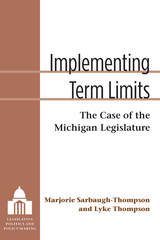
In Implementing Term Limits, Marjorie Sarbaugh-Thompson and Lyke Thompson bring thirteen years of intensive research and 460 interviews to assess changes since Michigan’s implementation of term limits in 1993 and explore their implications. Paying special attention to term limits’ institutional effects, they also consider legislative representation, political accountability, and the role of the bureaucracy and interest groups in state legislatures.
Their thorough study suggests that legislators are less accessible to officials and that there is a larger gap between legislators and their voters. Moreover, legislators become much more politically ambitious after term limits and spend more time on political activities. The selection of top chamber leaders is complicated by newcomers’ lack of knowledge about and experience working with the leaders they elect before being sworn in. As a result, term limits in Michigan fail to deliver on many of the “good government” promises that appeal to citizens.
Implementing Term Limits makes a unique and valuable contribution to the debate over the best means by which to obtain truly democratic institutions.

This book argues that the Supreme Court performs two functions. The first is to identify the Constitution's idealized "meaning." The second is to develop tests and doctrines to realize that meaning in practice. Bridging the gap between the two--implementing the Constitution--requires moral vision, but also practical wisdom and common sense, ingenuity, and occasionally a willingness to make compromises.
In emphasizing the Court's responsibility to make practical judgments, Implementing the Constitution takes issue with the two positions that have dominated recent debates about the Court's proper role. Constitutional "originalists" maintain that the Court's essential function is to identify the "original understanding" of constitutional language and then apply it deductively to current problems. This position is both unwise and unworkable, the book argues. It also critiques well-known accounts according to which the Court is concerned almost exclusively with matters of moral and constitutional principle.
Implementing the Constitution bridges the worlds of constitutional theory, political theory, and constitutional practice. It illuminates the Supreme Court's decision of actual cases and its development of well-known doctrines. It is a doctrinal study that yields jurisprudential insights and a contribution to constitutional theory that is closely tied to actual judicial practice.

Implementing the Endangered Species Act on the Platte Basin Water Commons tells of the negotiations among the U.S. Department of the Interior, the environmental community, and the states of Wyoming, Colorado, and Nebraska that took place from the mid-1970s to 2006. Ambitious talks among rival water users, environmentalists, state authorities, and the Department of the Interior finally resulted in the Platte River Habitat Recovery Program.
Documenting how organizational interests found remedies within the conditions set by the Endangered Species Act, describing how these interests addressed habitat restoration, and advancing sociological propositions under which water providers transcended self-interest and produced an agreement benefiting the environment, this book details the messy process that took place over more than thirty years. Presenting important implications for the future of water management in arid and semi-arid environments, this book will be of interest to anyone involved in water management, as well as academics interested in the social organization of common property.

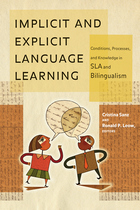
Over the last several decades, neuroscientists, cognitive psychologists, and psycholinguists have investigated the implicit and explicit continuum in language development and use from theoretical, empirical, and methodological perspectives. This book addresses these perspectives in an effort to build connections among them and to draw pedagogical implications when possible.
The volume includes an examination of the psychological and neurological processes of implicit and explicit learning, what aspects of language learning can be affected by explicit learning, and the effects of bilingualism on the mental processing of language. Rigorous empirical research investigations probe specific aspects of acquiring morphosyntax and phonology, including early input, production, feedback, age, and study abroad. A final section explores the rich insights provided into language processing by bilingualism, including such major areas as aging, third language acquisition, and language separation.

Play reveals which elements of an institution’s reappointment, tenure, and promotion practices are explicitly addressed in policy and which remain tacit, and helps players recognize the cultural biases present in institutional norms, processes, and policies when they are not made explicit. Additionally, the color-coded cards helps participants identify the roles and processes that are most relevant to them.
In The Implosion of Capitalism world-renowned political economist Samir Amin connects the key events of our times – financial crisis, Eurozone implosion, the emerging BRIC nations and the rise of political Islam – identifying them as symptoms of a profound systemic crisis.
In light of these major crises and tensions, Amin updates and modifies the classical definitions of social classes, political parties, social movements and ideology. In doing so he exposes the reality of monopoly capitalism in its contemporary global form.
In a bravura conclusion, Amin argues that the current capitalist system is not viable and that implosion is unavoidable. The Implosion of Capitalism makes clear the stark choices facing humanity – and the urgent need for a more humane global order.
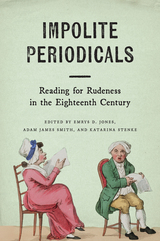
With an afterword by Manushag N. Powell.
Published by Bucknell University Press. Distributed worldwide by Rutgers University Press.

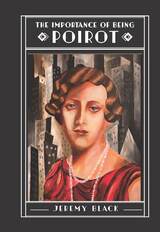
Hercule Poirot as a character is masterfully imagined, but Black shows us how he is inseparable from Christie’s turbulent and changing world. He also illuminates significant social commentary in Christie’s fiction, and in so doing Black often uses his authority to vindicate Christie’s work from hastily, at times stupidly, applied labels and interpretations. He is especially magnificent in his chapters, “Xenophobia” and “The Sixties.” Black nevertheless gives due recognition to Christie’s critics when they have something relevant and reasonable to say, and hence the reader finds yet another service in Black’s comprehensive review of the reviewers over the expanse of Christie’s writing career.
For all this, Black proves himself to be a worthy history-teller because he can aptly ‘detect’ the meaning of stories that seeks to answer the past and guide the present. His erudition runs much deeper than his ability to navigate the stores of resources available on the subject, and the reader gets a glimpse of this early on when in the introduction he proffers his own defense for writing about the importance of a Hercule Poirot. Black writes, “the notion of crime had a moral component from the outset, and notably so in terms of the struggle between Good and Evil, and in the detection of the latter. Indeed, it is this detection that is the basis of the most powerful strand of detection story, because Evil disguises its purposes. It has to do so in a world and humanity made fundamentally benign and moral by God.” The Golden Age of detective novels represents much more than a triumph of a literary genre. It is in its own right a story of how the challenge to address the problem of evil was accepted. Its convergence with the plot-rich narrative of the twentieth century in the modern age renders Black’s account a thrilling masterpiece, seducing historians to read fiction and crime junkies to read more history.
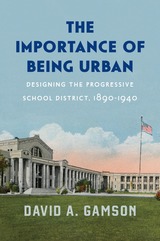
From the 1890s through World War II, the greatest hopes of American progressive reformers lay not in the government, the markets, or other seats of power but in urban school districts and classrooms. The Importance of Being Urban focuses on four western school systems—in Denver, Oakland, Portland, and Seattle—and their efforts to reconfigure public education in the face of rapid industrialization and the perceived perils of the modern city. In an era of accelerated immigration, shifting economic foundations, and widespread municipal shake-ups, reformers argued that the urban school district could provide the broad blend of social, cultural, and educational services needed to prepare students for twentieth-century life. These school districts were a crucial force not only in orchestrating educational change, but in delivering on the promise of democracy. David A. Gamson’s book provides eye-opening views of the histories of American education, urban politics, and the Progressive Era.
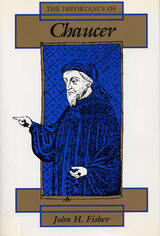
In this fresh and innovative approach, John H. Fisher eloquently explains Chaucer’s importance to Western culture.
English literature begins with Chaucer. The first writer to demonstrate that English was as effective a medium for literature as Latin or French, Chaucer introduced realism, satire, and humor into English writing. In examining Chaucer’s cultural importance, however, Fisher ventures beyond literary excellence, basing his cultural interpretation on inferences about Chaucer’s domestic life, about his possible experience in the inns of chancery and inns of court, and about the possibility that Henry V and the Lancastrian government sought deliberately to promote Chaucer’s poems as models of what could be accomplished in the vernacular.
Fisher’s willingness to boldly infer from the scant evidence available allows him to place Chaucer in the poet’s, and our, culture in a way he has not been placed before. By attributing to Chaucer innovations to which other writers have only alluded, and by reaching conclusions which others have been hesitant to approach, Fisher presents an interpretation at once controversial, engaging, and informative.

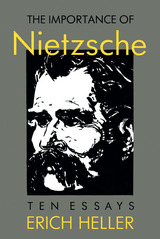
Nietzsche prided himself on having broken with all traditional ways of thinking and feeling, and once even claimed that he would someday be recognized for having ushered in a new millennium. While acknowledging Nietzsche's radicalism, Heller also insists on the continuity of the story in which he does indeed occupy a central place. By considering Nietzsche in relation to Goethe, Rilke, Wittgenstein, Yeats, and others, Heller shows the philosopher's ambivalence toward the tradition he inherited as well as his profound effect on the thought and sensibility of those who followed him. It is hardly an exaggeration to say, as Heller does in his first essay, that Nietzsche is to many modern writers and thinkers—including Mann, Musil, Kafka, Freud, Heidegger, Jaspers, Gide, and Sartre—what St. Thomas Aquinas was to Dante: the categorical interpreter of a world, which they contemplate imaginatively and theoretically without ever much upsetting its Nietzschean structure.
Thus it is Nietzsche's thought, so pervasively present in the themes of modernity, that gives coherence and unity to Heller's essays. What emerges from them is that, despite his iconoclastic declarations and unorthodox philosophical practices, Nietzsche deals with the human spirit's persistent concerns. His questions remain urgent, and even the answers, in all their contradictoriness, possess the commanding force of his inquiry. An example is the incompatibility of the famous extremes, the teaching of the Übermensch and the Eternal Recurrence of All Things. These cancel each other out and yet grow from the same intellectual and spiritual roots, as is shown lucidly and cogently by one of Heller's most forceful essays, "Nietzsche's Terrors: Time and the Inarticulate." In fathoming the depth of this contradiction, Heller at the same time reveals the importance of Nietzsche for those who seek to understand the wellsprings of the epoch's disquiet, turmoil, and creativity.
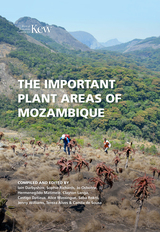
The Important Plant Areas of Mozambique is based on the Mozambique TIPAs project run in collaboration between Royal Botanic Gardens, Kew, Mozambique’s Agricultural Research Institute (Instituto de Investigação Agrária de Moçambique – IIAM), and the University Eduardo Mondlane. Drawing on information from the TIPAs database, The Important Plant Areas of Mozambique includes color maps and photographs, site descriptions, and tables to present information on the botanical significance, habitat, and geology of the region. The book will also address conservation issues and ecosystem services to promote Mozambique’s critical plant sites and inform conservation leaders in government, NGOs, universities, and local communities about Mozambique’s threatened habitats.

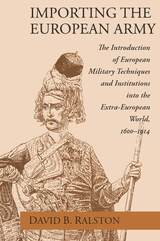
Following the same format in his discussion of each country, Ralston makes this central theme in world history easily accessible to students while offering scholars a sophisticated understanding of the exact nature of the changes brought about by Europeanizing military reforms.
David B. Ralston, associate professor of history at the Massachusetts Institute of Technology, is the author of The Army of the Republic.
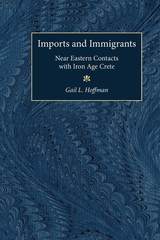
Drawing together all the evidence and arguments for Near Eastern immigrants in Crete, Hoffman demonstrates there are basic problems with the accepted interpretations. Evidence of continued technical expertise casts doubt on the necessity of reintroduction, while careful scrutiny of the evidence supporting immigrant craftsmen reveals many inadequacies in the currently accepted analyses.
Imports and Immigrants identifies the need for reassessing all dimensions of the question of artistic relationships between ancient Greece and other regions of the Aegean basin and suggests new avenues of inquiry in this important debate. The volume also reassesses arguments made for the presence of Near Eastern immigrants in Crete. This book includes a catalogue indispensable for future work on these issues and illustrations of most of the known imports to Crete.
Gail L. Hoffman is Associate Professor of Greek Art and Archaeology, Department of Classics, Yale University.
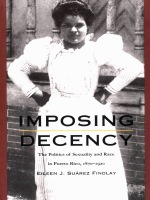
In showing how political projects and alliances in Puerto Rico were affected by racially contingent definitions of “decency” and “disreputability,” Findlay argues that attempts at moral reform and the state’s repression of “sexually dangerous” women were weapons used in batttles between elite and popular, American and Puerto Rican, and black and white. Based on a thorough analysis of popular and elite discourses found in both literature and official archives, Findlay contends that racialized sexual norms and practices were consistently a central component in the construction of social and political orders. The campaigns she analyzes include an attempt at moral reform by elite male liberals and a movement designed to enhance the family and cleanse urban space that ultimately translated into repression against symbollically darkened prostitutes. Findlay also explores how U.S. officials strove to construct a new colonial order by legalizing divorce and how feminist, labor, and Afro-Puerto Rican political demands escalated after World War I, often focusing on the rehabilitation and defense of prostitutes.
Imposing Decency forces us to rethink previous interpretations of political chronologies as well as reigning conceptualizations of both liberalism and the early working-class in Puerto Rico. Her work will appeal to scholars with an interest in Puerto Rican or Latin American studies, sexuality and national identity, women in Latin America, and general women’s studies.
Building on recent scholarship by social historians and urban musicologists and drawing on extensive archival research, Baker highlights European music as a significant vehicle for reproducing and contesting power relations in Cuzco. He examines how Andean communities embraced European music, creating an extraordinary cultural florescence, at the same time that Spanish missionaries used the music as a mechanism of colonialization and control. Uncovering a musical life of considerable and unexpected richness throughout the diocese of Cuzco, Baker describes a musical culture sustained by both Hispanic institutional patrons and the upper strata of indigenous society. Mastery of European music enabled elite Andeans to consolidate their position within the colonial social hierarchy. Indigenous professional musicians distinguished themselves by fulfilling important functions in colonial society, acting as educators, religious leaders, and mediators between the Catholic Church and indigenous communities.

In the 1850s, early Euro-American settlers established two remote outposts on the slopes of the eastern Sierra Nevada, both important way stations on the central emigrant trail. The Carson Valley settlement was located on the western edge of the Utah Territory, while the Honey Lake Valley hamlet, 120 miles north, fell within California’s boundaries but was separated from the rest of the state by the formidable mountain range. Although these were some of the first white communities established in the region, both areas had long been inhabited by Indigenous Americans. Carson Valley had been part of Washoe Indian territory, and Honey Lake Valley was a section of Northern Paiute land.
Michael Makley explores the complexities of this turbulent era, when the pioneers’ actions set the stage for both valleys to become part of national incorporation. With deft writing and meticulously researched portrayals of the individuals involved, including the Washoe and Northern Paiute peoples, Imposing Order Without Law focuses on the haphazard evolution of “frontier justice” in these remote outposts. White settlers often brought with them their own ideas of civil order. Makley’s work contextualizes the extralegal acts undertaken by the settlers to enforce edicts in their attempt to establish American communities.
Makley’s book reveals the use and impact of group violence, both within the settlements and within the Indigenous peoples’ world, where it transformed their lives.

A story of mothers, monsters, and the science of longing
In this daring and evocative tale, Agnes Krahn, a chemist trained in Philadelphia, returns to her childhood home after the death of her father. Just a stone's throw from the haunted fields of Gettysburg, the small town of Letort, Pennsylvania is where the Krahn family has lived for six generations—bound by twisted folk wisdom and an uncanny kinship with the crows that loom over their land.
Back in the grim farmhouse of her youth, Agnes is drawn into the strange legacy she tried to leave behind. When she discovers an abandoned nest in the barn, she becomes consumed by a scientific—and deeply personal—experiment: to breed a crow large and intelligent enough to carry her daughter, Mina, to a freedom Agnes has never known herself. As the bird grows, so does its terrifying potential—manifest in language, cunning, and a violent will of its own. What begins as a gesture of love and liberation turns darkly obsessive, echoing the dangerous ambition of Frankenstein’s monster and the generational trauma buried in the soil of her family’s past.
A thoroughly modern, feminist novel, this is a story of mothers and daughters, inheritance and isolation, and the thin line between care and control. It confronts themes of self-harm and self-preservation, as well as memory and myth, in a narrative as visceral and uncanny as the bird that rises at its heart.
A story of mothers, monsters, and the science of longing
In this daring and evocative tale, Agnes Krahn, a chemist trained in Philadelphia, returns to her childhood home after the death of her father. Just a stone's throw from the haunted fields of Gettysburg, the small town of Letort, Pennsylvania is where the Krahn family has lived for six generations—bound by twisted folk wisdom and an uncanny kinship with the crows that loom over their land.
Back in the grim farmhouse of her youth, Agnes is drawn into the strange legacy she tried to leave behind. When she discovers an abandoned nest in the barn, she becomes consumed by a scientific—and deeply personal—experiment: to breed a crow large and intelligent enough to carry her daughter, Mina, to a freedom Agnes has never known herself. As the bird grows, so does its terrifying potential—manifest in language, cunning, and a violent will of its own. What begins as a gesture of love and liberation turns darkly obsessive, echoing the dangerous ambition of Frankenstein’s monster and the generational trauma buried in the soil of her family’s past.
A thoroughly modern, feminist novel, this is a story of mothers and daughters, inheritance and isolation, and the thin line between care and control. It confronts themes of self-harm and self-preservation, as well as memory and myth, in a narrative as visceral and uncanny as the bird that rises at its heart.
How the construction of Muslim boys as proto-terrorists is integral to the story of American racial capitalism
How do we understand an incident where a five-year-old Muslim boy arrives at Dulles airport and is preemptively detained as a “threat”? To answer that question, Shenila Khoja-Moolji examines American public culture, arguing that Muslim boyhood has been invented as a threat within an ideology that seeks to predict future terrorism. Muslim boyhood bridges actual past terrorism and possible future events, justifying preemptive enclosure, surveillance, and punishment. Even in the occasional reframing of individual Muslim boys as innocent, Khoja-Moolji identifies a pattern of commodity antiracism, through which elites buy public goodwill but leave intact the collective anti-Muslim notion that fuels an expanding carceral and security state. Framing Muslim boyhood as a heuristic device, she turns to a discussion of Hindutva ideology in India to show how Muslim boyhood may be resituated in global contexts.

The collection of nine stories which won the 1980 Iowa Short Fiction Award is woven in a pattern so subtle that reading it is like writing your own nine-part novel. The author allows brief glimpses into the tormented journals of Joseph Quaile, a man of acute compassions and consuming hungers, then juxtaposes them with the fiction Quaile writes to scourge his demons and come to terms with himself and the people he loves. This is a dispassionate intelligence in passionate pursuit of freedom and reconciliation.

While their legal status defines them as perpetual outsiders, Indians are integral to the Emirati nation-state and its economy. At the same time, Indians—even those who have established thriving diasporic neighborhoods in the emirate—disavow any interest in formally belonging to Dubai and instead consider India their home. Vora shows how these multiple and conflicting logics of citizenship and belonging contribute to new understandings of contemporary citizenship, migration, and national identity, ones that differ from liberal democratic models and that highlight how Indians, rather than Emiratis, are the quintessential—yet impossible—citizens of Dubai.
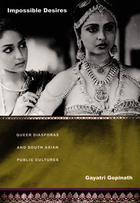
Gopinath juxtaposes diverse texts to indicate the range of oppositional practices, subjectivities, and visions of collectivity that fall outside not only mainstream narratives of diaspora, colonialism, and nationalism but also most projects of liberal feminism and gay and lesbian politics and theory. She considers British Asian music of the 1990s alongside alternative media and cultural practices. Among the fictional works she discusses are V. S. Naipaul’s classic novel A House for Mr. Biswas, Ismat Chughtai’s short story “The Quilt,” Monica Ali’s Brick Lane, Shyam Selvadurai’s Funny Boy, and Shani Mootoo’s Cereus Blooms at Night. Analyzing films including Deepa Mehta’s controversial Fire and Mira Nair’s Monsoon Wedding, she pays particular attention to how South Asian diasporic feminist filmmakers have reworked Bollywood’s strategies of queer representation and to what is lost or gained in this process of translation. Gopinath’s readings are dazzling, and her theoretical framework transformative and far-reaching.

The Impossible Indian offers a rare, fresh view of Gandhi as a hard-hitting political thinker willing to countenance the greatest violence in pursuit of a global vision that went far beyond a nationalist agenda. Revising the conventional view of the Mahatma as an isolated Indian moralist detached from the mainstream of twentieth-century politics, Faisal Devji offers a provocative new genealogy of Gandhian thought, one that is not rooted in a clichéd alternative history of spiritual India but arises from a tradition of conquest and violence in the battlefields of 1857.
Focusing on his unsentimental engagement with the hard facts of imperial domination, Fascism, and civil war, Devji recasts Gandhi as a man at the center of modern history. Rejecting Western notions of the rights of man, rights which can only be bestowed by a state, Gandhi turned instead to the idea of dharma, or ethical duty, as the true source of the self’s sovereignty, independent of the state. Devji demonstrates that Gandhi’s dealings with violence, guided by his idea of ethical duty, were more radical than those of contemporary revolutionists.
To make sense of this seemingly incongruous relationship with violence, Devji returns to Gandhi’s writings and explores his engagement with issues beyond India’s struggle for home rule. Devji reintroduces Gandhi to a global audience in search of leadership at a time of extraordinary strife as a thinker who understood how life’s quotidian reality could be revolutionized to extraordinary effect.
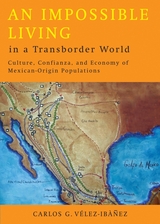
Central to the ROSCA is the cultural concept of mutual trust, or confianza. This is the cultural glue that holds the reciprocal relationship together. As Vélez-Ibáñez explains, confianza “shapes the expectations for relationships within broad networks of interpersonal links, in which intimacies, favors, goods, services, emotion, power, or information are exchanged.” In a border region where migration, class movement, economic changes, and institutional inaccessibility produce a great deal of uncertainty, Mexican-origin populations rely on confianza and ROSCAs to maintain a sense of security in daily life. How do transborder people adapt these common practices to meet the demands of a global economy? That is precisely what Vélez-Ibáñez investigates.
Adam Sitze meticulously traces the origins of South Africa’s Truth and Reconciliation Commission back to two well-established instruments of colonial and imperial governance: the jurisprudence of indemnity and the commission of inquiry. This genealogy provides a fresh, though counterintuitive, understanding of the TRC’s legal, political, and cultural importance. The TRC’s genius, Sitze contends, is not the substitution of “forgiving” restorative justice for “strict” legal justice but rather the innovative adaptation of colonial law, sovereignty, and government. However, this approach also contains a potential liability: if the TRC’s origins are forgotten, the very enterprise intended to overturn the jurisprudence of colonial rule may perpetuate it. In sum, Sitze proposes a provocative new means by which South Africa’s Truth and Reconciliation Commission should be understood and evaluated.
The undraped human form is ubiquitous in Western art and even appears in the art of India and Japan. Only in China, François Jullien argues, is the nude completely absent. In this enthralling extended essay, he explores the different conceptions of the human body that underlie this provocative disparity.
Contrasting nakedness (which implies a diminished state) with nudity (which represents a complete presence), Jullien explores the traditional European vision of the nude as a fixed point of fusion where form joins truth. He then shows that the absence of the nude in Chinese art evinces an understanding of the human body as changeable and transitory. Viewed in light of each other, these differing concepts allow for a new way of thinking about form, the ideal, and beauty, enabling us to delve deeper into the relationship between art and the ideas that lie at its roots. Beautifully illustrated and gracefully translated into English for the first time, The Impossible Nude will fascinate anyone interested in art history, Chinese art, or aesthetics.
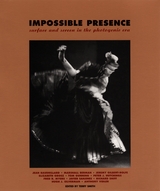
Framed by Terry Smith's introduction, the essays focus on two kinds of strangeness involved in experiencing visual images in the modern era. The first, explored in the book's first half, involves the appearance of oddities or phantasmagoria in early photographs and cinema. The second type of strangeness involves art from marginalized groups and indigenous peoples, and the communicative formations that result from the trafficking of images between people from vastly different cultures. With a stellar list of contributors, Impossible Presence offers a wide-ranging look at the fate of the visual image in modernity, modern art, and popular culture.
Contributors:
Jean Baudrillard
Marshall Berman
Jeremy Gilbert-Rolfe
Elizabeth Grosz
Tom Gunning
Peter Hutchings
Fred R. Myers
Javier Sanjines
Richard Shiff
Hugh J. Silverman
Terry Smith

Opening with a reading of Daniel Defoe’s “A True-Born Englishman,” which posits the mixed origins of English identity, Brody goes on to analyze mulattas typified by Rhoda Swartz in William Thackeray’s Vanity Fair, whose mixed-race status reveals the “unseemly origins of English imperial power.” Examining Victorian stage productions from blackface minstrel shows to performances of The Octoroon and Uncle Tom’s Cabin, she explains how such productions depended upon feminized, “black” figures in order to reproduce Englishmen as masculine white subjects. She also discusses H.G. Wells’s The Island of Dr. Moreau in the context of debates about the “new woman,” slavery, and fears of the monstrous degeneration of English gentleman. Impossible Purities concludes with a discussion of Bram Stoker’s novella, “The Lair of the White Worm,” which brings together the book’s concerns with changing racial representations on both sides of the Atlantic.
This book will be of interest to scholars in Victorian studies, literary theory, African American studies, and cultural criticism.

Taking as his lens the fragment—fragmented bodies, fragments of memories, fragments of texts—Murillo theorizes new directions for Black identity and cultural production. Combining a critical engagement of physics and metaphysics with innovative readings of Gayl Jones’s Corregidora, Octavia Butler’s Kindred, Toni Morrison’s Beloved, Kiese Laymon’s Long Division, Dionne Brand’s A Map to the Door of No Return, and Paul Beatty’s The Sellout, he offers new ways to think about anti-Black racism and practice Black creativity. Ultimately, in his equally creative and analytical responses to depictions of Black people left out of history and barred from spaces, Murillo argues that through Afro-pessimism, Black people can fight the anti-Black cosmos.

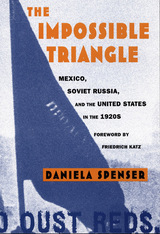
Based on documents from the archives of several nations—including reports by former Mexican diplomats in Moscow that have never before been studied—the book analyzes the Mexican government’s motivation for establishing relations with the Soviet Union in the face of continued imperialist pressure and harsh opposition from the United States. After explaining how Mexico established diplomatic ties with the Soviet Union in 1924 in an attempt to broaden the spectrum of its alliances after several years of uneven relations with the United States, Spenser reveals the troubled nature of the relationship that ensued. Soviet policy toward Mexico was characterized by a series of profound contradictions, varying from neglect to strong involvement in Mexican politics and the belief that Mexico could become a center of world revolution. Working to resolve and explain these contradictions, Spenser explores how, despite U.S. objections to Mexico’s relations with the Soviet Union, Mexico continued its association with the Soviets until the United States adopted the Good Neighbor Policy and softened its stance toward Mexico’s revolutionary program after 1927.
With a foreword by Friedrich Katz and illustrated by illuminating photographs, The Impossible Triangle contributes to an understanding of the international dimension of the Mexican revolution. It will interest students and scholars of history, revolutionary theory, political science, diplomacy, and international relations.
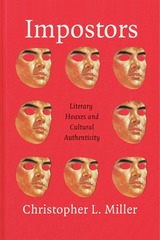
In the United States, such hoaxes are familiar. Forrest Carter’s The Education of Little Tree and JT LeRoy’s Sarah are two infamous examples. Miller’s contribution is to study hoaxes beyond our borders, employing a comparative framework and bringing French and African identity hoaxes into dialogue with some of their better-known American counterparts. In France, multiculturalism is generally eschewed in favor of universalism, and there should thus be no identities (in the American sense) to steal. However, as Miller demonstrates, this too is a ruse: French universalism can only go so far and do so much. There is plenty of otherness to appropriate. This French and Francophone tradition of imposture has never received the study it deserves. Taking a novel approach to this understudied tradition, Impostors examines hoaxes in both countries, finding similar practices of deception and questions of harm.
READERS
Browse our collection.
PUBLISHERS
See BiblioVault's publisher services.
STUDENT SERVICES
Files for college accessibility offices.
RECENTLY PUBLISHED




UChicago Accessibility Resources
home | accessibility | search | about | contact us
BiblioVault ® 2001 - 2025
The University of Chicago Press