
 A SCHOLARLY BOOK REPOSITORY
20 start with I start with I

Finalist for the Kate Tufts Discovery Award, 2026
Stephanie Niu’s I Would Define the Sun, awarded the 2024 Vanderbilt University Literary Prize, is a collection of poems that declare the impossibility of defining something as immense as the sun while striving toward that impossible act. In an era of planetary collapse, filled with bushfires, bleached coral, and burnout, Niu explores what love can do even through estrangement, even through being together at the end of the world. Recycling and folding language through duplexes, sestinas, and echoing couplets, this collection moves across great distances to include Christmas Island, Chinese-American immigration, and the precarity and abundance of the sea through formal and lyric poetry. Expansive in scope, Niu refits the world into a size “made for [her] hands, [her] human tongue,” propelling readers into continuous motion as she searches for home.

Finalist for the Kate Tufts Discovery Award, 2026
Stephanie Niu’s I Would Define the Sun, awarded the 2024 Vanderbilt University Literary Prize, is a collection of poems that declare the impossibility of defining something as immense as the sun while striving toward that impossible act. In an era of planetary collapse, filled with bushfires, bleached coral, and burnout, Niu explores what love can do even through estrangement, even through being together at the end of the world. Recycling and folding language through duplexes, sestinas, and echoing couplets, this collection moves across great distances to include Christmas Island, Chinese-American immigration, and the precarity and abundance of the sea through formal and lyric poetry. Expansive in scope, Niu refits the world into a size “made for [her] hands, [her] human tongue,” propelling readers into continuous motion as she searches for home.

Iberian Empires and the Roots of Globalization argues that Iberian empires cannot be viewed apart from early modern globalization. From research sites throughout the early modern Spanish and Portuguese territories and from distinct disciplinary approaches, the essays collected in this volume investigate the economic mechanisms, administrative hierarchies, and art forms that linked the early modern Americas, Africa, Asia, and Europe. Iberian Empires and the Roots of Globalization demonstrates that early globalization was structured through diverse networks and their mutual and conflictive interactions within overarching imperial projects. To this end, the essays explore how specific products, texts, and people bridged ideas and institutions to produce multiple centers within Iberian imperial geographies. Taken as a whole, the authors also argue that despite attempts to reproduce European models, early Iberian globalization depended on indigenous agency and the agency of people of African descent, which often undermined or changed these models.
The volume thus relays a nuanced theory of early modern globalization: the essays outline the Iberian imperial models that provided templates for future global designs and simultaneously detail the negotiated and conflictive forms of local interactions that characterized that early globalization. The essays here offer essential insights into historical continuities in regions colonized by Spanish and Portuguese monarchies.

This book explores the social worlds of the children of immigrants. Based on rich ethnographic research, the contributors illustrate how these young people, the so-called second generation, construct and negotiate their lives. Ultimately, the driving question is profoundly important on a universal level: How do these young people construct an identity and a sense of belonging for themselves, and how do they deal with processes of inclusion and exclusion?


I'll Take You There is written by and with the people who most intimately know Nashville, foregrounding the struggles and achievements of people's movements toward social justice. The colloquial use of "I'll take you there" has long been a response to the call of a stranger: for recommendations of safe passage through unfamiliar territory, a decent meal and place to lay one's head, or perhaps a watering hole or juke joint.
In this book, more than one hundred Nashvillians "take us there," guiding us to places we might not otherwise encounter. Their collective entries bear witness to the ways that power has been used by social, political, and economic elites to tell or omit certain stories, while celebrating the power of counternarratives as a tool to resist injustice. Indeed, each entry is simultaneously a story about place, power, and the historic and ongoing struggle toward a more just city for all. The result is akin to the experience of asking for directions in an unfamiliar place and receiving a warm offer from a local to lead you on, accompanied by a tale or two.
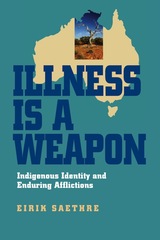
Rarely is disease and suffering understood as a form of protest, and in Illness Is a Weapon, Saethre confronts the stark reality of the current contest between all parties in this struggle. As Saethre explains, "Cursing at nurses, refusing to take medication, and accepting acute illness as unremarkable is simultaneously an act of defiance and a rejection of vulnerability."
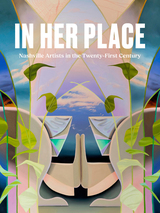
But isn’t that what it is to be Southern? Hasn’t life in the American South been a quagmire of contradictions from the very start?
The South has always been defined as much by what it isn’t as what it is, in much the same way that women have been defined by how they are not like men. The standard for an American artist—and perhaps for a person in general—seems to be a white, straight, cisgender man of vaguely Northern residence. Anything that deviates from that criteria needs to be justified, pointed out, turned into something exceptional in order to simply be visible. It is refreshing, then, that this exhibition does not wallow in the stagnant waters of Southern stereotypes. The artists of In Her Place are legion. They include a Tehran-born sculptor making vessels out of Tennessee red clay, an artist from Arkansas working with cardboard and references to unsettling histories, and a Nashville-born painter whose images of civil rights–era sit-ins read just as poignantly in 2026 as they would have in 1960.
If anything ties these artists together, it is not their gender or their location. It is their shared ingenuity and the comfort with which they subvert.

Despite the atmosphere of fear, Baskin found he could talk with both Jews and Palestinians, and that very few others were engaged in efforts at mutual understanding. At his initiative, the Ministry of Education and the office of right-wing prime minister Menachem Begin created the Institute for Education for Jewish-Arab Coexistence with Baskin himself as director. Eight years later he founded and codirected the only joint Israeli-Palestinian public policy think-and-do tank in the world, the Israel/Palestine Center for Research and Information. For decades he continued to cross borders, often with a kaffiyeh (Arab headdress) on his dashboard to protect his car in Palestinian neighborhoods. Airport passport control became Kafkaesque as Israeli agents routinely identified him as a security threat.
During the many cycles of peace negotiations, Baskin has served both as an outside agitator for peace and as an advisor on the inside of secret talks—for example, during the prime ministership of Yitzhak Rabin and during the initiative led by Secretary of State John Kerry. Baskin ends the book with his own proposal, which includes establishing a peace education program and cabinet-level Ministries of Peace in both countries, in order to foster a culture of peace.

Despite the atmosphere of fear, Baskin found he could talk with both Jews and Palestinians, and that very few others were engaged in efforts at mutual understanding. At his initiative, the Ministry of Education and the office of right-wing prime minister Menachem Begin created the Institute for Education for Jewish-Arab Coexistence with Baskin himself as director. Eight years later he founded and codirected the only joint Israeli-Palestinian public policy think-and-do tank in the world, the Israel/Palestine Center for Research and Information. For decades he continued to cross borders, often with a kaffiyeh (Arab headdress) on his dashboard to protect his car in Palestinian neighborhoods. Airport passport control became Kafkaesque as Israeli agents routinely identified him as a security threat.
During the many cycles of peace negotiations, Baskin has served both as an outside agitator for peace and as an advisor on the inside of secret talks—for example, during the prime ministership of Yitzhak Rabin and during the initiative led by Secretary of State John Kerry. Baskin ends the book with his own proposal, which includes establishing a peace education program and cabinet-level Ministries of Peace in both countries, in order to foster a culture of peace.
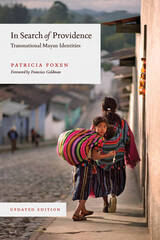
And yet one of the most significant drivers of continued emigration today, ironically, is the very culture of migration (described in the book) that has accelerated social change within many Indigenous communities, setting in motion a complex series of economic and cultural shifts that have compelled a continuous movement of people and generations to the US. Reading this story in 2020—at a time of massive growth in flows of irregular migrations around the world—can help us better understand the highly complex set of factors that propel long-term migrations and that shape transnational communities on both sides of the border.
In Search of Providence offers a layered, historically grounded perspective that speaks to the local specificity behind the migration experience in order to point to the universal themes and contradictions of contemporary global displacements.
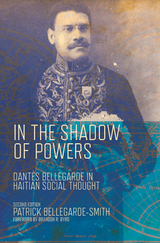
Throughout much of the twentieth century and even to this day, there has been a dearth of scholarship on the intellectual and political contributions of Haitians. In the Shadow of Powers, first published in 1985, was a corrective to this oversight and remains a foundational text. Bellegarde-Smith traces the history of Haiti through the life and career of his grandfather Dantès Bellegarde, one of Haiti's influential diplomats and preeminent thinkers. As Brandon R. Byrd describes in his foreword to this new edition, "Bellegarde was driven by a subversive, racially inclusive vision of civilized progress. He believed in and continued to push for Haiti to establish an existence for itself, black people, and the colonized world independent of the considerable shadow cast by the world's military, economic, and industrial powers." Scholars and students who want to learn about the intellectual and political foundations of Haiti, its influence on other intellectuals worldwide, and its struggles against imperialism continue to find this to be an invaluable classic.
This important and provocative book on the work of Alfred North Whitehead (1861-1947) explores how his avowed atomism is consistent with his equally essential commitment to a view of reality as a thoroughly interconnected sphere of relations. Judith Jones challenges Whitehead's readers to reconsider certain prevailing interpretations of his organic philosophy. To Jones, a rereading of Whitehead's overall philosophic project is essential to evaluating his contributions to metaphysics and ontology. SinceWhitehead's basic worldview is holistic, a return to viewing Whitehead's work as a whole helps clarify his ontological intentions and contributions to metaphysics.
For this purpose, the concept of "intensity," which Jones defines as the quality and form of feeling involved in subjective experience, is basic to Whitehead's thinking about process at all naturalistic levels and is therefore particularly useful as a lens through which to view his entire system. "Intensity" is at once Whitehead's most basic metaphysical idea and a notion useful in deciphering the overall unity of purpose in his writings. A central aim of this book is to develop an aesthetically sensitive sense of being that demonstrates the profound and original contributions of process philosophy to realism.
Jones shows that a thorough understanding of the concept of intensity yields modes of thought that help overcome knotty problems in conceiving Whitehead's distinction between the private experience of individuals and the public relations those individuals experience in relationship to other entities. Drawing frequently on poetic allusions to aid her interpretations, she focuses specifically on the status of intensity in intellectual and moral experience and develops an ethics of "attention" as an elaboration of Whitehead's aesthetic metaphysics.
The result is a book that should be enthusiastically greeted and debated by scholars of Whitehead and by all who are interested in the field of process thought, including students of theology, literature, and feminist studies. Jones's unorthodox conclusions, backed up with scrupulous attention to both the Whitehead canon and related secondary literature, present challenges to accepted interpretations that cannot be ignored.
In his pioneering new book Interpreting America John Ryder makes available for the first time to English-speaking readers Russian views of the full range of American philosophical thought: from seventeenth-century Puritanism through the colonial and revolutionary periods, nineteenth- century idealism, pragmatism, naturalism, and other twentieth-century movements and figures. Using his own accurate translations, he clearly reconstructs a chain of core ideas, emphasizes the most essential concepts of each writer's work, and gives a multidimensional reconstruction of the arguments of each author.
By taking mainstream Soviet philosophical commentators like Baskin, Bogomolov, Karimsky, Melvil, Pokrovsky, Sidorov, and Yulina seriously and letting them speak for themselves, Ryder shows not only what Soviet philosophers and scholars thought of American philosophy (and why they were so interested in the first place) but also the nuances of the internal disagreements among Soviet thinkers about what American philosophers were saying. He also reveals a strong continuity between contemporary, post-Soviet Russian philosophy and earlier Soviet work.
Perhaps no other book has ever explored in such a systematic manner the ways in which one philosophical system has regarded another. Ryder's revealing study of how others have viewed us helps to clarify the depth, richness, and complexity of our own American philosophical heritage.

Expanding Bourdieu's concepts of cultural field and symbolic capital beyond national boundaries, The Inverted Conquest shows how modernismo originated in Latin America and traveled to Spain, where it provoked a complete renovation of Spanish letters and contributed to a national identity crisis. In the process, described by Latin American writers as a reversal of colonial relations, modernismo wrested literary and cultural authority away from Spain, moving the cultural center of the Hispanic world to the Americas.
Mejias-Lopez further reveals how Spanish American modernistas confronted the racial supremacist claims and homogenizing force of an Anglo-American modernity that defined the Hispanic as un-modern. Constructing a new Hispanic genealogy, modernistas wrote Spain as the birthplace of modernity and themselves as the true bearers of the modern spirit, moved by the pursuit of knowledge, cosmopolitanism, and cultural miscegenation, rather than technology, consumption, and scientific theories of racial purity.
Bound by the intrinsic limits of neocolonial and postcolonial theories, scholarship has been unwilling or unable to explore modernismo's profound implications for our understanding of Western modernities.

Between the age of ten, when he translated Oscar Wilde, and the end of his life, when he prepared a Spanish version of the Prose Edda , Borges transformed the work of Poe, Kafka, Hesse, Kipling, Melville, Gide, Faulkner, Whitman, Woolf, Chesterton, and many others. In a multitude of essays, lectures, and interviews Borges analyzed the versions of others and developed an engaging view about translation. He held that a translation can improve an original, that contradictory renderings of the same work can be equally valid, and that an original can be unfaithful to a translation.
Borges's bold habits as translator and his views on translation had a decisive impact on his creative process. Translation is also a recurrent motif in Borges's stories. In "The Immortal," for example, a character who has lived for many centuries regains knowledge of poems he had authored, and almost forgotten, by way of modern translations. Many of Borges's fictions include actual or imagined translations, and some of his most important characters are translators. In "Pierre Menard, author of the Quixote," Borges's character is a respected Symbolist poet, but also a translator, and the narrator insists that Menard's masterpiece-his "invisible work"-adds unsuspected layers of meaning to Cervantes's Don Quixote. George Steiner cites this short story as "the most acute, most concentrated commentary anyone has offered on the business of translation."
In an age where many discussions of translation revolve around the dichotomy faithful/unfaithful, this book will surprise and delight even Borges's closest readers and critics.
The essays encompass many regional cultures and draw on court records and legal debates, field work on government ministries, and an extensive reading of Islamic law. In his overview of waqf (similar to the Western idea of a foundation, in which an endowment is set aside in perpetuity for specified purposes), Ahmad Dallal explains how charity, a central organizing principle in Islam, is itself organized and how waqf, traditionally a source of revenue for charitable purposes, can also become a source of tension and conflict. Donna Lee Bowen, in her essay on the position of women in Islamic law, points out the crucial differences between the Islamic principles of family equity and the Western notion of individual equality. In a subsequent essay, Bowen addresses the problems surrounding family planning and the dilemmas that have arisen within the Muslim world over differing ideas about birth control. The two final essays look at specific instances of how the modern state has treated Islamic social policy. Gail Richardson examines zakat, an Islamic tax used to assist the poor, and its administration in Pakistan. Carol Underwood, meanwhile, explores public health policy in Iran, both before and after the Islamic revolution that deposed the Shah.
Addressing some of the most profound misunderstandings between Islamic and Western societies, Islam and Social Policy will be of vital interest not only to scholars and policymakers but to anyone concerned with Islam's critical place in the modern world.

Written by an anthropologist who has direct ties to the Trobriands through marriage and who has been involved in Papua New Guinea's national response to the HIV epidemic since the mid-1990s, Islands of Love, Islands of Risk is an unusual insider ethnography. Katherine Lepani describes in vivid detail the cultural practices of regeneration, from the traditional dance called Wosimwaya to the elaborate exchanges that are part of the mortuary feasts called sagali. Focusing on the sexual freedom of young people, the author reveals the social value of sexual practice. By bringing cultural context and lived experience to the fore, the book addresses the failure of standardized public health programs to bridge the persistent gap between HIV awareness and prevention. The book offers insights on the interplay between global and local understandings of gender, sexuality, and disease and suggests the possibility of viewing sexuality in terms other than risk.
Islands of Love, Islands of Risk illustrates the contribution of ethnographic research methodology in facilitating dialogue between different ways of knowing. As a contemporary perspective on Malinowski's classic accounts of Trobriand sexuality, the book reaffirms the Trobriands' central place in the study of anthropology.
This book is the recipient of the annual Norman L. and Roselea J. Goldberg Prize for the best project in the area of medicine.

Part memoir, part practical guide, part prescription for change, It Shouldn't Be This Way is a unique look at the problems of long-term care. Robert L. Kane, a highly experienced physician and gerontologist, and his sister, Joan C. West, tell the painful story of what happened to their mother after she suffered a debilitating stroke and spent the last years of her life in rehabilitation, assisted-living facilities, and finally a nursing home. Along the way, her adult children encountered some professionals who were kind and considerate but also many frustrations—inadequate care and the need to hire private duty aides, as well as poor communication and lack of coordination throughout the system. The situation, they found, proved far more difficult than it needed to be.
As the authors recount their mother's story, they impart various lessons they learned from each phase of the experience. They alert those who are confronting such situations for the first time about what they will likely face and how to approach the problems. Closing with a broader look at why long-term care is the way it is, they propose steps to make necessary reforms, including the development of national organizations to work for change. Their message to families, care professionals, and policy-makers could not be more urgent.
READERS
Browse our collection.
PUBLISHERS
See BiblioVault's publisher services.
STUDENT SERVICES
Files for college accessibility offices.
RECENTLY PUBLISHED


UChicago Accessibility Resources
home | accessibility | search | about | contact us
BiblioVault ® 2001 - 2026
The University of Chicago Press