
 A SCHOLARLY BOOK REPOSITORY
116 start with I start with I
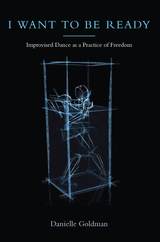
"Danielle Goldman's contribution to the theory and history of improvisation in dance is rich, beautiful and extraordinary. In her careful, rigorously imaginative analysis of the discipline of choreography in real time, Goldman both compels and allows us to become initiates in the mysteries of flight and preparation. She studies the massive volitional resources that one unleashes in giving oneself over to being unleashed. It is customary to say of such a text that it is 'long-awaited' or 'much anticipated'; because of Goldman's work we now know something about the potenza, the kinetic explosion, those terms carry. Reader, get ready to move and be moved."
---Fred Moten, Duke University
"In this careful, intelligent, and theoretically rigorous book, Danielle Goldman attends to the 'tight spaces' within which improvised dance explores both its limitations and its capacity to press back against them. While doing this, Goldman also allows herself---and us---to be moved by dance itself. The poignant conclusion, evoking specific moments of embodied elegance, vulnerability, and courage, asks the reader: 'Does it make you feel like dancing?' Whether taken literally or figuratively, I can't imagine any other response to this beautiful book."
---Barbara Browning, New York University
"This book will become the single most important reflection on the question of improvisation, a question which has become foundational to dance itself. The achievement of I Want to Be Ready lies not simply in its mastery of the relevant literature within dance, but in its capacity to engage dance in a deep and abiding dialogue with other expressive forms, to think improvisation through myriad sites and a rich vein of cultural diversity, and to join improvisation in dance with its manifestations in life so as to consider what constitutes dance's own politics."
---Randy Martin, Tisch School of Arts at New York University
I Want To Be Ready draws on original archival research, careful readings of individual performances, and a thorough knowledge of dance scholarship to offer an understanding of the "freedom" of improvisational dance. While scholars often celebrate the freedom of improvised performances, they are generally focusing on freedom from formal constraints. Drawing on the work of Michel Foucault and Houston Baker, among others, Danielle Goldman argues that this negative idea of freedom elides improvisation's greatest power. Far from representing an escape from the necessities of genre, gender, class, and race, the most skillful improvisations negotiate an ever shifting landscape of constraints. This work will appeal to those interested in dance history and criticism and also interdisciplinary audiences in the fields of American and cultural studies.
Danielle Goldman is Assistant Professor of Dance at The New School and a professional dancer in New York City, where she recently has danced for DD Dorvillier and Beth Gill.
Cover art: Still from Ghostcatching, 1999, by Bill T. Jones, Paul Kaiser, and Shelley Eshkar. Image courtesy of Kaiser/Eshkar.

In 2014, the Russian army, with support from local militants, occupied parts of Ukraine’s two easternmost regions—once the beating industrial heart of the Soviet Union—where coal extraction has since exhausted both the human population and the natural resources. In late 2016, Oleksandr Mykhed set out on a research trip to explore the deep history and contested present of the area from the perspective of a fellow countryman who’d never been there.
Mykhed brings us on a painful yet hopeful journey across the Ukrainian east, sharing conversations with locals, snippets from archival documents, and the complicated perspectives of prominent cultural figures, such as writer Serhiy Zhadan, historian Olena Stiazhkina, and philosopher Ihor Kozlovsky, who was imprisoned and tortured for nearly two years.
I Will Mix Your Blood with Coal invites us to meet generations of coal miners. To learn about the Belgian and British investors who founded the east’s industrial cities. To remember the harrowing events of the First and Second World Wars and the incalculable brutality of Soviet history. To see the activists who are even now working to improve the country. To hear sweet memories of a lost utopia that never existed. Mykhed provides a unique portrait of life in the east during the war, before the full-scale invasion that would change everything.

Presenting a groundbreaking account of an audacious theatrical undertaking
Created by the Norwegian/German duo of Vegard Vinge and Ida Müller, the Ibsen-Saga (2006–present) is a six-hundred-year project to restage Henrik Ibsen’s entire oeuvre. Andrew Friedman presents a groundbreaking historical narrative of this project’s development and dramaturgy, through the theories and practices of modernism’s most influential and controversial artists, including Henrik Ibsen, Richard Wagner, F. T. Marinetti, Erwin Piscator, and Jackson Pollock. Vinge and Müller treat Ibsen’s plays as the urtexts of a mythical struggle between artistic vision and material limits, which they explore through analogous narratives ranging from Hamlet to World Cup soccer matches, all unified by a singular aesthetic that juxtaposes totalizing fiction and extreme reality. As Friedman shows, they mythologize Ibsen’s themes of artistic ambition to resurrect and test modernism’s fantasies of artistic autonomy, totality, creative license, and provocation.
By reading Vinge and Müller’s project through its modernist inspirations, Friedman demonstrates the material and ethical limits of modernist ideals in current theatrical practice, providing new perspectives on the legacy of these pioneering figures. Ibsen Apocalypse is a bold, cross-disciplinary reappraisal of the persistent power of modernity in contemporary performance.
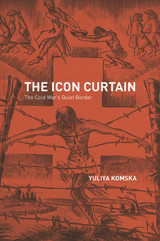
Yuliya Komska transports readers to the western edge of the Bohemian Forest, one of Europe’s oldest borderlands, where in the 1950s civilians set out to shape the so-called prayer wall. A chain of new and repurposed pilgrimage sites, lookout towers, and monuments, the prayer wall placed two long-standing German obsessions, forest and border, at the heart of the century’s most protracted conflict. Komska illustrates how civilians used the prayer wall to engage with and contribute to the new political and religious landscape. In the process, she relates West Germany’s quiet sylvan periphery to the tragic pitch prevalent along the Iron Curtain’s better-known segments.
Steeped in archival research and rooted in nuanced interpretations of wide-ranging cultural artifacts, from vandalized religious images and tourist snapshots to poems and travelogues, The Icon Curtain pushes disciplinary boundaries and opens new perspectives on the study of borders and the Cold War alike.
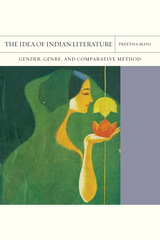
Indian literature is not a corpus of texts or literary concepts from India, argues Preetha Mani, but a provocation that seeks to resolve the relationship between language and literature, written in as well as against English. Examining canonical Hindi and Tamil short stories from the crucial decades surrounding decolonization, Mani contends that Indian literature must be understood as indeterminate, propositional, and reflective of changing dynamics between local, regional, national, and global readerships. In The Idea of Indian Literature, she explores the paradox that a single canon can be written in multiple languages, each with their own evolving relationships to one another and to English.
Hindi, representing national aspirations, and Tamil, epitomizing the secessionist propensities of the region, are conventionally viewed as poles of the multilingual continuum within Indian literature. Mani shows, however, that during the twentieth century, these literatures were coconstitutive of one another and of the idea of Indian literature itself. The writers discussed here—from short-story forefathers Premchand and Pudumaippittan to women trailblazers Mannu Bhandari and R. Chudamani—imagined a pan-Indian literature based on literary, rather than linguistic, norms, even as their aims were profoundly shaped by discussions of belonging unique to regional identity. Tracing representations of gender and the uses of genre in the shifting thematic and aesthetic practices of short vernacular prose writing, the book offers a view of the Indian literary landscape as itself a field for comparative literature.
“Superb… A tour de force.”
—Ebrahim Moosa
“Provocative… Aydin ranges over the centuries to show the relative novelty of the idea of a Muslim world and the relentless efforts to exploit that idea for political ends.”
—Washington Post
When President Obama visited Cairo to address Muslims worldwide, he followed in the footsteps of countless politicians who have taken the existence of a unified global Muslim community for granted. But as Cemil Aydin explains in this provocative history, it is a misconception to think that the world’s 1.5 billion Muslims constitute a single entity. How did this belief arise, and why is it so widespread? The Idea of the Muslim World considers its origins and reveals the consequences of its enduring allure.
“Much of today’s media commentary traces current trouble in the Middle East back to the emergence of ‘artificial’ nation states after the fall of the Ottoman Empire… According to this narrative…today’s unrest is simply a belated product of that mistake. The Idea of the Muslim World is a bracing rebuke to such simplistic conclusions.”
—Times Literary Supplement
“It is here that Aydin’s book proves so valuable: by revealing how the racial, civilizational, and political biases that emerged in the nineteenth century shape contemporary visions of the Muslim world.”
—Foreign Affairs

Published by University of Delaware Press. Distributed worldwide by Rutgers University Press.
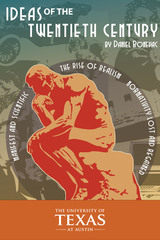
The twentieth century ushered in significant progress, as philosophers, scientists, artists, and poets across the world improved the way we lived. Yet the last century also brought increased levels of war, tyranny, and genocide, and people lost faith in values. Now, thinkers and leaders are reconstructing theories of value and creating institutions to embody them. In this thought-provoking, broad-sweeping course, you will learn how philosophy, art, literature, and history shaped the past century and continue to impact our world today.



An authoritative reassessment of one of the Third Reich’s most notorious war criminals, whose alleged sexual barbarism made her a convenient scapegoat and obscured the true nature of Nazi terror.
On September 1, 1967, one of the Third Reich’s most infamous figures hanged herself in her cell after nearly twenty-four years in prison. Known as the “Bitch of Buchenwald,” Ilse Koch was singularly notorious, having been accused of owning lampshades fabricated from skins of murdered camp inmates and engaging in “bestial” sexual behavior. These allegations fueled a public fascination that turned Koch into a household name and the foremost symbol of Nazi savagery. Her subsequent prosecution resulted in a scandal that prompted US Senate hearings and even the intervention of President Truman.
Yet the most sensational atrocities attributed to Koch were apocryphal or unproven. In this authoritative reappraisal, Tomaz Jardim shows that, while Koch was guilty of heinous crimes, she also became a scapegoat for postwar Germans eager to distance themselves from the Nazi past. The popular condemnation of Koch—and the particularly perverse crimes attributed to her by prosecutors, the media, and the public at large—diverted attention from the far more consequential but less sensational complicity of millions of ordinary Germans in the Third Reich’s crimes.
Ilse Koch on Trial reveals how gendered perceptions of violence and culpability drove Koch’s zealous prosecution at a time when male Nazi perpetrators responsible for greater crimes often escaped punishment or received lighter sentences. Both in the international press and during her three criminal trials, Koch was condemned for her violation of accepted gender norms and “good womanly behavior.” Koch’s “sexual barbarism,” though treated as an emblem of the Third Reich’s depravity, ultimately obscured the bureaucratized terror of the Nazi state and hampered understanding of the Holocaust.
Robert Jackall and Janice M. Hirota explore the fashioning of the apparatus of advocacy through the stories of two organizations, the Committee on Public Information, which sold the Great War to the American public, and the Advertising Council, which since the Second World War has been the main coordinator of public service advertising. They then turn to the career of William Bernbach, the adman's adman, who reinvented advertising and grappled creatively with the profound skepticism of a propaganda-weary midcentury public. Jackall and Hirota argue that the tools-in-trade and habits of mind of "image makers" have now migrated into every corner of modern society. Advocacy is now a vocation for many, and American society abounds as well with "technicians in moral outrage," including street-smart impresarios, feminist preachers, and bombastic talk-radio hosts.
The apparatus and ethos of advocacy give rise to endlessly shifting patterns of conflicting representations and claims, and in their midst Image Makers offers a clear and spirited understanding of advocacy in contemporary society and the quandaries it generates.

Available today because they were smuggled out of the camp and into the hands of Polish resistance fighters, the photographs show a group of naked women being herded into the gas chambers and the cremation of corpses that have just been pulled out. Georges Didi-Huberman’s relentless consideration of these harrowing scenes demonstrates how Holocaust testimony can shift from texts and imaginations to irrefutable images that attempt to speak the unspeakable. Including a powerful response to those who have criticized his interest in these images as voyeuristic, Didi-Huberman’s eloquent reflections constitute an invaluable contribution to debates over the representability of the Holocaust and the status of archival photographs in an image-saturated world.
Ursula K. Heise argues that understanding these stories and symbols is indispensable for any effective advocacy on behalf of endangered species. More than that, she shows how biodiversity conservation, even and especially in its scientific and legal dimensions, is shaped by cultural assumptions about what is valuable in nature and what is not. These assumptions are hardwired into even seemingly neutral tools such as biodiversity databases and laws for the protection of endangered species. Heise shows that the conflicts and convergences of biodiversity conservation with animal welfare advocacy, environmental justice, and discussions about the Anthropocene open up a new vision of multispecies justice. Ultimately, Imagining Extinction demonstrates that biodiversity, endangered species, and extinction are not only scientific questions but issues of histories, cultures, and values.
A defining work of moral philosophy, Kant’s Groundwork for the Metaphysics of Morals has been influential to an extent far beyond what its modest length (roughly 75 pages) might suggest. It is also a famously difficult work, concerned with propounding universal principles rather than answering practical questions. As even professional philosophers will admit, first-time readers are not alone in finding some of its arguments perplexing.
Offering an introduction that is accessible to students and relevant to specialized scholars, Dieter Schönecker and Allen Wood make luminously clear the ways the Groundwork for the Metaphysics of Morals forms the basis of our modern moral outlook: that all human beings have equal dignity as ends in themselves; that every rational being is a self-governing agent whose morality freely derives from his or her own will; and that all rational beings constitute an ideal community, bound only by the moral laws they have agreed upon. Schönecker and Wood explain key Kantian concepts of duty, the good will, and moral worth, as well as the propositions Kant uses to derive his conception of the moral law. How the law relates to freedom, and the significance of the free will within Kant’s overall philosophy are rigorously interrogated. Where differing interpretations of Kant’s claims are possible, the authors provide alternative options, giving arguments for each. This critical introduction will help readers of the Groundwork gain an informed understanding of Kant’s challenging but central philosophical work.

A century ago, activists confronting racism and colonialism—in India, South Africa, and Black America—used print media to connect with one another. Then, as now, the most effective medium for their undertakings was the English language. Imperfect Solidarities: Tagore, Gandhi, Du Bois, and the Global Anglophone tells the story of this interconnected Anglophone world. Through Rabindranath Tagore’s writings on China, Mahatma Gandhi’s recollections of South Africa, and W. E. B. Du Bois’s invocations of India, Madhumita Lahiri theorizes print internationalism. This methodology requires new terms within the worldwide hegemony of the English language (“the global Anglophone”) in order to encourage alternate geographies (such as the Global South) and new collectivities (such as people of color).
The women of print internationalism feature prominently in this account. Sonja Schlesin, born in Moscow, worked with Indians in South Africa. Sister Nivedita, an Irish woman in India, collaborated with a Japanese historian. Jessie Redmon Fauset, an African American, brought the world home to young readers through her work as an author and editor.
Reading across races and regions, genres and genders, Imperfect Solidarities demonstrates the utility of the neologism for postcolonial literary studies.

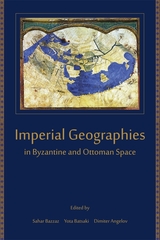
Anchored in the Russian Empire, but not limited to it, the eight studies in this volume explore the nineteenth-century imperial responses to the challenge of modernity, the dramatic disruptions of World War I, the radical scenarios of the interwar period and post-communist endgames at the different edges of Eurasia. The book continues and amplifies the historiographic momentum created by Alfred J. Rieber’s long and fruitful scholarly career.
First, the volume addresses the attempts of Russian imperial rulers and elites to overcome the economic backwardness of the empire with respect to the West. The ensuing rivalry of several interest groups (entrepreneurs, engineers, economists) created new social forms in the subsequent rounds of modernization. The studies explore the dynamics of the metamorphoses of what Rieber famously conceptualized as a “sedimentary society” in the pre-revolutionary and early Soviet settings.
Second, the volume also expands and dwells on the concept of frontier zones as dynamic, mutable, shifting areas, characterized by multi-ethnicity, religious diversity, unstable loyalties, overlapping and contradictory models of governance, and an uneasy balance between peaceful co-existence and bloody military clashes. In this connection, studies pay special attention to forced and spontaneous migrations, and population politics in modern Eurasia.

An Imperial Path to Modernity examines the role of liberal intellectuals in reshaping transnational ideas and internationalist aspirations into national values and imperial ambitions in early twentieth-century Japan. Perceiving the relationship between liberalism and the international world order, a cohort of Japanese thinkers conformed to liberal ideas and institutions to direct Japan’s transformation into a liberal empire in Asia. To sustain and rationalize the imperial enterprise, these Japanese liberals sought to make the domestic political stage less hostile to liberalism. Facilitating the creation of print-mediated public opinion, liberal intellectuals attempted to enlist the new middle class as a social ally in circulating liberal ideas and practices within Japan and throughout the empire.
In tracing the interconnections between liberalism and the imperial project, Jung-Sun N. Han focuses on the ideas and activities of Yoshino Sakuzo (1878–1933), who was and is remembered as a champion of prewar Japanese liberalism and Taisho democracy. Drawing insights from intellectual history, cultural studies, and international relations, this study argues that prewar Japanese liberalism grew out of the efforts of intellectuals such as Yoshino who worked to devise a transnational institution to govern the Japanese empire.

A global history project that examines the diffusion of scientific and environmental discourses from India to Britain and the US.
This book examines how imperial agendas and colonial stereotyping shaped dietary and agricultural research carried out in the 1920s in British India, from soil protection initiatives to studies of diet and healthy living. It also discusses how a selective interpretation of this research, which focused on the supposed vigor of one community, the Hunzas, influenced the organic and lifestyles movements that later emerged in Britain and the US from the 1940s to the 1960s.
With an afterword by Manushag N. Powell.
Published by Bucknell University Press. Distributed worldwide by Rutgers University Press.
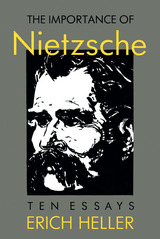
Nietzsche prided himself on having broken with all traditional ways of thinking and feeling, and once even claimed that he would someday be recognized for having ushered in a new millennium. While acknowledging Nietzsche's radicalism, Heller also insists on the continuity of the story in which he does indeed occupy a central place. By considering Nietzsche in relation to Goethe, Rilke, Wittgenstein, Yeats, and others, Heller shows the philosopher's ambivalence toward the tradition he inherited as well as his profound effect on the thought and sensibility of those who followed him. It is hardly an exaggeration to say, as Heller does in his first essay, that Nietzsche is to many modern writers and thinkers—including Mann, Musil, Kafka, Freud, Heidegger, Jaspers, Gide, and Sartre—what St. Thomas Aquinas was to Dante: the categorical interpreter of a world, which they contemplate imaginatively and theoretically without ever much upsetting its Nietzschean structure.
Thus it is Nietzsche's thought, so pervasively present in the themes of modernity, that gives coherence and unity to Heller's essays. What emerges from them is that, despite his iconoclastic declarations and unorthodox philosophical practices, Nietzsche deals with the human spirit's persistent concerns. His questions remain urgent, and even the answers, in all their contradictoriness, possess the commanding force of his inquiry. An example is the incompatibility of the famous extremes, the teaching of the Übermensch and the Eternal Recurrence of All Things. These cancel each other out and yet grow from the same intellectual and spiritual roots, as is shown lucidly and cogently by one of Heller's most forceful essays, "Nietzsche's Terrors: Time and the Inarticulate." In fathoming the depth of this contradiction, Heller at the same time reveals the importance of Nietzsche for those who seek to understand the wellsprings of the epoch's disquiet, turmoil, and creativity.

Taking as his lens the fragment—fragmented bodies, fragments of memories, fragments of texts—Murillo theorizes new directions for Black identity and cultural production. Combining a critical engagement of physics and metaphysics with innovative readings of Gayl Jones’s Corregidora, Octavia Butler’s Kindred, Toni Morrison’s Beloved, Kiese Laymon’s Long Division, Dionne Brand’s A Map to the Door of No Return, and Paul Beatty’s The Sellout, he offers new ways to think about anti-Black racism and practice Black creativity. Ultimately, in his equally creative and analytical responses to depictions of Black people left out of history and barred from spaces, Murillo argues that through Afro-pessimism, Black people can fight the anti-Black cosmos.
Lakatos escaped Hungary following the failed 1956 Revolution. Before then, he had been an influential Communist intellectual and was imprisoned for years by the Stalinist regime. He also wrote a lost doctoral thesis in the philosophy of science and participated in what was criminal behavior in all but a legal sense. Kadvany argues that this intellectual and political past animates Lakatos’s English-language philosophy, and that, whether intended or not, Lakatos integrated a penetrating vision of Hegelian ideas with rigorous analysis of mathematical proofs and controversial histories of science.
Including new applications of Lakatos’s ideas to the histories of mathematical logic and economics and providing lucid exegesis of many of Hegel’s basic ideas, Imre Lakatos and the Guises of Reason is an exciting reconstruction of ideas and episodes from the history of philosophy, science, mathematics, and modern political history.
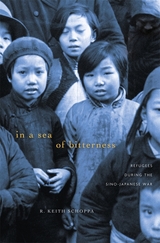
The Japanese invasion of Shanghai in 1937 led some thirty million Chinese to flee their homes in terror, and live—in the words of artist and writer Feng Zikai—“in a sea of bitterness” as refugees. Keith Schoppa paints a comprehensive picture of the refugee experience in one province—Zhejiang, on the central Chinese coast—where the Japanese launched major early offensives as well as notorious later campaigns. He recounts stories of both heroes and villains, of choices poorly made amid war’s bewildering violence, of risks bravely taken despite an almost palpable quaking fear.
As they traveled south into China’s interior, refugees stepped backward in time, sometimes as far as the nineteenth century, their journeys revealing the superficiality of China’s modernization. Memoirs and oral histories allow Schoppa to follow the footsteps of the young and old, elite and non-elite, as they fled through unfamiliar terrain and coped with unimaginable physical and psychological difficulties. Within the context of Chinese culture, being forced to leave home was profoundly threatening to one’s sense of identity. Not just people but whole institutions also fled from Japanese occupation, and Schoppa considers schools, governments, and businesses as refugees with narratives of their own.
Local governments responded variously to Japanese attacks, from enacting scorched-earth policies to offering rewards for the capture of plague-infected rats in the aftermath of germ warfare. While at times these official procedures improved the situation for refugees, more often—as Schoppa describes in moving detail—they only deepened the tragedy.
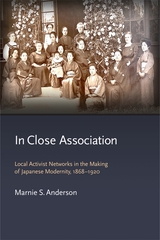
In Close Association is the first English-language study of the local networks of women and men who built modern Japan in the Meiji period (1868–1912). Marnie Anderson uncovers in vivid detail how a colorful group of Okayama-based activists founded institutions, engaged in the Freedom and People’s Rights Movement, promoted social reform, and advocated “civilization and enlightenment” while forging pathbreaking conceptions of self and society. Alongside them were Western Protestant missionaries, making this story at once a local history and a transnational one.
Placing gender analysis at its core, the book offers fresh perspectives on what women did beyond domestic boundaries, while showing men’s lives, too, were embedded in home and kin. Writing “history on the diagonal,” Anderson documents the gradual differentiation of public activity by gender in the late nineteenth and early twentieth centuries. Meiji-era associations became increasingly sex-specific, though networks remained heterosocial until the twentieth century.
Anderson attends to how the archival record shapes what historians can know about individual lives. She argues for the interdependence of women and men and the importance of highlighting connections between people to explain historical change. Above all, the study sheds new light on how local personalities together transformed Japan.

No other attempt to explain French civil and military leadership during the 1930s has been so gracefully written, so firmly based on archival material, or so sensitive to French conditions and purposes as In Command of France. It combines a detailed survey of French foreign policy during the Nazi period with a careful examination of France's corresponding military planning and preparation. France was under control, the author argues, and credits the civilian and military command with more vision, more determination, more competence than hitherto recognized.
Young introduces the reader to some of the leading personalities of the day--Laval, Bonnet, Weygand, Pétain, Gamelin, Delbos, Cot, Daladier--soldiers and statesmen whose names have come close to fading from our view. He outlines the problems and alternatives that confronted them in the Nazi years--strikes, lockouts, unemployment, inflating prices, devalued currency--and finds that they failed not because of an absence of policy or incompetence but because the problems they faced were insuperable.
—Elissa Weaver
Professor of Italian, Emerita, University of Chicago
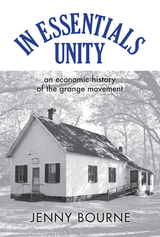
The Patrons of Husbandry—or the Grange—is the longest-lived US agricultural society and, since its founding shortly after the Civil War, has had immeasurable influence on social change as enacted by ordinary Americans. The Grange sought to relieve the struggles of small farmers by encouraging collaboration. Pathbreaking for its inclusion of women, the Grange is also well known for its association with Gilded Age laws aimed at curbing the monopoly power of railroads.
In Essentials, Unity takes as its focus Grange founder Oliver Kelley and his home organization in Minnesota. Jenny Bourne draws upon numerous historical records to present a lively picture of a fraternal organization devoted to improving the lot of farmers but whose legacies extend far beyond agriculture. From struggles over minimum wage, birth control, and environmental regulation to the conflicts surrounding the Affordable Care Act, and from lunch-counter sit-ins to Occupy Wall Street, the Grange has shaped the very notion of collective action and how it is deployed even today. As this compact book so effectively illustrates, the history of the Patrons of Husbandry exposes the classic tension between the desires for achieving overall economic success and determining how the spoils are split.
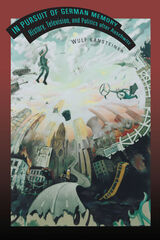
The collective memories of Nazism that developed in postwar Germany have helped define a new paradigm of memory politics. From Europe to South Africa and from Latin America to Iraq, scholars have studied the German case to learn how to overcome internal division and regain international recognition.
In Pursuit of German Memory: History, Television, and Politics after Auschwitz examines three arenas of German memory politics—professional historiography, national politics, and national public television—that have played key roles in the reinvention of the Nazi past in the last sixty years. Wulf Kansteiner shows that the interpretations of the past proposed by historians, politicians, and television producers reflect political and generational divisions and an extraordinary concern for Germany's image abroad. At the same time, each of these theaters of memory has developed its own dynamics and formats of historical reflection.
Kansteiner’s analysis of the German scene reveals a complex social geography of collective memory. In Pursuit of German Memory underscores the fact that German memories of Nazism, like many other collective memories, combine two seemingly contradictory qualities: They are highly mediated and part of a global exchange of images and story fragments but, at the same time, they can be reproduced only locally, in narrowly circumscribed networks of communication.

The book centers on debates about the Romanian national character and race between 1880s and 1950s. It also argues that during the early 1940s anti-Semitism and anti-Roma racism contributed directly to the programme of ethnic purification pursued by the Antonescu regime. Racism and eugenics explain not just the deportation and murder of the Jews but also the deportation and murder of the Roma. The Holocaust in Romania should therefore be understood as the result not just of anti-Semitism but also of biopolitical nationalism. Finally, the book suggests that the eugenic ideal of the ‘perfect’ Romanian did not disappear in 1945 but was embedded in the socialist definitions of the ‘new man’ and ‘perfect’ society emerging under communism.
The book centers on debates about the Romanian national character and race between 1880s and 1950s. It also argues that during the early 1940s anti-Semitism and anti-Roma racism contributed directly to the programme of ethnic purification pursued by the Antonescu regime. Racism and eugenics explain not just the deportation and murder of the Jews but also the deportation and murder of the Roma. The Holocaust in Romania should therefore be understood as the result not just of anti-Semitism but also of biopolitical nationalism. Finally, the book suggests that the eugenic ideal of the ‘perfect’ Romanian did not disappear in 1945 but was embedded in the socialist definitions of the ‘new man’ and ‘perfect’ society emerging under communism.
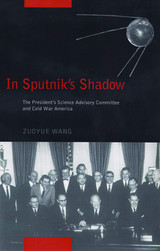
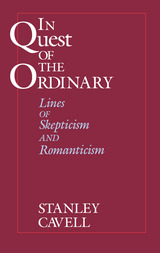
In today’s world of rapid advancements in science and technology, we need to scrutinize more than ever the historical forces that shape our perceptions of what these new possibilities can and cannot do for social progress. In Sputnik’s Shadow provides a lens to do just that, by tracing the rise and fall of the President’s Science Advisory Committee from its ascendance under Eisenhower in the wake of the Soviet launching of Sputnik to its demise during the Nixon years. Members of this committee shared a strong sense of technological skepticism; they were just as inclined to advise the president about what technology couldn’t do—for national security, space exploration, arms control, and environmental protection—as about what it could do.
Zuoyue Wang examines key turning points during the twentieth century, including the beginning of the Cold War, the debates over nuclear weapons, the Sputnik crisis in 1957, the struggle over the Vietnam War, and the eventual end of the Cold War, showing how the involvement of scientists in executive policymaking evolved over time. Bringing new insights to the intellectual, social, and cultural histories of the era, this book not only depicts the drama of Cold War American science, it gives perspective to how we think about technological advancements today.
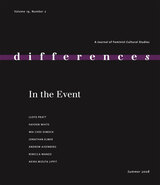
One essay identifies flash points when “the event” has preoccupied Western thought from Plato to Freud. Others show how particular events—Hurricane Katrina, the Algerian War, the Haitian Revolution—betray the inadequacy of traditional nation-based frameworks for understanding the course of history. Media representations also are a central concern, as in one contributor’s analysis of how child abductions turn some (white girls’) bodies into events while other (brown girls’) bodies are denied that status. The final essay is a meditation on the end of the world that explores how the idea of the end as event transforms everyday language into cryptic signs.
Contributors: Andrew Aisenberg, Wai Chee Dimock, Jonathan Elmer, Akira Lippit, Lloyd Pratt,Rebecca Wanzo, Hayden White

In the Future of Yesterday delves into Stefan Zweig’s considerable contribution to world literature, rooted in the Austro-Jewish tradition. His privileged social background saw him embrace European culture and cosmopolitanism. A world traveler from the outset, he liked to uproot himself, but whether he stayed in London, New York, or, eventually, in Brazil, his literary baggage continued to contain the flair of fin de siècle Vienna.
This biography re-examines Zweig’s influential time in England and offers new insights into his final years in the United States and Brazil. It discusses some of his prolific literary output in relation to his life and explores his political views on Europe, Zionism, and the world order in greater depth than previous appraisals of Zweig’s life.
The book also considers the many contradictions in Zweig’s views and attitudes, which included an initial, and surprising, leniency towards fascism. Most importantly, though, In the Future of Yesterday presents Zweig as a towering figure of a form of writing that was bursting with life and that was written in the knowledge that there can only be a future if we remain conscious of the past. In that sense, Zweig is a writer for our time.
“In the Light of Likeness—Transformed”, by Dana A. Williams, looks critically at the work of contemporary African American author Leon Forrest. Not only does she bring to the critical table a well-known but as yet understudied modernist author—an important endeavor in and of itself—but she also explores Forrest’s novels’ cultural dialogue with black ethnic culture and other African American authors, as well as provides in-depth readings of his prose and interpretations of his narrative style. Highly touted by both his literary forebear Ralph Ellison, who wrote the foreword to Forrest’s first novel, and his literary contemporary Toni Morrison, who edited his first three novels and wrote the foreword to his third, Leon Forrest is among the most gifted African American writers of our time. Yet, he is also among our most difficult.
Forrest's highly experimental narrative style, his reinterpretation of modernism, and his transformations of black cultural traditions into literary aesthetics often pose challenges of interpretation for the reader and the scholar alike. As the first single-authored book-length study of Forrest’s novel, this book offers readers pathways into his fiction. What this culturalist approach to the novels reveals is that Forrest’s fiction was foremost concerned with investigating ways for the African American to survive in the contemporary moment. Through a variety of characters, the novels reveal the African American’s art of transformation—the ability to find ways to make the wretchedness of the past work in positive ways.
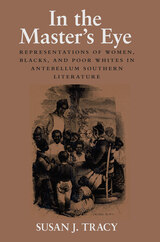
This book explores the way in which literature can be used to reinforce social power. Through rigorous readings of a series of antebellum plantation novels, Susan J. Tracy shows how the narrative strategies employed by proslavery Southern writers served to justify and perpetuate the oppression of women, blacks, and poor whites.
Tracy focuses on the historical romances of six authors: George Tucker, James Ewell Heath, William Alexander Caruthers, John Pendleton Kennedy, Nathaniel Beverley Tucker, and William Gilmore Simms. Using variations on a recurring plot—in which a young planter/hero rescues a planter's daughter from an “enemy” of her class—each of these novelists reinforced an idealized vision of a Southern civilization based on male superiority, white supremacy, and class inequality. It is a world in which white men are represented as the natural leaders of loyal and dependent women, grateful and docile slaves, and inferior poor whites. According to Tracy, the interweaving of these themes reveals the extent to which the Southern defense of slavery in the years leading up to the Civil War was an argument not only about race relations but about gender and class relations as well.
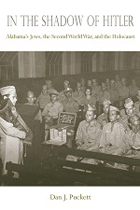
In this extensive study of how southern Jews in the United States responded to the Nazi persecution of European Jews, Dan J. Puckett recounts the divisions between Alabama Jews in the early 1930s. As awareness of the horrors of the Holocaust spread, Jews across Alabama from different backgrounds and from Reform, Conservative, and Orthodox traditions worked to bridge their internal divisions in order to mount efforts to save Jewish lives in Europe. Only by leveraging their collective strength were Alabama’s Jews able to sway the opinions of newspaper editors, Christian groups, and the general public as well as lobby local, state, and national political leaders.
Puckett’s comprehensive analysis is enlivened and illustrated by true stories that will fascinate all readers of southern history. One such story concerns the Altneuschule Torah of Prague and describes how the Nazis, during their brutal occupation of Czechoslovakia, confiscated 1,564 Torahs and sacred Judaic objects from communities throughout Bohemia and Moravia as exhibits in a planned museum to the extinct Jewish race. Recovered after the war by the Czech Memorial Scrolls Trust, the Altneuschule Torah was acquired in 1982 by the Orthodox congregation Ahavas Chesed of Mobile. Ahavas Chesed re-consecrated the scroll as an Alabama memorial to Czech Jews who perished in Nazi death camps.
In the Shadow of Hitler illustrates how Alabama’s Jews, in seeking to influence the national and international well-being of Jews, were changed, emerging from the war period with close cultural and religious cooperation that continues today.
Contrary to the conventional wisdom that sectarianism is intrinsically linked to violence, bloodshed, or social disharmony, Max Weiss uncovers the complex roots of Shiʿi sectarianism in twentieth-century Lebanon.
The template for conflicted relations between the Lebanese state and Shiʿi society arose under French Mandate rule through a process of gradual transformation, long before the political mobilization of the Shiʿi community under the charismatic Imam Musa al-Sadr and his Movement of the Deprived, and decades before the radicalization linked to Hizballah. Throughout the period, the Shiʿi community was buffeted by crosscutting political, religious, and ideological currents: transnational affiliations versus local concerns; the competing pull of Arab nationalism and Lebanese nationalism; loyalty to Jabal ʿAmil, the cultural heartland of Shiʿi Lebanon; and the modernization of religious and juridical traditions.
Uncoupling the beginnings of modern Shiʿi collective identity from the rise of political Shiʿism, Weiss transforms our understanding of the nature of sectarianism and shows why in Lebanon it has been both so productive and so destructive at the same time.
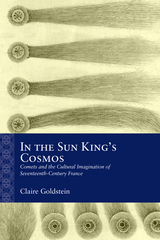
Offering a new history of a formative cultural and political era through the cosmic phenomena that captured the public’s imagination
In the winters of 1664–65 and 1680–81, the French public was galvanized by two bright comets whose elliptical orbits could not be mapped with contemporary geometry and that thus seemed to appear in random and unpredictable locations. Bookending the period during which Louis XIV’s sun king mythology was created, these comets defied the heliocentric order to which French politics and culture aspired. As Claire Goldstein demonstrates, literary texts, cultural institutions, and architecture inspired by comets offer a different perspective on the relationship between sensory experience, ideology, and artistic form.
In the Sun King’s Cosmos: Comets and the Cultural Imagination of Seventeenth-Century France presents an alternative view of a formative era in cultural and political history, when distinctly modern forms of power and control were established through a regime of the spectacular. Goldstein shows how comets allow us to see the seventeenth century in ways that complicate the narrative of a race toward rationalization, classicism, and modernity, indexing instead a messy period in which the spectacular was sometimes also inscrutable.

Desire, Jacques Lacan suggests, is a condition or expression of our wounded nature. But because such desire is also unconscious, it can be expressed only indirectly, for what we consciously desire is hardly ever what we really want. Desire makes itself known, but disguises its presence—appearing, for example, in unconscious but repetitive, and sometimes even self-destructive, patterns of behavior.
Informed by the voices of Freud and Lacan regarding the nature of language and desire, Inaugural Wounds examines the ways in which five major nineteenth-century English writers explored the trajectories and shapes of desire. Arguing that we need to give to novels the same kind of close scrutiny we give to poetry, author Robert Lougy suggests that when we do so, we discover that they often astound us by the resonance and range of their language, as well as by their ability to take us to strange and haunting places.
The five narratives examined—Charles Dickens’s Martin Chuzzlewit, William Thackeray’s Journey from Cornhill to Grand Cairo, Elizabeth Gaskell’s Ruth, Wilkie Collins’s The Woman in White, and Thomas Hardy’s Jude the Obscure—testify to the mysterious origins of desire. Although each of the novels tells its own story in its own way, they share a fascination with the nature of desire itself.
Drawing upon recent work that has challenged historicist approaches toward nineteenth-century British literature, Professor Lougy uses the insights of psychoanalysis to enable us to more fully appreciate the depth and power of these novels. Of great value to Victorian and psychoanalytic scholars, Inaugural Wounds will be useful for teaching undergraduates as well.

Like many gentlemen of his time, Charles Darwin married his first cousin. In fact, marriages between close relatives were commonplace in nineteenth-century England, and Adam Kuper argues that they played a crucial role in the rise of the bourgeoisie.
Incest and Influence shows us just how the political networks of the eighteenth-century aristocracy were succeeded by hundreds of in-married bourgeois clans—in finance and industry, in local and national politics, in the church, and in intellectual life. In a richly detailed narrative, Kuper deploys his expertise as an anthropologist to analyze kin marriages among the Darwins and Wedgwoods, in Quaker and Jewish banking families, and in the Clapham Sect and their descendants over four generations, ending with a revealing account of the Bloomsbury Group, the most eccentric product of English bourgeois endogamy.
These marriage strategies were the staple of novels, and contemporaries were obsessed with them. But there were concerns. Ideas about incest were in flux as theological doctrines were challenged. For forty years Victorian parliaments debated whether a man could marry his deceased wife’s sister. Cousin marriage troubled scientists, including Charles Darwin and his cousin Francis Galton, provoking revolutionary ideas about breeding and heredity.
This groundbreaking study brings out the connection between private lives, public fortunes, and the history of imperial Britain.

While the majority of scholarship on early Washington focuses on its political and physical development, in Incidental ArchitectGordon S. Brown describes the intellectual and social scene of the 1790s and early 1800s through the lives of a prominent couple whose cultural aspirations served as both model and mirror for the city’s own.
When William and Anna Maria Thornton arrived in Washington, D.C., in 1794, the new nation’s capital was little more than a raw village. The Edinburgh–educated Thornton and his accomplished wife brought with them the values of the Scottish Enlightenment, an enthusiasm for the arts, and a polished urbanity that was lacking in the little city emerging from the swamps along the Potomac. Thornton’s talents were manifold: He is perhaps best known as the original architect of the Capitol building, but he also served as a city commissioner and as director of the Patent Office, where his own experimentation in steam navigation embroiled him in a long-running dispute with inventor Robert Fulton.
In spite of their general preoccupation with politics and real estate development, Washington’s citizens gradually created a network of cultural institutions—theaters, libraries and booksellers, music venues, churches, schools, and even colleges and intellectual associations—that began to satisfy their aspirations.
Incidental Architect is a fascinating account of how the city’s cultural and social institutions were shaped by its earliest citizens.
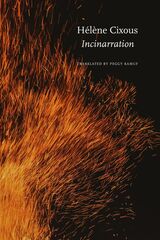
Hélène Cixous’s powerful new book, masterfully translated by Peggy Kamuf, is a vivid journey through fire. From the ashes of wars, wildfires, and upheaval, Cixous traces a dramatic path across time—from the Second World War and the Nazi occupation of Oran to the European wildfires of 2022—weaving a rich, intimate narrative that merges history, autobiography, and myth. With her piercing, lyrical voice, Cixous confronts the human cost of destruction and upheaval, and asks a universal question: What do we carry with us when everything we know is falling to ashes?
In Incinarration, Cixous finds hope in the power of words, memory, and imagination to illuminate our darkest moments and redeem the future. As forests burn and regimes collapse, Cixous shows us how stories become a form of resistance—a way to remember, to bear testimony, and to find renewal in the face of oblivion.

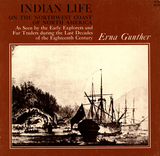
Drawing on a wide range of evidence, this volume is a carefully researched investigation into the ethnohistory of the Pacific Northwest during the period of European exploration of the region. The book supplements the archeological evidence from the area with a detailed investigation of the journals, diaries, and sketchbooks of Russian, Spanish, and English explorers and traders who reached the region, as well as artifacts that those explorers and traders obtained on their expeditions and that are now held in museums worldwide. In doing so, Gunther's research extends anthropological study of the region a century earlier, and sheds light on the understudied tribal cultures of the Haida and the Tlingit. The volume contains splendid reproductions of contemporary drawings, and appendices mapping the museum locations of artifacts and describing the processes of native technology.
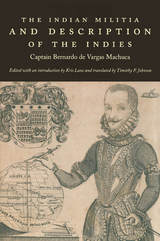
Containing advice on curing rattlesnake bites with amethysts and making saltpeter for gunpowder from concentrated human urine, The Indian Militia is a manual in four parts, the first of which outlines the ideal qualities of the militia commander. Addressing the organization and outfitting of conquest expeditions, Book Two includes extended discussions of arms and medicine. Book Three covers the proper behavior of soldiers, providing advice on marching through peaceful and bellicose territories, crossing rivers, bivouacking in foul weather, and carrying out night raids and ambushes. Book Four deals with peacemaking, town-founding, and the proper treatment of conquered peoples. Appended to these four sections is a brief geographical description of all of Spanish America, with special emphasis on the indigenous peoples of New Granada (roughly modern-day Colombia), followed by a short guide to the southern coasts and heavens. This first English-language edition of The Indian Militia includes an extensive introduction, a posthumous report on Vargas Machuca’s military service, and a selection from his unpublished attack on the writings of Fray Bartolomé de Las Casas.
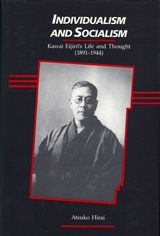
Kawai Eijirō was a controversial figure in Japan during the interwar years. Dedicated to the idea that the socialist aspiration for economic equality could be combined with a classical liberal commitment to individual political and civil rights, he antagonized both Marxists and Japanese nationalists. He was hounded by the government as a leftist and brought to trial during World War II.
This is the first study of Kawai in English. Atsuko Hirai examines the family and school influences that contributed to the development of Kawai’s thought, and analyzes the manner in which the ideas of such Western philosophers as Kant, Hegel, John Stuart Mill, Marx, T. H. Green, and the British labor ideologues were absorbed into a receptive and creative East Asian mind. The events of Kawai’s life are intertwined with the development of his idealist political philosophy, all culminating in a trial of unprecedented scale.

"How can such a gentle people as we are be so murderous?" a prominent Indonesian asks. That question--and the mysteries of the archipelago's vast contradictions--haunt Theodore Friend's remarkable work, a narrative of Indonesia during the last half century, from the postwar revolution against Dutch imperialism to the unrest of today. Part history, part meditation on a place and a past observed firsthand, Indonesian Destinies penetrates events that gave birth to the world's fourth largest nation and assesses the continuing dangers that threaten to tear it apart.
Friend reveals Sukarno's character through wartime collaboration with Japan, and Suharto's through the mass murder of communists that brought him to power for thirty-two years. He guides our understanding of the tolerant forms of Islam prevailing among the largest Muslim population in the world, and shows growing tensions generated by international terrorism. Drawing on a deep knowledge of the country's cultures, its leaders, and its ordinary people, Friend gives a human face and a sense of immediacy to the self-inflicted failures and immeasurable tragedies that cast a shadow over Indonesia's past and future. A clear and compelling passion shines through this richly illustrated work. Rarely have narrative history and personal historical witness been so seamlessly joined.
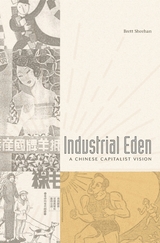
This illuminating study of the evolution of Chinese capitalism chronicles the fortunes of the Song family of North China under five successive authoritarian governments. Headed initially by Song Chuandian, who became rich by exporting hairnets to Europe and America in the early twentieth century, the family built a thriving business against long odds of rural poverty and political chaos.
A savvy political operator, Song Chuandian prospered and kept local warlords at bay, but his career ended badly when he fell afoul of the new Nationalist government. His son Song Feiqing—inspired by the reformist currents of the May Fourth Movement—developed a utopian capitalist vision that industry would redeem China from foreign imperialism and cultural backwardness. He founded the Dongya Corporation in 1932 to manufacture wool knitting yarn and for two decades steered the company through a constantly changing political landscape—the Nationalists, then Japanese occupiers, then the Nationalists again, and finally Chinese Communists. Increasingly hostile governments, combined with inflation, foreign competition, and a restless labor force, thwarted his ambition to create an “Industrial Eden.”
Brett Sheehan shows how the Song family engaged in eclectic business practices that bore the imprint of both foreign and traditional Chinese influences. Businesspeople came to expect much from increasingly intrusive states, but the position of private capitalists remained tenuous no matter which government was in control. Although private business in China was closely linked to the state, it was neither a handmaiden to authoritarianism nor a natural ally of democracy.
Presenting Dewey’s new view of philosophical inquiry
This critical edition of The Influence of Darwin on Philosophy and Other Essays in Contemporary Thought presents the results of John Dewey’s patient construction, throughout the previous sixteen years, of the radically new view of the methods and concerns of philosophical inquiry. It was a view that he continued to defend for the rest of his life.
In the 1910 The Influence of Darwin on Philosophy and Other Essays in Contemporary Thought—the first collection of Dewey’s previously published, edited essays—John Dewey provided readers with an overview of the scope and direction of his philosophical vision in one volume. The order in which the eleven essays were presented was a reverse chronology, with more recently published essays appearing first. The collection of eleven essays offered a detailed portrait of Dewey’s proposed reconstruction of the traditional concepts of knowledge and truth. It furthermore elaborated on how his new logic and his proposal regarding knowledge and truth fit comfortably together, not only with each other but also with a pragmatically proper understanding of belief, reality, and experience.
Because material in the Collected Works of John Dewey, 1882–1953 was published chronologically, however, the essays published together in the 1910 Darwin book have appeared in seven different volumes in the Collected Works. This new, critical edition restores a classic collection of essays authored and edited by John Dewey as they originally appeared in the volume. The edition is presented with ancillary materials, including responses by Dewey’s critics and an introduction by Douglas Browning.
A new approach to the vast nuclear infrastructure and the apocalypses it produces, focusing on Black, queer, Indigenous, and Asian American literatures
Since 1945, America has spent more resources on nuclear technology than any other national project. Although it requires a massive infrastructure that touches society on myriad levels, nuclear technology has typically been discussed in a limited, top-down fashion that clusters around powerful men. In Infrastructures of Apocalypse, Jessica Hurley turns this conventional wisdom on its head, offering a new approach that focuses on neglected authors and Black, queer, Indigenous, and Asian American perspectives.
Exchanging the usual white, male “nuclear canon” for authors that include James Baldwin, Leslie Marmon Silko, and Ruth Ozeki, Infrastructures of Apocalypse delivers a fresh literary history of post-1945 America that focuses on apocalypse from below. Here Hurley critiques the racialized urban spaces of civil defense and reads nuclear waste as a colonial weapon. Uniting these diverse lines of inquiry is Hurley’s belief that apocalyptic thinking is not the opposite of engagement but rather a productive way of imagining radically new forms of engagement.
Infrastructures of Apocalypse offers futurelessness as a place from which we can construct a livable world. It fills a blind spot in scholarship on American literature of the nuclear age, while also offering provocative, surprising new readings of such well-known works as Atlas Shrugged, Infinite Jest, and Angels in America. Infrastructures of Apocalypse is a revelation for readers interested in nuclear issues, decolonial literature, speculative fiction, and American studies.

Inheritance of Loss chronicles these sites of colonial inheritance––tourist destinations, corporate zones, and mustard gas exposure sites––to illustrate attempts by ordinary Chinese and Japanese to reckon with their shared yet contested pasts. In her explorations of everyday life, Koga directs us to see how the violence and injustice that occurred after the demise of the Japanese Empire compound the losses that later generations must account for, and inevitably inherit.
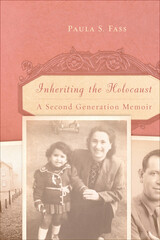
Fass begins her journey through time and relationships when she travels to Poland and locates birth certificates of the murdered siblings she never knew. That journey to recover her family's story provides her with ever more evidence for the perplexing reliability of memory and its winding path toward historical reconstruction. In the end, Fass recovers parts of her family's history only to discover that Poland is rapidly re-imagining the role Jews played in the nation's past.
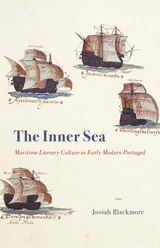
In this book, Josiah Blackmore considers how the sea and seafaring shaped literary creativity in early modern Portugal during the most active, consequential decades of European overseas expansion. Blackmore understands “literary” in a broad sense, including a diverse archive spanning genres and disciplines—epic and lyric poetry, historical chronicles, nautical documents, ship logs, shipwreck narratives, geographic descriptions, and reference to texts of other seafaring powers and literatures of the period—centering on the great Luís de Camões, arguably the sea poet par excellence of early modern Europe.
Blackmore shows that the sea and nautical travel for Camões and his contemporaries were not merely historical realities; they were also principles of cultural creativity that connected to larger debates in the widening field of the maritime humanities. For Blackmore, the sea, ships, and nautical travel unfold into a variety of symbolic dimensions, and the oceans across the globe that were traversed in the fifteenth and sixteenth centuries correspond to vast reaches within the literary self. The sea and seafaring were not merely themes in textual culture but were also principles that created individual and collective subjects according to oceanic modes of perception. Blackmore concludes with a discussion of depth and sinking in shipwreck narratives as metaphoric and discursive dimensions of the maritime subject, foreshadowing empire’s decline.
Power in the Chosŏn dynasty of Korea (1392–1910) was shared amongst various political actors, often including female heads of royal households, namely queen dowagers. Following a diachronic approach, several case studies are examined to illustrate the extent and limits of the queen dowagers’ authority. Evidence shows that queen dowagers grew more confident and more influential over the course of the dynasty, especially as more precedents concerning their exercise of power were added to the dynasty’s Veritable Records. While queen dowagers usually refrained from getting involved in day-to-day politics, some had the power to order the dethronement of not one, but two Korean kings and, by the nineteenth century, often ruled themselves during extensive periods of regency.
The work of Herman Dooyeweerd is currently attracting global interest. From the United States to Korea, from New Zealand to Brazil, and from the United Kingdom to South Africa, professionals across various disciplines—philosophers, engineers, politicians, economists, and others—are expanding upon his ideas within their respective fields. At the same time, his work is becoming increasingly relevant as contemporary society displays characteristics reminiscent of those observed in European culture a century ago. The Intellectual Legacy of Herman Dooyeweerd (1894-1977): A Hopeful Philosophy for our Time introduces his most significant concepts and numerous examples of their contemporary applications.
The work of Herman Dooyeweerd is currently attracting global interest. From the United States to Korea, from New Zealand to Brazil, and from the United Kingdom to South Africa, professionals across various disciplines—philosophers, engineers, politicians, economists, and others—are expanding upon his ideas within their respective fields. At the same time, his work is becoming increasingly relevant as contemporary society displays characteristics reminiscent of those observed in European culture a century ago. The Intellectual Legacy of Herman Dooyeweerd (1894-1977): A Hopeful Philosophy for our Time introduces his most significant concepts and numerous examples of their contemporary applications.
Camus, Sartre, and Beauvoir in France. Eich, Richter, and Böll in Germany. Pavese, Levi, and Silone in Italy. These are among the defenders of human dignity whose lives and work are explored in this widely encompassing work. James D. Wilkinson examines for the first time the cultural impact of the anti-Fascist literary movements in Europe and the search of intellectuals for renewal—for social change through moral endeavor—during World War II and its immediate aftermath.
It was a period of hope, Wilkinson asserts, and not of despair as is so frequently assumed. Out of the shattering experience of war evolved the bracing experience of resistance and a reaffirmation of faith in reason. Wilkinson discovers a spiritual revolution taking place during these years of engagement and views the participants, the engagés, as heirs of the Enlightenment. Drawing on a wide range of published writing as well as interviews with many intellectuals who were active during the 1940s, Wilkinson explains in the fullest context ever attempted their shared opposition to tyranny during the war and their commitment to individual freedom and social justice afterward.
Wilkinson has written a cultural history for our time. His wise and subtle understanding of the long-range significance of the engages is a reminder that the reassertion of humanist values is as important as political activism by intellectuals.
Published by Bucknell University Press. Distributed worldwide by Rutgers University Press.

Each entry builds on its term in order to resituate print and book history within a broader media ecology throughout the eighteenth and nineteenth centuries. The central theme is interactivity, in three senses: people interacting with print; print interacting with the non-print media that it has long been thought, erroneously, to have displaced; and people interacting with each other through print. The resulting book will introduce new energy to the field of print studies and lead to considerable new avenues of investigation.
Intercultural Utopias centers on southwestern Colombia’s Cauca region, a culturally and linguistically heterogeneous area well known for its history of indigenous mobilization and its pluralist approach to ethnic politics. Rappaport interweaves the stories of individuals with an analysis of the history of the Regional Indigenous Council of Cauca and other indigenous organizations. She presents insights into the movement and the intercultural relationships that characterize it from the varying perspectives of regional indigenous activists, nonindigenous urban intellectuals dedicated to the fight for indigenous rights, anthropologists, local teachers, shamans, and native politicians.
Interiority in German Women’s Writing for the first time systematically gathers and engages with contributions of German women authors to the discourse on interiority (Innerlichkeit) from 1750 to 1850. This volume shifts the recent focus on abstract theoretical and medical discourses on inwardness to the origins of interiority in literature and philosophy as written and experienced by women from the Age of Sensibility (Empfindsamkeit) to the Romantic era. At the same time, it makes a claim for and explores the ramifications of understanding interiority as a feminine discourse. Contributors investigate the works of women authors who searched to find rescue from their cultural and personal entrapment via creative spaces and various modes of interiority in theatrical performances, poetic writings, letters, biographical narratives, prose, and fairy tales. From the case studies and literary analyses in the volume, interiority emerges as a spectrum of approaches to defining, resisting, and transforming the innermost self.
In The Internal Colony, Sam Klug reveals the central but underappreciated importance of global decolonization to the divergence between mainstream liberalism and the Black freedom movement in postwar America. Klug reconsiders what has long been seen as a matter of primarily domestic policy in light of a series of debates concerning self-determination, postcolonial economic development, and the meanings of colonialism and decolonization. These debates deeply influenced the discord between Black activists and state policymakers and formed a crucial dividing line in national politics in the 1960s and 1970s.
The result is a history that broadens our understanding of ideological formation—particularly how Americans conceptualized racial power and political economy—by revealing a much wider and more dynamic network of influences. Linking intellectual, political, and social movement history, The Internal Colony illuminates how global decolonization transformed the terms of debate over race and social class in the twentieth-century United States.
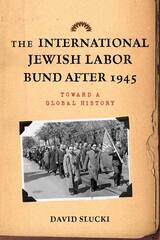
The Jewish Labor Bund was one of the major political forces in early twentieth-century Eastern Europe. But the decades after the Second World War were years of enormous difficulty for Bundists. Like millions of other European Jews, they faced the challenge of resurrecting their lives, so gravely disrupted by the Holocaust. Not only had the organization lost many members, but its adherents were also scattered across many continents. In this book, David Slucki charts the efforts of the surviving remnants of the movement to salvage something from the wreckage.
Covering both the Bundists who remained in communist Eastern Europe and those who emigrated to the United States, France, Australia, and Israel, the book explores the common challenges they faced—building transnational networks of friends, family, and fellow Holocaust survivors, while rebuilding a once-local movement under a global umbrella. This is a story of resilience and passion—passion for an idea that only barely survived Auschwitz.
A history of fragmentary—or interrupted—writing in avant-garde poetry and prose by a renowned literary critic.
In Interruptions: The Fragmentary Aesthetic in Modern Literature, Gerald L. Bruns explores the effects of parataxis, or fragmentary writing as a device in modern literature. Bruns focuses on texts that refuse to follow the traditional logic of sequential narrative. He explores numerous examples of self-interrupting composition, starting with Friedrich Schlegel's inaugural theory and practice of the fragment as an assertion of the autonomy of words, and their freedom from rule-governed hierarchies.
Bruns opens the book with a short history of the fragment as a distinctive feature of literary modernism in works from Gertrude Stein to Paul Celan to present-day authors. The study progresses to the later work of Maurice Blanchot and Samuel Beckett, and argues, controversially, that Blanchot's writings on the fragment during the 1950s and early 1960s helped to inspire Beckett’s turn toward paratactic prose.
The study also extends to works of poetry, examining the radically paratactic arrangements of two contemporary British poets, J. H. Prynne and John Wilkinson, focusing chiefly on their most recent, and arguably most abstruse, works. Bruns also offers a close study of the poetry and poetics of Charles Bernstein.
Interruptions concludes with two chapters about James Joyce. First, Bruns tackles the language of Finnegans Wake, namely the break-up of words themselves, its reassembly into puns, neologisms, nonsense, and even random strings of letters. Second, Bruns highlights the experience of mirrors in Joyce’s fiction, particularly in Dubliners, Portrait of the Artist as a Young Man, and Ulysses, where mirrored reflections invariably serve as interruptions, discontinuities, or metaphorical displacements and proliferations of self-identity.
“This book offers a valuable account of literary activity in a genre still inadequately covered in literary-critical history. Emily Witt- man organizes her material through pairings and contextualizing that are instructive and illuminating and often exciting . . . This is comparative literature at its best.” —Vincent Sherry, Washington University
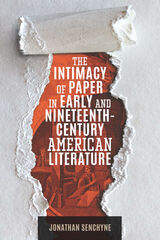
The Intimacy of Paper in Early and Nineteenth-Century American Literature reveals that book history and literary studies are mutually constitutive and proposes a new literary periodization based on materiality and paper production. In unpacking this history and connecting it to cultural and literary representations, Senchyne also explores how the textuality of paper has been used to make social and political claims about gender, labor, and race.
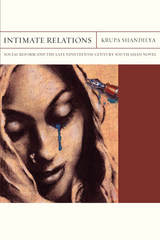
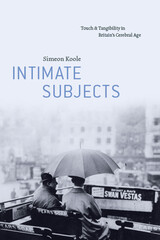
When, where, and who gets to touch and be touched, and who decides? What do we learn through touch? How does touch bring us closer together or push us apart? These are urgent contemporary questions, but they have their origins in late nineteenth- and early twentieth-century Britain, when new urban encounters compelled intense discussion of what touch was, and why it mattered. In this vividly written book, Simeon Koole excavates the history of these concerns and reveals how they continue to shape ideas about “touch” in the present.
Intimate Subjects takes us to the bustling railway stations, shady massage parlors, all-night coffee stalls, and other shared spaces where passengers, customers, vagrants, and others came into contact, leading to new understandings of touch. We travel in crammed subway cars, where strangers negotiated the boundaries of personal space. We visit tea shops where waitresses made difficult choices about autonomy and consent. We enter classrooms in which teachers wondered whether blind children could truly grasp the world and labs in which neurologists experimented on themselves and others to unlock the secrets of touch. We tiptoe through London’s ink-black fogs, in which disoriented travelers became newly conscious of their bodies and feared being accosted by criminals. Across myriad forgotten encounters such as these, Koole shows, touch remade what it meant to be embodied—as well as the meanings of disability, personal boundaries, and scientific knowledge.
With imagination and verve, Intimate Subjects offers a new way of theorizing the body and the senses, as well as a new way of thinking about embodiment and vulnerability today.

This is an auto-narrated audiobook version of this book.
The queer recluse, the shambling farmer, the clannish hill folk—white rural populations have long disturbed the American imagination, alternately revered as moral, healthy, and hardworking, and feared as antisocial or socially uncouth. In Peculiar Places, Ryan Lee Cartwright examines the deep archive of these contrary formations, mapping racialized queer and disability histories of white social nonconformity across the rural twentieth-century United States.
Sensationalized accounts of white rural communities’ aberrant sexualities, racial intermingling, gender transgressions, and anomalous bodies and minds, which proliferated from the turn of the century, created a national view of the perversity of white rural poverty for the American public. Cartwright contends that these accounts, extracted and estranged from their own ambivalent forum of community gossip, must be read in kind: through a racialized, materialist queercrip optic of the deeply familiar and mundane. Taking in popular science, documentary photography, news media, documentaries, and horror films, Peculiar Places orients itself at the intersections of disability studies, queer studies, and gender studies to illuminate a racialized landscape both profoundly ordinary and familiar.

Skin is unique to each individual. Acting as a record, it details aspects of a person and a collective memory. Each skin possesses a sensitivity that touches and it is touched by the world. It mediates temperature fluctuations and is marked by cuts, accidents, and its own history. Skin marks us in the world, giving us the outline of individuals. Invented Skins focuses on the skin to consider the social dimension of texts and images throughout cultural memory, showing that skin is a biological reality that occupies a physical and psychic space but also unfolds in the imagination.
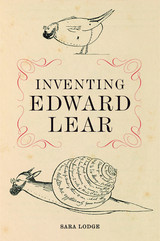
“Inventing Edward Lear is an exceptional, valuable, original study, presenting new materials on aspects of Lear’s life and work.”
—Jenny Uglow, author of Mr. Lear and The Lunar Men
Edward Lear wrote some of the best-loved poems in English, including “The Owl and the Pussycat,” but the father of nonsense was far more than a poet. He was a naturalist, a brilliant landscape painter, an experimental travel writer, and an accomplished composer. Sara Lodge presents the fullest account yet of Lear’s passionate engagement in the intellectual, social, and cultural life of his times.
Lear had a difficult start in life. He was epileptic, asthmatic, and depressive, but even as a child a consummate performer who projected himself into others’ affections. He became, by John James Audubon’s estimate, one of the greatest ornithological artists of the age. Queen Victoria—an admirer—chose him to be her painting teacher. He popularized the limerick, set Tennyson’s verse to music, and opened fresh doors for children and adults to share fantasies of magical escape. Lodge draws on diaries, letters, and new archival sources to paint a vivid picture of Lear that explores his musical influences, his religious nonconformity, his relationship with the Pre-Raphaelite movement, and the connections between his scientific and artistic work. He invented himself as a character: awkward but funny, absurdly sympathetic. In Lodge’s hands, Lear emerges as a dynamic and irreverent polymath whose conversation continues to draw us in.
Inventing Edward Lear is an original and moving account of one of the most intriguing and creative of all Victorians.
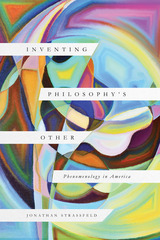
Phenomenology and so-called “continental philosophy” receive scant attention in most American philosophy departments, despite their foundational influence on intellectual movements such as existentialism, post-structuralism, and deconstruction. In Inventing Philosophy’s Other, Jonathan Strassfeld explores this absence, revealing how everyday institutional practices played a determinative role in the development of twentieth-century academic discourse.
Conventional wisdom holds that phenomenology’s absence from the philosophical mainstream in the United States reflects its obscurity or even irrelevance to America’s philosophical traditions. Strassfeld refutes this story as he traces phenomenology’s reception in America, delivering the first systematic historical study of the movement in the United States. He examines the lives and works of Marjorie Grene, Alfred Schütz, Hubert Dreyfus, and Iris Marion Young, among others, while also providing a fresh introduction to phenomenological philosophy.
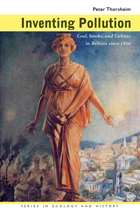
Britain's supremacy in the nineteenth century depended in large part on its vast deposits of coal. This coal not only powered steam engines in factories, ships, and railway locomotives but also warmed homes and cooked food. As coal consumption skyrocketed, the air in Britain's cities and towns became filled with ever-greater and denser clouds of smoke.
In this far-reaching study, Peter Thorsheim explains that, for much of the nineteenth century, few people in Britain even considered coal smoke to be pollution. To them, pollution meant miasma: invisible gases generated by decomposing plant and animal matter. Far from viewing coal smoke as pollution, most people considered smoke to be a valuable disinfectant, for its carbon and sulfur were thought capable of rendering miasma harmless.
Inventing Pollution examines the radically new understanding of pollution that emerged in the late nineteenth century, one that centered not on organic decay but on coal combustion. This change, as Peter Thorsheim argues, gave birth to the smoke-abatement movement and to new ways of thinking about the relationships among humanity, technology, and the environment.
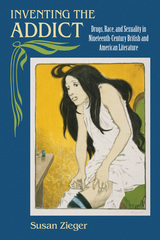
The notion of addiction has always conjured first-person stories, often beginning with an insidious seduction, followed by compulsion and despair, culminating in recovery and tentative hope for the future. We are all familiar with this form of individual life arrative, Susan Zieger observes, but we know far less about its history. “Addict” was not an available identity until the end of the nineteenth century, when a modernizing medical establishment and burgeoning culture of consumption updated the figure of the sinful drunkard popularized by the temperance movement.
In Inventing the Addict, Zieger tells the story of how the addict, a person uniquely torn between disease and desire, emerged from a variety of earlier figures such as drunkards, opium-eating scholars, vicious slave masters, dissipated New Women, and queer doctors. Drawing on a broad range of literary and cultural material, including canonical novels such as Uncle Tom's Cabin, The Strange Case of Dr. Jekyll and Mr. Hyde, and Dracula, she traces the evolution of the concept of addiction through a series of recurrent metaphors: exile, self-enslavement, disease, and vampirism. She shows how addiction took on multiple meanings beyond its common association with intoxication or specific habit-forming substances—it was an abiding desire akin to both sexual attraction and commodity fetishism, a disease that strangely failed to meet the requirements of pathology, and the citizen's ironic refusal to fulfill the promise of freedom.
Nor was addiction an ideologically neutral idea. As Zieger demonstrates, it took form over time through specific, shifting intersections of gender, race, class, and sexuality, reflecting the role of social power in the construction of meaning.

“A magnificent work of intellectual, psychological, and spiritual history. It is hard to decide which is more remarkable: the breadth of learning displayed on almost every page, the infectious enthusiasm that suffuses the whole book, the riveting originality of the central argument, or the emotional power and force with which it is deployed.” —David Marquand, New Republic
Here, in a grand narrative spanning 1,800 years of European history, a distinguished political philosopher firmly rejects Western liberalism’s usual account of itself: its emergence in opposition to religion in the early modern era. Larry Siedentop argues instead that liberal thought is, in its underlying assumptions, the offspring of the Church.
“Larry Siedentop has written a philosophical history in the spirit of Voltaire, Condorcet, Hegel, and Guizot…At a time when we on the left need to be stirred from our dogmatic slumbers, Inventing the Individual is a reminder of some core values that are pretty widely shared.”
—James Miller, The Nation
“In this learned, subtle, enjoyable and digestible work [Siedentop] has offered back to us a proper version of ourselves. He has explained us to ourselves…[A] magisterial, timeless yet timely work.”
—Douglas Murray, The Spectator
“Like the best books, Inventing the Individual both teaches you something new and makes you want to argue with it.”
—Kenan Malik, The Independent
Focusing on typically marginalized historical actors, including municipal functionaries and the urban poor, The Invention of Madness shifts our attention from the elite desire for modern medical care to the ways in which psychiatric discourses were implemented and redeployed in the midst of everyday life. New meanings and practices of madness, Baum argues, were not just imposed on the Beijing public but continuously invented by a range of people in ways that reflected their own needs and interests. Exhaustively researched and theoretically informed, The Invention of Madness is an innovative contribution to medical history, urban studies, and the social history of twentieth-century China.
Beginning where most histories of the Vietnam War end, Invisible Enemies examines the relationship between the United States and Vietnam following the American pullout in 1975. Drawing on a broad range of sources, from White House documents and congressional hearings to comic books and feature films, Edwin Martini shows how the United States continued to wage war on Vietnam “by other means” for another twenty-five years. In addition to imposing an extensive program of economic sanctions, the United States opposed Vietnam's membership in the United Nations, supported the Cambodians, including the Khmer Rouge, in their decade-long war with the Vietnamese, and insisted that Vietnam provide a “full accounting” of American MIAs before diplomatic relations could be established. According to Martini, such policies not only worked against some of the stated goals of U.S. foreign policy, they were also in opposition to the corporate economic interests that ultimately played a key role in normalizing relations between the two nations in the late 1990s.
Martini reinforces his assessment of American diplomacy with an analysis of the “cultural front”—the movies, myths, memorials, and other phenomena that supported continuing hostility toward Vietnam while silencing opposing views of the war and its legacies. He thus demonstrates that the “American War on Vietnam” was as much a battle for the cultural memory of the war within the United States as it was a lengthy economic, political, and diplomatic campaign to punish a former adversary.
Why is the world orderly, and how does this order come to be? Human beings inhabit a multitude of apparently ordered systems—natural, social, political, economic, cognitive, and others—whose origins and purposes are often obscure. In the eighteenth century, older certainties about such orders, rooted in either divine providence or the mechanical operations of nature, began to fall away. In their place arose a new appreciation for the complexity of things, a new recognition of the world’s disorder and randomness, new doubts about simple relations of cause and effect—but with them also a new ability to imagine the world’s orders, whether natural or manmade, as self-organizing. If large systems are left to their own devices, eighteenth-century Europeans increasingly came to believe, order will emerge on its own without any need for external design or direction.
In Invisible Hands, Jonathan Sheehan and Dror Wahrman trace the many appearances of the language of self-organization in the eighteenth-century West. Across an array of domains, including religion, society, philosophy, science, politics, economy, and law, they show how and why this way of thinking came into the public view, then grew in prominence and arrived at the threshold of the nineteenth century in versatile, multifarious, and often surprising forms. Offering a new synthesis of intellectual and cultural developments, Invisible Hands is a landmark contribution to the history of the Enlightenment and eighteenth-century culture.

Yet, the normalization of twenty-first century war also renders it highly visible. War is made visible through popular, commercial, mediated culture. The spectacle of war occupies the contemporary public sphere in the forms of celebrations at athletic events and in films, video games, and other media, coming together as MIME, the Military-Industrial-Media-Entertainment Network.
In the winter of 1650–51, one hundred fifty ragged and hungry Scottish prisoners of war arrived at Massachusetts Bay Colony, where they were sold as indentured laborers for 20 to 30 pounds each. Among them was Thomas Doughty, a common foot soldier who had survived the Battle of Dunbar, a forced marched of 100 miles without food or water, imprisonment in Durham Cathedral, and a difficult Atlantic crossing. An ordinary individual who experienced extraordinary events, Doughty was among some 420 Scottish soldiers who were captured during the War of the Three Kingdoms, transported to America, and sold between 1650 and 1651. Their experiences offer a fresh perspective on seventeenth-century life.
The Involuntary American: A Scottish Prisoner’s Journey to the New World by Carol Gardner describes Doughty’s life as a soldier, prisoner of war, exile, servant, lumberman, miller, and ultimately free landowner. It follows him and his peers through critical events: the apex of the Little Ice Age, the War of the Three Kingdoms, the colonization of New England, the burgeoning transatlantic trade in servants and slaves, King Philip’s and King William’s wars, and the Salem witch crisis. Firstperson accounts of individuals who lived through those events—Scottish, English, Puritan, Native American, wealthy, poor, working class, educated or not— provide rich period detail and a variety of perspectives.
The Involuntary American demonstrates how even individuals of humble circumstances were swept into the maelstrom of the First Global Age. It expands our understanding of immigration to the colonies, colonial servitude, the linkages and tensions between Europe, Massachusetts Bay, and America’s northeastern frontier, and of New England society in the early colonial period.
Involuntary Confessions of the Flesh in Early Modern France was inspired by the observation that small slips of the flesh (involuntary confessions of the flesh) are omnipresent in early modern texts of many kinds. These slips (which bear similarities to what we would today call the Freudian slip) disrupt and destabilize readings of body, self, and text—three categories whose mutual boundaries this book seeks to soften—but also, in their very messiness, participate in defining them. Involuntary Confessions capitalizes on the uncertainty of such volatile moments, arguing that it is instability itself that provides the tools to navigate and understand the complexity of the early modern world. Rather than locate the body within any one discourse (Foucauldian, psychoanalytic), this book argues that slips of the flesh create a liminal space not exactly outside of discourse, but not necessarily subject to it, either. Involuntary confessions of the flesh reveal the perpetual and urgent challenge of early modern thinkers to textually confront and define the often tenuous relationship between the body and the self. By eluding and frustrating attempts to contain it, the early modern body reveals that truth is as much about surfaces as it is about interior depth, and that the self is fruitfully perpetuated by the conflict that proceeds from seemingly irreconcilable narratives.
Interdisciplinary in its scope, Involuntary Confessions of the Flesh in Early Modern France pairs major French literary works of the sixteenth and seventeenth centuries (by Marguerite de Navarre, Montaigne, Madame de Lafayette) with cultural documents (confession manuals, legal documents about the application of torture, and courtly handbooks). It is the first study of its kind to bring these discourses into thematic (rather than linear or chronological) dialog. In so doing, it emphasizes the shared struggle of many different early modern conversations to come to terms with the body’s volatility.
Published by University of Delaware Press. Distributed worldwide by Rutgers University Press.
READERS
Browse our collection.
PUBLISHERS
See BiblioVault's publisher services.
STUDENT SERVICES
Files for college accessibility offices.
RECENTLY PUBLISHED

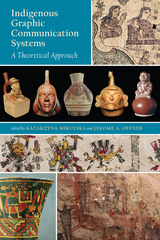
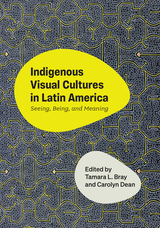



UChicago Accessibility Resources
home | accessibility | search | about | contact us
BiblioVault ® 2001 - 2026
The University of Chicago Press