
 A SCHOLARLY BOOK REPOSITORY
31 start with N start with N
Grounded in Schoenbrun’s skillful mastery of historical linguistics and vernacular texts, The Names of the Python supplements and redirects current debates about ethnicity in ex-colonial Africa and beyond. This timely volume carefully distinguishes past from present and shows the many possibilities that still exist for the creative cultural imagination.
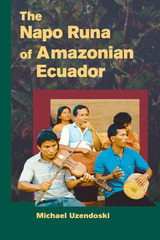
Michael Uzendoski's theoretically informed work analyzes value from the perspective of the Napo Runa people of the Amazonian Ecuador.
Based upon historical and archival research, as well as the author's years of fieldwork in indigenous communities, The Napo Runa of Amazonian Ecuadorpresents theoretical issues of value, poetics, and kinship as linked to the author's intersubjective experiences in Napo Runa culture. Drawing on insights from the theory of gift and value, Uzendoski argues that Napo Runa culture personifies value by transforming things into people through a process of subordinating them to human relationships. While many traditional exchange models treat the production of things as inconsequential, the Napo Runa understand production to involve a relationship with natural beings (plants, animals, and spirits of the forest) that they believe share spiritual substance, or samai. Value is the outcome of a complicated poetics of transformation by which things and persons are woven into kinship forms that define daily social and ritual life.
Multiculturalism in the United States has been tricky for Jews. Remaining outside of the dominant Christian culture yet often excluded from multicultural agendas, Jews walk a precarious line––a narrow bridge––between dominance and marginality. Many Jews, aware of the shaky identity of Jewishness, are deeply involved in all levels of the multiculturalism debate. But there still exists a need for careful, reflective analysis of the importance and dangers of multiculturalism to the Jewish community. What is multiculturalism? What can it be to the Jews? What can the Jewish community learn from and contribute to the current debate?
Through a collection of essays by scholars and activists whose writing ranges from the personal to the philosophical, The Narrow Bridge examines multiculturalism within and beyond the Jewish community. How does classism work within the Jewish community? How can synagogues reach out to gays and lesbians? How have tensions between Jews and Blacks developed historically and what can we learn from that history? How can we include Jewish studies in multicultural curricula? This timely collection of provocative articles makes fine use of these and other questions, offering us a look at where Jews have stood, where they now stand, and what they can hope for in the complex arena of multiculturalism.

Nation and Migration provides a way to understand recent migration events in Europe that have attracted the world's attention. The emergence of the nations in the West promised homogenization, but instead the imagined national communities have everywhere become places of heterogeneity, and modern nation states have been haunted by the specter of minorities. This study analyses experiences relating to migration in 23 European countries. It is based on data from the International Social Survey Programme, a global cross-national collaborative exercise, with surveys made in 1995, 2003, and 2013. In the authors' view, a critical test for Europe will be its ability to find adequate responses to the challenges of globalization.
The book provides a detailed overview of how citizens in Europe are coping with a xenophobia fueled by their own sense of insecurity. The authors reconstruct the competing sociological reactions to migration in the forms of integration, assimilation and segregation. Hungary receives special attention: the data show that people living there are far less closed and xenophobic than they might seem through the prism of a media-instigated moral panic.
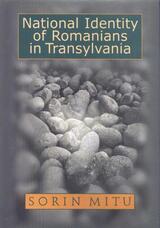
This meticulously researched and elegantly written book is the most authoritative study of the emergence of modern Romanian identity in Transylvania during the eighteenth and nineteenth centuries. Based upon a plethora of contemporary published sources, Mitu approaches national identity from a variety of perspectives - from within the Romanian community itself and their reaction to the image others had of them.
The author sheds new light on the problems of self-evaluation using a method he describes as "functional analysis" to examine a complex set of ideologies and propaganda. This approach helps the reader to understand the intricate web of contemporary Romanian nationalism.
National Identity of Romanians in Transylvania appeals to scholars of modern Romanian history, those focusing on the Habsburg Monarchy and the study of modern nationalism. The book is an important contribution to the expanding debate on nationalism and national identity from an East European perspective.
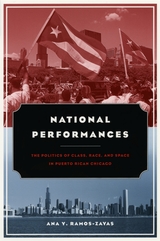
Drawing on extensive ethnographic research, Ramos-Zayas shows how the performance of Puerto Rican nationalism in Chicago serves as a critique of social inequality, colonialism, and imperialism, allowing barrio residents and others to challenge the notion that upward social mobility is equally available to all Americans—or all Puerto Ricans. Paradoxically, however, these activists' efforts also promote upward social mobility, overturning previous notions that resentment and marginalization are the main results of nationalist strategies.
Ramos-Zayas's groundbreaking work allows her here to offer one of the most original and complex analyses of contemporary nationalism and Latino identity in the United States.
Nationalizing a Borderland enriches understanding of ethnic conflict by examining the factors in the Austro-Hungarian province of Galicia between 1914 and 1920 that led to the rise of xenophobic nationalism and to the ethnocide of World War II. From Russian, Polish, Ukrainian, and Austrian archival sources, Prusin argues that while the violence inflicted upon Jews during that period may at first seem irrational and indiscriminate, a closer examination reveals that it was generated by traditional antisemitism and by the security concerns of the Russian and Polish militaries in the front zone. This violence, Prusin contends, served as a means of reshaping the socio-economic and political space of the province by diminishing Jewish cultural and economic influence.

In this compelling study of the treatment of "enemy" minorities in the Russian Empire during the First World War, Eric Lohr uncovers a dramatic story of mass deportations, purges, expropriations, and popular violence.A campaign initially aimed at restricting foreign citizens rapidly spun out of control. It swept up Russian subjects of German, Jewish, and Muslim backgrounds and drove roughly a million civilians from one part of the empire to another, resulting in one of the largest cases of forced migration in history to that time. Because foreigners and diaspora minorities were prominent among entrepreneurial and landowning elites, the campaign against them also became an explosive element in class and national tensions on the eve of the 1917 revolutions.
During the war, the imperial regime dropped its ambivalence about Russian nationalism and embraced unprecedented and radical policies that "nationalized" the economy, the land, and even the population. The core idea of the campaign--that the country needed to free itself from the domination of foreigners, internal enemies, and the exploitative world economic system--later became a central feature of the Soviet revolutionary model.
Based on extensive archival research, much in newly available sources, Nationalizing the Russian Empire is an important contribution to the study of empire and nationalism, the Russian Revolution, and ethnic cleansing.
Examining the degree to which twentieth-century representations of colonization, revolution, and modernity are nineteenth-century constructs, Nations, Identities, Cultures locates contemporary political thought in an ethos of exile, nostalgic for bygone places and cultures of the nineteenth century. The contributors interrogate the significance of changes in the way the political is conceptualized and the impact of shifting representations of political society on our understanding of nation, identity, and culture. Approaches to these issues range from broad perspectives on global culture, civil society, liberalism, and dialectical identity to specific case studies on the politics of Quebec, the Russian muzhik, Israel’s borders, the ancient Greek origins of European culture, Kongo nationalism, the women of Lebanon, and the Danish/Swedish border.
Contributors. Martin Bernal, Dominique Colas, Miriam Cooke, Daphna Golan, Thomas Lahusen, Jocelyn Létourneau, Anders Linde-Laursen, Wyatt MacGaffey, John McCumber, V. Y. Mudimbe, Kenneth Surin, Immanuel Wallerstein

Examining the intersection of Palestine solidarity movements and antiracist activism in France from the 1970s to the present
For the pasty fifty years, the Palestinian question has served as a rallying cry in the struggle for migrant rights in postcolonial France, from the immigrant labor associations of the 1970s and Beur movements of the 1980s to the militant decolonial groups of the 2000s. In Natives against Nativism, Olivia C. Harrison explores the intersection of anticolonial solidarity and antiracist activism from the 1970s to the present.
Natives against Nativism analyzes a wide range of texts—novels, memoirs, plays, films, and militant archives—that mobilize the twin figures of the Palestinian and the American Indian in a crossed critique of Eurocolonial modernity. Harrison argues that anticolonial solidarity with Palestinians and Indigenous Americans has been instrumental in developing a sophisticated critique of racism across imperial formations—in this case, France, the United States, and Israel.
Serving as the first relational study of antiracism in France, Natives against Nativism observes how claims to indigeneity have been deployed in multiple directions, both in the ongoing struggle for migrant rights and racial justice, and in white nativist claims in France today.
The first century of Spanish colonization in Latin America witnessed the birth of cities that, while secondary to great metropolitan centers such as Mexico City and Lima, became important hubs for regional commerce. Santiago de Guatemala, the colonial capital of Central America, was one of these. A multiethnic and multicultural city from its beginning, Santiago grew into a vigorous trading center for agrarian goods such as cacao and cattle hides. With the wealth this commerce generated, Spaniards, natives, and African slaves built a city that any European of the period would have found familiar.
This book provides a more complete picture of society, culture, and economy in sixteenth-century Santiago de Guatemala than has ever before been drawn. Robinson Herrera uses previously unstudied primary sources, including testaments, promissory notes, and work contracts, to recreate the lives and economic activities of the non-elite sectors of society, including natives, African slaves, economically marginal Europeans, and people of mixed descent. His focus on these groups sheds light on the functioning of the economy at the lower levels and reveals how people of different ethnic groups formed alliances to create a vibrant local and regional economy based on credit. This portrait of Santiago also increases our understanding of how secondary Spanish American cities contributed vitally to the growth of the colonies.
2013 — NACCS Book Award – National Association for Chicana and Chicano Studies
During the nineteenth and early twentieth centuries, a majority of the Mexican immigrant population in the United States resided in Texas, making the state a flashpoint in debates over whether to deny naturalization rights. As Texas federal courts grappled with the issue, policies pertaining to Mexican immigrants came to reflect evolving political ideologies on both sides of the border.
Drawing on unprecedented historical analysis of state archives, U.S. Congressional records, and other sources of overlooked data, Naturalizing Mexican Immigrants provides a rich understanding of the realities and rhetoric that have led to present-day immigration controversies. Martha Menchaca's groundbreaking research examines such facets as U.S.-Mexico relations following the U.S. Civil War and the schisms created by Mexican abolitionists; the anti-immigration stance that marked many suffragist appeals; the effects of the Spanish American War; distinctions made for mestizo, Afromexicano, and Native American populations; the erosion of means for U.S. citizens to legalize their relatives; and the ways in which U.S. corporations have caused the political conditions that stimulated emigration from Mexico.
The first historical study of its kind, Naturalizing Mexican Immigrants delivers a clear-eyed view of provocative issues.
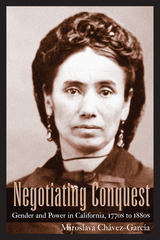
Negotiating Conquest begins with an examination of how gender and ethnicity shaped the policies and practices of the Spanish conquest, showing that Hispanic women, marriage, and the family played a central role in producing a stable society on Mexico’s northernmost frontier. It then examines how gender, law, property, and ethnicity shaped social and class relations among Mexicans and native peoples, focusing particularly on how women dealt with the gender-, class-, and ethnic-based hierarchies that gave Mexican men patriarchal authority. With the American takeover in 1846, the text’s focus shifts to how the imposition of foreign legal, economic, linguistic, and cultural norms affected the status of Mexican women, male-female relations, and the family. Addressing such issues as divorce, legitimacy, and inheritance, it describes the manner in which the conquest weakened the economic position of both Mexican women and men while at the same time increasing the leverage of Mexican women in their personal and social relationships with men.
Drawing on archival materials—including dozens of legal cases—that have been largely ignored by other scholars, Chávez-García examines federal, state, and municipal laws across many periods in order to reveal how women used changing laws, institutions, and norms governing property, marriage and sexuality, and family relations to assert and protect their rights. By showing that mexicanas contested the limits of male rule and insisted that patriarchal relationships be based on reciprocity, Negotiating Conquest expands our knowledge of how patriarchy functioned and evolved as it reveals the ways in which conquest can transform social relationships in both family and community.
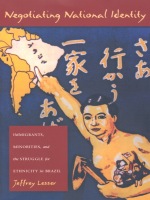
Employing a cross-cultural approach, Lesser examines a variety of acculturating responses by minority groups, from insisting on their own whiteness to becoming ultra-nationalists and even entering secret societies that insisted Japan had won World War II. He discusses how various minority groups engaged in similar, and successful, strategies of integration even as they faced immense discrimination and prejudice. Some believed that their ethnic heritage was too high a price to pay for the “privilege” of being white and created alternative categories for themselves, such as Syrian-Lebanese, Japanese-Brazilian, and so on. By giving voice to the role ethnic minorities have played in weaving a broader definition of national identity, this book challenges the notion that elite discourse is hegemonic and provides the first comprehensive look at Brazilian worlds often ignored by scholars.
Based on extensive research, Negotiating National Identity will be valuable to scholars and students in Brazilian and Latin American studies, as well as those in the fields of immigrant history, ethnic studies, and race relations.
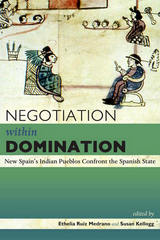
Bringing together work by Mexican and North American historians, this collection is a crucially important and rare contribution to the field. Negotiation within Domination is a valuable resource for native peoples as they seek to redefine and revitalize their identities and assert their rights relating to language and religion, ownership of lands and natural resources, rights of self-determination and self-government, and protection of cultural and intellectual property. It will be of interest primarily to specialists in the field of colonial studies and historians and ethnohistorians of New Spain.
Contributors: R. Jovita Baber, José Manuel A. Chávez-Gómez, Susan Kellogg, Edward W. Osowski, María de los Ángeles Romero Frizzi, Ethelia Ruiz Medrano, Cuauhtémoc Velasco Ávila, Yanna P. Yannakakis
Linda M. Martz focuses on families that were immersed in the worlds of business and finance. They formed the backbone of the trade industry and, during the economic expansion of the sixteenth century, enjoyed a high degree of affluence. The seventeenth century, however, brought harder times. How these families rose to positions of commercial eminence and then adapted to this economic downturn is one of the questions addressed in this insightful book.
A Network of Converso Families in Early Modern Toledo relies heavily on archival evidence--notarial, parish, and city records--that offers new insights into the families' histories. Business endeavors, marriage alliances, involvement in local politics, and the pursuit of improved social status are all subjected to Martz's keen analysis.
These families appear to have been well integrated into their contemporary society; aside from their business and financial activities, many were members of the city's governing council. But how well did they integrate with the lower classes? Assimilating minorities in the majority culture is a task that confronts most modern societies, so the experience of Spain and this particular minority may serve as an example of how earlier societies viewed and confronted this challenge.
This book will appeal to historians of medieval and Renaissance Spain and those interested in the Inquisition's effect on Renaissance Spain. It will also prove to be indispensable for those interested in the history of the Jewish race, as well as for those pursuing the question of marginalization.
Linda M. Martz is an independent historian as well as a freelance editor and writer.
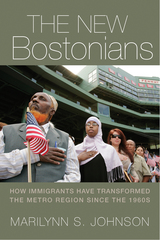
How immigrants helped rebuild a city—and redefined what it means to be American
Among the most consequential pieces of Great Society legislation, the Immigration Act of 1965 opened the nation's doors to large-scale immigration from Africa, Asia, and Latin America. A half century later, the impact of the "new immigration" is evident in the transformation of the country's demographics, economy, politics, and culture, particularly in urban America.
In The New Bostonians, Marilynn S. Johnson examines the historical confluence of recent immigration and urban transformation in greater Boston, a region that underwent dramatic decline after World War II. Since the 1980s, the Boston area has experienced an astounding renaissance—a development, she argues, to which immigrants have contributed in numerous ways. From 1970 to 2010, the percentage of foreign-born residents of the city more than doubled, representing far more diversity than earlier waves of immigration. Like the older Irish, Italian, and other European immigrant groups whose labor once powered the region's industrial economy, these newer migrants have been crucial in re-building the population, labor force, and metropolitan landscape of the New Boston, although the fruits of the new prosperity have not been equally shared.
In this detailed and comprehensive study of contemporary Chinese America, Xiaojian Zhao uses class analysis to illuminate the difficulties of everyday survival for poor and undocumented immigrants and analyzes the process through which social mobility occurs. Through ethnic ties, Chinese Americans have built an economy of their own in which entrepreneurs can maintain a competitive edge given their access to low-cost labor; workers who are shut out of the mainstream job market can find work and make a living; and consumers can enjoy high quality services at a great bargain. While the growth of the ethnic economy enhances ethnic bonds by increasing mutual dependencies among different groups of Chinese Americans, it also determines the limits of possibility for various individuals depending on their socioeconomic and immigration status.
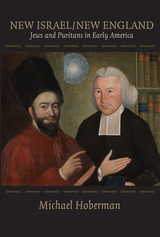
More often than not, Michael Hoberman shows, Puritans thought and wrote about Jews in order to resolve their own theological and cultural dilemmas. A number of prominent New Englanders, including Roger Williams, Increase Mather, Samuel Sewall, Benjamin Colman, Cotton Mather, Jonathan Edwards, and Ezra Stiles, wrote extensively about post-biblical Jews, in some cases drawing on their own personal acquaintance with Jewish contemporaries.
Among the intriguing episodes that Hoberman investigates is the recruitment and conversion of Harvard's first permanent instructor of Hebrew, the Jewish-born Judah Monis. Later chapters describe the ecumenical friendship between Newport minister Ezra Stiles and Haim Carigal, an itinerant rabbi from Palestine, as well as the life and career of Moses Michael Hays, the prominent freemason who was Boston's first permanently established Jewish businessman, a founder of its insurance industry, an early sponsor of the Bank of Massachusetts, and a personal friend of Paul Revere.
In this compelling look at second-generation Indian Americans, Khyati Y. Joshi draws on case studies and interviews with forty-one second-generation Indian Americans, analyzing their experiences involving religion, race, and ethnicity from elementary school to adulthood. As she maps the crossroads they encounter as they navigate between their homes and the wider American milieu, Joshi shows how their identities have developed differently from their parents’ and their non-Indian peers’ and how religion often exerted a dramatic effect.
The experiences of Joshi’s research participants reveal how race and religion interact, intersect, and affect each other in a society where Christianity and whiteness are the norm. Joshi shows how religion is racialized for Indian Americans and offers important insights in the wake of 9/11 and the backlash against Americans who look Middle Eastern and South Asian.
Through her candid insights into the internal conflicts contemporary Indian Americans face and the religious and racial discrimination they encounter, Joshi provides a timely window into the ways that race, religion, and ethnicity interact in day-to-day life.
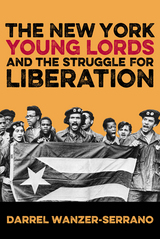
In The New York Young Lords and the Struggle for Liberation, Darrel Wanzer-Serrano details the numerous community initiatives that advanced decolonial sensibilities in El Barrio and beyond. Using archival research and interviews, he crafts an engaging account of the Young Lords’ discourse and activism. He rescues the organization from historical obscurity and makes an argument for its continued relevance, enriching and informing contemporary discussions about Latino/a politics.
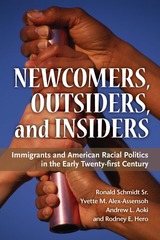
"The authors have done a commendable and impressive job of addressing a topic of long-lasting and increasing significance in U.S. politics."
---F. Chris Garcia, University of New Mexico
"This is a path-breaking book that will be read across disciplines beyond political science."
---James Jennings, Tufts University
Over the past four decades, the United States has experienced the largest influx of immigrants in its history. Not only has the ratio of European to non-European newcomers changed, but the numbers of recent arrivals from the Asian subcontinent, Southeast Asia, South America, and other regions are increasing.
In this timely study, a team of political scientists examines how the arrival of these newcomers has affected the efforts of long-standing U.S. minority groups---Blacks, Latinos, and Asian Pacific Americans---to gain equality through greater political representation and power. The authors predict that, for some time to come, the United States will function as a complex multiracial hierarchy, rather than as a genuine democracy.
Ronald Schmidt, Sr. is Professor of Political Science at California State University, Long Beach.
Yvette M. Alex-Assensoh is Associate Professor of Political Science and Dean of the Office for Women's Affairs (OWA) at Indiana University, Bloomington.
Andrew L. Aoki is Professor of Political Science at Augsburg College.
Rodney E. Hero is Professor of Political Science at the University of California, Berkeley.

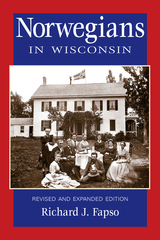
This perennially popular book, now revised and expanded with additional historical photos and documents, offers a concise introduction to Wisconsin's Norwegian immigrants. The narrative examines the mass migration of Norwegians from 1837, when Ole Nattestad became the first Norwegian settler in Wisconsin, to the late nineteenth century, when Norwegian immigration largely came to a close. This volume demonstrates the efforts of immigrants to balance newfound American customs with the most treasured traditions of their homeland.
New to this edition are selected letters of Ole Munch Ræder, a scholar sent by the Norwegian government in 1847 to study the American legal system. Ræder visited several Wisconsin cities and villiages and paid special attention to the Norwegian community. His compelling accounts, which appeared in newspapers in Norway, offer a contemporary view of Norwegian life in Wisconsin.
READERS
Browse our collection.
PUBLISHERS
See BiblioVault's publisher services.
STUDENT SERVICES
Files for college accessibility offices.
RECENTLY PUBLISHED




UChicago Accessibility Resources
home | accessibility | search | about | contact us
BiblioVault ® 2001 - 2025
The University of Chicago Press