
 A SCHOLARLY BOOK REPOSITORY
27 start with O start with O
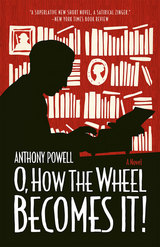
Written at the peak of the late British master’s extraordinary literary career, this novel offers profound insight into the mind of a great artist whose unequaled style, ear for dialogue, and eye for irony will delight devotees and new readers alike.
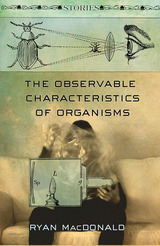
As MacDonald says, “I think what I’m after in the stories as well as in the video work is finding an experiential moment, nothing really stable, something pleasantly unstable, or uncomfortable . . . purposefully pleasant uncomfortable instability with moments of tenderness and definitely humor. Certainly nothing concrete, unless it needs that. A certain fear of and respect for banality. I’m after a good time, which can often turn into a really bad time, but either way, one we’ll remember forever.”
Despite the range of circumstances they reveal, these stories are unified by a brightness of vision, deft observation, and consistently sharp, funny, and unbridled language.
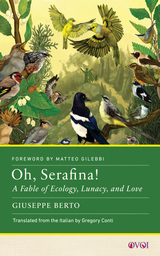
Newly translated into English, Giuseppe Berto’s charming 1973 novel Oh, Serafina! was one of the first works of Italian literature to deal with ecological themes while also questioning the destructive effects of industrial capitalism, the many forms spirituality might take, and the ways our society defines madness. This translation includes a foreword from literary scholar Matteo Gilebbi that provides biographical, historical, and philosophical context for appreciating this whimsical fable of ecology, lunacy, and love.
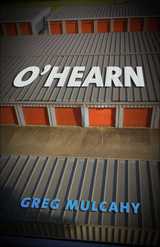
O’Hearn is the story of the story the man tells himself in confused chronology as he struggles to make sense of a world and a landscape where things have stopped making sense.
The laws of causation are absent or profoundly obscured in this explanatory narrative, but then so is all individual motivation. Action seems to end only in a world of winners and losers and occurs solely to reinforce that world by further enriching the winners at the, sometimes willful, expense of the losers.
O’Hearn is funny, contradictory, satiric, heartbreaking—a work unlike anything in our contemporary literature.
Evans’s compelling story, influenced by her own experiences during the Exxon Valdez oil spill, is a provocative look at the choice that must be made between environmental safety and economic survival. A PEN/Bellwether Prize finalist, it will have readers reconsidering where they draw their own lines.
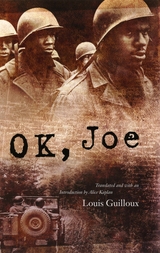
Based on diaries that the author kept during his service as a translator for the U.S. Army in the aftermath of D-Day, OK, Joe follows Louis and the Americans as they negotiate with witnesses, investigate the crimes, and stage the courts-martial. Guilloux has an uncanny ear for the snappy speech of the GIs and a tenderness for the young, unworldly men with whom he spends his days, and, in evocative vignettes and dialogues, he sketches the complex intersection of hope and disillusionment that prevailed after the war. Although the American presence in France has been romanticized in countless books and movies, OK, Joe offers something exceedingly rare: a penetrating French perspective on post-D-Day GI culture, a chronicle of trenchant racism and lost ideals.
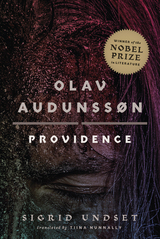
The second volume in the Nobel Prize–winning writer’s epic of medieval Norway, finely capturing Undset’s fluid, natural style in a new English translation, the first in nearly a century
As Norway moves into the fourteenth century, the kingdom continues to be racked by political turmoil and bloody family vendettas that serve as the backdrop for Sigrid Undset’s masterful story about Olav Audunssøn and Ingunn Steinfinnsdatter. Betrothed as children and raised as foster siblings, their unbridled love for each other sets in motion a series of dire events—with a legacy of betrayal, murder, and disgrace that will echo for generations. In Providence, the second of Olav Audunssøn’s four volumes, Olav settles in at his ancestral estate of Hestviken and soon brings Ingunn home as his wife. Both hope to put their troubles behind them as they start a new life together, but the crimes and shameful secrets of the past have a long reach and a tenacious hold. The consequences of sin, suspicion, and familial obligations may prove a greater threat to the pair’s happiness than even their long years of separation.
Set in a time when royalty and religion vie for power, and bloodlines and loyalties are effectively law, Providence summons a powerful picture of Northern life in the medieval era, as the Swedish Academy noted in awarding Undset the Nobel Prize. Conveying both the intimate drama of Olav and Ingunn’s marriage and the epic sweep of their story, it is at once a moving and vivid recreation of a vanished world tainted by bloodshed and haunted by sin and retribution.
As with her classic Kristin Lavransdatter, Sigrid Undset immersed herself in legal, religious, and historical writings to create in Olav Audunssøn an astoundingly authentic and compelling portrait of Norwegian life in the Middle Ages. And as in her translation of Kristin Lavransdatter, Tiina Nunnally does full justice to Undset’s fluid prose. Undset’s writing style is by turns straightforward and delicately lyrical, conveying the natural world, the complex culture, and the fraught emotional territory against which Olav’s story inexorably unfolds.
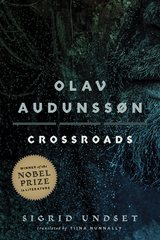
The third volume in the Nobel Prize–winning writer’s epic story of medieval Norway, finely capturing Undset’s fluid, natural style in the first English translation in nearly a century
In the early fourteenth century, Norway is a kingdom in political turmoil, struggling with opposing forces within its own borders and drawn into strife with neighboring Sweden and Denmark. Bloody family vendettas and conflicting loyalties sparked by the irrepressible passion of a boy and his foster sister (also his betrothed) have now set in motion a series of terrible consequences—with a legacy of betrayal, murder, and disgrace that will echo down through the generations. Crossroads, the third of Olav Audunssøn’s four volumes, finds Olav heartbroken by loss and further estranged from his son. To escape his grief, Olav leaves his home estate of Hestviken and agrees to serve as captain on a small merchant ship headed to London. There, separated from everything familiar to him, Olav begins a visionary journey that will send him far into the forest and deep into his soul. Questioning past decisions and future plans, Olav must grapple with his own perceptions of love and guilt, sin and penitence, vengeance and forgiveness.
Set in a time and place where royalty and religion vie for power, and bloodlines and loyalties are law, Crossroads summons a powerful picture of Northern life in medieval times, as the Swedish Academy noted in awarding Sigrid Undset the Nobel Prize in 1928. Conveying both the intimate drama and epic sweep of Olav’s story as grief and guilt drive him to ever more desperate action, Crossroads is a moving and masterly re-creation of a vanished world tainted by bloodshed and haunted by sin and retribution.
As with Kristin Lavransdatter, her earlier medieval epic, Undset immersed herself in the legal, religious, and historical documents of the time while writing Olav Audunssøn to create astoundingly authentic and compelling portraits of Norwegian life in the Middle Ages. And as in her translation of Kristin Lavransdatter, Tiina Nunnally does full justice to Undset’s natural, fluid prose, in a style that delicately and lyrically conveys the natural world, the complex culture, and the fraught emotional territory against which Olav’s story inexorably unfolds.
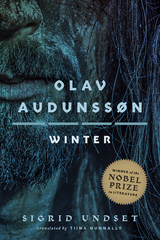
The fourth and final volume in the Nobel Prize–winning writer’s epic of one man’s fateful life in medieval Norway
Set in thirteenth-century Norway, a land racked by political turmoil, bloody family vendettas, and rising tensions between secular powers and an ascendant church, Sigrid Undset’s spellbinding masterpiece now follows the fortunes of Olav Audunssøn to the final, dramatic chapter of his life as it unfolds in Winter, the last volume of the tetralogy. When the orphaned Olav and his foster sister Ingunn became betrothed in their youth, a chain of events was set in motion that eventually led to violence, banishment, and a family separation lasting years. The consequences fracture their marriage and threaten the lineage for generations. Now, at the end of his life, Olav continues to grapple with the guilt of his sins as he watches his children, especially Eirik, make disastrous choices and struggle to find their rightful place in a family haunted by the past.
With its precise details and sweeping vision, Olav Audunssøn summons a powerful picture of Northern life in medieval times, as noted by the Swedish Academy in awarding Undset the Nobel Prize in 1928. Conveying both the intimate drama and the epic proportions of Olav’s story at its conclusion, Winter is a moving and masterly recreation of a vanished world tainted by bloodshed and haunted by sin and retribution—yet one that might still offer a chance for redemption.
As with Kristin Lavransdatter, her earlier medieval epic, Sigrid Undset wrote Olav Audunssøn after immersive research in the legal, religious, and historical writings of the time to create an astoundingly authentic and compelling portrait of Norwegian life in the Middle Ages. And as in her translation of Kristin Lavransdatter, Tiina Nunnally does full justice to Undset’s natural, fluid prose—in a style by turns plainspoken and delicately lyrical—to convey the natural world, the complex culture, and the fraught emotional territory against which Olav’s story inexorably unfolds.
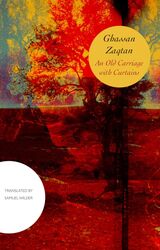
An Old Carriage with Curtains is the third and final book in a masterful trilogy of novels encompassing the history of the people of the Palestinian village of Zakariyya. The novels trace the wandering trajectories and inner lives of characters connected to this village across decades, as well as the vicissitudes of historical change and displacement in the land. Through the return of a middle-aged man to the site of an ancient monastery in the hills near Jericho that he once visited as a boy, the incredibly vivid and surprising stories of Hind, a stage actress and brilliant storyteller, the stories of tortuous routes of checkpoints and bureaucratic blockages, and decades of Occupation, Zaqtan creates a narrative of personal reckoning and reflection.
The vectors of memory and historical reflection interweave in this dreamlike narrative, which delivers a singularly powerful depiction of subjective and collective experience in the face of devastating and sweeping historical change.
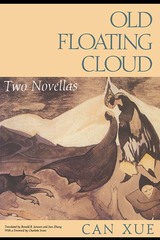
Yellow Mud Street tells of a street, its people, and a strange event that happens there. The street is dilapidated, though it once saw better times. The “S” Machinery Factory, which used to run day and night, is rusty and decaying, though people still deceive themselves into thinking this factory is a fine place, the envy of “foreign devils” and an important connection with “the authorities.” One day, “a thing” appears. No one is sure if it is a person, a flash of light, or a cloud of will-o'-the-wisp. It prompts rumor, superstition, political slogans, and an investigation by the authorities. A chorus of paranoid preoccupations wind up and down Yellow Mud Street, in a series of muttered refrains that build to a screaming frenzy.
Old Floating Cloud is the ruthlessly unsentimental story of a man who has an affair with his neighbor's wife. Can Xue describes the damage people do to each other, their obsessions, their lack of connection, and their attempts to exert power over one another. Lovers are not the only targets of Can Xue’s biting humor. Resentment flares between parents and children, in-laws spy, and employees abase themselves before their bosses. Like Yellow Mud Street, this novella teems with insects, excrement, and distorted bodies—visceral reminders of our earthbound state.
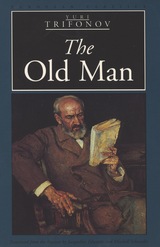
The Old Man veers between a contemporary effort to buy a dacha and the memories of an incident in the Civil War. A questionable action in the past haunts the present and throws into relief the materialism that has come to replace revolutionary idealism; suggesting this idealism may have been tainted in the first place. While the setting and situation are very Soviet, the quandary Trifonov describes has universal significance.
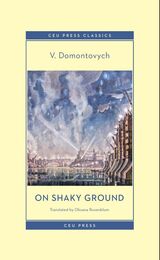
On Shaky Ground is a modernist novel written in the late 1930s and early 1940s and was originally published in Nazi occupied Kharkiv in 1942. One of the best examples of intellectual fiction of the time, the work summarizes the struggles of the Ukrainian intelligentsia in the late 1920s and early 1930s, when totalitarian reality, together with rampant industrialization, started to affect everyday life.
V. Domontovych is the pen name of Viktor Petrov, a historian and archaeologist, a representative of neoclassicism in Ukrainian literature. The novel follows the trajectory of art historian, Rostyslav Mykhailovych, who goes on a work trip from the capital city of Kharkiv to provincial Katerynoslav (today Dnipro), the place where he spent his childhood. In the late 1920s, a section of the Dnipro River became the place of a major industrial project, the construction of the largest hydroelectric station in Ukraine (Dniprelstan), which flooded the rapids over the river and led to serious ecological and social changes in the region. While the main goal of the trip is to save an old church from being turned into a museum, the journey becomes a philosophical reflection on dislocation and loss of connection with one’s birthplace, traditions, religion and more globally, a sense of security.
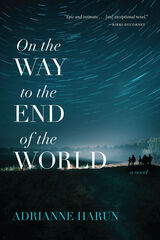
As the Cuban Missile Crisis eases, President Kennedy is casting around for a demonstration of American prowess when one of his Cabinet unearths an old mandate that US Marines be fit enough to walk fifty miles in twenty hours. Perfect! Kennedy decides to throw down the gauntlet to “today’s Marines,” but before he knows it, he’s sparked a wild fad. The entire country has answered the call, it seems, and for a few crazed winter weeks, masses of Americans will embark on their own arduous Big Walks—the “JFK 50-Milers.”
Yet in tiny Humtown—an isolated mill town in the Pacific Northwest—not everyone who shows up for a hastily organized Big Walk is motivated by patriotism. Not Helen Hubka, an inveterate gossip; not the suicidal Caroline, who months earlier lost her beloved husband during the Storm of the Century. Not ex-soldier/fisherman Jaspar Goode, nor the unknown man in their midst, a collared priest who seems to shift identities at will. Certainly not Avis, a battered teenager running from her terrifying brother . . . with a stolen town treasure. And when the walkers stumble upon the abandoned car of a missing young mother, they rekindle a mystery that soon reverberates among them, exposing hidden truths, talents, and alliances.
Splendidly imagined, with prose that sings on the page, On the Way to the End of the World is an adventure story riven with secrets, a national fairy tale twisted into a whodunit.
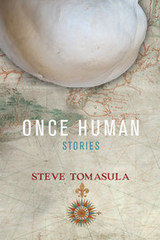
A manga artist who is afraid that she herself is slipping into a cartoon version of life, a lab technician who makes art with the cloning technology she uses at work, a sociologist hunting for the gene that makes some people want to take risks—these are some of the characters that populate the stories in Once Human. Exploring the spaces where life is shaped by science and the technologies we bring into being, Steve Tomasula’s characters often find that the harder they look at the world, the less they can say. The map that emerges from these stories charts the territory of human longing and the failure of poetry, science, and technology to explain the “why” of the world, if not its “how.”
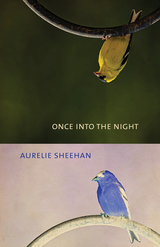
Stories that explore the potent and captivating boundaries between the real and the imaginary
Aurelie Sheehan’s Once into the Night is a collection of 57 brief stories—a fictional autobiography made of assumed identities and what-ifs. What is the difference between fiction and a lie? These stories dwell in a netherworld between memory and the imagination, exploring the nature of truthtelling.
Here the inner life is granted pride of place with authenticity found in misremembered childhood notebooks, invisible tattoos, and the love life of icemen. Radical in its conception of story, this collection blurs the line between fiction, poetry, and essay, reconceiving contemporary autofiction in its own witty, poignant vernacular. The stories intersect with and deviate from a “provable” life—a twin distinction that becomes the source of their power.
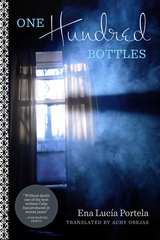
One Hundred Bottles, with its intersecting characters and unresolved whodunits, can be read as a murder mystery. But it's really a survivor's story. In a voice that blends gossip, storytelling, and literature, Z—the vivacious heroine of Portela's award-winning novel—relates her rum-soaked encounters with the lesbian underground, the characters carving up her home, and the terrifying-but-irresistible Moisés. As entertaining as any detective drama, One Hundred Bottles is ultimately made real by very rough love, intense friendship, and something small that decides to live.
"This book aims to be about the best of us as it shows us at our least. Thank goodness for Darrell Spencer, the only writer in America to be trusted on the subjects of faith, love, weal and woe."
---Lee K. Abbott
" . . . absolutely dire and dear, his best book, a novel about American life right now. . . . this book is accurate, acerbic, and heartfelt at once."
---Ron Carlson
Praise for Darrell Spencer:
"Mr. Spencer's writing crackles with freshness and lucidity, featuring characters who slide into one another in random encounters and relationships."
---New York Times Book Review
"[Spencer] possesses a remarkable ear for the cadence of everyday speech."
---Michael Chabon
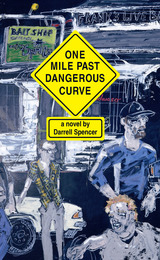
From the acclaimed author of Caution: Men in Trees and A Woman Packing a Pistol comes a tale of kinship, love, and lawlessness.
One Mile Past Dangerous Curve is the story of the Dancers---a family on the verge of collapse. Glen Dancer has come to Ohio to set up another in a series of Snapper franchises. But in the midst of construction, Glen finds himself fighting a painful and futile battle with cancer.
His son Eddie, recently divorced, moves from Las Vegas to help. A sign painter by trade, Eddie finds only intermittent work in town until the day a mysterious and wealthy businessman commissions a series of twenty road signs, each different, all featuring odd, cryptic messages. It is on a back-country road, where Eddie has gone to assemble one of the signs, that some previously vague threats become concrete.
Though Eddie doesn't know it, the neighboring woods hide a secret, a secret that a gun-toting rural gang wants to keep at any cost.
“If my mother were to tell the story . . .” So begins the title piece in this debut collection of short fiction, eight stories that explore the gap between the stories we tell ourselves and the stories we have lived. In “Punitive Damages,” a father, the beneficiary of a huge financial settlement in compensation for his son’s death, must confront the truth of the life that the son’s death has provided. In “Punnett’s Squares,” winner of the Chicago Tribune’s Nelson Algren Award, an adopted son seeks to prove, against all evidence to the contrary, that his adoptive father is in fact his biological father. In “Induction Ceremony,” a small-town basketball hero returns to his hometown no longer a man but now a woman, and his onetime teammate-and-friend must reconsider who they were and who they are now. In the pair of pieces that bookend the collection, “Ordination” and “Be a Missionary,” a Baptist preacher’s son must reconcile the distance between the evidence of things seen and the evidence of things unseen.
These are men and boys who like to see themselves as worthy of the titles of father, son, husband, lover, and friend, but who must fight their own instincts and desires to claim such honors. These are boys and men for whom questions of identity—biological, cultural, sexual, religious, moral—are unavoidable, men and boys always seeking to be who they want to be, always aware of who they are.

In Other Death, we are thrown into the chaotic life of a forty-year-old university lecturer who is experiencing a sudden, complete psychological and existential breakdown. Afternoons disappear and years chop and change in confusion as he wanders the streets searching for work. Homelessness, alcoholism, and hate are on the rise in 1990s Budapest as symptoms of the regime change. Images flash up from other lives: a Boer pointing a shotgun in Johannesburg, bodies heaped up in the downtown area, a Volkswagen campervan parked by an empty phone box in Switzerland. As he encounters new and historic traumas embedded in the lives and the buildings around him, the unnamed narrator struggles to grasp any coherent identity. It’s only when he starts to work as a gallery attendant, observing the interactions between viewer and artwork, light and space, that he embarks on the slow healing routine towards clarity.
In Barnás’s semi-autobiographical novel, meditations on trauma and urban space, image and observation, and spiritual friendships echo the writings of W. G. Sebald and Thomas Bernhard. Like Vertigo meets The Bell Jar, the magnetic language of Other Death draws the reader into the murky workings of a mind severely afflicted.

Overheard is set in Vienna in the mid-2010s, a time of significant social change and political conflict, with tens of thousands of Middle Eastern refugees arriving and protests taking place over a café’s expulsion of two women who greeted each other with a kiss. Kurt is gay, but his best friend is not. He’s a sympathetic listener, leading him—and the reader—to revisit and reevaluate assumptions.
Originally published as Tür an Tür, Dominik Barta’s novel is a page-turner filled with humor, insight, and a suspenseful plot. Overheard combines visions of an idealized past and a longed-for future to create a present that we all want to inhabit.
READERS
Browse our collection.
PUBLISHERS
See BiblioVault's publisher services.
STUDENT SERVICES
Files for college accessibility offices.
RECENTLY PUBLISHED



UChicago Accessibility Resources
home | accessibility | search | about | contact us
BiblioVault ® 2001 - 2025
The University of Chicago Press