
 A SCHOLARLY BOOK REPOSITORY
37 start with A start with A

Today the images of Robert Burns and Abraham Lincoln are recognized worldwide, yet few are aware of the connection between the two. In Abraham Lincoln and Robert Burns: Connected Lives and Legends, author Ferenc Morton Szasz reveals how famed Scots poet Robert Burns—and Scotland in general—influenced the life and thought of one of the most beloved and important U.S. presidents and how the legends of the two men became intertwined after their deaths. This is the first extensive work to link the influence, philosophy, and artistry of these two larger-than-life figures.
Lacking a major national poet of their own in the early nineteenth century, Americans in the fledgling frontier country ardently adopted the poignant verses and songs of Scotland’s Robert Burns. Lincoln, too, was fascinated by Scotland’s favorite son and enthusiastically quoted the Scottish bard from his teenage years to the end of his life. Szasz explores the ways in which Burns’s portrayal of the foibles of human nature, his scorn for religious hypocrisy, his plea for nonjudgmental tolerance, and his commitment to social equality helped shape Lincoln’s own philosophy of life. The volume also traces how Burns’s lyrics helped Lincoln develop his own powerful sense of oratorical rhythm, from his casual anecdotal stories to his major state addresses.
Abraham Lincoln and Robert Burns connects the poor-farm-boy upbringings, the quasi-deistic religious views, the shared senses of destiny, the extraordinary gifts for words, and the quests for social equality of two respected and beloved world figures. This book is enhanced by twelve illustrations and two appendixes, which include Burns poems Lincoln particularly admired and Lincoln writings especially admired in Scotland.
2015 ISHS Superior Achievement Award
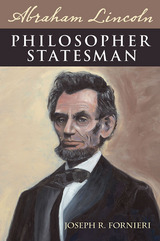
What constitutes Lincoln’s political greatness as a statesman? As a great leader, he saved the Union, presided over the end of slavery, and helped to pave the way for an interracial democracy. His great speeches provide enduring wisdom about human equality, democracy, free labor, and free society. Joseph R. Fornieri contends that Lincoln’s political genius is best understood in terms of a philosophical statesmanship that united greatness of thought and action, one that combined theory and practice. This philosophical statesmanship, Fornieri argues, can best be understood in terms of six dimensions of political leadership: wisdom, prudence, duty, magnanimity, rhetoric, and patriotism. Drawing on insights from history, politics, and philosophy, Fornieri tackles the question of how Lincoln’s statesmanship displayed each of these crucial elements.
Providing an accessible framework for understanding Lincoln’s statesmanship, this thoughtful study examines the sixteenth president’s political leadership in terms of the traditional moral vision of statecraft as understood by epic political philosophers such as Aristotle and St. Thomas Aquinas. Fornieri contends that Lincoln’s character is best understood in terms of Aquinas’s understanding of magnanimity or greatness of soul, the crowning virtue of statesmanship. True political greatness, as embodied by Lincoln, involves both humility and sacrificial service for the common good. The enduring wisdom and timeless teachings of these great thinkers, Fornieri shows, can lead to a deeper appreciation of statesmanship and of its embodiment in Abraham Lincoln.
With the great philosophers and books of western civilization as his guide, Fornieri demonstrates the important contribution of normative political philosophy to an understanding of our sixteenth president. Informed by political theory that draws on the classics in revealing the timelessness of Lincoln’s example, his interdisciplinary study offers profound insights for anyone interested in the nature of leadership, statesmanship, political philosophy, political ethics, political history, and constitutional law.

Completion of the Human Genome Project will make possible a staggering array of new medical technologies, including new diagnostic and screening tests for inherited disorders, gene therapies, and the ability to manipulate a person's inherited, non-disease traits. Most of the attention given to the social implications of these technologies has focused on their potential to harm the individual, for example, by denying employment or insurance.
This book explores instead the potential harm to society if we unfairly distribute the enormous benefits of genetic technologies. The resulting division of society into genetic haves and have-nots would undermine the basic foundation of Western democratic society—the belief in equality of opportunity.
This book explains, in terms that can be understood by the general reader, how DNA works, what the Human Genome Project is, what these genetic technologies are and what they promise, and how they could disrupt our democratic society.
In an original contribution to the literature, the book then discusses the alternatives for avoiding the creation of a genetic underclass, ranging from halting the Human Genome Project itself to making genetic technologies available without regard to ability to pay. The authors' provocative conclusion is that a lottery in which everyone has a chance to obtain access to these technologies is the only feasible option.
This book will be of interest to anyone who wishes to learn more about the Human Genome Project and the genetic revolution that it will create, as well as those who already are familiar with the project and are concerned about the social consequences of its scientific developments.
According to a recent Institute of Medicine report, as many as 98,000 Americans die each year as a result of medical error—a figure higher than deaths from automobile accidents, breast cancer, or AIDS. That astounding number of fatalities does not include the number of those serious mistakes that are grievous and damaging but not fatal. Who can forget the tragic case of 17-year-old Jésica Santillán, who died after receiving a heart-lung transplant with an incompatible blood type? What can be done about this? What should be done? How can patients and their families regain a sense of trust in the hospitals and clinicians that care for them? Where do we even begin the discussion?
Accountability brings the issue to the table in response to the demand for patient safety and increased accountability regarding medical errors. In an interdisciplinary approach, Virginia Sharpe draws together the insights of patients and families who have suffered harm, institutional leaders galvanized to reform by tragic events in their own hospitals, philosophers, historians, and legal theorists. Many errors can be traced to flaws in complex systems of health care delivery, not flaws in individual performance. How then should we structure responsibility for medical mistakes so that justice for the injured can be achieved alongside the collection of information that can improve systems and prevent future error? Bringing together authoritative voices of family members, health care providers, and scholars—from such disciplines as medical history, economics, health policy, law, philosophy, and theology—this book examines how conventional structures of accountability in law and medical structure (structures paradoxically at odds with justice and safety) should be replaced by more ethically informed federal, state, and institutional policies. Accountability calls for public policy that creates not only systems capable of openness concerning safety and error—but policy that also delivers just compensation and honest and humane treatment to those patients and families who have suffered from harmful medical error.

Adorno and Ethics—the first issue of New German Critique to be published by Duke University Press—takes issue with Adorno’s critics. These essays reconsider Adorno’s unique brand of aestheticism, revealing a “politics of aestheticism” and exploring the political and ethical dimensions of his writings. One contributor links the ethical turn taken in Adorno criticism with related developments in American poetry and poetics. Another examines Adorno’s aphorism “Gold Assay” for the ways in which it anticipates one of his seminal works, The Jargon of Authenticity. Focusing on Auschwitz and the testimony of its survivors, one contributor explores the impact of the Holocaust on modern philosophy and reason, a relationship that he argues Adorno never specified. Another contributor considers the figure of the animal in the writings of Kant, Adorno, and Lévinas, exploring what it might mean to live, as Adorno suggests, as “a good animal.”
Contributors. J. M. Bernstein, Detlev Claussen, Samir Gandesha, Alexander García Düttmann, Christina Gerhardt, Martin Jay, Robert Kaufman, Michael Marder, Gerhard Richter
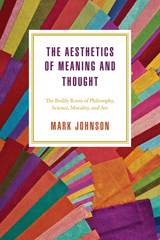
This book gathers the best of philosopher Mark Johnson’s essays addressing questions of our embodiment as they deal with aesthetics—which, he argues, we need to rethink so that it takes into account the central role of body-based meaning. Viewed that way, the arts can give us profound insights into the processes of meaning making that underlie our conceptual systems and cultural practices. Johnson shows how our embodiment shapes our philosophy, science, morality, and art; what emerges is a view of humans as aesthetic, meaning-making creatures who draw on their deepest physical processes to make sense of the world around them.
How aesthetic religious experiences can create solidarity in marginalized communities
Latine Catholics have used Our Lady of Guadalupe as a symbol in democratic campaigns ranging from the Chicano movement and United Farm Workers’ movements to contemporary calls for just immigration reform. In diverse ways, these groups have used Guadalupe’s symbol and narrative to critique society’s basic structures—including law, policy, and institutions—while seeking to inspire broader participation and representation among marginalized peoples in US democracy.
Yet, from the outside, Guadalupe’s symbol is illegible within a liberal political framework that seeks to protect society’s basic structures from religious encroachment by relegating religious speech, practices, and symbols to the background.
The Aesthetics of Solidarity argues for the capacity of Our Lady of Guadalupe—and similar religious symbols—to make democratic claims. Author Nichole M. Flores exposes the limitations of political liberalism’s aesthetic responses to religious difference, turning instead to Latine theological aesthetics and Catholic social thought to build a framework for interpreting religious symbols in our contemporary pluralistic and participatory democratic life. By offering a lived theology of Chicanx Catholics in Denver, Colorado, and their use of Guadalupe in the pursuit of justice in response to their neighborhood’s gentrification, this book provides an important framework for a community of interpretation where members stand in solidarity to respond to justice claims made from diverse religious and cultural communities.
Among all the great thinkers of the past two hundred years, Nietzsche continues to occupy a special place--not only for a broad range of academics but also for members of a wider public, who find some of their most pressing existential concerns addressed in his works. Central among these concerns is the question of the meaning of a life characterized by inescapable suffering, at a time when the traditional responses inspired by Christianity are increasingly losing their credibility. While most recent studies of Nietzsche's works have lost sight of this fundamental issue, Bernard Reginster's book The Affirmation of Life brings it sharply into focus.
Reginster identifies overcoming nihilism as a central objective of Nietzsche's philosophical project, and shows how this concern systematically animates all of his main ideas. In particular, Reginster's work develops an original and elegant interpretation of the will to power, which convincingly explains how Nietzsche uses this doctrine to mount a critique of the dominant Christian values, to overcome the nihilistic despair they produce, and to determine the conditions of a new affirmation of life. Thus, Reginster attributes to Nietzsche a compelling substantive ethical outlook based on the notions of challenge and creativity--an outlook that involves a radical reevaluation of the role and significance of suffering in human existence.
Replete with deeply original insights on many familiar--and frequently misunderstood--Nietzschean concepts, Reginster's book will be essential to anyone approaching this towering figure of Western intellectual history.
Do people of differing ethnicities, cultures, and races view medicine and bioethics differently? And, if they do, should they? Are doctors and researchers taking environmental perspectives into account when dealing with patients? If so, is it done effectively and properly?
In African American Bioethics, Lawrence J. Prograis Jr. and Edmund D. Pellegrino bring together medical practitioners, researchers, and theorists to assess one fundamental question: Is there a distinctive African American bioethics?
The book's contributors resoundingly answer yes—yet their responses vary. They discuss the continuing African American experience with bioethics in the context of religion and tradition, work, health, and U.S. society at large—finding enough commonality to craft a deep and compelling case for locating a black bioethical framework within the broader practice, yet recognizing profound nuances within that framework.
As a more recent addition to the study of bioethics, cultural considerations have been playing catch-up for nearly two decades. African American Bioethics does much to advance the field by exploring how medicine and ethics accommodate differing cultural and racial norms, suggesting profound implications for growing minority groups in the United States.
By analyzing the amalgam of Greek philosophy, Jewish and Christian teachings, and secular humanism that composes our dominant ethical system, the authors of this volume explore the question of whether or not Western and non-Western moral values can be commingled without bilateral loss of cultural integrity. They take as their philosophical point of departure the observation that both ethical relativism and ethical absolutism have become morally indefensible in the context of the multicultural American life, and they variously consider the need for an ethical middle ground.
After Plato redefines the relationships of rhetoric for scholars, teachers, and students of rhetoric and writing in the twenty-first century. Featuring essays by some of the most accomplished scholars in the field, the book explores the diversity of ethical perspectives animating contemporary writing studies—including feminist, postmodern, transnational, non-Western, and virtue ethics—and examines the place of ethics in writing classrooms, writing centers, writing across the curriculum programs, prison education classes, and other settings.
When truth is subverted, reason is mocked, racism is promoted, and nationalism takes center stage, teachers and scholars of writing are challenged to articulate the place of rhetorical ethics in the writing classroom and throughout the field more broadly. After Plato demonstrates the integral place of ethics in writing studies and provides a roadmap for future conversations about ethical rhetoric that will play an essential role in the vitality of the field.
Contributors: Fred Antczak, Patrick W. Berry, Vicki Tolar Burton, Rasha Diab, William Duffy, Norbert Elliot, Gesa E. Kirsch, Don J. Kraemer, Paula Mathieu, Robert J. Mislevy, Michael A. Pemberton, James E. Porter, Jacqueline Jones Royster, Xiaoye You, Bo Wang
After Testimony: The Ethics and Aesthetics of Holocaust Narrative for the Future collects sixteen essays written with the awareness that we are on the verge of a historical shift in our relation to the Third Reich’s programmatic genocide. Soon there will be no living survivors of the Holocaust, and therefore people not directly connected to the event must assume the full responsibility for representing it. The contributors believe that this shift has broad consequences for narratives of the Holocaust. By virtue of being “after” the accounts of survivors, storytellers must find their own ways of coming to terms with the historical reality that those testimonies have tried to communicate. The ethical and aesthetic dimensions of these stories will be especially crucial to their effectiveness. Guided by these principles and employing the tools of contemporary narrative theory, the contributors analyze a wide range of Holocaust narratives—fictional and nonfictional, literary and filmic—for the dual purpose of offering fresh insights and identifying issues and strategies likely to be significant in the future. In addition to the editors, the contributors are Daphna Erdinast-Vulcan, Sidra DeKoven Ezrahi, Anniken Greve, Jeremy Hawthorn, Marianne Hirsch, Irene Kacandes, Phillipe Mesnard, J. Hillis Miller, Michael Rothberg, Beatrice Sandberg, Anette H. Storeide, Anne Thelle, and Janet Walker.
What will become of our earthly remains? What happens to our bodies during and after the various forms of cadaver disposal available? Who controls the fate of human remains? What legal and moral constraints apply? Legal scholar Norman Cantor provides a graphic, informative, and entertaining exploration of these questions. After We Die chronicles not only a corpse’s physical state but also its legal and moral status, including what rights, if any, the corpse possesses.
In a claim sure to be controversial, Cantor argues that a corpse maintains a “quasi-human status" granting it certain protected rights—both legal and moral. One of a corpse’s purported rights is to have its predecessor’s disposal choices upheld. After We Die reviews unconventional ways in which a person can extend a personal legacy via their corpse’s role in medical education, scientific research, or tissue transplantation. This underlines the importance of leaving instructions directing post-mortem disposal. Another cadaveric right is to be treated with respect and dignity. After We Die outlines the limits that “post-mortem human dignity” poses upon disposal options, particularly the use of a cadaver or its parts in educational or artistic displays.
Contemporary illustrations of these complex issues abound. In 2007, the well-publicized death of Anna Nicole Smith highlighted the passions and disputes surrounding the handling of human remains. Similarly, following the 2003 death of baseball great Ted Williams, the family in-fighting and legal proceedings surrounding the corpse’s proposed cryogenic disposal also raised contentious questions about the physical, legal, and ethical issues that emerge after we die. In the tradition of Sherwin Nuland's How We Die, Cantor carefully and sensitively addresses the post-mortem handling of human remains.

Against Ecological Sovereignty is a passionate defense of radical ecology that speaks directly to current debates concerning the nature, and dangers, of sovereign power. Engaging the work of Bataille, Arendt, Levinas, Nancy, and Agamben, among others, Mick Smith reconnects the political critique of sovereign power with ecological considerations, arguing that ethical and political responsibilities for the consequences of our actions do not end with those defined as human.
Against Ecological Sovereignty is the first book to turn Agamben’s analysis of sovereignty and biopolitics toward an investigation of ecological concerns. In doing so it exposes limits to that thought, maintaining that the increasingly widespread biopolitical management of human populations has an unrecognized ecological analogue—reducing nature to a “resource” for human projects. Smith contends that a radical ecological politics must resist both the depoliticizing exercise of sovereign power and the pervasive spread of biopolitics in order to reveal new possibilities for creating healthy human and nonhuman communities.
Presenting a stinging critique of human claims to sovereignty over the natural world, Smith proposes an alternative way to conceive of posthumanist ecological communities—one that recognizes the utter singularity of the beings in them.
Roman Catholic moral theology is the point of departure for this multifaceted exploration of the challenge of allocating scarce medical resources.
The volume begins its exploration of discerning moral limits to modern high-technology medicine with a consensus statement born of the conversations among its contributors. The seventeen essays use the example of critical care, because it offers one of the few areas in medicine where there are good clinical predictive measures regarding the likelihood of survival. As a result, the health care industry can with increasing accuracy predict the probability of saving lives—and at what cost.
Because critical care involves hard choices in the face of finitude, it invites profound questions about the meaning of life, the nature of a good death, and distributive justice. For those who identify the prize of human life as immortality, the question arises as to how much effort should be invested in marginally postponing death. In a secular culture that presumes that individuals live only once, and briefly, there is an often-unacknowledged moral imperative to employ any means necessary to postpone death. The conflict between the free choice of individuals and various aspirations to equality compounds the challenge of controlling medical costs while also offering high-tech care to those who want its possible benefits. It forces society to confront anew notions of ordinary versus extraordinary, and proportionate versus disproportionate, treatment in a highly technologically structured social context.
This cluster of discussions is enriched by five essays from Jewish, Orthodox Christian, and Protestant perspectives. Written by premier scholars from the United States and abroad, these essays will be valuable reading for students and scholars of bioethics and Christian moral theology.
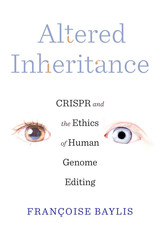
A leading bioethicist offers critical insights into the scientific, ethical, and political implications of human genome editing.
Designer babies, once found only in science fiction, have become a reality. We are entering a new era of human evolution with the advent of a technology called CRISPR, which allows scientists to modify our genes. Although CRISPR shows great promise for therapeutic use, it raises thorny ethical, legal, political, and societal concerns because it can be used to make permanent changes to future generations. What if changes intended for the good turn out to have unforeseen negative effects? What if the divide between the haves and have-nots widens as a result? Who decides whether we genetically modify human beings and, if so, how?
Françoise Baylis insists that we must all have a role in determining our future as a species. The scientists who develop and use genome-editing tools should not be the only ones making decisions about future uses of the technology. Such decisions must be the fruit of a broad societal consensus. Baylis argues that it is in our collective interest to assess and steer the development and implementation of biomedical technologies. Members of the public with different interests and diverse perspectives must be among the decision makers; only in this way can we ensure that societal concerns are taken into account and that responsible decisions are made. We must be engaged and informed, think critically, and raise our voices as we create our future together.
Sharp, rousing, timely, and thought-provoking, Altered Inheritance is essential reading. The future of humanity is in our hands.
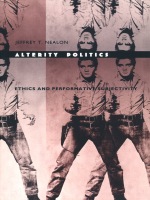
While discussing the work of others who have refused to thematize difference in terms of the possibility or impossibility of sameness—Levinas, Butler, Derrida, Foucault, Deleuze, Guattari, Zizek, Jameson, Heidegger, Bakhtin—Nealon argues that ethics is constituted as inexorable affirmative response to different identities, not through an inability to understand or totalize the other. Alterity Politics combines this theoretical itinerary with crucial discussions of specific and diverse sites of literary and cultural production—the work of William S. Burroughs, Amiri Baraka, Andy Warhol, Ishmael Reed, Rush Limbaugh, and Vincent Van Gogh—along with analyses of the social formation of subjects as found in identity politics, and in multicultural and whiteness studies. In the process, Nealon takes on a wide variety of issues including white male anger, the ethical questions raised by drug addiction, the nature of literary meaning, and the concept of “becoming-black.”
In seeking to build an ethical structure around poststructuralist discourse and to revitalize the applied use of theoretical concepts to notions of performative identity, Alterity Politics marks a decisive intervention in literary theory, cultural studies, twentieth-century philosophy, and performance studies.
This anthology brings together, for the first time, leading essays and book chapters from theologians, philosophers, and scientists on their research on ethics, altruism, and love. Because the general consensus today is that scholarship in moral theory requires empirical research, the arguments of the leading scholars presented in this book will be fundamental to those examining issues in love, ethics, religion, and science.
The first half of The Altruism Reader offers essential selections from religious texts, leading contemporary scholars, and cutting-edge ethicists. Buddhism, Christianity, Hinduism, Islam, and Judaism are represented. Among the highly respected writers are Thomas Aquinas, the Dalai Lama, Thich Nhat Hanh, John Polkinghorne, Stephen Pope, Louis Fischer, Amira Shamma Abdin, Katharine Doob Sakenfeld, and Daniel Day Williams.
The book’s second half features primary readings on love and altruism from the sciences. Here the focus is on anthropology, psychology, sociology, biology, and neurology, with material written by Daniel C. Batson, David Sloan Wilson, Robert Wright, Stephen G. Post, Robert Axelrod, Richard Dawkins, Holmes Rolston III, and other renowned scientists and philosophers.
“Virtually all people act—and often talk—as if they have some clue about love. We speak about loving food, falling in love, loving God, feeling loved, and loving a type of music. We say that love hurts, love waits, love stinks, and love means never having to say you’re sorry. We use the word and its derivatives in a wide variety of ways . . . . My definition of love is this: To love is to act intentionally, in sympathetic response to others (including God), to promote well-being.” —Thomas Jay Oord

In this careful analysis and evaluation of the monumental influence of Niebuhr, Werpehowski traces four streams that flow from Niebuhr's theology, particularly as it deals with ethics. In a tightly knit and comprehensive investigation of the work of four contemporary ethicists, important in their own right, Paul Ramsey, Stanley Hauerwas, James Gustafson, and Kathryn Tanner, Werpehowski explores how the legacy of Niebuhr has made an impact on their thought and work. He presents a clear, concise, nuanced, analytical criticism of the development of the four ethicist's construction of ethics-and does it in a way that interweaves and puts the four into a dialogue and conversation with Niebuhr and each other.
Addressing a number of substantive issues, including the viability of just war tradition and the relationship between "church" and "world," American Protestant Ethics and the Legacy of H. Richard Niebuhr demonstrates that Christian ethics operates within a set of polar tensions and that such "conversations" as are developed within need to be a part of moral discourse inside and between a variety of communities of faith.
An innovative reading of John Gower’s work and an exciting new approach to medieval vernacular texts
“Moral Gower” he was called by friend and sometime rival Geoffrey Chaucer, and his “Confessio Amantis” has been viewed as an uncomplicated analysis of the universe, combining erotic narratives with ethical guidance and political commentary. Diane Watt offers the first sustained reading of John Gower’s “Confessio” to argue that this early vernacular text offers no real solutions to the ethical problems it raises—and in fact actively encourages perverse readings.
Drawing on a combination of queer and feminist theory, ethical criticism, and psychoanalytic, historicist, and textual criticism, Watt focuses on the language, sex, and politics in Gower’s writing. How, she asks, is Gower’s “Confessio” related to contemporary controversies over vernacular translation and debates about language politics? How is Gower’s treatment of rhetoric and language gendered and sexualized, and what bearing does this have on the ethical and political structure of the text? What is the relationship between the erotic, ethical, and political sections of “Confessio Amantis”? Watt demonstrates that Gower engaged in the sort of critical thinking more commonly associated with Chaucer and William Langland at the same time that she contributes to modern debates about the ethics of criticism.

studies on animals and theology ever published. Contributors from both
sides of the Atlantic tackle fundamental questions about theology and
how it is put into practice.
Do animals have immortal souls? Does Christ's reconciling work include
animals? Contributors address these issues and more in the context of
scriptural perspectives, the Christian tradition, historical disputes,
and obligations to animals.
As Andrew Linzey points out in his introduction, it cannot be right for
theological practitioners to carry on their business as though the world
of animals were invisible. Mainstream Christianity still propagates a
range of ideas about animals that are hugely detrimental to their status
and welfare. This important volume argues that it is time for a change.
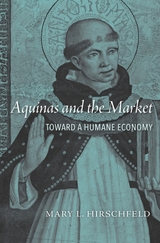
Economists and theologians usually inhabit different intellectual worlds. Economists investigate the workings of markets and tend to set ethical questions aside. Theologians, anxious to take up concerns raised by market outcomes, often dismiss economics and lose insights into the influence of market incentives on individual behavior. Mary L. Hirschfeld, who was a professor of economics for fifteen years before training as a theologian, seeks to bridge these two fields in this innovative work about economics and the thought of St. Thomas Aquinas.
According to Hirschfeld, an economics rooted in Thomistic thought integrates many of the insights of economists with a larger view of the good life, and gives us critical purchase on the ethical shortcomings of modern capitalism. In a Thomistic approach, she writes, ethics and economics cannot be reconciled if we begin with narrow questions about fair wages or the acceptability of usury. Rather, we must begin with an understanding of how economic life serves human happiness. The key point is that material wealth is an instrumental good, valuable only to the extent that it allows people to flourish. Hirschfeld uses that insight to develop an account of a genuinely humane economy in which pragmatic and material concerns matter but the pursuit of wealth for its own sake is not the ultimate goal.
The Thomistic economics that Hirschfeld outlines is thus capable of dealing with our culture as it is, while still offering direction about how we might make the economy better serve the human good.
Nicomachean Ethics VI is considered one of classical philosophy’s greatest achievements. Aristotle on Practical Wisdom is the first full-scale commentary on this work to be issued in over a century, and is the most comprehensive and philosophically illuminating to date. A meticulous translation coupled with facing-page analysis enables readers to engage directly with the account of phronêsis or practical wisdom that Aristotle is developing, while a full introduction locates that account in the context of his ethical thought and of later ethical thought more generally. The commentary discusses the text line by line, illuminating obscure passages, explaining technical ones, and providing a new overall interpretation of the work and the nature of practical reason.
A companion volume, Action, Contemplation, and Happiness, expands on this interpretation to provide a startling new picture of Aristotle’s thought as a whole. Although the two books can be approached separately, together they constitute one of the most daring and original contemporary readings of Aristotle’s philosophy. Aimed at committed students of these notoriously difficult writings, C. D. C. Reeve’s engaging and lucid books should find a wide audience among philosophers, classicists, and all readers willing to wrestle with a thinker of unparalleled subtlety, depth, and scope.
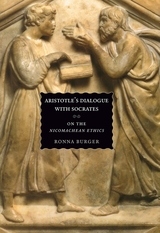
What is the good life for a human being? Aristotle’s exploration of this question in the Nicomachean Ethics has established it as a founding work of Western philosophy, though its teachings have long puzzled readers and provoked spirited discussion. Adopting a radically new point of view, Ronna Burger deciphers some of the most perplexing conundrums of this influential treatise by approaching it as Aristotle’s dialogue with the Platonic Socrates.
Tracing the argument of the Ethics as it emerges through that approach, Burger’s careful reading shows how Aristotle represents ethical virtue from the perspective of those devoted to it while standing back to examine its assumptions and implications.
“This is the best book I have read on Aristotle’s Nicomachean Ethics. It is so well crafted that reading it is like reading the Ethics itself, in that it provides an education in ethical matters that does justice to all sides of the issues.”—Mary P. Nichols, Baylor University
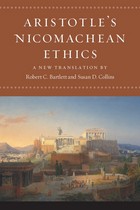
The Nicomachean Ethics is one of Aristotle’s most widely read and influential works. Ideas central to ethics—that happiness is the end of human endeavor, that moral virtue is formed through action and habituation, and that good action requires prudence—found their most powerful proponent in the person medieval scholars simply called “the Philosopher.” Drawing on their intimate knowledge of Aristotle’s thought, Robert C. Bartlett and Susan D. Collins have produced here an English-language translation of the Ethics that is as remarkably faithful to the original as it is graceful in its rendering.
Aristotle is well known for the precision with which he chooses his words, and in this elegant translation his work has found its ideal match. Bartlett and Collins provide copious notes and a glossary providing context and further explanation for students, as well as an introduction and a substantial interpretive essay that sketch central arguments of the work and the seminal place of Aristotle’s Ethics in his political philosophy as a whole.
The Nicomachean Ethics has engaged the serious interest of readers across centuries and civilizations—of peoples ancient, medieval, and modern; pagan, Christian, Muslim, and Jewish—and this new edition will take its place as the standard English-language translation.
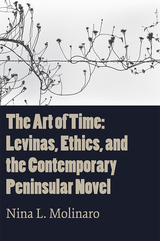
Academicians and journalists in Spain and abroad have recently fastened on an emerging cluster of peninsular writers who, they argue, pertain to a discernible literary generation, provisionally referred to as Generación X. These writers are distinct from their predecessors; they and their literary texts are closely related to the specific socio-political and historical circumstances in Spain and their novels relate stories of more and less proximity, more and less responsibility, and more and less temporality. In short, they trace the temporal movement of alterity through narrative.
Published by Bucknell University Press. Distributed worldwide by Rutgers University Press.
During the past few decades, high-profile cases like that of Terry Schiavo have fueled the public debate over forgoing or withdrawing artificial nutrition and hydration from patients in a persistent vegetative state (PVS). These cases, whether involving adults or young children, have forced many to begin thinking in a measured and careful way about the moral legitimacy of allowing patients to die. Can families forgo or withdraw artificial hydration and nutrition from their loved ones when no hope of recovery seems possible?
Many Catholics know that Catholic moral theology has formulated a well-developed and well-reasoned position on this and other end-of-life issues, one that distinguishes between "ordinary" and "extraordinary" treatment. But recent events have caused uncertainty and confusion and even acrimony among the faithful. In his 2004 allocution, Pope John Paul II proposed that artificial nutrition and hydration is a form of basic care, thus suggesting that the provision of such care to patients neurologically incapable of feeding themselves should be considered a moral obligation. The pope's address, which seemed to have offered a new development to decades of Catholic health care ethics, sparked a contentious debate among the faithful over how best to treat permanently unconscious patients within the tenets of Catholic morality.
In this comprehensive and balanced volume, Ronald Hamel and James Walter present twenty-one essays and articles, contributed by physicians, clergy, theologians, and ethicists, to reflect the spectrum of perspectives on the issues that define the Catholic debate. Organized into six parts, each with its own introduction, the essays offer clinical information on PVS and feeding tubes; discussions on the Catholic moral tradition and how it might be changing; ecclesiastical and pastoral statements on forgoing or withdrawing nutrition and hydration; theological and ethical analyses on the issue; commentary on Pope John Paul II's 2004 allocution; and the theological commentary, court decisions, and public policy resulting from the Clarence Herbert and Claire Conroy legal cases.
A valuable resource for students and scholars, this teachable volume invites theological dialogue and ethical discussion on one of the most contested issues in the church today.

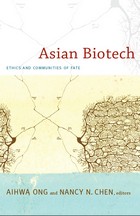
Contributors
Vincanne Adams
Nancy N. Chen
Stefan Ecks
Kathleen Erwin
Phuoc V. Le
Jennifer Liu
Aihwa Ong
Margaret Sleeboom-Faulkner
Kaushik Sunder Rajan
Wen-Ching Sung
Charis Thompson
Ara Wilson
In a fast-paced, complicated, and evermore dangerous world it is easy to become self-absorbed and consumed with our own problems. There is one place, however, where we put our self-centered concerns aside, and our deep, common humanity is profoundly touched. That place is where sick children dwell.
It is no less difficult—and perhaps even more difficult in many ways—for physicians who have chosen to attend to the health and well-being of gravely ill or dying children. Margaret Mohrmann has devoted most of her professional life to them, and in Attending Children she shares the remarkable education those children and their families have given her. Her narratives are both painful and hopeful, tragic and funny, full of remarkable characters and sometimes bizarre families.
Mohrmann has sifted through her thirty years as a pediatrician, and with poignancy, humor, and uncompromising honesty, she shares her sometimes stumbling but always deeply caring journey through a land where, sometimes, small hands have to be let go too soon. She introduces us to not only the physical challenges she, her colleagues, and her patients encounter, but the spiritual ones as well.
Attending Children is a unique experience as Mohrmann takes the reader on a doctor's rounds over many years to meet the faces and the struggles, the heartaches and the joys of being a pediatrician. In the case of Margaret Mohrmann and her patients, no one could ask for better teachers.
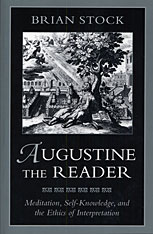
Augustine of Hippo, a central figure in the history of Western thought, is also the author of a theory of reading that has had a profound influence on Western letters from the ages of Petrarch, Montaigne, Luther, and Rousseau to those of Freud and our own time. Brian Stock provides the first full account of this theory within the evolution of Augustine’s early dialogues, his Confessions, and his systematic treatises.
Augustine was convinced that words and images play a mediating role in our perceptions of reality. In the union of philosophy, psychology, and literary insights that forms the basis of his theory of reading, the reader emerges as the dominant model of the reflective self. Meditative reading, indeed the meditative act that constitutes reading itself, becomes the portal to inner being. At the same time, Augustine argues that the self-knowledge reading brings is, of necessity, limited, since it is faith rather than interpretive reason that can translate reading into forms of understanding.
In making his theory of reading a central concern, Augustine rethinks ancient doctrines about images, memory, emotion, and cognition. In judging what readers gain and do not gain from the sensory and mental understanding of texts, he takes up questions that have reappeared in contemporary thinking. He prefigures, and in a way he teaches us to recognize, our own preoccupations with the phenomenology of reading, the hermeneutics of tradition, and the ethics of interpretation.
READERS
Browse our collection.
PUBLISHERS
See BiblioVault's publisher services.
STUDENT SERVICES
Files for college accessibility offices.
RECENTLY PUBLISHED




UChicago Accessibility Resources
home | accessibility | search | about | contact us
BiblioVault ® 2001 - 2025
The University of Chicago Press