
 A SCHOLARLY BOOK REPOSITORY
38 start with P start with P
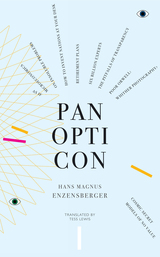
Hans Magnus Enzensberger takes the title for this collection not from Jeremy Bentham’s famous prison but from a mid-1930s Cabinet of Curiosities opened in Germany by Karl Valentin. “There,” writes Enzensberger, “viewers could admire, along with implements of torture, all manner of abnormalities and sensational inventions.” And that’s what he offers here: a wide-ranging, surprising look at all manner of strange aspects of our contemporary world.
As masterly with the essay as he is with fiction and poetry, Enzensberger here presents complicated thoughts with a light touch, tying new iterations of old ideas to their antecedents, quoting liberally from his forebears, and presenting himself unapologetically as not an expert but a seeker. Enzensberger the essayist works in the mode of Montaigne, unafraid to take his reader in unexpected directions, knowing that the process of exploration is often in itself sufficient reward for following a line of thought. In an era that regularly laments the death of the public intellectual, Enzensberger is the real deal: a towering figure in German literature who refuses to let his mind or work be bound by the narrow world of the poetry or fiction section.

What if paradise was not a place we lost, but one we never truly knew? In Paradisiacs, the fourth volume of the Last Kingdom series, Pascal Quignard meditates on the nature of paradise—not as an Eden to which we might return, but as a place of origin that lingers in myth. Through his signature blend of ancient texts, Paleolithic art, psychoanalysis, and personal reflection, Quignard explores our primal longing for recognition. He traces this yearning back to the erstwhile, a prenatal paradise from which we are expelled at birth, and examines how resemblance and recognition shape our identities.
At once poetic and philosophical, Paradisiacs invites readers into Quignard’s singular world, where language and history coalesce into a profound rumination on the origins of selfhood. With John Taylor’s masterly translation, this latest installment of Last Kingdom is a hypnotic and revelatory reading experience for those drawn to the intersections of philosophy and the ineffable.
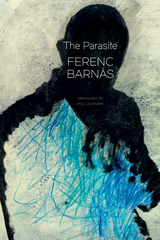
When he gets to know a woman referred to as L., he thinks his demons may have finally subsided. But when he hears of her past, the jealousy returns. He seeks relief through writing—by weaving an imagined tale of L.’s amorous adventures. What will he do with this strange manuscript, and can it bring him healing?
A breathtaking blend of Dostoevskian visions, episodes of madness, and intellectual fervor, all delivered in precise, lucid prose, The Parasite is a novel that one cannot escape.
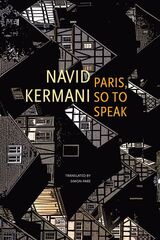
A writer has penned a novel about the great love of his youth. After a public reading, he is approached by a woman he doesn’t recognize—but it’s his lover. He is the author; she, the figure in his novel. The young girl from back then has turned into an interesting and attractive woman—but she’s also married. Soon the situation becomes a little strange: they sit down together, have a glass of wine, talk about French romantic novels, ask each other what one expects of love when one grows older. And all the while her husband is sitting in the next room. How is this going to end? Navid Kermani has written a romantic novel like no other—surprising, witty, profound—and one can barely put it down.
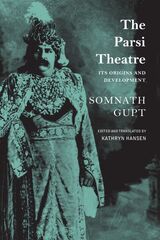
Unrivaled in its long-term impact, Parsi theater remains a crucial component of South Asia’s cultural heritage. Like vaudeville in America, Parsi theater dominated mass entertainment in colonial India in the era before cinema. Drawn by the magic of sight and sound, crowds filled the country’s urban playhouses each night. Marked by extravagant acting, operatic singing, and melodramatic stage effects, this cosmopolitan theater brought an unprecedented level of sophistication to the South Asian stage and transformed commercial drama into a modern industry, paving the way for Indian cinema. This volume presents Somnath Gupt’s classic history of Parsi theater in an English translation enhanced by illustrations, annotations, and appendices, which make it a more comprehensive and accurate reference work.

How did inexpensive posters influence nationalism in the decades leading up to and succeeding the Partition of the Indian subcontinent in 1947? If mechanically reproduced images that occupy public spaces reflect the aesthetics of the “masses,” what can a critical interpretation of subcontinental popular visual culture in the mid-twentieth century reveal about the formation of communal identities?
In this essay, Yousuf Saeed studies the selective deification of leaders fighting for Indian independence. He highlights the biased representation within the domain of “patriotic” posters of the time and the evolving portrayal of religious minority communities in India’s popular print culture over subsequent decades. Also charts the turn popular print culture took in post-Partition Pakistan, Saeed focuses on the country’s thriving industry of Sufi-saint posters. Partitioning Bazaar Art is a timely exploration of how nationalism can be defined through popular imagery.
In the furnace of conflict at the heart of the 1987 Intifada, notions of freedom, love, respectability, nationhood, the rights of women, and Palestinian identity—both among the reluctant residents of the house and the inhabitants of the quarter at large—will be melted and re-forged. Vividly recounted through the eyes of its female protagonists, Passage to the Plaza is a groundbreaking story that shatters the myth of a uniform gendered experience of conflict.
An intimate story of otherness and care by a major voice in Slovak literature.
For more than three decades, Jana Bodnárová has been one of Slovak literature’s most distinctive voices, writing with a lyricism that is at once tender and unflinchingly harsh. Patchwork in White is a brief yet powerful novel that stitches together fragments of lives bound by intimacy, difference, and care, set against the social fabric of Czechoslovakia from the mid-1950s to the present.
At the center of the novel are Ota and Andrej, a couple whose shared memories unfold through shards of childhood, marriage, and parenthood. Their lives are irrevocably shaped by the decision to adopt albino twins—children marked by abuse and exclusion because of their otherness. As these fragments accumulate, the novel becomes a meditation on motherhood, femininity, love, and the quiet imminence of death.
Poetic, restrained, and brutally honest, Bodnárová’s prose finds resonance in what is left unsaid. Illustrations by Eva Moflárová deepen the book’s emotional texture, creating a work of rare intimacy and moral force.
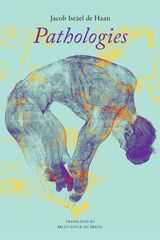
At the start of the twentieth century, Jewish anti-Zionist Jacob Israël de Haan led an eventful life as a poet, journalist, teacher, and lawyer in the Netherlands. His autobiographical novella Pipelines caused a storm of controversy in 1904 with its portrayal of a subject that was considered scandalous at the time—a romantic relationship between two young men. He lost his teaching job, and the entire print run was pulped.
In his iconic 1908 novel Pathologies, he once again openly and radically explored the topic of homosexuality. The story centers around adolescent Johan, who lives a secluded life with his father and their elderly housekeeper in a large house. For a while, Johan has been plagued by erotic fantasies about his classmates. When, to make matters worse, he finds himself feeling attracted to his father—first in a dream, and then in real life—he grows desperate. Johan moves out, finding room and board with an older married couple in Haarlem, where he meets René, a young confident artist. Johan falls head-over-heels in love, and the two men enter a sadomasochistic relationship that soon begins to spiral out of control.
Johan is one of world literature’s most tragic, troubled young heroes, at par with Goethe’s Werther and Dostoevsky’s Raskolnikov. His struggle to come to terms with his fantasies and desires—rife with taboos that continue to resonate today—forms the beating heart of this daring novel. Written in De Haan’s precise, lyrical prose, Pathologies has lost none of its force more than a century after it was first published.

The concentration camp and Jewish ghetto at Terezín, or Theresienstadt, in what is now the Czech Republic, was a site of enormous suffering, fear, and death. But amid this horrific period, there was also a thriving and desperately vibrant cultural life. While the children’s drawings and musical pieces created in the ghetto have become justly famous, the prisoners’ theatrical works, though a lesser-known aspect of their artistic endeavors, deserves serious attention as well.
Performing Captivity, Performing Escape collects twelve theatrical texts—cabaret songs and sketches, historical and verse dramas, puppet plays, and a Purim play—written by Czech and Austrian Jews. Together these works reveal the wide range of ways in which the prisoners engaged with and escaped from life in the ghetto through performance. The anthology opens with an insightful prologue by novelist Ivan Klíma, who was interned in the ghetto as a child and contains a detailed introduction by editor Lisa Peschel about the pre-war theatrical influences and wartime conditions that inspired the theater of the ghetto. The array of theatrical forms collected in this anthology speaks of the prisoners’ persistence of hope in a harrowing time and will be a moving read for students and scholars of the Holocaust.
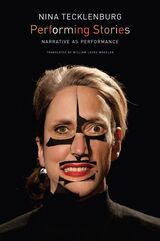
Nina Tecklenburg’s focus lies on narration less as literary composition than as sensate, embodied cultural practice—a participatory and open process that fosters social relationships. She gives central importance to the forces of narration that create and undo culture and politics. A foundational new book, Performing Stories presents a groundbreaking transdisciplinary perspective through new approaches that are stimulating to performance studies, narrative and cultural theory, literary criticism, and game and video studies.
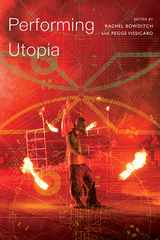
How do these performances rehearse and enact visions of a utopic world? What can the lens of utopia and dystopia illuminate about the potential of performing bodies to transform communities, identities, values, and beliefs across time? Performing Utopia not only answers these questions, but offers a diverse collection of case studies focusing on utopias, dystopias, and heterotopias enacted through the performing body.
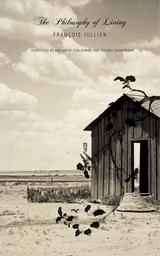
Living holds us between two places. It expresses what is most elementary—to be alive—and the absoluteness of our aspiration—finally living! But could we desire anything other than to live? In The Philosophy of Living, François Jullien meditates on Far Eastern thought and philosophy to analyze concepts that can be folded into a complete philosophy of living, including the idea of the moment, the ambiguity of the in-between, and what he calls the “transparency of morning.” Jullien here develops a strategy of living that goes beyond morality and dwells in the space between health and spirituality.
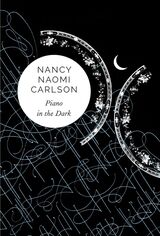
This latest book of wonders from Nancy Naomi Carlson fixes upon one of the few defenses we have to confront the body’s betrayals—our words. Though in the end, even the world’s last word “forgets its name . . . has no word for this forgetting.” At once vulnerable and open, tempered and tempted equally by the erotic and the empathic, such dualities limn these affectingly beautiful and lyrical poems. Carlson’s lines, entreating as Scheherazade, “weave chords / into tales within tales, whirlpools within seas” to save her life. Indeed, music has no need for voice or harp, as “in anechoic chambers, you become / the only instrument of your worldly sounds,” echoing Mozart’s credo “that music lies / in the silence between notes.” In a world scarred by pandemics, wars, and violent tribalism, the givens are gone—“talismans we clung to, believing / we might be spared in some way / by marking our doors / with our own sacrificial blood.” In these unflinching free and formal verse poems, Carlson seduces us with the promise of the joy yet to be had, were we to look in the right places.
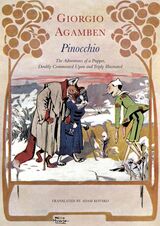
In Pinocchio, Giorgio Agamben turns his keen philosopher’s eye to the famous nineteenth-century novel by Carlo Collodi. To Agamben, Pinocchio’s adventures are a kind of initiation into life itself. Like us, the mischievous puppet is caught between two worlds. He is faced with the alternatives of submitting to authority or of carrying on, stubbornly indulging his way of being. From Agamben’s virtuoso interpretation of this classic story, we learn that we can harbor the mystery of existence only if we are not aware of it, only if we manage to cohabit with an area of non-knowledge, immemorial and very near. Richly illustrated with images from three early editions of Collodi’s novel, this new volume will delight enthusiasts of both literature and philosophy.
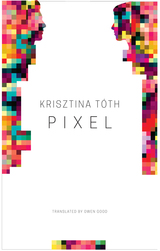
Like stars in the sky, pixels may seem like tiny, individual points. But, when viewed from a distance, they can create elaborate images. Each pixel contributes to this array, but no individual point can create the whole. The thirty stories that comprise Krisztina Tóth’s book similarly produce an interconnected web. While each tale of love, loss, and failed self-determination narrates the sensuousness of an individual’s life, together, the thirty stories tell a more complicated tale of relationships. Circumstances that appear unrelated may converge in harmony or heartbreak, just as the events that loom largest may fail to produce a longed-for outcome. These threads often determine the course of lives in unpredictable ways—sometimes comic, sometimes tragic, but rarely in the ways we originally anticipated.

Following her divorce, Tereza shuts off emotionally and flits from one faceless lover to the next, until an unexpected visitor shakes her existence to the core. Klara is a bird trapped in a golden cage slowly suffocating her. Eva has sacrificed herself for her children and family. Life is one big party for Karla—or is it? Alice is doing everything she can not to be a crybaby like her mother. Petra has finally had enough and takes drastic measures. Magdalena’s true yearnings bubble up to the surface.
The stories of these six characters may be different, but these women’s paths converge throughout Places in the Dark, weaving a vivid tapestry of interconnected lives. Czech author Lidmila Kábrtová is a master of writing stories of astonishing clarity. Echoing the brilliance of Alice Munro, Kábrtová’s words act as translucent veils, allowing the essential truths to shimmer through. Moments move about on tectonic plates somewhere beneath the surface of the everyday, and nothing will be as it used to be. Yet, in this kaleidoscope of narratives, the question lingers: Was it ever truly as it seemed?
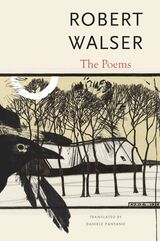
Admired by the likes of Kafka, Musil, and Walter Benjamin and acclaimed “unforgettable, heart-rending” by J. M. Coetzee, Swiss writer Robert Walser (1878–1956) remains one of the most influential authors of modern literature. Walser left school at fourteen and led a wandering and precarious existence while producing poems, stories, essays, and novels. In 1933, he abandoned writing and entered a sanatorium, where he remained for the rest of his life. “I am not here to write,” Walser said, “but to be mad.”
This first collection of Walser’s poems in English translation allows English-speaking readers to experience the author as he saw himself at the beginning and the end of his literary career––as a poet. The book also includes notes on dates of composition, draft versions of the printed poems, and brief biographical information on characters and locations that appear in the poems and may not be known to readers. Few writers have ever experienced such a steady rise in their reputation and public profile as Walser has seen in recent years, and this collection of his poems will help readers discover a unique writer whose off-kilter sensibility and innovations in form are perfectly suited to our fragmented, distracted, bewildering era.
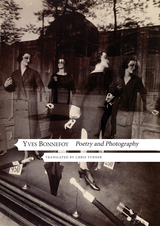
Bonnefoy's compact essay focuses on one of the disturbing effects of the earliest photographs: their introduction of a notion of non-being—if not, indeed, nothingness—into the world of images. But it also foregrounds a tale which seems to have picked up figuratively on this effect and examined its dangers with a sense of horror: Guy de Maupassant’s extraordinary short story “The Night,” one of the nightmarish works of his last period of conscious creation.
Iconic French novelist, playwright, and essayist Jean-Paul Sartre is widely recognized as one of the most important philosophers of the twentieth century, and his work has remained relevant and thought-provoking through the decades. The Seagull Sartre Library now presents some of his most incisive philosophical, cultural, and literary critical essays in twelve newly designed and affordable editions.
Political Fictions includes Sartre’s long foreword to André Gorz’s The Traitor, which has often been called the most intimate and profound book to emerge from the existentialist movement. Sartre also presents a detailed portrait of his friend and fellow writer Paul Nizan (1905–1940), once a committed communist, who died fighting the Nazis at the Battle of Dunkirk. Also featured here is Sartre’s famous foreword to Nizan’s novel The Conspiracy, which made the novel famous on its republication in the 1960s, when it was adopted as an iconic text during the events of May ’68.
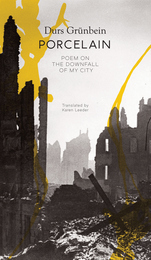
Porcelain is a book-length cycle of forty-nine poems written over the course of more than a decade that together serve as a lament for Durs Grünbein’s hometown, Dresden, which was destroyed in the Allied firebombing of February 1945. The book is at once a history and “declaration of love” to the famed “Venice on the Elbe,” so catastrophically razed by British bombs; a musical fusion of eyewitness accounts, family memories, and stories, of monuments and relics; the story of the city’s destiny as seen through a prism of biographical enigmas, its intimate relation to the “white gold” porcelain that made its fortune and reflections on the power and limits of poetry. Musical, fractured, ironic, and elegiac, Porcelain is controversial, too, in setting itself against what Grünbein calls the “myth” of the Germans as innocent victims of a war crime. At the same time, it never loses sight of the horror deliberately visited on an unwitting civilian population, nor the devastation that looms so large in the German memory. Published for the first time in English, on the seventy-fifth year anniversary of the firebombing, this edition contains new images, notes, Grünbein’s own reflections, and an additional canto—an extraordinary act of poetic kintsugi for the fractured remains of Dresden’s memory.
Iván Mándy (1918–1995) has been called “the prose poet of Budapest,” and this volume of short stories presents the first comprehensive collection of his work in English. His early oeuvre created an urban mythology full of picaresque characters inhabiting the seedier neighborhoods of the city: its flea-market stalls, second-run cinemas, and old-fashioned coffeehouses. The stories from the later decades of Mándy’s life, often bordering on the absurd, introduce many autobiographical elements spun around the author’s alter-ego, János Zsámboky, whose hapless adventures on a rare trip abroad constitute this group of stories, including “Postcard from London.” Mándy’s unique style at times borrows techniques from films and radio plays, his quirky cuts creating a flicker of images seen in the mind’s eye. Memory and perception, time and place spin in narrative legerdemain that invites and rewards the reader’s active participation.

To confront time, pre-modern Arabic poems often began with the poet standing before the ruins, real and imagined, of a beloved’s home. In Postcards from the Underworld, Sinan Antoon works in that tradition, observing the detritus of his home city, Baghdad, where he survived two wars—the Iran-Iraq War of 1980 and the First Gulf War of 1991—and which, after he left, he watched from afar being attacked during the US invasion in 2003. Antoon’s poems confront violence and force us not to look away as he traces death’s haunting presence in the world. Nature offers consolation, and flowers and butterflies are the poet’s interlocutors, but they too cannot escape ruin. Composed in Arabic and translated into English by the poet himself, Postcards from the Underworld is a searing meditation on the destruction of humans, habitats, and homes.
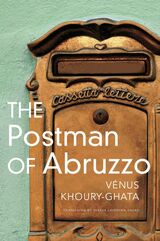
Following the path of her late geneticist husband, Laure arrives in the town of Malaterra in the harsh mountains of Abruzzo in Italy, where her husband was studying the close-knit Albanian inhabitants. At first an intruder, she is gradually accepted by the population, which is made up of amusing, eccentric characters. Among them: Helena, who hanged her dishonored daughter from the fig tree in her garden, and who has been waiting for thirty years with her gun for her daughter’s rapist to return; the Kosovar, a distrusted bookseller languishing in his dusty shop; Mourad, the baker, who proposes marriage to Laure and every other woman who enters his bakery; and Yussuf, the postman, who makes his rounds even if there is no mail to deliver. We also meet the unfortunate assailant who returns from his exile to reclaim and restore his family home. With humor and compassion, this book brings to life the inhabitants of a small, remote town in the mountains of Abruzzo.
Iconic French novelist, playwright, and essayist Jean-Paul Sartre is widely recognized as one of the most important philosophers of the twentieth century, and his work has remained relevant and thought-provoking through the decades. The Seagull Sartre Library now presents some of his most incisive philosophical, cultural, and literary critical essays in twelve newly designed and affordable editions.
Post-War Reflections collects eight of Sartre’s essays that were written in his most creative period, just after World War II. Sartre’s extraordinary range of engagement is manifest in this collection, which features writings on postwar America, the social impact of war in Europe, contemporary philosophy, race, and avant-garde art.
In this novel by the 2012 Nobel Laureate in Literature, Mo Yan, a benign old monk listens to a prospective novice’s tale of depravity, violence, and carnivorous excess while a nice little family drama—in which nearly everyone dies—unfurls. But in this tale of sharp hatchets, bad water, and a rusty WWII mortar, we can’t help but laugh. Reminiscent of the novels of dark masters of European absurdism like Günter Grass, Witold Gombrowicz, or Jakov Lind, Mo Yan’s POW! is a comic masterpiece.
In this bizarre romp through the Chinese countryside, the author treats us to a cornucopia of cooked animal flesh—ostrich, camel, donkey, dog, as well as the more common varieties. As his dual narratives merge and feather into one another, each informing and illuminating the other, Mo Yan probes the character and lifestyle of modern China. Displaying his many talents, as fabulist, storyteller, scatologist, master of allusion and cliché, and more, POW! carries the reader along quickly, hungrily, and giddily, up until its surprising dénouement.
Mo Yan has been called one of the great novelists of modern Chinese literature and the New York Times Book Review has hailed his work as harsh and gritty, raunchy and funny. He writes big, sometimes mystifying, sometimes infuriating, but always entertaining novels—and POW! is no exception.
Short, rigorous intervention on history-writing in public life.
How does the present reshape what a society chooses to remember as its past? Recent interpretations of India's history have replaced careful inquiry with narratives that mirror contemporary anxieties and ambitions, sidelining the evidence, debate, and plurality that once characterized India’s long intellectual tradition. At stake is a shift from understanding history as a method to treating it as a tool of identity and authority. In The Present Colonizes the Past, Romila Thapar asks: How have cultural and religious identities evolved through interaction rather than isolation? How have dissent and accommodation shaped social change? How have education and public discourse influenced what is accepted as knowledge? And, most urgently, how might weakened institutions and selective pasts redefine our heritage and citizenship?
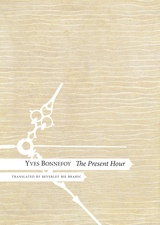
In The Present Hour, Bonnefoy’s latest collection, a personal narrative surfaces in splinters and shards. Every word from Bonnefoy is multifaceted, like the fragmented figures seen from different angles in cubist painting—as befits a poet who has written extensively about artists such as Goya, Picasso, Braque, and Gris. Throughout this moving collection, Bonnefoy’s poems echo each other, returning to and elaborating upon key images, thoughts, feelings, and people. Intriguing and enigmatic, this mixture of sonnet sequences and prose poems—or, as Bonnefoy sees them, “dream texts”—move from his meditations on friendship and friends like Jorge Luis Borges to a long, discursive work in free verse that is a self-reflection on his thought and process. These poems are the ultimate condensation of Bonnefoy’s ninety years of life and writing and they will be a valuable addition to the canon of his writings available in English.
“Beverley Bie Brahic does a splendid job of translating the latest work of Yves Bonnefoy. She catches his unique combination of human detail and a groping for the beyond. . . . Brahic does full justice to the profoundly moving text—with its frequent shifts between the personal and the searchingly philosophical.”—Joseph Frank, author of Responses to Modernity: Essays in the Politics of Culture
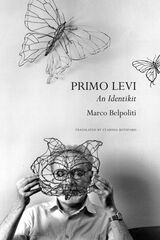
Over the last seventy years, Primo Levi (1919–87) has been recognized as the foremost literary witness of the extermination of the European Jews. In Primo Levi: An Identikit, a product of twenty years of research, Marco Belpoliti explores Levi’s tormented life, his trajectory as a writer and intellectual, and, above all, his multifaceted and complex oeuvre.
Organized in a mosaic format, this volume devotes a different chapter to each of Levi’s books. In addition to tracing the history of each book’s composition, publication, and literary influences, Belpoliti explores their contents across the many worlds of Primo Levi: from chemistry to anthropology, biology to ethology, space flights to linguistics. If This Is a Man, his initially rejected masterpiece, is also reread with a fresh perspective. We learn of dreams, animals, and travel; of literary writing, comedy, and tragedy; of shame, memory, and the relationship with other writers such as Franz Kafka and Georges Perec, Jean Améry and Varlam Shalamov. Fundamental themes such as Judaism, the camp, and testimony innervate the book, which is complemented by photographs and letters found by the author in hitherto unexplored archives.
This will be the definitive book on Primo Levi, a treasure trove of stories and reflections that paint a rich, nuanced composite portrait of one of the twentieth century’s most unique and urgent voices.
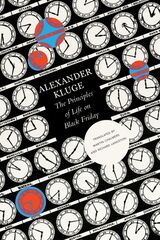
This volume concerns itself with the question of time, from the description of a brief fragment passing by in a matter of minutes to stories of the unexpected stock-market crash of 1929, a once-in-a-century event that Europeans call ‘Black Friday’ because Wall Street’s collapse reached the Old World one day later. Through this exploration of time, Kluge ponders some fundamental questions not altered by the passing of time: What can I trust? How can I protect myself? What should I be afraid of? Our age today has achieved a new kind of obscurity. We’ve encountered a pandemic. We’ve witnessed the Capitol riots. We see before us inflation, war, and a burning planet. We gaze at the world with suspense. What we need in our lives is orientation—just like ships that navigate the high seas. We might just find that in Kluge’s vignettes and stories.
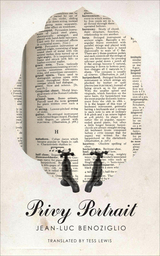
Darkly amusing, Privy Portrait is the monologue of a man, disoriented by the gaping void of not knowing his own nationality, recounting the final remnants of his own sanity and his life. In this buffoonish, even grotesque, yet deeply pitiful man, Benoziglio explores, with a light yet profound touch, weighty themes such as the roles of family, history, one’s moral responsibility towards others, and the fragility of personal identity.

This edited volume asks how professional wrestling is implicated in the current resurgence of populist politics, whether right-wing and Trump–inflected, or leftist and socialist. How might it do more than reflect and, in so doing, reaffirm the status quo? While provoked by the disruptive performances of Trump as candidate and president, and mindful of his longstanding ties to the WWE, this timely volume looks more broadly and internationally at the infusion of professional wrestling’s worldview into the twinned discourses of politics and populism. The contributors are scholars from a wide range of disciplines: theater and performance studies; cultural, media, and communication studies; anthropology and sociology; and gender and sexuality studies. Together they argue that the game’s popularity and its populist tendencies open it to the left as well as to the right, to contestation as well as to conformity, making it an ideal site for working on feminist and activist projects and ideas.
“His manner of speaking, like that of all the subordinated, excluded, was awkward, like a body full of wounds, into which at any time anyone can strew salt, yet so insistent, that it is painful to listen to him,” from The Carpenter
The Austrian playwright, novelist, and poet Thomas Bernhard (1931–89) is acknowledged as among the major writers of our time. The seven stories in this collection capture Bernhard’s distinct darkly comic voice and vision—often compared to Kafka and Musil—commenting on a corrupted world.
First published in German in 1967, these stories were written at the same time as Bernhard’s early novels Frost, Gargoyles, and The Lime Works, and they display the same obsessions, restlessness, and disarming mastery of language. Martin Chalmer’s outstanding translation, which renders the work in English for the first time, captures the essential personality of the work. The narrators of these stories lack the strength to do anything but listen and then write, the reader in turn becoming a captive listener, deciphering the traps laid by memory—and the mere words, the neverending words with which we try to pin it down. Words that are always close to driving the narrator crazy, but yet, as Bernhard writes “not completely crazy.”
“Bernhard's glorious talent for bleak existential monologues is second only to Beckett's, and seems to have sprung up fully mature in his mesmerizing debut.”—From Publishers Weekly, on Frost
“The feeling grows that Thomas Bernhard is the most original, concentrated novelist writing in German. His connections . . . with the great constellation of Kafka, Musil, and Broch become ever clearer.” —George Steiner, Times Literary Supplement, on Gargoyles
Born in Dresden in 1962, Durs Grünbein is the most significant and successful poet of his generation in Germany. Since 1988, when the then-twenty-five-year-old burst onto the scene with his poetry collection Grauzone morgens—a mordant reckoning with the East Germany he grew up in—Grünbein has published more than thirty books of poetry and prose, which have been translated into dozens of languages.
In 2005 the volume Ashes for Breakfast introduced Grünbein to English-language readers for the first time by sampling poetry from his first four collections. Psyche Running picks up where that volume left off and offers a selection of poems from his nine subsequent collections, which shows how Grünbein has developed from his ironic take on the classical into an elegiac exploration of history through dream fragments and poems with a haunting existential unease.
Patience Games: A Seminar on the 'Benefit of Christ' invites readers into the unpredictable world of scholarly discovery, where interpretation is not a straight path but a labyrinth of dialogue revision. At the heart of this book is a seminar held forty years ago at the University of Bologna, where students wrestled with The Beneficio di Cristo, the incendiary sixteenth-century text that questioned Church authority and championed salvation through grace alone. This is not a neatly packaged historical study, however—it is an unfiltered look at the errors and insights that emerge in the collective process of reading and debating a text.
Through shifting hypotheses and the sheer unpredictability of research, Patience Games dismantles the illusion of scholarship as a sterile pursuit, revealing instead a messy, deeply human endeavor. Blending sharp analysis with wit and self-irony, the book makes a compelling case for the continued importance of slow reading—even in an age where knowledge is just a click away.
READERS
Browse our collection.
PUBLISHERS
See BiblioVault's publisher services.
STUDENT SERVICES
Files for college accessibility offices.
RECENTLY PUBLISHED


UChicago Accessibility Resources
home | accessibility | search | about | contact us
BiblioVault ® 2001 - 2026
The University of Chicago Press