
 A SCHOLARLY BOOK REPOSITORY
195 start with P start with P

When Henry Hudson explored the Delaware River in 1609, he dubbed it “one of the finest, best, and pleasantest rivers in the world.” Today, those same qualities make the Delaware one of the most popular rivers for recreational use in the United States. Although in places a near-wilderness, the Delaware is easily accessible to millions of residents. On any summer day there may be thousands of people rushing down its exciting rapids or lazing through its serene eddies.
A Paddler’s Guide to the Delaware River is an indispensable resource for anyone who wants to experience the Delaware River in a kayak, canoe, raft, or tube—or, for that matter, an automobile or an armchair. Reading the book is like travelling down the river with an experienced guide. It charts the non-tidal Delaware 200 miles from Hancock, New York, to Trenton, New Jersey, describing access points, rapids, natural features, villages, historical sites, campgrounds, outfitters, and restaurants. The Delaware comes alive as the author introduces some of the people, places, events, and controversies that have marked the river from earliest times to the present day.
Completely revised, the third edition offers:
- An overview of the river including watershed, history, place names, paddlecraft, safety, and fishing.
- The River Guide: ten sections that can each be paddled in one day (about 20 miles), with a mile-by-mile account of rapids, access, natural features, historic sites, and other features.
- All new maps, with names for virtually every rapid, eddy, and other river feature, plus detailed diagrams for routes through even the most severe rapids.
- Features in the River Guide highlight the people, events, natural history, and communities that define the river experience, such as Tom Quick, the infamous “avenger of the Delaware”; the mysterious migration of eels, the battle over Tocks Island Dam; and many others.
- Appendices of Important Contacts, Outfitters and Campgrounds, River Trip Checklists, and more.
Whether you are a novice out for an afternoon float, a seasoned adventurer on an overnight expedition, or a resident fascinated by the lore of the Delaware Valley, this book is an invaluable guide.

From the 1848 Treaty of Guadalupe Hidalgo to the 1960s, Mexican American Catholics experienced racism and discrimination within the U.S. Catholic church, as white priests and bishops maintained a racial divide in all areas of the church's ministry. To oppose this religious apartheid and challenge the church to minister fairly to all of its faithful, a group of Chicano priests formed PADRES (Padres Asociados para Derechos Religiosos, Educativos y Sociales, or Priests Associated for Religious, Educational, and Social Rights) in 1969. Over the next twenty years of its existence, PADRES became a powerful force for change within the Catholic church and for social justice within American society.
This book offers the first history of the founding, activism, victories, and defeats of PADRES. At the heart of the book are oral history interviews with the founders of PADRES, who describe how their ministries in poor Mexican American parishes, as well as their own experiences of racism and discrimination within and outside the church, galvanized them into starting and sustaining the movement. Richard Martínez traces the ways in which PADRES was inspired by the Chicano movement and other civil rights struggles of the 1960s and also probes its linkages with liberation theology in Latin America. He uses a combination of social movement theory and organizational theory to explain why the group emerged, flourished, and eventually disbanded in 1989.
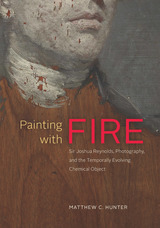
Tracing the long arc of chemically produced and reproduced art from the 1670s through the 1860s, the book reconsiders early photography by situating it in relationship to Reynolds’s replicated paintings and the literal engines of British industry. By following the chemicals, Painting with Fire remaps familiar stories about academic painting and pictorial experiment amid the industrialization of chemical knowledge.
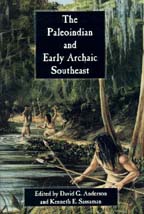
The southeastern United States has one of the richest records of early human settlement of any area of North America. This book provides the first state-by-state summary of Paleoindian and Early Archaic research from the region, together with an appraisal of models developed to interpret the data. It summarizes what we know of the peoples who lived in the Southeast more than 8,000 years ago—when giant ice sheets covered the northern part of the continent, and such mammals as elephants, saber-toothed tigers, and ground sloths roamed the landscape. Extensively illustrated, this benchmark collection of essays on the state of Paleoindian and Early Archaic research in the Southeast will guide future studies on the subject of the region's first inhabitants for years to come.
Divided in three parts, the volume includes:
Part I: Modeling Paleoindian and Early Archaic Lifeways in the Southeast
Environmental and Chronological Considerations, David G. Anderson, Lisa D. O'Steen, and Kenneth E. Sassaman
Modeling Paleoindian and Early Archaic Settlement in the Southeast: A Historical Perspective, David G. Anderson and Kenneth E. Sassaman
Models of Paleoindian and Early Archaic Settlement in the Lower Southeast, David G. Anderson
Early Archaic Settlement in the South Carolina Coastal Plain, Kenneth E. Sassaman
Raw Material Availability and Early Archaic Settlement in the Southeast, I. Randolph Daniel Jr.
Paleoindian and Early Archaic Settlement along the Oconee Drainage, Lisa D. O'Steen
Haw River Revisited: Implications for Modeling Terminal Late Glacial and Early Holocene Hunter-Gatherer Settlement Systems in the Southeast, John S. Cable
Early Archiac Settlement and Technology: Lessons from Tellico, Larry R. Kimball
Paleoindians Near the Edge: A Virginia Perspective, Michael F. Johnson
Part II: The Regional Record
The Need for a Regional Perspective, Kenneth E. Sassaman and David G. Anderson
Paleoindian and Early Archaic Research in the South Carolina Area, David G. Anderson and Kenneth E. Sassaman
The Taylor Site: An Early Occupation in Central South Carolina, James L. Michie
Paleoindian and Early Archaic Research in Tennessee, John B. Boster and Mark R. Norton
A Synopsis of Paleoindian and Early Archaic Research in Alabama, Eugene M. Futato
Statified Late Pleistocene and Early Holocene Deposits at Dust Cave, Northwestern Alabama, Boyce N. Driskell
Bone and Ivory Tools from Submerged Paleoindian Sites in Florida, James S. Dunbar and S. David Webb
Paleoindian and Early Archaic Data from Mississippi, Samuel O. McGahey
Early and Middle Paleoindian Sites in the Northeastern Arkansas Region, J. Christopher Gillam
Part III: Commentary
A Framework for the Paleoindian/Early Archaic Transition, Joel Gunn
Modeling Communities and Other Thankless Tasks, Dena F. Dincauze
An Arkansas View, Dan F. Morse
Comments, Henry T. Wright
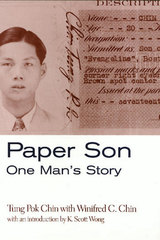
Chin's story begins in the early 1930s, when he followed the example of his father and countless other Chinese who bought documents that falsely identified them as children of Chinese Americans. Arriving in Boston and later moving to New York City, he worked and lived in laundries. Chin was determined to fit into American life and dedicated himself to learning English. But he also became an active member of key organizations -- a church, the Chinese Hand Laundrymen's Alliance, and the Chinese Consolidated Benevolent Association -- that anchored him in the community. A self-reflective and expressive man, Chin wrote poetry commenting on life in China and the hardships of being an immigrant in the United States. His work was regularly published in the China Daily News and brought him to the attention of the FBI, then intent on ferreting out communists and illegal immigrants. His vigorous narrative speaks to the day-to-day anxieties of living as a Paper Son as well as the more universal immigrant experiences of raising a family in modest circumstances and bridging cultures.
Historian K. Scott Wong introduces Chin's memoir, discussing the limitations on immigration from China and what is known about Exclusion-era Chinese American communities. Set in historical context, Tung Pok Chin's unique story offers and engaging account of a twentieth-century Paper Son.

Early in December, after an absence of over three years, Madison returned to Montpelier, his father's estate. There during the winter of 1783-1784, he studied law, renewed old friendships, and canvassed the residents of Orange County for support of his candidacy for election to the House of Delegates of the Virginia General Assembly.
maintenance
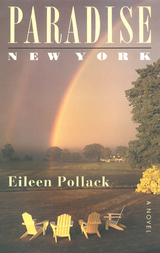
In the course of that season, Lucy comes to realize her love for the hotel's black handyman, Mr. Jefferson -- and the difficulties she faces in overcoming the barriers between them. She battles her grandmother's not-so-subtle attempts to sabotage her success, her parents' superstitious fear of anything that attracts attention to the Jews, and her brother's contention that what Lucy is doing is more a matter of ego than authentic religious feeling.
On top of all this, Lucy must contend with the Hasid who buys the chicken farm next door, a cell of ancient Jewish Communist who foment a strike among Eden's overworked young staff, and a gay chef and a gay baker who want to prove to the world that kosher cuisine can satisfy the most sophisticated gourmet.
Among the novel's characters are Shirley and Nat Feidel, who barely survived the Holocaust but refuse to allow bitterness to rule their lives; Mami Goshgarian, the Eden's tumeler; and Jimmy Kilcoin, and Irish Catholic insurance adjustor who has earned a reputation as "the Don Juan of the Catskills" and is determined to seduce Lucy before summer's end.
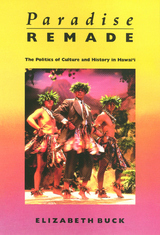
This is a book about the politics of competing cultures and myths in a colonized nation. Elizabeth Buck considers the transformation of Hawaiian culture focusing on the indigenous population rather than on the colonizers. She describes how Hawaii's established religious, social, political, and economic relationships have changed in the past 200 years as a result of Western imperialism. Her account is particularly timely in light of the current Hawaiian demands for sovereignty 100 years after the overthrow of the monarchy in 1893.
Buck examines the social transformation Hawaii from a complex hierarchical, oral society to an American state dominated by corporate tourism and its myths of paradise. She pays particular attention to the ways contemporary Hawaiians are challenging the use of their traditions as the basis for exoticized entertainment.
Buck demonstrates that sacred chants and hula were an integral part of Hawaiian social life; as the repository of the people's historical memory, chants and hula practices played a vital role in maintaining the links between religious, political, and economic relationships. Tracing the ways in which Hawaiian culture has been variously suppressed and constructed by Western explorers, New England missionaries, the tourist industry, ethnomusicologists, and contemporary Hawaiians, Buck offers a fascinating "rereading" of Hawaiian history.
At the heart of democracy lies a contradiction that cannot be resolved, one that has affected free societies since their advent: Though freedom of speech and media has always been a necessary condition of democracy, that very freedom is also its greatest threat. When new forms of communication arrive, they often bolster the practices of democratic politics. But the more accessible the media of a society, the more susceptible that society is to demagoguery, distraction, and spectacle. Tracing the history of media disruption and the various responses to it over time, Zac Gershberg and Sean Illing reveal how these changes have challenged democracy—often with unsettling effects.
The Paradox of Democracy captures the deep connection between communication and political culture, from the ancient art of rhetoric and the revolutionary role of newspapers to liberal broadcast media and the toxic misinformation of the digital public sphere. With clear-eyed analysis, Gershberg and Illing show that our contemporary debates over media, populism, and cancel culture are not too different from the democratic cultural experiences of the past. As we grapple with a fast-changing, hyper-digital world, they prove democracy is always perched precipitously on a razor’s edge, now as ever before.
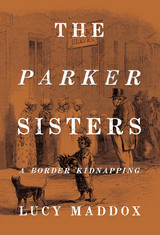
In The Parker Sisters, Lucy Maddox gives an eloquent, urgent account of the tragic kidnapping of these young women. Using archival news and courtroom reports, Maddox tells the larger story of the disastrous effect of the Fugitive Slave Act on the small farming communities of Chester County and the significant, widening consequences for the state and the nation.
The Parker Sisters is also a story about families whose lives and fates were deeply embedded in both the daily rounds of their community and the madness and violence consuming all of antebellum America. Maddox’s account of this horrific and startling crime reveals the strength and vulnerability of the Parker sisters and the African American population.
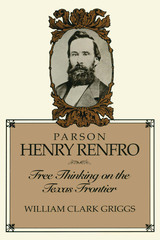
The years following the Texas Revolution held even more turbulent events as diverse droves of pioneers crossed the Sabine and Red Rivers to start new lives in Texas. Early Texas society contended with religious issues, family life in a rugged environment, and the Civil War. This cultural history was clearly reflected in the life of frontier preacher Henry C. Renfro.
Migrating to Texas in 1851, Renfro enrolled in the fledgling Baylor University and became a Baptist preacher. Eventually disillusioned with Baptist orthodoxy, Renfro was disenfranchised on charges of infidelity as he embraced the ideals of the Free Thought Movement, inspired by the writings of men such as Thomas Paine, Spinoza, and Robert Ingersoll.
Renfro's Civil War experience was no less unusual. Serving as both soldier and chaplain, Renfro left a valuable legacy of insight into the conflict, captured in a wealth of correspondence that is in itself significant.
Drawing on a vast body of letters, speeches, sermons, and oral histories that had never before been available, this chronological narrative of "The Parson's" life describes significant changes in Texas from 1850 to 1900, especially the volatile formation and growth of Baptist churches in North Central Texas. William Griggs' study yields numerous new details about the Free Thought Movement and depicts public reaction to sectarian leaders in nineteenth-century Texas.
The author also describes the developing Central Texas region known as the Cross Timbers, including the personal dynamics between a frontier family and its patriarch and encompassing such issues as property conflicts, divorce, and family reconciliation. This work unlocks an enlightening, engaging scene from Texas history.
Like. Share. Comment. Subscribe. Embed. Upload. Check in. The commands of the modern online world relentlessly prompt participation and encourage collaboration, connecting people in ways not possible even five years ago. This connectedness no doubt influences college writing courses in both form and content, creating possibilities for investigating new forms of writing and student participation. In this innovative volume, Sarah J. Arroyo argues for a “participatory composition,” inspired by the culture of online video sharing and framed by theorist Gregory Ulmer’s concept of electracy.
Electracy, according to Ulmer, “is to digital media what literacy is to alphabetic writing.” Although electracy can be compared to digital literacy, it is not something shut on and off with the power buttons on computers or mobile devices. Rather, electracy encompasses the cultural, institutional, pedagogical, and ideological implications inherent in the transition from a culture of print literacy to a culture saturated with electronic media, regardless of the presence of actual machines.
Arroyo explores the apparatus of electracy in many of its manifestations while focusing on the participatory practices found in online video culture, particularly on YouTube. Chapters are devoted to questions of subjectivity, definition, authorship, and pedagogy. Utilizing theory and incorporating practical examples from YouTube, classrooms, and other social sites, Arroyo presents accessible and practical approaches for writing instruction. Additionally, she outlines the concept of participatory composition by highlighting how it manifests in online video culture, offers student examples of engagement with the concept, and advocates participatory approaches throughout the book.
Arroyo presents accessible and practical possibilities for teaching and learning that will benefit scholars of rhetoric and composition, media studies, and anyone interested in the cultural and instructional implications of the digital age.
Tom’s life changes when he takes on the case of Michael, who is known as “Saint Francis of the Dumpster” for his peaceful disposition and practice of eating from garbage cans. Tom is at first haunted by, then obsessed with, this uncommunicative young man who holds a precious secret which causes him to risk his survival by living on the street. Tom is determined to discover and expose Michael’s secret (“his faith/his delusion”) as a necessary first step before any treatment can begin. Tom cannot reason his way out of his own obsession when he finds himself bending the rules, abandoning therapeutic norms and, before long, stalking his client. Parts of a World is a book about doubt—doubt, faith, and delusion.

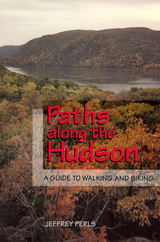
Whether you are an ardent hiker or prefer to enjoy the great outdoors from your living-room armchair, Jeffrey Perls has written the essential guidebook on one of the most majestic natural areas of the eastern United States-the Hudson River.
From the rugged topography of the Hudson Highlands Gorge to the crowded towers of Manhattan, the Hudson has been an inspiration for poets, writers, artists, and countless others who have enjoyed the many wonders of the river. The area surrounding the Hudson abounds in history. It’s played a pivotal part in our country's development, from its strategic role in the American Revolution to its heritage as the nation’s primary entry point for immigrants to this country. The river also supports an incredibly rich diversity of flora and fauna, from the bald eagle to the short-nosed sturgeon.
Perls brings together the culture, history, nature, and recreational activities along the Hudson River in one convenient guide book. He not only maps out walks and bike trails, both urban and rural, but also introduces readers to the landscape, geology, history, and culture of the Hudson Valley region. Perls provides a practical and geographically comprehensive guide to exploring the area on foot and by bike. The trail routes bring readers as close to the river as possible and guides them to rewarding vistas, nature preserves, and historic landmarks. It’s a useful guide for visitors to the Hudson region and local residents as it acquaints them to the natural treasures to be found in their own backyards.
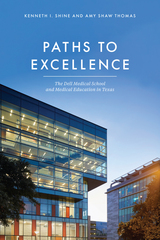
This book tells in detail and for the first time the story of how this change came about: how dedicated administrators, alumni, business leaders, community organizers, doctors, legislators, professors, and researchers joined forces, overcame considerable resistance, and raised the funds to build a new medical school without any direct state monies. Funding was secured in large part by the unique willingness of the local community to tax itself to pay for the financial operations of the school. Kenneth I. Shine and Amy Shaw Thomas, who witnessed this process from their unique vantages as past and present vice chancellors for health affairs in the University of Texas System, offer a working model that will enable other leaders to more effectively seek solutions, avoid pitfalls, and build for the future.
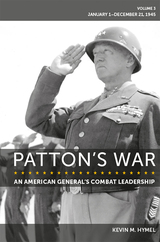
As with his previous volume, Hymel relies on Patton’s original diaries (not the transcribed, embellished versions historians have relied on for many years) and personal letters to tell the general’s story. Hymel also mined various archives to explain Patton’s encounters with soldiers, government officials, civilians, and reporters to expand on his narrative.
Throughout this three-volume work, Patton emerges not as a larger-than-life myth, but as a human being, one held back by the personal prejudices and antisemitism that ultimately proved to be his demise. Despite these personal failings, Patton was, above all, as Hymel reveals, a commander bent on winning, or, as the general himself might have put it, getting the enemy to dance to his tune.
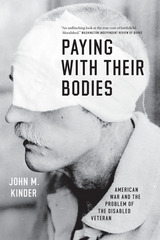
America has grappled with the questions posed by injured veterans since its founding, and with particular force since the early twentieth century: What are the nation’s obligations to those who fight in its name? And when does war’s legacy of disability outweigh the nation’s interests at home and abroad? In Paying with Their Bodies, John M. Kinder traces the complicated, intertwined histories of war and disability in modern America. Focusing in particular on the decades surrounding World War I, he argues that disabled veterans have long been at the center of two competing visions of American war: one that highlights the relative safety of US military intervention overseas; the other indelibly associating American war with injury, mutilation, and suffering. Kinder brings disabled veterans to the center of the American war story and shows that when we do so, the history of American war over the last century begins to look very different. War can no longer be seen as a discrete experience, easily left behind; rather, its human legacies are felt for decades.
The first book to examine the history of American warfare through the lens of its troubled legacy of injury and disability, Paying with Their Bodies will force us to think anew about war and its painful costs.

One contributor, a longtime president of the American Council of Learned Societies, calls for "intellectual philanthropy" and suggests that academics should transcend their ideological differences and form cooperative partnerships in the public service. A pair of essays, by key figures of the 1989 Velvet Revolution in Eastern Europe, analyze the ways that self-confidence and self-regard undercut efforts toward the resolution of complex social problems. The qualities of ideological self-subversion and even weakness, Common Knowledge maintains, are essential if the intellectual community is to become an agent for peace in a time of war.
Contributors. Wayne Andersen, Sissela Bok, Yves Bonnefoy, Caroline Walker Bynum, Clare Cavanagh, Charles-Albert Cingria, Caryl Emerson, Clifford Geertz, Stanley N. Katz, Aileen Kelly, Adam Michnik, Péter Nádas, Eugene Ostashevsky, Jeffrey M. Perl, Marjorie Perloff, Nina Pelikan Straus, Rei Terada, Gianni Vattimo, William Vesterman, Aleksandr Vvedensky, Adam Zagajewski.
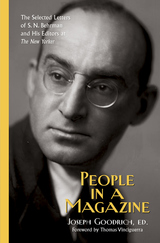
Playwright, biographer, screenwriter, and critic S. N. Behrman (1893–1973) characterized the years he spent writing for The New Yorker as a time defined by “feverish contact with great theatre stars, rich people and social people at posh hotels, at parties, in mansions and great estates.” While he hobnobbed with the likes of Mary McCarthy, Elia Kazan, and Greta Garbo and was one of Broadway's leading luminaries, Behrman would later admit that the friendships he built with the magazine's legendary editors Harold Ross, William Shawn, and Katharine S. White were the “one unalloyed felicity” of his life.
People in a Magazine collects Behrman's correspondence with his editors along with telegrams, interoffice memos, and editorial notes drawn from the magazine's archives—offering an unparalleled view of mid-twentieth-century literary life and the formative years of The New Yorker, from the time of Behrman's first contributions to the magazine in 1929 until his death.
empiricist tradition and then the more historical and process-oriented
approach he calls the “new philosophy of science.” Examining the two
together, he describes the very transition between them as an example
of the kind of change in historical tradition with which the new
philosophy of science concerns itself.
“I would recommend it to every historian of science and to every
philosopher of science. . . . I found it clear, readable, accurate,
cogent, insightful, perceptive, judicious, and full of original
ideas.”
—Maurice A. Finocchiaro, Isis
“The best and most original aspect of the book is its overall
conception.”
—Thomas S. Kuhn
Harold I. Brown is professor of philosophy at Northern Illinois
University.
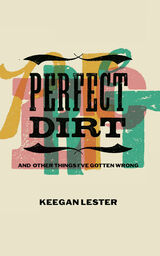
Words have meaning and meaning evolves over time. In Perfect Dirt, Keegan Lester drags us through his failure to grasp the meaning that always seems to be just beyond his fingertips. These lyrical vignettes depict a lifelong search for home, identity, and the language to say the things we wish we could tell people in the moment.
Born in Southern California to parents who had migrated from West Virginia and South Florida, Lester spent summers with his grandparents in Morgantown, which instilled a deep anchor of place that continued to call to him, an Appalachian at heart even while living in New York City as a poet. As small successes started to come his way—a book and numerous tours—so did crises. Lester’s father, meanwhile, experiencing his own life crisis, embarked on a journey to sail the Caribbean. Both end up lost.
Part memoir, part tour diary, part homage to the places and people who have made him who he is, Perfect Dirt digs into the sometimes painful, sometimes jubilant questions of identity and success. This is a book searching to better understand the world and our place in it, the family we’re born into, and the family we make along the way.
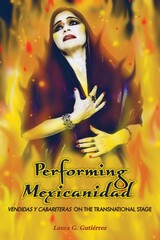
Using interdisciplinary performance studies and cultural studies frameworks, Laura G. Gutiérrez examines the cultural representation of queer sexuality in the contemporary cultural production of Mexican female and Chicana performance and visual artists. In particular, she locates the analytical lenses of feminist theory and queer theory in a central position to interrogate Mexican female dissident sexualities in transnational public culture.
This is the first book-length study to wed performance studies and queer theory in examining the performative/performance work of important contemporary Mexicana and Chicana cultural workers. It proposes that the creations of several important artists—Chicana visual artist Alma López; the Mexican political cabareteras Astrid Hadad, Jesusa Rodríguez, Liliana Felipe, and Regina Orozco; the Chicana performance artist Nao Bustamante; and the Mexican video artist Ximena Cuevas—unsettle heterosexual national culture. In doing so, they are not only challenging heterosexist and nationalist discourses head-on, but are also participating in the construction of a queer world-making project. Treating the notion of dis-comfort as a productive category in these projects advances feminist and queer theories by offering an insightful critical movement suggesting that queer worlds are simultaneously spaces of desire, fear, and hope.
Gutiérrez demonstrates how arenas formerly closed to female performers are now providing both an artistic outlet and a powerful political tool that crosses not only geographic borders but social, sexual, political, and class boundaries as well, and deconstructs the relationships among media, hierarchies of power, and the cultures of privilege.
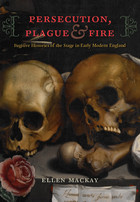
The theater of early modern England was a disastrous affair. The scant record of its performance demonstrates as much, for what we tend to remember today of the Shakespearean stage and its history are landmark moments of dissolution: the burning down of the Globe, the forced closure of playhouses during outbreaks of the plague, and the abolition of the theater by its Cromwellian opponents.
Persecution, Plague, and Fire is a study of these catastrophes and the theory of performance they convey. Ellen MacKay argues that the various disasters that afflicted the English theater during its golden age were no accident but the promised end of a practice built on disappearance and erasure—a kind of fatal performance that left nothing behind but its self-effacing poetics. Bringing together dramatic theory, performance studies, and theatrical, religious, and cultural history, MacKay reveals the period’s radical take on the history and the future of the stage to show just how critical the relation was between early modern English theater and its public.
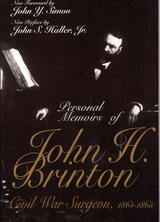
John Hill Brinton (1832–1907) met, observed, and commented on practically the entire hierarchy of the Union army; serving as medical director for Ulysses S. Grant, he came into contact with Philip H. Sheridan, John C. Frémont, Henry W. Halleck, William A. Hammond, D. C. Buell, John A. Rawlins, James Birdseye McPherson, C. F. Smith, John A. McClernand, William S. Rosecrans, and his first cousin George Brinton McClellan. John Y. Simon points out in his foreword that Brinton was one of the first to write about a relatively obscure Grant early in the war:
"Brinton found a quiet and unassuming man smoking a pipe—he could not yet afford cigars— and soon recognized a commander with mysterious strength of intellect and character."
Positioned perfectly to observe the luminaries of the military, Brinton also occupied a unique perspective from which to comment on the wretched state of health and medicine in the Union army and on the questionable quality of medical training he found among surgeons. With both A.B. and A.M. degrees from the University of Pennsylvania and postgraduate training in Paris and Vienna at a time when most medical schools required only a grammar school education, Brinton was exceptional among Civil War doctors. He found, as John S. Haller, Jr., notes in his preface, "the quality of candidates for surgeon’s appointments was meager at best." As president of the Medical Examining Board, Brinton had to lower his standards at the insistence of Secretary of War Edwin Stanton. Haller points out that one "self-educated candidate for an appointment as brigade surgeon explained to the board that he could do ‘almost anything, from scalping an Indian, up and down.’" Brinton assigned this singular candidate to duty in Kansas "where Brinton hoped he would do the least amount of damage." Throughout the war, the dearth of qualified surgeons created problems.
Brinton’s memoirs reveal a remarkable Civil War surgeon, a witness to conditions in Cairo, the Battle of Belmont, and the Siege of Fort Donelson who encountered almost every Union military leader of note.
Brinton wrote his memoirs for the edification of his family, not for public consumption. Yet he was, as Haller notes, a "keen observer of character." And with the exception of Brinton’s acceptance of late nineteenth-century gossip favorable to his cousin General McClellan, Simon finds the memoirs "remarkable for accuracy and frankness." His portrait of Grant is vivid, and his comments on the state of medicine during the war help explain, in Haller’s terms, why the "Civil War was such a medical and human tragedy."
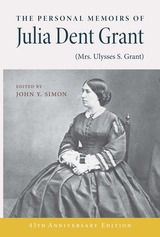
Written in the early twentieth century for her children and grandchildren and first published in 1975, these eloquent memoirs detail the life of General Ulysses S. Grant’s wife. First Lady Julia Dent Grant wrote her reminiscences with the vivacity and charm she exhibited throughout her life, telling her story in the easy flow of an afternoon conversation with a close friend. She writes fondly of White Haven, a plantation in St. Louis County, Missouri, where she had an idyllic girlhood and later met Ulysses.
In addition to relating the joys she experienced, Grant tells about the difficult and sorrowful times. Her anecdotes give fascinating glimpses into the years of the American Civil War. One recounts the night President Abraham Lincoln was assassinated. Grant insisted she and her husband turn down an invitation to the theater. Her decision saved her husband’s life: like Lincoln, he too had been marked for assassination.
Throughout these memoirs, which she ends with her husband’s death, Grant seeks to introduce her descendants to both her and the man she loved. She also strives to correct misconceptions that were circulated about him. She wanted posterity to share her pride in this man, whom she saw as one of America’s greatest heroes. Her book is a testament to their devoted marriage.
This forty-fifth-anniversary edition includes a new foreword by John F. Marszalek and Frank J. Williams, a new preface by Pamela K. Sanfilippo, the original foreword by Bruce Catton, the original introduction by editor John Y. Simon, recommendations for further reading, and more than twenty photographs of the Grants, their children, and their friends.
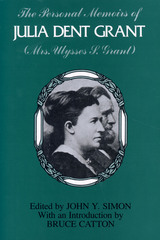
Written in the early twentieth century for her children and grandchildren and first published in 1975, these eloquent memoirs detail the life of General Ulysses S. Grant’s wife. First Lady Julia Dent Grant wrote her reminiscences with the vivacity and charm she exhibited throughout her life, telling her story in the easy flow of an afternoon conversation with a close friend. She writes fondly of White Haven, a plantation in St. Louis County, Missouri, where she had an idyllic girlhood and later met Ulysses.
In addition to relating the joys she experienced, Grant tells about the difficult and sorrowful times. Her anecdotes give fascinating glimpses into the years of the American Civil War. One recounts the night President Abraham Lincoln was assassinated. Grant insisted she and her husband turn down an invitation to the theater. Her decision saved her husband’s life: like Lincoln, he too had been marked for assassination.
Throughout these memoirs, which she ends with her husband’s death, Grant seeks to introduce her descendants to both her and the man she loved. She also strives to correct misconceptions that were circulated about him. She wanted posterity to share her pride in this man, whom she saw as one of America’s greatest heroes. Her book is a testament to their devoted marriage.
This forty-fifth-anniversary edition includes a new foreword by John F. Marszalek and Frank J. Williams, a new preface by Pamela K. Sanfilippo, the original foreword by Bruce Catton, the original introduction by editor John Y. Simon, recommendations for further reading, and more than twenty photographs of the Grants, their children, and their friends.
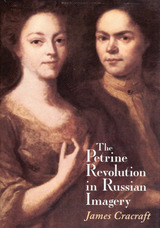
In this second volume of the series, Cracraft considers the impact of Peter's intensive program of Europeanization on the visual arts, and shows how modern forms of imagery came into being in Russia along with allied techniques of image-making.
Drawing on a wealth of primary sources as well as numerous secondary works in Russian and other languages, Cracraft discusses the advent in Russia of painting in the Renaissance tradition, bronze and stone sculpture, and the modern graphic arts. He also discusses the decline of manuscript illumination, the rise of modern coinage, the production of new-style flags and altar cloths, and the arrival in Russia of the new cartography and the new heraldry. Cracraft draws special attention to the early history of the St. Petersburg Academy of Fine Arts, and to the impact of Peter's program on popular imagery and on the cult art of the Russian Orthodox Church. He argues in sum that the imagery of the Russian Empire can tell us as much or more about its dominant ethos and ideology as can the written texts normally studied by historians.
Like its predecessor, The Petrine Revolution in Russian Architecture, this second volume presents a highly original argument supported by numerous illustrations, many of them not previously published. It will appeal to art historians as well as to those more generally interested in European or modern history.
Phenomenology’s Material Presence draws on recent work in phenomenology, embodiment, and cinema and extends the field by examining metaphysical presence in postcolonial cinema. Where other scholarship has assimilated insight from individual phenomenological thinkers, Phenomenology’s Material Presence utilizes the methods of these thinkers—Husserl, Heidegger, and Merleau-Ponty—to produce a richly textured and poetic essay that brings them into conversation. Through a meditation on three experimental videos by Trinidadian filmmaker Robert Yao Ramesar, this book makes the case that video performs an act of phenomenological inquiry. Phenomenology’s Material Presence extends our theorizing in both film studies and philosophy.
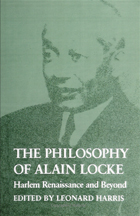
This collection of essays by American philosopher Alain Locke (1885-1954) makes readily available for the first time his important writings on cultural pluralism, value relativism, and critical relativism. As a black philosopher early in this century, Locke was a pioneer: having earned both undergraduate and doctoral degrees at Harvard, he was a Rhodes scholar at Oxford, studied at the University of Berlin, and chaired the Philosophy Department at Howard University for almost four decades. He was perhaps best known as a leading figure in the Harlem Renaissance.
Locke’s works in philosophy—many previously unpublished—conceptually frame the Harlem Renaissance and New Negro movement and provide an Afro-American critique of pragmatism and value absolutism, and also offer a view of identity, communicative competency, and contextualism. In addition, his major works on the nature of race, race relations, and the role of race-conscious literature are presented to demonstrate the application of his philosophy. Locke’s commentaries on the major philosophers of his day, including James, Royce, Santayana, Perry, and Ehrenfels help tell the story of his relationship to his former teachers and his theoretical affinities.
In his substantial Introduction and interpretive concluding chapter, Leonard Harris describes Locke’s life, evaluates his role as an American philosopher and theoretician of the Harlem Renaissance, situates him in the pragmatist tradition, and outlines his affinities with modern deconstructionist ideas. A chronology of the philosopher’s life and bibliography of his works are also provided. Although much has been written about Alain Locke, this is the first book to focus on his philosophical contributions.
This landmark two-volume translation from Russian of The Philosophy of Hegel as a Doctrine of the Concreteness of God and Humanity marks the first appearance in English of any of the works of Russian philosopher Ivan Aleksandrovich Il’in (Ilyin). Originally published in 1918, on the eve of the Russian civil war, Il'in's commentary on Hegel marked both an apogee of Russian Silver Age philosophy and a significant manifestation of the resurgence of interest in Hegel that began in the early twentieth century.
A. F. Losev accurately observed in the same year it appeared: “Neither the study of Hegel nor the study of contemporary Russian philosophical thought is any longer thinkable without this book of I. A. Il’in’s.” Some Hegel scholars may know this work through the abridged translation into German that Il’in produced himself in 1946. However, that edition omitted most of the original volume two. Noted Hegel scholar Philip T. Grier’s edition—with an introduction setting Il’in’s work in its proper historical, cultural, and philosophical contexts and annotation throughout—represents the first opportunity for non-Russian-speaking readers to acquaint themselves with the full scope of Il’in’s still provocative interpretation of Hegel.
Volume 1 is "The Doctrine of God." Volume 2 is "The Doctrine of Humanity."
The publication of volume 2 of Philip T. Grier’s translation of The Philosophy of Hegel as a Doctrine of the Concreteness of God and Humanity completes the first appearance in English of any of the works of Russian philosopher I. A. Il’in (Ilyin).
Most of the contents of volume 2 will be unknown even to those who have read the 1946 German version prepared by Il’in, because in that version he omitted eight of the original ten chapters. These omitted chapters provide an extended reflection on the central categories of Hegel’s moral, legal, and political philosophies, as well as of the philosophy of history. The topics examined are, in order: freedom, humanity, will, right, morality, ethical life, personhood and its virtue, and the state. Contained within these chapters are some notably insightful expositions of core doctrines in Hegel’s philosophy.
Il’in’s colleague A. F. Losev accurately observed in the same year the text first appeared: “Neither the study of Hegel nor the study of contemporary Russian philosophical thought is any longer thinkable without this book of I. A. Il’in’s.”

WINNER OF THE JAMES F. SULZBY AWARD
Healing against the odds—Black doctors, bold resistance, and the fight for medical justice in Alabama.
Physicians for the People chronicles the remarkable stories of 241 Black doctors who practiced medicine in Alabama during the Jim Crow era. Historian Jack D. Ellis reveals the ingenuity and resilience of these trailblazing doctors who defied segregation by establishing hospitals and clinics and providing vital healthcare to underserved Black communities.
This meticulously researched work draws on archival sources, oral histories, and an unparalleled database to dismantle the myth of a monolithic medical system in the Jim Crow South. Jack D. Ellis argues that the post–Civil War lives of Black physicians, dentists, pharmacists, nurses, and midwives hold special significance, illuminating both the causes of health care disparities among African Americans and the reasons for their continued underrepresentation in the medical professions.
Offering much of interest to students and scholars of Black history, medical history, and the civil rights movement, Physicians for the People exposes the deliberate exclusion faced by Black doctors within the white medical establishment and their ongoing fight for racial equality in medicine.

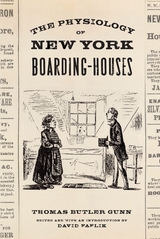
In his introduction, David Faflik considers what made Gunn's book a compelling read in the past and how today it can elucidate our understanding of the formation and evolution of urban American life and letters.
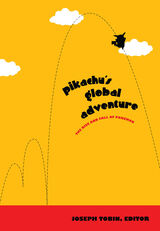
In analyzing the popularity of Pokémon, this innovative volume addresses core debates about the globalization of popular culture and about children’s consumption of mass-produced culture. Topics explored include the origins of Pokémon in Japan’s valorization of cuteness and traditions of insect collecting and anime; the efforts of Japanese producers and American marketers to localize it for foreign markets by muting its sex, violence, moral ambiguity, and general feeling of Japaneseness; debates about children’s vulnerability versus agency as consumers; and the contentious question of Pokémon’s educational value and place in school. The contributors include teachers as well as scholars from the fields of anthropology, media studies, sociology, and education. Tracking the reception of Pokémon in Japan, the United States, Great Britain, France, and Israel, they emphasize its significance as the first Japanese cultural product to enjoy substantial worldwide success and challenge western dominance in the global production and circulation of cultural goods.
Contributors. Anne Allison, Linda-Renée Bloch, Helen Bromley, Gilles Brougere, David Buckingham, Koichi Iwabuchi, Hirofumi Katsuno, Dafna Lemish, Jeffrey Maret, Julian Sefton-Green, Joseph Tobin, Samuel Tobin, Rebekah Willet, Christine Yano

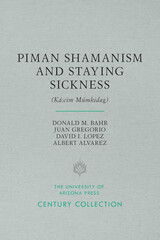
This definitive study of shamanic theory and practice was developed through a four-person collaboration: three Tohono O’odham Indians—a shaman, a translator, and a trained linguist—and a non-Indian explicator. It provides an in-depth examination of the Piman philosophy of sickness as well as an introduction to the world view of an entire people.
Using the most highly developed techniques of modern ethnolinguistics, anthropologist Bahr investigates the culturally based concept of staying sickness. He conducted extensive discussions in the Piman language with shaman Gregorio. The native informant theorized at length about the cause of staying sickness, the dúajida (divination), and ritual prayers. The translator and the linguist analyzed the content and style of Gregorio’s discussions. Texts in the Piman language of Gregorio’s discussions are included, as well as literal and idiomatic English translations.
American Anthropologist cites “the infinite care with which each utterance has been analyzed” and “the richness of cultural expression captured in the texts themselves and in their explanation. To read Piman Shamanism and Staying Sickness is to become familiar with the unique properties of Piman thinking and modes of expression: abstract, elliptical, contracted, and yet filled with a rich and natural imagery.”
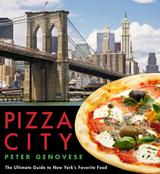
In this funny, fascinating book, Genovese explores the bloggers who write about New York pizza, the obsessive city dwellers who collect and analyze the delivery boxes, Mark Bello’s school where students spend a day making pies from scratch, and Scott Wiener’s pizza bus tours.
Along the way, readers learn the history of legendary Totonno’s on Coney Island (Zagat’s number-one pizzeria for 2012), along with behind-the-scenes stories about John’s on Bleecker Street, Joe’s on Carmine, Lombardi’s, Paulie Gee’s, Motorino, and more than a dozen other favorite spots and their owners. Throughout these profiles, Genovese presents a brief history of how pizza came to the city in 1905 and developed into a major attraction in Little Italy, a neighborhood that became a training ground for many of the city’s best-loved pizzerias. Enjoyable facts and figures abound. Did you know that Americans put 250 million pounds of pepperoni on their pies every year? Or that Domino’s has more outlets per capita in Iceland than in any other country?
Beyond the stories and tidbits, Genovese provides detailed, borough-by-borough reviews of 250 pizzerias, from simple “slice shops” with scant atmosphere to gourmet pizzerias, including shops that use organic ingredients and experiment with new variations of crusts and toppings. Complemented by hundreds of current and never-before-seen archival photos, the book gives the humble slice its proper due and will leave readers overwhelmed by a sudden desire for New York pizza.
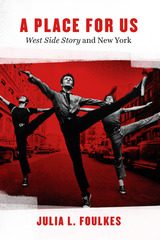
That vision of postwar New York is at the heart of Julia L. Foulkes’s A Place for Us. A lifelong fan of the show, Foulkes became interested in its history when she made an unexpected discovery: scenes for the iconic film version were shot on the demolition site destined to become part of the Lincoln Center redevelopment area—a crowning jewel of postwar urban renewal. Foulkes interweaves the story of the creation of the musical and film with the remaking of the Upper West Side and the larger tale of New York’s postwar aspirations. Making unprecedented use of director and choreographer Jerome Robbins’s revelatory papers, she shows the crucial role played by the political commitments of Robbins and his fellow gay, Jewish collaborators, Leonard Bernstein and Arthur Laurents. Their determination to evoke life in New York as it was actually lived helped give West Side Story its unshakable sense of place even as it put forward a vision of a new, vigorous, determinedly multicultural American city.
Beautifully written and full of surprises for even the most dedicated West Side Story fan, A Place for Us is a revelatory new exploration of an American classic.
"Play Redux excels in tying together intellectual traditions that are rooted in literary studies, cognitive science, play studies and several other fields, thereby creating a logical whole. Through this, the book makes service to several academic communities by pointing out their points of contact. This is clearly an important contribution to a growing academic field, and will no doubt become important in many future discussions about digital games and play."
---Frans Mäyrä, University of Tampere, Finland
"David Myers has researched video games longer than anyone else. Play Redux shows him continually relevant, never afraid of courting controversy."
---Jesper Juul, IT University of Copenhagen, Denmark
Play Redux is an ambitious description and critical analysis of the aesthetic pleasures of video game play, drawing on early twentieth-century formalist theory and models of literature. Employing a concept of biological naturalism grounded in cognitive theory, Myers argues for a clear delineation between the aesthetics of play and the aesthetics of texts. In the course of this study, Myers asks a number of interesting questions: What are the mechanics of human play as exhibited in computer games? Can these mechanisms be modeled? What is the evolutionary function of cognitive play, and is it, on the whole, a good thing? Intended as a provocative corrective to the currently ascendant, if not dominant, cultural and ethnographic approach to game studies and play, Play Redux will generate interest among scholars of communications, new media, and film.
David Myers is Reverend Aloysius B. Goodspeed Distinguished Professor at the School of Mass Communication, Loyola University New Orleans.
Returning to terms such as narrator, setting, event, character, and world, Playing at Narratology reveals new ways of thinking about these basic narrative concepts—concepts that are not so basic when applied to games and web-based narratives. What are thought of as narrative innovations in these digital forms are a product of technological ability and tied to how we physically interact with a medium, creating new and complicated questions: Is the game designer the implied author or the narrator? Is the space on the screen simply the story’s setting? Playing at Narratology guides us through the evolution of narrative in new media without abandoning the field’s theoretical foundations.

A potent new book examines the overlap between our ecological crisis and video games
Video games may be fun and immersive diversions from daily life, but can they go beyond the realm of entertainment to do something serious—like help us save the planet? As one of the signature issues of the twenty-first century, ecological deterioration is seemingly everywhere, but it is rarely considered via the realm of interactive digital play. In Playing Nature, Alenda Y. Chang offers groundbreaking methods for exploring this vital overlap.
Arguing that games need to be understood as part of a cultural response to the growing ecological crisis, Playing Nature seeds conversations around key environmental science concepts and terms. Chang suggests several ways to rethink existing game taxonomies and theories of agency while revealing surprising fundamental similarities between game play and scientific work.
Gracefully reconciling new media theory with environmental criticism, Playing Nature examines an exciting range of games and related art forms, including historical and contemporary analog and digital games, alternate- and augmented-reality games, museum exhibitions, film, and science fiction. Chang puts her surprising ideas into conversation with leading media studies and environmental humanities scholars like Alexander Galloway, Donna Haraway, and Ursula Heise, ultimately exploring manifold ecological futures—not all of them dystopian.
Zeitlin demonstrates the indispensable workings of gender as a major factor in Greek social, religious, and cultural practices and in more abstract ideas about nature and culture, public and private, citizen and outsider, self and other, and mortal and immortal. Focusing on the prominence of female figures in these male authored texts, she enlarges our perspective on critical components of political order and civic identity by including issues of sexuality, the body, modes of male and female maturation, and speculations about parentage, kinship, and reproductive strategies. Along with considerations of genre, poetics, and theatrical mimesis, she points to the powerful mythmaking capacities of Greek culture for creating memorable paradigms and dramatic scenarios that far exceed simple notions of male and female opposition and predictable enforcement of social norms. Consisting of both new and revised essays, Playing the Other is a wide-ranging account of a central category of Greek literature by a scholar who pioneered an approach to classics through the perspective of gender.


How gaming intersects with systems like history, bodies, and code
Why do we so compulsively play video games? Might it have something to do with how gaming affects our emotions? In Playing with Feelings, scholar Aubrey Anable applies affect theory to game studies, arguing that video games let us “rehearse” feelings, states, and emotions that give new tones and textures to our everyday lives and interactions with digital devices. Rather than thinking about video games as an escape from reality, Anable demonstrates how video games—their narratives, aesthetics, and histories—have been intimately tied to our emotional landscape since the emergence of digital computers.
Looking at a wide variety of video games—including mobile games, indie games, art games, and games that have been traditionally neglected by academia—Anable expands our understanding of the ways in which these games and game studies can participate in feminist and queer interventions in digital media culture. She gives a new account of the touchscreen and intimacy with our mobile devices, asking what it means to touch and be touched by a game. She also examines how games played casually throughout the day create meaningful interludes that give us new ways of relating to work in our lives. And Anable reflects on how games allow us to feel differently about what it means to fail.
Playing with Feelings offers provocative arguments for why video games should be seen as the most significant art form of the twenty-first century and gives the humanities passionate, incisive, and daring arguments for why games matter.
Each play was developed by Theater Three Collaborative for production in New York and internationally in Italy, Australia, London, Berlin, and Paris.

David Garrick’s accomplishments as an actor, manager, and theatrical innovator brought him great fame and fortune, and his ideas influenced not only his own age but succeeding ages as well. Yet as a playwright, a part of the elegant combination of talents that was David Garrick, he has never achieved the critical reputation he richly deserves, in main because of the unavailability of texts and the lack of proper assessment of the historic importance of his plays in the English theatre.
This first complete edition makes available to scholars and students all the plays of Garrick in well edited texts, with commentary and notes.
Contents: Macbeth. A Tragedy, 1744; Romeo and Juliet, 1748; The Fairies. An Opera, 1755; Catherine and Petruchio. A Comedy, 1756; Florizel and Perdita. A Dramatic Pastoral, 1756; The Tempest. An Opera, 1756; and King Lear. A Tragedy, 1756.

Rigorous scholarship meets cultural practice in this innovative, multi-modal edited collection that includes video essays and offers transcripts of the playthroughs themselves. Readers (and viewers) will come away with a toolkit of models, case studies, and conceptual frameworks for analyzing video games through gameplay. This volume is a fresh return to the joy of play: the poetics of games as contemporary forms of storytelling and interactivity.
With contributions from Ashlee Bird, Brandon Blackburn, Milena Droumeva, Kishonna Gray, Robyn Hope, Ben Scholl, Maria Sommers, Ashlyn Sparrow, Christine Tran, and Aaron Trammell.

Playwrights for Tomorrow was first published in 1973. Minnesota Archive Editions uses digital technology to make long-unavailable books once again accessible, and are published unaltered from the original University of Minnesota Press editions.
This volume presents four plays by writers who have worked under the program of the Office for Advanced Drama Research (O.A.D.R.) at the University of Minnesota, an experimental project which provides promising playwrights with the opportunity of working with cooperating theatres in the production of their plays. Arthur H. Ballet, the editor, is director of the
O.A.D.R.
The plays in this volume and the theatres which cooperated in their production are Boxes by Susan Yankowitz, Magic Theatre, Berkeley, California; Canvas by David Roszkowski, Scorpio Rising Theatre, Los Angeles; Bierce Takes on the Railroad! by Philip A. Bosakowski, Theatre III, College of Marin, Kentfield, California; and Chamber Piece by John O'Keefe, Magic Theatre, Berkeley, California.
In an introduction Professor Ballet discussed the program and accomplishments of the O. A.D.R., which was established with the aid of a Rockefeller Foundation grant. He writes: "It seemed obvious that no artist worked in more lonely isolation and needed more direct contact with the theatre than the playwright. Despite loud pronouncements . . . that theatres outside of New York were searching for new plays and writers, the evidence indicates that very few theatres really wanted to work with unknown but living playwrights. The O.A.D.R., in its small way, has tried to open a highway . . . between new, often untried writers and willing, even brave theatres.
As Speech and Drama (England) pointed out in a review of earlier volumes of the Playwrights for Tomorrow series: "Schemes like this one at Minnesota deserve the highest praise. On the evidence of these volumes, the executive committee which operates this venture is not attempting to impose any single imprint on its authors—a further example of the generosity of the patronage."
Playwrights for Tomorrow was first published in 1967. Minnesota Archive Editions uses digital technology to make long-unavailable books once again accessible, and are published unaltered from the original University of Minnesota Press editions.
Five writers are represented in this third volume of a series of collections of plays by dramatists who have participated in an experimental program conducted at the University of Minnesota by the Office for Advanced Drama Research. Dr. Arthur H. Ballet, editor of the series, is the director of the program. The plays in this volume are Five Easy Payments by John Lewin, Where Is de Queen? by Jean-Claude van Itallie, The Great Git-Away by Romeo Muller, With Malice Aforethought by John Stranack, and I, Elizabeth Otis, Being of Sound Mind by Philip Barber.
As Dr. Ballet explains in his introduction, the program of the Office for Advanced Drama Research provides a testing ground for promising playwrights by giving them a chance to have their plays actually produced. Publication of the plays makes them available to larger audiences and to further critical appraisal.

The Chinese Communist Party has long depended on ideology to set the agenda, communicate its priorities, and legitimize its rule. The Pliant Public argues that for Chinese citizens, however, ideology is in short supply. Surveys show that public opinion is depolarized. Ordinary people have little sense of what ideological labels like “left” and “right” mean, and most of the people who put themselves on the right have the scale backwards. Since a depolarized public is ill-equipped to check the state, China’s leaders can make massive changes to government policy without triggering much backlash.
But depolarization does not always strengthen the state. When citizens lack clear ideological commitments, it is easier for them to set aside their differences. If China’s leaders lost their performance legitimacy, then depolarization could facilitate a broader challenge to party rule.
Ennead I.1 is a succinct and concentrated analysis of key themes in Plotinus' psychology and ethics. It focuses on the soul-body relation, discussing various Platonic, Aristotelian, and Stoic views before arguing that there is only a soul-trace in the body (forming with the body a “compound”), while the reasoning soul itself is impassive and flawless. The soul-trace hypothesis is used to account for human emotions, beliefs, and perceptions, and human fallibility in general. Its problematic relation to our rational powers, as well as the question of moral responsibility, are explored. Plotinus develops his original and characteristic concept of the self or “we,” which is so called because it is investigated as something common to all humans (rather than a private individual self), and because it is multiple, referring to the reasoning soul or to the “living thing” composed of soul-trace and body. Plotinus explores the relation between the “we” and consciousness, and also its relation to the higher metaphysical entities, the Good, and Intellect.

The treatise is an excellent example of Plotinus’ distinctive method of enquiry: not dogmatic (though he is no sceptic), but worrying away at questions until he has uncovered their complexities to the best of his ability. Such a work requires detailed commentary, such as is provided here, to tease out fully the fascinating convolutions of his thought.
Plotinus’ On the Voluntary and on the Free Will of the One is a groundbreaking work that provides a new understanding of the importance and nature of free human agency. It articulates a creative idea of agency and radical freedom by showing how such terms as desire, will, self-dependence, and freedom in the human ethical sphere can be genuinely applied to Intellect and the One while preserving the radical inability of all metaphysical language to express anything about God or gods.
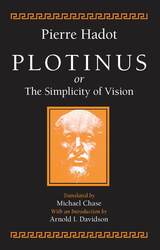
Pierre Hadot's lively philosophical portrait of Plotinus is the preeminent introduction to the man and his thought. Michael Chase's lucid translation—complete with a useful chronology and analytical bibliography—at last makes this book available to the English-speaking world.
Hadot carefully examines Plotinus's views on the self, existence, love, virtue, gentleness, and solitude. He shows that Plotinus, like other philosophers of his day, believed that Plato and Aristotle had already articulated the essential truths; for him, the purpose of practicing philosophy was not to profess new truths but to engage in spiritual exercises so as to live philosophically. Seen in this light, Plotinus's counsel against fixation on the body and all earthly matters stemmed not from disgust or fear, but rather from his awareness of the negative effect that bodily preoccupation and material concern could have on spiritual exercises.
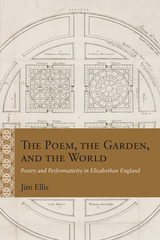
How an early modern understanding of place and movement are embedded in a performative theory of literature
How is a garden like a poem? Early modern writers frequently compared the two, and as Jim Ellis shows, the metaphor gained strength with the arrival of a spectacular new art form—the Renaissance pleasure garden—which immersed visitors in a political allegory to be read by their bodies’ movements. The Poem, the Garden, and the World traces the Renaissance-era relationship of place and movement from garden to poetry to a confluence of both. Starting with the Earl of Leicester’s pleasure garden for Queen Elizabeth’s 1575 progress visit, Ellis explores the political function of the entertainment landscape that plunged visitors into a fully realized golden world—a mythical new form to represent the nation. Next, he turns to one of that garden’s visitors: Philip Sidney, who would later contend that literature’s golden worlds work to move us as we move through them, reorienting readers toward a belief in English empire. This idea would later be illustrated by Edmund Spenser’s Faerie Queen; as with the pleasure garden, both characters and readers are refashioned as they traverse the poem’s dreamlike space. Exploring the artistic creations of three of the era’s major figures, Ellis argues for a performative understanding of literature, in which readers are transformed as they navigate poetic worlds.
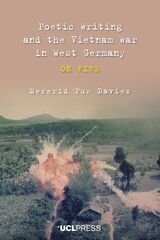
Though the Vietnam War did not directly involve West Germany, it was nonetheless a decisive catalyst for the era’s wider protest movements in that country, and it gave rise to an ardent anti-war discourse. Poetry and poetic writing were key to anti-war work. Hundreds of poems and related writings about Vietnam circulated in West Germany, yet they are almost entirely forgotten today. Poetic Writing and the Vietnam War in West Germany uncovers and explores some of that rich artistic production in order to present a new history of engaged poetic writing in West Germany in the 1960s and 1970s and to draw out distinctive characteristics of wider protest culture. In doing so, it makes the case for attending to marginal, non-canonical, or neglected literary and cultural forms, and for critical thinking about why they might, over time, have been obscured. The book also offers a case study for reflection on the representation of war, on ways in which German oppositional culture could imagine its others, and on the relationship of poetry to the historical world.
The fourteen interviews in Poetics in a New Key—conducted by scholars, poets, and critics from the United States, Denmark, Norway, France, and Poland, including Charles Bernstein, Hélène Aji, and Peter Nicholls—cover a broad spectrum of topics in the study of poetry: its nature as a literary genre, its current state, and its relationship to art, politics, language, theory, and technology. Also featured in the collection are three pieces by Perloff herself: an academic memoir, an exploration of poetry pedagogy, and an essay on twenty-first-century intellectuals. But across all the interviews and essays, Perloff’s distinctive personality and approach to reading and talking resound, making this new collection an inspiring resource for scholars both of poetry and writing.
Set to generate discussions in the field for years to come, The Poetics of Poetry Film is an encyclopedic work on the ever-evolving art of the poetry film. Poetry films are a genre of short film usually involving three main elements: the poem as verbal message, the moving film image and diegetic sounds, and additional non-diegetic sounds or music, which create a soundscape. In this book, Sarah Tremlett examines the formal characteristics of the poetic in poetry film, film poetry, and videopoetry, particularly in relation to lyric voice and time.
Tremlett sets the emergence and history of poetry film in its proper global context, defining and debating terms both philosophically and materially. Showcasing the work of an international array of practitioners, The Poetics of Poetry Film includes interviews, analysis, and a rigorous investigation of the history of the genre, from its origins to the present. This is an industry bible for anyone interested in poetry, digital media, filmmaking, art, and creative writing, as well as poetry filmmakers.
Lisa Hollenbach traces the history of Pacifica Radio—founded in 1946, the nation’s first listener-supported public radio network—through the 1970s: from the radical pacifists and poets who founded Pacifica after the war; to the San Francisco Renaissance, Beat, and New York poets who helped define the countercultural sound of Pacifica stations KPFA and WBAI in the 1950s and 1960s; to the feminist poets and activists who seized Pacifica’s frequencies in the 1970s. In the poems and recorded broadcasts of writers like Kenneth Rexroth, Jack Spicer, Allen Ginsberg, Amiri Baraka, Audre Lorde, Pat Parker, Bernadette Mayer, and Susan Howe, one finds a recurring ambivalence about the technics and poetics of reception. Through tropes of static noise, censorship, and inaudibility as well as voice, sound, and signal, these radiopoetic works suggest new ways of listening to the sounds and silences of Cold War American culture.
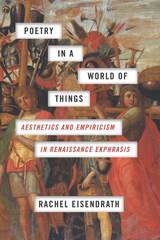
In Poetry in a World of Things, Rachel Eisendrath explores how poetry responded to this new detachment by becoming a repository for a more complex experience of the world. The book focuses on ekphrasis, the elaborate literary description of a thing, as a mode of resistance to this new empirical objectivity. Poets like Petrarch, Spenser, Marlowe, and Shakespeare crafted highly artful descriptions that recovered the threatened subjective experience of the material world. In so doing, these poets reflected on the emergence of objectivity itself as a process that was often darker and more painful than otherwise acknowledged. This highly original book reclaims subjectivity as a decidedly poetic and human way of experiencing the material world and, at the same time, makes a case for understanding art objects as fundamentally unlike any other kind of objects.
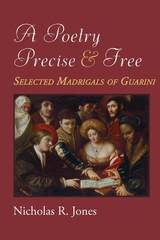
This volume is organized into ten sections, grouping the madrigals around themes such as the anguish of passion, the asymmetry of desire, the incursions of jealousy, and the possibility of mutual bliss. Nicholas R. Jones renders Guarini’s poetry into accessible contemporary English verse that nevertheless stays true to the substance and form of the original texts, reflecting their roots in the Petrarchan poetic tradition and displaying the emotion and musicality that made these lyrics so popular from the start. A substantive introduction provides cultural context for the madrigals and their musical settings; brief commentaries follow each translation to illuminate aspects of poetic and rhetorical craft. An extensive appendix lists the madrigal compositions that set these lyrics for vocal performance.
The book fills a major gap in the scholarship on Guarini’s literary legacy. It will appeal to scholars of literature, Renaissance studies, and musicology, early-music performers, and general readers interested in poetry and classical music.

READERS
Browse our collection.
PUBLISHERS
See BiblioVault's publisher services.
STUDENT SERVICES
Files for college accessibility offices.
RECENTLY PUBLISHED





UChicago Accessibility Resources
home | accessibility | search | about | contact us
BiblioVault ® 2001 - 2026
The University of Chicago Press