
 A SCHOLARLY BOOK REPOSITORY
72 start with R start with R

This intriguing volume focuses on a “racially friendly” suburban charter school called Excellence Academy, highlighting the ways that students and teachers think about race and act out racial identity. Modica finds that even in an environment where students of all racial backgrounds work and play together harmoniously, race affects the daily experiences of students and teachers in profound but unexamined ways. Some teachers, she notes, feared that talking about race in the classroom would open them to charges of racism, so they avoided the topic. And rather than generate honest and constructive conversations about race, student friendships opened the door for insensitive racial comments by whites, resentment and silence by blacks, and racially biased administrative practices. In the end, the school’s friendly environment did not promote—and may have hindered—serious discussion of race and racial inequity.
The desire to ignore race in favor of a “colorblind society,” Modica writes, has become an entrenched part of American culture. But as Race Among Friends shows, when race becomes a taboo subject, it has serious ramifications for students and teachers of all ethnic origins.

In Race and Class Matters at an Elite College, Elizabeth Aries provides a rare glimpse into the challenges faced by black and white college students from widely different class backgrounds as they come to live together as freshmen. Based on an intensive study Aries conducted with 58 students at Amherst College during the 2005-2006 academic year, this book offers a uniquely personal look at the day-to-day thoughts and feelings of students as they experience racial and economic diversity firsthand, some for the first time.
Through online questionnaires and face-to-face interviews, Aries followed four groups of students throughout their first year of college: affluent whites, affluent blacks, less financially advantaged whites from families with more limited education, and less financially advantaged blacks from the same background. Drawing heavily on the voices of these freshmen, Aries chronicles what they learned from racial and class diversity—and what colleges might do to help their students learn more.
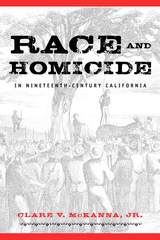
Nineteenth-century California was a society in turmoil, with a rapidly growing population, booming mining camps, insufficient or nonexistent law-enforcement personnel, and a large number of ethnic groups with differing attitudes toward law and personal honor. Violence, including murder, was common, and legal responses varied broadly. Available now for the first time in paperback, Race and Homicide in Nineteenth-Century California examines coroners’ inquest reports, court case files, prison registers, and other primary and printed sources to analyze patterns of homicide and the state’s embryonic justice system. Author Clare V. McKanna discovers that the nature of crimes varied with the ethnicity of perpetrators and victims, as did the conduct and results of trials and sentencing patterns. He presents specific case studies and a vivid portrait of an unruly society in flux. Enhanced with testimony from contemporary sources and illustrated with period photographs, this study richly portrays a frontier society where the law was neither omnipotent nor impartial.


Table of Contents
Preface
Introduction: The Borders of Race and Nation
Nico Slate
Part I: Race and the International System
Token Diplomacy: The United States, Race, and the Cold War
Michael L. Krenn
A Wind of Change? White Redoubt and the Postcolonial Moment in South Africa, 1960-1963
Ryan M. Irwin
Part II: Race, Ethnicity, and Decolonization
Race, Labor, and Security in the Panama Canal Zone: The 1946 Greaves Rape Case, Local 713, and the Isthmian Cold War Crackdown
Michael Donoghue
Race, Identity, and Diplomacy in the Papua Decolonization Struggle, 1949-1962
David Webster
"For a Better Guinea": Winning Hearts and Minds in Portuguese Guinea
Luís Nuno Rodrigues
Part III: Race and the Interplay of Domestic and International Politics
Testing the Limits of Soviet Internationalism: African Students in the Soviet Union
Maxim Matusevich
Crimes against Humanity in the Congo: Nazi Legacies and the German Cold War in Africa
Katrina M. Hagen
Race and the Cuban Revolution: The Impact of Cuba's Intervention in Angola
Henley Adams
Part IV: Ethnicity and the Interplay of Domestic and International Politics
Ethnic Nationalism in the Cold War Context: The Cyprus Issue in the Greek and Greek American Public Debate, 1954-1989
Zinovia Lialiouti and Philip E. Muehlenbeck
God Bless Reagan and God Help Canada: The Polish Canadian Action Group and Solidarność in Toronto
Eric L. Payseur
Ethnic Nationalism and the Collapse of Soviet Communism
Mark R. Beissinger

The contemporary rethinking and relearning of history and racism has sparked creative approaches for teaching the histories and representations of marginalized communities. Cristina Stanciu and Gary Totten edit a collection that illuminates these ideas for a variety of fields, areas of education, and institutional contexts.
The authors draw on their own racial and ethnic backgrounds to examine race and racism in the context of addressing necessary and often difficult classroom conversations about race, histories of exclusion, and racism. Case studies, reflections, and personal experiences provide guidance for addressing race and racism in the classroom. In-depth analysis looks at attacks on teaching Critical Race Theory and other practices for studying marginalized histories and voices. Throughout, the contributors shine a light on how a critical framework focused on race advances an understanding of contemporary and historical US multiethnic literatures for students around the world and in all fields of study.
Contributors: Kristen Brown, Nancy Carranza, Luis Cortes, Marilyn Edelstein, Naomi Edwards, Joanne Lipson Freed, Yadira Gamez, Lauren J. Gantz, Jennifer Ho, Shermaine M. Jones, Norell Martinez, Sarah Minslow, Crystal R. Pérez, Kevin Pyon, Emily Ruth Rutter, Ariel Santos, and C. Anneke Snyder
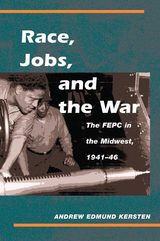
In this rigorous and thoroughly documented study focusing on the pivotal Midwest, Andrew E. Kersten shows how a tiny government agency--the President's Committee on Fair Employment Practice (FEPC)--influenced the course of civil rights reform, moving the United States closer to a national fair employment policy and laying the foundation for today's contested affirmative action practices.
Rejecting claims that black advancement during the war was due primarily to shortages of labor, Race, Jobs, and the War contends that the FEPC made significant strides in breaking racial barriers, settling complaints, and pursuing a vigorous educational campaign to foster more harmonious industrial relations between white and minority workers.
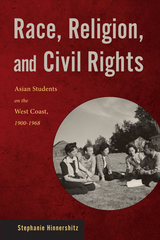
Stephanie Hinnershitz tells the story of the Asian American campus organizations that flourished on the West Coast from the 1900s through the 1960s. Using their faith to point out the hypocrisy of fellow American Protestants who supported segregation and discriminatory practices, the student activists in these groups also performed vital outreach to communities outside the university, from Californian farms to Alaskan canneries. Highlighting the unique multiethnic composition of these groups, Race, Religion, and Civil Rights explores how the students' interethnic activism weathered a variety of challenges, from the outbreak of war between Japan and China to the internment of Japanese Americans during World War II.
Drawing from a variety of archival sources to bring forth the authentic, passionate voices of the students, Race, Religion, and Civil Rights is a testament to the powerful ways they served to shape the social, political, and cultural direction of civil rights movements throughout the West Coast.

Conceived by General Sir Robert Baden-Powell as a way to reduce class tensions in Edwardian Britain, scouting evolved into an international youth movement. It offered a vision of romantic outdoor life as a cure for disruption caused by industrialization and urbanization. Scouting’s global spread was due to its success in attaching itself to institutions of authority. As a result, scouting has become embroiled in controversies in the civil rights struggle in the American South, in nationalist resistance movements in India, and in the contemporary American debate over gay rights.
In Race, Resistance, and the Boy Scout Movement in British Colonial Africa, Timothy Parsons uses scouting as an analytical tool to explore the tensions in colonial society. Introduced by British officials to strengthen their rule, the movement targeted the students, juvenile delinquents, and urban migrants who threatened the social stability of the regime. Yet Africans themselves used scouting to claim the rights of full imperial citizenship. They invoked the Fourth Scout Law, which declared that a scout was a brother to every other scout, to challenge racial discrimination.
Parsons shows that African scouting was both an instrument of colonial authority and a subversive challenge to the legitimacy of the British Empire. His study of African scouting demonstrates the implications and far-reaching consequences of colonial authority in all its guises.
These assumptions underlie the organization of the volume, which is divided into three parts: "Racial Structures," which explores the problem of how race has historically been structured in modern capitalist societies; "Racial Ideology and Identity," which tackles diverse but interrelated questions regarding the representation of race and racism in dominant ideologies and discourses; and "Struggle," which builds on the insight that resistance to structures and ideologies of racial oppression is always situated in a particular time and place.
In addition to discussing and analyzing various dimensions of the African American experience, contributors also consider the ways in which race plays itself out in the experience of Asian Americans and in the very different geopolitical environments of the British Empire and postcolonial Africa.
Contributors are Pedro Cabán, Sundiata Keita Cha-Jua, David Crockett, Theodore Koditschek, Scott Kurashige, Clarence Lang, Minkah Makalani, Helen A. Neville, Tola Olu Pearce, David Roediger, Monica M. White, and Jeffrey Williams.

Hochschild investigates the root causes of disputes in the arenas of policing, development, schooling, and budgeting. She finds that race and class are central to the Stop-Question-Frisk policing policy in New York City and the development of Atlanta’s Beltline. New York’s Stop-Question-Frisk policy was intended to fight crime and keep all New Yorkers safe. In practice, however, young Black and Latino men in low-income neighborhoods were disproportionately stopped by a predominantly White police force. The goal of the Atlanta Beltline, a redevelopment project that includes public parks, new housing, commercial development, and a robust public transit system, is to expand access around the city and keep working-class residents in the city by constructing affordable housing. Instead, the construction completed thus far has encouraged gentrification and displacement of poor, disproportionately Black residents, and has increased the wealth and power of both Black and White city elites.
However, Hochschild finds that race and class inequality are not central to all urban policy disputes. When investigating the issues of charter schools in Los Angeles and Chicago’s pension system she identifies a third driver: financial threat that feels existential to the policy and political actors. In Los Angeles, there is a battle between traditional public schools and independent charter schools. Increasingly, families with sufficient resources are moving out of L.A. to areas with better school districts. Traditional public schools and charter schools must fight for the remaining students and the funding that comes with them. There are not enough students to teach and not enough money to teach them. The school district risks school closures, layoffs, and pension deficits; in this context, race/class conflict fades into the background.
Chicago’s public sector pension debt is at least three times as large as the city’s annual budget and continues to grow. Policy actors agree that the pension system needs to be stably funded. Yet city leaders, fearful of upsetting constituents and jeopardizing their political careers, fail to implement policies that would do so. Meaningful policy change to rectify the pension deficit continues to get kicked down the line for future policy actors to address. In this context also, race/class conflict fades into the background.
Race/Class Conflict and Urban Financial Threat is a compelling examination of the role that race, class, and political and fiscal threat play in shaping urban policy.

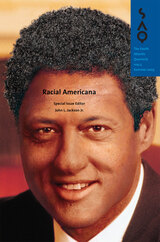
Imagining America’s racialist future, the diverse contributors to this special issue—anthropologists, sociologists, historians, poets, and literary critics—offer their conceptualizations of race today, discuss how racial ideology has changed through the years, and explain its continuing ability to morph according to geopolitical, cultural, and economic strictures. Essays focus on how notions of race have helped constitute varied definitions of Americanness in the past and the present; offer critiques and recuperations of antiessentialist efforts; excavate the affective links between racism and patriotism after September 11; examine how race and gender intersect in the lives of African American jazz musicians; and determine what Du Bois's earlier arguments say about contemporary representations of “Latinidad.”
Contributors. Elizabeth Alexander, Amiri Baraka, Tess Chakkalakal, Theodore A. Harris, John Hartigan Jr., Sharon P. Holland, John L. Jackson Jr., Marcyliena Morgan, Vijay Prashad, Don Robotham, Nichole T. Rustin, Brackette F. Williams

“The African American community.” “The black position.” In accounts of black politics after the Second World War, these phrases reflect how the African American perspective generally appeared consistent, coherent, and unified. In Racial Democracy and the Black Metropolis, Preston H. Smith II examines housing debates in Chicago that go beyond black and white politics, and he shows how class and factional conflicts among African Americans actually helped to reproduce stunning segregation along economic lines.
Class and factional conflicts were normal in the rough-and-tumble world of land use politics. They are, however, often not visible in accounts of the postwar fight against segregation. Smith outlines the ideological framework that black civic leaders in Chicago used to formulate housing policy, both within and outside the black community, to reveal a surprising picture of leaders who singled out racial segregation as the source of African Americans’ inadequate housing rather than attacking class inequalities. What are generally presented as black positions on housing policy in Chicago, Smith makes clear, belonged to the black elite and did not necessarily reflect black working-class participation or interests.
This book details how black civic leaders fought racial discrimination in ways that promoted—or at least did not sacrifice—their class interests in housing and real estate struggles. And, as Smith demonstrates, their accommodation of the real estate practices and government policy of the time has had a lasting effect: it contributed to a legacy of class segregation in the housing market in Chicago and major metropolitan areas across the country that is still felt today.
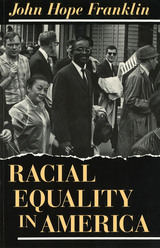
This is distinguished historian John Hope Franklin's eloquent and forceful meditation on the persistent disparity between the goal of racial equality in America and the facts of discrimination.
In a searing critique of Thomas Jefferson, Franklin shows that this spokesman for democracy did not include African Americans among those "created equal." Franklin chronicles the events of the nineteenth century that solidified inequality in America and shows how emancipation dealt only with slavery, not with inequality.
In the twentieth century, America finally confronted the fact that equality is indivisible: it must not be divided so that it is extended to some at the expense of others. Once this indivisibility is accepted, Franklin charges, America faces the monumental task of overcoming its long heritage of inequality.
Racial Equality in America is a powerful reminder that our history is more than a record of idealized democratic traditions and institutions. It is a dramatic message to all Americans, calling them to know their history and themselves.
In Racial Resentment in the Political Mind, Darren W. Davis and David C. Wilson challenge the commonly held notion that all racial negativity, disagreements, and objections to policies that seek to help racial minorities stem from racial prejudice. They argue that racial resentment arises from just-world beliefs and appraisals of deservingness that help explain the persistence of racial inequality in America in ways more consequential than racism or racial prejudice alone.
The culprits, as many White people see it, are undeserving people of color, who are perceived to benefit unfairly from, and take advantage of, resources that come at Whites’ expense—a worldview in which any attempt at modest change is seen as a challenge to the status quo and privilege. Yet, as Davis and Wilson reveal, many Whites have become racially resentful due to their perceptions that African Americans skirt the “rules of the game” and violate traditional values by taking advantage of unearned resources. Resulting attempts at racial progress lead Whites to respond in ways that retain their social advantage—opposing ameliorative policies, minority candidates, and other advancement on racial progress. Because racial resentment is rooted in beliefs about justice, fairness, and deservingness, ordinary citizens, who may not harbor racist motivations, may wind up in the same political position as racists, but for different reasons.
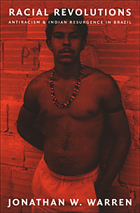
The growing number of pardos who claim Indian identity represents a radical shift in the direction of Brazilian racial formation. For centuries, the predominant trend had been for Indians to shed tribal identities in favor of non-Indian ones. Warren argues that many factors—including the reduction of state-sponsored anti-Indian violence, intervention from the Catholic church, and shifts in anthropological thinking about ethnicity—have prompted a reversal of racial aspirations and reimaginings of Indianness. Challenging the current emphasis on blackness in Brazilian antiracist scholarship and activism, Warren demonstrates that Indians in Brazil recognize and oppose racism far more than any other ethnic group.
Racial Revolutions fills a number of voids in Latin American scholarship on the politics of race, cultural geography, ethnography, social movements, nation building, and state violence.
Designated a John Hope Franklin Center book by the John Hope Franklin Seminar Group on Race, Religion, and Globalization.
In Racialized Politics, political scientists, sociologists, and psychologists explore the current debate surrounding the sources of racism in America. Published here for the first time, the essays represent three major approaches to the topic. The social psychological approach maintains that prejudice socialized early in life feeds racial stereotypes, while the social structural viewpoint argues that behavior is shaped by whites' fear of losing their privileged status. The third perspective looks to non-racially inspired ideology, including attitudes about the size and role of government, as the reason for opposition to policies such as affirmative action. Timely and important, this collection provides a state-of-the-field assessment of the current issues and findings on the role of racism in mass politics and public opinion.
Contributors are Lawrence Bobo, Gretchen C. Crosby, Michael C. Dawson, Christopher Federico, P. J. Henry, John J. Hetts, Jennifer L. Hochschild, William G. Howell, Michael Hughes, Donald R. Kinder, Rick Kosterman, Tali Mendelberg, Thomas F. Pettigrew, Howard Schuman, David O. Sears, James Sidanius, Pam Singh, Paul M. Sniderman, Marylee C. Taylor, and Steven A. Tuch.
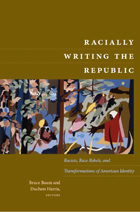
The contributors analyze Thomas Jefferson’s legacy in light of his sexual relationship with his slave, Sally Hemings; the way that Samuel Gompers, the first president of the American Federation of Labor, rallied his organization against Chinese immigrant workers; and the eugenicist origins of the early-twentieth-century birth-control movement led by Margaret Sanger. They draw attention to the writing of Sarah Winnemucca, a Northern Piute and one of the first published Native American authors; the anti-lynching activist Ida B. Wells-Barnett; the Filipino American writer Carlos Bulosan; and the playwright Lorraine Hansberry, who linked civil rights struggles in the United States to anticolonial efforts abroad. Other figures considered include Alexis de Tocqueville and his traveling companion Gustave de Beaumont, Juan Nepomuceno Cortina (who fought against Anglo American expansion in what is now Texas), Abraham Lincoln, Theodore Roosevelt, and W. E. B. Du Bois. In the afterword, George Lipsitz reflects on U.S. racial politics since 1965.
Contributors. Bruce Baum, Cari M. Carpenter, Gary Gerstle, Duchess Harris, Catherine A. Holland, Allan Punzalan Isaac, Laura Janara, Ben Keppel, George Lipsitz, Gwendolyn Mink, Joel Olson, Dorothy Roberts, Patricia A. Schechter, John Kuo Wei Tchen, Jerry Thompson
Racism: It is social, not “natural”; it is general, not “personal”; and it is tragically effective. In a remarkable meditation on a subject at the troubled center of American life, Albert Memmi investigates racism as social pathology-a cultural disease that prevails because it allows one segment of society to empower itself at the expense of another. By turns historical, sociological, and autobiographical, Racism moves beyond individual prejudice and taste to engage the broader questions of collective behavior and social responsibility.
The book comprises three sections-“Description,” “Definition,” and “Treatment”-in which Memmi delineates racism’s causes and hidden workings, examines its close affinity to colonialism, and considers its everyday manifestations over a period of centuries throughout the West.
For Memmi, the structure of racism has four “moments”: the insistence on difference; the negative valuation imposed on those who differ; the generalizing of this negative valuation to an entire group; and the use of generalization to legitimize hostility. Memmi shows how it is not racism’s content-which can change at will-but its form that gives it such power and tenacity.
Born in a poor section of Tunis, Tunisia, a Jew among Muslims, an Arab among Europeans, Memmi brings his own experience of the complex contours of prejudice to his analysis of a problem that divides societies the world over. Writing in the tradition of Frantz Fanon, Memmi redirects debates about racism-and offers a rare chance for progress against social prejudice.
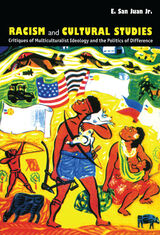
Individual chapters engage the themes of ethnicity versus racism, gender inequality, sexuality, and the politics of identity configured with the discourse of postcoloniality and postmodernism. Questions of institutional racism, social justice, democratization, and international power relations between the center and the periphery are explored and analyzed. San Juan fashions a critique of dominant disciplinary approaches in the humanities and social sciences and contends that “the racism question” functions as a catalyst and point of departure for cultural critiques based on a radical democratic vision. He also asks urgent questions regarding globalization and the future of socialist transformation of “third world” peoples and others who face oppression.
As one of the most notable cultural theorists in the United States today, San Juan presents a provocative challenge to the academy and other disciplinary institutions. His intervention will surely compel the attention of all engaged in intellectual exchanges where race/ethnicity serves as an urgent focus of concern.

Pinpoints the persuasive strategies that typified Wells’s efforts to shape broader cultural conversations concerning the causes of racial, social, and gender inequity
Born into the brutal reality of slavery, Ida B. Wells rose to become an audacious journalist, teacher, and activist for racial and gender justice. In Radical Advocate, Mary E. Triece examines the rhetorical strategies employed by Wells to challenge deeply rooted systems of oppression, strategies that remain powerful and relevant today.
Triece introduces the concept of “radical embodied advocacy” to give an account of Wells’s unique position as a Black woman whose personal encounters with white violence were palpable, experienced physically and mentally. White men lynched Wells’s friends and threatened her own life, forcing her into exile after destroying the very press on which she wrote and edited. From this perspective, Wells understood lynching as linked to white economic and political control. Through a close analysis of Wells’s speeches, writings, and journalism, Triece reveals how Wells pioneered a form of “intersectional journalism” that centered the voices of those marginalized by race, gender, and class.
By examining Wells’s work through the lens of philosophy, rhetoric, and Black feminism, Triece underscores the epistemic challenges faced by marginalized advocates and the importance of their perspectives in shaping social change. Radical Advocate ultimately positions Wells as a prophetic figure whose insights into the systemic nature of racism remain profoundly relevant in today’s world.
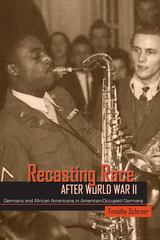
The segregation of U.S. Army forces fed a growing debate in America about whether a Jim Crow army could truly be a democratizing force in postwar Germany. Schroer follows the evolution of that debate and examines the ways in which postwar conditions necessitated reexamination of race relations. He reveals how anxiety about interracial relationships between African American men and German women united white American soldiers and the German populace. He also traces the importation and influence of African American jazz music in Germany, illuminating the subtle ways in which occupied Germany represented a crucible in which to recast the meaning of race in a post-Holocaust world.
Recasting Race after World War II will appeal to historians and scholars of American, African American, and German studies.
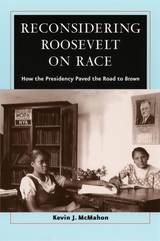
McMahon shows how FDR's attempt to strengthen the presidency and undermine the power of conservative Southern Democrats dovetailed with his efforts to seek racial equality through the federal courts. By appointing a majority of rights-based liberals deferential to presidential power, Roosevelt ensured that the Supreme Court would be receptive to civil rights claims, especially when those claims had the support of the executive branch.
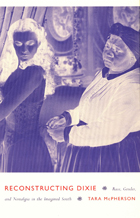
Illuminating crucial connections between understandings of race, gender, and place on the one hand and narrative and images on the other, McPherson reads a number of representations of the South produced from the 1930s to the present. These are drawn from fiction, film, television, southern studies scholarship, popular journalism, music, tourist sites, the internet, and autobiography. She examines modes of affect or ways of "feeling southern" to reveal how these feelings, along with the narratives and images she discusses, sanction particular racial logics. A wide-ranging cultural studies critique, Reconstructing Dixie calls for vibrant new ways of thinking about the South and for a revamped and reinvigorated southern studies.
Reconstructing Dixie will appeal to scholars in American, southern, and cultural studies, and to those in African American, media, and women’s studies.
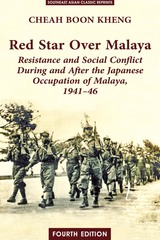
As Japanese forces withdrew from the countryside, the Chinese guerrillas of the communist-led resistance movement, the Malayan People's Anti-Japanese Army (MPAJA), emerged from the jungle and took control of some 70 per cent of the country's smaller towns and villages, seriously alarming the Malay population. When the British Military Administration sought to regain control of these liberated areas, the ensuing conflict set the tone for future political conflicts and marked a crucial stage in the history of Malaya. Based on extensive archival research, Red Star Over Malaya provides a riveting account of the way the Japanese occupation reshaped colonial Malaya, and of the tension-filled months that followed Japan's surrender. This book is fundamental to an understanding of social and political developments in Malaysia during the second half of the 20th century.


Transnational migration has contributed to the rise of religious diversity and has led to profound changes in the religious make-up of society across the Western world. As a result, societies and nation-states have faced the challenge of crafting ways to bring new religious communities into existing institutions and the legal frameworks. Regulating Difference explores how the state regulates religious diversity and examines the processes whereby religious diversity and expression becomes part of administrative landscapes of nation-states and people’s everyday lives. Arguing that concepts of nationhood are key to understanding the governance of religious diversity, Regulating Difference employs a transatlantic comparison of the Spanish region of Catalonia and the Canadian province of Quebec to show how processes of nation-building, religious heritage-making and the mobilization of divergent interpretations of secularism are co-implicated in shaping religious diversity. It argues that religious diversity has become central for governing national and urban spaces.
This book is also freely available online as an open access digital edition.

Reinventing the Austin City Council explores the puzzle that was Austin’s reluctance to alter its at-large system and establish a geographically-based, single-member district system. Ann Bowman chronicles the repeated attempts to change the system, the eventual decision to do so, and the consequences of that change. In the process, she explores the many twists and turns that occurred in Austin as it struggled to design a fair system of representation. Reinventing the Austin City Council assesses the impact of the new district system since its inception in 2014.
Austin’s experience ultimately offers a political lesson for creating institutional change.

"Remember the Alamo!" reverberates through Texas history and culture, but what exactly are we remembering? Over nearly two centuries, the Mexican victory over an outnumbered band of Alamo defenders has been transformed into an American victory for the love of liberty. Why did the historical battle of 1836 undergo this metamorphosis in memory and mythology to become such a potent master symbol in Texan and American culture?
In this probing book, Richard Flores seeks to answer that question by examining how the Alamo's transformation into an American cultural icon helped to shape social, economic, and political relations between Anglo and Mexican Texans from the late nineteenth to the mid-twentieth centuries. In the first part of the book, he looks at how the attempts of heritage society members and political leaders to define the Alamo as a place have reflected struggles within Texas society over the place and status of Anglos and Mexicans. In the second part, he explores how Alamo movies and the transformation of Davy Crockett into an Alamo hero/martyr have advanced deeply racialized, ambiguous, and even invented understandings of the past.

*Winner of the James S. Donnelly, Sr. Prize 2022*
In Ireland, 2018, a constitutional ban that equated the life of a woman to the life of a fertilized embryo was overturned and abortion was finally legalized. This victory for the Irish feminist movement set the country alight with euphoria. But the celebrations were short-lived - the new legislation turned out to be one of the most conservative in Europe. This book tells the story of the ‘Repeal’ campaign through the lens of the activists.
The authors trace the shocking history of the origins of the eighth amendment, which was drawn up in fear of a tide of liberal reforms across Europe. They draw out the lessons learned through the decades and from the groundbreaking campaign in 2018, which was an inspiring example of modern grassroots activism. They also recount the tensions between a medicalized approach and reproductive justice approach to abortion, as well as the harsh effect of the campaign on the health of activists.
Grounded in a radical feminist politics, this book is an honest and inspirational account of a movement that is only just beginning.

In the global convulsions in the aftermath of World War II, one dominant world racial order broke apart and a new one emerged. This is the story Jodi Melamed tells in Represent and Destroy, portraying the postwar racial break as a transition from white supremacist modernity to a formally antiracist liberal capitalist modernity in which racial violence works normatively by policing representations of difference.
Following the institutionalization of literature as a privileged domain for Americans to get to know difference—to describe, teach, and situate themselves with respect to race—Melamed focuses on literary studies as a cultural technology for transmitting liberal racial orders. She examines official antiracism in the United States and finds that these were key to ratifying the country’s global ascendancy. She shows how racial liberalism, liberal multiculturalism, and neoliberal multiculturalism made racism appear to be disappearing, even as they incorporated the assumptions of global capitalism into accepted notions of racial equality.
Yet Represent and Destroy also recovers an anticapitalist “race radical” tradition that provides a materialist opposition to official antiracisms in the postwar United States—a literature that sounds out the violence of liberal racial orders, relinks racial inequality to material conditions, and compels desire for something better than U.S. multiculturalism.
By focusing on telling aspects of the immigration debate, Camiscioli reveals how racial hierarchies were constructed, how gender figured in their creation, and how only white Europeans were cast as assimilable. Delving into pronatalist politics, she describes how potential immigrants were ranked according to their imagined capacity to adapt to the workplace and family life in France. She traces the links between racialized categories and concerns about industrial skills and output, and she examines medico-hygienic texts on interracial sex, connecting those to the crusade against prostitution and the related campaign to abolish “white slavery,” the alleged entrapment of (white) women for sale into prostitution abroad. Camiscioli also explores the debate surrounding the 1927 law that first made it possible for French women who married foreigners to keep their French nationality. She concludes by linking the Third Republic’s impulse to create racial hierarchies to the emergence of the Vichy regime.
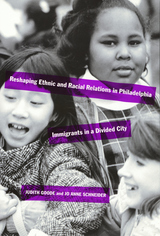
What happens when people from diverse racial and ethnic backgrounds come together to live and work in the same neighborhood? Unlike other examinations of this question that focus on one group, this book looks at the interaction of both old and new immigrant populations in three Philadelphia neighborhoods.
In this ethnographic study, which is a result of the Ford Foundation-funded Changing Relations: Newcomers and Established Residents in Philadelphia Project, the authors consider five primary groups—whites, African Americans, Puerto Ricans, Koreans, and Eastern Europeans—in Olney, Kensington, and Port Richmond. Focusing on the interaction of racial, ethnic, and immigrant communities in schools, organized community celebrations and social events, the workplace, shopping areas, and neighborhood politics, the authors show that the contradictions of individual beliefs, actions, and strategies of power are not easily resolved.
By examining the local, citywide, and national economy and government, previous human relations efforts, changing immigration patterns, community-level power structures, real estate turnover, and gentrification, the authors evaluate current strategies to create harmony in communities with an ever-changing mix of established residents and newly arrived immigrants. Through their findings, Judith Goode and Jo Anne Schneider develop better alternatives that will encourage understanding and cooperation among different racial and ethnic groups sharing their lives and neighborhoods.

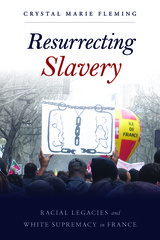
How can politicians and ordinary citizens face the racial past in a country that frames itself as colorblind? In her timely and provocative book, Resurrecting Slavery, Crystal Fleming shows how people make sense of slavery in a nation where talking about race, colonialism, and slavery remains taboo. Noting how struggles over the meaning of racial history are informed by contemporary politics of race, she asks: What kinds of group identities are at stake today for activists and French people with ties to overseas territories where slavery took place?
Fleming investigates the connections and disconnections that are made between racism, slavery, and colonialism in France. She provides historical context and examines how politicians and commemorative activists interpret the racial past and present. Resurrecting Slavery also includes in-depth interviews with French Caribbean migrants outside the commemorative movement to address the everyday racial politics of remembrance.
Bringing a critical race perspective to the study of French racism, Fleming’s groundbreaking study provides a more nuanced understanding of race in France along with new ways of thinking about the global dimensions of slavery, anti-blackness, and white supremacy.

Masferrer, Hamilton, and Denier draw on interviews with former U.S. migrants living in Mexico City to better understand the experience of return migration to urban areas. Each of the migrants they spoke with lived in the United States for long periods with noncitizen status during the last four decades. During this time, U.S. immigration policy became increasingly focused on restriction and enforcement, which made it difficult for migrants to safely move back and forth across the border for work or to visit family without documentation. The authors find that upon their return, migrants in Mexico City felt disoriented and lost and had difficulty adapting to a massive urban environment where there is little support for returnees. They struggled to translate their work experience from their time in the U.S. to find quality jobs. Additionally, many found their family lives upended as they reunited with or formed families in the U.S.. Some found themselves separated from family members still in the U.S. with no ability to legally visit them. Others brought their families back to Mexico, some of whom were U.S. citizens and had never been to Mexico before. They, too, struggled to adapt and integrate to life in Mexico City.
The authors use the experiences of return migrants to discuss policies and practices that would improve their lives and ease their reintegration. To help with the disorientation they experience, returnees proposed ongoing psychological support with mental health professionals who have knowledge and training in the social and legal issues that return migrants face. Return migrants also advocated for policies to enhance skill matching, job creation, and entrepreneurship, as many felt the occupational skills they developed in the U.S. were undervalued in Mexico. To address family separation, returnees argued for legal and policy reform to accommodate family reunification.
The Returned is an illuminating account of the difficulties faced by return migrants and their families in Mexico City.

Revisiting Childhood Resilience Through Marginalised and Displaced Voices resists the way we think about resilience, shifting the focus from personal perseverance to the lived realities of children and young people pushed to society’s margins. Wendy Sims-Schouten moves beyond the familiar idea of resilience as individual grit, instead exploring how defiance and even compliance emerge as survival strategies for care leavers, bullied youth, ethnic minorities, and those with histories of migration and displacement.
Spanning one hundred and fifty years of personal and collective histories, this book brings together interdisciplinary research co-produced with those too often left out of resilience studies. By centering their voices, it unveils how resilience is shaped not just by inner strength, but by systemic barriers and the availability of support. Revisiting Childhood Resilience calls on policymakers and practitioners to rethink resilience as something far more complex than an individual trait; a process deeply rooted in context and agency.

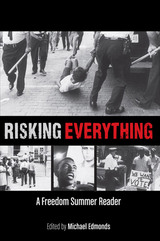
Risking Everything: A Freedom Summer Reader documents the 1964 Mississippi Freedom Summer Project, when SNCC and CORE workers and volunteers arrived in the Deep South to register voters and teach non-violence, and more than 60,000 black Mississippians risked everything to overturn a system that had brutally exploited them.
In the 44 original documents in this anthology, you’ll read their letters, eavesdrop on their meetings, shudder at their suffering, and admire their courage. You’ll witness the final hours of three workers murdered on the project’s first day, hear testimony by black residents who bravely stood up to police torture and Klan firebombs, and watch the liberal establishment betray them.
These vivid primary sources, collected by the Wisconsin Historical Society, provide both first-hand accounts of this astounding grassroots struggle as well as a broader understanding of the Civil Rights movement.
The selected documents are among the 25,000 pages about the Mississippi Freedom Summer Project in the archives of the Wisconsin Historical Society. The manuscripts were collected in the mid-1960s, at a time when few other institutions were interested in saving the stories of common people in McComb or Ruleville, Mississippi. Most have never been published before.

Harvey L. Johnson Publication Award, Southwest Council of Latin American Studies, 2026
Premio Alambique, Alambique: Revista Académica de Ciencia Ficción y Fantasía, 2025
Robo Sacer engages the digital humanities, critical race theory, border studies, biopolitical theory, and necropolitical theory to interrogate how technology has been used to oppress people of Mexican descent—both within Mexico and in the United States—since the advent of the North American Free Trade Agreement (NAFTA) in 1994. As the book argues, robo-sacer identity emerges as transnational flows of bodies, capital, and technology become an institutionalized state of exception that relegates people from marginalized communities to the periphery.
And yet the same technology can be utilized by the oppressed in the service of resistance. The texts studied here represent speculative stories about this technological empowerment. These texts theorize different means of techno-resistance to key realities that have emerged within Mexican and Chicano/a/x communities under the rise and reign of neoliberalism. The first three chapters deal with dehumanization, the trafficking of death, and unbalanced access to technology. The final two chapters deal with the major forms of violence—feminicide and drug-related violence—that have grown exponentially in Mexico with the rise of neoliberalism. These stories theorize the role of technology both in oppressing and in providing the subaltern with necessary tools for resistance.
Robo Sacer builds on the previous studies of Sayak Valencia, Irmgard Emmelhainz, Guy Emerson, Achille Mbembe, and of course Giorgio Agamben, but it differentiates itself from them through its theorization on how technology—and particularly cyborg subjectivity—can amend the reigning biopolitical and necropolitical structures of power in potentially liberatory ways. Robo Sacer shows how the cyborg can denaturalize constructs of zoē by providing an outlet through which the oppressed can tell their stories, thus imbuing the oppressed with the power to combat imperialist forces.


Slavery in the United States was a brutal, racialized system of forced labor which helped provide the startup capital for the U.S. economy’s meteoric rise. Post-slavery legal race discrimination produced segregation not only the Jim Crow South but also in northern states, where Blacks were denied many benefits of the New Deal that helped lift whites into the middle class. The 60 years since the passage of the Civil Rights Act of 1964 have witnessed mass incarceration, ongoing police killings of unarmed Blacks, continued discrimination in housing, employment, and credit markers, and a persistent devaluation of Black lives. This history of enslavement and discrimination has yielded disastrous intergenerational consequences for Black wealth and socioeconomic well-being, and calls for reparations have gained currency as a way to redress these historical wrongs. This special double issue of RSF brings together the most current social science research and policy options with regard to reparations for Black Americans.
While reparations have been issued to many peoples around the world, including in the U.S., reparations to Black Americans remain highly contested. Contributor Kathryn Anne Edwards and co-authors use case studies of previous reparations policies to offer important insights into the features that might shape reparations policy for Black Americans. Trina Shanks and colleagues argue that the structure of existing child development accounts provides a practical framework for delivering reparations payments to recipients of all ages through structured savings plans that promote asset growth and fiscal autonomy.
The political feasibility of reparations programs will largely depend on public opinion. Jesse Rhodes and colleagues draw on surveys administered between 2021 and 2023 to show that up to 28 percent of White Americans support cash reparations, up from a tiny 4 percent in 2000. Kamri Hudgins and co-authors suggest that public education on racial disparities may increase the feasibility of a reparations program. Thus, education on real-existing racial disparities in intergenerational wealth, income, health, homeownership, and education may prove to be crucial to affect a federal Black reparations program.
This important double issue of RSF employs rigorous social science research to shed new light on one of the most pressing and contentious policy proposals of our times. Engaging the debate over reparations from the past to the present and from the global to the local, this double issue of RSF provides a valuable roadmap to the issues at stake in the Black American reparations movement.
Slavery in the United States was a brutal, racialized system of forced labor which helped provide the startup capital for the U.S. economy’s meteoric rise. Post-slavery legal race discrimination produced segregation not only the Jim Crow South but also in northern states, where Blacks were denied many benefits of the New Deal that helped lift whites into the middle class. The 60 years since the passage of the Civil Rights Act of 1964 have witnessed mass incarceration, ongoing police killings of unarmed Blacks, continued discrimination in housing, employment, and credit markers, and a persistent devaluation of Black lives. This history of enslavement and discrimination has yielded disastrous intergenerational consequences for Black wealth and socioeconomic well-being, and calls for reparations have gained currency as a way to redress these historical wrongs. This special double issue of RSF brings together the most current social science research and policy options with regard to reparations for Black Americans.
While reparations have been issued to many peoples around the world, including in the U.S., reparations to Black Americans remain highly contested. Contributor Kathryn Anne Edwards and co-authors use case studies of previous reparations policies to offer important insights into the features that might shape reparations policy for Black Americans. Trina Shanks and colleagues argue that the structure of existing child development accounts provides a practical framework for delivering reparations payments to recipients of all ages through structured savings plans that promote asset growth and fiscal autonomy.
The political feasibility of reparations programs will largely depend on public opinion. Jesse Rhodes and colleagues draw on surveys administered between 2021 and 2023 to show that up to 28 percent of White Americans support cash reparations, up from a tiny 4 percent in 2000. Kamri Hudgins and co-authors suggest that public education on racial disparities may increase the feasibility of a reparations program. Thus, education on real-existing racial disparities in intergenerational wealth, income, health, homeownership, and education may prove to be crucial to affect a federal Black reparations program.
This important double issue of RSF employs rigorous social science research to shed new light on one of the most pressing and contentious policy proposals of our times. Engaging the debate over reparations from the past to the present and from the global to the local, this double issue of RSF provides a valuable roadmap to the issues at stake in the Black American reparations movement.
Articles in this issue explore the scale and dimensions of spatial inequality. Sean Reardon and coauthors develop a novel method of describing the joint distribution of race and income among neighborhoods. They demonstrate how blacks and Hispanics at all income levels typically live in substantially poorer neighborhoods than whites and Asians of the same income. Ann Owens investigates the relationship between residential segregation and school boundaries and finds that because parents often decide where to live based on school districts, school-age children live in more segregated neighborhoods than adults on the whole. John Hipp and Charis Kubrin examine how changes in the racial, ethnic, and economic composition of the areas that surround a given neighborhood affect it, and find that when inequality rises in a neighborhood’s surrounding areas, crime tends to increase in that neighborhood.
Other contributors study how space serves to maintain or reproduce inequalities. Anna Maria Santiago and coauthors find that neighborhood conditions—including racial and socioeconomic makeup and levels of violent crime—affect the chances that black and Latino youths will engage in risky behaviors, such as running away and using marijuana. For instance, low-income African American youths who live in neighborhoods inhabited by higher status residents are less likely to run away from home. Christopher Browning and coauthors examine the extent to which people of different socioeconomic status share space in their day-to-day lives, including working, shopping, and spending leisure time. They find that families of higher socioeconomic status are less likely to share common spaces with neighbors of any class, in part because they have more choice and control over where they go.
As the articles in this issue show, space is a core dimension of social stratification and is fundamental to understanding social and economic inequality.
Note the copy pertains to two issues of RSF:
Status – a form of inequality based on esteem, respect, and honor – affects how people are treated in all aspects of their lives, including in schools, workplaces, politics, and even the family. It shapes people’s access to valued outcomes in life, such as income, education, and health. However, status is poorly understood and its significance in the construction of inequality is often underestimated. In this special double issue of RSF, sociologist Cecilia L. Ridgeway, social psychologist Hazel Rose Markus, and an interdisciplinary group of contributors examine how status functions in society and its role in inequality.
Issue 1 demonstrates that status is fundamental to inequality and shows that it is different from other forms of inequality. Tali Mendelberg presents a theory of how status functions in politics and differentiates the potent symbolic value of achieving greater esteem from status-seeking as a means to obtain resources, such as income, assets, or property. Biko Koeing finds that Trump voters were motivated not only by a perceived loss of status, but by the belief that this loss was unjust. Fabien Accominotti and colleagues assess the characteristics of status hierarchies and find that those with greater clarity, rigidity, and order have greater inequality between high and low status members.
Issue 2 examines how status is created and reinforced through cultural norms and in our relationships with one another. Hilary Holbrow finds that the gender pay gap is nearly three times greater in companies where low-status support roles are held primarily by females. Natasha Quadlin finds that college graduates who are perceived to be wealthy are also perceived to be more intelligent than they would be if they were perceived to be members of a lower socioeconomic group. Annette Lareau finds that married women often behave in ways – such as disengagement from financial matters or downplaying their own financial knowledge – that sustain their husband’s status as economic expert of the family. Bianca Manago and colleagues find that prior contact and group interaction between Whites, Blacks, and Mexican Americans decreases Whites’ anxiety about working with Blacks and Mexican Americans, but does not increase Whites’ perceptions of Blacks’ and Mexican Americans’ competence. Status interventions during interaction, however, do increase Whites’ perceptions of Mexican Americans’ competence and their influence in the group. Lehn Benjamin finds that staff at nonprofit organizations who share control and establish common ground with their clients reduce status hierarchies between staff and clients.
This volume of RSF sheds light on status as a powerful social force which pervades our lives, and demonstrates its role in creating and preserving inequality.
Note the copy pertains to two issues of RSF:
Status – a form of inequality based on esteem, respect, and honor – affects how people are treated in all aspects of their lives, including in schools, workplaces, politics, and even the family. It shapes people’s access to valued outcomes in life, such as income, education, and health. However, status is poorly understood and its significance in the construction of inequality is often underestimated. In this special double issue of RSF, sociologist Cecilia L. Ridgeway, social psychologist Hazel Rose Markus, and an interdisciplinary group of contributors examine how status functions in society and its role in inequality.
Issue 1 demonstrates that status is fundamental to inequality and shows that it is different from other forms of inequality. Tali Mendelberg presents a theory of how status functions in politics and differentiates the potent symbolic value of achieving greater esteem from status-seeking as a means to obtain resources, such as income, assets, or property. Biko Koeing finds that Trump voters were motivated not only by a perceived loss of status, but by the belief that this loss was unjust. Fabien Accominotti and colleagues assess the characteristics of status hierarchies and find that those with greater clarity, rigidity, and order have greater inequality between high and low status members.
Issue 2 examines how status is created and reinforced through cultural norms and in our relationships with one another. Hilary Holbrow finds that the gender pay gap is nearly three times greater in companies where low-status support roles are held primarily by females. Natasha Quadlin finds that college graduates who are perceived to be wealthy are also perceived to be more intelligent than they would be if they were perceived to be members of a lower socioeconomic group. Annette Lareau finds that married women often behave in ways – such as disengagement from financial matters or downplaying their own financial knowledge – that sustain their husband’s status as economic expert of the family. Bianca Manago and colleagues find that prior contact and group interaction between Whites, Blacks, and Mexican Americans decreases Whites’ anxiety about working with Blacks and Mexican Americans, but does not increase Whites’ perceptions of Blacks’ and Mexican Americans’ competence. Status interventions during interaction, however, do increase Whites’ perceptions of Mexican Americans’ competence and their influence in the group. Lehn Benjamin finds that staff at nonprofit organizations who share control and establish common ground with their clients reduce status hierarchies between staff and clients.
This volume of RSF sheds light on status as a powerful social force which pervades our lives, and demonstrates its role in creating and preserving inequality.
Inmate labor fuels prisons. The incarcerated work in prison industries that collaborate with private corporations. Fair labor laws do not apply to prisons, where it is common for inmates to earn less than one dollar per hour. But involvement with the criminal justice system continues to shape and hinder the future employment and earnings of the formerly incarcerated long after they have been released. In this issue of RSF, edited by sociologist Sandra Susan Smith and legal scholar Jonathan Simon, an interdisciplinary group of scholars analyze how the criminal justice system acts as a de facto labor market institution by compelling or coercing labor from the justice-involved.
The social and economic effects of criminal justice involvement are widespread, with almost seven million people under some form of direct supervision. The contributors to this issue examine how the criminal justice system affects the livelihood and families of both the incarcerated and formerly incarcerated. Cody Warner, Joshua Kaiser, and Jason Houle explore how “hidden sentences” --restricted access to voting rights, public housing, and professional licensing--negatively impact labor market outcomes for young adults with criminal records. Michele Cadigan and Garbriela Kirk look at the burden of court fees and fines, or legal financial obligations, that place a strain on the work commitments and resources of low-income people. Joe LaBriola sheds new light on how employment affects recidivism; he shows that parolees who find high-quality jobs, such as in the manufacturing industry, are less likely to return to prison than those employed in low-quality jobs. Noah Zatz and Michael Stoll demonstrate how the threat of imprisonment for nonpayment of child support coerces labor among noncustodial fathers, particularly African-American men. Allison Dwyer Emory and her coauthors show that previously incarcerated fathers are less likely to pay either formal or informal cash child support or offer in-kind assistance to their children’s mothers.
This issue of RSF is a timely contribution to the field of scholarly literature that illuminates the far and often destructive reach that the criminal justice system has on those whose lives it touches. It advances our understanding of how the system functions as a labor market institution and the price it extracts from those involved with it.
The United States is home to the largest deportation system in the world: Between 2001 and 2022, U.S. Immigration and Customs Enforcement (ICE) carried out nearly 6.5 million deportations. Deportation is often framed as a singular event that happens to an individual. However, as public policy scholar Caitlin Patler and political scientist Brad Jones argue in this issue of RSF, deportation is a system that encompasses premigration, within-U.S., and post-deportation contexts and outcomes. With Congress recently approving a massive expansion of the US deportation system, understanding its consequences is more important than ever before.
In this issue, an interdisciplinary group of contributors explore the wide range of impacts of the U.S. deportation system. The introductory chapter by Patler and Jones defines the U.S. deportation system and provides a comprehensive historical context for understanding its causes and consequences. Mass deportation is enabled primarily through the merging of U.S. immigration and criminal laws. Ian Peacock explores the proliferation of 287(g) agreements, which deputize local law enforcement to enforce immigration law. He shows that counties with stronger ties to public official associations, such as the National Sheriff’s Association and the Major County Sheriffs of America, were more likely to adopt identical 287(g) agreements, devote more jail space to ICE detainees, and comply with ICE detainer requests at higher rates. The issue also presents empirical analyses of the consequences of the US deportation system. Articles by Youngjin Stephanie Hong and colleagues, Cora Bennett and colleagues, and J. Jacob Kirksey and Carolyn Sattin-Bajaj, link deportation to reduced Head Start enrollment, lower K-12 test scores, and declines in college enrollment, respectively. The remaining articles turn to the aftermath of deportation. Erin R. Hamilton and colleagues show that between 2015 and 2020, 11,000 individuals were de facto deportees—family members who leave the country because another family member has been deported—in Mexico, with a disproportionate number being women and children. Further highlighting the importance of family, Ángel A. Escamilla García and Adriana M. Cerón analyze survey data from recently deported Central Americans and find those who left minor children in the U.S. were more likely to intend to remigrate to the U.S.
This issue of RSF sheds light on various dimensions of the increasingly punitive U.S. deportation system and the many ways it harms individuals and communities. In the current era of mass expansion of immigration law enforcement, it will be a valuable educational tool for students, faculty, policymakers, and many other stakeholders.
The ESEA has historically enabled the federal government to address educational inequality at the local level. Among the nine articles in the issue, Erica Frankenberg and Kendra Taylor discuss how the ESEA, in conjunction with the Civil Rights Act, accelerated desegregation in the South in the 1960s by withholding federal funding from school districts that failed to integrate. Rucker C. Johnson shows that higher ESEA spending in school districts between 1965 and 1980 led to increased likelihood of high school graduation for students, and low-income students in particular. Students in districts with higher spending were also less likely to repeat grades or to be suspended from school. Yet, as Patrick McGuinn shows, the institutional and administrative capacity of the U.S. Department of Education has never been sufficient to force instructional changes at the school level. This was particularly true with the 2001 renewal of the ESEA, the No Child Left Behind Act, which linked federal funding to schools’ test-score outcomes rather than to programs designed to combat social inequalities.
The issue also investigates the unintended consequences of the ESEA and offers solutions to offset them. As Patricia Gándara and Gloria Ladson-Billings demonstrate, ESEA reforms have, in some circumstances, led to the neglect of the needs of minority students and second-language learners. Gándara shows that No Child Left Behind requires “bilingual” education programs to focus on rapid acquisition of English, often to the detriment of those learning English as a second language. Ladson-Billings shows that the ESEA’s standardized testing mandates may suppress innovative teaching methods, and argues for reforms that use multidisciplinary approaches to craft new curricula. Bringing together research on the successes and shortcomings of the ESEA, this issue of RSF offers new insights into federal education policy and demonstrates that this landmark legislation remains a powerful force in the lives of educators and students fifty years after its initial implementation.
Articles in the issue examine the extent to which the recommendations in the Kerner Report contributed to policy changes and improvements in the social and economic well-being of urban residents . In their introduction, Gooden and Myers analyze changes in socioeconomic inequality between whites and blacks over the last five decades. They find that while the black poverty rate has declined and black educational attainment has increased, disparities still remain. Additionally, the income gap and disparities in unemployment between blacks and whites remain virtually unchanged. Rick Loessberg and John Koskinen similarly note the persistence of these disparities, but also show that some of the Kerner Report’s recommendations were adopted at local levels and have provided the foundation for increased racial diversity in media, law enforcement reforms, and public housing desegregation.
Other contributors study the urban areas that were sites of the riots. Reynolds Farley shows that in Detroit, residential segregation has declined and interracial marriage has increased over the last fifty years. However, on key economic measures such as income and wealth, African Americans have fallen even further behind whites than they were in 1967 due to dramatic changes in Detroit’s labor market. In their study of wealth inequality in Los Angeles, Melany De La Cruz-Viesca and coauthors show that much of the wealth gap between blacks and whites is due to disparities in home ownership, a subject neglected in the Kerner Report. Marcus Casey and Bradley Hardy study the evolution of African American neighborhoods since the Kerner Report and find that neighborhoods directly affected by riots in the 1960s still remain among the most economically disadvantaged today.
The Kerner Report endures as a classic touchstone in the nation’s search for a path toward equality. Together, the articles in this special issue demonstrate the long-term influence of the report and show where further progress is needed to close the racial divide.
Caitlin Patler and Nicholas Branic find that undocumented individuals in immigrant detention facilities that are privately operated are less likely to be visited by family members than those in county or city jails, in part because private facilities have restricted visiting hours and are more difficult to access via public transportation. Lauren Heidbrink finds that unaccompanied minors in the custody of the Office of Refugee Resettlement (ORR) are less likely to be released to guardians or reunited with family members because ORR standards are much tougher than those used by child protective services for minor citizens.
Lauren E. Gulbas and Luis H. Zayas find that many children with undocumented parents experience symptoms of anxiety and depression due to fears about their parents’ status. Yet, increased access to financial, educational, legal, and other immigration-related resources for these families can help buffer these children against trauma related to deportation and family separations. Susan K. Brown and Alejandra J. Sanchez focus on children with undocumented mothers and show that because having an undocumented mother is associated with a reduction in children’s years of schooling, it also indirectly lowers their levels of voting, activism, and political awareness as young adults.
Although undocumented immigrants are more enmeshed in the U.S. than they have been in the past, their status prevents further integration into society. This issue reveals the consequences of illegality not just for undocumented immigrants, but also for their families and their communities.
READERS
Browse our collection.
PUBLISHERS
See BiblioVault's publisher services.
STUDENT SERVICES
Files for college accessibility offices.
RECENTLY PUBLISHED





UChicago Accessibility Resources
home | accessibility | search | about | contact us
BiblioVault ® 2001 - 2026
The University of Chicago Press