
 A SCHOLARLY BOOK REPOSITORY
36 start with R start with R

"A concise, lucid account of the bases of racial inequality in the South between Reconstruction and the Civil Rights era. . . . Deserves the careful attention of anyone concerned with historical and contemporary race stratification."—Kathryn M. Neckerman, Contemporary Sociology
"Margo has produced an excellent study, which can serve as a model for aspiring cliometricians. To describe it as 'required reading' would fail to indicate just how important, indeed indispensable, the book will be to scholars interested in racial economic differences, past or present."—Robert Higgs, Journal of Economic Literature
"Margo shows that history is important in understanding present domestic problems; his study has significant implications for understanding post-1950s black economic development."—Joe M. Richardson, Journal of American History
Under the leadership of Gary M. Fink and Merl E. Reed, Georgia State University hosts the Southern Labor Studies Conferences approximately every two years. The conferences have yielded two previous volumes, published in 1977 and 1981, and this volume, which contains selected papers from the seventh conference held in 1991.
Race Horse Men recaptures the vivid sights, sensations, and illusions of nineteenth-century thoroughbred racing, America’s first mass spectator sport. Inviting readers into the pageantry of the racetrack, Katherine C. Mooney conveys the sport’s inherent drama while also revealing the significant intersections between horse racing and another quintessential institution of the antebellum South: slavery.
A popular pastime across American society, horse racing was most closely identified with an elite class of southern owners who bred horses and bet large sums of money on these spirited animals. The central characters in this story are not privileged whites, however, but the black jockeys, grooms, and horse trainers who sometimes called themselves race horse men and who made the racetrack run. Mooney describes a world of patriarchal privilege and social prestige where blacks as well as whites could achieve status and recognition and where favored slaves endured an unusual form of bondage. For wealthy white men, the racetrack illustrated their cherished visions of a harmonious, modern society based on human slavery.
After emancipation, a number of black horsemen went on to become sports celebrities, their success a potential threat to white supremacy and a source of pride for African Americans. The rise of Jim Crow in the early twentieth century drove many horsemen from their jobs, with devastating consequences for them and their families. Mooney illuminates the role these too often forgotten men played in Americans’ continuing struggle to define the meaning of freedom.

Did Elvis Presley's brand of rock 'n' roll help revise racial attitudes in postwar America? Michael T. Bertrand delves into this question and many others to investigate popular music's revolutionary influence on black-white relations in the South.
Youthful fans of rhythm and blues, rock 'n' roll, and other black-inspired music often broke from their segregationist elders and ignored the color line. Not coincidentally, these same young white people--the southern branch of a national and commercialized youth culture--led a general relaxation of racist attitudes. Bertrand argues that African American music facilitated a new recognition of black people as fellow human beings. African American audiences welcomed Elvis with enthusiasm while racially mixed audiences flocked to music venues at a time when adults expected separate performances for black and white audiences. Bertrand also describes the critical role of radio and recordings in making African American culture available to white fans on an unprecedented scale. Over time, southern working-class youth used the new music to define and express new values and build their own identities.
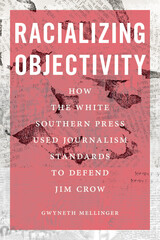
Winner of the 2025 American Journalism Historians Association Book of the Year Award
Winner of the 2025 Association for Education in Journalism and Mass Communication (AEJMC)'s Tankard Book Award and the AEJMC's History Division Book Award
When the civil rights movement began to challenge Jim Crow laws, the white southern press reframed the coverage of racism and segregation as a debate over journalism standards. Many white southern editors, for instance, designated Black Americans as “Negro” in news stories, claiming it was necessary for accuracy and “objectivity,” even as white subjects went unlabeled. These news professionals disparaged media outlets that did not adhere to these norms, such as the Black press. In this way, the southern white press weaponized journalism standards—and particularly the idea of objectivity—to counter and discredit reporting that challenged white supremacy.
Through deep engagement with letters and other materials in numerous archives from editors, journalists, and leaders of newswire services, Racializing Objectivity interrogates and exposes how the white southern press used journalism standards as a professional rationalization for white supremacy and a political strategy to resist desegregation. Gwyneth Mellinger argues that white skin privilege gave these news professionals a stake in the racial status quo and was thus a conflict of interest as they defended Jim Crow. Her study includes an examination of the Southern Education Reporting Service, an objectivity project whose impartiality, she contends, instead affirmed systemic racism. In a pointed counternarrative, Mellinger highlights Black editors and academics who long criticized the supposed objectivity of the press and were consequently marginalized and often dismissed as illegitimate, fanciful, and even paranoid.
Elegant and incisive, Racializing Objectivity unequivocally demonstrates that a full telling of twentieth-century press history must reckon with the white southern press’s cooptation of objectivity and other professional standards to skew racial narratives about Black Americans, the freedom struggle, and democracy itself.
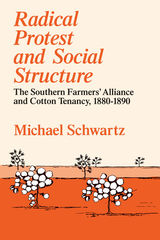
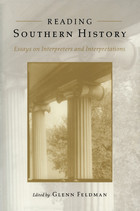
This collection of essays examines the contributions of some of the most notable interpreters of southern history and culture, furthering our understanding of the best historical work produced on the region.
Historian Glenn Feldman gathers together a group of essays that examine the efforts of important scholars to discuss and define the South's distinctiveness. The volume includes 18 chapters on such notable historians as John Hope Franklin, Anne Firor Scott, Frank L. Owsley, W. J. Cash, and C. Vann Woodward, written by 19 different researchers, both senior historians and emerging scholars, including Jacquelyn Dowd Hall, John Shelton Reed, Bruce Clayton, and Ted Ownby. The essays examine the major work or works of each scholar under consideration as well as that scholar's overall contribution to the study of southern history.
Reading Southern History will enlighten readers on the more compelling themes currently and traditionally explored by southern historians. It will appeal greatly to professors and students as a valuable multidisciplinary introduction to the study of southern history, since several of the essays are on scholars who are working outside the discipline of history proper, in the fields of political science, sociology, journalism, and economics. Feldman's collection, therefore, sheds light on a broad spectrum of themes important in southern history, including the plight of poor whites, race, debates over race and class, the "reconstruction syndrome," continuity versus discontinuity in relation to blacks and whites, and regional culture and distinctiveness.
Reading Southern History will be valuable to students and scholars of women's studies, African American history, working-class history, and ethnic studies, as well as traditional southern history. Most important, the publication makes a significant contribution to the development and ongoing study of the historiography of the South.
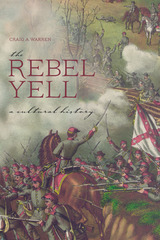
No aspect of Civil War military lore has received less scholarly attention than the battle cry of the Southern soldier. In The Rebel Yell, Craig A. Warren brings together soldiers' memoirs, little-known articles, and recordings to create a fascinating and exhaustive exploration of the facts and myths about the “Southern screech.”
Through close readings of numerous accounts, Warren demonstrates that the Rebel yell was not a single, unchanging call, but rather it varied from place to place, evolved over time, and expressed nuanced shades of emotion. A multifunctional act, the flexible Rebel yell was immediately recognizable to friends and foes but acquired new forms and purposes as the epic struggle wore on. A Confederate regiment might deliver the yell in harrowing unison to taunt Union troops across the empty spaces of a battlefield. At other times, individual soldiers would call out solo or in call-and-response fashion to communicate with or secure the perimeters of their camps.
The Rebel yell could embody unity and valor, but could also become the voice of racism and hatred. Perhaps most surprising, The Rebel Yell reveals that from Reconstruction through the first half of the twentieth century, the Rebel yell—even more than the Confederate battle flag—served as the most prominent and potent symbol of white Southern defiance of Federal authority. With regard to the late-twentieth and early twenty-first centuries, Warren shows that the yell has served the needs of people the world over: soldiers and civilians, politicians and musicians, re-enactors and humorists, artists and businessmen. Warren dismantles popular assumptions about the Rebel yell as well as the notion that the yell was ever “lost to history.”
Both scholarly and accessible, The Rebel Yell contributes to our knowledge of Civil War history and public memory. It shows the centrality of voice and sound to any reckoning of Southern culture.
Published in 1995, Mississippian Communities and Households, edited by J. Daniel Rogers and Bruce D. Smith, was a foundational text that advanced southeastern archaeology in significant ways and brought household-level archaeology to the forefront of the field. Reconsidering Mississippian Communitiesand Households revisits and builds on what has been learned in the years since the Rogers and Smith volume, advancing the field further with the diverse perspectives of current social theory and methods and big data as applied to communities in Native America from the AD 900s to 1700s and from northeast Florida to southwest Arkansas.
Watts Malouchos and Betzenhauser bring together scholars researching diverse Mississippian Southeast and Midwest sites to investigate aspects of community and household construction, maintenance, and dissolution. Thirteen original case studies prove that community can be enacted and expressed in various ways, including in feasting, pottery styles, war and conflict, and mortuary treatments.
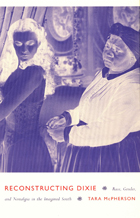
Illuminating crucial connections between understandings of race, gender, and place on the one hand and narrative and images on the other, McPherson reads a number of representations of the South produced from the 1930s to the present. These are drawn from fiction, film, television, southern studies scholarship, popular journalism, music, tourist sites, the internet, and autobiography. She examines modes of affect or ways of "feeling southern" to reveal how these feelings, along with the narratives and images she discusses, sanction particular racial logics. A wide-ranging cultural studies critique, Reconstructing Dixie calls for vibrant new ways of thinking about the South and for a revamped and reinvigorated southern studies.
Reconstructing Dixie will appeal to scholars in American, southern, and cultural studies, and to those in African American, media, and women’s studies.
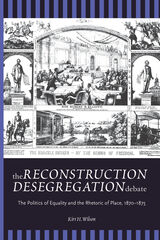
In the decade that followed the Civil War, two questions dominated political debate: To what degree were African Americans now “equal” to white Americans, and how should this equality be implemented in law? Although Republicans entertained multiple, even contradictory, answers to these questions, the party committed itself to several civil rights initiatives. When Congress passed the Thirteenth Amendment, the 1866 Civil Rights Act, the Fourteenth Amendment, and the Fifteenth Amendment, it justified these decisions with a broad egalitarian rhetoric. This rhetoric altered congressional culture, instituting new norms that made equality not merely an ideal,but rather a pragmatic aim for political judgments.
Kirt Wilson examines Reconstruction’s desegregation debate to explain how it represented an important movement in the evolution of U.S. race relations. He outlines how Congress fought to control the scope of black civil rights by contesting the definition of black equality, and the expediency and constitutionality of desegregation. Wilson explores how the debate over desegregation altered public memory about slavery and the Civil War, while simultaneously shaping a political culture that established the trajectory of race relations into the next century.

A Classic of Blues Literature inductee into the Blues Foundation's Blues Hall of Fame
Drawing on archives and interviews with musicians, Red River Blues remains an acclaimed work of blues scholarship. Bruce Bastin traces the origins of the music to the turn of the twentieth century, when African Americans rejected slave songs, worksongs, and minstrel music in favor of a potent new vehicle for secular musical expression. Bastin looks at the blues' early emerging popularity and its spread via the Great Migration, delves into a wealth of field recordings, and looks at the careers of Brownie McGhee, Blind Boy Fuller, Curly Weaver, Sonny Terry, and many other foundational artists.

Though small among its woodpecker relatives, the Red-cockaded Woodpecker poses a huge dilemma for its human neighbors. Uniquely adapted to live in the old-growth pine forests of the southeastern United States, the Red-cockaded Woodpecker has nearly disappeared as the forests have been cleared for agricultural, commercial, and residential uses over the last two centuries. Today, it waits at a crossroads. Scientific management practices could restore the woodpecker's habitat and population, but the imperative to convert old-growth forests to other uses remains.
In this book, three of the leading experts on the Red-cockaded Woodpecker offer a comprehensive overview of all that is currently known about its biology and natural history and about the ecology of the fire-maintained forests it requires for survival. As the most visible endangered species in the Southeast, and the one whose conservation impacts the largest land area, the Red-cockaded Woodpecker holds a compelling interest not only for ornithologists, but also for wildlife managers, foresters, developers, environmentalists, and government officials. For all of these groups, this book will be the essential resource for learning more about the Red-cockaded Woodpecker and ensuring its survival.
The success of the Reformed of the middle and southern states at shaping a distinctly American ideology of the relationship of religion and government was truly amazing. Unlike their New England counterparts, many of whom continued to enjoy some sort of establishment well into the nineteenth century, these Reformed entered the national experience with a backlog of experience in religious diversity and practical disestablishment, and even, in the South, as religious dissenters. They would have preferred a religious establishment that would have essentially recognized the validity of their understanding of Christianity. It was perhaps their own rigidity that caused them to fail in that attempt, especially in Virginia. But for such a rigid people, and they were rigid, they demonstrated a remarkable flexibility. When it became apparent that the American legal settlement would be one in which the state disengaged from the support of religion, the Reformed of the middle and southern states welcomed it and declared it to be the solution that would be most conducive to the spread and ultimate domination of Reformed Christianity. Unlike twentieth-century liberals, the Reformed interpreted disestablishment as the legal and official recognition of the twin Reformation doctrines of the priesthood of all believers and the absolute and unquestioned authority of the Christian Scriptures. And, to a very large degree, it was their definition, rather than the thinking of Jefferson and Madison, that captured the imagination of the American people and became the dominant popular opinion in the land.
But perhaps of even greater significance, the Reformed of the middle and southern states forged an ideology that ultimately based American national prosperity on national adherence to Reformed Christianity. Under the tutelage of John Witherspoon and Samuel Stanhope Smith, the Reformed captured the Enlightenment and brought it into the service of Reformed Christianity, altering traditional Calvinism in the process. Witherspoon and Smith, declaring that the truth of the law of nations could be devised by observation and reason alone, propounded a doctrine of natural law and political science that substantially reinforced the Calvinistic doctrine of providence in an era of skepticism and enlightenment. All history, they argued, proved beyond any reasonable doubt that those nations that adhered to the moral principles taught by Christianity had prospered and those that had taken a contrary route had fallen into ruin. The Reformed preachers of whatever denomination picked up this message and proclaimed it throughout the land. The United States, if it were to prosper, was required to be a Christian nation.
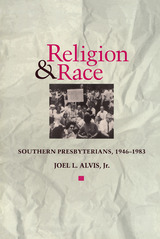
Joel Alvis focuses on the relationships and tensions in the Presbyterian Church, U.S., whose ecclesiastical boundaries never expanded significantly beyond its original territory in the Confederacy and border South. By the time of the civil rights movement, the church was actively involved in ecumenical activities despite its regional isolation, and that involvement created unease in some quarters of the denomination. This concise institutional history traces how the church shaped and was shaped by its regional culture and explores the denomination's own cultural struggle to determine what role race issues would play in the definition of being Presbyterian.
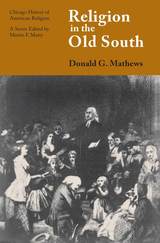
"A major achievement—a magnificently provocative contribution to the understanding of the history of religion in America."—William G. McLoughlin, Book Reviews
"A meticulous and well-documented study . . . In the changing connotations of the word 'liberty' lie most of the dilemmas of Southern (and American) history, dilemmas Dr. Mathews analyses with considerable penetration."—Times Literary Supplement
"The most compact and yet comprehensive view of the Old South in its religious dimension that is presently available. This is a pioneering work by one who is widely read in the sources and is creative enough to synthesize and introduce fresh themes. . . . He makes a unique contribution to southern historiography which will act as a corrective upon earlier works. . . . Boldly stated, every library that consults Choice should purchase this volume."—Choice
"Mathews presents us with the findest and grandest history of old southern religion that one could imagine finding in so short a book on so large a topic. . . . Here stands in its own right a masterpiece of regional historiography of religion in America."—William A. Clebsch, Reviews in American History
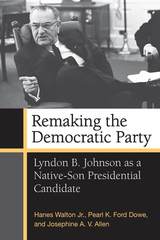
Although ridiculed by contemporaries for his apparent lack of control over formal party politics and the national committee, Johnson excelled at leading the Democratic Party’s policy agenda. While a senator and as president, Johnson advocated for—and secured—liberal social welfare and civil rights legislation, forcing the party to break with its Southern tradition of elitism, conservatism, and white supremacy. In a way, Johnson set the terms for the continuing partisan battle because, by countering the Democrats’ new ideology, the Republican Party also underwent a transformation.
Winner, Barbara Sudler Award, Colorado Historical Society, 2010
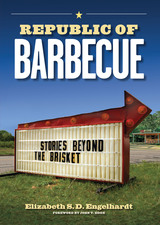
It's no overstatement to say that the state of Texas is a republic of barbecue. Whether it's brisket, sausage, ribs, or chicken, barbecue feeds friends while they catch up, soothes tensions at political events, fuels community festivals, sustains workers of all classes, celebrates brides and grooms, and even supports churches. Recognizing just how central barbecue is to Texas's cultural life, Elizabeth Engelhardt and a team of eleven graduate students from the University of Texas at Austin set out to discover and describe what barbecue has meant to Texans ever since they first smoked a beef brisket.
Republic of Barbecue presents a fascinating, multifaceted portrait of the world of barbecue in Central Texas. The authors look at everything from legendary barbecue joints in places such as Taylor and Lockhart to feedlots, ultra-modern sausage factories, and sustainable forests growing hardwoods for barbecue pits. They talk to pit masters and proprietors, who share the secrets of barbecue in their own words. Like side dishes to the first-person stories, short essays by the authors explore a myriad of barbecue's themes—food history, manliness and meat, technology, nostalgia, civil rights, small-town Texas identity, barbecue's connection to music, favorite drinks such as Big Red, Dr. Pepper, Shiner Bock, and Lone Star beer—to mention only a few. An ode to Texas barbecue in films, a celebration of sports and barbecue, and a pie chart of the desserts that accompany brisket all find homes in the sidebars of the book, while photographic portraits of people and places bring readers face-to-face with the culture of barbecue.

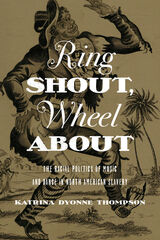
In this ambitious project, historian Katrina Thompson examines the conceptualization and staging of race through the performance, sometimes coerced, of black dance from the slave ship to the minstrel stage. Drawing on a rich variety of sources, Thompson explicates how black musical performance was used by white Europeans and Americans to justify enslavement, perpetuate the existing racial hierarchy, and mask the brutality of the domestic slave trade. Whether on slave ships, at the auction block, or on plantations, whites often used coerced performances to oppress and demean the enslaved.
As Thompson shows, however, blacks' "backstage" use of musical performance often served quite a different purpose. Through creolization and other means, enslaved people preserved some native musical and dance traditions and invented or adopted new traditions that built community and even aided rebellion.
Thompson shows how these traditions evolved into nineteenth-century minstrelsy and, ultimately, raises the question of whether today's mass media performances and depictions of African Americans are so very far removed from their troublesome roots.
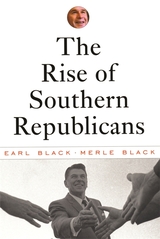
The transformation of Southern politics over the past fifty years has been one of the most significant developments in American political life. The emergence of formidable Republican strength in the previously solid Democratic South has generated a novel and highly competitive national battle for control of Congress. Tracing the slow and difficult rise of Republicans in the South over five decades, Earl and Merle Black tell the remarkable story of political upheaval.
The Rise of Southern Republicans provides a compelling account of growing competitiveness in Southern party politics and elections. Through extraordinary research and analysis, the authors track Southern voters' shifting economic, cultural, and religious loyalties, black/white conflicts and interests during and after federal civil rights intervention, and the struggles and adaptations of congressional candidates and officials.
A newly competitive South, the authors argue, means a newly competitive and revitalized America. The story of how the South became a two-party region is ultimately the story of two-party politics in America at the end of the twentieth century. Earl and Merle Black have written a bible for anyone who wants to understand regional and national congressional politics over the past half-century. Because the South is now at the epicenter of Republican and Democratic strategies to control Congress, The Rise of Southern Republicans is essential to understanding the dynamics of current American politics.
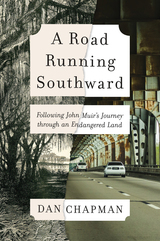
In 1867, John Muir set out on foot to explore the botanical wonders of the South, keeping a detailed journal of his adventures as he traipsed from Kentucky southward to Florida. One hundred and fifty years later, on a similar whim, veteran Atlanta reporter Dan Chapman, distressed by sprawl-driven environmental ills in a region he loves, recreated Muir’s journey to see for himself how nature has fared since Muir’s time. Channeling Muir, he uses humor, keen observation, and a deep love of place to celebrate the South’s natural riches. But he laments that a treasured way of life for generations of Southerners is endangered as long-simmering struggles intensify over misused and dwindling resources. Chapman seeks to discover how Southerners might balance surging population growth with protecting the natural beauty Muir found so special.
Each chapter touches upon a local ecological problem—at-risk species in Mammoth Cave, coal ash in Kingston, Tennessee, climate change in the Nantahala National Forest, water wars in Georgia, aquifer depletion in Florida—that resonates across the South. Chapman delves into the region’s natural history, moving between John Muir’s vivid descriptions of a lush botanical paradise and the myriad environmental problems facing the South today. Along the way he talks to locals with deep ties to the land—scientists, hunters, politicians, and even a Muir impersonator—who describe the changes they’ve witnessed and what it will take to accommodate a fast-growing population without destroying the natural beauty and a cherished connection to nature.
A Road Running Southward is part travelogue, part environmental cri de coeur, and paints a picture of a South under siege. It is a passionate appeal, a call to action to save one of the loveliest and most biodiverse regions of the world by understanding what we have to lose if we do nothing.

An illustrated glovebox essential, Road Sides explores the fundamentals of a well-fed road trip through the American South, from A to Z. There are detours and destinations, accompanied by detailed histories and more than one hundred original illustrations that document how we get where we’re going and what to eat and do along the way.
Learn the backstory of food-shaped buildings, including the folks behind Hills of Snow, a giant snow cone stand in Smithfield, North Carolina, that resembles the icy treats it sells. Find out how kudzu was used to support a burgeoning highway system, and get to know Edith Edwards—the self-proclaimed Kudzu Queen—who turns the obnoxious vine into delicious teas and jellies. Discover the roots of kitschy roadside attractions, and have lunch with the state-employed mermaids of Weeki Wachee Springs in Florida.
Road Sides is for everyone—the driver in search of supper or superlatives (the biggest, best, and even worst), the person who cannot resist a local plaque or snack and pulls over for every historical marker and road stand, and the kid who just wants to gawk at a peach-shaped water tower.
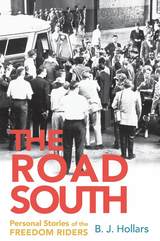
Revisits the inspiring and heroic stories of the Freedom Riders, through their own words.
In May 1961, despite multiple Supreme Court rulings, segregation remained alive and well within the system of interstate travel. All across the American South, interstate buses as well as their travel facilities were divided racially. This blatant disregard for law and morality spurred the Congress of Racial Equality to send thirteen individuals—seven black, six white—on a harrowing bus trip throughout the South as a sign of protest.
These original riders were met with disapproval, arrests and violence along the way, but that did not stop the movement. That summer, more than four hundred Freedom Riders continued their journey—many of them concluding their ride at Mississippi’s notorious Parchman Farm, where they endured further abuses and indignities. As a result of the riders sacrifice, by November of 1961, the Interstate Commerce Commission finally put an end to interstate commerce segregation, and in the process, elevated the riders to become a source of inspiration for other civil rights campaigns such as voter registration rights and school desegregation.
While much has been written on the Freedom Rides, far less has been published about the individual riders. Join award-winning author B. J. Hollars as he sets out on his own journey to meet them, retracing the historic route and learning the stories of as many surviving riders as he could. The Road South: Personal Stories of the Freedom Riders offers an intimate look into the lives and legacies of the riders. Throughout the book these civil rights veterans’ poignant, personal stories offer timely insights into America’s racial past and hopeful future.
Weaving the past with the present, Hollars aims to demystify the legendary journey, while also confronting more modern concerns related to race in America. The Road South is part memoir and part research-based journalism. It transcends the traditional textbook version of this historical journey to highlight the fascinating stories of the many riders—both black and white—who risked their lives to move the country forward.
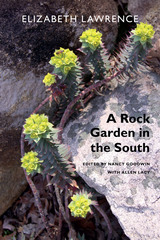
Lawrence, in her usual exquisite prose, deals with the full range of rock gardening topics in this work. She addresses the unique problem of cultivating rock gardens in the South, where the growing season is prolonged and humidity and heat are not conducive to such planting. She describes her own experiences in making a rock garden, with excellent advice on placing stones, constructing steps, ordering plants, and making cuttings.
At the same time, what she writes about here is in large part of interest to gardeners everywhere and for gardens with or without rocks. As always, she thoroughly discusses the plants she has tried—recommending bulbs and other perennials of all sorts, annuals, and woody plants—with poetic descriptions of the plants themselves as well as specific and useful cultural advice. A Rock Garden in the South includes an encyclopedia of plants alphabetized by genus and species and divided into two parts: wood and non-woody plants.

Romances of the White Man's Burden takes on works in American literature in which the proverbial "old plantation" is made to seem not a relic but a harbinger, a sign that the South had arrived at a multiracial modernity and harmony before the rest of the United States. Focusing on writers such as Joel Chandler Harris, Thomas Nelson Page, Henry W. Grady, Thomas Dixon, and William Faulkner, Jeremy Wells reveals their shared fixation on the figure of the white southern man as specially burdened by history. Each of these writers, in his own way, presented the plantation South as an emblem, not an aberration, of America.
READERS
Browse our collection.
PUBLISHERS
See BiblioVault's publisher services.
STUDENT SERVICES
Files for college accessibility offices.
RECENTLY PUBLISHED




UChicago Accessibility Resources
home | accessibility | search | about | contact us
BiblioVault ® 2001 - 2025
The University of Chicago Press