
 A SCHOLARLY BOOK REPOSITORY
244 start with S start with S


After being forced from his native country by an unforgiving father who embodies the authoritarian temper of the Brazilian dictatorship and is embarrassed by his son’s homosexuality and transvestism, Stella Manhattan, alter ego of Eduardo da Costa e Silva, lands a job in the Brazilian consulate with the help of his father’s friend, Colonel Valdevinos Vianna. Eduardo is also recruited by Vianna to help him bring his own alter ego, the sadomasochist Black Widow, out of the closet. Transformed by black leather, the Black Widow cruises the streets and bars of New York in search of American flesh. Surrounding the relationship between these two men is a group of Brazilian guerrillas who attempt to press Eduardo into their service in order to entrap the colonel. The guerrillas are at the center of a network of revolutionaries, from the Cubans to the Black Panthers and the Young Lords. Virtually apolitical, Eduardo/Stella is drawn by desire into the conflict between the Brazilian government and its communist opposition.
Eduardo also gets caught in the designs of other memorable characters of various sexual and political persuasions: the reactionary professor Aníbal, confined to a wheelchair, who enjoys watching his wife Leila make love with men she picks up on the street; and Paco, alias La Cucaracha, a flamboyant queen, a rabid anti-Castro Cuban exile, and the most sympathetic of this gallery of outcasts.
Working through two complex themes—politics and sex—Santiago sets the action in New York to emphasize the interaction of the seemingly contradictory impulses of liberation and Americanization that Brazil underwent in the late 1960s. As in Manuel Puig’s Kiss of the Spider Woman, political and sexual liberation cut two ways—neither one necessarily compatible with the other. Exploring the complexities of repression that affect all forms of identity, Santiago mingles tragedy and farce as international intrigues are played out in New York’s Latino and black neighborhoods, and the genteel world of international diplomacy is thrust into the milieu of urban gay street life.

In this follow up to Stephen King on the Big Screen, Mark Browning turns his critical eye to the much-neglected subject of the best-selling author’s work in television, examining what it is about King’s fiction that makes it particularly suitable for the small screen.
By focusing on this body of work, from the highly successful The Stand and The Night Flier to the lesser-known TV films Storm of the Century, Rose Red, Kingdom Hospital, and the 2004 remake of Salem’s Lot, Browning is able to articulate how these adaptations work and, in turn, suggest new ways of viewing them. This book is the first written by a film specialist to consider King’s television work in its own right, and it rejects previous attempts to make the films and books fit rigid thematic categories. Browning examines what makes a written or visual text successful at evoking fear on a case-by-case basis, in a highly readable and engaging way. He also considers the relationship between the big and small screen. Why, for instance, are some TV versions more effective than movie adaptations and vice versa? In the process, Stephen King on the Small Screen is able to shed new light on what it is that makes King’s novels so successful and reveal the elements of style and approach that have helped make King one of the world’s best-selling authors.
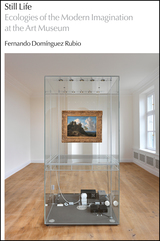
Still Life offers a fascinating and detailed ethnographic account of what it takes to prevent these disasters from happening. Going behind the scenes at MoMA, Domínguez Rubio provides a rare view of the vast technological apparatus—from climatic infrastructures and storage facilities, to conservation labs and machine rooms—and teams of workers—from conservators and engineers to guards and couriers—who fight to hold artworks still.
As MoMA reopens after a massive expansion and rearranging of its space and collections, Still Life not only offers a much-needed account of the spaces, actors, and forms of labor traditionally left out of the main narratives of art, but it also offers a timely meditation on how far we, as a society, are willing to go to keep the things we value from disappearing into oblivion.
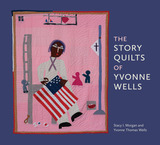
The introduction and definitive guide to the work of celebrated folk artist Yvonne Wells, whose vibrant, innovative story quilts address an array of historic, cultural, and religious themes
The Story Quilts of Yvonne Wells is an introduction and definitive guide to the self-taught quilter whose expansive body of work serves as testament to the sweeping tides of American life and Wells’s significance as a major figure within the folk art and art world writ large.
Beginning when she was nearly 40 years old and without formal training, Wells created her first quilt for practical use but was soon hand stitching appliqué figures into bold, original designs that unleashed her voice as a storyteller. Incorporating a wide variety of symbolic materials and unconventional objects—“anything I can stick a needle in”—Wells’s vivid story quilts reveal a fearless and encyclopedic vision ranging from the intimately autobiographical to iconic scenes from African American history, the Bible, Southern culture, and contemporary headlines.
The result of years of close collaboration between Stacy I. Morgan and Wells herself, The Story Quilts of Yvonne Wells is richly illustrated with more than 100 quilts accompanied by narratives about each, told in the artist's own words, and interspersed with in-depth essays documenting Wells’s unique artistic practice and creative journey during her five-decade art career.
The thirteen contributors to this volume enter these debates from a variety of critical perspectives. They address questions of language and ideology, the tradition of the sentimental novel, biblical influences, and the rhetoric of antislavery discourse. As much as they disagree on various points, they share a keen interest in the cultural work that texts can do and an appreciation of the enduring power of Uncle Tom's Cabin.
A new reading that troubles and transgresses the normal with regard to biblical studies and our understandings of gender and sexuality
Despite its lack of both historical and exegetical clarity, 1 Corinthians 11:2-16 has often been fundamental to understandings of gender and sexuality in many Christian traditions. In particular, a hierarchical model of gender and a heterosexual model of sexuality tend to dominate and are presented as “natural” and “God-ordained.” With the materialist lesbian theory of Monique Wittig providing the theoretical basis for discussion, this book intersects various biblical, theological, and queer lines of inquiry across 1 Corinthians 11:2-16 in order to reveal and challenge these models of gender and sexuality that lie behind both the text itself and its various interpretations.
Features
- Reveals the complex relationship between effeminacy, masculinity and sexual relations in the first century Greco-Roman environment of the New Testament
- Explores the ideologies of sexuality that underlie much of the debate within evangelical circles
- Examines Karl Barth’s theology on the binary pairing of “man and woman” as asymmetrically related to each other and to God through the notion of the imago dei, revealing and challenging the ways in which this reflects androcentric and patriarchal ideologies

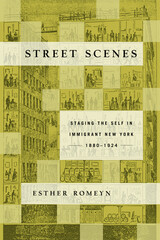
Street Scenes focuses on the intersection of modern city life and stage performance. From street life and slumming to vaudeville and early cinema, to Yiddish theater and blackface comedy, Esther Romeyn discloses racial comedy, passing, and masquerade as gestures of cultural translation. In these performances she detects an obsession with the idea of the city as theater and the self as actor, which was fueled by the challenges that consumer capitalism presented to notions of an “authentic” self.
It was exactly this idea of “authentic” immigrant selfhood that was at stake in many performances on the popular stage, and Romeyn ultimately demonstrates how these diverse and potent immigrant works influenced the emergence of a modern metropolitan culture.
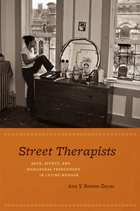
Drawing from almost a decade of ethnographic research in largely Brazilian and Puerto Rican neighborhoods in Newark, New Jersey, Ana Y. Ramos-Zayas, in Street Therapists,examines how affect, emotion, and sentiment serve as waypoints for the navigation of interracial relationships among US-born Latinos, Latin American migrants, blacks, and white ethnics. Tackling a rarely studied dynamic approach to affect, Ramos-Zayas offers a thorough—and sometimes paradoxical—new articulation of race, space, and neoliberalism in US urban communities.
After looking at the historical, political, and economic contexts in which an intensified connection between affect and race has emerged in Newark, New Jersey, Street Therapists engages in detailed examinations of various community sites—including high schools, workplaces, beauty salons, and funeral homes, among others—and secondary sites in Belo Horizonte, Brazil and San Juan to uncover the ways US-born Latinos and Latin American migrants interpret and analyze everyday racial encounters through a language of psychology and emotions. As Ramos-Zayas notes, this emotive approach to race resurrects Latin American and Caribbean ideologies of “racial democracy” in an urban US context—and often leads to new psychological stereotypes and forms of social exclusion. Extensively researched and thoughtfully argued, Street Therapists theorizes the conflictive connection between race, affect, and urban neoliberalism.
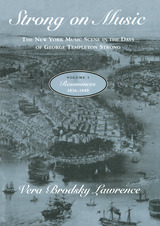
Formerly a concert pianist, Vera Brodsky Lawrence spent the last third of her life as a historian of American music (she died in 1996). She was editor of The Piano Works of Louis Moreau Gottschalk and The Complete Works of Scott Joplin.
On Volume 1: "A marvelous book. There is nothing like it in the literature of American music."—Harold C. Schonberg, New York Times Book Review
On Volume 2: "A monumental achievement."—Victor Fell Yellin, Opera Quarterly

Each chapter presents one year in the musical life of New York City, with Lawrence's extensive commentary enriched both by excerpts from Strong's diaries and a lavish selection of little-known music criticism and comment from the period. The reviews, written by an often truculent, sometimes venal tribe of music journalists, cover the entire world of music—from opera to barrel organ, salon to saloon.
In this New York, operas performed by renowned artists are parodied by blackface minstrels; performances of the Philharmonic Society are drowned by the raucous chatter of flirtatious adolescents, who turn concerts into a noisy singles' hangout; and irate critics trash the first performances of Verdi operas, calling the plots indecent and the scores noisy and unmelodic. In this volatile atmosphere, a native musical culture is born; its whose first faltering efforts are dubiously received, and the first American composers begin to emerge.
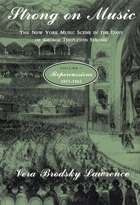
Among the many striking scenes vividly portrayed in Repercussions are the rapturous reception of Verdi's Ballo in maschera in 1861; the impact of the Civil War on New York's music scene, from theaters closing as their musicians enlisted to the performance of "The Star-Spangled Banner" at every possible occasion; and open-air concerts in the developing Central Park. Throughout, Lawrence mines a treasure trove of primary source materials including daily newspapers, memoirs, city directories, and architectural drawings.
Indispensable for scholars, Repercussions will also fascinate music fans with its witty writing and detailed descriptions of the cultural life of America's first metropolis.
Formerly a concert pianist, Vera Brodsky Lawrence spent the last third of her life as a historian of American music (she died in 1996). She was editor of The Piano Works of Louis Moreau Gottschalk and The Complete Works of Scott Joplin.
On Volume 1: "A marvelous book. There is nothing like it in the literature of American music."—Harold C. Schonberg, New York Times Book Review
On Volume 2: "A monumental achievement."—Victor Fell Yellin, Opera Quarterly


Edited by Paul M. Postal and Brian D. Joseph, this volume is the third in a series highlighting work in Relational Grammar. It extends the foundational studies of the first two volumes to refine and modify the insights, analyses, and theoretical devices developed in earlier connections, while at the same time providing support for some of the earlier constructs and claims.
Of the nine papers, four treat various aspects of advancements to and demotions from indirect object; three deal with raising and clause union constructions, in which initial immediate constituents of one structure are nonimmediate constituents of another; and two are concerned with problems in the description and formalization of verbal agreement systems. The nine articles cover languages ranging from Chamorro to English, French, Georgian, Greek, Japanese, Kek'chi, Korean, Southern Tiwa, Spanish, and Tzotzil.
Unmade, unseen, and unreleased film and television are a strikingly underexplored aspect of media history, even though significant financial investment and creative labor in these industries are devoted to projects that never reach production or distribution. This groundbreaking collection offers a comprehensive examination of this phenomenon, bringing together interdisciplinary perspectives from film history, gender and sexuality studies, industry studies, archival research, and creative practice.
Each chapter presents a state-of-the-art overview of a key theme, debate, method, or theory, drawing on illuminating case studies from different historical periods and global contexts. Together, the contributions define what it means for a work to remain unmade, unseen, or unreleased, while showcasing innovative research approaches and mapping the scale of unfinished projects in film and television. Serving as both a foundational text for students and a valuable reference for established researchers, the volume’s scope will offer an essential resource for anyone seeking to understand the hidden histories of the screen industries.
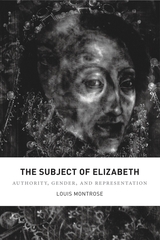
Montrose offers a masterful account of the texts, pictures, and performances in which the Queen was represented to her people, to her court, to foreign powers, and to Elizabeth herself. Retrieving this “Elizabethan imaginary” in all its richness and fascination, Montrose presents a sweeping new account of Elizabethan political culture. Along the way, he explores the representation of Elizabeth within the traditions of Tudor dynastic portraiture; explains the symbolic manipulation of Elizabeth’s body by both supporters and enemies of her regime; and considers how Elizabeth’s advancing age provided new occasions for misogynistic subversions of her royal charisma.
This book, the remarkable product of two decades of study by one of our most respected Renaissance scholars, will be welcomed by all historians, literary scholars, and art historians of the period.
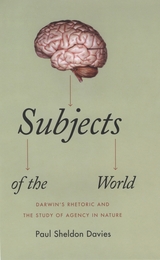
Being human while trying to scientifically study human nature confronts us with our most vexing problem. Efforts to explicate the human mind are thwarted by our cultural biases and entrenched infirmities; our first-person experiences as practical agents convince us that we have capacities beyond the reach of scientific explanation. What we need to move forward in our understanding of human agency, Paul Sheldon Davies argues, is a reform in the way we study ourselves and a long overdue break with traditional humanist thinking.
Davies locates a model for change in the rhetorical strategies employed by Charles Darwin in On the Origin of Species. Darwin worked hard to anticipate and diminish the anxieties and biases that his radically historical view of life was bound to provoke. Likewise, Davies draws from the history of science and contemporary psychology and neuroscience to build a framework for the study of human agency that identifies and diminishes outdated and limiting biases. The result is a heady, philosophically wide-ranging argument in favor of recognizing that humans are, like everything else, subjects of the natural world—an acknowledgement that may free us to see the world the way it actually is.
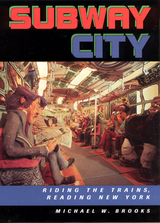
None of the world's great cities is as closely identified with its subway as New York. Its trains provide much more than just rapid transit. They give New Yorkers a powerful symbol of their metropolis, one that they use to express both their hopes and their fears for the urban future.
Subway City explores New York's transit system as both fact and metaphor. Brooks traces the development of the subway from its inception as the newest and most efficient public transportation system to its decline as an overcrowded and dangerous part of city life. The crowded cars gave Harold Lloyd material for comedy, fueled William Randolph Hearst's crusade against the Traction Trust, and convinced Lewis Mumford that the subway was a futile effort to solve the city's problems. Brooks explores films which have dramatized the dangers lurking below ground, and examines the infamous Bernhard Goetz shooting that made the subway a symbol of urban decay. More hopefully, he describes the Metropolitan Transportation Authority's station improvements and ambitious programs for Music Underground, Poetry in Transit, and Arts-in-Transit, as keys to the city's renewal.

The contributors to Successful Aging as a Contemporary Obsession explore how the successful aging movement is playing out across five continents. Their chapters investigate a variety of people, including Catholic nuns in the United States; Hindu ashram dwellers; older American women seeking plastic surgery; aging African-American lesbians and gay men in the District of Columbia; Chicago home health care workers and their aging clients; Mexican men foregoing Viagra; dementia and Alzheimer sufferers in the United States and Brazil; and aging policies in Denmark, Poland, India, China, Japan, and Uganda. This book offers a fresh look at a major cultural and public health movement of our time, questioning what has become for many a taken-for-granted goal—aging in a way that almost denies aging itself.
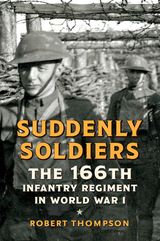
Finalist for the 2021 Army Historical Foundation Distinguished Writing Awards in Unit Histories
Americans Face the Horror of a Modern European War for the First Time
When America entered World War I in April 1917, state National Guard units had never planned to mobilize for this kind of war, and the men who made up the hometown companies of each regiment never imagined that they would be asked to fight in what was then the most savage war in human history—they were “innocents” being thrown into a horrendous European conflagration. Made up of companies from ten Ohio towns, the 166th Infantry Regiment became part of the famous 42nd Division, known as the “Rainbow Division.” They were the third American division to arrive in France, where they fought courageously in the trenches at Lunéville and Baccarat before being a key part of the American effort in the Second Battle of the Marne and the Saint Mihiel and Meuse-Argonne offensives. Despite their initial lack of training in modern warfare and weapons, the 166th Infantry compiled an impressive combat record. However, that record came at a terrible cost, with the regiment suffering over two thousand casualties in just nine months of fighting. While they battled the Germans, these hometown Guardsmen lived in trenches and foxholes for weeks at a time, while subsisting on canned beef and coffee amid near constant rain, deep mud, rats, and body lice that made their lives miserable. Because of poor planning and leadership from higher headquarters, they were often asked to achieve impossible objectives amid withering enemy machine-gun fire without proper logistics or artillery support. Yet, despite these challenges, they would persevere, overcome, and emerge victorious.
Using regimental histories and the letters and diaries of the soldiers who fought in France, Suddenly Soldiers: The 166th Infantry Regiment in World War I by author and historian Robert Thompson tells the compelling story of the young men—“citizen soldiers”—who have always borne the cost of America’s freedom with quiet courage.
Marking forty years since the film’s release, this book presents original interview transcripts with the cast and crew. It serves as a rare insider account of an acclaimed blockbuster that was steeped in controversy throughout production, from its record-breaking budget to conflicts between the director and producers. With refreshing candor, the interviewees cast light on the daily realities on set, as well as on the film’s release and reception. Beginning with the film’s inception and continuing through its runaway success, this book provides valuable insights into the practical logistics and day-to-day realities of mounting a big-budget production, at a time when high-concept Hollywood blockbusters were only just emerging as a genre.
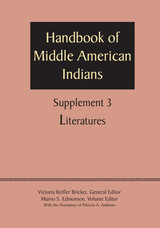
Munro S. Edmonson, volume editor
The sixteen-volume Handbook of Middle American Indians, completed in 1976, has been acclaimed the world over as the single most valuable resource ever produced for those involved in the study of Mesoamerica. When it was determined in 1978 that the Handbook should be updated periodically, Victoria Reifler Bricker, well-known cultural anthropologist, was elected to be general editor.
This third volume of the Supplement is devoted to the aboriginal literatures of Mesoamerica, a topic receiving little attention in the original Handbook. According to the general editor, "This volume does more than supplement and update the coverage of Middle American Indian literatures in the Handbook. It breaks new ground by defining the parameters of a new interdisciplinary field in Middle American Indian studies."
The aim of the present volume is to consider literature from five Middle American Indian languages: Nahuatl, Yucatecan Maya, Quiche, Tzotzil, and Chorti. The first three literatures are well documented for both the Classical and Modern variants of their languages and are obvious candidates for inclusion in this volume. The literatures of Tzotzil and Chorti, on the other hand, are oral, and heretofore little has been written of their genres and styles.
Taken together, these essays represent a substantial contribution to the Handbook series, with the volume editor's introduction placing in geographic perspective the five literatures chosen as representative of the Middle American literary tradition.
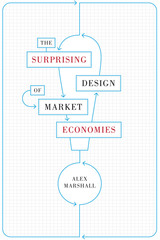
The “free market” has been a hot topic of debate for decades. Proponents tout it as a cure-all for just about everything that ails modern society, while opponents blame it for the very same ills. But the heated rhetoric obscures one very important, indeed fundamental, fact—markets don’t just run themselves; we create them.
Starting from this surprisingly simple, yet often ignored or misunderstood fact, Alex Marshall takes us on a fascinating tour of the fundamentals that shape markets and, through them, our daily economic lives. He debunks the myth of the “free market,” showing how markets could not exist without governments to create the structures through which we assert ownership of property, real and intellectual, and conduct business of all kinds. Marshall also takes a wide-ranging look at many other structures that make markets possible, including physical infrastructure ranging from roads and railroads to water systems and power lines; mental and cultural structures such as common languages and bodies of knowledge; and the international structures that allow goods, services, cash, bytes, and bits to flow freely around the globe.
Sure to stimulate a lively public conversation about the design of markets, this broadly accessible overview of how a market economy is constructed will help us create markets that are fairer, more prosperous, more creative, and more beautiful.
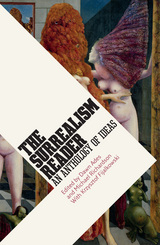
Including essays by leading surrealists and other major writers on the movement, the volume addresses the key themes of identity, otherness, freedom and morality, and poetry. The texts uncover, among other things, the significance of surrealism for the antifascist and anticolonialist movements and the various manifestations of surrealism in the years after World War II. Giving space to the many different voices that made up the movement, and placing them for the first time within a clear and coherent historical framework, The Surrealism Reader radically revises the popular understanding of what, and when, surrealism was—making this book an essential reference for students, scholars, and all those interested in the central place of surrealism within twentieth-century thought and culture.
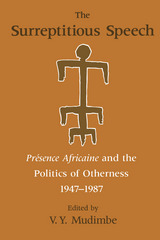
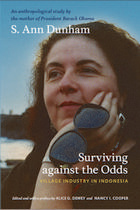
President Barack Obama’s mother, S. Ann Dunham, was an economic anthropologist and rural development consultant who worked in several countries including Indonesia. Dunham received her doctorate in 1992. She died in 1995, at the age of 52, before having the opportunity to revise her dissertation for publication, as she had planned. Dunham’s dissertation adviser Alice G. Dewey and her fellow graduate student Nancy I. Cooper undertook the revisions at the request of Dunham’s daughter, Maya Soetoro-Ng. The result is Surviving against the Odds, a book based on Dunham’s research over a period of fourteen years among the rural metalworkers of Java, the island home to nearly half Indonesia’s population. Surviving against the Odds reflects Dunham’s commitment to helping small-scale village industries survive; her pragmatic, non-ideological approach to research and problem solving; and her impressive command of history, economic data, and development policy. Along with photographs of Dunham, the book includes many pictures taken by her in Indonesia.
After Dunham married Lolo Soetoro in 1967, she and her six-year-old son, Barack Obama, moved from Hawai‘i to Soetoro’s home in Jakarta, where Maya Soetoro was born three years later. Barack returned to Hawai‘i to attend school in 1971. Dedicated to Dunham’s mother Madelyn, her adviser Alice, and “Barack and Maya, who seldom complained when their mother was in the field,” Surviving against the Odds centers on the metalworking industries in the Javanese village of Kajar. Focusing attention on the small rural industries overlooked by many scholars, Dunham argued that wet-rice cultivation was not the only viable economic activity in rural Southeast Asia.
Surviving against the Odds includes a preface by the editors, Alice G. Dewey and Nancy I. Cooper, and a foreword by her daughter Maya Soetoro-Ng, each of which discusses Dunham and her career. In his afterword, the anthropologist and Indonesianist Robert W. Hefner explores the content of Surviving against the Odds, its relation to anthropology when it was researched and written, and its continuing relevance today.
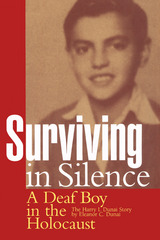
Izrael Zachariah Deutsch was born on March 15, 1934, in Komjata, Czechoslovakia. The second youngest child, Izrael lived a bucolic existence with nine brothers and sisters on a farm, differing from them only in that he was deaf. When he was six, his mother took him to Budapest, Hungary, and enrolled him in a Jewish school for deaf children, where he thrived. Soon, however, the Nazi regime in Germany and the Arrow Cross fascists in Hungary destroyed Izrael’s world forever.
Izrael realized that by being both Jewish and deaf, he faced a double threat of being exported to the gas chambers in Poland. But at every lethal junction, he found a way to survive, first by buying and reselling pastries for extra money that later saved his life in the Budapest ghetto. Still, Izrael was close to death from starvation when he was liberated by Russian soldiers on January 18, 1945.
Izrael survived the war only to learn that his parents and two brothers had been murdered by the Nazis. The rest of his brothers and sisters scattered to distant parts of the world. Forced to remain in Budapest, Izrael finished school and became an accomplished machinist. He avoided any part in the Hungarian uprising in 1956 so that he could secure a visa to leave for Sweden. From Sweden he traveled throughout Europe and Israel, using an amazing network of Holocaust survivors, relatives, and deaf friends to ease his journey. He finally settled in Los Angeles, where he married a deaf Jewish woman he had met years before. Along the way, he changed his name from Izrael Deutsch to Harry Dunai.

Combining contemporary case studies with comprehensive analyses of advertisements, critical responses, and censorship records, Larsson deconstructs the complexities and paradoxes of the Swedish porn scene. Looking as closely at the exhibition spaces where porn was seen as at the productions themselves and their audiences, Larsson reveals the conditions and social changes that allowed pornography in Sweden to flourish in the period.

It’s not an accident that hall of fame coaches, Pulitzer Prize-winning writers, and the marketing teams at the most innovative companies in the world often rely on a certain three-part structure when trying to communicate their ideas. This third volume of The Syntax of Sports series explores the mechanics of that structure and shows how it can add a compelling mix of clarity and sophistication to your writing.
Like in the previous volumes, the materials come from a popular course at the University of Michigan. Here are comments from students who have taken it:
“The quality of this course was fantastic!”
“Professor Barry really knows how to keep students engaged.”
“Professor Barry is very passionate about teaching, and his enthusiasm made me want to write and learn.”
“This course not only helps you become a better writer but also sheds light on how you might become a better person.”
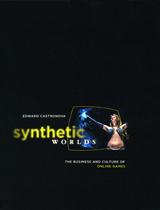
In Synthetic Worlds, Edward Castronova offers the first comprehensive look at the online game industry, exploring its implications for business and culture alike. He starts with the players, giving us a revealing look into the everyday lives of the gamers—outlining what they do in their synthetic worlds and why. He then describes the economies inside these worlds to show how they might dramatically affect real world financial systems, from potential disruptions of markets to new business horizons. Ultimately, he explores the long-term social consequences of online games: If players can inhabit worlds that are more alluring and gratifying than reality, then how can the real world ever compete? Will a day ever come when we spend more time in these synthetic worlds than in our own? Or even more startling, will a day ever come when such questions no longer sound alarmist but instead seem obsolete?
With more than ten million active players worldwide—and with Microsoft and Sony pouring hundreds of millions of dollars into video game development—online games have become too big to ignore. Synthetic Worlds spearheads our efforts to come to terms with this virtual reality and its concrete effects.
“Synthetic Worlds is a surprisingly profound book about the social, political, and economic issues arising from the emergence of vast multiplayer games on the Internet. What Castronova has realized is that these games, where players contribute considerable labor in exchange for things they value, are not merely like real economies, they are real economies, displaying inflation, fraud, Chinese sweatshops, and some surprising in-game innovations.”—Tim Harford, Chronicle of Higher Education
The problem of life is ambiguity. Every process of life has its contrast within itself, thus driving man to the quest for unambiguous life or life under the impact of the Spritual Presence. The Spritual Presence conquers the negativities of religion, culture, and morality, and the symbols anticipating Eternal Life present the answer to the problem of life.
READERS
Browse our collection.
PUBLISHERS
See BiblioVault's publisher services.
STUDENT SERVICES
Files for college accessibility offices.
RECENTLY PUBLISHED


UChicago Accessibility Resources
home | accessibility | search | about | contact us
BiblioVault ® 2001 - 2026
The University of Chicago Press