
 A SCHOLARLY BOOK REPOSITORY
68 start with S start with S

When the Nazis came, Étienne Boltanski divorced his wife and walked out the front door, never to be seen again during the war. So far as the outside world knew, the Jewish doctor had fled. The truth was that he had sneaked back to hide in a secret crawl space at the heart of the house. There he lived for the duration of the war. With the Liberation, Étienne finally emerged, but he and his family were changed forever—anxious, reclusive, yet proudly eccentric. Their lives were spent, amid Bohemian disarray and lingering wartime fears, in the mansion’s recesses or packed comically into the protective cocoon of a Fiat.
That house (and its vehicular appendage) is at the heart of Christophe Boltanski’s ingeniously structured, lightly fictionalized account of his grandparents and their extended family. The novel unfolds room by room—each chapter opening with a floorplan—introducing us to the characters who occupy each room, including the narrator’s grandmother—a woman of “savage appetites”—and his uncle Christian, whose haunted artworks would one day make him famous. “The house was a palace,” Boltanski writes, “and they lived like hobos.” Rejecting convention as they’d rejected the outside world, the family never celebrated birthdays or even marked the passage of time, living instead in permanent stasis, ever more closely bonded to the house itself.
The Safe House was a literary sensation when published in France in 2015 and won the Prix de Prix, France’s most prestigious book prize. A French-language film adaptation, La cache, was released in 2025 from director Lionel Baier. With hints of Oulipian playfulness and an atmosphere of dark humor, The Safe House is an unforgettable portrait of a self-imprisoned family.
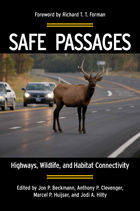
- an overview of the importance of habitat connectivity with regard to roads
- current planning approaches and technologies for mitigating the impacts of highways on both terrestrial and aquatic species
- different facets of public participation in highway-wildlife connectivity mitigation projects
- case studies from partnerships across North America that highlight successful on-the-ground implementation of ecological and engineering solutions
- recent innovative highway-wildlife mitigation developments
Safe Passages is an important new resource for local-, state-, and national-level managers and policymakers working on road-wildlife issues, and will appeal to a broad audience including scientists, agency personnel, planners, land managers, transportation consultants, students, conservation organizations, policymakers, and citizens engaged in road-wildlife mitigation projects.
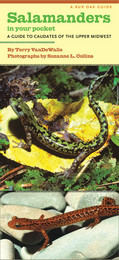
Common mudpuppies and lesser sirens spend their entire lives in water, never losing the gills that they developed as larvae; the lungless four-toed salamander distracts predators by detaching its tail; the eastern newt discourages predators by secreting poisonous chemicals from its skin; the flat-bodied hellbender, which can reach twenty-nine inches in length, breathes by absorbing oxygen through the folds of its skin. These, plus the well-named slimy, zigzag, tiger, and other salamanders in this guide, are now threatened by loss of habitat, pollution, and a deadly fungus.
Terry VanDeWalle provides a complete description of each species as well as distinguishing characteristics for twenty-one subspecies, from the striking orange and yellow spots of the spotted salamander to the lichenlike patches of the green salamander to the prominent rounded head of the mole salamander. He also includes information about the salamanders’ range and habitat preferences, from twilight zones of limestone caves and crevices to seepages and spring-fed bogs. His comparisons of similar species and his comprehensive key are most helpful for identifying individuals in the field. Superb photographs by Suzanne Collins make this new guide the perfect companion for outdoor expeditions in all kinds of moist environments.
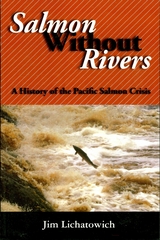
"Fundamentally, the salmon's decline has been the consequence of a vision based on flawed assumptions and unchallenged myths.... We assumed we could control the biological productivity of salmon and 'improve' upon natural processes that we didn't even try to understand. We assumed we could have salmon without rivers." --from the introduction
From a mountain top where an eagle carries a salmon carcass to feed its young to the distant oceanic waters of the California current and the Alaskan Gyre, salmon have penetrated the Northwest to an extent unmatched by any other animal. Since the turn of the twentieth century, the natural productivity of salmon in Oregon, Washington, California, and Idaho has declined by eighty percent. The decline of Pacific salmon to the brink of extinction is a clear sign of serious problems in the region.
In Salmon Without Rivers, fisheries biologist Jim Lichatowich offers an eye-opening look at the roots and evolution of the salmon crisis in the Pacific Northwest. He describes the multitude of factors over the past century and a half that have led to the salmon's decline, and examines in depth the abject failure of restoration efforts that have focused almost exclusively on hatcheries to return salmon stocks to healthy levels without addressing the underlying causes of the decline. The book:
- describes the evolutionary history of the salmon along with the geologic history of the Pacific Northwest over the past 40 million years
- considers the indigenous cultures of the region, and the emergence of salmon-based economies that survived for thousands of years
- examines the rapid transformation of the region following the arrival of Europeans
- presents the history of efforts to protect and restore the salmon
- offers a critical assessment of why restoration efforts have failed
Throughout, Lichatowich argues that the dominant worldview of our society -- a worldview that denies connections between humans and the natural world -- has created the conflict and controversy that characterize the recent history of salmon; unless that worldview is challenged and changed, there is little hope for recovery. Salmon Without Rivers exposes the myths that have guided recent human-salmon interactions. It clearly explains the difficult choices facing the citizens of the region, and provides unique insight into one of the most tragic chapters in our nation's environmental history.
Information regarding population status and abundance of rare species plays a key role in resource management decisions. Ideally, data should be collected using statistically sound sampling methods, but by their very nature, rare or elusive species pose a difficult sampling challenge.
Sampling Rare or Elusive Species describes the latest sampling designs and survey methods for reliably estimating occupancy, abundance, and other population parameters of rare, elusive, or otherwise hard-to-detect plants and animals. It offers a mixture of theory and application, with actual examples from terrestrial, aquatic, and marine habitats around the world.
Sampling Rare or Elusive Species is the first volume devoted entirely to this topic and provides natural resource professionals with a suite of innovative approaches to gathering population status and trend data. It represents an invaluable reference for natural resource professionals around the world, including fish and wildlife biologists, ecologists, biometricians, natural resource managers, and all others whose work or research involves rare or elusive species.

Howard Ensign Evans was a brilliant ethologist and systematist for whom the joy of science included lying on his belly in some remote location, digging out and diagramming a wasp’s nest. During his career, Evans described over 900 species and authored more than a dozen books, both technical and popular, on a wide range of entomological and natural history subjects. Upon his death in 2002, he left behind an unfinished manuscript, intended as an update (though not a revision) of his classic 1966 work, The Comparative Ethology and Evolution of the Sand Wasps. Kevin O’Neill, Evans’s former student and coauthor, has completed and enlarged Evans’s manuscript to provide coverage of all sand-wasp tribes in Evan’s earlier book. The result is a tribe-by-tribe, species-by-species review of studies of the Bembicinae that have appeared over the last four decades.
The Sand Wasps: Natural History and Behavior already has been hailed by specialists as a new bible for those working on solitary wasps and an essential reference for scientists more broadly interested in insect behavioral evolution.
In the 1980s, numerous scientific surveys documented both declining bird populations, especially among Neotropical songbirds that winter in the tropics, and the loss of tropical rain forest habitat. Drawing the seemingly obvious conclusion, scientists and environmental activists linked songbird declines to loss of tropical habitats and alerted the world to an impending ecological catastrophe. Their warnings led to the establishment of the Neotropical Migratory Bird Conservation Program, also known as Partners in Flight, the self-proclaimed largest conservation effort in history.
Looking back over more than a decade of efforts to save migrant birds, John Faaborg offers the first serious evaluation of the state of songbird populations today, the effectiveness of conservation programs such as Partners in Flight, and the reliability and completeness of scientific research on migrant birds. Taking neither an alarmist nor a complacent approach, he shows that many factors besides habitat loss affect bird populations and that Neotropical migrants as a group are not declining dramatically, though some species adapt to habitat alteration more successfully than others. Faaborg's state-of-the-art survey thus clarifies the kinds of information we will need and the conservation efforts we should undertake to ensure the long-term survival of Neotropical migrant birds.

The story of a fascinating fish and the forward-thinking people who saved them in Wisconsin
For millennia, sturgeon swam the waterways of Wisconsin. Before the 1800s, an estimated eleven million sturgeon lived in Lake Michigan alone. Menominee and Ojibwe people depended on the fish for food and harvested them sustainably. But in the early 1900s, the lake sturgeon was near extinction. Saving Our Sturgeon tells the remarkable story of lake sturgeon in Wisconsin, the conservation efforts to save the species, and what is being done to keep the population healthy and thriving today.
Readers will learn about the natural history of the lake sturgeon—its anatomy, behavior, and habitat—and the factors that threatened its survival, from overharvesting to the building of dams that prevented sturgeon from reaching spawning areas. The book, written for young readers aged eleven and up, explains how government agencies, conservationists, and citizen groups worked together to save the sturgeon population in Wisconsin.
Saving Our Sturgeon includes a chapter about the Menominee Nation’s work to revitalize cultural traditions focused on the sturgeon and restore access to the fish on their reservation. The book also highlights how young people can get involved with sturgeon conservation efforts.
A great resource for classroom use, Saving Our Sturgeon contains maps, photos, and diagrams, plus a glossary of terms, a timeline of events, a Who’s Who list of individuals and groups featured in the book, and a bibliography that highlights kid-friendly sources to learn more. Young readers will learn basic facts about sturgeon biology, what it means for a species to be threatened or endangered, and how scientists use data to support repopulation. This inspiring book shares a conservation success story about one remarkable (and plenty peculiar) species of fish and shows young readers how they, too, can help protect these incredible creatures.
Ages 11 - 14; Grade level 6 - 9; Lexile® measure 1060L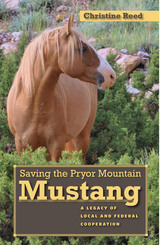
Saving the Pryor Mountain Mustang explores the unique and ongoing relationship between locals and the federal government, highlighting the Lovell citizens’ philosophy of cooperation instead of the typical mistrust that exists between wild horse advocates and federal agencies. The book provides a rich analysis of how a determined group of people saved an endangered wild horse herd. The book will have wide appeal to wild horse activists, scholars of local and federal governance, and western history enthusiasts.
Divided into six sections, Say This of Horses considers horses in a multitude of times and places. “Antiquity” explores the forging of the earliest mythical ties between horses and humans. “Here, Now” places horses in the present, where their physical presence is most acutely felt. “Esssence” explores the metaphysical qualities of horses. “Harnessed” contains a selection of poems about horses in war, at work, and in sport and recreation. “Mirrors” shows them as imaginative symbols. Finally, “Lenses” moves into the realm of abstraction and fantasy.
The selections within this far-reaching collection are joyous, moving, erudite, and at times profoundly sad. Poems by Henry Wadsworth Longfellow, W. S. Merwin, Tess Gallagher, Yusef Komunyakaa, Pablo Neruda, Anne Sexton, Wallace Stevens, May Sarton, Jane Kenyon, and James Dickey, among many others, are sure to delight and surprise readers familiar with or just exploring the rich literature on horses.
Contributors include:
Guillaume Apollinaire, Gwendolyn Brooks, Lawrence Ferlinghetti, C.E. Greer, Donald Hall, Joy Harjo, Imru’ al-Qays, Ted Kooser, Philip Larkin, Ann McCarthy de Zavala, Rainer Maria Rilke, Patiann Rogers, William Carlos Williams
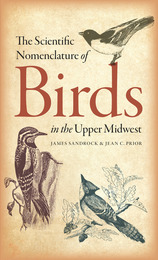
The authors examine the roots, stems, and construction of scientific names from their classical Latin and Greek or other linguistic origins. The translations of these words and insights into their sources yield quirky, tantalizing facts about the people, geography, habitat, and mythology behind bird names. Each entry also includes the bird’s common name as well as local or regional names. Beginning birders confused by scientific names as well as more experienced birders curious about such names will find that the book opens unexpected connections into linguistic, historical, biological, artistic, biographical, and even aesthetic realms.
Highlighting the obvious and not-so-obvious links between birds and language, this practical guide continues a long scholarly tradition of such books by and for those afoot in the field. Whether you are hiking with binoculars or watching a backyard bird feeder or reading at home, The Scientific Nomenclature of Birds in the Upper Midwest will greatly enhance your appreciation of birds.
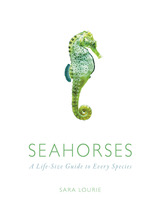
Seahorses celebrates the remarkable variety of seahorse species as well as their exquisiteness. 57 species, including seadragons and pipefish, are presented in lush, life-size photographs alongside descriptive drawings, and each entry includes detailed and up-to-date information on natural history and conservation. Sara Lourie, a foremost expert on seahorse taxonomy, presents captivating stories of species that range from less than an inch to over a foot in height, while highlighting recent discoveries and ecological concerns. Accessibly written, but comprehensive in scope, this book will be a stunning and invaluable reference on seahorse evolution, biology, habitat, and behavior.
Masters of camouflage and rarely seen, seahorses continue to be a fascinating subject of active research. This visually rich and informative book is certain to become the authoritative guide to these charming and unusual wonders of the sea, beloved at aquariums the world over.
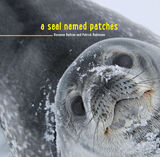
Scientists Roxanne Beltran and Patrick Robinson set off on a polar adventure, traveling to Antarctica to study the lives of Weddell seals. By finding Patches, a wily seal they’ve been tracking since its birth, they’ll be able to learn a lot about how much the seals get to eat and how many pups they raise. A Seal Named Patches takes young readers into the world at the very bottom of the globe, where they meet the extraordinary animals that live in cold, icy conditions. Through breathtaking photos and real-life stories, young readers will learn about how scientists do fieldwork, the challenges of researching animals in harsh climates, and even what it’s like to fly a helicopter over Antarctica. This engaging story will especially entertain and educate children in grades K-2 (ages 5–8.)

Published by Bucknell University Press.
Distributed worldwide by Rutgers University Press.

Mostly tiny, infinitely delicate, and short-lived, insects and their relatives--arthropods--nonetheless outnumber all their fellow creatures on earth. How lowly arthropods achieved this unlikely preeminence is a story deftly and colorfully told in this follow-up to the award-winning For Love of Insects. Part handbook, part field guide, part photo album, Secret Weapons chronicles the diverse and often astonishing defensive strategies that have allowed insects, spiders, scorpions, and other many-legged creatures not just to survive, but to thrive.
In sixty-nine chapters, each brilliantly illustrated with photographs culled from Thomas Eisner's legendary collection, we meet a largely North American cast of arthropods--as well as a few of their kin from Australia, Europe, and Asia--and observe at firsthand the nature and extent of the defenses that lie at the root of their evolutionary success. Here are the cockroaches and termites, the carpenter ants and honeybees, and all the miniature creatures in between, deploying their sprays and venom, froth and feces, camouflage and sticky coatings. And along with a marvelous bug's-eye view of how these secret weapons actually work, here is a close-up look at the science behind them, from taxonomy to chemical formulas, as well as an appendix with instructions for studying chemical defenses at home. Whether dipped into here and there or read cover to cover, Secret Weapons will prove invaluable to hands-on researchers and amateur naturalists alike, and will captivate any reader for whom nature is a source of wonder.
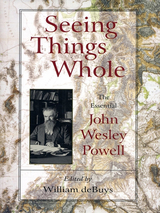
John Wesley Powell was an American original. He was the last of the nation's great continental explorers and the first of a new breed of public servant: part scientist, part social reformer, part institution builder. His work and life reveal an enduringly valuable way of thinking about land, water, and society as parts of an interconnected whole; he was America's first great bioregional thinker.
Seeing Things Whole presents John Wesley Powell in the full diversity of his achievements and interests, bringing together in a single volume writings ranging from his gripping account of exploring the Colorado River through the Grand Canyon to his views on the evolution of civilization, along with the seminal writings in which he sets forth his ideas on western settlement and the allocation and management of western resources.
The centerpiece of Seeing Things Whole is a series of selections from the famous 1878 Report on the Lands of the Arid Region and related magazine articles in which Powell further develops the themes of the report. In those, he recommends organizing the Arid Lands into watershed commonwealths governed by resident citizens whose interlocking interests create the checks and balances essential to wise stewardship of the land. This was the central focus of John Wesley Powell's bioregional vision, and it remains a model for governance that many westerners see as a viable solution to the resource management conflicts that continue to bedevil the region.
Throughout the collection, award-winning writer and historian William deBuys brilliantly sets the historical context for Powell's work. Section introductions and extensive descriptive notes take the reader through the evolution of John Wesley Powell's interests and ideas from his role as an officer in the Civil War through his critique of Social Darwinism and landmark categorization of Indian languages, to the climatic yet ultimately futile battles he fought to win adoption of his land-use proposals.
Seeing Things Whole presents the essence of the extraordinary legacy that John Wesley Powell has left to the American people, and to people everywhere who strive to reconcile the demands of society with the imperatives of the land.
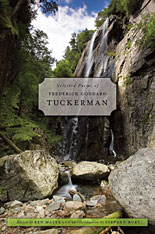
Unlike Whitman, Dickinson, or Wordsworth, Frederick Goddard Tuckerman (1821–1873) never wanted to start a revolution in poetry. Nor did he—like Longfellow or his friend Tennyson—capture or ever try to represent the spirit of his age. Yet he remains one of America’s most passionate, moving, and technically accomplished poets of the nineteenth century: a New Englander through and through, a poet of the outdoors, wandering fields and wooded hillsides by himself, driven to poetry and the solitude of nature by the loss of his beloved wife. This is the persona we encounter again and again in Tuckerman’s sonnets and stanzaic lyric poetry.
Correcting numerous errors in previous editions, this is the first reliable reading edition of Tuckerman’s poetry. Ben Mazer has painstakingly re-edited the poems in this selection from manuscripts at the Houghton Library. Included in this generous selection are several important poems omitted in The Complete Poems of Frederick Goddard Tuckerman. In her introduction to the volume, Stephanie Burt celebrates an extraordinary poet of mourning and nature—an anti-Transcendental—who in many ways seems closer to writers of our own century than to, say, Emerson or even Thoreau. Readers who enjoy the verse of Richard Wilbur, Anthony Hecht, or Mary Oliver will find much to admire in Tuckerman’s poetry.

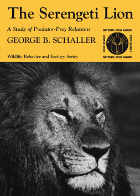
Based on three years of study in the Serengeti National Park, George B. Schaller’s The Serengeti Lion describes the vast impact of the lion and other predators on the vast herds of wildebeest, zebra, and gazelle for which the area is famous. The most comprehensive book available on the lion, this classic work includes the author’s findings on all aspects of lion behavior, including its social system, population dynamics, hunting behavior, and predation patterns.
“If you have only enough time to read one book about field biology, this is the one I recommend.”—Edward O. Wilson, Science
“This book conveys not only the fascination of its particular study of lion behavior but the drama and wonder and beauty of the intimate interdependence of all living things.”—Saturday Review
“This is an important book, not just for its valuable information on lions, but for its broad, open, and intelligent approach to problems that cut across the fields of behavior, populations, ecology, wildlife management, evolution, anthropology, and comparative biology.”—Richard G. Van Gelder, Bioscience

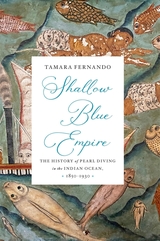
A nuanced history of seafaring communities in the Indian Ocean, where the force of British imperial power depended on the expertise of local divers and sailors to feed a global demand for pearls.
In the late nineteenth century, thousands of men and boys across the northern rim of the Indian Ocean dove daily to the ocean floor in search of pearl-bearing oysters. It was the height of the so-called global pearl boom, driven by enormous demand for pearls in Europe and North America. Far removed from the showrooms of New York, London, and Paris, these divers drew on skills and expertise handed down across generations to conduct the dangerous work of hauling oysters up from the warm shallows. But they also faced a new challenge: the rise of British power in the Indian Ocean, where colonial officials relied heavily on local knowledge and labor to feed the lucrative pearling industry.
Tamara Fernando examines the transformations wrought by colonial extraction across the three primary sites that fed the pearl boom between 1850 and 1930: the Persian Gulf, the Gulf of Mannar near Sri Lanka, and the Mergui Archipelago in Myanmar. British oversight transformed migration patterns and the dynamics of race and caste among divers, while imperial scientists regularly tested new technologies and techniques intended to improve oyster hauls. Yet even as the positions of local divers and sailors changed dramatically, their expertise remained paramount to the industry—until, in the 1930s, the depletion of oyster beds and the rise of lab-grown alternatives shuttered the market for natural pearls altogether.
A vivid account of how seafaring communities navigated these shifting tides, Shallow Blue Empire fundamentally recenters the human labor, animal lives, and environmental conditions that sustained a global obsession with pearls.
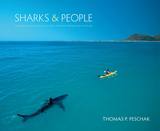
A contributing photographer to National Geographic, Peschak is best known for his unusual photographs of sharks—his iconic image of a great white shark following a researcher in a small yellow kayak is one of the most recognizable shark photographs in the world. The other images gathered here are no less riveting, bringing us as close as possible to sharks in the wild. Alongside the photographs, Sharks and People tells the compelling story of the natural history of sharks. Sharks have roamed the oceans for more than four hundred million years, and in this time they have never stopped adapting to the ever-changing world—their unique cartilage skeletons and array of super-senses mark them as one of the most evolved groups of animals. Scientists have recently discovered that sharks play an important role in balancing the ocean, including maintaining the health of coral reefs. Yet, tens of millions of sharks are killed every year just to fill the demand for shark fin soup alone. Today more than sixty species of sharks, including hammerhead, mako, and oceanic white-tip sharks, are listed as vulnerable or in danger of extinction.
The need to understand the significant part sharks play in the oceanic ecosystem has never been so urgent, and Peschak’s photographs bear witness to the thrilling strength and unique attraction of sharks. They are certain to enthrall and inspire.

The waters around Australia, the world’s smallest continent, are home to the greatest diversity of sharks and rays on Earth. Fully 100 of these sea creatures (along with their little-known relatives, the chimaerids) have been named or described since the first edition of this book—the biggest revision of the Class Chondrichthyes since the time of Linneaus. This second edition of Sharks and Rays of Australia brings more than 300 of these species to life in newly commissioned, full-color illustrations.
Here, in precisely painted detail, are the weird silvery ghost shark and the remarkably camouflaged ornate wobbegong; spurdogs and swell sharks; the primitive frilled shark and the blacktip, a fast swimmer capable of leaping out of the water like a dolphin. Peter Last and John Stevens review the major shake-ups in the elasmobranch family tree—sorting out, for instance, dogfishes and skates—and include updated family keys, the latest information about species ranges, and new distribution maps. Extensively revised species descriptions reflect additional fisheries and newly gleaned life history and biological information—all essential to conservation efforts as sharks die in commercial bycatches and end up on restaurant menus. An essential tool for conservation biologists trying to save threatened sharks, now under siege worldwide, this marvelous volume will also appeal to fish biologists, divers, naturalists, commercial and recreational fishermen, and anyone with an appreciation for these ancient evolutionary survivors.

From morning to night and from the Arctic to the equator, snails, clams, and other shell-making mollusks have busy days. In this short book, acclaimed author and marine biologist Helen Scales shows readers exactly how these animals spend their time. Each chapter of Shell Day features a single mollusk during a single hour, highlighting twenty-four different species.
Far in the north, the Svalbard archipelago lies deep in the darkness of the polar night. And yet, in what remains a scientific mystery, Iceland scallops continue their daily rhythms, closing and opening their fan-shaped shells using an internal clock. At noon, we observe a clam shell sitting still on the seabed of a sandy tropical lagoon. The two shells open slightly, and a pair of rounded eyes peep out. A small, rust-colored coconut octopus hiding inside lets the clam shells fall apart and gathers them up in her arms. This mollusk’s ancestors long ago lost the ability to produce their own shells, but the cephalopod is happy to use another animal’s castoff as a temporary home. At ten that night, we find ourselves in Southern France. A male moon snail uses his huge, fleshy foot like a plow as he digs down into the seabed in search of food. When the moon snail finds a cockle, he swiftly smothers it, then sets about drilling, aided by a daub of acidic slime. Cockles are tasty, but so are other moon snails, and his snacking has a cannibalistic flavor.
For each chapter, illustrator and cartoonist Aaron John Gregory has depicted molluscan scenes with entrancing pen-and-ink drawings. Working together to narrate and illustrate these unique moments in time, Scales and Gregory have created an engaging read that is a perfect way to spend an hour or two—and a true gift for beachcombers, naturalists, or anyone eager to learn about the mollusks that make their favorite shells.
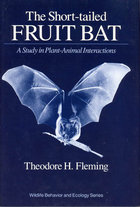
In The Short-tailed Fruit Bat, Theodore Fleming examines Carollia's role in the ecology of tropical forests. Based on more than ten years' research, this study provides the most detailed ecological and evolutionary account to date of the life history of a Neotropical mammal and includes striking photographs of the bats in flight.
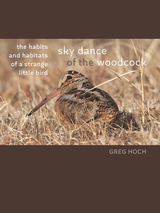
Greg Hoch combines natural history, land management, scientific knowledge, and personal observation to examine this little game bird. Woodcock have a complex life history and the management of their habitat is also complex. The health of this bird can be considered a key indicator of what good forests look like.

Sleepy Book by Charlotte Zolotow invites young readers to explore bedtime in fields, forests, and other places animals make their homes. In the book, children will find many familiar favorites, like a flock of birds huddled for warmth, but they’re also sure to make new friends, from a snowy crane standing on one long leg to a tiny black spider fast asleep in its web. Each facing page contains a beautiful illustration by Vladimir Bobri.
Originally published in 1958, Sleepy Book is one of the most recent additions to the Bodleian Library’s children’s book imprint, and it’s the perfect story to read before saying goodnight.


World War II soldier Bill Wynne met Smoky while serving in New Guinea, where the dog, who was smaller than Wynne’s army boot, was found trying to scratch her way out of a foxhole. After he adopted her, she served as the squadron mascot and is credited as being the first therapy dog for the emotional support she provided the soldiers. When they weren’t fighting, Bill taught Smoky hundreds of tricks to entertain the troops. Smoky became a war hero herself at an airstrip in Luzon, the Philippines, where she helped save forty airplanes and hundreds of soldiers from imminent attack.
After the war, Bill worked as a Hollywood animal trainer and then returned to his hometown of Cleveland, Ohio. He and Smoky continued to perform their act, even getting their own TV show, How to Train Your Dog with Bill Wynne and Smoky.
Nancy Roe Pimm presents Bill and Smoky’s story to middle-grade readers in delightful prose coupled with rich archival illustrations. Children will love learning about World War II from an unusual perspective, witnessing the power of the bond between a soldier and his dog, and seeing how that bond continued through the exciting years following the war.
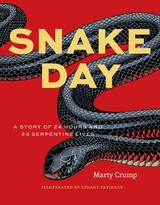
Does a snake crossing your path trigger delight or dread? The answer is clear for celebrated biologist Marty Crump, who shows us that snakes deserve our respect, admiration, and protection. In her short book Snake Day, each chapter introduces a single snake during a single hour, highlighting twenty-four different species from around the globe.
In the dark morning of a Brazilian forest, we avoid stepping on a jararaca, a nocturnal viper. If she bites, her venom will make our blood pressure—and us—drop. A synthetic version of this venom is now a lifesaving drug, used to treat hypertension and heart failure. Later in the morning, in the Zagros Mountains that trace Iran’s northwest border, what appears to be a tiny arachnid wiggles on the ground. When a hungry warbler approaches for a meal, realizes too late that the spider is actually a snake’s tail, and an Iranian spider-tailed viper makes a meal of the bird. In the early afternoon, in a pine forest outside Atlanta, Georgia, an eastern hognose snake strikes at us—a bluff—and then rolls over and plays dead. By the end of our snake day, we’ll have glimpsed the diversity of this unique group of reptiles, met serpentine friends who frighten and fascinate, and learned how humans can protect these amazing species.
For each hour, celebrated artist Stuart Patience has depicted serpentine scenes in stunning pen-and-ink drawings. Working together to narrate and illustrate these unique moments in time, Crump and Patience have created an engaging read that is a perfect way to spend an hour or two—and a true gift for amateur scientists or anyone who recoils at or relishes the sight of a snake.
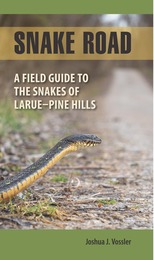
Twice a year, spring and fall, numerous species of reptiles and amphibians migrate between the LaRue–Pine Hills’ towering limestone bluffs and the Big Muddy River’s swampy floodplain in southern Illinois. Snakes, especially great numbers of Cottonmouths, give the road that separates these distinct environments its name. Although it is one of the best places in the world to observe snakes throughout the year, spring and fall are the optimal times to see a greater number and variety. Among the many activities that snakes can be observed doing are sunning themselves on rocks, lying in grasses, sheltering under or near fallen tree limbs, or crossing the road. In this engaging guide, author Joshua J. Vossler details what to expect and how to make the most of a visit to what is known around the world as Snake Road.
Vossler catalogs twenty-three native snake species by both common and scientific names, lists identifying features, and estimates the probability of spotting them. Throughout this book, stunning color photographs of each species’ distinctive physical characteristics enable identification by sight only, an important feature, since Illinois law prohibits the handling, harming, or removal of reptiles and other wildlife on and around the road. Since snakes are visually variable—individual snakes of the same species can differ tremendously in size, color, and pattern—photographs of as many variations as possible are included. To aid in identification, eleven sets of photographs contrast the features of similar species and point out how and why these snakes may be easily confused. Visitors can keep track of the snakes they have identified by using the checklist in the back of the book. A list of recommended reading provides sources of additional information about snakes in southern Illinois and beyond.
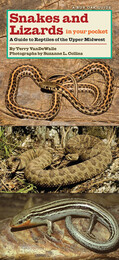
From the rare and docile massasauga, which relies on camouflage to remain unnoticed, to the more familiar bullsnake, which defends itself by hissing loudly and vibrating its tail from an S-shaped striking position, to the eastern racer, often seen crawling at more than three miles an hour during daytime, snakes are beautiful animals with habits both fascinating and beneficial to humans. Their relatives the lizards, most of which are more easily seen and identified, exhibit similarly fascinating behavior. This colorful addition to our series of laminated guides informs both amateur and professional herpetologists about twenty-seven species of snakes and six species of lizards in the Upper Midwest states of Minnesota, Wisconsin, Illinois, Indiana, Michigan, Ohio, South Dakota, North Dakota, Kansas, Nebraska, Iowa, and Missouri.
Terry VanDeWalle provides a complete description of each species, both adult and young, as well as distinguishing characteristics for thirty-two subspecies of snakes and two subspecies of lizards: length, color, head and neck patterns, scales, and so on. Also included is information about habitat preferences: forests, wet meadows, and sand prairies, for example. Most helpful for identifying snakes and lizards in the field are his comparisons of similar species and his comprehensive key.
Superb photographs by Suzanne Collins of adult and, when needed for identification, young snakes and lizards make this guide the perfect companion for hikers in all kinds of environments whenever a snake ripples across your path or a lizard darts into the underbrush.
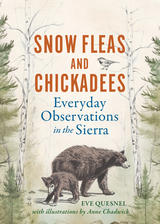
Quesnel embraces the notion that to simply walk in one’s neighborhood is to familiarize oneself with the local flora and fauna, drawing attention to everyday things too often neglected. She argues that we can be complacent with what surrounds us, but with careful observation and research, we become acutely aware—and in awe of—nature’s everyday activities. The black bear’s hibernation techniques and mountain chickadee’s caching methods reveal just two of nature’s wily ways. Quesnel chases other curiosities as well, asking, “How does a spider create an orb web?” or, “How does a boulder the size of a small car end up alone in the woods?” In the introduction, she writes, “It is this ‘un-peeling’ of layers in nature that opens up our world.”
For anyone interested in nature writing, whether an armchair explorer, outdoor enthusiast, or science aficionado, Snow Fleas and Chickadees provides an entertaining and engaging discovery of the picturesque Sierra Nevada.
-Robert Bateman, from the foreword.
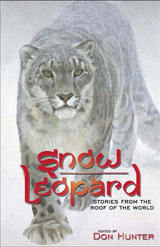
Like no other large cat, the snow leopard evokes a sense of myth and mysticism, strength and spirit shrouded in a snowy veil, seldom seen but always present. Giving a voice to the snow leopard, this collection of powerful first person accounts from an impressive cadre of scientist-adventurers grants readers a rare glimpse of this elusive cat and the remarkable lives of those personally connected to its future. These Stories from the Roof of the World resonate with adventure, danger, discovery, and most importantly hope for this magnificent big cat.
Very little has been written about this mystical creature. Its remote and rugged habitat among the mightiest collection of mountains on Earth, proclaimed "The Roof of the World" by awe-struck explorers, make it one of the most difficult and expensive animals to study. After a millennia thriving in peaceful isolation, human encroachment, poaching and climate change threaten the snow leopards survival. Speaking on behalf of the snow leopard, these heart-felt stories will inform and inspire readers, creating the vital connection needed to move people toward action in saving this magnificent cat. Contributors include: Ali Abutalip Dahashof, Som B. Ale, Avaantseren Bayarjargal, Yash Veer Bhatnagar, Joseph L. Fox, Helen Freeman, Darla Hillard, Don Hunter, Shafqat Hussain, Rodney Jackson, Jan E. Janecka, Mitchell Kelly, Ashiq Ahmad Khan, Nasier A. Kitchloo, Evgeniy P. Kashkarov, Peter Matthiessen, Kyle McCarthy, Tom McCarthy, George B. Schaller, and Rinchen Wangchuk
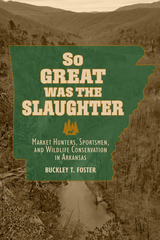
An account of the rise of sportsmen and conservation groups in Arkansas who made common cause to save the state’s wildlife resources
So Great Was the Slaughter reveals the untold story of Arkansas conservation pioneers who saved the state’s game and fish populations. As Arkansas entered the twentieth century, the national demand for meat combined with the ability to ship millions of animals to hungry cities like New Orleans, Memphis, and Chicago had driven many species, including bison and passenger pigeons, to extinction in Arkansas. Many others, including deer, bear, turkey, quail, and fish, were in danger of disappearing.
In response, an unlikely coalition of Arkansas sportsmen, hunters, and conservationists created a vision for conservation legislation, game laws, and the establishment of fish hatcheries and wildlife refuges. With support from influential outsiders like E. A. McIlhenny and the United States Biological Survey, they waged a long battle against entrenched political and commercial interests.
Buckley Foster’s meticulous research reveals how these pioneers fought to save the state’s wildlife resources from destruction and laid the foundations for sustainable, modern wildlife management in Arkansas. So Great Was the Slaughter will fascinate hunters, conservationists, historians, and those interested in the history of wildlife conservation and conflicts between market hunters and sportsmen in the United States and the American South.
Although the honeybee is without doubt man's favorite social insect, and the most studied by him, there are twenty thousand other species of bees, many of which are social. This book is the first to offer a systematic account of social behavior in the entire super family Apoidea. Of all the social insects, the various species of bees exhibit perhaps the broadest spectrum of social behavior, including intermediate stages which are scarce or totally extinct in other groups; in this respect the bees are particularly appropriate subjects for evolutionary study.
With the aid of more than 200 illustrations, Charles Michener characterizes and describes all levels of social organization in the bees—from simple aggregations of solitary nests to elaborate, eusocial colonies. He reviews the entire repertoire of social behavior in bees and gives detailed attention to mechanisms of communication, division of labor, determination of sex and caste, maintenance and control of nest conditions, and organization of defense. In a major chapter the evolutionary context of the bee societies is extensively explored; the author examines the selective advantages and disadvantages entailed in evolving nonreproductive castes, the problem of multiple, independent origins of eusociaI behavior, and the question of “direction” in the evolution of social behavior. The final section is an account of the life history and behavioral attributes of each of the groups of social bees.
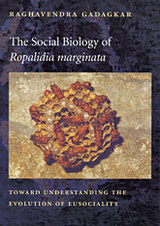
In this book, the biologist Raghavendra Gadagkar focuses on the single species he has worked on throughout his career. Found throughout southern India, Ropalidia marginata is a primitively eusocial wasp--a species in which queens and workers do not differ morphologically and even the latter retain the ability to reproduce. New colonies may be founded by a single fertile female or by several, which then share reproductive and worker duties.
R. marginata has provided Gadagkar with a unique opportunity to study the evolution of eusociality; its long-lived dynasties can continue almost indefinitely, as old or weakened queens are replaced by young and healthy ones and new colonies are founded throughout the year. Understanding such primitively eusocial species is crucial, Gadagkar argues, if we are to understand the evolution of the greater degrees of sociality found in other wasp species and in ants, termites, and bees. His years of study have led him to believe that ecological, physiological, and demographic factors can be more important than genetic relatedness in the selection for or against social traits.
Tony suffers from tuberculosis, and, lying in his hospital bed one day, he decides to set up an animal welfare organization. Even though no animals are permitted in the camp, he is determined to find just one creature he can care for and protect—and his determination is contagious. A group of older boys, including Tony’s best friend, Ernie, aid him in his quest. Soon they’re joined by Tony’s mother—and her coterie of boyfriends. Eventually, they find Tony his pet: a mouse, which he names and carefully guards in a box hidden beneath his bed. But in the fall of 1944, the transports to Auschwitz begin.
As moving as it is irreverent, Pick’s novella draws on the two years he spent imprisoned in Terezín in his late teens. With cutting black humor, he shines a light on both the absurdities and injustices of the Nazi-run Jewish ghetto, using his literary artistry to portray in stunning shorthand an experience of the Holocaust that pure histories could never convey.

Grounded in ecofeminist theory, this literary analysis examines Walker’s evolving views on animals in relation to her discussions of other oppressed groups. Pamela B. June argues that Walker’s fiction can help readers understand and perhaps challenge American culture’s mistreatment of nonhuman animals. Walker has withstood criticism for her decision to abandon vegetarianism, and this book also problematizes the slippery territory of viewing writers as moral guides. Solidarity with the Other Beings on the Planet will appeal to readers in literary studies, ecofeminist studies, African American studies, and critical animal studies.
Skilled predators prized by hunters and cursed by ranchers, mountain lions are the wild soul of the American West. Now a wildlife biologist brings you nose to nose with the elusive cougar. Harley Shaw shares dramatic stories culled from his years of studying mountain lions, separating fact from myth regarding their habits while raising serious questions about mankind's relationship with this commanding creature.
"Most of us move into the country because we love wildlife," writes Shaw. "But none of us will tolerate having our pets or children eaten. . . . When lion/human encounters occur, the lion (or bear, or wolf) always ultimately loses."
Soul among Lions offers us a chance to consider the true meaning of that loss.
From the Bible’s “Canst thou raise leviathan with a hook?” to Captain Ahab’s “From Hell’s heart I stab at thee!,” from the trials of Job to the legends of Sinbad, whales have breached in the human imagination as looming figures of terror, power, confusion, and mystery.
In the twentieth century, however, our understanding of and relationship to these superlatives of creation underwent some astonishing changes, and with The Sounding of the Whale, D. Graham Burnett tells the fascinating story of the transformation of cetaceans from grotesque monsters, useful only as wallowing kegs of fat and fertilizer, to playful friends of humanity, bellwethers of environmental devastation, and, finally, totems of the counterculture in the Age of Aquarius. When Burnett opens his story, ignorance reigns: even Nature was misclassifying whales at the turn of the century, and the only biological study of the species was happening in gruesome Arctic slaughterhouses. But in the aftermath of World War I, an international effort to bring rational regulations to the whaling industry led to an explosion of global research—and regulations that, while well-meaning, were quashed, or widely flouted, by whaling nations, the first shot in a battle that continues to this day. The book closes with a look at the remarkable shift in public attitudes toward whales that began in the 1960s, as environmental concerns and new discoveries about whale behavior combined to make whales an object of sentimental concern and public adulation.
A sweeping history, grounded in nearly a decade of research, The Sounding of the Whale tells a remarkable story of how science, politics, and simple human wonder intertwined to transform the way we see these behemoths from below.

The ultimate resource for sport fishing in southern Illinois
Southern Illinois’s many waterways teem with an incredible variety of fish species, and award-winning fisherman and journalist Colby Simms knows exactly where and how to catch them all.
Within these pages, Simms shares the secrets he’s gleaned from years of hard-won experience: colossal catfish dominate the Mississippi River; monstrous muskies rule over Kinkaid Lake. Rend gives up record crappie and bowfin, while Crab Orchard produces excellent largemouth bass fishing and Cedar offers huge striped bass. Whether you’re powerboating a large lake or paddling an out-of-the-way oxbow, the region presents countless opportunities for different styles of fishing. Wondering which bait and tackle will produce the best results, or how seasonal weather affects fish migration patterns? Simms has already conferred with fellow fishing pros as well as biologists, outdoor sports media figures, and other experts to bring you the most current, site-specific information possible. From fishing fundamentals to the most advanced, cutting-edge techniques, he presents a battle plan for attacking the waters, big and small, of the lower Prairie State, which will benefit all anglers—from beginners to seasoned tournament competitors.
Nestled between the critical information and detailed instructions, you’ll find stories from Simms and additional professional anglers, state fisheries staff, recreational fishers, and others. You’ll find encouragement and motivation to put away life’s modern distractions and get back to nature. Southern Illinois Fishing brims with enthusiasm, humor, and heart, and is sure to educate and inspire readers to lose themselves in the ancient tradition and modern sport of fishing.
With this book, Hal Whitehead gives us a clearer picture of the ecology and social life of sperm whales than we have ever had before. Based on almost two decades of field research, Whitehead describes their biology, behavior, and habitat; how they organize their societies; and how their complex lifestyles may have evolved in this unique environment. Among the many fascinating topics he explores is the crucial role that culture plays in the life of the sperm whale, and he traces the consequences of this argument for both evolution and conservation. Finally, drawing on these findings, Whitehead builds a general model of how the ocean environment influences social behavior and cultural evolution among mammals as well as other animals.
The definitive portrait of a provocative creature, Sperm Whales will interest animal behaviorists, conservationists, ecologists, and evolutionary biologists as well as marine mammalogists.
As Eberhard reveals, the extraordinary diversity of webs includes ingenious solutions to gain access to prey in esoteric habitats, from blazing hot and shifting sand dunes (to capture ants) to the surfaces of tropical lakes (to capture water striders). Some webs are nets that are cast onto prey, while others form baskets into which the spider flicks prey. Some aerial webs are tramways used by spiders searching for chemical cues from their prey below, while others feature landing sites for flying insects and spiders where the spider then stalks its prey. In some webs, long trip lines are delicately sustained just above the ground by tiny rigid silk poles.
Stemming from the author’s more than five decades observing spider webs, this book will be the definitive reference for years to come.

In Squirrel, Nancy Castaldo shines new light on this familiar backyard mammal, exploring their staggering diversity (they’re found on all continents but Antarctica) and the many surprising ways they shape our world, our communities, and our cultures. Each chapter explores an aspect of squirrels and their close and sometimes fraught association with humans: their importance to myriad ecosystems through sophisticated food-caching strategies; their introduction to nineteenth-century urban parks as adorable ambassadors for nature; their complicated global status as both invasive and endangered; their role as celebrated cultural icons and social media memes; and ultimately, why we must prevent population declines and protect their well-being while we can. Like other wildlife species, squirrels are increasingly stressed by climate change, and their speculative fate may foreshadow our own. The book includes a detailed bibliography, an exhaustive list of squirrel species and their status, and tips for coexisting peaceably with squirrels in our yards and neighborhoods. Chapters are introduced by exquisitely drawn historical illustrations.
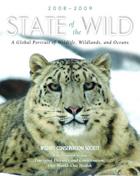
Each volume in the series combines evocative writings with a fascinating tour of conservation news highlights and vital statistics from around the world. One-third of each volume focuses on a topic of particular concern to conservationists working to protect wildlife and our last wild places. This 2008–2009 edition considers the integration of wildlife health, ecosystem health, human health, and the health of domestic animals—a “One World–One Health” approach to disease and conservation.
This focus is complemented with essays clustered into sections that address other key issues—conservation of species; conservation of wild places; people, culture, and conservation; and the art and practice of conservation. Essays cover a broad range of topics, from restoring biodiversity on the prairies to mapping the state of the oceans to the conservation impacts of lawlessness and coca cultivation in Colombia. Essay contributions come from people directly involved in on-the-ground conservation efforts and offer a unique and valuable perspective on often-overlooked topics.
State of the Wild’s accessible approach educates a wide range of audiences while at the same time presenting leading-edge scientific overviews of hot topics in conservation. Uniquely structured with magazine-like features up front, conservation news in the middle, and essays from eminent authors and experienced scientists throughout, this landmark series is an essential addition to any environmental bookshelf.
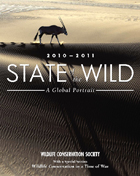
In addition to evocative writings and a fascinating tour of conservation news highlights and vital statistics from around the world, this 2010-2011 edition examines how destabilization and war affect wildlife and wild places.
State of the Wild's accessible approach educates a wide range of audiences while at the same time presenting leading-edge scientific overviews of hot topics in conservation. Uniquely structured with magazine-like features up front, conservation news in the middle, and essays from eminent authors and experienced scientists throughout, this landmark series is an essential addition to any environmental bookshelf.
In wild places where nature thrives, humanity prospers; our well-being is inextricably linked with that of the planet's web of life. In fact, one could argue that the state of the world can be measured by the state of the wild.
But how do we gauge the state of earth's wildlife, wildlands, and oceans? State of the Wild is a new series that brings together some of the world's most renowned conservationists and writers-George Schaller, Alan Rabinowitz, Sylvia Earle, Rick Bass, Bill McKibben, Tom Lovejoy, and many others-to assess wildlife and wilderness, and to provide insights into how humans can become better stewards of the wild.
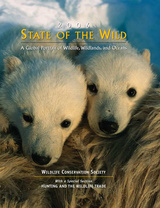
This new series combines evocative writings with a fascinating tour of news highlights and vital statistics from around the world. One-third of each volume will focus on a topic of particular concern to conservationists working to protect wildlife and our last wild places. This 2006 edition explores the impacts of hunting and the wildlife trade through a range of essays: Ted Kerasote traces the history of hunting in North America; Carl Safina, Eric Gilman, and Wallace J. Nichols quantify the toll taken by commercial fishing on seabirds, turtles, and other marine species; James Compton and Samuel K. H. Lee explore the global reach of the wildlife trade for traditional Asian medicine.
Contributors also examine other pivotal conservation issues, from the reasons why one in eight of the world's birds are endangered, to the impacts of global climate change, to the complexity of conserving seals, flamingos, zebras, and other wide-ranging species. The book's closing essay, "The Relative Wild," considers what exactly it means for a place to be "wild," where even the most remote corners of the planet have been altered by human activities.
Uniquely structured with magazine-like features up front, conservation news in the middle, and essay contributions from eminent authors and biologists throughout, this landmark series is an essential addition to any environmental bookshelf.
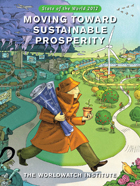

In the latest edition of Worldwatch Institute’s State of the World series, scientists, policy experts, and thought leaders tackle these questions, attempting to restore meaning to sustainability as more than just a marketing tool. In State of the World 2013: Is Sustainability Still Possible?, experts define clear sustainability metrics and examine various policies and perspectives, including geoengineering, corporate transformation, and changes in agricultural policy, that could put us on the path to prosperity without diminishing the well-being of future generations. If these approaches fall short, the final chapters explore ways to prepare for drastic environmental change and resource depletion, such as strengthening democracy and societal resilience, protecting cultural heritage, and dealing with increased conflict and migration flows.
State of the World 2013 cuts through the rhetoric surrounding sustainability, offering a broad and realistic look at how close we are to fulfilling it today and which practices and policies will steer us in the right direction. This book will be especially useful for policymakers, environmental nonprofits, and students of environmental studies, sustainability, or economics.
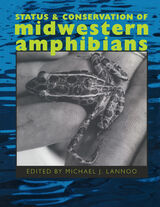
In 1990 an international group of biologists, meeting to discuss rumors of declines in the number of amphibians, discovered that amphibian disappearances once thought to be a local problem were not—the problem was global. And, even more disturbing, amphibians were disappearing not just from areas settled by humans but from regions of the world once believed to be pristine. Under the mantle of the Declining Amphibian Populations Task Force, this timely book addresses three fundamental questions for the midwestern United States: are amphibians declining; if so, why; and, if so, what can be done to halt these losses?
In the Midwest—defined here as Missouri, Iowa, Illinois, Indiana, Ohio, Minnesota, Wisconsin, and Michigan—there can be no doubt that the number of salamanders and frogs has declined with Euro-American settlement and the conversion to an agriculturally dominated landscape. Habitat loss and landscape fragmentation have been major factors in this decline, as have aquacultural uses of natural wetlands. Bullfrog introductions have eliminated populations of native amphibians, and collecting for the biological supply trade has reduced the number of individuals within many populations. The goal of the forty-two essays in this well-documented, well-illustrated book is to put between two covers all we know now about the status of midwestern amphibians. By doing this, the editor has created a readily accessible historical record for future studies.
Organized into sections covering landscape patterns and biogeography, species status, regional and state status, diseases and toxins, conservation, and monitoring and applications, this landmark volume will serve as the foundation for amphibian conservation in the Midwest.



Did you ever wonder who made the first popsicles? Or if your ancestors made snow cones with maple syrup?
Me too!
I guess we'll never know who made the first frozen treat because the evidence was eaten long ago, but it's always fun to imagine new stories...
Wabooz has a brand new idea for a delicious treat, but will everything turn out as he hoped? Travel with him through the lands where the pawpaws grow in search of the perfect fruit!

When populations of striped bass began plummeting in the early 1980s, author and fisherman Dick Russell was there to lead an Atlantic coast conservation campaign that resulted in one of the most remarkable wildlife comebacks in the history of fisheries. As any avid fisherman will tell you, the striped bass has long been a favorite at the American dinner table; in fact, we've been feasting on the fish from the time of the Pilgrims. By 1980 that feasting had turned to overfishing by commercial fishing interests. Striper Wars is Dick Russell's inspiring account of the people and events responsible for the successful preservation of one of America's favorite fish and of what has happened since.
Striper Wars is a tale replete with heroes--and some villains--as the struggle to save the striper migrated down the coast from Massachusetts to Maryland. Russell introduces us to a postman at arms against a burly trap-net fisherman, a renowned state governor caving to special interests, and a fishing-tackle maker fighting alongside marine biologists. And he describes how champions of this singular fish blocked power plants and New York's Westway Project that would otherwise compromise its habitat. Unfortunately, those who cheered the triumphant ending to the campaign, as the coastal states enacted measures that enabled the striped bass to make its comeback, have found the peace transitory--there is now a new enemy emerging on the front.
In recent years a chronic bacterial disease has struck more than seventy percent of the striped bass population in the primary spawning waters of the Chesapeake Bay. Malnutrition seems to be a significant factor, brought on by the same overfishing that plagued the bass in the first battle--only this time, the overfishing is devastating menhaden, the silvery little fish upon which the bass feed. Lessons learned during the first conservation battle are being applied here, highlighting a need for a whole new ecosystem-based approach to conserving species.
Only with constant vigilance by concerned citizens, Dick Russell reminds us, can environmental victories be sustained. This particular fish story is a personal one for him, and he follows the striper's saga today all the way to California, where the fish was introduced in 1879 and where agribusiness now threatens its future. For his conservation work during the 1980s Russell received a citizen's Chevron Conservation Award.
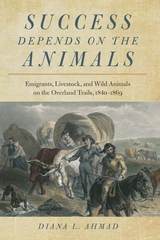
Between 1840 and 1869, thousands of people crossed the American continent looking for a new life in the West. Success Depends on the Animals explores the relationships and encounters that these emigrants had with animals, both wild and domestic, as they traveled the Overland Trail. In the longest migration of people in history, the overlanders were accompanied by thousands of work animals such as horses, oxen, mules, and cattle. These travelers also brought dogs and other companion animals, and along the way confronted unknown wild animals.
Ahmad’s study is the first to explore how these emigrants became dependent upon the animals that traveled with them, and how, for some, this dependence influenced a new way of thinking about the human-animal bond. The pioneers learned how to work with the animals and take care of them while on the move. Many had never ridden a horse before, let alone hitched oxen to a wagon. Due to the close working relationship that the emigrants were forced to have with these animals, many befriended the domestic beasts of burden, even attributing human characteristics to them.
Drawing on primary sources such as journals, diaries, and newspaper accounts, Ahmad explores how these new experiences influenced fresh ideas about the role of animals in pioneer life. Scholars and students of western history and animal studies will find this a fascinating and distinctive analysis of an understudied topic.
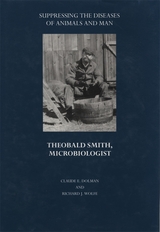
Theobald Smith (1859–1934) is widely considered to be America’s first significant medical scientist and the world’s leading comparative pathologist. Entering the new field of infectious diseases as a young medical graduate, his research in bacteriology, immunology, and parasitology produced many important and basic discoveries. His most significant accomplishment was proving for the first time that an infectious disease could be transmitted by an arthropod agent. He also made significant discoveries on anaphylaxis, vaccine production, bacterial variation, and a host of other methods and diseases. His work on hog cholera led to the selection of the paratyphoid species causing enteric fever as the prototype of the eponymous Salmonella genus, mistakenly named for his chief at the U.S. Department of Agriculture, Daniel Salmon, who first reported the discovery in 1886, although the work was undertaken by Smith alone.
In 1895, Smith began a twenty-year career as teacher and researcher at the Harvard Medical School and director of the biological laboratory at the Massachusetts State Board of Health. In 1902, when the Rockefeller Institute for Medical Research was founded, he was offered but declined its directorship; however, in 1914, when the Institute established a division of animal pathology, he became director of its research division. Suppressing the Diseases of Animals and Man, the first book-length biography of Smith to appear in print, is based primarily on personal papers and correspondence that have remained in the possession of his family until now.

What it is like to be an animal? Ron Broglio wants to know from the inside, from underneath the fur and feathers. In examining this question, he bypasses the perspectives of biology or natural history to explore how one can construct an animal phenomenology, to think and feel as an animal other—or any other.
Until now phenomenology has grappled with how humans are embedded in their world. According to philosophical tradition, animals do not practice the self-reflexive thought that provides humans with depth of being. Without human interiority, philosophers have believed, animals live on the surface of things. But, Broglio argues, the surface can be a site of productive engagement with the world of animals, and as such he turns to humans who work with surfaces: contemporary artists.
Taking on the negative claim of animals living only on the surface and turning the premise into a positive set of possibilities for human–animal engagement, Broglio considers artists—including Damien Hirst, Carolee Schneemann, Olly and Suzi, and Marcus Coates—who take seriously the world of the animal on its own terms. In doing so, these artists develop languages of interspecies expression that both challenge philosophy and fashion new concepts for animal studies.

Ernst Mayr is perhaps the most distinguished biologist of the twentieth century, and Systematics and the Origin of Species may be one of his greatest and most influential books. This classic study, first published in 1942, helped to revolutionize evolutionary biology by offering a new approach to taxonomic principles and correlating the ideas and findings of modern systematics with those of other life science disciplines. This book is one of the foundational documents of the “Evolutionary Synthesis.” It is the book in which Mayr pioneered his new concept of species based chiefly on such biological factors as interbreeding and reproductive isolation, taking into account ecology, geography, and life history.
In his new Introduction for this edition, Mayr reflects on the place of this enduring work in the subsequent history of his field.
READERS
Browse our collection.
PUBLISHERS
See BiblioVault's publisher services.
STUDENT SERVICES
Files for college accessibility offices.
RECENTLY PUBLISHED




UChicago Accessibility Resources
home | accessibility | search | about | contact us
BiblioVault ® 2001 - 2025
The University of Chicago Press