
 A SCHOLARLY BOOK REPOSITORY
31 start with S start with S
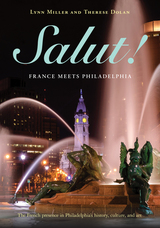
One highly visible example of French influence on the city of Philadelphia is the Benjamin Franklin Parkway, modeled on the Champs-Élysées. In Salut!, Lynn Miller and Therese Dolan trace the fruitful, three-centuries-long relationship between the City of Brotherly Love and France. This detailed volume illustrates the effect of Huguenots settling in Philadelphia and 18-year-old William Penn visiting Paris, all the way up through more recent cultural offerings that have helped make the city the distinctive urban center it is today.
Salut! provides a magnifique history of Philadelphia seen through a particular cultural lens. The authors chronicle the French influence during colonial and revolutionary times. They highlight the contributions of nineteenth-century French philanthropists, such as Stephen Girard and the Dupont family. And they showcase the city’s vibrant visual arts community featuring works from the Philadelphia Museum of Art, the Rodin Museum, the Barnes Foundation, and the Joan of Arc sculpture, as well as studies of artists Thomas Eakins, Mary Cassatt, and Henry Ossawa Tanner. There is also a profile of renowned Le Bec-Fin chef Georges Perrier, who made Philadelphia a renowned culinary destination in the twentieth century.
With lavish illustrations and enthusiastic text, Salut!celebrates a potpourri of all things French in the Philadelphia region.
The Scandal of Reform pulls the curtain back on New York's reformers past and present, revealing the bonds they have always shared with the bosses they disdain, the policy failures they still refuse to recognize, and the transition they have made from nonpartisan outsiders to ideological insiders.
Francis S. Barry examines the evolution of political reform from the frontlines of New York City's recent reform wars. He offers an insider's account and analysis of the controversial 2003 referendum debate on nonpartisan elections, and he challenges reformersùand members of both partiesùto reconsider their faith in reforms that are no longer serving the public interest.
Scarlet and Black documents the history of Rutgers’s connection to slavery, which was neither casual nor accidental—nor unusual. Like most early American colleges, Rutgers depended on slaves to build its campuses and serve its students and faculty; it depended on the sale of black people to fund its very existence. Men like John Henry Livingston, (Rutgers president from 1810–1824), the Reverend Philip Milledoler, (president of Rutgers from 1824–1840), Henry Rutgers, (trustee after whom the college is named), and Theodore Frelinghuysen, (Rutgers’s seventh president), were among the most ardent anti-abolitionists in the mid-Atlantic.
Scarlet and black are the colors Rutgers University uses to represent itself to the nation and world. They are the colors the athletes compete in, the graduates and administrators wear on celebratory occasions, and the colors that distinguish Rutgers from every other university in the United States. This book, however, uses these colors to signify something else: the blood that was spilled on the banks of the Raritan River by those dispossessed of their land and the bodies that labored unpaid and in bondage so that Rutgers could be built and sustained. The contributors to this volume offer this history as a usable one—not to tear down or weaken this very renowned, robust, and growing institution—but to strengthen it and help direct its course for the future.
The work of the Committee on Enslaved and Disenfranchised Population in Rutgers History.
Visit the project's website at http://scarletandblack.rutgers.edu
To learn more about the work of the Committee on Enslaved and Disenfranchised Population in Rutgers History, visit the project's website at http://scarletandblack.rutgers.edu
The Scots Irish were one of early Pennsylvania’s largest non-English immigrant groups. They were stereotyped as frontier ruffians and Indian haters. In The Scots Irish of Early Pennsylvania, historian Judith Ridner insists that this immigrant group was socio-economically diverse. Servants and free people, individuals and families, and political exiles and refugees from Ulster, they not only pioneered new frontier settlements, but also populated the state’s cities—Philadelphia and Pittsburgh—and its towns, such as Lancaster, Easton, and Carlisle.
Ridner provides a much-overdue synthesis and reassessment of this immigrant group, tracing a century of Scotch-Irish migration from 1720 to 1820. These men and women brought their version of Ulster to the colonies in their fierce commitments to family, community, entrepreneurship, Presbyterianism, republican politics, and higher education. The settlements they founded across the state, including many farms, businesses, meetinghouses, and colleges, ensured that Pennsylvania would be their cradle in America, and these settlements stand as powerful testaments to their legacy to the state’s history and development.
Separate Paths: Lenapes and Colonists in West New Jersey is the first cross-cultural study of European colonization in the region south of the Falls of the Delaware River (now Trenton). Lenape men and women welcomed their allies, the Swedes and Finns, to escape more rigid English regimes on the west bank of the Delaware, offering land to establish farms, share resources, and trade. In the 1670s, Quaker men and women challenged this model with strategies to acquire all Lenape territory for their own use and to sell as real estate to new immigrants. Though the Lenapes remained sovereign and “old settlers” retained their Swedish Lutheran religion and ethnic autonomy, the West Jersey proprietors had considerable success in excluding Lenapes from their land. The Friends believed God favored their endeavor with epidemics of smallpox and other European diseases that destroyed Lenape families and communities. Affluent Quakers also introduced enslavement of imported Africans and Natives—and the violence that sustained it—to a colony they had promoted with the liberal West New Jersey Concessions of 1676-77. Thus, they defied their prior experience of religious persecution and their principles of peaceful resolution of conflict, equality of everyone before God, and the golden rule to treat others as you wish to be treated. Despite mutual commitment to peace by Lenapes, old settlers, and Friends, Quaker colonization had similar results to military conquests of Natives by English in Virginia and New England, and Dutch in the Hudson Valley and northern New Jersey. Still, in alliance with old settlers, Lenape communities survived in areas outside the focus of English colonization, in the Pine Barrens, upper reaches of streams, and Atlantic shore.
In 1916, Philadelphia department-store magnate John Wanamaker launched plans for a Sesqui-Centennial International Exposition in 1926. It would be a magnificent world's fair to celebrate the 150th anniversary of the Declaration of Independence. The “Sesqui” would also transform sooty, industrial Philadelphia into a beautiful Beaux Arts city.
However, when the Sesqui opened on May 31, 1926, in the remote, muddy swamps of South Philadelphia, the fair was unfinished, with a few shabbily built and mostly empty structures. Crowds stayed away in droves: fewer than five million paying customers attended, costing the city millions of dollars. Philadelphia became a national scandal—a city so corrupt that one political boss could kidnap an entire world’s fair.
In his fascinating history Sesqui!, noted historian Thomas Keels situates this ill-fated celebration—a personal boondoggle by the all-powerful Congressman William S. Vare—against the transformations taking place in America during the 1920s. Keels provides a comprehensive account of the Sesqui as a meeting ground for cultural changes sweeping the country: women’s and African-American rights, anti-Semitism, eugenics, Prohibition, and technological advances.
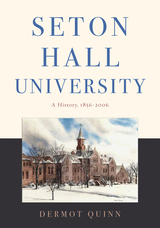
In this vivid and elegantly written history, Dermot Quinn examines how Seton Hall was able to develop as an institution while keeping faith with its founder’s vision. Looking at the men and women who made Seton Hall what it is today, he paints a compelling picture of a university that has enjoyed its share of triumphs but has also suffered tragedy and loss. He shows how it was established in an age of prejudice and transformed in the aftermath of war, while exploring how it negotiated between a distinctly Roman Catholic identity and a mission to include Americans of all faiths.
Seton Hall University not only recounts the history of a great educational institution, it also shares the personal stories of the people who shaped it and were shaped by it: the presidents, the priests, the faculty, the staff, and of course, the students.

Sometimes troublemakers emerge from the most unlikely of places. This true story follows the lives of two daughters of the Gilded Age—Lucy and Eliza Kennedy—who were educated at Vassar College and became leaders of the suffrage movement. Then, after the Nineteenth Amendment was passed in 1920, they spent the next forty years fighting corruption in politics and government.
Tenacious, smart, and witty, they captivated crowds, disarmed their opponents, and instilled particular dread among the corrupt politicians who were the unfortunate targets of their nonpartisan crusade. Their entry across the threshold of Pittsburgh’s City-County Building would reportedly invoke a flurry of hushed warnings through the halls: “The She Devils are at the door!” Together, Lucy and Eliza fought for the vote, empowered women to use it wisely, forced a mayor out of office in disgrace, took control of the city budget, exposed a series of scandals, spearheaded police reform, and launched a campaign that would eventually clear Pittsburgh of its smoky veil.
Featuring the true story of two powerful women, this book comes at a propitious time, reminding us how far women have come and how vigilant we must remain.

A richly illustrated architectural “biography” of one of DC’s most important boulevards
Sixteenth Street NW in Washington, DC, has been called the Avenue of the Presidents, Executive Avenue, and the Avenue of Churches. From the front door of the White House, this north-south artery runs through the middle of the District and extends just past its border with Maryland. The street is as central to the cityscape as it is to DC’s history and culture.
In Sixteenth Street NW: Washington, DC’s Avenue of Ambitions, John DeFerrari and Douglas Peter Sefton depict the social and architectural history of the street and immediate neighborhoods, inviting readers to explore how the push and pull between ordinary Washingtonians and powerful elites has shaped the corridor—and the city. This highly illustrated book features notable buildings along Sixteenth Street and recounts colorful stories of those who lived, worked, and worshipped there. Maps offer readers an opportunity to create self-guided tours of the places and people that have defined this main thoroughfare over time.
What readers will find is that both then and now, Sixteenth Street NW has been shaped by a diverse array of people and communities. The street, and the book, feature a range of sites—from Black Lives Matter Plaza to the White House, from mansions and rowhomes to apartment buildings, from Meridian Hill (Malcolm X) Park with its drum circles to Rock Creek Park with its tennis tournaments, and from hotels to houses of worship. Sixteenth Street, NW reveals a cross section of Washington, DC, that shows the vibrant makeup of our nation’s capital.
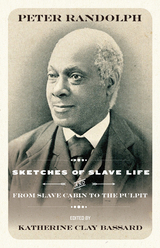
This book is the first anthology of the autobiographical writings of Peter Randolph, a prominent nineteenth-century former slave who became a Black abolitionist, pastor, and community leader. Randolph’s story is unique because he was freed and relocated from Virginia to Boston, along with his entire plantation cohort. A lawsuit launched by Randolph against his former master’s estate left legal documents that corroborate his autobiographies.
Randolph's writings give us a window into a different experience of slavery and freedom than other narratives currently available and will be of interest to students and scholars of African American literature, history, and religious studies, as well as those with an interest in Virginia history and mid-Atlantic slavery.
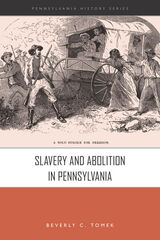
In her concise history Slavery and Abolition in Pennsylvania, Beverly Tomek corrects the long-held notion that slavery in the North was “not so bad” as, or somehow “more humane” than, in the South due to the presence of abolitionists. While the Quaker presence focused on moral and practical opposition to bondage, slavery was ubiquitous. Nevertheless, Pennsylvania was the first state to pass an abolition law in the United States.
Slavery and Abolition in Pennsylvania traces this movement from its beginning to the years immediately following the American Civil War. Discussions of the complexities of the state’s antislavery movement illustrate how different groups of Pennsylvanians followed different paths in an effort to achieve their goal. Tomek also examines the backlash abolitionists and Black Americans faced. In addition, she considers the civil rights movement from the period of state reconstruction through the national reconstruction that occurred after the Civil War.
While the past few decades have shed light on enslavement and slavery in the South, much of the story of northern slavery remains hidden. Slavery and Abolition in Pennsylvania tells the full and inclusive story of this history, bringing the realities of slavery, abolition, and Pennsylvania's attempt to reconstruct its post-emancipation society.
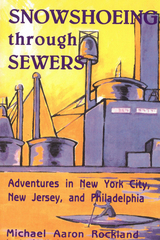
In these ten alternately poetic and comic tales of adventure in the New York/Philadelphia corridor, the most densely populated chunk of America, Rockland walks and bikes areas meant only for cars and paddles through waters capable of dissolving canoes. He hikes the length of New York's Broadway, camps in New York City, treks across Philadelphia, pedals among the tractor trailers of Route 1 in New Jersey, and paddles around Manhattan and through the dark tunnels under Trenton.
Whereas Henry David Thoreau built his cabin on Walden Pond to get out of town, for Rockland, the challenge is to head into town. As he writes, "in the late twentieth century, a weed and trash-filled city lot . . . may be a better place than the wilderness to contemplate one's relationship to nature."
In this searing personal narrative, the former state senator recounts his fight to expose and reform these acts of government misconduct. Not afraid to cite specific cases of soft corruption in New Jersey politics, he paints a vivid portrait of public servants who care more about political power and personal gain than the public good. By recounting events that he witnessed firsthand in the Garden State, he provides dramatic illustrations of ills that afflict American politics nationwide.
As he identifies five main forms of soft corruption, Schluter diagnoses the state government’s ethical malaise, and offers concrete policy suggestions for how it might be cured. Not simply a dive through the muck of New Jersey politics, Soft Corruption is an important first step to reforming our nation’s political system, a book that will inspire readers to demand that our elected officials can and must do better.
Visit: www.softcorruption.com (http://www.softcorruption.com)
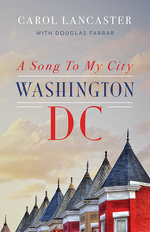
This deeply felt memoir is a love letter to Washington, DC. Carol Lancaster, a third-generation Washingtonian who knew the city like few others, takes readers on a tour of the nation’s capital from its swamp-infested beginnings to the present day, with an insider’s view of the gritty politics, environment, society, culture, and larger-than-life heroes that characterize her beloved hometown. The former dean of Georgetown University’s School of Foreign Service, a friend of presidents and dignitaries all over the globe, Lancaster colorfully describes the city’s three near-death experiences and the many triumphs and tribulations that emerged as the city took shape. Along the way she provides brief biographies of three of the most influential figures in the city’s history: urban designer Pierre Charles L’Enfant, whose vision for the city was realized only after his death; civic leader “Boss” Shepherd, whose strong-arm tactics cleaned up the downtown area and helped create the walking mall we know today; and controversial mayor Marion Barry, whose rise and fall and resurrection underscored the contemporary challenges of home rule.
Teeming with informative anecdotes and two dozen illustrations of landmarks and key characters, Lancaster’s memoir is a personal and passionate paean to the most powerful city in the world—from one of its most illustrious native daughters.
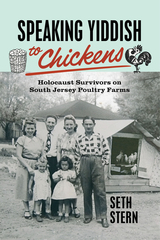
Most of the roughly 140,000 Holocaust survivors who came to the United States in the first decade after World War II settled in big cities such as New York. But a few thousand chose an alternative way of life on American farms. More of these accidental farmers wound up raising chickens in southern New Jersey than anywhere else. Speaking Yiddish to Chickens is the first book to chronicle this little-known chapter in American Jewish history when these mostly Eastern European refugees – including the author’s grandparents - found an unlikely refuge and gateway to new lives in the US on poultry farms. They gravitated to a section of south Jersey anchored by Vineland, a small rural city where previous waves of Jewish immigrants had built a rich network of cultural and religious institutions.
This book relies on interviews with dozens of these refugee farmers and their children, as well as oral histories and archival records to tell how they learned to farm while coping with unimaginable grief. They built small synagogues within walking distance of their farms and hosted Yiddish cultural events more frequently found on the Lower East Side than perhaps anywhere else in rural America at the time. Like refugees today, they embraced their new American identities and enriched the community where they settled, working hard in unfamiliar jobs for often meager returns. Within a decade, falling egg prices and the rise of industrial-scale agriculture in the South would drive almost all of these novice poultry farmers out of business, many into bankruptcy. Some hated every minute here; others would remember their time on south Jersey farms as their best years in America. They enjoyed a quieter way of life and more space for themselves and their children than in the crowded New York City apartments where so many displaced persons settled. This is their remarkable story of loss, renewal, and perseverance in the most unexpected of settings.
Author Facebook page (https://www.facebook.com/YiddishtoChickens)

An illustrated guide to the history of espionage in Philadelphia and the Delaware Valley.
Philadelphia became a battleground for spies as George Washington’s Patriot army in nearby Valley Forge struggled to survive the winter of 1776-77. In the centuries that followed—through the Civil War, the rise of fascism and communism in the twentieth century, and today’s fight against terrorism—the city has been home to international intrigue and some of America’s most celebrated spies.
Spy Sites of Philadelphia takes readers inside this shadowy world to reveal the places and people of Philadelphia’s hidden history. These fascinating entries portray details of stolen secrets, clandestine meetings, and covert communications through every era of American history. Along the way, readers will meet both heroes and villains whose daring deceptions helped shape the nation.
Authors H. Keith Melton and Robert Wallace weave incredible true stories of courage and deceit that rival even the best spy fiction. Featuring over 150 spy sites in Philadelphia and its neighboring towns and counties, this illustrated guide invites readers to follow in the footsteps of moles and sleuths.
Authoritative, entertaining, and informative, Spy Sites of Philadelphia is a must-have guidebook to the espionage history of the region.
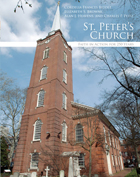
Celebrating 250 years, St. Peter's Episcopal Church in the Society Hill neighborhood of Philadelphia, has witnessed a rich mixture of people and events that reflect critical periods of American political and cultural history. George Washington worshiped here as did abolitionists and slave holders, Whigs, Democrats, and Republicans. St. Peter's was a point of first contact for thousands of immigrants, and the church opened schools for immigrants to help them to acculturate to life in Philadelphia.
Opening a window onto colonial Philadelphia and the nation's histories, St. Peter's Church is a glorious testament to this National Historic Landmark. In addition to the stories and hundreds of black-and-white and color photographs, this handsome volume provides a history of the grounds, the churchyard, and the church itself-a classic example of eighteenth-century Philadelphia design that later incorporated the work of renown architects William Strickland, Thomas U. Walter, and Frank Furness.
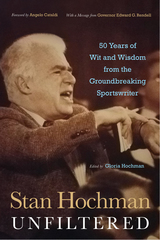
The late Philadelphia Daily News sportswriter Stan Hochman was known for his many zingers, such as “Harry Litwack, the stoic Temple coach, stalks the sidelines like a blind man at a nudist colony.” As a reporter, he was more interested in how athletes felt, what their values were, how they lived their lives, or what made them tick than he was about how many runs they scored or punches they landed.
In Stan Hochman Unfiltered, his wife Gloria collects nearly 100 of his best columns from the Daily News about baseball, horse racing, boxing, football, hockey, and basketball (both college and pro), as well as food, films, and even Liz Taylor. Each section is introduced by a friend or colleague, including Garry Maddox, Bernie Parent, Larry Merchant, and Ray Didinger, among others.
Hochman penned a candid, cantankerous column about whether Pete Rose belongs in the Baseball Hall of Fame; wrote a graphic account of the Muhammad Ali and Joe Frazier fight of the century; and skewered Norman “Bottom Line” Braman, the one-time owner of the Eagles. He also wrote human-interest stories, including features about the importance of kids with special needs playing sports.
In addition to being a beloved writer, Hochman was also known for his stint on WIP’s radio as the Grand Imperial Poobah, where he would settle callers’ most pressing debates. Hochman long earned the respect and admiration of his subjects, peers, and readers throughout his career, and Stan Hochman Unfiltered is a testament to his enduring legacy.
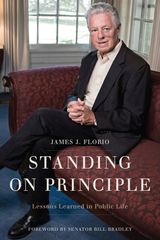
This political memoir tells the remarkable story of how Florio, a high school dropout who left to join the Navy as a teenager, went on to become an attorney, a state assemblyman, a congressman, and a governor. A passionate defender of the environment, Florio played a crucial role in the enactment of 1980s-era Superfund laws, which helped to clean up toxic waste sites in New Jersey and around the country. As governor, he fought for the groundbreaking Clean Water Enforcement Act. But his reforms quite literally came at a cost, as he raised New Jersey sales taxes and income taxes to balance the state budget. Florio reflects upon the challenges of meeting the state’s budgetary needs while keeping his tax-averse constituents happy.
Standing on Principle reveals a politician who has never been afraid to take a progressive stand—including a firm stance against semiautomatic weapons that led gun lobbyists to bankroll his opponent. His story is sure to inspire readers from New Jersey and across the nation.
Published in cooperation with the Center on the American Governor, Eagleton Institute of Politics, Rutgers University
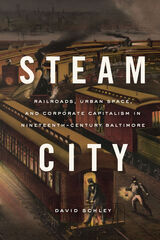
Steam City tells the story of corporate capitalism starting from the street and moving outward, looking at how the rise of the railroad altered the fabric of everyday life in the United States. The B&O’s founders believed that their new line would remap American economic geography, but no one imagined that the railroad would also dramatically reshape the spaces of its terminal city. As railroad executives wrangled with city officials over their use of urban space, they formulated new ideas about the boundaries between public good and private profit. Ultimately, they reinvented the B&O as a private enterprise, unmoored to its home city. This bold reconception had implications not only for the people of Baltimore, but for the railroad industry as a whole. As David Schley shows here, privatizing the B&O helped set the stage for the rise of the corporation as a major force in the post-Civil War economy.
Steam City examines how the birth and spread of the American railroad—which brought rapid communications, fossil fuels, and new modes of corporate organization to the city—changed how people worked, where they lived, even how they crossed the street. As Schley makes clear, we still live with the consequences of this spatial and economic order today.
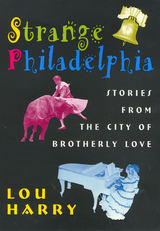
Most history books paint Philadelphia as a place of revolutionary greatness, but there exists a forgotten, alternative history of the City of Brotherly Love. For example, did you know that
•when Ben Franklin was Deputy Postmaster General for the American colonies, he ignored rival printers' requests for mailing priveleges. Instead, he loaded down the mail carriers with his own papers and enjoyed the use of a private delivery system that cut off the competition.
•
the Slinky was created by a marine engineer stationed in Philadelphia, who later became an evangelist and Bible salesman in Bolivia, leaving behind his wife, his children, and the Slinky fortune.
•
50,000 people gathered in Fairmount Park in 1953 hoping to see a vision of the Virgin Mary, who three schoolgirls claimed to have seen near a park bush. Though the Blessed Mother never did appear, visitors to the site left behind offerings of rosaries, flowers, crutches, and over $6,000.
•
while 11,000 spectators sat in the Spectrum waiting for the Ice Capades to begin, 32-mile-an-hour winds blew a chunk of the roof off the city's newly constructed stadium.
Find these and a hundred more "strange" and fascinating stories in this collection of vignettes. These pieces of the past can't be found in history books—they are surprising side bars to the famous and not-so-famous events and people of historical Philadelphia.
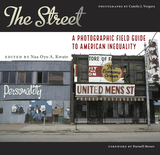
Using MacArthur fellow Camilo José Vergara’s intimate street photographs of Camden, New Jersey as reference points, the essays in this collection analyze these images within the context of troubled histories and misguided policies that have exacerbated racial and economic inequalities. Rather than blaming Camden’s residents for the blighted urban landscape, the multidisciplinary array of scholars contributing to this guide reveal the oppressive structures and institutional failures that have led the city to this condition. Tackling topics such as race and law enforcement, gentrification, food deserts, urban aesthetics, credit markets, health care, childcare, and schooling, the contributors challenge conventional thinking about what we should observe when looking at neighborhoods.

strengththroughdiversity.com
READERS
Browse our collection.
PUBLISHERS
See BiblioVault's publisher services.
STUDENT SERVICES
Files for college accessibility offices.
RECENTLY PUBLISHED




UChicago Accessibility Resources
home | accessibility | search | about | contact us
BiblioVault ® 2001 - 2025
The University of Chicago Press