
 A SCHOLARLY BOOK REPOSITORY
128 start with S start with S

Fascism was the first and prime instance of a modern political religion. Rereading signs, symbols, cults, and myths, Italy's leading scholar of Fascism offers a new history of Italian nationalism as a civic religion, albeit in its extreme form, and of Italian Fascism as a vital catalyst for contemporary mass politics. Emilio Gentile decodes Italy culturally, going beyond political and social dimensions that explain Italy's Fascist past in terms of class, or the cynicism of its leaders, or modernizing and expansionist ambitions.
By looking back at the Risorgimento's civic and moral renewal of the Italians as a free people educated in the faith and worship of a "national religion," at the jarring countereffects of the secularized nation-state not trusting mass political mobilization, and at Fascism's retrieval of history from Rome, the French Revolution, and Romanticism, Gentile reconstructs the cultural configurations of a sacred politics. He shows how Mussolini used the concept of propaganda as a project in civic pedagogy, and how the Fascists thus cultivated a new consciousness that filled the void left by the decline of traditional religion. Fascism mobilized the masses through spectacle and public ceremony in an effort to conquer and shape the mentality and customs of a still emerging nation.
From a Western perspective, the Persian Gulf War of 1990-1991 largely fulfilled the first President Bush's objective: "In, out, do it, do it right, get gone. That's the message." But in the Arab world, the causes and consequences of Saddam Hussein's invasion of Kuwait and his subsequent defeat by a U.S.-led coalition were never so clear-cut. The potent blend of Islam and Arab nationalism that Saddam forged to justify the unjustifiable—his invasion of a Muslim state—gained remarkable support among both Muslims and Arabs and continued to resonate in the Middle East long after the fighting ended. Indeed, as this study argues in passing, it became a significant strand in the tangled web of ideologies and actions that led to the attacks of 9/11.
This landmark book offers the first in-depth investigation of how Saddam Hussein used Islam and Arab nationalism to legitimate his invasion of Kuwait in the eyes of fellow Muslims and Arabs, while delegitimating the actions of the U.S.-led coalition and its Arab members. Jerry M. Long addresses three fundamental issues: how extensively and in what specific ways Iraq appealed to Islam during the Kuwait crisis; how elites, Islamists, and the elusive Arab "street," both in and out of the coalition, responded to that appeal and why they responded as they did; and the longer-term effects that resulted from Saddam's strategy.

Since the 1970s, a key goal of lesbian and gay activists has been protection against street violence, especially in gay neighborhoods. During the same time, policymakers and private developers declared the containment of urban violence to be a top priority. In this important book, Christina B. Hanhardt examines how LGBT calls for "safe space" have been shaped by broader public safety initiatives that have sought solutions in policing and privatization and have had devastating effects along race and class lines.
Drawing on extensive archival and ethnographic research in New York City and San Francisco, Hanhardt traces the entwined histories of LGBT activism, urban development, and U.S. policy in relation to poverty and crime over the past fifty years. She highlights the formation of a mainstream LGBT movement, as well as the very different trajectories followed by radical LGBT and queer grassroots organizations. Placing LGBT activism in the context of shifting liberal and neoliberal policies, Safe Space is a groundbreaking exploration of the contradictory legacies of the LGBT struggle for safety in the city.

This comprehensive and insightful explanation discusses how Nevada’s history has shaped its political culture, and how its government operates today. The Sagebrush State serves as a highly readable and accessible text for the study of Nevada’s political history and constitution, which is a graduation requirement at the state’s colleges and universities. The fifth edition is updated through 2017 and includes the full text of the state constitution with extensive annotations of all amendments to the original 1864 document.

A dynamic study of Nevada’s government and politics from the state’s inception to the present day.
Starting with Michael W. Bowers’s first edition published in 1996, this concise volume explains the unique dynamics of Nevada’s formation and its political and economic development. David F. Damore continues this legacy in the book’s seventh edition by describing how even today, Nevada is unlike the other states in its politics and culture: economically conservative and averse to strong state government, yet socially libertarian and home to widespread gaming anchored by a 24/7 industry. Nevada has the highest percentage of federally owned lands and one of the highest rates of urbanization in the United States, yet it has often been dominated by rural legislators.
This comprehensive and insightful volume examines how Nevada’s history and founding have shaped its political culture and how its government operates today. The Sagebrush State serves as a highly readable and accessible text for the study of Nevada’s political history and constitution. The seventh edition is updated through 2023 and includes the results of the 2022 elections, policies advanced during the 2023 legislative session, and Nevada’s continuing recovery from the impacts of the COVID-19 recession. The full text of the state constitution with extensive annotations of all amendments to the original 1864 document is provided as an appendix.
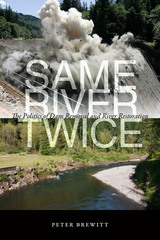
How did this happen? Same River Twice answers this question by telling the stories of three major Northwestern dam removals – the politics, people, hopes, and fears that shaped three rivers and their communities. Brewitt begins each story with the dam’s construction, shows how its critics gained power, details the conflicts and controversies of removal, and explores the aftermath as the river re-established itself.
Each dam removal offers a unique case study. On the Elwha and Rogue Rivers, dam removal was a multi-decade political brawl; on the Sandy River it was swift and amicable. A key controversy in every case was the loss of the recreational lake created by the dam. Local communities loved their lakes and felt that they were natural, public spaces rather than industrial creations. They fought dam removal with passion and ingenuity. To be successful, dam removal advocates had to learn to weld together mega-coalitions that embraced most interest groups and moved forward together.
While the dams profiled here are all in the Pacific Northwest, dam removal is a national and international phenomenon, and Brewitt’s findings apply everywhere. Written for both a scholarly and a general audience, Same River Twice presents invaluable case studies for scholars of environmental politics, wildlife and public land professionals, environmental activists, and anyone interested in the intersection of politics, public policy, and dam removal.

A fresh take on this critical philosopher.
In this essential rereading of Spinoza’s (1632-1677) philosophical and political writings, Negri positions this thinker within the historical context of the development of the modern state and its attendant political economy. Through a close examination of Spinoza, Negri reveals him as unique among his contemporaries for his nondialectical approach to social organization in a bourgeois age.
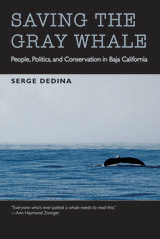
More than a study of conservation politics, Dedina's book puts a human face on wildlife conservation. The author lived for two years with residents of Baja communities to understand their attitudes about wildlife conservation and Mexican politics, and he accompanied many in daily activities to show the extent to which the local economy depends on whalewatching. "It is ironic," observes Dedina, "that residents of some of the most isolated fishing villages in North America are helping to redefine our relationship with wild animals. Americans and Europeans brought the gray whale population to the brink of extinction. The inhabitants of San Ignacio Lagoon and Magdalena Bay are helping us to celebrate the whales' survival." By showing us how these animals have helped shape the lifeways of the people with whom they share the lagoons, Saving the Gray Whale demonstrates that gray whales represent both a destructive past and a future with hope.
Scheming for the Poor is the first comparative analysis of redistributive policymaking in Latin America. William Ascher examines the success or failure of progressive policies launched by nine governments grouped into three regime types—populist, reformist, and radical—over the course of the postwar history of Argentina, Chile, and Peru.
His findings challenge the conventional views that redistribution in Latin America is either doomed to failure or else is the inevitable consequence of a balance of pro-redistributive and anti-redistributive forces. Ascher shows that tactics and careful attention to practical politics and policy implementation are far more important than regime type and professed political objectives and credos. The adept policymakers—from the Argentine authoritarian populist Juan Perón to the Chilean reformist Eduardo Frei—delivered more as redistributionists than did the economic romantics.
Integrating the political and economic aspects of redistribution, Ascher shows that in political terms success stems from subtlety rather than stridency, perceptions rather than economic realities, the astute formation of coalitions, and aversion of the mobilization of the opposition. Ultimately, of course, economic pressures impose a limit on what is politically possible, and Ascher demonstrates how economic requirements constrain the politics of income redistribution.
A powerful and original argument that the practice of scholarship is grounded in the concept of radical freedom, beginning with the freedoms of inquiry, thought, and expression.
Why are scholars and scholarship invariably distrusted and attacked by authoritarian regimes? Geoffrey Galt Harpham argues that at its core, scholarship is informed by an emancipatory agenda based on a permanent openness to the new, an unlimited responsiveness to evidence, and a commitment to conversion. At the same time, however, scholarship involves its own forms of authority. As a worldly practice, it is a struggle for dominance without end as scholars try to disprove the claims of others, establish new versions of the truth, and seek disciples.
Scholarship and Freedom threads its general arguments through examinations of the careers of three scholars: W. E. B. Du Bois, who serves as an example of scholarly character formation; South African Bernard Lategan, whose New Testament studies became entangled on both sides of his country’s battles over apartheid; and Linda Nochlin, whose essay “Why Have There Been No Great Women Artists?” virtually created the field of feminist art history.

Citizen science—research involving nonprofessionals in the research process—has attracted both strong enthusiasts and detractors. Many environmental professionals, activists, and scholars consider citizen science part of their toolkit for addressing environmental challenges. Critics, however, contend that it represents a corporate takeover of scientific priorities. In this timely book, two sociologists move beyond this binary debate by analyzing the tensions and dilemmas that citizen science projects commonly face. Key lessons are drawn from case studies where citizen scientists have investigated the impact of shale oil and gas, nuclear power, and genetically engineered crops. These studies show that diverse citizen science projects face shared dilemmas relating to austerity pressures, presumed boundaries between science and activism, and difficulties moving between scales of environmental problems. By unpacking the politics of citizen science, this book aims to help people negotiate a complex political landscape and choose paths moving toward social change and environmental sustainability.

The book explores the intertwined trajectories of six intellectuals and the larger programs they set in motion: Henri Berr (1863–1954), Nikolai Bukharin (1888–1938), Lucien Febvre (1878–1956), Nikolai Vavilov (1887–1943), Julian Huxley (1887–1975), and John Desmond Bernal (1901–1971). Though they held different political views, spoke different languages, and pursued different goals, these thinkers are representative of a larger motley crew who joined the techniques, approaches, and values of science with the writing of history, and who created powerful institutions and networks to support their projects.
In tracing these submerged stories, Aronova reveals encounters that profoundly shaped our knowledge of the past, reminding us that it is often the forgotten parts of history that are the most revealing.
The Scientific Journal tells the story of how that changed. Alex Csiszar takes readers deep into nineteenth-century London and Paris, where savants struggled to reshape scientific life in the light of rapidly changing political mores and the growing importance of the press in public life. The scientific journal did not arise as a natural solution to the problem of communicating scientific discoveries. Rather, as Csiszar shows, its dominance was a hard-won compromise born of political exigencies, shifting epistemic values, intellectual property debates, and the demands of commerce. Many of the tensions and problems that plague scholarly publishing today are rooted in these tangled beginnings. As we seek to make sense of our own moment of intense experimentation in publishing platforms, peer review, and information curation, Csiszar argues powerfully that a better understanding of the journal’s past will be crucial to imagining future forms for the expression and organization of knowledge.
Screening Auschwitz examines the classic Polish Holocaust film The Last Stage (Ostatni etap), directed by the Auschwitz survivor Wanda Jakubowska (1907–1998). Released in 1948, The Last Stage was a pioneering work and the first narrative film to portray the Nazi concentration and extermination camp complex of Auschwitz-Birkenau. Marek Haltof’s fascinating book offers English-speaking readers a wealth of new materials, mostly from original Polish sources obtained through extensive archival research.
With its powerful dramatization of the camp experience, The Last Stage established several quasi-documentary themes easily discernible in later film narratives of the Shoah: dark, realistic images of the camp, a passionate moral appeal, and clear divisions between victims and perpetrators. Jakubowska’s film introduced images that are now archetypal—for example, morning and evening roll calls on the Appelplatz, the arrival of transport trains at Birkenau, the separation of families upon arrival, and tracking shots over the belongings left behind by those who were gassed. These and other images are taken up by a number of subsequent American films, including George Stevens’s The Diary of Anne Frank (1959), Alan Pakula’s Sophie’s Choice (1982), and Steven Spielberg’s Schindler’s List (1993).
Haltof discusses the unusual circumstances that surrounded the film's production on location at Auschwitz-Birkenau and summarizes critical debates surrounding the film’s release. The book offers much of interest to film historians and readers interested in the Holocaust.

An incisive conceptual history of global democracy in the transnational political thought of W.E.B. Du Bois.
The Search for World Democracy traces the language of “world democracy” in W. E. B. Du Bois’s oeuvre, stretching from his early sociological writings to his later work on world peace and anticolonialism with and against the United Nations. Drawing on original archival research, several lesser-known writings, and most centrally Du Bois’s unpublished 1937 manuscript A World Search for Democracy, Adam Dahl places his unique approach to democratic theory within the transatlantic debates about the transformation of European imperial order in the twentieth century. Dahl shows how Du Bois’s vision of the spatial scale of democracy situated struggles for popular control, decolonization, industrial democracy, and racial enfranchisement in their shifting, multidimensional geographic contexts. Less a specific model of global governance than a radical politics of space and scale, Du Bois’s idea of world democracy challenges the boundaries between domestic and international politics by linking local sites of democratic struggle within and against the global color line. The Search for World Democracy shows how, for Du Bois, the radical transformation of the United States into a multiracial democracy would require an equally dramatic transformation of the imperial lineages of world politics.
Uncovering an eclectic and surprising archive, Prado-Fonts draws on diverse cultural artifacts from popular literature, journalism, and early cinema to offer a rich account of how China was seen across the West between 1880 and 1930. Enrique Gaspar, Luis de Oteyza, Vicente Blasco Ibáñez, and lesser-known authors writing in Spanish and Catalan put themselves in dialogue with Leo Tolstoy, John Dewey, W. Somerset Maugham, Bertrand Russell, Pearl Buck, and André Malraux, as well as stereotypical figures from popular culture like Fu Manchu and Charlie Chan. Throughout, Prado-Fonts exposes translation as a technology of cultural hegemony and China as an appealing object for representation. A timely contribution to our understanding of how we create and consume knowledge about the world, Secondhand China is essential reading for scholars and students of Orientalism, postcolonial studies, translation studies, comparative literature, and cultural studies.

Short listed for the 2007 New South Wales Premier's Translation Prize
The period from 1966 to 1999 represents a distinct era in Indonesian history. Throughout the “New Order” regime of President Suharto, the policies of economic development and political stability were dominant. However, the public opinion of personal expression was consistently under suspicion, and indeed dissent was severely punished.
Secrets Need Words traces the development of Indonesian poetry throughout this entire period. Texts are presented both in the original Indonesian and in careful, stylistically sensitive English translations.
In this anthology of contemporary work by Indonesian poets, the renowned translator and editor Harry Aveling presents a series of ongoing analyses detailing the political and social shifts that have influenced the work of particular poets.
Professor Aveling's analyses, along with the poems themselves, demonstrate how the poets responded to the power of the state in a variety of ways ranging from direct confrontation to withdrawal into personal and private realms characterized by fantasy and the use of heavily rhythmic language.
Secrets Need Words will be of interest to scholars of Indonesia and comparative literature, and will be for many years to come a basic text for scholarship and teaching. But it also offers all readers of poetry an opportunity to explore a new, complex, and exciting body of literature from one of the world's largest nations.
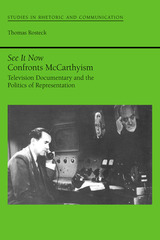
See It Now, Edward R. Murrow and Fred W. Friendly’s early documentary television program, has come to be recognized as the exemplar of nonfiction television. One important element in its reputation is a series of four telecasts directly dealing with abuses of McCarthyism and the Red Scare. This book is about those programs, but it is also about the early 1950s in America, the troubled era in which these programs were broadcast. This book is, then, both cultural history and media analysis.
As media analysis, this book seeks to understand the symbolic form, the aesthetic construction, and the subsequent experience that these four programs offered viewers. This sort of critical analysis is a development of recent vintage in American media studies. Whereas a decade ago television and the media were studied largely through an empiricist social scientific paradigm, now humanistic approaches to media discourses engage the interest of scholars in history, rhetoric and communication, political science, anthropology, and American studies. As case study, then, this book bridges classical humanist and contemporary mass media approaches, and as we go, I shall essay the utility of humanistic methods for the understanding and explication of mass media that is primarily visual in nature.
As cultural history, this book seeks to illuminate a unique era in the recent American past. My aim is to understand the programs as articulations of public “common sense” and as artifacts that help convey this common sense. Thus, a second theme of this book will be to locate-through the analysis of public discourse cast in the television documentary form—an American ideology: a set of “templates” that both ground the programs and reveal the cultural assumptions of the historical period.
In addition, from a slightly different historical perspective, our increased understanding of these See It Now broadcasts gives us an appreciation of the development of the television industry and the genre of television documentary. Coming at a time when few Americans had television sets, these See It Now programs coincided with an exponential increase in television ownership and popularity. As an elaborate defense of free speech for the medium, these documentaries may have helped to establish autonomy and a direction for a nascent broadcasting industry. More specifically, as the paradigm for the television documentary and as the first regularly scheduled documentary series, these See It Now programs shaped expectations and set the benchmark to which all nonfiction television, from Twentieth Century to White Paper to Sixty Minutes, has been compared. Thus, a third theme will be the implications of these seminal programs for media institutions and for the genre of television news documentary.

During the past decade, Democrats and Republicans each have received about fifty percent of the votes and controlled about half of the government, but this has not resulted in policy deadlock. Despite highly partisan political posturing, the policy regime has been largely moderate. Incremental, yet substantial, policy innovations such as welfare reform; deficit reduction; the North American Free Trade Agreement; and the deregulation of telecommunications, banking, and agriculture have been accompanied by such continuities as Social Security and Medicare, the maintenance of earlier immigration reforms, and the persistence of many rights-based policies, including federal affirmative action.
In Seeking the Center, twenty-one contributors analyze policy outcomes in light of the frequent alternation in power among evenly divided parties. They show how the triumph of policy moderation and the defeat of more ambitious efforts, such as health care reform, can be explained by mutually supporting economic, intellectual, and political forces. Demonstrating that the determinants of public policy become clear by probing specific issues, rather than in abstract theorizing, they restore the politics of policymaking to the forefront of the political science agenda.
A successor to Martin A. Levin and Marc K. Landy’s influential The New Politics of Public Policy (Johns Hopkins University Press, 1995), this book will be vital reading for advanced undergraduate and graduate students in political science and public policy, as well as a resource for scholars in both fields.
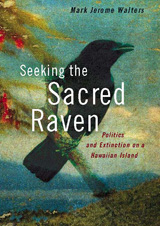
For years, author Mark Jerome Walters has tracked the sacred bird's role in Hawaiian culture and the indomitable 'Alala's sad decline. Trekking through Hawaii's rain forests high on Mauna Loa, talking with biologists, landowners, and government officials, he has woven an epic tale of missed opportunities and the best intentions gone awry. A species that once numbered in the thousands is now limited to about 50 captive birds.
Seeking the Sacred Raven is as much about people and culture as it is about failed policies. From the ancient Polynesians who first settled the island, to Captain Cook in the 18th century, to would-be saviors of the 'Alala in the 1990s, individuals with conflicting passions and priorities have shaped Hawaii and the fate of this dwindling cloud-forest species.
Walters captures brilliantly the internecine politics among private landowners, scientists, environmental groups, individuals and government agencies battling over the bird's habitat and protection. It's only one species, only one bird, but Seeking the Sacred Raven illustrates vividly the many dimensions of species loss, for the human as well as non-human world.

In The Senses of Democracy, Francine R. Masiello traces a history of perceptions expressed in literature, the visual arts, politics, and history from the start of the nineteenth century to the present day. A wide transnational landscape frames the book along with an original and provocative thesis: when the discourse on democracy is altered—when nations fall into crisis or the increased weight of modernity tests minds and nerves—the representation of our sensing bodies plays a crucial role in explaining order and rebellion, cultural innovation, and social change.
Taking a wide arc of materials—periodicals, memoirs, political proclamations, and travel logs, along with art installations and fiction—and focusing on the technologies that supplement and enhance human perception, Masiello looks at the evolution of what she calls “sense work” in cultural texts, mainly from Latin America, that wend from the heights of romantic thought to the startling innovations of modernism in the early twentieth century and then to times of posthuman experience when cyber bodies hurtle through globalized space and human senses are reproduced by machines. Tracing the shifting debates on perceptions, The Senses of Democracy offers a new paradigm with which to speak of Latin American cultural history and launches a field for the comparative study of bodies, experience, pleasure, and pain over the continental divide. In the end, sense work helps us to understand how culture finds its location.

How does emotion shape the landscape of public intellectual debate? In Sentimental Republic, Hang Tu proposes emotion as a new critical framework to approach a post-Mao cultural controversy. As it entered a period of market reform, China did not turn away from revolutionary sentiments. Rather, the post-Mao period experienced a surge of emotionally charged debates about red legacies, ranging from the anguished denunciations of Maoist violence to the elegiac remembrances of socialist egalitarianism.
Sentimental Republic chronicles forty years (1978–2018) of bitter cultural wars about the Maoist past. It analyzes how the four major intellectual clusters in contemporary China—liberals, the Left, cultural conservatives, and nationalists—debated Mao’s revolutionary legacies in light of the postsocialist transition. Should the Chinese condemn revolutionary violence and “bid farewell to socialism”? Or would a return to revolution foster alternative visions of China’s future path? Tu probes the nexus of literature, thought, and memory, bringing to light the dynamic moral sentiments and emotional excess at work in these post-Mao ideological contentions. By analyzing how rival intellectual camps stirred up melancholy, guilt, anger, and resentment, Tu argues that the polemics surrounding the country’s past cannot be properly understood without reading the emotional trajectories of the post-Mao intelligentsia.

From Karl Marx’s decision to publish Capital in serial form to contemporary adaptations in manga and graphic novels, Seriality and Social Change examines how serialization both democratizes knowledge and shapes the very process of social transformation. Peter Hitchcock delves into the paradox of the serial: while it can expand access to radical thought, it can also impose structural limits, slowing or containing the revolutionary potential it seeks to unleash.
Through a sweeping analysis that links literature and political economy, Hitchcock explores how serialized narratives frame, sustain, or even hinder movements for change. Does seriality mirror the mechanics of capitalism, or can it be a tool for subverting them? Engaging with this question across genres and forms, Seriality and Social Change invites readers to rethink how revolution is told and imagined over time.
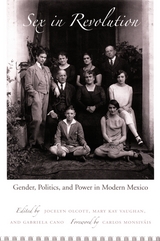
Concentrating on episodes and phenomena that occurred between 1915 and 1950, the contributors deftly render experiences ranging from those of a transgendered Zapatista soldier to upright damas católicas and Mexico City’s chicas modernas pilloried by the press and male students. Women refashioned their lives by seeking relief from bad marriages through divorce courts and preparing for new employment opportunities through vocational education. Activists ranging from Catholics to Communists mobilized for political and social rights. Although forced to compromise in the face of fierce opposition, these women made an indelible imprint on postrevolutionary society.
These essays illuminate emerging practices of femininity and masculinity, stressing the formation of subjectivity through civil-society mobilizations, spectatorship and entertainment, and locales such as workplaces, schools, churches, and homes. The volume’s epilogue examines how second-wave feminism catalyzed this revolutionary legacy, sparking widespread, more radically egalitarian rural women’s organizing in the wake of late-twentieth-century democratization campaigns. The conclusion considers the Mexican experience alongside those of other postrevolutionary societies, offering a critical comparative perspective.
Contributors. Ann S. Blum, Kristina A. Boylan, Gabriela Cano, María Teresa Fernández Aceves, Heather Fowler-Salamini, Susan Gauss, Temma Kaplan, Carlos Monsiváis, Jocelyn Olcott, Anne Rubenstein, Patience Schell, Stephanie Smith, Lynn Stephen, Julia Tuñón, Mary Kay Vaughan
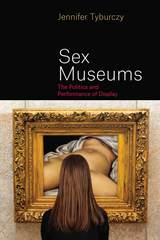
All museums are sex museums. In Sex Museums, Jennifer Tyburczy takes a hard look at the formation of Western sexuality—particularly how categories of sexual normalcy and perversity are formed—and asks what role museums have played in using display as a technique for disciplining sexuality. Most museum exhibits, she argues, assume that white, patriarchal heterosexuality and traditional structures of intimacy, gender, and race represent national sexual culture for their visitors. Sex Museums illuminates the history of such heteronormativity at most museums and proposes alternative approaches for the future of public display projects, while also offering the reader curatorial tactics—what she calls queer curatorship—for exhibiting diverse sexualities in the twenty-first century.
Tyburczy shows museums to be sites of culture-war theatrics, where dramatic civic struggles over how sex relates to public space, genealogies of taste and beauty, and performances of sexual identity are staged. Delving into the history of erotic artifacts, she analyzes how museums have historically approached the collection and display of the material culture of sex, which poses complex moral, political, and logistical dilemmas for the Western museum. Sex Museums unpacks the history of the museum and its intersections with the history of sexuality to argue that the Western museum context—from its inception to the present—marks a pivotal site in the construction of modern sexual subjectivity.
In Sexual Discretion, Jeffrey Q. McCune Jr. provides the first in-depth examination of how the social expectations of black masculinity intersect and complicate expressions of same-sex affection and desire. Within these underground DL communities, men aren’t as highly policed—and thus are able to maintain their public roles as “properly masculine.” McCune draws from sources that range from R&B singer R. Kelly’s epic hip-hopera series Trapped in the Closet to Oprah's high-profile exposé on DL subculture; and from E. Lynn Harris’s contemporary sexual passing novels to McCune’s own interviews and ethnography in nightclubs and online chat rooms. Sexual Discretion details the causes, pressures, and negotiations driving men who rarely disclose their intimate secrets.
Applying the complexities of literacy development and personal ethos to the teaching of composition, Zan Meyer Goncalves challenges writing teachers to consider ethos as a series of identity performances shaped by the often-inequitable social contexts of their classrooms and communities. Using the rhetorical experiences of students who identify as lesbian, gay, bisexual, and/or transgender, she proposes a new way of thinking about ethos that addresses the challenges of social justice, identity, and transfer issues in the classroom.
Goncalves offers an innovative approach to teaching identity performance theory bound by social contexts. She applies this new approach to theories of specificity and intersectionality, illustrating how teachers can help students redefine the relationship between their social identities and their writing. She also addresses bringing social activism and identity politics into the classroom, helping writers make transfers across rhetorical contexts and linking students' interests to public conversations.
Theoretical and practical, Sexuality and the Politics of Ethos in the Writing Classroom provides teachers of first-year and advanced composition studies with useful, detailed assignments based in specific identity performance. Goncalves offers techniques to subvert oppressive language practices, while encouraging students to recognize themselves as writers, citizens, and active participants in their own educations and communities.
Starting in 2005, people in the US and Europe were inundated with media coverage announcing the link between cervical cancer and the sexually transmitted virus HPV. Within a year, product ads promoted a vaccine targeting cancer’s viral cause, and girls and women became early consumers of this new cancer vaccine. An understanding of HPV’s broadening association with other cancers led to the identification of new at-risk populations—namely boys and men—and ignited a plethora of gender and sexual issues related to cancer prevention.
Sexualizing Cancer is the first book dedicated to the emergence and proliferation of the HPV vaccine along with the medical capacity to screen for HPV—crucial landmarks in the cancer prevention arsenal based on a novel connection between sex and chronic disease. Interweaving accounts from the realms of biomedical science, public health, and social justice, Laura Mamo chronicles cervical cancer’s journey out of exam rooms and into public discourse. She shows how the late twentieth-century scientific breakthrough that identified the human papilloma virus as having a causative role in the onset of human cancer galvanized sexual politics, struggles for inclusion, new at-risk populations, and, ultimately, a new regime of cancer prevention. Mamo reveals how gender and other equity arguments from within scientific, medical, and advocate communities shaped vaccine guidelines, clinical trial funding, research practices, and clinical programs, with consequences that reverberate today. This is a must-read history of medical expansion—from a “woman’s disease” to a set of cancers that affect all genders—and of lingering sexualization, with specific gendered, racialized, and other contours along the way.
In this unique blend of memoir and musical analysis, John Massaro reflects on his experiences as a lifelong fan of The Boss and one of the first professors to design a college course on Springsteen’s work. Focusing on five of the Jersey rocker’s main themes—love, masculinity, sports, politics, and the power of music—he shows how they are represented in Springsteen’s lyrics and shares stories from his own life that powerfully resonate with those lyrics. Meanwhile, paying tribute to Springsteen’s inclusive vision, he draws connections among figures as seemingly disparate as James Joyce, Ta-Nehisi Coates, Thomas Aquinas, Bobby Darin, and Lin-Manuel Miranda. Shades of Springsteen offers a deeply personal take on the musical and cultural legacies of an American icon.

Grounded in Black feminist thought, Julia S. Jordan-Zachery looks at the functioning of scripts ascribed to Black women’s bodies in the framing of HIV/AIDS, domestic abuse, and mental illness and how such functioning renders some bodies invisible in Black politics in general and Black women’s politics specifically.
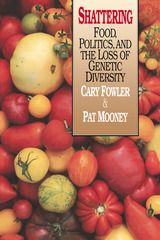
Large-scale agriculture has come to favor uniformity in food crops. More than 7,000 U.S. apple varieties once grew in American orchards; 6,000 of them are no longer available. Every broccoli variety offered through seed catalogs in 1900 has now disappeared. As the international genetics supply industry absorbs seed companies—with nearly one thousand takeovers since 1970—this trend toward uniformity seems likely to continue; and as third world agriculture is brought in line with international business interests, the gene pools of humanity's most basic foods are threatened.
The consequences are more than culinary. Without the genetic diversity from which farmers traditionally breed for resistance to diseases, crops are more susceptible to the spread of pestilence. Tragedies like the Irish Potato Famine may be thought of today as ancient history; yet the U.S. corn blight of 1970 shows that technologically based agribusiness is a breeding ground for disaster.
Shattering reviews the development of genetic diversity over 10,000 years of human agriculture, then exposes its loss in our lifetime at the hands of political and economic forces. The possibility of crisis is real; this book shows that it may not be too late to avert it.

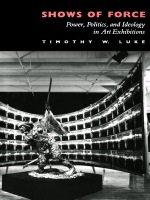
The first section, “Envisioning a Past, Imagining the West,” looks at art exhibitions devoted to artworks about or from the American West. Luke shows how these exhibitions—displaying nineteenth- and early-twentieth century works by artists such as George Caleb Bingham, Frederic Remington, Frederic Edwin Church, and Georgia O’Keefe—express contemporary political agendas in the way the portray “the past” and shape new visions of “the West.”
In “Developing the Present, Defining a World,” Luke considers artists from the post-1945 era, including Ilya Kabokov, Hans Haacke, Sue Coe, Roger Brown, and Robert Longo. Recent art exhibits, his analysis reveals, attempt to develop politically charged conceptions of the present, which in turn struggle to define the changing contemporary world and art’s various roles within it.
Luke brings to light the contradictions encoded in the exhibition of art and, in doing so, illuminates the political realities and cultural ideologies of the present. Shows of Force offers a timely and surely controversial contribution to current discussions of the politics of exhibiting art.
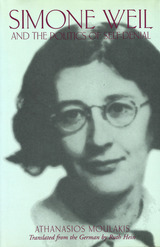
Simone Weil and the Politics of Self-Denial delivers what no other book on Weil has—a comprehensive study of her political thought. In this examination of the development of her thought, Athanasios Moulakis offers a philosophical understanding of politics that reaches beyond current affairs and ideological advocacy.
Simone Weil—philosopher, activist, mystic—unites a profound reflection on the human condition with a consistent and courageous existential and intellectual honesty manifest in the moving testimony of her life and her death. Moulakis examines Weil's political thought as an integral part of a lived philosophy, in which analysis and doctrine are inseparable from the articulation of an intensely personal, ultimately religious experience.
Because it is impossible to distinguish Weil's life from her thought, her writings cannot be understood properly without linking them to her life and character. By situating Weil's political thought within the context of the intellectual climate of her time, Moulakis connects it also to her epistemology, her cosmology, and her personal experience.
Simone Weil and the Politics of Self-Denial presents the unfolding of Weil's philosophical life against the backdrop of the political and social conditions of the last days of the Third French Republic, the Spanish Civil War, and the rise and clash of totalitarian ideologies. The ideological climate of the age—of which Weil herself was not quite free—was indeed the major "obstacle" in the struggle against which she fashioned her critical, intellectual, and moral tools.
Weil has been categorized a number of ways: as a saint and a near convert to Roman Catholicism, as a social critic, or as an analytic philosopher. Moulakis examines all aspects of Weil's thought in the indissoluble unity in which she lived them. This thorough investigation pursues the particular intellectual affiliations and the social and political experiential stimuli of Weil's work while simultaneously teasing out the timeless themes that her own timely analysis was intended to reveal.
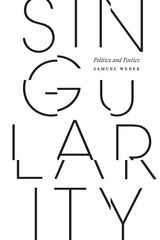
An influential thinker on the concept of singularity and its implications on politics, theology, economics, psychoanalysis, and literature
For readers versed in critical theory, German and comparative literature, or media studies, a new book by Samuel Weber is essential reading. Singularity is no exception. Bringing together two decades of his essays, it hones in on the surprising implications of the singular and its historical relation to the individual in politics, theology, economics, psychoanalysis, and literature. Although singularity has long been a keyword in literary studies and philosophy, never has it been explored as in this book, which distinguishes singularity as an “aporetic” notion from individuality, with which it remains historically closely tied.
To speak or write of the singular is problematic, Weber argues, since once it is spoken of it is no longer strictly singular. Walter Benjamin observed that singularity and repetition imply each other. This approach informs the essays in Singularity. Weber notes that what distinguishes the singular from the individual is that it cannot be perceived directly, but rather experienced through feelings that depend on but also exceed cognition. This interdependence of cognition and affect plays itself out in politics, economics, and theology as well as in poetics. Political practice as well as its theory have been dominated by the attempt to domesticate singularity by subordinating it to the notion of individuality. Weber suggests that this political tendency draws support from what he calls “the monotheological identity paradigm” deriving from the idea of a unique and exclusive Creator-God.
Despite the “secular” tendencies usually associated with Western modernity, this paradigm continues today to inform and influence political and economic practices, often displaying self-destructive tendencies. By contrast, Weber reads the literary writings of Hölderlin, Nietzsche, and Kafka as exemplary practices that put singularity into play, not as fiction but as friction, exposing the self-evidence of established conventions to be responses to challenges and problems that they often prefer to obscure or ignore.

Sinn Féin is a growing force in Irish politics. Now the country's third largest party, Sinn Féin have been one of the central architects of the peace process and are increasingly setting the terms of political debate in Ireland north and south. Despite this, the party remains much misunderstood and often misrepresented.
In Sinn Féin & The Politics of Left Republicanism, Sinn Féin activist Eoin Ó Broin explores the ideological and organisational origins of the party, charts their history and recent political development and assesses their possible futures.
He argues that Sinn Féin is part of a distinct left-republican tradition in Irish society whose future lies in the globally resurgent radical democratic left.
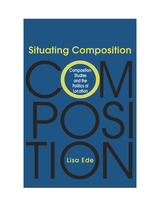
Responding to a growing pedagogical paralysis in debates over the nature and status of composition studies as an academic discipline, Lisa Ede offers a provocative inquiry into the politics of composition’s place in the academy. The result is a timely and engaging reflection on the rhetoric, ideology, and ethics of scholarship and instruction in composition studies today.
Situating Composition: Composition Studies and the Politics of Location delves into some of the most vexing issues presently facing the field: its status in relation to English studies, the nature and consequences of the writing process movement, the uneven professionalization of composition teachers, and the widening chasm between theory and practice. Ede interrogates key moments and texts in composition’s evolution, from the writing process movement to Susan Miller’s Textual Carnivals, through the interpretive lenses of historical analysis, theoretical critique, feminist and cultural theory, and Ede’s own two decades of experiences as a teacher and writing program administrator.
Questioning the narratives of progress and paradigm shifts that inform the field’s highly regarded recent theoretical studies, Ede urges scholars to carefully reconsider these claims, to honor the roles of teachers and students as more than dupes of ideology, and to more fully acknowledge—and utilize—the differences between the practice of theory and the practice of teaching. As academic hierarchies of knowledge increasingly privilege scholarship over instruction, Ede warns researchers to be cognizant of the politics and power inherent in their own location in the academy, particularly when professing to speak for teachers and students. To that end, the volume’s conclusion advocates pragmatic avenues for change and proffers topics for future discussion and debate.
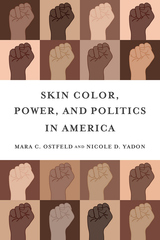
Ostfeld and Yadon surveyed over 1,300 people about their political views, including party affiliation, their opinions on welfare, and the importance of speaking English in the U.S. The authors created a matrix grounded in their “Roots of Race” framework, which predicts the relationship between skin color and political attitudes for each ethnoracial group based on the blurriness of the group’s boundaries and historical levels of privilege. They draw upon three distinct measures of skin color to conceptualize the relationship between skin color and political views: “Machine-Rated Skin Color,” measured with a light-reflectance meter; “Self-Assessed Skin Color,” using the Yadon-Ostfeld Skin Color Scale; and “Skin Color Discrepancy,” the difference between one’s Machine-Rated and Self-Assessed Skin Color.
Ostfeld and Yadon examine patterns that emerge among these measures, and their relationships with life experiences and political stances. Among Latinos, a group with relatively blurry group boundaries and low levels of historical privilege, the authors find a robust relationship between political views and Self-Assessed Skin Color. Latinos who overestimate the lightness of their skin color are more likely to hold conservative views on current racialized political issues, such as policing. Latinos who overestimate the darkness of their skin color, on the other hand, are more likely to hold liberal political views. As America’s major political parties remain divided on issues of race, this suggests that for Latinos, self-reported skin color is used as a means of aligning oneself with valued political coalitions.
African Americans, another group with low levels of historical privilege but with more clearly defined group boundaries, demonstrated no significant relationship between skin color and political attitudes. Thus, the lived experiences associated with being African American appeared to supersede the differences in life experiences due to skin color.
Whites, a group with more historical privilege and increasingly blurry group boundaries, showed a clear relationship between machine-assessed skin color and attitudes on political issues. Those with darker Machine-Rated Skin Color are more likely to hold conservative views, suggesting that they are responding to the threat of losing their privilege in a multicultural society.
At a time when the U.S. is both more diverse and politically divided, Skin Color, Power, and Politics in Americais a timely account of the ways in which skin color and politics are intertwined.
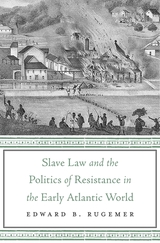
Winner of the Jerry H. Bentley Book Prize, World History Association
The success of the English colony of Barbados in the seventeenth century, with its lucrative sugar plantations and enslaved African labor, spawned the slave societies of Jamaica in the western Caribbean and South Carolina on the American mainland. These became the most prosperous slave economies in the Anglo-American Atlantic, despite the rise of enlightened ideas of liberty and human dignity. Slave Law and the Politics of Resistance in the Early Atlantic World reveals the political dynamic between slave resistance and slaveholders’ power that marked the evolution of these societies. Edward Rugemer shows how this struggle led to the abolition of slavery through a law of British Parliament in one case and through violent civil war in the other.
In both Jamaica and South Carolina, a draconian system of laws and enforcement allowed slave masters to maintain control over the people they enslaved, despite resistance and recurrent slave revolts. Brutal punishments, patrols, imprisonment, and state-sponsored slave catchers formed an almost impenetrable net of power. Yet slave resistance persisted, aided and abetted by rising abolitionist sentiment and activity in the Anglo-American world. In South Carolina, slaveholders exploited newly formed levers of federal power to deflect calls for abolition and to expand slavery in the young republic. In Jamaica, by contrast, whites fought a losing political battle against Caribbean rebels and British abolitionists who acted through Parliament.
Rugemer’s comparative history spanning two hundred years of slave law and political resistance illuminates the evolution and ultimate collapse of slave societies in the Atlantic World.
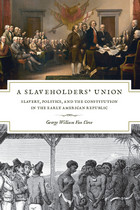
After its early introduction into the English colonies in North America, slavery in the United States lasted as a legal institution until the passage of the Thirteenth Amendment to the Constitution in 1865. But increasingly during the contested politics of the early republic, abolitionists cried out that the Constitution itself was a slaveowners’ document, produced to protect and further their rights. A Slaveholders’ Union furthers this unsettling claim by demonstrating once and for all that slavery was indeed an essential part of the foundation of the nascent republic.
In this powerful book, George William Van Cleve demonstrates that the Constitution was pro-slavery in its politics, its economics, and its law. He convincingly shows that the Constitutional provisions protecting slavery were much more than mere “political” compromises—they were integral to the principles of the new nation. By the late 1780s, a majority of Americans wanted to create a strong federal republic that would be capable of expanding into a continental empire. In order for America to become an empire on such a scale, Van Cleve argues, the Southern states had to be willing partners in the endeavor, and the cost of their allegiance was the deliberate long-term protection of slavery by America’s leaders through the nation’s early expansion. Reconsidering the role played by the gradual abolition of slavery in the North, Van Cleve also shows that abolition there was much less progressive in its origins—and had much less influence on slavery’s expansion—than previously thought.
Deftly interweaving historical and political analyses, A Slaveholders’ Union will likely become the definitive explanation of slavery’s persistence and growth—and of its influence on American constitutional development—from the Revolutionary War through the Missouri Compromise of 1821.
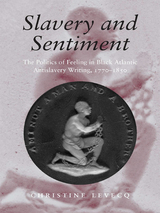
Levecq examines liberalism and republicanism, the main Anglo-American political ideologies of the period, in the antislavery texts of a range of African-American and Afro-British authors. Disclosing the political content hitherto unexamined in this kind of writing, she shows that while the overall story is one of increased liberalization of ideology on both sides of the Atlantic, the republican ideal persisted, particularly among black authors with transatlantic connections.
Demonstrating that such writers as Phillis Wheatley, Ignatius Sancho, Olaudah Equiano, Frederick Douglass, and Mary Prince were men and women of their times, Levecq provides valuable new insight into the ideological world of black Atlantic writers and puts them, for the first time, on modernity’s political map.

Writing about horror, exploitation, and sexploitation films, the contributors delve into topics ranging from the place of the “Aztec horror film” in debates about Mexican national identity to a cycle of 1960s films exploring homosexual desire in the military. One contributor charts the distribution saga of Mario Bava’s 1972 film Lisa and the Devil through the highs and lows of art cinema, fringe television, grindhouse circuits, and connoisseur DVD markets. Another offers a new perspective on the work of Doris Wishman, the New York housewife turned sexploitation director of the 1960s who has become a cult figure in bad-cinema circles over the past decade. Other contributors analyze the relation between image and sound in sexploitation films and Italian horror movies, the advertising strategies adopted by sexploitation producers during the early 1960s, the relationship between art and trash in Todd Haynes’s oeuvre, and the ways that the Friday the 13th series complicates the distinction between “trash” and “legitimate” cinema. The volume closes with an essay on why cinephiles love to hate the movies.
Contributors. Harry M. Benshoff, Kay Dickinson, Chris Fujiwara, Colin Gunckel, Joan Hawkins, Kevin Heffernan, Matt Hills, Chuck Kleinhans, Tania Modleski, Eric Schaefer, Jeffrey Sconce, Greg Taylor
The Slow Food movement was set up in Italy as a response to the dominance of fast food chains, supermarkets and large-scale agribusiness. It seeks to defend what it calls 'the universal right to pleasure' and promotes an alternative approach to food production and consumption based on the promotion of 'good, clean and fair' local products.
This is the first in-depth study of the fascinating politics of Slow Food, which in twenty years has grown into an international organisation with more than 80,000 members in over 100 countries. With its roots in the 1960s and 1970s counter-culture, Slow Food's distinctive politics lie in the unity between gastronomic pleasure and environmental responsibility. The movement crosses the left-right divide to embrace both the conservative desire to preserve traditional rural communities and an alternative 'virtuous' idea of globalisation.
Geoff Andrews shows that the alternative future embodied in Slow Food extends to all aspects of modern life. The Slow Food Story presents an extensive new critique of fast-moving, work-obsessed contemporary capitalist culture.

The 1966 edition of the leading medical textbook states that pregnant women can safely smoke half a pack of cigarettes a day. Yet today, women who smoke during pregnancy are among the most vilified figures in public health campaigns. Laury Oaks argues this shift is not due solely to medical findings indicating that cigarette smoking may harm the fetus. Also responsible are a variety of social factors that converged more than a decade ago to construct the demonized category of the “pregnant smoker.”
This book charts the emergence of smoking during pregnancy as a public health concern and social problem. Oaks looks at the emphasis public health educators place on individual responsibility, the current legal and social assertion of fetal personhood, the changing expectations of pregnant and prepregnant women, and the advent of antismoking campaigns. She explores how public health educators discuss “the problem” with one another, how they communicate with pregnant smokers, and how these women themselves understand the “risk” of fetal harm. Finally, Oaks discusses the various meanings of “objective” statistics on the effects of smoking on the fetus, exploring the significance of cultural context in assessing the relative importance of those numbers. She argues that rather than bombarding pregnant women with statistics, health educators should consider the daily lives of these women and their socioeconomic status to understand why some women choose to smoke during pregnancy. Without downplaying the seriousness of the health risks that smoking poses to women and their babies, the book supports new efforts that challenge the moral policing of pregnant smokers.
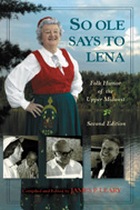
In the land of beer, cheese, and muskies—where the polka is danced and winter is unending and where Lutherans and Catholics predominate—everybody is ethnic, the politics are clean, and the humor is plentiful. This collection includes jokes, humorous anecdotes, and tall tales from ethnic groups (Woodland Indians, French, Cornish, Germans, Irish, Scandinavians, Finns, and Poles) and working folk (loggers, miners, farmers, townsfolk, hunters, and fishers). Dig into the rich cultural context supplied by the notes and photographs, or just laugh at the hundreds of jokes gathered at small-town cafes, farm tables, job sites, and church suppers. This second edition includes an afterword and indexes of motifs and tale types.
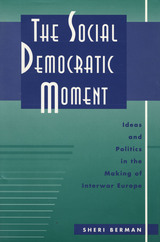
In addition to revising our view of the interwar period and the building of European democracies, this book cuts against the grain of most current theorizing in political science by explicitly discussing when and how ideas influence political behavior. Even though German and Swedish Social Democrats belonged to the same transnational political movement and faced similar political and social conditions in their respective countries before and after World War I, they responded very differently to the challenges of democratization and the Great Depression--with crucial consequences for the fates of their countries and the world at large.
Explaining why these two social democratic parties acted so differently is the primary task of this book. Berman's answer is that they had very different ideas about politics and economics--what she calls their programmatic beliefs. The Swedish Social Democrats placed themselves at the forefront of the drive for democratization; a decade later they responded to the Depression with a bold new economic program and used it to build a long period of political hegemony. The German Social Democrats, on the other hand, had democracy thrust upon them and then dithered when faced with economic crisis; their haplessness cleared the way for a bolder and more skillful political actor--Adolf Hitler.
This provocative book will be of interest to anyone concerned with twentieth-century European history, the transition to democracy problem, or the role of ideas in politics.
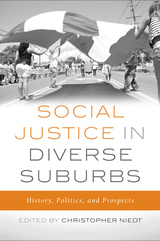
Editor Christopher Niedt and his contributors shed light on organizing and conflict in the suburbs with historical and contemporary case studies. Chapters address topical issues ranging from how suburbanites actively fought school segregation to industrial pollution and displacement along the suburban-rural fringe. Social Justice in Diverse Suburbs also considers struggles for integration and environmental justice as well as efforts to preserve suburban history and organize immigrant communities.
Contributors include: Douglas R. Appler, Aaron Cavin, Nancy A. Denton, Lisa Feldstein, Casey Gallagher, Anne Galletta, Joseph Gibbons, Robert Gioielli, Lucas Owen Kirkpatrick, JoAnna Mitchell-Brown, Manuel Pastor, john a. powell, Jason Reece, Alex Schafran, June Williamson, and the editor.
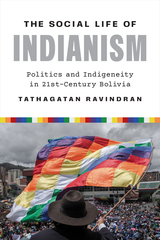
A sophisticated analysis of an influential Indigenous political ideology.
When the political ideology known as “Indianism” developed in Bolivia in the 1960s, it was premised on a rejection of Bolivian nationalism. Over the ensuing decades, however, it underwent several mutations as it moved out of a close circle of intellectuals to grip the urban masses that brought Evo Morales—the first Indigenous president—to power in 2006.
The Social Life of Indianism offers a fresh perspective by examining Bolivian Indigenous politics through the lens of political ideology. Through an ethnographic study of Indianism in the city of El Alto, Tathagatan Ravindran shows how canonical Indianism—the original ideology that rejects Bolivia as enslaver of the Indian nation—provided philosophical ballast for exponents of a more popular folk Indianism that accommodates the Bolivian state and pursues Indigenous empowerment within it. Synthesizing approaches from several disciplines, Ravindran demonstrates how canonical Indianism was not refuted or supplanted; it refracted, in the broader public, into a new common sense. A sophisticated analysis of a complex political landscape, The Social Life of Indianism brings much-needed nuance to one of the most prominent forms of Indigenous ideology and offers a unique framework for analyzing political ideologies across the contemporary world.
What happens when the allegedly value-free social sciences enter the national political arena? In The Social Sciences Go to Washington, scholars examine the effects of the massive influx of sociologists, demographers, economists, educators, and others to the federal advisory process in the postwar period. Essays look at how these social scientists sought to change existing policies in welfare, public health, urban policy, national defense, environmental policy, and science and technology policy, and the ways they tried to influence future policies.
Policymakers have been troubled that followers of postmodernism have questioned the legitimacy of scientific and political authority to speak for the desires of social groups. As the social sciences increasingly become expressions of individual preferences, the contributors ask, how can they continue to be used to set public policy for us all?
This collection is a useful resource for anyone studying the relationship between science and the government in the postwar years.
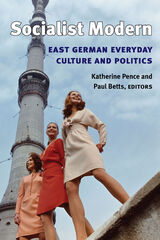
The reunification of Germany in 1989 may have put an end to the experiment in East German communism, but its historical assessment is far from over. Where most of the literature over the past two decades has been driven by the desire to uncover the relationship between power and resistance, complicity and consent, more recent scholarship tends to concentrate on the everyday history of East German citizens.
This volume builds on the latest literature by exploring the development and experience of life in East Germany, with a particular view toward addressing the question: What did modernity mean for the East German state and society? As such, the collection moves beyond the conceptual divide between state-level politics and everyday life to sharply focus on the specific contours of the GDR's unique experiment in Cold War socialism. What unites all the essays is the question of how the very tensions around "socialist modernity" shaped the views, memories, and actions of East Germans over four decades.
"An impressive volume drawing together rich, diverse essays by some of the most interesting, well-known, and experienced scholars on the GDR in the field, on both sides of the Atlantic."
---Dr. Jan Palmowski, Senior Lecturer in European Studies at King's College London, and Review Editor for German History
"Delving into many sides of the GDR modern, Pence and Betts present both new empirical evidence and offer insightful theoretical perspectives. The idea of the 'Socialist Modern' provides an excellent conceptual framework; the focus on culture fills a hole in the literature, the introduction is theoretically sophisticated and well-grounded in the historiography, and the span and heterogeneity of the articles are impressive."
---Donna Harsch, Associate Professor of History, Carnegie Mellon University
Katherine Pence is Assistant Professor of History, Baruch College, City University of New York.
Paul Betts is Reader in Modern German History, University of Sussex, Brighton, England.
Contributors
Daphne Berdahl
Paul Betts
Alon Confino
Greg Eghigian
Dagmar Herzog
Young-Sun Hong
Thomas Lindenberger
Alf Lüdtke
Ina Merkel
Katherine Pence
Judd Stitziel
Dorothee Wierling

Grounded in ecofeminist theory, this literary analysis examines Walker’s evolving views on animals in relation to her discussions of other oppressed groups. Pamela B. June argues that Walker’s fiction can help readers understand and perhaps challenge American culture’s mistreatment of nonhuman animals. Walker has withstood criticism for her decision to abandon vegetarianism, and this book also problematizes the slippery territory of viewing writers as moral guides. Solidarity with the Other Beings on the Planet will appeal to readers in literary studies, ecofeminist studies, African American studies, and critical animal studies.
One linchpin of China’s expansion has been township and village enterprises (TVEs), a vast group of firms with diverse modes of ownership and structure. Based on the author’s fieldwork in Zhejiang, this book explores the emergence and success of rural enterprises.
This study also examines how ordinary rural residents have made sense of and participated in the industrialization engulfing them in recent decades. How much does TVE success depend on the ruthless exploitation of workers? How did peasants-turned-workers develop such impressive skills so quickly? To what extent do employees’ values affect the cohesion and operations of companies? And how long can peasant workers sustain these efforts in the face of increasing market competition?
The author argues that the resilience of these factories has as much to do with how authority is defined and how people interact as it does with the ability to generate profits. How social capital was deployed and replenished at critical moments was central to the eventual rise and consolidation of these enterprises as effective, robust institutions. Without mutual respect, company leaders would have found it impossible to improve their firms’ productivity, workplace stability, and long-term viability.
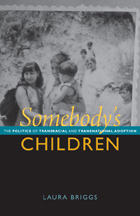
The dramatic expansion of transracial and transnational adoption since the 1950s, Briggs argues, was the result of specific and profound political and social changes, including the large-scale removal of Native children from their parents, the condemnation of single African American mothers in the context of the civil rights struggle, and the largely invented "crack babies" scare that inaugurated the dramatic withdrawal of benefits to poor mothers in the United States. In Guatemala, El Salvador, and Argentina, governments disappeared children during the Cold War and then imposed neoliberal economic regimes with U.S. support, making the circulation of children across national borders easy and often profitable. Concluding with an assessment of present-day controversies surrounding gay and lesbian adoptions and the struggles of immigrants fearful of losing their children to foster care, Briggs challenges celebratory or otherwise simplistic accounts of transracial and transnational adoption by revealing some of their unacknowledged causes and costs.
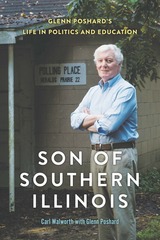
A life of principles, service, and faith
This first biography of Glenn Poshard traces the life of a young man who rose from rural poverty in Southern Illinois to become a United States congressman and president of the Southern Illinois University system. This profound portrait unveils a life and career dedicated to making higher education affordable and improving the quality of life for the community of Southern Illinois.
Beginning with his childhood in a two-room home near Herald, Illinois and the early, tragic loss of his sister, this biography navigates Poshard’s service in the military, his time as a state senator and United States congressman, his run for governor, his years at Southern Illinois University, and the establishment of the Poshard Foundation for Abused Children. Intimacies of his personal life are disclosed, such as his struggles with and treatment for depression, his passion for education, and the lasting bonds he formed with his teachers. His unpopular decision to refuse PAC donations is also highlighted, along with the work that went into sponsoring the Illinois Wilderness Act, and his relationship with civil rights activist John Lewis. Glenn Poshard’s efforts for the Wilderness Act designated Southern Illinois’s famous Garden of the Gods as a National Wilderness Preservation System, which continues to attract visitors from around the world.
Poshard’s path from poverty was riddled with hardship, but his perseverance and family values ultimately allowed for longstanding personal and civic growth. From an admirable work ethic to a steadfast commitment to problem-solving, this biography illuminates the life and accomplishments of an impressive and generous leader.

Musicals, it is often said, burst into song and dance when mere words can no longer convey the emotion. This book argues that musicals burst into song and dance when one body can no longer convey the emotion. Rogers shows how the musical’s episodes of burlesque and minstrelsy model the kinds of radical relationships that the genre works to create across the different bodies of its performers, spectators, and creators every time the musical bursts into song. These radical relationships—borne of the musical’s obsessions with “bad” performances of gender and race—are the root of the genre’s progressive play with identity, and thus the source of its subcultural power. However, this leads to an ethical dilemma: Are the musical’s progressive politics thus rooted in its embrace of regressive entertainments like burlesque and minstrelsy?
The Song Is You shows how musicals return again and again to this question, and grapple with a guilt that its joyous pleasures are based on exploiting the laboring bodies of its performers. Rogers argues that the discourse of “integration”—which claims that songs should advance the plot—has functioned to deny the radical work that the musical undertakes every time it transitions into song and dance. Looking at musicals from The Black Crook to Hamilton, Rogers confronts the gendered and racial dynamics that have always under-girded the genre, and asks how we move forward.
In this rich ethnographic study, Vogler reveals how different legal arenas take dramatically different approaches to classifying sexuality and use those classifications to legitimate different forms of social control. By delving into the histories behind these diverging classification practices and analyzing their contemporary reverberations, Vogler shows how the science of sexuality is far more central to state power than we realize.

An illuminating new study of modern Polish verse in performance, offering a major reassessment of the roles of poets and poetry in twentieth-century Polish culture.
What’s in a voice? Why record oneself reading a poem that also exists on paper? In recent decades, scholars have sought to answer these questions, giving due credit to the art of poetry performance in the anglophone world. Now Aleksandra Kremer trains a sharp ear on modern Polish poetry, assessing the rising importance of authorial sound recordings during the tumultuous twentieth century in Eastern Europe.
Kremer traces the adoption by key Polish poets of performance practices intimately tied to new media. In Polish hands, tape recording became something different from what it had been in the West, shaped by its distinctive origins behind the Iron Curtain. The Sound of Modern Polish Poetry reconstructs the historical conditions, audio technologies, and personal motivations that informed poetic performances by such luminaries as Czesław Miłosz, Wisława Szymborska, Aleksander Wat, Zbigniew Herbert, Miron Białoszewski, Anna Swir, and Tadeusz Różewicz. Through performances both public and private, prepared and improvised, professional and amateur, these poets tested the possibilities of the physical voice and introduced new poetic practices, reading styles, and genres to the Polish literary scene. Recording became, for these artists, a means of announcing their ambiguous place between worlds.
Kremer’s is a work of criticism as well as recovery, deploying speech-analysis software to shed light on forgotten audio experiments—from poetic “sound postcards,” to unusual home performances, to the final testaments of writer-performers. Collectively, their voices reveal new aesthetics of poetry reading and novel concepts of the poetic self.

Between 1880 and 1930, close to 200 women were murdered by lynch mobs in the American South. Many more were tarred and feathered, burned, whipped, or raped. In this brutal world of white supremacist politics and patriarchy, a world violently divided by race, gender, and class, black and white women defended themselves and challenged the male power brokers. Crystal Feimster breaks new ground in her story of the racial politics of the postbellum South by focusing on the volatile issue of sexual violence.
Pairing the lives of two Southern women—Ida B. Wells, who fearlessly branded lynching a white tool of political terror against southern blacks, and Rebecca Latimer Felton, who urged white men to prove their manhood by lynching black men accused of raping white women—Feimster makes visible the ways in which black and white women sought protection and political power in the New South. While Wells was black and Felton was white, both were journalists, temperance women, suffragists, and anti-rape activists. By placing their concerns at the center of southern politics, Feimster illuminates a critical and novel aspect of southern racial and sexual dynamics. Despite being on opposite sides of the lynching question, both Wells and Felton sought protection from sexual violence and political empowerment for women.
Southern Horrors provides a startling view into the Jim Crow South where the precarious and subordinate position of women linked black and white anti-rape activists together in fragile political alliances. It is a story that reveals how the complex drama of political power, race, and sex played out in the lives of Southern women.

The nineteenth-century novel is generally assumed to owe its basic social imaginaries to the ideologies, institutions, and practices of modern civil society. In Sovereign Fictions, Ilya Kliger asks what happens to the novel when its fundamental sociohistorical orientation is, as in the case of Russian realism, toward the state. Kliger explores Russian realism’s distinctive construals of sociality through a broad range of texts from the 1830s to the 1870s, including major works by Tolstoy, Dostoevsky, Gogol, Pushkin, Lermontov, Goncharov, and Turgenev, and several lesser-known but influential books of the period, including Alexander Druzhinin’s Polinka Saks (1847), Aleksei Pisemsky’s One Thousand Souls (1858), and Vasily Sleptsov’s Hard Times (1865). Challenging much current scholarly consensus about the social dynamics of nineteenth-century realist fiction, Sovereign Fictions offers an important intervention in socially inflected theories of the novel and in current thinking on representations of power and historical poetics.
Contributors. Judith Butler, George Edmondson, Roberto Esposito, Carlo Galli, Klaus Mladek, Alberto Moreiras, Andrew Norris, Eric L. Santner, Adam Sitze, Carsten Strathausen, Rei Terada, Cary Wolfe
Drawing on anthropology, political theory, philosophy, psychoanalysis, and theater, William Mazzarella, Eric L. Santner, and Aaron Schuster show how politics in the age of Trump functions by mobilizing a contradictory and convoluted enjoyment, an explosive mixture of drives and fantasies that eludes existing portraits of our era. The current political moment turns out to be not so much exceptional as exceptionally revealing of the constitutive tension between enjoyment and economy that has always been a key component of the social order. Santner analyzes the collective dream-work that sustains a new sort of authoritarian charisma or mana, a mana-facturing process that keeps us riveted to an excessively carnal incorporation of sovereignty. Mazzarella examines the contemporary merger of consumer brand and political brand and the cross-contamination of politics and economics, warning against all too easy laments about the corruption of politics by marketing. Schuster, focusing on the extreme theatricality and self-satirical comedy of the present, shows how authority reasserts itself at the very moment of distrust and disillusionment in the system, profiting off its supposed decline. A dazzling diagnostic of our present, Sovereignty, Inc., forces us to come to terms with our complicity in Trump’s political presence and will immediately take its place in discussions of contemporary politics.

This book explores the trials of Spanish democracy from the death of Franco to the present. But the heart of the story is the generation that came of age in the 1960s, assumed political power, and formed the first Socialist government in 1982 with Felipe González as Prime Minister, which was returned to power in four consecutive elections. Starting in 1993, however, the government came under siege. High officials were accused of authorizing the assassination of as many as twenty-eight Basque nationalists suspected of terrorism over the years, and of covering up these crimes. This scandal, along with other disclosures of corruption and serious law-breaking, shook the country's confidence in its legal and political institutions and in its ability to hold its leaders to the rule of law.
The author probes for the roots of these events in the character of the generation that assumed power and in the immature nature of the civil society it inherited. Facing unusually high unemployment, internal economic and social pressures, the stringent requirements for joining the European Union, and the demands of Catalan and Basque nationalists, the government lost its way and was eventually voted out of office.
Using Spain as the example, the book examines issues of governance, social change, and internal nationalist movements as they relate to the civil society and the wider polity everywhere.
In this book, Petr Roubal explores the political, social, and aesthetical dimensions of these mass physical demonstrations, with a particular focus on their roots in the völkisch nationalism of the German Turner movement and the Czech Sokol gymnastic tradition. Roubal draws on extensive interviews and archival research to investigate the many facets of this sporting tradition, from the reactions of ordinary, non-political gymnasts who appropriated and challenged official rituals to the organizational demands of the Spartakiads, such as the incredible finances involved and the knowledge and skills required from hundreds of former Sokol officials. Featuring an abundance of archival photographs, Spartakiad takes a new approach to Communist history by opening a window onto the mentality and mundanity behind the Iron Curtain.
Offering the clearest look yet at China’s state-driven investment in Africa, this book is rooted in six years of extensive fieldwork in copper mines and construction sites in Zambia, Africa’s copper giant. Lee shadowed Chinese, Indian, and South African managers in underground mines, interviewed Zambian miners and construction workers, and worked with Zambian officials. Distinguishing carefully between Chinese state capital and global private capital in terms of their business objectives, labor practices, managerial ethos, and political engagement with the Zambian state and society, she concludes that Chinese state investment presents unique potential and perils for African development. The Specter of Global China will be a must-read for anyone interested in the future of China, Africa, and capitalism worldwide.
Speculation: Politics, Ideology, Event develops Hegel’s radical perspective of speculative thought as a way of reclaiming and revitalizing the sense of the future and its possibilities. Engaging with such figures as Alain Badiou, Quentin Meillassoux, Ernesto Laclau, Slavoj Žižek, and Fredric Jameson, Glyn Daly articulates the distinctness of speculative philosophy and draws its implications for new debates in areas of science, politics, capitalism, ideology, ethics, and the event.
In a confrontation with today’s fatalistic milieu, principal emphasis is given to Hegel’s idea of infinity as the intrinsic dimension of negativity within all finitude. Against the modern era’s paradigmatic tendency to externalize social problems in the form of antagonism and Otherness, Daly argues for a renewal of utopian thought based on Hegelian reconciliation and the affirmation of excess as the essence of all being. On these grounds, he advances a new kind of political imagination that in speculative terms centers on uncompromising notions of truth and reason.
Since the terrorist acts of September 11, 2001, finance and security have become joined in new ways to produce particular targets of state surveillance. In Speculative Security, Marieke de Goede describes how previously unscrutinized practices such as donations and remittances, especially across national borders, have been affected by security measures that include datamining, asset freezing, and transnational regulation. These “precrime” measures focus on transactions that are perfectly legal but are thought to hold a specific potential to support terrorism. The pursuit of suspect monies is not simply an issue of financial regulation, she shows, but a broad political, social, and even cultural phenomenon with profound effects on everyday life.
Speculative Security offers a range of examples that illustrate the types of security interventions employed today, including the extralegal targeting and breaking up of the al-Barakaat financial network that was accompanied by raids in the United States, asset freezes in Sweden, and the incarceration of a money remitter at Guantánamo Bay. De Goede develops the paradigm of “speculative security” as a way to understand the new fusing of finance and security, denoting the speculative nature of both the means and the ends of the war on terrorist financing.
Ultimately, de Goede reveals how the idea of creating “security” appeals to multiple imaginable—and unimaginable—futures in order to enable action in the present.

Reveals the alt-right’s project to claim science fiction and—by extension—the future
Fascists such as Richard Spencer interpret science fiction films and literature as saying only white men have the imagination required to invent a high-tech future. Other white nationalists envision racist utopias filled with Aryan supermen and all-white space colonies. Speculative Whiteness traces these ideas through the entangled histories of science fiction culture and white supremacist politics, showing that debates about representation in science fiction films and literature are struggles over who has the right to imagine and inhabit the future. Although fascists insist that tomorrow belongs to them, they have always been and will continue to be contested by antifascist fans willing to fight for the future.
Offering new approaches to thinking about sports and political ideologies, Sport and Neoliberalism explores the structures, formations, and mechanics of neoliberalism. The editors and contributors to this original and timely volume examine the intersection of sport as a national pastime and also an engine for urban policy—e.g., stadium building—as well as a powerful force for influencing our understanding of the relationship between culture, politics, and identity.
Sport and Neoliberalism examines the ways the neoliberal project creates priorities for civic society and how, in effect, it turns many aspects of sport into a vehicle of public governance. From the relationship between sport and the neo-liberal state, through the environmental dimensions of neo-liberal sport, to the political biopolitics of obesity, the essays in this volume explore the ways in which the “logics” of neoliberalism are manifest as powerful public pedagogies through the realm of popular culture.
Contributors include: Michael Atkinson, Ted Butryn, C. L. Cole, Norman Denzin, Grant Farred, Jessica Francombe, Caroline Fusco, Michael D. Giardina, Mick Green, Leslie Heywood, Samantha King, Lisa McDermott, Mary G. McDonald, Toby Miller, Mark Montgomery, Joshua I. Newman, Jay Scherer, Kimberly S. Schimmel, and Brian Wilson
In the series Sporting, edited by Amy Bass

Drawing on oral histories and a close study of daily life in rural Guyana, Brackette E. Williams examines how and why individuals and groups in their quest for recognition as a “nation” reproduce ethnic chauvinism, racial stereotyping, and religious bigotry. By placing her ethnographic study in a broader historical context, the author develops a theoretical understanding of the relations among various dimensions of personal identity in the process of nation building.

Eric Fassin examines the trend of State anti-intellectualism in France using the nation as a case study to demonstrate that this tendency is not limited to ostensibly illiberal regimes. He argues that today’s world requires an examination of this phenomenon beyond Cold War geopolitical divisions and highlights a global shift towards authoritarian neoliberalism. His book is a plea for the political urgency of intellectual work in a global moment of political anti-intellectualism.
The book covers the period from President Sarkozy to Prime Minister Valls and includes both firsthand and public cases of attacks against academics, not only in France, but also in Brazil, Hungary, Russia, Turkey, and the United States, with examples of State racism and the argument of the State against antiracism. The book also considers issues of censorship and cancel culture, concluding with Fassin’s firsthand account of attacks on him from the far-right.

A revelatory account of the “wonder drug” theriac, which became a powerful tool in the hands of medical and political authorities at the height of the Italian Renaissance.
From the 1490s, one of the most influential remedies to circulate in Europe was the “wonder drug” theriac. Although it had been in use for centuries, theriac gained special importance in the Renaissance, when Italy became a major hub of its production and export. A quintessential example of Galenic pharmacy, theriac was used to treat everything from venomous bites and poisons to headaches, sore throats, fevers, palsy, and heart problems. Examining this pivotal period in the history of medicine, Barbara Di Gennaro Splendore shows how a panacea became a vehicle for political power as well as intellectual and commercial competition.
So essential was theriac to good health that regimes in Bologna and Venice could secure popular support by asserting regulatory control over this “state drug.” Likewise, medical authorities relied on theriac to solidify their own legitimacy, through public ceremonies replete with music and choreography. Apothecaries and physicians engaged in spirited rivalry over branding and control of production, as well as disputes over optimal recipes, which included opium and viper flesh as well as dozens of other ingredients. Yet as Galenic science came into question in the late seventeenth century, the alliance between politics and pharmacy weakened. Physicians, in particular, grew hesitant over whether to continue promoting theriac at all. While the drug remained beloved, especially among the poor, its political power was significantly diminished by the nineteenth century.
Offering a vivid window into the political history of medicine, The State Drug sheds new light on the fraught, age-old intersection of power and pharmacy.
READERS
Browse our collection.
PUBLISHERS
See BiblioVault's publisher services.
STUDENT SERVICES
Files for college accessibility offices.
RECENTLY PUBLISHED




UChicago Accessibility Resources
home | accessibility | search | about | contact us
BiblioVault ® 2001 - 2025
The University of Chicago Press