
 A SCHOLARLY BOOK REPOSITORY
180 start with S start with S
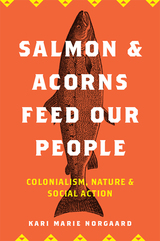
Since time before memory, large numbers of salmon have made their way up and down the Klamath River. Indigenous management enabled the ecological abundance that formed the basis of capitalist wealth across North America. These activities on the landscape continue today, although they are often the site of intense political struggle. Not only has the magnitude of Native American genocide been of remarkable little sociological focus, the fact that this genocide has been coupled with a reorganization of the natural world represents a substantial theoretical void. Whereas much attention has (rightfully) focused on the structuring of capitalism, racism and patriarchy, few sociologists have attended to the ongoing process of North American colonialism. Salmon and Acorns Feed Our People draws upon nearly two decades of examples and insight from Karuk experiences on the Klamath River to illustrate how the ecological dynamics of settler-colonialism are essential for theorizing gender, race and social power today.

The Brown Goose, the White Case Knife, Ora’s Speckled Bean, Radiator Charlie’s Mortgage Lifter—these are just a few of the heirloom fruits and vegetables you’ll encounter in Bill Best’s remarkable history of seed saving and the people who preserve both unique flavors and the Appalachian culture associated with them. As one of the people at the forefront of seed saving and trading for over fifty years, Best has helped preserve numerous varieties of beans, tomatoes, corn, squashes, and other fruits and vegetables, along with the family stories and experiences that are a fundamental part of this world. While corporate agriculture privileges a few flavorless but hardy varieties of daily vegetables, seed savers have worked tirelessly to preserve genetic diversity and the flavors rooted in the Southern Appalachian Mountains—referred to by plant scientists as one of the vegetative wonders of the world.
Saving Seeds, Preserving Taste will introduce readers to the cultural traditions associated with seed saving, as well as the remarkable people who have used grafting practices and hand-by-hand trading to keep alive varieties that would otherwise have been lost. As local efforts to preserve heirloom seeds have become part of a growing national food movement, Appalachian seed savers play a crucial role in providing alternatives to large-scale agriculture and corporate food culture. Part flavor guide, part people’s history, Saving Seeds, Preserving Taste will introduce you to a world you’ve never known—or perhaps remind you of one you remember well from your childhood.

Saving Seeds, Preserving Taste will introduce readers to the cultural traditions associated with seed saving, as well as the remarkable people who have used grafting practices and hand-by-hand trading to keep alive varieties that would otherwise have been lost. As local efforts to preserve heirloom seeds have become part of a growing national food movement, Appalachian seed savers play a crucial role in providing alternatives to large-scale agriculture and corporate food culture. Part flavor guide, part people’s history, Saving Seeds, Preserving Taste will introduce you to a world you’ve never known — or perhaps remind you of one you remember well from your childhood.



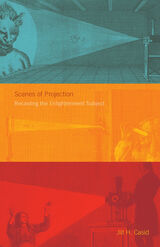
Theorizing vision and power at the intersections of the histories of psychoanalysis, media, scientific method, and colonization, Scenes of Projection poaches the prized instruments at the heart of the so-called scientific revolution: the projecting telescope, camera obscura, magic lantern, solar microscope, and prism. From the beginnings of what is retrospectively enshrined as the origins of the Enlightenment and in the wake of colonization, the scene of projection has functioned as a contraption for creating a fantasy subject of discarnate vision for the exercise of “reason.”
Jill H. Casid demonstrates across a range of sites that the scene of projection is neither a static diagram of power nor a fixed architecture but rather a pedagogical setup that operates as an influencing machine of persistent training. Thinking with queer and feminist art projects that take up old devices for casting an image to reorient this apparatus of power that produces its subject, Scenes of Projection offers a set of theses on the possibilities for felt embodiment out of the damaged and difficult pasts that haunt our present.
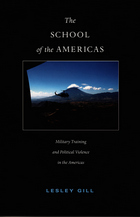
Based on her unprecedented level of access to the School of the Americas, Gill describes the School’s mission and training methods and reveals how its students, alumni, and officers perceive themselves in relation to the dirty wars that have raged across Latin America. Assessing the School’s role in U.S. empire-building, she shows how Latin America’s brightest and most ambitious military officers are indoctrinated into a stark good-versus-evil worldview, seduced by consumer society and the “American dream,” and enlisted as proxies in Washington’s war against drugs and “subversion.”

It includes:
*More than 6,500 authoritative A-Z entries covering earth and life sciences (including natural history, physics, chemistry, medicine, information technology, and other disciplines)
*Biographical entries for more than 850 famous scientists, detailing their careers and achievements
*Over 20,000 cross-references
*More than 250 detailed illustrations, including schematic diagrams, representational natural history artwork, and technical cutaway diagrams

Along with the political and economic reforms that have characterized the post-Mao era in China there has been a potentially revolutionary change in Chinese science and technology. Here sixteen scholars examine various facets of the current science and technology scene, comparing it with the past and speculating about future trends.
Two chapters dealing with science under the Nationalists and under Mao are followed by a section of extensive analysis of reforms under Deng Xiaoping, focusing on the organizational system, the use of human resources, and the emerging response to market forces. Chapters dealing with changes in medical care, agriculture, and military research and development demonstrate how these reforms have affected specific areas during the Chinese shift away from Party orthodoxy and Maoist populism toward professional expertise as the guiding principle in science and technology. Three further chapters deal with China’s interface with the world at large in the process of technology transfer.
Both the introductory and concluding chapters describe the tension between the Chinese Communist Party structure, with its inclinations toward strict vertical control, and the scientific and technological community’s need for a free flow of information across organizational, disciplinary, and national boundaries.
During the latter half of the twentieth century, federal funding in the United States for scientific research and development increased dramatically. Yet despite the infusion of public funds into research centers, the relationship between public policy and research and development remains poorly understood.
How does the federal government attempt to harness scientific knowledge and resources for the nation's economic welfare and competitiveness in the global marketplace? Who makes decisions about controversial scientific experiments, such as genetic engineering and space exploration? Who is held accountable when things go wrong?
In this lucidly-written introduction to the topic, Sylvia Kraemer draws upon her extensive experience in government to develop a useful and powerful framework for thinking about the American approach to shaping and managing scientific innovation. Kraemer suggests that the history of science, technology, and politics is best understood as a negotiation of ongoing tensions between open and closed systems. Open systems depend on universal access to information that is complete, verifiable, and appropriately used. Closed systems, in contrast, are composed of unique and often proprietary features, which are designed to control usage.
From the Constitution's patent clause to current debates over intellectual property, stem cells, and internet regulation, Kraemer shows the promise-as well as the limits-of open systems in advancing scientific progress as well as the nation's economic vitality.

Within two generations the Soviet Union has made the transition from a peasant society to an industrialized superpower. Today it has the world's largest scientific and technical establishment, surpassing that of the United States by almost one third. Nevertheless, the modernization of the Soviet Union is uneven. Indeed, in many aspects of rural and urban life the Soviet Union displays characteristics of an underdeveloped nation, which suggests that science and technology are less significant social forces there than in the modernized West. This book is the first to attest that science and technology have in fact been integral to the development of Soviet culture.
Close scrutiny is given both to the unique mechanisms that have given science and technology their prominence and to the distinctive, and recently liberalizing, effects they have had on intellectual and political developments in the Soviet Union. Included are the perceptive views of a dozen leading scholars who take on an unusually wide spectrum of topics—from communications technology to environmental issues, to science fiction and art, to bioethics and technocracy—while maintaining a consistent concern with the humanistic dimensions of the gargantuan enterprise of science. Loren Graham's discerning introduction provides a broad context for examining the active role of science and technology in Soviet culture and politics.
This splendid volume will appeal to anyone searching for a deeper understanding of a superpower in ferment. It will be of special interest not only to historians of science and technology but also to psychologists, sociologists, anthropologists, and philosophers.

Issues spawned by the headlong pace of developments in science and technology fill the courts. How should we deal with frozen embryos and leaky implants, dangerous chemicals, DNA fingerprints, and genetically engineered animals? The realm of the law, to which beleaguered people look for answers, is sometimes at a loss—constrained by its own assumptions and practices, Sheila Jasanoff suggests. This book exposes American law’s long-standing involvement in constructing, propagating, and perpetuating a variety of myths about science and technology.
Science at the Bar is the first book to examine in detail how two powerful American institutions—both seekers after truth—interact with each other. Looking at cases involving product liability, medical malpractice, toxic torts, genetic engineering, and life and death, Jasanoff argues that the courts do not simply depend on scientific findings for guidance—they actually influence the production of science and technology at many different levels. Research is conducted and interpreted to answer legal questions. Experts are selected to be credible on the witness stand. Products are redesigned to reduce the risk of lawsuits. At the same time the courts emerge here as democratizing agents in disputes over the control and deployment of new technologies, advancing and sustaining a public dialogue about the limits of expertise. Jasanoff shows how positivistic views of science and the law often prevent courts from realizing their full potential as centers for a progressive critique of science and technology.
With its lucid analysis of both scientific and legal modes of reasoning, and its recommendations for scholars and policymakers, this book will be an indispensable resource for anyone who hopes to understand the changing configurations of science, technology, and the law in our litigious society.
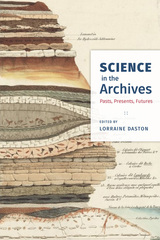
With Science in the Archives, Lorraine Daston and her co-authors offer the first study of the important role that these archives play in the natural and human sciences. Reaching across disciplines and centuries, contributors cover episodes in the history of astronomy, geology, genetics, philology, climatology, medicine, and more—as well as fundamental practices such as collecting, retrieval, and data mining. Chapters cover topics ranging from doxology in Greco-Roman Antiquity to NSA surveillance techniques of the twenty-first century. Thoroughly exploring the practices, politics, economics, and potential of the sciences of the archives, this volume reveals the essential historical dimension of the sciences, while also adding a much-needed long-term perspective to contemporary debates over the uses of Big Data in science.

Replacing the language and concepts of classical mechanics with terms such as "actual" and "potential" energy, the North British group conducted their revolution in physics so astutely and vigorously that the concept of "energy"—a valuable commodity in the early days of industrialization—became their intellectual property. Smith skillfully places this revolution in its scientific and cultural context, exploring the actual creation of scientific knowledge during one of the most significant episodes in the history of physics.

Marcel Chotkowski LaFollette transports readers to the early days of radio, when the new medium allowed innovative and optimistic scientists the opportunity to broadcast serious and dignified presentations over the airwaves. But the exponential growth of listenership in the 1920s, from thousands to millions, and the networks’ recognition that each listener represented a potential consumer, turned science on the radio into an opportunity to entertain, not just educate.
Science on the Air chronicles the efforts of science popularizers, from 1923 until the mid-1950s, as they negotiated topic, content, and tone in order to gain precious time on the air. Offering a new perspective on the collision between science’s idealistic and elitist view of public communication and the unbending economics of broadcasting, LaFollette rewrites the history of the public reception of science in the twentieth century and the role that scientists and their institutions have played in both encouraging and inhibiting popularization. By looking at the broadcasting of the past, Science on the Air raises issues of concern to all those who seek to cultivate a scientifically literate society today.

“An excellent book.”—Anthony Gottlieb, New York Times Book Review
“Timely and highly readable. . . . A book which every scientist curious about our predecessors should read.”—Trevor Pinch, New Scientist
“Shapin's account is informed, nuanced, and articulated with clarity. . . . This is not to attack or devalue science but to reveal its richness as the human endeavor that it most surely is. . . . Shapin's book is an impressive achievement.”—David C. Lindberg, Science
“It's hard to believe that there could be a more accessible, informed or concise account. . . . The Scientific Revolution should be a set text in all the disciplines. And in all the indisciplines, too.”—Adam Phillips, London Review of Books
In The Scientific-Military State, Sveinn M. Jóhannesson charts the emergence of a new kind of governance in early-nineteenth-century America: the scientific-military state. Federal officials used mathematics, science, and other forms of enlightened knowledge to launch the nation’s very first experiments in scientific education and expert administration. These figures forged a new intellectual elite that socially elevated itself above ordinary soldiers, workers, and civilians and reshaped the military state itself beyond familiar models of standing army or militia. Originating primarily from the US Military Academy at West Point, these experts, who were often engineers, debated statecraft, analyzed topography, designed fortifications, manufactured weapons, built infrastructure, and exercised military power as the United States spread across the continent. But the even deeper result was a transformed relationship between the government and its citizens, one that echoes today.




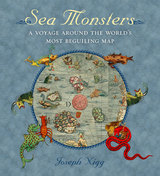
Nearly two meters wide in total, the map’s nine wood-block panels comprise the largest and first realistic portrayal of Northern Europe. But in addition to these important geographic elements, Magnus’s map goes beyond cartography to scenes both domestic and mystic. Close to shore, Magnus shows humans interacting with common sea life—boats struggling to stay afloat, merchants trading, children swimming, and fisherman pulling lines. But from the offshore deeps rise some of the most magical and terrifying sea creatures imaginable at the time or thereafter—like sea swine, whales as large as islands, and the Kraken. In this book, Nigg provides a thorough tour of the map’s cartographic details, as well as a colorful look at its unusual pictorial and imaginative elements. He draws on Magnus’s own text to further describe and illuminate the inventive scenes and to flesh out the stories of the monsters.
Sea Monsters is a stunning tour of a world that still holds many secrets for us land dwellers, who will forever be fascinated by reports of giant squid and the real-life creatures of the deep that have proven to be as bizarre and otherworldly as we have imagined for centuries. It is a gorgeous guide for enthusiasts of maps, monsters, and the mythic.
Best Books for Regional Special Interests, selected by the American Association of School Librarians, and Best Books for General Audiences, selected by the Public Library Association
“Provide[s] a useful vantage on the world bequeathed to us by the forces that set out to put America astride the globe nearly a century ago.”—Chris Rasmussen, Bookforum

An illustrated story of the relationship between mapping and secrecy, charting the role maps played in concealing and revealing knowledge across centuries.
Is there anything more intriguing than a secret map? One that reveals clandestine information or meanings, or a map that is itself a secret? Secret Maps features over one hundred examples of these kinds of maps, connected by their varied relationships to secrecy, and ranging from the twelfth to the twenty-first centuries and across the globe. They include views into state secrecy and power—such as maps used for domestic and military purposes, imperial expansion, espionage, and surveillance as well as those with private or commercial uses, such as charts of private land, trade routes, or the flights of private jets. The maps span widely in their scope and cover issues of broad interest, from old-fashioned spying to contemporary concerns about technology and privacy.
As illuminating as it is thrilling, Secret Maps unearths the once-hidden routes, landscapes, and locations that have covertly shaped our world.


An essential reference for students, seed technologists, researchers, and seed industry personnel, this comprehensive guide outlines the most widely performed modern seed quality tests, explores the principles behind them, the history of seed testing, why seeds are tested and when, and sampling, sub-sampling, seed laboratory management, accreditation, and seed quality assurance programs. The authors describe statistical applications to seed testing and tolerances, and they provide a detailed morphological and structural description of seed formation and development. The book examines the testing of genetic traits and transgenic seeds, including DNA and protein genetic purity tests, and cultivar purity identification for conventional seeds. In addition to the most common seed purity and viability tests, tests for seed and seedling vigor, seed-borne diseases and seed moisture determination are also discussed.


Twenty experts from several nations, representing both the natural and social sciences, consider the historical background, the issue of patent rights as applied to plant germplasm, the nature of global genetic interdependence, the internationalization of the seed industry, the implications of biotechnology on genetic resources, the Third World attitude toward the debate, and the viewpoints of the International Agricultural Research Centers.
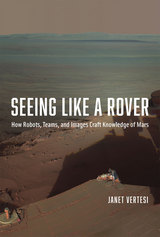
With Seeing Like a Rover, Janet Vertesi takes us behind the scenes to reveal the work that goes into creating our knowledge of Mars. Every photograph that the Rovers take, she shows, must be processed, manipulated, and interpreted—and all that comes after team members negotiate with each other about what they should even be taking photographs of in the first place. Vertesi’s account of the inspiringly successful Rover project reveals science in action, a world where digital processing uncovers scientific truths, where images are used to craft consensus, and where team members develop an uncanny intimacy with the sensory apparatus of a robot that is millions of miles away. Ultimately, Vertesi shows, every image taken by the Mars Rovers is not merely a picture of Mars—it’s a portrait of the whole Rover team, as well.
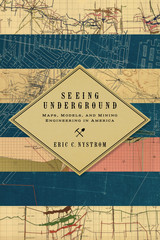
Starting in the late nineteenth century, mining engineers developed a new set of practices, artifacts, and discourses to visualize complex, pitch-dark three-dimensional spaces. These maps and models became necessary tools in creating and controlling those spaces. They made mining more understandable, predictable, and profitable. Nystrom shows that this new visual culture was crucial to specific developments in American mining, such as implementing new safety regulations after the Avondale, Pennsylvania fire of 1869 killed 110 men and boys; understanding complex geology, as in the rich ores of Butte, Montana; and settling high-stakes litigation, such as the Tonopah, Nevada, Jim Butler v. West End lawsuit, which reached the US Supreme Court.
Nystrom demonstrates that these neglected artifacts of the nineteenth and early twentieth centuries have much to teach us today. The development of a visual culture helped create a new professional class of mining engineers and changed how mining was done. Seeing Undergound is the winner of the 2015 Mining History Association’s Clark Spence Award for the best book on mining history.


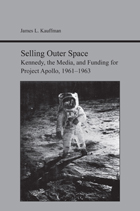
Examines the Kennedy administration’s rhetorical campaign to persuade Congress and the public to adopt a manned flight to the moon. In so doing, the study addresses three key themes.
First, it illuminates the contrasting nature of technical and narrative arguments and explores how those arguments play different roles in public discussion of social policy. Second, the book examines how both the executive branch and the news media function to help set the agenda in American politics. Offering a case study of the increasingly complex relationship between the government and the media.
Finally, Selling Outer Space explores the power of technology to shape and direct human action.
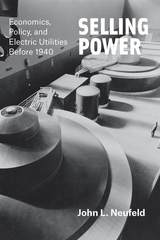
John L. Neufeld offers a comprehensive historical treatment of the economics that shaped electric utilities. Compared with most industries, the organization of the electric utility industry is not—and cannot be—economically efficient. Most industries are kept by law in a state of fair competition, but the capital necessary to start an electric company—generators, transmission and distribution systems, and land and buildings—is so substantial that few companies can enter the market and compete. Therefore, the natural state of the electric utility industry since its inception has been a monopoly subject to government oversight. These characteristics of electric utilities—and electricity’s importance—have created over time sharp political controversies, and changing public policies have dramatically changed the industry’s structure to an extent matched by few other industries. Neufeld outlines the struggles that shaped the industry’s development, and shows how the experience of electric utilities provides insight into the design of economic institutions, including today’s new large-scale markets.
With an impressive command of broadcast history, as well as critical and cultural studies of the media, Streeter shows that liberal marketplace principles—ideas of individuality, property, public interest, and markets—have come into contradiction with themselves. Commercial broadcasting is dependent on government privileges, and Streeter provides a searching critique of the political choices of corporate liberalism that shape our landscape of cultural property and electronic intangibles.
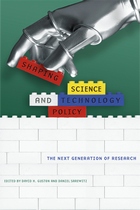
With scientific progress occurring at a breathtaking pace, science and technology policy has never been more important than it is today. Yet there is a very real lack of public discourse about policy-making, and government involvement in science remains shrouded in both mystery and misunderstanding. Who is making choices about technology policy, and who stands to win or lose from these choices? What criteria are being used to make decisions and why? Does government involvement help or hinder scientific research?
Shaping Science and Technology Policy brings together an exciting and diverse group of emerging scholars, both practitioners and academic experts, to investigate current issues in science and technology policy. Essays explore such topics as globalization, the shifting boundary between public and private, informed consent in human participation in scientific research, intellectual property and university science, and the distribution of the costs and benefits of research.
Contributors: Charlotte Augst, Grant Black, Mark Brown, Kevin Elliott, Patrick Feng, Pamela M. Franklin, Carolyn Gideon, Tené N. Hamilton, Brian A. Jackson, Shobita Parthasarathy, Jason W. Patton, A. Abigail Payne, Bhaven Sampat, Christian Sandvig, Sheryl Winston Smith, Michael Whong-Barr
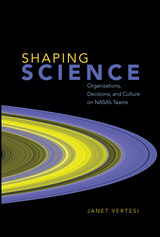
In Shaping Science, Janet Vertesi draws on a decade of immersive ethnography with NASA’s robotic spacecraft teams to create a comparative account of two great space missions of the early 2000s. Although these missions featured robotic explorers on the frontiers of the solar system bravely investigating new worlds, their commands were issued from millions of miles away by a very human team. By examining the two teams’ formal structures, decision-making techniques, and informal work practices in the day-to-day process of mission planning, Vertesi shows just how deeply entangled a team’s local organizational context is with the knowledge they produce about other worlds.
Using extensive, embedded experiences on two NASA spacecraft teams, this is the first book to apply organizational studies of work to the laboratory environment in order to analyze the production of scientific knowledge itself. Engaging and deeply researched, Shaping Science demonstrates the significant influence that the social organization of a scientific team can have on the practices of that team and the results they yield.

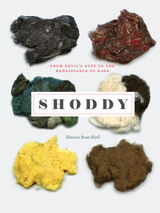
In Shoddy: From Devil’s Dust to the Renaissance of Rags, Hanna Rose Shell takes readers on a journey to discover shoddy, from Haiti to the “shoddy towns” of West Yorkshire in England, to the United States, back in time to the British cholera epidemics and the American Civil War, and into agricultural fields, textile labs, and rag-shredding factories. Shell’s narrative is both literary and historical, drawing on an extraordinary range of sources, from court cases to military uniforms, mattress labels to medical textbooks, political cartoons to high art. Shoddy moves between genres, bringing richly drawn characters and unexpected objects to life. Along the way, shoddy becomes equally an evocative object and a portal into another world.
Almost since the time it first appeared, shoddy was both ubiquitous and controversial. In part because it was often so hard to detect, it was inherently suspicious. Public health experts worried about sanitation and disease—how could old clothes be disinfected? As well, the idea of wearing someone else’s old clothes so close to your own skin was discomforting in and of itself. Could you sleep peacefully knowing that your mattress was very likely to be stuffed with dead soldiers’ overcoats? The use of the term “virgin” wool, the idea of virginity in relation to clothes, in fact emerged as an effort by the wool industry to counter shoddy’s appeal: to make shoddy seem shoddy. Over time, shoddy would capture a host of personal, ethical, commercial, and societal failings. And yet, there was always, within shoddy, the alluring concept of regeneration, of what we today think of as conscious clothing, eco-fashion, sustainable textiles.
Shell exposes an interwoven tale of industrial espionage, political infighting, scientific inquiry, ethnic prejudices, and war profiteering. Discarded clothes may make many journeys over the course of several lifetimes. Not only in your garments, but under your rug, in your mattress pads, piano blankets, in the peculiar confetti-like stuffing in your mailing envelopes, even in the insulation in your walls. Though it began with wool, over the past century the shredding “devil” has turned to synthetics from nylon stockings to Kevlar. Shoddy is likely connected to something you are wearing right now. After reading, you will never use the word shoddy or think about your clothes, the environment, sustainability, or the intermingled world around you the same way again.



Albert Van Helden’s beautifully rendered and eminently readable translation is based on the Venice 1610 edition’s original Latin text. An introduction, conclusion, and copious notes place the book in its historical and intellectual context, and a new preface, written by Van Helden, highlights recent discoveries in the field, including the detection of a forged copy of Sidereus Nuncius, and new understandings about the political complexities of Galileo’s work.

With Sidewalk City, Annette Miae Kim provides the first multidisciplinary case study of sidewalks in a distinctive geographical area. She focuses on Ho Chi Minh City, Vietnam, a rapidly growing and evolving city that throughout its history, her multicultural residents have built up alternative legitimacies and norms about how the sidewalk should be used. Based on fieldwork over 15 years, Kim developed methods of spatial ethnography to overcome habitual seeing, and recorded both the spatial patterns and the social relations of how the city’s vibrant sidewalk life is practiced.
In Sidewalk City, she transforms this data into an imaginative array of maps, progressing through a primer of critical cartography, to unveil new insights about the importance and potential of this quotidian public space. This richly illustrated and fascinating study of Ho Chi Minh City’s sidewalks shows us that it is possible to have an aesthetic sidewalk life that is inclusive of multiple publics’ aspirations and livelihoods, particularly those of migrant vendors.

Some contributors explore the physical objects and industrial relations that make up an infrastructure. Others venture into the marginalized communities orphaned from the knowledge economies, technological literacies, and epistemological questions linked to infrastructural formation and use. The wide-ranging insights delineate the oft-ignored contrasts between industrialized and developing regions, rich and poor areas, and urban and rural settings, bringing technological differences into focus.
Contributors include Charles R. Acland, Paul Dourish, Sarah Harris, Jennifer Holt and Patrick Vonderau, Shannon Mattern, Toby Miller, Lisa Parks, Christian Sandvig, Nicole Starosielski, Jonathan Sterne, and Helga Tawil-Souri.


The first six chapters of this textbook cover the usual basic concepts of continuous-time signals and systems, including the Laplace and Fourier transforms. Chapters 7 and 8 present the discrete-time version of Chapters 1–6, emphasizing the similarities and analogies, and often using continuous-time results to derive discrete-time results. The two chapters serve to introduce the reader to the world of discrete-time signals and systems. Concepts highlighted in Chapters 1–8 include: compensator feedback configuration (Ch. 4); energy spectral density, group delay, expanded coverage of exponential Fourier series (Ch. 5); filtering of images, Hilbert transform, single-sideband (SSB), zero and first-order hold interpolation (Ch. 6); the Cooley-Tukey FFT (Ch. 7); bilateral z-transform and use for non-minimum-phase deconvolution (Ch. 8). Chapter 9 covers the usual concepts of discrete-time signal processing, including data windows, FIR and IIR filter design, multirate signal processing, and auto-correlation and crosscorrelation. It also includes some nontraditional concepts, including spectrograms, application of multirate signal processing, and the musical circle of fifths to audio signal processing, and some biomedical applications of autocorrelation and cross-correlation. Chapter 10 covers image processing, discrete-time wavelets (including the Smith-Barnwell condition and the Haar and Daubechies discrete-time wavelet expansions), and an introduction to compressed sensing. This is the first sophomore-junior level textbook the authors are aware of that allows students to apply compressed sensing concepts. Applications include: image denoising using 2-D filtering; image denoising using thresholding and shrinkage of image wavelet transforms; image deconvolution using Wiener filters; “valid” image deconvolution using ISTA; image inpainting; tomography and the projection-slice theorem, and image reconstruction from partial knowledge of 2-D DFT values. Problems allow students to apply these techniques to actual images and learn by doing, not by only reading.







The essays in Small Tech investigate the cultural impact of digital tools and provide fresh perspectives on mobile technologies such as iPods, digital cameras, and PDAs and software functions like cut, copy, and paste and WYSIWYG. Together they advance new thinking about digital environments.
Contributors: Wendy Warren Austin, Edinboro U; Jim Bizzocchi, Simon Fraser U; Collin Gifford Brooke, Syracuse U; Paul Cesarini, Bowling Green State U; Veronique Chance, U of London; Johanna Drucker, U of Virginia; Jenny Edbauer, Penn State U; Robert A. Emmons Jr., Rutgers U; Johndan Johnson-Eilola, Clarkson U; Richard Kahn, UCLA; Douglas Kellner, UCLA; Karla Saari Kitalong, U of Central Florida; Steve Mann, U of Toronto; Lev Manovich, U of California, San Diego; Adrian Miles, RMIT U; Jason Nolan, Ryerson U; Julian Oliver; Mark Paterson, U of the West of England, Bristol; Isabel Pedersen, Ryerson U; Michael Pennell, U of Rhode Island; Joanna Castner Post, U of Central Arkansas; Teri Rueb, Rhode Island School of Design; James J. Sosnoski; Lance State, Fordham U; Jason Swarts, North Carolina State U; Barry Wellman, U of Toronto; Sean D. Williams, Clemson U; Jeremy Yuille, RMIT U.
Byron Hawk is assistant professor of English at George Mason University.
David M. Rieder is assistant professor of English at North Carolina State University.
Ollie Oviedo is associate professor of English at Eastern New Mexico University.
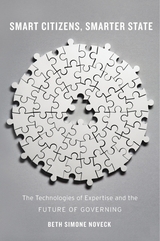
Government “of the people, by the people, for the people” expresses an ideal that resonates in all democracies. Yet poll after poll reveals deep distrust of institutions that seem to have left “the people” out of the governing equation. Government bureaucracies that are supposed to solve critical problems on their own are a troublesome outgrowth of the professionalization of public life in the industrial age. They are especially ill-suited to confronting today’s complex challenges.
Offering a far-reaching program for innovation, Smart Citizens, Smarter State suggests that public decisionmaking could be more effective and legitimate if government were smarter—if our institutions knew how to use technology to leverage citizens’ expertise. Just as individuals use only part of their brainpower to solve most problems, governing institutions make far too little use of the skills and experience of those inside and outside of government with scientific credentials, practical skills, and ground-level street smarts. New tools—what Beth Simone Noveck calls technologies of expertise—are making it possible to match the supply of citizen expertise to the demand for it in government.
Drawing on a wide range of academic disciplines and practical examples from her work as an adviser to governments on institutional innovation, Noveck explores how to create more open and collaborative institutions. In so doing, she puts forward a profound new vision for participatory democracy rooted not in the paltry act of occasional voting or the serendipity of crowdsourcing but in people’s knowledge and know-how.



Butte’s history, a long-standing subject of historical inquiry, gains new depth as Quivik examines the technological developments pioneered by local mining companies. He challenges the simplistic narrative of a powerful corporation imposing its will on helpless agricultural communities. Local communities mounted strong opposition to the industry’s polluting methods; Quivik acknowledges this dynamic while also revealing efforts by the Anaconda Copper Mining Company to address environmental issues. The company developed and implemented technical solutions to minimize resource waste and mitigate damage, driven by both economic interests and litigation pressures. While these advancements lessened some of the environmental harm, they were insufficient to prevent long-term consequences. The operations in Butte and Anaconda ultimately created the largest Superfund complex in the United States, requiring billions of dollars in remediation.
Quivik’s nuanced approach opens the “black box” of technology, showing how innovations both alleviated and exacerbated the environmental challenges of mining, milling, and smelting. In addition to contributing to the rich literature on smelter smoke, this book breaks new ground by examining the underexplored environmental impacts of tailings, offering a fresh perspective on the intersection of industry, technology, and environmental change. The cultural landscapes of Butte and Anaconda retain many features of the region’s history of both environmental degradation and remediation. Smoke and Tailings is an essential addition to the study of Butte’s industrial and ecological history.

So Shall You Reap is a broad-gauged exploration of the intersections of farming and history. Beginning with the prehistorical era, Otto and Dorothy Solbrig describe the evolution of farming. When and how did people learn to irrigate, to fertilize, to rotate their crops -- and why?
Along with its fundamental importance to history, farming has radically altered the physical world. Natural landscapes have been completely transformed to provide room for growth on a large scale of a few species of plants and even fewer species of domesticated animals. Agriculture has altered the earth's biosphere and changed its geosphere: The soil has been modified, forests have been felled, swamps have been drained, rivers have been dammed and diverted.
So Shall You Reap presents a fresh and informed perspective on how farming and the crops we grow have changed us and our environment. By understanding the nature of the origins and evolution of agriculture, we will be better prepared to anticipate what the future may hold in store, and what must be done to increase food production while minimizing environmental problems.

The ubiquity of social media has transformed the scope and scale of scholarly communication in the arts and humanities. The consequences of this new participatory and collaborative environment for humanities research has allowed for fresh approaches to communicating research. Social Knowledge Creation takes up the norms and customs of online life to reorient, redistribute, and oftentimes flatten traditional academic hierarchies. This book discusses the implications of how humanists communicate with the world and looks to how social media shapes research methods. This volume addresses peer-review, open access publishing, tenure and promotion, mentorship, teaching, collaboration, and interdisciplinarity as a comprehensive introduction to these rapidly changing trends in scholarly communication, digital pedagogy, and educational technology. Collaborative structures are rapidly augmenting disciplinary focus of humanities curriculum and the public impact of humanities research teams with new organizational and disciplinary thinking. Social Knowledge Creation represents a particularly dynamic and growing field in which the humanities seeks to find new ways to communicate the legacy and traditions of humanities based inquiry in a 21st century context.
New Technologies in Medieval and Renaissance Studies Volume 7.
Edited by Alyssa Arbuckle, Aaron Mauro, and Daniel Powell


The 1990s were tough times for the soda industry. In the United States, obesity rates were exploding. Public health critics pointed to sugary soda as a main culprit and advocated for soda taxes that might decrease the consumption of sweetened beverages—and threaten the revenues of the giant soda companies.
Soda Science tells the story of how industry leader Coca-Cola mobilized allies in academia to create a soda-defense science that would protect profits by advocating exercise, not dietary restraint, as the priority solution to obesity, a view few experts accept. Anthropologist and science studies specialist Susan Greenhalgh discovers a hidden world of science-making—with distinctive organizations, social networks, knowledge-making practices, and ethical claims—dedicated to creating industry-friendly science and keeping it under wraps. By tracing the birth, maturation, death, and afterlife of the science they made, Greenhalgh shows how corporate science has managed to gain such a hold over our lives.
Spanning twenty years, her investigation takes her from the US, where the science was made, to China, a key market for sugary soda. In the US, soda science was a critical force in the making of today’s society of step-counting, fitness-tracking, weight-obsessed citizens. In China, this distorted science has left its mark not just on national obesity policies but on the apparatus for managing chronic disease generally. By following the scientists and their ambitious schemes to make the world safe for Coke, Greenhalgh offers an account that is more global—and yet more human—than the story that dominates public understanding today.
Coke’s research isn’t fake science, Greenhalgh argues; it was real science, conducted by real and eminent scientists, but distorted by its aim. Her gripping book raises crucial questions about conflicts of interest in scientific research, the funding behind familiar messages about health, and the cunning ways giant corporations come to shape our diets, lifestyles, and health to their own needs.
READERS
Browse our collection.
PUBLISHERS
See BiblioVault's publisher services.
STUDENT SERVICES
Files for college accessibility offices.
RECENTLY PUBLISHED




UChicago Accessibility Resources
home | accessibility | search | about | contact us
BiblioVault ® 2001 - 2025
The University of Chicago Press