
 A SCHOLARLY BOOK REPOSITORY
25 start with S start with S

Ralph Alger Bagnold was born in 1896 into a military family and educated as an engineer. Posted to Egypt in 1926, he was one of a group of officers who adapted Model T Fords to desert travel and in 1932 made the first east-west crossing—6,000 miles—of the Libyan desert. Bagnold established such a name for himself that in World War II he was again posted to Egypt where he founded and trained the Long Range Desert Group that was to confound the German and Italian armies.
Bagnold’s fascination with the desert included curiosity over the formation of dunes, and beginning in 1935 he conducted wind tunnel experiments with sand that led to the book The Physics of Blown Sand and Desert Dunes. Eventually, he was to see his findings called on by NASA to interpret data on the sands of Mars. He devoted subsequent research to particle flow in fluids, and also served as a consultant to Middle Eastern governments concerned with the interference of sand flow in oil drilling.
Sand, Wind, and War is the life story of a man who not only helped shape events in one part of the world but also contributed to our understanding of it. It is a significant benchmark not only in the history of science, but also in the annals of adventure.
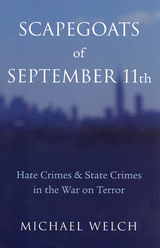
The altered American landscape, however, includes more than security measures and ID cards. The country's desperate quest for security is visible in many less obvious, yet more insidious ways. In Scapegoats of September 11th, criminologist Michael Welch argues that the "war on terror" is a political charade that delivers illusory comfort, stokes fear, and produces scapegoats used as emotional relief. Regrettably, much of the outrage that resulted from 9/11 has been targeted at those not involved in the attacks on the Pentagon or the Twin Towers. As this book explains, those people have become the scapegoats of September 11th. Welch takes on the uneasy task of sorting out the various manifestations of displaced aggression, most notably the hate crimes and state crimes that have become embarrassing hallmarks both at home and abroad.
Drawing on topics such as ethnic profiling, the Abu Ghraib scandal, Guantanamo Bay, and the controversial Patriot Act, Welch looks at the significance of knowledge, language, and emotion in a post-9/11 world. In the face of popular and political cheerleading in the war on terror, this book presents a careful and sober assessment, reminding us that sound counterterrorism policies must rise above, rather than participate in, the propagation of bigotry and victimization.

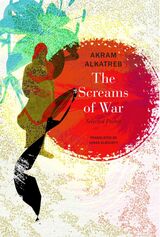
“Those who believe in the currency of patience / Were burned out in the alleyway.”
The Screams of War is a visceral collection of poems that confront the realities of contemporary Syria. Akram Alkatreb’s verses capture the sense of the quotidian during war. His words, mere “murmurs engraved on stones,” long for and despair over an irrevocable past. At the heart of Alkatreb’s work lies a preoccupation with trauma and the profound burden of alienation that accompanies exile. Nascent memories are shrouded by the “scars of sleep,” and words find themselves nostalgic for destruction. The ubiquity of violence that Alkatreb channels into his poetry does not tolerate enclaves of innocence. The Screams of War is an unforgettable testament to the resilience of the human spirit and a stark reminder of the harsh realities faced by those trapped in conflict.

Zacher's account delves into details inside a major newspaper operation during World War I and provides fascinating accounts of its struggles with competition, attending to patriotic duties, and internal editorial dissent. Zacher also looks at war-related issues, considering the newspapers' relationship with President Woodrow Wilson, American neutrality, the move to join the war, and fallout from disillusionment over the actuality of war. As Zacher shows, the progressive spirit and political independence at the Scripps newspapers came under attack and was changed forever during the era.

An Israeli political leader’s riveting first-hand account of pivotal moments from recent Israeli history, including the Oslo Peace Accords, the founding of the Birthright Initiative, the assassination of Yitzhak Rabin, the rise of the Israeli far right, and more
In Secrets I Won't Take with Me, Yossi Beilin, a key Israeli political and ministerial leader, offers an intimate and candid memoir that chronicles pivotal events in the nation’s recent history. From the crucible of its founding to the complexities of the modern era, Beilin reveals an insider’s perspective and previously undocumented insights about the events that have and continue to shape Israel.
Beginning his career as an academic and a journalist, Beilin became the spokesperson of the Labor Party in 1977. Among his many career highlights include the chairmanship of the Meretz-Yachad Party, Minister of Justice, Minister of Religious Affairs, and Deputy Finance Minister, and perhaps most significantly, as Deputy Foreign Minister during the Israel-PLO Oslo Peace Accords. As a key architect of the Oslo Peace Accords, he shares unprecedented details of the negotiations that defined an era.
Beyond diplomacy, Beilin illuminates his role in shaping Israel’s identity, from steering Israel away from its alliance with apartheid South Africa to the foundation of the influential Birthright program. With unflinching honesty, Beilin navigates the triumphs and tragedies of a nation, from the euphoria of the Six-Day War to the heartbreak of Yitzhak Rabin’s assassination. A deeply personal memoir of one man’s life interwoven with a nation’s, Beilin’s stunning account of his career serves as a masterful tour d’horizon of Israel’s recent past and evolving future.

“[Fanis] demonstrates an impressive ability to travel nimbly between abstract theoretical concepts and a messy reality. In each one of the case study chapters, her analysis is rich, thoughtful, and imaginative.”
—Ido Oren, University of Florida

Shadow Lives reveals the unseen side of the '9/11 wars': their impact on the wives and families of men incarcerated in Guantanamo, or in prison or under house arrest in Britain and the US. Victoria Brittain shows how these families have been made socially invisible and a convenient scapegoat for the state in order to exercise arbitrary powers under the cover of the 'War on Terror'.
A disturbing exposé of the perilous state of freedom and democracy in our society, the book reveals how a culture of intolerance and cruelty has left individuals at the mercy of the security services’ unverifiable accusations and punitive punishments.
Both a j'accuse and a testament to the strength and humanity of the families, Shadow Lives shows the methods of incarceration and social control being used by the British state and gives a voice to the families whose lives have been turned upside down. In doing so it raises urgent questions about civil liberties which no one can afford to ignore.
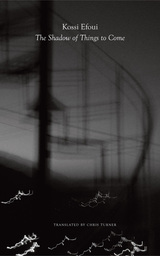
In an unnamed African nation, the people are subject to a state of perpetual warfare and to an Orwellian abuse of language that strips from language its meaning and renders life senseless. And in a bare room lit only by moonlight, a young man hides, waiting for the mysterious crocodile-men to come and help him escape from the violent tyranny of the state. While he waits, he tells his story.
This is Kossi Efoui’s catastrophic and carnivalesque dreamscape, the dark setting of The Shadow of Things to Come. Here, men and women are taken in the night, spirited away from their families, and sent to plantation penal colonies to be worked to the edge of madness. When they return, they are empty shells, their lost time referred to as the “Time of Annexation.” But though his parents were taken, our protagonist survived, first in the care of a quirky benefactress named Mama Maize, then under the wing of the state itself, as a student at one of its elite schools. When he meets a bookseller named Axis Kemal, however, he has found a surrogate father, an eccentric and wise man who can bring him out of the meaningless confusion and tell him the truth about the society he lives in.
Through his characters, Efoui speaks out against atrocity and the abuse of power, but more, he writes against political rhetoric and the destruction of meaning by government. This novel is a love letter to language and, in Chris Turner’s dazzling translation, it becomes a stunning introduction for English-language readers to an exciting new talent.
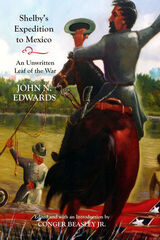
Confederate general Joseph O. Shelby and his legendary Iron Brigade refused to acknowledge the end of the Civil War. Instead, they fought their way to Mexico in search of a place where they could continue to defy the U.S. government. These veteran Missouri cavalrymen clawed their way for fifteen hundred miles, fighting Juaristas, Indians, desperados, and disgruntled gringos. They disbanded only after they had offered their services to Emperor Maximilian and were turned down.
Shelby’s adjutant, journalist John N. Edwards, first published his story of the exploits of this superb mounted brigade and its quixotic final march in 1872. Conger Beasley provides a lively introduction that includes the first biographical sketch of the author. The 1969 movie The Undefeated starring John Wayne and Rock Hudson was based upon Shelby’s expedition.

Gail Hosking Gilberg's father was a hero, a valiant soldier decorated posthumously with the Medal of Honor, a man who served his country throughout his entire adult life. But Charles Hosking was a mystery to his daughter. He was killed in Vietnam a week after her seventeenth birthday. She buried the war, the protests, the medal, and her military upbringing along with her father, so much so that she felt cut off from herself. It took more than twenty years for her to recognize the stirrings of a father and a daughter not yet at peace.
Gilberg began a journey—two journeys really—to find out who her father was and in the process to find herself. She explored her buried rage, shame, and silence, and examined how war had shaped her life. In studying the photo albums that her father had left behind, Gilberg found that the photographs demanded that she give voice to her feelings, then release her silent words, words that had no meaning in war for her father yet had all the meaning in the world for her. The result was an epiphany. The photographs became the roads she took in and out of war, and her words brought her father home. Snake's Daughter reveals the crossroads where a soldier father's life and a daughter's life connect.
Snake's Daughter is an arresting and anguished narrative that gives voice to an experience Gail Hosking Gilberg shares with thousands of Americans, including military “brats” whose parents served their country and often gave their lives in the process.
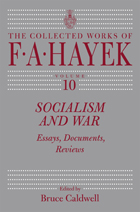
Opening with Hayek's arguments against market socialism, the volume continues with his writings on the economics of war, many in response to the proposals made in John Maynard Keynes's famous pamphlet, How to Pay for the War. The last section presents articles that anticipated The Road to Serfdom, Hayek's classic meditation on the dangers of collectivism. An appendix contains a number of topical book reviews written by Hayek during this crucial period, and a masterful introduction by the volume editor, Bruce Caldwell, sets Hayek's work in context.
Socialism and War will interest not just fans of The Road to Serfdom, but anyone concerned with the ongoing debates over the propriety of government intervention in the economy.
"When he wrote The Road to Serfdom, [Hayek's] was a voice in the wilderness. Now the fight [has] been taken up by people all over the world, by institutions and movements, and the ideas that seemed so strange to many in 1944 can be found from scholarly journals to television programs."—Thomas Sowell, Forbes
"Intellectually [Hayek] towers like a giant oak in a forest of saplings."—Chicago Tribune
"Each new addition to The Collected Works of F. A. Hayek, the University of Chicago's painstaking series of reissues and collections, is a gem."—Liberty on Volume IX of The Collected Works of F. A. Hayek
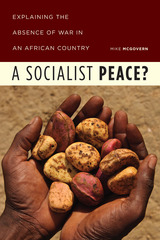
Guinea is rich in resources, but its people are some of the poorest in the world. Its political situation is polarized by fiercely competitive ethnic groups. Weapons flow freely through its lands and across its borders. And, finally, it is still recovering from the oppressive regime of Sékou Touré. McGovern argues that while Touré’s reign was hardly peaceful, it was successful—often through highly coercive and violent measures—at establishing a set of durable national dispositions, which have kept the nation at peace. Exploring the ambivalences of contemporary Guineans toward the afterlife of Touré’s reign as well as their abiding sense of socialist solidarity, McGovern sketches the paradoxes that undergird political stability.
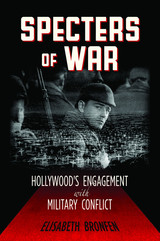
Specters of War looks at the way war has been brought to the screen in various genres and at different historical moments throughout the twentieth century and into the twenty-first. Elisabeth Bronfen asserts that Hollywood has emerged as a place where national narratives are created and circulated so that audiences can engage with fantasies, ideologies, and anxieties that take hold at a given time, only to change with the political climate.
Such cultural reflection is particularly poignant when it deals with America’s traumatic history of war. The nation has no direct access to war as a horrific experience of carnage and human destruction; we understand our relation to it through images and narratives that transmit and interpret it for us. Bronfen does not discuss actual conflicts but the films by which we have come to know and remember them, including All Quiet on the Western Front, The Best Years of Our Lives, Miracle at St. Anna, The Deer Hunter, and Flags of Our Fathers. Battles and campaigns, the home front and women-who-wait narratives, war correspondents, and court martials are also explored as instruments of cultural memory. Bronfen argues that we are haunted by past wars and by cinematic re-conceptualizations of them, and reveals a national iconography of redemptive violence from which we seem unable to escape.

Specters of War explores mourning practices in postwar Central America, particularly in El Salvador and Guatemala. Ignacio Sarmiento delves into the intricate dynamics of grieving through an interdisciplinary lens, analyzing expressions of mourning in literature, theater, and sites of memory. At the heart of this analysis is the contention over who has the right to mourn, how mourning is performed, and who is included in this process. Sarmiento reveals mourning not as a private affair but as a battleground where different societal factions vie for the possibility of grieving the dead.
Through meticulous research and theoretical nuance, Specters of War sheds light on the politics of mourning in postconflict societies. Sarmiento argues that mourning is not merely a personal experience but a deeply political act intertwined with power struggles and societal divisions. From victims of state terrorism to military elites, various groups engage in a complex dance of grief, revealing the fraught nature of public mourning in postwar Central America. By examining cultural artifacts and memorialization projects, Sarmiento uncovers the multifaceted nature of mourning and its implications for memory, justice, and reconciliation.
This groundbreaking work is essential reading for scholars, students, and professionals interested in Central American history and culture, as well as post-authoritarian societies. Specters of War promises to deepen our understanding of postwar Central America and the legacy of loss in shaping collective identities and narratives of the past.
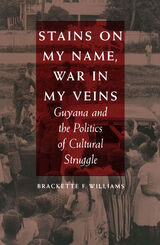
Drawing on oral histories and a close study of daily life in rural Guyana, Brackette E. Williams examines how and why individuals and groups in their quest for recognition as a “nation” reproduce ethnic chauvinism, racial stereotyping, and religious bigotry. By placing her ethnographic study in a broader historical context, the author develops a theoretical understanding of the relations among various dimensions of personal identity in the process of nation building.

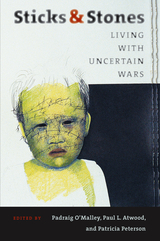
Following an introduction by Padraig O'Malley, the book is divided into four sections: "Understanding the World as We Have Known It"; "Global Uncertainties"; "Whose Values? Whose Justice?"; and "Shaping a New World." The first section reviews what we have learned about war and establishes benchmarks for judging whether that knowledge is being translated into changes in the behavior of our political cultures. It suggests that the world's premier superpower, in its effort to promote Western-style democracy, has taken steps that have inhibited rather than facilitated democratization.
The second section examines the war on terror and the concept of global war. From the essays in this section emerges a consensus that democracy as practiced in the West cannot be exported to countries with radically different cultures, traditions, and values. The third section visits the question of means and ends in the context of varying value systems and of theocracy, democracy, and culture. In the final section, the focus shifts to our need for global institutions to maintain order and assist change in the twenty-first century.
Although each contributor comes from a different starting point, speaks with a different voice, and has a different ideological perspective, the essays reach startlingly similar conclusions. In sum, they find that the West has not absorbed the lessons from the wars of the last century and is inadequately prepared to meet the new challenges that now confront us.
Contributors to the volume include J. Brian Atwood, Susan J. Atwood, John Cooley, Romeo Dallaire, Ramu Damodaran, Valerie Epps, Michael J. Glennon, Stanley Heginbotham, Robert Jackson, Winston Langley, Alfred W. McCoy, Greg Mills, Jonathan Moore, Chris Patten, Gwyn Prins, Jonathan Schell, John Shattuck, Cornelio Sommargua, Brian Urquhart, Stephen Van Evera, and Robert Weiner.

Decisions about war have always been made by humans, but now intelligent machines are on the cusp of changing things – with dramatic consequences for international affairs. This book explores the evolutionary origins of human strategy, and makes a provocative argument that Artificial Intelligence will radically transform the nature of war by changing the psychological basis of decision-making about violence.
Strategy, Evolution, and War is a cautionary preview of how Artificial Intelligence (AI) will revolutionize strategy more than any development in the last three thousand years of military history. Kenneth Payne describes strategy as an evolved package of conscious and unconscious behaviors with roots in our primate ancestry. Our minds were shaped by the need to think about warfare—a constant threat for early humans. As a result, we developed a sophisticated and strategic intelligence.
The implications of AI are profound because they depart radically from the biological basis of human intelligence. Rather than being just another tool of war, AI will dramatically speed up decision making and use very different cognitive processes, including when deciding to launch an attack, or escalate violence. AI will change the essence of strategy, the organization of armed forces, and the international order.
This book is a fascinating examination of the psychology of strategy-making from prehistoric times, through the ancient world, and into the modern age.
"The most comprehensive work ever published in any language on the history, the nature, the causes, and the cure of war. . . . A Study of War is a liberal education in the social disciplines."—Frederick L. Schuman
"A major contribution to the realistic study of international relations."—Garrett Mattingly, New York Times
Surrogate Warfare explores the emerging phenomenon of “surrogate warfare” in twenty-first century conflict. The popular notion of war is that it is fought en masse by the people of one side versus the other. But the reality today is that both state and non-state actors are increasingly looking to shift the burdens of war to surrogates. Surrogate warfare describes a patron's outsourcing of the strategic, operational, or tactical burdens of warfare, in whole or in part, to human and/or technological substitutes in order to minimize the costs of war. This phenomenon ranges from arming rebel groups, to the use of armed drones, to cyber propaganda. Krieg and Rickli bring old, related practices such as war by mercenary or proxy under this new overarching concept. Apart from analyzing the underlying sociopolitical drivers that trigger patrons to substitute or supplement military action, this book looks at the intrinsic trade-offs between substitutions and control that shapes the relationship between patron and surrogate. Surrogate Warfare will be essential reading for anyone studying contemporary conflict.
READERS
Browse our collection.
PUBLISHERS
See BiblioVault's publisher services.
STUDENT SERVICES
Files for college accessibility offices.
RECENTLY PUBLISHED





UChicago Accessibility Resources
home | accessibility | search | about | contact us
BiblioVault ® 2001 - 2026
The University of Chicago Press