front cover of A Tale of Two Villages
A Tale of Two Villages
Coerced Modernization in the East European Countryside
Alina Mungiu-Pippidi
Central European University Press, 2010
This dramatic story of land and power from twentieth-century Eastern Europe is set in two extraordinary villages: a rebel village, where peasants fought the advent of Communism and became its first martyrs, and a model village turned forcibly into a town, Dictator Ceausescu's birthplace. The two villages capture among themselves nearly a century of dramatic transformation and social engineering, ending up with their charged heritage in the present European Union.
[more]

front cover of A Tale of Two Worlds
A Tale of Two Worlds
Vjenceslav Novak
Central European University Press, 2014
In this novel, written by the esteemed novelist in 1901, a provincial composer and organist from Croatia struggles to find his way along the perilous frontier between the worlds of artistic vocation and humdrum family life. The local kapellmeister—-a Czech, in good Habsburg tradition, and a confidant of Gaj and Palacky, influential politicians of the time—-recognizes young Amadej Zlatanic as a prodigy and persuades the stingy mayor and stubborn parish priest to pack the teenager off to the conservatory in Prague. After several years of sordid student purgatory, Amadej returns to Croatia—-ready for love and ready to make great art.The world of Central Europe in the 1860s flows past, and Amadej tries to keep abreast of political change. At the same time he ducks and dodges predatory relatives and townspeople in his native district, to which he has returned for the sake of employment. Despite his marriage to the impressionable and vulnerable local beauty, Adelka, and his devotion to their daughter Veruska, Amadej is sorely troubled by the political corruption and isolation of Croatia. His wife takes ill and his family is poor. Yet ultimately it is the vulgar, populist notion of Croatian "identity"—-symbolized by the worship of the tamburica, a local musical instrument—-that crushes Amadej's career. As it does so, he contemplates the two worlds of national greatness, amidst the Croatian national awakening, and international fame. Finally, frustrated beyond relief by unsuccessful affairs both amorous and professional, and tortured by the philistinism surrounding him, Amadej leaves the world of sanity for a mind-blowing descent into the maniacal and inescapable world of hallucination, paganism, and paranoia.
[more]

front cover of A Task for Sisyphus
A Task for Sisyphus
Why Europe’s Roma Policies Fail
Iulius Rostas
Central European University Press, 2020
Despite an increasing number of EU and government initiatives in their favor, the situation of Roma in Europe has only worsened. This book explores the many miscalculations, misconceptions, and blunders that have led to this failure. Looking at Hungary, the Czech Republic, and Romania, Rostas shows how policy makers in each country have mishandled already confused EU policy, from failing to define “Roma” to not having a way to evaluate their own progress. Rostas further argues that the alleged successes of these policies were actually the product of poor information and sometimes outright deception. Examining perennial topics among Roma like school segregation and political representation, the author shows how often the so-called success of Roma policies can be fallacious and simply pave the way for further problems. Rostas maintains that when the EU’s Framework for Roma program comes to an end in 2020, there must be a fundamental shift in policy for there to be any real improvement for Roma. Policy makers will have to address Roma issues not only in terms of poverty and social exclusion but also in terms of the particular nature of Romani ethnic identity. This shift requires reconceiving Roma as a “politically insular minority” and rearranging the power dynamics of local government to ensure that when the new era of Roma policy begins Roma themselves will have a voice in its formulation.
[more]

front cover of Teaching against Violence
Teaching against Violence
The Reassessing Toolbox
Inez Testoni
Central European University Press, 2014
Teaching Against Violence deals with gender based violence, paying particular attention to domestic violence, as in this field feminism has tenaciously sought to change the condition of women and, as a result, many international policies have promoted a significant social transformation. The chapters present active techniques that were adopted during the interventions to promote women's empowerment. The contributions face these issues from various perspectives, present the state of the art research in multiple fields of study and suggest educational best practices that can be used where this problem is particularly severe.
[more]

front cover of Teaching Gender with Libraries and Archives
Teaching Gender with Libraries and Archives
Sara De Jong
Central European University Press, 2014
This volume invites teachers and students in gender and women’s studies to engage with the library not as an instrument for knowledge, but as a subject and object of knowledge in its own right. The authors and editors had three specific aims. Firstly, to highlight how Gender Studies and the institutions and practices that preserve and disseminate feminist knowledge are historically and systematically intertwined. Secondly, the necessity to reflect on the symbolic meaning and practical institutionalization of libraries and archives as they are undergoing profound transformations under the influence of new (technological) developments; finally, to engage with the question of how these transformations give way to new ways of producing, preserving and disseminating feminist knowledge through practices situated between the force fields of cultural and academic institutions, material and virtual culture, and the collective imaginary.This book is a part of the series Teaching with Gender, European Women’s Studies in International and Interdisciplinary Classrooms, jointly published with ATGENDER, The European Association for Gender Research, Education and Documentation.
[more]

front cover of Teaching
Teaching "Race" with a Gendered Edge
Brigitte Hipfl
Central European University Press, 2012
How to deal with gender, women, gender roles, feminism and gender equality in teaching practices? Following in the footsteps of the ATHENA thematic network, ATGENDER brings together specialists in women’s and gender studies, feminist research, women’s rights, gender equality and diversity. In the book series ‘Teaching with Gender’ the partners in this network have collected articles on a wide range of teaching practices in the field of gender. The books in this series address challenges and possibilities of teaching about women and gender in a wide range of educational contexts. The authors discuss pedagogical, theoretical and political dimensions of learning and teaching about women and gender. The books contain teaching material, reflections on feminist pedagogies, and practical discussions about the development of gender-sensitive curricula in specific fields. All books address the crucial aspects of education in Europe today: increasing international mobility, the growing importance of interdisciplinarity, and the many practices of life-long learning and training that take place outside the traditional programmes of higher education. These books will be indispensable tools for educators who take seriously the challenge of teaching with gender. Teaching “Race” with a Gendered Edge responds to the need to approach the idea of race from a feminist perspective. This collection of essays aims to broaden our understanding of both race and gender by highlighting the intersections and intertwinedness of race, gender, and other axes of inequality. The book also points to the importance of taking colonial legacies into account when it comes to the understanding of contemporary forms of racisms. In an increasingly globalised and interconnected world this perspective is essential for understanding the dynamics of identity politics but also for pointing towards possible ways of intervention and change.The essays in the book discuss historically contextualised examples of the intersections of race and gender from different localities in Europe and beyond and provide readers with a rich body of resources and teaching material.
[more]

front cover of The Technology of Transition
The Technology of Transition
Science and Technology Policies for Transition Countries
David A. Dyker
Central European University Press, 1997
This book addresses the crucial question of how countries which have suffered losses in productivity levels and innovatory momentum over perhaps twenty-thirty years can rediscover their dynamism. Because the contributors have the immediate experience of tackling such complex problems and possess first-hand knowledge of a wide range of developmental patterns, each is well-placed to advise on the search for comprehensive solutions. The book not only focuses on the problems of innovation and technology transfer as they are reflected in the experience of the transition period to date, but also develops conceptual and strategic approaches to problems which will take a generation or more to resolve.
[more]

front cover of Tell Your Life Story
Tell Your Life Story
Creating Dialogue among Jews and Germans, Israelis and Palestinians
Dan Bar-On
Central European University Press, 2006
Describes Dan Bar-On's method of using storytelling as both a qualitative biographical research method and as an intervention, to bring people from opposite sides of an abyss to a dialogue. Such work needs slow pace and long-term commitment, with a special combination of a scientific rigorous analysis with a sensitive approach toward the people one approaches.
[more]

front cover of Ten Years After
Ten Years After
A History of Roma School Desegregation in Central and Eastern Europe
Iulius Rostas
Central European University Press, 2012
The volume presents the results collated in the frames of the fact finding project led by the editor. The analysis includes the examination of a large number of legal documents and policy statements issued by national authorities and the international community on the matter. A critical overview is also made about the various Roma-specific political campaigns on national and European scale. The second half of the book contains interviews with activists that assumed a leading role in school desegregation. These testimony pieces have been critically reviewed by educational and policy analysts from the concerned countries.
[more]

front cover of Texts and Contexts from the History of Feminism and Women’s Rights
Texts and Contexts from the History of Feminism and Women’s Rights
East Central Europe, Second Half of the Twentieth Century
Zsofia Lorand
Central European University Press, 2024

A compendium of one hundred sources, preceded by a short author’s bio and an introduction, this volume offers an English language selection of the most representative texts on feminism and women’s rights from East Central Europe between the end of the Second World War and the early 1990s. While communist era is the primary focus, the interwar years and the post-1989 transition period also receive attention. All texts are new translations from the original.

The book is organised around themes instead of countries; the similarities and differences between nations are nevertheless pointed out. The editors consider women not only in their local context, but also in conjunction with other systems of thought—including shared agendas with socialism, liberalism, nationalism, and even eugenics.

The choice of texts seeks to demonstrate how feminism as political thought was shaped and organised in the region. They vary in type and format from political treatises, philosophy to literary works, even films and the visual arts, with the necessary inclusion of the personal and the private. Women’s political rights, right to education, their role in nation-building, women, and war (and especially women and peace) are part of the anthology, alongside the gendered division of labour, violence against women, the body, and reproduction.
[more]

front cover of The Thickets
The Thickets
Józef Lobodowski
Central European University Press, 2026
The Thickets is the first volume of Polish poet and novelist Józef Lobodowski’s Ukrainian Trilogy, written between 1955 and 1960. Set primarily in Russia’s Kuban region, the novel unfolds against a rich backdrop where Ukrainians, Russians, and Cossacks live alongside Tatars, Circassians, and waves of other peoples under Tsarist rule—among them Armenians and Poles. From this world emerges Stas (Stanislaw), a young Pole and the central figure of the trilogy.

In The Thickets, Lobodowski paints a stark, unforgettable portrait of the turmoil that engulfed the former Russian Empire after the fall of the Tsar and Kerensky’s government. For Stas, once a student at a classical gymnasium, survival now means peddling contraband on the black market. Through his eyes, the reader is plunged into the chaos of war, revolution, and occupation—rendered with visceral power and human urgency.
[more]

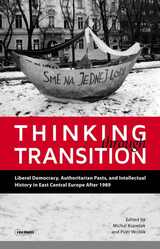
front cover of Thinking through Transition
Thinking through Transition
Liberal Democracy, Authoritarian Pasts, and Intellectual History in East Central Europe After 1989
Michal Kopecek
Central European University Press, 2015
Thinking through Transition is the first concentrated effort to explore the most recent chapter of East Central European past from the perspective of intellectual history. Post-communism can be understood as a period of scarcity and preponderance of ideas, the dramatic eclipsing of the dissident legacy (as well as the older political traditions), and the rise of technocratic and post-political governance.  This book, grounded in empirical research sensitive to local contexts, proposes instead a history of adaptations, entanglements, and unintended consequences. In order to enable and invite comparison, the volume is structured around major domains of political thought, some of them generic (liberalism, conservatism, the Left), others (populism and politics of history) deemed typical for post-socialism. However, as shown by the authors, the generic often turns out to be heavily dependent on its immediate setting, and the typical resonates with processes that are anything but vernacular.
[more]

front cover of Those Who Count
Those Who Count
Expert Practicies of Roma Classification
Mihai Surdu
Central European University Press, 2016
Those Who Count scrutinizes the scientific and expert practices of Roma classification and counting, and the politics of Roma-related knowledge production. The book takes a historical perspective on Roma group construction, both as an epistemic object and a policy target, with a focus on the expert discourse of the last two decades. The book argues that knowledge production on Roma is neither objective nor disinterested but rather is co-produced by political and academic actors driven by organizational interests with rather narrow disciplinary research traditions, as well as by political manifestos. The result of such co-production is a negative Roma public image circulating well beyond the expert discourse which reinforces stereotypes held by society at large. The case studies and examples presented in the book show that the state-led population census, policy related surveys, as well as academic and scientific research, together craft an essentialized Roma identity. The recently reemerged Roma-related genetic research imports assumptions, classifications, and narrations from the social sciences and contributes through sampling strategies, interpretation of data, and generalization to reify and pathologize Roma ethnicity. Roma are relegated by experts to several types of determinism: to a social category, to a frozen culture, and to a homogenous biologized entity.
[more]

front cover of Three Chestnut Horses
Three Chestnut Horses
Margita Figuli
Central European University Press, 2014
This gem of Slovak naturalism was written in 1940. The story takes the reader to a mountain village. The protagonist narrates the vicissitudes, suffering, and success he experiences as he pursues a love affair, resulting in the triumph of pure love. Peter has been in love with a girl—Magdalena—since childhood and asks her to marry him. But he is too late, because a rich man, Jano Zapotocný, has already proposed to Magdalena, a proposal that her greedy mother promptly accepted on her behalf. Magdalena, out of respect for her mother's wishes, accepts the engagement. However, Magdalena promises Peter that she will put off marrying Jano and will marry him instead if he can prove that he truly loves her. He must build a house and earn a living. After almost two years Peter returns to show her that he kept his promise. But Magdalena is already married; Jano has raped her and she is pregnant. Desperate, Peter is tempted to take out his anger on Jano, nevertheless he resists the impulse. In the end, the author finds a way to reward Peter's faith in love and morality.
[more]

front cover of The Three Cs of Higher Education
The Three Cs of Higher Education
Competition, Collaboration and Complementarity
Mark O'Hara
Central European University Press, 2019
The thirteen papers in this collection address three aspects of higher education, primarily in Europe but also in the United States. These aspects are competition, collaboration, and complementarity, both on the level of policy and on the practical level of impact on students and staff. Competition, especially for funding, occurs between and within institutions. Collaboration, more than a basic code of conduct, has become a political principle across Europe. Complementarity in the market for higher education facilitates this collaboration. The themes and contexts in higher education for which the three Cs are examined include missions and identities, response to external forces, the impact of evaluation systems and ranking schemes, the effects of globalisation, intercultural awareness and gender imbalance, and the challenges of student participation. Statistical tables and visual aids support the analysis and arguments. This book is the fifth in a series of publications drawn from the annual Forums of the European Association of Institutional Research (EAIR) from 2013 onwards
[more]

front cover of Through the Window
Through the Window
Kinship and Elopement in Bosnia-Herzegovina
Keith Doubt
Central European University Press, 2014

This book is not about war crimes, crimes against humanity, genocide, evil, or the killing of a society. It is about a cultural heritage, something vital to a society as a society, something that was not killed in the previous war, something that is resilient. 

Through the Window brings an original perspective to folklore of Bosnians at a certain period of time and the differences and similarities of the three main ethnic groups in Bosnia and Herzegovina. It examines the transethnic character of cultural heritage, against divisions that dominate their tragic recent past. 

The monograph focuses in particular on customs shared by different ethnic groups, specifically elopement, and affinal visitation. The elopement is a transformative rite of passage where an unmarried girl becomes a married woman. The affinal visitation, which follows, is a confirmatory ceremony where ritualized customs between families establish in-lawships These customs reflect a transethnic heritage shared by people in Bosnia as a national group, including Bosniaks, Serbs and Croats.

[more]

front cover of The Ties That Bind
The Ties That Bind
Julius M. Moravcsik
Central European University Press, 2004
This book, like in classical times of Plato and Aristotle, treats individual and communal ethics as intertwined. At its heart lies the quartet of respect, concern for welfare of others, trust, and care as the basic communal ties. The community needs to be built on these. Acquisition and practice of other values and goods are within the frame of the four underlying "pillars." The four basic notions are attitudes and as such consist of both rational and emotional elements. Thus our ethics is neither based purely on sentiment nor purely on reason. As such they will yield us guidelines, to be filled in contextually, not rigid rule systems. Moravcsik's proposal for ethics is pluralistic but not relativistic. It does not deny some objective ground for sound communal life, but leaves many alternatives within which the four basic ties can be implemented.
[more]

front cover of Times of History
Times of History
Universal Topics in Islamic Historiography
Aziz Al-Azmeh
Central European University Press, 2007
This is a collection of essays on current questions of historiography, illustrated with reference to Islamic historiography. The main concerns are conceptions of time and temporality, the uses of the past, historical periodisation, historical categorisation, and the constitution of historical objects, not least those called "civilisation" and "Islam". One of the aims of the book is to apply to Islamic materials the standard conceptual equipment used in historical study, and to exercise a large-scale comparativist outlook.
[more]

front cover of Times of Mobility
Times of Mobility
Transnational Literature and Gender in Translation
Jasmina Lukic
Central European University Press, 2020
In an era of increased mobility and globalisation, a fast growing body of writing originates from authors who live in-between languages and cultures. In response to this challenge, transnational perspective offers a new approach to the growing body of cultural texts with an emphasis on experiences of migration, transculturation, bilingualism and (cultural) translation. The introductory analysis and the fifteen essays in this collection critically interrogate complex relations between transnational and translation studies, bringing to this dialogue a much needed gender perspective. Divided into three parts (From Transnational to Translational; Reading Across Borders and Transnational in Translation), they address a range of issues relevant for this debate, from theoretical problems to practical questions of literary criticism and translation, understood as an act of cultural interpretation. 
The volume mostly deals with contemporary literary and cultural production, but also with classical texts and modernist literature. Its particular quality is a strong (although not exclusive) focus on Central and East European literatures, and more generally on women writers. Its interdisciplinary, transnational and intercultural perspective makes it relevant across disciplinary boundaries, from literary and translation studies to gender studies, cultural studies and migration studies.
[more]

front cover of Times of Upheaval
Times of Upheaval
Four Medievalists in Twentieth-Century Central Europe. Conversations with Jerzy Kloczowski, János M. Bak, František Šmahel, and Herwig Wolfram
Pavlína Rychterová
Central European University Press, 2019
The volume unites conversations with four masters of Medieval Studies from east-central Europe: János Bak from Hungary, Jerzy Kloczowski from Poland, František Šmahel from the Czech Republic, and Herwig Wolfram from Austria. The interviews, made by younger colleagues, reveal engaging life stories, with numerous observations, anecdotes and experiences. The four scholars grew up before and during the war, under Nazi occupation, emerged as young scholars in the difficult post-war period, and, for most of their careers worked in the shadow of the Iron Curtain, two of them spending most of their lifetimes under communist regimes. The conversations focus on ways in which open-minded young intellectuals became medieval historians under difficult circumstances, how they experienced the long shadows of totalitarian regimes with their acute sensitivity for historical change, and how their perceptions of the world around them reflected back on their approach to medieval history. The histories of their nations were broken, most of them ceased to exist and then were re-established during their lifetimes, came under foreign domination, were split up, or had their territories shifted. These changes affected these scholars' identities and patriotic feelings, and their present was reflected in the distant mirror of the medieval past.
[more]

logo for Central European University Press
To Kill a Spy
Everyday Nationalism and Political Violence in Fin-de-Siecle Europe
Zachary Mazur
Central European University Press, 2026
On an August afternoon in 1910, a Polish nationalist gunned down an alleged Russian spy on the streets of Kraków. Afterward the murderer claimed that he had done a great deed for “Poland,” though no such country existed at the time. The press lionized the assassin, justifying his act as necessary for the defense of the nation. When the defendant stood trial, a jury composed of local citizens acquitted him, and he walked free.
How does an ordinary, working-class man transform into a political executioner? And how does a society reach the tipping point where premeditated murder is celebrated as a civic duty?
This gripping historical investigation unravels the environment and conditions of radicalization in fin-de-siècle Europe. Societal shifts, mass political movements, the popular press and espionage paranoia all contributed to a fearful community, wary of outsiders and ready to do anything to defend itself.
[more]

front cover of The Tocco of the Greek Realm
The Tocco of the Greek Realm
Nobility, Power and Migration in Latin Greece (14th – 15th centuries)
Nada Zečević
Central European University Press, 2015
This book is about the Tocco family, the most prominent kindreds in Latin Greece during the 14th and 15th centuries. Originally from the Italian South, their five generations ruled the Greek regions of the Heptanese, Epiros and Peloponnese. By exploring the elaborate structures of their power, this monograph reveals an intricate nexus of dynamic personal and political relations, as well as larger socio-historical processes that transformed this family from junior nobility of the Angevin Naples into independent elite ruling a region on the crossroads between the Byzantine East and the Latin West. In doing so, this saga of the Tocco nobility, power and migration gives a critical overview of the early-modern and modern scholarship dealing with this family, cross-examining, at the same time, a most extensive pool of primary sources: Latin and Greek narratives, family documents and genealogies until now largely unpublished or little known to the scholarship, legal sources and diplomatic correspondence, commercial books and archeological reports.
[more]

front cover of Totalitarian Societies and Democratic Transition
Totalitarian Societies and Democratic Transition
Essays in Memory of Victor Zaslavsky
Riccardo James Vargiu
Central European University Press, 2017
This book is a tribute to the memory of Victor Zaslavsky (1937–2009), sociologist, émigré from the Soviet Union, Canadian citizen, public intellectual, and keen observer of Eastern Europe. In seventeen essays leading European, American and Russian scholars discuss the theory and the history of totalitarian society with a comparative approach. They revisit and reassess what Zaslavsky considered the most important project in the latter part of his life: the analysis of Eastern European - especially Soviet societies and their difficult “transition” after the fall of communism in 1989–91. The variety of the contributions reflects the diversity of specialists in the volume, but also reveals Zaslavsky's gift: he surrounded himself with talented people from many different fields and disciplines. In line with Zaslavsky's work and scholarly method, the book promotes new theoretical and methodological approaches to the concept of totalitarianism for understanding Soviet and East European societies, and the study of fascist and communist regimes in general.
[more]

front cover of Towards Better Reproductive Health in Eastern Europe
Towards Better Reproductive Health in Eastern Europe
Concern, Commitment, and Change
WHO Scientific Working Group WHO Scientific Working Group
Central European University Press, 1998

Documenting the latest statistical data on current problems related to reproductive health issues in Central and Eastern Europe, this text explores the reasons for these problems and recommends action based on the scientific evidence for improving reproductive health.

The main issues covered are: declining standards of reproductive health care; rising trends in the incidence of sexually transmitted diseases; low rates of use of modern contraceptives; high rates of induced abortion; high prevalence of infertility; and the needs of adolescents with regard to reproductive health.

[more]

front cover of The Tower
The Tower
and other stories
Janis Ezerins
Central European University Press, 2012
The Latvian Janis Ezerins's best work was created in the genre of the short story. Among his literary models were Boccaccio, Maupassant and Poe. During his active literary working life, which lasted approximately five to six years of his short life, Ezerins seemingly grasped an encyclopaedia of possibilities and subject matter, as well as the versatility of storytelling, not avoiding either classical subjects or the repetition of characters so traditional in short stories. For the twenty-first century reader his stories evoke the atmosphere of the post-war, newly independent, fairly multicultural Latvia, rural mysticism hued with the "fine neurosis" of the emerging modern era. In many of his stories Ezerins disputed the single-dimensional (e.g., good/evil) portrayal of a human being. The people in his prose are individuals with their own unique characteristics, often ambivalent, and subject to change in time and situations. As is common in modern literature, Ezerins often blurs the boundaries between reality and fantasy, frequently making his reader laugh about the serious while aching when reading the humorous.
[more]

front cover of Towns between Empires
Towns between Empires
Good Governance and “Police” in Case Studies from Transylvania, Wallachia, and Moldavia, 1500s–1800s
Mária Pakucs
Central European University Press, 2025
Towns between Empires contains contributions regarding urban administration and governance in the historical regions that are now in Romania, and that fall under the early modern concept of good governance. Chapters give insight into the concepts and solutions applied by urban governments to political, social and economic issues that were under their care and control. The authors approach various aspects of this topic: town councils as political and economic elites of early modern towns, urban political systems as models of early modern ideas of administration, relations between towns and central authorities (the Prince), healthcare as good governance.

The chapters in the volume capture the widest possible variety of political and administrative systems in the region. Transylvanian towns were structured and governed similarly to other small Central European urban centers, however significant diversity can be discerned following the Reformation. Moldavian and Wallachian towns in the 18th and 19th century are little known to international scholarship, and the chapters in this volume will fill this gap.
[more]

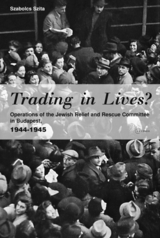
front cover of Trading in Lives?
Trading in Lives?
Operations of the Jewish Relief and Rescue Committee in Budapest, 1944-1945
Szabolcs Szita
Central European University Press, 2005
Set in the tumultuous moments of 1944–45 Budapest, this work discusses the operations of the Budapest Relief and Rescue Committee. Drawing out the contradictions and complexities of the mass deportations of Hungarian Jews during the final phase of World War II, Szita suggests that in the Hungarian context, a commerce in lives ensued, where prominent Zionists like Dr. Rezso Kasztner negotiated with the higher echelons of the SS, trying to garner the freedom of Hungarian Jews. Szita's portrait of the controversial Kasztner is a more sympathetic rendition of a powerful Zionist leader who was later assassinated in Israel for his dealings with Nazi leaders. Szita reveals a story of interweaving personalities and conflicts during arguably the most tragic moment in European history. The author's extensive research is a tremendous contribution to a field of study that has been much ignored by scholarship-the Hungarian holocaust and the trade in human lives.
[more]

front cover of Transatlantic Central Europe
Transatlantic Central Europe
Contesting Geography and Redifining Culture beyond the Nation
Jessie Labov
Central European University Press, 2019
While there are still occasional uses of it today, the term "Central Europe" carries little of the charge that it did in the 1980s and early 1990s, and as a political and intellectual project it has receded from the horizon. Proponents of a distinct cultural profile of these countries—all involved now in the process of Transatlantic integration—used "Central European", as a contestation with the geo-political label of Eastern Europe. This book discusses the transnational set of practices connecting journals with other media in the mid-1980s, disseminating the idea of Central Europe simultaneously in East and West. A range of new methodologies, including GIS-mapping visualization, is used, repositing the political-cultural journal as one central node of a much larger cultural system. What has happened to the liberal humanist philosophy that "Central Europe" once evoked? In the early years of the transition era, the liberal humanist perspective shared by Havel, Konrád, Kundera, and Michnik was quickly replaced by an economic liberalism that evolved into neoliberal policies and practices. The author follows the trajectories of the concept into the present day, reading its material and intellectual traces in the postcommunist landscape. She explores how the current use of transnational, web-based media follows the logic and practice of an earlier, 'dissident' generation of writers.
[more]

front cover of Transforming Markets
Transforming Markets
A Development Bank for the 21st Century. A History of the EBRD, Volume 2
Andrew Kilpatrick
Central European University Press, 2021
The second volume of the history of the European Bank for Reconstruction and Development (EBRD) takes up the story of how the Bank has become an indispensable part of the international financial architecture. It tracks the rollercoaster ride during this period, including the Bank’s crucial coordinating role in response to global and regional crises, the calls for its presence as an investor in Turkey, the Middle East and North Africa and later Greece and Cyprus, as well as the consequences of conflicts within its original region. It shows how in face of the growing threat of global warming the EBRD, working mainly with the private sector, developed a sustainable energy business model to tackle climate change.
Transforming Markets also examines how the EBRD broadened its investment criteria, arguing that transition towards sustainable economies requires market qualities that are not only competitive and integrated but which are also resilient, well-governed, green and more inclusive. This approach aligned with the 2015 Paris Agreement and the international community’s 2030 Agenda for Sustainable Development, with its core set of 17 sustainable development goals. The story of the EBRD’s own transition and rich history provides a route map for building the sustainable markets necessary for future growth and prosperity.
[more]

front cover of Transforming Peasants, Property and Power
Transforming Peasants, Property and Power
The Collectivization of Agriculture in Romania, 1949–1962
Dorin Dobrincu
Central European University Press, 2009
The subject matter of the volume is part of larger research agenda on the process of land collectivization in the former communist camp, focusing on state, identity and property. The main innovation of the volume is to apply recent interdisciplinary approaches to the study of the collectivization process, asking what types of new peasant-state relations it formed and how it transformed notions of self, persons, and things (such as land). The project conceived of changes in the system of ownership as causing changes in the identity and attitude of people; similarly, it regarded the study of personal identities as essential for understanding changes in the system of ownership. This perspective is rare in the area-studies approaches to the topic.
[more]

logo for Central European University Press
Transit Communities and Impact of Migration
Hungary, 2017-2020
Beatrix Futak-Campbell
Central European University Press

The impact of the passage of war refugees on the lives and minds of local residents and officials is the subject of this study. Between 2017 and 2020, Beatrix Futak-Campbell conducted interviews with over fifty people who live and work near the Hungarian-Serbian border. This area was exposed to the unprecedented stream of refugees, most of them seeking safety from the Syrian civil war. The Hungarian government’s hostility to migrants has been widely criticized, and news coverage has tended to reiterate unhelpful characterisations of Hungarian citizens as being anti-migrant, anti-Muslim and racist.

The situation is, however, more nuanced. There is a substantial difference between the border police, local communities, and organizations, on the one hand, and national politicians and the international media perception of the refugee ‘crisis’, on the other. Those living and working with migrants at the border were caught between the domestic political situation, the plight of the refugees and the international support the latter receive, and the exigencies of their own livelihoods. This book explores these communities and their own security concerns.

[more]

front cover of Transition in Post-Soviet Art
Transition in Post-Soviet Art
The Collective Actions Group Before and After 1989
Octavian Esanu
Central European University Press, 2013
The artistic tradition that emerged as a form of cultural resistance in the 1970s changed during the transition from socialism to capitalism. This volume presents the evolution of the Moscow-based conceptual artist group called Collective Actions, proposing it as a case-study for understanding the transformations that took place in Eastern European art after the fall of the Berlin Wall. Esanu introduces Moscow Conceptualism by performing a close examination of the Collective Actions group's ten-volume publication Journeys Outside the City and of the Dictionary of Moscow Conceptualism. He analyzes above all the evolution of Collective Actions through ten consecutive phases, discussing changes that occur in each new volume of the Journeys. Compares the part of the Journeys produced in the Soviet period with those volumes assembled after the dissolution of the USSR. The concept of "transition" and the activities of Soros Centers for Contemporary Art are also analyzed.
[more]

front cover of Traveler, Scholar, Political Adventurer
Traveler, Scholar, Political Adventurer
A Transylvanian Baron at the Birth of Albanian Independence: The memoirs of Franz Nopcsa
Robert Elsie
Central European University Press, 2014
The Austro-Hungarian aristocrat of Transylvanian origin, Baron Franz Nopcsa (1877-1933), was one of the most adventuresome travelers and scholars of Southeast Europe in the early decades of the twentieth century. He was also a paleontologist of renown and a noted geologist of the Balkan Peninsula : many of his assumptions have been confirmed by science. The Memoirs of this fascinating figure deal mainly with his travels in the Balkans, and specifically in the remote and wild mountains of northern Albania, in the years from 1903 to 1914. They thus cover the period of Ottoman Rule, the Balkan Wars and the outbreak of the First World War. Nopcsa was a keen adventurer who hiked through regions of northern Albania. With time, he became a leading expert in Albanian studies. He was also deeply involved in the politics of the period. In 1913, Nopcsa even offered himself as a candidate for the vacant Albanian throne. The Introduction also tells of Nopcsa's tragic death: he shot his Albanian secretary and partner before killing himself. The memoirs themselves reveal some references to his homosexuality for those who can read between the lines.
[more]

front cover of Trimming the Sails
Trimming the Sails
The Comparative Political Economy of Expansionary Fiscal Consolidations
Istvan Benczes
Central European University Press, 2008
The book provides a clear, multidisciplinary and systematic analysis of the relatively new concept of the so-called expansionary fiscal consolidations. This concept suggests that fiscal adjustment should not be in trade-off with economic growth if certain conditions are met. But why do only a few countries and only at certain times experience the expansionary effects, while others not at all? The necessary institutional conditions and circumstances have been totally neglected in the literature, or analyzed only partially at best.
[more]

front cover of The Triumph of Uncertainty
The Triumph of Uncertainty
Science and Self in the Postmodern Age
Alfred I. Tauber
Central European University Press, 2022

Tauber, a leading figure in history and philosophy of science, offers a unique autobiographical overview of how science as a discipline of thought has been characterized by philosophers and historians over the past century. He frames his account through science’s – and his own personal – quest for explanatory certainty.

During the 20th century, that goal was displaced by the probabilistic epistemologies required to characterize complex systems, whether in physics, biology, economics, or the social sciences. This “triumph of uncertainty” is the inevitable outcome of irreducible chance and indeterminate causality. And beyond these epistemological limits, the interpretative faculties of the individual scientist (what Michael Polanyi called the “personal” and the “tacit”) invariably affects how data are understood. Whereas positivism had claimed radical objectivity, post-positivists have identified how a web of non-epistemic values and social forces profoundly influence the production of knowledge.

Tauber presents a case study of these claims by showing how immunology has incorporated extra-curricular social elements in its theoretical development and how these in turn have influenced interpretive problems swirling around biological identity, individuality, and cognition. The correspondence between contemporary immunology and cultural notions of selfhood are strong and striking. Just as uncertainty haunts science, so too does it hover over current constructions of personal identity, self knowledge, and moral agency. Across the chasm of uncertainty, science and selfhood speak.
[more]

logo for Central European University Press
Troubled Minds
Shaping Modern Mental Care in Central and Eastern Europe, 1780–1930
Eva Hajdinová
Central European University Press, 2027
This volume offers a supra-regional view of how psychiatry developed in Central and Eastern Europe during the long nineteenth century. Case studies from the German lands, the Habsburg monarchy, and the Russian Empire show that the field did not follow a single linear story of medical progress. Instead, it grew through circulation of ideas, local adaptation, and often ongoing negotiation among institutions and actors. The chapters trace psychiatry’s Enlightenment roots in debates on the soul and passions, then follow its legal and institutional consolidation under absolutist and later constitutional regimes. They also examine changing diagnostic and therapeutic practices and the everyday encounters they produced among doctors, patients, clergy, and administrators. Rejecting a core–periphery model, the book presents these regions as sites of conceptual innovation and institutional experimentation. By pairing local specificities with transnational connections, it helps rethink psychiatry’s history as culturally, politically, and socially deeply embedded in nineteenth-century Europe.
[more]

front cover of Truth, Reference and Realism
Truth, Reference and Realism
Zsolt Novak
Central European University Press, 2011
The volume presents the material of the first Oxford-Budapest Conference on Truth, Reference and Realism held at CEU in 2005. The problem addressed by the conference, famously formulated by Paul Benacerraf in a paper on Mathematical Truth, was how to understand truth in the semantics of discourses about abstract domains whose objects and properties cannot be observed by sense perception. The papers of the volume focus on this semantic issue in four major fields: logic, mathematics, ethics and the metaphysics of properties in general. Beyond marking an important event, the collected papers are also substantial contributions to the above topic, from the most distinguished authors in these areas.
[more]

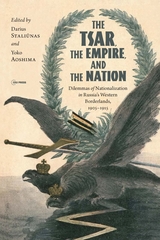
front cover of The Tsar, The Empire, and The Nation
The Tsar, The Empire, and The Nation
Dilemmas of Nationalization in Russia's Western Borderlands, 1905-1915
Darius Staliunas
Central European University Press, 2021

This collection of essays addresses the challenge of modern nationalism to the tsarist Russian Empire. First appearing on the empire’s western periphery this challenge, was most prevalent in twelve provinces extending from Ukrainian lands in the south to the Baltic provinces in the north, as well as to the Kingdom of Poland.
At issue is whether the late Russian Empire entered World War I as a multiethnic state with many of its age-old mechanisms run by a multiethnic elite, or as a Russian state predominantly managed by ethnic Russians. The tsarist vision of prioritizing loyalty among all subjects over privileging ethnic Russians and discriminating against non-Russians faced a fundamental problem: as soon as the opportunity presented itself, non-Russians would increase their demands and become increasingly separatist.
The authors found that although the imperial government did not really identify with popular Russian nationalism, it sometimes ended up implementing policies promoted by Russian nationalist proponents. Matters addressed include native language education, interconfessional rivalry, the “Jewish question,” the origins of mass tourism in the western provinces, as well as the emergence of Russian nationalist attitudes in the aftermath of the first Russian revolution.

[more]

front cover of Turning Prayers into Protests
Turning Prayers into Protests
Religious-based Activism and its Challenge to State Power in Socialist Slovakia and East Germany
David Doellinger
Central European University Press, 2013
Turning Prayers into Protests is a comparative study of religious-based oppositional activity in Slovakia and East Germany prior to 1989.
[more]

front cover of Turning Traditions Upside Down
Turning Traditions Upside Down
Rethinking Giordano Bruno's Enlightenment
Anne Eusterschulte
Central European University Press, 2013
Some of the world's most eminent researchers on Bruno offer an exhaustive overview of the state-of-theart research on his work, discussing Bruno's methodological procedures, his epistemic and literary practices, his natural philosophy, or his role as theologian and metaphysic at the cutting-edge of their disciplines. Short texts by Bruno illustrate the reasoning of the contributions. The book also reflects aspects of Bruno's reception in the past and today, inside and outside academia.
[more]

front cover of A Twentieth Century Prophet
A Twentieth Century Prophet
Oscar Jaszi, 1875-1957
György Litván
Central European University Press, 2006
A fascinating look at a man, who fought for liberal ideals and for progress in Central Europe but was forced to spend the latter half of his life in America. Oscar Jászi was a historian, political theorist and sociologist, who dedicated his tremendous intellect to modern democracy in Hungary. Exiled from his homeland, Jászi's moral courage stood strong against the political tyranny and totalitarianism of the interwar period that nearly destroyed Hungary's political and social foundations. From his early years in Budapest to his later life as professor at Oberlin College in Ohio, he worked tirelessly for what he described as "a new moral, social, and economic synthesis is needed." The life of Oscar Jászi represents one of the great triumphs of reason over violence, regardless of the defeat of his vision for a 'Danubian Federation,' and his subsequent exile. His vow to not be buried in an undemocratic Hungary was kept, and as his country emerged from the ruins of the Soviet block, his remains were transferred to Budapest in 1991, a symbol of his lasting philosophy and the spirit of his will.
[more]

front cover of Twenty-Five Sides of a Post-Communist Mafia State
Twenty-Five Sides of a Post-Communist Mafia State
Bálint Magyar
Central European University Press, 2017
The twenty-five essays accompany, illustrate and underpin the conceptual framework elaborated in Post-Communist Mafia State, published in conjunction with this volume. Leading specialists analyze the manifestations of the current political regime in Hungary from twenty-five angles. Topics discussed include the ideology, constitutional issues, social policy, the judiciary, foreign relations, nationalism, media, memory politics, corruption, civil society, education, culture and so on. Beyond the basic features of the economy the domains of taxation, banking system, energy policies and the agriculture are treated in dedicated studies. The essays are based on detailed empirical investigation about conditions in today's Hungary. They nevertheless contribute to the exploration of the characteristic features of post-communist authoritarian regimes, shared by an increasing number of countries in Europe and Central Asia.
[more]

front cover of Tyrants Writing Poetry
Tyrants Writing Poetry
Albrecht Koschorke
Central European University Press, 2018
Why do tyrants - of all people - often have poetic aspirations? Where do terror and prose meet? This book contains nine case studies that compare the cultural history of totalitarian regimes. The essays focus not on the arts, literature or architecture but on the phenomenon that many of history's great despots considered themselves talented writers. By studying the artistic ambitions of Nero, Mussolini, Stalin, Hitler, Mao Zedong, Kim Il-sung, Gaddafi, Saddam Hussein, Saparmurat Niyazov and Radovan Karadzic, the authors explore the complicated relationship between poetry and political violence, and provide a fascinating look at the aesthetic dimensions of total power. The essays make an important contribution to a number of fields: the study of totalitarian regimes, cultural studies, and biographies of 20th century leaders. They underscore the frequent correlation between tyrannical governance and an excessive passion for language, and demonstrate that the combination of artistic and political charisma is often effective in the quest for absolute power.
[more]


Send via email Share on Facebook Share on Twitter