
 A SCHOLARLY BOOK REPOSITORY
2 start with V start with V

Vascular Plants of Minnesota was first published in 1991. Minnesota Archive Editions uses digital technology to make long-unavailable books once again accessible, and are published unaltered from the original University of Minnesota Press editions.
A definitive reference to the 2,010 vascular plant species (ferns, conifers, and flowering plants) currently found in Minnesota. The maps of he Atlas section show the geographic distribution of each plant, allowing the reader to visualize—for the first time—exactly where a species occurs in the state. Historical plant collections as well as records from detailed surveys conducted in the 1970s and 1980s by the Minnesota DNR, The Nature Conservancy, and individual researchers are included in this volume.
The flora of Minnesota is of special interest because it represents the western limits of the vast eastern deciduous forest flora, the northern and eastern boundaries of the flora of the prairies and great plains, and the southwestern limits of the northern coniferous forest. These three contrasting continental floras meet more sharply in Minnesota than in other regions.
The Checklist section provides both an authoritative summary of the nomenclature of Minnesota plants and extensive references to taxonomic literature. As such, it is the most complete list ever prepared for the entire state. Arranged alphabetically, group within group, the Checklist provides both Latin and common names for all species, subspecies, and varieties.
Gerald B. Ownbey is an emeritus professor in the Department of Plant Biology at the University of Minnesota, Twin Cities. As the curator of the University Herbarium for more than thirty years, he developed its collection of almost 750,000 specimens to make it the largest in the Midwest. Professor Ownbey is the author of Common Wild Flowers of Minnesota (University of Minnesota Press, 1971).
Thomas Morley is also an emeritus professor in the Department of Plant Biology at the University of Minnesota, Twin Cities. In addition to introducing hundreds of students to Minnesota flora in his popular course "Minnesota Plant Life," he is widely recognized for his pioneering efforts to protect remnants of Minnesota's native habitats. Professor Morley is the author of Spring Flora in Minnesota (University of Minnesota Press, 1966).
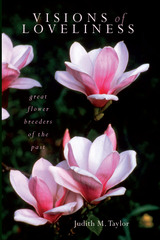
Gardeners of today take for granted the many varieties of geraniums, narcissi, marigolds, roses, and other beloved flowers for their gardens. Few give any thought at all to how this incredible abundance came to be or to the people who spent a good part of their lives creating it. These breeders once had prosperous businesses and were important figures in their communities but are only memories now. They also could be cranky and quirky.
In the eighteenth and nineteenth centuries, new and exotic species were arriving in Europe and the United States from all over the world, and these plants often captured the imaginations of the unlikeliest of men, from aristocratic collectors to gruff gardeners who hardly thought of themselves as artists. But whatever their backgrounds, they all shared a quality of mind that led them to ask “What if?” and to use their imagination and skills to answer that question themselves. The newest rose from China was small and light pink, but what if it were larger and came in more colors? Lilac was very nice in its way, but what if its blossoms were double and frilly?
While there are many books about plant collectors and explorers, there are none about plant breeders. Drawing from libraries, archives, and the recollections of family members, horticultural historian Judith M. Taylor traces the lives of prominent cultivators in the context of the scientific discoveries and changing tastes of their times. Visions of Loveliness is international in scope, profiling plant breeders from many countries—for example, China and the former East Germany—whose work may be unknown to the Anglophone reader.
In addition to chronicling the lives of breeders, the author also includes chapters on the history behind the plants by genus, from shrubs and flowering trees to herbaceous plants.
READERS
Browse our collection.
PUBLISHERS
See BiblioVault's publisher services.
STUDENT SERVICES
Files for college accessibility offices.
RECENTLY PUBLISHED





UChicago Accessibility Resources
home | accessibility | search | about | contact us
BiblioVault ® 2001 - 2026
The University of Chicago Press