
 A SCHOLARLY BOOK REPOSITORY
5 start with V start with V
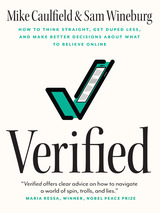
The internet brings information to our fingertips almost instantly. The result is that we often jump to thinking too fast, without taking a few moments to verify the source before engaging with a claim or viral piece of media. Information literacy expert Mike Caulfield and educational researcher Sam Wineburg are here to enable us to take a moment for due diligence with this informative, approachable guide to the internet. With this illustrated tool kit, you will learn to identify red flags, get quick context, and make better use of common websites like Google and Wikipedia that can help and hinder in equal measure.
This how-to guide will teach you how to use the web to verify the web, quickly and efficiently, including how to
• Verify news stories and other events in as little as thirty seconds (seriously)
• Determine if the article you’re citing is by a reputable scholar or a quack
• Detect the slippery tactics scammers use to make their sites look credible
• Decide in a minute if that shocking video is truly shocking
• Deduce who’s behind a site—even when its ownership is cleverly disguised
• Uncover if that feature story is actually a piece planted by a foreign government
• Use Wikipedia wisely to gain a foothold on new topics and leads for digging deeper
And so much more. Building on techniques like SIFT and lateral reading, Verified will help students and anyone else looking to get a handle on the internet’s endless flood of information through quick, practical, and accessible steps.
For more information, visit the website for the book.
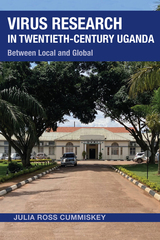
Virus Research in Twentieth-Century Uganda presents the stories of scientists at the Uganda Virus Research Institute (UVRI), a biomedical center founded in 1936. The book analyzes the strategies and conditions that allowed the institute to endure and thrive through successive political and scientific regimes of the interwar period, the postwar period, the transition to independence, the conflicts of the 1970s and 1980s, and the Museveni presidency. Julia Ross Cummiskey combines methods and themes from the history of medicine and public health, science and technology studies, and African studies to show that the story of the UVRI and the people who worked there transforms our understanding of the nature of local and international expertise and the evolution of global health research over the course of the twentieth century.
Global health is one of the chief areas in which African and foreign institutions interact today. Billions of dollars are invested in global health projects on the continent, many involving strategically selected “local partners.” In the discourse of these projects, local and global are often framed as complementary but distinct categories of people, institutions, traditions, and practices. But the history of biomedical research at the UVRI shows that these distinctions are unstable and mutable and that people and institutions have mobilized both categories to attract funding, professional prestige, and research opportunities. The book complicates the local/global binary that is implicit (and sometimes explicit) in many studies of colonial, international, and global health and medical research, especially in Africa. Moreover, it challenges assumptions about global health as an enterprise dominated by researchers based in the Global North and recenters the history of biomedicine in Africa.

READERS
Browse our collection.
PUBLISHERS
See BiblioVault's publisher services.
STUDENT SERVICES
Files for college accessibility offices.
RECENTLY PUBLISHED






UChicago Accessibility Resources
home | accessibility | search | about | contact us
BiblioVault ® 2001 - 2026
The University of Chicago Press