
 A SCHOLARLY BOOK REPOSITORY
94 start with A start with A
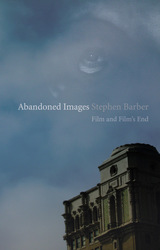
Broadway Avenue in downtown Los Angeles contains an extraordinary collection of twelve abandoned film palaces, all built between 1910 and 1931. In most cities worldwide such a concentration of original cinema houses would have been demolished long ago—but in a city whose identity is inseparable from the film industry, the buildings have survived mainly intact, some of their interiors dilapidated and gutted and others transformed and re-imagined as churches and nightclubs. Stephen Barber’s Abandoned Images takes us inside these remarkable structures in order to understand the birth and death of film as both a medium and a social event.
Due to the rise of digital filmmaking and straight-to-DVD and on-demand distribution, the film industry is presently undergoing a process of profound transformation in both how movies are made and how they are watched. Barber explores what this means for the cinematic experience: Are movies losing some essential element of their identity and purpose, and can the distinctive aura of film survive when the specialized venues required to display movies have been comprehensively overhauled or erased? Barber also forecasts the future of film, revealing how its distinctive and flexible nature will be vital to its survival.
Featuring many evocative images alongside insightful reflections on the role of film and its viewing in the global culture, Abandoned Images will be of interest to all those engaged in contemporary developments in film, visual media, and digital arts.
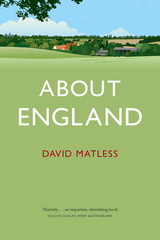
Brexit thrust long fraught debates about “Englishness” and the idea of England into the spotlight. About England explores imaginings of English identity since the 1960s in politics, geography, art, architecture, film, and music. David Matless reveals how the national is entangled with the local, the regional, the European, the international, the imperial, the post-imperial, and the global. He also addresses physical landscapes, from the village and country house to urban, suburban, and industrial spaces, and he reflects on the nature of English modernity. In short, About England uncovers the genealogy of recent cultural and political debates in England, showing how many of today’s social anxieties developed throughout the last half-century.
The line between punishment and torture can be razor-thin—yet the entire world agreed that it was definitively crossed at Abu Ghraib. Or perhaps not. George W. Bush won a second term in office only months after the Abu Ghraib scandal was uncovered, and only the lowest-ranking U.S. soldiers involved in the scandal have been prosecuted. Where was the public outcry? Stephen Eisenman offers here an unsettling explanation that exposes our darkest inclinations in the face of all-too-human brutality.
Eisenman characterizes Americans’ willful dismissal of the images as “the Abu Ghraib effect,” rooted in the ways that the images of tortured Abu Ghraib prisoners tapped into a reactionary sentiment of imperialist self-justification and power. The complex elements in the images fit the “pathos formula,” he argues, an enduring artistic motif in which victims are depicted as taking pleasure in their own extreme pain. Meanwhile, the explicitly sexual nature of the Abu Ghraib tortures allowed Americans to rationalize the deeds away as voluntary pleasure acts by the prisoners—a delusional reaction, but, The Abu Ghraib Effect reveals, one with historical precedence. From Greek sculptures to Goya paintings, Eisenman deftly connects such works and their disturbing pathos motif to the Abu Ghraib images.
Skillfully weaving together visual theory, history, philosophy, and current events, Eisenman peels back the political obfuscation to probe the Abu Ghraib images themselves, contending that Americans can only begin to grapple with the ramifications of torture when the moral detachment of the “Abu Ghraib effect” breaks down and the familiar is revealed to be horribly unfamiliar.

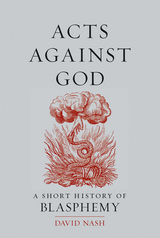
Beginning in ancient Greece and the genesis of blasphemy’s link with the state, David Nash moves on to explore blasphemy in the medieval world, where it was used both as an accusation against outsiders and as a method of crusading for piety in the West. He considers how the medieval world developed the concept of heresy as a component of disciplining its populations, the first coherent phase in state control of belief. This phenomenon reached its full flowering in the Reformation, where conformity became a fixation of confessional states. The Enlightenment created agendas of individual rights where room for religious doubt pushed blasphemy into the twilight as modern humankind hoped for its demise. But, concluding in the twenty-first century, Nash shows how individuals and the state alike now seek to adopt blasphemy as a cornerstone of identity and as the means to resist the secularization and globalization of culture.
A pioneering avant-garde artist with fierce political beliefs, Reinhardt immersed himself in the vibrant left-wing political and cultural circles of the 1930s and ’40s, only to be marginalized by the social and cultural conservatism that arose in postwar America. Corris examines Reinhardt’s work against this historical background, charting the development of his entire oeuvre, ranging from his abstract paintings to his popular graphic artwork, illustrations and cartoons. Ad Reinhardt also re-evaluates Reinhardt’s role and influence in the art world, chronicling his time as an artist and educator at the California School of Fine Arts, University of Wyoming, Yale University, and Hunter College, and examining his influence on younger artists who created successive avant-garde movements such as minimal and conceptual art.
A long-awaited examination of a less-heralded American master, Ad Reinhardt is a fascinating portrait of an artist whose political radicalism infused his art with a poignant resonance that stretches, through this rediscovery, into the present.
As Conlin shows, Smith rooted our instincts to trade in human psychology. Analyzing the contrasts he saw between the industrializing Scottish lowlands and the clan-based pastoralism of the Scottish highlands—as well as the contrasts between the ideas of contemporary thinkers such as Jean-Jacques Rousseau and David Hume—Smith advanced a system of ethics founded on sympathy. Weaving together Smith’s life and ideas, Conlin shows how the latter anticipated much more recent developments surrounding behavioral economics, virtue ethics, and social inequality. Ultimately, Conlin argues, Adam Smith offers us a set of tools to face today's challenges and become better and happier human beings.
Located at the intersection of Asia and the Middle East, Afghanistan has been strategically important for thousands of years. Its ancient routes and strategic position between India, Inner Asia, China, Persia, and beyond has meant the region has been subject to frequent invasions, both peaceful and military. As a result, modern Afghanistan is a culturally and ethnically diverse country, but one divided by conflict, political instability, and by mass displacements of its people. In this magisterial illustrated history, Jonathan L. Lee tells the story of how a small tribal confederacy in a politically and culturally significant but volatile region became a modern nation-state.
Drawing on more than forty years of study, Lee places the current conflict in Afghanistan in its historical context and challenges many of the West’s preconceived ideas about the country. Focusing particularly on the powerful Durrani monarchy, which united the country in 1747 and ruled for nearly two and a half centuries, Lee chronicles the origins of the dynasty as clients of Safavid Persia and Mughal India: the reign of each ruler and their efforts to balance tribal, ethnic, regional, and religious factions; the struggle for social and constitutional reform; and the rise of Islamic and Communist factions. Along the way, he offers new cultural and political insights from Persian histories, the memoirs of Afghan government officials, British government and India Office archives, and recently released CIA reports and Wikileaks documents. He also sheds new light on the country’s foreign relations, its internal power struggles, and the impact of foreign military interventions such as the “War on Terror.”
Its title, Afterimages, alludes to the dislocation of time that runs through many of the films and works it discusses as well as to the way we view them. Beginning with a section on the theme of woman as spectacle, a shift in focus leads to films from across the globe, directed by women and about women, all adopting radical cinematic strategies. Mulvey goes on to consider moving image works made for art galleries, arguing that the aesthetics of cinema have persisted into this environment.
Structured in three main parts, Afterimages also features an appendix of ten frequently asked questions on her classic feminist essay “Visual Pleasure and Narrative Cinema,” in which Mulvey addresses questions of spectatorship, autonomy, and identity that are crucial to our era today.
The author looks at many aspects of the subject, including the enigmatic Hypnerotomachia Polifili of 1499; part fictional narrative and part scholarly treatise, this fascinating early narrative of garden reception paves the way for an exploration of subsequent landscapes and their reception in later periods. He also looks at Italian Renaissance gardens; the Picturesque; the architectural and inscriptional elements of gardens; the ways experiences of gardens have been recorded; and the different kinds of movement within gardens, from the strolling pedestrian to the motorway traveller who experiences landscapes at speed.
In this ambitious new book the author shows how the complete history of a garden must extend beyond the moment of its design and the aims of the designer to record its subsequent reception. He raises questions about the preservation of historical sites, and provides lessons for the contemporary designer, who may perhaps be more attentive to the life of a work after its design and implementation. This book will interest all who have a professional interest in gardens, as well as the wide general audience for gardens and landscapes of past and present.
Adey examines how humans have managed and manipulated air as a natural resource and, in doing so, have been taken to the limits of survival, brought to high-altitude mountain peaks, subterranean worlds, and the troughs of new moral depths. Going beyond how vital air has been to our philosophical, scientific, and technological pursuits, he also reveals the way that the artistic and literary imagination has been lifted through air and how, in air, cultures have learned to express and inspire each other. Combining established figures such as Joseph Priestley, John Scott Haldane, and Marie Curie with unlikely individuals from painting, literature, and poetry, this richly illustrated book unlocks new perspectives into the science and culture of this pervasive but unnoticed substance.
In Aircraft, David Pascoe follows this lead and offers a startling new account of the form of the airplane, an object that, in the course of a hundred years, has developed from a flimsy contraption of wood, wire and canvas into a machine compounded of exotic materials whose wings can touch the edges of space.
Tracing the airplane through the twentieth century, he considers the subject from a number of perspectives: as an inspiration for artists, architects and politicians; as a miracle of engineering; as a product of industrialized culture; as a device of military ambition; and, finally, in its clearness of function, as an instance of sublime technology.
Profusely illustrated and authoritatively written, Aircraft offers not just a fresh account of aeronautical design, documenting, in particular, the forms of earlier flying machines and the dependence of later projects upon them, but also provides a cultural history of an object whose very shape contains the dreams and nightmares of the modern age.

At the hub of this exclusive enclave, which rises from the runway to an altitude of several thousand feet and which calmly accommodates the dangers of take-off and landing procedures, lies the airport – the concrete manifestation of airspace. The airport is a locale of anxiety and chance where, in order to expedite air traffic, authority is absolute, time is relative and liberties are always taken.
David Pascoe's wide-ranging book blends personal observation with detailed discussions of social history, air accidents, landscape, architecture, politics, aesthetics, literature and film to provide a striking account of the airport as a unique space and singular form of modernity, a place fundamental to any accurate sense of what we are now, and where we are going.
"eclectic and intelligent ... a thought-provoking analysis"—Financial Times
"the scope of Mr Pascoe’s rumination is impressive"—The Economist
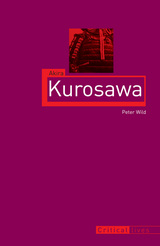
After discussing Kurosawa’s childhood in Japan, Wild explores his years as an assistant director at a new film studio and his early films during and after World War II before he won international acclaim with Rashomon. While surveying Kurosawa’s impressive career, Wild also examines the myriad criticisms the director faced both within his own country and abroad—he was too influenced by Western cinema; not authentically Japanese; and he was too sentimental, naïve, arrogant, or out of touch. By placing Kurosawa and his films in the context of his times, Wild helps us to understand the director and the reproaches against him. Cogent and concise, Akira Kurosawa will be essential reading for anyone interested in the work of this masterful filmmaker.
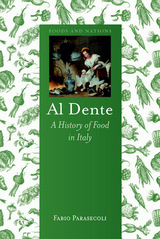
Fabio Parasecoli discovers that for centuries, southern Mediterranean countries such as Italy fought against food scarcity, wars, invasions, and an unfavorable agricultural environment. Lacking in meat and dairy, Italy developed foodways that depended on grains, legumes, and vegetables until a stronger economy in the late 1950s allowed the majority of Italians to afford a more diverse diet. Parasecoli elucidates how the last half century has seen new packaging, conservation techniques, industrial mass production, and more sophisticated systems of transportation and distribution, bringing about profound changes in how the country’s population thought about food. He also reveals that much of Italy’s culinary reputation hinged on the world’s discovery of it as a healthy eating model, which has led to the prevalence of high-end Italian restaurants in major cities around the globe.
Including historical recipes for delicious Italian dishes to enjoy alongside a glass of crisp Chianti, Al Dente is a fascinating survey of this country’s cuisine that sheds new light on why we should always leave the gun and take the cannoli.
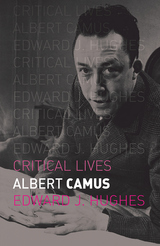
Few figures of twentieth-century French culture carry such an air of romance and intrigue as Albert Camus. Though his life was cut short by a fatal car accident in 1960, when he was just forty-six years old, he packed those years with an incredible amount of experience and accomplishment. This new entry in the Critical Lives series offers a fresh look at Camus’ life and work, from his best-selling novels like The Stranger to his complicated political engagement in a postwar world of intensifying ideological conflict. Edward Hughes offers a particularly nuanced exploration of Camus’ relationship to his native Algeria—a connection whose strength would be tested in the 1950s as France’s conflict with the anticolonial movement there became increasingly violent and untenable.
Ultimately, the picture Hughes offers is of a man whose commitment to ideas and truth reigned supreme, whether in his fiction, journalism, or political activity, a commitment that has led the man who disclaimed leadership—“I do not guide anyone,” he once pleaded—to nonetheless be seen as a powerful figure and ethical force.
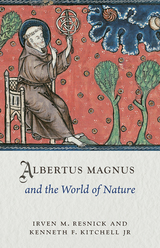
As well as being an important medieval theologian, Albertus Magnus (Albert the Great) also made significant contributions to the study of astronomy, geography, and natural philosophy, and his studies of the natural world led Pope Pius XII to declare Albert the patron saint of the natural sciences. Dante Alighieri acknowledged a substantial debt to Albert’s work, and in the Divine Comedy placed him equal with his celebrated student and brother Dominican, Thomas Aquinas.
In this book, the first full, scholarly biography in English for nearly a century, Irven M. Resnick and Kenneth F. Kitchell Jr. narrate Albert’s key contributions to natural philosophy and the history of science, while also revealing the insights into medieval life and customs that his writings provide.
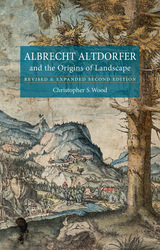
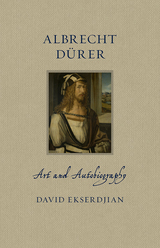
The Italian Renaissance birthed the modern sense of self, and no artist from the period compares with Albrecht Dürer (1471–1528) in terms of the almost obsessive interest he displayed in his own life. Dürer’s works are filled with personal details from his day-to-day, his dreams, and his escapades. In this brief biography, David Ekserdjian explores Dürer’s life and times—his studies, travels, and influences—as well as his paintings, drawings, and prints. This book is essential reading for anyone interested in Renaissance or Northern European art.
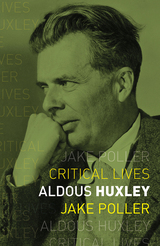
“A welcome and necessary update of the life of one of the twentieth century's most provocative intellectuals.”—Dana Sawyer
A rich and lucid account of Aldous Huxley’s life and work.
Aldous Huxley was one of the twentieth century’s most prescient thinkers. This new biography is a rich and lucid account that charts the different phases of Huxley’s career: from the early satirist who depicted the glamorous despair of the postwar generation, to the committed pacifist of the 1930s, the spiritual seeker of the 1940s, the psychedelic sage of the 1950s—who affirmed the spiritual potential of mescaline and LSD—to the New Age prophet of Island. While Huxley is still best known as the author of Brave New World, Jake Poller argues that it is The Perennial Philosophy, The Doors of Perception, and Island—Huxley’s blueprint for a utopian society—that have had the most cultural impact.
Aldus Manutius is perhaps the greatest figure in the history of the printed book: in Venice, Europe’s capital of printing, he invented the italic type and issued more first editions of the classics than anyone before or since, as well as Hypnerotomachia Poliphili, the most beautiful and mysterious printed book of the Italian Renaissance.
This is the first monograph in English on Aldus Manutius in over forty years. It shows how Aldus redefined the role of a book printer, from mere manual laborer to a learned publisher. As a consequence, Aldus participated in the same debates as contemporaries such as Leonardo da Vinci and Erasmus of Rotterdam, making this book an insight into their world too.
Alfred Jarry’s (1873–1907) creation of the monster-tyrant Ubu in his play Ubu Roi was a watershed in theater history and brought him instant notoriety following its Paris premiere in 1896. In this concise, critical biography, Jill Fell explores this and the many achievements that this multi-talented and influential writer and playwright crammed into his short life.
Drawing on numerous anecdotes and the early publications of the Collège de ’Pataphysique, Fell traces Jarry’s growth and influence, as he rapidly established his literary reputation as a prose writer, journalist, art critic, and playwright. Along the way, Fell explores his interaction with a wide cast of avant-garde characters, including Gauguin, Rachilde, Wilde, Beardsley, and Apollinaire. The quarrels that punctuated Jarry’s life—and the extravagance and the drinking that drained his meager wealth—form the background to this portrait of an obsessive writer, committed to his craft and undeterred by his worsening domestic circumstances.
Inthis entertaining biography, Jarry’s spirit and his inventions clearly emerge as an inspiration to the great figures of experimental twentieth-century theatre, art, and literature. Alfred Jarry will inform and delight readers who wish to learn more about this fascinating, unconventional figure.
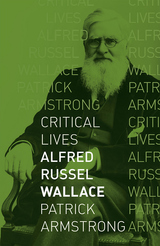
In this book, Patrick Armstrong illuminates the many facets of Wallace’s long life, which extended from 1823 until the eve of World War I. He shows Wallace to be, in many ways, a more interesting character than his colleague and friend, evolutionary scientist Charles Darwin. Taking a psychological approach, this compact yet comprehensive biography gives insight into a man who was frequently plagued with misfortune; legal problems, inability to obtain full-time employment, and relationship troubles all vexed him. Armstrong unlocks the life of a restless traveler who, although raised with “a very ordinary” education, would go on to become one of the most influential, extraordinary scientists of his time.

Maps go far beyond just showing us where things are located. All Mapped Out is an exploration of how maps impact our lives on social and cultural levels. This book offers a journey through the fascinating history of maps, from ancient cave paintings and stone carvings to the digital interfaces we rely on today. But it’s not just about the maps themselves; it’s about the people behind them. All Mapped Out reveals how maps have affected societies, influenced politics and economies, impacted the environment, and even shaped our sense of personal identity. Mike Duggan uncovers the incredible power of maps to shape the world and the knowledge we consume, offering a unique and eye-opening perspective on the significance of maps in our daily lives.
The London suburbs have, for more than two hundred and fifty years, fired the creative literary imagination: whether this is Samuel Johnson hiding away in bucolic preindustrial Streatham, Italo Svevo cheering on Charlton Athletic Football Club down at The Valley, or Angela Carter hymning the joyful “wrongness” of living south-of-the-river in Brixton. From Richmond to Rainham, Cockfosters to Croydon, this sweeping literary tour of the thirty-two London Boroughs describes how writers, from the seventeenth century on, have responded to and fictionally reimagined London’s suburbs. It introduces us to the great suburban novels, such as Hanif Kureishi’s Bromley-set The Buddha of Suburbia, Lawrence Durrell’s The Black Book, and Zadie Smith’s NW. It also reveals the lesser-known short stories, diaries, poems, local guides, travelogues, memoirs, and biographies, which together show how these communities have long been closely observed, keenly remembered, and brilliantly imagined.
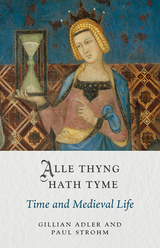
Alle Thyng Hath Tyme recreates medieval people’s experience of time as continuous, discontinuous, linear, and cyclical—from creation through judgment and into eternity. Medieval people measured time by natural phenomena such as sunrise and sunset, the motion of the stars, or the progress of the seasons, even as the late-medieval invention of the mechanical clock made time-reckoning more precise. Negotiating these mixed and competing systems, Gillian Adler and Paul Strohm show how medieval people gained a nuanced and expansive sense of time that rewards attention today.
Only a century ago, allergies as we know them didn’t exist. Ailments such as hay fever, asthma, and food intolerance were considered rare and non-fatal diseases that affected only the upper classes of Western society. Yet, as Jackson reveals here, what began in the early 1900s as a scorned subfield of immunology research in Europe and America exploded into great medical, cultural, and political significance by the end of that century. Allergy traces how the allergy became the archetypal “disease of civilization,” a fringe malady of the wealthy that became a disorder that bridged all socioeconomic boundaries and fueled anxieties over modernization. Jackson also examines the social impact of the allergy, as it required new therapeutic treatments and diagnostic procedures and brought in vast economic rewards.
Whether cats, crabgrass, or cheese is the source of your daily misery, Jackson’s engaging and in-depth historical narrative is an invaluable addition to the history of medicine as well as to the history of culture. In Allergy, sneezing readers can discover themselves at the center of deep cultural currents.
At no time before have so many people lived alone, and never has loneliness been so widely or keenly felt. Why, in a society of individualists, is living alone perceived as a shameful failure? And can we ever be happy on our own? Drawing on personal experience, as well as philosophy and sociology, Daniel Schreiber explores the tension between the desire for solitude and freedom, and the desire for companionship, intimacy, and love. Along the way he illuminates the role that friendships play in our lives—can they be a response to the loss of meaning in a world in crisis? A profoundly enlightening book on how we want to live, Alone spent almost a year on Germany’s bestseller list.

Black works from the startling premise that the United States is a continent pretending to be a country. He examines the cultural clashes—and the tense harmony—between the numerous regional cultures uneasily contained within the United States’ wide bounds. Suburban sprawl, the triumph of consumerism, the war over health care, immigration, and Christian evangelicalism all play a part in these pages, as Black unravels the tangled web of American life during the past forty-five years. He locates such tensions in the tug-of-war between the unitary and divisive pressures that have always defined the character of American government, and in the alternating rise and fall of individualism and conformity in American society as well. Black also has some telling new reflections on America’s role abroad, from Nixon’s Vietnam to George W. Bush's Iraq.
Drawing on travels from Virginia to California to Alaska, Black deftly reveals in Altered States the less-examined aspects of American culture as they are manifested in its diverse peoples and landscapes from coast to coast.
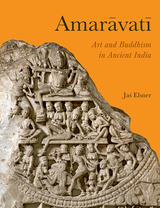
In this book, Jaś Elsner presents a fresh perspective on the rich visual culture of ancient South Asia, connecting the stupa’s artistic innovations with advancements in Buddhist philosophy and practice. He offers new insights into early Buddhist art in South India, as well as a new understanding of the relationship between early Buddhism and its material culture. The photographs collected here, particularly those featuring objects from the British Museum in London, reveal in detail how the stupa communicated Buddhist teachings and practices to its followers, making this book an invaluable resource for students and scholars alike.
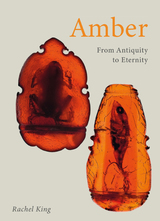
Amber: From Antiquity to Eternity is a history of human engagement with amber across three millennia. The book vividly describes our conceptions, stories, and political and scholarly disputes about amber, as well as issues of national and personal identity, religion, art, literature, music, and science. Rachel King rewrites amber’s history for the twenty-first century, tackling thorny ethical and moral questions regarding humanity’s relationship with amber in the past, as well our connection with it today. With the Earth facing unprecedented challenges, amber—the natural time capsule, and preserver of key information about the planet’s evolutional history—promises to offer invaluable insights into what comes next.
"Atkinson has put a fantastically exhaustive amount of work into this book for all of us global guitar nerds to enjoy. It’s so much fun to dive into it full immersion, and glean everything from details on iconic artist guitars to strange inventions from creatives on the fringe!"—Jennifer Batten, guitarist (Michael Jackson, Jeff Beck)
“A great resource for all guitar players, tinkerers, and enthusiasts. Atkinson’s well-researched book provides essential and fascinating facts of this unique instrument’s development over the course of more than a century.”—Paul Brett, rock guitarist, journalist, guitar designer
“Atkinson has dug deep into the history of the electric guitar to create a detailed view of the ways in which makers and musicians have tried—and in many cases succeeded—to move its design forward. This engaging new book will be required reading for anyone interested in the development of one of the most popular and revolutionary instruments ever created.”—Tony Bacon, guitar historian and author
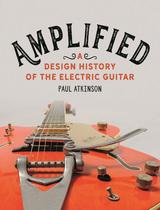
An in-depth look at the invention and development of the electric guitar, this book explores how the electric guitar’s design has changed and what its design over the years has meant for its sound. A heavily illustrated history with amps turned up to eleven, Amplified celebrates this beloved instrument and reveals how it has evolved through the experiments of amateur makers and part-time tinkerers. Digging deep into archives and featuring new interviews with makers and players, it will find admirers in all shredders, luthiers, and fans of electric sound.
Anarchism is as much an attitude as it is a set of formulated doctrines and in this book Sean Sheehan provides an engaging introduction to what anarchism means, describing its history through anecdote and dramatic events, and offering explanations of the issues behind this "movement". He avoids a narrowly political or polemical viewpoint, using examples from all over the world and images from anarchist-inspired ideas and forms.
Anarchist thinking and influences emerge in many different aspects of contemporary culture and history, and the author looks at instances in areas of political thought, history of ideas, philosophy, theories of education and ecology, as well as film and literary criticism. Systems of thought such as Buddhism and Taoism, art movements such as Dada and Surrealism, literary treatments of anarchist ideas in the work of Blake, Wilde, Whitman, Kafka and Eugene O’Neill, anarchism in relation to sex and psychology in the work of Reich and Fromm, as well as aspects of Nietzsche’s philosophy as expressions of anarchist individualism – all these and other topics are also tackled.
This combination of history, anecdote and cultural analysis is an informative and lively study that is guaranteed to provoke debate.
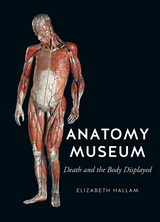
Elizabeth Hallam explores these museums, past and present, showing how they display the human body—whether naked, stripped of skin, completely dissected, or rendered in the form of drawings, three-dimensional models, x-rays, or films. She identifies within anatomy museums a diverse array of related issues—from the representation of deceased bodies in art to the aesthetics of science, from body donation to techniques for preserving corpses and ritualized practices for disposing of the dead. Probing these matters through in-depth study, Anatomy Museum unearths a strange and compelling cultural history of the spaces human bodies are made to occupy when displayed after death.
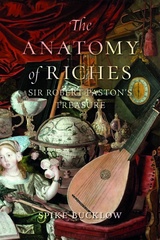
Beginning with the travels of Sir Robert’s father Sir William, the Paston wealth brought luxuries from across the globe to an idyllic retreat in rural Norfolk. There, the family commissioned Europe’s finest craftsmen to enhance their exotic rarities, a trove of objects that included everything from musical instruments to bejeweled ostrich eggs and nautilus shell goblets. The lavish hospitality of the Paston family was renowned throughout England, but the English Civil War and plague tore the country apart, and peace-loving Sir Robert was assailed by what he called a “whirlpool of misadventures.” As the dawn of the modern era saw the beginning of the family’s loss of fortune, Sir Robert kept faith and worked tirelessly to protect his wife and children. Encouraged by his friend Dr. Thomas Browne, he even found time to pursue his own idiosyncratic interests, employing both an alchemist in search of the Philosophers’ Stone and an artist to capture his favorite treasures in an enigmatic still life, The Paston Treasure. Exploring the Paston family’s history through their collection and this famed painting, The Anatomy of Riches offers a history of both early modern England and the modern world’s birth-pangs.
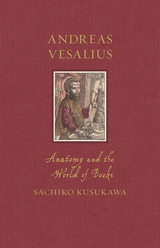
In 1543 the young and ambitious physician Andreas Vesalius published one of the most famous books in the history of medicine, On the Fabric of the Human Body. While we often think of dissection as destroying the body, Vesalius believed that it helped him understand how to construct the human body. In this book, Sachiko Kusukawa shows how Vesalius’s publication emerged from the interplay of Renaissance art, printing technology, and classical tradition. She challenges the conventional view of Vesalius as a proto-modern, anti-authoritarian father of anatomy through a more nuanced account of how Vesalius exploited cultural and technological developments to create a big and beautiful book that propelled him into imperial circles and secured his enduring fame.
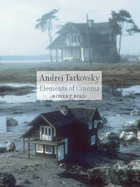
Bird brings a novel approach to his dissection of Tarkovsky’s wholly original techniques and sensibilities, arranging the films into elemental categories of Water, Fire, Earth, and Air. Solaris, Ivan’s Childhood, Mirror, Nostalgia, Andrei Rublev, and Sacrifice all get their due here; through them, Bird explores how the filmmaker probed the elusive correlation between cinematic representation and a more primeval perception of the world. Though the book also considers Tarkovsky’s work in radio, theatre, and opera—as well as his work as an actor, screenwriter, and film theorist—Bird throughout keeps his focus firmly on Tarkovsky as a consummate filmmaker.
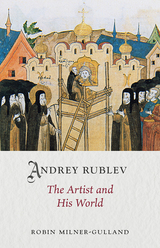
A monk from Moscow, Andrey Rublev (c.1360–c.1430) is heralded as the greatest painter of religious icons and frescos in medieval Russia. Nevertheless, his life remains largely mysterious to historians and devotees alike. In this book, Robin Milner-Gulland provides the first English-language account of the artist’s life as a window into the world of medieval Moscow. Beautifully illustrated with previously unpublished images, Andrey Rublev offers an accessible introduction to the artist’s medieval world and his continuing significance today.
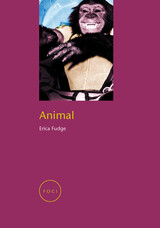
Animal is a timely overview of the many ways in which we live with animals, and assesses many of the paradoxes of our relationships with them: for example, why is the pet that sits by the dinner table never for eating? Examining novels such as Charlotte’s Web, films such as Old Yeller and Babe, science and advertising, fashion and philosophy, Animal also evaluates the ways in which we think about animals and challenges a number of the assumptions we hold. Why is it, for example, that animals are such a constant presence in children’s literature? And what does it mean to wear fake fur? Is fake fur an ethical avoidance of animal suffering, or merely a sanitized version of the unacceptable use of animals as clothing?
Neither evangelical nor proselytizing, Animal invites the reader to think beyond the boundaries of a subject that has a direct effect on our day-to-day lives.
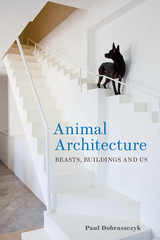
A spider spinning its web in a dark corner. Wasps building a nest under a roof. There’s hardly any part of the built environment that can’t be inhabited by nonhumans, and yet we are extremely selective about which animals we keep in or out. This book imagines new ways of thinking about architecture and the more-than-human and asks how we might design with animals and the other lives that share our spaces in mind. Animal Architecture is a provocative exploration of how to think about building in a world where humans and other animals are already entangled, whether we acknowledge it or not.
Hilda Kean looks at the cultural and social role of animals from 1800 to the present – at the way in which visual images and myths captured the popular imagination and encouraged sympathy for animals and outrage at their exploitation. From early campaigns against the beating of cattle and ill-treatment of horses to concern for dogs in war and cats in laboratories, she explores the relationship between popular images and public debate and action. She also illustrates how interest in animal rights and welfare was closely aligned with campaigns for political and social reform by feminists, radicals and socialists.
"A thoughtful, effective and well-written book"—The Scotsman
"It could hardly be more timely, and its wonderful material is bound to provoke ... reflection"—The Independent
"A work of great interest"—Sunday Telegraph
"Lively, impressively researched, and well-written ... a book that is timely and valuable"—Times Literary Supplement
"A pleasing balance of anecdote and analysis"—Times Higher Educational Supplement
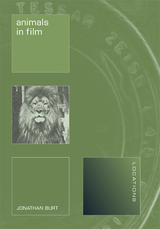
In Animals in Film, Jonathan Burt points out that the mobility of animals presented technical and conceptual challenges to early film-makers, the solutions of which were an important factor in advancing photographic technology, accelerating the speed of both film and camera. The early filming of animals also marked one of the most significant and far-reaching changes in the history of animal representation, and has largely determined the way animals have been visualized in the twentieth century.
Burt looks at the extraordinary relation-ship between animals, cinema and photography (including the pioneering work of Eadweard Muybridge and Jules-Etienne Marey) and the technological developments and challenges posed by the animal as a specific kind of moving object. Animals in Film is a shrewd account of the politics of animals in cinema, of how movies and video have developed as weapons for animal rights activists, and of the roles that animals have played in film, from the avant-garde to Hollywood.
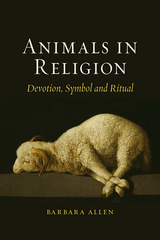
Some of the figures here will be familiar, such as St. Francis of Assisi, famous for his accord with animals, or that beloved remover of obstacles, Ganesha, the popular elephant god in the Hindu pantheon. Delving deeper, Allen highlights the numerous ways that our religious practices have honored and relied upon our animal brethren. She examines the principle of ahimsa, or nonviolence, which has Jains sweeping the pathways before them so as not to kill any insects, as well as the similar principle in Judaism of ts’ar ba’alei chayim and the notion in some sects of Islam that all living creatures are Muslim. From ancient Egypt to the Druids to the indigenous cultures of North America and Australia, Allen tells story after story that emphasizes the same message: all species are spiritually connected.
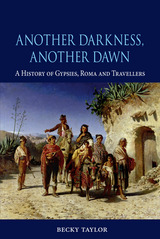
Becky Taylor follows the Gypsies, Roma, and Travelers from their roots in the Indian subcontinent to their travels across the Byzantine and Ottoman Empires to Western Europe and the Americas, exploring their persecution and enslavement at the hands of others. Rather than seeing these peoples as separate from society and untouched by history, she sets their experiences in the context of broader historical changes. Their history, she reveals, is ultimately linked to the founding of empires; the Reformation and Counter-Reformation; numerous wars; the expansion of law, order, and nation-states; the Enlightenment; nationalism; modernity; and the Holocaust. Taylor also shows how the lives of the Romani today reflect the increasing regulation of modern society. Ultimately, she demonstrates that history is not always about progress: the place of Gypsies remains as contested and uncertain today as it was upon their first arrival in Western Europe in the fifteenth century.
As much a history of Europe as of the Romani, Another Darkness, Another Dawn paints a revealing portrait of a people who still struggle to be understood.
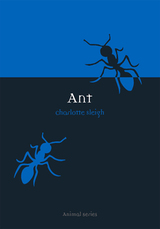
When we encounter them outdoors, ants fascinate us; discovered in our kitchen cupboards, they elicit horror and disgust. Charlotte Sleigh’s Ant elucidates the cultural reasons behind our varied reactions to these extraordinary insects, and considers the variety of responses that humans have expressed at different times and in different places to their intricate, miniature societies. Ants have figured as fantasy miniature armies, as models of good behavior, as infiltrating communists and as creatures on the borderline between the realms of the organic and the machine: in 1977 British Telecom hired ant experts to help solve problems with their massive information network.
This is the first book to examine ants in these and many other such guises, and in so doing opens up broader issues about the history of science and humans’ relations with the natural world. It will be of interest to anyone who likes natural history or cultural studies, or who has ever rushed out and bought a can of Raid™.
"[Charlotte Sleigh's] stylish, engaging and informative study deserves to win new members for the ant fan club."—Jonathan Bate, The Times
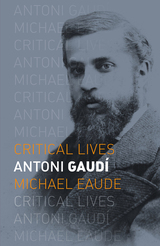
The celebrated art nouveau architect Antoni Gaudí was a contradictory figure: a deeply religious, politically right-wing man who nevertheless built revolutionary buildings. This book explores Gaudí’s life, work, and influences from Catalan nationalism to the industrial revolution. Michael Eaude expertly guides readers through Gaudí’s dozen great works, including the Sagrada Família that attracts millions of tourists each year. Gaudí’s life is also chronicled from his provincial upbringing in Reus to his time in Barcelona. He later suffered a nervous breakdown, became obsessively religious, and fused Gothic, Baroque, and Orientalist architecture into his unique style. This brief biography offers an accessible introduction to this perplexing and fascinating life.
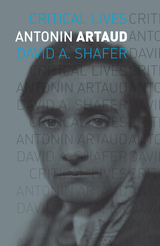
Shafer casts Artaud as a person with tenacious values. Even though Artaud was born in the material comfort of a bourgeois family from Marseille, he uncompromisingly rejected bourgeois values and norms. Becoming famous as an actor, director, and author, he would use his position to challenge contemporary assumptions about the superiority of the West, the function of speech, the purpose of culture, and the individual’s agency over his or her body. In this way—as Shafer points out—Artaud embodied the revolutionary spirit of France. And as Shafer shows, although Artaud was immensely productive, he struggled profoundly with his creative process, hindered by narcotics addiction, increasing paranoia, and an overwhelming sense of alienation. Situating Artaud’s contributions within the frenzy of his life and that of the twentieth century at large, this book is a compelling and fresh biography that pays tribute to its subject’s lasting cultural reverberations.
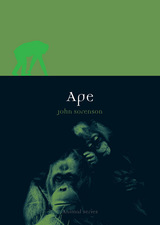
Apes—to look at them is to see a mirror of ourselves. Our close genetic relatives fascinate and unnerve us with their similar behavior and social personality. Here, John Sorenson delves into our conflicted relationship to the great apes, which often reveals as much about us as humans as it does about the apes themselves.
From bonobos and chimpanzees to gibbons, gorillas, and orangutans, Ape examines the many ways these remarkable animals often serve as models for humans. Anthropologists use their behavior to help explain our fundamental human nature; scientists utilize them as subjects in biomedical research; and behavioral researchers experiment with ways apes emulate us. Sorenson explores the challenges to the complex division between apes and ourselves, describing language experiments, efforts to cross-foster apes by raising them as human children, and the ethical challenges posed by the Great Ape Project. As well, Ape investigates representations of apes in popular culture, particularly films and advertising in which apes are often portrayed as human caricatures, monsters, and clowns.
Containing nearly one hundred illustrations of apes in nature and culture, Ape will appeal to readers interested in animal-human relationships and anyone curious to know more about our closest animal cousins, many of whom teeter on the brink of extinction.
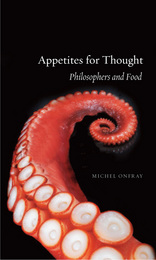
Tracing the edible obsessions of philosophers from Diogenes to Sartre, Onfray considers how their ideas relate to their diets. Would Diogenes have been an opponent of civilization without his taste for raw octopus? Would Rousseau have been such a proponent of frugality if his daily menu had included something more than dairy products? Onfray offers a perfectly Kantian critique of the nose and palate, since “the idea obtained from them is more a representation of enjoyment than cognition of the external object.” He exposes Nietzsche’s grumpiness—really, Nietzsche grumpy?—about bad cooks and the retardation of human evolution, and he explores Sartre’s surrealist repulsion by shellfish because they are “food buried in an object, and you have to pry them out.”
A fun romp through the culinary likes and dislikes of our most famous thinkers, Appetites for Thought will intrigue, provoke, and entertain, and it might also make you ponder a bite to eat.
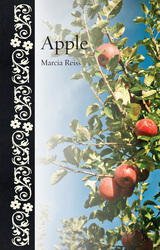
Journeying back to the apple’s germination in the mountains of Central Asia, Reiss travels along the Silk Road to Europe and the New World. She reveals that, from Charlemagne to Johnny Appleseed to the colonization of South Africa, where settlers were required to plant apple orchards that led to the development of new towns, apples have become a global commodity. In addition to delving into the latest debates about chemical sprays, Reiss looks at the rise of heirloom orchards and the hopes and fears of genetic developments. She also tells the parallel tale of apple cider, its decline during the Temperance Movement and its return as an artisanal alternative to wine. Beautifully illustrated with historic and contemporary images and containing a directory of popular and heirloom varieties, Apple is a book ripe for devouring.
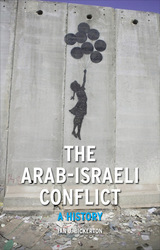
Though more than sixty years have passed since the signing of the proclamation of the State of Israel, the impact of that epochal event continues to shape the political policies and public opinion of not only the Middle East but much of the world. The consequent conflict between Arabs and Israelis for sovereignty over the land of Palestine has been one of the most bloody, intractable, and drawn-out of modern times. It continues today in cycles of aggressive violence followed by temporary, tenuous ceasefires that are marked and complicated by resolute opinions and fractious religious ideologies. In this timely volume, noted military historian Ian J. Bickerton cuts through the complex perspectives in order to explain this struggle in objective detail, describing its history from the dissolution of the Ottoman Empire following World War I to the present day.
In concise and clear prose, Bickerton argues that the present problem can be traced to the fact that each side is trapped by a conception of their past from which they seem unable to break free. This attachment and reaction to history has had a negative influence on the decision-making of Arabs and Israelis since 1948. Ultimately, Bickerton maintains that the use of armed force has not, and will not, resolve the issues that have divided Israelis and Arabs.
The Arab-Israeli Conflict is a plea for reasoned diplomacy in a situation that has been dominated by extreme violence. This book will appeal to a wide general audience seeking a balanced understanding of this enduring struggle that still dominates headlines.

In Arc of Feeling Javier Moscoso investigates the pleasure of oscillation and explores the surprising history of the swing through its meanings and metaphors, noting echoes and coincidences in remote times and places: from the witch’s broom to aerial yoga and from the gallows to sexual mores. Taking in cultural history, science, art, anthropology, and philosophy, Moscoso explores the presence and role of this artifact in the West, such as in the works of Watteau, Fragonard, and Goya, as well as in other Eastern traditions, including those of India, Korea, Thailand, and China. Linked since ancient times with sex and death, used by gods and madmen, as well as an erotic and therapeutic instrument, the swing is revealed to be an essential but forgotten object in the history of human experience.
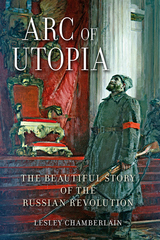
Arc of Utopia offers a fresh look at these German philosophical origins of the Russian Revolution. In the book, Lesley Chamberlain explains how influential German philosophers like Kant, Schiller, and Hegel were dazzled by contemporary events in Paris, and how this led a century later to an explosion of art and philosophy in the Russian streets, with a long-repressed people reinventing liberty, equality, and fraternity in their own cultural image. Chamberlain examines how some of the greatest Russian names of the nineteenth-century—from Alexander Herzen to Mikhail Bakunin, Ivan Turgenev to Fyodor Dostoevsky—defined their visions for Russia in relationship to their views on German enthusiasm for revolutionary France.
With the centenary of the Russian Revolution approaching, Arc of Utopia is an important and timely revisioning of this tumultuous moment in history.
Galileo, Leonardo, Newton, and Tesla revered him: Archimedes of Syracuse—an engineer who single-handedly defied the world’s most powerful army and a mathematician who knew more in 212 BCE than all of Europe would know for the next seventeen centuries. In this bold reimagining, modern polymath Nicholas Nicastro shines a new light on Archimedes’ life and work. Far from the aloof, physically inept figure of historical myth, Archimedes is revealed to be an ambitious, combative, and fiercely competitive man. A genius who challenged an empire, Archimedes emerges in this book as the world’s first fully modern scientist—millennia before his intellectual descendants transformed our world.
From Chicago to Toronto to Shanghai, cities around the world have sprouted “iconic” buildings by celebrity architects like Frank Gehry and Daniel Libeskind that compete for attention both on the skyline and in the media. But in recent years, criticism of these extreme “gestural” structures, known for their often-exaggerated forms, has been growing. Miles Glendinning’s impassioned polemic, Architecture’s Evil Empire, looks at how today’s trademark architectural individualism stretches beyond the well-known works and ultimately extends to the entire built environment. Glendinning examines how the global empire of the current modernism emerged—particularly in relation to the excesses of global capitalism—and explains its key organizational and architectural features, placing its most influential theorists and designers in a broader context of history and artistic movements.
Arguing against the excesses of iconic architecture, Glendinning advocates a vision of modern renewal that seeks to remedy the shattered and alienated look he sees in contemporary architecture. Mingling scholarship with wry humor and a genuine concern for the state of architecture, Architecture’s Evil Empire will raise many heated debates and appeal to a wide range of readers, from architects to historians, interested in the built environment.
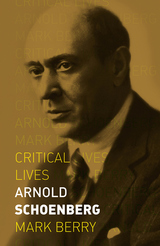
Born in the Jewish quarter of his beloved Vienna, Schoenberg left Austria for his early career in Berlin as a leading light of Weimar culture, before being forced to flee in the dead of night from Hitler’s Third Reich. He found himself in the United States, settling in Los Angeles, where he would inspire composers from George Gershwin to John Cage. Introducing all of Schoenberg’s major musical works, from his very first compositions, such as the String Quartet in D Major, to his invention of the twelve-tone method, Berry explores how Schoenberg’s revolutionary approach to musical composition incorporated Wagnerian late Romanticism and the brave new worlds of atonality and serialism. Essential reading for anyone interested in the music and history of the twentieth century, this book makes clear Schoenberg changed the history of music forever.
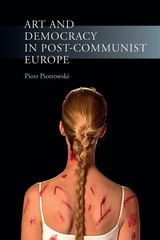
When the Iron Curtain fell in 1989, Eastern Europe saw a new era begin, and the widespread changes that followed extended into the world of art. Art and Democracy in Post-Communist Europe examines the art created in light of the profound political, social, economic, and cultural transformations that occurred in the former Eastern Bloc after the Cold War ended. Assessing the function of art in post-communist Europe, Piotr Piotrowski describes the changing nature of art as it went from being molded by the cultural imperatives of the communist state and a tool of political propaganda to autonomous work protesting against the ruling powers.
The sustained popularity of religious art in the face of competition from increasingly prevalent secular artworks lies at the heart of this study. Religious art staked out new spaces of display in state institutions, palaces, and private collections, the book shows, as well as taking advantage of patronage from monarchs such as Louis XIV and George III, who funded religious art in an effort to enhance their monarchial prestige. Aston also explores the motivations and exhibition practices of private collectors and analyzes changing Catholic and Protestant attitudes toward art. The book also examines purchases made by corporate patrons such as charity hospitals and religious confraternities and considers what this reveals about the changing religiosity of the era as well.

This book is the first history of medieval European anatomical images. Richly illustrated, The Art of Anatomy in Medieval Europe explores the many ways in which medieval surgeons, doctors, monks, and artists understood and depicted human anatomy. Taylor McCall refutes the common misconception that Renaissance artists and anatomists such as Leonardo da Vinci and Andreas Vesalius were the fathers of anatomy who performed the first human dissections. On the contrary, she argues that these Renaissance figures drew upon centuries of visual and written tradition in their works.
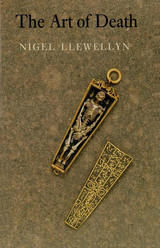
Illustrated and explained in this book are an array of little-known objects and images such as death's head spoons, jewels and swords, mourning-rings and fans, wax effigies, church monuments, Dance of Death prints, funeral invitations and ephemera, as well as works by well-known artists, including Holbein, Hogarth and Blake.
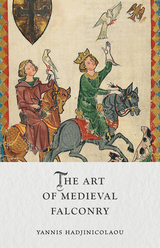
Medieval falconry was not just about hunting; the practice also signified sovereignty, power, and diplomacy. In The Art of Medieval Falconry, Yannis Hadjinicolaou describes the visual culture that sprang up around these practices, tracking how imagery, equipment, and even the birds themselves moved through the medieval world. Indeed, Hadjinicolaou shows that falconry has been a global phenomenon since at least the thirteenth century.
This beautifully illustrated book offers a unique glimpse at how cultures across the globe adopted and adapted the visual culture of medieval falconry.
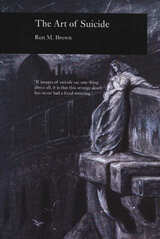
Brown tracks the changes surrounding the perception of suicide into the pivotal Romantic era, with its notions of the "man of feeling", ready to hurl himself into the abyss over a woman or an unfinishable poem. After the First World War, the meaning of death and attitudes towards suicide changed radically, and in time this led to its decriminalization. The 20th century in fact witnessed a growing ambivalence towards suicidal acts, which today are widely regarded either as expressions of a death-wish or as cries for help. Brown concludes with Warhol's picture of Marilyn Monroe and the videos taken by the notorious Dr Kevorkian.
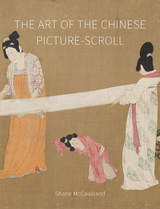
The Chinese picture-scroll, a long, horizontal painting or calligraphic work, has been China’s pre-eminent aesthetic form throughout the last two millennia. This first history of the picture-scroll explores its extraordinary longevity and adaptability to social, political, and technological change. The book describes what the picture-scroll demands of a viewer, how China’s artists grappled with its cultural power, and how collectors and connoisseurs left their marks on scrolls for later generations to judge.
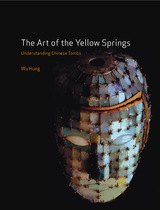
Wu Hung bolsters some of the new trends in Chinese art history that have been challenging the conventional ways of studying funerary art. Examining the interpretative methods themselves that guide the study of memorials, he argues that in order to understand Chinese tombs, one must not necessarily forget the individual works present in them—as the beautiful color plates here will prove—but consider them along with a host of other art-historical concepts. These include notions of visuality, viewership, space, analysis, function, and context. The result is a ground-breaking new assessment that demonstrates the amazing richness of one of the longest-running traditions in the whole of art history.
We use salty or artful language to win arguments, slander, cheat, and bully, as well as to express feelings of joy or frustration by swearing or “blowing off steam.” Rik Smits delves into the magic of oaths and profanity, art and advertising, the lure of fake news and propaganda, as well as invective and off-color jokes the world over. This book shows why conversation dies in crowded elevators and what drives us to curse at our laptops. The Art of Verbal Warfare is, when all is said and done, the story of how we can get through life without coming to physical blows.
The Art Public explores the history of efforts to imagine a collective, general audience for art in the world. Oskar Bätschmann explores both written and pictorial evidence of the development of the “art public” as an idea and disentangles connections between art production, audiences, and actual reception. Two aspects shape the narrative: the transformation of the audience from passive recipient to active agent as well as satirical jabs at audiences by the likes of Cruikshank, Rowlandson, and Daumier. This sweeping account connects the ancient Greeks with Renaissance painters, modern writers, and contemporary movie stars in a deft survey of the ways we imagine art’s immediate impact on audiences and its afterlives in museums, galleries, and the world.
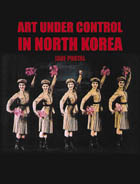
Art Under Control in North Korea is the first Western publication to explore the state-controlled role of art in North Korea. This timely volume places North Korean art in its historical, political, and social contexts, with a discussion on the state system of cultivating and promoting artists and an examination of the range of art produced, from painting and calligraphy to architecture and applied art. Portal offers an incisive analysis that compares the dictatorial control exerted over artists by North Korean leaders to that of past regimes. She also examines the ways in which archaeology has been employed for political ends to legitimize the present regime.
Art Under Control in North Korea is an intriguing and vibrant volume that explores the creation of art under totalitarian rule and the ways art can subvert a dictatorial regime.
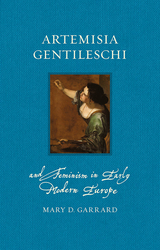
Artemisia Gentileschi is by far the most famous woman artist of the premodern era. Her art addressed issues that resonate today, such as sexual violence and women’s problematic relationship to political power. Her powerful paintings with vigorous female protagonists chime with modern audiences, and she is celebrated by feminist critics and scholars.
This book breaks new ground by placing Gentileschi in the context of women’s political history. Mary D. Garrard, noted Gentileschi scholar, shows that the artist most likely knew or knew about contemporary writers such as the Venetian feminists Lucrezia Marinella and Arcangela Tarabotti. She discusses recently discovered paintings, offers fresh perspectives on known works, and examines the artist anew in the context of feminist history. This beautifully illustrated book gives for the first time a full portrait of a strong woman artist who fought back through her art.
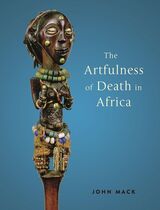
This book is a unique survey of the artful nature of funerals in Africa. Drawing on a wide range of historical, anthropological, archaeological, art historical, and literary sources, John Mack charts the full range of African funereal art, highlighting examples from across the continent and from ancient times to today. Featuring abundant illustrations—some of which have never been published before—The Artfulness of Death in Africa is essential reading for those interested in African art, culture, society, and history.
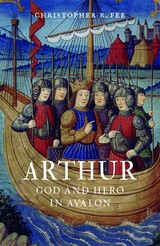
Touching on all of these classic aspects of the Arthur tale, Christopher R. Fee seeks to understand Arthur in terms of comparative mythology as he explores how the Once and Future King remains relevant in our contemporary world. From ancient legend to Monty Python, Arthur: God and Hero in Avalon discusses everything from the very earliest versions of the King Arthur myth to the most recent film and television adaptations, offering insight into why Arthur remains so popular—a hero whose story still speaks so eloquently to universal human needs and anxieties.
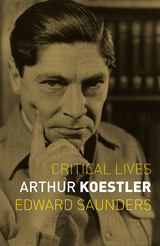
Saunders sketches Koestler as a leading documentarian of some of the key moments in twentieth-century European history, showing the remarkable ways that he was able to stage himself as a witness to them. Saunders explores Koestler’s struggle with his Jewish identity, outlines his ideas on the theory of science and the ways he tried to imagine the future of science and humankind, and directly engages with the controversial claims of sexual violence that have emerged in the years following Koestler’s suicide. Differentiating the life Koestler led from the story he wanted to tell about it and various ways the public has influenced his reputation after his death, this book offers a balanced portrait of a vibrant figure in twentieth-century arts and letters.
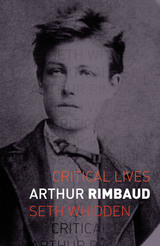
Almost all of Rimbaud’s poems were written between the ages of fifteen and twenty. Against the backdrop of the crumbling Second Empire and the tumultuous Paris Commune, he took centuries-old traditions of French versification and picked them apart with an unmatched knowledge of how they fitted together. Combining sensuality with the pastoral, parody, political satire, fable, eroticism, and mystery, his poems range from traditional verse forms to prose-poetry to the first two free-verse poems written in French. By situating Rimbaud’s later writing in Africa as part of a continuum that spanned his entire life, Whidden offers a corrective to the traditional split between Rimbaud’s life as a poet and his life afterwards. A remarkable portrait of the original damned poet, Arthur Rimbaud reinvents a figure who continues to captivate readers, artists, and writers across the world.
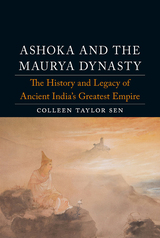
At its peak in 250 BCE, the Maurya Empire was the wealthiest and largest empire in the world, extending across much of modern India, Pakistan, and Afghanistan. In this book, Colleen Taylor Sen explores the life, achievements, and legacy of the Maurya emperor Ashoka, one of the greatest leaders in Indian history. Sen relates how, after a bloody war in 261 BCE, Ashoka renounced violence and spent the rest of his life promoting religious tolerance, animal rights, environmental protection, peace, and multiculturalism—a policy he called Dhamma. This well-illustrated book explores the legacy and influence of the Mauryas in politics throughout Southeast Asia, China, and India, as well as contemporary popular culture.
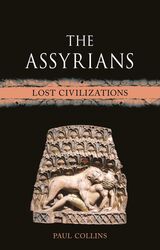
At the height of its power near 660 BC, the Assyrian empire, centered in northern Iraq, wielded dominance from Egypt to Iran. This vast region was ruled by a series of kings who demonstrated their power with magnificent palaces adorned by sculptures depicting rituals, battles, and hunts. Established by military might, the empire thrived under the guidance of scholars who interpreted divine will and administrators who relocated tens of thousands of people to serve the state. This book relates the history of Assyria through the lens of its royal family and the officials who commissioned its buildings, art, and literature—each a critical part of the foundation for the later Babylonian and Persian empires.
This book explores how, far from being an act limited to deviation from known pathways or desirable plans of action, wandering is an abundant source of meaning—a force as intimately involved in the history of our universe as it will be in the future of our planet. In ancient Australian Aboriginal cosmology, in works about the origins of democracy and surviving disasters in ancient Greece, in Eurasian steppe nomadic culture, in the lifeways of the Roma, in the movements of today’s refugees, and in our attempts to preserve spaces of untracked online freedom, wandering is how creativity and skills of adaptation are preserved in the interests of ongoing life. Astray is an enthralling look at belonging and at notions of alienation and hope.
If there is one thing we are short on these days, it’s attention. Attention is central to everything we do and think, yet it is mostly an intangible force, an invisible thing that connects us as subjects with the world around us. We pay attention to this or that, let our attention wander—we even stand at attention from time to time—yet rarely do we attend to attention itself. In this book, Gay Watson does just that, musing on attention as one of our most human impulses.
As Watson shows, the way we think about attention is usually through its instrumentality, by what can be achieved if we give something enough of it—say, a crisply written report, a newly built bookcase, or even a satisfied child who has yearned for engagement. Yet in losing ourselves to the objects of our fixation, we often neglect the process of attention itself. Exploring everything from attention’s effects on our neurons to attention deficit disorder, from the mindfulness movement to the relationship between attention and creativity, Watson examines attention in action through many disciplines and ways of life. Along the way, she offers interviews with an astonishing cast of creative people—from composers to poets to artists to psychologists—including John Luther Adams, Stephen Batchelor, Sue Blackmore, Guy Claxton, Edmund de Waal, Rick Hanson, Jane Hirshfield, Wayne Macgregor, Iain McGilchrist, Garry Fabian Miller, Alice and Peter Oswald, Ruth Ozeki, and James Turrell.
A valuable and timely account of something central to our lives yet all too often neglected, this book will appeal to anyone who has felt their attention under threat in the clamors of modern life.
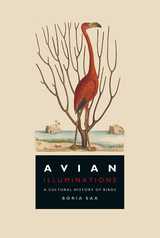
Avian Illuminations examines the many roles birds have played in human society, from food, messengers, deities, and pets, to omens, muses, timekeepers, custodians, hunting companions, decorative motifs, and, most importantly, embodiments of our aspirations. Boria Sax narrates the history of our relationships with a host of bird species, including crows, owls, parrots, falcons, eagles, nightingales, hummingbirds, and many more. Along the way, Sax describes how birds’ nesting has symbolized human romance, how their flight has inspired inventors throughout history, and he concludes by showing that the interconnections between birds and humans are so manifold that a world without birds would effectively mean an end to human culture itself. Beautifully illustrated, Avian Illuminations is a superb overview of humanity’s long and rich association with our avian companions.
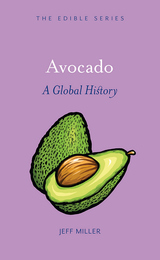
Through lively anecdotes, colorful pictures, and delicious recipes, Jeff Miller explores the meteoric rise of the avocado, from its coevolution with the megaherbivores of the Pleistocene to its acceptance by the Spanish conquistadors in Mexico, to its current dominance of food consumers’ imaginations.
READERS
Browse our collection.
PUBLISHERS
See BiblioVault's publisher services.
STUDENT SERVICES
Files for college accessibility offices.
RECENTLY PUBLISHED



UChicago Accessibility Resources
home | accessibility | search | about | contact us
BiblioVault ® 2001 - 2024
The University of Chicago Press