
 A SCHOLARLY BOOK REPOSITORY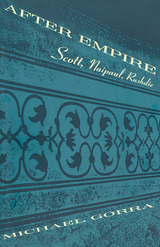
Arguing against a model of cultural identity based on race, Gorra begins with Scott's portrait, in The Raj Quartet, of the character Hari Kumar—a seeming oxymoron, an "English boy with a dark brown skin," whose very existence undercuts the belief in an absolute distinction between England and India. He then turns to the opposed figures of Naipaul and Rushdie, the two great novelists of the Indian diaspora. Whereas Naipaul's long and controversial career maps the "deep disorder" spread by both imperialism and its passing, Rushdie demonstrates that certain consequences of that disorder, such as migrancy and mimicry, have themselves become creative forces.
After Empire provides engaging and enlightening readings of postcolonial fiction, showing how imperialism helped shape British national identity—and how, after the end of empire, that identity must now be reconfigured.

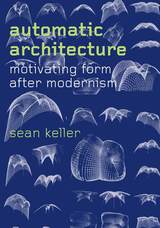
The quixotic attempts to formulate such design processes extended modernist principles and tried to draw architecture closer to mathematics and the sciences. By focusing on design methods, and by examining evidence at a range of scales—from institutions to individual buildings—Automatic Architecture offers an alternative to narratives of this period that have presented postmodernism as a question of style, as the methods and techniques traced here have been more deeply consequential than the many stylistic shifts of the past half century. Sean Keller closes the book with an analysis of the contemporary condition, suggesting future paths for architectural practice that work through, but also beyond, the merely automatic.
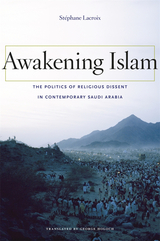
Amidst the roil of war and instability across the Middle East, the West is still searching for ways to understand the Islamic world. Stéphane Lacroix has now given us a penetrating look at the political dynamics of Saudi Arabia, one of the most opaque of Muslim countries and the place that gave birth to Osama bin Laden.
The result is a history that has never been told before. Lacroix shows how thousands of Islamist militants from Egypt, Syria, and other Middle Eastern countries, starting in the 1950s, escaped persecution and found refuge in Saudi Arabia, where they were integrated into the core of key state institutions and society. The transformative result was the Sahwa, or “Islamic Awakening,” an indigenous social movement that blended political activism with local religious ideas. Awakening Islam offers a pioneering analysis of how the movement became an essential element of Saudi society, and why, in the late 1980s, it turned against the very state that had nurtured it. Though the “Sahwa Insurrection” failed, it has bequeathed the world two very different, and very determined, heirs: the Islamo-liberals, who seek an Islamic constitutional monarchy through peaceful activism, and the neo-jihadis, supporters of bin Laden's violent campaign.
Awakening Islam is built upon seldom-seen documents in Arabic, numerous travels through the country, and interviews with an unprecedented number of Saudi Islamists across the ranks of today’s movement. The result affords unique insight into a closed culture and its potent brand of Islam, which has been exported across the world and which remains dangerously misunderstood.

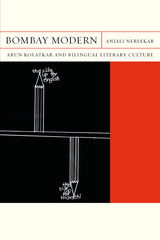
Bombay Modern uncovers an alternative and provincial modernism through poetry, a genre that is marginal to postcolonial studies, and through bilingual scholarship across English and Marathi texts, a methodology that is currently peripheral at best to both modernist studies and postcolonial literary criticism in India. Eschewing any attempt to define an overarching or universal modernism, Bombay Modern delimits its sphere of study to "Bombay" and to the "post-1960" (the sathottari period) in an attempt to examine at close range the specific way in which this poetry redeployed the regional, the national, and the international to create a very tangible yet transient local.
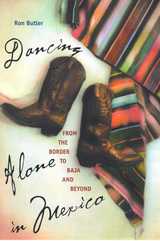
Can a man have a love affair with a foreign land? Ron Butler never dreamed Mexico would capture his heart and his soul. But when his ex-wife moved to Guadalajara with their children in the wake of divorce, he found himself crisscrossing the country, seduced by its charms and moved by its rhythms and its melodies.
Like the diver of an old Mexican legend who lives beneath the sea seeking the best pearl, Butler lost himself in Mexico and found the hidden treasures of every tiny hamlet and big metropolis. He writes about the endangered monarch butterflies of El Rosario, the street bands of Zacatecas, and the mummies of Guanajuato. He takes a magical night ferry ride from Mazatlán and a train excursion into Copper Canyon—a chasm four times larger than the Grand Canyon—in Mexico's most mysterious mountains. He goes off the beaten path in such tourist havens as Acapulco and Cancún. And he walks in the footsteps of movie stars and artists who too have been enamored of Mexico.
Poking into the nooks and crannies of Mexico, Butler indulges in tasty Mexican specialties at both the finest restaurants and out-of-the-way street stands. He finds the best tequila in the town named Tequila, the world's most delicious cup of coffee in Veracruz, the sweetest dulce in Morelia, and the best mole—a Mayan chile and chocolate sauce embellished by nuns anxious to please a visiting Spanish viceroy—in Puebla. Sharing his considerable knowledge of art, Butler also uncovers the best of Mexico's museums and advises shoppers about folk crafts.
Informative and helpful as the best travel guide, Dancing Alone in Mexico will help even seasoned travelers to get the most out of their trips to Mexico. Casual and lively as the best travel memoir, the book will also delight the armchair traveler with south-of-the-border stories and adventures that come only to those who dance not alone but with an entire land.
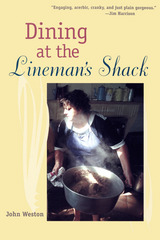
The place is Skull Valley in central Arizona, the time the 1930s. Taking food as his theme, Weston paints an instructive and often hilarious portrait of growing up, of rural family life under difficult circumstances, and of a remote Arizona community trying to hold body and soul together during tough times. His book recalls life in a lineman's shack, interlaced with "disquisitions on swamp life, rotting water, and the complex experience of finding enough to eat during the Great Depression."
Central to Weston's account is his mother Eloine, a valiant woman rearing a large brood in poverty with little help from her husband. Eloine cooks remarkably well—master of a small repertory from which she coaxes ideas surprising even to herself—and feeds her family on next to nothing. She is a woman whose first instinct is to cry out "Lord, what am I going to feed them" whenever visitors show up close to mealtime. Recalls Weston, "Her strength lay in a practical- and poverty-born sense that there must be more edible food in the world than most people realized," and he swears that six out of seven meals were from parts of four or five previous meals coming round again, like the buckets on a Ferris wheel.
Although Weston evokes a fond remembrance of a bygone era that moves from Depression-era Skull Valley to wartime Prescott, rest assured: food—its acquisition, its preparation, its wholehearted enjoyment—is the foundation of this book. "I did not have a deprived childhood, despite its slim pickings," writes Weston. "If I recall a boiling pig's head now and then, it is not to be read as some Jungian blip from Lord of the Flies but simply a recurring flicker of food-memory." Whether remembering his father's occasional deer poaching or his community's annual Goat Picnic, Weston laces his stories with actual recipes—even augmenting his instructions for roasted wild venison with tips for preparing jerky.
Dining at the Lineman's Shack teems with sparkling allusions, both literary and culinary, informed by Weston's lifetime of travels. Even his nagging memory of desperate boyhood efforts to trade his daily peanut-butter sandwich for bacon-and-egg, baloney, jelly, or most anything else is tempered by his acquaintance with "the insidious sa-teh sauce in Keo Sananikone's hole-in-the-wall restaurant on Kapahulu Street"—a peanut-butter-based delicacy for which he obligingly provides the ingredients (and which he promises will keep, refrigerated in a jar, for several weeks before baroque things begin to grow on it).
Through this tantalizing smorgasbord of memories, stories, and recipes, John Weston has fashioned a wholly captivating commentary on American culture, both in an earlier time and in our own. Dining at the Lineman's Shack is a book that will satisfy any reader's hunger for the unusual—and a book to savor, in every sense of the word.
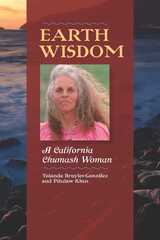
The 1978 Point Conception Occupation was a turning point in Pilulaw Khus’s life. In that year excavation began for a new natural gas facility at Point Conception, near Santa Barbara, California. To the Chumash tribal people of the central California coast, this was desecration of sacred land. In the Chumash cosmology, it was the site of the Western Gate, a passageway for spirits to enter the next world. Frustrated by unfavorable court hearings, the Chumash and their allies mobilized a year-long occupation of the disputed site, eventually forcing the energy company to abandon its plan. The Point Conception Occupation was a landmark event in the cultural revitalization of the Chumash people and a turning point in the life of Pilulaw Khus, the Chumash activist and medicine woman whose firsthand narrations comprise this volume.
Scholar Yolanda Broyles-González provides an extensive introductory analysis of Khus’s narrative. Her analysis explores “re-Indianization” and highlights the newly emergent Chumash research of the last decade.
In the world of book publishing, this volume from a traditional Chumash woman elder is a first. It puts a 20th (and 21st) century face, name, identity, humanity, personality, and living voice on the term Chumash.

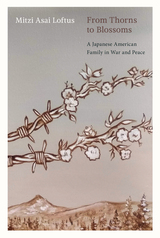
Mitsuko “Mitzi” Asai was not yet ten years old in the spring of 1942 when President Roosevelt’s Executive Order 9066 sent 120,000 people of Japanese ancestry—about two-thirds of them US citizens—from their homes on the West Coast to inland prison camps. They included Mitzi and most of her family, who owned a fruit orchard in Hood River, Oregon. The Asais spent much of World War II in the camps while two of the older sons served in the Pacific in the US Army. Three years later, when the camps began to close, the family returned to Hood River to find an altered community. Shop owners refused to serve neighbors they had known for decades; racism and hostility were open and largely unchecked. Humiliation and shame drove teenaged Mitzi to reject her Japanese heritage, including her birth name. More than a decade later, her life took another turn when a Fulbright grant sent her to teach in Japan, where she reconnected with her roots.
In From Thorns to Blossoms, Mitzi recounts her rich and varied life, from a childhood surrounded by barbed wire and hatred to a successful career as a high school English teacher and college instructor in English as a Second Language. Today, Asai descendants continue to tend the Hood River farm while the town confronts its shameful history. Originally published in 1990 as Made in Japan and Settled in Oregon, this revised and expanded edition describes the positive influence Mitzi’s immigrant parents had on their children, provides additional context for her story, and illuminates the personal side of a dark chapter in US history. It’s the remarkable story of a transformation from thorns into blossoms, pain into healing.
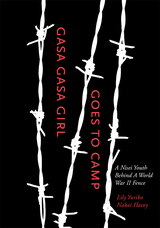
In this creative memoir, Lily Havey combines storytelling, watercolor, and personal photographs to recount her youth in two Japanese-American internment camps during World War II. In short vignettes snapshots of people, recreated scenes and events a ten-year-old girl develops into a teenager while confined. Vintage photographs reveal the historical, cultural, and familial contexts of that growth and of the Nakais’ dislocation. The paintings and her animated writing together pull us into a turbulent era when America disgracefully incarcerated, without due process, thousands of American citizens because of their race.
These stories of love, loss, and discovery recall a girl balancing precariously between childhood and adolescence. In turn wrenching, funny, touching, and biting but consistently engrossing, they elucidate the daily challenges of life in the camp and the internees’ many adaptations.
Winner of the Evans Biography Award.
Selected by the American Library Association as one the Best of the Best from University Presses.
Finalist in the cover design category in the Southwest Book Design and Production Awards.
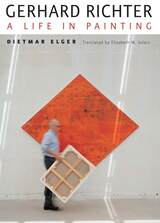
Gerhard Richter is one of the most important and influential artists of the post-war era. For decades he has sought innovative ways to make painting more relevant, often through a multifaceted dialogue with photography. Today Richter is most widely recognized for the photo-paintings he made during the 1960s that rely on images culled from mass media and pop culture. Always fascinated with the limits and uncertainties of representation, he has since then produced landscapes, abstractions, glass and mirror constructions, prints, sculptures, and installations.
Though Richter has been known in the United States for quite some time, the highly successful retrospective of his work at the MoMA in 2002 catapulted him to unprecedented fame. Enter noted curator Dietmar Elger, who here presents the first biography of this contemporary artist. Written with full access to Richter and his archives, this fascinating book offers unprecedented insight into his life and work. Elger explores Richter’s childhood in Nazi Germany; his years as a student and mural painter in communist East Germany; his time in the West during the turbulent 1960s and ’70s, when student protests, political strife, and violence tore the Federal Republic of Germany apart; and his rise to international acclaim during the 1980s and beyond.
Richter has always been a difficult personality to parse and the seemingly contradictory strands of his artistic practice have frustrated and sometimes confounded critics. But the extensive interviews on which this book is based disclose a Richter who is far more candid, personal, and vivid than ever before. The result is a book that will be the foundational portrait of this artist for years to come.
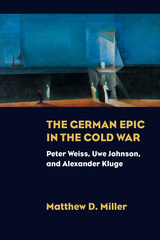
Matthew Miller’s The German Epic in the Cold War explores the literary evolution of the modern epic in postwar German literature. Examining works by Peter Weiss, Uwe Johnson, and Alexander Kluge, it illustrates imaginative artistic responses in German fiction to the physical and ideological division of post–World War II Germany.
Miller analyzes three ambitious German-language epics from the second half of the twentieth century: Weiss’s Die Ästhetik des Widerstands (The Aesthetics of Resistance), Johnson’s Jahrestage (Anniversaries), and Kluge’s Chronik der Gefühle (Chronicle of Feelings). In them, he traces the epic’s unlikely reemergence after the catastrophes of World War II and the Shoah and its continuity across the historical watershed of 1989–91, defined by German unification and the dissolution of the Soviet Union.
Building on Franco Moretti’s codification of the literary form of the modern epic, Miller demonstrates the epic’s ability to understand the past; to come to terms with ethical, social, and political challenges in the second half of the twentieth century in German-speaking Europe and beyond; and to debate and envision possible futures.
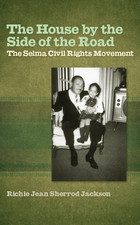
King’s informal headquarters in Selma was the home of Dr. Sullivan and Richie Jean Sherrod Jackson and their young daughter, Jawana. The House by the Side of the Road is Richie Jean’s firsthand account of the private meetings King and his lieutenants, including Ralph David Abernathy and John Lewis, held in the haven of the Jackson home.
Sullivan Jackson was an African American dentist in Selma and a prominent supporter of the civil rights movement. Richie Jean was a close childhood friend of King’s wife, Coretta Scott King, a native of nearby Marion, Alabama. Richie Jean’s fascinating account narrates how, in the fraught months of 1965 that preceded the Voting Rights March, King and his inner circle held planning sessions and met with Assistant Attorney General John Doar to negotiate strategies for the event.
Just eight days after Bloody Sunday, President Lyndon Johnson made a televised addressed to a joint session of Congress on Monday, March 15. Jackson relates the intimate scene of King and his lieutenants watching as Johnson called the nation to dedicate itself to equal rights for all and ending his address with the words: “We shall overcome.” Five months later, Congress passed the 1965 Voting Rights Act on August 6.
The major motion picture Selma now commemorates the fiftieth anniversary of Bloody Sunday and the 1965 Voting Rights Act. In it, Niecy Nash and Kent Faulcon star as Sullivan and Richie Jean Jackson among a cast including Oprah Winfrey, Tom Wilkinson, and Cuba Gooding Jr. A gripping primary source, The House by the Side of the Road illuminates the private story whose public outcomes electrified the world and changed the course of American history.

Combining accessible writing with thorough scholarship, and rigorous historical accounts with insightful readings, John Williams’s Film Music explores why Williams is so important to the history of film music. Beginning with an overview of music from Hollywood’s Golden Age (1933–58), Emilio Audissino traces the turning points of Williams’s career and articulates how he revived the classical Hollywood musical style. This book charts each landmark of this musical restoration, with special attention to the scores for Jaws and Star Wars, Williams’s work as conductor of the Boston Pops Orchestra, and a full film/music analysis of Raiders of the Lost Ark. The result is a precise, enlightening definition of Williams’s “neoclassicism” and a grounded demonstration of his lasting importance, for both his compositions and his historical role in restoring part of the Hollywood tradition.
Best Special Interest Books, selected by the American Association of School Librarians
Best Books for General Audiences, selected by the Public Library Reviewers
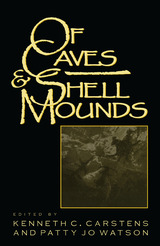
Ancient human groups in the Eastern Woodlands of North America were long viewed as homogeneous and stable hunter-gatherers, changing little until the late prehistoric period when Mesoamerican influences were thought to have stimulated important economic and social developments. The authors in this volume offer new, contrary evidence to dispute this earlier assumption, and their studies demonstrate the vigor and complexity of prehistoric peoples in the North American Midwest and Midsouth. These peoples gathered at favored places along midcontinental streams to harvest mussels and other wild foods and to inter their dead in the shell mounds that had resulted from their riverside activities. They created a highly successful, pre-maize agricultural system beginning more than 4,000 years ago, established far-flung trade networks, and explored and mined the world's longest cave—the Mammoth Cave System in Kentucky.
Contributors include:
Kenneth C. Carstens, Cheryl Ann Munson, Guy Prentice, Kenneth B. Tankersley, Philip J. DiBlasi, Mary C. Kennedy, Jan Marie Hemberger, Gail E. Wagner, Christine K. Hensley, Valerie A. Haskins, Nicholas P. Herrmann, Mary Lucas Powell, Cheryl Claassen, David H. Dye, and Patty Jo Watson
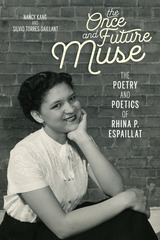
The Once and Future Muse presents the first major study of the life and work of Dominican-born bilingual American poet and translator Rhina P. Espaillat (b. 1932). Beginning with her literary celebrity as the youngest poet ever inducted into the Poetry Society of America, it traces her relative obscurity after 1952 when she married and took on family and employment responsibilities, to her triumphant return to the poetry spotlight decades later when she reclaimed her former prestige with a series of award-winning poetry collections.
The authors define Espaillat's place in American letters with attention to her formalist aesthetics, Hispanic Caribbean immigrant background, poetic community building, bilingual ethos, and domestically minded woman-of-color feminism. Addressing the temporality of her oeuvre—her publishing before and after the splitting of American literature into distinct ethnic segments—this work also highlights the demands that the social transformations of the 1960s placed on literary artists, critics, and readers alike.
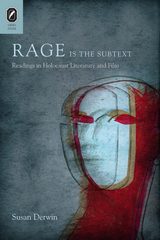
Rage Is the Subtext charts the internal shifts of Holocaust survivors who tell their stories of suffering, loss, and endurance. Susan Derwin locates the healing effect of literary testimony in its capacity to represent the reactions of survivors to traumatic experience, while concealing other more unsettling responses from view. Beneath the explicit concerns of works by Primo Levi, Saul Friedländer, Binjamin Wilkomirski, Imre Kertész and Liliana Cavani, Derwin uncovers unspoken reserves of rage, which then become legible as formal properties of the text.
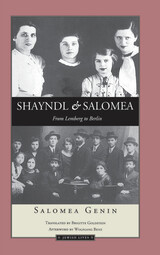
Genin's richly detailed portrait shows the effects of a family's struggle—personal, religious, social, and for their very survival—against the shadow of the Nazi rise to power.
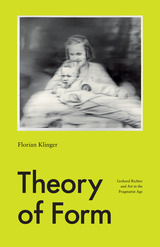
In this study of the practice of contemporary painter Gerhard Richter, Florian Klinger proposes a fundamental change in the way we think about art today. In reaction to the exhaustion of the modernist-postmodernist paradigm’s negotiation of the “essence of art,” he takes Richter to pursue a pragmatist model that understands artistic form as action. Here form is no longer conceived according to what it says—as a vehicle of expression, representation, or realization of something other than itself—but strictly according to what it does.
Through its doing, Klinger argues, artistic form is not only more real but also more shared than non-artistic reality, and thus enables interaction under conditions where it would otherwise not be possible. It is a human practice aimed at testing and transforming the limits of shared reality, urgently needed in situations where such reality breaks down or turns precarious. Drawing on pragmatist thought, philosophical aesthetics, and art history, Klinger’s account of Richter’s practice offers a highly distinctive conceptual alternative for contemporary art in general.
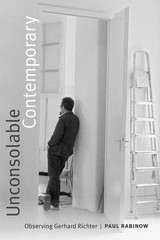
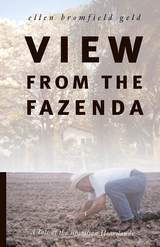
“I imagine everyone has a center of gravity,” says Ellen Bromfield Geld. “Something which binds one to the earth and gives sense and direction to what one does.” For Ellen, this center is a writing table before a window that looks out upon groves of pecan trees and mahogany-colored cattle in seas of grass. The place is Fazenda Pau D’Alho, Brazil, where she and her husband, Carson, have lived and farmed since 1961.
Healing the ravaged coffee plantation, rearing five children, exploring the outposts, the Gelds have created a dynamic yet peaceful life far from Ellen’s native Ohio. Their practice of sustainable agriculture, and Ellen’s plea for the preservation of Brazil’s remaining wilderness areas, reflect the legacy of her father, the novelist and farm visionary Louis Bromfield. Their shared vision is crystallized in her account of a cattle drive across the Pantanal, the vast flood plain on Brazil’s side of the Paraguay River. She describes a two-hundred year symbiosis between ranchers and a fragile ecosystem that is being threatened by development.
View from the Fazenda is distilled from fifty years of living in Brazil, weaving daily life on the farm into her quest to understand a nation. It portrays a true melting pot of people who—as conquerers, immigrants, or slaves, their blood and history mingled with those of native Indians—have created the character of Brazil. This huge, diverse county, living in several eras at the same time, is ever changing through its people’s amazing ability to “find a way.”
Ellen Bromfield Geld evokes the land and people of Brazil and offers readers an invigorating glimpse into a soulful life. “It seems to me that being a bit of a poet is perhaps the only way one can survive as a farmer,” she explains. “For in the end, more than anything, farming is a way of life you either love or become bitter enduring.”
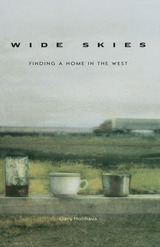
A true place in the world: how many people have looked for it and how many have finally found it in the American West? Here, with writer Gary Holthaus, readers will reflect upon their own sense of place as they travel the lands and enter the lives of people in small towns and on ranches all over the West from Utah to Oregon to Alaska. Farmers and merchants, writers and teachers, truckers and trappers: their stories ring with hope and fear as their wide-open spaces increasingly come under siege.
Here are reflections on a long journey, together with notes of a personal odyssey and a plea for preserving the West's natural beauty-its meadows and mountains, its bears and Golden Eagles, its antelope and wolverines. This is important, says Holthaus, because if the region is home for him and for others, too, then it is crucial for newcomers and old-timers alike not to "further foul a nest that is becoming increasingly crowded." As he finds his way and adjusts his eyes to modern realities of greed and indifference, he also comes to grips with loss and learns to balance "the harm one inevitably does" with acts of compassion and positive change.
Deep in the national consciousness, the mythical West of film and fiction continues to shape our vision of ourselves as Americans. This book is a view not from the media, not from think tanks or legislators or policy makers, but from Westerners themselves, who tell us about the circumstances of their lives. Their West is indisputably the real West, and only as we come to understand better its realities will we come to know ourselves both as individuals and as a nation.
READERS
Browse our collection.
PUBLISHERS
See BiblioVault's publisher services.
STUDENT SERVICES
Files for college accessibility offices.
RECENTLY PUBLISHED




UChicago Accessibility Resources
home | accessibility | search | about | contact us
BiblioVault ® 2001 - 2024
The University of Chicago Press