
 A SCHOLARLY BOOK REPOSITORY
Short-term, single-issue analyses of public policy, the authors contend, give a narrow and distorted view of public policy as the result of a cozy arrangement between politicians, interest groups, and the media. Baumgartner and Jones upset these notions by focusing on several issues—including civilian nuclear power, urban affairs, smoking, and auto safety—over a much longer period of time to reveal patterns of stability alternating with bursts of rapid, unpredictable change.
A welcome corrective to conventional political wisdom, Agendas and Instability revises our understanding of the dynamics of agenda-setting and clarifies a subject at the very center of the study of American politics.
When Agendas and Instability in American Politics appeared fifteen years ago, offering a profoundly original account of how policy issues rise and fall on the national agenda, the Journal of Politics predicted that it would “become a landmark study of public policy making and American politics.” That prediction proved true and, in this long-awaited second edition, Bryan Jones and Frank Baumgartner refine their influential argument and expand it to illuminate the workings of democracies beyond the United States.
The authors retain all the substance of their contention that short-term, single-issue analyses cast public policy too narrowly as the result of cozy and dependable arrangements among politicians, interest groups, and the media. Jones and Baumgartner provide a different interpretation by taking the long view of several issues—including nuclear energy, urban affairs, smoking, and auto safety—to demonstrate that bursts of rapid, unpredictable policy change punctuate the patterns of stability more frequently associated with government. Featuring a new introduction and two additional chapters, this updated edition ensures that their findings will remain a touchstone of policy studies for many years to come.
This stunningly persuasive book examines the persistent, radical gap between the promise of American ideals and the performance of American politics. Samuel P. Huntington shows how Americans, throughout their history as a nation, have been united by the democratic creed of liberty, equality, and hostility to authority. At the same time he reveals how, inevitably, these ideals have been perennially frustrated through the institutions and hierarchies required to carry on the essential functions of governing a democratic society.
From this antagonism between the ideals of democracy and the realities of power have risen four great political upheavals in American history. Every third generation, Huntington argues, Americans have tried to reconstruct their institutions to make them more truly reflect deeply rooted national ideals. Moving from the clenched fists and mass demonstrations of the 1960s, to the moral outrage of the Progressive and Jacksonian Eras, back to the creative ideological fervor of the American Revolution, he incisively analyzes the dissenters’ objectives. All, he pungently writes, sought to remove the fundamental disharmony between the reality of government in America and the ideals on which the American nation was founded.
Huntington predicts that the tension between ideals and institutions is likely to increase in this country in the future. And he reminds us that the fate of liberty and democracy abroad is intrinsically linked to the strength of our power in world affairs. This brilliant and controversial analysis deserves to rank alongside the works of Tocqueville, Bryce, and Hofstadter and will become a classic commentary on the meaning of America.

Once a keystone of the Democratic Party, American Catholics are today helping to put Republicans in office. This book traces changes in party allegiance and voting behavior of Catholics in national elections over the course of 150 years and explains why much of the voting bloc that supported John F. Kennedy has deserted the Democratic coalition.
William B. Prendergast analyzes the relationship between Catholics and the GOP from the 1840s to 1990s. He documents a developing attachment of Catholics to Republican candidates beginning early in this century and shows that, before Kennedy, Catholics helped elect Eisenhower, returned to the polls in support of Nixon and Reagan, and voted for a Republican Congress in 1994.
To account for this shifting allegiance, Prendergast analyzes transformations in the Catholic population, the parties, and the political environment. He attributes these changes to the Americanization of immigrants, the socioeconomic and educational advancement of Catholics, and the emergence of new issues. He also cites the growth of ecumenicism, the influence of Vatican II, the abatement of Catholic-Protestant hostility, and the decline of anti-Catholicism in the Republican party.
Clearly demonstrating a Catholic move toward political independence, Prendergast's work reveals both the realignment of voters and the influence of religious beliefs in the political arena. Provocative and informative, it confirms the opinion of pollsters that no candidate can take the vote of the largest and most diverse religious group in the nation for granted.

Despite the constitutional division of church and state, the impact of Catholics on American politics in the 1960s and 1970s has been remarkable--as the names of the Kennedys, Eugene McCarthy, Thomas "Tip" O'Neill, Peter Rodino, Thomas Eagleton, the Berrigan brothers, and Cesar Chavez will attest. In this portrait of American Catholicism, Mary Hanna intensely analyzes the political influence of this enormously complex organization. She focuses on the role of the Church in providing the means for an ethnic group to challenge and contribute to the values of the larger society.
Hanna recognizes that the Church is constantly striving to maintain a balance between changing social conditions and the principles of faith. In her analysis of the dynamics of this balance, she asks, for example, why the Church has had such influence on its members on the question of abortion, but has been somewhat less effective on questions relating to minority welfare. Interviews with working-class leaders in Catholic "ethnic" communities provide a new understanding of the complexities of Catholic feeling on these timely issues. Hanna's chapter on the subtleties of the abortion issue, as interpreted by church leaders, Catholic politicians, and the lay population, is a model of scholarship.
This study applies the methods of quantification, survey research, and interviewing to public policy, and yields unexpected results. For example, despite Catholics' stereotyped image as conservative and antiprogressive, Hanna shows that Catholic voters are very liberal on the subject of government's role in solving problems related to the general welfare-health care, the environment, education, crime, drug addiction. She also finds upward mobility in Catholics' education and especially their income. This work combines data from national surveys with personal interviews of clergymen and other Catholic public figures. Hanna's comprehensiveness, documentation, and innovation make this a searching analysis of contemporary American Catholicism.
Threats to American unity are not unique to modern times. In the 1960s, the assassination of President Kennedy, the tension of racial strife, the political extremes of the Radical Right with its John Birchers and the Radical Left with its threat of Communism all raised critically urgent questions relative to our national unity, to our political stability, and to our vaunted respect for the rule of law. The Challenges to Democracy is an assessment of the foundations of political unity in the United States.
The American consensus, as Murray Clark Havens defines it, emphasizes a set of values and procedures that most Americans, since the adoption of the Constitution, have accepted in principle: religious tolerance, individual freedom in intellectual and cultural matters, the importance of education and intellectual effort, settlement of internal conflict through peaceful and political processes, the supremacy of law, a high and generally rising standard of living, and, since the Civil War, racial compatibility.
Never in our history have the ideals of this consensus been fully achieved, but as long as the majority of our citizens accept the validity of those ideals and the democratic procedures for realizing them, the basic American political unity is not threatened. However, when citizens who cannot accept the elements of the American consensus become influential enough to block the democratic process, then that consensus is threatened.
Havens shows how such threats have come to us all through our history—the Civil War, racial and religious bigotry, the Ku Klux Klan, Huey Long, Father Coughlin and other extremists of the desperate thirties, McCarthyism. He discusses contemporary dangers to American unity such as those connected with the acceptance of the African American, religious friction in politics and government, the Radical Right and the Radical Left, and our foreign policy as an expression of the American consensus.
The broad conclusions of this study are that our national unity is continuously in jeopardy, with frequent recurrences of serious questions as to the permanence of some of the patterns we have always associated with American government, but that our democracy is possessed of considerable potential for survival because of our deep national commitment to democracy and because of our even deeper nationalism.
From the first rumblings of the Moral Majority over twenty years ago, the Christian Right has been marshalling its forces and maneuvering its troops in an effort to re-shape the landscape of American politics. It has fascinated social scientists and journalists as the first right-wing social movement in postwar America to achieve significant political and popular support, and it has repeatedly defied those who would step up to write its obituary. In 2000, while many touted the demise of the Christian Coalition, the broader undercurrents of the movement were instrumental in helping George W. Bush win the GOP nomination and the White House. Bush repaid that swell of support by choosing Senator John Ashcroft, once the movement's favored presidential candidate, as attorney general.
The Christian Right in American Politics, under the direction of three of the nation's leading scholars in the field of religion and politics, recognizing the movement as a force still to be reckoned with, undertakes the important task of making an historical analysis of the Christian Right in state politics during its heyday, 1980 to the millennium. Its twelve chapters, written by outstanding scholars, review the impact and influence of the Christian Right in those states where it has had its most significant presence: South Carolina, Virginia, Texas, Florida, Michigan, Iowa, Kansas, Minnesota, Colorado, California, Maine, and Oregon and Washington.
Since 1980, scholars have learned a good deal about the social characteristics, religious doctrine, and political beliefs of activists in and supporters of the Christian Right in these states, and each contribution is based on rigorous, dispassionate scholarship. The writers explore the gains and losses of the movement as it attempts to re-shape political landscapes. More precisely, they provide in-depth descriptions of the resources, organizations, and the group ecologies in which the Christian Right operates-the distinct elements that drove the movement forward.
As the editors state, "the Christian Right has been engaged in a long and torturous 'march toward the millennium,' from outsider status into the thick of American politics." Those formative years, 1980-2000, are essential for any understanding of this uniquely American social movement. This rigorous analysis over many states and many elections provides the clearest picture yet of the goals, tactics, and hopes of the Christian Right in America.
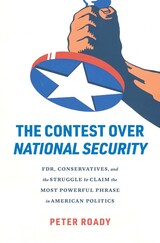
A new history shows how FDR developed a vision of national security focused not just on protecting Americans against physical attack but also on ensuring their economic well-being—and how the nascent conservative movement won the battle to narrow its meaning, durably reshaping US politics.
Americans take for granted that national security comprises physical defense against attacks. But the concept of national security once meant something more. Franklin Roosevelt’s vision for national security, Peter Roady argues, promised an alternate path for the United States by devoting as much attention to economic want as to foreign threats. The Contest over National Security shows how a burgeoning conservative movement and power-hungry foreign policy establishment together defeated FDR’s plans for a comprehensive national security state and inaugurated the narrower approach to national security that has dominated ever since.
In the 1930s, Roosevelt and his advisors, hoping to save the United States from fascism and communism, argued that national security entailed protection from both physical attack and economic want. Roosevelt’s opponents responded by promoting a more limited national security state privileging military defense over domestic economic policy. Conservatives brought numerous concerns to bear through an enormous public relations offensive, asserting not just that Roosevelt’s plans threatened individual freedom but also that the government was less competent than the private sector and incapable of delivering economic security.
This contest to define the government’s national security responsibilities in law and in the public mind, Roady reveals, explains why the United States developed separate and imbalanced national security and welfare states, with far-reaching consequences. By recovering FDR’s forgotten vision, Roady restores a more expansive understanding of national security’s meanings as Americans today face the great challenges of their times.
In this penetrating critical analysis of Louis Farrakhan's ascent to national influence, Robert Singh argues that the minister's rise to prominence is a function of race and reaction in contemporary America. Singh probes the origins and significance of Farrakhan in American politics.
Drawing on published and unpublished records, personal interviews, and Farrakhan's writings and speeches, Singh places Farrakhan expressly within the "paranoid style" of such reactionaries as Jesse Helms and Joseph McCarthy. Examining Farrakhan's biographical details, religious beliefs, political strategies, and relative influence, Singh argues that Farrakhan is an extreme conservative who exploits both black-white divisions and conflicts within the black community for personal advancement.
Singh proposes that Farrakhan's complex appeal to African-Americans is based on his ability to orchestrate the diffuse forces of African-American protest against the status quo. Paradoxically, says Singh, Farrakhan has achieved his position in part by positioning himself against most African-American political leaders, a tactic made possible by the extent to which black American politics now displays the same basic features as American politics in general. By stoking the fires of fear and hatred yet effecting no real changes, Farrakhan poses a greater threat to black Americans than to whites.
The Farrakhan Phenomenon is written in a clear, accessible style that will appeal to general readers concerned about race relations as well as to scholars of American history and politics. It reveals a shrewd opportunist who has capitalized on America's continuing failure to deal with its serious and abiding race problems.
Since the 1980s a distinctive suburban politics has emerged in the United States, Juliet F. Gainsborough argues in Fenced Off . As suburbs have become less economically and socially dependent on the central cities, suburban and urban dwellers have diverged not only in their voting patterns but also in their thinking about national politics. While political reporters have long noted this difference, few quantitative studies have been conducted on suburbanization alone—above and beyond race or class—as a political trend.
Using census and public opinion statistics, along with data on congressional districts and party platforms, Gainsborough demonstrates that this "ideology of localism" weakens when suburbs experience city-like problems and strengthens when racial and economic differences with the nearby city increase. In addition, Gainsborough uses national survey data from the 1950s to the 1990s to show that a separate suburban politics has arisen only during the last two decades.
Further, she argues, the political differences between urban and suburban voters have found expression in changes in congressional representation and new electoral strategies for the major political parties. As Congressional districts become increasingly suburban, "soccer moms" and liveability agendas come to dominate party platforms, and the needs of the urban poor disappear from political debate. Fenced Off uses the tools of political science to prove what political commentators have sensed—that the suburbs offer a powerful voting bloc that is being courted with sophisticated new strategies.
". . . a fresh and, on the whole, valid interpretation of American political life."—Reinhold Niebuhr, New Leader
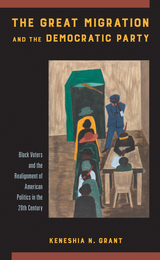
Where Black people live has long been an important determinant of their ability to participate in political processes. The Great Migration significantly changed the way Democratic Party elites interacted with Black communities in northern cities, Detroit, New York, and Chicago. Many white Democratic politicians came to believe the growing pool of Black voters could help them reach their electoral goals—and these politicians often changed their campaign strategies and positions to secure Black support. Furthermore, Black migrants were able to participate in politics because there were fewer barriers to Black political participations outside the South.
The Great Migration and the Democratic Party frames the Great Migration as an important economic and social event that also had serious political consequences. Keneshia Grant created one of the first listings of Black elected officials that classifies them based on their status as participants in the Great Migration. She also describes some of the policy/political concerns of the migrants. The Great Migration and the Democratic Party lays the groundwork for ways of thinking about the contemporary impact of Black migration on American politics.
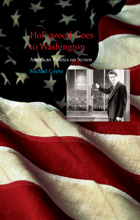
From conspiracy dramas such as The Manchurian Candidate to satires like Wag the Dog, Hollywood Goes to Washington argues that political films in American cinema have long reflected the issues and tensions roiling within American society. Coyne elucidates the mythology, iconography, and ideology embedded in both classic and lesser-known films—including Gabriel Over the White House, Silver City, Advise and Consent, and The Siege—and examines the cinematic portrayals of presidents in the White House, the everyman American citizen, and the nebulous enemies who threaten American democracy. The author provocatively contends that whether addressing the threat of domestic fascism in Citizen Kane or the disillusionment of Vietnam and paranoia of the post-Watergate era in Executive Action, the American political film stands as an important cultural bellwether and democratic force—one that is more vital than ever in the face of decreasing civil liberties in the present-day United States.
Compelling and wholly original, Hollywood Goes to Washington exposes the political power of the silver screen and its ramifications for contemporary American culture.
Intellectuals “have been both rallying points and railed against in American politics, vessels of hope and targets of scorn,” writes Michael J. Brown as he invigorates a recurrent debate in American life: Are intellectual public figures essential voices of knowledge and wisdom, or out-of-touch elites? Hope and Scorn investigates the role of high-profile experts and thinkers in American life and their ever-fluctuating relationship with the political and public spheres.
From Eisenhower’s era to Obama’s, the intellectual’s role in modern democracy has been up for debate. What makes an intellectual, and who can claim that privileged title? What are intellectuals’ obligations to society, and how, if at all, are their contributions compatible with democracy? For some, intellectuals were models of civic engagement. For others, the rise of the intellectual signaled the fall of the citizen. Carrying us through six key moments in this debate, Brown expertly untangles the shifting anxieties and aspirations for democracy in America in the second half of the twentieth century and beyond. Hope and Scorn begins with “egghead” politicians like Adlai Stevenson; profiles scholars like Richard Hofstadter and scholars-turned-politicians like H. Stuart Hughes; and ends with the rise of public intellectuals such as bell hooks and Cornel West. In clear and unburdened prose, Brown explicates issues of power, authority, political backlash, and more. Hope and Scorn is an essential guide to American concerns about intellectuals, their myriad shortcomings, and their formidable abilities.
In How the Tea Party Captured the GOP, Rachel Marie Blum approaches the Tea Party from the angle of party politics, explaining the Tea Party’s insurgent strategies as those of a party faction. Blum offers a novel theory of factions as miniature parties within parties, discussing how fringe groups can use factions to increase their political influence in the US two-party system. In this richly researched book, the author uncovers how the electoral losses of 2008 sparked disgruntled Republicans to form the Tea Party faction, and the strategies the Tea Party used to wage a systematic takeover of the Republican Party. This book not only illuminates how the Tea Party achieved its influence, but also provides a framework for identifying other factional insurgencies.
Legislative term limits adopted in the 1990s are in effect in fifteen states today. This reform is arguably the most significant institutional change in American government of recent decades. Most of the legislatures in these fifteen states have experienced a complete turnover of their membership; hundreds of experienced lawmakers have become ineligible for reelection, and their replacements must learn and perform their jobs in as few as six years.
Now that term limits have been in effect long enough for both their electoral and institutional effects to become apparent, their consequences can be gauged fully and with the benefit of hindsight. In the most comprehensive study of the subject, editors Kurtz, Cain, and Niemi and a team of experts offer their broad evaluation of the effects term limits have had on the national political landscape.
"The contributors to this excellent and comprehensive volume on legislative term limits come neither to praise the idea nor to bury it, but rather to speak dispassionately about its observed consequences. What they find is neither the horror story of inept legislators completely captive to strong governors and interest groups anticipated by the harshest critics, nor the idyll of renewed citizen democracy hypothesized by its more extreme advocates. Rather, effects have varied across states, mattering most in the states that were already most professionalized, but with countervailing factors mitigating against extreme consequences, such as a flight of former lower chamber members to the upper chamber that enhances legislative continuity. This book is must reading for anyone who wants to understand what happens to major institutional reforms after the dust has settled."
---Bernard Grofman, Professor of Political Science and Adjunct Professor of Economics, School of Social Sciences, University of California, Irvine
"A decade has passed since the first state legislators were term limited. The contributors to this volume, all well-regarded scholars, take full advantage of the distance afforded by this passage of time to explore new survey data on the institutional effects of term limits. Their book is the first major volume to exploit this superb opportunity."
---Peverill Squire, Professor, Department of Political Science, University of Iowa
Karl T. Kurtz is Director of the Trust for Representative Democracy at the National Conference of State Legislatures.
Bruce Cain is Heller Professor of Political Science and Director of the Institute of Governmental Studies at the University of California at Berkeley, and the Director of the University of California Washington Center.
Richard G. Niemi is Don Alonzo Watson Professor of Political Science at the University of Rochester.

Interest and Institutions is a collection of essays written by distinguished political scientist Robert Salsibury, a leading analyst of interest group politics. He offers his theories on the workings and influence of groups, organizations, and individuals in many different areas of American politics.
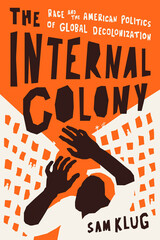
In The Internal Colony, Sam Klug reveals the central but underappreciated importance of global decolonization to the divergence between mainstream liberalism and the Black freedom movement in postwar America. Klug reconsiders what has long been seen as a matter of primarily domestic policy in light of a series of debates concerning self-determination, postcolonial economic development, and the meanings of colonialism and decolonization. These debates deeply influenced the discord between Black activists and state policymakers and formed a crucial dividing line in national politics in the 1960s and 1970s.
The result is a history that broadens our understanding of ideological formation—particularly how Americans conceptualized racial power and political economy—by revealing a much wider and more dynamic network of influences. Linking intellectual, political, and social movement history, The Internal Colony illuminates how global decolonization transformed the terms of debate over race and social class in the twentieth-century United States.
With Legacies of Losing in American Politics, Jeffrey K. Tulis and Nicole Mellow rethink three pivotal moments in American political history: the founding, when anti-Federalists failed to stop the ratification of the Constitution; the aftermath of the Civil War, when President Andrew Johnson’s plan for restoring the South to the Union was defeated; and the 1964 presidential campaign, when Barry Goldwater’s challenge to the New Deal order was soundly defeated by Lyndon B. Johnson. In each of these cases, the very mechanisms that caused the initial failures facilitated their eventual success. After the dust of the immediate political defeat settled, these seemingly discredited ideas and programs disrupted political convention by prevailing, often subverting, and occasionally enhancing constitutional fidelity. Tulis and Mellow present a nuanced story of winning and losing and offer a new understanding of American political development as the interweaving of opposing ideas.
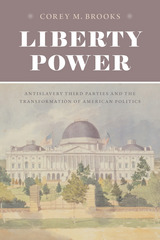
As Corey M. Brooks explains, abolitionist trailblazers who organized first the Liberty Party and later the more moderate Free Soil Party confronted formidable opposition from a two-party system expressly constructed to suppress disputes over slavery. Identifying the Whigs and Democrats as the mainstays of the southern Slave Power’s national supremacy, savvy abolitionists insisted that only a party independent of slaveholder influence could wrest the federal government from its grip. A series of shrewd electoral, lobbying, and legislative tactics enabled these antislavery third parties to wield influence far beyond their numbers. In the process, these parties transformed the national political debate and laid the groundwork for the success of the Republican Party and the end of American slavery.
A 2008 New York Times Notable Book of the Year
It happens in America every four decades and it is about to happen again. America’s demand for change in the 2008 election will cause another of our country’s periodic political makeovers. This realignment, like all others before it, will result from the coming of age of a new generation of young Americans—the Millennial Generation—and the full emergence of the Internet-based communications technology that this generation uses so well. Beginning in 2008, almost everything about American politics and government will transform—voting patterns, the fortunes of the two political parties, the issues that engage the nation, and our government and its public policy.
Building on the seminal work of previous generational theorists,Morley Winograd and Michael D. Hais demonstrate and describe, for the first time, the two types of realignments—“idealist” and “civic”—that have alternated with one another throughout the nation’s history. Based on these patterns, Winograd and Hais predict that the next realignment will be very different from the last one that occurred in 1968. “Idealist” realignments, like the one put into motion forty years ago by the Baby Boomer Generation, produce, among other things, a political emphasis on divisive social issues and governmental gridlock. “Civic” realignments, like the one that is coming, and the one produced by the famous GI or “Greatest” Generation in the 1930s, by contrast, tend to produce societal unity, increased attention to and successful resolution of basic economic and foreign policy issues, and institution-building.
The authors detail the contours and causes of the country’s five previous political makeovers, before delving deeply into the generational and technological trends that will shape the next. The book’s final section forecasts the impact of the Millennial Makeover on the elections, issues, and public policies that will characterize America’s politics in the decades ahead.
For additional information go to:
Millennial Makeover website.
A 2008 New York Times Notable Book of the Year
It happens in America every four decades and it is about to happen again. America’s demand for change in the 2008 election will cause another of our country’s periodic political makeovers. This realignment, like all others before it, will result from the coming of age of a new generation of young Americans—the Millennial Generation—and the full emergence of the Internet-based communications technology that this generation uses so well. Beginning in 2008, almost everything about American politics and government will transform—voting patterns, the fortunes of the two political parties, the issues that engage the nation, and our government and its public policy.
Building on the seminal work of previous generational theorists,Morley Winograd and Michael D. Hais demonstrate and describe, for the first time, the two types of realignments—“idealist” and “civic”—that have alternated with one another throughout the nation’s history. Based on these patterns, Winograd and Hais predict that the next realignment will be very different from the last one that occurred in 1968. “Idealist” realignments, like the one put into motion forty years ago by the Baby Boomer Generation, produce, among other things, a political emphasis on divisive social issues and governmental gridlock. “Civic” realignments, like the one that is coming, and the one produced by the famous GI or “Greatest” Generation in the 1930s, by contrast, tend to produce societal unity, increased attention to and successful resolution of basic economic and foreign policy issues, and institution-building.
The authors detail the contours and causes of the country’s five previous political makeovers, before delving deeply into the generational and technological trends that will shape the next. The book’s final section forecasts the impact of the Millennial Makeover on the elections, issues, and public policies that will characterize America’s politics in the decades ahead.
For additional information go to:
Millennial Makeover website.
Nature’s Burdens is a political and intellectual history of American natural resource conservation from the 1980s into the twenty-first century—a period of intense political turmoil, shifting priorities among federal policymakers, and changing ideas about the goals of conservation. Telling a story of persistent activism, conflict, and frustration but also of striking achievement, it is an account of how new ideas and policies regarding human relationships to plants, animals, and their surroundings have become vital features of modern environmentalism.
In the 1960s and 1970s, Congress embraced the largely dormant movement to preserve distinctive landscapes and the growing demand for outdoor recreation, establishing an unprecedented number of parks, monuments, and recreation areas. The election of Ronald Reagan and a shift to a Republican-controlled Senate brought this activity to an abrupt halt and introduced a period of intense partisanship and legislative gridlock that extends to the present. In this political climate, three developments largely defined the role of conservation in contemporary society: environmental organizations have struggled to defend the legal status quo, private land conservation has become increasingly important, and the emergence of potent scientific voices has promoted the protection of animals and plants and injected a new sense of urgency into the larger cause.
These developments mark this period as a distinctive and important chapter in the history of American conservation. Scrupulously researched, scientifically and politically well informed, concise, and accessibly written, Nature’s Burdens is the most comprehensive examination of recent efforts to protect and enhance the natural world. It will be of interest to environmental historians, environmental activists, and any general reader interested in conservation.
"The distinguishing thing about the paranoid style is not that its exponents see conspiracies or plots here and there in history, but that they regard a 'vast' or 'gigantic' conspiracy as the motive force in historical events...The paranoid spokesman sees the fate of this conspiracy in apocalyptic terms--he traffics in the birth and death of whole worlds, whole political orders, whole systems of human values. He is always manning the barricades of civilization."
--From the book
A provocative exploration of how America’s democratic crisis is rooted in a dangerous mismatch between our Constitution and today’s nationalized, partisan politics.
The ground beneath American political institutions has moved, with national politics subsuming and transforming the local. As a result, American democracy is in trouble.
In this paradigm-shifting book, political scientists Paul Pierson and Eric Schickler bring a sharp new perspective to today’s challenges. Attentive to the different coalitions, interests, and incentives that define the Democratic and Republican parties, they show how contemporary polarization emerged in a rapidly nationalizing country and how it differs from polarization in past eras. In earlier periods, three key features of the political landscape—state parties, interest groups, and media—varied locally and reinforced the nation’s stark regional diversity. But this began to change in the 1960s as the two parties assumed clearer ideological identities and the power of the national government expanded, raising the stakes of conflict. Together with technological and economic change, these developments have reconfigured state parties, interest groups, and media in self-reinforcing ways. The result is that today’s polarization is self-perpetuating—and intensifying.
Partisan Nation offers a powerful caution. As a result of this polarization, America’s political system is distinctly and acutely vulnerable to an authoritarian movement emerging in the contemporary Republican Party, which has both the motive and the means to exploit America’s unusual Constitutional design. Combining the precision and acuity characteristic of their earlier work, Pierson and Schickler explain what these developments mean for American governance and democracy.
Contradicting the conventional political wisdom of the 1970s, which said state political parties were dormant and verging upon extinction, this book reveals that state party organizations actually grew stronger in the 1960s and 1970s.
Reprinted with a new preface that covers changes in the 1980s in electoral politics, Party Organizations in American Politics encourages a reappraisal of scholarly treatment of party organization in political science.
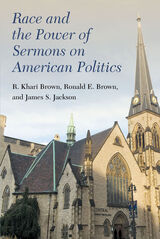
This book examines the intersection of race, political sermons, and social justice. Religious leaders and congregants who discuss and encourage others to do social justice embrace a form of civil religion that falls close to the covenantal wing of American civil religious thought. Clergy and members who share this theological outlook frame the nation as being exceptional in God’s sight. They also emphasize that the nation’s special relationship with the Creator is contingent on the nation working toward providing opportunities for socioeconomic well-being, freedom, and creative pursuits. God’s covenant, thus, requires inclusion of people who may have different life experiences but who, nonetheless, are equally valued by God and worthy of dignity. Adherents to such a civil religious worldview would believe it right to care for and be in solidarity with the poor and powerless, even if they are undocumented immigrants, people living in non-democratic and non-capitalist nations, or members of racial or cultural out-groups. Relying on 44 national and regional surveys conducted between 1941 and 2019, Race and the Power of Sermons on American Politics explores how racial experiences impact the degree to which religion informs social justice attitudes and political behavior. This is the most comprehensive set of analyses of publicly available survey data on this topic.
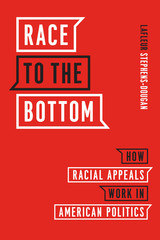
Challenging what we think we know about race and politics, LaFleur Stephens-Dougan argues that candidates across the racial and political spectrum engage in “racial distancing,” or using negative racial appeals to communicate to racially moderate and conservative whites—the overwhelming majority of whites—that they will not disrupt the racial status quo. Race to the Bottom closely examines empirical data on racialized partisan stereotypes to show that engaging in racial distancing through political platforms that do not address the needs of nonwhite communities and charged rhetoric that targets African Americans, immigrants, and others can be politically advantageous. Racialized communication persists as a well-worn campaign strategy because it has real electoral value for both white and black politicians seeking to broaden their coalitions. Stephens-Dougan reveals that claims of racial progress have been overstated as our politicians are incentivized to employ racial prejudices at the expense of the most marginalized in our society.
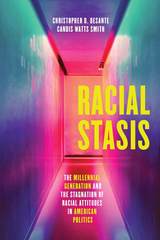
With Racial Stasis, Christopher D. DeSante and Candis Watts Smith argue persuasively that this is because millennials, a generational cohort far removed from Jim Crow and the Civil Rights era, lack sufficient understanding of the structural nature of racial inequalities in the United States and therefore also the contextual and historical knowledge to be actively anti-racist. While these younger whites may be open to the idea of interracial marriage or living next to a family of a different race, they often do not understand why policies like affirmative action still need to exist and are weary about supporting these kinds of policies. In short, although millennials’ language and rationale around race, racism, and racial inequalities are different from previous generations’, the end result is the same.

This book is an attempt to make sense out of Ronald Reagan by linking him to various grassroots dimensions of American popular mythology and mind. It attempts to utilize a variety of sources from American and popular culture studies, works on Reagan, and popular materials such as movies to offer an interpretation of reagan as an exemplar of the political relevance and power of popular culture.
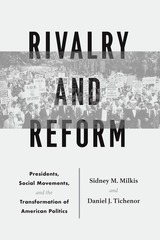
Rivalry and Reform explores the relationship between presidents and social movements throughout history and into the present day, revealing the patterns that emerge from the epic battles and uneasy partnerships that have profoundly shaped reform. Through a series of case studies, including Abraham Lincoln and abolitionism, Lyndon Johnson and the civil rights movement, and Ronald Reagan and the religious right, Sidney M. Milkis and Daniel J. Tichenor argue persuasively that major political change usually reflects neither a top-down nor bottom-up strategy but a crucial interplay between the two. Savvy leaders, the authors show, use social movements to support their policy goals. At the same time, the most successful social movements target the president as either a source of powerful support or the center of opposition. The book concludes with a consideration of Barack Obama’s approach to contemporary social movements such as Black Lives Matter, United We Dream, and Marriage Equality.
Democracy is, by its very nature, often rude. But there are limits to how uncivil we should be. In her timely and important book, Rude Democracy, Susan Herbst explores the ways we discuss public policy, how we treat each other as we do, and how we can create a more civil national culture.
Herbst uses the examples of Sarah Palin and Barack Obama to illustrate her case. She scrutinizes Palin as both victim and perpetrator of incivility, including close analysis of her speeches on the 2008 campaign trail, the tone at her rallies, and her interactions with her audience. Turning to Barack Obama, Herbst argues that a key 2009 speech reveals much about his own perspective on American civility as it pertains to contentious issues such as abortion, and notes, too, what the controversy surrounding the speech reveals about the nature of public opinion in the United States. She also dissects Palin’s and Obama’s roles in the 2009 health care debate. Finally, in a fascinating chapter, Herbst examines how young people come to form their own attitudes about civility and political argument.
In Rude Democracy, Susan Herbst insists that Americans need to recognize the bad tendencies and habits we have developed, use new media for more effective debate, and develop a tougher and more strategic political skin. She urges us to boost both the intelligence and productivity of our debates, noting that the effort demands a commitment to the nature of argument itself. Rude Democracy outlines a plan for moving forward and creating a more civil climate for American politics.
Mark A. Smith provocatively argues that religion is not nearly the unchanging conservative influence in American politics that we have come to think it is. In fact, in the long run, religion is best understood as responding to changing political and cultural values rather than shaping them. Smith makes his case by charting five contentious issues in America’s history: slavery, divorce, homosexuality, abortion, and women’s rights. For each, he shows how the political views of even the most conservative Christians evolved in the same direction as the rest of society—perhaps not as swiftly, but always on the same arc. During periods of cultural transition, Christian leaders do resist prevailing values and behaviors, but those same leaders inevitably acquiesce—often by reinterpreting the Bible—if their positions become no longer tenable. Secular ideas and influences thereby shape the ways Christians read and interpret their scriptures.
So powerful are the cultural and societal norms surrounding us that Christians in America today hold more in common morally and politically with their atheist neighbors than with the Christians of earlier centuries. In fact, the strongest predictors of people’s moral beliefs are not their religious commitments or lack thereof but rather when and where they were born. A thoroughly researched and ultimately hopeful book on the prospects for political harmony, Secular Faith demonstrates how, over the long run, boundaries of secular and religious cultures converge.
Politics may be the art of compromise, but accepting a compromise can be hazardous to a politician’s health. Politicians worry about betraying faithful supporters, about losing the upper hand on an issue before the next election, that accepting half a loaf today can make it harder to get the whole loaf tomorrow. In his original interpretation of competition between parties and between Congress and the president, Gilmour explains the strategies available to politicians who prefer to disagree and uncovers the lost opportunities to pass important legislation that result from this disagreement.
Strategic Disagreement, theoretically solid and rich in evidence, will enlighten Washington observers frustrated by the politics of gridlock and will engage students interested in organizational theory, political parties, and divided government.

In the spring of 1916, as the workers for woman suffrage were laying plans for another attack on the bastions of male supremacy, the idea for The Sturdy Oak was born. Based on the rules of an old parlor game, wherein one person begins a narrative, another continues it, and another follows, this collaborative effort by the leading writers of the day, such as Fannie Hurst, Dorothy Canfield, and Kathleen Norris, is a satiric look at the gender roles of the time.
There is much in The Sturdy Oak that reflects the New York campaign for suffrage of 1916–1917. The setting is the fictional city of Whitewater in upstate New York. Idealistic reformers are pitted against a ruthless political machine, and the traditional picture of man as “the sturdy oak” supporting woman, “the clinging vine,” is ridiculed in the portrayal of an engaging couple, George and Genevieve Remington. Nonetheless, the purpose of the book is not primarily ridicule but reform, and the reader is taken through the steps by which a confirmed anti-suffragist is gradually transformed into a supporter of the suffrage cause.
Beyond its historical interest, The Sturdy Oak is imbued with a political and social currency that makes it applicable even today. And because of the skill of the writers of this composite novel, even eight decades after its initial publication The Sturdy Oak is still, as the New York Times said in 1917, “irresistibly readable.”
Since the end of World War II, runaway fears of Soviet imperialism, global terrorism, and anarchy have tended to drive American foreign policy toward an imperial agenda. At the same time, uncurbed appetites have wasted the environment and driven the country’s market economy into the ditch. How can we best sustain our identity as a people and resist the distortions of our current anxieties and appetites?
Ethicist William F. May draws on America’s religious and political history and examines two concepts at play in the founding of the country—contractual and covenantal. He contends that the biblical idea of a covenant offers a more promising way than the language of contract, grounded in self-interest alone, to contain our runaway anxieties and appetites. A covenantal sensibility affirms, “We the people (not simply, We the individuals, or We the interest groups) of the United States.” It presupposes a history of mutual giving and receiving and of bearing with one another that undergirds all the traffic in buying and selling, arguing and negotiating, that obtain in the rough terrain of politics. May closes with an account of the covenantal agenda ahead, and concludes with the vexing issue of immigrants and undocumented workers that has singularly tested the covenant of this immigrant nation.
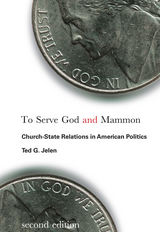
Newly revised and updated, To Serve God and Mammon is a classic in the field of religion and politics that provides an unbiased introduction and overview of church–state relations in the United States.
Jelen begins by exploring the inherent tension between the Establishment and Free Exercise clauses of the First Amendment. He then examines how different actors in American politics (e.g., the courts, Congress, the president, ordinary citizens) have different and conflicting values that affect their attitudes and actions toward the relationship between the sacred and the secular. Finally, he discusses how the fragmented nature of political authority in the United States provides the basis for continuing conflict concerning church–state relations.
This second edition includes analyses of various recent court cases and the implications of living in the post–9/11 era. It also features discussion questions at the end of each chapter, a glossary of terms, and synopses of selected court decisions bearing on religion and politics in the United States.
This book confirms Alexis de Tocqueville’s idea, dating back a century and a half, that American democracy is rooted in civil society. Citizens’ involvement in family, school, work, voluntary associations, and religion has a significant impact on their participation as voters, campaigners, donors, community activists, and protesters.
The authors focus on the central issues of involvement: how people come to be active and the issues they raise when they do. They find fascinating differences along cultural lines, among African-Americans, Latinos, and Anglo-Whites, as well as between the religiously observant and the secular. They observe family activism moving from generation to generation, and they look into the special role of issues that elicit involvement, including abortion rights and social welfare.
This far-reaching analysis, based on an original survey of 15,000 individuals, including 2,500 long personal interviews, shows that some individuals have a greater voice in politics than others, and that this inequality results not just from varying inclinations toward activity, but also from unequal access to vital resources such as education. Citizens’ voices are especially unequal when participation depends on contributions of money rather than contributions of time. This deeply researched study brilliantly illuminates the many facets of civic consciousness and action and confirms their quintessential role in American democracy.
Runner-up in both the John H. Dunning Prize and Albert J. Beveridge Award competitions
READERS
Browse our collection.
PUBLISHERS
See BiblioVault's publisher services.
STUDENT SERVICES
Files for college accessibility offices.
RECENTLY PUBLISHED




UChicago Accessibility Resources
home | accessibility | search | about | contact us
BiblioVault ® 2001 - 2024
The University of Chicago Press