
 A SCHOLARLY BOOK REPOSITORY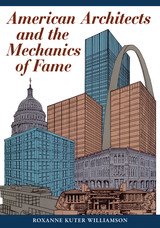
Why does one talented individual win lasting recognition in a particular field, while another equally talented person does not? While there are many possible reasons, one obvious answer is that something more than talent is requisite to produce fame. The "something more" in the field of architecture, asserts Roxanne Williamson, is the association with a "famous" architect at the moment he or she first receives major publicity or designs the building for which he or she will eventually be celebrated.
In this study of more than six hundred American architects who have achieved a place in architectural histories, Williamson finds that only a small minority do not fit the "right person–right time" pattern. She traces the apprenticeship connection in case studies of Louis Sullivan, Frank Lloyd Wright, Henry Hobson Richardson, the firm of McKim, Mead & White, Latrobe and his descendants, the Bulfinch and Renwick Lines, the European immigrant masters, and Louis Kahn.
Although she acknowledges and discusses the importance of family connections, the right schools, self-promotion, scholarships, design competition awards, and promotion by important journals, Williamson maintains that the apprenticeship connection is the single most important predictor of architectural fame. She offers the intriguing hypothesis that what is transferred in the relationship is not a particular style or approach but rather the courage and self-confidence to be true to one's own vision. Perhaps, she says, this is the case in all the arts.
American Architects and the Mechanics of Fame is sure to provoke thought and comment in architecture and other creative fields.
In this well-illustrated volume, a chronological sequel to American Architects and Their Books to 1848, twelve distinguished historians of architecture discuss from various points of view the books that inspired architects both famous and not-so-famous, and the books the architects themselves produced. They examine the multifaceted relationship of nineteenth- and early twentieth-century architects to print culture—the literary works that architects collected, used, argued over, wrote, illustrated, designed, printed, were inspired by, cribbed from, educated clients with, advertised their services through, designed libraries for, or just plain enjoyed. The result is a volume that presents the intersection of the history of architecture, the history of ideas, and the history of the book. Changes in print culture during this period had a significant impact on the architectural profession, as revealed in these well-informed scholarly essays.
In addition to the editors, contributors include Jhennifer A. Amundson, Edward R. Bosley, Ted Cavanagh, Elspeth Cowell, Elaine Harrington, Michael J. Lewis, Anne E. Mallek, Daniel D. Reiff, Earle G. Shettleworth, Jr., and Chris Szczesny-Adams. Among the architects discussed are A. J. Downing, Charles Sumner Greene, James Sims, Samuel Sloan, John Calvin Stevens, Thomas U. Walter, and Frank Lloyd Wright.
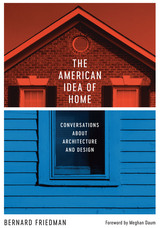
“Home is an idea,” Meghan Daum writes in her foreword, “a story we tell ourselves about who we are and who and what we want closest in our midst.” In The American Idea of Home, documentary filmmaker Bernard Friedman interviews more than thirty leaders in the field of architecture about a constellation of ideas relating to housing and home. The interviewees include Pritzker Prize winners Thom Mayne, Richard Meier, and Robert Venturi; Pulitzer Prize winners Paul Goldberger and Tracy Kidder; American Institute of Architects head Robert Ivy; and legendary architects such as Denise Scott Brown, Charles Gwathmey, Kenneth Frampton, and Robert A. M. Stern.
The American idea of home and the many types of housing that embody it launch lively, wide-ranging conversations about some of the most vital and important issues in architecture today. The topics that Friedman and his interviewees discuss illuminate five overarching themes: the functions and meanings of home; history, tradition, and change in residential architecture; activism, sustainability, and the environment; cities, suburbs, and regions; and technology, innovation, and materials. Friedman frames the interviews with an extended introduction that highlights these themes and helps readers appreciate the common concerns that underlie projects as disparate as Katrina cottages and Frank Lloyd Wright Usonian houses. Readers will come away from these thought-provoking interviews with an enhanced awareness of the “under the hood” kinds of design decisions that fundamentally shape our ideas of home and the dwellings in which we live.

Chicago has always held a special fascination for those interested in architectural and urban history. For many, the defining moment occurred at the turn of the century when Chicago was booming and the world came to the city by the lake. But the story most often told in architectural history—the tale of single creative geniuses like Frank Lloyd Wright and Louis Sullivan—does little to explain the birth of the everyday modern city, with its high-rise downtown, diverse neighborhoods, and sprawling suburbs. This book connects architectural history with urban history by looking at the work of a major architectural firm, Holabird & Roche. No firm in any large American city had a greater impact.
With projects that ranged from tombstones to skyscrapers, boiler rooms to entire industrial complexes, Holabird & Roche left an indelible stamp on the city of Chicago and, indeed, far beyond. In this volume, the first of two on Holabird & Roche and its successor, Holabird & Root, Robert Bruegmann traces the firm’s history from its founding in 1880 to the end of the First World War. Incorporating meticulous research based on the extensive architectural holdings of the Chicago Historical Society, Bruegmann documents the firm’s work from the boom years of the 1880s through the period of sustained growth and innovation after the turn of the century. In chapters devoted to topics as diverse as downtown commercial and retail development, business hotels, civic buildings, automobile showrooms, and suburban clubs and housing, Bruegmann creates a sustained historical narrative that considers the profound interdependence of architecture and modern urban life.

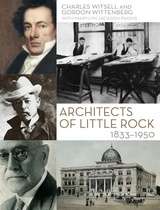
Published in collaboration with the Fay Jones School of Architecture.
We are now living in the richest age of public memory. From museums and memorials to the vast digital infrastructure of the internet, access to the past is only a click away. Even so, the methods and technologies created by scientists, espionage agencies, and information management coders and programmers have drastically delimited the ways that communities across the globe remember and forget our wealth of retrievable knowledge.
In Architects of Memory: Information and Rhetoric in a Networked Archival Age, Nathan R. Johnson charts turning points where concepts of memory became durable in new computational technologies and modern memory infrastructures took hold. He works through both familiar and esoteric memory technologies—from the card catalog to the book cart to Zatocoding and keyword indexing—as he delineates histories of librarianship and information science and provides a working vocabulary for understanding rhetoric’s role in contemporary memory practices.
This volume draws upon the twin concepts of memory infrastructure and mnemonic technê to illuminate the seemingly opaque wall of mundane algorithmic techniques that determine what is worth remembering and what should be forgotten. Each chapter highlights a conflict in the development of twentieth-century librarianship and its rapidly evolving competitor, the discipline of information science. As these two disciplines progressed, they contributed practical techniques and technologies for making sense of explosive scientific advancement in the wake of World War II. Taming postwar science became part and parcel of practices and information technologies that undergird uncountable modern communication systems, including search engines, algorithms, and databases for nearly every national clearinghouse of the twenty-first century.
Francesco Borromini is one of the great geniuses of Baroque architecture, perhaps the greatest in inventiveness and in use of spatial effects. Here is the first book in English to survey the whole work of the master. The author, former Director of the Courtauld Institute of Art, is known internationally for his many works on French and Italian architecture and painting.
In this lucid and fully illustrated account, Anthony Blunt charts Borromini’s career and analyzes and assesses his art. Mr. Blunt tells of Borromini’s training, relating his style to that of Bernini, under whom he worked, and to the architecture from which he learned, for example Michelangelo’s. Borromini’s patrons allowed him freedom to evolve his own ideas, and his originality and imagination in inventing new architectural forms become apparent as the author studies individual commissions. His imagination was apparently limitless, but his inventions evolved in terms of rigidly controlled geometry. It is this combination of revolutionary inventiveness and intellectual control that gives Borromini’s work particular appeal in the twentieth century.
Praise for the previous edition:
“In order to acquaint a new generation with Fuller, his former architectural partner, Zung, gathers selections [from Fuller’s writings] on topics ranging from education and environment to engineering and the Lord’s Prayer. Admirers of Fuller—such as actress Valerie Harper, author Arthur C. Clarke, and entrepreneur Steve Forbes—introduce each selection. Zung’s anthology traces the development of Fuller’s intellectual life and provides an excellent introduction for a new generation to the life and work of this brilliant thinker.”—Publishers Weekly
“Stimulating and provocative. . . . Like a Francis Bacon charting the course for future generations to pursue, Fuller anticipates the need for the ‘comprehensive designer,’ who would be a ‘synthesis of artist, inventor, mechanic, objective economist, and evolutionary strategist.’ Such a [person], he says, would be an initiator of design, able to anticipate all of man’s needs and provide new and advanced standards of living for a steadily increasing percentage of the world’s population.”—Chicago Tribune
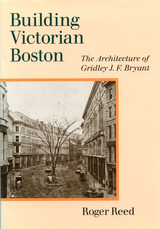
In Building Victorian Boston, Roger Reed focuses on representative projects by Bryant, presenting them in a chronological narrative that both illuminates the trajectory of his career and creates a portrait of the profession of architecture during a defining period of New England history. Bryant designed more major buildings in Boston from 1840 to 1880 than any other architect. He also undertook commissions throughout New
England, especially in towns linked to Boston by newly constructed railroad lines. In many ways, his practice presaged aspects of modern architectural firms. His ability to work with a variety of designers, his expertise in construction management, and his exceptional talent for self-promotion all contributed to his success. Although by the time of his death his work was no longer fashionable, newspaper accounts noted the passing of the "Famed Bostonian" and "Great Builder" whose career had had such a dramatic impact on the face of the city.
For this volume, Reed has tracked down hundreds of Bryant's drawings as well as specifications, letters, newspaper articles, published renderings, and historical photographs. These materials are amply represented in this book, the definitive study of a quintessential Victorian architect.
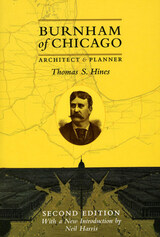
“In every sense this is the definitive biography.”—Harry Weese, Chicago Tribune
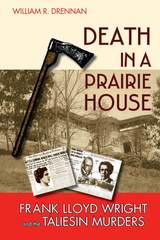
In response to the scandal generated by his open affair with the proto-feminist and free love advocate Mamah Borthwick Cheney, Wright had begun to build Taliesin as a refuge and "love cottage" for himself and his mistress (both married at the time to others).
Conceived as the apotheosis of Wright’s prairie house style, the original Taliesin would stand in all its isolated glory for only a few months before the bloody slayings that rocked the nation and reduced the structure itself to a smoking hull.
Supplying both a gripping mystery story and an authoritative portrait of the artist as a young man, Drennan wades through the myths surrounding Wright and the massacre, casting fresh light on the formulation of Wright’s architectural ideology and the cataclysmic effects that the Taliesin murders exerted on the fabled architect and on his subsequent designs.
McCarter examines here how Wright aspired to influence America’s evolving democratic society by the challenges his buildings posed to traditional views of private and public space. He investigates Wright’s relationships with key leaders of art, industry, and society, and how their views came to have concrete significance in Wright’s work and writings. Wright argued that architecture should be the “background or framework” for daily life, not the “object,” and McCarter dissects how and why he aspired to this and other ideals, such as his belief in the ethical duty of architects to improve society and culture.
A penetrating study of the foremost pioneer in modern architecture, Frank Lloyd Wright offers a fascinating biographical chronicle that reveals the principles and relationships at the base of Wright’s production.
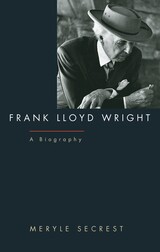
"Secrest seizes the themes most evocative of certain of our cultural myths, forging them into a coherent and emotionally plausible narrative."—New Republic
"An engaging narrative."—New York Times Book Review
"The real triumph of this biography . . . is the link it makes between Frank Lloyd Wright's personal life and his architecture."—The Economist
"Secrest's achievement is to etch Wright's character in sharp relief. . . . [She] presents Wright in his every guise."-Blair Kamin, Chicago Tribune
"An extremely engaging profile."—The Philadelphia Inquirer
"A spellbinding portrait."—Library Journal
"The best [biography] so far, a huge and definitive accumulation of fact."—Time
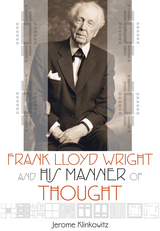
Klinkowitz presents a critical biography driven by the architect's own work and intellectual growth, focusing on the evolution of Wright's thinking and writings from his first public addresses in 1894 to his last essay in 1959. Did Wright reject all of Victorian thinking about the home, or do his attentions to a minister's sermon on "the house beautiful" deserve closer attention? Was Wright echoing the Transcendentalism of Ralph Waldo Emerson, or was he more in step with the philosophy of William James? Did he reject the Arts and Crafts movement, or repurpose its beliefs and practices for new times? And, what can be said of his deep dissatisfaction with architectural concepts of his own era, the dominant modernism that became the International Style? Even the strongest advocates of Frank Lloyd Wright have been puzzled by his objections to so much that characterized the twentieth century, from ideas for building to styles of living.
In Frank Lloyd Wright and His Manner of Thought, Klinkowitz, a widely published authority on twentieth-century literature, thought, and culture, examines the full extent of Wright's books, essays, and lectures to show how he emerged from the nineteenth century to anticipate the twenty-first.
Outstanding Book, selected by the American Association of School Librarians
Best Books for General Audiences, selected by the Public Library Reviewers
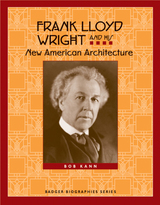
From boyhood adventures to the creation of visionary buildings like the Guggenheim Museum, Frank Lloyd Wright and His New American Architecture chronicles the vibrant life of one of the world's most famous architects.
Wright's love of architecture was nurtured early on-from paintings of European cathedrals hung in his childhood room; to "Froebel Gifts" building blocks, which he crafted into crude structures; to long walks near the Wisconsin River, where his mother pointed out patterns and colors in nature. Wright also learned, from summers spent on his uncle's Spring Green farm, that adversity is part of life. And perhaps this helped him weather a life beset with both tragedy and triumph.
Wright's prolific career spanned more than 70 years, and he created more than 1,100 designs. Author Bob Kann brings readers into the eccentric stories behind some of Wright's landmark buildings. Find out about Wright's Oak Park home, known to locals as "the house with a tree growing through it;" the Robie House, which is shaped like a battleship; and Fallingwater, which is built on a waterfall. Learn how Wright successfully built the Imperial Hotel in Tokyo to withstand earthquakes, and how the Johnson Wax Building and Guggenheim Museum set new standards in institutional architecture.
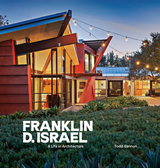
Acclaimed Los Angeles architect Franklin D. Israel (1945–1996) created innovative residential projects and office interiors that made him one of the most talked-about designers of his generation. In this vivid account, architectural historian Todd Gannon draws on archival resources, analyses of Israel’s buildings, and recent interviews with the architect’s colleagues, clients, and contemporaries, including Frank Gehry, Thom Mayne, and Robert A. M. Stern. Gannon traces Israel’s development from his early years and career on the East Coast to his formative world travels and residence at the American Academy in Rome. The author guides readers through the Los Angeles architectural context, Israel’s influential teaching at UCLA, his dalliance with Hollywood, and the personal motivations behind his architecture and design work—all aspects of an influential career that was cut short by his death from AIDS-related complications at the age of fifty.
Franklin D. Israel is a compelling work of architectural history and biography, chronicling one gay man’s engagement with the largely heteronormative world of American architectural culture. It explores the achievement of this central figure in the still largely unstudied history of late twentieth-century avant-garde Los Angeles architecture.
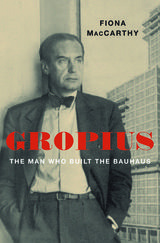
“This is an absolute triumph—ideas, lives, and the dramas of the twentieth century are woven together in a feat of storytelling. A masterpiece.”
—Edmund de Waal, ceramic artist and author of The White Road
The impact of Walter Gropius can be measured in his buildings—Fagus Factory, Bauhaus Dessau, Pan Am—but no less in his students. I. M. Pei, Paul Rudolph, Anni Albers, Philip Johnson, Fumihiko Maki: countless masters were once disciples at the Bauhaus in Berlin and at Harvard. Between 1910 and 1930, Gropius was at the center of European modernism and avant-garde society glamor, only to be exiled to the antimodernist United Kingdom during the Nazi years. Later, under the democratizing influence of American universities, Gropius became an advocate of public art and cemented a starring role in twentieth-century architecture and design.
Fiona MacCarthy challenges the image of Gropius as a doctrinaire architectural rationalist, bringing out the visionary philosophy and courage that carried him through a politically hostile age. Pilloried by Tom Wolfe as inventor of the monolithic high-rise, Gropius is better remembered as inventor of a form of art education that influenced schools worldwide. He viewed argument as intrinsic to creativity. Unusually for one in his position, Gropius encouraged women’s artistic endeavors and sought equal romantic partners. Though a traveler in elite circles, he objected to the cloistering of beauty as “a special privilege for the aesthetically initiated.”
Gropius offers a poignant and personal story—and a fascinating reexamination of the urges that drove European and American modernism.
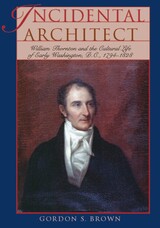
While the majority of scholarship on early Washington focuses on its political and physical development, in Incidental ArchitectGordon S. Brown describes the intellectual and social scene of the 1790s and early 1800s through the lives of a prominent couple whose cultural aspirations served as both model and mirror for the city’s own.
When William and Anna Maria Thornton arrived in Washington, D.C., in 1794, the new nation’s capital was little more than a raw village. The Edinburgh–educated Thornton and his accomplished wife brought with them the values of the Scottish Enlightenment, an enthusiasm for the arts, and a polished urbanity that was lacking in the little city emerging from the swamps along the Potomac. Thornton’s talents were manifold: He is perhaps best known as the original architect of the Capitol building, but he also served as a city commissioner and as director of the Patent Office, where his own experimentation in steam navigation embroiled him in a long-running dispute with inventor Robert Fulton.
In spite of their general preoccupation with politics and real estate development, Washington’s citizens gradually created a network of cultural institutions—theaters, libraries and booksellers, music venues, churches, schools, and even colleges and intellectual associations—that began to satisfy their aspirations.
Incidental Architect is a fascinating account of how the city’s cultural and social institutions were shaped by its earliest citizens.
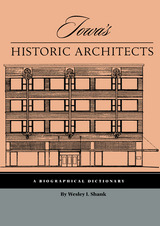
Among the prominent Iowa architects of the late nineteenth and early twentieth centuries were a remarkable few who had little training in architecture; their natural talents and their capacity for hard work made up for their lack of experience. Beginning in 1927, however, an Iowa architect had to meet state requirements of experience and training in order to practice. Shank includes an introduction to the history of the profession in Iowa: the development of professional education and training, the founding of professional societies and their roles, the different personalities and talents of the architects, the demography of architectural offices in the state, and the relative importance of Iowa architects both statewide and nationally.
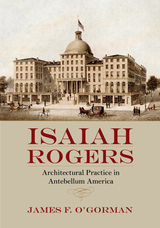
In 1944 the distinguished historian Talbot Hamlin wrote of New York's Merchant Exchange (1836–42) that the building had "been so grandly conceived, so simply and directly planned, and so beautifully detailed . . . [that] the whole was welded inextricably into one powerful organic conception that shows Rogers as a great architect in the fullest sense of the word." Rogers's Tremont House in Boston has been called the world's first modern hotel; it spawned many progeny, from his first Astor House in New York to his Burnet House in Cincinnati and beyond.
Rogers designed buildings from Maine to Georgia and from Boston to Chicago to New Orleans, supervising their construction while traveling widely to procure materials and workmen for the job. He finished his career as Architect of the Treasury Department during the Civil War. In this richly illustrated volume, James F. O'Gorman offers a deft portrait of an energetic practitioner at a key time in architectural history, the period before the founding of the American Institute of Architects in 1857.
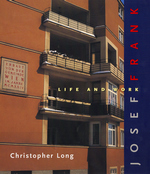
Educated in Vienna just after the turn of the century, Frank became the leader of the younger generation of architects in Austria after the First World War. But Frank fell from grace when he emerged as a forceful critic of the extremes of modern architecture and design during the early 1930s. Dismissing the demands for a unified modern style, Frank insisted that it was pluralism, not uniformity, that most characterized life in the new machine age. He called instead for a more humane modernism, one that responded to people's everyday needs and left room for sentimentality and historical influences. He was able to put these ideas into practice when, in 1933, he was forced to leave Vienna for Sweden. There his work came to define Swedish (or Scandinavian) modern design. For more than thirty years he was the chief designer for the Stockholm furnishings firm Svenskt Tenn, producing colorful, cozy, and eclectic designs that provided a refreshing alternative to the architectural mainstream of the day and presaged the coming revolt against modernism in the 1960s.
In this sensitive study of one of the twentieth century's seminal architects and thinkers, Christopher Long offers new insight into Josef Frank's work and ideas and provides an important contribution to the understanding of modernist culture and its history.
"There is much in this fine volume for anyone interested not just in architecture, but in the roots of human creativity and in the origins of the most powerful artistic current of our century. . . . This book is a life's work of scholarship. It has been well spent."—Toronto Globe and Mail
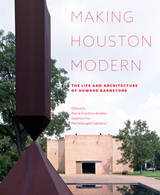
Complex, controversial, and prolific, Howard Barnstone was a central figure in the world of twentieth-century modern architecture. Recognized as Houston’s foremost modern architect in the 1950s, Barnstone came to prominence for his designs with partner Preston M. Bolton, which transposed the rigorous and austere architectural practices of Ludwig Mies van der Rohe to the hot, steamy coastal plain of Texas. Barnstone was a man of contradictions—charming and witty but also self-centered, caustic, and abusive—who shaped new settings that were imbued, at once, with spatial calm and emotional intensity.
Making Houston Modern explores the provocative architect’s life and work, not only through the lens of his architectural practice but also by delving into his personal life, class identity, and connections to the artists, critics, collectors, and museum directors who forged Houston’s distinctive culture in the postwar era. Edited by three renowned voices in the architecture world, this volume situates Barnstone within the contexts of American architecture, modernism, and Jewish culture to unravel the legacy of a charismatic personality whose imaginative work as an architect, author, teacher, and civic commentator helped redefine architecture in Texas.
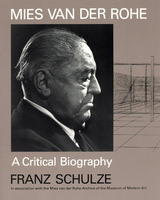
“Franz Schulze’s 1985 biography of Ludwig Mies van der Rohe has always been acknowledged as the most comprehensive and thoughtful biography of one of the key figures in twentieth-century architecture. This revised edition with significant new scholarship by its two authors will undoubtedly come to occupy the same position.”—Dietrich Neumann, Brown University
The only child of a wealthy Midwestern family, Philip Johnson was a millionaire by the time he graduated from Harvard, and in 1932 he helped stage the historic International Style exhibition at the Museum of Modern Art. A patron of the arts and a political activists who flirted with the politics of Hitler, Huey Long, and Father Coughlin, he went on to create controversial and historical structures such as the Glass House, the Roofless Church, the AT & T Building, the Crystal Cathedral, and many more. Johnson's personal charms paired with his manipulative ploys—like his "borrowing" of designs—shine through in this biography.
Drawing on Johnson's correspondence, personal photographs, and speeches, and on interviews with his friends and contemporaries, Schulze fills the biography with fascinating information on the architect's family, travels, friends and lovers, and his many buildings and spaces themselves.
Franz Schulze is a professor of art at Lake Forest College. He is the author of Fantastic Images: Chicago Art since 1945, One Hundred Years of Chicago Architecture, and Mies van der Rohe: A Critical Biography.
With his partner Bertram Goodhue, Cram won a number of important commissions, beginning with the West Point competition in 1903. Although an increasingly bitter rivalry with Goodhue would lead to the dissolution of their partnership in 1912, Cram had already begun to strike out on his own. Supervising architect at Princeton, consulting architect at Wellesley, and head of the MIT School of Architecture, he would also design most of New York's Cathedral of St. John the Divine and the campus of Rice University, as well as important church and collegiate structures throughout the country. By the 1920s Cram had become a household name, even appearing on the cover of Time magazine.
A complex man, Cram was a leading figure in what Shand-Tucci calls "a full-fledged homosexual monastery" in England, while at the same time married to Elizabeth Read. Their relationship was a complicated one, the effect of which on his children and his career is explored fully in this book. So too is his work as a religious leader and social theorist.
Shand-Tucci traces the influence on Cram of such disparate figures as Franklin Delano Roosevelt, Phillips Brooks, Henry Adams, and Ayn Rand. He divides Cram's career into four lifelong "quests": medieval, modernist, American, and ecumenical. Some quests may have failed, but in each he left a considerable legacy, ultimately transforming the visual image of American Christianity in the twentieth century.
Handsomely illustrated with over 130 photographs and drawings and eight pages of color plates, Ralph Adams Cram can be read on its own or in conjunction with Boston Bohemia, 1881–1900. Together, the two volumes complete what the Christian Century has described as a "superbly researched and captivating biography."
Winner, 2017 Ned Shank Award for Outstanding Preservation Publication from Preserve Arkansas
Shadow Patterns: Reflections on Fay Jones and His Architecture is a collection of critical essays and personal accounts of the man the American Institute of Architects honored with its highest award, the Gold Medal, in 1990.
The essays range from the academic, with appreciations and observations by Juhanni Palaasma and Robert McCarter and Ethel Goodstein-Murphree, to personal reflections by clients and friends. Two of Arkansas’s most accomplished writers, Roy Reed and Ellen Gilchrist, who each live in Fay Jones houses, have provided intimate portrayals of what it’s like to live in, and manage the quirks of, a “house built by a genius,” where “light is everywhere. . . . Everything is quiet, and everything is a surprise,” as Gilchrist says.
Through this compendium of perspectives, readers will learn about Jones’s personal qualities, including his strong will, his ability to convince other people of the rightness of his ideas, and yet his willingness, at times, to change his mind. We also enter into the work: powerful architecture like Stoneflower and Thorncrown Chapel and Pinecote Pavilion, along with private residences ranging from the modest to the monumental. And we learn about his relationship with his mentor, Frank Lloyd Wright.
Shadow Patterns broadens and enriches our understanding of this major figure in American architecture of the twentieth century.
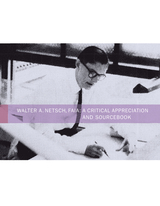
Northwestern University Library presents the first monograph devoted to the architect Walter Netsch, an early partner in Skidmore, Owings & Merrill and chief designer of prestigious commissions, including the U.S. Air Force Academy and Cadet Chapel. This illustrated book includes a detailed chronology, biography, essays about his work and field theory design aesthetics, statements by Netsch from 1954 to 2006, and a comprehensive, annotated bibliography of more than four hundred primary and secondary sources.
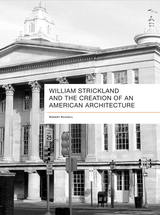
William Strickland (1788–1854) was, in his day, among the most notable architects in the United States. An erstwhile student of Benjamin Henry Latrobe and a contemporary of Robert Mills, Strickland first entered the world of architecture at a young age in Philadelphia. But given that many of Strickland’s buildings have not survived, and considering the sparse and dispersed collection of primary sources Strickland left upon his death, little contemporary scholarship has appeared concerning Strickland’s significant contributions to the built environment of the early nineteenth century.
In William Strickland and the Creation of an American Architecture, Robert Russell does much to rectify this underrepresentation of Strickland’s notable architectural contributions in contemporary scholarship. In this first monograph detailing Strickland’s life and works since 1950 Russell examines the architectural production of Strickland during the first half of the nineteenth century.
Russell begins with the well-known Second Bank of the United States (Philadelphia)—the project that launched Strickland onto the national stage—eventually bringing his analysis to the south with an examination of the Tennessee State Capitol Building (Nashville). These two monuments bookended the American Greek Revival of the nineteenth century. Russell’s careful descriptions and insightful analyses of William Strickland’s work highlight the architect’s artistic skills and contributions to American material culture over the course of fifty years.
Ornamenting his examination with more than one hundred illustrations, Russell takes readers on a comprehensive journey through Strickland’s architecture. Part biography, part architectural history, William Strickland and the Creation of an American Architecture is an invaluable resource for scholars and artists alike, illustrating Strickland’s critical role in American architectural history and celebrating the icon behind buildings in Pennsylvania, Tennessee, and beyond that are still admired and appreciated today.
READERS
Browse our collection.
PUBLISHERS
See BiblioVault's publisher services.
STUDENT SERVICES
Files for college accessibility offices.
RECENTLY PUBLISHED


UChicago Accessibility Resources
home | accessibility | search | about | contact us
BiblioVault ® 2001 - 2024
The University of Chicago Press