
 A SCHOLARLY BOOK REPOSITORY
Winner of the Grawemeyer Award in Religion
A Los Angeles Times Bestseller
“Raises timely and important questions about what religious freedom in America truly means.”
—Ruth Ozeki
“A must-read for anyone interested in the implacable quest for civil liberties, social and racial justice, religious freedom, and American belonging.”
—George Takei
On December 7, 1941, as the bombs fell on Pearl Harbor, the first person detained was the leader of the Nishi Hongwanji Buddhist sect in Hawai‘i. Nearly all Japanese Americans were subject to accusations of disloyalty, but Buddhists aroused particular suspicion. From the White House to the local town council, many believed that Buddhism was incompatible with American values. Intelligence agencies targeted the Buddhist community, and Buddhist priests were deemed a threat to national security.
In this pathbreaking account, based on personal accounts and extensive research in untapped archives, Duncan Ryūken Williams reveals how, even as they were stripped of their homes and imprisoned in camps, Japanese American Buddhists launched one of the most inspiring defenses of religious freedom in our nation’s history, insisting that they could be both Buddhist and American.
“A searingly instructive story…from which all Americans might learn.”
—Smithsonian
“Williams’ moving account shows how Japanese Americans transformed Buddhism into an American religion, and, through that struggle, changed the United States for the better.”
—Viet Thanh Nguyen, author of The Sympathizer
“Reading this book, one cannot help but think of the current racial and religious tensions that have gripped this nation—and shudder.”
—Reza Aslan, author of Zealot

During the late twelfth to fourteenth centuries, several precursors of what is now commonly known as Shinto came together for the first time. By focusing on Mt. Miwa in present-day Nara Prefecture and examining the worship of indigenous deities (kami) that emerged in its proximity, this book serves as a case study of the key stages of “assemblage” through which this formative process took shape. Previously unknown rituals, texts, and icons featuring kami, all of which were invented in medieval Japan under the strong influence of esoteric Buddhism, are evaluated using evidence from local and translocal ritual and pilgrimage networks, changing land ownership patterns, and a range of religious ideas and practices. These stages illuminate the medieval pedigree of Ryōbu Shintō (kami ritual worship based loosely on esoteric Buddhism’s Two Mandalas), a major precursor to modern Shinto.
In analyzing the key mechanisms for “assembling” medieval forms of kami worship, Andreeva challenges the twentieth-century master narrative of Shinto as an unbroken, monolithic tradition. By studying how and why groups of religious practitioners affiliated with different cultic sites and religious institutions responded to esoteric Buddhism’s teachings, this book demonstrates that kami worship in medieval Japan was a result of complex negotiations.
An ethically-based approach to human relations for the media age
Otherness, alterity, the alien—over the course of the past fifty years many of us have based our hopes for more ethical relationships on concepts of difference. Combining philosophy, literary criticism, fiction, autobiography, and real and imagined correspondence, Ann Weinstone proposes that only when we stop ordering the other to be other—whether technological, animal, or simply inanimate—will we truly become posthuman.
Posthumanism has thus far focused nearly exclusively on human–technology relations. Avatar Bodies develops a posthumanist vocabulary for human-to-human relationships that turns our capacities for devotion, personality, and pleasure. Drawing on both the philosophies and practices of Indian Tantra, Weinstone argues for the impossibility of absolute otherness; we are all avatar bodies, consisting of undecidably shared gestures, skills, memories, sensations, beliefs, and affects.
Weinstone calls her book a “tantra”—by which she means a set of instructions for practices aimed at sensitizing the reader to the inherent permeability of self to other, self to world. This tantra for posthumanism elaborates devotional gestures that will expose us to more unfettered contacts and the transformative touch.
They may shave their heads, don simple robes, and renounce materialism and worldly desires. But the women seeking enlightenment in a Buddhist nunnery high in the folds of Himalayan Kashmir invariably find themselves subject to the tyrannies of subsistence, subordination, and sexuality. Ultimately, Buddhist monasticism reflects the very world it is supposed to renounce. Butter and barley prove to be as critical to monastic life as merit and meditation. Kim Gutschow lived for more than three years among these women, collecting their stories, observing their ways, studying their lives. Her book offers the first ethnography of Tibetan Buddhist society from the perspective of its nuns.
Gutschow depicts a gender hierarchy where nuns serve and monks direct, where monks bless the fields and kitchens while nuns toil in them. Monasteries may retain historical endowments and significant political and social power, yet global flows of capitalism, tourism, and feminism have begun to erode the balance of power between monks and nuns. Despite the obstacles of being considered impure and inferior, nuns engage in everyday forms of resistance to pursue their ascetic and personal goals.
A richly textured picture of the little known culture of a Buddhist nunnery, the book offers moving narratives of nuns struggling with the Buddhist discipline of detachment. Its analysis of the way in which gender and sexuality construct ritual and social power provides valuable insight into the relationship between women and religion in South Asia today.
In this much-needed examination of Buddhist views of death and the afterlife, Carl B. Becker bridges the gap between books on death in the West and books on Buddhism in the East.
Other Western writers have addressed the mysteries surrounding death and the afterlife, but few have approached the topic from a Buddhist perspective. Here, Becker resolves questions that have troubled scholars since the beginning of Buddhism: How can Buddhism reconcile its belief in karma and rebirth with its denial of a permanent soul? What is reborn? And when, exactly, is the moment of death?
By systematically tracing Buddhism’s migration from India through China, Japan, and Tibet, Becker demonstrates how culture and environment affect Buddhist religious tradition.
In addition to discussing historical Buddhism, Becker shows how Buddhism resolves controversial current issues as well. In the face of modern medicine’s trend toward depersonalization, traditional Buddhist practices imbue the dying process with respect and dignity. At the same time, Buddhist tradition offers documented precedents for decision making in cases of suicide and euthanasia.

In the late 1800s, as Japanese leaders mulled over the usefulness of religion in modernizing their country, they chose to invite Unitarian missionaries to Japan. This book spotlights one facet of debates sparked by the subsequent encounter between Unitarianism and Buddhism—an intersection that has been largely neglected in the scholarly literature. Focusing on the cascade of events triggered by the missionary presence of the American Unitarian Association on Japanese soil between 1887 and 1922, Michel Mohr’s study sheds new light on this formative time in Japanese religious and intellectual history.
Drawing on the wealth of information contained in correspondence sent and received by Unitarian missionaries in Japan, as well as periodicals, archival materials, and Japanese sources, Mohr shows how this missionary presence elicited unprecedented debates on “universality” and how the ambiguous idea of “universal truth” was utilized by missionaries to promote their own cultural and ethnocentric agendas. At the turn of the twentieth century this notion was appropriated and reformulated by Japanese intellectuals and religious leaders, often to suit new political and nationalistic ambitions.
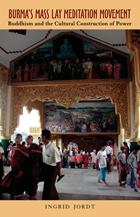
Burma's Mass Lay Meditation Movement: Buddhism and the Cultural Construction of Power describes a transformation in Buddhist practice in contemporary Burma. This revitalization movement has had real consequences for how the oppressive military junta, in power since the early 1960s, governs the country.
Drawing on more than ten years of extensive fieldwork in Burma, Ingrid Jordt explains how vipassanā meditation has brought about a change of worldview for millions of individuals, enabling them to think and act independently of the totalitarian regime. She addresses human rights as well as the relationship between politics and religion in a country in which neither the government nor the people clearly separates the two. Jordt explains how the movement has been successful in its challenge to the Burmese military dictatorship where democratically inspired resistance movements have failed.
Jordt's unsurpassed access to the centers of political and religious power in Burma becomes the reader's opportunity to witness the political workings of one of the world's most secretive and tyrannically ruled countries. Burma's Mass Lay Meditation Movement is a valuable contribution to Buddhist studies as well as anthropology, religious studies, and political science.
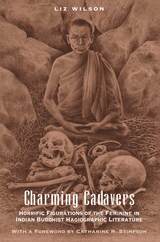
Liz Wilson investigates first-millennium Buddhist notions of
spirituality. She argues that despite the marginal role women played in
monastic life, they occupied a very conspicuous place in Buddhist
hagiographic literature. In narratives used for the edification of
Buddhist monks, women's bodies in decay (diseased, dying, and after
death) served as a central object for meditation, inspiring spiritual
growth through sexual abstention and repulsion in the immediate world.
Taking up a set of universal concerns connected with the representation
of women, Wilson displays the pervasiveness of androcentrism in Buddhist
literature and practice. She also makes persuasive use of recent
historical work on the religious lives of women in medieval
Christianity, finding common ground in the role of miraculous
afflictions.
This lively and readable study brings provocative new tools and insights
to the study of women in religious life.
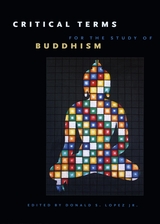
This volume provides a unique introduction to Buddhism by examining categories essential for a nuanced understanding of its traditions. Each of the fifteen essays here shows students how a fundamental term—from art to word—illuminates the practice of Buddhism, both in traditional Buddhist societies and in the realms of modernity. Apart from Buddha, the list of terms in this collection deliberately includes none that are intrinsic to the religion. Instead, the contributors explore terms that are important for many fields and that invite interdisciplinary reflection. Through incisive discussions of topics ranging from practice, power, and pedagogy to ritual, history, sex, and death, the authors offer new directions for the understanding of Buddhism, taking constructive and sometimes polemical positions in an effort both to demonstrate the shortcomings of assumptions about the religion and the potential power of revisionary approaches.
Following the tradition of Critical Terms for Religious Studies, this volume is not only an invaluable resource for the classroom but one that belongs on the short list of essential books for anyone seriously interested in Buddhism and Asian religions.
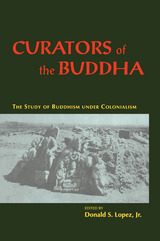
After an overview of the origins of Buddhist studies in the early nineteenth century, the essays focus on important "curators of the Buddha," such as Aurel Stein, D. T. Suzuki, and Carl Jung, who, as they created and maintained the discipline, played a significant role in disseminating knowledge about Buddhism in the West. The essays bring to life many of the important but unexamined social, political, and cultural conditions that have shaped the course of Buddhist studies for more than a century—and have frequently distorted the understanding of a complex set of traditions. Contributors Charles Hallisey, Gustavo Benavides, Stanley Abe, Luis Gómez, Robert Sharf, and Donald Lopez challenge some of the most enduring ideas in Buddhist studies: that Zen Buddhism is, above all, an experience; that Tibetan Buddhism is polluted, or pristine; that the Buddha image is of Greek or Roman origin; that the classical text supersedes the vernacular, as the manuscript supersedes the informant; and many others.
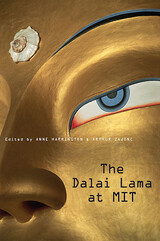
Their meeting captured headlines; the waiting list for tickets was nearly 2000 names long. If you were unable to attend, this book will take you there. Including both the papers given at the conference, and the animated discussion and debate that followed, The Dalai Lama at MIT reveals scientists and monks reaching across a cultural divide, to share insights, studies, and enduring questions.
Is there any substance to monks’ claims that meditation can provide astonishing memories for words and images? Is there any neuroscientific evidence that meditation will help you pay attention, think better, control and even eliminate negative emotions? Are Buddhists right to make compassion a fundamental human emotion, and Western scientists wrong to have neglected it?
The Dalai Lama at MIT shows scientists finding startling support for some Buddhist claims, Buddhists eager to participate in neuroscientific experiments, as well as misunderstandings and laughter. Those in white coats and those in orange robes agree that joining forces could bring new light to the study of human minds.
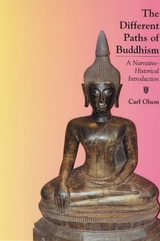
For centuries, Buddhist teachers and laypeople have used stories, symbols, cultural metaphors, and anecdotes to teach and express their religious views. In this introductory textbook, Carl Olson draws on these narrative traditions to detail the development of Buddhism from the life of the historical Buddha to the present. By organizing the text according to the structure of Buddhist thought and teaching, Olson avoids imposing a Western perspective that traditional texts commonly bring to the subject.
The book offers a comprehensive introduction to the main branches of the Buddhist tradition in both the Mahayana and Theravada schools, including the Madhyamika school, the Yogacara school, Pure Land devotionalism, Tibetan Tantric Buddhism, Zen Buddhism, and village folk Buddhist traditions. Chapters explore the life and teachings of the Buddha in historical context, the early development and institutionalization of Buddhism, its geographic spread across Asia and eventually to the United States, philosophy and ethics, the relationship between monks and laity, political and ethical implications, the role of women in the Buddhist tradition, and contemporary reinterpretations of Buddhism.
Drawn from decades of classroom experience, this creative and ambitious textcombines expert scholarship and engaging stories that offer a much-needed perspective to the existing literature on the topic.
Practitioners of any of the paths of self-cultivation available in ancient and medieval China engaged daily in practices meant to bring their bodies and minds under firm control. They took on regimens to discipline their comportment, speech, breathing, diet, senses, desires, sexuality, even their dreams. Yet, compared with waking life, dreams are incongruous, unpredictable—in a word, strange. How, then, did these regimes of self-fashioning grapple with dreaming, a lawless yet ubiquitous domain of individual experience?
In Dreaming and Self-Cultivation in China, 300 BCE–800 CE, Robert Ford Campany examines how dreaming was addressed in texts produced and circulated by practitioners of Daoist, Buddhist, Confucian, and other self-cultivational disciplines. Working through a wide range of scriptures, essays, treatises, biographies, commentaries, fictive dialogues, diary records, interpretive keys, and ritual instructions, Campany uncovers a set of discrete paradigms by which dreams were viewed and responded to by practitioners. He shows how these paradigms underlay texts of diverse religious and ideological persuasions that are usually treated in mutual isolation. The result is a provocative meditation on the relationship between individuals’ nocturnal experiences and one culture’s persistent attempts to discipline, interpret, and incorporate them into waking practice.
Practitioners of any of the paths of self-cultivation available in ancient and medieval China engaged daily in practices meant to bring their bodies and minds under firm control. They took on regimens to discipline their comportment, speech, breathing, diet, senses, desires, sexuality, even their dreams. Yet, compared with waking life, dreams are incongruous, unpredictable—in a word, strange. How, then, did these regimes of self-fashioning grapple with dreaming, a lawless yet ubiquitous domain of individual experience?
In Dreaming and Self-Cultivation in China, 300 BCE–800 CE, Robert Ford Campany examines how dreaming was addressed in texts produced and circulated by practitioners of Daoist, Buddhist, Confucian, and other self-cultivational disciplines. Working through a wide range of scriptures, essays, treatises, biographies, commentaries, fictive dialogues, diary records, interpretive keys, and ritual instructions, Campany uncovers a set of discrete paradigms by which dreams were viewed and responded to by practitioners. He shows how these paradigms underlay texts of diverse religious and ideological persuasions that are usually treated in mutual isolation. The result is a provocative meditation on the relationship between individuals’ nocturnal experiences and one culture’s persistent attempts to discipline, interpret, and incorporate them into waking practice.
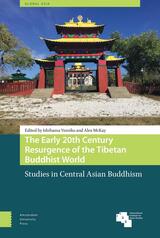
This volume is a study and edition of Bcom Idan ral gri's (1227-1305) Bstan pa rgyas pa rgyan gyi nyi 'od. Likely composed in the last decades of the thirteenth century, this systematic list of Buddhist Sutras, Tantras, Shastras, and related genres translated primarily from Sanskrit and other Indic languages holds an important place in the history of Buddhist literature in Tibet. It affords a glimpse of one Tibetan scholar's efforts to classify more than two thousand titles of Buddhist literature in the decades before the canonical collections known as the Bka' 'gyur and the Bstan 'gyur achieved a relatively stable form. Tibetan historiography traces the origin of the Bka' 'gyur and Bstan 'gyur to Bcom ldan ral gri's efforts, though the unique structure of the Bstan pa rgyas pa rgyan gyi nyi 'od, which differs greatly from available Bka' 'gyur and Bstan 'gyur catalogs, shows that the situation is more complex.
Known to contemporary scholars of Tibetan literature for some time through mention in other works, Bcom ldan ral gri's survey has recently become available for the first time in two manuscripts. The present work contains a detailed historical introduction, an annotated edition of the two manuscripts, as well as concordances and appendices intended to aid the comparative study of early Tibetan collections of Indic Buddhist literature.
Empire of the Dharma explores the dynamic relationship between Korean and Japanese Buddhists in the years leading up to the Japanese annexation of Korea. Conventional narratives cast this relationship in politicized terms, with Korean Buddhists portrayed as complicit in the “religious annexation” of the peninsula. However, this view fails to account for the diverse visions, interests, and strategies that drove both sides.
Hwansoo Ilmee Kim complicates this politicized account of religious interchange by reexamining the “alliance” forged in 1910 between the Japanese Soto sect and the Korean Wonjong order. The author argues that their ties involved not so much political ideology as mutual benefit. Both wished to strengthen Buddhism’s precarious position within Korean society and curb Christianity’s growing influence. Korean Buddhist monastics sought to leverage Japanese resources as a way of advancing themselves and their temples, and missionaries of Japanese Buddhist sects competed with one another to dominate Buddhism on the peninsula. This strategic alliance pushed both sides to confront new ideas about the place of religion in modern society and framed the way that many Korean and Japanese Buddhists came to think about the future of their shared religion.

Kapferer focuses on sorcery among Sinhalese Buddhists in Sri Lanka to explore how the art of sorcery is in fact deeply connected to social practices and lived experiences such as birth, death, sickness, and war. He describes in great detail the central ritual of exorcism, a study which opens up new avenues of thought that challenge anthropological approaches to such topics as the psychological forces of emotion and the dynamics of power. Overcoming both "orientalist" bias and postmodern permissiveness, Kapferer compellingly reframes sorcery as a pragmatic, conscious practice which, through its dynamic of destruction and creation, makes it possible for humans to reconstruct repeatedly their relation to the world.
When Bhaktivedanta arrived in America, it was a bold step because historically a guru who ventured outside of India was stripped of his Brahman status. However, the effort bore fruit—not the least of which was the type of intercultural understanding promoted by the current authors through their study of ISKCON’s place within the religion and culture of India.

As we grapple with the impacts of an aging population, the millions who struggle with chronic pain and illness, and the unknown number of COVID survivors dealing with long-term impairment, our individual and collective trust in our bodies is shaken. How to adapt? And how to live well, even when medical cure is unavailable? In The Healing Body: Creative Responses to Illness, Aging, and Affliction, philosopher and medical doctor Drew Leder shows how the phenomenology of lived embodiment makes available a variety of existential healing responses to bodily breakdown. Leder also turns to socially marginalized groups—people who have been incarcerated and those deemed “elderly”—to explore how individuals creatively cope with societal as well as physical challenges.
This book forwards current phenomenological research on the body, pain and suffering, disability, and aging. It deeply engages with the legacies of continental philosophy while also drawing insights from the traditions of Hinduism, Buddhism, and Taoism. The Healing Body is a uniquely creative and refreshingly innovative contribution to contemporary philosophy, demonstrating the importance of the philosophical method to the wider culture.
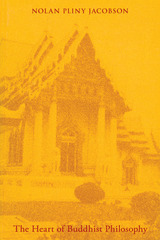
In arriving at the heart of Buddhist philosophy, Nolan Pliny Jacobson attempts to eliminate some of the confusion in the West (and perhaps in the East as well) concerning the Buddhist view of what is concrete and ultimately real in the world.
Jacobson presents Nāgārjuna, the Plato of the Buddhist tradition, as the major exemplar of the Buddhist expression of life. In his comparison of Buddhism and Western theology, Jacobson demonstrates that some efforts in Western religious thought approach the Buddhist empirical stance.
Wendy Cadge first provides a historical overview of Theravada Buddhism and considers its specific origins here in the United States. She then brings her findings to bear on issues of personal identity, immigration, cultural assimilation, and the nature of religion in everyday life. Her work is the first systematic comparison of the ways in which immigrant and convert Buddhists understand, practice, and adapt the Buddhist tradition in America. The men and women whom Cadge meets and observes speak directly to us in this work, both in their personal testimonials and as they meditate, pray, and practice Buddhism.
Creative and insightful, Heartwood will be of enormous value to sociologists of religion and anyone wishing to understand the rise of Buddhism in the Western world.
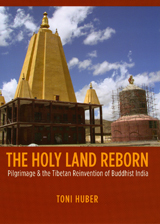
Focusing on the Tibetan creation and recreation of India as a destination, a landscape, and a kind of other, in both real and idealized terms, Huber explores how Tibetans have used the idea of India as a religious territory and a sacred geography in the development of their own religion and society. In a timely closing chapter, Huber also takes up the meaning of India for the Tibetans who live in exile in their Buddhist holy land.
A major contribution to the study of Buddhism, The Holy Land Reborn describes changes in Tibetan constructs of India over the centuries, ultimately challenging largely static views of the sacred geography of Buddhism in India.
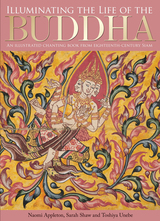
Affording readers immense insight into a spectacular eighteenth-century manuscript, and Thai Buddhist manuscripts and temple culture as a whole, this book will be of great interest to art historians and scholars of Buddhism and Southeast Asia.
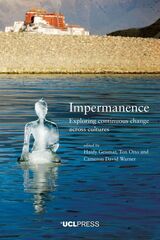
Nothing lasts forever. This common experience can be the source of much anxiety, but also of hope. The concept of impermanence or continuous change opens up a range of timely questions and discussions that speak to globally shared experiences of transformation and concerns for the future. Impermanence engages with an emergent body of social theory that emphasizes flux and transformation and brings it into a dialogue with other traditions of thought and practice, such as Buddhism, that have sustained a long-lasting and sophisticated meditation on impermanence.
In cases drawn from all over the world, this volume investigates the significance of impermanence in such diverse contexts as social death, atheism, alcoholism, migration, ritual, fashion, oncology, museums, cultural heritage, and art. The authors draw on a wide range of disciplines, including anthropology, archaeology, art history, Buddhist studies, cultural geography, and museology. This volume also includes numerous photographs, artworks, and poems that evocatively communicate notions and experiences of impermanence.
This book is devoted to a deceptively simple but original argument: that copying is an essential part of being human, that the ability to copy is worthy of celebration, and that, without recognizing how integral copying is to being human, we cannot understand ourselves or the world we live in.
In spite of the laws, stigmas, and anxieties attached to it, the word “copying” permeates contemporary culture, shaping discourse on issues from hip hop to digitization to gender reassignment, and is particularly crucial in legal debates concerning intellectual property and copyright. Yet as a philosophical concept, copying remains poorly understood. Working comparatively across cultures and times, Marcus Boon undertakes an examination of what this word means—historically, culturally, philosophically—and why it fills us with fear and fascination. He argues that the dominant legal-political structures that define copying today obscure much broader processes of imitation that have constituted human communities for ages and continue to shape various subcultures today. Drawing on contemporary art, music and film, the history of aesthetics, critical theory, and Buddhist philosophy and practice, In Praise of Copying seeks to show how and why copying works, what the sources of its power are, and the political stakes of renegotiating the way we value copying in the age of globalization.
The anonymous pre-Gaṅgeśa Navya-Nyāya treatise Upādhidarpaṇa (UD) deals exclusively with the so-called upādhi, a key concept in the Navya-Nyāya theory of inference. The present volume contains the first published edition and translation of the only extant manuscript of the UD. Numerous notes have been added to the translation in order to elucidate the contents and to give a clue to the historical context, as regards authors, works, and philosophical doctrines that are referenced in the UD. Moreover, an extensive introductory chapter provides new insights into relations between the Navya-Nyāya doctrine of upādhi and modern logical theories such as John L. Pollock’s theory of defeasible reasoning and property theories, especially property adaptations of well-founded and non-well-founded set theories.
A very intriguing aspect of the UD is the author’s attempt to define all candidate upādhis by means of a “general defining characteristic” (sāmānyalakṣaṇa) which is a property of itself. He advocates a non-well-founded property concept and distances himself from what is communis opinio in Nyāya, viz. that self-dependence (ātmāśraya) is a kind of absurdity. No such discussion concerning the problem of foundation in the Navya-Nyāya logic of property and location is to be found in the later Upādhivāda of Gaṅgeśa’s Tattavacintāmaṇi.

Daily political events and the steady inevitability of globalism require that informed students and citizens learn something about religious traditions foreign to their own. Designed for both classroom and general use, these handy Key Words guidebooks are essential resources for those who want clear and concise explanations of common terms and unfamiliar concepts of major world religions.
Each pocket-sized volume contains definitions for over 400 terms from religious principles and significant periods to noteworthy figures.
A quick sampling of terms from this volume:
BodhisattvaBhavanaJaramaranaKalachakraMalaMantraNirvanaSamadhiZen
Sample Definitions:
Brahma Viharas: The four sublime states of loving kindness, compassion, sympathetic joy, and evenness of mind achieved by the practice of bhavana (see bhavana, metta, karuna, mudita, upekkha).
Jaramarana: Old age and death. The final link in the causal chain of existence which arises from jati or birth. The Buddha left his palace to search for enlightenment after experiencing the shock of seeing old age, sickness and death (see jati, Siddharta Gotma,. nidanas, samsara).
In the first part of the twentieth century, Korean Buddhists, despite living under colonial rule, reconfigured sacred objects, festivals, urban temples, propagation—and even their own identities—to modernize and elevate Korean Buddhism. By focusing on six case studies, this book highlights the centrality of transnational relationships in the transformation of colonial Korean Buddhism.
Hwansoo Ilmee Kim examines how Korean, Japanese, and other Buddhists operating in colonial Korea, Japan, China, Taiwan, Manchuria, and beyond participated in and were significantly influenced by transnational forces, even as Buddhists of Korea and other parts of Asia were motivated by nationalist and sectarian interests. More broadly, the cases explored in the The Korean Buddhist Empire reveal that, while Japanese Buddhism exerted the most influence, Korean Buddhism was (as Japanese Buddhism was itself) deeply influenced by developments in China, Taiwan, Sri Lanka, Europe, and the United States, as well as by Christianity.

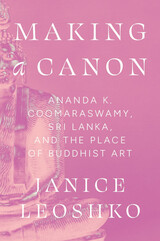
An early interpreter of Buddhist art to the West, Ananda Kentish Coomaraswamy laid the foundation of what would become the South Asian visual canon, particularly through his efforts to understand how Buddhist art emerged and developed. In Making a Canon, Janice Leoshko examines how Coomaraswamy’s experience as the director of a mineralogical survey in Sri Lanka shaped his understanding of South Asian art and religion. Along the way, she reveals how Coomaraswamy’s distinctive repetition of Sri Lankan visual images in his work influenced the direction of South Asia’s canon formation and left a lasting impression on our understanding of Buddhist art.
The “Twenty Verses on Manifestation-Only” of the Indian Buddhist philosopher Vasubandhu (c. 350–430?), his Viṁśíkā, is one of the most important treatises of the Yogācāra school. Accompanied by the author’s own commentary, the text lays out a vision of a “Buddhist Idealism” in which even one’s experience of the sufferings of hell is revealed to be nothing other than the results of working out one’s karma. Later scholars commented on the work a number of times, in its original Sanskrit, in Tibetan translation, and in three Chinese versions.
This book presents an edition and translation of the Sanskrit text of the core verses, alongside the original author’s commentary, based directly on the manuscript evidence. This is accompanied by an edition of the canonical translations of these texts found in the Tibetan Tanjurs, as well as a “draft translation” of the verses in Tibetan, found in a manuscript from Dunhuang. This publication therefore provides the most reliable and comprehensive philological accounting to date for this fundamental work.

"When the first edition of this collection of remarks appeared in 1961 we were provided with a glimpse of the workings of Wittgenstein's mind during the period when the seminal ideas of the Tractatus Logico-Philosophicus were being worked out. This second edition provided the occasion to be struck anew by the breadth, rigor, and above all the restlessness of that mind."—T. Michael McNulty, S. J., The Modern Schoolman

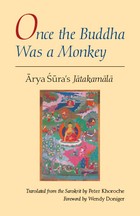
Written most probably in the fourth century A.D., the Jatakamala is generally considered the masterpiece of Buddhist literature in Sanskrit. In elegant, courtly style, Arya Sura retells thirty-four traditional stories about the Buddha in his previous incarnations, human and animal. Whether as a king, a brahmin, a monkey, or a hare, the Great One is shown in assiduous pursuit of virtue and compassion. Though primarily intended as exemplary tales illustrating the Buddhist virtues, these stories also provide a vivid picture of life at a high point in ancient Indian culture—city life in ordinary households or at the royal court, and country life against a backdrop of mountain, desert, and jungle.
Fresh study of the Sanskrit manuscripts, now scattered in libraries all over the world, has enabled Peter Khoroche to make this new translation faithful to the original in both style and content. His explanatory notes will assist student and general reader alike in appreciating this classic from an ancient and exotic civilization.
“One would be a fool not to welcome the chance to read this book.”—Richard Gombrich, Journal of the Royal Asiatic Society
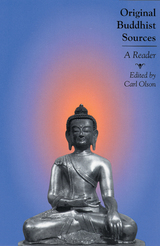
Bringing together essential materials on the origins and development of Buddhist traditions from India, Sri Lanka, Tibet, China, and Japan, this anthology provides the broadest selection of primary source Buddhist literature available to date.
The volume is divided into two major parts: Theravada and Mahayana forms of Buddhism. The first section presents selections that explore major themes in Buddhist thought such as causality, Four Noble Truths, the doctrine of non-self, nibbana, meditation, and ethics, as well as literature about monastic life and regulations, women, and hagiography.
The second part includes selections from so-called wisdom literature and texts that represent the three major schools of Mahayana Buddhism: Pure Land, Madhyamika, and Yogacara. Selections also include sources from some of the major Chinese Buddhist schools such as Hua-yen, T'ien T'ai, Pure Land, and Ch'an. Readings by thinkers such as Tantric Buddhist reformer Tsong Khapa, Pure Land leaders Honen, Shinran, and Nichiren, as well as Zen Buddhists Dogen and Hakuin provide a perspective on regional and national traditions.
In addition to the general introduction, each major section is introduced by an essay that places the selections within the context of Buddhist history. This comprehensive reader stands on its own as an indispensable anthology of original textual sources for courses in Buddhism, while also serving as a companion volume to the text The Different Paths of Buddhism: A Narrative-Historical Introduction.
The intense piety of late T'ang essays on Buddhism by literati has helped earn the T'ang its title of the "golden age of Chinese Buddhism." In contrast, the Sung is often seen as an age in which the literati distanced themselves from Buddhism. This study of Sung devotional texts shows, however, that many literati participated in intra-Buddhist debates. Others were drawn to Buddhism because of its power, which found expression and reinforcement in its ties with the state. For some, monasteries were extravagant houses of worship that reflected the corruption of the age; for others, the sacrifice and industry demanded by such projects were exemplars worthy of emulation. Finally, Buddhist temples could evoke highly personal feelings of filial piety and nostalgia.
This book demonstrates that representations of Buddhism by lay people underwent a major change during the T'ang-Sung transition. These changes built on basic transformations within the Buddhist and classicist traditions and sometimes resulted in the use of Buddhism and Buddhist temples as frames of reference to evaluate aspects of lay society. Buddhism, far from being pushed to the margins of Chinese culture, became even more a part of everyday elite Chinese life.
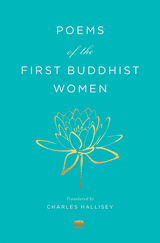
A stunning modern translation of a Buddhist classic that is also one of the oldest literary texts in the world written by women.
The Therīgāthā is one of the oldest surviving literatures by women, composed more than two millennia ago and originally collected as part of the Pali canon of Buddhist scripture. These poems were written by some of the first Buddhist women—therīs—honored for their religious achievements. Through imaginative verses about truth and freedom, the women recount their lives before ordination and their joy at attaining liberation from samsara. Poems of the First Buddhist Women offers startling insights into the experiences of women in ancient times that continue to resonate with modern readers. With a spare and elegant style, this powerful translation introduces us to a classic of world literature.
The Princess Nun tells the story of Bunchi (1619–1697), daughter of Emperor Go-Mizunoo and founder of Enshōji. Bunchi advocated strict adherence to monastic precepts while devoting herself to the posthumous welfare of her family. As the first full-length biographical study of a premodern Japanese nun, this book incorporates issues of gender and social status into its discussion of Bunchi’s ascetic practice and religious reforms to rewrite the history of Buddhist reform and Tokugawa religion.
Gina Cogan’s approach moves beyond the dichotomy of oppression and liberation that dogs the study of non-Western and premodern women to show how Bunchi’s aristocratic status enabled her to carry out reforms despite her gender, while simultaneously acknowledging how that same status contributed to their conservative nature. Cogan’s analysis of how Bunchi used her prestigious position to further her goals places the book in conversation with other works on powerful religious women, like Hildegard of Bingen and Teresa of Avila. Through its illumination of the relationship between the court and the shogunate and its analysis of the practice of courtly Buddhism from a female perspective, this study brings historical depth and fresh theoretical insight into the role of gender and class in early Edo Buddhism.
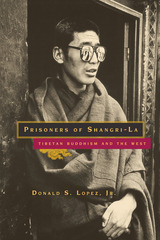
"Lopez lifts the veil on America's romantic vision of Tibet to reveal a country and a spiritual history more complex and less ideal than popular perceptions allow. . . . Lively and engaging, Lopez's book raises important questions about how Eastern religions are often co-opted, assimilated and misunderstood by Western culture."—Publishers Weekly
"Proceeding with care and precision, Lopez reveals the extent to which scholars have behaved like intellectual colonialists. . . . Someone had to burst the bubble of pop Tibetology, and few could have done it as resoundingly as Lopez."—Booklist
"Fascinating. . . [A] provocative exploration. Lopez conveys the full dizziness of the Western encounter with Tibet and Tibetan Buddhism."—Fred Pheil, Tricycle: The Buddhist Review
"A timely and courageous exploration. . . . [Lopez's] book will sharpen the terms of the debate over what the Tibetans and their observers can or should be doing about the place and the idea of Tibet. And that alone is what will give us all back our Shambhala."—Jonathan Spence, Lingua Franca Book Review
"Lopez's most important theme is that we should be wary of the idea . . . that Tibet has what the West lacks, that if we were only to look there we would find the answers to our problems. Lopez's book shows that, on the contrary, when the West has looked at Tibet, all that it has seen is a distorted reflection of itself."—Ben Jackson, Times Higher Education Supplement

Pursuing Morality is an in-depth and fascinating study of ordinary life in Myanmar’s southeast through a unique ethnographic focus on Buddhist Plong (Pwo) Karen. Based on extensive in-depth fieldwork in the small city of Hpa-an, the capital of Karen State, Justine Chambers shines a new light on Plong Buddhists’ lives and the many ways they broker, traverse, enact, cultivate, defend, and pursue moral lives.
This is the first ethnographic study of Myanmar to add to a growing body of anthropological scholarship that is referred to as the “moral turn.” Each chapter examines the lives of Plong Buddhists from different vantage points, calling into question many assumptions about Southeast Asian values and the nature of Buddhist Theravada practice. Critiquing the notion that moral coherence is necessary for ethical selfhood, Chambers demonstrates how the pursuit of morality is varied, performative, and embedded in an affective notion of the self as a moral agent in a relationship with wider structural political forces. This vivid account of everyday life in Myanmar complements existing scholarship on the region and offers a deeper understanding of Buddhism, moral anthropology, and ethics in Southeast Asia.
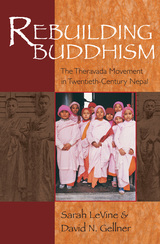
Rebuilding Buddhism describes in evocative detail the experiences and achievements of Nepalis who have adopted Theravada Buddhism. This form of Buddhism was introduced into Nepal from Burma and Sri Lanka in the 1930s, and its adherents have struggled for recognition and acceptance ever since. With its focus on the austere figure of the monk and the biography of the historical Buddha, and more recently with its emphasis on individualizing meditation and on gender equality, Theravada Buddhism contrasts sharply with the highly ritualized Tantric Buddhism traditionally practiced in the Kathmandu Valley.
Based on extensive fieldwork, interviews, and historical reconstruction, the book provides a rich portrait of the different ways of being a Nepali Buddhist over the past seventy years. At the same time it explores the impact of the Theravada movement and what its gradual success has meant for Buddhism, for society, and for men and women in Nepal.
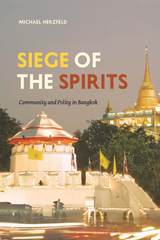
Herzfeld argues that even though the residents of Pom Mahakan have lost every legal battle the city government has dragged them into, they have won every public relations contest, highlighting their struggle as one against bureaucrats who do not respect the age-old values of Thai/Siamese social and cultural order. Such values include compassion for the poor and an understanding of urban space as deeply embedded in social and ritual relations. In a gripping account of their standoff, Herzfeld—who simultaneously argues for the importance of activism in scholarship—traces the agile political tactics and styles of the community’s leadership, using their struggle to illuminate the larger difficulties, tensions, and unresolved debates that continue to roil Thai society to this day.
Professor Dobbelaere points to several reasons for its growth. Soka Gakkai emphasizes inner peace rather than rules of behavior or hierarchical allegiance. Sociologists describe it as “trans-modern,” meaning that it blends ancient and contemporary sensitivities such as Buddhist mysticism, science, art and music, a concern for the environment, and social activism.
Initially there was a reliance on aggressive proselyting, later replaced with a more moderate encouragement to share with friends. The movement now engages other faiths in cultural and intellectual exchanges and in pursuit of common ethical objectives. This adaptability and sincere concern for its membership and for society as a whole bode well for its future success.
The traditional Chinese notion of itself as the “middle kingdom”—literally the cultural and political center of the world—remains vital to its own self-perceptions and became foundational to Western understandings of China. This worldview was primarily constructed during the earliest imperial unification of China during the Qin and Han dynasties (221 BCE–220 CE). But the fragmentation of empire and subsequent “Age of Disunion” (220–589 CE) that followed undermined imperial orthodoxies of unity, centrality, and universality. In response, geographical writing proliferated, exploring greater spatial complexities and alternative worldviews.
This book is the first study of the emergent genre of geographical writing and the metageographies that structured its spatial thought during that period. Early medieval geographies highlighted spatial units and structures that the Qin–Han empire had intentionally sought to obscure—including those of regional, natural, and foreign spaces. Instead, these postimperial metageographies reveal a polycentric China in a polycentric world. Sui–Tang (581–906 CE) officials reasserted the imperial model as spatial orthodoxy. But since that time these alternative frameworks have persisted in geographical thought, continuing to illuminate spatial complexities that have been incompatible with the imperial and nationalist ideal of a monolithic China at the center of the world.
This poem belongs of the little-known Newari (Nepal Bhasha) language and literature, specifically to its even less known Buddhist version. It is one of the very rare cases that works in Newari language appear outside Nepal.
In nineteen long cantos, the Sugata Saurabha tells of the life of the Buddha, following the traditional accounts, but situates it in the strongly local context of Newar and Nepali Buddhism. It emulates the classical (Kavya) style of the long-standing Indian tradition, and has been inspired by the 2,000-year-old Sanskrit poem, the Buddhacarita. Consequently, the poet inserts stanzas composed in traditional classical Sanskrit meter, though written in polished Newari.
The poem was composed by the greatest modern writer in Newari language, Chittadhar Hrdaya (1906– 1982), while he was imprisoned by the autocratic strongly pro-Hindu Rana regime that governed Nepal from the mid-nineteenth to the mid-twentieth century.
The poem is the best-known work of the flowering of modern Newari literature that emerged after the restrictions of the Rana regime were lifted in 1950.
Jacobson presents Buddhism unencumbered by Western categories and concepts, free from the cognitive bias, from the concept-oriented, definition-minded preoccupations inherited from the ancient Greeks. It is an interpretation of the central ideas that have characterized all forms of Buddhism for 25 centuries.

In an engagingly lucid and deft analysis, Watsuji on Nature radically expands our appreciation of twentieth-century Japanese philosophy and shows what it has to offer to a global philosophical conversation.
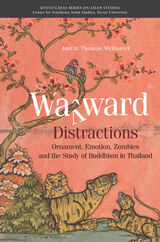
In Thailand, Buddhism is deeply integrated into national institutions and ideologies, making it tempting to think of Buddhism in Thailand as a textual, institutional, cultural, and conceptual whole. At the same time, religious expression in the country reflects anything but a single order. Often gaudy, cacophonous, variegated, and jumbled, diversity and apparent contradiction abound. A more open engagement with Buddhism in Thailand requires a willingness to be distracted, to step away from received hierarchies and follow the intriguing detail in the ornate design, the odd textual reference, and to prefer "thin description" over a search for meaning. Justin McDaniel's well-known book-length writings in Buddhist and Theravada studies cannot be fully understood without taking into account his shorter writings, what he calls his wayward distractions. Collected together for the first time, these essays cover subjects ranging from ornamental art to marriage and emotion, the role of Hinduism, neglected gender and ethnic diversity, Buddhist inflections in contemporary art practice, and the boundaries between the living, dead, and undead. These writings will be of importance to students of Theravada and Thailand, of religion in Southeast Asia and more generally, of the materialist turn in studies of religion.
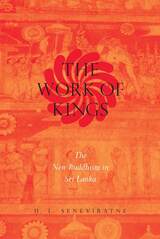
Beginning with Anagarika Dharmapala's "rationalization" of Buddhism in the early twentieth century, which called for monks to take on a more activist role in the community, Seneviratne shows how the monks have gradually revised their role to include involvement in political and economic spheres. The altruistic, morally pure monks of Dharamapala's dreams have become, Seneviratne trenchantly argues, self-centered and arrogant, concealing self-aggrandizement behind a façade of "social service."
A compelling call for reform and a forceful analysis, The Work of Kings is essential to anthropologists, historians of religion, and those interested in colonialism, nationalism, and postcolonial politics.
READERS
Browse our collection.
PUBLISHERS
See BiblioVault's publisher services.
STUDENT SERVICES
Files for college accessibility offices.
RECENTLY PUBLISHED



UChicago Accessibility Resources
home | accessibility | search | about | contact us
BiblioVault ® 2001 - 2024
The University of Chicago Press