
 A SCHOLARLY BOOK REPOSITORY
Mao and his policies have long been demonised in the West, with the Cultural Revolution considered a fundamental violation of human rights.
As China embraces capitalism, the Mao era is being surgically denigrated by the Chinese political and intellectual elite. This book tackles the extremely negative depiction of China under Mao in recent publications and argues most people in China, including the rural poor and the urban working class, actually benefited from Mao's policy of a comprehensive welfare system for the urban and basic health and education provision for the rural, which is being reversed in the current rush towards capitalism.
By a critical analysis of the mainstream account of the Mao era and the Cultural Revolution and by revealing what is offered in the unofficial e-media debates this book sets the record straight, making a convincing argument for the positive effects of Mao's policies on the well-being of the Chinese people.
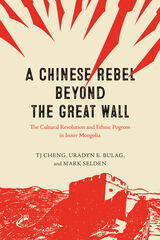
During the Great Leap Forward, as hundreds of thousands of Chinese famine refugees headed to Inner Mongolia, Cheng Tiejun arrived in 1959 as a middle school student. In 1966, when the PRC plunged into the Cultural Revolution, he joined the Red Guards just as Inner Mongolia’s longtime leader, Ulanhu, was purged. With the military in control, and with deepening conflict with the Soviet Union and its ally Mongolia on the border, Mongols were accused of being nationalists and traitors. A pogrom followed, taking more than 16,000 Mongol lives, the heaviest toll anywhere in China.
At the heart of this book are Cheng’s first-person recollections of his experiences as a rebel. These are complemented by a close examination of the documentary record of the era from the three coauthors. The final chapter offers a theoretical framework for Inner Mongolia’s repression. The repression’s goal, the authors show, was not to destroy the Mongols as a people or as a culture—it was not a genocide. It was, however, a “politicide,” an attempt to break the will of a nationality to exercise leadership of their autonomous region. This unusual narrative provides urgently needed primary source material to understand the events of the Cultural Revolution, while also offering a novel explanation of contemporary Chinese minority politics involving the Uyghurs, Tibetans, and Mongols.
“Only in America can you run for office and get elected by people who can’t even pronounce your name.”—Lily Qi
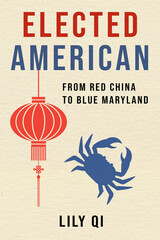
Thirty years after her solo journey to America, Chinese-born Lily Qi became a Maryland state delegate. It was a gratifying moment she did not take for granted. Qi had overcome a viral WeChat disinformation campaign from her Chinese community and met with skepticism from the Democratic establishment before being elected.
Elected American tells the inspirational story of Qi’s dreams, setbacks, and achievements with candor and humility. Growing up in Mao’s Shanghai when “politics meant danger,” she never imagined running for public office. However, living in America, Qi came to see political participation as a missed opportunity for immigrants. As she campaigned to energize her cultural base, Qi realized she had to teach first-time voters how to make their votes count in a system not designed for them.
As the only U.S. state legislator to have lived through China’s Cultural Revolution, Qi brings a rare cross-system perspective to American politics and the modern-day Asian American identity. Elected American is a political memoir and an immigrant story that emphasizes that democracy doesn’t wait on the sidelines—it favors those who participate.
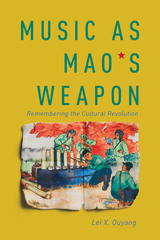
China's Cultural Revolution (1966-1976) produced propaganda music that still stirs unease and, at times, evokes nostalgia. Lei X. Ouyang uses selections from revolutionary songbooks to untangle the complex interactions between memory, trauma, and generational imprinting among those who survived the period of extremes. Interviews combine with ethnographic fieldwork and surveys to explore both the Cultural Revolution's effect on those who lived through it as children and contemporary remembrance of the music created to serve the Maoist regime. As Ouyang shows, the weaponization of music served an ideological revolution but also revolutionized the senses. She examines essential questions raised by this phenomenon, including: What did the revolutionization look, sound, and feel like? What does it take for individuals and groups to engage with such music? And what is the impact of such an experience over time?
Perceptive and provocative, Music as Mao's Weapon is an insightful look at the exploitation and manipulation of the arts under authoritarianism.
READERS
Browse our collection.
PUBLISHERS
See BiblioVault's publisher services.
STUDENT SERVICES
Files for college accessibility offices.
RECENTLY PUBLISHED



UChicago Accessibility Resources
home | accessibility | search | about | contact us
BiblioVault ® 2001 - 2026
The University of Chicago Press